Republish This Article
We want our stories to be shared as widely as possible — for free.
Please view The 74’s republishing terms.


We want our stories to be shared as widely as possible — for free.
Please view The 74’s republishing terms.

Get stories like this delivered straight to your inbox. Sign up for The 74 Newsletter
This story was originally published by CalMatters. Sign up for their newsletters.
Sleep is a rare commodity at Lindsay Crain’s house. Most nights, she and her husband are up dozens of times, tending to their daughter’s seizures. The 16-year-old flails her arms, thrashes and kicks — sometimes for hours.
But these days, that’s not the only thing keeping Crain awake. The Culver City mother worries about how President Donald Trump’s myriad budget cuts could strip their daughter of services she needs to go to school, live at home and enjoy a degree of independence that would have been impossible a generation ago.
“Every family I know is terrified right now,” Crain said. “We still have to live our everyday lives, which are challenging enough, but now it feels like our kids’ futures are at stake.”
Trump’s budget includes nearly $1 trillion in cuts to Medicaid, which funds a wide swath of services to disabled children, including speech, occupational and physical therapy, wheelchairs, in-home aides and medical care. All children with physical, developmental or cognitive disabilities – in California, nearly 1 million – receive at least some services through Medicaid.
Meanwhile, at the U.S. Department of Education, Trump has gutted the Office of Civil Rights, which is among the agencies that enforce the 50-year-old law granting students with disabilities the right to attend school and receive an education appropriate to their needs. Before that law was enacted, students with disabilities often didn’t attend school at all.
“We have a delicate web of services that, combined, support a whole child, a whole family,” said Kristin Wright, executive director of inclusive practices and systems at the Sacramento County Office of Education and the former California state director of special education. “So when the basic foundational structure is upended, like Medicaid, for example, it’s not just one cut from a knife. It’s multiple.”
Republicans have also suggested moving the office of special education out of the Department of Education altogether and moving it to the Department of Health and Human Services. Disability rights advocates say that would bring a medical – rather than a social – lens to special education, which they described as a major reversal of progress.
Trump has chipped away at other rights protecting people with disabilities, as well. In September, the U.S. Department of Transportation said it would not enforce a rule that requires airlines to reimburse passengers for damaged or lost wheelchairs. Trump has also repeatedly used the word “retarded,” widely considered a slur, alarming advocates who say it shows a lack of respect and understanding of the historical discrimination against people with disabilities. It’s all left some wondering if the administration plans more cuts to hard-fought rights protecting people with disabilities.
The Medicaid cuts may have the most immediate effect. People with developmental disabilities typically receive therapy, home visits from aides, equipment and other services through regional centers, a network of 21 mostly government-funded nonprofits in California that coordinate services for people with disabilities. The goal of regional centers is to help people with disabilities live as independently as possible.
More than a third of regional centers’ funding comes from Medicaid, which is facing deep cuts under Trump’s budget. The money runs out at the end of January, and it’s unclear what services will be cut.
Schools also rely on Medicaid to pay for therapists, equipment, vision and hearing tests and other services that benefit all students, not just those with disabilities. In light of state budget uncertainty, it’s not likely the state could backfill the loss of Medicaid funding, and schools would have to pare down their services.
For Lelah Coppedge, whose teenage son has cerebral palsy, the worst part is the uncertainty. She knows cuts are coming, but she doesn’t know when or what they’ll include.
“I go down this rabbit hole of worst-case scenarios,” said Coppedge, who lives in the Canoga Park neighborhood in Los Angeles. “Before this happened, I felt there was a clear path for my son. Now that path is going away, and it’s terrifying.”
Coppedge’s son, Jack, is a 16-year-old high school student who excels at algebra and physics. He loves video games and has a wide circle of friends at school. He uses a wheelchair and struggles with speech, communicating mostly through eye movements. He’ll look at his mom’s right hand to indicate “yes,” her left hand for “no.”
Coppedge and her husband rely on a nurse who comes four days a week to help Jack get dressed, get ready for bed and do other basic activities. Medicaid pays for the nurse, as well as other services like physical therapy. Even though Coppedge and her husband both work and have high-quality private health insurance, they could not afford Jack’s care without help from the government.
They also rely on the local regional center, which they assumed would help Jack after he graduates from high school, so he can remain at home, continue to hone his skills and generally live as independently as possible. If that funding vanishes, Coppedage worries Jack will someday end up in a facility where people don’t know him, don’t know how to communicate with him and don’t care about him.
“It feels like we’re going backward,” Coppedge said. “Half the time, I put my head in the sand because I’m just trying to manage the day-to-day. The rest of the time I worry that (the federal government) is looking at people like Jack as medical problems, not as unique people who want to have full, happy lives. It feels like that’s getting lost.”
The current uncertainty is stressful, but it’s even harder for families who are immigrants, Wright said. Those families are less likely to stand up for services they’re entitled to and are facing the extra fear of deportation. English learners, as well as low-income children, are disproportionately represented among students in special education, according to state data.
“That’s the other piece to all this — how it’s affecting immigrant families,” Wright said. “It’s a whole other level of anxiety and fear.”
Karma Quick-Panwala, an advocate at the nonprofit Disability Rights Education and Defense Fund, said she worries about the rollback of decades’ worth of progress that was hard-won by the disability rights community.
The Individuals with Disabilities Education Act, the 1975 law that created special education, actually predates the federal Department of Education. In fact, Congress created the department in part to oversee special education. Removing special ed would be a devastating blow to the disability community — not just because services might be curtailed, but philosophically, as well, Quick-Panwala said.
In the Department of Education, special education is under the purview of education experts who promote optimal ways to educate students with disabilities, so they can learn, graduate from high school and ideally go on to productive lives. In the Department of Health and Human Services, special education would no longer be overseen by educators but by those in the medical field, where they’re more likely to “look at disability as something to be cured or segregated and set aside,” Quick-Panwala said.
“The disability rights community has worked so hard and gave so much to make sure people with disabilities had a right to a meaningful education, so they could have gainful employment opportunities and participate in the world,” Quick-Panwala said. “The idea is that they wouldn’t just be present at school, but they would actually learn and thrive.”
For the time being, Wright, Quick-Panwala and other advocates are reminding families that federal funding might be shrinking, but the laws remain unchanged. Students are still entitled under federal law to the services outlined in their individual education plans, regardless of whether there’s money to pay for it. The funding will have to come from somewhere, at least for now, even if that means cutting it from another program. And California is unlikely to roll back its own special education protections, regardless of what happens in Washington, D.C.
Those reassurances are scant comfort to Crain, whose daughter Lena will rely on government support her entire life. Born seven weeks prematurely, Lena has cerebral palsy, epilepsy, a cognitive impairment and is on the deaf-blind spectrum. But she has a 100-watt smile and a relentless spirit, Crain said. Even after the whole family has been up all night, Lena insists on going to school and getting the most out of every day.
Funny and assertive, she has a few close friends and, like many teenagers, plenty of opinions about her parents. She loves her English teacher and spends most of her day in regular classrooms with help from an aide. Her favorite book is about Malala Yousafzai, the Pakistani activist who won a Nobel Peace Prize for fighting for girls’ right to an education.
Between school and home visits from aides and after-school therapists, Crain feels the family has pieced together an imperfect but mostly successful routine for Lena.
“Our entire lives are about teaching her self-advocacy, so she can have the most independent life possible,” Crain said. “Just because you need support doesn’t mean you can’t have a say in your life. There’s been so much work around the culture and the laws and the education system to make sure disabled people can make their own choices in life. We’re absolutely terrified of losing that.”
This article was originally published on CalMatters and was republished under the Creative Commons Attribution-NonCommercial-NoDerivatives license.
Did you use this article in your work?
We’d love to hear how The 74’s reporting is helping educators, researchers, and policymakers. Tell us how
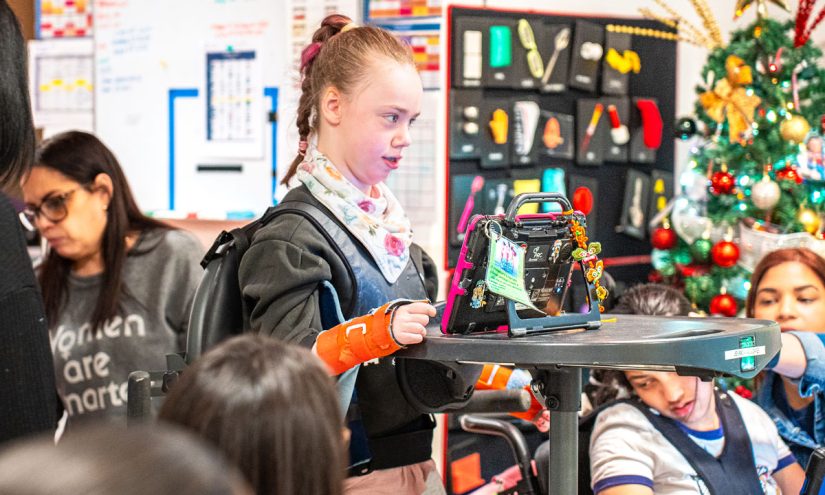
Sitting in his wheelchair at a highly specialized private school in Manhattan designed for students with severe and multiple disabilities, Joshua Omoloju, 17, uses assistive technology to activate his Spotify playlist, sharing snippets of his favorite songs in class — tracks even his parents were unaware he loved.
It’s a role this deejay is thrilled to fill at a school that encourages him to express himself any way he can. The magnetic and jovial Omoloju, a student at The International Academy of Hope, is legally blind, hearing impaired and nonverbal. But none of that stopped him from playing Peanut Butter Jelly Time by Buckwheat Boyz mid-lesson on a recent morning.
“OK, Josh!” his teachers said, swiveling their hips and smiling. “Let’s go!”
iHOPE, as it’s known, was established in Harlem in 2013 for just six children and moved to its current location blocks from Rockefeller Center in 2022. It now serves 150 students ages 5 through 21 and is currently at capacity with 27 people on its waitlist, according to its principal.
The four-story, nonprofit school offers age-appropriate academics alongside physical, occupational and speech therapy in addition to vision and hearing services. Every student at iHOPE has a full-time paraprofessional, who works with them throughout the day, and at least half participate in aquatic therapy in a heated cellar pool.
The school has three gymnasiums fitted with equipment to increase students’ mobility, helping many walk or stand, something they rarely do because of their physical limitations.


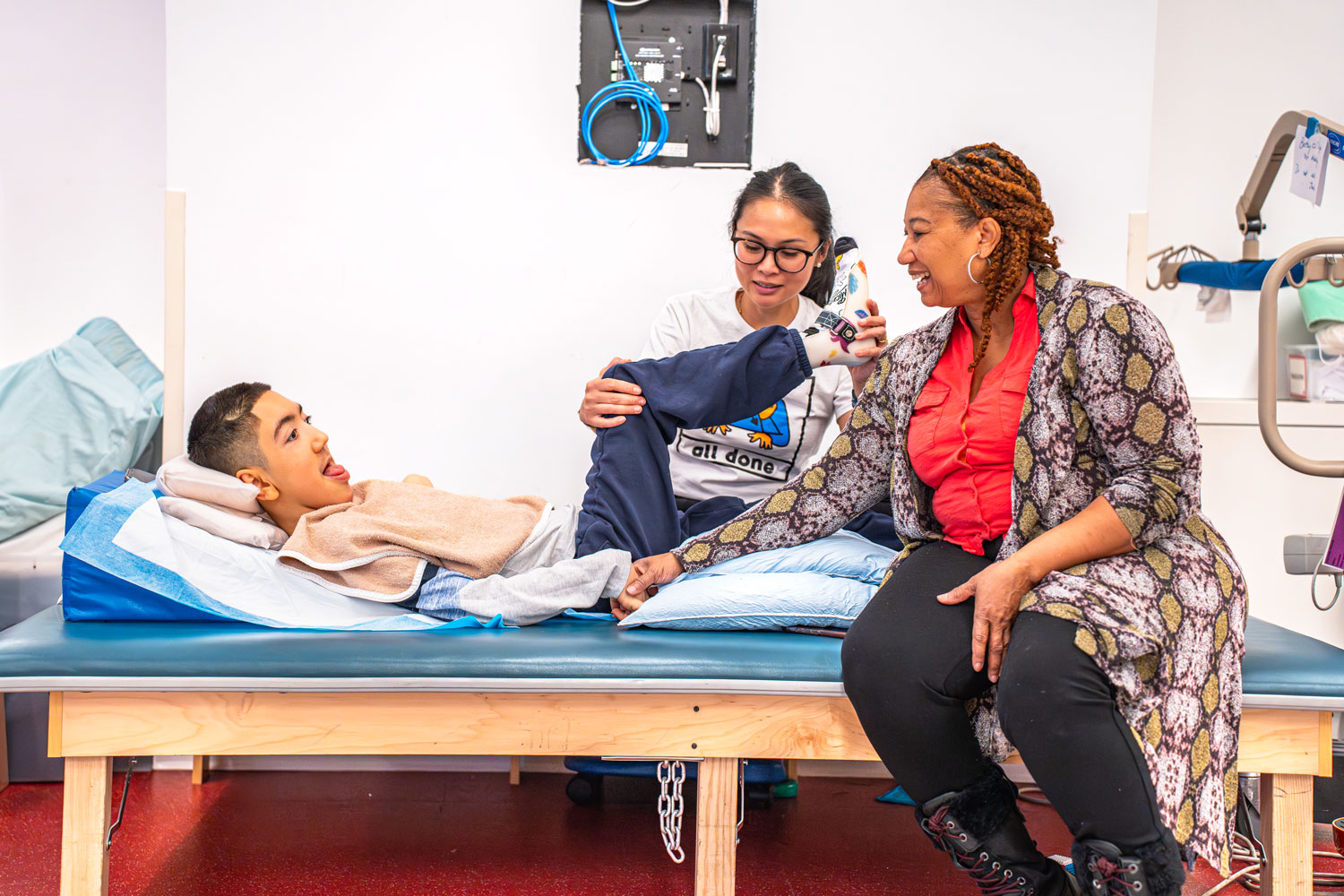
Its 300-member staff includes four full-time nurses and its six-figure cost averages $200,000 annually depending on each child’s needs. Parents can seek tuition reimbursement from the New York City Department of Education through legal processes set out by the Individuals with Disabilities Education Act, arguing that the public school cannot adequately meet their child’s needs.
iHOPE focused primarily on rehabilitation in its early years but is now centered on academics and assistive technology, particularly augmentative and alternative communication devices that improve students’ access to learning. Mastery means users can take greater control of their lives. Shani Chill, the school’s principal and executive director, said working at iHOPE allows her to witness this transformational magic each day.
“Every student who comes here is a gift that is locked away inside and the staff come together to figure that out, saying, ‘I can give you this device, this tool, these tactiles’ and suddenly the student breaks through and shows us something amazing about themselves,” she said. “You see their personality, their humor, and the true wisdom that comes from students who would otherwise be sitting there in a wheelchair with everything being done for them — or to them.”
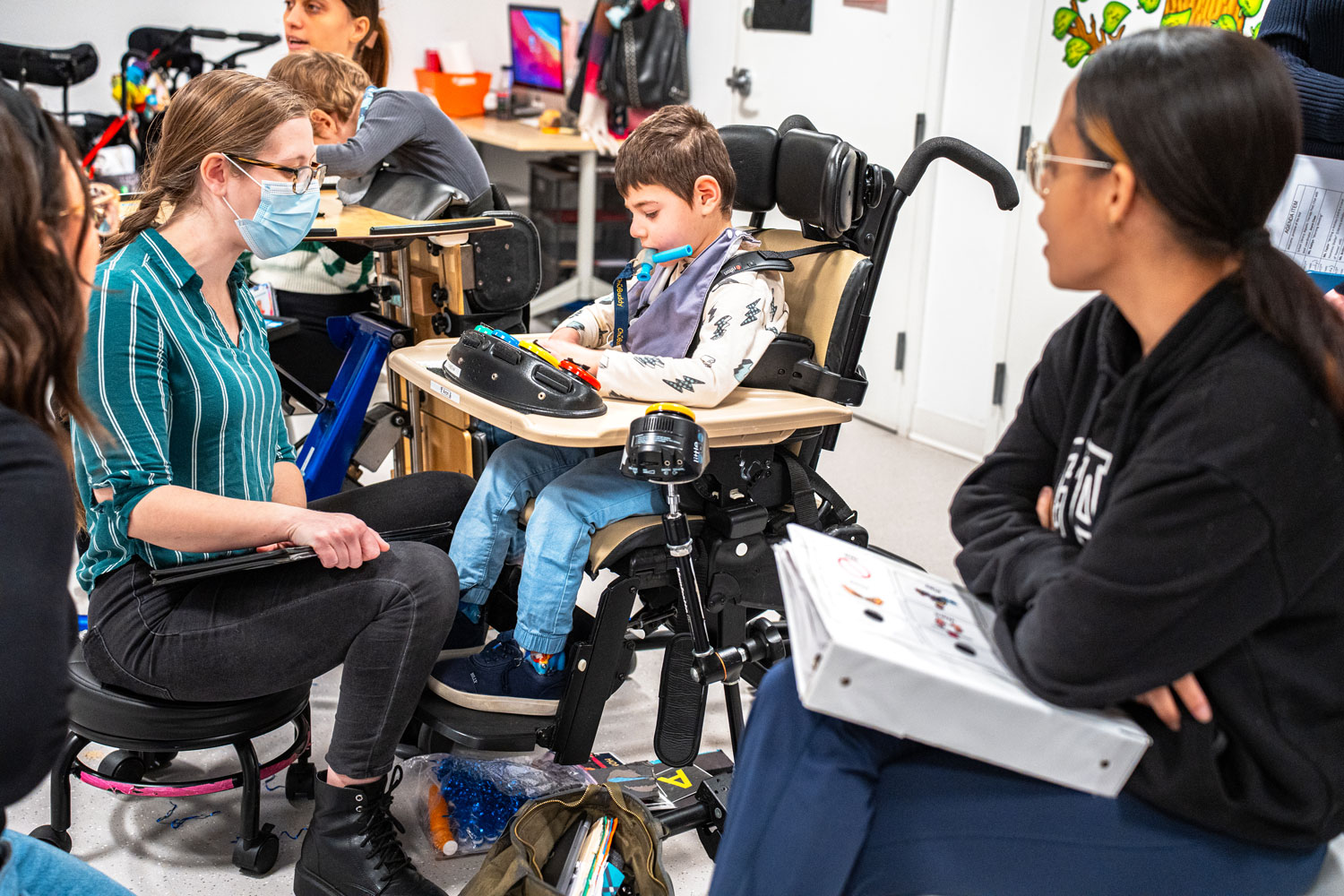
Some devices, like the one Omoloju uses in his impromptu deejay booth, track students’ pupils, allowing them to answer questions and express, for example, joy or discomfort, prompting staff to make needed modifications.
Because he’s unable to speak, Omoloju’s parents, teachers and friends assess his mood through other means, including his laughter, which arrives with ease and frequency at iHOPE. It’s a welcome contrast to what came before it at a different school, when a sudden eruption of tears would prompt a call to his mother, who would rush down to the campus, often too late to glean what upset him.
“One of the things we saw when we first visited (iHOPE) was that they knew exactly how to work with him,” Terra Omoloju said earlier this week. “That was so impressive to me. I don’t feel anxious anymore about getting those calls.”
Yosef Travis, father to 8-year-old Juliette, said iHOPE embodies the idea that children with multiple disabilities and complex syndromes can grow with the right support.
Juliette has a rare genetic disorder that impacts brain development and is also visually impaired. She squeals with joy with one-on-one attention and often taps her feet in excitement, Chill said.
“Juliette has grown in leaps and bounds over the past three and a half years and the dedication and creativity of the staff played a significant role,” her father said. “When she is out sick or on school vacation, we can tell that she misses them.”
Travis said his family considered many options, both public and private, before choosing iHOPE.
“iHOPE was the only one that could provide a sound education without sacrificing the necessary supports and related services she needs for her educational journey,” he said.
iHOPE currently serves one child from Westchester but all the others are from New York City. Parents are not referred there by their local district: They learn about it from social workers, therapists, doctors or through their own research, the principal said.
Those seeking enrollment complete an intake process to ensure their child would be adequately served there. Parents typically make partial payments or deposits upfront — the amount varies depending on income — while seeking tuition reimbursement from the NYC DOE.
iHOPE does not receive state or federal funding but some organizations that aid its students saw their budgets slashed by the Trump administration, reducing the amount of support they can provide to families in the form of services and equipment.
You can have classrooms that feel like a babysitting facility with kids in wheelchairs given colored paper and crayons, which makes no sense. Or you have a place like iHOPE, which takes advantage of the age in which we are.
Shani Chill, iHope principal and executive director
Principal Chill said her school is devoted to giving children the tools they need, even if it means absorbing added costs.
“We’ll get it from somewhere,” she said, noting iHOPE can turn to partner organization YAI and to its own fundraising efforts to pay those expenses so that every child, no matter their challenges, can learn.
Omoloju’ symptoms mimic cerebral palsy and he also has scoliosis. He’s prone to viruses and other ailments, is frequently hospitalized and has undergone surgeries for his hip and back.
“He is also very charming,” his mother said. “He likes to have fun. He loves people. I feel very blessed that he is so joyous — even when he’s sick. He is very resilient. I love that about him. He teaches me so much.”

This is Omoloju’s fourth year at iHOPE. He’s in the upper school program — iHOPE does not use grade levels — which serves students ages 14 through 21.
He has made marked improvements in his mobility and communication since his enrollment. And his parents know he loves it there: Josh’s father, Wale, saw that firsthand after he dropped his son off at campus after a recent off-site appointment.
“I wish I had a video for when Keith [his son’s paraprofessional] came out of the elevator,” his father said. “[Josh] was beside himself laughing and was so excited to see him. He absolutely loves being there. I know he is in the right place and we love that.”
Principal Chill notes many of these students would not have been placed in an academic setting in decades past. Instead, she said, they would have been institutionalized, a cruel loss for them, their families and the greater community.
“These kids deserve an education and what that looks like runs the spectrum,” she said. “You can have classrooms that feel like a babysitting facility with kids in wheelchairs given colored paper and crayons, which makes no sense. Or you have a place like iHOPE, which takes advantage of the age in which we are.”
Chill notes that assistive and communication-related devices have improved dramatically in recent years and are only expected to develop further. She’s not sure how AI might transform their lives moving forward, but highly sensitive devices that can be operated with a glance or a light touch could be life changing, for example, allowing students to activate smart devices in their own living space.
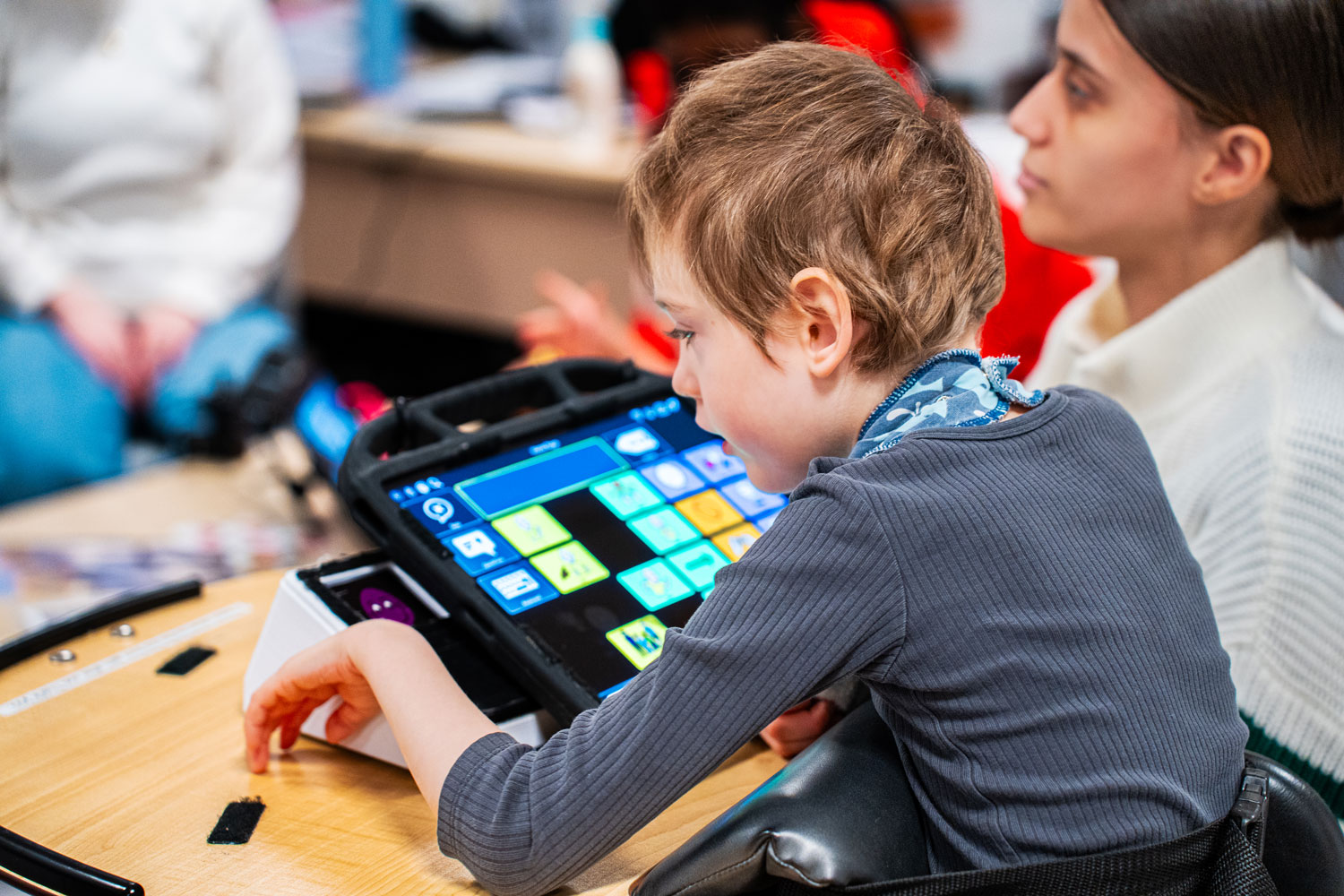
“This is a great time when you look at all of the technology that is available,” she said.
Miriam Franco was thrilled about the progress her son, Kevin Carmona, 16, made in just his first six months at iHOPE, she said.
Kevin, a high-energy student who thrives on praise from his teachers, is also good at listening: Ever curious, he’ll keep pace with a conversation from across the room if it interests him.
Kevin has cerebral palsy and a rare genetic disorder that affects the brain and immune system. He has seizures, hip dysplasia and is fed with a gastronomy tube.
“He was able to receive a communication device, which opened an entirely new world for him and allowed him to express himself in ways he could not before,” his mother said. “He also became more engaged and independent during his physical therapy and occupational therapy sessions. His attention and focus improved when completing tasks or responding to prompts, leading to greater engagement and participation.”
His enthusiasm for the school shows itself each morning, Franco said.
“You can see how happy he is while waiting for the bus and greeting his travel paraprofessional,” she said. “It starts from the moment he wakes up and continues as he gets ready for school. In every part of his current educational setting, Kevin is given real opportunities to participate, with the support in place to make that possible.”
Principal Chill said she cherishes the moment parents visit the site for the first time, imagining all their child is capable of achieving.
“They are moved to tears, saying, ‘Now I can picture what my child can do someday,” she said.
Did you use this article in your work?
We’d love to hear how The 74’s reporting is helping educators, researchers, and policymakers. Tell us how

Key points:
America’s special education system is facing a slow-motion collapse. Nearly 8 million students now receive services under the Individuals with Disabilities Education Act (IDEA), but the number of qualified teachers and related service providers continues to shrink. Districts from California to Maine report the same story: unfilled positions, overworked staff, and students missing the services they’re legally entitled to receive.
“The promise of IDEA means little if there’s no one left to deliver it.”
The data tell a clear story. Since 2013, the number of children ages 3–21 served under IDEA has grown from 6.4 million to roughly 7.5 million. Yet the teacher pipeline has moved in the opposite direction. According to Title II reports, teacher-preparation enrollments dropped 6 percent over the last decade and program completions plunged 27 percent. At the same time, nearly half of special educators leave the field within their first five years.
By 2023, 45 percent of public schools were operating without a full teaching staff. Vacancies were most acute in special education. Attrition, burnout, and early retirements outpace new entrants by a wide margin.
Why the traditional model no longer works
For decades, schools and staffing firms have fought over the same dwindling pool of licensed providers. Recruiting cycles stretch for months, while students wait for evaluations, therapies, or IEP services.
Traditional staffing firms focus on long-term contracts lasting six months or more, which makes sense for stability, but ignores an enormous, untapped workforce: thousands of credentialed professionals who could contribute a few extra hours each week if the system made it easy.
Meanwhile, the process of credentialing, vetting, and matching candidates remains slow and manual, reliant on spreadsheets, email, and recruiters juggling dozens of openings. The result is predictable: delayed assessments, compliance risk, and burned-out staff covering for unfilled roles.
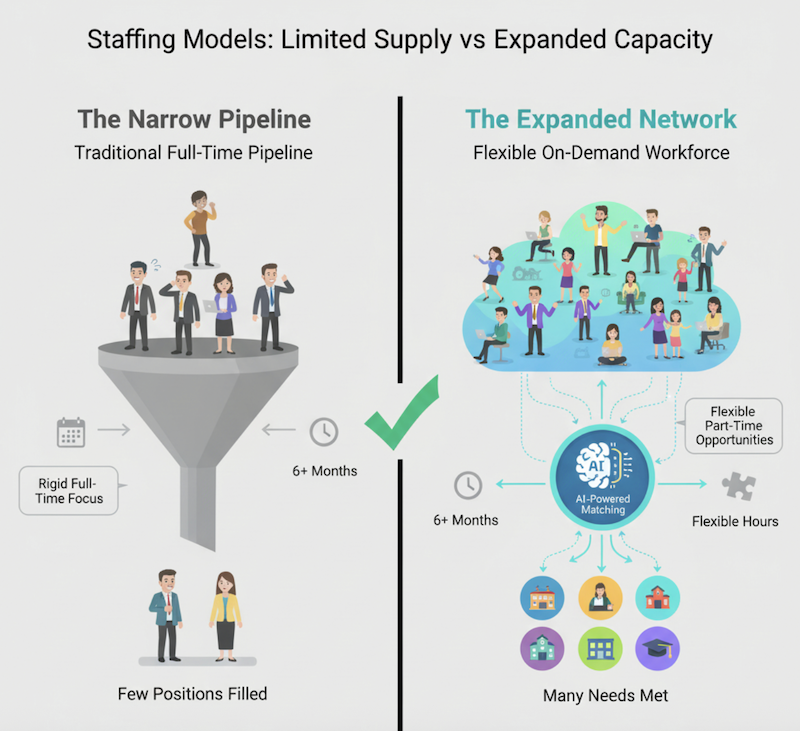
“Districts and recruiters compete for the same people, when they could be expanding the pool instead.”
The hidden workforce hiding in plain sight
Across the country, tens of thousands of licensed professionals–speech-language pathologists, occupational therapists, school psychologists, special educators–are under-employed. Many have stepped back from full-time work to care for families or pursue private practice. Others left the classroom but still want to contribute.
Imagine if districts could tap those “extra hours” through a vetted, AI-powered marketplace. A system that matched real-time school requests with qualified providers in their state. A model like this wouldn’t replace full-time roles; it would expand capacity, reduce burnout, and bring talent back into the system.
This isn’t theoretical. The same “on-demand” concept has already modernized industries from medicine to media. Education is long overdue for the same reinvention.
What modernization looks like
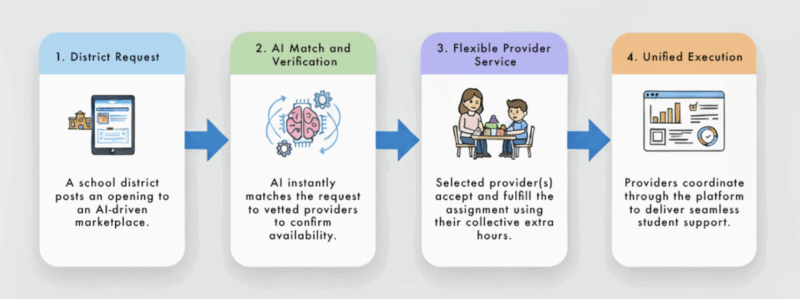
A moment of urgency
The shortage isn’t just inconvenient; it’s systemic. Each unfilled position represents students who lose therapy hours, districts risking due-process complaints, and educators pushed closer to burnout.
With IDEA students now representing nearly 15 percent of all public school enrollment, the nation can’t afford to let a twentieth-century staffing model dictate twenty-first-century outcomes.
We have the technology. We have the workforce. What we need is the will to connect them.
“Modernizing special education staffing isn’t innovation for innovation’s sake, it’s survival.”

Key points:
When I first started experimenting with AI in my classroom, I saw the same thing repeatedly from students. They treated it like Google. Ask a question, get an answer, move on. It didn’t take long to realize that if my students only engage with AI this way, they miss the bigger opportunity to use AI as a partner in thinking. AI isn’t a magic answer machine. It’s a tool for creativity and problem-solving. The challenge for us as educators is to rethink how we prepare students for the world they’re entering and to use AI with curiosity and fidelity.
Moving from curiosity to fluency
In my district, I wear two hats: history teacher and instructional coach. That combination gives me the space to test ideas in the classroom and support colleagues as they try new tools. What I’ve learned is that AI fluency requires far more than knowing how to log into a platform. Students need to learn how to question outputs, verify information and use results as a springboard for deeper inquiry.
I often remind them, “You never trust your source. You always verify and compare.” If students accept every AI response at face value, they’re not building the critical habits they’ll need in college or in the workforce.
To make this concrete, I teach my students the RISEN framework: Role, Instructions, Steps, Examples, Narrowing. It helps them craft better prompts and think about the kind of response they want. Instead of typing “explain photosynthesis,” they might ask, “Act as a biologist explaining photosynthesis to a tenth grader. Use three steps with an analogy, then provide a short quiz at the end.” Suddenly, the interaction becomes purposeful, structured and reflective of real learning.
AI as a catalyst for equity and personalization
Growing up, I was lucky. My mom was college educated and sat with me to go over almost every paper I wrote. She gave me feedback that helped to sharpen my writing and build my confidence. Many of my students don’t have that luxury. For these learners, AI can be the academic coach they might not otherwise have.
That doesn’t mean AI replaces human connection. Nothing can. But it can provide feedback, ask guiding questions, and provide examples that give students a sounding board and thought partner. It’s one more way to move closer to providing personalized support for learners based on need.
Of course, equity cuts both ways. If only some students have access to AI or if we use it without considering its bias, we risk widening the very gaps we hope to close. That’s why it’s our job as educators to model ethical and critical use, not just the mechanics.
Shifting how we assess learning
One of the biggest shifts I’ve made is rethinking how I assess students. If I only grade the final product, I’m essentially inviting them to use AI as a shortcut. Instead, I focus on the process: How did they engage with the tool? How did they verify and cross-reference results? How did they revise their work based on what they learned? What framework guided their inquiry? In this way, AI becomes part of their learning journey rather than just an endpoint.
I’ve asked students to run the same question through multiple AI platforms and then compare the outputs. What were the differences? Which response feels most accurate or useful? What assumptions might be at play? These conversations push students to defend their thinking and use AI critically, not passively.
Navigating privacy and policy
Another responsibility we carry as educators is protecting our students. Data privacy is a serious concern. In my school, we use a “walled garden” version of AI so that student data doesn’t get used for training. Even with those safeguards in place, I remind colleagues never to enter identifiable student information into a tool.
Policies will continue to evolve, but for day-to-day activities and planning, teachers need to model caution and responsibility. Students are taking our lead.
Professional growth for a changing profession
The truth of the matter is most of us have not been professionally trained to do this. My teacher preparation program certainly did not include modules on prompt engineering or data ethics. That means professional development in this space is a must.
I’ve grown the most in my AI fluency by working alongside other educators who are experimenting, sharing stories, and comparing notes. AI is moving fast. No one has all the answers. But we can build confidence together by trying, reflecting, and adjusting through shared experience and lessons learned. That’s exactly what we’re doing in the Lead for Learners network. It’s a space where educators from across the country connect, learn and support one another in navigating change.
For educators who feel hesitant, I’d say this: You don’t need to be an expert to start. Pick one tool, test it in one lesson, and talk openly with your students about what you’re learning. They’ll respect your honesty and join you in the process.
Preparing students for what’s next
AI is not going away. Whether we’re ready or not, it’s going to shape how our students live and work. That gives us a responsibility not just to keep pace with technology but to prepare young people for what’s ahead. The latest futures forecast reminds us that imagining possibilities is just as important as responding to immediate shifts.
We need to understand both how AI is already reshaping education delivery and how new waves of change will remain on the horizon as tools grow more sophisticated and widespread.
I want my students to leave my classroom with the ability to question, create, and collaborate using AI. I want them to see it not as a shortcut but as a tool for thinking more deeply and expressing themselves more fully. And I want them to watch me modeling those same habits: curiosity, caution, creativity, and ethical decision-making. Because if we don’t show them what responsible use looks like, who will?
The future of education won’t be defined by whether we allow AI into our classrooms. It will be defined by how we teach with it, how we teach about it, and how we prepare our students to thrive in a world where it’s everywhere.
Two months after Education Secretary Linda McMahon was confirmed, she and a small team from the department met with leadership from the National Center for Learning Disabilities, an advocacy group that works on behalf of millions of students with dyslexia and other disorders.
Jacqueline Rodriguez, NCLD’s chief executive officer, recalled pressing McMahon on a question raised during her confirmation hearing: Was the Trump administration planning to move control and oversight of special education law from the Education Department to Health and Human Services?
Rodriguez was alarmed at the prospect of uprooting the 50-year-old Individuals with Disabilities in Education Act (IDEA), which spells out the responsibility of schools to provide a “free, appropriate public education” to students with disabilities. Eliminating the Education Department entirely is a primary objective of Project 2025, the conservative blueprint that has guided much of the administration’s education policy. After the department is gone, Project 2025 said oversight of special education should move to HHS, which manages some programs that help adults with disabilities.
But the sprawling department that oversees public health has no expertise in the complex education law, Rodriguez told McMahon.
“Someone might be able to push the button to disseminate funding, but they wouldn’t be able to answer a question from a parent or a school district,” she said in an interview later.
For her part, McMahon had wavered during her confirmation hearing on the subject. “I’m not sure that it’s not better served in HHS, but I don’t know,” she told Sen. Tim Kaine, D-Va., who shared concerns from parents worried about who would enforce the law’s provisions.
But nine days into a government shutdown that has furloughed most federal government workers, the Trump administration announced that it was planning a drastic “reduction in force” that would lay off more than 450 people, including almost everyone who works in the Office of Special Education Programs. Rodriguez believes the layoffs are a way that the administration plans to force the special education law to be managed by some other federal office.
Related: Become a lifelong learner. Subscribe to our free weekly newsletter featuring the most important stories in education.
The Education Department press office did not respond to a question about the administration’s plans for special education oversight. Instead, the press office pointed to a social media post from McMahon on Oct. 15. The fact that schools are “operating as normal” during the government shutdown, McMahon wrote on X, “confirms what the President has said: the federal Department of Education is unnecessary.”’
Yet in that May meeting, Rodriguez said she was told that HHS might not be the right place for IDEA, she recalled. While the new department leadership made no promises, they assured her that any move of the law’s oversight would have to be done with congressional approval, Rodriguez said she was told.
The move to gut the office overseeing special education law was shocking to families and those who work with students with disabilities. About 7.5 million children ages 3 to 21 are served under IDEA, and the office had already lost staffers after the Trump administration dismissed nearly half the Education Department’s staff in March, bringing the agency’s total workforce to around 2,200 people.
For Rodriguez, whose organization supports students with learning disabilities such as dyslexia, McMahon’s private assurances was the administration “just outright lying to the public about their intentions.”
“The audacity of this administration to communicate in her confirmation, in her recent testimony to Congress and to a disability rights leader to her face, ‘Don’t worry, we will support kids with disabilities,’” Rodriguez said. “And then to not just turn a 180-degree on that, but to decimate the ability to enforce the law that supports our kids.”
She added: “It could not just be contradictory. It feels like a bait and switch.”
Five days after the firings were announced, a U.S. district judge temporarily blocked the administration’s actions, setting up a legal showdown that is likely to end up before the Supreme Court. The high court has sided with the president on most of his efforts to drastically reshape the federal workforce. And President Donald Trump said at a Tuesday press briefing that more cuts to “Democrat programs” are coming.
“They’re never going to come back in many cases,” he added.
Related: Hundreds of thousands of students are entitled to training and help finding jobs. They don’t get it
In her post on X, McMahon also said that “no education funding is impacted by the RIF, including funding for special education,” referring to the layoffs.
But special education is more than just money, said Danielle Kovach, a special education teacher in Hopatcong, N.J. Kovach is also a former president of the Council for Exceptional Children, a national organization for special educators.
“I equate it to, what would happen if we dismantled a control tower at a busy airport?” Kovach said. “It doesn’t fly the plane. It doesn’t tell people where to go. But it ensures that everyone flies smoothly.”
Katy Neas, a deputy assistant secretary in the Office of Special Education and Rehabilitative Services during the Biden administration, said that most people involved in the education system want to do right by children.
“You can’t do right if you don’t know what the answer is,” said Neas, who is now the chief executive officer of The Arc of the United States, which advocates for people with intellectual and developmental disabilities. “You can’t get there if you don’t know how to get your questions answered.”
Families also rely on IDEA’s mandate that each child with a disability receives a free, appropriate public education — and the protections that they can receive if a school or district does not live up to that requirement.
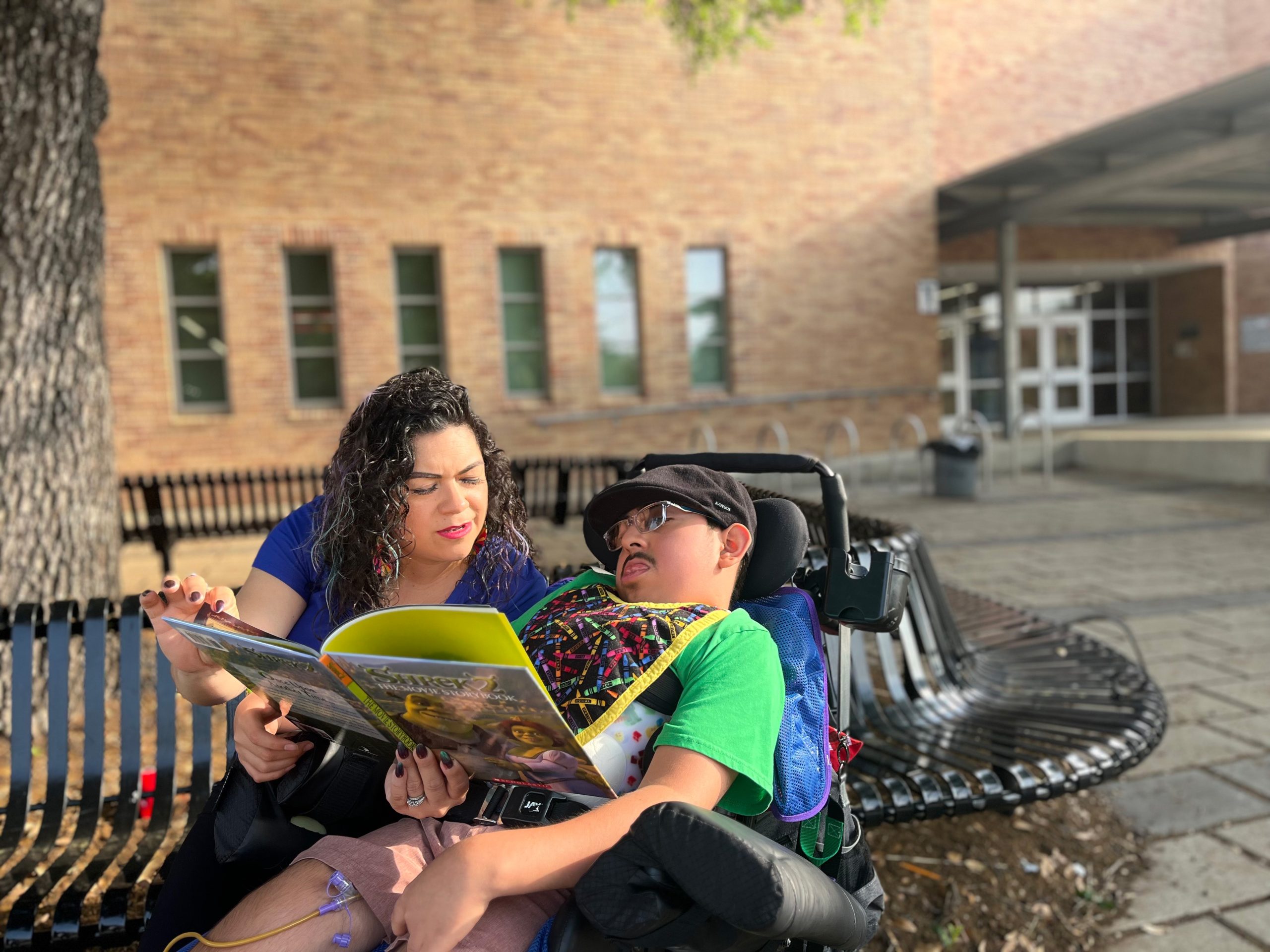
Maribel Gardea, a parent in San Antonio, said she fought with her son’s school district for years over accommodations for his disability. Her son Voozeki, 14, has cerebral palsy and is nonverbal. He uses an eye-gaze device that allows him to communicate when he looks at different symbols on a portable screen. The district resisted getting the device for him to use at school until, Gardea said, she reminded them of IDEA’s requirements.
“That really stood them up,” she said.
Related: Trump wants to shake up education. What that could mean for a charter school started by a GOP senator’s wife
Gardea, the co-founder of MindShiftED, an organization that helps parents become better advocates for their children with disabilities, said the upheaval at the Education Department has her wondering what kind of advice she can give families now.
For example, an upcoming group session will teach parents how to file official grievances to the federal government if they have disputes with their child’s school or district about services. Now, she has to add in an explanation of what the deep federal cuts will mean for parents.
“I have to tell you how to do a grievance,” she said she plans to tell parents. “But I have to tell you no one will answer.”
Maybe grassroots organizations may find themselves trying to track parent complaints on their own, she said, but the prospect is exhausting. “It’s a really gross feeling to know that no one has my back.”
In addition to the office that oversees special education law, the Rehabilitation Services Administration, which is also housed at the Department of Education and supports employment and training of people with disabilities, was told most of its staff would be fired.
“Regardless of which office you’re worried about, this is all very intentional,” said Julie Christensen, the executive director of the Association of People Supporting Employment First, which advocates for the full inclusion of people with disabilities in the workforce. “There’s no one who can officially answer questions. It feels like that was kind of the intent, to just create a lot of confusion and chaos.”
Those staffers “are the voice within the federal government to make sure policies and funding are aligned to help people with disabilities get into work,” Christensen said. Firing them, she added, is counterintuitive to everything the administration says it cares about.
For now, advocates say they are bracing for a battle similar to those fought decades ago that led to the enactment of civil rights law protecting children and adults with disabilities. Before the law was passed, there was no federal guarantee that a student with a disability would be allowed to attend public school.
“We need to put together our collective voices. It was our collective voices that got us here,” Kovach said.
And, Rodriguez said, parents of children in special education need to be prepared to be their own watchdogs. “You have to become the compliance monitor.”
It’s unfair, she said, but necessary.
Contact staff writer Christina Samuels at 212-678-3635 or [email protected].
This story about special education was produced by The Hechinger Report, a nonprofit, independent news organization focused on inequality and innovation in education. Sign up for the Hechinger newsletter.

Every year, tens of thousands of infants are born prematurely, at a low birthweight, or with other conditions that would make them automatically eligible for therapeutic services that could help them thrive.
When everything goes smoothly, early intervention provides those services, required by federal law for children ages birth to 3. Funding sources for the program can vary, but it’s often paid for by a mix of federal, state, local, and private insurance dollars.
But far too few of the youngest children actually receive that help. (It’s an issue I wrote about earlier this year.) One particular gap is in services provided to infants from birth to 1. Only about 1.3 percent of babies that age receive early intervention services, compared to 7.5 percent of 2- to 3-year-olds, according to a new report from the think tank New America.
Kayla Khan, a long-time speech therapist, has experienced that gap herself.
When her infant daughter was released after a month and a half in neonatal intensive care, she asked the discharge team about early intervention services. Because of her background, she knew about the therapies.
At the time, the family lived in the Washington D.C. area, and no one at the hospital was helpful. “They said, ‘You don’t want that,’ or, ‘It’s not going to help you,’” Khan recalled.
After moving to Seattle a few months later, Khan finally connected with early intervention services that provided physical and feeding therapy to her daughter. She now helps lead a decade-old effort in Seattle to provide care and support specifically to families of “tiny babies” who are transitioning from the hospital to home.
The program relies on building trust and communication with hospital staff to ensure eligible babies get referred to early intervention and speeding up the evaluation timeline so babies get seen within three days of a referral — “really, really, really fast” for a system where the requirement for referral is 45 days, Khan said. Her program also connects families with therapists who are skilled and trained in the specific needs of newborns.
“We’re making this process that was designed for all children, birth to 3, work for the tiniest babies,” Khan said.
This kind of targeted attention for the youngest is desperately needed, according to the New America report and another that focused on Illinois, from early nonprofit advocacy group Start Early. (I recently completed a reporting fellowship with New America which supported some of my writing on early intervention, among other topics.)
Among the two reports’ recommendations:
Make the list of conditions that automatically qualify a baby for early intervention easy to understand and find. States have identified scores of different qualifying conditions that make a child more likely to develop a delay, including extreme prematurity, low birthweight, a parent with a substance use disorder, and child welfare involvement. But, as the New America report points out, finding a user-friendly list of the conditions can be a challenge. “The eligibility criteria and the way things work varies so much from one state to the next,” said report co-author Carrie Gillispie, the Early Development & Disability project director at New America.
The Start Early report noted that in a related study, two families were judged ineligible for early intervention despite their children having medical conditions that should have made them automatically eligible.
Consider co-locating early intervention staff in the NICU to make the transition as smooth as possible. Coordinators would be physically present in NICUs to build relationships, participate in medical rounds, and lead the process to enroll children in early intervention programs, the Start Early authors wrote. Both reports stress the importance of providing the family with a personal connection to early intervention before a baby gets discharged from the hospital.
Improve coordination and communication with the early intervention system, hospitals and pediatricians. Pediatricians are not always notified when doctors in the hospital refer a child to early intervention services. And well-child visits are often so short that physicians miss the full developmental picture. Too often, referrals come after a child is already starting to struggle, said Sarah Gilliland, a senior policy analyst in the New Practice Lab at New America, who co-wrote the report.
Bridge cultural and language barriers with families by hiring more multilingual hospital and early intervention staff. Cultural divides are pervasive throughout the early intervention system, where the overwhelming majority of the therapists and other providers in many communities are white, English-speaking women. But even simple forms often go untranslated: One survey found that nearly three-quarters of state early intervention referral forms are only available in English, the New America report noted. The report also stressed that families should be reassured that early intervention services are meant to be support, not surveillance. “Hesitant families might benefit from a connection with families within their own communities who can explain what to expect from early intervention,” the authors wrote.
Strengthen electronic referral systems and centralize enrollment in early intervention programs. When I reported on the too-often broken path from the NICU to early intervention in Chicago, I heard stories of a system that relied heavily on faxing paper forms. NICU physicians often had no idea what happened with referrals they made. Indeed, surveys have found that only a fraction of early intervention coordinators have access to technology that links children’s electronic health records to the referral system.
Some states and communities are introducing technological advances which could be implemented more widely, the New America report noted. For instance, one state is trying to address the problem using “e-referrals,” which share an infant’s medical records directly with the early intervention system.
We want to help you make sense of the first year of the Trump administration and the effects on education. What have you experienced? What do you want to know more about? Tell us, and you will help inspire reporting by our journalists. Email [email protected].
This story about preemies was produced by The Hechinger Report, a nonprofit, independent news organization focused on inequality and innovation in education. Sign up for the Hechinger newsletter.

When pediatricians diagnose preschoolers with attention deficit hyperactivity disorder, there are clear steps they are supposed to take.
Families should first be referred to behavior therapy, which teaches caregivers how to better support their children and manage challenging behaviors that may be related to ADHD. If therapy isn’t making a significant difference, the American Academy of Pediatrics advises, pediatricians can then consider medication.
Nationwide, this process — behavior therapy, then medication if needed — isn’t being followed as often as it should, according to a study recently released by Stanford Medicine and published in JAMA Network Open. Instead, more than 42 percent of 3- to 5-year-olds with ADHD were prescribed medication within a month of their diagnosis.
Missing out on behavior therapy has worrisome implications for children and families, said Dr. Yair Bannett, assistant professor of pediatrics at Stanford Medicine and lead author of the study. Behavioral management training for parents over the course of several months has been found to reduce children’s ADHD symptoms and behavioral problems, and improve parent skills and their relationships with their children.
Without that support, families may be left facing additional challenges. Behavioral training “reduces the chaos in the house and can improve the quality of life for the parents and the child,” Bannett said.
There are several reasons families may be missing this intervention. Some pediatricians aren’t familiar with the purpose of behavior therapy, Bannett added, which is specifically aimed at the adults who support children with ADHD, not the children. “It’s really more of an advanced type of parenting course,” he said. Families also may have trouble finding affordable local therapists.
Bannett said parents should use three key practices to support young children with ADHD. (These strategies also work well for teachers, he added.)
Focus on building a strong, positive relationship: Having a strong attachment between the child and parent or teacher is an important first step to managing behavior, Bannett said. That means spending quality one-on-one time with the child. “That’s the child’s motivation, they want to please you,” he added. “Without that first piece, none of this will work.”
Use positive reinforcement: Rather than punishing a child’s negative behavior, Bannett said, parents and teachers will see more success if they praise good behaviors and develop reward systems to encourage them.
Adjust the child’s environment: Children with ADHD may thrive with simple environmental changes, such as “visual schedules” — charts that use pictures to show a child daily activities or tasks — and a consistent, structured routine.
Parents who can’t find in-person therapists can substitute online therapy, Bannett said. The training is also useful for families even after their children are prescribed medication.
To make sure more families have access to helpful strategies, Bannett would like to see more education for doctors and clinicians on these best practices.
“The pediatricians could also counsel families in the office about these techniques,” Bannett said. “Some written materials and resources could be enough” to at least introduce these practices, he added. “That’s what I’m hoping could make a change.”
This story about children with ADHD was produced by The Hechinger Report, a nonprofit, independent news organization focused on inequality and innovation in education. Sign up for the Hechinger newsletter.
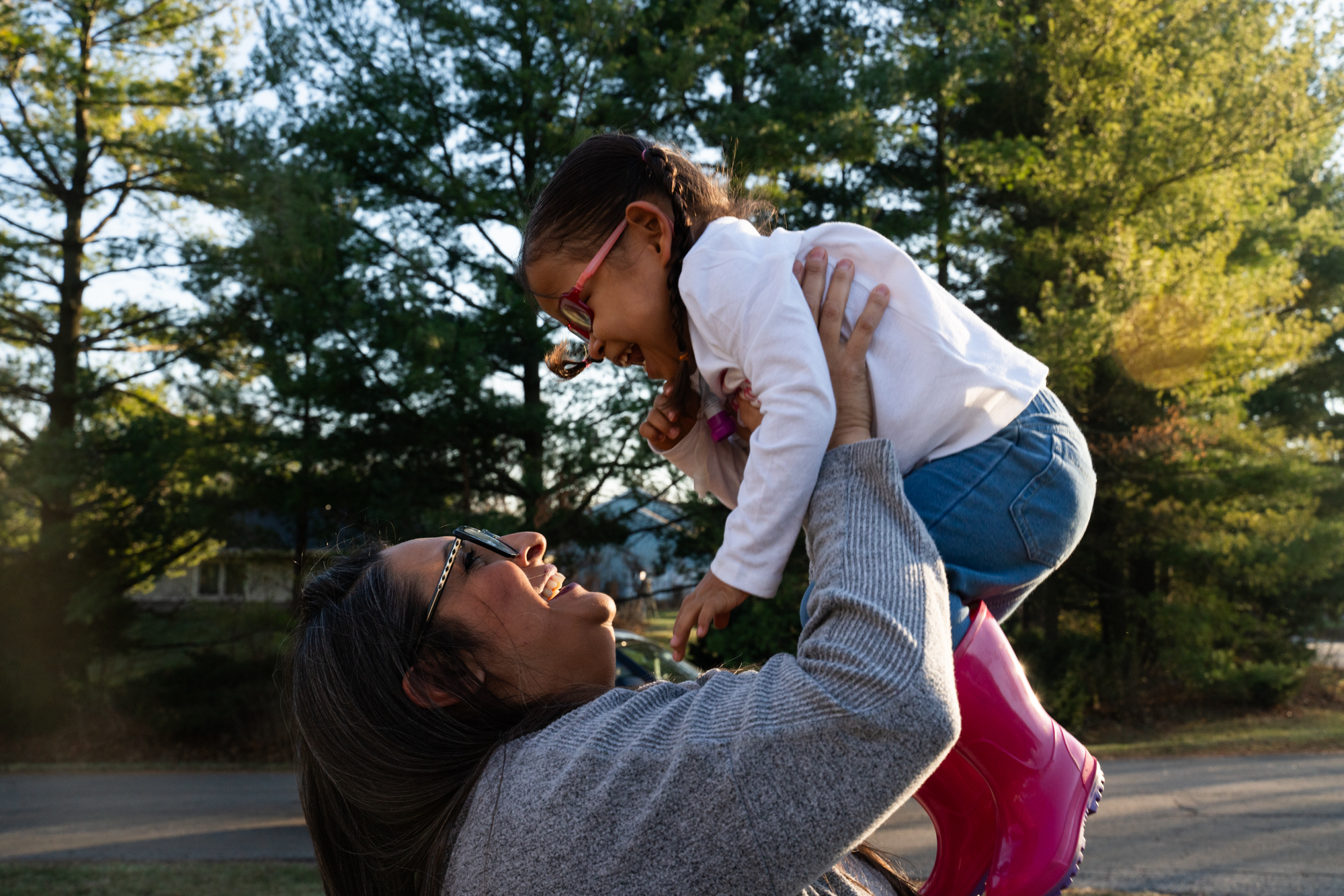
Illinois hospital staff will soon be required by law to refer parents of severely premature infants to services that can help prevent years of intensive and expensive therapy later, when the children are older. The new law follows reporting from The Hechinger Report that exposed how hospitals often fail to connect many eligible parents to these opportunities for their children after they leave neonatal intensive care units.
Earlier this year, Hechinger contributor Sarah Carr wrote about how, across the country, far too few parents are made aware of the kinds of therapies their babies are entitled to under federal law. Such early intervention services can ultimately reduce the need for these children to require costly special education support as schoolchildren.
Carr noted: “Federal law says children with developmental delays, including newborns with significant likelihood of a delay, can get early intervention from birth to age 3. States design their own programs and set their own funding levels, however. They also set some of the criteria for which newborns are automatically eligible, typically relying on qualifying conditions like Down syndrome or cerebral palsy, extreme prematurity or low birthweight. Nationally, far fewer infants and toddlers receive the therapies than should. The stats are particularly bleak for babies under the age of 1: Just 1 percent of these infants get help. Yet an estimated 13 percent of infants and toddlers likely qualify.”
After the Hechinger Report story was published, Illinois state Rep. Janet Yang Rohr authored legislation to require that hospitals distribute materials informing parents of premature and low birth weight babies about their eligibility for early intervention therapies. The bill also required that hospitals make a nurse or physical therapist available to explain these rights to families.
Related: Young children have unique needs and providing the right care can be a challenge. Our free early childhood education newsletter tracks the issues.
“The problem is that these families often don’t know about these services,” Yang Rohr said last spring, after her chamber passed the bill. “So this bill improves that early intervention process by requiring NICU staff to share information about these services and requires hospital staff to write a referral to these programs for families that are eligible.”
Illinois Gov. JB Pritzker signed that bill into law earlier this month. It takes effect in January.
Carr also wrote: “The stakes are high for these fragile, rapidly growing babies and their brains. Even a few months of additional therapy can reduce a child’s risk of complications and make it less likely that they will struggle with talking, moving and learning down the road. In Chicago and elsewhere, families, advocates and physicians say a lot of the failures boil down to overstretched hospital and early intervention delivery systems that are not always talking with families very effectively, or with each other hardly at all. ‘They really put the onus of helping your child get better outcomes on you,’ said Jaclyn Vasquez, an early childhood consultant who has had three babies of her own spend time in the NICU.”
“Early intervention is life-changing for many families, as these programs provide critical services and therapies as children develop,” Illinois state Sen. Ram Villivalam said when the bill was sent to Pritzker. “But, these services can only benefit those they are able to reach, which means uplifting the program and expanding its outreach to those who need it is imperative.”
Contact editor Nirvi Shah at 212-678-3445, securely on Signal at NirviShah.14 or via email at [email protected].
This story about premature infants was produced by The Hechinger Report, a nonprofit, independent news organization focused on inequality and innovation in education. Sign up for the Hechinger newsletter.