This audio is auto-generated. Please let us know if you have feedback.
During this tumultuous year at the U.S. Department of Education that saw about half of the 4,133 employees leave due to layoffs, buyouts and early retirements, the staff at the Office of Special Education Programs stayed mostly stable.
That changed on Friday, however, when the Trump administration issued reduction-in-force notices across the federal government, including at the Education Department. Court filings show that 466 employees at the Education Department were impacted and several special education association leaders say most of the OSEP staff was laid off.
On Friday, the department’s press office confirmed that the RIFs affected staff at the Education Department but did not provide more details.
The National Association of State Directors of Special Education, in a statement on Sunday, said informal reports that NASDSE believes to be true indicate that only the two most senior staff remain in OSEP and just one staff member remains in the Rehabilitation Services Administration. Both offices are part of the Education Department’s Office of Special Education and Rehabilitative Services.
NASDSE said it was “confused and concerned” by the staffing changes, adding that the Education Department under the Trump administration has repeatedly said it supports federal funding and implementation of the Individuals with Disabilities Education Act and special education for children with disabilities.
“These RIFs, if true, will make it impossible for the Department to fulfill those responsibilities,” the NASDSE statement said. “There is significant risk that not only will Federal funding lapse, but children with disabilities will be deprived” of a free, appropriate public education.
Like NASDSE, several other organizations in the special education field wondered how the Education Department would support special education services across the country with such a limited staff.
“The rumored near elimination of the Office for Special Education Programs is absolutely devastating to the education of people with disabilities,” said Chad Rummel, executive director of the Council for Exceptional Children, in an email on Saturday.
Rummel said OSEP’s oversight, technical assistance and accountability efforts are critical to supporting the implementation of IDEA, which celebrates its 50th anniversary next month. About 8.4 million infants, toddlers, children and young adults received services under IDEA in 2023.
“Eliminating federal capacity to support IDEA is harmful to people with disabilities, their families, and the professionals who serve them, and it runs counter to everything our members work toward every day,” he said.
Myrna Mandlawitz, policy and legislative consultant for the Council of Administrators of Special Education, said on Sunday that the OSEP staff reductions will put an “extreme burden on states and locals that are already really stretched.”
IDEA, Mandlawitz noted, is implemented collectively by local, state and federal agencies. The federal staff reductions take away “one very vital piece of the partnership. It’s just hard to understand how it can possibly function,” she said.
Promises to protect special education
The RIFs came two weeks into the federal government shutdown that began Oct. 1 as Congress remains at a funding impasse for fiscal year 2026. During the shutdown, the Education Department planned to furlough about 95% of its non-Federal Student Aid staff for the first week, according to a Sept. 28 memo from U.S. Education Secretary Linda McMahon.
Federal staff are not paid during a government shutdown, but typically receive retroactive compensation. However, there are reports that the Trump administration may try to withhold back pay for this current shutdown, according to the American Federation of Government Employees, a union representing over 820,000 workers in nearly every agency of the federal government.
McMahon said in the memo that school systems could still draw down federal grants awarded over the summer and processing would continue for the Free Application for Federal Student Aid. Title I and IDEA grants would be distributed as well.
However, the agency is pausing Office for Civil Rights investigations, new grant-making activities and technical assistance support during the shutdown.
For several months, McMahon has repeatedly told Congress that federal funding for special education activities would be protected. The Trump administration’s proposed FY 26 budget level funded IDEA at $15.5 billion despite an overall 15% drop in the recommended agency budget.
The Education Department, in an April 28 letter to Sen. Lisa Blunt Rochester, D-Del., said no employees in OSEP or at RSA were subject to massive layoffs at the agency that took place on March 11.
Nonetheless, McMahon and Trump have voiced support for moving special education programming out of the Education Department and into the U.S. Department of Health and Human Services. No plan has been publicly released, and opponents say such a move would require congressional approval. Court documents show that between 1,100 and 1,200 employees at HHS were expected to receive RIF notices on Friday.
The broader layoffs and the talk of moving special education programs are in line with vows from candidate and now-President Donald Trump to shutter the Education Department. Trump’s stated aim is to reduce federal bureaucracy and to give states and school districts more authority in education funding decisions.
This summer, about a dozen former federal senior special education officials wrote to Congress urging that lawmakers reject transferring oversight of special education services out of the Education Department. The former officials and others said keeping special education within the Education Department is essential for properly implementing IDEA regulations.
Looking back at OSEP
Before Friday’s RIFs, morale at OSEP was already at a low point, say former OSEP employees and others familiar with the office.
Larry Wexler, who retired last year as OSEP director of research to practice, said he had talked with current and former OSEP employees before and after Friday’s RIFs.
“If the mood could be described as despondent, it would be such an improvement over what it is,” Wexler said on Sunday. “These people are shattered.”
Former and current OSEP staff have also been saddened by the death of long-time OSEP official Gregg Corr, who died Sept. 28 from an aggressive form of lung cancer. His friends, family and former OSEP colleagues gathered for his memorial service Oct. 11 in Washington, D.C., to pay tribute to his life, including his 38 years at OSEP.
When Corr retired from OSEP in December 2024, he said, “My time in OSEP has been nothing short of extraordinary,” according to his obituary. Corr added that during his career he visited nearly every state, connecting with state offices, local programs, parents and advocates.
“These experiences have been deeply inspiring and have strengthened my belief in the importance of the work we do. Hearing firsthand from families about the impact of our efforts has been both humbling and motivating,” Corr said. “Over the years, I’ve witnessed remarkable progress in the field, yet I know there is still so much more to achieve.”
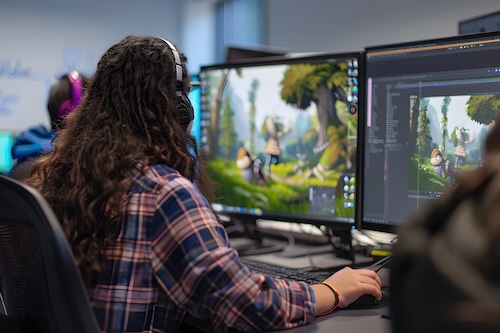
For students with special needs, learning can often resemble a trek through dense woods along a narrow, rigid path–one that leaves little to no room for individual exploration. But the educational landscape is evolving. Picture classrooms as adventurous hunts, where every learner charts their own journey, overcomes unique challenges, and progresses at a pace that matches their strengths. This vision is becoming reality through gamification, a powerful force that is reshaping how students learn and how teachers teach in K–12 special education.
Personalized learning paths: Tailoring the adventure
Traditional classrooms often require students to adapt one method of instruction, which can be limiting–especially for neurodiverse learners. Gamified learning platforms provide an alternative by offering adaptive, personalized learning experiences that honor each student’s profile and pace.
Many of these platforms use real-time data and algorithms to adjust content based on performance. A student with reading difficulties might receive simplified text with audio support, while a math-savvy learner can engage in increasingly complex logic puzzles. This flexibility allows students to move forward without fear of being left behind, or without being bored waiting for others to catch up.
Accessibility features such as customizable avatars, voice commands, and adjustable visual settings also create space for students with ADHD, autism, or sensory sensitivities to learn comfortably. A student sensitive to bright colors can use a softer palette; another who struggles with reading can use text-to-speech features. And when students can replay challenges without stigma, repetition becomes practice, not punishment.
In these environments, progress is measured individually. The ability to choose which goals to tackle and how to approach them gives learners both agency and confidence–two things often missing in traditional special education settings.
Building social and emotional skills: The power of play
Play is a break from traditional learning and a powerful way to build essential social and emotional skills. For students with special needs who may face challenges with communication, emotional regulation, or peer interaction, gamified environments provide a structured yet flexible space to develop these abilities.
In cooperative hunts and team challenges, students practice empathy, communication, and collaboration in ways that feel engaging and low-stakes. A group mission might involve solving a puzzle together, requiring students to share ideas, encourage one another, and work toward a common goal.
Gamified platforms also provide real-time, constructive feedback, transforming setbacks into teachable moments. Instead of pointing out what a student did wrong, a game might offer a helpful hint: “Try checking the clues again!” This kind of support teaches resilience and persistence in a way that lectures or punitive grading rarely do.
As students earn badges or level up, they experience tangible success. These moments highlight the connection between effort and achievement. Over time, these small wins raise a greater willingness to engage with the material and with peers and the classroom community.
Fostering independence and motivation
Students with learning differences often carry the weight of repeated academic failure, which can chip away at their motivation. Gamification helps reverse this by reframing challenges as opportunities and effort as progress.
Badges, points, and levels make achievements visible and meaningful. A student might earn a “Problem Solver” badge after tackling a tricky math puzzle or receive “Teamwork Tokens” for helping a classmate. These systems expand the definition of success and highlight personal strengths.
The focus shifts from comparison to self-improvement. Some platforms even allow for private progress tracking, letting students set and meet personal goals without the anxiety of public rankings. Instead of competing, students build a personal narrative of growth.
Gamification also encourages self-directed learning. As student complete tasks, they develop skills like planning, time management, and self-assessment, skills that extend beyond academics and into real life. The result is a deeper sense of ownership and independence.
Teachers as learning guides
Gamification doesn’t replace teachers, but it can help teach more effectively. With access to real-time analytics, educators can see exactly where a student is excelling or struggling and adjust instruction accordingly.
Dashboards might reveal that a group of students is thriving in reading comprehension but needs help with number sense, prompting immediate, targeted intervention. This data-driven insight allows for proactive, personalized support.
Teachers in gamified classrooms also take on a new role, both of a mentor and facilitator. They curate learning experiences, encourage exploration, and create opportunities for creativity and curiosity to thrive. Instead of managing behavior or delivering lectures, they support students on individualized learning journeys.
Inclusion reimagined
Gamification is not a gimmick; it’s a framework for true inclusion. It aligns with the principles of Universal Design for Learning (UDL), offering multiple ways for students to engage, process information, and show what they know. It recognizes that every learner is different, and builds that into the design.
Of course, not every gamified tool is created equal. Thoughtful implementation, equity in access, and alignment with student goals are essential. But when used intentionally, gamification can turn classrooms into places where students with diverse needs feel seen, supported, and excited to learn.
Are we ready to level up?
Gamification is a step toward classrooms that work for everyone. For students with special needs, it means learning at their own pace, discovering their strengths, and building confidence through meaningful challenges.
For teachers, it’s a shift from directing traffic to guiding adventurers.
If we want education to be truly inclusive, we must go beyond accommodations and build systems where diversity is accepted and celebrated. And maybe, just maybe, that journey begins with a game.
Aditya Prakash, SKIDOS
Aditya Prakash is the founder and CEO of SKIDOS, a Copenhagen-based edtech leader transforming mobile gaming into learning, drawing on two decades of innovation, investment, and mentorship in technology-driven education.
Latest posts by eSchool Media Contributors (see all)
This audio is auto-generated. Please let us know if you have feedback.
The U.S. Department of Education is proposing to remove a requirement for states to collect and report on racial disparities in special education, according to a notice being published in the Federal Register on Friday.
The data collection is part of the annual state application under Part B of the Individuals with Disabilities Education Act. The application provides assurances that the state and its districts will comply with IDEA rules as a condition for receiving federal IDEA funding.
The data collection for racial overrepresentation or underrepresentation in special education — known as significant disproportionality — helps identify states and districts that have racial disparities among student special education identifications, placements and discipline. About 5% of school districts nationwide were identified with significant disproportionality in the 2020-21 school year, according to federal data.
The Education Department said it wants to remove the data collection because the agency anticipates it will reduce paperwork burdens for the states. According to several state Part B applications filed earlier this year, the significant disproportionality data collection adds more hours in paperwork duties.
For example, Florida’s application said it records an average of 25 additional hours for responses reporting data related to significant disproportionality in any given year, including the time for reviewing instructions, searching existing data sources, gathering and maintaining the data needed, and completing and reviewing the collection of information. Alabama’s and Oregon’s applications also cite an additional 25 hours each for the collections.
The department has not said it wants to rescind or pause the significant disproportionality regulation, a rule known as Equity in IDEA, which was last updated in 2016.
However, under the first Trump administration, the rule became a hot button issue when then-U.S. Education Secretary Betsy DeVos said its implementation would be delayed.
The Council of Parent Attorneys and Advocates, a nonprofit supportive of education rights for students with disabilities, sued the Education Departmentand won, and by April 2019, the rule was back in full effect.
Denise Marshall, CEO of COPAA said in a Thursday email to K-12 Dive that the proposal to remove the Equity in IDEA federal data collection was “yet another unlawful attempt by the Administration to shirk its obligations under the law to students of color.”
Marshall added that the data collection fulfills a critical role in enforcing the significant disproportionality requirement in IDEA. The collection allows states and districts to examine the data, determine if there is racial disproportionality, and develop measures to address the problem. Marshall points out that IDEA does not declare significant disproportionality unlawful. Rather, the law and regulations provide a method for states and districts to address systemic racial disproportionality in special education.
Robyn Linscott, director of education and family policy at The Arc, an organization that advocates for people with intellectual and developmental disabilities, said that even if in the future there is no longer a data collection for significant disproportionality at the federal level, the information would still need to be collected by states and districts as required by IDEA.
But the loss of the central repository of information on significant disproportionality in schools will make it more difficult for advocacy groups and technical assistance centers to support school and district efforts to reduce racial disparities in special education.
In the absence of the data being available at the federal level, it will be “much more difficult” for people not within a state education agency to be able to access the data, Linscott said.
Correction: A previous version of this article erred in spelling out the IDEA acronym. It stands for the Individuals with Disabilities Education Act. We have updated our story.
Rumors are swirling about the extent to which Harvard University will acquiesce to the Trump administration’s attempt to crush institutions of higher education. Until very recently Harvard was being publicly lauded for standing up to the government. Reports that Harvard may be willing to pay a sizable financial settlement to resolve legal accusations that it allowed antisemitism and promoted diversity policies were shocking to many. But the university’s purported resistance to government overreach already had a glaring exception—Palestine—and we as scholars who work on the subject have recently experienced it firsthand.
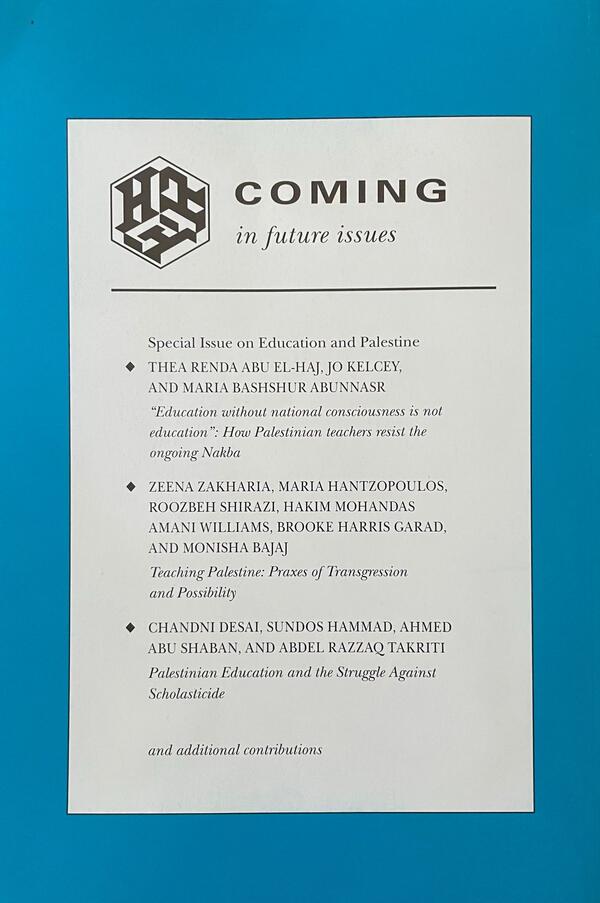
The Harvard Educational Review was set to release a special issue this summer focusing on education and Palestine. The topic, commissioned in early 2024, was timely in the wake of Israel’s onslaught on Gaza, which rights groups and other experts have concluded is a genocide, and aligned with the journal’s commitment to publishing research that tackles the most pressing issues facing education. The articles had been accepted, edited and contracted. The special issue had already been promoted at major education conferences and on the back cover of the spring issue of the HER. But suddenly, Harvard pulled the plug.
As recently reported in The Guardian, the Harvard Education Publishing Group (HEPG), which publishes the Review, abruptly and unilaterally decided to cancel the forthcoming special issue.
We wrote one of the articles that was supposed to be published in the special issue. Our article, one of 10 slated for publication, focused on the experiences of Palestinian teachers during the Lebanese civil war. But in May, as the special issue was nearing publication, we were surprised to find out that HEPG wanted to submit the entire issue to Harvard’s Office of the General Counsel for an exceptional and last-minute “risk” review. Articles had already been through the regular publishing process and were under contract. At no point to our knowledge had any “risk”-related concerns been raised about any of them. An additional review was therefore well outside the realm of routine practice.
Alarmed by this move and the dangerous precedent of subjecting academic scholarship to vetting by university lawyers, all authors in the special issue organized and expressed unequivocal refusal to this additional review in a letter sent to HEPG.
After we expressed our refusal, HEPG went radio silent for almost a month. And then it canceled the whole issue, only then claiming that there were problems with copyediting and its internal process. But procedural claims have often been leveled to silence speech, especially when it comes to Palestine. Whatever concerns about the process, there is no justification for the cancellation of the entire special issue. HEPG’s decision is yet another example of the “Palestine exception” in action: the term used to describe how seemingly liberal institutions restrict freedom of expression when it comes to Palestine.
Given the timing of HEPG’s decision—which aligns with the Trump administration’s weaponizing of Title VI of the Civil Rights Act—this seems to be the logical outcome of a political climate that has promoted sweeping claims of antisemitism to attack student protesters and higher education institutions, including Harvard. In this climate it seems far more likely that HEPG opted for censorship over academic freedom.
Of particular concern is Harvard’s recent adoption of a problematic new definition of antisemitism. That definition, proposed by the International Holocaust Remembrance Alliance (IHRA), has been roundly criticized by experts—and one of the authors of the definition—for equating critiques of the state of Israel with antisemitism. This conflation makes it harder to speak out against Israel’s actions and policies toward Palestinians and easier to victimize Palestinians. Harvard is not alone in this action.
Even before Israel’s latest brutal onslaught of Gaza, scholars writing and advocating for Palestinian rights confronted the limits of liberal empathy for Palestinians in the form of tenure denials, censored freedom of speech, doxing by pro-Israel groups and even death threats. But the repression of knowledge production and freedom of speech on Palestine has escalated since October 2023. U.S. universities and colleges (including Harvard) have canceled events that center Palestinian rights, attempted to censor scholarship, forcibly suppressed student protests against Israel’s actions in Gaza and beyond, and dismissed faculty over Palestine-related programming.
Still, the scrapping of this special issue marks a worrying escalation. It suggests that even those universities that are outspoken about their liberal values are ready to stifle academics’ legitimate criticism of Israeli policies and practices. Make no mistake: Anticipatory censorship of this kind is a hallmark of the governmental overreach that authoritarian regimes around the world are known for. As a growing number of higher education institutions adopt the IHRA definition of antisemitism, we fear we will see more and more examples of the suppression of academic freedom.
The consequences of this extend far beyond the academy. As the death toll in Gaza exceeds 60,000 and young people there face a third year without education amid ongoing bombardment, blockade and starvation, knowledge, debate and democratic action are essential to preventing the kind of horrors that are unfolding in Gaza today.
Thea Renda Abu El-Haj is a professor of education at Barnard College, Columbia University. Jo Kelcey is assistant professor of education in the Department of Psychology and Education at Lebanese American University.
“Guiding Through Change: How Small Colleges Are Responding to New Realities”: A Live Conversation with Three Small College Presidents
August 2, 2025, by Dean Hoke: Over the past several months, higher education has experienced an unprecedented wave of transformation. The elimination or curtailment of Diversity, Equity, and Inclusion (DEI) initiatives, shifting federal financial aid policies, declining enrollment in traditional undergraduate programs, and heightened visa scrutiny and geopolitical tensions pose potential risks to international student enrollment, an area of growing importance for many small colleges.
Dr. Chet Haskell, in a recent piece for the Edu Alliance Journal, captured the mood succinctly: “The headlines are full of uncertainty for American higher education. ‘Crisis’ is a common descriptor. Federal investigations of major institutions are underway. Severe cuts to university research funding have been announced. The elimination of the Department of Education is moving ahead. Revisions to accreditation processes are being floated. Reductions in student support for educational grants and loans are now law. International students are being restricted.These uncertainties and pressures affect all higher education, not just targeted elite institutions. In particular, they are likely to exacerbate the fragility of smaller, independent non-profit institutions already under enormous stress.”
Small colleges—often mission-driven, community-centered, and tuition-dependent—are feeling these disruptions acutely.
As we enter the third season of Small College America, a podcast series that spotlights the powerful impact of small colleges across the nation, my co-host Kent Barnds and I wanted to mark the moment with something special. Rather than recording a typical podcast episode, we’re hosting a live webinar to engage in a timely and candid discussion with three dynamic presidents of small colleges.
Join us for a special Small College America webinar:
“Guiding Through Change: How Small Colleges Are Responding to New Realities”
Wednesday, August 27, 1:00 PM – 2:00 PM Eastern
Our panelists bring deep experience, insight, and a strong commitment to the mission of small colleges:
Dr. Andrea Talentino is the president of Augustana College in Rock Island, Illinois. She previously served as provost at Nazareth College in Rochester, N.Y., and Dean of the College of Liberal Arts at Norwich University in Northfield, Vermont. In her administrative work, she has focused on building strong teams and developing a positive organizational culture.
Dr. Tarek Sobh is the President of Lawrence Technological University. A distinguished academic leader, he previously served as Provost at LTU and as Executive VP at the University of Bridgeport. An expert in robotics, AI, and STEM education, Dr. Sobh has published extensively and presented internationally. He is passionate about aligning academic programs with workforce needs.
Dr. Anita Gustafson, President of Presbyterian College, is a historian and long-time faculty leader who assumed the presidency in 2023. She has been a strong advocate for the value of the liberal arts and the importance of community engagement. Dr. Gustafson returned to PC after seven years as the dean of the College of Liberal Arts and Sciences and a professor of history at Mercer University in Macon, Ga.
This one-hour webinar will explore how small private colleges are navigating today’s evolving environment and planning strategically for the future.
This audio is auto-generated. Please let us know if you have feedback.
ALEXANDRIA, Va. — To address chronic shortages of special educators and disability experts, leaders in the field are looking at best practices across early childhood, K-12 and postsecondary to focus on the similar challenges all three levels face in attracting, preparing and retaining special education professionals.
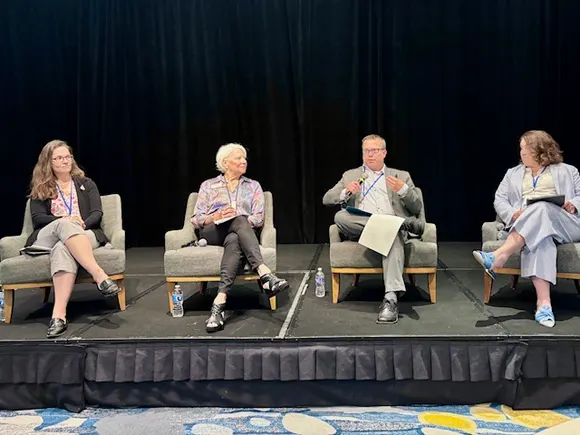
The cohesive approach to filling shortages of early interventionists, teachers, administrators, paraprofessionals and specialized instructional support personnel — as well as trying to reverse a decline in teacher education enrollment — reflects a shared mission to support students with disabilities at all age levels, speakers said July 14 at a legislative summit hosted by the Council for Exceptional Children and the Council of Administrators of Special Education.
“Schools are facing a significant shortage of qualified special education teachers — a challenge that directly affects the support and outcomes for students with disabilities,” said Kevin Rubenstein, president of CASE.
Rubenstein added that finding enough teachers to fill staff vacancies “feels like trying to spot a unicorn,” because it’s “rare but magical.”
At the start of the 2024-25 school year, 74% of both elementary and middle schools reported difficulty filling special education teacher vacancies with fully certified teachers, according to federal data. Early childhood education is also facing challenges in recruiting and retaining early interventionists.
At the higher education level, enrollment in teacher preparation programs has plummeted by 45% in one decade, according to CASE.
Supporting special educators
Developing a comprehensive special educator pipeline can better support teacher prep activities so future educators can eventually help boost outcomes for students at all levels, speakers said.
According to Amanda Schwartz, associate project director of the Maryland Early EdCorp Apprenticeship Program at the University of Maryland, some solutions to recruiting and retaining early interventionists include: boosting salaries, reducing teacher-student ratios, and training on high standards for early intervention services.
Recruiting and retaining qualified early interventionists is critical to children’s development, Schwartz said. “We want our teachers to have all this content in order to be able to deliver appropriate practice in classrooms,” she said.
David Krantz, executive director of special education at Michigan’s Saginaw Intermediate School District, said it’s helpful to have robust data that can pinpoint where there are staffing struggles.
Krantz then pointed to specific ways districts can attract and retain paraprofessionals who support special educators in the classroom. For starters, he said, paraprofessionals need to know their work matters.
“If people don’t feel valued in their service, they’re going to leave,” Krantz said.
The Michigan Association of Administrators of Special Education started a paraeducator learning series in January to provide professional development and other support to paraprofessionals. About 350 paraprofessionals have participated so far, Krantz said.
In the higher education field, Kyena Cornelius, an education professor at the University of Florida, put it bluntly: “Our supply pipeline is broken.”
While alternative pathways to the teaching profession have grown, those programs often don’t provide the depth of training into teaching pedagogy or disability-specific knowledge needed, she said. The alternative pathways, Cornelius added, were never meant to replace traditional teacher preparation programs
She highlighted CEC’s professional standards for special educators as a blueprint for the knowledge and skills teachers need so they are ready to serve students with disabilities and stay in the profession.
“We need to think about how we can not only attract and retain but how we can comprehensively prepare teachers in an affordable way, how we can make it attractable and get them the skills,” Cornelius said.
New Jersey students with disabilities are the least likely in the nation to spend their days surrounded by peers without disabilities.
One underlying reason: a sprawling network of separate schools that allows districts to outsource educating them.
New Jersey has more than a hundred private schools, plus eight county-run districts specifically for students with disabilities.
Districts spend hundreds of millions of dollars placing students in private schools rather than investing in their own staffing and programs — placements that cost New Jersey taxpayers $784 million in 2024, not including transportation. That’s up from about $725 million the year before. This can create a self-perpetuating cycle that increases reliance on separate schools and, experts say, may violate students’ federal right to spend as much time as possible learning alongside students without disabilities.
In many cases, parents say school administrators are too quick to send children out of district and pressure families to agree to those settings. Other times, parents choose to send their child to a separate school, sometimes feeling that they have no choice after repeatedly failing to get their kids the help they need in their local school.
“Whatever it is that their kids need within the district, they’re not getting,” said special education parent and advocate Amanda Villamar, who works with families throughout New Jersey. “The question becomes: Why are these services in private schools and not necessarily integrated into our public school system?”
In all, about 30,000 students with disabilities in New Jersey — or 13 percent— attend separate private or public schools, according to The Hechinger Report’s analysis of federal data. That’s the highest percentage in the country. Nationwide, 4 percent attend separate schools.
New Jersey’s history of failing to include children with disabilities in public school classrooms dates back to the 1910s. That’s when the state began promoting separate schools for students with disabilities as a more humane alternative to barring them from schools altogether.
Nationwide, only 1 in 5 students with disabilities were enrolled in the public school system in the 1970s, when Congress passed the Individuals with Disabilities in Education Act or IDEA. The law enshrines integration by saying students with disabilities have a right to learn alongside students without disabilities to the “maximum extent” possible and that they should be placed in the “least restrictive environment.”
Across the nation, parents and children fought state laws excluding students with disabilities from public schools — with fights in Washington D.C. and Pennsylvania fueling the passage of IDEA. It wasn’t until 1992 that New Jersey repealed its statutes allowing public schools to exclude “untrainable” children with disabilities. By then, separate schools were an integral part of the state’s highly decentralized education system, which today comprises roughly 600 districts.
New Jersey Department of Education officials said the state is committed to ensuring students with disabilities are in the most appropriate school setting based on individual needs, and that includes out-of-district programs.
“New Jersey is uniquely positioned in this regard, with a longstanding infrastructure of out-of-district options and many small local public school districts,” department spokesman Michael Yaple said in an email. “These and other factors have contributed to the state’s historical reliance on a wide array of specialized programs designed to offer diverse, individualized educational options for students with disabilities.”
The rate at which New Jersey school districts place students in separate schools has declined over the past two decades. In the same period, however, more parents chose to send their children to private schools, sometimes because they felt they had no other viable options.
Some parents say there are significant trade-offs when their child leaves their district school.
Ellen Woodcock’s son, a fifth grader, attends a county-run school for students with disabilities where she says teachers understand his autism much better than they did in her home district.* Despite her son’s fascination with geography, however, teachers spend little time on science or social studies. The school has no library, and the day ends an hour earlier than his district elementary school. School staff focus on teaching social skills, but he’s lost the chance to model the behavior of peers without disabilities.
Left out
New Jersey has the nation’s lowest inclusion rates for students with disabilities. The Hechinger Report investigated why — and visited places that show how it doesn’t need to be that way.
Do you have experiences with special education you’d like to share with our journalists?
“I feel like he’s not being challenged, like he’s kind of pigeonholed,” Woodcock said. “We just felt like we didn’t have a choice.”
Her son spent kindergarten through second grade learning in general education classrooms at his local neighborhood school in Haddonfield, New Jersey, and she was happy with the social and academic progress he was making. In third grade, however, things changed. The school shifted him into a separate classroom for significant parts of the day. Woodcock said school staff seemed unable, or unwilling, to address how his autism affected his learning and provide the right support to account for it. She felt he was unwanted.
In the middle of fourth grade, she said she reluctantly transferred him to a specialized school where he spent his day with other students with autism.
“It was almost out of desperation,” Woodcock said. “It was like, let’s get him out of the school district, because we feel like they can’t support him. It was a fight all the time to get him what he needed.”
Haddonfield district officials said privacy laws prevent them from commenting on individual students but noted that the percentage of students with disabilities who spend almost all of their time in general education classrooms is significantly higher than the state’s average. About 69 percent of Haddonfield students with disabilities spend at least 80 percent of the school day in general education classrooms, compared with 45 percent statewide, according to state Education Department data.
“We are proud of our inclusive practices and the strong sense of belonging we strive to create for all students,” district officials said in a statement. “The least restrictive environment can look different for each student.”
In Haddonfield, 19 percent of parents with students with disabilities choose to enroll their children in private schools, compared with 7 percent statewide.
Woodcock decided to move her son back to the district next year, where he’ll start sixth grade at the local middle school. She understands that her son may need to be pulled out of class to learn a subject like math in a special education resource room — but she believes he can, and should, learn in general education classrooms as well.
Under IDEA, students with disabilities should be placed in separate schools or classes only if their disability makes it too difficult for them to learn in a regular classroom, even with extra help and support. A team made up of a child’s parents, teachers, school district officials and, when appropriate, the child, decide on a placement together and must review it each year.
The federal Department of Education says those teams have to make this decision based on an individual child’s needs — not solely because of the kind of disability, how significant the child’s needs are or whether the school has the money or the staff. In New Jersey, however, some parents say schools too often determine placement on a child’s diagnosis alone.
Observers, including special education advocates and attorneys, say school districts and leaders of separate schools tend to argue it would be too difficult for all of New Jersey’s hundreds of public school districts to provide services for all types of disabilities. That’s fueled a reliance on private and county-run separate schools, many of which have classrooms or programs focused on a specific disability, such as autism or dyslexia, with specially trained teachers.
Districts sometimes launch specific special education programs — applied behavioral analysis classrooms for students with autism, for example — only to abandon them after challenges paying for them or finding qualified staff, said Paul Barger, a special education lawyer in Irvington, New Jersey.
“Instead of continuing to develop their own programs in the districts, they went ahead and just said they’re placing out into state-approved private school programs,” Barger said.
Returning some students with disabilities to in-district schools would require more money. Lawmakers in New Jersey are debating the governor’s proposal to boost funding for special education services in public schools by $400 million for the next school year. Advocates say that’s an opportunity to build stronger special education systems in public schools. The governor also proposed flat funding of $420 million for private school tuition payments for students with disabilities.
Some parents, unhappy with the services they see in public districts, prefer private schools: A growing number pay for their children to attend. That’s despite the fact that those parents who choose private schools lose federal protections, including the rights to raise formal complaints.
ASAH, the group representing New Jersey private schools for students with disabilities, which enroll more than 10,000 students, points out the lack of special education services in public districts. It tells parents that poorly trained paraprofessionals in public schools can be stigmatizing, and placing students in self-contained classrooms doesn’t make students feel valued or included. The group, formerly known as the Association of Schools and Agencies for the Handicapped, argues private schools may not be more costly to the state than public schools once pensions are factored in.
Students with disabilities have the right to options like private schools, the association’s executive director John Mulholland said in an interview.
“It really is an individualized determination, and merely just being a part of your home district isn’t always a least restrictive environment,” he said.
Unlike for public schools, the federal government doesn’t collect data from private schools about how often their students interact with peers without disabilities. According to the association’s recent study of 5,300 students served by ASAH schools, 262 students planned to leave their private schools in the 2022-23 school year to return to their home district. That report suggests such a move was less likely for children with autism and multiple disabilities.
Mulholland said private schools may offer some interaction with students without disabilities through community service or sporting events. His association’s analyses have found that students who start at a private school earlier are more likely to return to their public school district.
“If students come to us younger, they can get the intensive support they need or return to their school districts — many of our members pride themselves on that turnaround,” Mulholland said.
Nicole Lannutti, of Washington Township in Gloucester County, said her daughter Sophia, who is non-verbal and has multiple disabilities, attended a private preschool for one year at a cost to the district of roughly $90,000. (New Jersey requires school districts to provide preschool for students with disabilities.)
Lannutti pushed to get Sophia into the public school system for a second year of preschool and then elementary school, where she said her daughter thrived in a school that prioritized inclusion. But that changed in middle school, where her mom says she’s had to push to have her daughter included even in lunch, recess and extracurricular activities. Washington Township school district did not respond to requests for comment.
Lannutti said her local public school is still the most appropriate setting for her child, who will enter seventh grade in the fall and has made friends by participating in the school play. The school agrees, and said as much in her education plan. Lannutti said private schools play an important role, but public schools should work harder to serve more students and fulfill their civil right to an education. “When it comes to my kid, it’s not that she should go because this district can’t handle it,” Lannutti said. “They should learn how to do it.”
*Correction:This story has been updated to correct Ellen Woodcock’s son’s current grade level.
The Hechinger Report provides in-depth, fact-based, unbiased reporting on education that is free to all readers. But that doesn’t mean it’s free to produce. Our work keeps educators and the public informed about pressing issues at schools and on campuses throughout the country. We tell the whole story, even when the details are inconvenient. Help us keep doing that.
CINNAMINSON, N.J. — Terri Joyce believed that her son belonged in a kindergarten classroom that included students with and without disabilities.
The year before, as a 4-year-old, he happily spent afternoons in a child care program filled with typically developing children, without any extra support. Like other kids his age, her son, who has Down syndrome, was learning about shapes and loved sitting on the rug listening to the teacher read books aloud. His speech delay didn’t prevent him from making friends and playing with children of differing abilities and, during the summer, he attended the same program for full days and would greet her with big smiles at pick up time.
But when Joyce met with school district administrators ahead of her son’s kindergarten year, they told her that he would need to spend all day in a classroom that was only for students with significant disabilities.
“They absolutely refused to even consider it,” Joyce said. “They told us, ‘We move so fast in kindergarten, he needs specialized instruction, he’ll get frustrated.’”
It was the separate classroom that left him frustrated.
Terri Joyce said her son, who has Down syndrome, has thrived after she fought for him to be included in a general education classroom. Credit: Yunuen Bonaparte for The Hechinger Report
Under federal law, students with disabilities — who once faced widespread outright exclusion from public schools — have a right to learn alongside peers without disabilities “to the maximum extent” possible. That includes the right to get accommodations and help, like aides, to allow them to stay in the general education classroom. Schools must report crucial benchmarks, including how many students with disabilities are learning in the general education classroom over 80 percent of the time.
More than anywhere else in the country, New Jersey students with disabilities fail to reach this threshold, according to federal data. Instead, they spend significant portions of the school day in separate classrooms where parents say they have little to no access to the general curriculum — a practice that can violate their civil rights under federal law.
Just 49 percent of 6- and 7-year-olds with disabilities in the state spend the vast majority of their day in a general education classroom, compared with nearly three-quarters nationally. In some New Jersey districts, it was as low as 10 percent for young learners. Only 45 percent of students with disabilities of all ages are predominantly in a general education classroom, compared to 68 percent nationwide.
For over three decades, the state has faced lawsuits and federal monitoring for its continued pattern of unnecessarily segregating students with disabilities and regularly fails to meet the targets it sets for improving inclusion.
Surrounded mostly by children who had trouble communicating, Terri Joyce’s son’s speech development stalled. He wasn’t exposed to what his peers in the general education classroom were learning — like science and social studies.
For Terri Joyce, getting her son included in a general education classroom “was a part-time job” and meant staying on top of, and documenting, his academic and social progress. Credit: Yunuen Bonaparte for The Hechinger Report
Joyce tried mediation with the Cinnaminson district but they refused to budge. In the end, she hired a lawyer, filed a due process claim with the state and succeeded in having her son placed in a classroom that included students with and without disabilities the next year, repeating kindergarten to see if he could regain the skills he had lost. The process cost her family thousands of dollars.
Related: Become a lifelong learner. Subscribe to our freeweekly newsletter featuring the most important stories in education.
The Hechinger Report spoke with more than 80 parents, researchers, lawyers, advocates and school officials across the state who described a widespread failure to devote resources to integrating students with disabilities — and a decentralized system that gives enormous power to district leaders, who have long been able to refuse to prioritize inclusion without facing consequences from the state or federal government.
New Jersey is known nationally as a leader in public education, but the state’s governance system has led to inclusion rates that vary dramatically between districts. As a result, a child who is placed in a separate classroom for the entire day in one district could be included all day in a general education classroom in a neighboring one.
“Mindset is the biggest barrier,” said Michele Gardner, executive director of All In for Inclusive Education and previously an administrator for 15 years in the Berkeley Heights district. “There are educators, parents, administrators and physicians who truly believe that separate is better for children with and without disabilities. With more than 600 districts, local control makes change harder.”
Experts say integrating students with disabilities in general education should be easiest, and can be the most beneficial, in the early years. Researchers have found students with and without disabilities — particularly the youngest learners — can benefit when inclusion is done with enough staffing and commitment. Young children also learn from watching each other, and parents worry denying students with disabilities this chance can have lasting damage on them academically and emotionally. Worldwide, inclusion is considered a human right helping all children develop empathy and prepare for society after graduation.
Too often, New Jersey parents say, young learners are placed right away in separate classrooms based on a diagnosis — as Joyce’s son was — rather than an assessment of what support they actually need.
Just over a decade ago, New Jersey settled a class-action lawsuit filed by parents and advocacy groups over student placement, which required years of state monitoring, a new stakeholder committee, and training and technical assistance for districts with the lowest rates of inclusion.
But since then, the proportion of young students in the general education classroom the vast majority of the day actually decreased by about 5 percentage points, from 54 percent in the 2013-14 school year. Nationwide, there was no such drop.
“We are certainly seeing a trend that, even at younger ages, students are being shuttled into segregated schooling and never really starting in inclusive experiences,” Syracuse University inclusive special education professor Christine Ashby said of New Jersey and other states.
Ashby, who also runs the university’s Center on Disability and Inclusion, said students then tend to stay in separate — commonly called self-contained — classrooms, where they may receive individualized instruction alongside peers with disabilities but may be less prepared for life after high school.
For Terri Joyce, the opportunity she fought for her son to have proved worth it. It took him time to adjust, but with the help of an aide, he settled in and, now in first grade, is thriving alongside his general education peers once again.
“It was like night and day,” said Joyce. “His speech improved. He loves school. He has friends. He gets invited to birthday parties.”
Terri Joyce is happy with how her son’s writing skills have developed in first grade while learning in a general education classroom. Credit: Yunuen Bonaparte for The Hechinger Report
New Jersey Department of Education officials declined a request for an interview, but said in a statement that the agency is working with schools statewide to improve how often students with disabilities are placed in general education classrooms through training, technical assistance and programs promoting inclusion. A new website provides a detailed look at each district’s data, broken down by grade and type of disability.
“All placement decisions must be made on an individual basis and there is no one-size-fits all standard or outcome that should be applied to every district, school or student,” Laura Fredrick, the department’s communication director, said in the emailed statement.
Fredrick said districts that fail to meet state goals for increasing inclusion may face more intensive monitoring, but there are no direct financial penalties or automatic consequences for failing to improve. She also noted that the state pays for voluntary trainingto increase inclusion in K-12 schools.
That program has helped in some districts, but a limited number of schools have participated so far and space is limited — some that have applied for the training have been turned away.
In Cinnaminson, district officials said they could not comment on specific students but that school officials and parents work together on placement decisions.
“To the fullest extent possible, we strive to place students in general education classrooms for the most inclusive educational experience,” Superintendent Stephen Cappello said in a statement.
Some experts said the data suggests that, unlike other states, New Jersey districts do a good job providing individualized services that students need. Autism New Jersey clinical director Joe Novak said in contrast, “There are certain districts, or states, where the default may simply be to place the child in general education and say, ‘Well, best of luck.’”
Indeed a frequent complaint from some parents is the lack of specialized services in general education classrooms, especially because of staffing shortages or lack of expertise. In those cases a student may be counted as included in a general education classroom but without the support they need, which advocates on both sides of the debate say can be harmful.
“New Jersey is probably doing a lot of things right, because it means we’re probably really customizing what makes sense for the individual,” Novak said
Yet others say the state can improve inclusion rates that are sharply lower than the nation’s.
The federal government doesn’t say how many students should be included or for how much of the school day. States set targets for inclusion rates but typically don’t fine or sanction districts for not meeting them. States can also take other steps like requiring training or administrative changes for districts. Advocates say New Jersey districts have little to lose for repeatedly falling below the state’s own targets for including children with disabilities.
Left out
New Jersey has the nation’s lowest inclusion rates for students with disabilities. The Hechinger Report investigated why — and visited places that show how it doesn’t need to be that way.
Do you have experiences with special education you’d like to share with our journalists?
Oversight from the federal government could also diminish going forward. Although the Trump administration pledges to continue funding special education, advocates warn the planned dismantling of the Department of Education, including its civil rights enforcement arm, will harm students with disabilities.
“It’s sort of petrifying, from my end, for these families,” said Jessica Weinberg, a former New Jersey school district attorney who now runs a special education law firm.
“It could be completely disbanded,” she said of the Education Department. “The uncertainty is really unsettling.”
Federal law says students should be placed in separate classrooms “only if” they can’t learn in the general education classroom with services detailed in IEPs, or individualized education programs — the document that outlines a student’s needs, the services they should receive and where they’ll receive them. Teachers, school officials and parents sit on their child’s IEP team, which is supposed to review placement decisions each year.
And parents across New Jersey say it takes time and money to fight for access to general education classrooms — which means whether a child is included can reflect existing racial disparities and whether families can afford lawyers and advocates. Parents say when a school argues their child must be taught separately, their best way of fighting that decision is lawyers and experts — if they can afford it.
Districts with less poverty and a larger share of white students tend to have higher inclusion rates and test scores, according to The Hechinger Report’s analysis of state data. Overall, just 37 percent of Black students in kindergarten, first or second grade in New Jersey are included in the general education classroom for the vast majority of the school day, compared to half of white students.
It’s challenging to get special education services in urban and lower-income districts in the first place, said Nicole Whitfield, a mother of a child with a disability who founded an advocacy group in Trenton for families fighting for special education services.
Urban “districts are so overloaded with so many kids, they don’t do a good job in managing it,” she said.
In all districts, arguments against including more students often hinge on money. Administrators may say they can’t afford all the services every child needs, like an aide assigned to work with one child, and some parents worry providing comprehensive services could strain budgets or cut services for students without disabilities. As special education costs rise, the federal government has long failed to provide as much special education funding as it pledged.
The way New Jersey funds schools doesn’t consider how many students have disabilities. The governor’s proposed budget for the upcoming school year would take that into account and increase overall special education spending by about $400 million — though some districts will lose money. Lawmakers are debating the governor’s proposal, which has some support from the chair of the state Senate Education Committee, Sen. Vin Gopal.
Yet districts spend hundreds of millions of dollars a year to pay tuition at private schools ($784 million last year statewide) and fight legal battles — money advocates say could boost public special education.
It cost Washington Township school district about $90,000 to send Nicole Lannutti’s daughter, who is non-verbal and has a developmental delay, to a private preschool for a year rather than educate her in one of its schools.
“If you can come up with the money for lawsuits, why can’t you put it into the district right now?” Lannutti said. “That makes no sense.”
Washington Township school district did not respond requests for comment.
Whittier Elementary School in Teaneck, New Jersey, rearranged its classrooms to improve how many students with disabilities are included in classes with their peers. Credit: Meredith Kolodner/The Hechinger Report
In some districts, officials say inclusion doesn’t cost more in the long run, even if there are upfront costs. Administrators in Sparta Township, for example, said improving inclusion rates didn’t require more spending. Its schools got help from the New Jersey Inclusion Project — the state-funded training program that helps districts provide students with the least restrictive learning environment appropriate for them.
“[It] has really changed the way we educate our students,” said Adrienne Castorina, Sparta’s director of special services. Teachers found that they were able to provide specialized instruction in reading inside a general education classroom, for example, instead of pulling children out and teaching them in separate rooms.
In 2024, a special education parent advisory committee in Bernards Township School District asked administrators to apply to the New Jersey Inclusion Project. Parents thought the program would be a no-cost, collaborative path forward.
District officials refused.
Many parents in the wealthy district say Bernards’ classroom staff are committed and skilled, but they also say there’s an unwritten policy of separating children based on their diagnosis — close to three-quarters of children with autism, for example, spend the vast majority of their day without contact with their general education peers.
For years, Trish Sumida pleaded with staff at her daughter’s elementary school in Bernards to allow her to have contact with her non-disabled peers. But every day, starting in kindergarten, she learned only alongside other children with autism. Most years, she was the only girl in the room, and she longed for someone to play with who shared her interests.
“Those early years are so important,” said Sumida, whose daughter is now in fifth grade and still spends most of her time in a separate classroom. “I feel like we’ve missed our window.”
Many Bernards parents are particularly frustrated by the refusal to set up co-taught classrooms, a nationally used approach where a general education and special education teacher work together to educate students with and without disabilities.
Jean O’Connell, Bernards’ director of special services, rejected the idea of co-taught classes in elementary school, saying they made it harder to support individual students, particularly in reading. “We had this model in place for many years and found it ineffective,” she said in an email.
Research suggests even students with significant disabilities can learn alongside general education peers with help from co-teachers or paraprofessionals. And a large body of evidence suggests inclusion doesn’t harm learners with or without disabilities.
Some scholars say inclusion research is flawed because students who appear to benefit may need less support and have fewer academic struggles. Such experts point out that a separate classroom may be the appropriate setting for some children, who could languish without intensive support in a general education classroom. And schools with high inclusion rates on paper may place students with disabilities in general education without needed aides and accommodations — which federal data does not capture.
Even a prominent researcher who has questioned the benefits of inclusion, however, said most children don’t need to be taught separately all day.
“Most students with disabilities do not need very intensive forms of instruction,” said Vanderbilt University special education professor Douglas Fuchs.
O’Connell did not respond to questions about why Bernards refused to participate in the New Jersey Inclusion Project and said only that the district has participated in inclusion workshops. She added that the district has no “blanket district-wide policy on inclusion” and involves parents in all placement decisions.
Yet several Bernards parents said they met intense resistance from administrators. One mom said her child who has autism that requires limited support was in an inclusion classroom for pre-K without any problems, but Bernards administrators insisted he be placed in a self-contained classroom for kindergarten.
“He would cry to me every morning and say he didn’t want to go to school,” said the mom, who asked not to be named, afraid her child could experience discrimination because of his disability if identified. “I just felt heartbroken every day.”
She tried repeatedly to have him moved, eventually turning to mediation and filing a complaint with the state. Ultimately, she felt her child couldn’t wait for a resolution. She moved to another district last fall, where he learns alongside his general education peers all day. She said her child is now happy and doing well academically and socially.
Other districts that have struggled with low levels of inclusion have embraced outside help — including from the Inclusion Project. The program helped Whittier Elementary School in Teaneck create its first co-taught classrooms two years ago. Teachers there said the shift requires a lot of planning and they wish they had more staff to provide support, but they’ve seen their students develop academically and socially.
“When you think about the conversations that kids have — turn to your partner, talk to your table, those opportunities aren’t there in self-contained,” said Janine Lawler, who has been a special education teacher for 18 years, mostly in self-contained classrooms, and is now co-teaching in a first-grade class.
Janine Lawler teaches math to a group of first graders in Teaneck, New Jersey. Her classroom includes students with and without disabilities. Credit: Meredith Kolodner/The Hechinger Report
Educators say they can provide intensive instruction without having to separate children for large portions of the day.
“Do we have to isolate young people to give them a service, or can we include them and provide the same service or greater service?” said André Spencer, superintendent of Teaneck Public Schools. “We believe we can include them.”
For decades, New Jersey education officials have failed to support or pressure districts to improve their inclusion rates. A 2004 report found a lack of consequences — such as financial penalties — for New Jersey districts who repeatedly failed to increase inclusion of students with disabilities despite years of promises to improve.
“There’s a culture in New Jersey, which is that you teach kids with impairments in segregated classes,” said Carol Fleres, a long-time special education administrator in New Jersey who is now a special education professor and department co-chair at New Jersey City University.
A 2018 report by the National Council on Disability, an independent federal agency, found “serious contradictions” in New Jersey’s regulations that lay out how schools have to provide special education services. For example: The state categorizes students as having mild, moderate or severe disabilities and says that students with similar behavioral or academic needs should be grouped together.
Those issues make it easy for New Jersey schools to lump students with disabilities together in violation of federal requirements, according to the report.
A spokesman for New Jersey’s education department defended the regulations as doing the opposite. “This arrangement helps ensure that students who require more individualized instruction, especially those whose needs cannot be met in a general education setting, even with supplementary aids and services, are educated in smaller, more supportive environments,” Michael Yaple said in an email.
Despite settlements and scrutiny, advocates want more accountability: New Jersey’s State Special Education Advisory Council, which advises the state Education Department on special education issues, recommended required training for districts with low inclusion rates.
Special education parent and advocate Amanda Villamar, who works with families throughout New Jersey, said education officials try to educate the state’s over 600 school districts — but those efforts only go so far.
“We have a lot of districts that just say: ‘Well, it’s guidance. We don’t have to do it,’” Villamar said. “They literally just don’t even give it the time of day. Then you have other districts that put a lot of work and thought and effort into it.”
Lawyers representing families said young children with behavioral challenges or intellectual disabilities often wind up in separate classrooms for years, even if behaviors improve. Promises of inclusion in gym class or at lunch don’t always happen, they said.
Many parents said they felt forced to agree to separate classrooms, with the promise of inclusion, eventually. That day never came.
“Once you start restricting them, how are you going to get them back and get them increasingly more time within the classroom?” said Elizabeth Alves, a member of the State Special Education Advisory Council.
For Terri Joyce’s son, learning in the co-taught classroom meant accessing the general education curriculum, including social studies. The lessons on civil rights inspired him.
“He became obsessed with Martin Luther King,” she said. “He still will sit for hours and watch YouTube videos of his speeches.”
Like other students with disabilities, her son’s IEP is subject to an annual review, which means that inclusion in the general education classroom isn’t guaranteed in the years to come. Joyce says that means constant vigilance in a process that feels like a part-time job.
But her efforts to have her son included are about more than academics. He’s on the flag football team. He rides the school bus. Other kids recognize him and say hello in the grocery store.
“It’s much bigger than just his education and being included in the classroom,” she said. “Being included in school means he’s more included in life, and he’s more included in our community, and he’s more valued.”
The Hechinger Report provides in-depth, fact-based, unbiased reporting on education that is free to all readers. But that doesn’t mean it’s free to produce. Our work keeps educators and the public informed about pressing issues at schools and on campuses throughout the country. We tell the whole story, even when the details are inconvenient. Help us keep doing that.
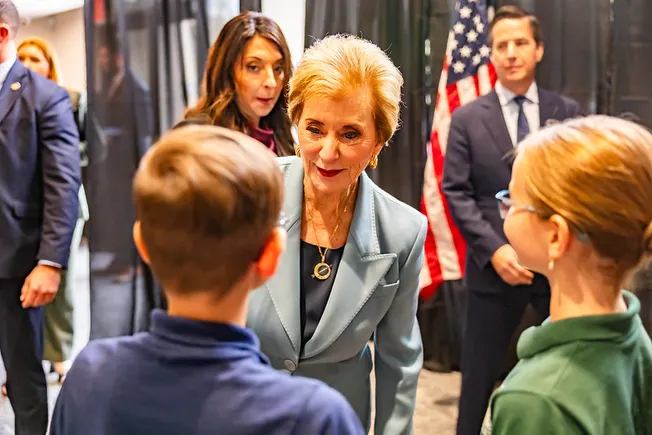
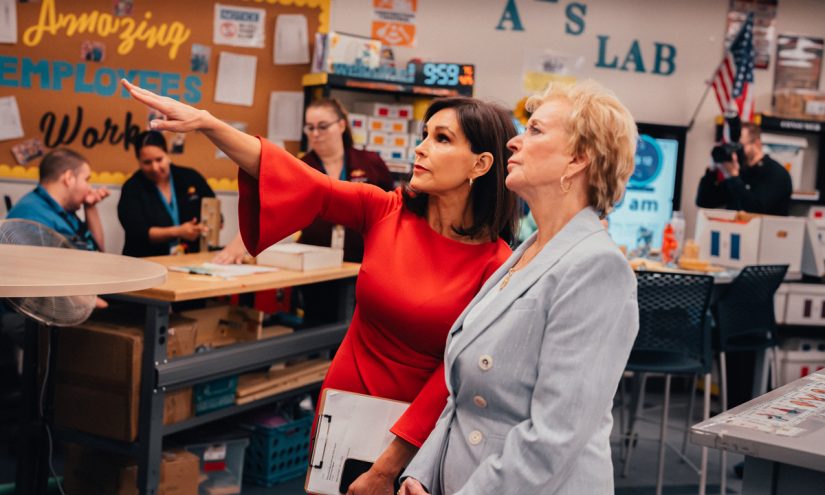
The founder and executive director of a network of Arizona charter schools serving autistic children has been named the U.S. Education Department’s deputy assistant secretary for special education and rehabilitative services. Education Secretary Linda McMahon made the announcement while touring the Arizona Autism Charter Schools’ Phoenix location.
Diana Diaz-Harrison, whose son is autistic, said that in her new job she hopes to continue her efforts to help others launch autism charter schools throughout the country. Her schools, she said in remarks captured on video by AZ Central, are a testament to what happens “when parents like me are empowered to create solutions.”
“My vision is to expand school choice for special needs families — whether through charter schools, private options, voucher programs, or other parent-empowered models,” she said in a statement to The 74. .
The five-school network uses a controversial intervention that attempts to train children to appear and behave like their neurotypical peers. Created by the researcher behind LGBTQ conversion therapy, applied behavior analysis, or ABA, is widely depicted as the gold standard despite scant independent evidence of its effectiveness and mounting research documenting its harms.
Diaz-Harrison opened the network’s first school in 2014 as a free, public alternative to private schools for autistic children, which are popular in Arizona but typically charge tens of thousands of dollars a year in tuition. Her Arizona charter schools are a 501(c)3 nonprofit financed by state and federal per-pupil funds. ABA is specifically endorsed by Arizona education officials as a strategy to use with autistic students.
In the time since those charters opened, ABA has grown to be a national, multi-billion-dollar industry, with for-profit companies tapping public and private insurance to pay for as much as 40 hours a week of one-on-one therapy. The intervention uses repeated, rapid-fire commands that bring rewards and punishments to change a child’s behavior and communication style.
A 74 investigation last year showed that most data supporting ABA’s effectiveness is drawn from research conducted by industry practitioners. Independent analyses, including a years-long U.S. Department of Defense review, found little evidence the intervention works. Former patients who underwent the therapy as children reported severe, lasting mental health effects, including PTSD.
Diaz-Harrison told The 74 the therapy is both valuable and sought-after. “For the autism community, specifically, many families seek schools that integrate positive behavioral strategies,” she says. “The evidence supporting behavioral therapy is extensive and well-established. It has been endorsed by the U.S. surgeon general and the American Academy of Pediatrics as an effective, research-backed approach for individuals with autism.”
During her visit, McMahon told students and staff she was eager to tell President Donald Trump about the schools. “He doesn’t believe any child, whether they have neuro-difficulties or any other problems, should be trapped in a school and not have the facilities that they need,” she said.
Since Trump’s second inauguration, he has issued numerous orders that have alarmed disability advocates and the autistic community. Though both edicts contradict longstanding federal laws, in March he ordered the closure of the Education Department and said responsibility for special education will be transferred to the U.S. Department of Health and Human Services.
About half of the Education Department’s staff has been fired, including most of the people responsible for investigating what had been a backlog of some 6,000 disability discrimination complaints. Though it’s unclear whether Trump and McMahon may legally disregard special education funding laws and allow states to spend federal dollars as they see fit, both have said they favor giving local officials as much decision-making power as possible.
Meanwhile, HHS Secretary Robert F. Kennedy Jr. has stoked fear in the autistic community by announcing a new effort to tie autism to vaccines or other “environmental toxins” — a hypothesis discredited by dozens of studies. The man he appointed to head the study has been cited for practicing medicine without a license and prescribing dangerous drugs to autistic children.
Last week, the new head of the National Institutes of Health announced that an unprecedented compilation of medical, pharmaceutical and insurance records would be used to create an autism “disease registry” — a kind of list historically used to sterilize, institutionalize and even “euthanize” autistic people. HHS later walked back the statement, saying the database under construction would have privacy guardrails.
Among other responsibilities, the offices Diaz-Harrison will head identify strategies for improving instruction for children with disabilities and ensure that as they grow up, they are able to be as independent as possible. The disability community has raised concerns that the administration is retreating from these goals.
Advocates have said they fear the changes pave the way for a return to the practice of separating students with disabilities in dedicated special ed classrooms rather than having them attend class with typically developing peers. The Individuals with Disabilities in Education Act guarantees special education students the right to instruction in the “least restrictive environment” possible.
Families’ preferences vary widely, with some parents of autistic children refusing any form of behavior therapy, while others want their kids in settings with children who share their needs. Many insist on grade-level instruction in general education classrooms
Diaz-Harrison has a master’s degree in education and worked as a bilingual teacher in California early in her career. From the late 1990s until she began supporting her son full time, she worked as a public relations strategist and a reporter and anchor for the Spanish-language broadcast network Univision.
In 2014, frustrated with her son’s school options, she organized a group of parents and ABA providers who applied for permission to open what was then a single K-5 school serving 90 children. The network now has about 1,000 students in all grades and features an online program.
At the end of the 2023-24 academic year, 9% of the network’s students scored proficient or highly proficient on Arizona’s annual reading exam, while 4% passed the math assessments.
In December 2022, the network won a $1 million Yass Prize, an award created by Jeff and Janine Yass. The billionaire investors have a long track record of donating to Republican political candidates and organizations that support school choice.
One of the award’s creators, Jeanne Allen, is CEO of the Center for Education Reform. The center nominated Diaz-Harrison for the federal role.
Yass award winners were featured at the 2023 meeting of the American Legislative Exchange Council, or ALEC, a conservative forum where state lawmakers are given model bills on education and other policies to introduce in their respective statehouses.
Diaz-Harrison has partnered with a Florida autism school to create a national charter school accelerator program to help people start schools like hers throughout the country. She told The 74 the effort has so far supported teams of hopeful school founders from Louisiana, Texas, Florida, Alabama and Nevada.
Parents of young autistic children and autistic adults often disagree about ABA. Told by their pediatrician or the person who diagnosed their child as autistic that they have a narrow window in which to intervene, families fight to get the therapy. Adults who have experienced it, however, report lasting trauma and have lobbied for research — much of it now at risk of being defunded by Kennedy — into more effective and humane alternatives.
This week on the podcast the SUs team has been on a study tour to universities in Lisbon in Portugal, and have reflections on everything from space to food, from interdisciplinarity to curriculum design and from Praxe to ribbon burning.
With Khadiza Hossein, VP Education at UWE SU, Emillia Zirker, Student Representation Officer at Lincoln SU, Gary Hughes, CEO at Durham SU, Mack Marshall, Community and Policy Officer at Wonkhe and hosted by Jim Dickinson, Associate Editor at Wonkhe.