A new poll from the Foundation for Individual Rights and Expression finds that conservative and very conservative Americans have more confidence that President Trump will protect their First Amendment rights than Gov. Gavin Newsom or the Supreme Court. Liberal and very liberal Americans are skeptical that any of them will protect their first amendment rights, though they are most confident in Newsom.
The fifth installment of FIRE’s National Free Speech Index further reveals that there is a partisan disagreement about the security of free speech in America and whether or not it is headed in the right direction. When it comes to whether people are able to freely express their views, conservatives are more likely to think that things in America are heading in the right direction and are likely to think that the right to freedom of speech is secure in America today, compared to liberals.
This was not the case three months ago.
Overall, when it comes to whether people are able to freely express their views, 41% of Americans think things in America are heading in the right direction, up 5% from October when 36% of Americans felt this way. Yet, compared to last year, liberals and conservatives have swapped their perspectives on the direction freedom of speech is headed in America in this month’s survey. In July of last year, 31% of very liberal and 45% of liberal Americans reported that freedom of speech in America is headed in the right direction while just 16% of conservative and 20% of very conservative Americans reported the same. Then, in October, 46% of very liberal and 49% of liberal Americans reported the same while just 18% of conservative and 30% of conservative Americans did.
This month however, more conservative (52%) and very conservative (49%) Americans reported thinking things in America are heading in the right direction when it comes to freedom of speech compared to moderate (42%), liberal (34%) or very liberal (31%) Americans. After October last year, a drastic shift in ideological perspective on the state of free speech occurred between liberals and conservatives. While liberal and very liberal Americans were more likely to think that things in America were heading in the right direction in October, in January, conservative and very conservative Americans are now the ones most likely to report the same.
In addition, last year, very liberal and liberal Americans reported much more confidence than conservative and very conservative Americans in the security of free speech in America. In July, 41% of very liberal and 30% of liberal Americans reported that the right of freedom of speech in America was “not at all” or “not very” secure while 49% of conservative and 61% of very conservative Americans reported the same.
In October, the partisan divide grew larger, with 32% of very liberal and 27% of liberal Americans reporting that the right of freedom of speech in America was “not at all” or “not very secure” while 55% of conservative and 60% of very conservative Americans reported the same.
The large partisan divide between the liberals and conservatives and the swap in their political viewpoints on free speech this month may be startling but a clear indication of how Americans are reacting to the outcome of the presidential election.
Yet, this month, liberals and conservatives have swapped their perspectives on the security of free speech in America, with 46% of very liberal and 36% of liberal Americans reporting “not at all” or “not very secure” and 29% of conservative and 41% of very conservative Americans reporting the same, showcasing conservatives’ growing trust that their free speech rights are secure.
Moderates, on the other hand, have remained consistent in their views over the last six months, with approximately 40% of moderates reporting that the freedom of speech in America was “not at all” or “not very secure”.
This quarter’s survey makes evident the ideological trends among Americans and their perspectives on the security and condition of their free speech rights. The large partisan divide between the liberals and conservatives and the swap in their political viewpoints on free speech this month may be startling but a clear indication of how Americans are reacting to the outcome of the presidential election.
FIRE’s poll found confidence in the future of free speech is still low (41%), but jumped 10 points compared to a July poll.
Conservatives went from the most pessimistic subgroup to the most optimistic following Donald Trump’s election, while liberals’ optimism fell.
PHILADELPHIA, Jan. 30, 2025 —A new poll finds that confidence in the future of free speech in America and belief in Donald Trump’s commitment to the First Amendment both saw an uptick, at least among conservatives. (Liberals are not so sure.)
The newest edition of the National Speech Index — a quarterly barometer of free speech from the Foundation for Individual Rights and Expression — found that Americans are still mostly pessimistic about the state of free expression in America, with only 41% saying the country is headed in the right direction.
But those numbers represent an all-time high since FIRE began asking the question last year, and a 10-point jump from the 31% who said the country was headed in the right direction in July.
The increase in confidence is driven in large part by a substantial surge in free speech optimism from self-described conservatives. The October edition of the National Speech Index found that less than a third (30%) of very conservative Americans and less than a fifth (18%) of conservative Americans said that people’s ability to freely express their views was headed in the right direction, while now roughly half of very conservative (49%) and conservative (52%) Americans now say it is headed in the right direction.
“Unsurprisingly, the sudden shift suggests that for many Americans’ their feelings about the future of free speech depend in large part on whether they trust whomever occupies the White House,” said FIRE Research Fellow and Manager of Polling and Analytics Nathan Honeycutt. “Of course, we at FIRE have long recognized that no party has a monopoly on censorship.”
Liberals, on the other hand, saw a drop in free speech optimism. In October, 46% of very liberal Americans and 49% of liberal Americans said people’s ability to freely express their views was headed in the right direction, compared to about a third now (34% and 32% respectively). That fall wasn’t large enough to outweigh the large jump from conservatives.
When asked about Trump’s commitment to the First Amendment, opinions were mixed. While 39% said they had “quite a lot” or “full” confidence he would protect their First Amendment rights, 41% said they had “very little” or “no confidence at all.” But that’s still a seven-point increase from when FIRE asked the same question about then-candidate Trump in October, when 32% said they had “quite a lot” or “full confidence” in Trump’s protection of the First Amendment.
For comparison, FIRE also asked about the Supreme Court and a high-profile elected official on the other side of the political aisle, California Gov. Gavin Newsom. Opinions on Newsom were split neatly into thirds: 34% said they had high confidence, 34% said they had some confidence, and 32% expressed low confidence. Meanwhile, only 23% of Americans said they had high confidence in the Supreme Court to protect their First Amendment rights, compared to 44% who said they had low confidence.
“Though declining levels of trust in institutions is concerning, skepticism that politicians or the courts will protect your free speech is always a healthy instinct,” said Honeycutt. “The best defense against censorship isn’t a particular public official. It’s the American people themselves cultivating a free speech culture, defending others’ right to disagree, and holding leaders accountable.”
As censorship attempts tend to target controversial and unpopular opinions, FIRE asked respondents to judge several political statements on how offensive they found them. The results showed that wide swathes of Americans identified statements on both sides of certain divisive topics as offensive. While 45% of respondents found it “very” or “extremely” offensive to say “Black Lives Matter is a hate group,” for example, 51% said “The police are just as racist as the Ku Klux Klan” was an offensive statement as well.
In another example, 40% of Americans believe that “transgender people have a mental disorder” — a sentiment banned on Facebook and Instagram until earlier this month — is an extremely or very offensive statement. But 59% also said the idea that “children should be able to transition without parental consent” was offensive.
“The problem with policing offensive speech is that there will always be disagreement on what is and isn’t offensive,” said FIRE’s Chief Research Advisor Sean Stevens. “Many people who want to ban offensive speech imagine they could never end up on the receiving end, but often what people find offensive changes rapidly.”
The National Speech Index is a quarterly poll designed by FIRE and conducted by the Dartmouth Polarization Research Lab to capture Americans’ views on freedom of speech and the First Amendment, and to track how Americans’ views change over time. The January 2025 National Speech Index sampled 1,000 Americans and was conducted between January 3 and January 9, 2025. The survey’s margin of error of +/- 3%.
The Foundation for Individual Rights and Expression (FIRE) is a nonpartisan, nonprofit organization dedicated to defending and sustaining the individual rights of all Americans to free speech and free thought — the most essential qualities of liberty. FIRE educates Americans about the importance of these inalienable rights, promotes a culture of respect for these rights, and provides the means to preserve them.
The Polarization Research Lab (PRL) is a nonpartisan collaboration between faculty at Dartmouth College, Stanford University and the University of Pennsylvania. Its mission is to monitor and understand the causes and consequences of partisan animosity, support for democratic norm violations, and support for partisan violence in the American Public. With open and transparent data, it provides an objective assessment of the health of American democracy.
CONTACT:
Alex Griswold, Communications Campaign Manager, FIRE: 215-717-3473; [email protected]
J. Ann Selzer planned to step back from election polling at the end of 2024. She had spent three decades working with The Des Moines Register and other media outlets, earning a reputation as “the best pollster in politics” for her consistent and reliable work. Selzer’s polls had correctly predicted the winner of every presidential race in Iowa since 2008, and she was hoping to end her election-related work with one last accurate survey of public opinion.
“Polling is a science of estimation, and science has a way of periodically humbling the scientist,” she said in a November 17 farewell column for The Register. “So, I’m humbled, yet always willing to learn from unexpected findings.”
Iowa pollster J. Ann Selzer
President Donald Trump, however, doesn’t seem to think “humbled” is enough. That same day, Trump took to Truth Social to accuse Selzer of intentionally fabricating her poll and committing possible election fraud. A month later, he sued Selzer and The Register for alleged election interference and violations of the Iowa Consumer Fraud Act.
It’s difficult to imagine a more thorough and obvious violation of basic First Amendment principles than this lawsuit. Polling the electorate is election participation, not interference—and reporting your findings is protected speech whether your findings turn out to be right or wrong. Iowa’s laws on election “interference” are about conduct such as using a counterfeit ballot or changing someone else’s ballot. This does not and cannot include asking voters questions about their votes.
Any attempt to punish and chill reporting of unfavorable news or opinion is an affront to the First Amendment. Our rights as Americans, and participants in our democracy, depend on it.
Trump’s claims of consumer fraud have even less merit. Consumer fraud laws target sellers who make false statements or engage in deception to get you to buy something, like a sleazy car salesman rolling back the odometer on an old sedan. This cannot logically—or legally—apply to a newspaper pollster who makes a wrong prediction.
Consumer fraud statutes have no place in American politics or in regulating the news. But it has become an increasingly popular tactic to use such laws in misguided efforts to police political speech. For example, a progressive nonprofit tried to use a Washington state consumer protection law in an unsuccessful lawsuit against Fox News over its COVID-19 commentary. And attorneys general on the right used the same, “We’re just punishing falsehoods” theory to target progressive outlets. Both Missouri Attorney General Andrew Bailey and Texas Attorney General Ken Paxton opened investigations into the nonprofit Media Matters for America for allegedly manipulating X’s algorithm with “inauthentic behavior.” In the Texas suit, Paxton argues that he can use the state’s Deceptive Trade Practices Act to punish speech even if it is “literally true,” so long as officials think it’s misleading.
Efforts to prohibit purportedly false statements in politics are as old as the republic. Indeed, our First Amendment tradition originated from colonial officials’ early attempts to use libel laws against the press.
America rejected this censorship after officials used the Sedition Act of 1798 to jail newspaper editors for publishing “false” and “malicious” criticisms of President John Adams. After Thomas Jefferson defeated Adams in the election of 1800, he pardoned and remitted the fines of those convicted, writing that he considered the act “to be a nullity, as absolute and as palpable as if Congress had ordered us to fall down and worship a golden image.”
Trump’s allegations against Selzer are so baseless that you’d be forgiven for wondering why he even bothered. That is, until you realize that these claims are filed not because they have any merit or stand any chance of success, but in order to impose punishing litigation costs on his perceived opponents. The lawsuit is the punishment.
Lawsuits are costly, time-consuming, and often disastrous to people’s personal lives and reputations. If you have the threat of legal action hanging over you for what you’re about to say, you will think twice before saying it—and that’s the point.
In fact, Trump has a habit of doing this. He once sued an architecture columnist for calling a proposed Trump building “one of the silliest things anyone could inflict on New York or any other city.” The suit was dismissed. He also sued author Timothy L. O’Brien, business reporter at The New York Times and author of “TrumpNation: The Art of Being The Donald,” for writing that Trump’s net worth was much lower than he had publicly claimed. The suit was also dismissed.
But winning those lawsuits wasn’t the point, and Trump himself said so. “I spent a couple of bucks on legal fees, and they spent a whole lot more,” he said. “I did it to make his life miserable, which I’m happy about.” Back in 2015, he even threatened to sue John Kasich, then-governor of Ohio and a fellow Republican candidate for president, “just for fun” because of his attack ads.
This tactic is called a “strategic lawsuit against public participation,” or SLAPP for short, and it’s a tried-and-true way for wealthy and powerful people to punish their perceived enemies for their protected speech. It’s also a serious threat to open discourse and a violation of our First Amendment freedoms.
FIRE’s defense of pollster J. Ann Selzer against Donald Trump’s lawsuit is First Amendment 101
News
A polling miss isn’t ‘consumer fraud’ or ‘election interference’ — it’s just a prediction and is protected by the First Amendment.
Lawsuits are costly, time-consuming, and often disastrous to people’s personal lives and reputations. If you have the threat of legal action hanging over you for what you’re about to say, you will think twice before saying it—and that’s the point. Trump’s dubious legal theory is a blatant abuse of the legal process, one that we cannot let stand. If we sued people every time we thought someone else was wrong about politics, nobody would speak about politics. A lawsuit requires a credible basis to believe your rights have been violated. You have to bring facts to court, not baseless allegations.
That is why my organization, the Foundation for Individual Rights and Expression (FIRE), is defending Selzer pro bono against Trump’s SLAPP suit. By providing legal support free of charge, we’re helping to remove the financial incentive of SLAPP suits—just as we did when a wealthy Idaho landowner sued over criticism of his planned airstrip, when a Reddit moderator was sued for criticizing a self-proclaimed scientist, and when a Pennsylvania lawmaker sued a graduate student for “racketeering.”
The protection of unfettered freedom of expression is critical to our political process. Any attempt to punish and chill reporting of unfavorable news or opinion is an affront to the First Amendment. Our rights as Americans, and participants in our democracy, depend on it.
This blog was written by Rose Stephenson, Director of Policy and Advocacy at HEPI.
Free speech is back in the news. Implementing the Higher Education (Freedom of Speech) Act 2023 was paused shortly after the general election to allow time for the Secretary of State for Education, Bridget Philipson, to consider whether the law should be repealed.
Many expected that to be the case and were perhaps surprised to hear that the Government will implement the ‘Free Speech Act’ after all – with only two measures being considered for repeal – the duties placed on Student Unions and the statutory tort (the proposed legal route for individuals who suffer a loss due to a breach of their free speech). Bridget Philipson announced in the House of Commons that she proposes ‘keeping a complaints scheme in place with the OfS’. This scheme will consider complaints from staff, external speakers and university members, but not students (who can seek external review of a complaint with the Office of the Independent Adjudicator for Higher Education – the OIA). There are a couple of nerdy regulatory points to note here:
There is still the possibility of the following scenario: A student raises a complaint of harassment from a member of staff. The institution concludes that the staff member did harass the student, and the staff member receives a written warning. The student believes that the outcome of the case was inappropriate and (following an unsuccessful appeal) takes the complaint to the OIA, who upholds the complaint and instructs the institution to compensate the student financially. The staff member feels that their free speech has been impinged by this process and raises a complaint with the OfS, who considers the complaint justified and instructs the institution to compensate the staff member financially. Therefore, we end up with a perverse scenario where two external bodies reach contradictory conclusions about the same event.
The OfS will not have a duty to assess every complaint it receives; rather, it will have the power to consider complaints. Bridget Philipson’s speech specifically mentioned the OfS not having to assess poorly put-together or nonsensical complaints. However, a robust, published decision-making framework will need to outline which cases the OfS will consider and which it will not, lest it be perceived that this loophole could be influenced by political persuasion.
Policy wonks and those who must implement this legislation in institutions wait with bated breath….
The quite extraordinary amount of time this legislation took to pass, plus the stopping and starting of its implementation, gave me time to ponder its practical implementation. I wonder if the focus of the free speech debate has missed the mark.
Thousands of column inches have been dedicated to discussing free speech in university, including my own previous blog series:
Much of the discussion has focussed on individual speakers being invited to campus to speak on particularly polarising topics. This may be an important part of promoting free speech, but if it doesn’t change anyone’s mind, is it just someone shouting into the void? Creating an in-person version of Twitter is unlikely to effectively promote free speech if only those who already agree with the speaker attend and those who feel offended by the topic or the speaker stay away. By almost solely focusing on this approach, we risk missing a significant opportunity.
I’ve reflected on the circumstances that have led me to change my mind or opinion – or just to be genuinely interested in someone’s different belief or values system. It was not someone yelling polarising opinions but a considered conversation with someone who thinks differently from me. I have the genuine privilege of working with colleagues from across the political spectrum and engaging in debate and discussion, often publicly, on a daily basis. My ideas and beliefs are constantly challenged and given a chance to develop.
One of the first lectures of my PGCE explained that ‘unlearning’ is much harder than learning. Therefore, if your pupils already believe that they know something, it is much more difficult to change their perception than to paint information on a blank canvas.
If we truly want to promote free speech, we have to teach the skills of unlearning: curiosity, open mindedness, resilience and tolerance. This isn’t to say that all students should change their minds or perceptions. This might happen, but what we also need to develop is the curiosity to understand why someone thinks or believes differently from us. What led them to this belief? Why is it important to them? And, in turn, why do we hold the belief that we do? What led us to that viewpoint and why is it important to us?
I appreciate that this becomes more complex when students’ own identities may be intertwined with these topics. While the right to speak freely is crucial, the choice to disengage from a topic that causes deep distress should also be respected. However, there are myriad interesting and challenging topics we can explore to learn from one another. One memorable experience from my time at the University of Bath was when a student explained to me that she found it patronising and incorrect for UK universities to teach that democracy was always the right way to organise society, especially when she observed greater poverty and inequality in the UK than in her home country. This didn’t alter my view on the importance of democratic rights or that it is the best way to organise society – but I’m so grateful that my ingrained belief and perception were challenged in this way and that I had the opportunity to consider an entire societal structure through the perspective of someone from a different background to my own.
This conversation occurred by chance. As universities strive to promote free speech amidst the new registration requirements, how can we encourage the sharing of diverse, and at times challenging, opinions? Additionally, how can we teach the skills not only to debate our own views but also to listen to the opinions of others? Stimulating debate is, of course, the foundation of university teaching and research, and many institutions create spaces for this to occur daily. However, with ongoing criticism that universities are stifling debate and the new regulations coming into effect, providers will need to formalise and promote these opportunities. (Please write a blog for us if you would like to highlight your best practice in this area!)
In the age of disinformation, where critical thinking is increasingly important, how can we expect students to critically analyse information shared by others if they cannot first critically analyse their own thoughts?
We know the term “Orwellian” gets thrown around a lot these days. But if a government entity dedicated to investigating and even reeducating Americans for protected speech doesn’t deserve the label, nothing does.
This step towards the Stasi isn’t hypothetical, either. It’s real. The governing bodies in question are called bias reporting systems, and the odds are they’re already chilling free expression on a campus near you. What’s worse, they aren’t staying there — now municipalities and states are using them, too.
In this explainer, we’ll break down what bias reporting systems are, how they’ve spread beyond campus, and why they’re a threat to free speech.
What are bias reporting systems?
If you’ve been on campus in the last decade, you’ve likely heard of bias reporting systems — or, as they’re sometimes called, bias response teams. Their structure and terminology vary, but FIRE defines a campus bias reporting system as any system that provides:
a formal or explicit process for or solicitation of
reports from students, faculty, staff, or the community
concerning offensive conduct or speech that is protected by the First Amendment or principles of expressive or academic freedom.
Bias reporting systems generally solicit reports of bias against identity characteristics widely found in anti-discrimination laws. Western Washington University, for example, defines a “bias incident” as “language or an action that demonstrates bias against an individual or group of people based on actual or perceived race, color, creed, religion, national origin, sex, gender identity or expression, disability, sexual orientation, age, or veteran status.” Some systems also invite reports of bias against traits like “intellectual perspective,” “political expression,” and “political belief,” or have a catch-all provision for any other allegedly biased speech.
Many colleges have bias response teams that consist not only of administrators but law enforcement. They often investigate complaints and summon accused students and faculty to meetings.
The ability to speak freely is core to our democracy. Any system or protocol that stifles or inhibits free expression is antithetical to the principles and ideals of our institutions of higher education and our republic.
You might be wondering, “Don’t civil rights laws already cover this sort of thing?” Well, not quite. Bias reporting systems cover way more expressive ground than civil rights laws do, which puts these systems at odds with First Amendment protections. They generally define “bias” in such broad or vague terms that it could be applied to basically anything the complainant doesn’t like, including protected speech. This is doubly so when a school includes that vague and subjective word “hate” as another form of language or behavior worth reporting.
That’s a problem at public colleges, which are bound by the First Amendment, and also at private colleges that voluntarily adopt First Amendment-like standards. Bias reporting systems completely ignore the fact that “hate speech” has no legal definition, and that unless a given expression clearly falls into one of the clearly-defined categories of unprotected speech, like true threats or incitement to immediate violence, it is almost certainly protected by the First Amendment. This remains so regardless of how anyone might feel about the speech itself.
Bias Response Team Report 2017
Reports
The posture taken by many Bias Response Teams is likely to create profound risks to freedom of expression and academic freedom on campus.
These initiatives incentivize and in many cases encourage people to report each other for disfavored expression. As you can imagine, these systems often lead to unconstitutional infringements on protected student and faculty speech and chill expression on campus.
For example, after the University of California, San Diego received bias incident reports about a student humor publication that satirized “safe spaces,” administrators asked the university’s lawyer to “think creatively” about how to address the newspaper, which they felt “crosse[d] the ‘free speech’ line.” And at Connecticut College, pro-Palestinian students were reported for flyers mimicking Israeli eviction notices to Palestinians, prompting an investigation by a dean.
These are just a couple of instances where bias reporting systems have crossed the line. Sadly, there are plenty more, spanning FIRE’s research and commentary going back as far as 2016 — and none of them are good news.
Sound Orwellian enough for you yet? Wait until you hear how bias reporting systems work off campus.
Bias reporting systems have graduated from campus into everyday life
Exporting campus bias reporting systems to wider society is a disastrous idea. No state should be employing de facto speech police. But of course, that hasn’t stopped state and city governments from trying.
Bias reporting systems have been popping up in one form or another across more than a dozen state and city municipalities in the last four years, usually consisting of an online portal or telephone number where citizens are encouraged to submit reports.
If you’re thinking this is just like the hate crime hotlines that many states have had for years, there is one important difference: namely, the word “crime.” While the new bias reporting systems will similarly accept reports of criminal acts, they also actively solicit reports of speech and behavior that are not only not crimes, but also First Amendment-protected expression.
They know this, too.
Vermont state police protocol, for instance, describes the information it compiles as being on “biased but protected speech.” This raises the obvious question of why the police are concerning themselves with Americans lawfully exercising their fundamental rights, and opens the door to police responses that violate those rights.
Meanwhile, in Maryland, the attorney general’s office states on its website that “people who engage in bias incidents may eventually escalate into criminal behavior,” which is why “Maryland law enforcement agencies are required by law to record and report data on both hate crimes and bias incidents.” But these speculative concerns do not justify the chilling effect bias reporting systems create. Not only do these systems solicit complaints about protected speech, they also cast an alarmingly wide net. It’s hard to believe, for instance, that many “offensive jokes” are reliable signs of future criminal activity.
At this point you’d be forgiven for thinking that “Orwellian” is an understatement.
But that’s not the worst of it. In Philadelphia — home of FIRE, the Liberty Bell, and the Constitution — authorities fielding “hate incidents” can now ask for exact addresses and various identifying details about the alleged offending party, including their names. According to Sibarium, city officials will in some cases “contact those accused of bias and request that they attend sensitivity training.”
You heard that right. If you’re reported for a “non-criminal bias incident” in the city of Philadelphia, the city may request that you take a course meant to teach you the error of your ways. “If it is not a crime, we sometimes contact the offending party and try to do training so that it doesn’t happen again,” Saterria Kersey, a spokeswoman for the Philadelphia Commission on Human Relations, told Sibarium.
The training is voluntary, but it reflects an unsettling level of government interference in the thoughts and opinions of the public.
At this point you’d be forgiven for thinking that “Orwellian” is an understatement.
Bias reporting systems are a threat to free speech on and off campus
The threat remains real, and the consequences of these speech-chilling initiatives are further-reaching than it might seem at first glance.
On campus, the mere existence of bias reporting systems threatens one of the purposes of higher education, if not the purpose: the free exchange of ideas. Some courts have recognized that bias reporting systems may chill protected speech to such a degree that they violate the First Amendment.
Bias reporting systems fundamentally undermine the First Amendment rights of not just students and faculty, but also ordinary citizens.
The state-level reporting systems raise similar First Amendment issues — especially when law enforcement is involved. Like their campus counterparts, the state systems use expansive definitions of “bias” and “hate” that could encompass a vast range of protected expression, including speech on social or political issues.
However, unconstitutionality isn’t the only concern. Even a bias reporting system that stays within constitutional bounds can deter people from freely expressing their thoughts and opinions. If they are afraid that the state will investigate them or place them in a government database just for saying something that offended another person, people will understandably hold their tongues and suppress their own voices. Moreover, the lack of clarity around what some states actually do with the reports they collect is itself chilling.
The ability to speak freely is core to our democracy. Any system or protocol that stifles or inhibits free expression is antithetical to the principles and ideals of our institutions of higher education and our republic. In both word and deed, bias reporting systems fundamentally undermine these principles — and now seriously threaten the First Amendment rights of not just students and faculty, but also ordinary citizens.
Let’s begin with President Donald Trump’s second inaugural address (Jan. 20), if only to contrast it with last week’s condemnation of his lawsuit against J. Ann Selzer, the Des Moines Register, and its parent company Gannett (see also FAN 451, 449 and 436).
Ready? Here it goes:
After years and years of illegal and unconstitutional federal efforts to restrict free expression, I will also sign an executive order to immediately stop all government censorship and bring back free speech to America.
Never again will the immense power of the state be weaponized to persecute political opponents, something I know something about. We will not allow that to happen. It will not happen again. Under my leadership, we will restore fair, equal, and impartial justice under the constitutional rule of law.
Never again! It will not happen again! Stop all government censorship!
And there’s more: When it comes to free speech, all views will be treated with “impartial justice.” Against that promissory note, let us turn to his unprecedented executive order as discussed below.
Executive Order: Jan. 20, 2025
By the authority vested in me as President by the Constitution and the laws of the United States of America, and section 301 of title 3, United States Code, it is hereby ordered as follows:
What follows is a brief description of the Executive Order along with some preliminary comments.
Section 1. Purpose
This section opens with an attack on the Biden administration’s alleged “trampl[ing of] free speech rights” when it comes to “online platforms.” Such abridgments, it is asserted, were done in the name of combating “misinformation,” “disinformation,” and “malinformation” in order to advance the Biden administration’s “preferred narrative.”
Note at the outset that this section is primarily addressed to reversing the Biden administration’s apparent censorship of online expression. Even so, there is a generalized statement: “Government censorship of speech is intolerable in a free society.”
Keep that in mind when it comes to what is set out in Section 4 below.
Section 2. Policy
This section focuses on four commitments: (i) securing free speech rights of all “American[s]”; (ii) mandating that “no [federal] agent engages in or facilitates” abridgments of free speech; (iii) ensuring that no “taxpayer resources” are used to abridge free speech; and (iv) identify and correct any past federal abridgments of free speech.
Unlike Section 1, the explicit focus of this section is not confined to any free speech abridgments committed by the previous administration. The focus is on securing free speech rights of “citizens.” Hence, the policy is directed to an affirmative obligation of the Executive branch to protect free speech rights. The operative action words are “secur[ing],” “ensur[ing],”and“identify[ing].”
Thus, there is a duty to ensure that no federal officers are used or taxpayer dollars expended in violation of the Speech Clause of the First Amendment. Also, unlike Section 1, much of Section 2 applies to all free speech rights and not those confined to social media. There is also a promise to investigate for any and all existing abridgments of free speech committed by “past misconduct by the Federal Government.”
Section 3. Ending Censorship of Protected Speech
Like Section 1, this section focuses on the actions of the past administration (i.e., abridgments committed “over the past four years”). This section, unlike section 2, explicitly applies to federal departments and agencies, though it also applies to federal officers, agents and employees. Such agencies and departments must comply with the requirements of Section 2.
The second portion of this section deals with the investigative powers of the attorney general working “in consultation with the heads of executive departments and agencies.” Again, this investigation is confined to wrongs committed by the past administration. Following such investigations, a “report” shall be submitted to the President suggesting “remedial actions.”
Much of this section seems repetitive of what is set out in Section 2, save for the references to federal departments and agencies and the need for investigation followed by a report to the President. Note that under Section 3, remedial action is suggested, whereas under Section 4, per this Executive Order, remedial action against the United States and its officers is prohibited.
Section 4. General Provisions
In order to appreciate the import of this clause, it is best to quote the final provision (sub-section (c) it in its entirety (with emphasis added):
This order is not intended to, and does not, create any right or benefit, substantive or procedural, enforceable at law or in equity by any party against the United States, its departments, agencies, or entities, its officers, employees, or agents, or any other person.
The opening provisions of this Section refer to authorizations of grants of executive power. The Order is to be implemented consistent with the “applicable law and subject to the availability of appropriations.”
Importantly, While the First Amendment is a prohibition against the federal government and all its officers, this Executive Order:
applies to free speech wrongs committed during “the last 4 years” or “past misconduct by the Federal Government” or abridgments occurring “over the last 4 years,” though there is a passing mention of securing the free speech rights of all “American[s].”
Yet even as against such past alleged free speech wrongs, the sole remedy is by way of corrective action taken by the Executive Branch.
If such corrective action, or any other actions taken by Executive officials in pursuance of this Executive Order, themselves abridge First Amendment rights, there is no independent remedy secured by the Order.
FIRE weighs in with its own free speech recommendations to the President
Below are the four general categories of recommendations made (see link above for specifics):
Support the Respecting the First Amendment on Campus Act
Address the abuse of campus anti-harassment policies
Rein in government jawboning
Protect First Amendment rights when it comes to AI
“As president, Trump inherits the privilege and the obligation to defend the First Amendment rights of all Americans, regardless of their viewpoint — and FIRE stands ready to help in that effort.”
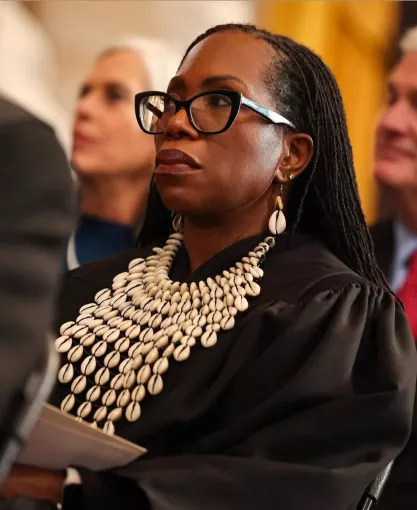
Justice Ketanji Brown Jackson in free expression mode at the Inauguration?
Justice Ketanji Brown Jackson at the inauguration of Donald Trump on Jan. 20, 2024. (Imagn Images)
Excerpts from Virginia Court of Appeals decision in Patel v. CNN, Inc.
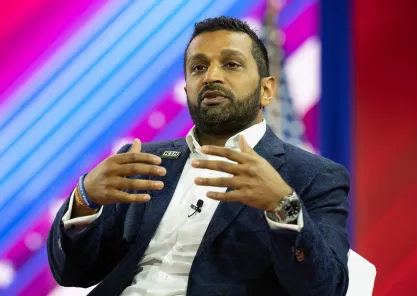
Kash Patel, seen here at the 2023 Conservative Political Action Conference, is President Donald Trump’s nominee to head the FBI. (Consolidated News Photos / Shutterstock.com)
An excerpt from today’s Virginia Court of Appeals decision in Patel v. CNN, Inc., decided by Judge Rosemarie Annunziata, joined by Judge Vernida Chaney (the opinions weigh in at over 12,000 words, so I only excerpt some key passages).
Abortion picketing case lingers on docket
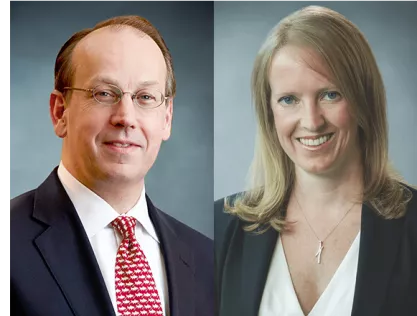
The cert. petition in the abortion picketing case, with Paul Clement as lead counsel, has been on the Court’s docket since July 16 of last year. It has been distributed for conferences seven times, the last being Jan. 21. In his petition, Mr. Clement (joined by Erin Murphy) explicitly called on the Court to “overrule Hill v. Colorado.” (See FAN 433, July 31, 2024))
Paul Clements and Erin Murphy
More in the News
2024-2025 SCOTUS term: Free expression and related cases
Cases decided
Villarreal v. Alaniz(Petition granted. Judgment vacated and case remanded for further consideration in light of Gonzalez v. Trevino, 602 U. S. ___ (2024) (per curiam))
Murphy v. Schmitt (“The petition for a writ of certiorari is granted. The judgment is vacated, and the case is remanded to the United States Court of Appeals for the Eighth Circuit for further consideration in light of Gonzalez v. Trevino, 602 U. S. ___ (2024) (per curiam).”)
TikTok Inc. and ByteDance Ltd v. Garland (The challenged provisions of the Protecting Americans from Foreign Adversary Controlled Applications Act do not violate petitioners’ First Amendment rights.)
This article is part of First Amendment News, an editorially independent publication edited by Ronald K. L. Collins and hosted by FIRE as part of our mission to educate the public about First Amendment issues. The opinions expressed are those of the article’s author(s) and may not reflect the opinions of FIRE or Mr. Collins.
Since the 2008 election, our President and CEO Greg Lukianoff has written to each new president upon their inauguration, offering FIRE’s perspective on how they can help defend free speech and academic freedom.
As President Trump enters office today, there is much work to be done. Free speech is under attack on college campuses. In fact, last year was the worst on record for free speech on college campuses, as more attempts were made to deplatform speakers on campus than any year since FIRE began tracking in 1998. And professors are censoring themselves more now than at the height of the McCarthy era.
Off campus, the situation is alarming as well.
Greg’s letter to President Trump highlights some policies his administration can implement to help remedy the situation and protect free speech over the next four years, on campus or off.
1. Support the Respecting the First Amendment on Campus Act
A 2024 FIRE study found that only 15% of public colleges and universities’ speech policies comply fully with their First Amendment obligations.This should be a national scandal.
But there’s a simple way for the Trump administration, working with Congress, to better protect the free speech rights of our nation’s students.
FIRE to Congress: More work needed to protect free speech on college campuses
News
FIRE joined Rep. Murphy’s annual Campus Free Speech Roundtable to discuss the free speech opportunities and challenges facing colleges.
We ask that Trump support the Respecting the First Amendment on Campus Act — or another piece of legislation to protect campus speech rights — to codify speech protective standards including ending “free speech zones” that limit where students can hold demonstrations, the levying of viewpoint-based security costs to punish student groups seeking to host “controversial” speakers, and encouraging institutions to adopt the Chicago Principles on Free Expression.
At least 23 states have enacted some of these commonsense provisions, but student free speech rights deserve federal protection. Legislation to ensure that all of our nation’s public colleges and universities finally protect the basic free speech rights of their students should be a top priority.
2. Address the abuse of campus anti-harassment policies
In the landmark 1999 decision Davis v. Monroe County Board of Education, the Supreme Court defined student-on-student harassment as behavior that “is so severe, pervasive, and objectively offensive, and that so undermines and detracts from the victims’ educational experience, that the victims are effectively denied equal access to an institution’s resources and opportunities.”
After 25 years of advocating for students’ rights on campus, FIRE knows all too well how definitions of student-on-student harassment that fail to meet the Davis standard will inevitably be used to punish protected speech. Consider the 2022 case of eight law students at American University who were put under investigation for participating in a heated back-and-forth following the leak of the Dobbs v. Jackson draft opinion, after another student said their pro-choice commentary harassed and discriminated against him based on his religious, pro-life beliefs.
As president, Trump inherits the privilege and the obligation to defend the First Amendment rights of all Americans, regardless of their viewpoint
But properly applied, the Davis standard ensures that institutions protect students against actual discriminatory behavior as opposed to punishing students who merely express controversial viewpoints.
3. Rein in government jawboning
Leaks and disclosures over the past few years have brought to light demands, threats, and other coercion from government officials to social media companies aimed at suppressing particular viewpoints and ideas.
This practice, known as jawboning, is a serious threat to free speech. But the Trump administration can prevent jawboning by federal officials with the following steps:
Prohibit federal employees from jawboning;
Support legislation to require transparency when government officials communicate with social media companies about content moderation. FIRE’s SMART Act is one such model bill.
Refrain from threatening or pressuring social media platforms to change their content moderation practices or suppress particular users.
And, of course, refrain from making calls for investigations, prosecutions, or other government retaliation in response to the exercise of First Amendment rights outside of the social media context as well.
4. Protect First Amendment rights when it comes to AI
Over the course of history, technologies that make communication easier have aided the process of knowledge discovery: from the printing press and the telegraph to the radio, phones, and the internet. So too have AI tools revealed their potential to spark the next revolution in knowledge production.
What is jawboning? And does it violate the First Amendment?
Issue Pages
Indirect government censorship is still government censorship — and it must be stopped.
The potential power of AI has also prompted officials at all levels of government to move towards regulating the development and use of AI tools. Too often, these proposals do not account for the First Amendment rights of AI developers and users.
The First Amendment applies to AI just as it does to other technologies that Americans use to create and distribute writings, images, and other speech. Nothing about AI software justifies or permits the trampling of those rights, and doing so would undermine its potential as a tool for contributing to human knowledge.
Trump’s administration can prevent this by rejecting any federal regulation of AI that violates the First Amendment.
Conclusion
The Trump administration faces historic challenges both at home and abroad. But the United States is uniquely capable of solving our challenges because of our unparalleled commitment to freedom of speech.
As president, Trump inherits the privilege and the obligation to defend the First Amendment rights of all Americans, regardless of their viewpoint — and FIRE stands ready to help in that effort.
Meta will stop checking falsehoods. Does that mean more free speech or a free-for-all?
“First, we’re going to get rid of fact-checkers,” Mark Zuckerberg, the founder of Meta, said in a video statement early this January. “Second, we’re going to simplify our content policies and get rid of a bunch of restrictions on topics like immigration and gender that are just out of touch with mainstream discourse.”
This statement marks another turn in the company’s policies in handling disinformation and hate speech on their widely used platforms Facebook, Instagram and Threads.
Meta built up its moderation capabilities and started its fact-checking program after Russia’s attempts to use Facebook to influence American voters in 2016 and after it was partially blamed by various human rights groups like Amnesty International for allowing the spread of hate speech leading to genocide in Myanmar.
Until now, according to Meta, about 15 thousand people review content on the platform in 70 languages to see if it is in line with the company’s community standards.
Adding information, not deleting
For other content, the company involves professional fact-checking organizations with journalists around the world. They independently identify and research viral posts that might contain false information.
Fact-checkers, like any other journalists, publish their findings in articles. They compare what is claimed in the post with statistics, research findings and expert commentary or they analyze if the media in the post are manipulated or AI generated.
But fact-checkers have a privilege that other journalists don’t – they can add information to the posts they find false or out of context on Meta platforms. It appears in the form of a warning label. The user can then read the full article by fact-checkers to see the reasons or close the warning and interact with the post.
Fact-checkers can’t take any further action like removing or demoting content or accounts, according to Meta. That is up to the company.
However, Meta now likens the fact-checking program to censorship. Zuckerberg also argued for the end of the program saying that the fact-checkers “have just been too politically biased and have destroyed more trust than they’ve created.”
Can untrained people regulate the Web?
For now, the fact-checking program will be discontinued in the United States. Meta plans to rely instead on regular users to evaluate content under a new program it calls “Community Notes.” The company promises to improve it over the course of the year before expanding it to other countries.
In a way, Meta walking back on their commitments to fight disinformation wasn’t a surprise, said Carlos Hernández- Echevarría, the associate director of the Spanish fact-checking outlet Maldita and a deputy member of the governance body that assesses and approves European fact-checking organizations before they can work with Meta called the European Fact-Checking Standards Network.
Zuckerberg had previously said that the company was unfairly blamed for societal ills and that he was done apologizing. But fact-checking partners weren’t warned ahead of the announcement of the plans to scrap the program, Hernández- Echevarría said.
It bothers him that Meta connects fact-checking to censorship.
“It’s actually very frustrating to see the Meta CEO talking about censorship when fact-checkers never had the ability and never wanted the ability to remove any content,” Hernández-Echevarría said. He argues that instead, fact-checkers contribute to speech by adding more information.
Are fact-checkers biased?
Hernández-Echevarría also pushes back against the accusation that fact-checkers are biased. He said that mistakes do occur, but the organizations and people doing the work get carefully vetted and the criteria can be seen in the networks’ Code of Standards.
For example, fact-checkers must publish their methodology for choosing and evaluating information. Fact-checkers also can’t endorse any political parties or have any agreements with them. They also have to provide proof of who they are owned by as well as publicly disclose information about their employees and funding.
Meta’s own data about Facebook, which they disclose to EU institutions, also shows that erroneous decisions to demote posts based on fact-checking labels occur much less often than when posts are demoted for other reasons — nudity, bullying, hate speech and violence, for example.
In the period from April to September last year, Meta received 172,550 complaints about the demotion of posts with fact-checking labels and, after having another look, reversed it for 5,440 posts — a little over 3%.
However, in all other categories combined, the demotion had to be reversed for 87% of those posts.
The sharing of unverified information
Research shows that the perception of the unequal treatment of different political groups might form because people on the political right publish more unreliable information.
A paper published in the scientific magazine Nature says that conservative users indeed face penalties more often, but they also share more low-quality news. Researchers therefore argued that even if the policies contain no bias, there can be an asymmetry in how they are enforced on platforms.
Meta is also making other changes. On 7 January, the company published a revised version of its hateful conduct policies. The platform now allows comparing women to household objects and “insulting language in the context of discussing political or religious topics, such as when discussing transgender rights, immigration, or homosexuality”. The revised policies also now permit “allegations of mental illness or abnormality when based on gender or sexual orientation”.
LGBTQ+ advocacy group GLAAD called these changes alarming and extreme and said they will result in platforms becoming “unsafe landscapes filled with dangerous hate speech, violence, harassment, and misinformation”.
Journalists also report that the changes divided the employees of the company. The New York Times reported that as some upset employees posted on the internal message board, human resources workers quickly removed the posts saying they broke the rules of a company policy on community engagement.
Political pressure
In a statement published on her social media channels. Angie Drobnic Holan, the director of the International Fact-Checking Network, which represents fact-checkers in the United States, linked Meta’s decision to political pressure.
“It’s unfortunate that this decision comes in the wake of extreme political pressure from a new administration and its supporters,” Holan said. “Fact-checkers have not been biased in their work. That attack line comes from those who feel they should be able to exaggerate and lie without rebuttal or contradiction.”
In his book “Save America” published in August 2024, Donald Trump whose term as U.S. President begins today, accused Zuckerberg of plotting against him. “We are watching him closely, and if he does anything illegal this time he will spend the rest of his life in prison,” he wrote.
Now, with the changes Zuckerberg announced, Trump is praising Meta and said they’ve come a long way. When asked during a press conference 7 January if he thought Zuckerberg was responding to Trump’s threats, Trump replied, “Probably.”
After Meta’s announcement, the science magazine Nature published a review of research with comments from experts on the effectiveness of fact-checking. For example, a study in 2019 analyzing 30 research papers covering 20 thousand participants found an influence on beliefs but the effects were weakened by participants’ preexisting beliefs, ideology and knowledge.
Sander van der Linden, a social psychologist at the University of Cambridge told Nature that ideally, people wouldn’t form misperceptions in the first place but “if we have to work with the fact that people are already exposed, then reducing it is almost as good as it as it’s going to get”.
Hernández-Echevarría said that although the loss of Meta’s funding will be a hard hit to some organizations in the fact-checking community, it won’t end the movement. He said, “They are going to be here, fighting disinformation. No matter what, they will find a way to do it. They will find support. They will do it because their central mission is to fight disinformation.”
Questions to consider:
• What is now allowed under Meta’s new rules for posts that wasn’t previously?
• How is fact-checking not the same as censorship?
• When you read social media posts, do you care if the poster is telling the truth?
This week on the podcast the government is to press on with implementing parts of the Higher Education (Freedom of Speech) Act 2023 while seeking to repeal others – we discuss what will (and should) happen next.
Plus there’s a report on more resilient and sustainable higher education finances, and NEON has been looking at regional inequality in university admissions.
With Richard Sykes, Partner at Mills & Reeve, Paul Greatrix, HE expert and until recently Registrar at the University of Nottingham, Debbie McVitty, Editor at Wonkhe and presented by Mark Leach, Editor-in-Chief at Wonkhe.
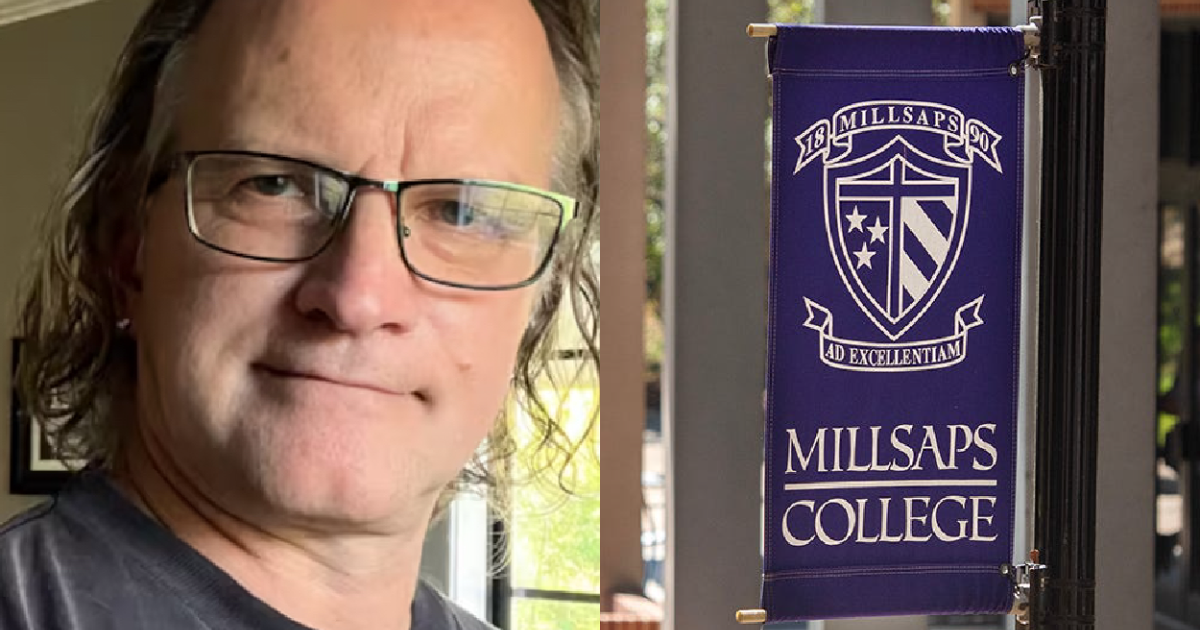
When tenured Millsaps College professor James Bowley sent an email sharing his opinion on the outcome of the 2024 presidential election, he didn’t anticipate it would result in his termination. But in a perfect storm of overreach and red tape, that’s exactly what happened.
On Nov. 6, 2024 — the day after the election — Bowley emailed the students in his “Abortion and Religions” class, canceling that day’s session to “mourn and process this racist fascist country.” With only three students in the class, Bowley got to know them quite well, including their political feelings, and knew canceling class would be best for those students. As Bowley told FIRE, “I just want to be caring and kind to my students, whom I knew would be troubled by the election.” Bowley wasn’t just trying to get out of work; he did not cancel the much larger first-year writing class session he taught that same day because he had no reason to know how those students felt about the election.
Two days later, Millsaps Provost Stephanie Rolph informed Bowley that he had been placed on temporary administrative leave pending review, for the bizarre offense of using his “Millsaps email account to share personal opinions with [his] students.”
That’s right: Millsaps didn’t take issue with Bowley canceling class (likely because they’d have to punish lots of people; professors cancel class for all sorts of reasons). The only cited reason was the use of his email to share personal opinions with students, which unsurprisingly is not an actual policy violation. That’s right: The college simply fabricated a policy violation so it could punish a professor for his speech. Frank Neville, president of the private college, has ignored hundreds of calls to reinstate Bowley, who was unable to do his job for over three months until yesterday, when he was eventually fired.
Welcome to Millsaps, a labyrinth of academic bureaucracy where personal opinions may not be shared.
Millsaps College president Frank Neville denied a committee recommendation and doubled down on Bowley’s leave being both justified and necessary, without explanation. (Barbara Gauntt / Clarion Ledger / USA TODAY NETWORK)
Professor punished without due process
Everything about Bowley’s treatment goes directly against Millsaps’ own fundamental principles of “freedom of speech and expression.” While Millsaps is a private institution not bound by the First Amendment, its commitment to free speech leads any reasonable student or faculty member to believe they are being promised expressive rights that align with the First Amendment.
Courts have recognized protection for a great deal of faculty speech on matters of public concern (say, apresidentialelection) because higher education depends on the wide exposure to robust exchanges of thoughts and ideas. But Millsaps’ actions here signal that it doesn’t take its own principles seriously and is making up its own standards for free speech and expression. That’s not okay with us — and it’s unfair to the students and faculty of Millsaps.
Not only did FIRE request that Millsaps drop the investigation and reinstate Bowley, but so did more than 100 students, reportedly, (pretty impressive for a college of only about 600) and over 500 alumni. And when Bowley contested the provost’s decision to place him on leave, a grievance committee made up of faculty members determined that Millsaps couldn’t identify a single policy that Bowley had violated. The committee recommended that Bowley be reinstated immediately.
FIRE remains by Bowley’s side, fighting for his return to teaching — and his right to share his opinions with students.
The grievance committee, like FIRE, also found that Bowley was not afforded proper dueprocess. Bowley was placed on leave before receiving a hearing and final determination. By doing so, the provost created an intermediary step in the process of dismissing a professor that exists nowhere in the handbooks — all without Bowley having any prior violations or disciplinary actions taken against him.
But Neville seemed unfazed by the calls from the Millsaps community and unconvinced by the facts presented to him. On Jan. 10, Neville denied the grievance committee’s recommendation and doubled down on Bowley’s leave being both justified and necessary, without explanation.
Calls to reinstate Bowley continued, this time reaching tens of thousands of people. But that still wasn’t enough. On Jan. 14, Bowley was told in a meeting that he was fired for not exercising restraint and not clarifying that his views were not that of the college’s. To be clear: The college fired Bowley for an offense – not clarifying that his views were not that of the college’s – of which he wasn’t accused. It’s no surprise that Bowley could not extricate himself from what Millsaps made into an impossible situation.
Ferris State cannot punish professor for comedic — and now viral — video jokingly referring to students as ‘cocksuckers’ and ‘vectors of disease’
News
It’s a joke, people. But violating faculty rights is not.
Even if the college had originally charged Bowley with not clarifying that his views were not that of the college’s, his email to his class still wouldn’t qualify. Whatever interest Millsaps may have in preventing faculty from purporting to speak on its behalf does not justify automatic punishment for simply not asserting that one isn’t speaking for the college. In fact, the Supreme Court has held that a teacher could not be punished for a letter to the editor he wrote in which he identified himself as a teacher at a certain school. Just because Bowley is identified as working at Millsaps (via his faculty email), doesn’t mean his speech is transformed into speech on behalf of the college.
Millsaps cannot overcome this principle just because it wants faculty to indicate whether views expressed “are individual or those of the institution.” Nothing in Bowley’s email can reasonably be interpreted as speaking on behalf of Millsaps, as it is commonly understood that when using their college email, faculty members are speaking for themselves rather than conveying that they speak for their employer. And here, Bowley was very clearly sharing an opinion – a criticism of an election outcome – that any reasonable person would understand as being his own opinion.
Bowley told FIRE yesterday: “I love Millsaps College and even more I love my students, but censorship by an administration by definition means that it is not education anymore; it is not a legitimate college.”
FIRE remains by Bowley’s side, fighting for his return to teaching — and his right to share his opinions with students.