This blog was kindly authored by Lauren Amdor, who graduated from LSE with a BSc in History and International Relations and has recently finished her post as the Activities and Communities Sabbatical Officer at LSE’s Students’ Union.
The 2023 Higher Education (HE) Freedom of Speech Act (the Act) has long been one to watch, especially after Labour paused its implementation last July. As an LSE Students’ Union (LSESU) Sabbatical Officer, the Act raised broader questions around how students’ education would be affected, which I explored in the research project Power to Speak and subsequent focus groups.
With 592 responses across LSE Departments, modes of study and domiciles, students were asked nine quantitative questions in the Power to Speak survey measured on a Likert scale which found that:
One-in-four respondents did not feel comfortable speaking up in class.
75% of respondents agreed that the teacher defines what speech is accepted in the classroom.
45% of respondents felt ill-equipped to encounter/respond to ‘damaging speech’ protected by free speech laws.
Half of the respondents agreed that campus lacked opportunities for groups with opposing views to engage in dialogue.
The tenth qualitative question asked students what they thought ‘promoting freedom of speech should look like’, given the upcoming duty on universities to promote this under the Act.
Student responses were coded into five thematic categories:
A safe environment to express or not express views (26.8%)
Freedom to express views without retaliation or consequences (23.6%)
Promoting and welcoming free speech (22.2%)
Students’ rights to protest (15.3%)
A zero tolerance to hate speech and violence (12.1%)
Two key points emerged, which universities and students’ unions should pay particular attention to:
Why did students report feeling unable to express their views?
Where do students think the line is with free (but offensive) speech, and why?
Institutional ramifications, not strictly legal ones, recurred throughout responses. This included fearing academic repercussions for articulating a converging perspective to their teachers, visa revocation and the social consequences of adopting minority viewpoints including being ‘judged’, ‘ostracised’ or ‘persecuted’. The most cited fear, however, was disciplinary action against students by the University which was also central in the Right to Protest theme. Here, students specifically referenced disciplinaries against those protesting for Palestine across higher education institutions. These various fears contributed to what students considered as ‘a chilling effect on free speech’ despite the high legal threshold for unlawful speech.
Inadequate tools and support systems to engage with conflicting perspectives was a significant issue. Students highlighted difficulties navigating emotionally charged topics, especially as university was the first time many had encountered diametrically opposing views. Shying away from these discussions was partly down to ‘the fear of the first time’ and accidentally causing offense, particularly appearing Islamophobic or Antisemitic. Limited experience in having these conversations exacerbated the individual burden felt and reported by students, as universities had seemingly not supported necessary skill development. Fluctuating stress across the academic year also elevated anxiety around difficult conversations or debates, further reducing the capacity to cope adequately. The demographic breakdown of Question 27 of the National Student Survey (NSS) suggested that minority-group students felt less free to express their views during their studies. A focus group discussing Faith in the Classroom further explored this trend, finding that practising students wanted to avoid dealing with possible arguments around personal beliefs. Departmental colleagues additionally identified how cultural norms regarding debate contributed to an uneven baseline from which students engage (discussed in the case of Chinese international students). Universities should be aware that certain student groups feel less equipped to navigate free speech and should therefore take a tailored approach to upholding it.
Although academic freedom laws ensure academic staff can express their views as they choose, this was considered a barrier to students participating in debate. Students consistently maintained that teachers should not necessarily ‘engineer neutrality for the sake of it’ but should be trained to foster a culture of academic disagreement without discrimination and manage conflicting views constructively and skilfully. Building trust and a positive rapport between students and academics was significant in empowering students to contest presented arguments and approach academic staff to discuss related issues.
Students expressed concern around speech which might harm and negatively impact minority student groups, and how a hostile campus environment impacted their overall education. How potentially harmful (but legal) views were presented was of equal concern, with most students accepting such speech if it was respectful and considerate to diverse and underrepresented experiences. This is effectively the debate around balancing free speech rights with the right to privacy and protection from discrimination under the European Commission of Human Rights. While institutions consult the OfS guidance on interpreting the Act and related questions, institutions also contend with the apparent lack of clarity amongst students, reiterated by consistent calls to draw a clear line and articulate ‘what free speech is not’.
Recommendations Arising from the Research Findings
Clarify how free speech, rights against discrimination and to privacy are practically balanced, and what speech or action might result in institutional disciplinaries, in an understandable way for students.
Create a baseline level of soft skills for respectful disagreement and debate as part of a university education, regardless of a student’s course of study.
Facilitate dialogue spaces ‘across religious, ethnic and ideological boundaries’, to counter polarisation, model respectful discussion of ‘controversial issues’ and assist students with this responsibility.
Equip teachers to facilitate debate across challenging topics while upholding Academic Freedom.
Where Do Students’ Unions Sit?
Students’ Unions (SU) are uniquely positioned to support students and institutions with the realities of the Act. As a student-led organisation, there is a clear opportunity to create student-led dialogue spaces for interested students, as the LSESU Campus Relations Group has done. Working with individual student societies additionally offers a chance to carve out pockets of safety for those encountering especially difficult perspectives at university. As a key liaison between institutions and students, SUs have an explanatory role to ensure students understand their rights related to the Act and university policy. And finally, as an acknowledged student voice mechanism, SUs can lobby their institutions on issues pertaining to students’ free speech or work with larger organising bodies (e.g. the National Union of Students) to lead national policy change.
Imagine the government forcing you to label your
all-natural milk product as “imitation.”
Florida tried to make one dairy farm do just that,
sparking a First Amendment question: Where’s the line between a
business’s right to speak and protecting consumers from
deception?
In this episode, we explore how far free speech
protections go for commercial speech with:
Timestamps:
00:00 Intro
05:03 What exactly is commercial speech?
08:25 The evolution of commercial speech law
13:59 Early regulation of commercial speech
23:03 What is false or misleading commercial
speech?
26:04 Controversial regulations of non-misleading
commercial speech
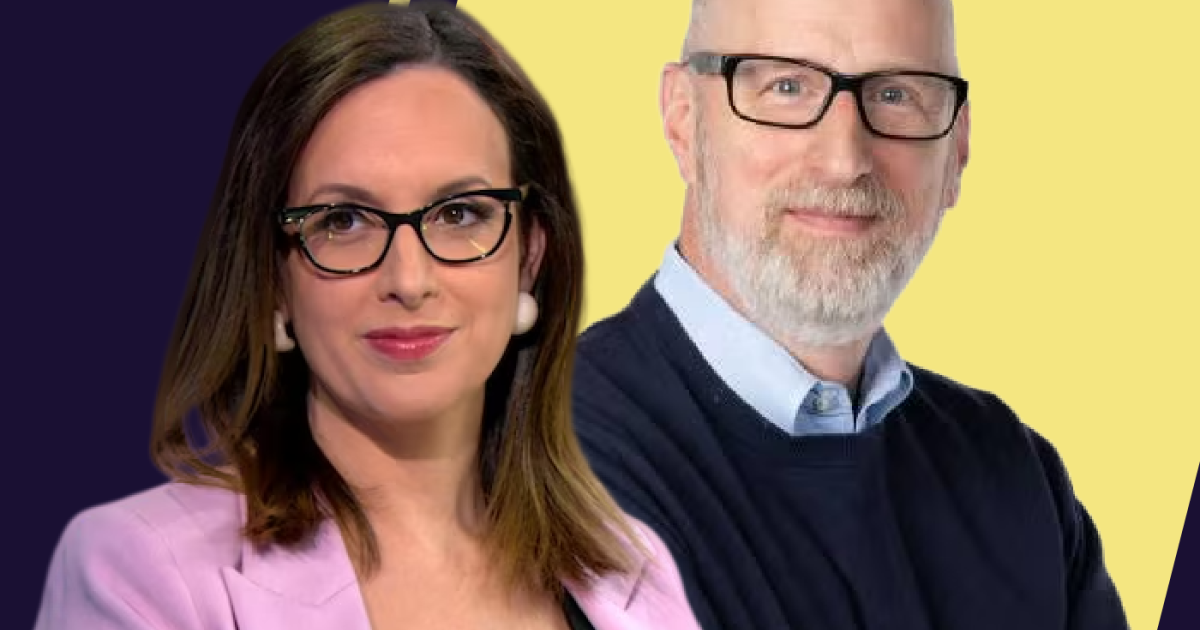
On Monday, August 11th at 4 p.m. Eastern Time, Nico
will be speaking with former Treasury Secretary/Harvard University
president,
Larry Summers, and FIRE President/CEO,
Greg Lukianoff. They will discuss the Trump
administration’s campaign against elite universities, including
Harvard, what outcomes we can expect from that campaign, and what
those outcomes might mean for free speech, academic freedom, and
university independence.
Enjoy listening to the podcast? Donate to FIRE today and
get exclusive content like member webinars, special episodes, and
more. If you became a FIRE Member
through a donation to FIRE at thefire.org and would like access to
Substack’s paid subscriber podcast feed, please email [email protected].
The First Amendment trumps the statutes that the government is abusing to deport people for speech alone
This lawsuit seeks a landmark ruling that the First Amendment forbids the government from deporting lawfully present noncitizens for constitutionally protected speech
FIRE attorney: ‘In a free country, you shouldn’t have to show your papers to voice your opinion’
SAN JOSE, Calif., Aug. 6, 2025 — Today, the Foundation for Individual Rights and Expression sued Secretary of State Marco Rubio, challenging two federal immigration law provisions that give him unchecked power to revoke legal immigrants’ visas and deport them for protected speech.
“In the United States of America, no one should fear a midnight knock on the door for voicing the wrong opinion,” said FIRE attorney Conor Fitzpatrick. “Free speech isn’t a privilege the government hands out. Under our Constitution it is the inalienable right of every man, woman, and child.”
But since March, Rubio and the Trump administration have waged an assault on free speech, targeting foreign university students for deportation based on bedrock protected speech like writing op-eds and attending protests. Their attack is casting a pall of fear over millions of noncitizens, who now worry that voicing the “wrong” opinion about America or Israel will result in deportation.
Noncitizens in the United States have First Amendment rights. Despite that, Rubio is wielding two provisions of the Immigration and Nationality Act to target lawfully present noncitizens for their opinions.
The first allows the secretary of state to initiate deportation proceedings against any noncitizen for protected speech if the secretary “personally determines” the speech “compromises a compelling foreign policy interest.”
The second enables the secretary of state to revoke the visa of any noncitizen “at any time” for any reason.
As FIRE’s lawsuit explains, the provisions are unconstitutional when used to revoke a visa or deport someone for speech the First Amendment protects.
The Trump administration is proudly using the provisions to revoke the visas of and deport lawfully present noncitizens for their speech if the government deems it anti-American or anti-Israel. Rubio used the first provision to target Columbia University student Mahmoud Khalil for protected pro-Palestinian speech and the second to target Tufts University student Rümeysa Öztürk for coauthoring an op-ed.
Rubio and the Trump administration claim — as all censors do — that this time is different. They claim that this political speech comes from noncitizens, which therefore warrants setting aside America’s protection of free speech.
That’s wrong. America’s founding principle is that liberty comes not from the government, but is an inherent right of every individual. Every person — whether they’re a U.S. citizen, are visiting for the week, or are here on a student visa — has free speech rights in this country.
“Two lawful residents of the United States holding the same sign at the same protest shouldn’t be treated differently just because one’s here on a visa,” said FIRE Legal Director Will Creeley. “The First Amendment bars the government from punishing protected speech — period. In our free country, you shouldn’t have to show your papers to speak your mind.”
Plaintiffs in FIRE’s lawsuit represent the wide range of groups and individuals whose speech is threatened by the continued assault on noncitizens’ protected speech:
The Stanford Daily, the independent, student-run newspaper at Stanford University, where writers with student visas are declining assignments related to the conflict in the Middle East, worried that even reporting on the war will endanger their immigration status
Jane Doe and John Doe, two legal noncitizens with no criminal record who engaged in pro-Palestinian speech and now fear deportation and visa revocation because of their expression
“There’s real fear on campus and it reaches into the newsroom,” said Greta Reich, editor-in-chief of The Stanford Daily. “I’ve had reporters turn down assignments, request the removal of some of their articles, and even quit the paper because they fear deportation for being associated with speaking on political topics, even in a journalistic capacity. The Daily is losing the voices of a significant portion of our student population.”
There’s also historical context that should give the government pause. Congress passed the Alien and Sedition Acts 225 years ago. One of those acts allowed President John Adams to deport noncitizens if he thought they posed a “danger” to the country. It was one of the most unconstitutional laws in our nation’s history and died a quick death two years later, after the acts contributed to Adams’ resounding loss in the 1800 presidential election to Thomas Jefferson.
FIRE aims to stop the government’s use of the two provisions that stand counter to our ideals as a nation: Provisions that — in their expansive scope and unchecked authority — are more at home in countries like China and Russia than in a free America. By defeating these provisions, no administration of any party will be able to weaponize them against individuals for expression disfavored by the government.
FIRE moved for a preliminary injunction to stop the government from abusing the visa provision while the case is ongoing.
Marc Van Der Hout, Johnny Sinodis, and Oona Cahill at Van Der Hout LLP are serving as local and advisory counsel on the case.
From today’s lawsuit: “Our First Amendment stands as a bulwark against the government infringing the inalienable human rights to think and speak for yourself.”
The Foundation for Individual Rights and Expression (FIRE) is a nonpartisan, nonprofit organization dedicated to defending and sustaining the individual rights of all Americans to free speech and free thought — the most essential qualities of liberty.
CONTACT:
Daniel Burnett, Senior Director of Communications, FIRE: 215-717-3473; [email protected]
The number of colleges and universities with written policies that do not seriously threaten student expression are on the rise this year, according to the Foundation for Individual Rights and Expression’s 19th annual “Spotlight on Speech Codes” report, published Tuesday.
Since 2006, FIRE has grouped hundreds of public and private higher education institutions into three overall categories based on their campus speech policies: green, yellow and red lights. This year, 73 of the 490 (14.9 percent) colleges and universities surveyed received a green light ranking—meaning their policies don’t threaten free expression—compared to 63 last year. It’s the highest share since 2012, when just 3.6 percent of institutions earned green-light ratings.
For the first time in 19 years, the number of green-light colleges outnumbered those in the red-light category (14.7 percent), reserved for institutions with policies that “clearly and substantially restrict free speech,” according to the report. Last year, 20 percent of institutions received a red-light rating.
Although political and institutional responses to campus protests related to the Israel-Hamas war reignited debate over free expression last year, the report attributed the decrease in red-light ratings to colleges and universities revising their policies related to harassment, hate speech and bias-reporting systems. Specifically, the report said that while bias-reporting systems have become popular over the past decade, they “have invited students to report protected speech simply because it offends them,” turned academic institutions into “referees of political and academic speech,” and created a “chilling effect on campus expression.”
Lawsuits, free speech advocacy—from students, alumni and groups like FIRE—and lawmaker scrutiny have all spurred changes in recent years.
“Over a dozen institutions have either substantially revised or eliminated entirely their bias reporting systems,” the report said. “Others have significantly reduced the prominence of their bias reporting teams, either by reducing the number of places on their website the team is mentioned or by requiring students enter their credentials to access the policy information.”
FIRE rated the majority of institutions—337, or 68.8 percent—as yellow, meaning they “maintain policies that impose vague regulations on expression.” And eight colleges—including Baylor University, Brigham Young University and Hillsdale College—received a warning rating for “clearly and consistently stat[ing] that they hold a certain set of values above a commitment to freedom of speech.”
Over all, private colleges have more restrictive policies than public colleges. Just 10.6 percent of public colleges earned red lights compared to 28 percent of private colleges—and only 7.1 percent of private colleges earned a green-light rating, compared to 17 percent of public ones.
Don’t want to publish an opinion on your blog you disagree with? Too bad, the government forces you to publish it. Criticize the mayor? Go to jail — and good luck trying to sue the mayor for violating your First Amendment rights. Want to access online content legal for adults without jeopardizing your privacy and reputation? Think again, your state legislature demands you reveal your identity first.
That’s not the America I know. Nor is it one a robust First Amendment would ever allow. But those constitutional threats came up before the Supreme Court during its past two terms, thanks to state legislatures and government officials who would prefer to play thought police instead of obey the First Amendment’s commands.
For the most part, the Supreme Court did as it has for decades: It upheld the First Amendment as a mighty check on government intrusion into our thoughts, on public debate, and in the search for truth. Still, a couple of the Court’s decisions this year broke from that trend, causing First Amendment defenders everywhere to raise their collective eyebrows.
Americans’ pilgrimage to the online world has placed free speech on the internet at the forefront of the Court’s recent First Amendment decisions. And that includes a case involving our Lone Star State. Last July, in Moody v. Netchoice, the Supreme Court considered Texas and Florida laws that tried to dictate how social media companies decide what political and ideological content to allow, and how to present it.
Before the Supreme Court sent the cases back to the appeals courts for another look, it made one thing clear: The First Amendment bars the government from telling social media platforms what they can and can’t publish, just as it bars the government from telling newspaper editors what they can or can’t print. As Justice Kagan remarked, “on the spectrum of dangers to free expression, there are few greater than allowing the government to change the speech of private actors in order to achieve its own conception of speech nirvana.”
In another pair of rulings, the Supreme Court considered two instances of local officials blocking citizens from commenting on the officials’ social media pages about the government’s performance. Although the Court didn’t rule in favor of either party, it confirmed the First Amendment limits officials’ power to block Americans from commenting on social media pages an official uses to conduct government business.
With these social media decisions, the Court underscored that core First Amendment principles apply just as strongly in the digital age, helping to secure free speech online from government overreach.
On the other hand, this most recent Supreme Court term found the Court twice deferring to governmental regulations of online expression. First, in TikTok v. Garland, the Court held the federal government’s effective ban on the popular social media app TikTok does not violate the First Amendment, even as half the United States uses the platform to speak and to receive information. The Court largely yielded to the government’s asserted concerns over national security, despite, as many pointed out, Congress’s failure to provide enough evidence showing TikTok poses a national security threat. In fact, the administration’s continued unwillingness to enforce the ban punctuates how suspect Congress’s national security concerns were.
And in another decision, Free Speech Coalition v. Paxton, the Court upheld Texas’s law requiring adults to verify their age before accessing websites with sexually explicit material that is, while legal for adults, “obscene for minors.” Breaking from decades-old prior precedent that invalidated similar laws, the Court held the First Amendment doesn’t protect adults “accessing material obscene to minors” until they verify their age — even though that material enjoys full First Amendment protection.
While the Court noted the accepted practice of ID checks for sexually explicit material in the physical world, it all but skirted the unique and serious privacy implications digital ID checks impose, in a time where Americans suffer harm from regular data breaches. Those privacy scares will chill many adults from seeking speech the First Amendment protects for their use.
For all that, both the TikTok and Free Speech Coalition decisions are narrow ones. So on the whole, they should not undermine the broad protections for internet speech the Supreme Court has confirmed in prior terms. Still, any time the government censors speech on shaky evidence about national security concerns, or tries to burden adult access to protected speech in the name of childproofing the internet, it raises a First Amendment red flag that should concern us all.
Outside of the digital world, the Supreme Court handed down several decisions over the last two terms vindicating the First Amendment as a vital check on overzealous government officials abusing their power to silence opinions they don’t like. For instance, in NRA v. Vullo, the Supreme Court held officials in New York violated the First Amendment when they coerced financial services and insurers and underwriters to sever ties with the National Rifle Association — all because the state disagreed with the NRA’s constitutionally protected advocacy. That’s hugely important for freedom of speech, affirming that the government can’t strong-arm third-parties into silencing Americans because of the views they express.
Another decision centered on a San Antonio-area woman was a good step towards ensuring government critics have a robust remedy when officials wrongfully arrest them. In Gonzalez v. Trevino, the Supreme Court clarified that Sylvia Gonzalez, a long-time government critic, could sue the local officials who singled her out for arrest after she called for the city manager’s removal.
And just this May, the Supreme Court halted the Maine Legislature’s denial of State Representative Laurel Libby’s right to vote just because the legislature’s political majority took offense to the lawmaker’s First Amendment-protected social media post about a transgender athlete participating in a high school event. Not only did the majority’s act infringe Rep. Libby’s First Amendment right to comment on public issues, it also deprived her constituents of the representation our republican form of government guarantees.
At its core, the Court’s ruling in Libby v. Fecteau underscored a vital constitutional principle: Political majorities cannot censor and exclude others from the democratic process based on the views they express. That’s a first principle worth upholding, no matter where a speaker falls on the ideological spectrum.
And we should all be glad the Supreme Court upheld that principle here, in a time where protecting the uniquely American freedoms to dissent and voice our opinions without fear of the government’s strong hand is as important as ever.
This June, high school students from across the country assembled in our nation’s capital to offer a glimpse of one of the most important things in America — the future of the First Amendment.
Held at American University in Washington, D.C., FIRE’s Free Speech Forum mixed big ideas with bigger conversations, bringing together 200 high schoolers to explore, deepen, and celebrate their interest in free speech. Thanks to the collaborative efforts of our generous donors, dedicated staff, enthusiastic counselors, and our incredible students, the forum was a resounding success, leaving us with a feeling of immense pride and a renewed belief in the power of young voices to shape the future of free expression.
Throughout the week-long event, students had the opportunity to hear from world-renowned free speech advocates, engage in respectful discussions with their peers on pressing political issues, and explore the capital’s treasure trove of historic landmarks. But as one student remarked, the main highlight was simply “being around others who are also interested in civil discourse!”
The conference kicked off in earnest with a keynote address by musician and activist Daryl Davis, who is known for convincing members of the Ku Klux Klan to renounce the group. Davis captivated the audience with his tales of attending KKK rallies as a black man, bringing Klan leaders inside his home for interviews, and even walking one Klansman’s wife down the aisle at her wedding. Through his commitment to civil dialogue, Davis has persuaded dozens of Klan officials to abandon their racist beliefs, and continues to inspire future generations of free speech advocates.
As one student reflected, “Opening with Daryl Davis made a big impact because it forced us to consider if this man can hear this hateful speech and still believe in free expression, then we should be able to do so as well.”
WATCH VIDEO: An accomplished blues musician, Daryl Davis has dedicated decades of his life to a mission that defies conventional wisdom. Through the transformative power of conversation, Davis fearlessly takes on the challenging task of convincing members of the Ku Klux Klan and other extremist groups to renounce their deep-seated bigotry.
Students also had the opportunity to meet former congressman and FIRE advisory councilmember Justin Amash during a live taping of FIRE Executive Vice President Nico Perrino’s So to Speak podcast. Campers thoughtfully engaged the former representative with questions about his time in office and his future political aspirations.
Capping off our keynote speakers for the week was Mary Beth Tinker, the plaintiff in the landmark Supreme Court decision Tinker v. Des Moines (1969). In 1965, Tinker and her brother wore black armbands in protest of the Vietnam War and were subsequently punished under the school’s code of conduct. Tinker’s victory in the Supreme Court paved the way for generations of students to enjoy greater First Amendment rights in the classroom. Tinker gave students an inspiring testimony about advocating for expression and taking an active role in defending causes you believe in. Her legendary story and lifelong dedication to public service was a striking reminder of students’ power to make an impact on a national scale.
During the week, students learned the “dos and don’ts” of productive civil discourse, how to engage with opposing perspectives, the fundamentals of First Amendment case law, and how to connect and network with their peers in ways that foster lifelong personal and professional relationships. Breakout sessions like our model debate tournament gave students the chance to think on their feet and work together to form cohesive arguments about a variety of topics. In the session titled “Protected vs. Unprotected,” students tested their critical thinking skills by analyzing potential real-world speech scenarios and determining their protected status under the First Amendment.
Free Speech Forum attendees and counselors explore the Supreme Court building in Washington, D.C.
As the week progressed, it became clear that whether it was a lively discussion in the dining hall, a spirited debate on the walk to sessions, or the inquisitive questions posed to our speakers, students were engaged and used each opportunity to learn and mold their own perspectives, all while keeping an open mind and a curious attitude. One student said one of the things that most influenced their view on free speech was the “different debates and conversations we had amongst ourselves — on topics not everyone agreed with.”
In addition, students had the chance to explore their nation’s capital beyond American’s campus, venturing to some of D.C.’s iconic museums and federal buildings. The National Archives, Library of Congress, Supreme Court, and Capitol Building each played host to scores of forum attendees, who supplemented their First Amendment education by standing at the sites where America’s enduring commitment to free speech has been cemented.
And in true FIRE fashion, students who debated fervently in the classroom still managed to become friends outside of it. We would be remiss not to mention the impromptu piano sing-along during our game night when counselors and campers alike started belting out Ed Sheeran and Bruno Mars hits. The Free Speech Forum talent show was no snoozer either, featuring speed cubing, magic tricks, and cohort acapella. The show was capped off with a group of students presenting a new FIRE flag representing the forum’s transformative impact on our campers.
“My daughter had an incredible experience,” one parent commented. “She particularly appreciated the chance to connect with other like-minded students from diverse backgrounds.” The parent added, “My daughter left the program feeling more confident in her ability to advocate for causes she cares about and to contribute to open, respectful dialogue.”
It’s no surprise our Saturday dismissal was accompanied by teary goodbyes, the exchanges of contact information, and promises to stay in touch. We as interns hope students take what they learned at the conference to their communities and campuses, advocating for an America in which no one fears the censorious axe of the government, and in which political differences are resolved with mutually respectful discourse.
In Free Speech Coalition v. Paxton, the U.S. Supreme Court broke new ground in applying relaxed First Amendment scrutiny to state-imposed burdens on lawful adult access to obscene-for-minors content. The decision appeared outcome-driven to uphold laws that require websites with specified amounts of sexually explicit material to verify users’ ages. However, the Court indicated the holding applies only “to the extent the State seeks only to verify age,” such that, if handled in a principled manner, FSC v. Paxton should have relevance only for speech to which minors’ access may be constitutionally restricted.
FSC v. Paxton involved Texas HB 1181’s mandate that online services use “reasonable age verification methods” to ensure those granted access are adults if more than a third of the site’s content is “sexual material harmful to minors,” which the Court treated as content First Amendment law defines as “obscene for minors.” If an adult site knowingly fails to age-verify, Texas’ attorney general may recover civil penalties of up to $10,000 per day, and $250,000 if a minor actually accesses pornographic content. HB 1811 is one of over 20 state adult-content age-verification laws recently passed or enacted.
Obscenity is among the few categories of speech the First Amendment doesn’t protect. In 1973’s Miller v. California, the Court defined obscenity as speech that (1) taken as a whole appeals primarily to a “prurient interest” in sex (i.e., morbid, unhealthy fixation with it); (2) depicts or describes sexual or excretory conduct in ways patently offensive under contemporary community standards; and (3) taken as a whole, lacks serious literary, artistic, political, or scientific value. The Court has limited the test’s scope to what it calls “hardcore pornography.” Material that is “obscene for minors” is that which satisfies the Miller test as adjusted to minors. Sexually explicit material can thus be obscene for minors but fully protected for adults.
Under these tests, the government may ban obscene speech and restrict access by those under 18 to speech that is “obscene for minors,” but it cannot cut off adults’ access to non-obscene sexual material.
It’s long been accepted that, to access adult, potentially obscene-for-minors material in the physical world, showing identification to prove age may be required. So, a law requiring ID to access such content online might seem analogous on its face.
But online age-verification imposes risks physical ID checks do not. An adult bookstore clerk doesn’t save a photocopy of your license or track the content you access. Nor will hackers, therefore, try to access the ID. These are just some of the reasons surveys consistentlyshow a majority of Americans do not want to provide ID to access online speech — whether adult material or other content, like social media.
Texas’ HB 1181 is similar to two federal statutes the Supreme Court invalidated around the turn of the millennium. In 1997, the Court in Reno v. ACLU unanimously struck down portions of the Communications Decency Act that criminalized transmitting “obscene or indecent” content. And in 2002’s Ashcroft v. ACLU, it considered whether the Child Online Protection Act violated the First Amendment in seeking to prevent children’s access to “material harmful to minors” in a way that incorporated age verification.
For decades, the Court has held statutes that regulate speech based on its content must withstand judicial review under strict scrutiny, which requires the government to demonstrate that the law is necessary to serve a compelling government interest and is narrowly tailored to achieve it using the “least restrictive means.” For laws restricting access to online speech, the Court held the laws in Reno and Ashcroft unconstitutional because they failed strict scrutiny. These cases followed in the footsteps of Sable Communications vs. FCC (1989) and United States v. Playboy (2000), in which the Court applied strict scrutiny to invalidate laws governing adult material transmitted by phone and on cable television stations, respectively.
But in FSC v. Paxton, the Court subjected Texas’ age-verification law for online adult content to only intermediate scrutiny. Under this standard of review, a speech regulation survives if it addresses an important government interest unrelated to suppression of speech, directly advances that interest in a direct and material way, and does not burden substantially more speech than necessary. The Court justified applying a lower level of scrutiny on the ground that minors have no First Amendment right to access speech that is obscene to them. Accordingly, it reasoned, even if adults have the right to access “obscene for minors” material, it is “not fully protected speech.” From there, the Court concluded that “no person — adult or child — has a First Amendment right to access speech that is obscene to minors without first submitting proof of age.” And it upheld the Texas law under intermediate scrutiny, concluding the regulations only incidentally restrict speech that can be accessed by adults.
The upshot is, going forward, it will be easier to justify laws restricting minors’ access to off-limits expression even if the law burdens adults’ access to material that is otherwise lawful for them.
At the same time, the majority opinion sought to limit the type of content that can be restricted only to material that meets the legal definition of “obscene-for-minors” material, and not anything that might be considered generally inappropriate.
As the Court held in Brown v. Entertainment Merchants Assn. (2011), “minors are entitled to a significant measure of First Amendment protection, and only in relatively narrow and well-defined circumstances may government bar public dissemination of protected materials to them.” And in Reno, which involved similar attempts to limit provision of online content to minors, the Court held the government could not ban “patently offensive” and “indecent” (but not obscene) material for everyone in the name of protecting children.
Free Speech Coalition should not be read as approving age verification laws for online speech generally that do not specifically target “obscene for minors” material. Its narrow focus will not support the recent spate of social media age-verification laws that have met significant judicial disapproval. Such laws have been enjoined in Arkansas, Mississippi, California, Utah, Texas, Ohio, Indiana, Florida, and most recently last week, when a federal court held Georgia’s version “highly likely [to] be unconstitutional” because it interferes with minors’ rights “to engage in protected speech activities.”
The risk, of course, is that governments will seek to leverage FSC v. Paxton decision beyond its limited holding, and/or that lower courts will misuse it, to justify prohibiting or regulating protected speech other than that obscene as to minors. In defending laws that implicate the First Amendment, the government often argues it is regulating only conduct, or unprotected speech, or speech “incidental” to criminal conduct.
Courts for the most part have seen through these attempts at evasion, and where a speech regulation applies based on topic discussed or idea or message expressed, or cannot be justified without reference to its function or content, courts apply strict scrutiny. Under FSC, however, would-be regulators have another label they can use — “partially protected speech” — and the hope that invoking it will lead to intermediate scrutiny.
Only time will tell if the Court will keep the starch in its First Amendment standards notwithstanding what should be the purple cow of FSC v. Paxton.
Scores of speech therapists across the country erupted last month when their leading professional association said it was considering dropping language calling for diversity, equity and inclusion and “cultural competence” in their certification standards. Those values could be replaced in some standards with a much more amorphous emphasis on “person-centered care.”
“The decision to propose these modifications was not made lightly,” wrote officials of the American Speech-Language-Hearing Association (ASHA) in a June letter to members. They noted that due to recent executive orders related to DEI, even terminology that “is lawfully applied and considered essential for clinical practice … could put ASHA’s certification programs at risk.”
Yet in the eyes of experts and some speech pathologists, the change would further imperil getting quality help to a group that’s long been grossly underserved: young children with speech delays who live in households where English is not the primary language spoken.
“This is going to have long-term impacts on communities who already struggle to get services for their needs,” said Joshuaa Allison-Burbank, a speech language pathologist and Navajo member who works on the Navajo Nation in New Mexico where the tribal language is dominant in many homes.
In a written statement after this story published, a spokesperson for the association stressed that the proposed changes have not been finalized, and said that member feedback is currently under review.
“ASHA remains steadfast in our belief that all health care services should be non-discriminatory and address the needs of every individual,” the spokesperson added. She characterized the proposed changes as “an evolution, not a retreat,” and noted that person-centered care aims to ensure “clinicians are equipped to deliver services tailored to each person’s context, including their lived experience, language background, cultural identity, and home environment.”
A shift away from DEI and cultural competence — which involves understanding and trying to respond to differences in children’s language, culture and home environment — could have a devastating effect at a time when more of both are needed to reach and help multilingual learners, several experts and speech pathologists said.
They told me about a few promising strategies for strengthening speech services for multilingual infants, toddlers and preschool-age children with speech delays — each of which involves a heavy reliance on DEI and cultural competence.
Embrace creative staffing. The Navajo Nation faces severe shortages of trained personnel to evaluate and work with young children with developmental delays, including speech. So in 2022, Allison-Burbank and his research team began providing training in speech evaluation and therapy to Native family coaches who are already working with families through a tribal home visiting program. The family coaches provide speech support until a more permanent solution can be found, said Allison-Burbank.
Home visiting programs are “an untapped resource for people like me who are trying to have a wider reach to identify these kids and get interim services going,” he said. (The existence of both the home visiting program and speech therapy are under serious threat because of federal cuts, including to Medicaid.)
Use language tests that have been designed for multilingual populations. Decades ago, few if any of the exams used to diagnose speech delays had been “normed” — or pretested to establish expectations and benchmarks — on non-English-speaking populations.
For example, early childhood intervention programs in Texas were required several years ago to use a single tool that relied on English norms to diagnose Spanish-speaking children, said Ellen Kester, the founder and president of Bilinguistics Speech and Language Services in Austin, which provides both direct services to families and training to school districts. “We saw a rise in diagnosis of very young (Spanish-speaking) kids,” she said. That isn’t because all of the kids had speech delays, but due to fundamental differences between the two languages that were not reflected in the test’s design and scoring. (In Spanish, for instance, the ‘z’ sound is pronounced like an English ‘s.’)
There are now more options than ever before of screeners and tools normed on multilingual, diverse populations; states, agencies and school districts should be selective, and informed, in seeking them out, and pushing for continued refinement.
Expand training — formal and self-initiated — for speech therapists in the best ways to work with diverse populations. In the long-term, the best way to help more bilingual children is to hire more bilingual speech therapists through robust DEI efforts. But in the short term, speech therapists can’t rely solely on interpreters — if one is even available — to connect with multilingual children.
That means using resources that break down the major differences in structure, pronunciation and usage between English and the language spoken by the family, said Kester. “As therapists, we need to know the patterns of the languages and what’s to be expected and what’s not to be expected,” Kester said.
It’s also crucial that therapists understand how cultural norms may vary, especially as they coach parents and caregivers in how best to support their kids, said Katharine Zuckerman, professor and associate division head of general pediatrics at Oregon Health & Science University.
“This idea that parents sit on the floor and play with the kid and teach them how to talk is a very American cultural idea,” she said. “In many communities, it doesn’t work quite that way.”
In other words, to help the child, therapists have to embrace an idea that’s suddenly under siege: cultural competence,
Quick take: Relevant research
In recent years, several studies have homed in on how state early intervention systems, which serve children with developmental delays ages birth through 3, shortchange multilingual children with speech challenges. One study based out of Oregon, and co-authored by Zuckerman, found that speech diagnoses for Spanish-speaking children were often less specific than for English speakers. Instead of pinpointing a particular challenge, the Spanish speakers tended to get the general “language delay” designation. That made it harder to connect families to the most tailored and beneficial therapies.
A second study found that speech pathologists routinely miss critical steps when evaluating multilingual children for early intervention. That can lead to overdiagnosis, underdiagnosis and inappropriate help. “These findings point to the critical need for increased preparation at preprofessional levels and strong advocacy … to ensure evidence-based EI assessments and family-centered, culturally responsive intervention for children from all backgrounds,” the authors concluded.
Carr is a fellow at New America, focused on reporting on early childhood issues.
Contact the editor of this story, Christina Samuels, at 212-678-3635, via Signal at cas.37 or [email protected].
The Hechinger Report provides in-depth, fact-based, unbiased reporting on education that is free to all readers. But that doesn’t mean it’s free to produce. Our work keeps educators and the public informed about pressing issues at schools and on campuses throughout the country. We tell the whole story, even when the details are inconvenient. Help us keep doing that.
DES MOINES, Iowa — Macon Smith stood in front of a nearly empty classroom 1,000 miles from home. He asked his opponent and the two judges in the room if they were ready to start, then he set a six-minute timer and took a deep breath.
“When tyranny becomes law, rebellion becomes duty,” he began.
In front of Macon, a 17-year-old high school junior, was a daunting task: to outline and defend the argument that violent revolution is a just response to political oppression.
In a few hours, Macon would stand in another classroom with new judges and a different opponent. He would break apart his entire argument and undo everything he had just said.
“An eye for an eye makes the whole world blind,” Macon started.
It doesn’t really matter what opinion Macon holds on violence or political oppression. In this moment in front of the judges, he believes what he’s saying. His job is to get the judges to believe with him.
Macon was one of more than 7,000 middle and high school students to compete in the National Speech and Debate Tournament this summer in Iowa, run by an organization that is celebrating a century in existence.
In that time, the National Speech and Debate Association has persevered through economic and social upheaval. It is entering its next era, one in which the very notion of engaging in informed and respectful debate seems impossible. The organizers of this event see the activity as even more important in a fracturing society.
“I don’t think there’s an activity in the world that develops empathy and listening skills like speech and debate,” said Scott Wunn, the organization’s president. “We’re continuing to create better citizens.”
Macon Smith, a rising senior from Bob Jones Academy in South Carolina, competes in the third round of the Lincoln-Douglas Debate at the National Speech and Debate Tournament in Iowa this summer. Credit: Meenakshi Van Zee for The Hechinger Report
Though the tournament is held in different cities around the country, for the 100th anniversary, the organizers chose to host it in Des Moines, where the association’s headquarters is based.
Preparing for this competition was a year in the making for Macon, who will be a senior at Bob Jones Academy, a Christian school in Greenville, South Carolina, this fall. Students here compete in more than two dozen categories, such as Original Oratory, in which they write and recite their own 10-minute speeches, or Big Questions, where they attempt to argue broad, philosophical ideas.
Macon’s specialty, the Lincoln-Douglas Debate, is modeled after a series of public, three-hour debates between Abraham Lincoln and Sen. Stephen Douglas in 1858. In this event, two students have just 40 minutes to set up their arguments, cross-examine each other and sway the judges.
“Even if I don’t personally believe it, I can still look at the facts and determine, OK, this is a good fact, or it’s true, and argue for that side,” Macon said.
Debaters often have to tackle topics that are difficult, controversial and timely: Students in 1927 debated whether there was a need for a federal Department of Education. In 1987, they argued about mandatory AIDS testing. In 2004, they debated whether the United States was losing the war on terror. This year, in the Public Forum division, students debated whether the benefits of presidential executive orders outweigh the harms.
While the speech and debate students practiced for their national event, adults running the country screamed over each other during a congressional hearing on state sanctuary policies. A senator was thrown to the floor and handcuffed during a press conference on sending the National Guard to immigration enforcement protests in Los Angeles. Most Americans feel political discourse is moving in the wrong direction — both conservatives and progressives say talking politics with someone they disagree with has become increasingly stressful and frustrating.
Speech and debate club, though, is different.
“First of all, it gives a kid a place to speak out and have a voice,” said Gail Nicholas, who for 40 years has coached speech and debate at Bob Jones Academy alongside her husband, Chuck Nicholas, who is Macon’s coach. “But then also learn to talk to other people civilly, and I think that’s not what’s being modeled out there in the real world right now.”
Macon Smith, a rising senior from Bob Jones Academy in South Carolina, shows off the notes that he took during debates at the National Speech and Debate Tournament in Iowa. Credit: Meenakshi Van Zee for The Hechinger Report
On the second day of the competition in a school cafeteria in West Des Moines, Macon was anxiously refreshing the webpage that would show the results of his rounds to learn whether he would advance to semifinals.
For most of the school year, Macon spent two days a week practicing after school, researching and writing out his arguments. Like many competitors, he has found that it’s easy to make snap judgments when you don’t know much about an issue. Decisively defending that view, to yourself and to others, is much harder.
“I tend to go in with an opinion and lose my opinion as the topic goes on,” said Daphne DiFrancesco, a rising senior from Cary Academy in Cary, North Carolina.
Traveling for regional events throughout the school year means Macon has become friends with students who don’t always share his conservative views. He knows this because in debate, discussing politics and religion is almost unavoidable.
“It doesn’t make me uncomfortable at all,” Macon said. “You don’t want to burn down a bridge before you make it with other people. If you stop your connection with a person right at their political beliefs, you’re already cutting off half of the country. That’s not a good way to conduct yourself.”
Macon, and other students in the clubs, said participating has made them think more deeply about their own beliefs. Last year, Macon debated a bill that would defund Immigration and Customs Enforcement, an agency he supports. After listening to other students, he developed a more nuanced view of the organization.
“When you look at the principle of enforcing illegal immigration, that can still be upheld, but the agency that does so itself is flawed,” he said.
Henry Dieringer, a senior from L.C. Anderson High School in Austin, Texas, went into one competition thinking he would argue in favor of a bill that would provide work permits for immigrants, which he agrees with. Further research led him to oppose the idea of creating a federal database on immigrants.
“It made me think more about the way that public policy is so much more nuanced than what we believe,” Henry said.
On the afternoon of the second day of the national tournament, Macon learned he didn’t advance to the next round. What’s sad, he said, is he probably won’t have to think this hard about the justness of violent revolution ever again.
“There’s always next year,” Macon said.
Callista Martin, 16, a rising senior from Bainbridge High School in Washington state, also didn’t make the semifinals. Callista and Macon met online this year through speech and debate so they could scrimmage with someone they hadn’t practiced with before. It gave them the chance to debate someone with differing political views and argument styles.
Macon Smith, a rising senior from Bob Jones Academy in South Carolina, takes notes during a round of the Lincoln-Douglas Debate at the National Speech and Debate Tournament in Iowa. Credit: Meenakshi Van Zee for The Hechinger Report
“In the rounds, I’m an entirely different person. I’m pretty aggressive, my voice turns kind of mean,” Callista said. “But outside of the rounds, I always make sure to say hi to them before and after and say things I liked about their case, ask them about their school.”
Talking to her peers outside of rounds is perhaps the most important part of being in the club, Callista said. This summer, she will travel to meet with some of her closest friends, people she met at debate camps and tournaments in Washington.
Since Callista fell in love with speech and debate as a freshman, she has devoted herself to keeping it alive at her school. No teacher has volunteered to be a coach for the debate club, so the 16-year-old is coaching both her classmates and herself.
A lack of coaches is a common problem. Just under 3,800 public and private high schools and middle schools were members of the National Speech and Debate Association at the end of this past school year, just a fraction of the tens of thousands of secondary schools in the country. The organization would like to double its membership in the next five years.
That would mean recruiting more teachers to lead clubs, but neither educators nor schools are lining up to take on the responsibility, said David Yastremski, an English teacher at Ridge High School in New Jersey who has coached teams for about 30 years.
It’s a major time commitment for teachers to dedicate their evenings and weekends to the events with little supplemental pay or recognition. Also, it may seem like a risk to some teachers at a time when states such as Virginia and Louisiana have banned teachers from talking about what some call “divisive concepts,” to oversee a school activity where engaging with controversial topics is the point.
“I primarily teach and coach in a space where kids can still have those conversations,” Yastremski said. “I fear that in other parts of the country, that’s not the case.”
Dennis Philbert, a coach from Central High School in Newark, New Jersey, who had two students become finalists in the tournament’s Dramatic Interpretation category, said he fears for his profession because of the scrutiny educators are under. It takes the fun out of teaching, he said, but this club can reignite that passion.
“All of my assistant coaches are former members of my team,” Philbert said. “They love this activity [so much] that they came back to help younger students … to show that this is an activity that is needed.”
On the other side of Des Moines, Gagnado Diedhiou was competing in the Congressional Debate, a division of the tournament that mimics Congress and requires students to argue for or against bills modeled after current events. During one round, Gagnado spoke in favor of a bill to shift the country to use more nuclear energy, for a bill that would grant Puerto Rico statehood, and against legislation requiring hospitals to publicly post prices.
Gagnado Diedhiou, a senior from Eastside High School in South Carolina, competing in the first round of the Congressional Debate at the National Speech and Debate Tournament in Iowa in June. Credit: Meenakshi Van Zee for The Hechinger Report
Just like in Congress, boys outnumbered girls in this classroom. Gagnado was the only Black teenager and the only student wearing a hijab. The senior, who just graduated from Eastside High School in Greenville, South Carolina, is accustomed to being in rooms where nobody looks like her — it’s part of the reason she joined Equality in Forensics, a national student-led debate organization that provides free resources to schools and students across the country.
“It kind of makes you have to walk on eggshells a little bit. Especially because when you’re the only person in that room who looks like you, it makes you a lot more obvious to the judges,” said Gagnado, who won regional Student of the Year for speech and debate in her South Carolina district this year. “You stand out, and not always in a good way.”
Camille Fernandez, a rising junior at West Broward High School in Florida, said the competitions she has participated in have been dominated by male students. One opponent called her a vulgar and sexist slur after their round was over. Camille is a member of a student-led group — called Outreach Debate — trying to bridge inequities in the clubs.
“A lot of people think that debate should stay the same way that it’s always been, where it’s kind of just — and this is my personal bias — a lot of white men winning,” Camille said. “A lot of people think that should be changed, me included.”
Despite the challenges, Gagnado said her time in debate club has made her realize she could have an influence in the world.
“With my three-minute speech, I can convince a whole chamber, I can convince a judge to vote for this bill. I can advocate and make a difference with some legislation,” said Gagnado, who is bound for Yale.
About 10,000 people attended the National Speech and Debate Tournament in Iowa this June during the organization’s centennial anniversary. Credit: Meenakshi Van Zee for The Hechinger Report
A day before the national tournament’s concluding ceremony, a 22-year-old attendee rushed the stage at the Iowa Event Center in Des Moines during the final round of the Humorous Interpretation speech competition, scaring everyone in the audience. After he bent down to open his backpack, 3,000 people in the auditorium fled for the exits. The man was later charged with possession of a controlled substance and disorderly conduct. For a brief moment, it seemed like the angry discourse and extreme politics from outside of the competition had become a part of it.
In response, the speech and debate organization shifted the time of some events, limited entrances into the building and brought in metal detectors, police officers and counselors. Some students, Gagnado among them, chose not to return to the event.
Still, thousands of attendees stayed until the end to celebrate the national champions. During the awards ceremony, where therapy dogs roamed the grounds, Angad Singh, a student from Bellarmine College Preparatory in California competing in Original Oratory, took the national prize for his speech on his Sikh identity and the phrase “thoughts and prayers” commonly repeated by American leaders after a tragedy, titled “Living on a Prayer.”
“I’ve prayed for change,” Singh told the audience. “Then I joined speech and debate to use my voice and fight for it.”
The Hechinger Report provides in-depth, fact-based, unbiased reporting on education that is free to all readers. But that doesn’t mean it’s free to produce. Our work keeps educators and the public informed about pressing issues at schools and on campuses throughout the country. We tell the whole story, even when the details are inconvenient. Help us keep doing that.
For years, Priscilla Villarreal has fought to hold officials accountable when they violate Americans’ First Amendment rights, including the Laredo officials who threw her in jail just for asking police to verify facts as part of her everyday news reporting.
Priscilla sued, and last fall, the Supreme Court gave her a shot at justice, granting her petition and ordering the U.S. Court of Appeals for the Fifth Circuit to reconsider Priscilla’s case against the officials who tried to turn routine journalism into a felony.
But in April, a divided Fifth Circuit doubled down, holding the Laredo officials had qualified immunity, a doctrine that often shields government officials from lawsuits even when they violate the Constitution. In his dissent, one judge lamented that the court had simply reinstated what it “mistakenly said before, just in different packaging.”
So Priscilla and FIRE are doubling down, too. We’re heading back to the Supreme Court, asking it to make crystal clear that Americans have every ability to hold officials accountable for violating core First Amendment rights — like the right to ask government officials questions, and publish what they share.
That’s exactly what Priscilla has been doing for years, reporting on local crime, traffic, and other news for her 200,000 Facebook followers. She’s made a name for herself too. The New York Timesdescribes her as “arguably the most influential journalist in Laredo.” But despite her experience, her journey from Laredo, a city on the Mexican border, to the Supreme Court has been a long one.
In 2017, she reported on a high-profile suicide and a fatal car accident. For both stories, Priscilla received tips from private citizens and verified those facts by asking a Laredo police officer. The First Amendment squarely protects this routine journalistic practice. After all, at the heart of the First Amendment is the freedom to ask government officials and institutions questions, even tough ones.
Angered by Priscilla’s reporting on these incidents, Laredo officials tried to bully her into silence by arresting her. But with no legitimate basis on which to charge her with a crime, police and prosecutors turned to a decades-old statute that no local official had ever enforced.
That law makes it a felony to ask for or receive non-public information from a government official with the intent to benefit from that information. Laredo police and prosecutors pursued two warrants for Priscilla’s arrest under the statute. In short, Priscilla went to jail for basic journalism.
So in 2019, she sued the officials for violating her First and Fourth Amendment rights. As Judge James Ho later remarked in his dissent at the Fifth Circuit, it “should’ve been an easy case for denying qualified immunity.”
But it hasn’t been. A Texas federal district court dismissed her claims on the basis of qualified immunity. A three-judge panel of the Fifth Circuit reversed that decision, denying qualified immunity. But when the whole Fifth Circuit reheard the case at the government’s request, it reversed the panel ruling in a splintered 9-7 decision.
In 2024, Priscilla and FIRE took her fight to the Supreme Court for the first time. The Court granted Priscilla’s petition to review the Fifth Circuit’s decision and ordered it to reconsider her case in light of the Supreme Court’s 2024 decision, Gonzalez v. Trevino. That decision affirmed the ability to sue government officials when they retaliate against protected speech by selectively enforcing statutes.
But last April, a splintered Fifth Circuit decided against Priscilla again, granting qualified immunity to the officials who defied longstanding Supreme Court precedent and core principles of American liberty by orchestrating her arrest.
The Fifth Circuit’s ruling not only denies Priscilla justice, but gives police and prosecutors a free pass to turn core First Amendment rights into a crime. That result cannot stand. And that’s why Priscilla and FIRE are going back to the Supreme Court.
Priscilla’s fearless reporting has made her a local “folk hero.” Now, she’s channeling the same grit into defending not just her own rights, but the First Amendment rights of all Americans.