Tag: spending

  • What’s coming for higher education in the spending review?

    What’s coming for higher education in the spending review?

    The breadth of what we expect from the public sector is such that expertise needs to be distributed around the civil service.

    There are numerous costly initiatives, allocations, and activities fueled by state spending – all of them have advocates and skeptics, and hidden pitfalls and tensions.

    Even if there was a single brain that had a grasp of everything, how would that person weigh up the costs and benefits of spending on lifesaving drugs against maintaining housing benefits? Or expanding school breakfast clubs against meaningful support for public libraries? Or properly maintaining research infrastructure against properly maintaining flood defences?

    A spending review is an exercise in compromise – a search for the least worst answer – that almost by design disappoints nearly everyone. If there’s good news in one area of spending, there is pain coming elsewhere.

    Where did spending reviews come from?

    The idea of taking the time every few years to gather together all current public sector spending demands and assess the possibilities for savings feels like it has been around for ever.

    In fact, the first multi-year spending review took place as recently as 1998.

    Before this, UK spending and taxation was decided based on prevailing economic conditions – leading to accusations of short-termism in government thinking. After all it is difficult to plan sustainable programmes of spending with only one year of funding confirmed.

    The first multi-year comprehensive spending review was a Gordon Brown innovation – coming off the back of two years with public sector finance (politically) constrained by the previous government’s last year of allocations, it represented (in the language of the time) an opportunity for a newish Labour government to demonstrate ongoing “prudence”.

    As Brown put it:

    By looking not just at what government spends but at what government does, the review has identified the modernisation and savings that are essential. The first innovation of the Comprehensive Spending Review is to move from the short-termism of the annual cycle and to draw up public expenditure plans not on a one year basis but on a three year basis. And the review‘s second conclusion is that all new resources should be conditional on the implementation of essential reforms, money but only in return for modernisation

    Labour stuck a pattern of three year reviews throughout their last period of office – including another comprehensive spending review in 2007. Under Conservative-led administrations the pattern became more irregular (largely for reasons of political expediency, but also to respond to one off events like the Covid-19 pandemic). The last spending review was in 2021 – three governments (and three Prime Ministers) ago.

    How a spending review works

    The specifics may vary, but the review is a series of conversations conducted by the treasury (usually under the auspices of the Chief Secretary to the Treasury) and each department. Starting with officials modelling the impact of broad-brush cuts at various levels and arguing about what constitutes the work their department is required to do (the ambit) and what (for non-zero based spending reviews) the baseline funding should be, the process ends with ministers taking the argument directly to the treasury – or overhead to the prime minister and via carefully placed stories in the press.

    Eventually – the key date this year was as recent as late May – ministers and the Chancellor will come to a final agreement over what will be allocated and what, in broad terms, it will be spent on.

    Those who have been closely involved tend not to be enamoured of the process – former DfE adviser Sam Freedman recently described it as “demented” and “not a good or strategic way to make decisions about government spending”.

    In 2024

    The current iteration kicked off straight after the 2024 election, with the first part of it announced by Rachel Reeves alongside the autumn budget. Alongside some punchy political lines (that “£22bn black hole” for one) she confirmed the overall envelope for the spending review:

    Day to day spending from 2024-25 onwards will grow by 1.5 per cent in real terms, and total departmental spending, including capital spending, will grow by 1.7 per cent in real terms.

    We also got some broad promises on education spending – an extra £300m for further education, a £2.3bn increase in the schools core budget and a reform of special educational needs provision. However, the Institute for Fiscal Studies is warning that given other promises, most notably on defence and health, “unprotected” DfE recurrent spending (which would include spending on higher education) is likely to fall by around 3 per cent over the three years the review covers – and significant schools and FE spending (which the government is likely to want to protect) also appears within that bucket.

    Higher education is by no means alone in facing a very tight multi-year settlement – but it suffers in terms of public salience. While, thanks to the efforts of universities and trade unions, there is a general consensus that the sector is struggling it is neither as totemic (NHS, schools, defence) or visible (local services, adult skills, social care) as the recipients of other public spending. There’s been a lot of work done in making the arguments for investment, but these arguments are never going to be as strong as they need to be.

    That’s (flat) capital

    What Reeves appears to be promoting in the run up to the review is the availability of capital. Traditionally, spending reviews have only addressed departmental expenditure limits (DEL) – recurrent funding that can reasonably be controlled by the department in question – involving capital spending only really started in 2020 and 2021. Changes to, for example, eligibility rules for benefits can also have an impact on recurrent annual managed expenditure (AME) and spending reviews have moved further in that direction in recent times.

    Capital is more traditionally allocated and spent in fiscal events – it makes for big numbers and eyecatching infrastructure investments and doesn’t usually form a part of the spending reviews, but it was always in scope for 2024 to set capital budgets for at least five years.

    And the big sector-focused news has been about research and development funding. While by no means all R&D funding goes to universities, a substantial proportion will end up there – and the news that the overall allocation for R&D will keep pace with inflation until 2029-30 is undoubtedly good in the context of a very tight overall recurrent settlement. As my colleague James Coe sets out elsewhere on Wonkhe, there are other calls on R&D beyond the traditional UKRI allocations (though we know UKRI allocations will be broadly stable this year): there are calls for increased spending in defence research, there will be small (£30m to each current mayoral strategic authority) regional allocations, and there will likely be funding streams attached to each of the government’s missions.

    Recall also, the manifesto promise of ten-year funding settlements for some research activity. Five years of flat (inflation-compensated) funding represents exactly the kind of stable and predictable income that some parts of the sector have been asking for – if there are people unhappy with that, promising stability for ten years isn’t going to feel much different.

    Teaching funding

    Fans of the national accounts will know that the majority of funding allocated to teaching in higher education (the student loan outlay) is, in fact, AME capital. There has been some initial hope that the portion that isn’t (the recurrent DEL that is allocated via the grant letter to the Office for Students) would form a part of the long promised review of funding – but this looks less likely than a commitment to continue inflationary fee-cap uplifts alongside measures to improve efficiency in spending (rooting out fraudulent applications and suchlike, promoting shared services).

    The parallel is with funding for 16-19 students – an extra £190m will push per-student funding up an inflation-busting 5.9 per cent next year, to £5,105. The recurrent funding simply isn’t there to do anything like that for direct higher education funding, but using an increase in capital spending offers a release valve via the tuition fee loan mechanisms.

    Fee increases would be unpopular (a tax on aspiration, if you like) with young people and their parents. The temptation would be to favourably tweak the conditions of repayment, and there may be some headroom here – if you recall last year’s earnest and sporadically understood talk around PSNFL in the fiscal rules, one of the upshots was that loans count as assets, and the more loans we have the more (in the short-to-medium term at least) assets we have. While this could fuel a further expansion of the sector, the current policy weather suggests that this flexibility could instead be used to offer young people a better loan deal.

    On the day

    While a multi-year spending review is an exercise in demonstrating the long term planning capacity of a government, the event itself has to interface with the short-term news cycles. There needs to be some good news in there – and the pre-announced transport capital, R&D capital, and above-inflation settlement for health are part of that.

    Good news could also take the form of announcing popular savings. Very few people will be disappointed in cuts to bureaucracy (at least in the short term, people do tend to become very upset when waiting times rise and services become less effective) and measures to address fraud. Here we’ve already heard a lot of mood music around fraud within the higher education funding system – the very high profile case of Oxford Business College suggests that ministers see the opportunity to better manage the current allocations of funding, and there is a consultation response ready to drop. We’d assumed this would come alongside the promised white paper, but I wouldn’t be surprised to see at least headline proposals sneak out earlier.

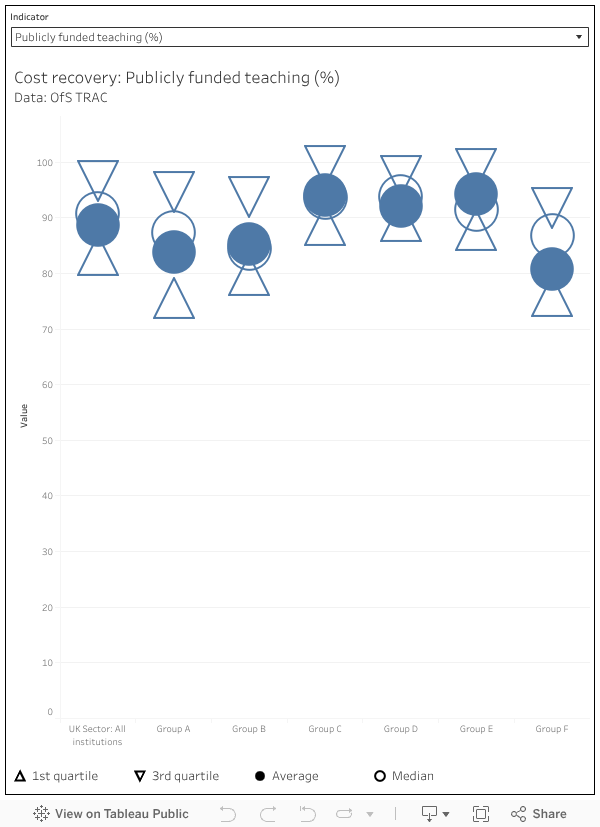
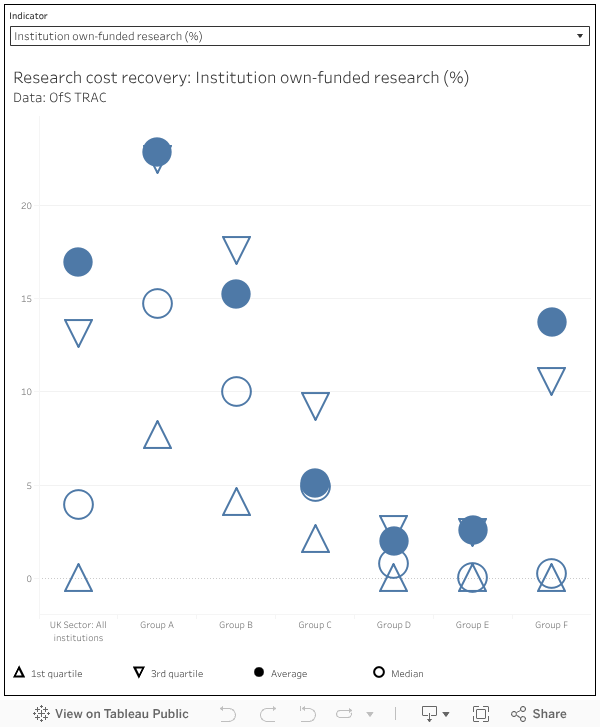
    Finally we have the broader favourite that is “efficiency” savings. Universities have been very engaged with this agenda ever since the HE Reform letter – the conjunction of the Universities UK report, the release of TRAC data (slightly delayed over last year), and the spending review may not be entirely coincidental.

    Source link

  • Bouquets or brickbats? How to interpret today’s announcement of £86 billion spending for research and development (R&D) to 2029/30

    Bouquets or brickbats? How to interpret today’s announcement of £86 billion spending for research and development (R&D) to 2029/30

    Nick Hillman, HEPI’s Director, tries to make sense of the Government’s new plans on R&D spending up to 2029/30.

    Perhaps the Speaker of the House of Commons will be unhappy the Government have pre-briefed the media on what this week’s Spending Review will mean for research spending. But what should the higher education and wider research community make of it?

    1. As the BBC story on the £86 billion reminds us, ‘Earlier this week, Reeves admitted that not every government department would “get everything they want” in Wednesday’s review’. We are meant to think the £86 billion is one of the rare exceptions, a surfeit of generosity (albeit with taxpayers’ money) – that is why it is being pre-briefed as a good news story a few days before the Spending Review itself. Ministers have even managed to squeeze positive endorsements from those tipped off in advance, such as the Russell GroupBut let’s be honest, the Department for Science, Innovation and Technology (DSIT), which will oversee this £86 billion, is not getting what it wants. The £86 billion is thought to be a real-terms freeze; it is implausible to think DSIT Ministers have been lobbying the Treasury to stand still. If they had been, they would not have been doing their jobs. Some will wonder whether this explains why friends of the Secretary of State for Science, Innovation and Technology have been speaking up his chances of being moved to a bigger spending Department in due course.
    2. We have been here before. The proudest boast in the Government’s news release, apart from the total multi-year settlement of £86 billion, is of ‘a bumper funding package worth more than £22.5 billion a year in 2029/2030’. But hang on a moment; if Whitehall had more institutional memory, they might have worded this differently because it is five years since the Treasury, under a previous administration and despite being in the midst of COVID, boasted there would be public spending of £22 billion on R&D by 2024/25, just £500 million a year less and five years earlier than the new number for 2029/30. While the modesty of the new announcement might be partly excused by the sluggish economic growth seen since, it may also explain why the announcement seems not to have had the pickup in the Sunday newspapers that the Government would have been hoping for.
    3. A real-terms freeze is a cut in terms of the percentage of GDP spent on R&D, which is the usual way R&D spending is measured in the UK and internationally. In the past, policymakers have obsessed over whether the UK can reach 2.4% or even 3% of GDP on (public and private) R&D spending, putting such targets in many election manifestos. But by a stroke of the pen three years ago, the Office for National Statistics suggested the UK spends much more than we thought on R&D, meaning we had already hit the 2.4% target, overtaken the OECD average and even got close to the 3.0% ambition. So policymakers could claim they had already hit a target that had looked extremely stretching and shift their attention elsewhere. (The ONS’s change put red faces on those who had been lobbying for such targets, however: if the target you have been lobbying for has already been hit [even if it does not feel like it on the ground], what should your next move be? This is something no one quite seems to have worked out.) The new announcement is problematic in GDP terms because, if you assume any economic growth at all, then a real-terms freeze in research spending means a reduction in R&D spending as a proportion of GDP. The latest international data suggest the UK’s gross R&D spending  has been just above the OECD average (2.8% of GDP versus 2.7%). If the OECD average remains the same or (as has been happening) goes up somewhat, today’s announcement means the UK is likely to spend less on R&D as a proportion of GDP and once more fall behind our main competitors. (This is not absolutely guaranteed because today’s announcement is on public spending and most R&D spending is private spending. However, public spending on R&D is generally [though not universally] thought to ‘crowd in’ rather than ‘crowd out’ public funding.)
    4. It is easy for me to be a little cynical about all this because I was there when the same conversations happened between the Business, Innovation and Skills Department and the Treasury at the time of the 2010 Spending Review, which had a similar importance to this week’s forthcoming Spending Review. However, that experience also taught me that a flat settlement in a constrained environment can indeed be a win. The settlement in 2010 was flat-cash not flat real – in other words, it ignored future inflation, so was less generous even than the one being announced today. At one point during the 2010 negotiations, however, it had looked as if there would be actual cuts to the cash spent on research and development each year; expectations in the research community were running so low that, when flat cash was instead announced, it led to my boss, the Minister for Universities, being presented with a bouquet of white roses by the founder of Research Fortnight
    5. Today’s announcement is about the money but the Government’s spin doctors have also tried to focus on the uses to which the money is put. Voters are likely to find it hard to imagine what £86 billion spread over a number of years means in practice. However, as the Mirror reports, it could mean ‘In Liverpool, which has a long history in biotech, funding will be used to speed up drug discovery and in South Wales, which has Britain’s largest semiconductor cluster, on designing the microchips used to power mobile phones and electric cars.’ Those feels like things everyone can get behind, even if the focus on local spending may or may not mean a weakening of excellence as the key criterion on which to distribute research funding from central government. This focus on projects should also serve as a reminder to the research community that, whatever Ministers say now, there is likely to be more money available if they lobby smart in the months to come. After what was perceived as a good settlement for science in 2010, we still managed to secure additional funding at pretty much every subsequent spending review. There were lots of reasons for this to do with how effectively the Department lobbied (it helped having both a Lib Dem and a Tory Minister from the Department sit around the Cabinet table), George Osborne’s predilection for science (albeit generally for big new projects rather fully funding existing ones) and politicians’ ceaseless desire to have an exciting new building or two to don a hard hat for. Perhaps most importantly, the research community were ready with ideas of what additional projects should be funded whenever we went to them with the question; if we give policymakers the tools to lobby the Treasury in the years ahead, researchers could get more.
    6. Finally, I am left wondering what this five-year settlement means for the commitment in Labour’s 2024 election manifesto to ‘scrap short funding cycles for key R&D institutions in favour of ten-year budgets that allow meaningful partnerships with industry to keep the UK at the forefront of global innovation.’ It was always likely that this wording was a political trick to put the focus on the length of time rather than the quantum of money. But Spending Reviews are always about money and always have a fixed shorter timetable, so how this week’s announcement chimes with longer-term planning is an issue that won’t go away even if it primarily is for another week.

    Source link

  • The spending review is a critical moment for UK science and innovation

    The spending review is a critical moment for UK science and innovation

    A series of key government announcements over the coming weeks will set the direction of travel for research and innovation for years to come. Next week’s spending review will set the financial parameters for the remainder of this Parliament – and we shouldn’t expect this outcome to maintain the status quo, given this is the first zero-based review under a Labour government for 17 years.

    Accompanying this will be the industrial strategy white paper, which is likely to have a focus on driving innovation and increasing the diffusion and adoption of technologies across the economy – in which the UK’s universities will need to be key delivery partners. We can also expect more detail on the proposals in the immigration white paper, with implications for international student and staff flows to the UK.

    The outcome for higher education and research remains hard to call, but the government has sent early signals that it recognises the value of investment in R&D as crucial to transforming the UK’s economy. In a volatile fiscal environment, DSIT’s R&D budget saw a real-terms increase of 8.5 per cent for 2025–26 with protection for “core research” activity within this.

    Looking ahead to the spending review, the Institute for Fiscal Studies has pointed out that the fiscal envelope set by the Chancellor for capital spending – which is how R&D is classified – at the spring statement is significantly frontloaded. There is scope for increases in the early years of the spending review period and then real-terms declines from 2027–28. With such significant constraints on the public finances, it’s more essential than ever that the UK’s R&D funding system maximises efficiency and impact, making the best possible use of available resources.

    International comparisons

    Last month, the Russell Group published a report commissioned from PwC and funded by Wellcome which considered the experiences of countries with very different R&D funding systems, to understand what the UK might learn from our competitors.

    Alongside the UK, the report examined four countries: Canada, Germany, the Netherlands and South Korea, scoring them across five assessment criteria associated with a strong R&D system: strategic alignment to government priorities; autonomy, stability and sustainability; efficiency; and leveraging external investment. It also scored the countries on two measures of output: research excellence and innovation excellence.

    The analysis can help to inform government decisions about how to strike a balance between these criteria. For example, on the face of it there’s a trade-off between prioritising institutional autonomy and ensuring strategic alignment to government priorities. But PwC found that providing universities with more freedom in how they allocate their research funding – for example, through flexible funding streams like Quality-Related (QR) funding – means they can also take strategic long-term decisions, which create advantage for the UK in key research fields for the future.

    Over the years, QR funding and its equivalents in the devolved nations have enabled universities to make investments which have led to innovations and discoveries such as graphene, genomics, opto-electronics, cosmology research, and new tests and treatments for everything from bowel disease to diabetes, dementia and cancer.

    Conversely, aligning too closely to changing political priorities can stifle impact and leave the system vulnerable. PwC found that, at its extreme, a disproportionate reliance on mission-led or priority-driven project grant funding inhibits the ability of institutions to invest outside of government’s immediate priority areas, resulting in less long-term strategic investment.

    With a stretching economic growth mission to deliver, policymakers will be reaching for interventions which encourage private investment into the economy. The PwC report found long-term, stable government incentives are crucial in leveraging industry investment in R&D, alongside supporting a culture of industry-university collaboration. This has worked well in Germany and South Korea with a mix of incentives including tax credits, grants and loans to strengthen innovation capabilities.

    Getting the balance right

    The UK currently lags behind global competitors on the proportion of R&D funded by the business sector, at just over 58 per cent compared to the OECD average of 65 per cent. However, when considering R&D financed by business but performed by higher education institutions, the UK performs fifth highest in the OECD – well above the average.

    This demonstrates the current system is successfully leveraging private sector collaboration and investment into higher education R&D. We should now be pursuing opportunities to bolster this even further. Schemes such as the Higher Education Innovation Fund (HEIF) deliver a proven return on investment: every £1 invested in HEIF yields £14.8 in economic return at the sector-level. PwC’s report noted that HEIF has helped develop “core knowledge exchange capabilities” within UK HEIs which are crucial to building successful partnerships with industry and spinning out new companies and technologies.

    In a time of global uncertainty, economic instability and rapid technological change, investments in R&D still play a key role in tackling our most complex challenges. In its forthcoming spending review – the Russell Group submission is available here – as well as in the industrial strategy white paper and in developing reforms to the visa system, the government will need to balance a number of competing but interrelated objectives. Coordination across government departments will be crucial to ensure all the incentives are pointing in the right direction and to enable sectors such as higher education to maximise the contribution they can make to delivering the government’s missions.

    Source link

  • Australia Institute criticises $390m travel, $410m consultant spending amid job cuts and deficits – Campus Review

    Australia Institute criticises $390m travel, $410m consultant spending amid job cuts and deficits – Campus Review

    Analysis from The Australia Institute said 10 universities together spent more than $390m on travel in 2023 and 27 institutions spent $410m on consultants amid executive pay and wage underpayment scandals.

    Please login below to view content or subscribe now.

    Membership Login

    Source link

  • Programs like tutoring in jeopardy after Linda McMahon terminates COVID aid spending extensions

    Programs like tutoring in jeopardy after Linda McMahon terminates COVID aid spending extensions

    This story was originally published by Chalkbeat. Sign up for their newsletters at ckbe.at/newsletters.

    HVAC projects to improve indoor air quality. Tutoring programs for struggling students. Tuition support for young people who want to become teachers in their home communities.

    More News from eSchool News

    Almost 3 in 5 K-12 educators (55 percent) have positive perceptions about GenAI, despite concerns and perceived risks in its adoption, according to updated data from Cengage Group’s “AI in Education” research series.

    Our school has built up its course offerings without having to add headcount. Along the way, we’ve also gained a reputation for having a wide selection of general and advanced courses for our growing student body.

    When it comes to visual creativity, AI tools let students design posters, presentations, and digital artwork effortlessly. Students can turn their ideas into professional-quality visuals, sparking creativity and innovation.

    Ensuring that girls feel supported and empowered in STEM from an early age can lead to more balanced workplaces, economic growth, and groundbreaking discoveries.

    In my work with middle school students, I’ve seen how critical that period of development is to students’ future success. One area of focus in a middle schooler’s development is vocabulary acquisition.

    For students, the mid-year stretch is a chance to assess their learning, refine their decision-making skills, and build momentum for the opportunities ahead.

    Middle school marks the transition from late childhood to early adolescence. Developmental psychologist Erik Erikson describes the transition as a shift from the Industry vs. Inferiority stage into the Identity vs. Role Confusion stage.

    Art has a unique power in the ESL classroom–a magic that bridges cultures, ignites imagination, and breathes life into language. For English Language Learners (ELLs), it’s more than an expressive outlet.

    In the year 2025, no one should have to be convinced that protecting data privacy matters. For education institutions, it’s really that simple of a priority–and that complicated.

    Teachers are superheroes. Every day, they rise to the challenge, pouring their hearts into shaping the future. They stay late to grade papers and show up early to tutor struggling students.

    Want to share a great resource? Let us know at [email protected].

    Source link

  • China Research Spending Outstrips U.S. Despite Faltering Economy

    China Research Spending Outstrips U.S. Despite Faltering Economy

    China continues to prioritize research and development despite the country’s slowing economy, with the drive for scientific self-sufficiency superseding economic development alone, according to analysts.

    Recent figures from the Organisation for Economic Cooperation and Development show China’s R&D spending grew at a faster rate in 2023 than it did in both the U.S. and E.U., as well as all OECD member states.

    Growth in China reached 8.7 percent, compared with 1.7 percent in the U.S. and 1.6 percent in the E.U.

    According to China’s National Bureau of Statistics, spending continued to increase in 2024, exceeding 3.6 trillion yuan ($489.9 billion) and up 8.3 percent year on year. This accounted for 2.68 percent of China’s gross domestic product in 2024, up 0.1 percentage point from the previous year.

    It comes despite China’s wider economic slowdown, triggered in part by the collapse of the real estate sector in 2021, which is still struggling to recover.

    Given these financial concerns, the growth in research spending is “quite a feat” and “an important indicator of where China is putting its priorities,” said Jeroen Groenewegen-Lau, head of the science, technology and innovation program at the Mercator Institute for China Studies.

    The Asian superpower also now has to contend with the export tariffs imposed by President Donald Trump. However, analysts expect that R&D spending will continue to grow in spite of these economic barriers.

    “When you look at some of the Asian economies, they tend to be countercyclical in their investment in research,” said Caroline Wagner, a professor specializing in public policy and science at Ohio State University. “When economies slow, they actually increase their spending on research.”

    She said this is true of Japan and South Korea, which both exceeded the OECD average with growth of 2.7 percent and 3.7 percent in 2023 respectively.

    “When they’re experiencing a little bit of a downturn, they actually spend more on research in the hopes that it will stoke the economy,” Wagner added.

    Groenewegen-Lau agreed that China’s growth trajectory looks set to continue, with investment in basic research core to the country’s national development strategy.

    “Even if the economy is not going very well, they can keep up this expenditure,” he said. “They’re kind of borrowing from the future” to “conquer all these technological bottlenecks.”

    He continued, “It’s clear that science technology is maybe even more important than economic development in its own right. It’s like the economic development seems sometimes to be supporting the innovation machine.”

    While these figures are made up of both government and corporate expenditure, there are concerns among China’s leaders that businesses aren’t investing as much as they should, particularly in basic research, according to Groenewegen-Lau.

    “The current economic situation is such that we know that they’re investing less,” Groenewegen-Lau said. “So the central government is trying to make up for that.”

    Universities and research institutes are likely to benefit from this, with investment in the sector rising.

    In 2024, expenditure by China’s higher education institutes on R&D reached 275.33 billion yuan ($37.68 billion), an increase of 14.1 percent from the previous year. However, this still accounted for a minority of total expenditure, with HEIs making up 8.2 percent of the total, compared with enterprises, which made up 77.7 percent.

    And, as China moves away from international engagement and toward self-sufficiency, a key challenge, said Wagner, will be ensuring it has the talent capabilities to go it alone.

    “They have really been working on an imitative model, where they’re connecting with and imitating leaders, and now they’re trying to pull back and say, ‘We’re going to build our own national capacity,’ but you have to have enough [human] capacity in order to do that,” Wagner said.

    “I think that’s one of the questions that is maybe still out there unanswered. Can you do that on your own?”

    Source link

  • States sue to recover ESSER extended spending allowances

    States sue to recover ESSER extended spending allowances

    This audio is auto-generated. Please let us know if you have feedback.

    Dive Brief:

    • Sixteen states and the District of Columbia sued the U.S. Department of Education on Thursday for halting previously approved extended spending timelines for emergency pandemic funding, calling the department’s action “tremendously harmful” to states, school districts, private schools and contractors.
    • The lawsuit, filed in U.S. District Court for the Southern District of New York, called the action “arbitrary and capricious” and said it violated the Administrative Procedure Act. The plaintiffs are seeking an order requiring the Education Department to honor the spending extensions.  
    • The policy pivot is causing states and districts to cancel tutoring services, facility improvement projects, reading interventions, after-school programming and more. District and school staff layoffs are likely if the federal government does not make reimbursement payments, the lawsuit said.

    Dive Insight:

    The Education Department’s March 28 letter canceling the extensions, sent at 5:03 p.m. on a Friday, has “already caused substantial confusion” and financial upheaval regarding late liquidation for Elementary and Secondary School Emergency Relief funds, the plaintiffs said. 

    States, districts, private schools and contractors have already created budgets, hired staff, offered services to families and children and developed operating plans based on pre-approved spending extensions, according to their lawsuit.

    In Arizona, for example, a school district on the Navajo reservation will likely need to lay off teachers and staff to cover costs that were supposed to be paid for by American Rescue Plan-ESSER dollars. That money had been pre-approved by the Education Department for a tutoring service for reading and math instruction and to repair aging buildings. After the Education Department rescinded the spending extensions, the tutoring service and infrastructure project were terminated, the lawsuit said. 

    The Education Department’s one-page March 28 letter, signed by U.S. Secretary of Education Linda McMahon, did offer states an opportunity to continue to extend spending by reapplying for Education Department approvals on a per-contract basis. But McMahon’s letter also said the spending extensions were “not consistent with the Department’s priorities” and that states had failed to meet spending deadlines set out in federal regulations.

    While spending deadlines for all three congressionally approved allocations for K-12 COVID-19 recovery have expired, the Education Department under the Biden administration allowed for a longer spending runway, giving states and districts an extra 14 months to spend down the funds.

    For instance, the spending deadline for ARP-ESSER was Jan. 28, but the late liquidation deadline is March 30, 2026. For funds under the Coronavirus Response and Relief Supplemental Appropriations Act, the original spending deadline was Jan. 29, 2024, but the extended spending deadline was March 28. The spending extension for the Coronavirus Aid, Relief, and Economic Security Act was March 28, 2024.

    In late February, the Education Department told K-12 Dive that about $2.5 billion out of a total $121.9 billion in ARP-ESSER funds remained to be spent by districts in the 41 states, Puerto Rico and the District of Columbia that had received extensions. About $433 million was left to be spent by states under ARP’s Emergency Assistance to Non-Public Schools allocation.

    The lawsuit says several states received approvals from the Education Department for ESSER spending extensions after President Donald Trump’s inauguration on Jan. 20. For example, Illinois said the Education Department approved its request on Jan. 22 to extend spending under ARP-ESSER. The state said it still has $77.2 million left to spend in federal COVID funds for education.

    One state — Oregon — said it submitted a request for late liquidation of EANS funds at 5:02 p.m. on March 28, or one minute before the Education Department letter went out. The state has not received a response. 

    Pennsylvania submitted a spending extension request for EANS funds on Feb. 10 but the Education Department has not responded to the state’s “repeated requests,” according to the lawsuit. About a month earlier, on Jan. 8, the department did grant Pennsylvania an extension for ESSER funds targeting supports for homeless children and youth.

    While there was no hard deadline for states to make late liquidation requests, January 2024 guidance from the Education Department recommended submissions be made prior to Dec. 31, 2024, for ARP funds so there would be minimal disruption to accessing funds.

    Democratic lawmakers in Congress are also calling for the Education Department to reverse its cancellation of ESSER spending extensions, saying the department changed the rules abruptly and has no recognition of the lasting impacts of the pandemic on students and schools.

    Maryland’s Attorney General Anthony Brown, in a Thursday statement, said, “The Trump Administration’s decision to cut this funding has thrown Maryland schools into turmoil and uncertainty and threatens valuable programs that help homeless and low-income students recover from the painful effects of the COVID-19 pandemic.” 

    He added, “This is a breathtakingly heartless action that threatens to change children’s futures for the worse, and our Office will not stand for it.”

    Thursday’s lawsuit was filed by Pennsylvania Gov. Josh Shapiro, a Democrat, and the mostly Democratic state attorneys general of Arizona, California, Delaware, the District of Columbia, Hawaii, Illinois, Maryland, Massachusetts, Maine, Michigan, Minnesota, Nevada, New Jersey, New Mexico, New York and Oregon. All the attorneys general are Democratic, except Hawaii’s, whose office is nonpartisan.

    Source link

  • R&D spending brings the era of strategic ambiguity to an end

    R&D spending brings the era of strategic ambiguity to an end

    I was working with a university on how they communicate their research work.

    An academic remarked to me that they simply couldn’t understand why the university didn’t talk more about the leading work they were doing in defence research.

    At the time, I thought talking about research into the things that kill people would be an obvious and enormous error. I now think I may be wrong.

    Missiles have a PR problem. They are not the soft embrace of a civic university which wraps its arms around their places. They are not the technician helping to solve the pandemics and global disasters of our time. And they are not the lofty ideals of pushing forward the shared understanding of the human experience.

    Conducting research into defence is to acknowledge that universities are part of the unsavoury end of geo-politics too.

    Universities have generally followed the lead of the government on the international research front. This is to say universities work with people, even where they may disagree with them, if it furthers a common cause of research. In an era of sharpening geo-political divides, increased defence spending, and pressure on the moral mission of universities highlighted by what they choose or choose not to cut, this feels untenable.

    Strategic ambiguity is possible where the strategy is clear and the policy is not. The government has now made its spending policy for defence clear.

    Defence and its detractors

    There are plenty who have made the moral case against UK universities being involved in research into lethal weapons. Open Democracy carried out work in 2023 where they drew the line between weapons manufacturers, university research, and global conflicts, to make the case that

    “Responding to Freedom of Information requests, 44 universities told openDemocracy they had taken a combined total of at least £100m in funding and donations from eight of the biggest UK and US defence firms: RTX, Lockheed Martin, Boeing, Northrop Grumman, General Dynamics, BAE Systems and Rolls-Royce.

    All are listed in the top 100 arms and military services in the world, according to the Stockholm International Peace Research Institute.”

    And there are a constellation of left-wing blogs that have sought to make the same arguments. Novara Media, for example, have sought to bring to attention the links between university weapons research and the ongoing conflict in the Middle East. It is not that universities are undertaking research directly for difficult and despotic regimes and demagogues directly. It is that they are undertaking research with companies where their technologies may either be used directly, or through their dual applications, in the defence of nations and by extension the killing of people all over the world.

    This attention is likely only to grow as the government increases investment into defence technologies. The 2020 Spending Review committed to an extra £6bn of defence R&D over four years. In 2024, then Prime Minister Rishi Sunak promised a further uplift in defence spending with a significant proportion dedicated to R&D. Keir Starmer has now promised that defence spending will reach 2.5 per cent of GDP, with an ambition to reach 3 per cent, and further increases to R&D in defence.

    This includes a further £2.9bn of spending in the coming financial year compared to 2024–25. This is a big increase but in context BAE systems alone spent £1.45bn on R&D in 2022 as a combination of their own and government money.

    This presents a challenge for universities. The flows of R&D spending are increasingly toward defence but they have, collectively, not found the language which sets out the moral case for doing the work.

    Re-arm for Britain

    Today’s piece from Jess Lister makes it clear that a plurality of citizens in the UK are in favour of increased defence spending. A majority of the public also agree it would be better to invest in R&D in new defensive technologies. Of course, this presumes there is always a clear and practical difference between the use of weaponry for defensive and offensive purposes, and the reasons for research are as important as the actual mechanism through which research is deployed.

    There are the universities that undertake research which makes the country safer but isn’t directly involved in the business of lethality. The examples of universities building partnerships, engagements, projecting the UK across the world, making the UK a better place to live, are numerous. In an era of constrained funding and increasing concerns about defence spending, the ability for universities to talk about national safety, the tolerability of living in the UK, and national security, the freedom to live free from the threat of harm or death from a foreign power, may end up moving closer together. The decision to cut Oversees Development Assistance, funding used to promote social, economic, and welfare capacity, to fund defence spending is in this regard an absurd political decision in making the UK less safe on the one hand while making it, potentially, more secure on the other.

    And there is the business of the production of the UK’s defensive capabilities. There are a range of regulations which cover this work. In particular, the rules on dual use technologies which place extra restrictions on the exports of research that could have both civilian and military applications. There are specific cases which have come under scrutiny particularly under the use of technologies which could be used for drones. As a minimum, if universities are going to increasingly grow their R&D and defence budget they will need the internal capacity to navigate what has been a difficult and changing world.

    Narrative interventions

    Aside from the regulation there is a real narrative problem on defence research. There are generally three explanations used when a university is asked about defence research. The first is that we follow all of the rules. The second is that we work directly with companies and what companies choose to do beyond our due diligence isn’t within our control. And the third is that even where projects are within the rules we continually monitor them. The problem with all of these responses is that they are the minimum of procedural compliance not explanation of work.

    In his acceptance speech newly appointed Chancellor of the University of Oxford and once foreign secretary William Hague stated that

    We do not need to agree on everything, indeed we should not. I am pleased to say we do not need a foreign policy: we are not a country. Nor do we need a view on every daily occurrence: we are not a newspaper. The concern of a university is that opinions are reached on the basis of truth, reason and knowledge, which in turn requires thinking and speaking with freedom.

    This is the same William Hague who suggested in 2015 that

    In the 21st Century, foreign policy is no longer the preserve of governments speaking behind closed doors. It’s also about that web of connections between individuals, groups, companies and all kinds of organisations, on social media and international travel.

    The William Hague of 2015 is correct and the William Hague of 2024 is mostly wrong. The frustration with university work into defence isn’t because the public believe what they are doing is illegal – in fact the public support what they are doing. It is that universities are trying to pursue an amoral approach to defence (as in, without a moral position, as opposed to immoral or evil), which leaves them open to charges of hypocrisy.

    The reason for this is a refusal to commit to bright red lines. It would be totally legitimate for universities to state there are certain partners, certain countries, and certain contexts in which they will not work. It also would be totally legitimate for universities to say they work with anyone regardless of their politics, but universities have done neither.

    The one unilateral intervention in refusing to work with Russia was the morally correct step, and has of course opened up the charge of hypocrisy. The line seems to be that universities will work with foreign partners irrespective of what they do unless they are legally barred from doing so and/or said foreign partners undertake a full scale invasion of a neighbour.

    The age of strategic ambiguity is over because ambiguity cannot be funded, supported, or made consistent to a public who don’t always appreciate the value of universities. Universities are not a country but they are a global network that allows for the movement of people, ideas, and technologies. The basis on which these things are allowed to move is the moral mission of our era for universities.

    Source link

  • The politics of universities, defence, and R&D spending

    The politics of universities, defence, and R&D spending

    Rachel Reeves’ Spring Statement had little in it for the sector to celebrate.

    The Office for Budget Responsibility,(who provide independent analysis of the country’s finances), downgraded 2025 growth forecasts from two per cent to one per cent.

    For all the flurry of pro-growth activity since the election, the growth outlook to 2029 is basically unchanged. Economic growth and the much desired fiscal headroom (which gives the Government capacity for extra spending) still seem unlikely to materialise.

    For universities who are hoping for a crumb of additional funding at some point in the future, there was nothing to settle their nerves about the increasingly difficult financial position the Government finds itself in.

    Winners and losers

    It’s safe to say that some sectors are doing better than others. Defence is clearly one of the winners. Starmer’s commitment to increase defense spending (made before the Spring Statement) to 2.5 per cent of GDP from April 2027 was a significant one. The measures taken to generate the fiscal headroom to pay for it- particularly cutting overseas development aid, and slashing welfare budgets – were not particularly popular ones. This is not an era of win-win policy choices – but boosting defence spending is a critical part of what Starmer’s government sees as a core responsibility: to position Britain as a steady hand in an unstable world.

    The continuation of the war in Ukraine, renewed conflict in the middle east, and a second Trump presidency, renewed trade wars and global volatility all point towards this being the difficult but correct choice to make.

    A significant uplift to its budget is the sort of things the higher education sector can only dream of. The increase to defence spending is not only massive, it’s also moderately popular. In a new Public First/Stonehaven poll, which looked at the trade offs the Government will need to make in the current era of hard choices, we found it which has moderate public support: 57 per cent back the uplift.

    There is an opportunity for the higher education sector here that they may be reluctant to take. Universities are a relatively silent partner in the UK’s defense capabilities, despite the fact this is a clear area of opportunity. Defense companies are increasingly avoiding campuses for graduate recruitment after a rising wave of student protests – the Times reported that 20 companies have been advised against attending on campus events because of security fears.

    Who will defend the defenders?

    Many universities are trying to balance their industrial R&D and skills partnerships with the defense sector with a growing generational divide in attitudes towards the defense industry. Negative perceptions of the defense sector are particularly entrenched among Gen Z. Just under a fifth (17 per cent) of the general population say that they would be ashamed to work for the defense industry – but this rises to 31 per cent of 18-24 year olds. Nearly a third of 18-34 year olds say their friends would judge them if they worked in the defense industry. Going too hard on defence and being seen to be doing too much may risk a knock-on impact on student recruitment.

    The increased investment in defense and security isn’t just about more soldiers and sailors and more ships and planes. It includes commitments on research and skills, and a ringfenced post of 10 per cent of the uplift for “novel technologies”. Increasingly, the Ministry of Defence (MoD) will become a major strategic procurer and funder in advanced research and development across the UK, which presents an increasingly rare and hard won opportunity for UK universities – and one where the public opinion is more balanced.

    Talking about the role for university led R&D which boosts national security is a reputation win for the sector as a whole. In our large-scale research with the Campaign for Science and Engineering, which explored what the UK public think and feel about R&D, we found a strong preference for investment in new defensive technologies over more military personnel – a view broadly shared across all ages, and across the political spectrum

    When we asked what the highest priority should be to improve national security, investment in R&D was the joint second most popular option, behind tackling cyber attacks and misinformation.

    Hard choices

    The defense sector as a whole might be an unpopular thing to talk about on campus. But there is a significant government investment being made in defense spending, and a clear moral and social argument that we live in a time when increasing the capacity and capability of our national security systems is the right thing to do. We know there is broad public support for this investment going towards research and development, and that there are significant skills gaps across our defense sector, impacting our broader defense and security offering.

    In a time when politicians are making hard choices, university leaders need to be doing the same.

    The modern armed services need highly skilled graduates in a range of roles – not just as professional soldiers, sailors or pilots but also in a myriad of supporting roles such as cyber security, communications, quantum technology, logistics, engineering, advanced manufacturing, foreign languages, and diplomacy. And equally too, the government will need academics and university research labs to step up, in partnership with businesses, to help design and roll out technologies that will support this expanded defence effort. This is both an economic case and a moral case – and one that universities should seize.

    And if this is an opportunity which universities shy away from, they may be waiting a long time for the next economic windfall to come their way.

    Source link

  • Kentucky lawmakers vote to ban DEI spending at public colleges

    Kentucky lawmakers vote to ban DEI spending at public colleges

    This audio is auto-generated. Please let us know if you have feedback.

    Dive Brief:

    • Kentucky lawmakers passed a bill Thursday that would prohibit public colleges from using any funds for diversity, equity and inclusion efforts, sending the bill to the governor’s desk. 
    • The state Senate passed the bill in a 32-6 vote Wednesday night, largely along party lines. House lawmakers gave the bill their final approval Thursday morning, according to local media. If signed into law, public colleges would have until the end of June to eliminate all DEI positions and offices.
    • Democrat Gov. Andy Beshear, who has previously opposed efforts to limit DEI at public colleges, said Thursday that he intends to closely review the bill but appeared skeptical. “We certainly don’t want to impact the flexibility of our universities” to recruit and retain diverse student bodies, he said. However, Republican lawmakers have a veto-proof legislative supermajority.

    Dive Insight:

    In addition to the ban on DEI spending, the bill seeks to limit the classes that colleges could require students to take. It would prohibit courses designed primarily “to indoctrinate participants with a discriminatory concept” and bar the Council on Postsecondary Education, Kentucky’s higher education coordinating board, from approving degree programs that require students to take such classes.

    The bill defines discriminatory concepts as those justifying or promoting “differential treatment or benefits conferred to individuals on the basis of religion, race, sex, color, or national origin.”

    The bill would also prohibit colleges from using diversity statements — descriptions of one’s experiences with and commitment to diverse student populations. And it would bar colleges from requiring employees or students to undergo diversity training.

    The legislation would exempt DEI training and programs required by federal and state law.

    Additionally, the bill requires state colleges to undergo audits every four years to prove they did not spend funds on DEI.

    State Sen. Stephen West, a Republican, said Wednesday that the legislation had been “fully vetted” and that every college that would be affected by the bill had the opportunity to submit input.

    In support of the bill, West, the chair of the Senate education committee, cited the U.S. Supreme Court’s 2023 decision banning race-conscious admissions practices.

    While the court’s ruling exclusively addressed admissions, West applied it to higher education more broadly — an interpretation also adopted by the U.S. Department of Education, and one that is becoming increasingly popular among conservative critics of DEI.

    Similarly, West raised a common criticism of college DEI — alleging that it holds White students responsible for a past in which they did not play a role. 

    He cited his youngest son during Wednesday’s hearing. “He’s responsible for himself and should not be made to feel less than, and this applies to every student, no matter what your race, creed, national origin, sex,” West said.

    Democratic State Sen. Keturah Herron pushed back against West’s argument.

    “I know that you said that you are not responsible for the sins of the past, and you’re not,” Herron told West on Wednesday. “You’re not responsible for the things that have happened to my mother or my life experiences either. However, you are responsible, and we are responsible — this whole body is responsible — for what we do today moving forward.”

    Student and faculty groups have also opposed the bill, saying it would eliminate grants and programs that are crucial to the success of students from underrepresented backgrounds.

    But even with Beshear’s anticipated veto, some Kentucky college leaders have been operating under the assumption that HB 4 — or a bill like it — would become law this year.

    The University of Kentucky dissolved its DEI center in August, with Northern Kentucky University doing the same shortly thereafter.

    At the time, Eli Capilouto, president of the University of Kentucky, said lawmakers signaled their intent to restrict diversity efforts, forcing his institution to prepare.

    “Kentucky legislators have made clear to me in our conversations that they are exploring these issues again as they prepare for the 2025 legislative session,” he said. “If we are to be a campus for everyone, we must demonstrate to ourselves and to those who support and invest in us our commitment to the idea that everyone belongs — both in what we say and in what we do.”

    Source link