Tag: sports

  • Colleges add sports to bring men, but it doesn’t always work

    Colleges add sports to bring men, but it doesn’t always work

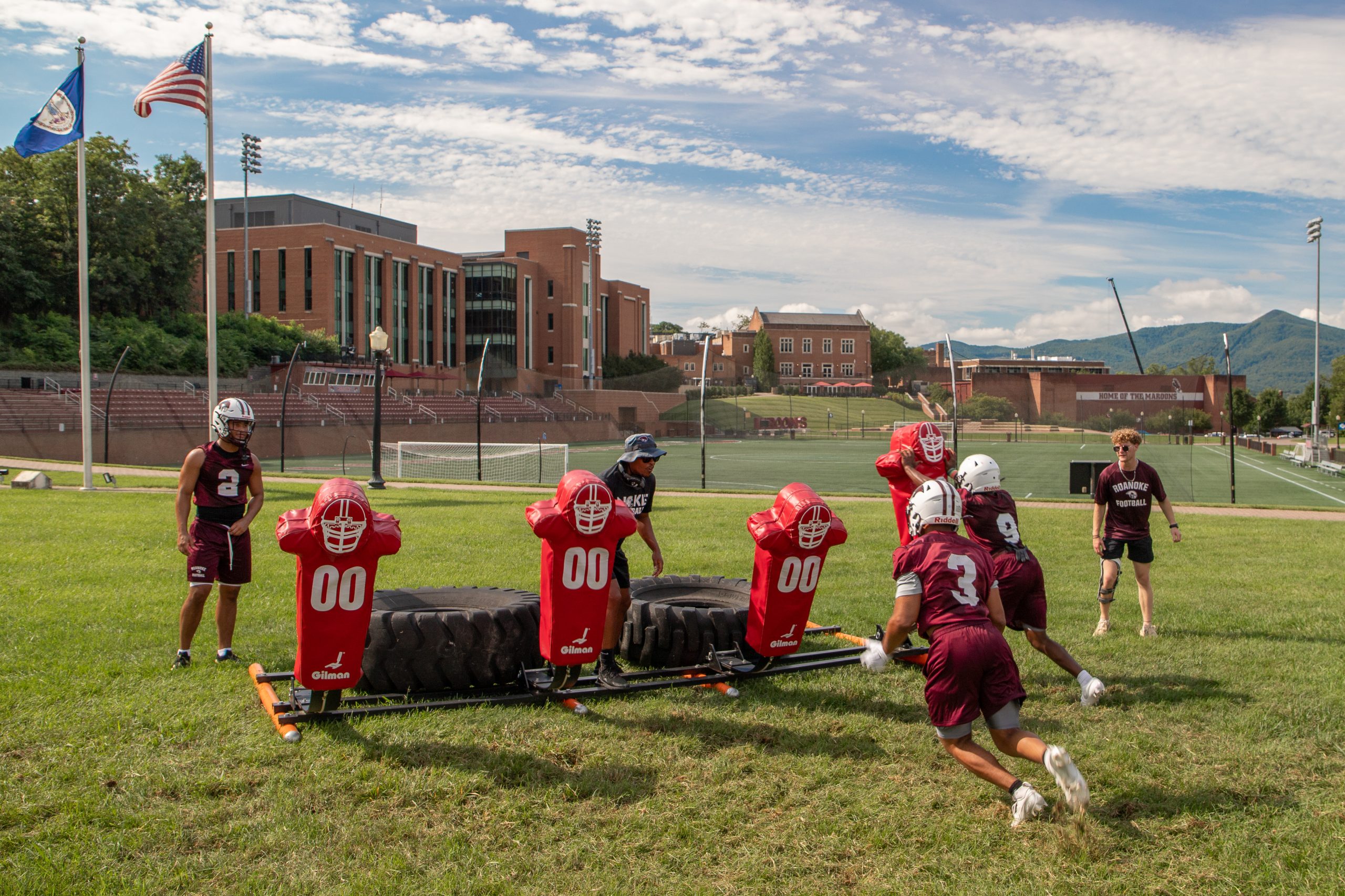
    SALEM, Va. — On a hot and humid August morning in this southwestern Virginia town, football training camp is in full swing at Roanoke College. Players cheer as a receiver makes a leaping one-handed catch, and linemen sweat through blocking drills. Practice hums along like a well-oiled machine — yet this is the first day this team has practiced, ever.

    In fact, it’s the first day of practice for a Roanoke College varsity football team since 1942, when the college dropped football in the midst of World War II. 

    Roanoke is one of about a dozen schools that have added football programs in the last two years, with several more set to do so in 2026. They hope that having a team will increase enrollment, especially of men, whose ranks in college have been falling. Yet research consistently finds that while enrollment may spike initially, adding football does not produce long-term enrollment gains, or if it does, it is only for a few years.

    Roanoke’s president, Frank Shushok Jr., nonetheless believes that bringing back football – and the various spirit-raising activities that go with it — will attract more students, especially men. The small liberal arts college lost nearly 300 students between 2019 and 2022, and things were likely to get worse; the country’s population of 18-year-olds is about to decline and colleges everywhere are competing for students from a smaller pool.  

    “Do I think adding sports strategically is helping the college maintain its enrollment base? It absolutely has for us,” said Shushok.  “And it has in a time when men in particular aren’t going to college.”   

    Women outnumber men by about 60 percent to 40 percent at four-year colleges nationwide. Roanoke is a part of this trend. In 2019, the college had 1,125 women students and 817 men. 

    This fall, Roanoke will have 1,738 students altogether, about half men and half women. But the incoming freshman class is more than 55 percent male. 

    Sophomore linebacker Ethan Mapstone (26) jogs to the sideline at the end of a drill. Mapstone said he hadn’t planned to play college football until Roanoke head coach Bryan Stinespring recruited him. Credit: Miles MacClure for The Hechinger Report

    “The goal was that football would, in a couple of years, bring in at least an additional hundred students to the college,” said Curtis Campbell, Roanoke’s athletic director, as he observed the first day of practice. “We’ve got 97 kids out there on the field. So we’re already at the goal.”

    That number was 91 players as the season began, on Sept. 6 — and the Maroons won their first game, 23-7, over Virginia University of Lynchburg, on what Shushok called “a brilliant day full of community spirit and pride.”

    “Our students were out in force, side by side with community members spanning the generations,” he said via email. “In a time when we all need more to celebrate and opportunities to gather, it is easy to say our first football game since 1942 was both historic and invigorating.”

    Related: Interested in more news about colleges and universities? Subscribe to our free biweekly higher education newsletter.

    In the NCAA’s Division III, where Roanoke teams compete, athletic scholarships are not permitted. Athletes pay tuition or receive financial aid in the same way as other students, so adding football players will add revenue. For a small college, this can be significant. 

    Shushok said it’s not just about enrollment, though: He wants a livelier campus with more school spirit. Along with football, he started a marching band and a competitive cheerleading team. 

    “It plays to something that’s really important to 18- to 22-year-olds right now, which is a sense of belonging and spirit and excitement,” said Shushok, who came to Roanoke after being vice president of student affairs at Virginia Tech. Its Division I football team plays in a 65,000-seat stadium where fans jump up and down in unison to Metallica’s “Enter Sandman” as the players take the field. 

    The Maroons play in the local high school stadium — it seats 7,157 — and pay the city of Salem $2,850 per game in rent. The college raised $1.3 million from alumni and corporate sponsors to get the team up and running. 

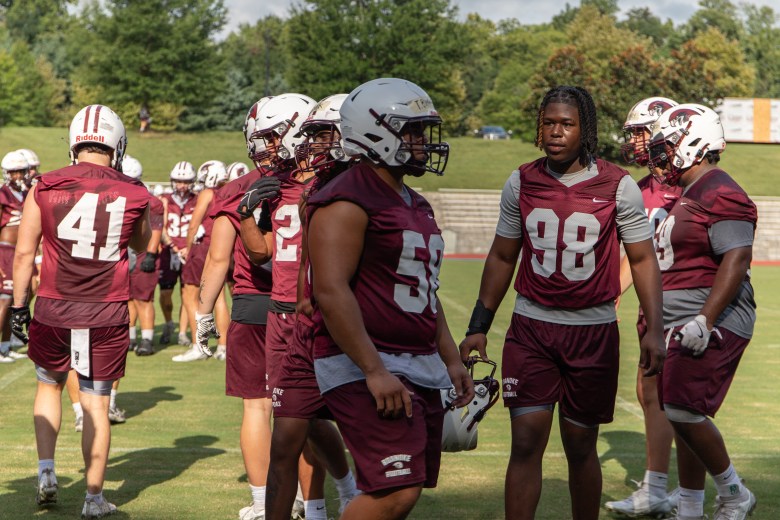
    Roanoke College players gather on the sidelines during practice. Credit: Miles MacClure for The Hechinger Report

    Despite the research showing limited enrollment gains from adding football, colleges keep doing it. About a dozen have added or relaunched football programs in the last two years, including New England College in New Hampshire and the University of Texas Rio Grande Valley. Several more plan to add football in 2026, including Chicago State University and Azusa Pacific University in California. 

    Related: Universities and colleges search for ways to reverse the decline in the ranks of male students

    Calvin University in Michigan recently added football even though the student body was already half men, half women. The school wanted to broaden its overall appeal, Calvin Provost Noah Toly said, citing “school spirit, tradition, leadership development,” as well as the increased enrollment and “strengthened pipelines with feeder schools.”

    A 2024 University of Georgia study examined the effects of adding football on a school’s enrollment.

    “What you see is basically a one-year spike in male enrollment around guys who come to that school to help be part of starting up a team, but then that effect fades out over the next couple of years,” said Welch Suggs, an associate professor there and the lead author of that study. It found early modest enrollment spikes at colleges that added football compared to peers that didn’t and “statistically indistinguishable” differences after the first two years.

     ”What happens is that you have a substitution effect going on,” Suggs said. “There’s a population of students that really want to go to a football school; the football culture and everything with it really attracts some students. And there are others who really do not care one way or the other. And so I think what happens is that you are simply recruiting from different pools.” 

    Today, college leaders value any pool that includes men. Most prefer the campus population to be balanced between the sexes, and, considering the low number of male high school graduates going to college at all (39 percent in the last Pew survey), many worry about too few men being prepared for the future workforce.

    “ I don’t know that we have done a good job of articulating the value, and of programming to the particular needs that some of our young men are bringing in this moment,” Shushok said. “I think it’s pretty obvious, if you read the literature out there, that a lot of men are feeling undervalued and perhaps unseen in our culture.”

    Roanoke College President Frank Shushok Jr. in his office. Shushok said he brought football back to Roanoke to boost enrollment and create a livelier campus. Credit: Miles MacClure for The Hechinger Report

    Shushok said that Roanoke’s enrollment-building strategy was not centered on athletics. The college has also forged partnerships with local community colleges, guaranteeing students admission after they complete their associate degree, and has added nine new majors in 2024, including cannabis studies. Shushok pointed out that while freshman enrollment is down slightly this year, the community college program has produced a big increase in transfer students, from 65 in fall of 2024 to 91 this fall.

    About 55 percent of Roanoke’s students come from Virginia, but 75 of the football team’s 91 players are Virginians. The head coach, Bryan Stinespring, a 61-year-old Virginia native, knows that recruiting territory, having worked on the coaching staffs at several Virginia universities in his career. 

    Related: College Uncovered podcast: The Missing Men

    When Stinespring took over as head coach in 2023, hoping to inspire existing students and potential applicants to join his new team, there was no locker room, no shoulder pads or tackling dummies, no uniforms. 

    “The first set of recruits that came on campus, we ran down to Dick’s, got a football, went to the bookstore, got a sweatshirt,” said Stinespring, referring to a local Dick’s Sporting Goods store. “These kids came on campus and they had to believe in the vision that we had.” 

    Students bought into that vision; 61 of them joined a club team last fall, which played four exhibition games in preparation for this year. The community bought in, too; 9,200 fans showed up to the first club game, about 2,000 of them perched on a grassy hill overlooking the end zone. 

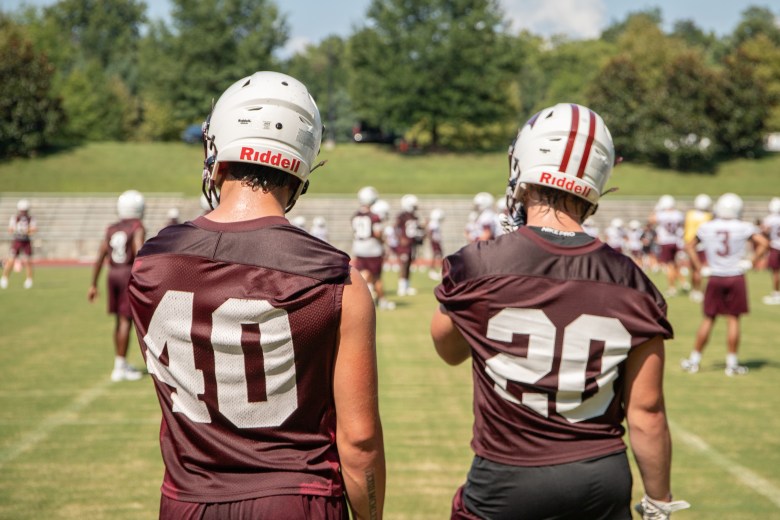
    Linebackers Connor Cox (40) and Austin Fisher (20) look on from the sidelines. Credit: Miles MacClure for The Hechinger Report

    Before Ethan Mapstone, a sophomore, committed to Roanoke, he was on the verge of giving up football, having sustained several injuries in high school. Then Stinespring called. 

    “I could hear by the tone of his voice how serious he meant everything he was saying,” said Mapstone, a 6-foot-1-inch linebacker from Virginia Beach. “I was on a visit a week later, committed two weeks later.”  

    To him, the football leaders at Roanoke seemed to be “a bunch of people on a mission ready to make something happen, and I think that’s what drove me in.” 

    Related: Even as women outpace men in graduating from college their earnings remain stuck 

    KJ Bratton, a junior wide receiver and transfer student from the University of Virginia, said he was drawn to Roanoke not because of football but because of the focus on individual attention in small classes. “You definitely get that one-on-one attention with your teacher, that definitely helps you in the long run,” said Bratton.  

    Jaden Davis, a sophomore wide receiver who was an honor roll student in high school, said, “ The staff, they care about all the students. They’ll pull you aside, they know you personally, they’ll send you emails, invite you to office hours, and they just work with you to do the best you can.” 

    Not everyone was on board with football returning to the college when the plan was first announced. Some faculty and administrators were concerned football would change the campus culture, said Campbell, the athletic director. 

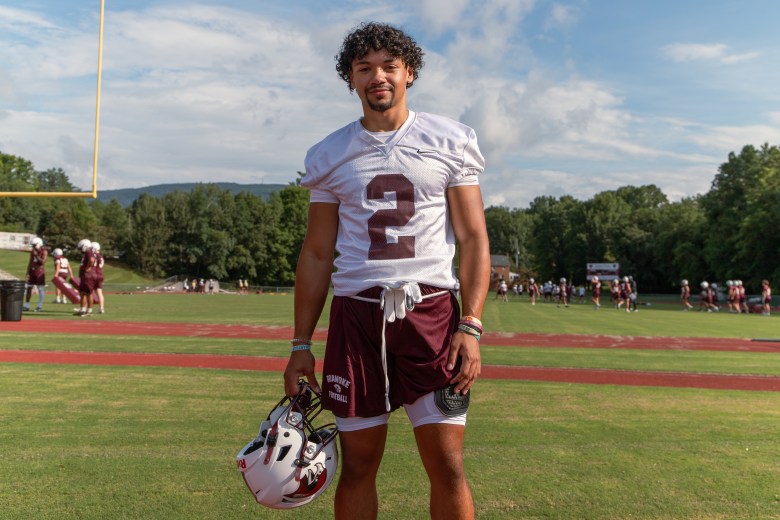
    Sophomore wide receiver Jaden Davis poses for a photograph before the first practice of the season. Davis said the individual attention he could get from professors is what attracted him to Roanoke. Credit: Miles MacClure for The Hechinger Report

    “There were just stereotypes about football players,” he said. “You know, they’re not smart, they’re troublemakers. They’re gonna do this and they’re gonna do that, be disruptive.” 

    But the stereotypes turned out to be unwarranted, he said. When the club team started, he said, “I got so many compliments last year from faculty and staff and campus security about how respectful and polite and nice our students were, how they behaved in the classroom, sitting in the front row and just being role models.”

    Payton Rigney, a junior who helps out with the football team, concurred. “All the professors like them because they say ‘yes, sir’ and ‘no, ma’am,’” she said.

    Like most Division III athletes, the Roanoke players know that they have little chance of making football a professional career. Mapstone said there are other reasons to embrace the sport. 

    “It’s a great blessing to be able to do what we do,” he said. “There’s many people that I speak to who are older and, and they reminisce about the times that they had to play football, and it’s very limited time.

    “And even though there’s not a future for it, I love it. It’s a Thursday, my only problem in the world is that there’s dew on my shoes.”  

    Contact editor Lawrie Mifflin at (212) 678-4078 or [email protected].

    This story about college football was produced by The Hechinger Report, a nonprofit, independent news organization focused on inequality and innovation in education. Sign up for the Hechinger higher education newsletter.

    The Hechinger Report provides in-depth, fact-based, unbiased reporting on education that is free to all readers. But that doesn’t mean it’s free to produce. Our work keeps educators and the public informed about pressing issues at schools and on campuses throughout the country. We tell the whole story, even when the details are inconvenient. Help us keep doing that.

    Join us today.

    Source link

  • Dallas Mavericks Partner with Paul Quinn College for Groundbreaking Sports Management Program

    Dallas Mavericks Partner with Paul Quinn College for Groundbreaking Sports Management Program

    Cynt Marshall The Dallas Mavericks and Paul Quinn College have announced a partnership that establishes the nation’s first NBA team-sponsored sports management major at a historically Black college or university. The innovative “Mavs Sports Management Major” officially launched Friday with an opening convocation featuring former Mavericks CEO Cynt Marshall as the keynote speaker.

    The program, formally titled “Leadership, Innovation, Sports Management, Technology, Entrepreneurship, and Networking” (LISTEN), represents a significant investment in diversifying the sports industry pipeline while addressing educational equity in higher education.

    Paul Quinn College, Dallas’s only HBCU, will integrate the new major into its existing curriculum structure, with students receiving comprehensive support that includes Target-sponsored care packages containing dorm essentials and other student necessities.

    The program distinguishes itself through extensive real-world application opportunities. Students will engage with Mavericks executives through weekly guest lectures and participate in hands-on projects addressing actual business challenges facing the organization. The curriculum includes case study analysis, creative brief development, and student-led presentations proposing solutions to current Mavericks business scenarios.

    Beyond classroom learning, the partnership includes campus engagement initiatives with sponsored events throughout the academic year, entrepreneurship support through integration into the Mavs Business Assist program, and a planned residence hall renovation featuring custom Mavericks-designed murals.

    The collaboration aligns with the Mavericks’ “Take ACTION!” initiative, which specifically targets racial inequities and promotes sustainable change in North Texas. Sports management and administration have long struggled with representation issues, particularly in executive and leadership positions.

    According to industry data, while Black athletes comprise significant portions of professional sports rosters, representation drops dramatically in front office and management roles. This program aims to address that pipeline gap by providing structured pathways from education to industry entry.


    Source link

  • Trump Aims to Save College Sports with Executive Order

    Trump Aims to Save College Sports with Executive Order

    The Trump administration threw its hat in the ring Thursday amid growing debates over how best to manage compensation for college athletes, issuing an executive order titled Saving College Sports.

    It comes just over 24 hours after House Republicans in two separate committees advanced legislation concerning the same topic.

    “The future of college sports is under unprecedented threat,” the order stated. “A national solution is urgently needed to prevent this situation from deteriorating beyond repair and to protect non-revenue sports, including many women’s sports, that comprise the backbone of intercollegiate athletics, drive American superiority at the Olympics … and catalyze hundreds of thousands of student-athletes to fuel American success in myriad ways.”

    Ever since legal challenges and new state laws drove the National Collegiate Athletic Association to allow student-athletes to profit off their own name, image and likeness in 2021, America has entered a new era that many refer to as the wild west of college sports.

    Lawmakers have long scrutinized this unregulated market, arguing that it allows the wealthiest colleges to buy the best players. But a recent settlement, finalized in June, granted colleges the power to directly pay their athletes, elevating the dispute to a new level. Many fear that disproportionate revenue-sharing among the most watched sports, namely men’s football and basketball, will hurt women’s athletics and Olympic sports including soccer and track and field.

    By directing colleges to preserve and expand scholarships for those sports and provide the maximum number of roster spots permitted under NCAA rules, the Trump administration hopes to prevent such a monopolization.

    The order also disallows third-party, pay-for-play compensation that has become common among the wealthiest institutions and booster clubs, and mandates that any revenue-sharing permitted between universities and collegiate athletes should be implemented in a manner that protects women’s and nonrevenue sports.

    Many sports law experts are skeptical about the order, suggesting it’s unlikely to move the needle and might create new legal challenges instead.

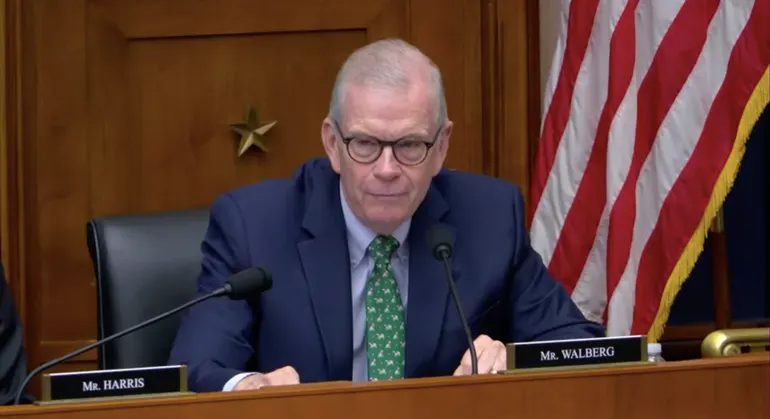
    However, Representative Tim Walberg, a Michigan Republican and chair of the Education and Workforce Committee, thanked the president for his commitment to supporting student-athletes and strengthening college athletics.

    “The SCORE Act, led by our three committees, will complement the President’s executive order,” Walberg said. “We look forward to working with all of our colleagues in Congress to build a stronger and more durable college sports environment.”

    Source link

  • New Congressional Bill Targets College Sports Funding, Could Impact Campus Diversity Programs

    New Congressional Bill Targets College Sports Funding, Could Impact Campus Diversity Programs

    A bipartisan House bill introduced last Thursday aims to reshape college athletics by limiting how universities can fund sports programs while offering the NCAA limited antitrust protections—changes that could significantly affect institutional priorities and student access.

    The SCORE Act, backed by seven Republicans and two Democrats, faces uncertain prospects despite bipartisan support. While the House appears receptive, the bill would require at least seven Democratic votes in the Senate, where passage remains unlikely.

    The legislation addresses three key NCAA priorities: antitrust protections, federal preemption of state name-image-likeness (NIL) laws, and provisions preventing student-athletes from becoming university employees. These changes come as colleges navigate the fallout from a $2.78 billion settlement requiring institutions to compensate athletes directly.

    The bill’s prohibition on using student fees to support athletics could force difficult budget decisions at universities nationwide. This restriction strikes at proposed funding mechanisms as schools scramble to find up to $20.5 million annually for athlete compensation.

    Several institutions have already announced fee increases that would be affected. Clemson University implemented a $150 per-semester “athletic fee” this fall, while Fresno State approved $495 in additional yearly fees, with half designated for athletics. Such fees disproportionately impact students from lower-income backgrounds who already face rising educational costs.

    The financial pressures extend beyond student fees. Tennessee has introduced “talent fees” for season-ticket holders, Arkansas has raised concession prices, and numerous schools are seeking increased booster contributions—all reflecting the growing financial demands of competitive athletics.

    The legislation includes provisions aimed at protecting Olympic sports programs, which some fear could be eliminated as resources shift toward revenue-generating football and basketball. Schools with coaches earning over $250,000 would be required to offer at least 16 sports programs, mirroring existing NCAA Division I FBS requirements.

    This mandate could help preserve opportunities for student-athletes in traditionally underrepresented sports, many of which provide crucial scholarship pathways for diverse student populations. However, critics question whether this protection is sufficient given the magnitude of financial pressures facing athletic departments.

    The bill’s broader implications for Title IX compliance and gender equity in athletics remain unclear, as institutions balance new athlete compensation requirements with existing obligations to provide equal opportunities for male and female student-athletes.


    Source link

  • Trump’s transgender sports ban challenged in expanded New Hampshire lawsuit

    Trump’s transgender sports ban challenged in expanded New Hampshire lawsuit

    This audio is auto-generated. Please let us know if you have feedback.

    Dive Brief:

    • Two transgender high school athletes are challenging in federal court President Donald Trump’s Feb. 5 executive order banning transgender girls and women from participating in sports aligned with their gender identity.
    • Originally filed against a New Hampshire state law that bars transgender girls in grades 5-12 from playing school sports, the lawsuit filed by Parker Tirrell and Iris Turmelle, is expanding to include Trump and the federal departments of justice and education among the defendants.
    • Tirrell and Turmelle, represented by GLAD Law and the ACLU of New Hampshire, allege Trump’s executive order is discriminatory and violates their federal equal protection guarantees under the 14th Amendment and their rights under Title IX. 

    Dive Insight:

    Henry Klementowicz, deputy legal director at ACLU of NH, said in a Wednesday statement that every child in the state deserves “a right to equal opportunities at school.”

    “We’re expanding our lawsuit to challenge President Trump’s executive orders because, like the state law, it excludes, singles out, and discriminates against transgender students and insinuates that they are not deserving of the same educational opportunities as all other students,” Klementowicz said. 

    The U.S. District Court for the District of New Hampshire previously ordered in September that the two students could play sports on teams corresponding with their gender identities while Tirrell and Turmelle v. Edelblut advanced. 

    Trump’s “No Men in Women’s Sports” executive order, which is now being targeted by the lawsuit, calls for a recission of all federal funds from educational programs that allow transgender girls and women to participate in girls’ sports. The order also directs the U.S. secretary of education to zero in on Title IX enforcement against K-12 schools and colleges where girls and women are required “to compete with or against or to appear unclothed before males.”

    The day after Trump issued that executive order, the U.S. Department of Education opened Title IX investigations into a middle and high school athletics association in Massachusetts, as well as two universities, on the basis that they allowed transgender girls and women to play on teams aligned with their gender identity. 

    Trump’s order further directs the U.S. Department of Justice to abide by the nationwide vacatur from a recent court order by a federal judge who struck down the Biden administration’s Title IX rule in January. The Biden-era Title IX rule was the first time protections were codified for LGBTQI+ students and employees at federally funded schools under the anti-sex discrimination law. 

    After that January court decision, the Education Department said it would enforce the Title IX regulations finalized in 2020 during the first Trump administration.

    Source link

  • Trump Signs Executive Order to Ban Transgender Student-Athletes from Participation in Women’s Sports

    Trump Signs Executive Order to Ban Transgender Student-Athletes from Participation in Women’s Sports

    by CUPA-HR | February 11, 2025

    On February 5, President Trump signed an executive order titled “Keeping Men Out of Women’s Sports.” The order aims to bar transgender women and girls from participating in women’s sports by directing agencies to withdraw federal funding from schools that refuse to comply with the order.

    The EO claims that, in recent years, educational institutions and athletic associations have allowed men to compete in women’s sports, which the Trump administration believes denies women and girls equal opportunity to participate in competitive sports, thus violating Title IX. As a result, the EO sets policy to “rescind all funds from educational programs that deprive women and girls of fair athletic opportunities” and to “oppose male competitive participation in women’s sports more broadly.”

    With respect to the specific actions ordered, the EO directs the secretary of education to ensure compliance with the court order to vacate the Biden administration’s Title IX rule and to take other actions to ensure that the 2024 regulations do not have effect. It also directs the secretary to take action to “protect all-female athletic opportunities” by setting forth regulations and policy guidance that clearly specifies and clarifies “that women’s sports are reserved for women.”

    Notably, the EO further directs all federal agencies to review grants to educational programs and to rescind funding to programs that fail to comply with policy set forth in the EO. Institutions with grant programs deemed to be noncompliant with this order could, therefore, risk losing federal funding for that program.

    The EO also seeks quick enforcement by federal agencies. The EO orders the Department of Education to prioritize Title IX enforcement actions against educational institutions and athletic associations that “deny female students an equal opportunity to participate in sports and athletic events.” The Department of Justice is also tasked with providing resources to relevant agencies to ensure “expeditious enforcement” of the policy set forth in the EO.

    Finally, the EO directs the assistant to the president for domestic policy to convene both major athletic organizations and state attorneys general to promote policies consistent with Title IX and identify best practices in enforcing equal opportunities for women to participate in sports.

    On February 6, the NCAA updated its policy regarding transgender student-athlete participation in response to the EO. According to the NCAA, the new policy limits competition in women’s sports to student-athletes assigned female at birth, but it allows student-athletes assigned male at birth to practice with women’s teams and receive benefits while practicing with them. For men’s sports, student-athletes may participate in practice and competition regardless of their sex assigned at birth or their gender identity, assuming all other eligibility requirements are met.

    Institutions should review their policies and practices in light of the EO and the NCAA’s policy change. CUPA-HR will continue to monitor for Title IX updates and keep members apprised of new enforcement under the Trump administration.


    Source link

  • This week in 5 numbers: Trump bans transgender students from women’s sports

    This week in 5 numbers: Trump bans transgender students from women’s sports

    From an executive order that requires colleges to ban transgender women from gender-aligning sports teams to a multi-billion shortfall in the Pell Grant program, here are the top-line figures from some of our biggest stories of the week.

    By the numbers


    100%

    The portion of federal funding to colleges, K-12 schools and other education programs could lose if they allow transgender girls and women to participate on sports teams aligning with their gender identity. The new policy stems from an executive order President Donald Trump signed Wednesday.


    42

    The number of pages in a lawsuit seeking to block Trump’s executive orders targeting diversity, equity and inclusion activities, including those in higher education. The complaint — filed by the American Association of University Professors and the National Association of Diversity Officers in Higher Education — described Trump’s orders as overly vague, an overstep of presidential authority, and a threat to free speech.


    $2.7 billion

    The projected deficit of the federal Pell Grant program at the end of fiscal year 2025, according to a January report from the Congressional Budget Office. One nonprofit warned the shortfall could lead to program cuts in fiscal 2026 on par with those seen during the Great Recession.


    4.3%

    The rise in state funding for higher ed in fiscal 2025 before inflation, according to early data from the State Higher Education Executive Officers Association’s annual Grapevine report. In all, 41 states increased their higher funding or held it flat, while nine cut it back.


    3

    The number of military colleges under control of the U.S. Department of Defense. Defense Secretary Pete Hegseth ordered the trio to nix all race-, ethnicity- or sex-based admissions goals and DEI efforts, and required them to teach that “America and its founding documents remain the most powerful force for good in human history.”

    Source link

  • Trump signs order banning trans athletes in women’s sports

    Trump signs order banning trans athletes in women’s sports

    President Donald Trump signed an executive order Wednesday banning transgender women from participating in women’s sports.

    “The war on women’s sports is over,” he said. “With my action this afternoon, we are putting every school receiving taxpayer dollars on notice that if you let men take over women’s sports teams or invade your locker rooms, you will be investigated for violations of Title IX and risk your federal funding.”

    The executive order, signed on National Girls and Women in Sports Day, declares that it’s “the policy of the United States to oppose male competitive participation in women’s sports more broadly, as a matter of safety, fairness, dignity, and truth.” Under the order, the assistant to the president for domestic policy will bring together representatives of “major athletic organizations and governing bodies, and female athletes harmed by such policies, to promote policies that are fair and safe, in the best interests of female athletes.”

    The president’s latest action builds on the GOP’s broader campaign to remove all recognition of transgender individuals from state and federal programs. On his first day in office, Trump signed a separate executive action declaring that there are only two sexes and banning federal funding for any program related to “gender ideology.” And House Republicans have passed a bill that would unilaterally ban trans women from competing in women’s sports. In nearly half of the country, trans women are banned from playing women’s sports at the K-12 or higher education level, but the order would take those bans nationwide.

    Additionally, the order calls on the education secretary to prioritize “Title IX enforcement actions against educational institutions (including athletic associations composed of or governed by such institutions) that deny female students an equal opportunity to participate in sports and athletic events by requiring them, in the women’s category, to compete with or against or to appear unclothed before males.” (Federally funded K-12 public schools and colleges are required to comply with Title IX, which bars discrimination based on sex in educational settings.)

    Charlie Baker, president of the National Collegiate Athletic Association, told Congress recently that out of the more than 500,000 college athletes, fewer than 10 were transgender. The NCAA released a statement Wednesday that said, “The NCAA Board of Governors is reviewing the executive order and will take necessary steps to align NCAA policy in the coming days, subject to further guidance from the administration.”

    As Trump spoke Wednesday, girls and women—including former University of Kentucky swimmer and anti-trans advocate Riley Gaines—stood behind him, often clapping in support.

    After thanking them, the president turned back to face the rest of the East Room audience. He acknowledged the federal lawmakers, state attorneys general and governors in attendance, describing them as “friends of women’s sports.”

    “My administration will not stand by and watch men beat and batter women,” he said. “It’s going to end and nobody’s gonna be able to do a damn thing about it because when I speak [I] speak with authority.” (Trump was referring to an Olympic gold medal–winning Algerian boxer whom some accused of being transgender; the boxer has publicly said she was born a woman.)

    Fatima Goss Graves, president of the National Women’s Law Center, said in a statement that trans students do not pose a threat in sports and deserve the same opportunities as their peers.

    “The far-right’s disturbing obsession with controlling the bodies, hearts, and minds of our country’s youth harms all students,” Graves said.

    Education secretary nominee Linda McMahon attended the ceremony, though her confirmation hearing for the office has yet to be scheduled. In the meantime, the department is being led by a collection of acting officials and appointees, including Deputy General Counsel Candice Jackson, who described the president’s order as “a demonstration of common sense.”

    “The President affirmed that this administration will protect female athletes from the danger of competing against and the indignity of sharing private spaces with someone of the opposite sex,” Jackson said in a news release. “The Department of Education stands proudly with President Trump’s action as we prioritize Title IX enforcement against educational institutions that refuse to give female athletes the Title IX protections they deserve.”

    Other Republican lawmakers praised the order Wednesday, arguing it would ensure women and girls won’t be pushed to the sidelines.

    But Representative Bobby Scott, a Democrat from Virginia and ranking member on the House education committee, was quick to oppose the order, calling it “yet another overreach by this administration” and saying its lack of clarity will further complicate what should be addressed by sports associations.

    “Rather than address the real, urgent issues that students and families are facing every day, this administration continues to target vulnerable students—specifically transgender girls and women—with a shameless attempt to bully them,” he said in a statement. “They are willing to use the most vulnerable Americans as pawns in a political game.”

    Source link

  • Ban on trans women in women’s sports passes the House

    Ban on trans women in women’s sports passes the House

    Representative Greg Steube, a Florida Republican, speaks at a press conference following the passage of his Protection of Women and Girls in Sports Act in the House of Representatives.

    Allison Robbert/AFP via Getty Images

    The House of Representatives voted 218 to 206 to pass a bill that would unilaterally ban trans women from competing in women’s sports Tuesday. The votes were nearly split along party lines, but two Democrats, Henry Cuellar and Vicente Gonzalez, both from Texas, voted for the bill.

    Sponsored by Representative Greg Steube, a Florida Republican, the legislation dubbed the Protection of Women and Girls in Sports Act, is the latest attempt in Congress to keep trans women off women’s sports teams and builds on efforts in the states to restrict the participation of transgender students in sports that align with their gender identity. Last Congress, identical legislation from Steube passed the House but didn’t move forward in the Democratic-controlled Senate.

    Now, Republicans hold the majority in both the House and the Senate, making it far more likely that this iteration will be more successful. In nearly half of the country, trans women are banned from playing women’s sports at the K-12 or higher education level, but the legislation would take those bans nationwide.

    Passing the bill was a top priority for House Republican leadership, who included it on a list of 12 pieces of legislation to be considered first when the new session of Congress kicked off earlier this month. Its place of prominence seems to indicate that Republican leadership will prioritize rolling back or restricting the rights of transgender people, whom Republicans have often put at the center of a culture war.

    Republicans and President-elect Donald Trump have criticized the Biden administration’s effort to amend Title IX of the Education Amendments of 1972 to prevent blanket bans that prohibit transgender students from participating in sports consistent with their gender identity. Last month, the Biden administration scrapped that proposal.

    Under the bill, institutions that receive federal funding would be prohibited from allowing “a person whose sex is male to participate in an athletic program or activity that is designated for women or girls.” It defines sex as being based on “a person’s reproductive biology and genetics at birth,” though it doesn’t expound upon how an institution would tell. The bill does not prevent trans men from playing on men’s teams.

    Anti-trans activists argue that allowing individuals assigned male at birth to play on women’s sports teams opens cis women athletes up to being injured by athletes who are more naturally powerful due to their physiques. There is sparse research on if this is true; however, the few studies that do exist haven’t backed up the idea that trans women retain significant advantage over athletes assigned female at birth.

    Supporters of the legislation—including some cis female athletes, like Riley Gaines, who have competed alongside and against trans athletes at the collegiate level—also argue that trans women take spots on women’s teams, going against Title IX’s promise of equal opportunity, and that it is uncomfortable for cisgender female athletes to share close quarters, like locker rooms, with individuals assigned male at birth.

    Representative Tim Walberg, the Michigan Republican who chairs the House Education and the Workforce Committee, echoed these sentiments in his argument on the House floor Tuesday.

    “Mr. Speaker, kicking girls off sports teams to make way for a biological male takes opportunities away from these girls,” he said. “This means fewer college scholarships and fewer opportunities for girls. It also makes them second-class citizens in their own sports and puts their safety at risk.”

    Some people who agree that trans women should not play on women’s teams say they broadly support transgender individuals but see it as unfair for them to take spots on women’s teams. But Steube took a different approach. When he announced the bill earlier this month, he quoted President-elect Donald Trump’s promise that “under the Trump administration, it will be the official policy of the United States government that there are only two genders—male and female.”

    Meanwhile, Democrats and LGBTQ+ advocates argue that trans women should have the opportunity to play sports—which have been shown to improve outcomes and mental health for youths across the board—on the team that matches their gender.

    “Transgender students—like all students—they deserve the same opportunity as their peers to learn teamwork, to find belonging and to grow into well-rounded adults through sports,” said Representative Suzanne Bonamici, an Oregon Democrat, on the House floor. “Childhood and adolescence are important times for growth and development, and sports help students form healthy habits and develop strong social and emotional skills. Sports provide meaningful opportunities for kids to feel confident in themselves and learn valuable life lessons about teamwork, leadership and communication. Teams provide a place for kids to make friends and build relationships.”

    Bonamici and other democrats dubbed the bill the “Child Predator Empowerment Act” and argued it wouldn’t make schools safer for students. In fact, she said that the vague language in the bill about what defines the male sex could lead to invasive examinations.

    “There is no way this so-called protection bill could be enforced without opening the door to harassment and privacy violations. It opens the door to inspection, not protection, of women and girls in sports,” she said. “Will students have to undergo exams to prove they’re a girl? We are already seeing examples of harassment and questioning of girls who may not conform to stereotypical feminine roles; will they be subject to demands for medical tests and private information? That’s intrusive, offensive and unacceptable, especially from a party of limited government.”

    Source link