
Tag: Spurred

  • Economic Uncertainty Spurred Campus Cuts in September

    Economic Uncertainty Spurred Campus Cuts in September

    Judging from the widespread job and program cuts announced last month, higher education continues to face economic uncertainty on multiple fronts, from declining enrollment to federal funding issues.

    September saw layoffs, program cuts and other budget moves at a mix of institutions. While some of the institutions listed below are regional universities battered by declining enrollment, others are among the nation’s wealthiest; they pointed to federal research funding cuts, soaring endowment taxes and other factors as the impetus for recent cutbacks.

    Here’s a look at cost-cutting measures announced across the higher ed sector last month.

    Washington University in St. Louis

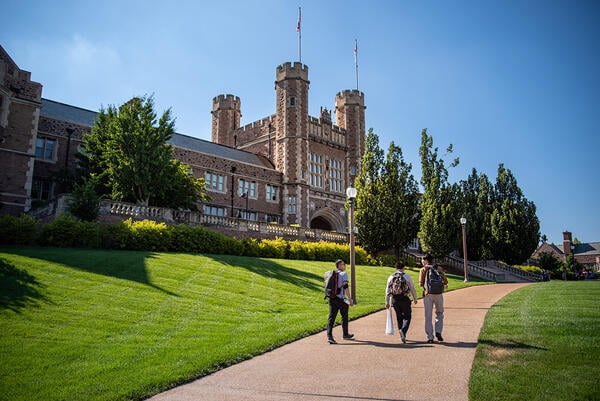
    One of the nation’s wealthiest universities is laying off hundreds of employees.

    WashU chancellor Andrew Martin announced last month that the private university had cut 316 staff positions and closed another 198 vacant roles as part of an effort to restructure or reduce budgets. He wrote that the cuts, which extend to WashU’s Medical Campus, total “more than $52 million in annual savings.”

    The chancellor cited both external and internal pressures.

    “These include the changing needs of our students, emerging technologies, and innovations in teaching and learning,” Martin wrote. “Others come from internal decisions and structures that have, over time, created ineffective processes and redundancies in the way we operate. In addition, we’re still facing significant uncertainty about potentially drastic reductions in federal research funding.”

    Uncertainty over federal research funding looms even as the university has lobbied heavily on Capitol Hill. Among individual institutions, WashU has been one of the top spenders on higher education lobbying this year, pumping $540,000 into those efforts across the first two quarters. (Third-quarter lobbying numbers are not yet available.)

    Despite a $12 billion endowment, WashU follows well-resourced peers, including Johns Hopkins, Northwestern and Stanford Universities, in enacting steep layoffs.

    Brown University

    Squeezed by a budget deficit and reeling from a battle with the Trump administration over allegations of antisemitism that included a temporary federal research funding freeze and ended with the university making concessions, Brown is laying off 48 employees and axing 55 vacant jobs.

    The cost-cutting measure comes after the Ivy League institution in Rhode Island already eliminated “approximately 90 mostly vacant positions” earlier this year, according to an announcement from senior administrators. Following the cuts, Brown is walking back freezes on hiring, travel and discretionary spending.

    Officials announced they plan to monetize “non-strategic real estate holdings” and pause “spending on plans to move the University to net-zero emissions,” among other efforts, including “prioritizing fundraising for current-use gifts that have an immediate positive budgetary impact.”

    Brown is among the nation’s wealthiest universities, with an endowment valued at $7.2 billion.

    University of Oregon

    Grappling with a budget deficit of more than $25 million, the public flagship announced plans to lay off 60 employees and close another 59 vacant positions, The Oregonian reported.

    The move comes after the university cut dozens of jobs earlier this year.

    “Through careful consultation with deans, department heads and the University Senate, we were able to substantially close our budget deficit without eliminating any degree programs,” UO senior officials wrote last month. “And while we are cutting 20 filled career faculty positions and 14 unfilled tenure track faculty positions, we are not eliminating any filled tenure track faculty positions.”

    Berklee College of Music

    College leaders cited “rising costs, a dynamic enrollment environment, and shifting national policies” in announcing the layoffs of 70 employees at the storied music school last month.

    The layoffs reportedly amount to 3 percent of the Berklee College of Music workforce and include employees on campuses in Massachusetts, New York and Spain, according to Boston.com. Of the 70 employees laid off, all were staff members and no faculty jobs were cut.

    Southern Oregon University

    After declaring financial exigency in July, officials finalized a plan at the public university in Ashland to cut $10 million in operating costs over four years, Jefferson Public Radio reported.

    The cuts will reportedly affect 70 faculty and staff jobs, though not all are currently filled. In addition to layoffs and the elimination of vacant jobs, the university also plans to scale back programs by cutting 10 majors—including chemistry and mathematics—and dropping a dozen minors.

    University of Arizona

    The public university in Tucson is cutting 43 jobs after Congress eliminated funding for the Supplemental Nutrition Assistance Program, The Arizona Daily Star reported.

    The program, known as SNAP-Ed for short, was removed from the federal budget earlier this year. Termination of the program cut off about $6 million in annual funds to the university to provide education-related services, faculty members told the newspaper.

    Arizona’s job cuts come as the university recently managed to zero out a $177 million deficit that administrators discovered in late 2023, which prompted sweeping cost-cutting measures.

    University of Louisiana at Lafayette

    The public university eliminated six jobs and closed the Office of Sustainability and Community Engagement last month as it navigates a $25 million deficit, The Acadiana Advocate reported.

    Other offices were restructured.

    The newspaper reported that officials have already identified $15 million in cuts to help close the deficit. Most divisions across the university will be required to reduce operational expenses by 10 percent.

    Cuyahoga Community College

    Following other public institutions in Ohio, CCC is axing 30 associate degree programs in low-enrollment areas, as mandated by Senate Bill 1, which the State Legislature passed earlier this year, Signal Cleveland reported.

    The cuts, announced last month, include a mix of programs ranging from advanced manufacturing to creative arts. Multiple apprenticeship programs are also being shut down.

    East Carolina University

    Officials at the public university in Greenville announced plans last month to cut $25 million from the budget amid declining enrollment and other factors, The Triangle Business Journal reported.

    Belt-tightening measures will be implemented over three years and will include “permanent reductions, academic program optimization, and organizational adjustments,” ECU officials announced last month. Administrators did not specify the number of potential layoffs ahead.

    Yale University

    Increased taxes and federal funding uncertainty are driving cost-cutting measures at the Ivy League university in Connecticut, where officials last month announced retirement incentives to eligible faculty as the university braces for an 8 percent tax on endowment income.

    Yale is one of the few universities with a multibillion-dollar endowment that will feel the tax at its highest level. The increase is a significant jump from the prior endowment tax of 1.4 percent.

    The university is also delaying major construction projects, among other money-saving moves.

    Source link

  • Range of Factors Spurred Campus Cutbacks in August

    Range of Factors Spurred Campus Cutbacks in August

    Multiple colleges and universities, including some ultrawealthy ones, have announced plans to cut jobs and academic programs, as well as implement other changes, due to financial challenges driven by a range of factors.

    For some institutions, belt-tightening measures are directly tied to the economic forces battering the sector as a whole: declining enrollments, rising operating costs and broad economic uncertainty. For others, financial pressure from the Trump administration, which has frozen federal research funding at multiple institutions, prompted cuts. State lawmakers have also forced program reductions at some public institutions.

    Here’s a look at job and program cuts and other cost-cutting efforts announced in August.

    University of Chicago

    Despite its $10 billion endowment, the private institution is slashing expenses by $100 million, shedding 400 staff jobs and pausing admissions into multiple graduate programs.

    Chicago president Paul Alivisatos wrote in a statement to faculty that the university’s financial woes are twofold, tied to a persistent operating deficit, with expenditures outpacing revenues, combined with the “profound federal policy changes of the last eight months [that] have created multiple and significant new uncertainties and strong downward pressure on our finances.”

    In recent years, UChicago has been squeezed by debt, which has ballooned to more than $6 billion as leadership continued to invest in building projects, prompting critics to question how well administrators have managed the institution’s finances.

    Middlebury College

    The private liberal arts college in Vermont is shutting down the Middlebury Institute of International Studies at Monterey, across the country in California, officials announced last week.

    Middlebury president Ian Baucom said the university is winding down graduate programs at the campus over a period of two years. Managing such graduate programs was “no longer feasible,” said Baucom, who added that the decision was made for financial reasons.

    Earlier this year, the college announced it was taking action to close a budget deficit that was projected to be as high as $14.1 million. In that announcement, officials said the Middlebury Institute of International Studies was responsible for $8.7 million—more than half—of the shortfall.

    Middlebury plans to sunset programs at the California campus by June 2027.

    University of New Hampshire

    Officials at the public university in Durham last month announced the elimination of 36 jobs, 13 of which were vacant, and 10 employees had their hours reduced, according to The Portsmouth Herald.

    The layoffs are part of an effort to cut $17.5 million from UNH’s budget.

    University president Elizabeth Chilton also announced other cost-cutting efforts last month, including “scaling back professional development, student employment, building hours, dining hall hours, travel, printing, and other support services.”

    Carnegie Mellon University

    The private research university in Pittsburgh laid off 18 employees in administrative and academic support roles in early August, WESA reported, and more changes are on the horizon.

    Those cuts and other moves are part of an effort to reduce expenses by $33 million, President Farnam Jahanian wrote in a message to campus last month, noting that CMU is not operating at a deficit but is “facing significant constraints and unprecedented uncertainty.” Jahanian pointed to lower-than-expected graduate tuition revenues and federal research funding challenges.

    CMU has also paused merit raises and limited hiring. While Carnegie Mellon is undertaking a review of education offerings, Jahanian wrote that “we do not have broad layoffs planned.” Jahanian added that such measures remain “a last resort.”

    Bennington College

    The private liberal arts college in Vermont announced in mid-August that it was eliminating 15 staff jobs “as part of ongoing efforts to address budget challenges,” VT Digger reported.

    In an announcement, President Laura Walker called the cuts “a painful moment” but noted that, like its peer institutions, Bennington is “confronting an uncertain economy and a challenging overall environment for higher education.” She added that no “regular faculty positions” were cut and that the college is providing severance to affected employees.

    Utah State University

    The public institution laid off seven full-time researchers last month after the federal government terminated grants that supported those jobs, The Salt Lake Tribune reported.

    The layoffs precede what will likely be deep cuts across multiple public universities in the state, forced by new laws that require institutions to cut some programs and positions and reinvest in others that lawmakers argue are better aligned with workforce needs. So far eight institutions have proposed axing 271 programs and 412 jobs, though those cuts still await final state approval.

    Ohio University

    Fallout from the Advance Ohio Higher Education Act, which went into effect in June, continues as Ohio University announced plans to suspend 11 underenrolled programs and merge 18 others.

    The new law requires universities to take action on underenrolled programs, though Ohio University officials noted that they have submitted waiver requests to continue offering seven other programs that fall below the required threshold of at least five graduates, on average, across the past three years. The institution is seeking a waiver for undergraduate offerings in economics, dance, music therapy, nutrition science and hospitality management, among other degree programs.

    Officials cited state workforce needs or “the unique nature” of the programs in waiver requests.

    University of Connecticut

    Following a review that began last fall, trustees of the public system approved the closure of seven academic programs with low enrollment—four graduate certificate and three degree programs, CT Insider reported.

    Nearly 70 other programs are being monitored for enrollment and completion rates. Officials called the review process “good academic housekeeping.”

    Milligan University

    Citing the need to “exercise strong fiscal management,” officials at the Christian college in Tennessee announced they are suspending enrollment in six degree programs, WJHL reported.

    Milligan will no longer accept students in film, journalism, computer science, cybersecurity, information systems or a graduate coaching and sports management program. University officials pointed to falling enrollment in those programs when they announced the changes.

    University of Nebraska

    The public university system is offering buyouts to faculty members across all its campuses as part of an effort to address a $20 million budget shortfall, Nebraska Public Media reported.

    Tenured faculty members older than 62 with at least 10 years of service at Nebraska are eligible to opt in to the voluntary separation incentive program, which opened this week and closes on Sept. 30. Faculty members that opt in will receive a lump-sum payment amounting to 70 percent of their annual base salary and remain employed through June or August, depending on their contract.

    University of California, Los Angeles

    One of the wealthiest institutions on this list, UCLA announced last month that it has temporarily paused faculty hiring and is making other belt-tightening moves.

    Officials also said UCLA is looking to “streamline services,” starting with information technology.

    The public university’s move comes at least partly in response to its standoff with the Trump administration, which froze hundreds of millions in research funding to the university last month as it pressured administrators over alleged antisemitism on campus. (Some funding has been restored by a court order.) The Trump administration has also demanded a $1 billion payout from the university, which California governor Gavin Newsom called “extortion.”

    University of Kansas

    The public university announced last month that it was implementing a temporary hiring freeze as administrators aim to reduce spending by $32 million, The Lawrence Journal-World reported.

    “We are again navigating an uncertain fiscal environment because of external factors, such as disruptions to federal funding, changes in federal law, stagnant state funding, rising costs, changes in international enrollments, and a projected nationwide decline in college enrollment,” KU officials wrote in a message to campus.

    Source link