

Tag: Sri

  • Third Australian university to open in Sri Lanka amid rising demand

    Third Australian university to open in Sri Lanka amid rising demand

    The campus, set to be established in the capital of Colombo with its first intake by mid-2026, will initially offer courses in business and early childhood education, with programs in IT, psychology, engineering, and health “earmarked” for future expansion.

    “We are excited to bring Charles Sturt’s world-class courses to students in Sri Lanka. It will also facilitate new and valuable academic and research connections and build greater awareness of Charles Sturt University and our regional communities internationally,” stated Charles Sturt vice-chancellor, Renée Leon.

    Despite over 160,000 Sri Lankan students seeking tertiary education each year, roughly three-quarters miss out due to limited spaces across just 20 public universities.

    But with a private education market worth over USD$1.1 billion and more than 60,000 Sri Lankan students pursuing transnational education (TNE) each year, Charles Sturt University aims to make its programs more accessible while generating revenue that can be reinvested into its regional education mission.

    “The benefits of this venture are not limited to the students in Sri Lanka and the skills and knowledge they will bring to their nation’s workforce,” Leon said. 

    “This vital and underfunded regional mission remains at the heart of Charles Sturt. It is why we are here and why we are important.” 

    It (Sri Lanka campus) will also facilitate new and valuable academic and research connections and build greater awareness of Charles Sturt University and our regional communities internationally

    Renée Leon, Charles Sturt

    The university will lean on Prospects Education for its TNE delivery in Sri Lanka, similar to its longstanding China Joint Cooperation program, another key TNE venture.

    According to Mike Ferguson, pro vice-chancellor (international) at Charles Sturt, the new Sri Lanka campus “will create high-quality university places in areas of skills priority, aligning closely with the Australian government’s priorities”, he said in a post on LinkedIn.

    Sri Lanka already hosts two Australian institutions: Edith Cowan University, launched in August 2023, and Curtin University in December 2024. Australia’s TNE enrolments in Sri Lanka reached 3,145 in 2022.
    Source link

  • Sri Lankan students set their sights on Indian universities

    Sri Lankan students set their sights on Indian universities

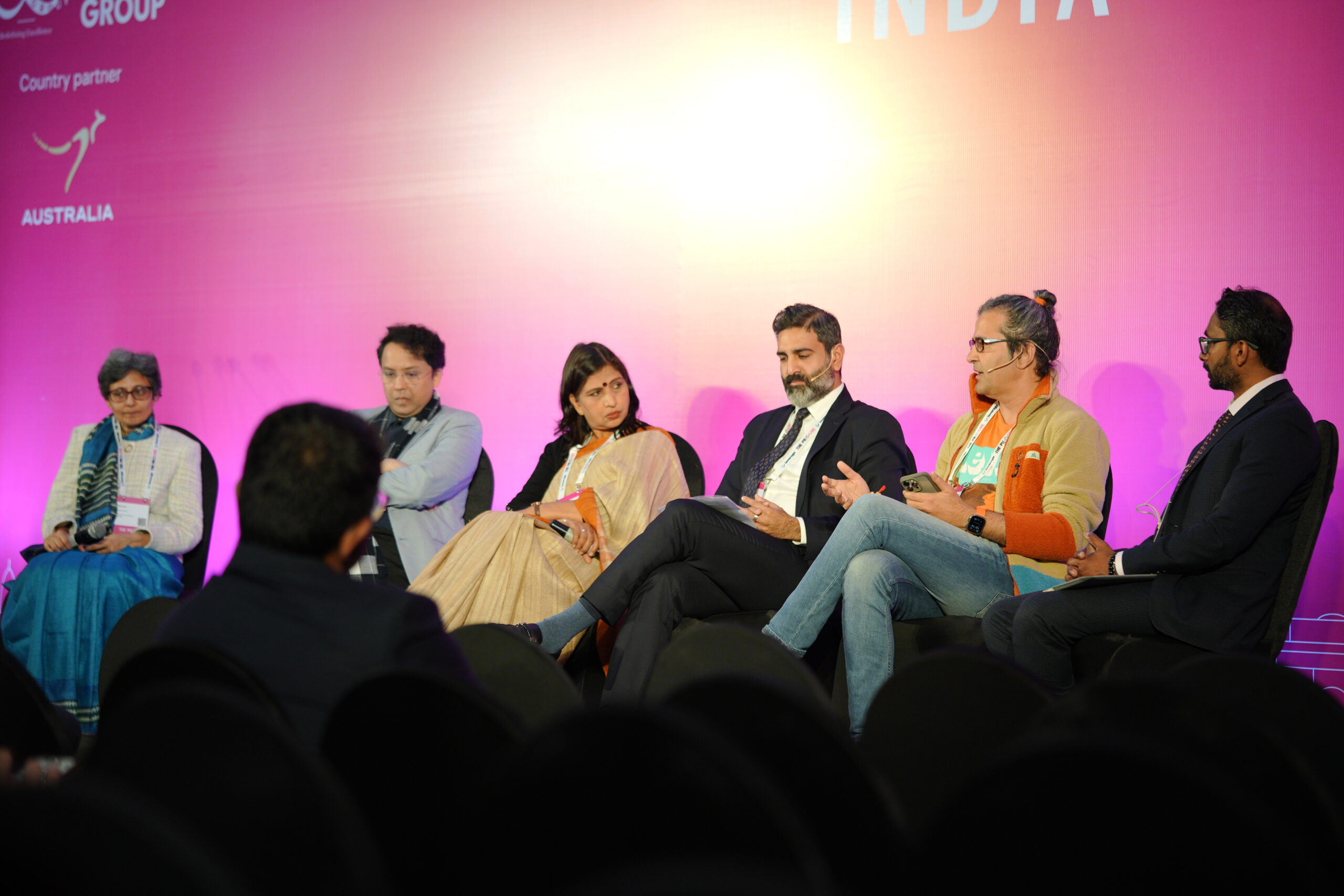
    Discussions at the New Delhi event centered on India’s growing appeal as a destination for international students and a key partner for global institutions seeking to enhance their internationalisation strategies.

    “In our recent visit to Sri Lanka, we saw over 3,000 students express interest to study in Indian universities due to them being affordable and providing high-quality education,” shared Pankaj Mittal, secretary general, Association of Indian Universities

    “Earlier, students from Sri Lanka were only looking at the US, UK, and Europe but that’s not affordable for them anymore, which is why they are focusing on India.”

    Mittal stated that this phenomenon indicates a future where “India will prosper and become the destination where international students and educators will see potential.”

    According to the Study in India portal, over 72,000 international students studied in India for the academic year 2024/25.

    The rise in international students, especially from South Asia and Africa, has prompted the Ministry of Home Affairs to announce specialised visas dubbed the ‘e-student visa’ and ‘e-student-x visa.’

    Additionally, a ‘G-20 talent visa’ has been announced for scientists, researchers, faculty members, and scholar academicians from G20 countries. 

    Elsewhere, reports suggest that IIT Madras is considering establishing a branch campus in Sri Lanka, joining other IITs in their plans for international expansion.

    While international universities are making headlines concerning their expansion plans in India, Mittal highlighted that Indian universities are equally excited to collaborate with institutions abroad but need to find the right partners. 

    We are now handholding Indian universities to help them find the right partners and guide them on which areas they can collaborate in.
    Pankaj Mittal, AIU

    “After the National Education Policy came into the picture, Indian universities are looking forward to more collaborations with international universities,” said Mittal. 

    “The only issue right now is that we need to help Indian universities, especially public ones, with capacity building. We are now handholding Indian universities to help them find the right partners and guide them on which areas they can collaborate in.”

    Through its initiative ‘The Indian Network for Internationalisation of Higher Education’, which has 1,064 member Indian and international universities, AIU is helping Indian and international institutions advance their internationalisation strategies in India. 

    With a 17,000-strong student population, including over 210 international students, private institutions like UPES are partnering with top institutions across the world but want the benefits to be more ‘reciprocal’. 

    “Since the NEP, there have been a slew of regulations that are coming at a fast pace which are also overwhelming for us as Indian institutions,” said Ram Sharma, vice-chancellor, UPES

    “As an Indian institution we are pretty clear that we want the best for our students, which is why we have made it a policy to partner with the world’s top 100 universities, such as King’s College London, Edinburgh University, the University of Queensland, and more.”

    Though joint and dual degrees are becoming major attractions in partnerships between Indian and international institutions, Sharma believes it’s not creating the same excitement among Indian students as expected. 

    “Except for our partnership with the University of Queensland, many of our partnerships have participation of less than ten students,” said Sharma. 

    “So now we are talking about a campus on campus model, wherein we can partner with a well-established existing institution and experiment with other models in light of increasing TNE interest.”

    According to Rohit Kumar, director, international recruitment, partnerships, and mobility, University of York, a ‘culture of innovation’ that can benefit both Indian and international students can only be brought about by cross-disciplinary collaboration between the Indian education sector, international universities, and the Indian government.

    “Dedicated funding streams are needed to strengthen research capabilities between institutions, while international universities entering India must actively engage with industry,” said Kumar. 

    Source link