

Tag: stable

  • Removing the rent guarantor barrier to safe and stable accommodation

    Removing the rent guarantor barrier to safe and stable accommodation

    Universities talk about widening participation – but how many ensure every student has a home to go to, so they really can participate?

    Rent guarantor requirements are a routine part of student housing, yet they exclude those without family support. It’s time for the sector to take responsibility for removing this barrier.

    Most students will need a rent guarantor to secure university halls or private housing.

    Imagine how much harder that is if you can’t turn to family members for that support – often the case for young people that have experience of the care system or are estranged from their parents.

    Young people in this position can face sofa surfing, dangerous housing situations and dropping out of university. According to NUS research in 2024, 14 per cent of low-income students are reconsidering university due to accommodation costs – with guarantor requirements cited as a major barrier.

    Lack of information is a compounding issue. Students without easy access to a guarantor might not even know they need one until the moment they go to sign a new contract with peers – often with whom they have not shared their status and only known for a matter of weeks.

    Getting things clear

    At the Unite Foundation, we encourage all universities to include clear information about rent guarantors on their housing webpages and on any other pages specifically for students like care leavers, estranged, or international students. It’s vital that any student without UK family to rely on knows what a rent guarantor is before having to suddenly find one or miss out on a home at university.

    In Summer 2025, we commissioned a student-led audit of over 180 university websites. 60% included clear information about rent guarantors. This is positive progress, up from 45% in 2024 and 36% in 2022 when we started this work. But that’s still 40% of university websites that don’t provide clear information about this key element of the university accommodation journey.

    Impact of Renters Rights Act

    When the Renters Rights Act comes into force in 2026, it will shift the challenge faced by students unable to secure a guarantor.

    Despite lobbying by NUS for the abolition of guarantor requirements entirely, the Act will not stop landlords from requiring a guarantor, but it will limit upfront rent payments to a maximum of one month’s rent.

    Whilst a positive step for the majority of students, the unintended consequence may be to prevent students who are unable to source a guarantor from making a large advance rent payment instead. Paying large advances causes its own set of issues for students, but is often seen as the lesser of two evils compared to homelessness.

    It’s anticipated that the legislation may stimulate an increased market for commercial guarantor providers. Commercial providers – companies which act as guarantor for a fee – can be a valuable service, but it is a varied market that sits outside Financial Conduct Authority regulation.

    Emerging fees can be between 4 and 15 per cent of annual rent if paying upfront, and up to 20 per cent if paying monthly. Disadvantaged students paying an unregulated premium to access a routine tenancy would be a perverse outcome of measures intended to strengthen tenant rights.

    What are the alternatives?

    The Unite Foundation has launched our Blueprint for a #HomeAtUniversity – a guide to support universities in ensuring a safe and stable home for care experienced and estranged students. We set out six areas through which universities and PBSA providers can use housing as a widening participation tool. And removing the rent guarantor barrier is one of these.

    We know that the context of each university is different, and there are different ways to approach removing the rent guarantor barrier.

    Universities like Imperial and Cardiff offer their own guarantor schemes. Some university halls don’t require a guarantor at all. Other universities cover the cost of a commercial guarantor provider, through a negotiated partnership between provider and university.

    And it’s great to see Unite Students, our founder and long-term champion, pilot an approach enabling their university partners to step into the role of guarantor for care-experienced and estranged students, at zero cost or risk.

    Availability of safe, affordable accommodation is at the heart of many current social policy debates and like wise is fundamental to the sustainability and accessibility of higher education.

    There are significant structural issues at a national level in ensuring a home at university for all students – including lack of coordination between universities and local authorities and the level of student maintenance loan. At the Unite Foundation, we do not believe that practice in universities and PBSA providers should replace systemic change. But we also believe that whilst we wait for that change, there is more impact that accommodation providers at university can make.

    At the Unite Foundation we are here to help with case studies and peer support webinars sharing what is happening on the ground in the sector. If you deliver an intervention evidenced to support a safe and stable home at university for care experienced and estranged students, or if you want to learn more about what your university could be doing, please get in touch.

    A safe and stable #HomeAtUniversity isn’t a luxury — it’s a prerequisite for participation, success, and equity in higher education.

    Source link

  • Student suicides: why stable data still demand urgent reform 

    Student suicides: why stable data still demand urgent reform 

    Author:
    Emma Roberts

    Published:

    This HEPI guest blog was kindly authored by Emma Roberts, Head of Law at the University of Salford. 

    New figures from the Office for National Statistics (ONS) show that student suicide rates in England and Wales for the period 2016 to 2023 remain stable – but stability is no cause for complacency. The age-adjusted suicide rate among higher education students stands at 6.9 deaths per 100,000, compared with 10.2 per 100,000 for the general population of the same age group. Over the seven years of data collection, there were 1,163 student deaths by suicide – that is around 160 lives lost every year. 

    The rate being lower than the wider population is encouraging and may reflect the investment the sector has made in recent years. Universities have developed more visible wellbeing services, invested in staff training and created stronger cultures of awareness around mental health. The relative stability in the data can be seen as evidence that these interventions matter. But stability is not a resolution. Each student suicide is a preventable tragedy. The data should therefore be read not as reassurance, but as a call to sustain momentum and prepare for the challenges that lie ahead. 

    What the ONS data tells us 

    The figures highlight some familiar patterns. Male students remain at significantly higher risk than female students, accounting for nearly two-thirds of all suicides. Undergraduate students are at greater risk than postgraduate students, while students living at home have the lowest suicide rate. The data also shows that rates among White students are higher than for Black or Asian students, though the sample sizes are small, so these figures may be less reliable. 

    In terms of trend, the highest rate was recorded in the 2019 academic year (8.8 per 100,000). Since then, the rate has fallen back but remains stubbornly consistent, with 155 deaths recorded in the most recent year. The ONS notes that these figures are subject to revision due to coroner delays, meaning even the latest year may be under-reported. 

    The key point is that the problem is not worsening, but it is also not going away. 

    A changing student demographic 

    This year’s recruitment trends have introduced a new variable. Several high-tariff providers (universities with the highest entry requirements) have reduced entry requirements in order to secure numbers. This can open up opportunities for students who might otherwise not have had access to selective institutions. But it does raise important questions about preparedness. 

    Students admitted through lower tariffs may bring with them different kinds of needs and pressures: greater financial precarity, additional academic transition challenges, or less familiarity with the social and cultural capital that selective universities sometimes assume. These are all recognised risk factors for stress, isolation and, in some cases, mental ill-health. Universities with little prior experience of supporting this demographic may find their existing systems under strain. 

    Building on progress, not standing still 

    Much good work is already being done. Many universities have strengthened their partnerships with local National Health Service (NHS) trusts, introduced proactive wellbeing campaigns and embedded support more visibly in the student journey. We should recognise and celebrate this progress. 

    At the same time, the ONS data is a reminder that now is not the moment to stand still. Stability in the numbers reflects the effort made – but it should also prompt us to ask whether our systems are sufficiently flexible and resilient to meet new pressures. The answer, for some institutions, may well be yes. For others, particularly those adapting to new student demographics, there is a real risk of being caught unprepared. 

    What needs to happen next 

    There are several constructive steps the sector can take: 

    • Stress-test provision:  
      Assess whether wellbeing and safeguarding structures are designed to support the needs of the current, not historic, intake. 
    • Broaden staff capacity:  
      Ensure that all staff, not just specialists, have the awareness and training to spot early warning signs so that distress does not go unnoticed. 
    • Strengthen partnerships:  
      Align more closely with local NHS and community services to prevent students falling between two in-demand systems. 
    • Share practice sector-wide:  
      Collectively learn across the sector. Good practice must be disseminated, not siloed. 

    These are not dramatic or expensive interventions. They are achievable and pragmatic steps that can reduce risk while broader debates about legal and regulatory reform continue

    Conclusion 

    The ONS data shows that student suicide is not escalating. But the rate remains concerningly consistent at a level that represents an unacceptable loss of life each year. The progress universities have made should be acknowledged, but the danger of complacency is real. As recruitment patterns shift and new student demographics emerge, the sector must ensure that safeguarding and wellbeing systems are ready to adapt. 

    Every statistic represents a life lost. Stability must not become complacency – it should be a call to action, a chance to consolidate progress, anticipate new challenges and keep the prevention of every avoidable death at the heart of institutional priorities. 

    Source link

  • Driving resilient, stable school budgets in times of uncertainty

    Driving resilient, stable school budgets in times of uncertainty

    A perfect storm of financial pressures, from declining enrollment to escalating economic uncertainty, are pushing K-12 school district budgets to their limits.

    To adapt, districts nationwide are embracing innovative strategies to shore up budget stability. From reducing facility operational costs to forging strong community partnerships, school district leaders can learn from these proven examples to safeguard their financial stability and maintain funding for critical student programs.

    Securing revenue, and finding new revenue streams

    The post-COVID recovery era has been especially challenging for the majority of school districts whose budgets are based on per-pupil enrollment or attendance. Fortunately, there are many examples of school districts that have successfully combatted budget shortfalls through community-driven student engagement, retention and attendance programs. And with shifting populations and school choice schemes on the rise, school districts are also growing more adept at differentiating themselves through strong communications programs and visible investments into modern facilities. These strategies impact budgets by attracting new residents and strengthening student retention. 

    More districts are also looking to partnerships with local utility companies like utility rebates, net-metering programs, and demand response incentives. These programs reward smart energy management (i.e. energy efficiency upgrades, on-site renewables, and strategic energy usage) by offering direct cash infusions and bill credits that can improve a school’s budget health.

    Richland County School District One in South Carolina, for example, was able to take advantage of a net-metering program with their local utility after installing nearly 9MW of rooftop solar across 15 campuses. These solar upgrades will save the district over $29 million in energy costs over the next 20 years, more than funding themselves while creating a new financial cash flow into the district’s budget. This project also enables new STEAM curriculum, engaging students in energy generation and conservation in hands-on learning labs.

    Eliminating cost volatility and avoiding unexpected expenses

    Most US school districts are grappling with a portfolio of facilities that are decades past their prime. Maintaining those aging facilities often becomes reactive rather than planned—leaving districts vulnerable to costly, disruptive emergencies. This cycle of crisis spending is unsustainable, driving up long-term costs. That’s one reason why, in their 2025 Infrastructure Report Card for America’s Schools, the ASCE calls to, “urge school districts to adopt life-cycle cost analysis principles in planning and design processes to evaluate the total cost of projects and achieve the lowest net present value cost, including life-cycle O&M, in addition to capital construction.”

    Outdated HVAC systems, leaky building envelopes and inefficient lighting also strain budgets by consuming massive amounts of energy. With energy price volatility on the rise, inefficient energy usage can present a threat to predictable budgeting, particularly for public schools already navigating tight financial constraints.

    School districts like Greene County Schools (GCS) in Tennessee are seeing big budget impacts from taking a proactive approach to facility and energy management. Facing a growing list of deferred maintenance projects, including more than 400 aging HVAC units, GCS turned to Schneider Electric to help design a comprehensive, long-term energy management strategy that allowed the district to reallocate savings toward deferred maintenance.

    Support top-line priorities by capturing O&M cost savings

    Operations and maintenance (O&M) represent the second-largest expenditure in most school districts, right after personnel. Unlike staffing, however, these costs can be reduced without sacrificing student outcomes. By investing in facility modernizations—like smart building controls, LED lighting, water conserving plumbing, and clean energy technologies—schools can dramatically lower their utility bills and maintenance costs. These savings, when captured strategically, can be diverted back into what matters most: academic programming, staffing, and student engagement. 

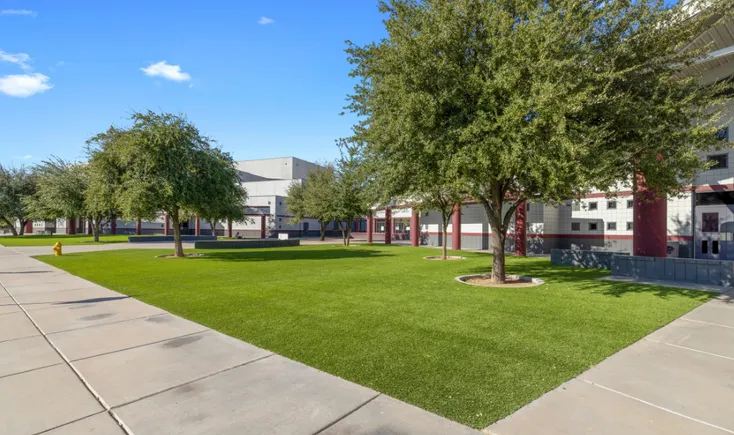
    Gilbert Public Schools (GPS) in Arizona discovered first-hand how energy improvements can be an excellent tool to achieve budget sustainability. GPS started by upgrading to high-efficiency LED lighting across the district’s gymnasiums, allowing them to turn a $257,000 initial investment into more than $1.2 million in lifecycle savings over the life of the project. Next, GPS made modernizations that reduced water usage and lowered maintenance costs, from which the district ultimately realized $12.9M in lifecycle savings.

    Finding budget stability in times of uncertainty

    Times are uncertain, but as these stories show, budget stability is still within reach. Through smart resource optimization and strong community partnerships, schools can safeguard funding for their top priorities.

    Visit Schneider Electric’s K-12 Education Hub for more inspiring success stories and insights into our budget stability solutions tailored for schools.

    Source link