The University of Wollongong is set to backpay more than $6.6 million to thousands of underpaid staff.
Please login below to view content or subscribe now.
Membership Login


The University of Wollongong is set to backpay more than $6.6 million to thousands of underpaid staff.
Please login below to view content or subscribe now.

For all the criticisms leveled at the sector as a group of employers, the number of staff working in higher education keeps on growing.
Understanding why they choose to work in higher education, what they value about their work, and how well the organisation they work for lives up to their expectations can help inform questions about what matters the most when resources are tight – pay and conditions are obviously important but people work in HE for a whole range of reasons, and not all of those expectations require resource to meet.
In our summer staff survey we gathered nearly 5,000 responses on these topics from people who currently work in or around the sector. We don’t make any claims that this is a representative sample – we can’t say with certainty what the sector as a whole feels but comparing similar groups of staff (for example by contract type) with each other yields fascinating insights and points the way towards understanding this fundamental issue.
For our motivation question bank we presented a range of possible motivations as follows:
Then we asked people whether they felt each was an “important” motivation, and whether they were “happy” with their organisation’s performance against each one. A “yes” answer means that someone was happy, or agreed something was important.
We’re not running any fancy statistics here, but our working assumption is that a difference of more than four percentage points between different groups is interesting and notable enough to report on. This would vary by the size of the groups in question.
We don’t know for sure (it isn’t data that we collect via HESA for the population) but there’s as many professional and support services staff as there are academics. And the former are far more likely to have experience working outside higher education – from the responses to our staff survey we see that around 80 per cent of our professional and support staff had worked outside the sector, compared to 64 per cent of academics, though those numbers might be lower in both instances had we specifically excluded casual work such as temporary work while studying.
The cliché of the unworldly professor in an ivory tower is clearly being left in the past – but the kinds of roles done by professional services staff are in demand right across the economy. On the face of it is far easier for them to find work elsewhere, and given the state of the sector, you’d assume this might be better paid.
Given this, it was surprising to see that while 68.8 per cent of academic respondents cited pay and benefits packages as something that was important to them, nearly three quarters of professional and support staff found this area of the working experience important.
In asking these kinds of questions you almost don’t expect people to say they are happy with their pay and benefits – so more than 40 per cent of our professional services respondents doing so is notable. After all, we hear enough from the various sector professional associations about the difficulty of recruiting and retaining skilled staff in a variety of key roles.
Of all the suggested motivations for working in higher education, only two were not selected as important by more than 80 per cent of respondents: pay and conditions (73.5 per cent) and having opportunities to engage in activities that enhance community connection (41.4 per cent) – the latter scoring significantly lower than every other suggestion.
The three most important motivations selected were “knowing the work I do makes a positive impact” (87.5 per cent), “Working alongside and collaborating with like-minded colleagues” (86.9 per cent) and “Working in an organisation I am confident is generally well run” (84.5 per cent).
Looking at the areas where there was the largest gap between those who said something was important to them and those that agreed they are happy with the extent they get to experience it in their working lives, by far the largest gap relates to confidence the organisation is run well and is achieving its objectives, only 31.7 per cent saying they are happy with this, a gap of 52.8 percentage points.
The next highest gap relates to recognition: whereas 80.4 per cent of respondents said receiving recognition for their hard work and contribution was important, only 33.3 per cent said they were happy with this – a gap of 47.1 percentage points.
The third highest gap was in opportunities for learning, development and professional growth: whereas 83 per cent of respondents said this was important, only 44.3 per cent said they were happy with this, a gap of 38.7 percentage points.
Academic respondents were far more likely to cite autonomy to focus on the work that is important to them as a key motivating factor (86.7 per cent), but the number is still high for other staff (79.6 per cent), whereas professional services staff (83.5 per cent) were slightly more likely than academics (79.9 per cent) to cite flexibility in when and where they work.
Staff of all kinds are reasonably happy (c.65 per cent) with the levels of flexibility on offer. Clearly the experiences of Covid-19, and perhaps the drive for providers to rationalise estates – swapping offices for desks, or regular desks for hot desks – is also having an impact. You might expect that women would be more likely to value flexibility in working and you would be right – 84.8 per cent of women in our sample said this was important to them, compared to 76.5 per cent of men. However, similar proportions of men and women (around 65 per cent) reported being happy with the amount of flexibility on offer.
In terms of autonomy – the ability that a member of staff has to focus on work that is important to them – a little under half of both academic and professional staff were happy with what was on offer. It is worth bearing in mind that autonomy is always limited in some way in any role; for example, marking and exam boards pretty much need to happen when they do.
Despite frequent accusations of cultural relativism, a strength of universities is their values. Intriguingly, 60 per cent of professional services staff by just 45 per cent of academics were happy with the way that this manifests – despite similar levels of importance (85.8 per cent for academics, 82.7 per cent for professional) being placed on sharing the values of the organisation one works for.
If we think back to the idea that professional services staff would be more likely to work in other sectors, this does make sense. Values, and the sense of having a positive impact (86 per cent said this was important to them), are clearly going to be key motivations to work in a sector where perhaps pay and conditions don’t stack up.
An amazing 90 per cent of academic staff said that knowing that the work they did has a positive impact (on students, the advancement of knowledge, and/or on their community) was important to them. But just 53 per cent of academics and of professional staff saw this in practice. To be fair, this was one of the best performing motivations in our survey – but it is interesting that staff are no longer seeing the good that higher education does, especially when it is becoming so important to make this case culturally and with the government.
It’s easy to get disheartened when you think about the staffing needs of higher education providers and how they are met. Although academics are clamouring to work in the UK sector, it feels like the terms and conditions are worsening and newer staff – in particular – are getting a raw deal. With professional staff, the fact that many specialisms can get better paid work elsewhere has some wondering about the quality of the staff we are able to recruit.
We asked all of our respondents whether they would recommend working in the sector to someone they cared about – and perhaps surprisingly three-quarters said “yes” or “maybe”. And there was very little difference between those making “yes”, “no”, or “maybe” on any of the motivation axes we discuss above (those who said “yes” were very marginally less likely to say pay and benefits were important to them).
However those that were more likely to recommend the sector to others were significantly happier with every aspect we examined. In contrast more than 80 per cent of those who would not recommend working in the sector were not happy with the amount of recognition they got for their hard work and contribution, and more than 85 per cent felt that their organisation was not run well. Recommendation is generally considered a good proxy for job satisfaction, and this survey seems to bear that out.
We asked respondents to say more where they had identified a gap between something they consider to be important, but the degree to which they are happy with the extent they actually experience that.
There were comments on workload and wellbeing, small-scale or systemic failures to offer recognition for achievement and, particularly from those in professional services, a desire for greater recognition, and development and/or progression opportunities. Some commented that the economic environment makes these asks more difficult.
But in terms of messages for leaders there is a lot about communication and consultation – a sense that the people who work in the sector understand the financial problems the university faces but want to be told the truth about them and be constructive in helping to solve them.
Clearer lines of communication and wider consultation on significant changes.
Greater dialogue with leaders when major decisions are made which impact the way in which I can carry out my role and an opportunity to demonstrate my expertise to build trust in my decision making.
Clear, transparent and timely sharing of strategy and the impact of the changes to come from the changes.
Another challenge is on the perceived values driving strategy and tactics – there’s a sense that management decisions are perceived as being short term, and that it is financial expediency rather than an underlying (and shared) purpose that is informing decisions.
There’s also commentary on issues around execution of strategy – the sense that while plans are spoken about they are not always put into practice or cascaded down the institution, or become snarled in bureaucracy.
Greater consistency, both between faculties and also on strategic planning. At the moment there are so many different initiatives that, while we talk about working smarter, the opposite is actually the case.
We need a clear strategy as to how we are going to get through the next couple of years which needs to be properly communicated. At the moment it feels like we are stuck in a vortex of chaos, with school level projects being put on hold whilst we wait for university level decisions, but the months go by and no meaningful direction or plan seems to be in place.
Better delegation and direction from above, more collaboration across the institution as a whole but also with core departments where the work intercepts with others work, creating a network of colleagues in those core teams.
A key takeaway is that the kind of organisational complexity in decision-making that has long been tolerated in higher education may not serve staff well when resources are stretched and bandwidth is low. Complexity may serve various legitimate organisational purposes but it can also cut staff off from understanding what’s happening, and what they personally need to do about it. It also creates a lack of consistency as multiple messages emerge from different quarters.
But also, while we were specifically focused on areas for improvement, it’s worth adding that a good few comments gave a general thumbs up – their working environment was clearly motivating them in the right ways – and that shows that it can be done.
The biggest risk of an exercise like this one is to suggest that where there is discontent or concern, that it is attributable to the wider environment, and not something that can be addressed or mitigated. While there’s clearly very little scope in most institutions to roll out shiny new initiatives, most comments suggest that some attention to hygiene factors – praise, involvement, honesty – could make a difference in sustaining staff motivation during these trying times.
We’ll be picking up the conversation about sustaining higher education community during tough times at The Festival of Higher Education in November. It’s not too late to get your ticket – find out more here.
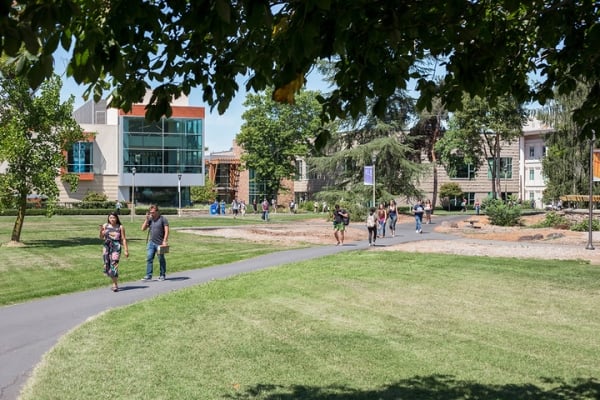
Nearly 3,800 respondents took the College and University Professional Association for Human Resources Higher Education Employee Retention Survey.
About a quarter of nonfaculty higher ed employees told an April survey that they were likely or very likely to look for new jobs in the next year—a drop from the third of such workers who indicated in 2023 they would go job hunting.
The College and University Professional Association for Human Resources released this week the results of its latest Higher Education Employee Retention Survey, which had nearly 3,800 respondents, 96 percent of whom said they’re full-time employees and 75 percent of whom said they’re overtime-exempt workers. The respondents hailed from 505 different colleges and universities.
Greater rates of nonsupervisors, men and employees of color reported they were seeking to change jobs compared to their counterparts. And, out of the various types of offices—such as academic affairs and admissions, enrollment and financial aid—the CUPA-HR report says “external affairs appears to be the most stable area, with nearly two-thirds (62%) of employees indicating they are unlikely or very unlikely to look for a new job.”
Employees who are eyeing new jobs aren’t necessarily seeking to leave academe, or even their current employers. Around 72 percent of those who said they intend to job hunt said they plan to look at other colleges or universities. Nearly half want to explore new roles at their current institutions. The same share plan to look at non–higher ed nonprofits, while 60 percent are eyeing private, for-profit companies. (Respondents who say they are job hunting could pick multiple options.)
Why are they seeking new jobs? Around 70 percent ranked higher pay in their top three reasons for leaving, a far higher percentage than any other impetus. The next most common reason was seeking promotion, at 39 percent, followed by desiring a different workplace culture and reducing stress, each around 33 percent. Then came remote work opportunities, at 28 percent, and job security concerns, at 26 percent.
Job security concern “was particularly pronounced among employees in research and sponsored programs/institutional research,” the report says.
Despite employees’ wishes for more money, the report says feelings of belonging and of purpose in work, along with senses of being valued by others at work and engaged with work, “are stronger predictors of retention than is the perception of fair pay.”

Right-wing X accounts are pushing for universities to dismiss any employees that have disparaged Kirk in the days following his death.
Photo illustration by Inside Higher Ed | LeoPatrizi/E+/Getty Images
At least five faculty and staff members have been fired so far for comments they made in response to the death of Turning Point USA founder and conservative firebrand Charlie Kirk, who was shot and killed Wednesday during an event at Utah Valley University.
Investigators announced Friday they arrested a suspect, 22-year-old Tyler Robinson, who is now being held in a Utah jail without bail. Utah governor Spencer Cox said during a press conference Friday that a family friend turned Robinson in to authorities after the suspect suggested to a relative that he’d killed Kirk. Robinson was not a student at Utah Valley.
The Utah Board of Higher Education said in a statement that Robinson is a third-year student in the electrical apprenticeship program at Dixie Technical College and that he attended Utah State University for one semester in 2021.
Among the latest college employees terminated for their responses to Kirk’s killing, Lisa Greenlee was removed as a part-time instructor from Guilford Technical Community College in Jamestown, N.C., on Thursday after she made comments criticizing Kirk to students during an online class, saying, “I’ll praise the shooter; he had good aim.” A video of her remarks made the rounds on X, where right-wing accounts encouraged the college to fire her.
“We deeply regret that students, employees, and the community were impacted by her comments. Greenlee’s behavior is not consistent with the college’s values and mission to serve Guilford County. Her statement regarding the assassination of Charlie Kirk does not support the open and respectful learning and working environment that GTCC provides every day,” GTCC president Anthony Clarke said in a statement. “We want to reiterate that supporting violence is reprehensible and will not be tolerated at the college.” Greenlee did not respond to Inside Higher Ed’s request for comment.
Two employees at Cumberland University in Lebanon, Tenn., were dismissed Thursday for making “inappropriate comments on the internet related to the tragic shooting of Charlie Kirk,” university president Paul Stumb wrote in a statement posted on X. He identified the employees as Michael Rex, an English and creative writing professor, and Max Woods, an assistant esports coach, but he did not share what they said. Like Greenlee, both had been the subject of online campaigns advocating for their firing.
“This decision was not made lightly,” Stumb wrote. “We understand the importance and the impact of this action, and we want to emphasize that we conducted a comprehensive investigation prior to making our decision.”
Before Stumb’s statement was publicized, Rex posted an apology on his Facebook page. “No one deserves to be murdered,” he wrote. “I did not think about the pain and anger that my words would create. My comments were not meant to celebrate nor to foster political violence and for any traums [sic] my words caused, I am truly sorry.” Rex and Wood did not respond to Inside Higher Ed’s request for comment.
The recent firings follow the dismissals of Laura Sosh-Lightsy, a student affairs administrator at Middle Tennessee State University, and an unnamed staff member at the University of Mississippi.
A Clemson university professor is also subject to an ongoing push by X users to have him fired for statements on Kirk’s death. On Friday afternoon, the university posted a statement that alluded to the situation. “We stand firmly on the principles of the U.S. Constitution, including the protection of free speech. However, that right does not extend to speech that incites harm or undermines the dignity of others. We will take appropriate action for speech that constitutes a genuine threat which is not protected by the Constitution.”

Right-wing social media accounts have embarked on a widespread name-and-shame campaign to out any college employees who have celebrated or spoken insensitively about Kirk’s death.
Photo illustration by Justin Morrison/Inside Higher Ed | skynesher/E+/Getty Images
Two administrators are now out of a job and a graduate student lost an internship after making comments online that downplayed or celebrated the death of Charlie Kirk, the influential conservative founder of the campus-focused Turning Point USA.
In the 36 hours since Kirk was shot and killed during an event at Utah Valley University, right-wing social media accounts have screenshotted and circulated several social media posts, likes and reposts from college faculty and staff members related to Kirk’s death. In addition to the firings, the campaign to name and shame these individuals has led to death threats, Wired reported.
Late Wednesday, a student affairs administrator at Middle Tennessee State University was fired after posting “insensitive” remarks on Facebook in response to Kirk’s death. “We take great pride in the professionalism of our staff; in my long tenure with this university I’ve never before had to dismiss someone for so carelessly undermining the work and mission of this fine institution,” Middle Tennessee State president Sidney McPhee wrote in a statement Thursday. A university spokesperson confirmed the employee was Laura Sosh-Lightsy, an associate dean of student care and conduct who had worked at the university since 2005.
“Looks like ol’ Charlie spoke his fate into existence. Hate begets hate. ZERO sympathy,” Sosh-Lightsy wrote in a Facebook post that has been circulated widely by right-wing accounts on social media. A university spokesperson did not confirm whether or not that specific post led to her firing but noted that “her termination was related to her insensitive social media posts related to the horrific death of Mr. Kirk.” Tennessee senator Marsha Blackburn, a Republican, called for Sosh-Lightsy’s firing on X, writing that she “should be ashamed of her post.” Sosh-Lightsy did not respond to Inside Higher Ed’s request for comment.
On Thursday afternoon, University of Mississippi chancellor Glenn Boyce confirmed the firing of an unnamed staff member who he said “re-shared hurtful, insensitive comments on social media regarding the tragic murder of Charlie Kirk.”
Boyce didn’t provide specifics but noted that “these comments run completely counter to our institutional values of civility, fairness and respecting the dignity of each person.”
At Baylor University, officials distanced the university from a graduate student who wrote “this made me giggle” in response to a social media post sharing the news of Kirk’s death.
“We are aware and greatly disappointed by a social media comment from a Baylor graduate student regarding the fatal shooting of Charlie Kirk. To make light of the death of a fellow human being is completely inappropriate and completely counter to Baylor’s Christian mission. Baylor strives to be a community in which every individual is treated with respect—in life and in death,” a university statement said.
The graduate student—whose online username includes “coach”—is not a member of the faculty nor a part of the athletics program, the statement clarified. Midway Middle School, where the graduate student was student teaching, also removed him from teaching there, KWTX reported.
The Foundation for Individual Rights and Expression is monitoring which universities are censoring employee speech, said Lindsie Rank, director of campus rights advocacy at FIRE. “It may not be moral to speak ill of the dead, but it is protected by the First Amendment so we’re going to be keeping our eyes open for those situations,” she said.
Nearly 60% of student affairs professionals witnessed racism on their campuses in the past year, with one-third experiencing it directly, according to a new national study that exposes significant racial disparities in workplace conditions across higher education.
“When we look at over 2000 student affairs professionals across 73 institutions, we often see that student affairs professionals are really the backbone of our campuses, who are the first line of defense in supporting students and responsible for creating the conditions of belonging,” said Dr. Royal Johnson, a professor in the Rossier School of Education at the University of Southern California and director of the National Assessment of Collegiate Campus Climates in the USC Race and Equity Center. “But the same sort of realities that students are facing of race and discrimination, student affairs professionals are also being plagued with those same challenges.”
Black student affairs professionals reported the highest rates of direct racist experiences at 61%, followed by Asian (46%) and multiracial staff (46%). In contrast, only 17% of white professionals reported experiencing racism personally.
“Student affairs professionals are expected to champion equity and care for students, yet they often labor in environments that fall short of those same principles,” the researchers wrote.
In an interview with Diverse, Johnson noted that upwards of 60% of those surveyed reported experiencing racism and the lingering consequences, “whether it be the emotional toll and frustration associated with it, the distrust that emanates from it, their sense of mattering,” he added.
The perpetrators of racism came primarily from within institutions themselves. White staff members were the most common source of racist behavior (27% of respondents reported experiencing racism from white colleagues), followed by white students (22%) and white faculty (21%). Additionally, 22% experienced racism from external contacts such as vendors and community partners.
The emotional toll proved significant, with 72% of respondents reporting feelings of frustration and 50% experiencing anger as a result of racist incidents. More than a quarter (27%) said the experiences led to declines in mental health and emotional well-being.
Confidence in institutional commitment to diversity, equity and inclusion varied sharply by race. While half of white staff expressed strong confidence in their institution’s DEI commitment, only 30% of Black staff and 35% of Asian staff shared that view.
The workplace climate issues extended beyond racist incidents to broader patterns of exclusion and inequality. Less than half of all respondents felt they mattered at their institution, with Asian (33%) and Black (38%) professionals reporting the lowest rates of feeling valued.
Staff of color also reported significant barriers to advancement. Among Black professionals, 34% disagreed that they received equal opportunities for advancement compared to colleagues, while 32% of Hispanic/Latinx staff reported similar concerns. One in ten Black professionals said their perspectives were not valued at all in workplace decision-making processes.
“We know that staff of color have long struggled with equitable professional mobility kind of opportunities, or feel relegated to lower level, lower status kinds of roles,” Johnson explained, adding that the study represents “one of the more larger scale analysis that’s national in scope, that’s offering behind the scenes if you will, of the kind of racial realities that folks are experiencing.”
The study revealed gaps in institutional support systems as well. While 70% of staff of color and 81% of white staff learned about race through self-directed efforts, only about half received formal professional development from their institutions on racial topics.
During the survey period, which coincided with national discussions about anti-Asian hate crimes and police brutality against Black Americans, less than half of institutions addressed these issues. Only 42% of respondents said their leaders addressed anti-Asian hate crimes, while 50% said leaders addressed police brutality and racially motivated violence against Black people.
The findings come as student affairs faces broader retention challenges, with 39% of staff indicating they are likely to seek other employment within the next year, according to separate research by the College and University Professional Association for Human Resources.
The USC researchers offered seven recommendations for institutional action, including strengthening reporting mechanisms, embedding equity goals in staff evaluations, regularly assessing campus climate with disaggregated data, and ensuring transparent advancement pathways.
“Addressing racism in the workplace is not about individual resilience—it is about institutional responsibility,” the researchers concluded. “Without bold, sustained, and collective action, campuses risk losing the very professionals who are central to advancing their diversity and student success missions.”
The study’s sample included professionals from 28 two-year and 45 four-year institutions. The demographic breakdown was 54% white, 18% Hispanic/Latinx, 12% Black, 5% Asian, and 7% biracial or multiracial staff members.
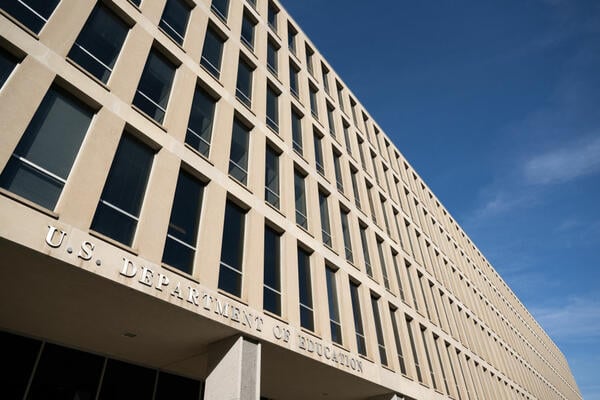
The Office for Civil Rights handles complaints concerning discrimination in federally funded education institutions.
Saul Loeb/AFP via Getty Images
A federal district court judge refused the Trump administration’s request to vacate a previous ruling that prohibited the Department of Education from laying off nearly half its Office for Civil Rights staff.
The decision was made by Massachusetts judge Myong Joun on Wednesday and involved the case Victim Rights Law Center v. Department of Education. It comes just a month after the Supreme Court reversed a preliminary injunction in a similar case, New York v. McMahon, which Joun also oversaw.
In the new order, the district court judge argues that the cases, and therefore their related rulings, are separate.
The New York case, which was filed by multiple state attorneys general, addressed the reduction in force more broadly, Joun said. By comparison, the Victim Rights Law Center case more specifically addresses the RIF at OCR and how it may hold the office back from completing its statutory mandate of protecting students from discrimination.
So, although the Supreme Court allowed the Trump administration to continue with the reduction in force broadly, Joun argues, it does not mean the enjoinment of layoffs within OCR is no longer applicable.
Trump officials “present two arguments for why vacatur or a stay are appropriate: first, that the Supreme Court granted the stay in a related case, and second, that the two related cases are ‘indistinguishable in all pertinent respects.’ I am unconvinced by either argument,” Joun wrote. “Although this case and New York are related, I issued a separate Preliminary Injunction Order to address the unique harms that Plaintiffs alleged arose from their reliance on the OCR.”
He also noted that even though the high court judges reversed one preliminary injunction, that does not mean they have made a final ruling on the merit of the RIF.
Finally, Joun went on to say that the defendants’ motion for stay has little standing, as “they have not substantially complied with the preliminary injunction order” in the first place. Reporting from The 74 backs this up, showing that none of the 276 fired OCR employees have been reinstated.

Northwestern University is moving forward with plans to eliminate more than 400 staff positions as it confronts significant financial challenges stemming from a $790 million federal funding freeze implemented by the Trump administration, according to multiple sources familiar with internal discussions.
In a university-wide communication released earlier this week, Northwestern leadership confirmed the elimination of approximately 425 positions throughout the institution. Half of these positions are currently vacant, while the remainder will result in actual job losses. The reductions are expected to decrease the university’s staff-related budget by roughly 5 percent.
The administration characterized the decision as necessary to address what they termed a “significant budget gap” that cannot be resolved without reducing personnel expenses, which represent 56 percent of Northwestern’s total annual operating costs.
Prior to implementing the staff reductions, university leadership directed schools and administrative units to approach the cuts strategically, with instructions to “think strategically about how to minimize the impacts to their units, our workforce, students, and the University.”

Asking more granular EDI questions of its PGRs and staff should be a sector priority. It would enable universities to assess the diversity of their academic populations in the same manner they have done for our undergraduate bodies – but with the addition of a valuable socio-economic lens.
It would equip us more effectively to answer basic questions regarding how far the diversity in our undergraduate community leads through to our PGT, PGR and academic populations, as well as see where ethnicity and gender intersect with socio-economic status and caring responsibilities to contribute to individuals falling out of (or choosing to leave) the “leaky” academic pipeline.
One tool to achieve this is the Diversity and Inclusion Survey (DAISY), a creation of Equality, Diversity and Inclusion in Science and Health (EDIS) and the Wellcome Trust. This toolkit outlines how funders and universities can collect more detailed diversity monitoring data of their staff and PGRs as well as individuals involved in research projects.
DAISY suggests questions regarding socio-economic background and caring responsibilities that nuance or expand upon those already in “equal opportunities”-type application forms that exist in the sector. DAISY asks, for example, whether one has children and/or adult dependents, and how many of each, rather than the usual “yes” or “no” to “do you have caring responsibilities?” Other questions include the occupation of your main household earner when aged 14 (with the option to pick from categories of job type), whether your parents attended university before you were 18, and whether you qualified for free school meals at the age of 14.
As part of an evolving data strategy, UCAS already collects several DAISY data points on their applicants, such as school type and eligibility for free school meals, with the latter data point is gaining traction across the university sector and policy bodies as a meaningful indicator for disadvantage.
Funders are interested in collecting more granular EDI data. The National Institute for Health and Care Research (NIHR), for example, invested around £800 million in the creation of Biomedical Research Centres in the early 2020s. The NIHR encouraged the collection of DAISY data specifically on both the researchers each centre would employ and the individuals they would research upon, in the belief (see theme four of their research inclusion strategy) that a diverse researcher workforce will make medical science more robust.
The diversity monitoring templates attached to recent UKRI funding schemes similarly highlight the sector’s desire for more granular EDI data. UKRI’s Responsive Mode Scheme, for example, requires institutions to benchmark their applicants against a range of protected characteristics, including ethnicity, gender, and disability, set against the percentage of the “researcher population” at the institution holding those characteristics. The direction of travel in the sector is clear.
Given the data journeys of UCAS and funding bodies, it is sensible and proportionate, therefore, that universities ask more granular EDI questions of their PGRs and their staff. Queen Mary began doing so, using the DAISY toolkit as guide, for its staff and PGRs in October 2024, alongside work to capture similar demographic data in the patient population involved in clinical trials supported by Queen Mary and Barts NHS Health Trust.
While we have excellent diversity in our undergraduate community, we see less in our PGR and staff communities, and embedding more granular data collection into our central HR processes for staff and admissions processes for PGRs allows us to assess (eventually, at least, given adequate disclosure rates) how far the diversity in our undergraduate population leads through to our PGT, PGR and academic population.
Embedding the collection of more granular EDI data into central HR and admissions systems required collaboration across Queen Mary’s Research Culture, EDI, and HR teams, creating new information forms and systems to collect the data while ensuring it could be linked to other datasets. The process was also quickened by a clinical trials unit in our Faculty of Medicine & Dentistry who had piloted the collection of this data already on a smaller scale, providing a proof of concept for our colleagues in HR.
Securing the cooperation of our HR and EDI colleagues was made easier thanks to our doctoral college, who had already incorporated the collection of more granular EDI data into an initiative aimed at increasing the representation of Black British students in our PGR community: the STRIDE programme.
Standing for “Summer Training Research Initiative to Support Diversity and Equity”, STRIDE gives our BAME undergraduate students the opportunity to undertake an eight-week paid research project over the summer, alongside a weekly soft skills programme including presentation and leadership training. Although the programme has run annually since 2020 with excellent outcomes (almost 70 per cent of the first cohort successfully applied to funded research programmes), incorporating more granular EDI questions into the application form for the 2024 cohort of 425 applicants highlighted intersectional barriers to postgraduate study faced by our applicants that would have been obscured had we only collected basic EDI data.
Among other insights, 47 per cent of applicants to STRIDE had been eligible at some point for free school meals. This contrasts with our broader undergraduate community, 22 per cent of whom were eligible for free school meals. Some 55 per cent of applicants reported that neither of their parents went to university, and 27 per cent reported that their parents had routine or semi-routine manual jobs. Asking questions beyond the usual suite of EDI questions allows us here to picture more clearly the socio-economic and cultural barriers that intersect with ethnicity to make entry into postgraduate study more difficult for members of underrepresented communities.
The data chimed with internal research we conducted in 2021, where we discovered that many of the key barriers to our undergraduates engaging in postgraduate research were the same as those who were first in family to go to university, namely lack of family understanding of a further degree and lack of understanding regarding the financial benefits of completing a postgraduate research degree.
Collecting more granular EDI data will allow us to understand and support diversity that is intersectional, while enabling more effective assessment of whether Queen Mary is moving in the right direction in terms of making research degrees (and research careers) accessible to traditionally underrepresented communities at our universities. But collecting such data on our STRIDE applicants makes little sense without equivalent data from our PGR and academic community – hence Queen Mary’s broader decision to embed DAISY data collection into its systems.
As Queen Mary’s experience with STRIDE demonstrates, nuancing our collection of EDI data comes with clear potential. Given adequate disclosure rates, collecting more granular EDI data makes possible more effective intersectional analyses of our PGRs and staff across our sector, and helps understand the social mobility of our PGRs and staff with more nuance, leading to a clearer image of the journey that those from less privileged social backgrounds and/or those with caring responsibilities face across our sector.
More broadly, universities will always be crucial catalysts of social mobility, and collecting more granular data on socio-economic background alongside the personal data they already collect – such as gender, ethnicity, religion and other protected characteristics – is a logical and necessary next step.

Last year, FIRE launched the Free Speech Dispatch, a regular series covering new and continuing censorship trends and challenges around the world. Our goal is to help readers better understand the global context of free expression. Want to make sure you don’t miss an update? Sign up for our newsletter.
Cartoons depicting Muhammad are a common feature in censorship news but the latest developments out of Turkey are a little unusual in that the magazine involved is adamant that the cartoon under fire…does not actually depict the prophet.
On June 30, Turkish police arrested four employees of satirical magazine LeMan on charges of “publicly demeaning religious values,” with one cartoonist also charged with “insulting the president.” They raided the magazine’s office as well and, two weeks later, arrested a LeMan editor at Istanbul’s airport upon his return from France. The arrests followed an attack on the LeMan office, with a mob breaking open windows and doors.
The origin of the dispute? A June 26 LeMan edition with an anti-war cartoon depicting two winged men — one depicted as Muslim and introducing himself as Muhammad and the other as Jewish and calling himself Moses — shaking hands as they ascend over a burning city with bombs raining down. The Muhammad character, the magazine said, “is fictionalised as a Muslim killed in Israel’s bombardments” and is named so because it’s the “most commonly given and populous name in the world.”
The magazine remains adamant its staff is being arrested on the basis of a willful misunderstanding, but for now Turkish officials — including President Erdogan, who called it a “vile provocation” that must be “held accountable before the law” — are intent on prosecution and have seized copies of the edition.
There’s more free speech news out of Turkey. A new law granted the country’s Presidency of Religious Affairs the authority to ban Quran translations it deems “do not correspond to the basic characteristics of Islam,” including online and audio versions. Meanwhile, a Turkish court blocked some content produced by xAI’s Grok for insulting Erdogan and religious values.
And Spotify has threatened to leave the Turkish market in part over a censorship dispute with the deputy minister of culture and tourism, who has accused the site of hosting “content that targets our religious and national values and insults the beliefs of our society.” That content apparently includes playlists like “The songs Emine Erdogan listens to while cleaning the palace,” which mocks Erdogan’s wife’s allegedly lavish spending.
The UK’s free speech issues are nothing new, but this time the U.S. is part of the story, too. UK prosecutors had already announced an investigation into Belfast rap trio Kneecap earlier this year — which, as of last week, has been dropped — but now duo Bob Vylan is on the list.
Bob Vylan caught global attention last month in a controversial Glastonbury set which included a “Death, death to the IDF” chant led by the band. Avon and Somerset Police confirmed they were reviewing footage to confirm “whether any offences may have been committed that would require a criminal investigation.” Prime Minister Keir Starmer also objected to the “appalling hate speech” and demanded answers from the BBC about its broadcast of the set. Shadow Home Secretary Chris Philp also said the BBC “appears to have also broken the law.”
Then the Trump administration joined in. Deputy Secretary of State Christopher Landau announced shortly after the incident that the U.S. revoked the visa of Bob Vylan members ahead of the band’s upcoming tour. “Foreigners who glorify violence and hatred are not welcome visitors to our country,” he wrote.
Speech controversies also bloomed outside Glastonbury. UK police have now arrested dozens of demonstrators for attending events opposing the ban on Palestine Action, an activist group restricted under British anti-terrorism legislation for damaging military planes in a protest. Simply “expressing support” for the banned group is a crime.
The Wall Street Journal covered the UK’s (and Europe’s) “far and wide” crackdown on speech in a July 7 piece that also discussed the recent targeting of activist Peter Tatchell, arrested by police in London for a “racially and religiously aggravated breach of the peace.” Tatchell’s offense was holding a sign “that criticized Israel for its Gaza campaign as well as Hamas for kidnapping, torturing and executing a 22-year-old.”
Also, in more unsurprising news, the UK’s troubling Online Safety Act is making its mark on the internet as social media platforms begin the process of age verification for UK-based users. Bluesky users will be required to use Kid Web Services or face content blocks and app limitations. Reddit users must verify too, or lose access to categories of material including “content that promotes or romanticizes depression, hopelessness and despair” and “content that promotes violence.”
And, finally, is the UK getting a government-imposed swear jar? A district council in Kent is considering a £100 fine for swearing in public. That definitely won’t backfire.
Martín Torrijos, a former president of Panama, says the U.S. canceled his visa over his opposition to political agreements made between the two countries. Torrijos suggested his signature on the “National Unity and Defense of Sovereignty” statement, which criticized “expansionist and hegemonic intentions” by the United States, also contributed to the revocation.
“I want to emphasize that this is not just about me, neither personally nor in my capacity as former president of the Republic,” Torrijos said. “It is a warning to all Panamanians: that criticism of the actions of the Government of Panama regarding its relations with the United States will not be tolerated.”
New wide-ranging guidance from the UK’s Office for Students includes the recommendation that universities amend or terminate international partnerships and agreements if necessary to protect the speech rights of their community. This is welcome advice given global higher education’s failure to acknowledge and account for the challenges internationalization has posed to expressive rights, a problem I discuss in my forthcoming book Authoritarians in the Academy, out Aug. 19 and available for pre-order now.
And, like in the United States, universities in Australia are facing pressure over allegations of campus antisemitism. The nation’s Special Envoy’s Plan to Combat Antisemitism advocates various measures, including adoption of the International Holocaust Remembrance Alliance’s definition and its examples. Universities that “facilitate, enable or fail to act against antisemitism” may face defunding. (FIRE has repeatedly expressed concerns about these applications of the IHRA definition in the U.S. and the likelihood it will censor or chill protected political speech.) The report also advises that non-citizens, which would include international students, “involved in antisemitism should face visa cancellation and removal from Australia.”