Tag: stands

  • Where the federal school choice program stands

    Where the federal school choice program stands

    This audio is auto-generated. Please let us know if you have feedback.

    School choice advocates and public school supporters are eagerly awaiting details of the nation’s first federally funded tax credit scholarship — a program that could accelerate private school choice participation while funneling taxpayer dollars to private schools.

    Approval of the first nationwide private school choice program came in the Republican-led “One Big, Beautiful Bill” signed by President Donald Trump on July 4. 

    The U.S. Department of Treasury is expected to issue proposed rules detailing how the program will operate, including how states can opt in and what guardrails will be put on managing the scholarships. However, it’s unclear where this work stands and whether the prolonged federal government shutdown has delayed this work.

    The Treasury Department did not immediately respond to an inquiry from K-12 Dive on Wednesday about the status of the rule.

    The new law allows any taxpayer to donate up to $1,700 annually to a scholarship-granting 501(c)(3) organization, or SGO. That donor would then be eligible for a 100% federal income tax credit for their contribution. The contributions could then be used toward private school tuition at secular and religious schools, homeschooling materials, and expenses at public or private schools. 

    The money generated from contributions could add up to $101 billion per year if all 59 million taxpayers chose to claim the credit, according to a July analysis from the Institute on Taxation and Economic Policy. However, the institute predicts not all taxpayers would participate.

    Taxpayers can begin making contributions to scholarship-granting organizations beginning Jan. 1, 2027. States need to opt in to participate. 

    Advocating for and against federal scholarships

    Since the omnibus budget was signed into law, supporters and critics of the tax credit scholarship provision have been voicing concerns and questions. For instance, a coalition of more than 200 national and state organizations that support education freedom wrote to the Treasury Department on Oct. 24 to offer their recommendations as the agency begins to write proposed regulations, according to the letter posted by Tax Analysts, a nonprofit tax publisher. 

    The group suggested that there be consistent requirements for scholarship-granting organizations and clarity on the timeline for when states submit lists of qualified SGOs.

    “We believe the three guiding principles for rulemaking are to make it: as easy as possible for as many families as possible to access scholarships for their children; as easy as possible for scholarship-granting organizations (SGOs) to participate and provide scholarships; and, as easy as possible for taxpayers to contribute to SGOs,” the letter said.

    ACE Scholarships, a Denver-based nonprofit scholarship-granting organization that operates in 13 states, is part of that coalition. Jackie Guglielmo, vice president of services, said ACE has been busy fielding inquiries from SGOs, families and schools about the new program. It has also worked to help Treasury Department staff understand how current SGOs support private school choice programs. 

    The Treasury Department is “really looking to us to understand the operations,” said Guglielmo, who anticipates proposed regulations will be released early next year.

    The organization is also meeting with state leaders to discuss their potential participation, Guglielmo said. “I think a very, very important part of this initiative that’s sometimes overlooked is that both private and public students are eligible to receive the scholarship, and that’s something that’s really exciting.”

    Arne Duncan, who served as U.S. education secretary in the Obama administration, recently co-wrote an opinion piece in The Washington Post urging states to participate. “Opting in doesn’t take a single dollar from state education budgets. It simply opens the door to new, private donations, at no cost to taxpayers, that can support students in public and nonpublic settings alike,” the op-ed said.

    Meanwhile, organizations critical of the fledgling program are urging states not to opt-in. Although the program includes taxpayer contributions to public schools, people should be aware of the “potential ramifications of opening the door to a voucher scheme that is ultimately designed to benefit private and religious schools,” according to a Sept. 15 fact sheet from Public Funds for Public Schools and the Education Law Center.

    Public school supporters are concerned the program will lead to reduced funding for public schools and worry about educational equity and accountability at private schools. 

    Source link

  • Where the Ed Dept. Stands After Longest Government Shutdown

    Where the Ed Dept. Stands After Longest Government Shutdown

    The House of Representatives passed a legislative package late Wednesday evening in a 222-209 vote, putting Congress one step closer to ending the federal government’s longest shutdown in history.

    Now, the legislation, which first passed the Senate late Sunday night, heads to the White House. There, President Donald Trump is expected to sign it into law.

    One policy expert told Inside Higher Ed that he expects to see little operational change for institutions as the government reopens. But he and others will be paying close attention to whether the Trump administration follows through on one of the bill’s key compromises: reversing the most recent round of federal layoffs.

    LEAD IN

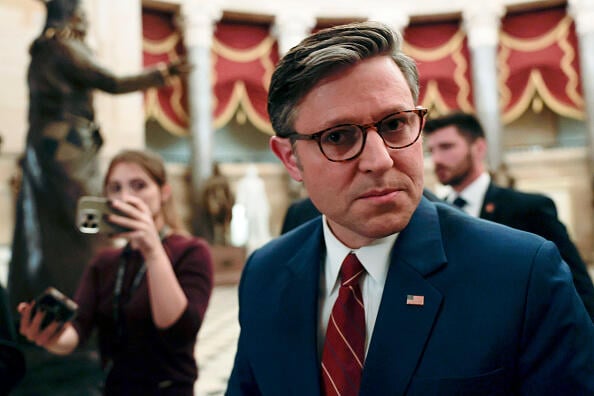
    PITHY STATEMENT FROM SPEAKER JOHNSON OR WHITE HOUSE

    Part of the package would fund the Department of Veterans Affairs, military construction, the Department of Agriculture, the Supplemental Nutrition Assistance Program and Congress through the end of the fiscal year. But it only appropriates funding for the Department of Education and most other agencies until Jan. 30, using what is known as a continuing resolution. For the most part, the CR gives agencies access to the same levels of federal funding as the last fiscal year.

    Jon Fansmith, senior vice president for government relations at the American Council on Education, said because some of the Education Department’s staff continued working throughout October and into November, not much will change for colleges and universities.

    “Financial aid was being disbursed, student loans were being serviced, all those things. So there probably won’t be an immediate significant shift,” he said. “It will, of course, be important for [grant] programs who have not been able to contact program officers with concerns or questions to have staff now available to them again. But that’s probably the biggest thing.”

    Fansmith also noted that some education benefits for military service members, which in many cases have been disrupted and backlogged due to staffing shortages, will take some time to get back up to speed.

    The 4 Parts of the Stopgap Bill

    “There are veterans who have housing benefits and education benefits and all sorts of assistance that they’re using to fund their educations that have just not been coming through over the last six weeks,” he said. “And even when they turn the government back on … that backlog has only grown in the interim. So it’s not going to be an immediate resolution.”

    Senate Democrats also negotiated with Republicans to reverse Trump’s latest round of layoffs in the stopgap bill. Theoretically, the legislation should reinstate more than 460 Department of Education employees within five days of it being enacted.

    It mandates that any employee who was subject to a reduction in force during the shutdown “shall have that notice rescinded and be returned to employment status.” (The majority of those employees were tasked with overseeing federal grant programs for both K–12 and higher education.)

    But Rachel Gittleman, president of the Education Department’s union, argues the language in the bill doesn’t do enough to protect public servants. She worries that saying staffers must be “returned to employment status” could allow Education Secretary Linda McMahon to place union members on administrative leave and not actually put them back to work.

    “The Trump administration has shown us repeatedly that they want to illegally dismantle our congressionally created federal agency,” she said. As such, “We have no confidence that the U.S. Education Department will follow the terms of the continuing resolution or allow the employees named in October firings to return—or even keep their jobs past January.”

    Fansmith is also skeptical department employees will return to their jobs.

    “[The administration hasn’t] shown much willingness to follow what the law requires. So I would absolutely assume we should expect to see efforts to further reduce staffing,” he said. “They’re not hiding the fact they’re trying to do it, and they don’t have a lot of compunction about the methods they use to do so.”

    A department spokesperson, however, told Inside Higher Ed that all employees—both those who were furloughed and those laid off during the shutdown—will return to work, as they remain employees of the department.

    The department also pointed to a ruling from the federal district court in Northern California that blocked the reduction in force in late October, saying that under that order, all employees who received a RIF notice during the shutdown remain employees of the federal government.

    Inside Higher Ed reached out to multiple Republican and Democratic lawmakers in both the House and the Senate to ask about the concerns Gittleman and Fansmith raised. None responded prior to publication.

    Source link

  • Federal judge stands by order requiring OCR be restored

    Federal judge stands by order requiring OCR be restored

    This audio is auto-generated. Please let us know if you have feedback.

    A federal judge is standing by his June decision requiring the U.S. Department of Education to restore its Office for Civil Rights “to the status-quo” so it can “carry out its statutory functions.” The order, which prevents the department from laying off OCR employees, comes despite a U.S. Supreme Court emergency order in a separate case allowing the agency to move forward with mass layoffs across the department.

    The case challenging the gutting of OCR, which included the shuttering of seven out of 12 regional OCR offices, was brought by two students who “faced severe discrimination and harassment in school and were depending on the OCR to resolve their complaints so that they could attend public school,” said Judge Myong Joun in his Aug. 13 decision. 

    Joun said Victim Rights Law Center v. U.S. Department of Education is separate from New York v. McMahon the Supreme Court case that allowed the department to proceed with mass layoffs — because the students have “unique harms that they have suffered due to the closure of the OCR.”

    The Education Department appealed Joun’s ruling Thursday to the U.S. First Circuit Court of Appeals, asking the court to allow the department to move forward with its OCR closures. 

    The court battle prolongs the administrative leave of OCR employees that began in March, after the department laid off more than 1,300 staff across the entire Education Department. President Donald Trump and U.S. Education Secretary Linda McMahon pushed the layoffs as a way to “end bureaucratic bloat” and downsize the federal government, including its expenses. 

    However, according to American Federation of Government Employees Local 252, the union representing a majority of the laid-off Education Department employees, the federal government has been paying around $7 million a month just for employees to sit idle on administrative leave. 

    The employees’ administrative leave that began in March originally ended with their termination on June 9. However, court cases blocking the department’s gutting have prolonged their employment.

    According to the numbers released by the agency last year, OCR received a record number of complaints against K-12 and higher education institutions in 2023, the most recent year for which numbers are available, surpassing a previous all-time high set in 2022.

    Source link

  • Federal judge stands by order requiring OCR be restored

    Federal judge stands by order requiring OCR be restored

    This audio is auto-generated. Please let us know if you have feedback.

    A federal judge is standing by his June decision requiring the U.S. Department of Education to restore the Office for Civil Rights “to the status-quo” so it can “carry out its statutory functions.” The order, which prevents the department from laying off OCR employees, comes despite a U.S. Supreme Court emergency order in a separate case allowing the agency to move forward with mass layoffs across the department.

    The case challenging the gutting of OCR, which included the shuttering of seven out of 12 regional OCR offices, was brought by two students who “faced severe discrimination and harassment in school and were depending on the OCR to resolve their complaints so that they could attend public school,” said Judge Myong Joun in his Aug. 13 decision. 

    Joun said Victim Rights Law Center v. U.S. Department of Education is separate from New York v. McMahon the Supreme Court case that allowed the department to proceed with mass layoffs — because the students have “unique harms that they have suffered due to the closure of the OCR.”

    The Education Department appealed Joun’s ruling Thursday to the U.S. First Circuit Court of Appeals, asking the court to allow the department to move forward with its OCR closures. 

    The court battle prolongs the administrative leave of OCR employees that began in March, after the department laid off more than 1,300 staff across the entire Education Department. President Donald Trump and U.S. Education Secretary Linda McMahon pushed the layoffs as a way to “end bureaucratic bloat” and downsize the federal government, including its expenses. 

    However, according to American Federation of Government Employees Local 252, the union representing a majority of the laid-off Education Department employees, the federal government has been paying around $7 million a month just for employees to sit idle on administrative leave. 

    The employees’ administrative leave that began in March originally ended with their termination on June 9. However, court cases blocking the department’s gutting have prolonged their employment.

    According to the numbers released by the agency last year, OCR received a record number of complaints against K-12 and higher education institutions in 2023, the most recent year for which numbers are available, surpassing a previous all-time high set in 2022.

    Source link

  • Harvard stands firm, rejects Trump administration’s unconstitutional demands

    Harvard stands firm, rejects Trump administration’s unconstitutional demands

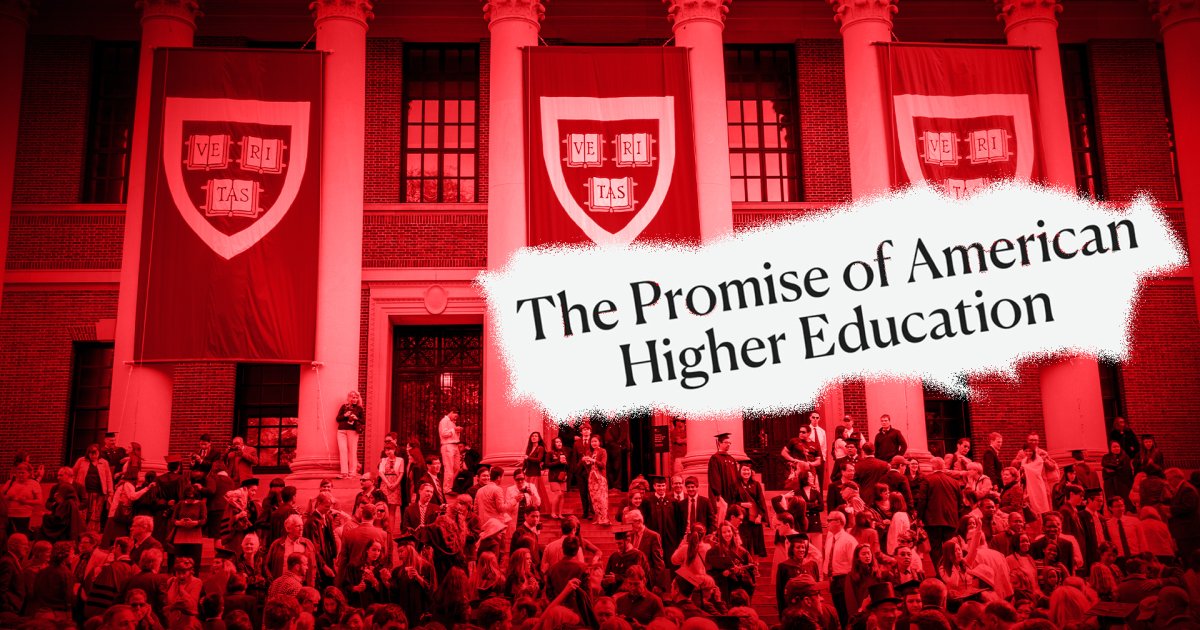
    Last Friday, three federal agencies sent a demand letter to Harvard University laying out conditions for the university to continue receiving federal funds. The letter is unprecedented in its scope. It would essentially render Harvard a vassal institution, subjecting much of its corporate and academic governance to federal directives. 

    If Harvard acceded to these demands, faculty hiring, student admissions, student and faculty disciplinary procedures, university programming decisions, student group recognition processes, and much more would be transformed to align with the government’s ideological preferences.

    Among other things, the university would be required to:

    • Abolish ideological litmus tests in hiring and admissions practices and take steps to ensure viewpoint diversity in the faculty and student body. How Harvard can take both steps simultaneously and also commit to merit-based hiring and admissions, another directive, is unclear. FIRE opposes ideological litmus tests, but you can’t abolish them by trading one litmus test for another.
    • Deny admission to international students who are “hostile to the American values and institutions inscribed in the U.S. Constitution and Declaration of Independence.” These values go undefined. And, as any historian or Supreme Court observer would know, they’re subject to intense debate and varied interpretations. Ironically, this is also an ideological litmus test of the sort prohibited by the directive that Harvard abolish such tests.
    • Audit certain disfavored academic departments. The mandatory audit would include investigations into individual faculty members and would require Harvard to work hand in glove with the government to sanction faculty members who allegedly engaged in anti-Semitic discrimination or otherwise “incited students to violate Harvard’s rules.” The federal government’s definition of anti-Semitism incorporates the IHRA definition, which Harvard recently adopted and FIRE has long criticized as violating First Amendment standards.
    • Discontinue DEI. This would include shuttering all “programs, offices, committees, positions, and initiatives” relating to “diversity, equity, and inclusion.” These terms also go undefined in the letter, and while FIRE has been critical of many university DEI programs for their tendency to chill and censor speech, not all of them do, and many programs are within a university’s prerogative to create. This is especially true at private institutions.
    • Reform student disciplinary processes and procedures. The letter demands Harvard not fund or recognize any student group that “endorses or promotes criminal activity, illegal violence, or illegal harassment.” This amounts to a federal requirement of viewpoint discrimination. While many would find these categories of speech abhorrent, the categories go undefined and would nevertheless be protected by the First Amendment so long as the speech stays confined to endorsement and promotion and the student groups do not themselves engage in any criminal activity, illegal violence, or illegal harassment. The letter also identifies specific student groups that must lose recognition and funding.
    • Implement a comprehensive mask ban. Masks can be used by criminals to commit crimes, the sick to stay healthy, and, yes, protesters to remain anonymous. A blanket mask ban is an overbroad requirement that infringes on individuals’ constitutional right to anonymous speech.
    • Risk double jeopardy. The letter demands that Harvard “carry out meaningful discipline for all violations that occurred during the 2023-2024 and 2024-2025 academic years.” To the extent any student was already tried for these alleged violations, this requirement would amount to “double jeopardy,” violating the venerated and centuries-old principle of fundamental fairness, enshrined in the Fifth Amendment, that says no individual should be tried for the same infraction twice.
    • Generally reform corporate governance structure and practices, including by “reducing the power held by students and untenured faculty” in its current structure. How Harvard governs its academic programs, and who should have a say in that governance, is up to Harvard, not the federal government. The First Amendment and basic principles of academic freedom require no less.

    In addition to these demands, the university would be required to undergo frequent and highly intrusive audits to ensure compliance. In short, the federal government would effectively serve as president and provost of Harvard University.

    The ostensible justification for these demands stems from the government’s belief that Harvard has allowed for a hostile environment for Jewish students in violation of Title VI of the Civil Rights Act. But federal law also dictates specific procedures for adjudicating alleged noncompliance — procedures the government circumvented here. 

    If allowed to stand, the government could revoke federal funding from any institution regardless of the merit of the government’s allegations. This processless approach is a loaded gun for partisan administrations to target institutions and individuals that dissent from administration policies and priorities.

    What Harvard does — for better or worse — others follow. Those of us who support free inquiry, academic freedom, and fair procedures on campus — not to mention institutional autonomy — can hope that maybe its action will inspire other institutions to grow a backbone.

    It’s true that institutions take federal funding voluntarily. But it’s also true that the government cannot condition federal funding on institutions giving up their autonomy and constitutional rights. A requirement that Harvard relinquish its authority to guide core academic programs certainly violates its free speech and academic freedom rights, as well as those of its students and faculty.

    It’s also true that Harvard doesn’t have clean hands. For the past two years, it has sat at the bottom of FIRE’s College Free Speech Rankings, and it may well have violated Title VI by failing to meaningfully respond to conduct creating a hostile environment for Jewish students on campus. But just as with individuals, we don’t punish institutions based on allegations alone. And we cannot restore free speech with censorship.

    This isn’t the first time FIRE has objected to a presidential administration using federal civil rights law to violate rights. Under the Obama and Biden administrations, the federal government weaponized Title IX to erode campus due process and free speech protections. The fight over the Obama/Biden rules lasted over a decade, and has been largely resolved (for now) in court and with President Trump’s Department of Education promulgating federal rules that protect free speech and due process rights in campus sexual misconduct investigations.

    That’s why we’re deeply concerned that the administration doesn’t recognize that what was wrong and unlawful in the Title IX context is also wrong and unlawful in the Title VI context. Indeed, these federal requirements go even further than what we saw in the Title IX context.

    Fortunately, Harvard is fighting back. Yesterday, Harvard President Alan Garber wrote in an open letter:

    The administration’s prescription goes beyond the power of the federal government. It violates Harvard’s First Amendment rights and exceeds the statutory limits of the government’s authority under Title VI. And it threatens our values as a private institution devoted to the pursuit, production, and dissemination of knowledge. No government—regardless of which party is in power—should dictate what private universities can teach, whom they can admit and hire, and which areas of study and inquiry they can pursue.

    Garber’s response didn’t sit well with the federal government, which soon announced it was freezing $2.2 billion in grants to the university. The fight will continue.

    What Harvard does — for better or worse — others follow. Those of us who support free inquiry, academic freedom, and fair procedures on campus — not to mention institutional autonomy — can hope that maybe its action will inspire other institutions to grow a backbone.

    There is some evidence of that already. On the same day Harvard announced it was rejecting the administration’s demands, Columbia University’s new acting president announced Columbia would not agree to any federal demands that “require us to relinquish our independence and autonomy as an educational institution.”

    In addition to Columbia, the administration also froze grants at Cornell University and Northwestern University and is investigating nearly 60 other universities.

    Behavior that gets rewarded gets repeated. Until more universities stand alongside Harvard in opposing the government’s unconstitutional demands, we can be sure these demands won’t be the last.

    Source link