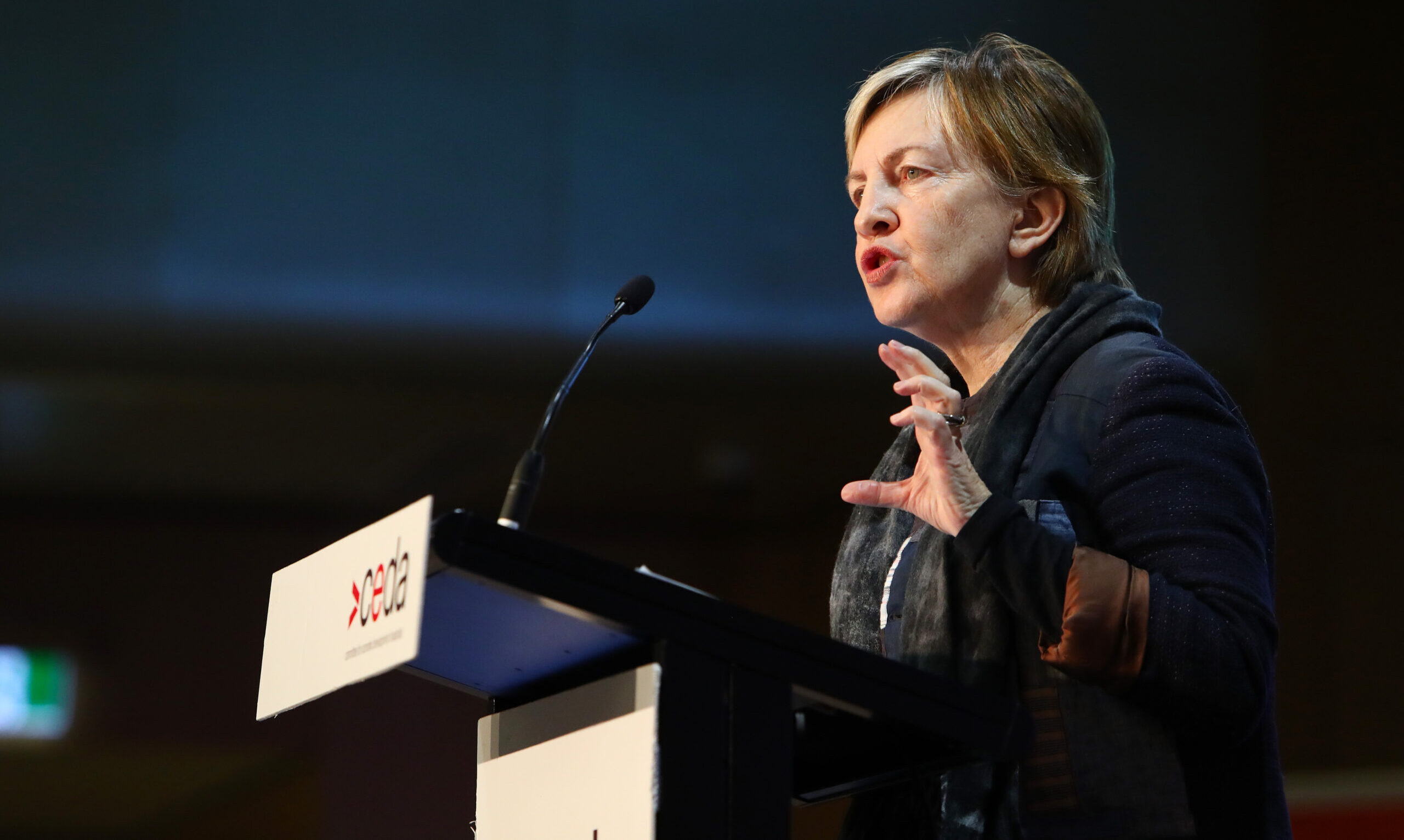
The federal government will reward universities that enrol international students in line with allocated numbers under a new visa processing practice to begin in November.
Please login below to view content or subscribe now.
Membership Login

The federal government will reward universities that enrol international students in line with allocated numbers under a new visa processing practice to begin in November.
Please login below to view content or subscribe now.

Key points:
In Alpine School District, we serve a wide range of students, from Title I to highly affluent communities. While our population has traditionally been predominantly white and middle income, that’s changing. In response to this growing diversity and shifting needs, one of my missions as professional learning and curriculum director for secondary schools has been to provide needs-based professional learning, just in time for educators, and to give them a real voice in what that looks and feels like.
I lead a team of full-time educator equivalents across every discipline: math, science, social studies, ELA, the arts, health, and PE. Together, we guide professional learning and instructional support. Over the past several years, we’ve had to take a hard look at how we teach, how we engage students, and how we prepare educators for long-term success.
Where we started: Tier 1 challenges and high turnover
When I first became curriculum director, I noticed in our data that our schools were not making much progress, and in some cases had stagnated in growth scores. We were leaning heavily on Tier 2 interventions, which told us that we needed to shore up our Tier 1 instruction.
At the same time, we were hiring between 400 and 500 teachers each year. We’re located near several universities, so we see a continuous flow of new educators come and go. They get married, they relocate, or a spouse gets into medical school, which translates to a constant onboarding cycle for our district. To meet these challenges, we needed professional learning that was sound, sustainable, and meaningful, especially early in a teacher’s career, so they could lay a strong foundation for everything that would come after.
Teacher clarity and engagement by design
Several years ago, we joined the Utah State Cohort, doing a deep dive into the Teacher Clarity Playbook. That experience was a real turning point. We were the only team there from a district office, and we took a train-the-trainer approach, investing in our strongest educators so they could return and lead professional learning in their content areas. Since then, we’ve used Engagement by Design as the framework behind much of our PD, our classroom walkthroughs, and our peer observations. It helped us think differently: How do we support teachers in crafting learning intentions and success criteria that are actually meaningful? How do we align resources to support that clarity? We’ve embedded that mindset into everything.
Coming out of the pandemic, Alpine, like many districts around the country, saw decreased student engagement. To focus deeply on that challenge, we launched the Student Engagement Academy, or SEA. I co-designed the Academy alongside two of our content specialists, Anna Davis and Korryn Coates. They’re both part-time teacher leaders at the district office and part-time visual arts teachers in schools, so they live in both worlds. That was important because we believe professional learning should always be contextualized. We don’t want teachers burning extra bandwidth trying to translate strategies across subject areas.
SEA is a yearlong, job-embedded learning experience. Teachers participate in PLCs, conduct peer observations, and complete a personalized learning project that showcases their growth. Our PLC+ coaches work directly with our lead coach, Melissa Gibbons, to gather and analyze data that shapes each new round of learning. We also included classroom observations, not for evaluation, but to help teachers see each other’s practice in action. Before observations, Anna and Korryn meet with teachers in small groups to talk through what to look for. Afterward, they debrief with the teachers: What did we see? What evidence did we see of student engagement? What did we learn? What are we still wondering? As we answer these questions about teaching, we’re also asking students about their experience of learning.
Learning from student surveys
Hearing from our students has been one of the most powerful parts of this journey. With the support of our Director of Student and Educator Well-eing, we created a student survey. We asked a random group of students questions such as:
The responses were eye-opening. Many students didn’t know why they were learning something. That told us our teachers weren’t being as clear or as intentional as they thought they were. One specific question we asked was based on the fact that attendance in world language classes stayed high during the pandemic, while it dropped in other subjects. We asked students why. The answer? Relationships, expectations, and clarity. They said their world language teachers were clear, and they knew what was expected of them. That led other disciplines to reflect and recalibrate.
Today, teachers across subjects like ELA, math, and social studies have participated in a SEA cohort or aligned learning. We’re seeing them plan more intentionally, better target skills, and align instruction with assessment in thoughtful ways. They’re starting to see how mirroring instruction with how learning is measured can shift outcomes. It’s been truly exciting to witness that change. Engaging students through improved teacher clarity, positive classroom relationships (with each other, the teacher, and the content), and providing the students with appropriate levels of rigor has been a game changer.
Building teacher leadership teams
Next year, we’re focusing on developing teacher leadership skills, knowledge, and dispositions across the full geographic area of our district. We’re building professional capacity through leadership teams using the PLC+ model, with an emphasis on facilitation skills, research-based practice, and advocacy for strong instruction in every discipline.
If you’re a district leader looking to boost student engagement through professional development, my advice is simple: You can’t do it alone. You need a team that shares your values and your commitment to the work. You also have to be guided by research–there’s too much at stake to invest in strategies that don’t hold water. Finally, this is a marathon, not a sprint. Aim for small, incremental changes. There’s no silver bullet, but if you stay the course, you’ll see real transformation.

Much of the money funds medical research, including time-sensitive clinical trials.
Photo illustration by Justin Morrison/Inside Higher Ed | Wolterk/iStock/Getty Images | Alex Kent/Getty Images
Days after reaching deals with the Trump administration, Columbia and Brown Universities say the government has already initiated the process of restoring hundreds of millions in federal research dollars it terminated earlier this year in retaliation for their alleged failures to address antisemitism on campus.
Many of those grants came from the National Institutes of Health, which is overseen by the Department of Health and Human Services, and funded medical research, including time-sensitive clinical trials.
“The agreement finalized this week restored all National Institutes of Health grants to Brown researchers that had been terminated,” Brian Clark, a Brown spokesperson, wrote in an email to Inside Higher Ed Thursday evening. “We started to see that formalized in award letters today and expect in the coming days and weeks to see this across all of these grants.”
In April, the administration blocked $510 million in federal grants and contracts for Brown. But under the terms of the agreement the government and university finalized Wednesday, Clark said, “Any payments should resume within 30 days,” which applies to both “the restoration of specific grants that had been terminated, and also to active (non-terminated) grants for which Brown had not been reimbursed.”
If you had a grant frozen because of the Trump administration’s investigations, we want to hear about your experience and whether you’ve received your funding. Email [email protected] to share more.
The Brown deal came about a week after Columbia agreed to pay the government $221 million in addition to changing its admissions policies, disciplinary processes and academic programs in order to restore about $400 million in federal funding the administration canceled in March.
According to Columbia’s website, “Funding and reimbursement payments have already begun to flow.”
“One week later, more than half of the terminated grants have been restored, and we expect the others to be reinstated promptly,” the website says. “Renewals and continuations that were frozen are also coming in on non-terminated grants.”
The university wrote that it’s “reviewing all grants that were terminated or suspended over the last months to identify those that were specifically directed at Columbia” and expects “the fair treatment of Columbia grants and ability to compete to be honored by all federal agencies.”
The university noted that the agreement only applies to HHS and NIH grants that the administration canceled as part of its targeted pressure campaign on Columbia.
Faculty who asked to remain anonymous told Inside Higher Ed that either the university or NIH has told them that some grants are being reinstated or renewed. But it was unclear to them whether actual dollars have resumed flowing, and how many.
Since Trump took office in January, numerous federal agencies, including the NIH, the National Science Foundation and Education Department, have terminated thousands of other research grants at institutions across the country that don’t align with their ideological priorities. In particular, many grants that focused on transgender health, vaccine hesitancy, climate change and racial disparities have been canceled.
Columbia researchers whose grants were terminated as part of that sweep should not expect to see their funding restored as part of this deal, the university wrote on its website.
“Some of these grants were terminated or suspended across the board for all institutions, and have nothing specific to do with Columbia,” the webpage said. “To the extent that the federal government has made the decision not to fund certain types of projects at any institution, those grants will not be coming back to Columbia.”
Columbia and Brown are just two of numerous Ivy League Institutions that the Trump administration has targeted by threatening federal funding.
The administration was also holding up $175 million at the University of Pennsylvania in retaliation for the university allowing a transgender athlete to compete on its swim team. Last month, the university reached a deal with the government, which has said it will restore the funding.
The administration is also blocking $2.2 billion at Harvard University, $202 million at Princeton University and $1 billion at Cornell University. However, those institutions have yet to reach agreements with the government that could result in restoration of their federal funding.
So far, the administration has frozen nearly $5.9 billion across eight universities, including Brown, Columbia and Penn. Most of the funding freezes started in March, but in the last week, the administration resumed blocking funds at institutions under investigation. First, it put about $108 million on hold at Duke University, and then officials suspended an unspecified number of grants at the University of California, Los Angeles.

Tertiary education’s new steward will focus on allocating university funding, harmonising tertiary education and negotiating mission-based contracts, according to its Terms of Reference released on Tuesday.
Please login below to view content or subscribe now.

Key points:
The recent NAEP scores have confirmed a sobering truth: Our schools remain in the grips of a literacy crisis. Across the country, too many children are struggling to read, and too many teachers are struggling to help them. But why? And how do we fix it?
There are decades of research involving thousands of students and educators to support a structured literacy approach to teaching literacy. Teacher preparation programs and school districts across the nation have been slow to fully embrace this research base, known as the science of reading. Since 2017, consistent media attention focused on the literacy crisis has created a groundswell of support for learning about the science of reading. Despite this groundswell, too many educators are still entering classrooms without the skills and knowledge they need to teach reading.
While there is steady progress in teacher preparation programs to move toward the science of reading-aligned practices, the National Council on Teacher Quality’s latest report on the status of teacher preparation programs for teaching reading (2023) still shows that only 28 percent of programs adequately address all five components of reading instruction. Furthermore, according to the report, up to 40 percent of programs still teach multiple practices that run counter to reading research and ultimately impede student learning, such as running records, guided reading, leveled texts, the three cueing systems, etc. This data shows that there is still much work to be done to support the education of the teacher educators responsible for training pre-service teachers.
The disconnect between theory and practice
When it comes to literacy instruction, this problem is especially glaring. Teachers spend years learning about teaching methods, reading theories, and child development. They’re often trained in methods that emphasize comprehension and context-based guessing. However, these methods aren’t enough to help students develop the core skills they need to become proficient readers. Phonics–teaching students how to decode words–is a critical part of reading instruction, but it’s often left out of traditional teacher prep programs.
One primary reason this disconnect happens is that many teacher prep programs still rely on outdated methods. These approaches prioritize reading comprehension strategies that focus on meaning and context, but they don’t teach the foundational skills, like phonics, essential for developing fluent readers.
Another reason is that teacher prep programs often lag when it comes to incorporating new research on reading. While the science of reading–a body of evidence built from decades of research and studies involving thousands of students and educators about how humans learn to read and the instructional practices that support learning to read–has been gaining deserved traction, it’s not always reflected in the teacher preparation programs many educators go through. As a result, teachers enter classrooms without the knowledge, skills, and up-to-date methods they need to teach reading effectively.
A way forward: Structured literacy and continuous professional development
For real progress, education systems must prioritize structured literacy, a research-backed approach to teaching reading that includes explicit, systematic instruction in phonics, decoding, fluency, and comprehension. This method is effective because it provides a clear, step-by-step process that teachers can follow consistently, ensuring that every single student gets the support they need to succeed.
But simply teaching teachers about structured literacy is not enough. They also need the tools to implement these methods in their classrooms. The goal should be to create training programs that offer both the theoretical knowledge and the hands-on experience teachers need to make a lasting difference. Teachers should graduate from their prep programs not just with a degree but with a practical, actionable plan for teaching reading.
And just as important, we can’t forget that teacher development doesn’t end once a teacher leaves their prep program. Just like doctors, teachers need to continue learning and growing throughout their careers. Ongoing professional development is critical to helping teachers stay current with the latest research and best practices in literacy instruction. Whether through in-person workshops, online courses, or coaching, teachers should have consistent, high-quality opportunities to grow and sharpen their skills.
What do teacher educators need?
In 2020, the American Federation of Teachers published an update to its seminal publication, Teaching Reading is Rocket Science. First published in 2000, this updated edition is a collaboration between the AFT and the Center on Development and Learning. Although some progress has been made over the past 20 years in teaching reading effectively, there are still too many students who have not become proficient readers.
This report outlines in very specific ways what pre-service and in-service teachers need to know to teach reading effectively across four broad categories:
There should be a fifth category that is directly related to each of the four areas listed above: the knowledge of how to address the specific oral language needs of multilingual learners and speakers of language varieties. Structured, spoken language practice is at the heart of addressing these needs.
Moving forward: Reimagining teacher training
Ultimately, fixing the literacy crisis means changing the way we think about teacher preparation and ongoing professional development. We need to create programs that not only teach the theory of reading instruction but also provide teachers with the practical skills they need to apply that knowledge effectively in the classroom. It’s not enough to just teach teachers about phonics and reading theory; they need to know how to teach it, too.
Literacy instruction must be at the heart of every teacher’s training–whether they teach kindergarten or high school–and ongoing professional development should ensure that teachers have the support they need to continuously improve.
It’s a big task, but with the right tools, knowledge, and support, we can bridge the gap between theory and practice and finally begin to solve a literacy crisis that has stubbornly endured for far too long.