Tag: States

  • Do states have ‘statutory right’ to Education Department data and guidance?

    Do states have ‘statutory right’ to Education Department data and guidance?

    This audio is auto-generated. Please let us know if you have feedback.

    States suing the U.S. Department of Education over its mass layoffs claim the reduction in force is impacting the agency’s legally required functions, including research and grant distribution. But in documents submitted to the U.S. Supreme Court on Monday, the Education Department said states “have no statutory right to any particular level of government data or guidance.”

    The department is pushing the high court to let its massive RIF go through after being paused by both a federal district judge and the 1st U.S. Circuit Court of Appeals. In court documents, the agency said “it can carry out its statutorily mandated functions with a pared-down staff and that many discretionary functions are better left to the States.”

    Its request to carry through on the RIFs comes even as the agency notified “all impacted employees” on administrative leave in a June 6 email obtained by K-12 Dive that it is “actively assessing how to reintegrate you back to the office in the most seamless way possible” to comply with the court orders. 

    On June 16 — the same day as the agency’s latest Supreme Court filing —  it also emailed RIFed staff for information to help the department in “understanding potential reentry timelines and identifying any accommodations that may be needed.” 

    However, several of the more than 1,300 department employees put on administrative leave in March told K-12 Dive last week that they do not think the agency intends to actually bring them back. This is despite many of the employees having worked on legally required tasks the department has lagged on or trimmed down since the layoffs, as well as the department’s efforts to seemingly comply with the court orders. 

    “While they’re saying we’re coming back, they’re also still appealing the [RIF] process,” said one Education Department employee who is on administrative leave because of the RIF. “It feels like they’re slow-walking it.” 

    Employees ‘in limbo’ as department lags on statutory tasks

    The department is still paying all these employees’ salaries — amounting to millions of dollars — only for them to sit tight. 

    According to an email from American Federation of Government Employees Local 252, the union representing a majority of the laid-off employees, the Education Department is spending at least $7 million in taxpayer dollars per month to workers on leave.

    That amount is, in fact, only for 833 of the 962 laid-off Education Department workers that the union represents and whom it was able to reach for its analysis. Thus, much more than $7 million is actually being spent per month to keep the more than 1,300 laid-off employees on payroll. 

    Since March, the department has spent approximately $21.5 million on just those 833 employees, according to data provided by AFGE Local 252.

    While the Education Department emailed laid-off employees multiple times in the past month to gather information for “reintegration and space planning efforts” on government IDs, retirement plans and devices, among other things, several employees called this a superficial effort to comply with court orders. 

    In the meantime, employees are free to apply to other jobs, start their own organizations, and go on vacation if they so choose, according to employees K-12 Dive spoke with as well as an AFGE Local 252 spokesperson. 

    “We feel like we’re in limbo,” said an employee who has been on administrative leave since March. “They haven’t talked to us.” 

    This employee and the others who spoke to K-12 Dive asked to remain anonymous for fear that identification could negatively affect their employment status or severance terms.

    Condition of Education report falls behind

    This employee would have been working at the National Center for Education Statistics on data related to the Condition of Education Report, which is required by law — and for which the department missed its June 1 deadline “for the first time ever,” according to Sen. Patty Murray, D-Wash. 

    After leaving just a handful of employees in NCES, the department has so far released only a webpage titled “Learn About the New Condition of Education 2025: Part I,” which includes significantly less information than in previous years.

    “Now all we have is a bare-bones ‘highlight’ document with no explanation to Congress or to the public,” Murray said in a June 5 Senate Health, Education, Labor and Pensions Committee hearing. “And that is really unacceptable — students, families, teachers all deserve to see a full report.” 

    In 2024, the report was a 44-page document including new analysis, comparisons with past years, and graphs to visualize the data. It included over 20 indicators grouped by topics from pre-kindergarten through secondary and postsecondary education, labor force outcomes and international comparisons. Individual indicators ranged from school safety issues like active shooter incidents to recovery from the coronavirus pandemic. 
      
    This year, the department said it would be “updating indicators on a rolling basis” due to its “emphasis on timeliness” and would determine “which indicators matter the most.” More than two weeks after its missed June 1 deadline, however, the report still only includes a highlights page with five indicators linking to data tables, many of which had already been released. 

    Meanwhile, Democratic lawmakers have also expressed concerns that the department lagged on its statutory responsibilities to disburse key federal funds, including for Title I-A — which they said took three times as long to distribute than under the last administration. The delay in funding distribution gave states and districts less time to plan for helping underserved students, including those experiencing homelessness, lawmakers said.

    The U.S. Department of Education did not respond to K-12 Dive’s requests for comment on its missed June 1 deadline for the report or on how it will increase government efficiency and cut costs while spending millions on salaries for employees who are not working. 
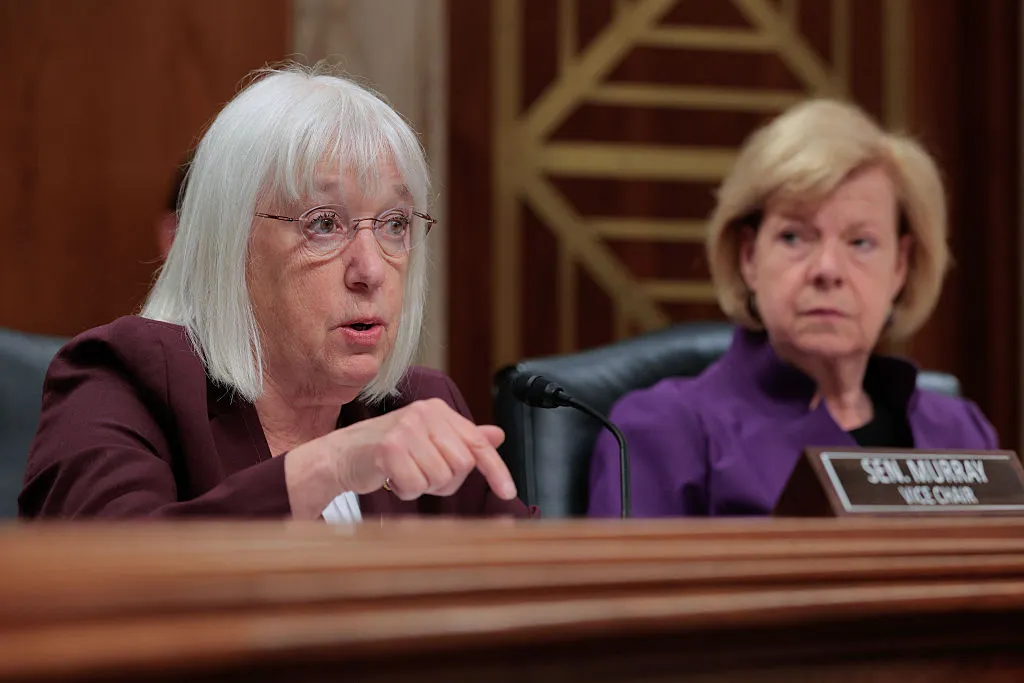
    Sen. Patty Murray speaks into a microphone

    Senate Appropriations Committee ranking member Sen. Patty Murray, D-Wash., questions McMahon during a hearing about the proposed 15% cut to the Education Department’s budget on Capitol Hill June 3, 2025, in Washington, D.C. The budget was consistent with President Trump’s executive order to wind down the Education Department.

    Chip Somodevilla/Getty Images via Getty Images


    Department says RIF impacts are “speculative”

    However, in its Supreme Court filing on Monday, the department dismissed as “speculative allegations” states’ complaints of disruptions to services as a result of the RIFs.

    The states, in their filing last week seeking to block the RIFs, said that “collection of accurate and reliable data is necessary for numerous statutory functions within the Department that greatly affect the States.” 

    The department relies on this data “to allocate billions of dollars in educational funds among the States under Title I of the Elementary and Secondary Education Act,” the states said in their June 13 response to the administration’s plea to the Supreme Court to let its RIFs take effect. The department has given “no explanation of how such allocation can occur without the collection and analysis of underlying data, or of how the data can be collected or analyzed without staff,” their filing said.

    In its Monday response, the department maintained that it is not required by law to maintain “a particular quality of audit.” The states arguing to maintain the department’s previous staffing levels are trying to “micromanage government staffing based on speculation that the putative quality of statutorily mandated services will decline,” the agency said.

    However, when pressed by Sen. Murray in a budget hearing earlier this month, Education Secretary Linda McMahon said “no” analysis was conducted about how the firings would impact the agency’s functions or how it would continue its statutorily required responsibilities without much of its staff. The department did read “training manuals and things of that nature” prior to the layoffs, she said, and had conversations with “the department.” 

    But several laid-off staffers told K-12 Dive that they were never spoken to about how their responsibilities would continue to be fulfilled after their departure. 

    “They don’t understand what they’ve cut,” an employee said.

    Source link

  • International students “crucial” for US growth, states new report

    International students “crucial” for US growth, states new report

    The study, published by the Institue of International Education (IIE), outlines the importance of expanding international study to the US over the next five years as American universities brace for an impending domestic “enrolment cliff”. 

    “Attracting global talent is crucial to driving the US economy and growth, and maintaining US leadership” IIE’s head of research, evaluation and learning Mirka Martel told The PIE News. 

    Martel, co-author of the Outlook 2030 Brief, highlighted the unique capacity of the US to host more international students, who currently make up just 6% of the overall student population.  

    In comparison, international students comprise a much larger proportion of the total student body in the UK (27%), Australia (31%) and Canada (38%). 

    Notably, 36 US states were identified by IIE with international student populations below the 6% line, with Massachusetts, New York and Washington DC the regions with the highest proportions of international students.  

    Meanwhile, US universities are facing a much reported on domestic enrolment cliff, with government figures showing undergraduate enrolment declining by more than two million between 2010 and 2022. 

    What’s more, projections indicate that the number of high school graduates will peak in 2025 and decline by 13% by 2041, with IIE warning that US colleges and universities will be left with “empty seats” if they do not focus on international enrolments.  

    Despite recent reports of declining student interest in the US driven by the Trump administration’s hostile policies, IIE’s Fall 2024 Snapshot predicted a 3% growth in international student levels in the 2024/15 academic year.  

    Martel said she expected this forecast to hold true, pointing to the “exciting” fall increase in undergraduate rates for the first time since Covid and the continuing increase in Optional Practical Training (OPT) stemming from rising graduate rates over the last three years. 

    Outside the US, the total number of globally mobile students has seen exponential growth in recent years, nearly doubling over the past decade to reach 6.9 mil in 2024.   

    With last year witnessing the largest growth since the pandemic, some expect global mobility to exceed 9 million by 2030, driven by the growth of youthful populations in South Asia and Sub-Saharan Africa.  

    This, the report says, will create “a steady pipeline of students seeking future academic study”, highlighting the case of Nigeria where the country’s universities can only admit one-third of the two million annual applicants due to capacity constraints.  

    Elsewhere in India, domestic institutions have significantly expanded their undergraduate studies, but “there remains a strong interest in pursuing graduate studies abroad,” according to IIE. 

    Attracting global talent is crucial to driving the US economy and growth

    Mirka Martel, IIE

    In 2023/24, the number of international students in the US reached a record level of 1.1 million, which was primarily driven by a surge in OPT rather than new enrolments.  

    IIE’s 2030 Outlook highlights the $50bn contribution of international students to the US in 2024, with California ($6.4bn), New York ($6.3bn) and Massachusetts ($3.9) reaping the highest economic benefits.  

    What’s more, last year international students created nearly 400,000 jobs in the US, with the report highlighting their role in driving innovation in key industries, as more than half of international students in the US graduate from STEM fields.  

    It points to Chamber of Commerce predictions of incoming labour market shortages across healthcare, computer and mathematical sciences, and business and financial operations, with international students with US training well-poised to fill the gaps.  

    Beyond the numbers, “[international students] are a political and economic asset for America,” states the report: broadening perspectives in the classroom and furthering business, cultural, economic and political ties after they return home.  

    Source link

  • States balance supports and discipline to address troubling student behaviors

    States balance supports and discipline to address troubling student behaviors

    This audio is auto-generated. Please let us know if you have feedback.

    In Arkansas, a $7 million program approved last year aims to support students’ mental health by restricting their cellphone use and using telehealth to connect more students to mental health providers.

    In Texas, a multiyear effort to study student mental and behavioral health yielded a host of recommendations, including putting Medicaid funds toward school-based mental health supports and better tracking of interventions.

    And in West Virginia, state education leaders and partnership organizations have amassed a trove of resource documents and built out training to help schools address student mental health challenges.

    All three states are working to proactively to respond to the student mental health crisis that worsened due to the COVID-19 pandemic. 

    All three states are also considering or expected to pass laws allowing schools to implement tougher discipline policies.

    Likewise, many states are tweaking their discipline policies at the same time they are putting more resources toward supporting students’ mental well-being.  

    Although school discipline and mental health supports are mostly addressed at the local level, state leadership is critical for setting expectations for accountability and requiring transparency in disciplinary actions, said Richard Welsh, founding director of the School Discipline Lab, a research center that shares information about school discipline.

    And states are using a variety of measures from proactively providing mental health supports to loosening restrictions for exclusionary discipline, said Welsh, who is also an associate professor of education and public policy at Vanderbilt University. 

    Post pandemic, “we did have an uptick in student misbehavior,” Welsh said. “But I think what also gets missing in that was we also had an uptick in student and teacher needs.” 

    The COVID factor

    Post-COVID, schools have reported a rise in unruly behaviors, including among young students. Some of the behaviors have been violent and have even injured teachers, leading them to turn away from the profession.

    Research published by the American Psychological Association last year found an increase in violence against K-12 educators over the past decade. After COVID restrictions ended in 2022, a survey of 11,814 school staff, including teachers and administrators, found that 2% to 56% of respondents reported physical violence at least once during the year, with rates varying by school staff role and aggressor. 

    Data also shows that student verbal abuse occurring at least once a week on average, doubled from 4.8% in the 2009-10 school year to 9.8% in 2019-20, according to APA.

    Students’ mental health needs increased during and after the pandemic, according to studies. Additional research showed that teachers, administrators and other school staff lacked resources to properly address students’ needs

    Some educators, parents and advocates worry that harsher student discipline policies will undermine evidenced-based practices for decreasing challenging behaviors and keeping students in school. They are also concerned that after several years of expanding positive behavior supports and restorative practices, a focus on stricter discipline policies will disproportionately affect students of color and those with disabilities. 

    The legislative activity at the state level is occurring at the same time President Donald Trump is calling for “reinstating common sense” to school discipline policies. An April executive order calls for the U.S. Department of Education to issue guidance to districts and states regarding their obligations under Title VI to protect students against racial discrimination in relation to the discipline of students. Title VI of the Civil Rights Act prohibits discrimination based on race, color or national origin in federally funded programs. 

    The Trump administration has called for the federal government to enact policies that are “colorblind,” not favoring one race over others.

    The order also directs the Education Department to submit a report by late August on the “status of discriminatory-equity-ideology-based school discipline and behavior modification techniques in American public education.” 

    Welsh predicts that the executive order will lead to more state activity addressing student behavior and a specific focus on the guidelines for administering punitive discipline. 

    Source link

  • Many States Picked Diploma Pathways Over HS Exit Exams. Did Students Benefit? – The 74

    Many States Picked Diploma Pathways Over HS Exit Exams. Did Students Benefit? – The 74


    Get stories like this delivered straight to your inbox. Sign up for The 74 Newsletter

    This story was originally published by Chalkbeat. Sign up for their newsletters at ckbe.at/newsletters

    When 18-year-old Edgar Brito thinks about what he’ll do in the future, mechanical engineering is high on the list.

    The senior at Washington state’s Toppenish High School first considered the career after he joined a STEM group in middle school. In a ninth grade class, he researched the earning potential for a STEM degree (“so much more money”) and the demand for mechanical engineers (“exploding”).

    So Brito took some engineering classes at his high school, became president of his state’s Technology Student Association, and is starting at the University of Washington this fall on a pre-science track.

    Brito’s experience is what state education leaders hoped for when they replaced the high school exit exam with multiple pathways to graduation. When he graduates in June, Brito will have completed several diploma pathways, including ones aimed at preparing for college and building career skills.

    But his experience isn’t necessarily typical. He has friends who have no idea what pathway they’re on — or if they’re on one at all. The requirements could be clearer and advisers could spend more time talking about them with students, he said.

    “Making sure that we know exactly what our pathway is and what it means to be on a pathway would have definitely helped out a lot more students,” Brito said.

    Five years after Washington rolled out its pathways, they appear to have helped more students who aren’t college-bound to graduate, which was part of the goal. But the system has also created new issues and replicated some old ones.

    For the Class of 2023 — the most recent year with available data — around 1 in 5 seniors didn’t have a pathway. That meant they weren’t on track to graduate within four years and at risk of dropping out. Some students relied on pandemic-era waivers that don’t exist anymore. That’s similar to the share of students who didn’t graduate on time in 2019, the final year of the exit exam.

    Asian and white students are much more likely to complete one of the math and English pathways, considered the college-prep route, while Native students, English learners, and students with disabilities are more likely to have no graduation pathway.

    “The implementation of graduation pathways has reinforced that the student groups who are the furthest from educational justice are completing the requirement at lower rates,” state education officials wrote in a 2023 report.

    Across the state, students don’t have equal access to the pathways. Many schools, especially smaller and rural ones, struggle to offer more than a handful of career and technical education classes. Some career pathways train students for low-paying jobs with little opportunity for advancement. Some students get funneled to the military pathway, despite having no aspirations to serve, because the aptitude test is easier to pass. Many teens, like Brito’s friends, find the pathways confusing.

    Washington is not alone. Nearly half of states offer multiple diploma options or graduation pathways. And some, like Indiana, have already taken a second pass at their pathways. Many have struggled to address the same big questions, including what exactly high school is for, and what students should need to do to earn a diploma.

    Now the state board of education is poised to overhaul its graduation requirements again.

    Piling on more ways for students to graduate is not the answer, said Brian Jeffries, the policy director at the Partnership for Learning, an education foundation affiliated with the Washington Roundtable, which is made up of executives from across the state.

    “Let’s better prepare our students to meet the pathways, [rather] than keep creating a smorgasbord or a cafeteria of options, which too often turn into trapdoors,” said Jeffries, who sits on the state task force that’s looking at graduation requirements. Until disadvantaged kids have access to better instruction and more support, he said, “we’re going to keep spinning this wheel.”

    The path to 100 high school graduation pathways

    Back in the early 2000s, many states raised the bar to graduate from high school with the hope it would get more kids to college. As a result, by 2012, half of all states required an exit exam, including Washington state.

    But as student debt soared and some questioned the value of higher education, schools abandoned that college-for-all mentality. Critics of exit exams argued that they blocked too many disadvantaged students from graduating.

    In Washington state’s final year of the exit exam, around 1 in 10 high school seniors didn’t pass the English language arts portion, and 1 in 5 didn’t pass the math test, the Seattle Times reported. The law that nixed the exit exam had broad support from the Washington teachers union, state education officials, and parents. Lawmakers passed it unanimously.

    Just six states require an exit exam now, with New York and Massachusetts dropping their tests this school year.

    But absent an exit exam, states haven’t really reached a consensus on what students should have to do to prove they’re ready to graduate.

    Nationwide, there are now more than 100 ways to graduate from high school, according to a recent report from the Education Strategy Group, a K-12 consulting firm. The myriad options provide flexibility, but “also contribute to the lack of clarity about what it means to earn a diploma,” the report found.

    When the nation’s main K-12 education law, the Every Student Succeeds Act, passed 10 years ago, it tasked schools with getting students ready for college and career. But many states and schools are still trying to figure out how to do the career part well.

    “Part of the challenge, frankly, is that schools are going through a bit of a post-high-stakes-test-based accountability identity crisis,” said Shaun Dougherty, a professor of education and policy at Boston College.

    Michael Petrilli, the president of the Thomas B. Fordham Institute, a conservative think tank, says that’s partly because for all the talk about changing high schools, graduation policies are still fairly restrictive. One reason Washington is revisiting its policies now is because some educators worry the state’s 24-credit requirement fills up students’ schedules, leaving little time for apprenticeships and other hands-on learning.

    Many kids are still “sleepwalking through six or seven class periods a day, mostly through college-prep courses,” Petrilli said, with “maybe a few career-tech electives on the side.”

    “We haven’t really unleashed high schools to do things very differently,” Petrilli said. “If we actually think that career tech is valuable, if we think that college-for-all was a mistake, then we need to be willing to act on it.”

    Diploma pathways can bolster teens’ interest in school

    What’s happening in the Toppenish School District illustrates the potential of the pathways model.

    The district, which serves around 3,700 students in south-central Washington, is able to offer a wide range of career and technical courses, including in growing industries, like health care and agriculture. The career-oriented pathway has helped increase some students’ interest in school.

    “It is very hands-on, and so it’s definitely more engaging,” said Monica Saldivar, Toppenish’s director of career and technical education. The old one-size-fits-all approach had “a negative impact for our students with diverse learning needs, academic challenges, and also language barriers.”

    Just before the state overhauled its graduation requirements, over 81% of Toppenish students graduated within four years. Now over 89% do.

    The improvements have been especially pronounced for English learners and Native students, many of whom live on the Yakama Nation. Since the state introduced pathways, Native student graduation rates have risen from 67% to 88%.

    Since pathways launched, the district has added several career-technical education courses, including advanced welding and classes that prepare students to work as medical transcriptionists or home health care aides. That can require some careful career counseling with students, as those jobs are in high demand but don’t pay well unless students get additional training or schooling and move up the career ladder.

    Still, the expanded offerings have helped some students tailor their post-high school plans.

    Frances Tilley, a Toppenish senior who’s headed to Gonzaga University in the fall, will graduate in June after completing both college-prep and career-oriented pathways.

    The 18-year-old took two of the new sports medicine classes and liked learning about what to do if you have a concussion. (Don’t try to stay awake. “We learned that’s not true,” Tilley said.)

    She followed that up with another health care class that touched on different disciplines. She gravitated toward psychology and now plans to get a master’s in counseling and become a mental health worker.

    Pathways can also help schools expose students to career options earlier.

    Three years ago, Toppenish started offering middle schoolers two-week labs to test drive careers such as marketing, nursing, or culinary arts. By the end of eighth grade, they’ve learned about 10 different careers. Now school counselors use students’ interests to help plot their high school schedules.

    Kaylee Celestino, 16, had long considered becoming a teacher. The Toppenish sophomore often gets “education” as an answer when she takes career quizzes. But the career-exploration labs also piqued her interest in science, and now she could also envision becoming a pediatric nurse. So her course schedule reflects that with advanced biology and college-level chemistry.

    “I just want to help people out,” she said, “like my teachers have helped out me.”

    Staffing, standards, data gaps make pathways challenging

    Staffing career and technical classes is one of the biggest hurdles to doing pathways well.

    Washington makes it easier than other states for professionals to put their work experience toward a teaching license. But many schools still struggle to attract and retain teachers for attractive fields like health services and welding when the private sector beckons.

    “These are lucrative fields,” said Dougherty, who has researched career education programs in several states, including Washington. “It’s hard to convince people to give up that salary to become full-time educators.”

    That creates extra work for schools. Saldivar, for example, meets regularly with regional employers to learn about their workforce needs. That helps inform whether Toppenish should drop or add certain classes, and which teachers to recruit. Saldivar is constantly networking and following up on “so and so may know someone” tips.

    Figuring out how to hold all students to a high standard when they are meeting different criteria to graduate is a challenge, too. Some worry Washington’s pathways are too flexible.

    The state rolled out a new pathway this year that allows students to graduate by completing a project, work-related experience, or community service. Lawmakers wanted to give students a way to show what they know besides taking a class or a test. But students don’t have to work with a teacher at their school, and if they choose to work with an outside mentor, there’s no clear rules for how they should be vetted.

    “Where are they finding these people?” said Jeffries of the Partnership for Learning. “Is their opinion an expert opinion that we could trust, or is this based on vibes?”

    Experts say it’s also important for students to understand what their likely earnings and other outcomes will be depending on which career pathway they follow.

    “We should not be talking about CTE in a very generic way,” said Dan Goldhaber, a professor at the University of Washington who has researched career and technical education teacher preparation in the state. “What the concentration is matters.”

    But Washington state doesn’t yet know how students’ outcomes may vary depending on which career and technical education concentration they chose, Katie Hannig, a spokesperson for Washington’s state education agency, wrote in an email. This is a common problem nationwide.

    The state also doesn’t yet know whether the pathway, or pathways, students completed were connected to their post-high school plan, which they must create to graduate. That hasn’t assuaged concerns that students are completing pathways disconnected from their college and career goals.

    The state expects to get that data in the future, Hannig wrote. Analyzing how diploma pathways affect graduation trends and postsecondary outcomes could help schools target resources and support.

    “Any new policy is a work in progress, but the fundamental core value of this policy is preparing students for their next step after high school graduation,” Hannig wrote. “Washington is proud to be one of those states that have established and continue to refine those pathways.”

    For now, districts like Toppenish are scrambling to coordinate weekly college presentations, field trips to work sites, and military recruiter visits — “a little of everything,” Saldivar said — to hedge their bets.

    Kalyn Belsha is a senior national education reporter based in Chicago. Contact her at [email protected].

    Chalkbeat is a nonprofit news site covering educational change in public schools.


    Get stories like these delivered straight to your inbox. Sign up for The 74 Newsletter

    Source link

  • More states adopt laws defining ‘man’ and ‘woman,’ adding to Title IX divide

    More states adopt laws defining ‘man’ and ‘woman,’ adding to Title IX divide

    This audio is auto-generated. Please let us know if you have feedback.

    Dive Brief:

    • More states are defining what it means to be a man and woman in state law, with Texas poised to become the 14th Republican-leaning state to do so since 2023. The state’s sex definition bill was approved last week and now awaits Gov. Greg Abbott’s signature. 
    • Two additional states — Nebraska and Indiana — regulate the definition of sex through state executive orders, according to the Movement Advancement Project, a nonprofit that tracks legislation related to LGBTQ+ issues. 
    • While the impact of these laws may vary from state to state, they set the stage to prevent transgender students from accessing facilities and joining athletic teams aligning with their gender identities.

    Dive Insight:

    Proponents of sex definition legislation say it protects women and girls from sex discrimination based on “immutable biological differences” that can be seen before or at birth. Advocates have used the same argument in recent years to interpret Title IX, the federal civil rights law preventing sex discrimination in education programs, to separate transgender students from girls and women athletic teams and spaces.

    The Texas legislation, for example, says “biological differences between the sexes mean that only females are able to get pregnant, give birth, and breastfeed children” and that “males are, on average, bigger, stronger, and faster than females.” These differences, it says, “are enduring and may, in some circumstances, warrant the creation of separate social, educational, athletic, or other spaces in order to ensure individuals’ safety and allow members of each sex to succeed and thrive.”

    The language closely mirrors an executive order issued by President Donald Trump upon his return to the Oval Office in January. That order established that “it is the policy of the United States to recognize two sexes, male and female.” The order said “these sexes are not changeable and are grounded in fundamental and incontrovertible reality,” and that the concept of “gender identity” is “disconnected from biological reality and sex and existing on an infinite continuum.”

    The language was also reflected in a draft resolution agreement proposed to the Maine Department of Education by the U.S. Department of Education after a short, one-month investigation by the federal agency’s Office for Civil Rights found the state was violating Title IX in its policy allowing transgender students to participate in girls’ and women’s sports teams.

    The agreement, which Maine refused to sign, would have had the state department and public schools define “females” and “males” in their policies and require the state to publicize the definitions on its website.

    The Maine agency would have been required to notify schools that “there are only two sexes (female and male) because there are only two types of gametes (eggs and sperm); and the sex of a human — female or male — is determined genetically at conception (fertilization), observable before birth, and unchangeable.”

    “Gender” would be the same as “sex” under the agreement.

    The case is currently pending with the U.S. Department of Justice, which took over enforcement of the investigation and its findings after the state refused to sign the agreement.

    The agreement would have also required the state to change its records to erase transgender girls’ athletic accomplishments on girls’ sports teams, which is also a potential side effect of the legislation in 13 states defining sex.

    Those opposing recent sex definition laws say they are transphobic, as they don’t recognize transgender people’s gender identity. 

    “These laws could have dangerous implications for transgender people when it comes to bathrooms, identity documents, and other areas of law or policy,” MAP said, “but because these government gender regulation laws are often vaguely written, the actual impact of these laws remains to be seen in each state.”

    Source link

  • 16 states sue National Science Foundation over wide-reaching research cuts

    16 states sue National Science Foundation over wide-reaching research cuts

    Dive Brief:

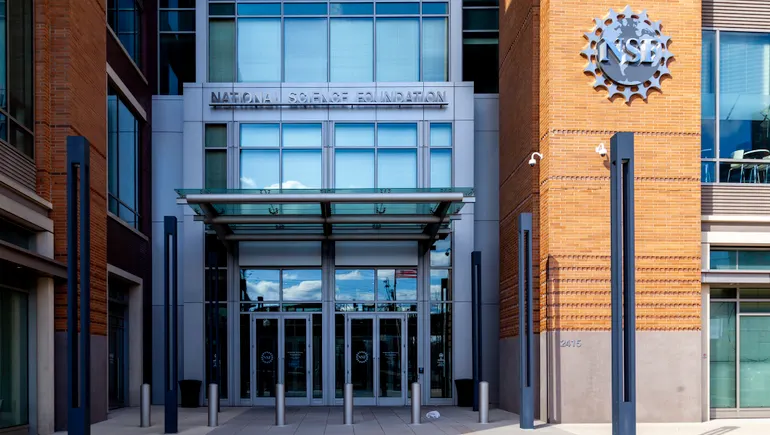
    • Sixteen states sued the National Science Foundation on Wednesday over the agency’s cap on funding for research overhead and its mass termination of grants related to diversity, equity and other topics deemed verboten by the Trump administration. 
    • Plaintiffs allege both moves violate federal law and threaten major research projects and millions of dollars in federal funding at universities in their states. An NSF spokesperson declined to comment on the lawsuit. 
    • The suing states — nearly all of whom have Democrat attorneys general — asked a federal judge in New York to block NSF’s indirect cost cap and its April directive barring diversity-related grants.

    Dive Insight:

    On April 18, the science research agencywhich was founded in 1950 and had a budget of $9 billion last fiscal yearissued a statement announcing it would prioritize research focused on creating “opportunities for all Americans everywhere.” 

    “Research projects with more narrow impact limited to subgroups of people based on protected class or characteristics do not effectuate NSF priorities,” the agency said at the time.

    The same day, NSF began issuing mass termination notices for projects that seek to boost participation in scientific fields by “women, minorities, and people with disabilities,” according to Wednesday’s complaint. Studies on misinformation and environmental justice also received termination notices.

    The canceled projects include a University of Delaware study on post-traumatic stress disorder and suicidality among veterans; a new doctoral program in New Jersey promoting increased participation of underrepresented groups in science-related Ph.D.s; and a University of Oregon initiative providing some 20,000 students with learning experiences in computer science. 

    Later, in May, NSF moved to cap reimbursement for indirect research costs at 15% for all new grants issued to colleges. The cuts affect funding for equipment, administrative staff, laboratory construction and other expenses in research programs.

    The funding cap already sparked at least one other lawsuit, from a group of higher education associations.

    The change could bring steep financial and infrastructural damage to university research programs that the government relies on to advance knowledge and technology in the country, the state plaintiffs argued. 

    According to Wednesday’s lawsuit, the “vast majority” of university projects in the plaintiff states had negotiated indirect research rates between 40% and 60% with NSF. Those states’ “institutions will not be able to maintain essential research infrastructure and will be forced to significantly scale back or halt research, abandon numerous projects, and lay off staff,” the plaintiffs argued. 

    In both cases — the April directive and May indirect cost cap — the NSF violated law, the states said. 

    In the case of the April directive, the plaintiffs pointed to statutes that explicitly direct the agency to promote scientific participation among underrepresented groups in the U.S. 

    They further argue that the longstanding policy has worked, citing statistics showing that the number of women in science and engineering occupations or with related degrees doubled between 1995 and 2017. Participation in these fields by those from minority groups rose from 15% to 35% during the period. 

    The plaintiffs likewise argued that the indirect cost cap undermines a federal law directing the NSF to support basic scientific research and education programs.

    Under the Trump administration this year, the National Institutes of Health and the U.S. Department of Energy also both adopted similar 15% caps on overhead reimbursement. Courts have blocked both policies, though the cases are ongoing.

    Source link

  • As colleges close, small religious campuses in rural states are among the most imperiled

    As colleges close, small religious campuses in rural states are among the most imperiled

    DAVENPORT, Iowa — The Catholic prayer for the faithful echoed off the limestone walls and marble floor of the high-ceilinged chapel.

    It implored God to comfort the poor and the hungry. The sick and the suffering. The anxious and the afraid.

    Then it took an unexpected turn.

    “Lord, hear our prayer for St. Ambrose and Mount Mercy University,” the young voice said, “that the grace of the Holy Spirit may help us to follow God’s plan for our new partnership.”

    The speaker was talking about ongoing efforts to unite St. Ambrose University, where this weeknight Mass was being held, with fellow Catholic university Mount Mercy. Small religious schools in rural states are shutting down at an accelerating rate, a fate these two are attempting to avoid.

    Credit: Mike Rundle for The Hechinger Report

    “Lord, hear our prayer,” responded the congregation of students in St. Ambrose-branded T-shirts and hoodies.

    The heads of both St. Ambrose and Mount Mercy, which is in Cedar Rapids, said they’ve watched as nearby religiously affiliated colleges, athletic rivals and institutions that employed their friends and former colleagues closed.

    With falling numbers of applicants to college — especially in the Midwest — “we just don’t have the demographics anymore,” said St. Ambrose President Amy Novak. Now, as fewer graduates emerge from high schools, combining forces is a way to forestall “the reality that we might all see in five or seven years,” Novak said.

    For many other small religiously affiliated institutions, time has already run out.

    See a list of religiously affiliated colleges that have closed, been merged, or announced that they are closing or merging.

    More than half of the 77 nonprofit colleges and universities that have closed or merged since 2020, or announced that they will close or merge, were religiously affiliated, according to a Hechinger Report analysis of news coverage and federal data. More than 30 that are still in business are on a U.S. Department of Education list of institutions considered “not financially responsible” because of comparatively low cash reserves and net income and high levels of debt.

    Related: Interested in innovations in higher education? Subscribe to our free biweekly higher education newsletter.

    Some small, religiously affiliated institutions that are not on these lists are also showing signs of strain. Saint Augustine’s University in North Carolina, which is Episcopal, has 200 students, down from 1,100 two years ago, and has lost its accreditation. The 166-year-old St. Francis College in New York, which is Catholic, has sacked a quarter of its staff. Catholic Saint Louis University in Missouri laid off 20 employees, eliminated 130 unfilled faculty and staff positions and sold off its medical practice after running a deficit.

    Bluffton University in Ohio, which is Mennonite, is looking for a new partner after a planned merger fell through in February and the president resigned. Catholic St. Norbert College in Wisconsin is eliminating 11 majors and minors and 21 faculty positions. And Georgetown College in Kentucky averted closing only after an alumnus gave it $16 million, which, along with another $12 million in donations, was enough to pay off crippling debt that was costing the small Baptist institution $3 million a year just in interest.

    Other religiously affiliated schools are also taking steps to buttress themselves against demographic and financial challenges. Ursuline College in Ohio, for instance, which has fewer than 1,000 students, has agreed to merge with larger Gannon University, 95 miles away. Both are Catholic. Spring Hill College in Alabama and Rockhurst University in Missouri, both also Catholic, are teaming up so they can jointly offer more academic programs, though they will remain independent.

    More than a fifth of colleges and universities in the United States, or 849 out of 3,893, are religiously affiliated, according to the most recent figures from the National Center for Education Statistics.

    The threats to them are getting new attention. Presidents of 20 Catholic universities and colleges met in November in Chicago at a conference sponsored by DePaul University and held at the offices of the Deloitte consulting firm, which collected data to help them figure out solutions to the challenges they face.

    “The intent was to think about a blueprint for the future of Catholic higher education,” including more partnerships, shared services and other kinds of alliances, said Donna Carroll, president of the Association of Catholic Colleges and Universities. “Survival of the fittest is not the strategy that will advance the common good of Catholic higher education. We have to work together.”

    The American Council on Education last year launched a Commission on Faith-Based Colleges and Universities, with leaders of what has since grown to 17 institutions including Pepperdine, Brigham Young and Yeshiva universities and the University of Notre Dame.

    The idea of the commission, which is scheduled to meet in Washington in June, is “to increase visibility for the important contributions of religious and faith-based colleges and universities and to foster collaboration” among them.

    Some religious colleges and universities are doing fine, and even posting enrollment gains — at least in part because of growing political divisions, campus protests and ideological attacks on secular institutions, said David Hoag, president of the Council for Christian Colleges and Universities.

    Credit: Mike Rundle for The Hechinger Report

    Parents are “wanting to put their son or daughter at a safe place that’s going to have a biblical worldview or a way to look at challenges that’s not polarized,” Hoag said. “At our institutions, you’re not going to be seeing protests or things that are happening at many of these [other] universities and colleges. You’re going to see them rallying together, whether it’s for a sporting event or for a revival or baptisms.”

    Other trends also offer some hope to religiously affiliated colleges and universities. A long decline in the proportion of adults who consider themselves affiliated with a religion appears to have leveled off, the Pew Research Center finds. And while enrollment at parochial schools that feed graduates to Catholic universities fell more than 10 percent from 2017 to 2021, the most recent year for which the figure is available, the number of students at other kinds of religious primary and secondary schools is up.

    Even religiously affiliated institutions confronting the realities of falling enrollment and financial woes fill a critically important role, their advocates say. They often serve low-income students who are the first in their families to go to college and are reluctant to enroll at large public universities.

    Related: The number of 18-year-olds is about to drop sharply, packing a wallop for colleges — and the economy 

    Many are in rural areas where access to higher education is more limited than in urban and suburban places and is becoming less available still as public universities in rural states have merged or closed or cut dozens of majors.

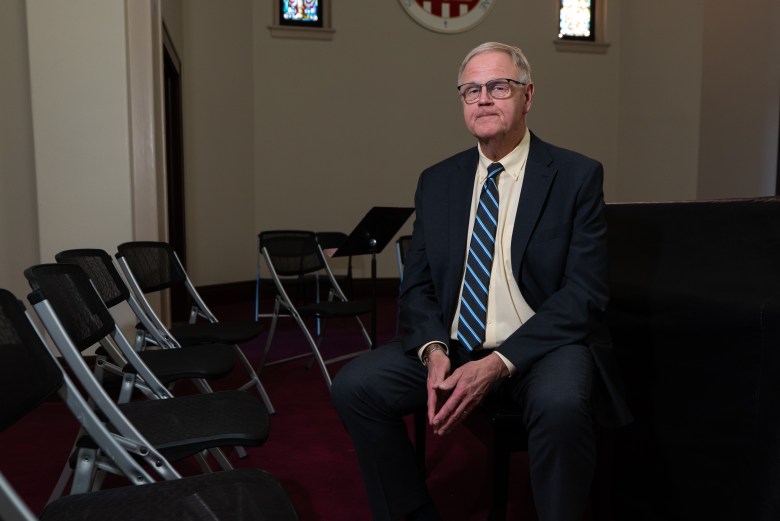
    Attending a small rural, religiously affiliated institution “is, I think — especially for rural students — a great opportunity,” said Todd Olson, president of Mount Mercy, above the sound of trains crossing Cedar Rapids outside his window. “I know kids from very small towns around Iowa,” like the one where he grew up, Olson said. “This campus is a much more comfortable place for them.”

    Credit: Mike Rundle for The Hechinger Report

    When Jacob Lange arrived at St. Ambrose from East Dubuque, Illinois, and attended a Mass on campus, “all of a sudden all these new people I had never met were kind of chatting with me and it was really kind of nice. It felt like I was kind of included and I didn’t really think I would be originally,” he said. “You figure, ‘I’m probably going to sit in the back and probably not talk to anyone all night,’ and then I showed up, and I walked out here and all of a sudden they’re, like, ‘Here, come join our group.’ ”

    His parents also liked that he decided to go to a Catholic university, Lange said. “You know, you go to one of these big schools with 25,000 kids, and you’re kind of worried about your kid — like, what kind of dumb things is he going to get up to?”

    Catholic universities in particular have a slightly higher four-year graduation rate than the national average, according to the Center for Catholic Studies at St. Mary’s University in Texas. Graduates have a stronger sense of community purpose, the center found in a survey. Alumni are 9 percentage points more likely to say they participate in civic activities.

    Related: See Hechinger’s list of all college closures since 2008

    More students at religiously affiliated than at secular institutions receive financial aid, the American Council on Education says. Three out of five get scholarships from the colleges themselves, compared to fewer than one in four at other kinds of schools. At both Mount Mercy and St. Ambrose, which have about 1,450 and 2,700 students, respectively, 100 percent get financial aid.

    But these benefits for students can be vulnerabilities for budgets, said Novak, at St. Ambrose.

    “We serve the poor. We educate the poor,” she said. “That is a risky financial proposition at the moment for small, regional institutions that are largely tuition-driven.”

    The threats to smaller religiously affiliated institutions in rural areas stem largely from the downturn in the already short supply of high school graduates choosing to enroll. The proportion of such students going straight to college has fallen even more sharply in many largely rural states.

    While they’re generous with their financial aid, religiously affiliated colleges are also generally more expensive than many other higher education institutions, at a time when many families are questioning the return on their investments in tuition. Median tuition and fees average $25,416 a year, according to the American Council on Education.

    Related: ‘Easy to just write us off’: Rural students’ choices shrink as colleges slash majors

    St. Ambrose and Mount Mercy, about 90 minutes away, are teaming up from positions of relative strength. Publicly available financial documents suggest that neither faces the immediate enrollment or financial crises that threaten many similar institutions. But their leaders say that they’re trying to fend off problems that could arise later. By joining forces, each can increase its number of programs while lowering administrative costs.

    Reaction among students and alumni has been mixed.

    Combining with St. Ambrose “was kind of nerve-racking at the beginning because it’s, like, ‘Oh, this is a lot of change,’ ” said Alaina Bina, a junior nursing major at Mount Mercy.

    She picked the university in the first place because she liked the small, hilly campus.

    “I came from a small town, so I didn’t really want to go bigger,” she said. “Even when I came here on a tour, people would say ‘Hi’ to each other. You just know everyone, and that’s kind of how it is in a small town, too.”

    Students were worried about what name would appear on their degrees (the degrees will still say “Mount Mercy”) and whether sports teams that once competed against each other would be merged. Novak and Olson promised to keep their athletics programs separate and even add a sport at Mount Mercy: football, beginning in 2026.

    Combining sports teams “would not be wise at all from a business perspective,” Olson said the two agreed, because they are “a powerful enrollment driver” for both schools.

    Credit: Mike Rundle for The Hechinger Report

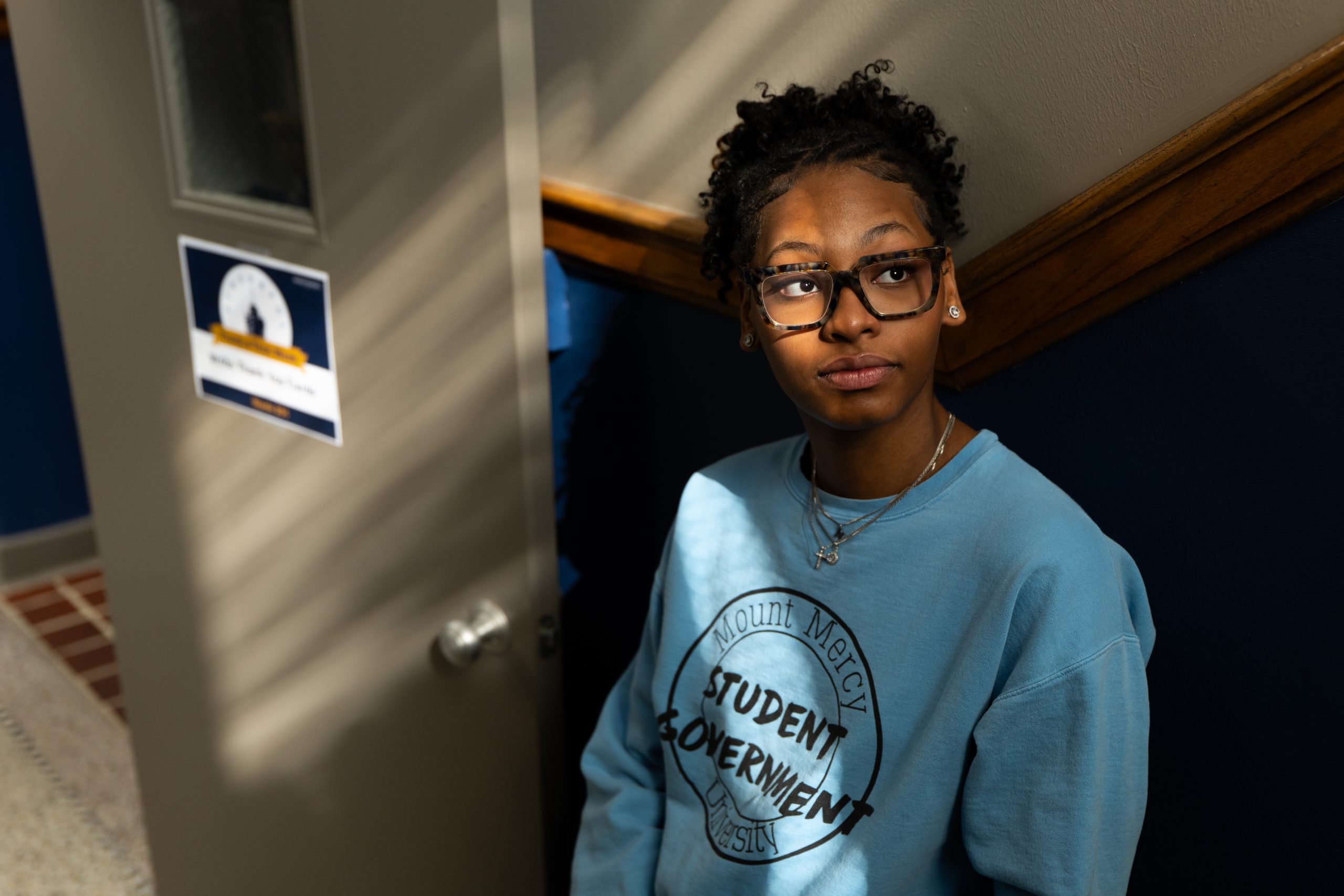
    “Honestly, this was probably the biggest student concern,” said Nasharia Patterson, student government president at Mount Mercy, who was wearing a brace on her wrist from an awkward back tuck basket catch during cheer practice. Keeping the athletics teams “gives us a piece of Mount Mercy specifically to just hold on to.”

    Among alumni, meanwhile, “there’s mixed feelings” about what’s happening to their alma mater, said Sarah Watson, a leadership development consultant who graduated from Mount Mercy in 2008.

    Still, she said, “I know the great challenges that higher ed is facing right now. It’s not just Mount Mercy. It’s not just St. Ambrose. It’s the bigger schools, too. Enrollment numbers have dropped. The desire to go to a traditional four-year college is just not quite what it used to be.”

    For Mount Mercy, which was founded by an order of nuns in 1928, Watson said, “If we don’t do this, what’s the alternative? We want to be around for another hundred years.”

    After all, said Novak, the St. Ambrose president, “to watch universities close across the heartland because we can’t make it work will leave our communities fallow.”

    Carroll, of the Catholic colleges and university association, said that many other religiously affiliated institutions are closely watching what’s happening at St. Ambrose and Mount Mercy.

    “It’s a leap of faith,” she said. “And who better to take a leap of faith than a Catholic institution?”

    Religiously affiliated colleges that have closed or merged, or announced that they will merge, since 2020

    Alderson Broaddus University, West Virginia, Baptist

    Alliance University, New York, Christian

    Ancilla College, Indiana, Catholic

    B. H. Carroll Theological Institute, Texas, Baptist

    Birmingham-Southern College, Alabama, Methodist

    Bloomfield College, New Jersey, Presbyterian

    Cabrini University, Pennsylvania, Catholic

    Cardinal Stritch University, Wisconsin, Catholic

    Chatfield College, Ohio, Catholic

    Clarks Summit University, Pennsylvania, Baptist

    College of Saint Rose, New York, Catholic

    Compass College of Film & Media, Michigan, Christian

    Concordia College New York, Lutheran

    Concordia University, Oregon, Lutheran

    Eastern Nazarene College, Massachusetts, Christian

    Finlandia University, Michigan, Lutheran

    Fontbonne University, Missouri, Catholic

    Holy Family College, Wisconsin, Catholic

    Holy Names University, California, Catholic

    Iowa Wesleyan University, Iowa, Methodist

    Judson College, Alabama, Baptist

    Limestone University, South Carolina, Christian

    Lincoln Christian University, Illinois, Christian

    MacMurray College, Illinois, Methodist

    Magdalen College, New Hampshire, Catholic

    Martin Methodist College, Tennessee, Methodist

    Marymount California University, California, Catholic

    Mount Mercy University, Iowa, Catholic

    Multnomah University, Oregon, Christian

    Nebraska Christian College, Nebraska, Christian

    Notre Dame College of Ohio, Catholic

    Ohio Valley University, West Virginia, Christian

    Presentation College, South Dakota, Catholic

    Rosemont College, Pennsylvania, Catholic

    St. Louis Christian College, Missouri, Christian

    St. Augustine College, Illinois, Episcopal

    St. John’s University Staten Island campus, New York, Catholic

    University of Saint Katherine, California, Orthodox Christian

    Ursuline College, Ohio, Catholic

    Wave Leadership College, Virginia, Christian

    Wesley College, Delaware, Methodist

    SOURCE: Hechinger Report analysis of news coverage and federal data.

    Back to story

    Contact writer Jon Marcus at 212-678-7556 or [email protected].

    This story about religious colleges and universities was produced by The Hechinger Report, a nonprofit, independent news organization focused on inequality and innovation in education. Sign up for our higher education newsletter. Listen to our higher education podcast.

    The Hechinger Report provides in-depth, fact-based, unbiased reporting on education that is free to all readers. But that doesn’t mean it’s free to produce. Our work keeps educators and the public informed about pressing issues at schools and on campuses throughout the country. We tell the whole story, even when the details are inconvenient. Help us keep doing that.

    Join us today.

    Source link

  • To fill “education deserts,” some states want community colleges to offer bachelor’s degrees

    To fill “education deserts,” some states want community colleges to offer bachelor’s degrees

    MUSCATINE, Iowa — The suspect moved menacingly toward her, but Elexiana Oliva stood her ground, gun drawn and in a half crouch as she calmly tried to talk him down.

    The confrontation wasn’t real, and neither was the gun. But the lesson was deadly serious.

    Oliva is a criminal justice major at Muscatine Community College in this largely agricultural community along the Mississippi River. She was in a simulation lab, with that scenario projected on a screen as classmates watched, spellbound.

    Just 18, Oliva is determined to become a police detective, a plan that includes earning a bachelor’s degree after she finishes her associate degree here. But she’ll have to go somewhere else to do it — likely, in her case, to a university in Texas.

    Oliva and her classmates here are among the 13 million adults across the country who the American Council on Education estimates live beyond a reasonable commute from the nearest four-year university — a problem getting worse as private colleges in rural places close, public university campuses merge or shut down and rural universities cut majors and programs.

    “It’s not our fault that we grew up in a place where there’s not a lot of big colleges and big universities,” Oliva said.

    Related: Interested in innovations in higher education? Subscribe to our free biweekly higher education newsletter.

    Iowa has joined a growing number of states that are considering letting community colleges like this one offer bachelor’s degrees, or where community colleges have already started adding them, as a way of filling these so-called rural higher education deserts and training workers in rural places for jobs in fields where there are growing shortages.

    “It would be a big game-changer, especially for those who have a low income or a medium income and want to go and further our education,” Oliva said.

    Downtown Muscatine, Iowa. About an hour from the nearest public university, Muscatine could benefit from a proposal to let community colleges offer bachelor’s degrees. Credit: Mike Rundle for The Hechinger Report

    About half of states allow community colleges to offer bachelor’s degrees. In Iowa, which is among the half that don’t, lawmakers have commissioned a study to determine whether it should add bachelor’s degrees in some programs at the state’s 15 community colleges. An interim report is due in May.

    A similar proposal in Illinois is backed by that state’s governor, JB Pritzker, who has said the move would make it easier and more affordable for residents to get degrees — “particularly working adults in rural communities.” Three-quarters of community college students in Illinois said they would pursue bachelor’s degrees if they could do it on the same campus, according to a survey released by Pritzker’s office.

    Kentucky’s legislature is considering converting one technical and community college into a four-year institution offering both technical and bachelor’s degrees. Some Wyoming community colleges have also added a limited number of bachelors degrees.

    And in Texas, Temple College will open a center in June where students at the two-year public institution will be able to earn bachelor’s degrees through partner Texas A&M University-Central Texas, including in engineering technology with a concentration in semiconductors.

    “When you can offer university classes on community college campuses, that makes a world of difference” to rural students, said Christy Ponce, the president of Temple.

    What’s been blocking many of these students from continuing their educations, Ponce said, “is the sheer distance. There’s not a public university option within an hour or more away. And affordability and transportation barriers are huge issues.”

    Fewer than 25 percent of rural Americans hold bachelor’s degrees or higher, according to the National Center for Education Statistics, compared to the national average of 33 percent. And the gap is getting wider, the U.S. Department of Agriculture finds in its most recent analysis of this.

    Related: ‘Easy to just write us off’: Rural students’ choices shrink as colleges slash majors

    Significantly fewer students in rural places than in urban areas believe that they can get degrees, a Gallup survey for the Walton Family Foundation found, citing the lack of nearby four-year universities as a principal reason.

    In those states that already allow community colleges to offer bachelor’s degrees, they’re often limited to certain high-demand fields, such as teaching and nursing. Even as this idea has spread, America’s 960 public community colleges collectively confer only about 1 percent of bachelor’s degrees each year, the American Association of Community Colleges reports.

    In many places, what’s stopping them from giving out more is opposition from four-year universities and colleges, many of which are increasingly hard up for students as the number of 18-year-olds begins to fall — a phenomenon enrollment managers have dubbed the demographic cliff.

    That Illinois proposal, for example, is stalled in committee after several public and private university presidents issued a statement opposing it. Negotiations are continuing.

    While community colleges in California have been allowed since 2021 to offer bachelor’s degrees, several have been blocked from adding four-year programs that the California State University System contends it already offers. An independent mediator has been brought in to resolve the impasse.

    Related: Fewer students and fewer dollars mean states face closing public universities and colleges 

    And while the two-year, public College of Western Idaho will launch a bachelor’s degree in business administration in the fall, it’s doing so only over the objections of Boise State University, which said it “could hurt effective and efficient postsecondary education in Idaho, cannibalizing limited resources available to postsecondary education and duplicating degree offerings.”

    Community colleges also need more students; their enrollment declined by 39 percent from 2010 to 2021, and they face that same impending demographic cliff. Those that add bachelor’s degrees increase their full-time enrollment from 11 percent to 16 percent, research conducted at the University of Michigan has found.

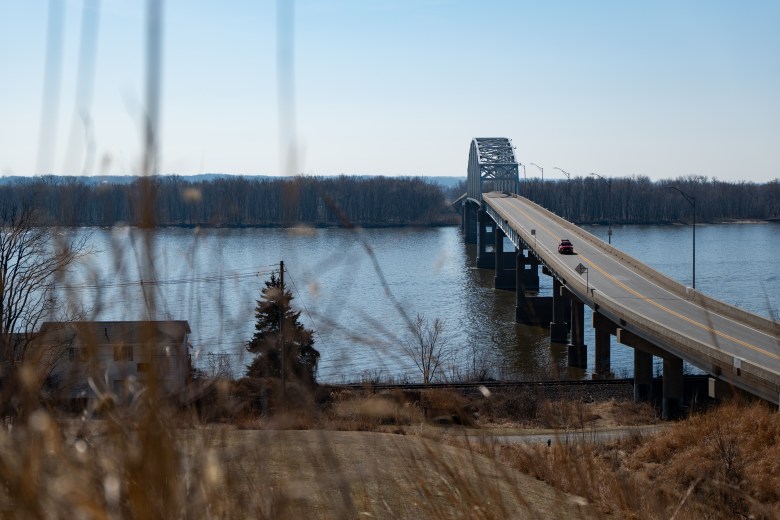
    The Norbert F. Beckey Bridge, seen from the Mark Twain Overlook in Muscatine, Iowa, which links Muscatine with Rock Island County, Illinois, across the Mississippi River. Credit: Mike Rundle for The Hechinger Report

    The principal impetus for the largely bipartisan push to offer bachelor’s degrees at community colleges, however, is to train more workers for those fields in which there are shortages.

    “What I think is misunderstood is that, in general, these are not like the baccalaureates that conventional four-year institutions offer,” said Davis Jenkins, a senior research scholar at the Community College Research Center at Teachers College, Columbia University. (The Hechinger Report, which produced this story, is an independent unit of Teachers College.)

    Related: In this tiny and shrinking Mississippi county, getting a college degree means leaving home behind

    Bachelor’s degrees at community colleges, said Jenkins, “meet an economic need for bachelor’s degree graduates that isn’t being met by other institutions.”

    That includes by helping rural workers move up in their jobs without leaving home. “It’s all about serving our workforce needs,” said Iowa state Rep. Taylor Collins, Republican chair of Iowa’s House Committee on Higher Education, who requested the study into whether bachelor’s degrees should be offered at community colleges in that state. “It’s a way to upskill our workforce.”

    In his own district, south of Muscatine, “we’re kind of on an island where we only have the community college” — especially since the closing of nearby private Iowa Wesleyan University in 2023. “There are a lot of students who are place-bound. There are a lot of students who want to live locally” and not move away to get a bachelor’s degree.

    That’s a focus of the ongoing study, said Emily Shields, executive director of Community Colleges for Iowa, which is conducting it. “Sometimes people have ties, responsibilities, jobs, family things, where moving to where there is a degree available isn’t an option for them,” Shields said.

    Sure, she said, rural students can take courses online. But “you’re not getting the student services, you’re not getting activities, you’re not getting the other sort of enrichment support and belonging that a lot of our students, I think, are looking for.” 

    Many also say they’re looking for the kind of individual attention they get in their hometown and at a community college such as the one in Muscatine, which has an enrollment of 1,800.

    Related: Tribal colleges win reprieve from federal staff cuts

    Shiloh Morter stayed in his hometown of Muscatine, Iowa, to go to community college. Among the advantages, he says: “The sunsets here are pretty nice. I can tell you, there’s not a whole lot of other places that have clouds like we do.” Credit: Mike Rundle for The Hechinger Report

    Shiloh Morter bikes to campus on all but the very coldest days. He plans to become an engineer, but “figured I would save the money and go to community college and try and branch out and develop better habits” first, said Morter, who is 20.

    In the automotive technology garage off the main corridor of the small school, cars were lined up neatly with their hoods popped. Nursing students worked on anatomically correct crash test dummy-style “patients.”

    Twenty-year-old Mykenah Pothoff enrolled at the college when it debuted a registered nursing program, saving herself money on tuition and a nearly hourlong drive, each way, to the University of Iowa. She also was worried about “just, like, finding my way around” the university, which has more than 30,000 students.

    Jake Siefers is majoring in psychology at an Iowa community college. If he could stay and get his bachelor’s degree in the same place, “it would be huge,” he says. “There’s a lot of untapped human potential” in rural places that could benefit from more access to higher education. Credit: Mike Rundle for The Hechinger Report

    Jake Siefers, 32, is a psychology major planning to go on to get bachelor’s and master’s degrees. Siefers said he hopes to help other people who, like him, are recovering from alcoholism, and for whom he said there are too few services in Iowa. So he came home to Muscatine to start working toward an associate degree at the community college.

    I could afford it, and it was close and I actually know a lot of people that work here,” said Siefers. “It’s great coming in here and being, like, ‘Hey, I went to high school with you, and you work in the office.’ I mean, that’s everyone in Iowa, right?”

    If he could stay and get his bachelor’s degree in Muscatine, “it would be huge,” he said. “There’s a lot of untapped human potential” in rural places that could benefit from the kind of access to a higher education that is now more limited, said Siefers. 

    Letting students like them finish bachelor’s degrees near where they live “would make it easier for everybody,” said Jaylea Perez, 19, another psychology major who also plans to earn one.

    Jaylea Perez is enrolled in community college in Iowa but eventually hopes to earn a bachelor’s degree in psychology. Adding bachelor’s degrees at community colleges “would make it easier for everybody,” she says. Credit: Mike Rundle for The Hechinger Report

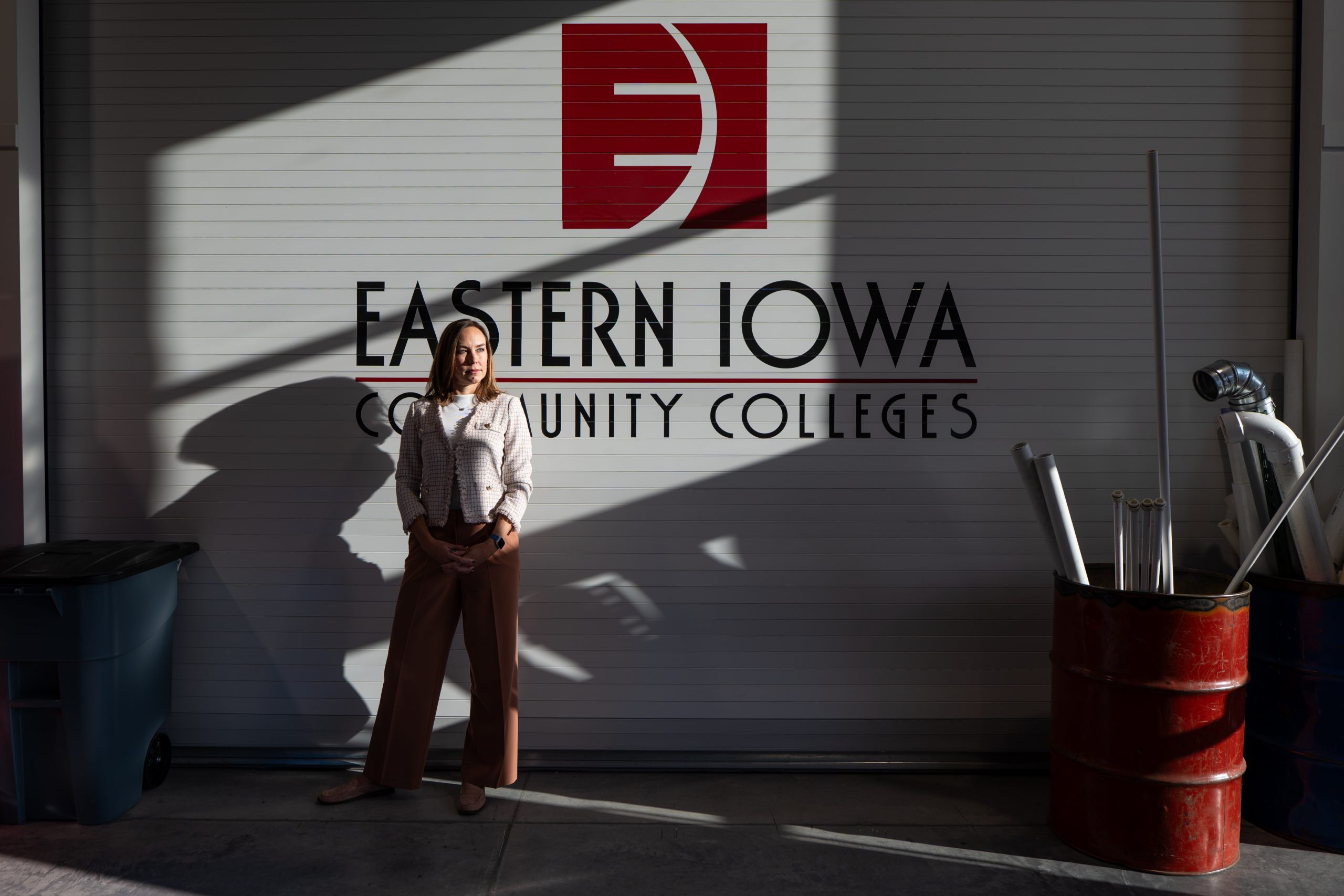
    Simply having bachelor’s degrees available would make rural students aspire to them who otherwise might not, said Naomi DeWinter, president of Muscatine Community College.

    “Everything opens up to them,” said DeWinter, in a coffee shop across the highway from the Walmart.

    She sees the most potential among people already working, such as paraprofessionals in schools who want to become teachers; a state job board lists nearly 1,000 vacancies in Iowa for teachers.

    DeWinter recalled a graduate so exemplary that he was featured in a promotional video, who after earning his associate degree started substitute-teaching while commuting in his free time to the University of Iowa to get his bachelor’s degree — one course at a time.

    “He said, ‘That’s how I’m juggling my work, my family and the affordability,’ ” she said. “His whole career is going to be over before he’s a [full-time] teacher. I feel as though we failed him.”

    Like the substitute teacher, students said they want to stay in Muscatine, despite those limits. They like the peace and quiet compared to cities — hardly anyone ever honks, they noted — and the sense of community evident among the friends who run into each other at the Hy-Vee.

    “We don’t have the best view of the Milky Way, but we for sure definitely don’t have a bad one,” said Shiloh Morter, ticking down a list of advantages to living on the sweeping plain carpeted with cultivated fields and dotted with barns and silos. “And, yeah, the sunsets here are pretty nice. I can tell you, there’s not a whole lot of other places that have clouds like we do.”

    Contact writer Jon Marcus at 212-678-7556 or [email protected].

    This story about rural higher education and community college bachelor’s degrees was produced by The Hechinger Report, a nonprofit, independent news organization focused on inequality and innovation in education. Sign up for our higher education newsletter. Listen to our higher education podcast.

    The Hechinger Report provides in-depth, fact-based, unbiased reporting on education that is free to all readers. But that doesn't mean it's free to produce. Our work keeps educators and the public informed about pressing issues at schools and on campuses throughout the country. We tell the whole story, even when the details are inconvenient. Help us keep doing that.

    Join us today.


    Source link

  • Pell Grant Dollars Are Left Unclaimed: What That Means for Students and States

    Pell Grant Dollars Are Left Unclaimed: What That Means for Students and States

    Title: Pell Dollars Left on the Table

    Authors: Louisa Woodhouse and Bill DeBaun

    Source: National College Attainment Network

    Pell Grants have long supported low-income students as they pursue higher education, increasing the financial capabilities and academic opportunities afforded to students. However, receiving federal financial aid through Pell Grants is dependent on filing the Free Application for Federal Student Aid (FAFSA), which can serve as a barrier to students.

    The National College Attainment Network (NCAN) has published a report on the unclaimed Pell Grants left on the table by high school graduates. Approximately 830,000 Pell Grant-eligible students did not complete FAFSA in the 2024 cycle, resulting in nearly $4.4 billion in unclaimed Pell Grant awards. These unclaimed funds are valuable to both students and states, with the ability to further the educational pursuits of low-income students and strengthen state economies.

    NCAN has run reports detailing the value of unclaimed Pell Grants over the past four years. Typically, nearly 60 percent of high school graduates complete the FAFSA by June 30, with completion rates trailing off markedly as students begin their summer.

    However, due to the technical challenges and delayed launch of FAFSA that occurred in the 2024 cycle, by the end of June, only 50 percent of high school graduates had completed the form. By August 30, 57 percent of students had filed the FAFSA, decreasing the amount of financial aid left on the table. The implications are clear: hindrance to the financial aid application process, whether that be through technical difficulties, decreased assistance, or short staffing, can result in many students losing access to Pell Grant funds.

    The impact of lower FAFSA completion rates, and therefore more unclaimed Pell Grants, is not felt exclusively by students but by states as well. In 2024, students in California and Texas each left nearly $550 million in Pell Grant awards unclaimed. While these states lose the most when FAFSA completion rates are low, they also stand to gain the most if completion rates increase.

    Analysis from NCAN finds that if FAFSA completion rates had increased by an additional 10 percentage points this year, California would have seen a $145 million increase in Pell Grant awards while Texas would have received an additional $130 million. The additional federal aid could translate into more students attending postsecondary institutions, filling workforce gaps and strengthening the states’ economies.

    In establishing the significance of increasing FAFSA filing rates for low-income students, NCAN offers commentary on how states can better support students, especially in the wake of potential policy changes directed at higher education. States can fund FAFSA completion efforts, providing additional in-school and online resources for students to access when filing. Additionally, FAFSA data sharing among states may enable high school counselors and local college access partners to better target students that could benefit from additional assistance.

    To read more about unclaimed Pell Grants and the role states can play on bolstering FAFSA completion rates, click here.

    —Julia Napier


    If you have any questions or comments about this blog post, please contact us.

    Source link

  • In some states, colleges face a double dose of DOGE

    In some states, colleges face a double dose of DOGE

    Oklahoma wants some of its less-expensive universities to cut travel and operational costs, consolidate departments and reduce energy use — all in the name of saving money.

    Already, earning a degree at one of these regional institutions is relatively inexpensive for students, costing in total as much as $15,000 less per year than bigger state universities in Oklahoma. And the schools, including Southeastern Oklahoma State University and the University of Central Oklahoma, graduate more teachers and nurses than those research institutions. Those graduates can fill critically needed roles for the state.

    Still, state policymakers think there are more efficiencies to be found.

    Higher education is one of the specific areas targeted by a new state-run agency with a familiar name, with the goal of “protecting our Oklahoma way of life,” Republican Gov. Kevin Stitt said in the first DOGE-OK report this spring. The Oklahoma Division of Government Efficiency, created around the same time as the federal entity with a similar title, counts among its accomplishments so far shifting to automated lawn mowers to cut grass at the state capital, changing to energy-efficient LED lighting and cutting down on state government cell phone bills. The Oklahoma governor’s office did not respond to a request for comment about this effort.

    Oklahoma is one of about a dozen states that has considered an approach similar to the federal DOGE, though some state attempts were launched before the Trump administration’s. The federal Department of Government Efficiency, established the day Trump took office on Jan. 20, has commanded deep cuts to federal spending and the federal workforce, with limited justification.

    As academia becomes a piñata for President Donald Trump and his supporters, Republican state lawmakers and governors are assembling in line: They want to get their whacks in too.

    Related: Interested in more news about colleges and universities? Subscribe to our free biweekly higher education newsletter.

    Beyond Oklahoma, Florida Gov. Ron DeSantis launched FL DOGE in February, with a promise to review state university and college operations and spending. Republicans in the Ohio statehouse formed an Ohio DOGE caucus. One of the Iowa DOGE Task Force’s three main goals is “further refining workforce and job training programs,” some of which are run through community colleges, and its members include at least two people who work at state universities.

    The current political environment represents “an unprecedented attack on higher education,” said Veena Dubal, a law professor at the University of California, Irvine, and general counsel for the American Association of University Professors.

    The state-level scrutiny comes atop those federal job cuts, which include layoffs of workers who interact with colleges, interdepartmental spending cuts that affect higher education and the shrinking of contracts that support research and special programs at colleges and universities. Other research grants have been canceled outright. The White House is pursuing these spending cuts at the same time as it is using colleges’ diversity efforts, their handling of antisemitism and their policies about transgender athletes to force a host of changes that go beyond cost-cutting — such as rules about how students protest and whether individual university departments require more supervision.

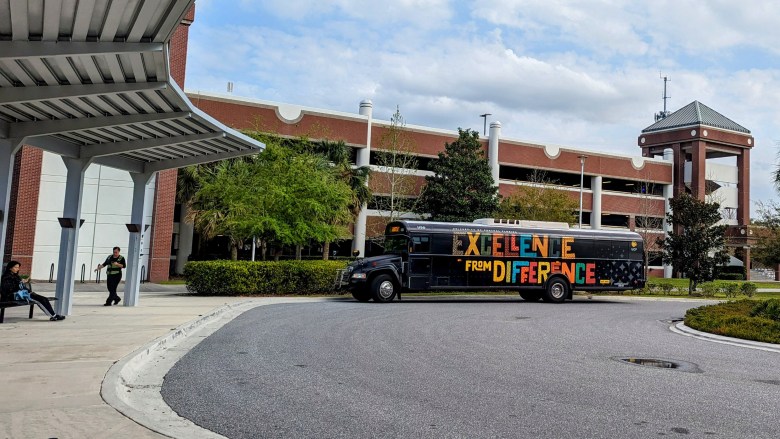
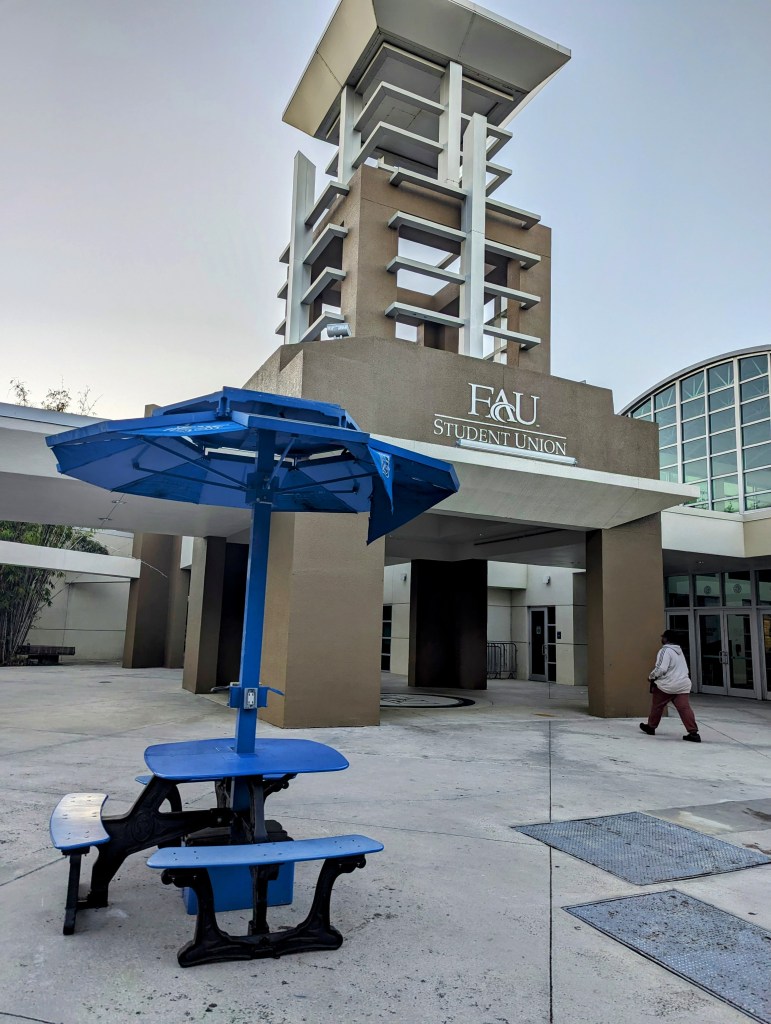
    Florida Atlantic University students Zayla Robinson, Aadyn Hoots and Meadow Swantic (from left to right) sit together at the Boca Raton campus. Swantic objects to Florida’s efforts to dictate what subjects universities can or can’t teach: “You can’t erase history.” Credit: Michael Vasquez for The Hechinger Report

    Higher education, which relies heavily on both state dollars and federal funding in the form of student loans and Pell grants, research grants and workforce training programs, faces the prospect of continued, and painful, budget cuts.

    “Institutions are doing things under the threat of extinction,” Dubal said. “They’re not making measured decisions about what’s best for the institution, or best for the public good.”

    For instance, the Trump administration extracted a number of pledges from Columbia University as part of its antisemitism charge, suspending $400 million in federal grants and contracts as leverage. This led campus faculty and labor unions to sue, citing an assault on academic freedom. (The Hechinger Report is in an independent unit of Teachers College.) Now Harvard faces a review of $9 billion in federal funding, also over antisemitism allegations, and the list of universities under similar scrutiny is only growing.

    Related: The Hechinger Report’s Tuition Tracker helps reveal the real cost of college

    Budget cuts are nothing new for higher education — when a recession hits, it is one of the first places state lawmakers look to cut, in blue states or red. One reason: Public universities can sometimes make up the difference with tuition increases.

    What DOGE brings, in Washington and statehouses, is something new. The DOGE approach is engaging in aggressive cost-cutting that specifically targets certain programs that some politicians don’t like, said Jeff Selingo, a special adviser to the president at Arizona State University.

    “It’s definitely more political than it is fiscal or policy-oriented,” said Selingo, who is also the author of several books on higher education.

    “Universities haven’t done what certain politicians wanted them to do,” he added. “This is a way to control them, in a way.”

    The current pressure on Florida colleges extends far beyond budget matters. DeSantis has criticized college campuses as “intellectually repressive environments.” In 2021, Florida state lawmakers passed a law, signed by the governor, to fight this perceived ideological bent by requiring a survey of public university professors and students to assess whether there is enough intellectual diversity on campus.

    A diversity-themed bus transports students at the University of Central Florida’s Orlando campus. Credit: Michael Vasquez for The Hechinger Report

    At New College in Sarasota, DeSantis led an aggressive cultural overhaul to transform the college’s atmosphere and identity into something more politically conservative. The governor has cited Hillsdale College, a conservative private Christian institution in Michigan, as a role model.

    Faculty and students at New College sued. Their complaints included allegations of academic censorship and a hostile environment for LGBTQ+ students, many of whom transferred elsewhere. One lawsuit was ultimately dropped. Since the takeover, the college added athletics programs and said it has attracted a record number of new and transfer students.

    Related: A case study of what’s ahead with Trump DEI crackdowns

    Across America, Republicans control both the legislature and the governor’s mansion in 23 states, compared with 15 states fully controlled by Democrats. In those GOP-run states, creating a mini-DOGE carries the potential for increased political might, with little oversight.

    In Florida, “state DOGE serves as an intimidation device,” one high-ranking public university administrator told The Hechinger Report. The administrator, who asked not to be named for fear of retribution, said “there’s also just this atmosphere of fear.”

    In late March, university presidents received a letter signed by the “DOGE Team” at the governor’s office. The letter promised a thorough review by FL DOGE officials, with site visits and the expectation that each college appoint a designated liaison to handle FL DOGE’s ongoing requests.

    The letter highlighted some of the items FL DOGE might request going forward, including course codes, descriptions and syllabi; full detail of all centers established on campus; and “the closure and dissolution of DEI programs and activities, as required by law.”

    The student union at Florida Atlantic University in Boca Raton. Florida Gov. Ron DeSantis, a Republican, launched FL DOGE in February, promising to review state university and college operations and spending. Credit: Michael Vasquez for The Hechinger Report

    The state did not respond to a question about whether FL DOGE is designed to attack higher education in the state. Molly Best, the deputy press secretary, noted that FL DOGE is now up and running, and cities and counties are also receiving letters requesting certain information and that the public will be updated in the future. 

    DOGE in Florida also follows other intervention in higher education in the state: Florida’s appointed Board of Governors, most of whom are chosen by the governor, removed dozens of courses from state universities’ core curriculum to comply with the Stop WOKE Act, a state law that took effect in 2022. The law, which DeSantis heavily promoted, discourages the teaching of concepts such as systemic racism or sexism. The courses removed from Florida’s 12 state universities were primarily sociology, anthropology and history courses.

    “You can’t erase history,” said Meadow Swantic, a criminal justice major at Florida Atlantic University, a public institution, in an interview at its Boca Raton campus. “There’s certain things that are built on white supremacy, and it’s a problem.”

    Fellow Florida Atlantic student Kayla Collins, however, said she has noticed some professors’ liberal bias during class discussions.

    “I myself have witnessed it in my history class,” said Collins, who identifies as Republican. “It was a great history class, but I would say there were a lot of political things brought up, when it wasn’t a government class or a political science class.” 

    At the University of Central Florida in Orlando, political science major Liliana Hogan said she had a different experience of her professors’ political leanings.

    “You hear ‘people go to university to get woke’ or whatever, but actually, as a poli-sci student, a lot of my professors are more right-wing than you would believe,” Hogan said. “I get more right-leaning perspectives from my teachers than I would have expected.” Hogan said.   

    Another UCF student, Johanna Abrams, objected to university budget cuts being ordered by the state government. Abrams said she understands that tax dollars are limited, but she believes college leaders should be trusted with making the budget decisions that best serve the student body.

    “The government’s job should be providing the funding for education, but not determining what is worthy of being taught,” Abrams said. 

    Related: Inside Florida’s ‘underground lab’ for far-right education policies

    Whatever their missions and attempts at mimicry, state-level DOGE entities are not necessarily identical to the federal version.

    For instance, in Kansas, the Committee on Government Efficiency, while inspired by DOGE, is in search of ideas from state residents about ways to make the state bureaucracy run better rather than imposing its own changes. A Missouri Senate portal inspired by the federal DOGE works in a similar way. Yet the federal namesake isn’t taking suggestions from the masses to inform its work.  

    And at the federal level, then-DOGE chief Elon Musk in February emailed workers, asking them to respond “to understand what they got done last week,” he posted on X. “Failure to respond will be taken as a resignation.” Employees were asked to reply with a list of five accomplishments.

    The Ohio DOGE Caucus noted explicitly it won’t be doing anything like that.

    “We’re not going to be emailing any state employees asking them to give us five things they worked on throughout the week,” Ohio state Rep. Tex Fischer, a Republican, told a local radio station. “We’re really just trying to get like-minded people into a room to talk about making sure that government is spending our money wisely and focusing on its core functions that we all agree with.”

    Contact editor Nirvi Shah at 212-678-3445, securely on Signal at NirviShah.14 or via email at [email protected].

    This story about DOGE cuts was produced by The Hechinger Report, a nonprofit, independent news organization focused on inequality and innovation in education. Sign up for the Hechinger newsletter.

    The Hechinger Report provides in-depth, fact-based, unbiased reporting on education that is free to all readers. But that doesn’t mean it’s free to produce. Our work keeps educators and the public informed about pressing issues at schools and on campuses throughout the country. We tell the whole story, even when the details are inconvenient. Help us keep doing that.

    Join us today.

    Source link