Tag: step

  • Kentucky Libraries Step Up to Keep Kids Out of Foster Care System – The 74

    Kentucky Libraries Step Up to Keep Kids Out of Foster Care System – The 74


    Get stories like this delivered straight to your inbox. Sign up for The 74 Newsletter

    When children are unnecessarily removed from their homes, experts say the separation puts them at risk of chronic mental and physical ailments. 

    With that in mind, four Kentucky libraries are launching programs to keep families together, well resourced and educated, aided with $200,000 in grant money from the national nonprofit Youth Villages

    Libraries in Jackson, Johnson, Marshall and Spencer counties received around $45,000 each for a variety of programs to help parents meet their children’s needs. 

    Britany Binkowski, the executive director of the Youth Village initiative New Allies, said libraries are a “low stigma, high access point of contact for all communities” and make sense for grassroots outreach. 

    “They pretty consistently exist in most counties where they can be reached by lots of families, especially those in rural areas, and they’re (places) people trust to get information, to get access to resources,” she said. “They don’t carry the stigma, for example, of going to a child welfare department and asking for resources in a way that might feel very vulnerable.”  

    Among other things, the libraries are using the grant month to host trainings on growing food in an apartment setting, teaching parents how to deal with challenging behaviors and how to cook basic recipes, and connecting families to other community resources where they can get car seats and other necessities. 

    Libraries are also a more “natural” place to host visitations for parents who are working toward reunification, Binkowski said. 

    It’s “often not the case” that a child is removed from a home because the parents are outright bad, she said. Most of the time, parents lack the resources to properly feed, clothe or otherwise care for their children, she said. In fact, about 70% of all Child Protective Services allegations are related to neglect and poverty, the Lantern previously reported

    “We see substance use disorder and parents who are struggling with that as a significant driver of entries into foster care — not only in Kentucky, but across the country,” Binkowski said. 

    Other preventable issues contribute to removal, she said, like a parent not being able to buy a car seat or access safe child care. 

    “Things like that can cause safety issues that have to be resolved for a child to remain safe and stable,” Binkowski said. 

    ‘Before there’s a problem, let’s fix it.’ 

    Tammy Blackwell, an author and the director of the Marshall County Public Library, said libraries working in this space is just “logical.”

    “Libraries are already reaching families and just doing a lot of good work giving families a place to be and form bonds,” she said. 

    Tammy Blackwell is an author and the director of the Marshall County Public Library. (Photo provided)

    Marshall County’s grant supported a renovation of the Hardin branch to create a more child-friendly space and funded an eight-week program for mothers of young children called Mom’s Night Out. 

    During the Mom’s Night Out program, which will start the first week in September, mothers who are referred by Court Appointed Special Advocates will gather weekly and have a meal together. During the meal, representatives from the Marshall County Extension Office and the health department will lead discussions about stress management, home upkeep and how to cook recipes with staples handed out at food distribution centers like rice and beans. 

    Because this is grant-funded, it’s not affected by recent changes to the Supplemental Nutrition Assistance Program (SNAP) program, Blackwell said. Congress recently passed the Big Beautiful Bill Act, which cut funding for the SNAP Education program, among other things. 

    The Mom’s Night Out discussions will be in a “very non-judgmental way, and not in a lecturing kind of way, but as a conversation and getting those families very comfortable in that space, very comfortable with library staff, comfortable with community partners who they may need to call on at some point,” Blackwell explained. 

    “We’re hoping that they build a bond with each other; other people with similar lived experiences, and to really give them a sense of community and resources in order to help the mothers thrive, so that the children may thrive,” she added. “I love that it’s ‘before there’s a problem, let’s fix it.’” 

    The first round of the program will only include mothers — Blackwell hopes between 12 to 15 — who have children of preschool to early elementary school age. Should it be successful and receive funding for a repeat, she’d like to expand it to fathers as well. 

    “There’s been some coverage of how many kids in Kentucky are in either foster or kinship care situations,” Blackwell said. “It’s a lot of kids, and that really impacts their ability to be successful in life. And anything that we can do to strengthen those families and give those kids, then we need to at least try. And I think libraries are in a perfect position to really make a difference.” 

    The 2024 Kids Count report, from Kentucky Youth Advocates and the Annie E. Casey Foundation, showed there were nearly 46,000 youth in foster care in the state from 2021-2023. In that same time period, the number of children leaving foster care and reunited with their families dropped to 32%. Pre-pandemic, from 2016-2018, it was 36%. 

    Additionally, in 2024 there were around 55,000 Kentucky children being raised with a relative in a kinship care arrangement. 

    The Department for Community Based Services came up with the idea to partner with libraries, Binkowski said. Lesa Dennis, the DCBS commissioner, wasn’t available for an interview but said in a statement that “by meeting families where they are, we’re building pathways to stability, resilience and well-being so no family has to face challenges alone.” 

    Removal is ‘traumatizing’ 

    Binkowski, who previously worked as Assistant General Counsel for the Tennessee Department of Children’s Services, said that “a foster care intervention, even if necessary, is traumatizing to everyone involved.” It can damage bonds between parents and their children and upend daily routine and connections, she said. 

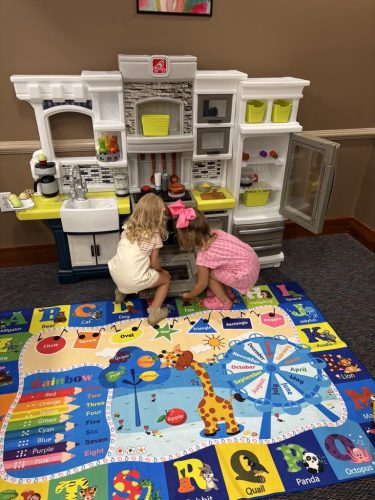
    Children play in the Marshall County library’s Hardin branch. (Photo provided)

    “We have a substantial body of evidence that tells us that children do best when they are with their families of origin — when it can be safe,” she said. “We know that connections to biological family, knowing where you came from, feeling like you belong — those are really critical emotional stabilization and safety factors that support children’s growth and development.” 

    Experiencing brokenness in the home, abuse or neglect are Adverse Childhood Experiences, which refers to traumas or stressors in a person’s life before their 18th birthday. They include, but are not limited to, parental divorce, abuse, parental incarceration, substance use issues in the home and more. The more such experiences a person has, the more likely they are to have poor health, lower education and economic hardships. Childhood trauma also cost Kentucky around $300 million a year

    “Enough stressors on a child at early ages without protective capacities to keep them from having negative outcomes can literally take years off of their lives,” Binkowski said. “So, while we don’t want children to experience abuse and neglect … we also don’t want them unnecessarily being removed from their home if the issues are not creating those kinds of negative impacts and we can stabilize a family without requiring removal.”

    Kentucky Lantern is part of States Newsroom, a nonprofit news network supported by grants and a coalition of donors as a 501c(3) public charity. Kentucky Lantern maintains editorial independence. Contact Editor Jamie Lucke for questions: [email protected].


    Get stories like these delivered straight to your inbox. Sign up for The 74 Newsletter

    Source link

  • US study abroad takes major step to protect federal funding

    US study abroad takes major step to protect federal funding

    Following a record-breaking advocacy campaign that saw 20,636 letters sent to Congress, the House of Representatives has set out drastically modified cuts to US cultural exchanges, which had been at risk of “decimation” under Trump’s previous proposed budget.  

    The new plans will shrink the funding cuts to the Bureau of Educational and Cultural Affairs (ECA) to 5.5% next year, as compared to the 93% initially announced in the proposed FY2026 budget.  

    Though the proposals still amount to a $41 million cut to current funding, “it’s nowhere close to the doomsday scenario of the [President’s budget request]” executive director of the Alliance for International Exchange Mark Overmann told The PIE News. 

    “This means that the conversation about FY26 is completely new. The President’s budget can be thrown out the window,” he said, welcoming the “significant show of support for exchanges from the House and a big win for us”. 

    The plans – laid out in the House Appropriations Bill on July 14 – propose a 22% cut to overall State Department funding and are the latest step in the FY26 budget process, expected to be finalised late this year.  

    The new legislation earmarks over $700m for ECA, a “surprising” figure and a vote of confidence in the value of educational and cultural exchanges. This includes $287 million for Fulbright.  

    “And this mark from the House means that our community’s advocacy has been heard,” said Overmann.  

    This means that the conversation about FY26 is completely new. The President’s budget can be thrown out the window.

    Mark Overmann

    Though there are still many steps to go, including a review by the Senate, the unexpected move is an encouraging development and a rare piece of good news for stakeholders who expected the worst after Trump’s “draconian” proposals this May. 

    While important, the President’s budget request has no sway over the final allocations, with stakeholders emphasising at the time of its release that it amounted to nothing more than a “wish list” and was not binding.  

    The true figures will be drawn from the House and Senate Appropriations, with the latter expected imminently.  

    Traditionally, the Senate has come in higher than the house for ECA funding, with stakeholders hopeful that the trend will continue this year.  

    The news has provided a glimmer of hope during an uncertain time for US study abroad, with 40 ECA employees caught up in the Trump administration’s mass layoffs of State Department staff last week.  

    Source link

  • The Supreme Court made your rights harder to defend — Congress must now step up

    The Supreme Court made your rights harder to defend — Congress must now step up

    This essay was originally published in The Hill on May 8, 2025.


    From free speech rights and desegregation to gun rights and religious freedoms, civil rights litigation has long been a cornerstone of personal liberty in America. But in February, the Supreme Court issued an opinion that will make it harder for us as Americans to vindicate our constitutional rights when the government violates them.

    In Lackey v. Stinnie, a group of Virginia drivers challenged a state law that punished people for failing to pay court fees by automatically suspending their driver’s licenses. The plaintiffs secured a preliminary injunction — a court order issued early in a case to prevent potential harm while it is litigated in full — allowing them to keep their licenses. Virginia did not appeal that ruling, and before the case went to trial, the legislature changed the law and reinstated any licenses that had been suspended under it.

    In cases alleging violations of constitutional rights, a federal statute preempts the general rule that litigants pay their own fees and costs by allowing “prevailing” parties to recover attorney’s fees from the government actor who violated their rights. But in this case, the federal district court held the drivers had not in fact “prevailed” given that the case did not progress to a final conclusion, making them ineligible to recover attorney’s fees. This flew in the face of what courts and litigators had understood the law to be for decades.

    The case eventually made its way to the Supreme Court to determine what “prevailing” meant in federal law and whether the drivers were entitled to reimbursement. The court, to the disappointment of advocates for civil rights and liberties, held that plaintiffs who do not obtain a final judgment on the merits do not qualify as “prevailing” even if, as with the Virginia drivers, they prevail in getting the government to change the law. 

    Unlike corporate litigation, civil rights cases rarely involve large financial recoveries. In any event, plaintiffs often seek changes to laws or policies rather than monetary gain. Yet these are vital cases, not just for the individuals involved but for the communities they represent, even if they rarely provide enough financial incentive to make private representation feasible — unless attorneys receive compensation after winning the case.

    Congress intended to encourage civil rights litigation by tying fee awards to success, whether through final judgments or preliminary relief. The House Judiciary Committee report on the legislation enacting the attorney’s fees provision noted, “a defendant might voluntarily cease the unlawful practice. A court should still award fees even though it might conclude … that no formal relief, such as an injunction, is needed.” Despite this clear evidence of congressional intent, the court held otherwise.

    Importantly, as the court pointed out, Congress has the power to clarify in the statute that attorney’s fees can be awarded before a final judgement on the merits. Congress must do so. 

    The breadth of amicus briefs submitted in this case — from the ACLU to the Alliance Defending Freedom to the Firearms Policy Coalition — demonstrates that across the ideological spectrum, organizations recognize the critical role awarding attorney’s fees plays in civil rights litigation. 

    As FIRE noted in its amicus brief to the Supreme Court, “Withholding attorney’s fees from victims of these First Amendment violations would be devastating — not just for them individually, but for access to justice more broadly.”

    Congress must enact a simple, clarifying change that will have broad support and ensure all Americans can vindicate their constitutional rights. Justice isn’t free, but we can ensure it remains accessible to all.

    Source link

  • New Jersey City University takes key step to become part of Kean University

    New Jersey City University takes key step to become part of Kean University

    Dive Brief:

    • New Jersey City University is set to become part of nearby Kean University after the two public institutions signed a letter of intent Thursday to combine by June 2026. The merger would be subject to accreditor and regulatory approvals.
    • Under the plan, Kean would assume NJCU’s assets and liabilities and operate the institution as “Kean Jersey City,” the universities said. Executive oversight would fall to Kean’s president, who would appoint a chancellor to lead Kean Jersey City. NJCU will have some representation on Kean’s board of trustees, per the letter.
    • NJCU signaled in March that it planned to pursue a merger with Kean after past years of budgetary struggles and a directive from a state-appointed monitor to find a financial partner.

    Dive Insight:

    In Thursday’s release, Kean and NJCU said that their combination would “preserve NJCU’s mission of serving first-generation, adult and historically underserved students while advancing Kean’s role as the state’s urban research university and a newly designated R2 research university.” 

    Luke Visconti, chair of the NJCU’s trustee board, said Thursday’s letter of intent “provides an important framework for the detailed discussions that will follow.” 

    Still to come are full due diligence, a definitive agreement and a detailed outline for combining the two public universities. That process will be collaborative and “rooted in student and community engagement” so that the merger with Kean celebrates the two “distinct cultures” of the universities, NJCU Interim President Andrés Acebo said in a statement. 

    According to the institutions, an integration planning team with representatives from both universities will begin work immediately, coordinating with New Jersey’s state higher education office. The two universities will develop shared services agreements to streamline operations and boost student success, officials said. 

    Kean is the larger institution of the two, with 13,352 students in fall 2023, which was down by 5% from five years prior, according to federal data.  NJCU, meanwhile, had 5,833 students in 2023, down 10.8% from the year before and 27% lower than 2018 levels. 

    NJCU’s enrollment declines have contributed to its recent financial turmoil. A little over three years ago, the university declared a full-blown financial crisis after heavy spending on real estate expansions, student services and scholarships failed to reverse its enrollment slowdown and enlarged the university’s expenses.

    In 2023, the state comptroller’s office issued a scathing report that accused administrators of failing to fully inform NJCU’s board of the dire financial state, and which also suggested the university “likely” broke federal law by using emergency pandemic funding for an existing scholarship program. 

    Since then, Acebo has taken the reins, and the state has appointed a monitor to help ensure NJCU rights its finances and operations. State lawmakers also provided $17 million in critical stabilization funding to the institution.  

    In November, Fitch Ratings lifted the university’s outlook from negative to stable, citing “significant progress toward achieving fiscal balance despite continued pressure on student enrollment.”

    Source link

  • Sector leaders step up legal pressure on US government

    Sector leaders step up legal pressure on US government

    The Alliance, which represents over 500 college leaders, has pledged its support for the AAUP in the case of AAUP v. Rubio, which seeks an injunction to halt the large-scale arrest, detention and deportation of students and faculty.  

    Submitted in a court document known as an amicus brief, the Alliance argued that recent efforts targeting international students and noncitizen staff had created a “climate of fear” that was “chilling the free exchange of ideas and isolating international students and scholars”.  

    “Recent actions have upended individual lives, undermined the safety of our institutions and jeopardised academic freedom in and beyond the classroom,” said Presidents’ Alliance CEO Miriam Feldblum on April 10.  

    “The uncertainty generated by visa revocations and terminations not only has immediate impacts but also threatens our long-term ability to recruit, retain and employ talented individuals from across the globe,” she added.  

    The court case comes amid growing alarm over the rising number of international student visas revocations and detentions.  

    As of April 10, over 100 US institutions have identified more than 600 international students and recent graduates who have seen their legal status changed by the State Department, according to monitoring by Inside Higher Ed.  

    The AAUP-led lawsuit was filed on March 25, challenging the Trump administration’s policy of arresting, detaining and deporting noncitizen students and faculty who participated in pro-Palestinian activism.  

    The lawsuit alleges that the administration’s “ideological-deportation policy” violates the first amendment right of freedom of speech and the Administrative Procedure Act, as well as being unconstitutionally vague.  

    Recent actions have upended individual lives, undermined the safety of our institutions and jeopardised academic freedom in and beyond the classroom

    Miriam Feldblum, Presidents’ Alliance on Higher Education and Immigration

    In coming together as a sector, Feldblum said she hoped the brief would “amplify the contributions of noncitizen students and scholars, whose ideas and breakthroughs fuel our economy and uphold the collaborative spirit that defines American education”.

    In 2023, international students accounted for 6% of the total US higher education population and contributed over $50bn to the US economy, according to IIE.  

    The unprecedented attacks on international students in the US have provoked outrage across the globe, with the Alliance highlighting longer term impacts which threaten to stifle innovation, intensify ‘brain drain’ and jeopardise the competitiveness of higher education in the US.  

    When paired with declining visa issuance rates from several of the US’ primary sending countries and signs of plummeting interest in the US from postgraduate students, the need for sector-wide unity has never been so strong, say educators.  

    What’s more, the brief highlights the harmful impacts on US students who will lose out on global perspectives, enriched learning experiences and academic collaboration. 

    Scientific talent has already started leaving the US in response to research cuts and threats to academic freedom, with a recent poll revealing three quarters of US scientists were considering leaving the country.   

    Elsewhere, executive members of the US for Success Coalition have urged Congress to press the administration to stop immigration actions and travel restrictions that jeopardise the US’s global attractiveness, highlighting the contributions of international students to America’s “prosperity, safety and security”.

    “International students are the most tracked and vetted visitors to this country,” said NAFSA CEO Fanta Aw.

    “Deterring them from choosing the United States will not make us safer but will certainly deprive us of global talent at a time when competition for these students is increasing around the world,” she added.

    The Coalition is encouraging students and leaders from all sectors including higher education, foreign policy and business, to reach out to members of congress with this message.

    AAUP v. Rubio is scheduled to be heard in court on April 23.

    Source link

  • One Step Beyond: A View from a School

    One Step Beyond: A View from a School

    • Sarra Jenkins is Director of Future Pathways at Loughborough Grammar School.

    HEPI’s recent report, One Step Beyond, offers an excellent analysis of an important topic – how ready are students for higher education? The findings are in many ways heartening, with students surveyed at university saying they wanted more PSHE (personal, social, health and economic) education around, for example, finance and life skills, more careers education and more academic skills. I say it is heartening as, while these areas are all incredibly important, they are not always areas students recognise the importance of while at school.

    Of course, each student’s experience is unique. Their needs, background, and context will shape their readiness for higher education. But what are the challenges for schools within these findings?

    Careers Education

    One Step Beyond identifies that 44% of students would have liked more support with careers pathways, and recommends a one-to-one interview at 16 with a careers expert. This recommendation is also included in the Gatsby Benchmarks, so what’s the challenge? There are two resulting issues here. Firstly, there is a dearth of careers advisers in the UK. The Labour Government pledged to recruit 1,000 new careers advisers, which would be welcomed. However, training takes time and resources, and careers advisers are poorly paid within the education sector for what is a Level 6/7 role. Therefore, schools may be forced to outsource the provision of such interviews, at a notable cost.

    The second issue is the question of whether one interview is enough. As teenagers research their possible options, differing pathways open and interests evolve. Often, when I ask students who had experienced a one-off, one-to-one interview about its usefulness, their responses were very mixed. I am fortunate in being able to meet students regularly and build up a relationship with them, which allows for deeper and more meaningful guidance. One interview is better than none, but having trusted adults who the students know can allow for more open and honest conversations.

    Life Skills

    The report also identified that students wanted more ‘life skills’. A Children’s Commissioner report into PSHE identified that a majority of 16-17-year-olds had received lessons in staying safe online, puberty, healthy eating, drugs and alcohol, emotional wellbeing, mental health, relationships and staying safe. Like the HEPI report, however, it also identified learning about finances as an area for improvement. To be clear, this is also included in the PSHE Association’s Programme of Study for Key Stage 1-5 PSHE.

    The challenge can be in delivery here. The HEPI report identifies a focus on the ‘knowledge-rich’ curriculum under Gove. This can lower the profile for lessons like PSHE, especially if schools are strapped for time. Similarly, the PSHE Association identify the importance of lessons being ‘planned and taught by trained, knowledgeable and engaged specialists’. However, teachers are trained firstly in their subject. Whilst they may be required to deliver PSHE, and hopefully supported in doing so, it may well not be an area of expertise.

    Additionally, the Govian reforms and the introduction of measures like the Progress 8, plus academic entry requirements to higher education, place a heavy emphasis on grades. This can become a focus for schools, teachers, parents and students alike. However, ‘life skills’ are not – and arguably should not be! – assessed in a similar manner. Perhaps more so than academic subjects, students are also likely to have a hugely varied background in ‘life skills’. So the need for considerable differentiation in a subject that can lack the profile it deserves can make engagement a challenge.

    Academic Skills

    The HEPI report references a high volume of assessments resulting in ‘teaching to the test’, perhaps at the expense of academic skills such as academic writing and independent inquiry. However, Leora Cruddas was right to point out in the webinar on the report that skills do not exist without knowledge domains. Indeed, even if one was doing little more than ‘teaching to the test’, to do so, a teacher would be engaging with academic skills.

    My own subject of Politics has three key assessment objectives that are assessed – knowledge and understanding, analysis and logical chains of reasoning, and evaluation and substantiated judgments. These skills are academic skills, and we use the vehicle of A Level Politics for students to engage within them. Issues can occur however when students silo this knowledge. Despite, for example, similar assessment objectives occurring in A Level English, my colleague and I routinely lament students’ ability to use their skills in an inter-disciplinary manner. This is a similar problem noted in the transition from university to work.

    If it is therefore necessary to have knowledge domains in order to be able to develop skill attributes, one way in which we can highlight this to students is by interrogating the assessment objectives. I often say to my own students, ‘I wouldn’t send you on to a rugby field without knowing the rules, why would I send you into an exam without knowing the rules?’. In this case, the rules are the assessment objectives, and I want my students not to be able to blindly carry them out, but to know what analysis or evaluation is and what it looks like in academic writing.

    This is more challenging for skills not assessed; oracy and independent study are not assessment objectives in many subjects and therefore embedding the teaching of these skills is harder. Hopefully, this is something that may be seen in the upcoming curriculum review.

    Conclusion

    The HEPI report raises many important issues; if students are to thrive in higher education, they need good advice along the way and a malleable set of skills to give them the confidence to succeed in their initial stages. Hopefully, some of these issues will be addressed in the upcoming curriculum review. Ideally however, they need to include methods of resourcing and engagement to run alongside reviewed content for the widest impact in schools.

    Source link

  • Research supervision in the context of REF – time for a step change?

    Research supervision in the context of REF – time for a step change?

    At a time when resources within research organisations are stretched, the PGR experience, and the role doctoral supervisors play in supporting that experience, needs closer attention.

    The release of the pilot indicators for the REF People Culture and Environment (PCE) has promoted a flurry of conversations across UK universities as to what ‘counts’. For the first time, institutions may evidence that “infrastructure, processes and mechanisms in place to support the training and supervision of research students are working effectively” and are invited to consider the inclusion of “pre and post training assessments” for supervisors.

    This signals to institutions that research supervision needs to be taken seriously– both in terms of quality and consistency of PGR experience, as well as the support and recognition for supervisors themselves. In doing so it validates the contribution of doctoral research to the research ecosystem.

    Accelerated prioritisation of research supervision shouldn’t come as a complete surprise. This lack of consistency in PGR experience was recognised less than a year ago in the UKRI New Deal for Postgraduate Research, which stated that “All PGR students should have access to high quality supervision and Research Organisations should ensure that everyone in the supervisory team is well supported, including through induction for new supervisors and Continuous Professional Development (CPD)”. That messaging has been repeated in the UKRI Revised Statement of Expectations for Doctoral Training (2024), alongside a call to research organisations to build supervisor awareness of PGR mental health, wellbeing, bullying and harassment, and equality, diversity and inclusion issues.”

    So, what do we know about research supervision?

    Data from the UK Research Supervision Survey 2024 (UKRSS) confirms that, overwhelmingly, research supervision is considered valuable, rewarding and enjoyable by those who undertake it. Supervision also positively impacts upon their own research. However, a third of respondents reported feeling anxious about supervision and reported their main challenge was fostering student confidence and focus, followed by offering compassionate support to students facing difficult issues ranging from mental health and wellbeing, to finances and funding.

    Lack of time continues to be a barrier to high quality supervision practice, and rising supervisor-to-candidate ratios complicate this further. While early career supervisors were likely to be allocated one to two candidates, those later in their career could be supervising five to ten– only 30 per cent of UKRSS respondents reported that their institution had a policy on maximum candidate numbers. Respondents also made it clear that doctoral research supervision is not being adequately calculated into workload allocations, with a typically described workload model allocating 42 hours per candidate, per year, but supervisors reporting investing an average of 62 hours.

    Time constraints like these contribute greatly to the ability of supervisors to participate in CPD opportunities. This itself is a barrier to good supervision practice, as the UKRSS revealed that supervisors who engage in regular, mandatory CPD reported higher levels of confidence in all areas of supervisory practice. A staggering 91 per cent of respondents who had experienced mandatory induction reported they felt able to enact their institutions’ procedures around supervision– compared to 66 per cent of those for whom induction was not mandatory and 55 per cent who reported no mandatory requirements..

    The data illustrates that supervisors care about and take satisfaction from supporting the next generation of researchers, but they are getting a raw deal from their institutions in terms of time, reward, recognition and opportunities to develop and enhance their own practice. Underscoring this point, just 56 per cent of supervisors reported feeling valued by their institution, compared to 90 per cent who felt valued by their students. Until now this has gone under the radar, making the inclusion of the PCE indicators a welcome sign for those of us working to make changes within the sector.

    Engaging supervisors with high quality Continuing Professional Development

    Focus groups conducted with supervisors at five UK universities as part of the Research England funded Next Generation Research SuperVision Project (RSVP), have provided insight into what CPD is considered useful, meaningful and relevant. Supervisors were well aware of the need to develop and improve their practice, with one participant reflecting “… there isn’t sufficient training for supervision, you have a huge responsibility to another person’s career. So I think the idea that we ‘wing it’ perhaps shouldn’t be acceptable.”

    An overwhelming majority of participants reported that the most important aspects of their supervision practice and development come from interactions with, and support from, their peers and more experienced colleagues. The idea that supervision practice is best developed by watching other supervisors on the job and through communities of practice was repeated by participants across experience levels, genders, disciplines, and institutions– with some even claiming this to be the only way to become a truly good supervisor.

    Far from being reluctant to engage in professional development, many supervisors welcomed the idea of having the space and time to reflect on their practice. What they were less keen on was anything perceived as a ‘tick-box’ exercise– examples given included short courses without time for discussion, and self-directed online modules. There was a recognition by some that these approaches can be useful, but should form part of a more varied approach to CPD.

    Generally speaking, supervisors with less experience were more likely to engage in facilitated workshops and other interventions that help them understand their role and the doctoral journey. Those with more experience expressed a strong preference for discussion-based CPD, including peer reading groups, opportunities for facilitated reflection and mentoring.

    Recognising supervision as part of research culture

    Whatever the final version of the PCE metrics look like, there is now a growing body of empirical evidence to suggest that a revision in the way we manage, reward and recognise research supervision is needed. When government enabled universities to introduce fees for undergraduates the issue of quality assurance quickly surfaced. It was recognised that students should be taught by properly trained staff with a knowledge and understanding of pedagogy and approaches to learning and teaching. Arguably that moment has now come for research supervision.

    If the UK HE sector wishes to attract capable, committed, creative doctoral candidates from a range of backgrounds then those supervising them need to be treated, and trained, as professional practitioners. This means creating the time and space to enable supervisors at all levels of experience to engage in meaningful exchanges about their practice and to refresh their knowledge of policies and new areas as they arise.

    Quick wins?

    For institutions looking for ways to bolster their supervision support there are some empirically grounded ways to improve practice

    Firstly, tap into existing levers for change. The Concordat to Support the Career Development of Researchers outlines the need for PIs (many of whom are supervisors) to engage in professional development. Postdoctoral researchers are also required to engage in “10 days of professional development.” Since postdoctoral researchers are often informally involved in doctoral supervision (15% of the UKRSS respondents identified themselves as ‘early career researchers’) their engagement in CPD could also be counted. Actively recognising and celebrating the diversity of doctoral researchers and their supervisors also aligns with Athena Swan.

    Secondly, increase the visibility of provision. Many supervisors in the UKRSS and focus groups didn’t know what CPD was available in their institution. Very few knew about routes to recognition of supervisory practice (e.g.through the UKCGE Research Supervision Recognition Programme). There is little to be lost in an institution showcasing themselves to prospective researchers and funders as one which takes the quality of supervision seriously and actively invests, rewards and recognises supervisors.

    Thirdly, actively enable conversations about supervision. Aside from the formal training it is the time spent together which is often valuable. This may include offering simple opportunities for new and experienced supervisors to come together to talk about their experiences on topics that matter to them. It may mean enlisting a few champions who will speak about their experience. If there is already a mentoring scheme research supervision could be added to the list of topics that can be discussed as part of that relationship. It is also helpful to encourage supervisors to engage with the UKCGE Supervisor’s Network which offers cross-disciplinary and national level value as a community of practice.

    Finally, use existing PGR and supervisor networks and expert spaces to find out what works well and where the gaps are. Including working with RSVP which is designing, with 58 partners, CPD interventions for new and more experienced supervisors around the topics identified above. Following pilots and evaluation these will be made freely available to the sector. Specific resources to support supervisors to engender a *neurodiversity-affirmative culture will be available later this year. Webpages to support mentoring will be available very soon. Join the RSVP mailing list to be kept up to date.


    *with thanks to Professor Debi Riby at the centre for Neurodiversity & Development at Durham University

    Source link

  • Community College Leader Dr. Walter Bumphus to Step Down After Transformative Era

    Community College Leader Dr. Walter Bumphus to Step Down After Transformative Era

    Dr. Walter G. BumphusAfter steering America’s community colleges through unprecedented challenges and opportunities, Dr. Walter G. Bumphus announced he will retire as president and CEO of the American Association of Community Colleges (AACC) at the end of 2025, capping a remarkable 15-year tenure that helped reshape higher education access nationwide.

    The announcement marks the end of a chapter for community colleges that saw dramatic shifts in workforce development, educational technology, and the role of two-year institutions in American society. Under Bumphus’s leadership, community colleges strengthened their position as essential providers of affordable education and workforce training, working closely with four presidential administrations to advance their mission.

    “When you look at the landscape of higher education today, you can see Dr. Bumphus’s influence everywhere,” said Dr. Sunita Cooke, who chairs AACC’s board of directors and serves as superintendent/president of MiraCosta College. “He understood that community colleges needed to be at the table for every major conversation about America’s future workforce and educational opportunities.”

    Bumphus’s career, spanning more than five decades, coincided with community colleges’ emergence as critical players in addressing skills gaps and workforce needs. His expertise led to appointments on several high-profile national committees, including the American Workforce Policy Advisory Board and the Department of Homeland Security’s Academic Advisory Council.

    Beyond his policy work, colleagues say Bumphus’s greatest legacy may be the network of educational leaders he helped develop. As the A. M. Aikin Regents Endowed Chair at The University of Texas at Austin, he mentored hundreds of administrators who went on to leadership positions at community colleges across the country.

    His achievements have been widely recognized, including receiving the ACCT Marie Y. Martin CEO of the Year Award and the 2021 Baldridge Foundation’s Award for Leadership Excellence in Education. In 2013, Bumphus was awarded the Diverse Champions award by Diverse: Issues In Higher Education. 

    But Bumphus maintains that the real measure of success lies in the millions of students who have benefited from community college education during his tenure.

    “Every time I meet a graduate who tells me how community college changed their life, I’m reminded of why this work matters so much,” Bumphus said in his retirement announcement. “These institutions are the backbone of opportunity in America, and I’m confident they’ll continue to evolve and serve students for generations to come.”

    His 15-year leadership of AACC stands as the second-longest in the organization’s history. As he prepares for retirement, Bumphus remains characteristically focused on the future: “The work of expanding educational opportunity never ends. I’m grateful to have played a part in it.”

    Source link

  • UK private schools take next step in VAT policy legal row

    UK private schools take next step in VAT policy legal row

    The case will be heard at London’s High Court April 1-3, the Independent Schools Council (ISC), which represents private schools in the UK, revealed this week.

    It’s the latest step in its furious battle to overturn a policy – key to the Labour party’s election manifesto before it regained power in July 2024 – to start levying VAT on private school fees.

    The ISC said its case, led by prominent human rights barrister Lord Pannick KC, would argue that the VAT policy “impedes access to education in independent schools” and is therefore incompatible with the European Convention on Human Rights.

    In the case, the ISC is supporting six families impacted by the policy, and the defendent in UK Chancellor Rachel Reeves.

    The case is being heard on an expedited basis following a successful argument from Lord Pannick that parents needed certainty because they are already feeling the effects of the policy.

    ISC CEO Julie Robinson said the organisation’s aim was to “protect the rights” of families and young people “who are having their choice removed from them”.

    “This is an unprecedented tax on education – it is right that its compatibility with human rights law is tested,” she continued. “We believe the diversity within independent schools has been ignored in the haste to implement this damaging policy, with families and, ultimately, children, bearing the brunt of the negative impacts this rushed decision is already having.”

    This is an unprecedented tax on education – it is right that its compatibility with human rights law is tested
    Julie Robinson, ISC

    Reeves confirmed in October that the party would be slapping a 20% tax on fees for January 2025, leading to fears from independent boarding schools that their intake of international students could plummet.

    Experts predicted that although some schools would choose to swallow the loss of revenue, most would be forced to raise their fees an average of 10-15% to cover costs.

    An online private school told The PIE News earlier this month that it has seen a “five-fold” surge in interest from parents since the VAT policy was announced last year.

    CEO of Minerva’s Virtual Academy, Hugh Viney, credited the rise in demand to the VAT policy, as he said the school’s fees are “good value” and much less than most private schools at under £8,500 per year – a price that has always included VAT and is therefore unchanged by the new legislation.

    Source link