
An executive order that gives political appointees new oversight for the types of federal grants that are approved could undercut the foundation of scientific research in the U.S., research and higher education experts say.
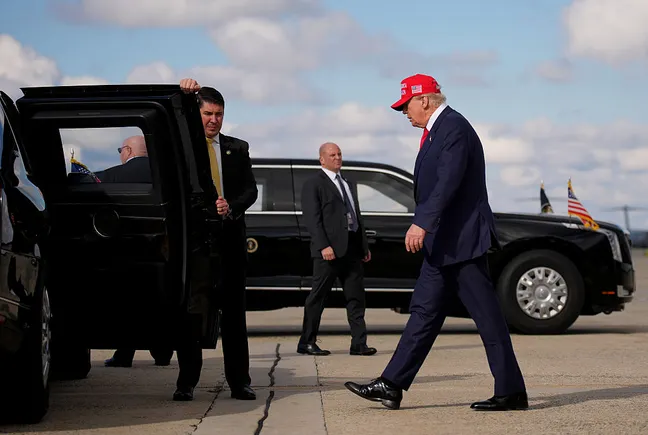
President Donald Trump’s order, signed Aug. 7, directs political appointees at federal agencies to review grant awards to ensure they align with the administration’s “priorities and the national interest.”
These appointees are to avoid giving funding to several types of projects, including those that recognize sex beyond a male-female binary or initiatives that promote “anti-American values,” though the order doesn’t define what those values are.
The order effectively codifies the Trump administration’s moves to deny or suddenly terminate research grants that aren’t in line with its priorities, such as projects related to climate change, mRNA research, and diversity, equity and inclusion.
The executive order’s mandates mark a big departure from norms before the second Trump administration. Previously, career experts provided oversight rather than political appointees and peer review was the core way to evaluate projects.
Not surprisingly, the move has brought backlash from some quarters.
The executive order runs counter to the core principle of funding projects based on scientific merit — an idea that has driven science policy in the U.S. since World War II, said Toby Smith, senior vice president for government relations and public policy at the Association of American Universities.
“It gives the authority to do what has been happening, which is to overrule peer-review through changes and political priorities,” said Smith. “This is really circumventing peer review in a way that’s not going to advance U.S. science and not be healthy for our country.”
That could stifle scientific innovation. Trump’s order could prompt scientists to discard their research ideas, not enter the scientific research field or go to another country to complete their work, research experts say.
Ultimately, these policies could cause the U.S. to fall from being one of the top countries for scientific research to one near the bottom, said Michael Lubell, a physics professor at the City College of New York.
“This is the end of an era,” said Lubell. “Even if things settle out, the damage has already been done.”
A new approach to research oversight
Under the order, senior political appointees or their designees will review new federal awards as well as ongoingl grants and terminate those that don’t align with the administration’s priorities.
This policy is a far cry from the research and development strategy developed by Franklin D. Roosevelt’s administration at the end of World War II. Vannevar Bush, who headed the U.S. Office of Scientific Research and Development at the time, decided the U.S. needed a robust national program to fund research that would leave scientists to do their work free from political pressure.
Bush’s strategy involved some government oversight over research projects, but it tended to defer to the science community to decide which projects were most promising, Lubell said.
“That kind of approach has worked extremely well,” said Lubell. “We have had strong economic growth. We’re the No. 1 military in the world, our work in the scientific field, whether it’s medicine, or IT — we’re right at the forefront.”
But Trump administration officials, through executive orders and in public hearings, have dismissed some federal research as misleading or unreliable — and portrayed the American scientific enterprise as one in crisis.
The Aug. 7 order cited a 2024 report from the U.S. Senate Commerce, Science, and Transportation Committee, led by its then-ranking member and current chairman, Sen. Ted Cruz, R-Texas, that alleged more than a quarter of National Science Foundation spending supported DEI and other “left-wing ideological crusades.” House Democrats, in a report released in April, characterized Cruz’s report as “a sloppy mess” that used flawed methodology and “McCarthyistic tactics.”
Trump’s order also referred to incidents at Stanford and Harvard universities in recent years. In July 2023, Marc Tessier-Lavigne resigned as Stanford University’s president after an independent review of his work found significant flaws. And in May, Harvard University fired and stripped the tenure status from a renowned scholar after finding she had manipulated data to support her hypotheses in several studies
“There is a strong need to strengthen oversight and coordination of, and to streamline, agency grantmaking to address these problems,” the order stated.
Scientific misconduct does occur from time to time, but the scientific community does a pretty good job at policing itself through peer review processes, said Lubell. The scientific process has functioned “extremely well,” he added, and contentions that the scientific community is in crisis are not accurate.
“Could it be better? Of course you can always improve things,” said Lubell. But “there is no crisis.”
Deterring the younger generation?
Michael Wilhide has worked as a molecular biologist and clinical lab scientist at a public university, for private companies and at hospitals for over 20 years — looking into how genomics affect health outcomes such as cardiovascular and kidney disease, and whether molecular tests could detect COVID-19 in patients.
However, after a research project he worked on ended four months ago, he said in September that he struggled to land another position in what has been a challenging job market for molecular biology scientists.
Wilhide speculated the difficult job market may be partly due to research universities being uncertain about whether they will be able to secure grant funding from the National Institutes of Health. However, more recently, Wilhide said the job market appeared to be improving a bit.
“There is a strong need to strengthen oversight and coordination of, and to streamline, agency grantmaking to address these problems.”
Donald Trump’s Aug. 7 executive order on research grants
Still, NIH and other federal agencies have cut vast sums of research funding in the months since Trump took office for the second time.
By late July, the federal government had cut $3.3 to $3.7 billion in research funding from over 600 universities — targeting institutions in its crosshairs and projects that didn’t align with their ideological goals, said Sara Partridge, associate director of higher education at the Center for American Progress, citing a recent analysis from the liberal think tank.
Over half of federal research dollars goes toward medical and life science research, said Partridge, meaning the cuts could compromise the U.S.’s ability to find new treatments for diseases.
Despite a challenging job market, some scientists may revise their proposals and try to continue their work under the August executive order’s guidelines, said Lubell. But if the Trump administration suddenly cancels their grants, they may look to continue their work in the European Union or China, where American scientists are being actively recruited, he said. Others may leave the scientific research field completely, he said.
At the same time, young people might avoid working in an environment where they need to watch their words, lack job security and aren’t appreciated for their work, Lubell said, or just turn to fields that pay more.
This scenario has kept Wilhide awake at night. He fears America may be losing the next generation of scientists because the students who love science will see the politicization of the field and today’s scientists struggling to find jobs, he said.
“Are junior high, or high school kids, or grade school kids going to be interested in becoming a scientist when they see that science is under attack by the current administration?” asked Wilhide.
“This is the end of an era. Even if things settle out, the damage has already been done.”

Michael Lubell
Physics professor, City College of New York
In fact, past policies that redirected federal grants to align with an administration’s goals have hampered the recruitment of scientists, Lubell said.
In 1970, during the Vietnam War, Congress choked off U.S. Department of Defense funding for basic scientific research that wasn’t directly related to the military’s function or operation. That made it difficult for many scientists to get jobs — and it took a decade for the field to recover, said Lubell, who was a fellow at the Atomic Energy Commission at the time.
“That legislation passed and all of the sudden the bottom dropped out,” said Lubell. “Most of my colleagues bailed out. They couldn’t find jobs. They left basic science and went into medicine, they went into law, they went into finance.”
Limiting curiosity
Scientists often enter research projects without knowing what they’ll find — leading to all sorts of advances that were totally unexpected, said Smith.
The late microbiologist Thomas Brock received an $80,000 NSF grant to research whether living organisms exist in the Yellowstone National Park’s hot springs, which were believed to be above the temperature in which life can exist, said Smith.
Brock did, in fact, find bacteria reproducing inside the hot springs — a discovery critical to the development of polymerase chain reaction, a DNA sequencing method that has advanced biotech, including helping to lead to the creation of COVID-19 tests.
But under the August executive order, the federal government would only award research grants to projects that would likely “produce immediately demonstrable results with the potential for potentially longer-term, breakthrough results.”
“The administration’s policy risks becoming a tool that judges curiosity-driven research through the lens of policy priorities,” Joanne Padrón Carney, chief government relations officer for the American Association for the Advancement of Science, said in an email. “Which cure or solution will we lose by limiting the potential of what we can study?”
“Are junior high, or high school kids, or grade school kids going to be interested in becoming a scientist when they see that science is under attack by the current administration?”
Michael Wilhide
Molecular biologist
Many people are concerned the order could narrow the scope of research projects that are pursued and discourage proposals, thereby limiting creativity, Chad Ross, vice president of grants at Hanover Research, a research and analytics firm, said in an email.
It would be fine for the administration to set priorities that guide scientists in their research focus, said Smith.
“There are always going to be certain areas of national need that have priority to get additional funding,” he said.
But it’s problematic when the administration decides what categories of research constitute good versus bad science, Smith said. Researchers need to follow the science, not expect to know the outcome of their scientific experiment before actually doing it, he said.
“I’m worried that if politicians are now judging which science is the best science, they will judge it on believing they’re going to get something when the scientific experiment starts,” Smith said.
How will colleges be impacted?
It’s unclear what areas of research the executive order could curtail, said Partridge. It could affect climate change research, she speculated, but the order also states it won’t fund research that compromises public safety or promotes “anti-American values.”
Recent grant cuts also offer hints at which topics will be affected. The administration has cut or proposed slashing grants for agricultural research, money that supports K-12 teacher training, and programs that help students from underrepresented backgrounds pursue STEM careers, she said.
The U.S. Department of Health and Human Services is also winding down mRNA vaccine development research under Health Secretary Robert F. Kennedy, who has famously been skeptical of vaccines. Backing some of the concerns about grant funding, Smith noted that top officials at the Centers for Disease Control and Prevention have recently resigned, citing the politicization of science.
The executive order and mass grant cancellations could also affect a university’s ability to sustain their research capabilities.
Plus, if grants are terminated based on priorities that change from one presidential administration to the next, science will not occur in the U.S., said Smith. That’s because science doesn’t occur over a one-year period, it happens over five- to more than 10-year periods, through grant funding that extends three to five years, said Smith.
When navigating the order, universities should include uncertainty into their research calculations and prioritize projects with the best chance of getting approved, said Carney. They should also make long-term plans to diversify funding sources — beyond the federal government — for their research priorities, she said.
“I’m worried that if politicians are now judging which science is the best science, they will judge it on believing they’re going to get something when the scientific experiment starts.”
Toby Smith
Senior vice president for government relations and public policy, Association of American Universities
The executive order could help in some ways, higher ed and research experts said. The order directs federal agencies to simplify the language in funding opportunity announcements to minimize “the need for legal or technical expertise in drafting an application.”
The simplified language should reduce complexities in grant application paperwork —- potentially making the process more accessible for international researchers and nonspecialist reviewers, said Ross.
And language in the order calling for awarding research grants to a mix of recipients — instead of mostly institutions with strong track records — could help researchers from less prestigious research institutions obtain grants, said Partridge.
Going forward, open and transparent lines of communication are needed among universities, principal investigators, and federal agency program officers, said Carney.
“Federal research agencies will need to be exceptionally clear about what they hope to achieve and how it aligns with the administration’s priorities,” she said.