

Tag: Stone

  • How Jennifer Stone Finds Purpose and Calm in Nursing

    How Jennifer Stone Finds Purpose and Calm in Nursing

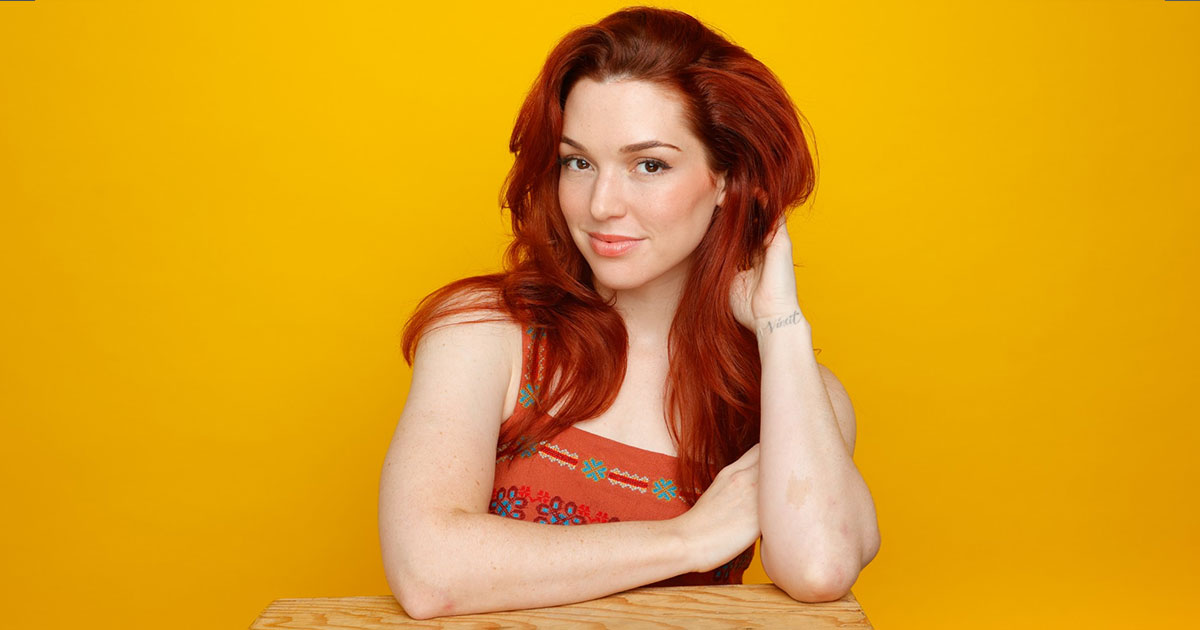
    Jennifer Stone | Photos by Leah Huebner

    Actress and ER nurse Jennifer Stone shares how small acts of care, teamwork, and personal routines help nurses stay grounded and effective.


    Can you share a moment from your career that reminded you why you chose nursing?

    I had a doctor once tell me, “If you can really touch one person a shift, it’s been very successful, and that’s a good shift.” As a nurse, you’re always rushing around; it’s very fast-paced, especially in the ER, so it’s about the moments of stillness with somebody who just needs comfort or somebody to care for them. Whether it’s an older person who doesn’t have anybody and just wants to talk, or if it’s somebody who’s really scared, you can just try to make time, stop a little, and be like, “Hey, you’re okay. You’re in the best possible place, and we’ve got you.” It’s those moments of being a sense of certainty for someone in a time of uncertainty that remind me why I do what I do.
    What’s one piece of technology or equipment that’s made your work as a nurse more efficient or effective?

    That’s a great question. A great piece of technology that has made nursing more effective is, I hate to say, the PureWick. We have a lot of non-ambulatory patients, so the PureWick, a condom catheter, helps patients stay more comfortable without using something like a bedpan, which can feel kind of demeaning or uncomfortable or cause bedsores. Also, things like ultrasound machines for hard-stick IVs. Those are game changers. Also, updated charting systems. Having good shorthand to be able to chart efficiently and get back to one-on-one patient care is great.

    Has there been a time when strong communication, with either a patient or teammate, made a big difference in your day?

    I didn’t anticipate that there would be so many parallels between acting and nursing, but one of my favorite things about both is the collaboration.

    Whenever I have a nurse that’s in my team — whether they jump in when I’m stuck in another room with a patient or I do the same for them — it’s that shorthand of seeing that a nurse has a need and collaborating. We’re all on the same team. We’re all trying to accomplish the same thing — better patient outcomes. When I have a nurse who, without me even asking, will jump in and help me with the patient, that makes me feel like we’re all collaborating on this together for a common goal. That’s something that just means the world to me — when nurses will help each other out.

    What advice would you give to a nurse who’s feeling overwhelmed or underappreciated right now?

    Focus on what you can control. I’ll be very honest. For me, I know sometimes, especially in the earlier years, I would get very angry at things that were very out of my control. Whether it was issues with the healthcare system, or the way the system was set up and falling short, I would find myself getting very angry and discouraged. What’s helped me is to focus on the things that I can control. Yes, they may be on a smaller scale, but I can control how I respond to negativity at work or positivity at work. I can control how I talk to patients. I can control what I let in and what I don’t. Especially in an ER environment, or any healthcare bedside environment, there can be a lot of negativity, unfortunately, and it’s within your control what you let in.

    I’ll be honest: Some days I win, and some days I lose and allow things in, for sure. There are shifts I ended where I was like, “Alright, this shift beat me.” But I try to make it so I am in control of how I respond to the healthcare industry, and to know that it’s all a choice. Although some days it’s harder than others.

    What daily habits or small routines help you stay grounded and feel good during long or stressful shifts?

    Getting outside, to be honest. Time stands still when you’re on a 12-hour shift, so I carve out time if I can — and not every shift allows for it — but when I can, I carve out time to just get outside, get some vitamin D, and look at some nature. It’s something to remind you that the entire world isn’t those fluorescent lights. It’s just sort of reconnecting with life outside of the hospital.


    Source link

  • Is social media turning our hearts to stone?

    Is social media turning our hearts to stone?

    As global digital participation grows, our ability to connect emotionally may be shifting. Social media has connected people across continents, but it also reshapes how we perceive and respond to others’ emotions, especially among youth. 

    Empathy is the ability to understand and share another’s feelings, helping to build connections and support. It’s about stepping into someone else’s shoes, listening and making them feel understood.

    While platforms like Instagram, TikTok and X offer tools for global connection, they may also be changing the way we experience empathy.

    Social media’s strength lies in its speed and reach. Instant sharing allows users to engage with people from different backgrounds, participate in global conversations and discover social causes. But it also comes with downsides. 

    “People aren’t doing research for themselves,” says Marc Scott, the diversity, equity and community coordinator at the Tatnall School, the private high school that I attend in the U.S. state of Delaware. “They see one thing and take it for fact.”

    Communicating in a two-dimensional world

    That kind of surface-level engagement can harm emotional understanding. The lack of facial expressions, body language and tone — key elements of in-person conversation — makes it harder to gauge emotion online. This often leads to misunderstandings, or worse, emotional detachment.

    In a world where users often post only curated highlights, online personas may appear more polished than real life. “Someone can have a large following,” Scott said. “But that’s just one person. They don’t represent the whole group.” 

    Tijen Pyle teaches advanced placement psychology at the Tatnall School. He pointed out how social media can amplify global polarization. 

    “When you’re in a group with similar ideas, you tend to feel stronger about those opinions,” he said. “Social media algorithms cater your content to your interests and you only see what you agree with.” 

    This selective exposure limits empathy by reducing understanding of differing perspectives. The disconnect can reinforce stereotypes and limit meaningful emotional connection.

    Over exposure to media

    Compounding the problem is “compassion fatigue” — when constant exposure to suffering online dulls our emotional response. Videos of crisis after crisis can overwhelm users, turning tragedy into background noise in an endless scroll.

    A widely cited study published in the journal Psychiatric Science in 2013 examined the effects of exposure to media related to the 9/11 attacks and the Iraq War. The study led by Roxanne Cohen Silver, found that vicariously experienced events, such as watching graphic media images, can lead to collective trauma.

    Yet not all emotional connection is lost. Online spaces have also created powerful support systems — from mental health communities to social justice movements. These spaces offer users a chance to share personal stories, uplift one another and build solidarity across borders. “It depends on how you use it,” Scott said.

    Many experts agree that digital empathy must be cultivated intentionally. According to a 2025 Pew Research Center study, nearly half of U.S. teens believe that social media platforms have a mostly negative effect on people their age, a significant increase from 32% in 2022. This growing concern underscores the complex nature of online interactions, where the potential for connection coexists with the risk of unkindness and emotional detachment. ​

    So how do we preserve empathy in a digital world? It starts with awareness. Engaging critically with content, seeking out diverse viewpoints and taking breaks from the algorithm can help. “Social media can expand your perspectives — but it can also trap you in a single mindset,” Scott said. 

    I initially started thinking about this topic when I was having the same conversations with different people and feeling a sense of ignorance. It wasn’t that they didn’t care — it was like they didn’t know how to care. 

    The way they responded to serious topics felt cold or disconnected, almost like they were watching a video instead of talking to a real person. 

    That made me wonder: has social media changed the way we understand and react to emotions?

    Ultimately, social media isn’t inherently good or bad for empathy. It’s a tool. And like any tool, its impact depends on how we use it. If we use it thoughtfully, we can ensure empathy continues to grow, even in a world dominated by screens.


    Questions to consider:

    1. What is empathy and why is it important?

    2. How can too much time spent on social media dull our emotional response?

    2. How do you know if you have spent too much time on social media? 


    Source link