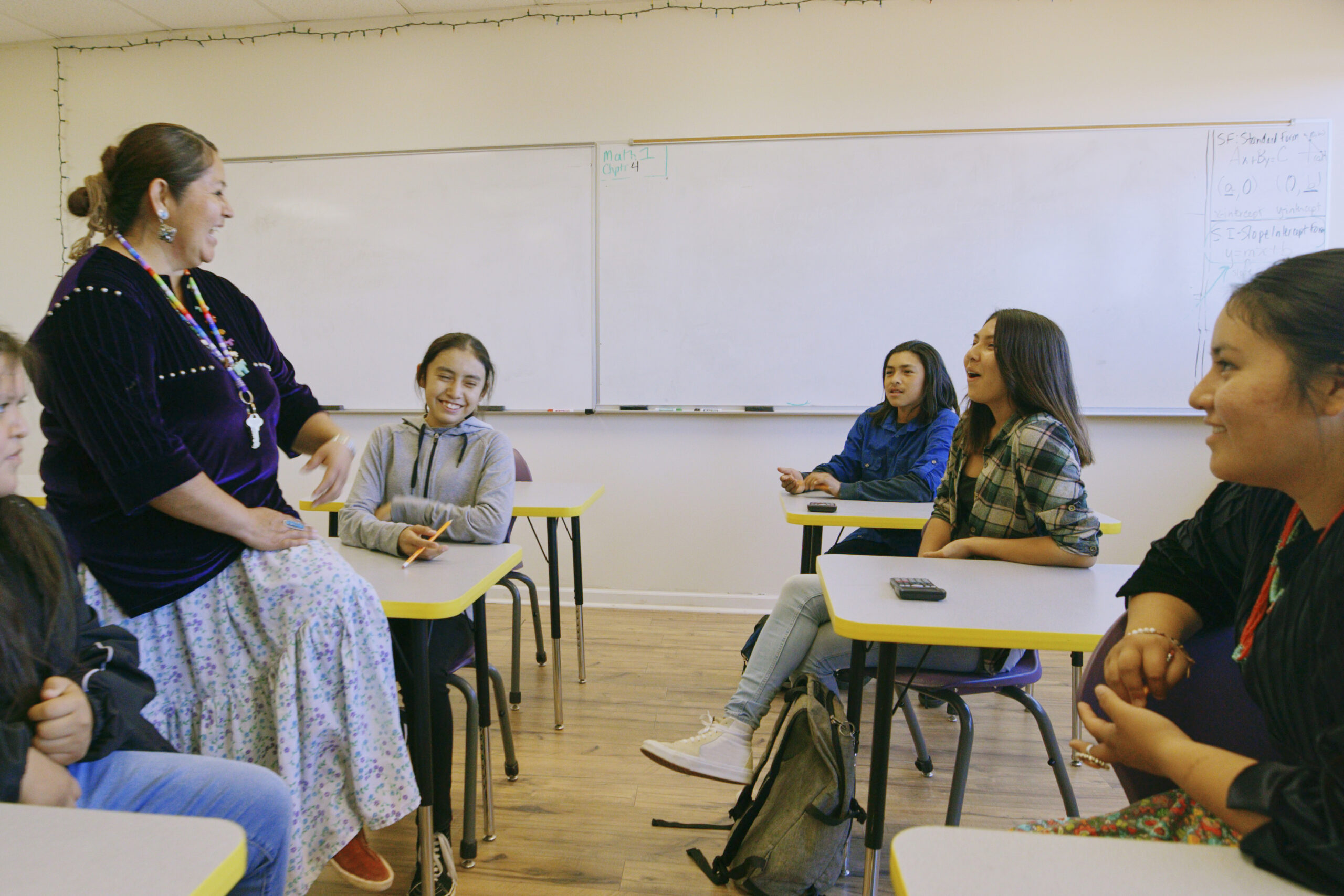
Through storytelling, we can bring climate-related data to life. Through storytelling, young people can use their voice and the voices of those around them to turn something complex, global and overwhelming, into something local, tangible and meaningful. Through storytelling, young people can help shift narratives and bring to the forefront stories of action and of hope.
This is the idea behind the EYES climate storytelling curriculum.
The Climate Change 101 unit begins with the basics: human activities driving climate change and what temperature increase means for our planet. Students are tasked with producing an article that explains the topic to a younger audience.
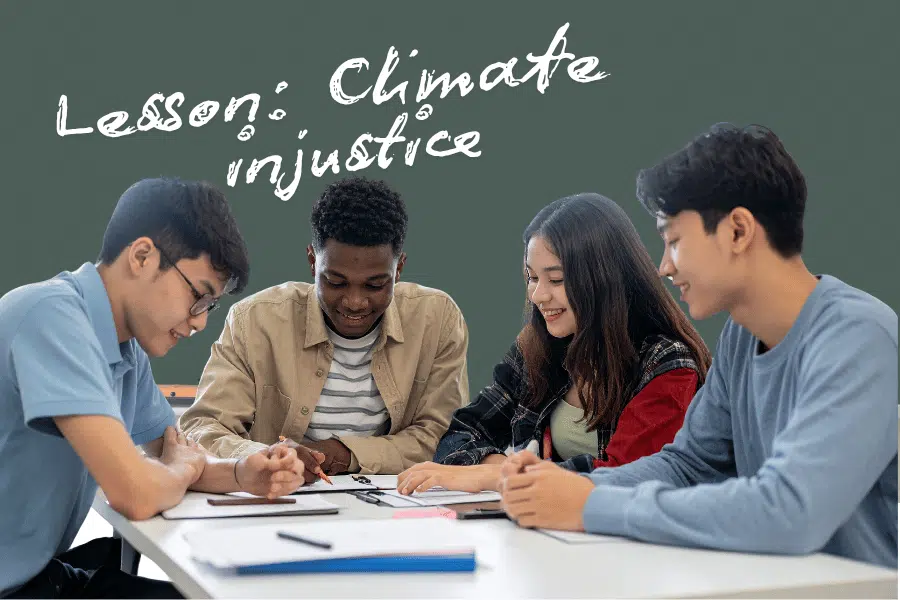
A unit on Climate Injustice walks students through the uncomfortable reality that those causing climate change are suffering the least from its impacts. Those who have contributed the least? They tend to be in the grip of climate change.
Human stories from a man-made disaster
We know that learning about the devastations of the climate crisis can leave young people feeling anxious and angry. We also know from the teachers who piloted the EYES curriculum that it’s important to localise these topics.
So in the Climate Injustice unit, students are tasked with finding a human story: someone to illustrate climate injustice at play in their local area or region.
Hearing stories about people lets us understand the reality of an issue. Telling these stories gives young people a device for meaning-making and a platform for agency.
In our Systemic Change unit, students learn about the interconnected mechanisms that keep our economy rooted in endless economic growth and fossil fuel use. They learn about the ‘deep’ leverage points for making change — the rules, the goals and the mindset of a system. They research case studies on commodity supply chains and form their questions into a story pitch.
In Systemic Solutions to the Climate Crisis, we showcase seven inspiring examples of climate solutions from around the world, from local projects such as community-owned solar panels in Mexico to the transition to renewables in Uruguay, to global movements such as recognising the rights of nature or degrowth in the Global North.
Meaningful action can happen at any scale. By engaging with these case studies, students can see that stories of just and transformative systems change happen all around them.
There are so many stories yet to be told, and that in itself is empowering.
“Storytelling can turn young people into active users of climate knowledge, and even change makers,” said Andreea Pletea, The Environment and Human Rights Academy programme manager. “Students can even help shift dominant narratives by bringing to the surface systemic solutions to the environmental crises that also address inequalities.”
Causes and systems
Aside from storytelling, the main focus of the EYES curriculum is on systems thinking and climate injustice.
“We invite learners to go upstream to the root causes of the crises we face, and question why, despite increasing awareness, meaningful action often lags behind,” Pletea said. “Seeing the big picture particularly through systems thinking and global justice can also help young people make sense of what’s going on in their own local context.”
Pletea said that ultimately, the goal is to plant a seed. “That all of us, including young people, are more than consumers,” she said. “We are citizens with a voice and power to act and demand change, and especially when we come together.”
The EYES project itself began as a seed. TEHRA and News Decoder came together to improve climate change education through storytelling, and created a set of materials that were piloted in multiple education contexts across Europe, Africa and Latin America.
The seeds to stories
In Slovenia, Kenya and Colombia, pilot students exchanged letters on their local experiences of climate change. In Kosovo, a Roma community of young people visualised their personal experience of climate change through art.
At a summer camp in Belgium, students played climate change games, pulled apart the individual carbon footprint and were guided through a nature meditation. In Kenya, students visited the precious Karura national park and wrote stories about tipping points and the value of forests.
The feedback from students and educators, including at a three-day educators workshop in Brussels in October, helped shape and restructure the curriculum. It evolved into a set of off-the-shelf resources that can be used by multiple teachers in one school or independently by learners.
If you are an educator, we invite you to dive into climate change with your students and use the EYES curriculum. Students need to learn about the root causes of the climate crisis so that they know in which direction to head — in their future careers as much as in their personal set of values.
Through storytelling, young people can engage with the reality that is climate change, both as authors and as listeners. Storytelling is the way we understand ourselves: why we act the way we do and how together we can solve the problems that humankind has caused.
Questions to consider:
1. How can storytelling can turn someone into an active user of climate knowledge?
2. What types of climate activities did students in different countries do through the EYES lessons?
3. What stories about climate change have you found interesting to read or hear about?
Are you thinking about starting a podcast? I invited Dr. Anna Clemens to share her podcasting journey. We talk about how social media and online presence has changed for researchers in 2025. And, how storytelling can help people connect with your research in meaningful ways.
Dr. Anna Clemens is an academic writing coach who specializes in scientific research papers. She runs the Researchers’ Writing Academy, an online course where she helps researchers to get published in high-ranking journals without lacking structure in the writing process.
Jennifer van Alstyne: Hi everyone, this is Jennifer Van Alstyne. Welcome to the Social Academic Podcast. I’m here with Dr. Anna Clemens of the Researchers’ Writing Academy. Anna, I’m so happy to have you here today. First, because you’re my friend and we’ve been trying to do this for multiple years now. I’m so happy! And second because I want to share the program that you’ve created for scientists to help them write better. It’s actually something I’ve recommended to clients of mine, something clients of mine have participated in. So I wanted to share you with everyone who listens to the podcast. Would you please introduce yourself?
Dr. Anna Clemens: Yeah, of course. Thank you so much for having me. And I’m super excited. And it’s been such a joy having some of your clients in the program.
I run a program called the Researchers’ Writing Academy, where we help researchers, well, kind of develop a really structured writing process so they can get published in the journals they want to get published in. We kind of look a bit more toward top-tier journals, high-impact journals. But honestly, what we teach kind of helps you wherever you want to go.
I have a background in chemistry. So my PhD’s in chemistry and I transitioned into writing after that. So it’s a really fun way to be able to combine kind of my scientific knowledge with writing and helping folks to get published and make that all really time efficient.
Jennifer: Gosh, that’s amazing. I think that I did not have a lot of writing support when I was in grad school. And I really felt like even though I’m an excellent writer, like I’m a creative writer, like that’s what I went to school for.
Anna: You write poetry.
Jennifer: I write poetry and I think I’m a good academic writer, but I feel like I had to teach myself all of that. And it was a lot of correction after something was already submitted in order to bring it closer to what was actually publishable.
Anna: Right.
Jennifer: I lost so much time by not knowing things. So I love that you created a program to support people who maybe aren’t getting the training that they need to publish in those high impact journals.
Anna: Yeah, because that’s so common. Like, honestly, who gets good academic writing training? That’s really almost nobody.
I often see even people who do go on, do some kind of course of their university if they offer some kind of course. They’re often not really so focused on the things that I’m teaching, which is like a lot of storytelling and a lot like being efficient with your writing, like kind of the step by step. You kind of often know just like academic English, how do I sound good? And I think honestly, this is less important than knowing how to really tell a story in your paper and having that story be consistent and not losing time by all the like edits and rewrites, etc., that are so frustrating to do.
Storytelling for Researchers and Scientists
Jennifer: Hmm, you brought up storytelling. That’s really insightful.
As a creative writer, story is so important to the words that we create and how people can connect with them. Why is storytelling important for researchers?
Anna: Well, I think it’s because we’re all humans, right? So we just as humans, really need storytelling to be able to access information in the best way and to connect to that information and to kind of put it into the kind of frameworks that we have already in our minds.
This is what a lot of researchers really overestimate is like, your research is so incredibly specific, right? It’s so much, like that thing to you, it’s all like when you’re doing it, you’re like, of course you know every detail about it. And you just forget how little other people know. It’s even if they’re in the same field because we always think, “Oh, no, everyone knows what I know.” Also a bit this feeling of like, not quite realizing like, it’s also called like the experts curse I think, when you are an expert in something, and you don’t realize how little other people know. And you kind of undervalue what you know.
So anyway, if you really want your papers to be read, if you want to get published, you need to be able to, to make it accessible to like the journal editor, right? The peer reviewers, but also the readers later, they need to be able to understand the data in a way that makes sense to them. And I think that’s where storytelling comes in. Also, it really helps with structuring the writing process. Like honestly, if you think about storytelling first, the really nice side effect is your writing process will be a lot easier because you don’t have to go back and edit quite so many times.
Jennifer: Oh, that’s fascinating. So not only does it improve how the research is being communicated It improves the process of writing it too.
Anna: I think so. Yeah, because when you’re clear on the story, everything is clear in your head from the start. And you don’t need to kind of . . . I mean, when you write a paper for the first time, or even people who’ve written a few papers, they still sometimes start writing with the introduction. And it’s such a waste of time. Like they just start at the start, right? And then they end up like deleting all those paragraphs and all those words after when they actually have written so much that they then after a while understand the story that they want to tell. And instead, what I’m suggesting is like, define the story first. And I like guide people through how to do that.
Because I think the problem is you don’t really know how to do it when you don’t have like a framework for it. You have kind of the framework there from the start. So you know what the story is and you don’t have to kind of figure out the story while you’re writing. Instead, you know what the story is and the way I’m teaching it, I’m like giving people prompts so that it’s really easy to define the story because also story is really elusive, I think. Or we use it in this elusive way often when we like we kind of use it as like a throwaway term. Oh, yeah, you you should tell a story in your paper. And you go like, “Yeah, I guess. But what does that mean?” I’m trying to like give a definition for that. So that is like really clear. Okay?
Jennifer: I appreciate that. I think so many people aren’t sure what it means. And even if they think they know what it means, they don’t necessarily know how it applies to their scientific writing. So that’s really interesting.
Researchers’ Writing Academy
Jennifer: I want to talk about podcasts, but actually, since we’re already talking about program stuff right now, I’m curious about the format of your program because people who are listening to this may not be familiar with your work. And I want to make sure that they get to hear about all the cool things that they get if they join.
Anna: Yeah, the Researchers’ Writing Academy is very comprehensive.
Jennifer: Yeah, in a good way.
Anna: It’s almost hard to tell people about it because there’s so much in there. So, what people get is like, there’s an online course, we call it the journal publication formula, that’s like the step-by-step system, walks you through online lessons that you can watch, super short digestible lessons that walk you through step-by-step. So you can just write your paper alongside the lessons.
And then because we noticed that you really may want some help actually writing in your day to day work, right? Because we’re also incredibly busy. And then it’s just helpful to have some kind of accountability, some community, and that’s what we offer as well. So we do a lot of things around accountability and we have like, cowriting sessions, for example, where we meet, we have six now, six per week across time zones.
Jennifer: Wow, that’s amazing! So if you’re anywhere in the world, there’s a chance that one of those six times during the day will work for you. Oh my gosh, that’s so cool.
Anna: Yeah. I mean, they should work. I mean for Europe and the US, most of them will work. Or not, but it depends where in the US you are, etc. But even like a few in Australia, there’s at least one per week that will work for you depending on how long you want to stay up. Some people do, we have one client who comes, he likes to do writing after his kids are in bed. So he loves nine to 10pm, you know, like, yeah. So yeah, there’s a lot. And we do like, writing retreats every now and again, and writing sprints. So we like offer a lot of support around that. And we have like a really lovely community that are so supportive. Actually, I just talked to one member today, and she just got promoted to full professor.
Jennifer: Exciting
Anna: And she was like, “I couldn’t have done it without this community.” This was so like, valuable, not only getting the feedback on her article, but also, just knowing that like, there’s the support. And that’s really, I mean, that’s so lovely for me to hear, because this is honestly what I dreamed of. This is what I wanted to build. And it’s really nice knowing that people do, you know, really, not only reach career goals, but have a supportive community because academia can be a little toxic.
Jennifer: Yeah, yeah, there’s so many reports that have come out and said, mental health struggles, toxicity, it’s consistent. Yeah.
Anna: And honestly, writing plays a big part in that, because like, kind of the way we are normally not talking about writing. I think writing like, it’s, you sometimes see like, more seasoned academics. They sometimes are really good at writing and then act as if they have it all figured out, but not share their process. So you as like a novice writer think, “Shit, I should have figured it out. Like, why do I not know how this works?”
Jennifer: This is easy for them.
Anna: Yeah, exactly. The other day, someone said to me, “Yeah, I know this professor and he just writes his paper while I’m talking to him at a conference.” And I’m like, “Oh, okay, this is an interesting process.”
Jennifer: Wow. Like, it’s so clear in his brain that he can focus on that and a conversation at the same time. Fascinating.
Anna: Fascinating. And honestly, you don’t have to do that. But she kind of thought like, “This is who I have to be. This is how I have to do it.” That creates so much pressure. And yeah, writing just hits like, emotionally, it’s really hard, right? When we feel like we are procrastinating, when we have really low confidence in our writing and just feel really disappointed in ourselves because we’re like overly perfectionistic, can’t send stuff off, keep like, you know, refining sentences. It’s just really, really hard.
This is really why a community is so beautiful when we can all just open up about how hard it is and also give each other tips. Like, I just love when people, you know, share also what’s working for them. And like, down to little techniques. Like the other day, someone was sharing in the community about how they started having like their Friday afternoons as like a margin in their calendar. So, if they didn’t get, you know, to all the things they had done, if there was any derailing event, they still had like time on a Friday. A little hack like that, right?
That just like makes you more productive, makes you just honestly feel better about your work. Because we’re really tough on ourselves often. Like we’re really harsh and just, you know, having like a community that has this kind of spirit of being kind to yourself and working with your brain and not against it. Yeah, that’s really, really . . . that’s a really lovely place. Really supportive.
Jennifer: That sounds amazing. I’m curious about who should join your program because it sounds like it’s so supportive. It sounds like there’s community and accountability and training. So, I love all of that, but there’s probably some people who the program’s not right for. So, like, maybe who shouldn’t join and who should definitely join?
Anna: Yeah, that’s a good question. I mean, it is in terms of like career stage, it’s pretty open from PhD student up to professor. And we have all of those kind of career stages in the program. The biggest group is assistant professors, just so you know, like who you can expect to be in the program. And also the PhD students who are in there are often older. It’s really interesting. They’re often like second kind of career type students who maybe have, you know, chosen that path a little later in life. Just a little side note. It’s kind of interesting.
Jennifer: I think that makes so much sense because if I’m going back for like a PhD later on, I’m like, “I’m going to get all the support that I can to make the most of this time.” And joining a program like yours would make so much sense to me.
Anna: Yeah, they’re probably also busier most of the time because their parents or other stuff going on in their lives already.
Jennifer: Yeah, that’s what makes it easier to have time for like the life and the people that you care about because you already have these processes in place.
Anna: Yeah, yeah. So as to who shouldn’t join or who this wouldn’t be a good fit for, we don’t actually serve researchers in the humanities. So there’s this really science-based, social sciences included. And you know, physical sciences, life science, earth science, all the sciences we are super happy to have inside the program just because the general publication formula is super focused on just that type of research and really honestly quite focused on like original research papers, even though we have members who write review papers using it because honestly, the process isn’t very different. But we are like, just the examples, everything is from like original research papers. So just FYI.
Otherwise, I would say like we’re really super supportive and we don’t have like a lot of this like hustle culture, you know. This is all about, we don’t believe in like, having to wake up at 4am to have your whole three hour morning routine, including writing done, because a lot of us like have kids or have other kinds of commitments. So there is a lot of like kind of understanding that, you know, all of this has to work for real life. And not just for, I don’t know, people who have, yeah, men I guess who have a lot of support in the background traditionally, right? This is how research has been done. And yeah, even though we do have really lovely men in the program as well. So it’s not just women, but I guess this is kind of the approach that, yeah, we have in the community, in the academy.
Jennifer: I love that. So not hustle culture. More let’s learn these processes and have accountability together so that we can move towards this goal of publishing with kindness.
Anna: Yeah. It’s so funny, like this being kind. I mean, we often say like, “Be kind to yourself,” because sometimes we don’t achieve the goals we set, often we don’t achieve the goals we set ourselves, right? And what I always say is it’s a data point. Like, this was a really good data point this week, because just reflect on what happened. Oh, did your child get sick? Oh, there you go. So maybe you now need to have a process, what happens if my child gets sick? Because then, you can’t plan that, right? So you have to have, or it’s good to have in your kind of system, in your writing system, in your writing practice, that you account for that. Some kind of strategy, what you do when that happens. Or like, this took me a lot longer to complete, like, I thought I would get my introduction section done this week, but actually, I didn’t. Well, really good data point. Actually, maybe it takes you longer.
Look at how where you spend the time doing this section. This is really good to know for next time. Actually, maybe schedule one or two days more for this. So that’s kind of like the approach, the vibe that like is in there. So it’s not so, it’s not harsh.
Jennifer: Yeah, I like that vibe. That’s my kind of vibe.
Anna: Mine too. Yeah, mine too. And it really crystallized for me because I once was in a business coaching program where the vibe was really different. You probably remember me talking about this because I did tell you at the time, and it was so awful for me. And I really. . . but until then, it was really a bummer because I spent a lot of money on it.
Jennifer: And you’re like, “My community needs kindness and support for each other.
Anna: This was my big learning. Apparently, I needed to spend a lot of money to really have this like so, so clear that this is not for me. Like the bro-y culture is not for me. I need the kindness. Because otherwise, it doesn’t work. I don’t work like that if someone tells me I have to, I don’t know, have all these non-negotiables everyday.
Jennifer: Yeah, like change who you are.
Anna: Yeah, like you just have to do it. Like it’s just about the discipline. You know, I don’t think that works. I honestly don’t think it works in the long term. Like maybe you can force yourself for like a few months or years and then you’re burning out or something. Like, I just don’t see how this is a sensible approach.
Jennifer: No. And I remember at the time you mentioned that you felt burned out. Like you were being affected by the culture that you were experiencing. So creating a warm culture for people inside your program, the Researchers’ Writing Academy is wonderful. Everyone gets to benefit from your research.
Anna: Right? Yea!
Anna’s podcasting journey
Jennifer: So I want to chat a little bit about online presence because I mean, we met online, we mostly communicate online, but also like you have taken some actions this year in particular to have a stronger online presence through a new avenue, which is podcasting. I’m curious because when I started my podcast, it was like not very intentional. It was like, “Oh, I just better record this thing and like, it’s going to make it like a little more accessible than if it was just in writing.” And the podcast kind of evolved into a regular series after I had already decided to start it. Whereas you came in more with a plan, you had purpose, you had drive to do more episodes than I could imagine. And so what was it like to kind of get that spark of an idea that like, I want a podcast?
Anna: Yeah, I’ve had this, I mean, I had this desire for a long time. Many, many years. I always wanted to have a podcast.
Jennifer: Really?
Anna: Really because I listen to podcasts a lot. Like I’m really into them. And years ago, someone told me you would have such a good voice for podcasts. I was like, really? I don’t, because when you listen to your own voice, you’re like, “No, I don’t think so.” And I still don’t know whether this is really true, but I wanted to be more online. Like kind of, I wanted to have an online presence that wasn’t just social media.
Because honestly, I have such a weird relationship to social media, myself. It does like cognitively do something to my brain that isn’t always good, you know. Like hanging out there too much or getting sucked in, especially back on Twitter, now on Bluesky it’s a little bit like that too. There’s sometimes a lot of negativity. And I feel like people are too harsh, coming back to the being too harsh. I just can’t take it. Like, it’s not for me, but also just the fact that there’s just a lot going on there.
I wanted to be available to people somewhere else. And a podcast and I did actually simultaneously, like launch my podcast on YouTube as well. So it’s like a video podcast. That just made sense to me. Like, that just felt really aligned with what I like to consume, what I think my ideal clients like to consume. And where I also felt like I can like express myself, I guess, in a really good way. I mean, I do love writing, I do actually have a blog too. But it’s almost like when you have a blog, unless you’re like really, really good at SEO, which is a little hard in my niche, to be honest. Like nobody reads it, right? Unless you like amplify it through social media.
Jennifer: Actively sharing it. It’s its own marketing.
Anna: Yeah, yeah. So it’s still like social media connected. And I kind of wanted to have another avenue. Anyway, yeah. Talking also, I also like talking. So podcast made sense.
Jennifer: That’s amazing. When I started my podcast, it was kind of just like, you know, going on zoom and hitting record. What is your process like? Are there other people involved? What is the kind of behind the scenes for your podcast?
Anna: Yes, I have solo episodes. And I also have episodes with former clients or current clients actually, like members of the research as writing academy or alumni. And I also had one with one of my team members, our kind of client experience manager, Yvonne, where we talked about community. And I also had you on, right, as a guest expert. I think you’re the only guest expert actually we’ve had so far.
Jennifer: I feel so special. That’s amazing.
Anna: So yeah. The process for interviews, I would think of questions ahead of time. And we, for example, then chatted about the questions. This is also what I did with Yvonne. Just have a quick chat. I think both times it was written, like through Slack, just like, “Hey, does this make sense? Where do we want to go with this? Okay, maybe this should be a different discussion. Let’s focus on that.” And similar, actually, with the clients I interviewed. I would just send them a list of questions and be like,” Hey, you don’t need to prepare anything, but if you want to do” and then basically hop on and have a conversation and it’d be quite natural. And like this one where, you know, you don’t necessarily have to follow a script, you just go where it takes you.
For my solo episodes, it’s a little bit different where I do write an outline. And honestly, like, what surprised me was this took a lot of time. Even when I knew what I wanted to say, and maybe this is me being too perfect, too much of a perfectionist, because I would go back. So I’d write the outline, I would go back the next day or the day after I read it again and have more ideas. I’d be like, “No, no, this should be like this.” So, it took me a lot of time. But then also, I think the outlines got better and better and better. And then I was really, you know, proud of the episodes. I was like, “Yeah, I really expressed this, I think, in a good way.” Because what I did afterwards then is I took this transcript from that episode and turned those into a blog post.
Then with the blog post, I’m like, “Yeah, they’re really meaty. There’s so much in there.” Like, there’s so much longer than my other blog posts that were just blog posts without podcast episodes. So that was really interesting to me. Just like, you know, understanding I guess a little bit more about the process of writing or synthesizing ideas and concepts. And yeah, after the outline, I would record on my own, I would record the episodes with that outline like in front of me. So kind of a bullet point outline.
Jennifer: It sounds like your brain really likes the outlining process. And when you come back the second time, you have ideas to flush it out and tell the story even better. That’s really cool.
Anna: Yeah, it was honestly really fun writing those outlines. Because recording sometimes, especially in the beginning, was a little more stressful than I expected. It was shockingly stressful because I’m on video a lot. I thought it would be rather easy to record cause of my experience. And I think it would have been pretty easy if I just had done audio, but because I was also doing video, it felt a lot harder because it’s really hard to read an outline and look in the camera at the same time.
Jennifer: Oh yeah.
Anna: Like really, really hard. And I also couldn’t spend even more time like rehearsing the outline to the point where I didn’t need to look at it anymore. Like I didn’t feel like that made sense. And I was really struggling with that. And I was just like, being a little unhappy about it. Because when I talk, like when I’m like, I’m on a lot of calls, you know, inside the Academy, for example, or like interviews like this. And I find, for me it’s quite natural already to look at the camera. Like, I look at the camera a lot. But when I have an outline, you know, it’s like you do look at it. It was so hard. And actually, you helped me a lot with that.
Yeah, because I was sharing this, that I was really unhappy with my recordings because of, I wasn’t looking at the camera. And you said, “Well, look, so many people aren’t even recording video for that exact reason. And you’re putting something out that is less perfect than you hope will still be so useful to the people, to people watching it. Honestly, that doesn’t matter.” And then I was like, “Yeah, this is like perfectionism.” It was all right. I just wanted to have it perfect. And I had a different standard for myself. But I didn’t need to be there. Like I was just not there. And that was totally fine. It didn’t need to be quite as polished as I thought maybe it should be.
Jennifer: Yeah, and I think that we don’t give ourselves enough grace for like our first things, right? Like the first episodes, like the first launch of something new. Like, we want it to be really great because it’s new and because it represents us. But sometimes like, we’re just not there in terms of our own practice or our own skills, like something may need to build or improve for us to get to where we dream about being. And that’s okay. I really didn’t think, I didn’t have those negative feelings when I started my podcast, but so many of my clients and so many of the people that I’ve met along the way have talked about the first maybe five or six episodes being just such a struggle.
Looking at themselves on video, listening to themselves speak, doing the editing themselves. It brought up all of those feelings about like watching themselves and what it would be like for other people to watch them. But the truth is that like you are watching yourself and doing all of those things more than anyone else is. Like, if someone else is watching it, they may not even listen to or watch the entire thing. And if they are, maybe they’re doing something else, like cleaning up their room. You know, if it’s a podcast, it’s not something that people will always sit there and like stare at your face and look at everything you did that was wrong. That’s what we’re doing.
Anna: Yeah, yeah. Yeah. You’re so right.
Jennifer: For me, this year I have Sir Nic who does all of this kind of sound editing for me and he’s here in the virtual studio with us making sound levels all good. And then my husband Matthew does the video editing. So I don’t have to look at myself anymore or listen to myself. And it is so nice! It’s, oh my goodness, it’s such a relief for me to have those things off my plate. Do you have support on your team for podcast things or is it just the people who are working on, you know, the different kind of accountability coaching and things that are in the program?
Anna: Yeah, I did have support. So I outsource the editing, video and audio editing.
Jennifer: Love that.
Anna: I couldn’t have done it myself, honestly, like not so much. I mean, it takes a lot of time. I think people often underestimate just how much time this takes. And especially if you want the audio to be kind of good, you do want someone, an audio engineer I think. This was important to me to have like a decent microphone, decent audio. So I actually invested quite a lot in this space. I started recording in my former office. I’m not in there now anymore, but it had really high ceilings. So I put all these sound panels up, these like boards and I bought curtains that I now brought into this room as well to like reduce the echo. And that was just worth it to me. But yeah, I did have support. And then in-house, like on my team, my operations manager, she also helped me with the podcast. Like she would do a lot of like even reviewing episodes and suggesting maybe further edits. So I didn’t have to watch myself very much.
Jennifer: Oh, that’s great.
Anna: She would also take out little like clips from the episode that we then put on social media. Like as YouTube shorts, for example.
Jennifer: Yeah.
Anna: Yeah, so it was a really, really smooth process with a lot of support.
Jennifer: Yeah, getting support was something that I didn’t think my podcast deserved in the beginning, but now I feel like my listeners do. My listeners deserve that. If I can keep doing it for them, I’m going to. So I’m glad we got to chat about that because a lot of people are like, “Oh, I’m just going to go on Zoom and record.” And then maybe they’re surprised when the editing process is a lot longer. But also the first few episodes, if you’re starting something new like editing, like audio stuff, like even just being on video, it’s going to be hard. And it might not be as good as you want it to be at first, but it’s going to get better. It’s going to get better. Oh, before we… Oh, sorry. Go ahead.
Anna: No, no, no. I just said so true.
Social media for academics post-Elon
Jennifer: Well, I wanted to chat about the social media landscape and how things have been changing since Elon took over Twitter. I know you are on Bluesky now. I would love to hear a little bit about your experience of that platform.
Anna: Yeah, I’m on Bluesky now and I’m not on X or Twitter anymore. I mean, I do still have the account, but I don’t check it anymore. Some people are still finding me through there, though. That’s kind of interesting. I see it in my data, but I haven’t logged in in like months. Bluesky is very similar to Twitter, honestly, in the sense of the type of conversations that are happening there. But at least for me, there’s a lot less engagement than there was. And I’m actually wondering whether a lot of academics gave up on social media after Twitter went downhill, because there was this like really great academic community on Twitter through which I guess we met.
Jennifer: Yeah.
Anna: Back in the day. And I don’t see that happening on Bluesky. Bluesky does have a few other features, like additional features though that I really like. Like the way you can customize your feed a lot better. You can create those lists. So if you’re new to Bluesky, you can just like, there’s probably a list for researchers in your field.
“I struggle with writing a compelling story that is interesting outside of my field, yet doesn’t oversell my data.” ✍️
Jennifer: Yeah, like the starter packs and the different lists you could put together.
Anna: Exactly, starter packs. That’s what it’s called. Yeah. So you can just like hit follow all and you already have a feed full of people you want to have in your feed. And getting started is kind of really cool on Bluesky. I do think, I don’t know, something is different about the algorithm over there, but I’m not an expert. I don’t really know, but it feels like not as much things are like going viral per se.
Jennifer: Yeah.
Anna: Maybe a little more one to one.
Jennifer: Yeah. Oh, that’s really interesting. When I when I first joined Bluesky, which was much later than everyone else. It was really just last month. I found that it was very quiet. I connected with the people that were like the most talkative on Twitter. I hadn’t run Sky Follower Bridge or any of the tools to help me get connected yet because I wanted to see what the platform was like naturally. Like if someone was just signing up for the first time without having been on Twitter. And I was able to find people pretty easily. Like the people that I most often talked to or connected with, guests on The Social Academic, those kinds of things. But I wasn’t finding conversations. Like the people who I knew from social media weren’t talking all that much. They weren’t posting original content the way that they had on other platforms.
And when I did run Sky Follower Bridge and found all of the people from Threads, from X, etc. I realized that like so many people had accounts that they just hadn’t connected with people yet. Like they, you know, maybe started their account during the big X exodus and then they connected with 12 people because that’s who they found when they first got there. And when they didn’t find their community, it’s like maybe they stopped logging in. And I think that’s really normal for people. Like you’re going to look for the warmth in the conversations or just like the people talking and watching it, being able to see it without even participating in it. Like if you don’t see when you get there, it’s kind of like, “Well, why am I going to spend time in this space?” I had to do a lot more work than I expected in order to find the conversations. And I had to connect with a lot more people without knowing that they were going to follow me back. Like without that anticipation in order for me to feel connected. But once I did that, once I was following, like I follow like over a thousand people now, once I did that, it started to feel like old Twitter to me. Like the community and conversation. Yeah, there’s a lot of people who aren’t talking there, but I was just surprised how much effort it took to get to that feeling. More than other platforms for me.
Anna: Do you enjoy it now? Like the way you liked Twitter?
Jennifer: You know, I don’t think I really enjoy any one social media platform over another anymore. I feel like my relationship with creating content has changed a lot in that I found more ease and I found less pressure and I found like good processes that work for me. And because of that, I don’t spend a lot of time on social media. Like I’m not on there browsing for conversations the way that I think I did when I was on X. Like old Twitter, I liked spending time there and jumping into conversations. And now social media is more, I don’t intentionally put in my day as much anymore. That’s what it is. And I like that. I like how my relationship with social media has changed. But no, I haven’t gone back to how I engaged in old Twitter, I think. What about you?
Anna: That makes sense. Yeah, it’s similar for me, actually. I have to say I go through phases with it. So I do put out like content on several platforms like Threads, Bluesky and LinkedIn and then like YouTube as shorts. And I do go in and kind of check, does anyone comment? Like is anyone starting a conversation? I do this several times a week. But I don’t get sucked in as much anymore, if ever. Yeah, and I’m like super intentional about the time I spend there, I guess.
Jennifer: How are you intentional?
Anna: Well, I kind of set myself a timer as well.
Jennifer: Oh, like a literal timer.
Anna: So I don’t let myself like do more than, I don’t know, five minutes per platform.
Jennifer: Really?!
Anna: If there is like, of course, if there is comments, like actual, interesting conversations to join, I will, you know, override, but I’m really trying not to, not to get sucked in because it’s so easy for me. I don’t know. My brain is really-
Jennifer: That is really smart. I’ve never set a timer for that short amount of time. I’ll be like 30 minutes, you know, 30 minutes a day. Like if I’m going to have a timer maybe that’s what I would set it for. But five minutes is so much more specific, direct. That would wake my brain up. I should try something like that if I get sucked in again.
Anna: Yeah, I like it. I do like it. And because now I feel like the social media landscape for academics has changed in a way. They’re used to be, or for me they’re used to be just Twitter. I was basically just on Twitter and I didn’t really do anything on any other platform whereas now it’s a lot more spread out. And, I don’t know, there’s good and bad things about that. But now I feel like, “Okay, I need to spend time on LinkedIn. I need to spend on Blue Sky and on Threads.” So, you know, I just can’t spend like that much time anymore on just one platform. So it has to be kind of a bit more time efficient.
Jennifer: Okay, so you’re on Bluesky, Mastodon, YouTube, LinkedIn-
Anna: I’m not on Mastodon. Threads.
Jennifer: Not on Mastodon. Threads, LinkedIn and YouTube.
Where can people find your blog and your podcast? I want people to be able to get connected with you after this.
Anna: Thank you so much for that lovely conversation. And it was so fun finally being a guest on your show.
Jennifer: I’m so happy. Anna, I am so happy to have shared the Researchers’ Writing Academy with people because I really believe in your program. I believe in the process. And I know that you’re someone who goes in and updates things and improves them. And so I’ve always recommended the Researchers’ Writing Academy to professors. And I really encourage you if you’re listening to this to check it out.
Jennifer receives no monies or gift when you sign up for the Researchers’ Writing Academy or any of the other recommendations she shares on The Social Academic.
Dr Anna Clemens is an academic writing coach who specializes in scientific research papers. She runs the Researchers’ Writing Academy, an online course where she helps researchers to get published in high-ranking journals without lacking structure in the writing process.
Sign up for Anna’s free training on how to develop a structured writing process to get published in top-tier journals efficiently.
Netflix drama Adolescence has ignited two vital national conversations.
The rise of online misogyny among radicalised young men has seen Keir Starmer weighing in on the issue.
There’s also been a debate surrounding disenfranchisement among boys and young men in primary, secondary and tertiary education.
The latter has long been on the radar of policymakers, academics, and researchers. HEPI recently linked boys’ educational underattainment to a “veering towards the political extremes,” while discussions around figures like Andrew Tate have kept the former on Parliament’s agenda.
Yet both issues remained on the margins until Adolescence – written, produced, and starring Rose Bruford College alum Stephen Graham – catalysed real-world conversations and moved us toward legislative action.
Despite press, and policy, and parliament, the issue broke through because of storytelling.
Power of creative arts
Much like the Post Office scandal – exposed by Private Eye but only widely acknowledged after Mr Bates vs The Post Office (co-produced by another Rose Bruford alumus, Sara Huxley) – Adolescence shows how creative arts can achieve what policy papers often cannot: capturing public attention and driving cultural change.
It highlights a key truth in fostering social change – the arts play a vital role.
As a membership body representing nearly 40 per cent of creative arts students, we’re concerned by the continued perception of creative degrees as niche or non-essential – leading to disproportionate funding cuts compared to STEM.
In reality, our graduates shape public discourse on identity, gender, and social responsibility, shifting public discourse, and ultimately contributing to public policy.
At the same time as a devaluation of creative degrees, there’s another issue hiding in plain sight – working-class boys are falling behind in education.
HEPI has produced compelling reports on this subject, outlining the growing gender attainment gap, particularly for boys from disadvantaged backgrounds and neurodivergent boys (although we note that some of this may be down to underdiagnosis in girls).
Concerns in the report also raised that boys are less likely to be steered toward specific disciplines (while girls have been encouraged into STEM) and that traditional educational structures serve girls better.
Although the authors should avoid biologically deterministic assumptions around how people learn and bear in mind that gendered socialisation probably plays a large part here – regardless of how behaviour and engagement is socially or otherwise fostered, the data shows its material impact – boys academically underperform compared to girls at every age, in almost every subject.
Class acts
But it is essential to be clear – the issue is not boys in general, but working class boys who are most at risk of falling behind. Discussions that flatten this into a gender-only concern risk obscuring the real and compounding impact of class-based disadvantage on educational engagement and attainment.
This issue receives little attention in practice. A rudimentary and quick scan of Access and Participation Plans (APPs) revealed a striking omission: boys are rarely, if ever, mentioned as a specific target group.
Even when John Blake outlined the significant scale to equality of opportunity faced by “boys from working-class communities” back in 2022, it was primarily in comparison to smaller groups who experience more intense forms of disadvantage, rather than recognising the issue of working-class boys attainment as a standalone concern.
GuildHE Institutions like Rambert School, Northern School of Contemporary Dance and AUB are already doing vital outreach work to bring boys into the subject spaces they are underrepresented in. But again, this work often happens in isolation, without the policy recognition or funding it truly deserves.
That’s a mistake. For many boys, especially those disengaged from traditional academic pathways, creative disciplines provide an essential space to connect, reflect, and grow. Dance, drama, music, and film help young men process difficult emotions and identities constructively.
As our recent written submission to parliament outlined, the dance training boys took part in at Rambert School helped them in areas of life such as creative thinking, managing anger and ADHD symptoms. Arts University Bournemouth runs Being a Boy which provides a supportive space for young men to creatively and safely engage with the role of masculinity in their lives.
Add in Prof Becky Francis’s review of the school curriculum – which argues it’s failing students outside the A-levels-to-university pipeline, disproportionately boys – and her call to value arts subjects, and we see an emerging case for education that better accounts for how many boys have been socialised to learn and engage.
This is where creative education comes in. The arts are not just about performance or aesthetic appreciation – they are powerful tools for expression, empathy, and exploration, and a possible way to engage boys who are disenfranchised at an estimated cohort size of half a million from higher education
While the HEPI report calls for a push to get more men into teaching, care roles, and nursing, we believe in the individual and societal benefits of encouraging boys – particularly working-class boys – into, and their contribution to, the arts.
Some of this work is already being done by our alumnus – Stephen Graham discovered Owen Cooper, who plays Jamie Miller in Adolescence, who Cooper describes as “a normal working-class family from a normal council estate”. But there needs to be a concerted policy effort.
That means:
Valuing arts and creative degrees as critical to both gendered social progress and supporting widening participation in HE for boys
Including boys as a key demographic in widening participation strategies in HE.
Supporting cross-sector collaboration between educators, policymakers, creatives, and communities to tackle today’s issues and truly value the impact creative degrees make on individuals and society.
The success of Adolescence in sparking national debate is a wake-up call. If we want to tackle misogyny, and we must remember that Adolescence was fundamentally about violence against women and girls, as well as male disengagement in education, we need to invest in the places where empathy and identity are formed – and value how these are explored and communicated to wider society.
Today’s schools need to get creative to promote their programs in a way that resonates with prospects. To spur action from your audience, you need to build trust, create engagement, and foster an emotional connection. How do you do that with so many other schools competing for the spotlight? One of the most effective strategies for making a strong impression on your audience is combining user-generated contentand authentic storytelling.
These methods allow your institution to showcase real experiences, highlight student voices, and differentiate itself from competitors in an increasingly crowded educational landscape. Keep reading to discover the unique advantages of these effective education marketing tactics, get actionable insights into how to use them to reinvent your marketing plan, and examine real examples for inspiration.
Struggling with enrollment?
Our expert digital marketing services can help you attract and enroll more students!
What Is User-Generated Content (UGC)?
User-generated content refers to any content, such as testimonials, social media posts, blogs, and videos, created by students, alumni, faculty, or other stakeholders rather than your institution itself. By leveraging UGC, you can present an unfiltered, genuine representation of student life and success. This makes your marketing feel more authentic and increases engagement and reach across digital platforms.
Why is user-generated content important in marketing? UGC is created by your students and alumni; it is perceived as more trustworthy than traditional promotional materials. Prospective students are more likely to trust and engage with content created by their peers rather than content crafted solely by an institution. This credibility makes UGC a powerful tool for increasing enrollment and engagement.
The Unique Advantages of User-Generated Content in Education Marketing
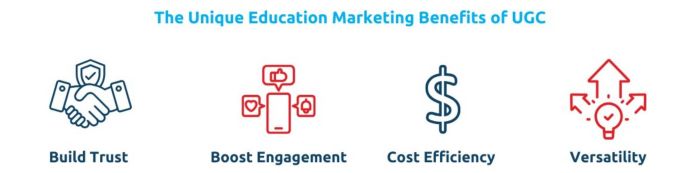
A key user-generated content advantage is its ability to build trust. When prospective students see real stories from current students or alumni, they develop a connection to your institution. This sense of authenticity makes them more likely to inquire about programs and ultimately enroll.
Another advantage is the ability to foster engagement across digital platforms. Content created by students, such as Instagram stories, TikTok videos, or blog posts, generates far higher engagement than traditional ads. People love sharing their experiences, and prospective students love seeing real perspectives from peers who have been in their shoes.
A major user-generated content advantage is cost-effectiveness. Instead of investing heavily in producing marketing materials, you can encourage students and alumni to share their stories organically. This reduces costs and enhances your reach, as UGC spreads naturally through networks.
Another reason why user-generated content is important in marketing is its adaptability across multiple platforms. UGC can be repurposed into social media campaigns, website testimonials, video promotions, and email marketing efforts. This versatility allows you to maintain a steady stream of fresh, compelling content.
Source: HEM
What Is Authentic Storytelling in an Educational Marketing Context?
Authentic storytelling goes beyond traditional marketing materials to craft compelling narratives highlighting real student and faculty experiences. Instead of relying solely on promotional messages, this approach uses emotion, relatability, and personal journeys to engage prospective students.
What is the power of storytelling in education? Authentic storytelling is powerful because it transforms abstract institutional values into relatable, real-world experiences. It allows prospective students to see themselves in your stories, making their decision-making process more personal and impactful. This approach humanizes your institution and strengthens your brand identity.
One of the best ways to incorporate authentic storytelling into your marketing strategy is by featuring in-depth student and alumni stories. A compelling blog could follow the experiences of an international student adjusting to life in a new country while studying at your institution. A video series could showcase students discussing their educational journey, including their challenges and triumphs. By doing this, you create content that is informative and emotionally engaging.
The Advantages of Authentic Storytelling in Education Marketing
Unlike traditional promotional content, authentic storytelling builds emotional connections that influence student decision-making. By sharing real experiences from your students and faculty, you provide prospects insight into your institution’s culture, values, and impact.
One of the greatest advantages of authentic storytelling is its ability to make your institution’s messaging more relatable. Instead of generic promotional materials, prospective students see real-life success stories, challenges, and personal growth journeys, helping them visualize their own future at your school.
Another unique benefit is the ability to enhance brand trust and credibility. People connect with stories, not advertisements. By showcasing genuine experiences through student interviews, alumni journeys, and behind-the-scenes campus life, your school appears more transparent and welcoming. This approach fosters a deeper connection with your audience, making them more likely to engage with your institution.
Authentic storytelling also strengthens retention and alumni relations. When students feel emotionally connected to your institution through compelling narratives, they are more likely to remain engaged throughout their education and beyond. Alumni who feel valued through storytelling initiatives often become ambassadors for your school, further enhancing your brand reach.
How Your School Can Leverage User-Generated Content and Authentic Storytelling
Building a marketing strategy around user-generated content and authentic storytelling requires a proactive approach. Instead of simply encouraging students to share their experiences, you need to create opportunities for engagement, provide platforms for their voices, and consistently highlight their stories. By doing so, you ensure that the content generated aligns with your school’s brand and messaging while maintaining the authenticity that makes it so powerful.
Encourage Student-Generated Social Media Content
One of the best ways to integrate UGC into your marketing strategy is by motivating students to share their experiences on social media. Encourage them to document campus life, extracurricular activities, and classroom experiences.
For example, your university might launch an Instagram challenge where students post their favorite campus spots with a branded hashtag. Similarly, a career college could create a TikTok trend showcasing student projects or daily routines in their training programs.
Example: This video, posted by a UCLA student, is a free promotion for the school’s dining hall. She is making a relatable joke about the proverbial ‘freshman fifteen,’ an expression for the weight gain that tends to occur in the first year of college. The creator credits the delicious food at UCLA for her freshman fifteen, and this is not the only video of its kind on her page. Satisfied students eager to share their experiences are invaluable for generating compelling UGC. Encourage students to use specific hashtags for their UGC as this creator did (#ucla #dininghall, etc).
Prospective students value hearing from those who have already walked the path they are considering. Featuring student and alumni testimonials on your website, in promotional videos, and on social media channels provides relatable insights into your programs.
An example of effective testimonial use is a nursing college that records short video interviews with recent graduates discussing their experiences and career outcomes. These testimonials provide compelling, relatable stories that reinforce the value of your school’s programs.
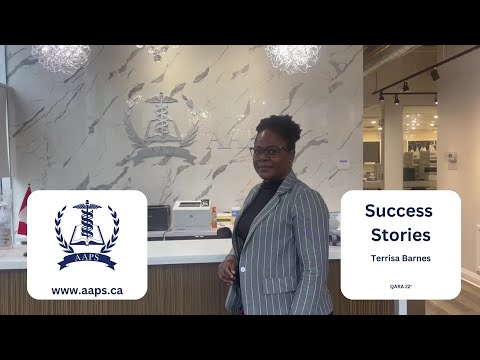
Example: AAPS regularly posts alumni video testimonials highlighting each graduate’s unique background, career goals, and how the institution supported the attainment of their objectives. Here, Teresa Barnes describes how the Quality Assurance and Regulatory Affairs program at AAPS helped her to find success as a Medical Writer. Your alumni community is probably full of careerists who are proud of their achievements and are excited to talk about their journey. This is an excellent opportunity for effective brand storytelling.
Source: Academy of Applied Pharmaceutical Sciences | YouTube
Develop Long-Form Content With Authentic Storytelling
Creating blog posts or video documentaries featuring students’ journeys can be a powerful way to engage prospects. A compelling blog could follow a student during an internship and how the experience shaped their career aspirations. This approach showcases your school’s opportunities while telling a relatable story that resonates with other students considering similar paths.
Additionally, long-form content allows for in-depth storytelling that goes beyond surface-level promotions. A well-written blog post could feature a student reflecting on their academic journey, describing their challenges, the mentors who guided them, and the personal growth they experienced. Similarly, a video series might document a student’s transition from their first day on campus to their graduation, providing prospective students with a complete picture of what they can expect.
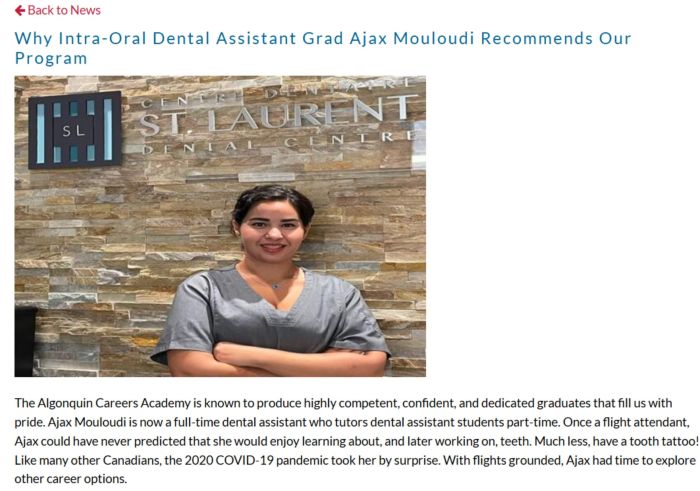
Example: Blogs remain a relevant way to tell your school’s story and give your student body a voice. Here, Algonquin Careers Academy tells the story of one of their dental assistant graduates. By publishing a blog post that features a student interview, the message is personable, inspirational, and authentic. Try to infuse personality into your long-form content whether you choose to blog, post videos, create a newsletter, or all three.
Source: Algonquin Careers Academy
Highlight Behind-The-Scenes Content
Showcasing the day-to-day experiences of students, faculty, and staff makes your institution feel more welcoming and accessible. A behind-the-scenes video series might follow a day in the life of a student in a culinary arts program, walk viewers through a school event, and showcase hands-on learning experiences and interactions with industry professionals.
An effective example comes from business schools that share faculty-led discussions, giving students an inside look at the classroom environment before they apply. This storytelling adds authenticity and provides a window into your school’s culture and academic strengths.
Example: Here, the American Musical and Dramatic Academy showcases its open house event, building anticipation for prospects and providing useful information about what they can expect from the event. Behind-the-scenes videos are easy to film, effective for humanizing your brand, and excellent ways to inform your audience in an engaging, easy-to-digest format.
To increase engagement, your school can launch user-generated content campaigns that incentivize participation. This could include video challenges, photo competitions, or student-run social media takeovers. For instance, a digital marketing diploma program might host a competition where students submit real-world marketing campaign ideas, with the winner featured on your school’s website and social media pages. This not only showcases student talent but also strengthens your brand’s credibility.
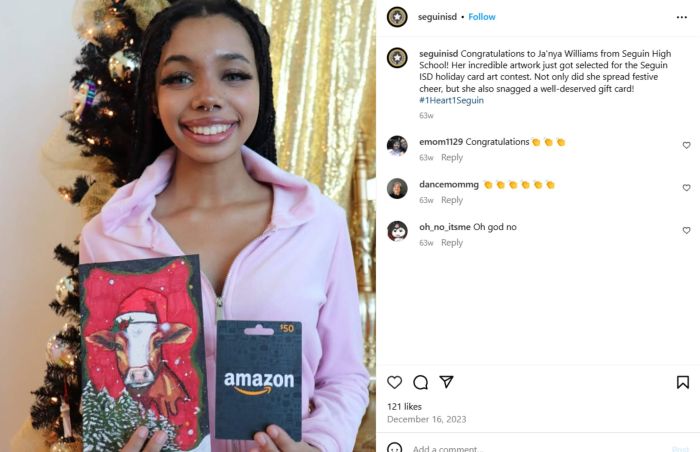
Example: Seguin High School showcases the artistic talent of one of their students who had won an art contest. Not only is this an excellent way to instill well-deserved pride and support in your students, but it is also a great way to humanize your school brand and display your strong community.
Source: Seguin High School | Instagram
Get Support as You Elevate Your Education Marketing Strategy
In today’s highly competitive and interconnected world, attracting qualified student prospects online is essential to a successful recruitment strategy. Schools and universities must implement innovative and authentic marketing techniques, leveraging user-generated content and authentic storytelling to connect with their audiences on a deeper level. Working with a marketing agency specializing in education marketing can be a game changer for your results.
For over 15 years, Higher Education Marketing has crafted successful digital marketing strategies for schools worldwide. Our deep understanding of education marketing allows us to design multichannel campaigns that drive engagement and enrollment. We provide tailored services, including:
Content Marketing
Search Engine Optimization (SEO)
Social Media Marketing
Paid Advertising Campaigns
Partner with us to harness the power of storytelling in education and leverage the benefits of user-generated content to drive real engagement. Contact us today to explore how our expert digital marketing solutions can transform your student recruitment efforts and enhance your institution’s online presence.
Struggling with enrollment?
Our expert digital marketing services can help you attract and enroll more students!
Frequently Asked Questions
Question: Why is user-generated content important in marketing?
Answer: UGC is created by your students and alumni; it is perceived as more trustworthy than traditional promotional materials. Prospective students are more likely to trust and engage with content created by their peers rather than content crafted solely by an institution.
Question: What is the power of storytelling in education?
Answer: Authentic storytelling is powerful because it transforms abstract institutional values into relatable, real-world experiences. It allows prospective students to see themselves in your stories, making their decision-making process more personal and impactful. This approach humanizes your institution and strengthens your brand identity.
The power of human stories is undeniable. Whether conveyed through music, art, writing, or oral storytelling—sharing one’s lived experience can have a profound impact. Stories connect people by tapping into their universal emotions, experiences, and values. They can also preserve and pass on traditions, customs, language, and culture or be utilized as a persuasive tool to inspire action.
In educational settings, storytelling can be transformative. When students are given opportunities to reflect on their lives and narrate their experiences, they can better understand themselves and others. Stories also give students a voice, which is particularly important for those who are disenfranchised. By sharing their stories, the inequities they experience are humanized, which might lead to institutional change, such as policy shifts that can close equity gaps.
Ways to Integrate Storytelling in the Classroom
Storytelling Templates: Offer a simple storytelling template to guide students in their reflective thinking and writing. It might be helpful to have them consider the main characters, setting, and plot of their narratives. Stories can be organized chronologically, thematically, or by using a cause/effect or problem/solution design.
Example:
What are your goals in school? How will having an education improve your life?
What challenges, if any, have you experienced in school?
How are you working to overcome these challenges?
How can the school help you succeed? What support or resources would help?
Interactive Journals: Utilize an interactive journal, where students can share their stories. Then, a teacher can respond with positive feedback, questions, or additional reflective prompts.
Exit Tickets: Give students exit tickets at the end of class so they can write stories to share personal connections they have made with class concepts. This can help them slowly feel more comfortable sharing their stories and begin to see the relevance of the material to their personal or professional lives.
Human Library: Every student has a story to share. It might be about their role as a student, athletic accomplishments, time in the military, or experiences in a family. Each student’s story is like a book that their classmates can “check out” to learn more about them.
Student Interviews: As an icebreaker during the first week of class, students can create interview questions so they can get to know their classmates. Ideally, they will meet most, if not all, of their peers, which will help them start to build a classroom community.
Creative Outlets: Encourage students to share their stories through podcasts, blog posts, comic strips, posters, or presentations. Creative expression may help students talk about experiences that are difficult to put into words.
Although there are many benefits to having students share their stories, there may also be challenges to consider. For some students, it can be emotionally draining to revisit past experiences, especially if they are traumatic. As such, it is important for teachers to approach these activities with compassion and understanding.
Considerations for Respectful Storytelling
Safe Learning Spaces: Building a safe learning space where trust is built may prime students for sharing their stories. This takes time, so teachers may want to wait to assign storytelling until rapport has been built in the classroom.
Promote Boundaries: Not everyone will feel comfortable sharing their stories. Teachers may give students the option to opt out or to choose what parts of their stories they feel comfortable sharing.
Encourage Respectful Listening: The audience should have clear expectations for how to respectfully listen to their classmates’ stories. By using empathetic body language such as leaning in, nodding, and making eye-contact when a student is opening up, it can have a profound impact and provide validation.
Alternate Assignments: If speaking openly is too personal, teachers can let students share their stories in alternate formats. Consider creative outlets, such as art, music, or memory boxes.
Model Vulnerability: Teachers can model storytelling in class. Then, they can speak to the courage it takes to be vulnerable in front of others.
Acknowledge Effort: When students do take the risk and open up in class, teachers can genuinely praise their efforts. This is particularly important when students are sharing a tough topic.
Incorporating storytelling into the classroom can empower students to share their unique experiences and perspectives. By thoughtfully guiding these activities, teachers can create spaces where all students feel seen and valued. When students share their stories, they build bridges of compassion, which can foster inclusion in the classroom and enrich the learning community.
Amy M. Anderson, EdD, teaches communication studies courses at Spokane Community College and Whitworth University. She earned her doctorate in teaching and learning from Grand Canyon University and her master’s degree in communication and leadership studies from Gonzaga University. Amy enjoys researching, writing, and presenting on topics relating to communication, higher education, leadership, teaching, and reflective practice. She is also passionate about improving equity, diversity, and inclusion in and out of higher education institutions.
Kelly R. Maguire, EdD, teaches for the College of Doctoral Studies at Grand Canyon University. She earned a doctorate in teaching and learning from Grand Canyon University, a master’s degree in English, and a master’s degree in elementary education from Northern Arizona University. Her bachelor’s degree in elementary education was earned at the University of Arizona. Her research and presenting interests include teacher training, pre-service teachers, microteaching, content knowledge, and reflective practice.
The power of human stories is undeniable. Whether conveyed through music, art, writing, or oral storytelling—sharing one’s lived experience can have a profound impact. Stories connect people by tapping into their universal emotions, experiences, and values. They can also preserve and pass on traditions, customs, language, and culture or be utilized as a persuasive tool to inspire action.
In educational settings, storytelling can be transformative. When students are given opportunities to reflect on their lives and narrate their experiences, they can better understand themselves and others. Stories also give students a voice, which is particularly important for those who are disenfranchised. By sharing their stories, the inequities they experience are humanized, which might lead to institutional change, such as policy shifts that can close equity gaps.
Ways to Integrate Storytelling in the Classroom
Storytelling Templates: Offer a simple storytelling template to guide students in their reflective thinking and writing. It might be helpful to have them consider the main characters, setting, and plot of their narratives. Stories can be organized chronologically, thematically, or by using a cause/effect or problem/solution design.
Example:
What are your goals in school? How will having an education improve your life?
What challenges, if any, have you experienced in school?
How are you working to overcome these challenges?
How can the school help you succeed? What support or resources would help?
Interactive Journals: Utilize an interactive journal, where students can share their stories. Then, a teacher can respond with positive feedback, questions, or additional reflective prompts.
Exit Tickets: Give students exit tickets at the end of class so they can write stories to share personal connections they have made with class concepts. This can help them slowly feel more comfortable sharing their stories and begin to see the relevance of the material to their personal or professional lives.
Human Library: Every student has a story to share. It might be about their role as a student, athletic accomplishments, time in the military, or experiences in a family. Each student’s story is like a book that their classmates can “check out” to learn more about them.
Student Interviews: As an icebreaker during the first week of class, students can create interview questions so they can get to know their classmates. Ideally, they will meet most, if not all, of their peers, which will help them start to build a classroom community.
Creative Outlets: Encourage students to share their stories through podcasts, blog posts, comic strips, posters, or presentations. Creative expression may help students talk about experiences that are difficult to put into words.
Although there are many benefits to having students share their stories, there may also be challenges to consider. For some students, it can be emotionally draining to revisit past experiences, especially if they are traumatic. As such, it is important for teachers to approach these activities with compassion and understanding.
Considerations for Respectful Storytelling
Safe Learning Spaces: Building a safe learning space where trust is built may prime students for sharing their stories. This takes time, so teachers may want to wait to assign storytelling until rapport has been built in the classroom.
Promote Boundaries: Not everyone will feel comfortable sharing their stories. Teachers may give students the option to opt out or to choose what parts of their stories they feel comfortable sharing.
Encourage Respectful Listening: The audience should have clear expectations for how to respectfully listen to their classmates’ stories. By using empathetic body language such as leaning in, nodding, and making eye-contact when a student is opening up, it can have a profound impact and provide validation.
Alternate Assignments: If speaking openly is too personal, teachers can let students share their stories in alternate formats. Consider creative outlets, such as art, music, or memory boxes.
Model Vulnerability: Teachers can model storytelling in class. Then, they can speak to the courage it takes to be vulnerable in front of others.
Acknowledge Effort: When students do take the risk and open up in class, teachers can genuinely praise their efforts. This is particularly important when students are sharing a tough topic.
Incorporating storytelling into the classroom can empower students to share their unique experiences and perspectives. By thoughtfully guiding these activities, teachers can create spaces where all students feel seen and valued. When students share their stories, they build bridges of compassion, which can foster inclusion in the classroom and enrich the learning community.
Amy M. Anderson, EdD, teaches communication studies courses at Spokane Community College and Whitworth University. She earned her doctorate in teaching and learning from Grand Canyon University and her master’s degree in communication and leadership studies from Gonzaga University. Amy enjoys researching, writing, and presenting on topics relating to communication, higher education, leadership, teaching, and reflective practice. She is also passionate about improving equity, diversity, and inclusion in and out of higher education institutions.
Kelly R. Maguire, EdD, teaches for the College of Doctoral Studies at Grand Canyon University. She earned a doctorate in teaching and learning from Grand Canyon University, a master’s degree in English, and a master’s degree in elementary education from Northern Arizona University. Her bachelor’s degree in elementary education was earned at the University of Arizona. Her research and presenting interests include teacher training, pre-service teachers, microteaching, content knowledge, and reflective practice.
By Dr Monika Nangia, Academic Registrar and Director of Student & Academic Services at Durham University.
In a world increasingly aware of the value of diversity, the role of women in leadership is more critical – and undervalued – than ever. Despite encouraging strides, women, particularly women of colour, continue to face systemic barriers to advancement. This is a story of resilience, inequity, and hope.
The conversation around diversity and inclusion is urgent, and storytelling has emerged as one of the most potent tools to address these challenges. It connects us on a human level, fosters empathy, and confronts biases. At its best, storytelling is transformational.
In my career, I have witnessed the transformative power of storytelling in ushering in meaningful change. The stories we carry as women – of resilience, determination, and overcoming barriers – are far more powerful than any statistic or corporate policy. These personal narratives, shared boldly, have the potential to inspire, to challenge, and to reshape how we think about leadership.
Why We Need Women in Leadership
The benefits of gender-diverse leadership are unequivocal. According to Deloitte’s Global Human Capital Trends, organisations with inclusive cultures achieve 2.3 times higher cash flow per employee, 1.4 times more revenue, and are 120% more capable of meeting financial targets. Diverse boards, particularly those with greater gender and ethnic representation, also demonstrate better resilience and crisis management – evident during the COVID-19 pandemic.
But beyond numbers lies the human impact. Women leaders bring ‘cognitive diversity’, which accelerates learning and performance in complex and uncertain situations. Their leadership fosters a sense of belonging, improves employee engagement, and reduces turnover.
The journey to leadership for women is fraught with challenges. The ‘broken rung’ effect—where women are less likely than men to be hired or promoted into entry-level managerial roles – creates a bottleneck that compounds over time. For every 100 men promoted to manager, only 81 women make the same leap, with even fewer opportunities for women of colour.
Racial inequalities exacerbate this gap. McKinsey’s 2020 report highlights that women of colour face the steepest drop-off in career advancement at the transition from middle to senior management. Cultural expectations and resistance to authority further hinder their progress.
These systemic inequities are reflected starkly in higher education. According to the HEPI Report 2020, Mind the Gap: Gender differences in HE, while women now constitute 55% of university staff in the UK, they occupy only 29% of vice-chancellor roles. Among professors, women account for 29.7%, but Black women make up less than 1%.
The Power of Storytelling
Stories have a unique ability to amplify voices, challenge biases, and inspire inclusivity. Neuroscience tells us that engaging narratives release oxytocin in the brain, promoting empathy and altruistic behaviour. More than data or policy, storytelling humanises diverse experiences and catalyses change.
I’ve seen firsthand how storytelling transforms workplaces. Women leaders who share their personal journeys of resilience and ambition inspire others to envision new possibilities. Their stories break down preconceived notions, fostering an inclusive mindset that leads to behavioural change.
One colleague who spoke candidly about her experience being the only woman of colour in a senior leadership team. She described how, despite excelling in her role, her authority was often questioned, and she had to work twice as hard to gain the same respect as her peers.
Her story resonated deeply, not just because of the challenges she faced, but because of the hope and strength she embodied. By sharing her experience, she is creating a ripple effect – encouraging others to speak up, address inequities, and push for change.
Storytelling is also about accountability. In fact, it is far more important to confront the untold stories, the contributions of women whose voices have been silenced or overlooked. This is especially true for women of colour, whose experiences often fall at the intersection of gender and race-based inequities.
Mending the ‘Broken Rung’
A combination of stories like hers, with corresponding datasets as evidence, expose the structural barriers that continue to hold women back. The ‘broken rung’ is a vivid example of this.
Another story that sticks with me is from a woman in higher education, who spoke about being overlooked for a leadership role despite being the most qualified candidate. She later discovered that her ambition had been perceived as ‘sharp-elbowed’ and intimidating – a stark contrast to how her male counterparts were described.
Hearing her story compelled me to reflect on how ambition in women is often misinterpreted, reinforcing stereotypes that undermine their credibility. At a recent workshop, a senior leader shared her journey of overcoming immense personal and professional obstacles to lead a major organisational transformation. Her authenticity and vulnerability moved the room, sparking conversations about resilience, leadership, and the need for systemic change.
Building a Legacy of Inclusive Leadership
The path to inclusive leadership requires intentionality. It means addressing both visible and invisible barriers, from hiring practices to cultural attitudes. The stories we share today will shape the leadership landscape of tomorrow. As women, we have the opportunity – and the responsibility – to use our narratives to drive change.
Organisations with diverse leadership teams outperform their peers not just financially but also in innovation and problem-solving. The evidence is clear: diversity is not just a moral imperative – it is a strategic advantage. But the true value of diversity goes beyond metrics. It’s about creating workplaces where everyone feels they belong, where their contributions are valued, and where they can thrive.
Imagine this: You assign your students a writing prompt, and while some eagerly begin crafting their stories, others stare at the blank page, muttering, “I have nothing to write,” or “I can’t think of a story.” For English Language Learners (ELLs), this scenario is even more daunting due to limited vocabulary or fear of making mistakes. In fact, studies show that a lack of confidence and linguistic resources often prevents ELLs from fully engaging in creative writing, despite their rich cultural and personal experiences.
As educators, we constantly seek ways to help students overcome these barriers. Enter artificial intelligence (AI)–a powerful tool that transforms storytelling into an accessible and engaging experience for every student. By integrating AI into storytelling, we can empower students to generate ideas, build confidence, and create compelling narratives, all while developing their language skills.
Getting started: Using AI to spark creativity
A simple and engaging way to introduce AI in storytelling is by using a writing prompt and generating an example story opening with ChatGPT. For instance, you might ask: “Write the opening to a mysterious story about an abandoned lighthouse.”
ChatGPT could respond: “The wind howled through the cracks of the abandoned lighthouse, carrying whispers of secrets long forgotten. The light, extinguished for decades, seemed to flicker faintly as if trying to tell a story no one had yet heard.”
Students can take this opening and continue the story in their own words, expanding the scene, introducing new characters, or creating a plot twist. This method not only sparks creativity but also provides ELLs with a scaffold, building their confidence to dive into storytelling.
To bring their stories to life, students can use AI image generators like DALL-E or tools like Canva to create visuals matching their narratives. For example, they could create an eerie image of the abandoned lighthouse with flickering light and stormy skies. This connection between words and visuals reinforces comprehension and engages students in the storytelling process.
The final step is sharing stories and visuals with the class. Presenting their work allows students to practice speaking, gain confidence, and showcase their creativity.
How AI enhances storytelling
AI tools offer unique opportunities to support ELLs in their storytelling journey. When students struggle to come up with ideas, tools like ChatGPT can provide engaging prompts and vivid descriptions to spark creativity. For example, a student might request a description of a magical forest and receive a response like: “A forest bathed in golden sunlight, where trees tower like ancient guardians and the air shimmers with tiny, glowing orbs.” Such detailed imagery can inspire students to dive into their stories with greater confidence.
In addition to idea generation, AI tools help expand students’ vocabulary. ELLs can use AI to explore synonyms or alternative ways to describe scenes, enriching their language repertoire.
For instance, if a student wants to avoid repeating the word “beautiful,” the AI might suggest options like “stunning,” “captivating,” or “breathtaking,” enabling more nuanced and expressive writing.
Visual storytelling is another area where AI shines. Tools like DALL-E or Adobe Express allow students to create images that align with their narratives, making their stories come to life. For example, a student writing about a mysterious glowing orb could generate a corresponding image, blending creative thinking with visual artistry.
Once students have drafted their stories, AI-based writing assistants like Grammarly can help refine their grammar, spelling, and sentence structure. This process encourages independence and self-correction, teaching students to identify and address their mistakes while improving the overall clarity and polish of their work.
Interactive platforms like Twine take storytelling to a new level by enabling students to create “choose your own adventure” narratives. For example, students might create a mystery where readers decide whether to follow a shadowy figure or stay hidden, leading to different outcomes. This fosters critical thinking and collaboration as students craft branching storylines and engage in problem-solving to connect various plot points.
Classroom example: AI in action
In a Grade 8 ESL classroom, students were given the prompt: “Write about a strange object you find buried in your backyard.” After brainstorming ideas with ChatGPT, one student created a story about a glowing orb that transported them to another dimension. They used DALL-E to generate an image of the orb, and Twine to develop a branching narrative where the reader decides whether to touch the orb or call for help. The result was an immersive storytelling experience that combined creativity with critical thinking.
By incorporating AI tools, students not only created more engaging stories but also developed their language skills in a meaningful and enjoyable way.
Making storytelling accessible and engaging
Using AI in storytelling doesn’t just overcome barriers; it transforms the experience for students. Visual elements and interactivity keep learners engaged, while tools for grammar and vocabulary improvement build confidence. For ELLs, AI provides scaffolding and encouragement to take creative risks and express themselves authentically.
Guiding responsible AI use
While AI opens doors to creativity, teaching students to use these tools responsibly is essential.
Students need to understand the concept of AI “hallucinations,” where AI generates inaccurate or entirely fabricated information. For instance, an AI might describe a historical event inaccurately or create a fictional fact that seems plausible. Educators should teach students to verify AI-generated information with reliable sources.
Equally important is teaching students how to craft clear and specific prompts. For example, instead of asking, “What happens in a story?” they might ask, “Can you suggest a story idea about a character who solves a mystery in a small town?”
Modeling this process helps students see how precise wording yields better results. Encouraging critical thinking is also crucial. Teachers can create opportunities for students to analyze AI-generated content by asking: “Does this make sense? Is it accurate? Can I verify it elsewhere?” Such discussions help students see AI as a helpful tool, but not an infallible one.
Students should also learn that AI is a partner in creativity, not a replacement for their original thinking. They must guide the AI, evaluate its outputs, and make creative decisions to ensure their work remains authentically theirs. Additionally, students should be encouraged to credit AI-generated content appropriately to foster ethical use.
Conclusion
Storytelling is a cornerstone of language learning, offering ELLs opportunities to build vocabulary, practice grammar, and express their ideas. With AI, the storytelling process becomes more accessible, engaging, and impactful. From generating prompts to creating visuals and refining drafts, AI supports students in overcoming challenges and discovering the joy of storytelling.
By integrating AI tools responsibly, educators empower every student to find their voice and share their unique stories with confidence. In the intersection of creativity and technology, AI has the potential to revolutionize the way we teach and learn storytelling
Nesren El-Baz, ESL Educator
Nesren El-Baz is an ESL educator with over 20 years of experience, and is a certified bilingual teacher with a Master’s in Curriculum and Instruction. El-Baz is currently based in the UK, holds a Masters degree in Curriculum and Instruction from Houston Christian University, and specializes in developing in innovative strategies for English Learners and Bilingual education.
Latest posts by eSchool Media Contributors (see all)
When I became president of the University of La Verne in 2011, I often shared the story of why I was drawn to this role—and why it resonated so deeply with my family’s values. My husband and I were committed to raising our daughters in a community that embraced inclusivity, service, and the transformative power of education. These were not just abstract ideals; they were principles we wanted to live by and instill in our children. And sharing this connection wasn’t just about explaining my leadership—it was about building trust and fostering relationships across campus.
Today, as higher education leaders face unprecedented scrutiny—from political attacks on academic freedom and diversity efforts to growing public skepticism about the value of a college degree—this kind of authenticity and connection is more critical than ever. Our institutions are being challenged to prove their relevance and align their missions with the needs of diverse and sometimes skeptical communities. In this climate, personal storytelling offers a powerful way to build bridges, humanize our roles, and reaffirm the values that define higher education. In navigating the complexities of our current environment, storytelling is not just a leadership tool—it’s a leadership imperative.
Why personal storytelling matters
Building authentic relationships: Personal stories bridge the gap between leaders and campus communities. Sharing your experiences, challenges, and successes makes your role more relatable and human. When leaders share stories authentically, we foster trust and encourage deeper connections with our students, faculty, alumni, donors, and other stakeholders. A compelling story has a way of bringing people together, sparking that feeling of connection through common experiences.
Inspiring action and change: Stories are powerful motivators. They show how education can transform lives, encouraging students to pursue their dreams, sparking innovation among faculty, and connecting with alumni and donors. At the University of La Verne’s annual Scholarship Gala, I used to share my mother’s story—how, as an immigrant, she stayed committed to education despite countless challenges. When she, her two older sisters, and their parents first immigrated to the United States from Czechoslovakia, they had to build a new life, learn a new language, and adapt to new customs. My grandfather would bring used tires to their home, where the family would cut them into small squares and sew them together to create doormats. He sold these mats door-to-door, and the money they earned not only supported their daily life but was also saved so that my mother could attend nursing school.
Each year following my story, students would respond with their own incredible stories of resilience. Those moments didn’t just inspire greater scholarship donations—they raised awareness about the challenges that so many students face, underscoring just how vital access to education really is.
Shaping institutional culture: Personal stories are a big part of what shapes a university’s identity, creating a sense of inclusion, resilience, and shared values. Early on in my time at the University of La Verne, a board member told me why the university—her alma mater—meant so much to her and why she chose to give back as a donor and leader. She often spoke about how she and her husband met while attending La Verne, and that they both loved the supportive and inclusive environment at the university. Then one of her children enrolled, and a particular professor took him under his wing and helped him with his academic career. She felt La Verne was always there when she and her family needed support.
Her story stuck with me, and I shared it often as an example of how personal connections can inspire others to support the university’s mission. By encouraging storytelling like this, we brought our community closer together and reinforced our shared purpose.
Engaging with diversity: Every story brings something unique to a campus community. When we make room for diverse voices, we naturally build stronger connections and a sense of belonging. Serving on the board of Antioch University, I’ve had the privilege of hearing a wide range of students and faculty share their experiences—some inspiring, some challenging, all meaningful. These moments are a great reminder of how much we gain when we listen to and learn from each other.
Strategies for Effective Storytelling
Connect stories to the institution’s mission: Personal stories are powerful, but they work best when they connect back to the institution’s goals. I once attended a university event where the president’s stories, while memorable, didn’t really support the message of the institution—they overshadowed it, leaving the audience entertained but not necessarily inspired about the university’s future. It’s a good reminder that storytelling should always reinforce the mission and build confidence in what lies ahead.
Balance sharing with relevance: Finding the right balance between personal and professional storytelling is key. Oversharing can make people uncomfortable or distract from your message. A story might be heartfelt, but if it’s too detailed, the audience might lose track of why it matters. The best approach is to share meaningful anecdotes that highlight your points while keeping your audience and the setting in mind.
Maintain honesty and humility: The best stories come from a place of honesty and humility—they build credibility and trust. Think about great leaders: the ones who acknowledge the contributions of others tend to connect more than those who focus on their own achievements. On the flip side, self-congratulatory stories can feel off-putting and even break trust with the audience. Keep it grounded, which always resonates better.
Avoid unethical exaggeration: Stretching the facts or making up stories can seriously damage trust. And people can usually tell when a story isn’t genuine, whether it’s because of over-the-top details or a lack of authenticity in the delivery. It’s important for leaders to stay honest, sharing meaningful details without straying from reality. In today’s world, where fact-checking is everywhere, even small inconsistencies can hurt your credibility—and by extension, the reputation of your institution. Keep it real, and your message will always carry more weight.
Repetition without redundancy: Repeating key messages can really help drive them home, but it’s all about balance. When you tell the same story to different audiences, it can show consistency and authenticity, which is great. But if you overdo it, people might start to tune out, feeling like they’ve heard it too many times. We all recycle our favorite speeches and stories when we speak often, and that’s fine as long as we’re mindful of keeping it fresh. A thoughtful approach to storytelling means your message stays powerful without losing its impact.
************
Personal storytelling is one of the most powerful tools leaders in higher education have at their disposal. When done right, it builds trust, inspires action, and strengthens the sense of community. Sharing authentic stories helps connect audiences to the mission and values of an institution, creating a shared sense of purpose and vision.
As higher education continues to navigate challenges like public skepticism and political scrutiny, storytelling offers a way to highlight the transformative power of education. It allows us to address concerns with honesty and integrity, while keeping the focus on the positive impact education has on individuals and society. Reaching beyond the academy, these stories help build connections with the wider community—and ideally, around the world—showing how education shapes lives and strengthens society.
dotEDU Global Voices
This December, ACE will feature a special podcast series, dotEDU Global Voices, which will spotlight personal stories from accomplished international women university presidents. These leaders share their unique challenges, insights, and strategies, offering authentic and inspiring perspectives on leadership.
The series builds on my book, Spotlighting Female Leadership: Strategies, Stories, Perspectives, which highlights the journeys of ten accomplished university presidents. To learn more, download the book here and tune into the podcast for further inspiration.