Ever wonder why students don’t read the syllabus, despite the time and effort we put into creating it? It serves as a contract between instructors and students (Eberly, Newton, & Wiggins, 2001), outlining the entire semester’s expectations, assignments, and deadlines. Yet, many students simply aren’t motivated to read it. They often find syllabi overwhelming, unengaging, or even unreadable. In many classes, professors go over the syllabus during the first week (Richmond, 2016), so frequently that students have dubbed it “syllabus week” — not exactly the most exciting start to a semester! Students often form impressions about their courses within the first few minutes of class (Roberto, 2021). Simply standing in front of the room and reading through the syllabus page by page isn’t the most engaging way to showcase what your class has to offer.
What if there were more effective ways to get students to not only read it, but to actively engage with it? Many students skip over it because learning management systems (LMS) like Canvas, Blackboard, and D2L now contain everything they need in one place. Yet, as instructors, we still rely on the syllabus to provide a clear roadmap for the semester.
So, how can we make it more engaging? Below are some strategies to encourage students not only to read the syllabus but to enjoy exploring what your class has to offer and what to expect throughout the semester. Here are five effective strategies to encourage students to engage with your syllabus. While some involve additional technology, leveraging these tools can enhance the experience and make the syllabus more interactive.
Use Notebook LM to create a podcast of your syllabus. Professors can use Notebook LM to generate a podcast version of their syllabus by uploading your syllabus and allow the AI to summarize and structure the content into an engaging audio format. This makes the syllabus more accessible and interactive for students.
Do polling questions using apps like PollEverywhere, Mentimeter and my favorite, Slido, to create interactive quizzes about key syllabus details. By turning the syllabus into a fun, live Q&A session, students engage actively while reinforcing important information about course policies, deadlines, and expectations in an engaging and memorable way.
Think-Pair-Share. Ask students to reflect on the following questions: How does this syllabus compare to others you’ve had? What strengths stand out to you? What challenges do you anticipate after reading it? Have them write down their thoughts individually, then pair up to discuss their responses. Finally, bring the class together for a group discussion, allowing you to clarify any questions or concerns as students share their insights. This activity not only helps students engage with the syllabus but also fosters a sense of community on the first day by encouraging interaction and shared understanding.
Have students annotate the syllabus. Have students annotate the syllabus—a great suggestion from an X post by Remi Kalir. In pairs or small groups, students will review the syllabus together, adding annotations that include clarifying questions, opinions on assignments and readings, and responses to course policies. Using a shared document like Google Docs allows everyone to see and engage with each other’s comments in real time. Another tool to use could be Perusall as the annotation tool. This not only helps students actively engage with the syllabus but also serves as a valuable community-building activity on the first day. The professor can then review the comments to address questions and provide further clarification.
Syllabus Station. In this community-building activity, students will work in groups to identify three key takeaways from the syllabus. At a designated syllabus station in a gallery walk, each group will review a hard copy of the syllabus, discuss its most important points, and write their top three on a large post-it poster. As groups rotate through the stations, they will add their insights to the poster, creating a collaborative summary of essential course information. This interactive approach encourages engagement with the syllabus while fostering teamwork. (I wrote an article on this in Faculty Focus, highlighting different first-day stations I use in class. Begin the Semester with Classroom Community Building Activities to Increase Student Engagement)
Many of these strategies align with community-building activities that foster a supportive and engaging classroom environment, encouraging student participation and a sense of belonging (Ricevuto & McLaughlin, 2022). By implementing one of these approaches, you not only help students engage with the syllabus but also strengthen classroom connections—creating a win-win situation.
Additionally, many of these techniques can be adapted for online courses with slight modifications. In an online setting, these techniques can be easily adapted:
Annotation activities can be done using collaborative tools like Hypothesis or Perusall, where students can highlight and comment directly on the syllabus.
Polling questions using Slido, PollEverywhere, or Mentimeter can be embedded in a live session or asynchronously in a discussion board.
Gallery walk-style activities can be recreated using shared Google Docs, Padlet boards, or discussion forums where students contribute key syllabus takeaways.
Podcast versions of the syllabus can be recorded using Notebook LM, making it more accessible for students who prefer audio content.
By making small adjustments, these interactive techniques can work just as effectively in an online environment, ensuring that students engage with the syllabus while also building a sense of community within the virtual classroom.
By using these interactive strategies, you can transform the syllabus from a passive document into an engaging, community-building tool. Whether through annotation activities, polling questions, collaborative discussions, or creative formats like podcasts, these approaches help students actively engage with course expectations while fostering a sense of connection with their peers. When students feel involved from the start, they are more likely to participate, ask questions, and take ownership of their learning. Creating a welcoming and interactive syllabus experience not only ensures students understand the course structure but also sets the tone for a supportive and engaging classroom environment—both in-person and online.
Dr. Joanne Ricevuto is the Assistant Vice President for Instructional Success, overseeing faculty programming at her institution and leading professional development workshops on key topics in higher education. She also serves as the managing editor for the Office of Instructional Success website. With over 20 years of experience in higher education, she has taught as a professor of early childhood education and has authored numerous articles on virtual learning and student engagement. She is also the co-author of Engaging Virtual Environments: Creative Ideas and Online Tools to Promote Student Interaction, Participation, and Active Learning.
References
Elberly, M. B., Newton, S. E., & Wiggins, R. A. (2001). The syllabus as a tool for learner-centered learning. The Journal of General Education, 50, 56–74.
Ricevuto, J. & McLaughlin, L. (2022). Engaging virtual environments: Creative ideas and online tools to promote student interaction, participation, and active learning. Stylus Publishing.
Richmond A. S. (2016). Constructing a learner-centered syllabus: One professor’s journey. IDEA paper #60. IDEA Center, Inc.
Roberto, M. (2021, April 9). Engaging students on the first day and every day: 7 strategies for connecting in the classroom. Harvard Business Publishing Education.
Brett is a working professional with a packed schedule, balancing career growth with personal responsibilities. He knows that advancing in his field requires new skills and credentials, but he needs a program that fits his life, one that is flexible, aligned with his career and worth the investment. Brett is just one example of Modern Learner, a growing population of students who prioritize efficiency, affordability and real-world outcomes in their education.
Higher education has undergone a decade of transformation, from evolving enrollment patterns to advancements in technology and changing student expectations. As the landscape continues evolves, so do the behaviors and preferences of students like Brett—giving rise to the Modern Learner.
EducationDynamics’ latest report, “Engaging the Modern Learner: The 2025 Report on the Preferences and Behaviors Shaping Higher Ed,” examines these emerging trends. For over a decade, we have tracked student behavior and preferences, adapting our research to reflect the evolving higher education environment. Previously known as the Online College Students Report, this study has expanded in scope to provide a more comprehensive understanding of Modern Learners and their needs.
Explore the most significant changes over the past ten years, key findings from our research and actionable strategies to help higher education leaders challenge the status quo and drive innovative outcomes.
How Have Student Behaviors and Preferences Changed in the Last Decade?
Student search, decision-making, and engagement behaviors have shifted significantly over the past decade. Strategies that once drove enrollment may no longer be as effective, requiring institutions to adapt. By examining these changes, we can identify emerging patterns that will shape the future of higher education.
Modern Learners Expect Immediate Admit Decisions
With greater access to information through technology, prospective students are making decisions faster than ever before. As a result, Modern Learners expect rapid responses from institutions. In 2015, 43% of fully online learners said that they would enroll at the first school that contacted them. By 2025, the urgency has increased significantly, with nearly 75% of online learners indicating that they would enroll in the first school that admits them. This shift underscores the growing need for institutions to streamline their admissions processes, ensuring quick response times and efficient decision-making to remain competitive in enrolling Modern Learners.
Search Initializes at the Brand Level
Student search behavior is another trend that has faced a significant shift in recent years, with more students starting their search by focusing on schools rather than specific programs.
Recent data reveals that 58% of respondents begin their search by considering schools first. This trend is even more pronounced among online learners, where approximately 60% prioritize finding a school before narrowing down their program options. Following school, the next most common search is subject area, with students increasingly exploring broader categories before selecting a specific program.
Given this shift, higher education marketing strategies need to reflect an approach that encompasses both promotion of programs and the institution itself. As prospective students often initiate their search with a school-focused mindset, schools must position their brand clearly to effectively engage and capture early interest, which will guide students towards relevant programs as they progress through the enrollment funnel.
AI Impacts Consideration Sets
The adoption of AI tools, such as website chatbots and on-demand engagement platforms, has grown steadily over the past decade. Recent data highlights notable increases in the use of chatbots. In 2015, only about 15% of online learners engaged with website chatbots or live chat agents. Now, in 2025, that number has more than doubled, reaching 30% of fully online students.
Moreover, students increasingly turn to AI tools like Search Generative Experience (SGE) for answers to critical questions about schools and their offerings, with 37% of Modern Learners using AI for information gathering. As students refine their consideration sets, AI-driven engagement tools provide timely and relevant information, making them a key touchpoint in the decision-making process. The growing reliance on these platforms calls for institutions to employ the use of informative and accessible AI tools to offer students seamless support throughout their research and decision-making processes.
Preference and Acceptance of Online Modality has Increased
It’s no secret that in the past decade, online education has not only gained traction but has become the preferred education modality for a growing population of students. In 2015, only 32% of fully online students believed their online education was better than their previous classroom study. However, that number has more than doubled for today’s respondents. 71% of online learners express a preference for online higher education experiences when compared to classroom education, indicating a fundamental change in student expectations and satisfaction with digital learning environments.
Engaging the Modern Learner
At EducationDynamics, our research continually seeks to understand the evolving needs of students. Through years of research and emerging insights from our 2025 survey, a clear picture of the Modern Learner has emerged—one defined by a focus on flexibility, career, and a desire for personalized education experiences. Modern Learners are not only looking to complete a degree, they also aim to shape their own learning journeys in ways that align with their personal and professional goals.
Shared Demands and Preferences
Despite their diverse backgrounds, Modern Learners share several key expectations. They prioritize affordability, flexible learning formats and responsive support. If their needs aren’t met, they will quickly seek alternative options. This shift in expectations means that institutions need to rethink how they attract, engage and support students. Meeting the Modern Learner where they are is no longer optional; it is essential for long-term success.
The Power of Brand & Reputation
A strong institutional brand plays a crucial role in the student decision-making process. As students begin their search with a school-focused mindset, a well-established reputation can be the deciding factor in where they apply. In fact, reputation ranked as the third most influential factor in application decisions, cited by 31% of students overall and 51% of traditional undergraduates, in our 2025 survey. To remain competitive, institutions must build a credible and respected brand that not only attracts prospective students but also reinforces trust and long-term value throughout their educational journey.
Value and Affordability
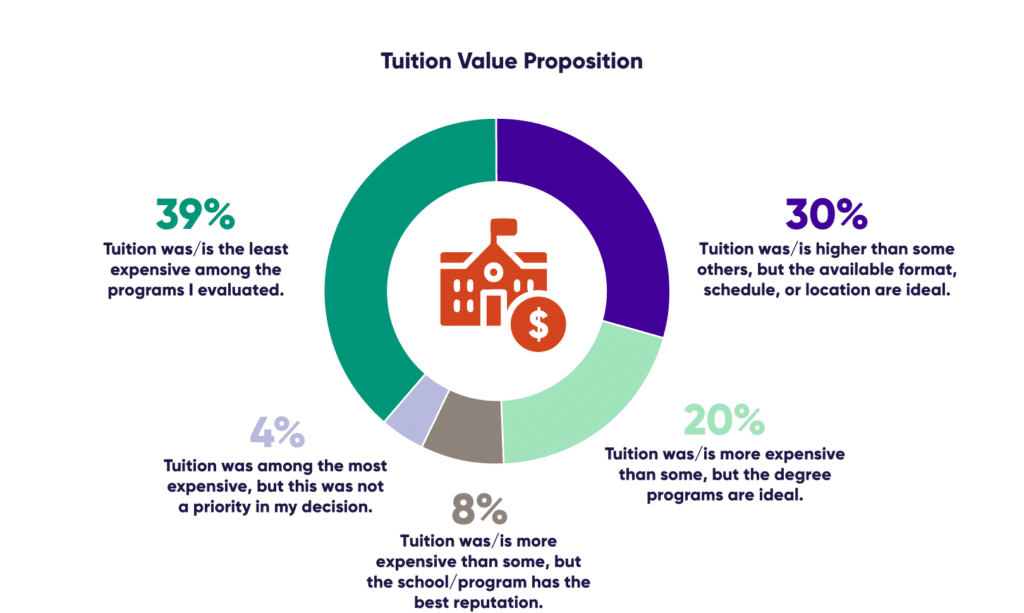
While cost is a significant consideration for Modern Learners, affordability alone doesn’t drive enrollment decisions. A well-rounded value proposition plays an equally important role. Our research shows that 46% of students cite tuition cost as a critical factor, but other factors like program relevance to careers, flexibility, and reputation also weigh heavily in their decision-making process.
Supporting students with financial literacy is crucial, as 38% of students identify it as a helpful resource during the enrollment process. By clearly communicating both affordability and long-term value such as career outcomes, program flexibility and personalized support, schools can resonate with the priorities of cost-conscious, value-driven Modern Learners.
The Importance of Career Focus
For Modern Learners, education is a direct pathway to career advancement. Regardless of age or background, they share a strong motivation to upskill quickly and gain credentials that lead to tangible career outcomes. This focus on career alignment is evident, with 20% of Modern Learners citing a program’s relevance to their career as a determining factor in their enrollment decision.
The Modern Learner Survey reveals that 76% of students feel their institution clearly outlines potential career paths related to their program. While this is positive, gaps remain. Traditional undergraduates are the most informed, with 84% receiving clear career guidance, compared to 73% of non-traditional students and 77% of graduate students. These gaps highlight the need for institutions to consistently communicate career values across all Modern Learner segments, ensuring they understand how their education supports their professional goals.
The Demand for Flexible Learning Models
Flexibility is no longer an educational preference; it is a necessity for Modern Learners. As today’s students move away from traditional classroom modalities and increasingly seek flexible environments, institutions must invest in program models that accommodate careers and family commitments.
When deciding where to apply, 31% of Modern Learners cited flexible course schedules as a key factor. This need is particularly evident among graduate students, who are more likely to be balancing family and work responsibilities. While 53% of respondents do not have children under 18 at home, a notable portion are managing family commitments in addition to their studies. Among fully online students, the number of children at home has increased by 15%, reinforcing the growing demand for learning models that complement busy schedules.
The Role of AI and Social Media
AI and social media play an increasingly important role in shaping student decisions. Social media is no longer merely an avenue for entertainment; it has evolved into a tool for student engagement and research throughout the entire decision-making process. With students interacting across multiple platforms daily, schools must harness these channels to stay visible and relevant as students progress through the consideration phase. To successfully leverage social media, marketing teams should prioritize creating dynamic, visually engaging experiences, particularly through video content, which resonates strongly with Modern Learners.
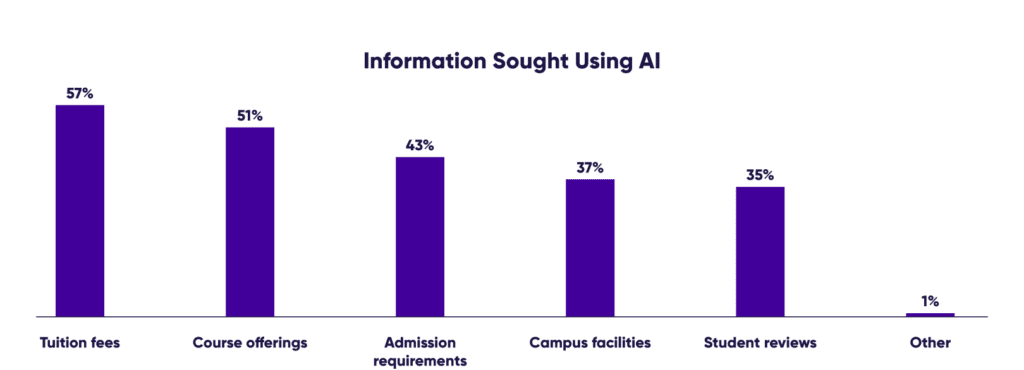
At the same time, AI enhances this by personalizing interactions and providing real-time insights into student preferences, helping institutions refine their marketing strategies. With the rise of generative AI tools, nearly 70% of Modern Learners now use AI in some capacity, including AI chatbots like ChatGPT, to assist their search for school information. Approximately 37% use these tools specifically to gather information about schools, with tuition fees (57%), course offerings (51%), and admission requirements (43%) being the most sought-after details. This highlights the opportunity for schools to integrate AI into their marketing strategies to provide comprehensive, accessible information that supports prospective students with their enrollment decision.
Modern Strategies to Engage the Modern Learner
As the needs and expectations of students continue to evolve, it’s important for institutions to adapt in ways that truly serve and support Modern Learners. Here are actionable steps to create a personalized, student-centered experience that fosters trust and drives success.
Embrace Data-Driven Decision Making: Modern Learners expect personalized experiences, and data is the key to delivering them. Through leveraging market research and insights, like those from the 2025 Modern Learner Report, institutions can better understand student preferences and behaviors. To turn those insights into action, invest in tools for data collection and analysis that allow for continuous improvement and refinement.
Build a Strong and Authentic Brand: A cohesive and authentic brand is integral to connecting with students. Focus on building a positive online experience that bolsters brand visibility, while garnering trust that your institution can provide timely and reliable information that students seek.
Prioritize Career Outcomes: Career outcomes are top of mind for students as they consider their educational investment. Make career pathways clear by showcasing programs, internship opportunities, alumni success stories and career counseling services to help students see the tangible benefits of their degree.
Create Flexible and Personalized Learning Pathways: Flexibility is essential for meeting the diverse needs of Modern Learners. Offer programs with adaptable schedules and learning formats, allowing students to choose a pathway that best aligns their lifestyle and goals.
Optimize the Digital Experience (Especially Websites and Al): An engaging digital experience is critical to attracting and retaining students. Through regular website updates and the integration of AI-powered tools to offer support, institutions can streamline the user experience to ensure a smooth journey from inquiry to enrollment.
Enhance Communication Speed: Modern Learners expect timely and informative responses and are quicker to make decisions than in years past. Adopt tools that provide real-time communication capabilities, such as chatbots or automated updates, to keep students engaged and informed throughout the enrollment process.
Develop a Dynamic Social Media Strategy: Social media is a powerful tool for building connections and increasing brand awareness among Modern Learners. With platforms like Instagram, TikTok, and YouTube playing a major role in their online engagement, video content is especially effective in capturing their attention. By understanding your audience’s media habits and aligning your content with platforms they use the most, you can deliver the right message at the right time, keeping your institution top of mind.
Don’t Forget About the Human Touch: While technology undoubtedly plays a significant role in modern times, students still seek personal connections. Ensure that students can engage with advisors, staff, or faculty to guide them through the enrollment process, while providing the support they need.
Aligning with Modern Learners: A New Era in Enrollment
In this evolving landscape, Modern Learners are placing greater emphasis on career relevance, affordability, and flexibility, demanding more from their education than ever before. The findings from the Modern Learner Survey underscore the importance of aligning educational programs with career paths, improving financial transparency, and providing tailored support to meet diverse needs. The time is now for higher education leaders to challenge outdated enrollment strategies that no longer resonate with today’s highly discerning, cost-conscious, and value-focused students.
To navigate these changes effectively, institutions must adopt innovative, data-driven strategies that speak directly to the Modern Learner’s priorities. For a deeper dive into these insights and actionable recommendations, explore the full “Engaging the Modern Learner” report today.
In higher education, your relationship with learners shouldn’t end when their program does. If fostered correctly, they’re applying the knowledge they gained, sharing their experiences with their personal and professional networks, and staying engaged with your institution.
Strengthening your relationships post-program will not only enhance the learning experience and create a sense of belonging, but inspire lifelong learning and repeat engagement, build awareness in a competitive education landscape, and transform your learners into your brand’s biggest advocates.
Building a vibrant community is vital for maintaining these post-program relationships. In a survey by the community marketing platform TINT, 73 percent of consumers reported having a positive opinion of brand communities, while 84 percent said the community surrounding a brand impacts their feelings about it.
Many online learning providers must battle the misperception that community-building and networking only happen in person. At Harvard Business School Online, we launched our Community in 2018 to provide online learners the chance to connect off-line by forming chapters worldwide. Over the last six years, we’ve expanded to nearly 40 chapters and more than 650,000 members from 190 countries. And importantly, we’ve evolved beyond in-person meetups to also host virtual events and discussions through our Community platform.
If you’re interested in building a global community at scale, here are seven tips to consider.
Tips for Building an Engaged Global Community
Find Your Superusers Early
Start by identifying your most active, engaged learners. Perhaps they’re always the first to comment on their peers’ responses and provide feedback. Or maybe they’re sharing their certificate and learning experiences on LinkedIn, taking multiple programs, or promoting your school and proactively addressing questions in Reddit threads. Determine your engagement metrics and use them to spot your superusers early.
Programs should offer multiple connection points throughout the experience. HBS Online offers networking opportunities before, during and after courses. Anyone can join a public chapter to learn more about the brand and build knowledge. Once enrolled and upon course completion, they’re added to different private discussion boards and gain access to exclusive networking opportunities.
The earlier you integrate community into their experience, the faster they’ll become familiar with it and the more engaged they’ll be over the long term—helping you more easily surface your superusers.
Transform Your Superusers Into Brand Ambassadors
Communities are stronger when everyone is involved. Once you’ve identified your superusers, empower them to be brand ambassadors. Provide ownership of the community experience to keep them invested and committed to fueling its success. In turn, you can scale faster by delegating some of the event and community management.
Our chapters are run by chapter organizers—volunteers who’ve taken at least one HBS Online course and been vetted by our team. These volunteers are responsible for hosting an event a quarter and posting on their chapter’s discussion board.
This structure enables us to grow our Community globally and offer in-person and virtual events and networking opportunities throughout the year. Our learners forge real-world connections while our chapter organizers gain experience they can add to their LinkedIn profiles and résumés.
Provide Them With Helpful Tools, Training and Tactics
To help your learners become brand ambassadors, equip them with the right tools, tips and training. Onboard them to your community software, develop documentation and responses to frequently asked questions, and regularly host training sessions to explain new and existing platform features.
Data is another powerful tool. Track which conversations garner the most engagement or the events with the highest registrations, and share those insights with your community leaders. It will provide a jumping-off point and help them build stronger networking opportunities and relationships.
Establish and Share Clear Guidelines
During onboarding, share clear brand guidelines and expectations with your community leaders, including:
Your community’s goals and objectives
What their role entails and how to refer to it
How they should attribute your brand, and if/when they can leverage your logo
Your social channels and any campaign hashtags
Examples of effective content, whether a social post, forum discussion or event
Specific brand style guidelines
By providing this material, you can empower them to be stronger advocates and alleviate branding concerns as you grow and scale your community.
Highlight Achievements and Incentivize Advocacy
For your community to be successful, it needs to be mutually beneficial. Your learners are likely juggling their education alongside various personal and professional commitments. Acknowledge their time spent volunteering.
At HBS Online, we share our praise in various ways, including dedicated learner profiles, Community engagement and recognition badges, social media callouts, a monthly Community-focused newsletter where we promote upcoming events and achievements, and free tickets to and dedicated recognition at our annual hybrid learner conference, Connext.
Consider how you can leverage gamification to encourage engagement or incentivize your community leaders to promote your brand. Perhaps you gift them exclusive swag if they hit certain engagement metrics or welcome them to beta-test new products. Determine what works best for your institution, but ensure you’re meaningfully saying, “Thank you.”
Give Your Community Meaning
Purpose fuels passion. Find ways to make your community something your learners are proud to participate in. Survey them to discover how they view your community and the value they derive from it and leverage those insights to create programming aligned with your institution’s mission.
Six years ago, HBS Online introduced the Community Challenge to empower our learners to enact global change. Through the challenge, we collaborate annually with a nonprofit and ask for a pressing issue facing their business. We then share that problem with our learners, who gather worldwide to develop and pitch solutions. Over the years, they’ve tackled topics like food insecurity, climate change and education access while applying the business knowledge gained through our courses and fostering teamwork globally.
Create an Internal Support System
For any of these community efforts to take off, you need buy-in from senior leadership. Without it, you’re unlikely to get the necessary tools and resources to grow an engaged community. Communicate the value to your institution’s key stakeholders and provide them with the talking points to advocate for the initiative organizationwide since you’ll need support from multiple teams—like tech, program delivery and marketing—to make this work possible.
If feasible, having a dedicated community manager can also help supercharge your efforts. That employee can provide a safe space for your community leaders, give them a direct point of contact, listen to and enact feedback, and ensure brand guidelines and expectations are met.
Build Lifelong Relationships
Your learners are your higher education brand’s most valuable asset. They can provide insights to help you develop new programs, advocate on your brand’s behalf, build awareness and drive repeat engagement.
To foster lifelong learning, you must prioritize building lifelong relationships. Is your institution missing out on a competitive advantage?
Lauren Landry is the director of marketing and communications at Harvard Business School Online, overseeing its organic marketing strategy, brand messaging, Community and events. Prior to joining HBS Online, she served as an associate director of content marketing at Northeastern University and as a reporter and editor covering higher education and start-ups for the likes of BostInno and Boston Magazine.
Personalized, timely, and relevant communication is key to engaging prospective students and meeting enrollment goals in higher education.
Effective strategies rely on immediacy, relevance, automation, and trackability, ensuring impactful and consistent interactions.
Omnichannel outreach, using a mix of email, SMS, print, and digital platforms, enhances visibility and builds trust by meeting students where they are.
Connecting with prospective undergraduate students in meaningful ways requires a thoughtful blend of strategy, immediacy, and personalization. Gone are the days when generic messaging could effectively spark interest or drive engagement. Today’s prospective students expect communications that reflect an understanding of their individual needs, aspirations, and priorities and their value to your institution.
Institutions aiming to enhance their enrollment strategies must adopt a more data-informed and strategic approach to communication. This means reaching out with the right message, at the right time, and through the right channels.
Laying the Foundation for Communication Success
Effective communication with students is built on four key principles: immediacy, relevance, automation, and trackability. Each element plays a critical role in ensuring that interactions resonate with students and influence their decision-making process.
Immediacy: Quick and timely responses that change as students’ behaviors change demonstrate attentiveness and can make a significant impression on prospective students. Delays in following up on inquiries or campus visits risk the loss of momentum and interest. Statistics show that the school that responds to inquiries first is more likely to convince that student to enroll.
Relevance: Tailored, personalized communication should go beyond basic name inclusion. Students expect messages that address their specific interests. Misaligned content, such as sending information unrelated to a student’s expressed major, can quickly undermine trust.
Automation: Streamlined, automated workflows keep communication consistent and dependable, even during staff transitions or times of high demand. Manual processes, such as college fair follow-ups that sit unprocessed for long periods, can derail engagement. Automation prevents these bottlenecks, enabling timely responses even when staff are unavailable.
Trackability: Monitoring communication effectiveness helps institutions refine their strategies and optimize ROI.
By integrating these principles, higher education institutions can deliver a cohesive and impactful communication strategy that strengthens student engagement and builds trust.
The Importance of Omnichannel Outreach
While email has long been—and remains—a cornerstone of communication, relying on it exclusively is no longer sufficient. The sheer volume of emails students receive daily makes it easy for even the most well-crafted messages to be overlooked. To stand out, institutions must adopt an omnichannel approach with campaigns that combine email with print materials, SMS messaging, voice blasts, digital ads, social media engagement, and microsites, all tailored to student interests.
Each channel serves a unique purpose for student engagement in higher education. Print materials, for example, are particularly effective at involving families in the decision-making process. A well-designed brochure placed on a kitchen table can spark conversations among family members, especially parents, who are often key influencers in the college selection process.
Similarly, integrating consistent, tailored messaging across multiple channels ensures that students receive a seamless experience. Whether they encounter an institution on social media, via a targeted ad, by SMS message, or through an email campaign, the message should feel cohesive and tailored to their interests. Omnichannel strategies, timed appropriately through the enrollment timeline, not only improve visibility but also demonstrate an institution’s commitment to meeting students where they are, thus building trust and rapport.
Leveraging Data for Personalization
Modern communication strategies must be rooted in data. By analyzing student preferences and behaviors, institutions can craft messages that resonate on an individual level. With data-informed insights, institutions can identify what matters most to prospective students—whether that’s career outcomes, financial aid, or specific academic opportunities—and address those priorities directly.
For example, students interested in STEM programs may be more receptive to communications highlighting research opportunities and faculty expertise, while first-generation students may appreciate messages emphasizing affordability and support services.
To further maximize impact, institutions can use surveys and initial engagement data to tailor their outreach strategies, which allows them to deploy resources efficiently while maintaining relevance. For example, expensive print materials can be reserved for students who show strong interest in particular programs, while a social media campaign may be more appropriate for inquiries earlier in the enrollment cycle.
Real-time data tracking lets institutions segment their strategies dynamically. If a particular campaign underperforms across the board or for certain cohorts of students, modifications can be made immediately to better align with student preferences. This agility is essential for maintaining relevance and impact throughout the recruitment cycle.
Building a Sustainable Communication Infrastructure
Sustainable communication strategies rely on the integration of advanced tools and technologies. While a customer relationship management (CRM) system lays a strong foundation, institutions often need more specialized solutions to elevate their outreach efforts. Liaison offers a suite of products designed to enhance and streamline communication and enrollment strategies, including:
Enrollment Marketing (EM): Liaison’s EM software and marketing services help institutions manage and analyze personalized, automated omnichannel campaigns, ensuring consistent and effective messaging across multiple channels.
Othot: This AI-driven tool leverages predictive and prescriptive analytics to optimize communication strategies and enrollment decisions, tailoring outreach to align with student behavior and institutional goals.
Centralized Application Service (CAS): By simplifying the admissions process for students and providing institutions with tools for marketing, data management, and application processing, CAS supports efficient communication with applicants.
By incorporating these technologies, along with Liaison’s CRMs, institutions can maintain a seamless and unified communication flow so that prospective students receive timely, relevant, and personalized messages. These solutions also allow institutions to monitor campaign performance and adjust strategies in real-time, maximizing the effectiveness of resources and making messaging more impactful for target audiences. This integration reduces reliance on fragmented workflows, preventing gaps or delays caused by disconnected platforms.
Aligning tools and strategies across departments using Liaison’s technologies keeps messaging consistent and impactful, even as prospective students engage with multiple touchpoints throughout their journey.
Achieving Long-Term Engagement
Effective communication with students is about building relationships that extend beyond the initial stages of recruitment. Institutions that invest in understanding and addressing the unique needs of their prospective students position themselves as partners in their academic journey.
By delivering personalized, timely, and relevant messages through multiple channels, institutions can foster deeper connections and enhance student engagement in higher education. As the competitive landscape of enrollment continues to shift, adopting a strategic and data-informed approach to communication will remain essential for success.
Ready to elevate your communication strategies? Discover how Liaison’s advanced tools and technologies can transform how you connect with prospective students. From personalized, omnichannel campaigns to data-driven insights, our solutions help you engage students meaningfully and meet your enrollment goals. Contact us today to learn more.
About the Author
Craig Cornell is the Vice President for Enrollment Strategy at Liaison. In that capacity, he oversees a team of enrollment strategists and brings best practices, consultation, and data trends to campuses across the country in all things enrollment management. Craig also serves as the dedicated resource to NASH (National Association of Higher Education Systems) and works closely with the higher education system that Liaison supports. Before joining Liaison in 2023, Craig served for over 30 years in multiple higher education executive enrollment management positions. During his tenure, the campuses he served often received national recognition for enrollment growth, effective financial aid leveraging, marketing enhancements, and innovative enrollment strategies.
Creating a trust-based classroom begins with an essential mindset: students are doing their best. When we approach teaching from this perspective, we move away from punitive measures, fear-based management, and skepticism about students’ honesty. Instead, we foster an environment of learning, growth, and empowerment. Trusting students does not mean ignoring accountability; it means designing courses, policies, and practices that build their confidence and skills while treating them as equal partners in their education.
Course Design: Scaffold, Support, and Empower
A well-designed course sets the stage for trust by providing clarity, flexibility, and opportunities for growth.
Transparent policies: Clearly outline expectations while building flexibility. For instance, rigid attendance or late-work penalties can be replaced with policies such as “grace days,” where students can submit work late without penalty. Such policies demonstrate compassion and respect for the complexities of students’ lives (Nilson, 2016; Hammond, 2015).
Scaffolded assignments: Break significant projects into smaller, more manageable parts, such as proposals, annotated bibliographies, and rough drafts, to reduce student anxiety and provide opportunities for meaningful feedback at each step, improving learning outcomes (Ambrose, 2010).
Collaborative syllabus design: During the first class, engage students in setting community and classroom norms and goals. A co-created syllabus session fosters accountability and trust, as students feel ownership of the course structure (Cook-Sather et al., 2014).
Teaching example: In one of my recent courses, I included a “workshop day” for students to peer review each other’s drafts of case conceptualizations. This scaffolding helped students approach final projects with more confidence, and peer feedback enriched their understanding of the assignment and deepened engagement with the course materials.
Active Learning: From Fear to Engagement
Fear of failure can stifle creativity and learning. Active learning strategies help students take risks and engage deeply with material in a low-pressure environment.
Low-stakes practice: Use frequent formative assessments such as polls, quizzes, games, or writing and discussion prompts to reinforce and retrieve essential concepts. These activities encourage participation without the anxiety of high-stakes grading (Freeman et al., 2014; Agarwal, 2019).
Normalize mistakes to promote growth: Frame errors as essential steps in the learning process. For example, during group problem-solving, ask students to identify and reflect on common mistakes, transforming failure into an opportunity for growth (Dweck, 2006).
What to avoid: Grading active learning activities as if they were summative assessments is inappropriate. Students should feel safe to experiment without fear of punishment or penalty.
Class Participation: Meeting Students Where They Are
Participation policies can often feel punitive, especially for students who struggle with anxiety, barriers to verbal and social engagement, and students with accommodations due to neurodiversity. Trust-based strategies offer multiple pathways for meaningful contribution and connection.
Flexible participation options: Allow students to choose how they engage, including online discussion boards, written reflections, video reflections, or in-class individual or group work. Recognizing diverse participation and communication styles builds inclusivity and reduces the pressure to perform in a single, narrow way (Gay, 2018; Dweck, 2006).
Student-led discussions: Rotate leadership roles for class discussions, allowing students to take ownership of their learning with their peers. Provide guidance and resources to ensure they feel confident in this role.
Teaching example: One student-led discussion in my class led to unexpected insights when a quieter student shared their expertise on a niche topic that another student was interested in. This reinforced how trust in students can bring out hidden strengths and foster the courage to share in a positive classroom climate.
Grading and Feedback: Support and Guide, Don’t Punish and Penalize
Grading practices should reflect the belief that students can grow and improve. Penalizing mistakes undermines trust and discourages effort. Instead, focus on feedback that builds skills, enriches learning, and deepens understanding.
Revise and resubmit: Allow students to revise and resubmit work for a higher grade and additional feedback. This approach emphasizes learning over performance, encourages students to take risks in their initial attempts, and reduces fear and anxiety over grades.
Rubrics as roadmaps: Use detailed and intentional rubrics, not just to grade but as tools to teach students what quality work looks like and what to aspire to in their work. Share rubrics in advance, collaborate with students to create or adjust rubrics, and encourage students to self-assess before submitting assignments (Brookhart, 2013).
Feedback as an opportunity for dialogue: Invite students to meet to discuss feedback and revisions. These conversations deepen their understanding and demonstrate your investment in their success.
Teaching with Technology: Empower and Encourage, Don’t Police and Instill Fear
Technology tools like plagiarism detectors and AI checkers can erode trust if used as punitive measures. Instead, these tools should guide and empower students. Hutson (2024) identifies the challenges of AI in education as the blurred boundaries between human and AI-generated content, the inadequacy of traditional plagiarism definitions, and the need to balance the ethical integration of AI with the preservation of critical thinking, originality, and intellectual property standards.
Educators should teach students about proper citation practices and academic integrity while allowing space for mistakes as part of the learning process. Replace accusatory language in syllabi with language that supports student learning. For instance, providing workshops on academic writing and citation or encouraging dialogue about the ethical use of AI tools fosters a supportive learning environment rather than punitive. Hutson (2024) emphasizes the importance of adapting pedagogical approaches and institutional policies to address the evolving challenges of plagiarism in the era of generative AI while upholding the core values of academic integrity and honesty.
A 2023 study highlights the ethical and practical challenges associated with AI detectors, such as inaccuracies in identifying student-generated content and the unintended reinforcement of a guilty until proven innocent narrative (Ifelebuegu et al., 2023). Such practices can lead to mistrust between students and faculty, harming the educational relationship. Additionally, reliance on these tools may discourage students from taking risks in their learning for fear of being wrongly accused of dishonesty (Ifelebuegu et al., 2023).
Assuming the best about students transforms the classroom from a place of fear and performance to one of trust and growth. By designing courses that scaffold learning, encouraging participation in diverse ways, and using grading and feedback as tools for improvement rather than punishment, faculty create environments where students feel empowered to take risks and grow. Trust is not a passive belief—it’s an active choice to see students as capable, honest, and deserving of our support. What changes will you make to assume the best about your students?
Mindith R. Rahmat, PsyD, is a core faculty member at Antioch University, where she specializes in compassion-focused pedagogy, trauma-sensitive mindfulness, and mindful self-compassion. With over 25 years of experience teaching yoga, meditation, and holistic wellness practices, she integrates these methodologies into her classroom, fostering equitable, intentional learning environments that promote well-being, resilience, and flourishing.
References
Agarwal, P. K. (2019). Retrieval practice and Bloom’s taxonomy: Do students need fact knowledge before higher-order learning? Journal of Educational Psychology, 111(2), 189.
Ambrose, S. A. (2010). How learning works: Seven research-based principles for smart teaching. John Wiley & Sons.
Brookhart, S. M. (2013). How to create and use rubrics for formative assessment and grading. ASCD.
Cook-Sather, A., Bovill, C., & Felten, P. (2014). Engaging students as partners in learning and teaching: A guide for faculty. John Wiley & Sons.
Dweck, C. S. (2006). Mindset: The new psychology of success. Random House.
Freeman, S., Eddy, S. L., McDonough, M., Smith, M. K., Okoroafor, N., Jordt, H., & Wenderoth, M. P. (2014). Active learning increases student performance in science, engineering, and mathematics. Proceedings of the national academy of sciences, 111(23), 8410–8415.
Gay, G. (2018). Culturally responsive teaching: Theory, research, and practice (3rd ed.). Teachers College Press.
Hammond, Z. (2015). Culturally responsive teaching and the brain: Promoting authentic engagement and rigor among culturally and linguistically diverse students. Corwin Press.
Hutson, J. (2024). Rethinking Plagiarism in the Era of Generative AI. Journal of Intelligent Communication, 3(2), 20–31.
Nilson, L. B. (2016). Teaching at its best: A research-based resource for college instructors. John Wiley & Sons.
Ifelebuegu, A. O., Kulume, P., & Cherukut, P. (2023). Chatbots and AI in Education (AIEd) tools: The good, the bad, and the ugly. Journal of Applied Learning and Teaching, 6(2).
Financial aid optimization transforms financial resource allocation into a strategic enrollment tool, aligning affordability for students with institutional goals.
By leveraging real-time data and tools like Liaison Othot, institutions can craft tailored financial aid strategies that address individual student needs and enrollment strategies.
Optimization enables proactive adjustments to financial aid strategies, ensuring accessibility while supporting student retention and institutional sustainability.
Strategic financial aid leveraging balances affordability for students with long-term enrollment and revenue objectives.
The rising costs of higher education and fear of long-term debt have left many prospective students and their families questioning whether they can afford to pursue their academic dreams. For institutions, this presents a dual challenge: attracting diverse students and ensuring enrollment goals align with their mission. An effective and aligned financial aid optimization strategy offers a powerful tool to meet a campus’s enrollment goals. By combining institutional funds with federal and state resources effectively, colleges and universities can increase access and affordability in higher education while achieving broader enrollment objectives.
From offering enough aid to make tuition manageable to continuously refining financial aid strategies based on real-time information, optimizing plays a pivotal role in strategic enrollment management (SEM). It transforms financial aid awarding from a static process into a dynamic tool that not only attracts and enrolls students but also supports their retention by effectively meeting their financial needs.
What Is Financial Aid Optimization?
Financial aid optimization transforms the allocation of financial resources into a critical enrollment tool. By aligning the overall enrollment leveraging strategy—regularly and in real-time at the individual level—optimization allows campuses to address student affordability needs in a unique and tailored way.
At its core, optimization is a dynamic, data-informed process. Institutions develop annual plans for allocating financial aid (leveraging), basing decisions on previous cycles’ successes and challenges. Unlike traditional static leveraging models, modern optimization approaches incorporate continuous adjustments informed by real-time data. This lets colleges and universities respond proactively to shifting enrollment trends and keeps their financial aid strategies effective throughout the year.
How to Make Higher Education More Affordable and Accessible
More accessible higher education starts with understanding the financial challenges students face. For many undergraduates, the cost of tuition, housing, books, and other expenses can make college seem out of reach, even with federal and state aid. For example, a student from a low-income household may find that even the maximum Pell Grant award leaves a significant financial gap. Similarly, a middle-income family might struggle to cover tuition despite not qualifying for significant need-based aid.
Financial aid leveraging allows institutions to tackle these challenges head-on by creating tailored aid packages that remove financial barriers for students. This approach relies on a mix of need-based and merit-based strategies, often informed by tools like FAFSA data and predictive analytics.
One of the key advantages of financial aid optimization is its flexibility. Institutions can use data to fine-tune aid offerings based on unique student needs and behaviors. For instance, Liaison’s Othot platform, a cloud-based predictive and prescriptive analytics tool designed specifically for higher ed, can analyze factors such as a student’s location, academic profile, and campus engagement to build aid packages thatneeds. This granularity ensures that the financial aid awarding strategy not only meets the affordability threshold for students also aligns with the overall enrollment strategy being employed on the campus. An aligned optimization approach ensures that the affordability component is integrated into the strategy for specifically targeted cohorts or students, maximizing the likelihood of their enrollment.
Optimization also lets institutions adapt aid policies for entire cohorts or demographic groups. For example, schools can address rising inflation in high school GPAs by recalibrating merit-based awards to prioritize equity and maintain fairness in their financial aid distribution. This adaptability keeps aid plans relevant as the dynamics of higher education continue to shift. By relying on data and continuously streamlining their financial aid models, institutions can make higher education more attainable for all students while maximizing their impact.
The Strategic Impact of Financial Aid Optimization
Financial aid optimization goes beyond simply helping students cover tuition—it’s about achieving a delicate balance between affordability for students and sustainability for institutions. By carefully crafting aid packages that meet the financial needs of students without overextending institutional resources, colleges and universities can enhance their enrollment efforts while maintaining financial health.
For example, reallocating funds for strategic distribution among students could result in higher net tuition revenue (NTR) without sacrificing enrollment numbers. This demonstrates how strategic adjustments can yield significant results when financial aid decisions are guided by data, tailored to meet institutional priorities, and aligned to overall enrollment strategies.
Retention and persistence are critical factors to consider when determining how to optimize financial aid. An effective leveraging model doesn’t stop at enrollment and the conclusion of a successful first year—it considers the long-term success of students. By analyzing which cohorts are more likely to persist and graduate, institutions can refine their aid offerings to improve outcomes for all students. This approach ensures that financial aid strategies not only attract students but also support their success throughout their academic journey.
Aligning Financial Aid With Student Success and Institutional Goals
Financial aid optimization is a powerful way to make higher education more accessible while helping institutions achieve their objectives. By combining institutional, federal, and state resources with data-driven optimization tools, colleges and universities can craft aid strategies that address affordability, bolster student retention, and maximize their impact.
Institutions looking to enhance their financial aid and enrollment can benefit from Liaison’s suite of solutions, including Othot. Whether your team is just beginning to explore financial aid leveraging or has years of experience, Liaison’s tools provide the flexibility and insights needed to meet your unique goals. From devising an initial plan to optimizing existing processes, our solutions are designed to assist schools at every stage of their journey. Contact us today to learn more.
Now more than ever, knowing how to recruit students online is essential for success. In 2025, brochures and campus visits alone are no longer enough. A successful student recruitment plan requires a blend of innovative digital tools, personalized engagement, and a deep understanding of student behavior.
At Higher Education Marketing, we’ve spent years refining our approach to online student recruitment, and we’re excited to share ten proven strategies that can take your recruitment efforts from awareness to enrollment this year. Keep reading for a deeper understanding of the enrollment process, actionable tips on recruiting students online, and access to our student recruitment resources.
Struggling with enrollment?
Our expert digital marketing services can help you attract and enroll more students!
Understanding the Enrollment and Decision-Making Process
The journey from awareness to enrollment as illustrated by the enrollment funnel is complex, often involving multiple stages of research, evaluation, and emotional investment. For prospective students and their families, choosing a school is a decision that balances academic aspirations, career goals, financial considerations, and personal preferences.
Understanding this process is essential for creating a recruitment strategy that aligns with their needs and motivations.
Stage 1: Awareness
At the beginning of the journey, students and their families are typically exploring broad options. They may be influenced by online advertisements, social media content, or recommendations. During this phase, your goal as a school is to make a positive first impression and provide easily accessible, engaging content. Students are looking for reasons to consider your institution, such as program variety, campus culture, or career outcomes. For families, financial feasibility and safety often rank high as priorities.
A strong online presence is crucial here, including a well-optimized website with clear messaging, visually appealing social media accounts, and engaging videos that spark curiosity. For instance, showcasing testimonials from students with similar backgrounds or aspirations can help prospective students visualize themselves as part of your community.
Stage 2: Consideration
Once students identify potential schools, they begin in-depth research. At this stage, they often turn to your website, virtual campus tours, and program details, comparing your institution to others. Families may analyze cost, scholarship opportunities, and academic flexibility, while students might focus on extracurricular activities, study-abroad opportunities, and campus life.
To meet these needs, your content should highlight differentiators, such as unique programs, industry partnerships, or alumni success stories. Transparent communication is key—clearly outlining tuition fees, application requirements, and scholarship opportunities builds trust. Including testimonials from alumni and current students in similar fields can help students and families see the real-world value of your programs.
Stage 3: Decision
When students are ready to make their final decision, the process becomes personal. Students and families are likely reaching out for additional information, attending virtual or in-person events, and engaging with admissions counselors. They want answers to specific questions, such as “What internships are available in this program?” or “What percentage of graduates find jobs in their field within six months?”
Personalized follow-ups play a crucial role in this stage. Schools that demonstrate a genuine interest in the student’s goals and address family concerns are more likely to earn their trust. Hosting webinars with faculty and student panels can also provide authentic insights that make prospective students feel more connected to your institution.
Stage 4: Enrollment
After narrowing down their options, students proceed with the application process. For many, this stage can feel overwhelming, particularly if they’re applying to multiple schools or navigating complicated requirements. Families, on the other hand, may focus on evaluating financial aid packages and understanding the return on investment.
Streamlining the application process is critical here. Ensure that your application portal is user-friendly, deadlines are clearly communicated, and the required documents are easy to upload. Offering guidance through a dedicated admissions counselor or chatbot can alleviate stress and improve the overall experience. Schools that simplify this process often see higher application completion rates.
After submitting applications, the waiting period begins. At this stage, communication should remain active. Personalized acceptance letters, invitations to exclusive admitted-student events, or detailed guides on the next steps can keep students and their families engaged while reinforcing their decision to enroll.
Source: HEM
Need support in your school’s online student recruitment efforts? Reach out to learn more about our services!
How to Recruit Students Online
Want to explore how to recruit students online in more detail? The answer lies in combining data-driven insights, engaging content, and personalized communication to guide students through their enrollment journey as discussed above. From leveraging SEO and social media ads to creating interactive virtual tours and using chatbots for instant support, online student recruitment requires a multi-faceted approach that captures attention, builds trust, and inspires action. In the sections that follow, we’ll discuss ten proven strategies that can help you move prospective students seamlessly from awareness to enrollment. Let’s get started!
1. Start With Data-Driven Audience Insights
The foundation of any successful recruitment strategy is understanding your target audience. Relying on broad demographics is no longer enough. Why is that? Today’s students expect hyper-personalized messaging at each level of the enrollment funnel.
Tools like Google Analytics, CRM systems, and social media insights provide invaluable data on prospective students’ preferences, online behavior, and decision-making patterns. The information you glean from your detailed demographic research will help you make informed campaign decisions.
Behavioral information such as the length of each session, the devices used, bounce rates, and session attribution provides insight into how people are engaging with your site, when and why they may lose interest, and whether your site is optimized for desired actions such as filling out contact forms or subscribing to newsletters. If you’re looking to revamp your school’s online recruitment efforts, the use of data analytics tools is an excellent way to start planning.
2. Invest in Search Engine Optimization (SEO)
Visibility is key in the awareness phase, and SEO ensures your school appears where prospective students are searching. Optimizing your website and blog content for high-ranking keywords can drive organic traffic from search engines. Long-tail keywords tend to be the most effective.
Long-tail keywords are highly specific search terms that prospective students use when looking for educational opportunities. These phrases, such as “best online MBA programs for working professionals” or “affordable graphic design diploma in Vancouver,” often reflect a searcher’s intent more clearly than generic keywords.
For schools, targeting long-tail keywords can drive qualified traffic to your website by connecting with students who are already in the decision-making phase. Unlike broader keywords, long-tail terms face less competition, making ranking higher in search engine results easier.
To effectively use long-tail keywords, start with thorough keyword research. Tools like Google Keyword Planner, SEMrush, or AnswerThePublic can uncover phrases students frequently search for. Analyze internal data, such as search terms used on your site, or interview current students to understand how they found your programs.
Pay close attention to questions students ask during open houses or information sessions—these often provide insight into potential long-tail keywords. Incorporating these terms naturally into blog posts, program pages, and FAQs can help your school align with the needs of prospective students, driving meaningful engagement and boosting enrollment. Additionally, focusing on local SEO—like “business schools in New York”—can capture the attention of students looking for programs within a specific region.
Source: Google | Matthew’s Hall
Example: If you want to maximize the effects of local SEO, you need a Google My Business account like the one pictured above. Prospects looking for schools in a particular geographic location are more likely to come across your school’s profile which reveals all the information they need to get in contact with you and even visit you in person. A Google My Business account also provides an official first impression of your school
3. Leverage Social Media Ads with Predictive Targeting
How does predictive targeting work on social media? By leveraging advanced algorithms, platforms like Facebook, Instagram, and TikTok analyze user behavior and identify prospective students who are most likely to engage with your content or apply to your programs.
This approach not only increases the precision of your campaigns but also optimizes your marketing budget by focusing on high-intent audiences. Schools can use predictive targeting to showcase program-specific ads to users who have expressed interest in similar fields, ensuring a personalized and relevant experience.
For instance, promoting STEM programs to students who frequently engage with tech or science content creates a stronger connection and improves conversion rates. Predictive targeting helps schools reach the right students at the right time, making it a highly effective strategy for boosting enrollment outcomes.
4. Develop Interactive Virtual Campus Tours
While in-person visits are valuable, virtual campus tours have become indispensable for reaching international and out-of-state students. These tours should be interactive, incorporating 360-degree views of classrooms, dorms, and recreational facilities.
You can go a step further by integrating live Q&A sessions with student ambassadors or faculty during the tours. This provides a personalized touch and provides the opportunity to share valuable information and address concerns or barriers to enrollment.
Source: University of Toronto | Virtual Campus Tours
Example: The University of Toronto provides detailed, user-friendly virtual tours complete with a menu, high-quality 360-degree imagery, clear audio guidance, and valuable information about student life and available on-campus learning resources.
5. Create Engaging Video Content Across Platforms
Video content continues to dominate online engagement. For this reason, schools that prioritize video marketing see higher application rates, as videos create emotional connections with prospective students. From testimonials and alumni success stories to faculty introductions and campus events, video content humanizes your institution.
Platforms like YouTube, Instagram, TikTok, and LinkedIn offer dynamic opportunities for schools to showcase their programs, campus life, and success stories in ways that resonate deeply with their audience. Videos can humanize your institution, create a sense of community, and provide visual storytelling that goes beyond text and images.
To start, consider the wide variety of video formats available and how each can serve a specific purpose. Short, attention-grabbing reels or TikTok videos are perfect for introducing prospective students to your campus culture or highlighting unique aspects of a program. For example, a day-in-the-life video of a current student studying abroad, participating in research, or preparing for a career in their field can inspire viewers to imagine themselves in similar roles.
Longer-form content, such as YouTube campus tours, faculty interviews, or alumni success stories, allows you to dive deeper into the value of your school and its offerings. Interactive live video events are a powerful tool for real-time engagement. Hosting live Q&A sessions with admissions counselors, students, or alumni provides an authentic look at your institution and builds trust with prospective students.
Leverage platform-specific trends like TikTok’s creative, relatable content to showcase your programs and connect with current student interests. Participating in viral challenges or trending audio can make your school approachable and relevant.
Optimize video formats for each platform—vertical for Instagram Reels and TikTok, horizontal for YouTube and Facebook—and include captions for accessibility. Focus on storytelling by highlighting the journeys of students, faculty expertise, and alumni success to create compelling, relatable content.
Source: TikTok | University of Manchester
Example: Here, the University of Manchester shares authentic, student-generated content that viewers will be able to relate to. This tends to be the most effective video format for fostering community among your student body and deepening your relationships with new leads.
6. Use Chatbots for Instant Engagement
Students today expect instant answers, and chatbots provide a seamless way to meet that demand. AI-powered chatbots can handle common inquiries about admissions deadlines, program details, and financial aid, freeing up your staff for more personalized interactions.
Source: Excel Career College
Example: Here, Excel Career College provides an instant chatbot option for site visitors. The tool asks questions to categorize each interaction, determining what information and resources to share with the user. Chatbots help streamline the enrollment process, particularly at the awareness stage, by providing a convenient way for important questions to be answered.
7. Build a Strong Presence on Review Platforms
Prospective students and their families often rely on online reviews to make decisions. Platforms like Google Reviews and specialized education sites are vital in this regard. Proactively managing your online reputation by encouraging current students and alumni to leave positive reviews can enhance trust and credibility. How can you build a strong public reputation?
To start, addressing negative reviews or complaints with empathy and transparency can significantly improve public perception. Schools should respond promptly to concerns, offering solutions where possible and demonstrating a genuine commitment to student and family satisfaction. A well-handled negative review can turn into an opportunity to show your institution’s dedication to improvement and care.
In addition, fostering community connections can garner a positive reputation and good reviews across various platforms. Parents and local communities play a crucial role in shaping your reputation. Hosting events such as open houses, community service projects, or alumni panels fosters goodwill and positions your school as an integral part of the community. Engaging with parents through newsletters, personalized communication, and parent-specific resources further strengthens relationships and encourages positive word-of-mouth.
Positive reviews can also be amplified by showcasing testimonials and case studies from current students and alumni. Create detailed profiles of students who have achieved their goals through your programs and share their stories on your website, social media, and promotional materials.
8. Offer Personalized Email Campaigns
Email remains one of the most effective tools for nurturing leads and guiding them through the enrollment funnel. Unlike many other channels, email provides a direct line of communication that allows your school to build meaningful connections with your audience over time.
By crafting personalized email campaigns tailored to the unique needs and interests of prospective students, schools can significantly enhance engagement and conversion rates. For instance, including program-specific content that highlights key features, career outcomes, and testimonials from current students or alumni can help prospects visualize themselves succeeding in that program.
Additionally, timely reminders about critical application deadlines, scholarship opportunities, or upcoming events like open houses or webinars create a sense of urgency and keep prospective students actively engaged with the admissions process. When done effectively, personalized email campaigns foster trust and rapport while providing valuable, actionable information that empowers prospective students to make informed decisions about their educational journey.
9. Host Webinars on Trending Topics
Webinars are a fantastic way to showcase your expertise and connect directly with prospective students. Hosting sessions on trending topics like “Careers in Artificial Intelligence” or “How to Finance Your College Education” can position your school as a thought leader in the field. During these sessions, including live interactions with faculty, alumni, or current students makes the experience even more compelling.
Source: The Academy of Applied Pharmaceutical Sciences
Example: The Academy of Applied Pharmaceutical Sciences puts itself at the forefront of pharmaceutical education on a variety of topics that appeal to career-seekers in the field by hosting several educational events each month. Their upcoming workshops and webinars are easy to find on their website. Users can also access recorded webinars.
10. Emphasize Alumni and Career Outcomes
Finally, showcasing the success of your alumni is one of the most compelling ways to attract prospective students. Highlighting career outcomes, such as high employment rates or notable employers, demonstrates the tangible value of your programs.
Showcasing alumni success is one of the most impactful ways to attract prospective students and their families. When students see tangible evidence of career achievements—whether it’s high-profile employers, entrepreneurial ventures, or significant industry contributions—they are more likely to perceive your programs as a pathway to their own aspirations.
Alumni stories provide real-world validation of your school’s value and help prospective students envision their future success. Leverage alumni by creating a dynamic “Alumni Success Wall” on your website or use social media campaigns that highlight diverse career paths. Include those in traditional corporate roles as well as entrepreneurs, creatives, and community leaders to represent a broad spectrum of success. Video testimonials can be particularly powerful, capturing the emotions, challenges, and triumphs of alumni journeys.
Schools can also build relationships between alumni and prospective students through mentorship programs, webinars, or networking events. For instance, hosting a virtual panel featuring alumni working in fields related to your school’s programs provides insights and inspiration for prospective students.
Source: John Cabot University
Example: John Cabot University has an Alumni Ambassadors Program designed to provide mentorship to current students and provide alumni with an interconnected network of fellow graduates and faculty members. Prospects like to know that access to your school’s support and resources doesn’t end at graduation. Like JCU, consider hosting regular events, encourage alumni to share their positive experiences with your institution, and foster mentorship within your culture.
Final Thoughts: Aligning Strategy With Student Expectations
In summary, let’s explore how to write a college recruitment planthat works. Online student recruitment is about building meaningful connections with prospective students. By integrating data-driven insights, focussing on connection and personalization, providing value, and streaming the enrollment process, you can create a cohesive, impactful approach that resonates with students at every stage of their journey, from initial awareness to final enrollment.
At Higher Education Marketing, we specialize in helping schools like yours navigate the complexities of digital recruitment. Let’s work together to create campaigns that inspire, engage, and deliver results!
Struggling with enrollment?
Our expert digital marketing services can help you attract and enroll more students!
Frequently Asked Questions
Question: How to recruit students online in more detail?
Answer: The answer lies in combining data-driven insights, engaging content, and personalized communication to guide students through their enrollment journey.
Question: How to write a college recruitment plan that works?
Answer: Online student recruitment is about building meaningful connections with prospective students. By integrating data-driven insights, focussing on connection and personalization, providing value, and streaming the enrollment process, you can create a cohesive, impactful approach that resonates with students at every stage of their journey, from initial awareness to final enrollment.
Education marketing is poised for a transformative shift in 2025. As technological innovations accelerate and global competition intensifies, schools, colleges, and universities must adopt strategies that meet the evolving expectations of prospective students.
If you’re new to educational marketing or administration, you may benefit from a working definition of the topic we’re exploring. What is education marketing? Education marketing promotes educational institutions, programs, and services to prospective students, their families, and other stakeholders.
It involves creating targeted campaigns that address the unique needs, aspirations, and challenges of prospective learners. At its core, education marketing is about building trust, showcasing value, and creating meaningful connections that align an institution’s offerings with the goals of its audience.
Our expert digital marketing services can help you attract and enroll more students!
Great Expectations: What Prospects Are Looking for in 2025
Prospective students in 2025 demand education marketing efforts that resonate with their individual aspirations, challenges, and goals. Personalization has become a non-negotiable element of successful marketing, requiring institutions to deliver tailored messages across diverse platforms. Students value authenticity and transparency, seeking honest communication about program costs, outcomes, and career prospects.
Social proof is more influential than ever. Reviews, testimonials, and user-generated content (UGC) have become vital tools in building trust and credibility. Institutions that effectively showcase authentic student experiences on platforms like TikTok, Instagram, and YouTube can connect with audiences on a deeper level, cutting through generic promotional noise.
With over 70% of initial student engagement occurring online, a robust digital presence is critical. Schools with interactive websites, active accounts, and engaging virtual events stand out in an increasingly competitive global market. The ease of accessing information about institutions worldwide has raised the stakes, emphasizing the need for innovative and standout marketing strategies.
Source: HEM
Are you seeking strategies for a future-oriented education marketing plan? Reach out to learn about our specialized digital marketing services!
Leveraging AI for Personalization and Automation
Artificial intelligence (AI) is revolutionizing education marketing by enabling personalized and efficient communication. In 2025, institutions will be using AI-driven tools to deliver highly targeted content and streamline engagement processes.
AI-powered email marketing has proven to boost open rates and increase revenue per email by analyzing prospective student data. Dynamic segmentation, which groups students based on behaviours like website visits and social interactions, allows institutions to craft campaigns aligned with individual journeys.
Example: Putting prospects into groups based on their site usage as pictured below is the first step in dynamic segmentation. What comes next? Program your CRM system to update segments as prospects progress through the enrollment process, and finally, use automation tools (ideally integrated into your CRM program) to send follow-up messages after interactions like webinar attendances or program page visits. Amidst many competitors, you must stay fresh in the minds of your prospective students.
Source: HEM
Chatbots are emerging as indispensable tools for managing routine inquiries. Capable of handling up to 80% of these interactions, chatbots provide instant, tailored responses that improve lead-to-application conversion rates. From guiding students to specific program pages to assisting with application processes, chatbots reduce administrative strain while enhancing user experience. For international students, multi-language support ensures inclusivity and accessibility.
Example: Use Chatbots intentionally like the University of Windsor did below. Site visitors are asked with whom they would like to connect and are sent to a page where they can select the right person to meet their needs. This allows for a customized, self-directed experience.
Source: University of Windsor
Predictive analytics, another AI-driven innovation, enables institutions to anticipate prospective student needs. By analyzing past behaviors, institutions can proactively craft campaigns that address concerns and guide students toward enrollment.
By analyzing historical data such as website interactions, email engagement, and application trends, predictive analytics identifies patterns that signal a prospective student’s likelihood to take specific actions, such as submitting an application or attending an open house.
This technology allows institutions to craft highly targeted campaigns that address common concerns, deliver timely follow-ups, and provide personalized recommendations. Predictive analytics can be applied across various channels, including email marketing, chatbot interactions, and digital advertising platforms, making it a versatile tool for improving enrollment outcomes and optimizing the student journey.
Optimizing Digital Advertising Strategies
Digital advertising is an essential component of education marketing, and in 2025, precision and creativity will define success. Institutions are refining their pay-per-click (PPC) campaigns and leveraging video ads to capture attention and drive conversions.
Precision targeting through platforms like Google Ads and Meta Ads ensures relevance. Long-tail keywords and geo-specific targeting help align campaigns with user intent, making them more effective. For example, phrases like “best nursing programs in Toronto” resonate more with prospective students than generic terms such as ‘nursing programs’ or ‘nursing school’.
Video content continues to dominate as the preferred format for engagement. Authentic, short-form videos featuring user-generated content are especially effective. These videos highlight program features, campus life, and success stories, building trust and fostering emotional connections.
Engaging carousel ad formats are also gaining traction, offering a visually dynamic way to present multiple aspects of an institution in a single advertisement. By showcasing different programs, campus highlights, or student testimonials in a swipeable format, carousel ads keep prospective students engaged longer. These ads are particularly effective on platforms like Instagram and Facebook, where interactive content drives higher click-through rates and engagement.
Example: Static ad images are more likely to be skipped. Carousel ads are an attention-grabbing format that incites curiosity. Valuable, relevant, and short-form copy as pictured below works well as it keeps attention while imparting information your audience cares about.
Source: Concordia University
Remarketing strategies are proving invaluable for re-engaging prospective students. Dynamic ads tailored to past interactions, such as revisiting previously explored programs, help institutions stay top-of-mind and boost conversion rates. Platforms like TikTok provide creative opportunities to connect with younger audiences, further enhancing reach and engagement.
Navigating Changing Search Landscapes
The rise of AI-powered search engines like Google Gemini and ChatGPT is reshaping how users seek information. These tools prioritize conversational content and direct answers, requiring institutions to adapt their SEO strategies to maintain visibility.
Example: Incorporating conversational, question-based phrases as pictured below helps your site show up in search results. This is particularly relevant as AI, which favors concise answers, emerges as one of the most transformative education marketing trends. Try to add relevant, on-topic questions that your prospects are likely pondering into site content seamlessly. Then add the answer to that question. This boosts your chances of being featured in “People Also Ask” and other types of rich results.
Source: Gemini
High-quality, question-based content is essential for meeting the needs of AI-driven search engines and enhancing user experience. Institutions are optimizing FAQ pages to provide comprehensive, conversational answers to prospective students’ most common questions.
For example, detailed FAQ sections that include interactive components, such as collapsible menus or embedded videos, help address a wide range of inquiries efficiently. This approach not only supports AI-driven search tools like Google Gemini (Formerly Bard) and ChatGPT but also caters to user expectations for clear, straightforward information.
Voice search optimization further complements this strategy. With 58% of users relying on voice search daily, content must include natural, long-tail keywords that align with how people speak. For instance, crafting answers to questions like “What’s the cost of a nursing program in Toronto?” ensures visibility in voice and conversational search queries. Together, these strategies create a seamless path for students to access the information they need, whether browsing through AI-enhanced search results or engaging directly with an institution’s website.
Example: AI tools like Copilot pictured below offer user-friendly, well-structured answers to education-related questions, guiding prospective students effectively to your institution.
Source: Copilot
Local SEO remains a powerful driver of inquiries. Enhancing Google Business Profiles, incorporating location-specific keywords, and encouraging positive reviews are key strategies. Schema markup further boosts visibility by creating rich search results, such as event listings and review stars, that attract clicks and engagement.
Practical Strategies for 2025
Content remains central to education marketing success, but its format and delivery are evolving. High-quality, SEO-optimized content that directly addresses student questions is crucial. Institutions are increasingly adopting visual and interactive formats, such as infographics, videos, and quizzes, to create engaging and shareable content.
Marketing technology plays a pivotal role in streamlining operations. CRM systems and automated email tools enable institutions to automate routine communications, such as application reminders and follow-ups. This ensures timely interactions while freeing up resources for strategic initiatives.
Mautic is a cutting-edge CRM and marketing automation solution tailored specifically for the education sector. Built on the robust Mautic platform, HEM has enhanced this system to address the unique challenges and opportunities faced by educational institutions.
By enabling streamlined lead management, Mautic by HEM allows schools to segment, manage, and follow up with prospects efficiently, enhancing both cost-effectiveness and operational efficiency.
With Mautic, your school can supercharge your marketing efforts through automated email campaigns, customizable forms, and seamless workflows. The platform’s out-of-the-box custom reports provide deep insights into admissions efforts, helping schools track team productivity and the progress of leads through the enrollment funnel.
Tools for automated SMS and email follow-ups, meeting bookings, and calls empower teams to nurture leads effectively, turning prospects into enrolled students. Designed to simplify complex tasks and enhance collaboration, Mautic is the ideal solution for schools looking to elevate their student recruitment strategies.
In an era of rapid technological advancements, agility is essential. Institutions must regularly monitor campaign performance, experiment with new platforms, and stay informed about industry innovations. Being prepared to pivot strategies allows institutions to adapt to changing audience preferences and platform updates.
The Road Ahead
In summary, What will education marketing look like in 2025? In 2025, education marketing will focus on data-driven, personalized, transparent, and multi-channel strategies to engage students effectively. When you embrace AI-driven tools, optimize digital advertising, and adapt to evolving search landscapes, your school can navigate the complexities of a highly competitive market.
As the digital-first generation redefines expectations, educational institutions have a unique opportunity to deliver value and build trust at every stage of the student journey. The strategies outlined here provide a comprehensive roadmap for success, ensuring your school sees results in 2025 and beyond.
Struggling with enrollment?
Our expert digital marketing services can help you attract and enroll more students!
Frequently Asked Questions
Question: What is education marketing?
Answer: Education marketing promotes educational institutions, programs, and services to prospective students, their families, and other stakeholders.
Question: What will education marketing look like in 2025?
Answer: In 2025, education marketing will focus on data-driven, personalized, transparent, and multi-channel strategies to engage students effectively.
The transition to cloud computing has revolutionized higher education by enabling enhanced collaboration, scalability, and flexibility. On the other hand, the cloud’s ability to improve data security is a substantial advantage that is often overlooked. Securing a cloud environment necessitates a proactive approach, rather than solely implementing cloud-based technologies. Here We have collated the top are five strategies to optimize cloud security in higher education:
Cloud security in higher education: Importance of data protection for HEIs
Higher education institutions have a great deal of sensitive student and institutional data to handle, hence data security and cloud security in higher education is a top issue. Safeguarding sensitive data depends on strong adherence to laws including FERPA and GDPR, therefore guaranteeing ethical usage, limited access, and safe storage. According to surveys, giving transparency and strong data protection a top priority and opting for solutions to protecting student data in the cloud not only helps to prevent breaches but also fosters staff and student confidence, hence improving engagement and institutional reputation.
5 Clever Strategies for Secure Cloud Adoption in Universities
1. Emphasize control rather than location
The belief that on-premises data storage is intrinsically more secure may be deceptive. Although server rooms appear concrete, they remain susceptible to breaches, natural calamities, and maintenance issues. Cloud solutions offer superior security features, like powerful firewalls, automatic backups across many sites, and multi-site processing to reduce risks and enhance recovery efficiency. Institutions may be confident that their data is secured by superior infrastructure.
2. Adopt the paradigm of shared responsibility.
Cloud security is not the responsibility of a single individual; it requires collaboration. The vendor is able to manage hardware maintenance, patching, and enhancements in physical infrastructure security by collaborating with a reliable cloud provider. This enables your internal IT staff to concentrate on strategic data governance, institutional policies, and user access control. By coordinating activities, academic institutions can enhance their security and facilitate more effective departmental decision-making.
3. Employ sophisticated security features
Cloud platforms offer a diverse array of integrated security features, including identity management systems, multifactor authentication (MFA), and advanced encryption. These features guarantee that only authorized individuals can access sensitive information. Moreover, cloud providers consistently enhance their security protocols to address emerging attacks, enabling your organization to remain proactive against potential hazards.
4. Make scaling easier without putting security at risk
Higher education needs are changing quickly, and old IT systems often can’t keep up. But the cloud lets you grow without sacrificing protection. Institutions can increase or decrease storage space, processing power, and entry controls without affecting the security of academic institutions and their data. For instance, access can be tailored to each role, so administrators, faculty, and students will only see data that is important to them.
5. Invite everyone to be conscious of cloud security in higher education
Usually, people are the weakest component in data security. As you migrate to the cloud, for instance, teach your employees and children about best practices include using secure passwords, turning on multifactor authentication, and identifying phishing efforts. Successful usage of the security features of the cloud reduces user error-related risks by means of informed communities.
Cloud technology in campus management – Creatrix Campus higher education cloud suite
The move to cloud technology in higher education is more than just a trend; it’s a huge chance to make data safer. Despite early concerns, institutions that follow these criteria can fully utilize the cloud’s data protection capabilities.
Higher education institutions can adapt to this new reality with Creatrix Campus’s robust, secure cloud-based technologies. Can you commit to data security? Secure cloud solutions for academic institutions may help your institution.Get in touch for details.
The rapid growth of the internet and social media have created a thriving online space for prospective students to explore educational offerings. It has also paved the way for a vibrant market that educational institutions can explore to attract students and boost their enrollment numbers.
Yet, even as these opportunities arise, schools still have to find the best ways to reach prospective students and their families. To make the most of these opportunities and properly engage the students using these platforms, today’s schools must master Multi-Channel Marketing.
At HEM, we know all about Multi-Channel Marketing and the value it brings to schools. We have over 15 years of experience in education marketing to draw from, so we know the strategies that give the best results. In this blog post, we’ll explore the basics and essentials of multi-channel marketing in higher education.
The information contained here will help schools create and implement an effective and comprehensive multi-channel marketing strategy. This strategy will help them boost visibility, increase engagement, and ultimately drive enrollment growth.
Struggling with enrollment?
Our expert digital marketing services can help you attract and enroll more students!
Understanding Multi-Channel Marketing in Higher Education
What is multi-channel marketing? Multi-channel marketing refers to the practice of reaching out to, and marketing educational offers to prospective students, using platforms/channels like social media, email, websites, and paid ads. Each channel serves a unique purpose, allowing institutions to create engaging interactions that resonate with students.
So why is multi-channel marketing important in education marketing? Multi-channel marketing helps schools reach prospective students, on the platforms they use most, with content that helps promote their educational offerings and boosts enrollment.
Today’s students are digital natives exposed to a lot of information from an unlimited supply of sources daily. Educational institutions must, therefore, maintain a presence across these platforms while tailoring content to their interests and needs.
Digital marketing for schools calls for a specific type of approach. This approach helps schools establish connections and strengthen their brand identity, turning initial curiosity into commitment.
The Importance of Consistency Across Channels
The importance of consistency in messaging with multi-channel marketing can not be overemphasized. When an institution provides a unified message across the board, it reinforces its identity and creates a seamless experience for students. When their messaging aligns, it builds their credibility and makes their message clear enough for the target audience who can, in turn, see the institution as genuine and reliable.
Key Channels and Their Specific Strategies for Multi-Channel Marketing for Higher Education
We start by asking – what is a multi-channel marketing strategy? It is an action plan that aims to reach and engage an audience via multiple channels. For education marketing, it is a set of plans to help schools become more visible and accepted by prospective students.
To create an effective multi-channel marketing strategy, schools should leverage the unique benefits that each platform contributes to the marketing effort. While it is important to maintain a consistent core message across these platforms, it is equally important to tailor approaches for each specific channel. Here’s how your school can achieve this across different platforms.
Social Media
Schools can use social media platforms like Instagram, Facebook, and LinkedIn to build strong connections with prospective students. They can showcase campus life and academic programs through short videos, student testimonials, and campus photos as part of efforts to show glimpses of the day-to-day experience for students. Also, they can share relatable stories and other behind-the-scenes content.
Platforms like TikTok and Instagram which focus on short-form videos can also be used to target younger audiences. Schools can explore this social media space where prospective students thrive. There, they can engage them in authentic, meaningful conversations and sell their offers to this audience.
Example: Randolph Macon College splatters social media images of students partaking in school events across their website. Clicking on any of these pictures will lead you to the social media posts from which the image was culled. These posts show what student life is like at the college.
Paid advertising, most notably via Pay-Per-Click advertising and social media ads, helps schools reach highly targeted audiences based on location, interests, and online behaviours.
While your social media ads highlight the lifestyle aspects of campus life and depict an ideal college experience, search ads should be geared toward academic programs and rankings. This makes it easier for institutions to reach the right audience at the right time. The focus here should be on creating clear, compelling calls-to-action (CTAs) like “Apply Now” or “Request Info.”
In addition, students who have previously visited the school’s site or engaged with their social media content can be targeted with “retargeting ads.” This is so the schools remain top of mind when they make a decision.
Example:This photo, culled from Instagram shows a sponsored “Week in the Life” post curated by students of Georgetown University/McDonough School of Business’s MSC in Business Analytics program. The post provides information about the university’s Online Master of Science in Business Analytics program and invites them to learn more with a boldly visible CTA.
Source: Georgetown University | School Instagram
Content Marketing
Institutions can use blogs, videos, and downloadable guides as a resource for selling their offerings to prospective students. They can post informative blog posts like “How to Choose the Right Major” or “Tips for Applying for Financial Aid” and, in the process, answer the questions that prospective students ask and help them make well-informed decisions.
Video content, shown via virtual tours, student testimonials, and even faculty introductions also provide valuable insights into what the campus environment and overall student experience look like.
Example: Here, John Cabot University allows visitors to its website to explore stories, and events, from its alumni, students, and faculty. You can learn important information from these sources from a place of trust and first-hand experience.
A good SEO strategy for education marketing plays a key role in shaping how students find schools’ websites online. An optimized, well-designed website that contains relevant information and is easy to navigate can make a huge difference in a student’s SEO experience. By focusing on optimizing key pages that contain relevant information, these schools can steer prospective students toward the information they need.
This information may range from details on specific programs and campus events to admission requirements and tuition fees. Another important tip is to make the website mobile-friendly to cater to students who now research schools from their phones.
Video Marketing
Many schools today are increasingly switching to platforms like YouTube, Instagram Reels, and TikTok to create and showcase video content about their offerings online. Video Marketing for schools uses contents that go from ‘‘day-in-the-life” snippets of current students to tours of facilities and highlights of extracurricular activities.
This type of content bridges the gap between browsing and visiting in person by offering glimpses into the campus experience.
Email Marketing
Email Marketing offers a means for schools to deliver personalized, targeted messages directly to the inboxes of prospective students. This strategy proves particularly effective for keeping leads warm and sharing detailed information about programs, events, and application tips.
Thankfully, schools can now use automation tools to set up drip campaigns that direct students through the enrollment process. This way, they can furnish students with the right content at the right time during each stage of their decision journey.
Example: Here, The London School of Economics and Political Science delivers a personalized email to a prospective student. The email contains registration information and encourages the student to take immediate action with a clear CTA.
Source: London School of Economics
Review Platforms
Finally, review Platforms like Google Reviews or other sites that rank colleges. Positive reviews and testimonials from current students and alumni offer social proof that others have had positive experiences with the school. The reverse is also true.
As a prospective student, you’ll most likely be encouraged by and trust a school more if you come across these positive reviews on the school’s website. If you find thoughtful responses to negative feedback, you may interpret it as a commitment to growth and student satisfaction.
Mapping The Student Journey
To enjoy the benefits of Multi-Channel Marketing efforts, schools must understand the various stages of the student journey. Each phase calls for a different approach and set of strategies to engage with and make meaningful connections with students.
Source: HEM
Awareness Stage
This stage is the beginning of the student’s journey where they are exploring their options and just starting to research potential schools. Schools aim to build visibility and introduce their unique qualities to students at this stage, mostly using social media, blog content, and paid ads.
Consideration Stage
In this stage, students tend to compare their options while also seeking specific information on programs, costs, and campus life. FAQs, financial aid guides, virtual campus tours, and other content that can answer their questions provide value at this stage.
Also, schools can use emails and retargeting ads to provide extra reminders and insights, emphasizing why they may be the best choice.
Decision Stage
The decision stage is the stage where students are set to take action, from filling out applications to scheduling campus visits. At this critical juncture, clear calls to action can help speed up the enrollment process.
Schools can embed these CTAs directly in blog posts and landing pages to capture leads and increase conversions. They should also provide straightforward application instructions, important deadlines, and information on securing financial aid at this stage.
Example: ENSR, shown below, provides links to application forms, contact forms, and tuition information to students who click on the “Apply to ENSR” menu. The next page opens up to a welcome page and caters to students who may have decided to apply to the school.
At this stage, the students have decided to attend the institution, so it is now the institution’s prerogative to maintain that connection. Schools may use such onboarding processes as welcome emails, orientation materials, and pre-arrival checklists to help students prepare for their first day on campus.
This way, the schools can ease their new students and in the process, receive commendation and long-term loyalty from the students.
Channel-Specific Strategies For Education Marketing
While schools should aim to be consistent with the core message of their marketing, there’s value in using tailored approaches for each channel they seek to engage students with. For instance, if you were promoting a university open house, you could implement a multi-channel campaign with the following strategies:
Social Media Ads: Short, engaging videos on Instagram and Facebook could showcase a vibrant campus environment and invite students to attend the open house.
Email Marketing: Personalized emails sent to prospective students at various stages of the admissions funnel could provide detailed event information and even offer one-on-one consultations.
PPC Ads
Google Ads targeting students actively searching for open houses or virtual tours could ensure the campaign reaches the right audience.
Landing Page
A dedicated landing page featuring event details and a user-friendly registration form could simplify the sign-up process and increase conversions.
With such a strategic approach, educational institutions can boost event attendance and applications, creating a more engaging and impactful marketing campaign.
Tracking and Measuring Success
Here are some of the key tools that schools can use to ensure the effectiveness of their Multi-Channel Marketing efforts.
Google Analytics: Thiscritical tool helps in tracking website traffic, user behaviour, and conversions across various digital touchpoints. It helps schools identify the channels driving the most traffic and leads so they can adjust their strategies accordingly.
Customer Relationship Management (CRM)
Schools can use platforms like Mautic, Hubspot, or Salesforce, to track individual students interacting across multiple channels. This helps to ensure that there’s consistent follow-up on choices made by the students.
Social Media Analytics: With tools like Facebook Insights and Instagram Analytics, schools can track engagement, reach, and follower demographics to understand which content types resonate most with their audience.
For example, Facebook Insights highlights post reach, allowing schools to identify top-performing content, while Instagram Analytics provides data on story interactions and audience behaviour.
Leveraging these insights, schools can refine their social media strategies, focusing on content that maximizes visibility and engagement with prospective students.
Email Marketing Platforms: Platforms like Mailchimp and Constant Contact enable tracking of open rates, click-through rates, and conversions. They then help to offer insights into how well email campaigns are working.
PPC Campaign Trackers: Use tools like Google Ads and Facebook Ads Manager to monitor clicks, impressions, and conversions. This helps you assess the quality of traffic your paid ads are driving to your school’s websites.
How To Synergize Email, Social Media, Blog Posts, and Paid Ads for Maximum Reach and Engagement
As a school keen on reaching and engaging prospective students, you need to build a cohesive approach that unifies your social media, ads, and blog posts. Here’s how to achieve this.
Create a Unified Campaign Calendar
This is most often the first step towards aligning content across your different platforms. It helps create a connection between the channels you use, so prospective students who explore these channels can always get a clear picture at all times.
You can launch a blog post to introduce a topic, push it further with social media snippets, and proceed to send emails that buttress the message and call for action.
Example: The marketing calendar of one of HEM’s client schools, revealing clear and coordinated schedules for content, social media, email marketing, and paid advertising across several platforms.
Source: HEM
Drive Traffic from One Channel to Another
Students should be moved to visit your other platforms when they check out one of them. One trick is to add links (that lead to a blog post) to a CTA you insert somewhere in a social media post. You can also add social sharing buttons to email newsletters so people who read them can help spread your content.
Use Consistent Branding and Messaging Across Platforms
How can schools build their brand reputation? Schools can build their brand reputation by providing consistent messaging and visuals across the various platforms used in engaging students. The same logos, colours, and taglines should be used across emails, social media posts, blogs, and ads. If you’re promoting an event on different platforms, use the same visuals and phrasing across the board so people can recognize them immediately.
Example: Observe how The London School of Economics and Political Science maintains consistent visuals across their email, YouTube, and website platforms.
Source: London School of Economics
Leverage Audience Segmentation
Segment your audience to deliver tailored content that students at various stages can relate to. You may send unique emails to seniors and juniors or target social ads based on location. Also, reach parents who make key decisions on issues regarding K-12 education and create content that appeals to them and their kids.
Optimize Content Based on Platform Performance
Keep tabs on your engagement across channels to refine your approach when necessary. So, if your Instagram posts highlighting student success stories perform well, you can use that type of content in emails and add to achieve similar results.
Use Automation to Simplify Cross-Platform Synergy
Schools can simplify their content and create consistent messaging across channels using automation tools. An example is the use of automated email sequences to respond to brochure downloads, which can help engage students without manual follow-ups.
Using Automation to Streamline Multi-Channel Engagement
Automation tools, when used in education marketing, can integrate platforms and personalize messaging. This then makes it easier to reach out to prospective students. Here are a few of such tools for schools to consider using:
Customer Relationship Management (CRM) Systems: Schools can use good CRM systems like HubSpot and Mautic to store student information, automate follow-ups, and score leads. This can help admission teams prioritize their student engagement strategies and avoid missing opportunities.
Email Marketing Platforms: With platforms like MailChimp and Hubspot, you can create automated emails that are set off by specific behaviours or actions online. An example is where students receive a follow-up email with more program details when they download a brochure. This helps you sustain and maximize student engagement with minimal oversight.
Social Media Scheduling Tools: Scheduling tools like Hootsuite and Buffer allow you to post across platforms in advance so you can more consistently and promptly drive engagement.
Automated Workflows: Here are several automated workflows, with examples, that schools can use.
→ Triggered Emails Based on Behaviour: These types of emails are automatically sent when a prospective student clicks a link, downloads content, or visits a specific webpage. For example, a prospective student who downloads a program brochure from your website could automatically get a follow-up email offering more details about the program and campus tours, or webinar invites. Another reminder will be sent to the student a couple of days later if they fail to click the link even after opening it.
→ Remarketing on Social Media: Here, students who have not taken action having already shown interest are re-engaged. You can use this strategy if, for instance, a student doesn’t complete an inquiry form after visiting your school’s admissions page. In this case, you can automatically display ads (for a Facebook or Instagram remarketing campaign) that remind the student of application deadlines or show student success stories.
Nurturing Long-Term Leads with Automated Drip Campaigns:Automated drip campaigns help schools follow up on students who are yet to make a decision, by using (for example) a series of pre-written emails sent at specific intervals. As an example, it can involve a school sending periodic emails with useful content, like “What Makes Our University Stand Out,” and “Tips for Completing Your Application” to students who fill out inquiry forms without immediately applying.
Automated Lead Scoring: This is an automated process that assigns a score to each prospective student based on their interactions with your marketing content. This helps to prioritize high-interest students for personal outreach. You can assign higher scores to, say, a student who downloads your school’s brochure and opens three newsletters. This then alerts the admissions team to reach out to them more intently.
Data-Driven Decision-Making with Analytics: Analytics tools like Google Analytics 4 provide insights into what’s working across your channels and allow you to refine your marketing focus. Track metrics like website traffic and conversion rates to make data-driven marketing decisions. This way, you can make informed adjustments and improve student recruitment.
Final Thoughts
As the prospects in education marketing become even more complicated, schools must master and develop the right strategies for Multi-Channel Marketing to thrive. This involves fully understanding the student journey, coordinating campaigns, leveraging diverse platforms, and making data-driven decisions, among other things discussed here.
Ultimately, the successful implementation of multi-channel marketing relies on consistency, strategic planning, and leveraging the unique strengths of each platform. Begin by understanding your audience and their journey, and use the tools at your disposal to make meaningful connections that lead to increased student enrollment. With these strategies in place, you can position your school to enhance its reach, drive engagement, and reach its enrollment goals.
Struggling with enrollment?
Our expert digital marketing services can help you attract and enroll more students!
Frequently Asked Questions
Question: What is Multi-Channel Marketing?
Answer: Multi-channel marketing refers to the practice of reaching out to, and marketing educational offers to prospective students, using platforms/channels like social media, email, websites, and paid ads.
Question: Why is multi-channel marketing important in education marketing?
Answer: Multi-channel marketing helps schools reach prospective students, on the platforms they use most, with content that helps promote their educational offerings and boosts enrollment.
Question: What is a multi-channel marketing strategy?
Answer: It is an action plan that aims to reach and engage an audience via multiple channels.
Question: How can schools build their brand reputation?
Answer: Schools can build their brand reputation by providing consistent messaging and visuals across the various platforms used in engaging students.