
Tag: Street

  • Higher Ed Join March on Wall Street to Defend DEI Programs

    Higher Ed Join March on Wall Street to Defend DEI Programs

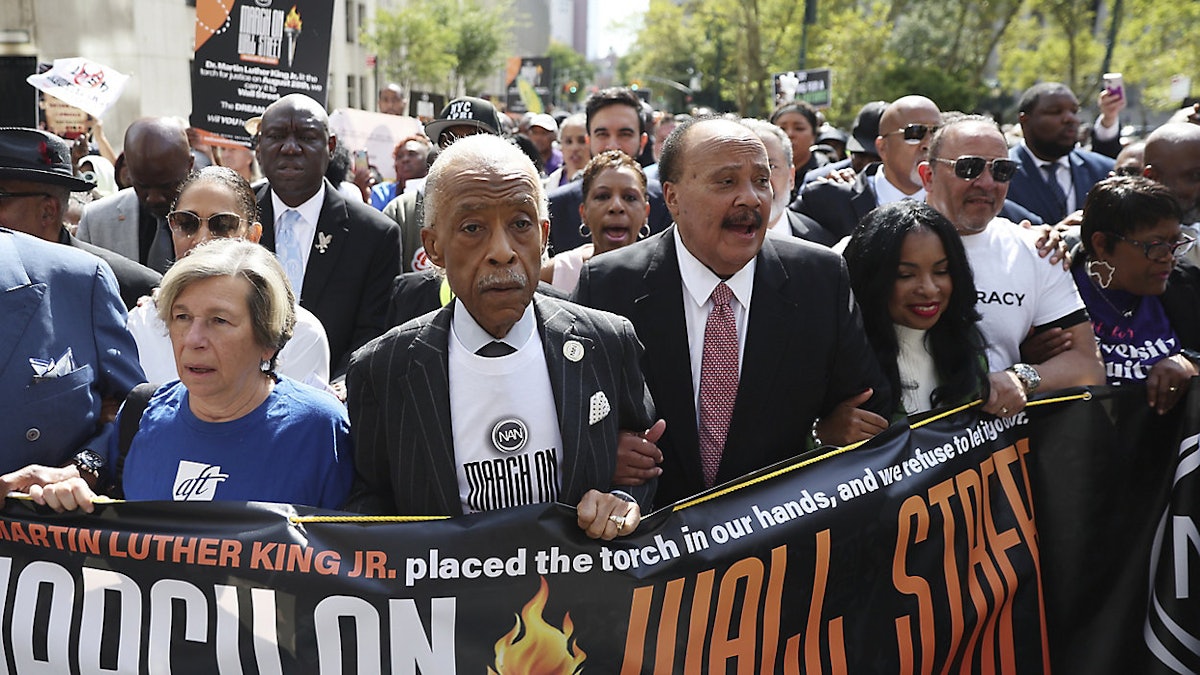
    NEW YORK — The early morning mist hung over Lower Manhattan as buses began arriving from campuses across America. From Historically Black Colleges and Universities in the South to state flagships in the Midwest, from community colleges in New Jersey to Ivy League institutions in New England, students and faculty poured into New York City with a singular purpose: to stand with the Rev. Al Sharpton in defending diversity, equity and inclusion programs under siege.

    Thursday’s “March on Wall Street” drew thousands to Manhattan’s Financial District, but among the clergy, labor and community leaders were hundreds of higher education advocates who had traveled from every corner of the nation, transforming the demonstration into an unlikely convergence of campus and community activism.

    The 45-minute march through downtown Manhattan carried special significance, timed to coincide with the anniversary of the Civil Rights-era March on Washington in 1963. But this time, the target wasn’t the nation’s capital—it was corporate America’s headquarters.

    “We come to Wall Street rather than Washington this year to let them know, you can try to turn back the clock, but you can’t turn back time,” Sharpton said as the demonstration began at New York’s popular Foley Square. 

    For the academics who joined the march, Sharpton’s words resonated with particular urgency. Since returning to the White House in January, President Donald J. Trump has successfully moved to end DEI programs within the federal government and warned schools to do the same or risk losing federal money.

    Dr. Harold Williams, an adjunct sociology professor from Philadelphia who had driven three hours with a van full of colleagues, clutched a handmade sign reading “Education is Democracy.”  

    “We’re watching the systematic destruction of everything we’ve worked to build,” said the 63-year-old educator, who was just one when his mother brought him to Washington, D.C. on August 28, 1963  to hear Dr. Martin Luther King, Jr., deliver his famous “I Have a Dream” speech.  “They’re not just cutting programs, they’re cutting the pathways that opened higher education to an entire generation of students.”

    Among the crowd that gathered near the African Burial Ground—the largest known resting place of enslaved and freed Africans in the country—Dr. Michael Eric Dyson’s voice carried the weight of history and the urgency of the present moment.

    The prominent Vanderbilt University professor and public intellectual delivered a rousing address along with a litany of other activists including Marc H. Morial of the National Urban League, Maya Wiley of the Leadership Conference on Civil and Human Rights, and Randi Weingarten of the American Federation of Teachers. 

    “Well, you know, people often ask, what was it like? They look at the grainy black and white photos of Martin Luther King Jr. and Ralph Abernathy and Rosa Parks and Ella Baker and Diane Nash and John Lewis. What was it like to be with them?” Dyson said in an interview with Diverse.  

    “Well, you know right now, these are the times that define us. These times to future generations will be remarkable. What did you do with the fascist presidency, with an authoritarian man, with an autocrat who was attempting to absorb for himself all the power that was not due him? Well, this is what it looks like.”

    Dyson’s words particularly resonated among the young activists in the crowd—students who had grown up during an era of increasing attacks on institutional knowledge and educational access.

    The logistics of moving academics from campuses nationwide told its own story of commitment. Many had used personal funds or organized fundraisers to join what some called an “academic pilgrimage” to stand with Sharpton and the broader civil rights community.  Howard University organized a busload from the nation’s capital.

    Jonah Cohen, 18, a freshman at City College of New York, said that he was energized by the public demonstration of activism.

    “This is our moment,” he said of the student turnout. “We are no longer accepting these attacks without a fight. We are fighting back against those who want to take us back to an uglier America. We see a better country.” 

    State Assembly Member Zohran Mamdani, the Democratic candidate in the upcoming New York City mayoral race, marched alongside some of the professors and students, embodying the coalition between academic and political leadership that advocates say is necessary to resist the rollbacks.

    The National Action Network’s strategy of encouraging consumer boycotts of retailers that have scaled back DEI policies resonated with many academics who said that they understood the connection between corporate and educational equity initiatives.

    “Corporate America wants to walk away from Black communities, so we are marching to them to bring this fight to their doorstep,” Sharpton said.

     

    Source link

  • Sharpton Calls for March on Wall Street, Warns of ‘Giants’ in Fiery Howard University Sermon

    Sharpton Calls for March on Wall Street, Warns of ‘Giants’ in Fiery Howard University Sermon

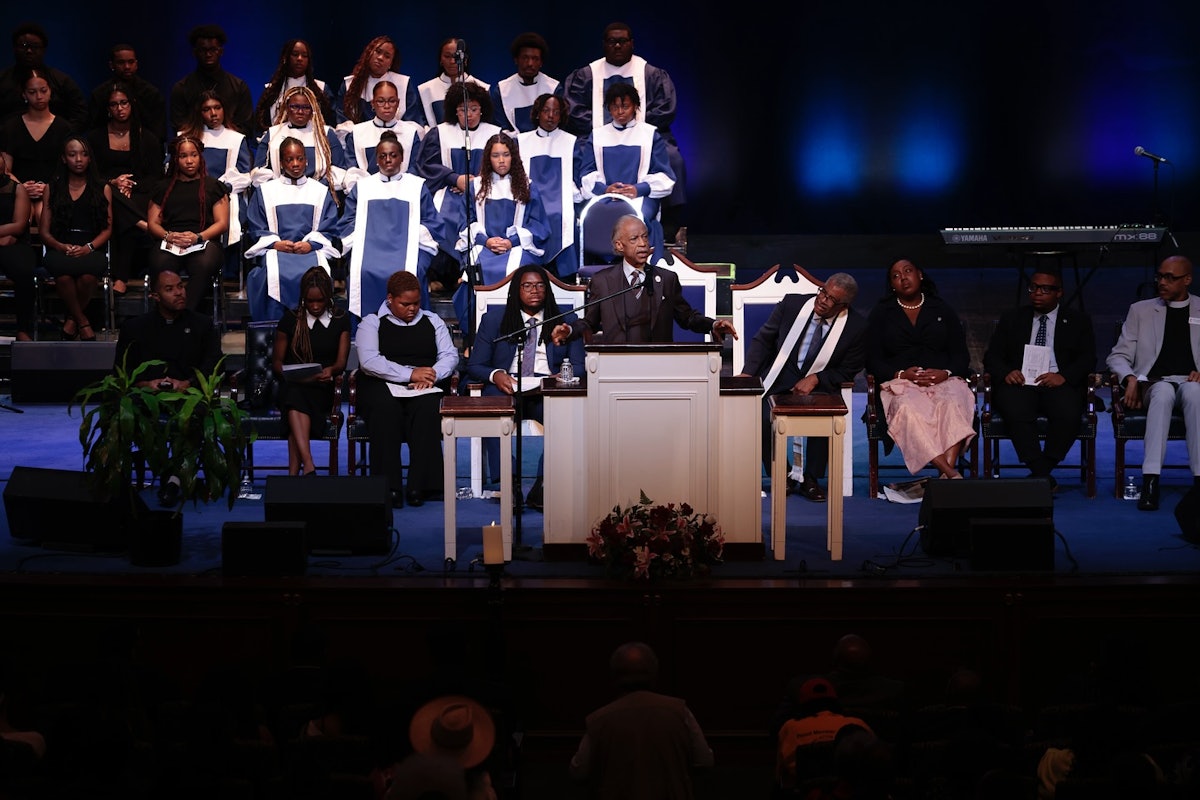
    The gospel choir’s voices echoed through Cramton Auditorium, their blue and white robes swaying as they filled Howard University’s historic venue with spiritual melodies. Just a week after classes resumed at the prestigious HBCU, Rev. Al Sharpton took the stage to deliver a sermon that was equal parts spiritual guidance and a political rallying cry.

    Reverend Al Sharpton meets with Howard University students ahead of Thursday’s March on Wall Street. Speaking to a packed auditorium days before the August 28th anniversary of the historic 1963 March on Washington, the National Action Network founder urged the Howard community to “stand up to the giants” of inequality and injustice while announcing a bold strategic shift for this year’s commemoration.

    Rather than gathering in the nation’s capital this year, Sharpton announced that thousands of demonstrators—including college students from across the country—will converge on New York’s financial district this Thursday for a March on Wall Street, starting at 10 a.m. at the African Burial Ground and marching directly to Wall Street.

    “The real people that are deferring the dream are on Wall Street,” Sharpton told the audience. “They’re the ones that are financing the moves for redistricting and robbing us of our right to vote and representation. So rather than come to Washington, we said, ‘We going to Wall Street this year, where they do business.’”

    Using the biblical story of David facing Goliath as his central theme, Sharpton challenged the congregation to confront contemporary challenges with biblical courage.

    The prominent civil rights leader was particularly pointed in his political criticism of President Donald J. Trump and his attacks on diversity, equity and inclusion and U.S. cities led by Black mayors.

    Sharpton delivered some of his harshest criticism when addressing attempts to sanitize American history, particularly regarding slavery. He expressed outrage at what he described as efforts to downplay historical injustices.

    “The fact that they are threatening institutions,” Sharpton said, his voice rising. “Can you imagine? It’s almost unthinkable to me that they’re saying that we are going through the Smithsonian Museum to make sure that they are in line with the feelings of one man at history.”

    Sharpton said that he was incensed by suggestions that historical narratives should be altered and he chided the president who claimed that the museums focus too much on “how bad slavery was.”  

    In one of the sermon’s most powerful moments, Sharpton shared his family’s connection to slavery, describing how genealogical research in 2007 revealed that his great-grandfather had been enslaved on a South Carolina plantation owned by the late Senator Strom Thurmond’s ancestors.

    “My great grandfather was a slave,” he told the audience. “And it occurred to me for the first time that my name Sharpton is really the owner’s name of my great grandfather. I don’t know my name, and you don’t know your name.”

    Now, Sharpton added, is the time for Americans—particularly students—to fight back against the assault on history. 

    “If we are afraid to stand up, then we are not deserving of those that stood up and gave their lives so we could have a life worth living,” he said.

    Howard University students, led by senior Tabia J. Lee, president of the school’s National Action Network chapter, will bring a delegation to participate in Thursday’s march. The student involvement, she said, represents Sharpton’s challenge that young people take a broader leadership role in today’s social justice movements.

    Howard students noted that Sharpton’s visit to campus came as Howard University faces its own transition, with Dr. Ben Vinson announcing his resignation last week as president and former president Dr. Wayne A.I. Frederick returning to lead the storied institution on an interim basis.

    Throughout the nearly hour-long address, Sharpton wove together themes of personal faith, historical memory, and political action. He reminded the audience of their ancestors’ resilience.

    “Do you know when they walked off that plantation in 1863? After being in slavery 246 years, they had no money because they worked for no wages. They had no education; it was against the law for them to read or write… All you had is God.”

    The March on Wall Street, he said, represents more than just a protest location change—it’s a strategic pivot toward confronting economic inequality at its source. And he challenged the college students to take their stand.  

    “Do you know in ’63 when they marched here in Washington? They were still segregated. They didn’t have the Civil Rights Act until ’64. People rode the bus all night, had chicken sandwiches in a paper bag, because there wasn’t a restaurant that would serve them on the way. Had to go in the woods to use the bathroom because they couldn’t use a rest stop, but they came anyhow,” he said. “And here you are, 60 years later, eating at any restaurant you want, checking into any hotel you want, living in any community you want, and somebody got to beg you to stand up? How broke down have we got?”


    Source link

  • Weed, Wagering, Warehouses, and Wall Street

    Weed, Wagering, Warehouses, and Wall Street

    As social observers at the Higher Education Inquirer, we have noticed a US youth society showing increasing signs of anxiety and cynicism. Both of these emotions are understandable, but they have to be treated with care. 

    This angst among so many young adults shows up not just in suicides and drug epidemics but in many other destructive but subtler ways that don’t make the news as much.

    Weed dispensaries are growing. It’s good that marijuana possession is no longer a crime. But smoking marijuana is not safe. To say it’s less dangerous than
    alcohol may be true, but it’s only a rationalization.  

    Gambling addictions may also be related to this trend in destructively
    impulsive thoughts and behaviors.  If your life has little meaning, you
    can find some meaning in talking about sports and betting with your
    bros. Betting alone can be worse. 

    Doom spending shows that many younger folk are overspending because they have less hope. It’s not the same as shopping therapy because the outcome is not feeling better, but of  feeling even worse.  Overall, may help increase the need for warehouses and warehouse jobs, but also damages those around you in ways you may not even see.  

    Who Benefits?

    The only people who benefit in the long run are those who profit from pain. The people on Wall Street. And the rich people who invest in that pain. In the end, even those people, or their loved ones, may be subject to a cynicism they may be forced to notice.   

    Other Possibilities

    If you are spending money that could be spent on
    something else,for the future, you are doing a disservice to yourself
    and those around you.These trends among US youth are the opposite of
    youth global trends in frugal living, living that can lead to greater
    happiness and meaning. 

    Source link