

Tag: strengthens

  • How Credit for Prior Learning Strengthens Workforce Ties

    How Credit for Prior Learning Strengthens Workforce Ties

    In today’s rapidly evolving workforce landscape, higher education institutions face mounting pressure to demonstrate value, relevance and return on investment. Amid this challenge lies an underutilized strategy with remarkable potential: credit for prior learning.

    We’ve long recognized CPL’s benefits for students. Learners who receive CPL credits are more likely to complete their degrees (49 percent vs. 27 percent for those without) and, on average, they earn 17.6 additional credits, finish nine to 14 months sooner and save between $1,500 and $10,200 in tuition costs (CAEL). But what’s often overlooked is CPL’s power to transform relationships between educational institutions and employers—creating a win-win-win for students, institutions and industry.

    Beyond a Student Benefit

    The traditional narrative around CPL emphasizes student advantages: increased enrollment, improved completion rates and reduced time to graduation. These metrics matter tremendously, but they tell only part of the story.

    CPL can serve as a bridge between academia and industry, creating powerful new partnerships. When colleges and universities embrace robust CPL programs, they send a clear message to employers: We value the training and development you provide. Recognizing corporate training as creditworthy learning demonstrates respect for workplace knowledge and underscores higher education’s commitment to real-world relevance.

    Employer and Workforce Gains

    For employers, CPL validates that their internal training programs have academic merit. This recognition strengthens recruitment and retention efforts, as workers see clear pathways to advance their education without duplicating learning they’ve already mastered. Companies that invest in employee development also gain educational partners who understand industry needs and value the attributes that drive employee success.

    The benefits extend further: Organizations with tuition remission or reimbursement programs can reduce costs while enhancing employee motivation and persistence.

    Deeper Collaboration Between Higher Ed and Industry

    As institutions evaluate workplace training for credit equivalency, they gain invaluable insights into industry practices and skill needs. This exchange allows colleges to refine curricula to better meet market demand, ensuring graduates possess the competencies employers seek—not just those defined within academic silos.

    The hard but necessary conversations—between faculty and corporate training leaders—help ensure CPL evaluations are rigorous and relevant. Key questions include: Why include certain topics but not others? How do we know participants can demonstrate knowledge? Does the training align with broader disciplinary or leadership needs, or is it niche? These discussions strengthen both educational and workplace outcomes.

    Reimagining CPL

    The future of higher education lies in breaking down artificial barriers between academic and workplace learning. By embracing CPL as a cornerstone strategy—not only for student success but also for employer partnerships—institutions can position themselves at the nexus of education and employment.

    This approach doesn’t diminish academic rigor; it expands our understanding of where and how meaningful learning occurs. Done well, CPL creates pathways that honor all learning, regardless of where it happens. And for learners, the message is clear: Your hard work counts.
    Source link

  • We cannot afford to dismantle Head Start, a program that builds futures, strengthens families and delivers proven returns

    We cannot afford to dismantle Head Start, a program that builds futures, strengthens families and delivers proven returns

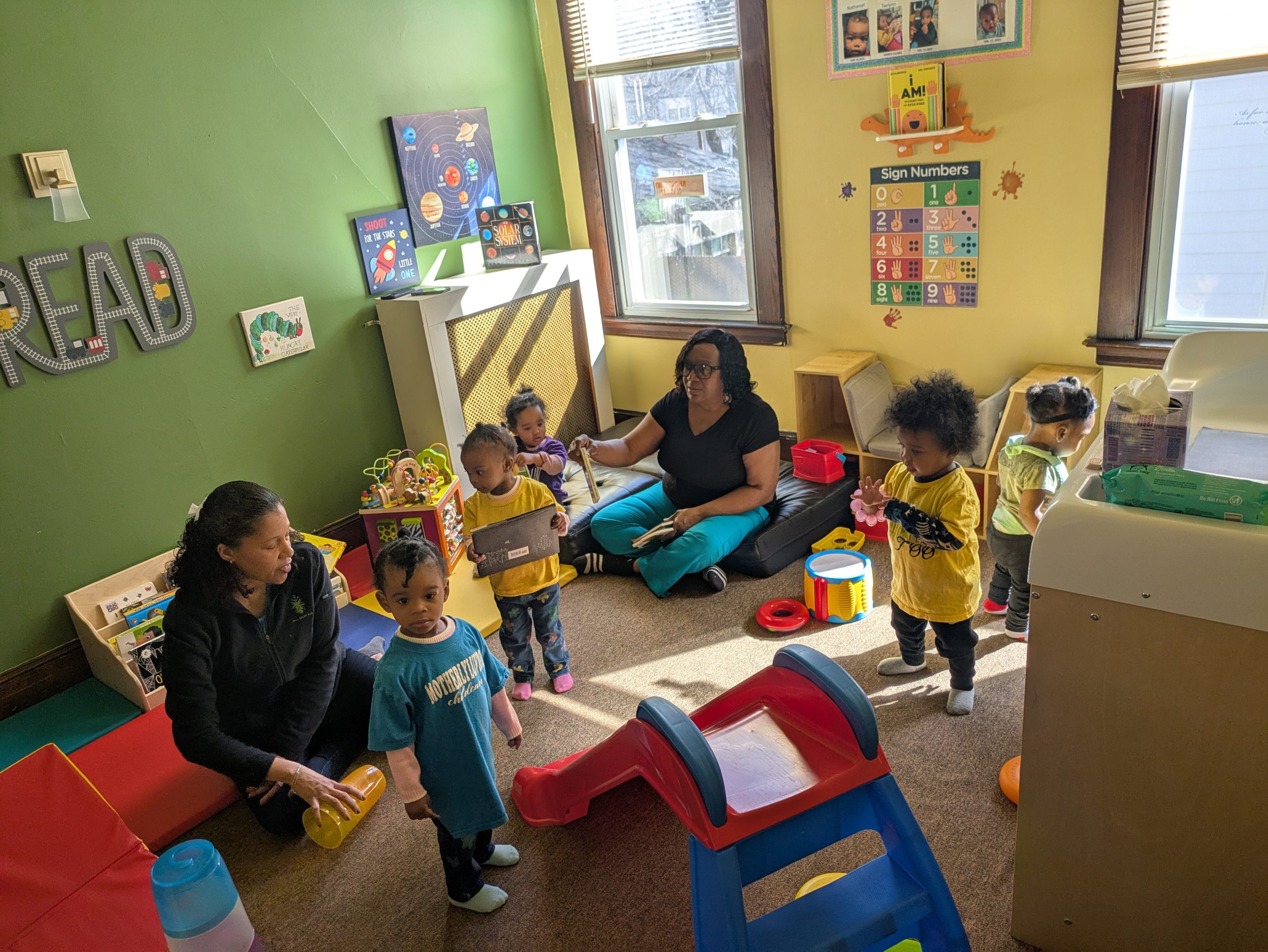
    The first words I uttered after successfully defending my dissertation were, “Wow, what a ride. From Head Start to Ph.D.!” Saying them reminded me where it all began: sitting cross-legged with a picture book at the Westside Head Start Center, just a few blocks from my childhood home in Jackson, Mississippi. 

    I don’t remember every detail from those early years, but I remember the feeling: I was happy at Head Start. I remember the books, the music, the joy. That five-minute bus ride from our house to the Westside Center turned out to be the shortest distance between potential and achievement. 

    And my story is not unique. Every year, hundreds of thousands of children — kids whose names we may never know, though our futures depend on them — walk through Head Start’s doors. Like me, they find structure, literacy, curiosity and belonging.  

    For many families, Head Start is the first place outside the home where a child’s potential is nurtured and celebrated. Yet, this program that builds futures and strengthens families is now under threat, and it’s imperative that we protect it. 

    Years later, while training for high school cross-country meets, I’d run past the park next to the center and pause, flooded with memories. Head Start laid the foundation for everything that followed. It gave me structure, sparked my curiosity and built my early literacy skills. It even fed my short-lived obsession with chocolate milk.  

    More than that, Head Start made me feel seen and valued. 

    Related: A lot goes on in classrooms from kindergarten to high school. Keep up with our free weekly newsletter on K-12 education. 

    There’s a clear, unbroken line between the early lessons I learned at Head Start and the doctoral dissertation I defended decades later. Head Start didn’t just teach me my ABCs — it taught me that learning could be joyful, that I was capable and that I belonged in a classroom.  

    That belief carried me through elementary school, Yale and George Washington University and to a Ph.D. in public policy and public administration. Now, as part of my research at the Urban Institute, I’m working to expand access to high-quality early learning, because I know firsthand what a difference it makes.  

    Research backs up what my story shows: Investments in Head Start and high-quality early childhood education change lives by improving health and educational achievement in later years, and benefit the economy. Yet today there is growing skepticism about the value of Head Start, reflecting an ongoing reluctance to give early childhood education the respect it deserves.  

    If Head Start funding is cut, thousands of children — especially from communities like mine in Jackson, where families worked hard but opportunities were limited — could lose access to a program that helps level the playing field. These are the children of young parents and single parents, of working families who may not have many other options but still dare to dream big for their kids.  

    And that is why I am worried. Funding for Head Start has been under threat. Although President Donald Trump’s proposed fiscal 2026 budget would maintain Head Start funding at its current $12.3 billion, Project 2025, the influential conservative policy document, calls for eliminating the program. The administration recently announced that Head Start would no longer enroll undocumented children, which a group of Democratic attorneys general say will force some programs to close.  

    Related: Head Start is in turmoil 

    I feel compelled to speak out because, for our family, Head Start wasn’t just a preschool — it was the beginning of everything. For me, it meant a future I never could have imagined. For my mother, Head Start meant peace of mind — knowing her son was in a nurturing, educational environment during the critical developmental years. My mother, Nicole, brought character, heart and an unwavering belief in my potential — and Head Start helped carry that forward. 

    My mother was just 18 when she enrolled me in Head Start. “A young mother with big dreams and limited resources,” she recounted to me recently, adding that she had “showed up to an open house with a baby in my arms and hope in my heart.” 

    Soon afterward, Mrs. Helen Robinson, who was in charge of the Head Start in Jackson, entered our lives. She visited our home regularly, bringing books, activities and reassurance. A little yellow school bus picked me up each morning. 

    Head Start didn’t just support me, though. It also supported my mother and gave her tips and confidence. She took me to the library regularly and made sure I was always surrounded by books and learning materials that would challenge and inspire me. 

    It helped my mother and countless others like her gain insight into child development, early learning and what it means to advocate for their children’s future.  

    Twenty-five years after those early mornings when I climbed onto the Head Start bus, we both still think about how different our lives might have been without that opportunity. Head Start stood beside us, and that support changed our lives. 

    As we debate national priorities, we must ask ourselves: Can we afford to dismantle a program that builds futures, strengthens families and delivers proven returns? 

    My family provides living proof of Head Start’s power.  

    This isn’t just our story. It is the story of millions of others and could be the story of millions more if we choose to protect and invest in what works. 

    Travis Reginal holds a doctorate in public policy and public administration and is a graduate of the Head Start program, Yale University and George Washington University. He is a former Urban Institute researcher. 

    Contact the opinion editor at [email protected]. 

    This story about the Head Start funding was produced by The Hechinger Report, a nonprofit, independent news organization focused on inequality and innovation in education. Sign up for Hechinger’s weekly newsletter. 

    The Hechinger Report provides in-depth, fact-based, unbiased reporting on education that is free to all readers. But that doesn’t mean it’s free to produce. Our work keeps educators and the public informed about pressing issues at schools and on campuses throughout the country. We tell the whole story, even when the details are inconvenient. Help us keep doing that.

    Join us today.

    Source link