Tag: Strikes

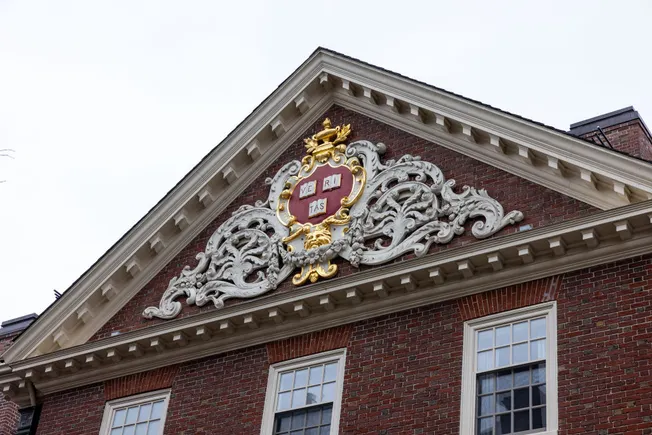
  • Federal judge strikes down Trump administration’s $2.2B funding freeze at Harvard

    Federal judge strikes down Trump administration’s $2.2B funding freeze at Harvard

    This audio is auto-generated. Please let us know if you have feedback.

    Dive Brief:

    • The Trump administration violated Harvard University’s First Amendment rights and didn’t follow proper procedures when it froze $2.2 billion of the university’s federal funding earlier this year, a federal judge ruled Wednesday.

    • U.S. District Judge Allison Burroughs also ruled that the federal government acted arbitrarily and capriciously when halting the funds. The judicial branch must ensure important research isn’t improperly terminated, she wrote, “even if doing so risks the wrath of a government committed to its agenda no matter the cost.”

    • Burroughs struck down the Trump administration’s freeze orders and grant termination letters, opening the door for Harvard’s funding to be reinstated. But a White House spokesperson said the Trump administration will immediately move to appeal the decision and keep Harvard “ineligible for grants in the future,” in apparent defiance of the ruling.

    Dive Insight:

    In April, the Trump administration froze $2.2 billion in multi-year grants and $60 million in multi-year contracts to Harvard, hours after the university’s leadership rebuked its demands for changes to its admissions, hiring, governance and campus policies.

    The federal government carried out the freeze under the auspices of the Trump administration’s Joint Task Force to Combat Anti-Semitism, which has alleged that the Ivy League institution has not done enough to fight antisemitism on its campus.  Subsequent grant termination letters from multiple federal agencies repeated those claims. 

    But Burroughs questioned that rationale in her decision Wednesday, saying a connection between the federal government’s stated motivations and actions was “wholly lacking.”

    The evidence does not “reflect that fighting antisemitism was Defendants’ true aim in acting against Harvard,” the judge wrote in her 84-page ruling. “Even if it were, combatting antisemitism cannot be accomplished on the back of the First Amendment.”

    U.S. Education Secretary Linda McMahon also told Harvard in a May 5 letter that it would cut the university off from all future research grants — an order that Burroughs also permanently blocked.

    Burroughs also cast doubt on the Trump administration’s argument that its revocation of Harvard’s funding had nothing to do with university President Alan Garber’s refusal to comply with extensive federal ultimatums. 

    Among several wide-ranging requirements, the Trump administration sought to have Harvard hire a third party to audit programs and departments that it described as fueling “antisemitic harassment” or reflecting “ideological capture.It also called for “meaningful governance reform” within the university, such as reducing the power of faculty engaged in activism.

    The ultimatums and cut-off funds prompted Harvard to sue the federal government in April. It argued that the Trump administration violated its free speech by pulling funding for refusing to comply with viewpoint-based demands and that the government didn’t follow the proper procedures for terminating the grants. 

    Despite the Trump administration assertions that Harvard’s pulled funding was unrelated, Burroughs said its own members undercut its argument.

    “Numerous government officials spoke publicly and contemporaneously on these issues, including about their motivations, and those statements are flatly inconsistent with what Defendants now contend,” the judge wrote. 

    Burroughs cited social media posts from President Donald Trump two days after the task force announced the funding freeze.

    “Harvard is a JOKE, teaches Hate and Stupidity, and should no longer receive Federal Funds,” he wrote on April 16.

    That post and others like it demonstrated that Trump’s ongoing concern was “untethered from antisemitism,” Burroughs said.

    But a White House spokesperson doubled down on Wednesday, saying the federal government’s actions against the university are intended to “hold Harvard accountable.”

    “To any fair-minded observer, it is clear that Harvard University failed to protect their students from harassment and allowed discrimination to plague their campus for years,” White House Assistant Press Secretary Liz Huston said in an email. Burroughs was “always going to rule in Harvard’s favor, regardless of the facts,” she added.

    In late April, Harvard published two long-awaited reports about the climate of its Massachusetts campus — one on antisemitism and anti-Israeli bias and another on anti-Muslim, anti-Arab, and anti-Palestinian bias.

    The reports found that Jewish, Israeli and Zionist students and employees at Harvard — along with their Muslim, Arab and Palestinian peers — at times felt shunned or harassed while at the university during the 2023-24 academic year.

    “Harvard was wrong to tolerate hateful behavior for as long as it did,” Burroughs wrote before noting that the university is “currently, even if belatedly, taking steps it needs to take to combat antisemitism and seems willing to do even more if need be.”

    But the federal government failed to consider this, the judge wrote.

    “The agencies considered little, if any, data regarding the antisemitism problem at Harvard” and disregarded “substantial policy and other changes” the university enacted to address the issue, Burroughs said.

    They also “failed to weigh the importance of any particular grant or to evaluate whether a particular grant recipient had engaged in antisemitic behavior before cutting off critical research,” she said.

    Source link

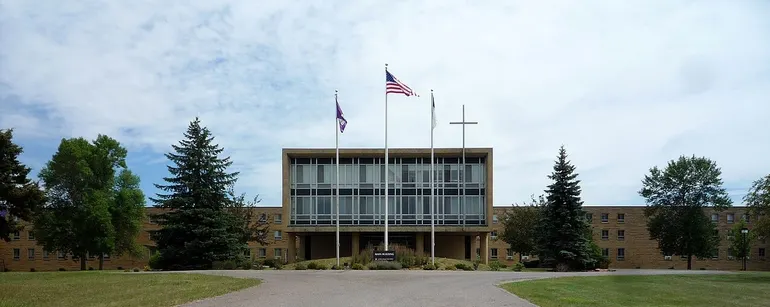
  • Judge strikes down Minnesota dual enrollment program’s ban on faith statements

    Judge strikes down Minnesota dual enrollment program’s ban on faith statements

    This audio is auto-generated. Please let us know if you have feedback.

     Dive Brief:

    • A federal judge on Friday struck down a Minnesota law prohibiting colleges that require high school students to sign statements of faith from participating in a state dual enrollment program.
    • The University of Northwestern and Crown College, two conservative Christian institutions in Minnesota, sued the state in 2023 over the law which rendered them ineligible to participate in the Postsecondary Enrollment Options program. Both colleges require on-campus students to sign religious conduct agreements.
    • Siding with the colleges, U.S. District Judge Nancy Brasel ruled that Minnesota’s law infringed on their constitutional rights by making them choose between participating in the PSEO program and practicing their religion.

    Dive Insight:

    Since 1985, Minnesota’s PSEO program has allowed local high school students to earn college credit for nonsectarian coursework at participating colleges. The program is free for eligible students and reimburses colleges with fixed payments per credit hour.

    But a 2023 law, passed by the state’s Democrat-controlled Legislature, prohibited colleges from participating in the program if they require faith statements or make admission decisions based on “race, creed, ethnicity, disability, gender, or sexual orientation or religious beliefs or affiliations.”

    The University of Northwestern requires students and employees to sign a pledge to abstain from “same sex romantic intimacy.” And Crown’s student conduct policy does not allow involvement or promotion of “any sexual behavior outside the marriage of one man and one woman.”

    Both institutions, joined by three parents of high school students, sued the state the same day Democratic Gov. Tim Walz signed the legislation into law.

    The Minnesota Department of Education filed counterclaims, arguing that Crown and the University of Northwestern’s admissions policies for the PSEO program are unconstitutional.

    Early on in the case, Brasel blocked the state from enforcing the new law, allowing the colleges to continue enrolling PSEO students and earning state funds from the program while the case proceeded. Between the 2017-18 and 2022-23 academic year, the University of Northwestern received over $33.2 million from the program, and Crown received roughly $5.8 million.

    In her Friday ruling, Brasel sided with the colleges.

    “If the Schools’ eligibility to participate in PSEO is conditioned on not using faith statements as an admissions requirement, their free exercise in maintaining a campus community of like‐minded believers is burdened,” said Brasel, a Trump appointee. Families also lose their right to free exercise of religion if they can’t use the public benefit at “a school of their choice of like‐minded believers,” she said.

    The judge further wrote that if the state elects to fund private education, officials cannot disqualify private schools solely because they’re religious.

    Brasel also dismissed the state’s counterclaims Friday.

    The Minnesota Department of Education did not immediately respond to a request for comment Monday.

    The leaders of Crown and the University of Northwestern — Andrew Denton and Corbin Hoornbeek, respectively — celebrated the verdict Saturday.

    “This legislation has given us yet another opportunity to affirm our mission; we remain committed to equipping our students to grow intellectually and spiritually to serve effectively in their professions and give God-honoring leadership in the home, church, community, and world,” Hoornbeek said in a statement.

    The same day, Denton thanked the legislators who originally opposed the ban and said Crown was grateful for the law’s reversal.

    “The court made clear that Minnesota cannot single out high school students who want to attend a faith-centered institution,” he said. 

    Source link

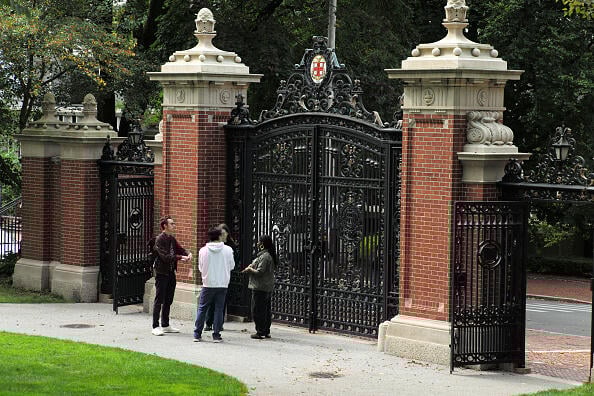
  • Brown Strikes Deal With Trump Administration

    Brown Strikes Deal With Trump Administration

    Jonathan Wiggs/The Boston Globe via Getty Images

    Brown University has struck a deal with the Trump administration to restore about $510 million in frozen federal research funds in exchange for various concessions but no payment, officials announced Wednesday.

    The federal government will restore millions in frozen research funding and settle investigations over allegations of campus antisemitism, according to the agreement. While Brown will not pay out a settlement to resolve the complaints like its Ivy League counterpart Columbia University did, the university pledged $50 million over the next decade to state workforce development efforts in Rhode Island.

    Brown is the second university to cut a deal with the Trump administration since Columbia reached a similar agreement last week. Trump officials said the Columbia settlement would be a template for their talks with other colleges, though other higher ed experts argued the deal was unlawful and represented a threat to the sector at large. (Harvard University, which has also been in the administration’s crosshairs over alleged antisemitism, has reportedly considered a settlement of up to $500 million to resolve its ongoing dispute.)

    Still, Brown agreed to multiple other changes. They include adopting the Trump administration’s definitions of male and female, not performing gender-affirming surgeries on minors or prescribing them puberty blockers, providing admissions data to the federal government, and conducting a campus climate survey and sharing the results with the federal government. Brown also agreed to codify prior changes officials announced to combat discrimination on campus.

    The deal does not include restrictions on campus curriculum or programs.

    “At its core, the agreement preserves the integrity of Brown’s academic foundation, and it enables us as a community to move forward after a period of considerable uncertainty in a way that ensures Brown will continue to be the Brown that our students, faculty, staff, alumni, parents and friends have known for generations,” President Christina Paxson said in a statement.

    Brown announced the agreement shortly after the university took out a $500 million loan, which could have helped plug research funding holes or fund a protracted legal battle. The university also borrowed $300 million in April after the Trump administration froze research funding over allegations of antisemitism connected to pro-Palestinian protests.

    The funding freeze, along with other changes in federal policy, has hit the university hard, and officials warned in June of the potential for “deep financial losses.”

    Education Secretary Linda McMahon celebrated the deal, asserting in a statement that the agreement would protect Jewish students from antisemitism as well as women’s sports.

    “Restoring our nation’s higher education institutions to places dedicated to truth-seeking, academic merit, and civil debate—where all students can learn free from discrimination and harassment—will be a lasting legacy of the Trump administration, one that will benefit students and American society for generations to come,” McMahon wrote in a social media post.

    Source link

  • HEI Supports Upcoming Boycotts and Strikes

    HEI Supports Upcoming Boycotts and Strikes

    The Higher Education Inquirer (HEI) is in solidarity with nonviolent protests against the Trump administration.  Two upcoming events include a 24-hour boycott of Amazon, Walmart, and Best Buy (February 28th) and a 10-day General Strike. We hope enough people join these and other nonviolent protests to make our messages heard loudly enough. To our readers, if you know of any public protests and other nonviolent acts of civil disobedience that we can highlight, please contact us.  

    Related links:

    Protests Under Trump 207-2021 (Pressman, et al, 2022)

    Timeline of protests against Donald Trump (Wikipedia)

    List of incidents of civil unrest in the United States (Wikipedia)

    Methods of Student Nonviolent Resistance (2024) 

    Democratic Protests on Campus: Modeling the Better World We Seek (Annelise Orleck)

    Elite Universities on Lockdown. Protestors Regroup. (2024)

    Source link

  • ACE strikes a fighting stance at annual conference

    ACE strikes a fighting stance at annual conference

    WASHINGTON, D.C.—Hundreds of higher ed leaders packed into the Kennedy Center for the annual American Council on Education conference this week, snapping photos of the large bust of the cultural center’s namesake, President John F. Kennedy, in the foyer. Some joked that it would soon be replaced by Donald Trump’s likeness, given the current president’s takeover of the Kennedy Center board, a move announced Wednesday.

    But it was Trump’s attempted takeover of higher education that was foremost on the minds of attendees.

    The Republican president, now in his second nonconsecutive term, dominated conference discussions as speakers grappled with how to interpret and respond to a vision for higher education that has been marked by cuts to research funding and personnel; the decimation of diversity, equity, and inclusion initiatives; and efforts to dismantle the U.S. Department of Education.

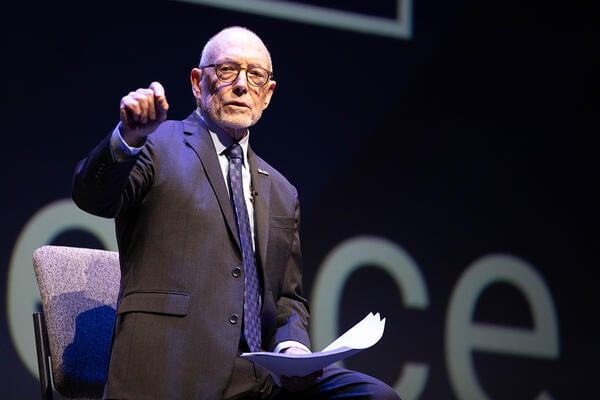
    “We’re under attack,” ACE president Ted Mitchell said in his opening remarks.

    He pointed to a flurry of executive orders and other recent actions that have caused “confusion and dismay” across the sector, as the Trump administration attempted to freeze federal funding and change research reimbursements, creating financial uncertainty for colleges.

    “These executive orders are an assault on American opportunity and leadership,” Mitchell said.

    He warned that such changes could destabilize higher education by undermining research, innovation, intellectual independence and autonomy.

    “The flurry of these threats [is] designed to cower us into silence,” he said.

    Mitchell also noted that ACE, along with other associations and several research universities, filed a lawsuit Monday against the National Institutes of Health for attempting to cap reimbursements for indirect research costs. While that lawsuit is pending, a federal judge has already prevented the cap, at least temporarily, in response to other litigation.

    In the face of such chaos and instability, Mitchell emphasized the importance of unity, urging conference goers to beware of attempts to sow discord among institutions. “We will only succeed if we stick together,” he said.

    He also pushed back on Trump’s attacks on diversity, equity and inclusion initiatives, which have already led some colleges and universities to scrub DEI language from websites, shutter offices and cancel events.

    “We can’t be apologetic of diversity. We just can’t,” Mitchell said.

    But even as he blasted some of Trump’s recent actions, he noted that ACE is also seeking common ground with the administration.

    “I continue to believe that there are important areas of policy where we can and must work with this administration. We will work to find those openings wherever we can,” Mitchell said.

    His remarks came a day after dozens of college presidents attended ACE’s inaugural Hill Day, where they met with congressional staff to learn and advocate for policy priorities.

    The Policy Outlook

    The notion of higher education being under siege was prevalent across numerous sessions, including in a Thursday policy update from Jon Fansmith, senior vice president of government relations and national engagement at ACE, who broke down recent actions and Republican priorities.

    Fansmith noted that Trump has sought to reshape higher education through a series of executive orders, investigations and attempts to defund and destabilize the sector.

    “We are not used to the wheels of government moving this quickly and impactfully,” he said.

    Despite the sense of alarm roiling the sector, Fansmith said “growing opposition” has emerged. In some cases, it’s been bipartisan, with congressional Republicans joining Democrats in expressing concern over how changes to federal funding or research dollars may harm their local institutions and employers.

    Additionally, Fansmith pointed out that the Trump administration has been sued repeatedly—at least 58 times, by his count—and that successful lawsuits have slowed the president’s rapid-fire attacks.

    Fansmith also noted that Trump’s nominees to lead the Department of Education, Linda McMahon as secretary and Nicholas Kent as under secretary, are more seasoned operators than other Trump World figures. McMahon’s Senate confirmation hearing took place Thursday.

    “She is not a firebrand; she is not the person who is going to blow things up,” Fansmith said, noting McMahon’s background as a longtime professional wrestling executive and prior head of the Small Business Association during Trump’s first term. But given Trump’s desire to dismantle or diminish the Education Department, McMahon “may be ordered to blow things up,” he said.

    Of Kent, a former for-profit college advocate and past staffer for Virginia governor Glenn Youngkin, Fansmith said he was “very passionate, deeply informed and highly intelligent.”

    Hope Amid the Challenges

    The conference also touched on a range of challenges beyond the turbulence of the Trump administration, including free speech, campus antisemitism, demographic changes and more.

    In a discussion Wednesday, Wesleyan University president Michael Roth weighed in on the state of free speech in higher education and questioned recent efforts by Trump to go after universities for alleged antisemitism, including threats of investigations and financial penalties.

    Roth, who is Jewish, acknowledged the existence of some antisemitism on college campuses, but argued that Trump’s efforts to address it were “disingenuous”—more of a cover for going after pro-Palestinian protesters who expressed concern about the bloodshed in Gaza.

    While he noted that college leaders need to be cautious, he advised them not to cower.

    “Not standing up for your mission in the long run won’t help your institution,” Roth said.

    In a panel Thursday on the challenge that shrinking demographics pose to higher education, experts noted enrollment pressures will continue as the number of high school graduates continues to decline. But rather than a demographic cliff, higher education will likely see a gentler slide, they said.

    Nathan Grawe, an economics professor at Carleton College, argued that the enrollment decline “won’t hit us all at once” but rather “little by little,” with incremental challenges year over year.

    Other panelists noted that workforce challenges won’t diminish along with the number of high school graduates, meaning that colleges will need to focus on enrolling and retaining more adult learners.

    For all the doom and gloom surrounding the policy discussions, the conference concluded on a high note. In his closing remarks, Freeman Hrabowski, an ACE Fellow and president emeritus of the University of Maryland Baltimore County, emphasized the importance of hope.

    He encouraged attendees to “use our heads and our hearts” to meet the moment, reflecting on his experience in 1963, when at the age of 12 he was jailed for participating in a civil rights march in Birmingham, Ala. Looking back more than 60 years later, Hrabowski said it was his faith and determination that helped him know then that “we would be OK.”

    He encouraged others to channel their own optimism amid turbulent times.

    “Don’t you dare allow the toxicity of some people to leave you hopeless,” Hrabowski said.

    Source link

  • Ohio Senate passes bill to ban DEI and faculty strikes at public colleges

    Ohio Senate passes bill to ban DEI and faculty strikes at public colleges

    This audio is auto-generated. Please let us know if you have feedback.

    The Ohio Senate on Wednesday passed a far-reaching higher education bill that would ban the state’s public institutions from having diversity, equity and inclusion offices or taking positions on “controversial” topics.

    The bill, known as SB 1, would also establish post-tenure reviews, ban strikes by full-time faculty, and require colleges to publish a syllabus with the instructor’s professional qualifications and contact information for every class.

    Colleges that fail to comply could lose or see reduced state funding.

    The state Senate advanced the legislation in a 21-11 vote largely along party lines — all nine Democrats opposed it, as did two Republicans. The vote came just a day after hundreds of critics spoke out against the proposal during an hourslong hearing Tuesday.

    The second life of SB 83

    Ohio is one of several conservative-controlled states looking to more tightly control their public colleges. But SB 1 is notable for how much it would overhaul the state’s public higher education, including aspects that have traditionally been left to college leaders’ discretion.  

    For example, colleges would be unable to make institutional statements on any topic the bill deems politically controversial, such as “climate policies, electoral politics, foreign policy, diversity, equity, and inclusion programs, immigration policy, marriage, or abortion.”

    The bill would create a mandatory U.S. history college course with prescribed readings, like the U.S. Constitution and at least five essays from the Federalist Papers.

    The state Senate advanced a similar 2023 bill, SB 83, from the same lawmaker,  Republican state Sen. Jerry Cirino. Even though Republicans controlled both chambers of the Legislature and the governor’s mansion in Ohio, the legislation never made it to a vote in the House.

    But times have changed. Matt Huffman, the previous Senate president and a strong supporter of the bill, is now the speaker of the House. Gov. Mike DeWine told local news outlets he was likely to sign the bill, pending a final review, should it make it to his desk.

    SB 1 also goes further than its predecessor. The new bill would ban DEI offices and scholarships altogether, while the previous version only sought to prohibit mandatory DEI trainings and offered exemptions. And SB 1 includes a ban on full-time faculty strikes — a provision that was removed from SB 83 in an effort to assuage labor unions and win House approval.

    Faculty reactions

    Faculty groups and free speech advocates have opposed SB 1 just as they did SB 83. They argue it would chill free speech, hurt recruitment and retention of both students and faculty, and interfere with academic freedom.

    The bill calls for colleges to “ensure the fullest degree of intellectual diversity” on campus and cultivate divergent and varied perspectives on public policy issues, including during classroom discussion.

    “Nothing in this section prohibits faculty or students from classroom instruction, discussion, or debate, so long as faculty members allow students to express intellectual diversity,” the bill says.

    The American Civil Liberties Union of Ohio lambasted the “intellectual diversity” requirements in a statement Tuesday.

    “At best, this language is the micromanaging of individual courses and instructors by the General Assembly,” said Gary Daniels, the group’s chief lobbyist. At worst, he said, it will require all sides of every issue to be evenly presented by instructors, “ignoring their First Amendment right to academic freedom.”

    Cirino sought to cut off some of those criticisms when he reintroduced the bill as the first measure of Ohio’s new legislative session, which started Jan. 6. 

    Source link

  • Federal Judge Strikes Down Biden Administration’s Title IX Rule

    Federal Judge Strikes Down Biden Administration’s Title IX Rule

    by CUPA-HR | January 9, 2025

    On January 9, a federal judge in the Eastern District of Kentucky Court vacated the Biden administration’s Title IX regulations. The order strikes down the regulations nationwide, reverting enforcement back to the 2019 Title IX regulations set by the Trump administration.

    Background

    The Biden administration’s Title IX final rule was released in April 2024 and was set to take effect on August 1, 2024. Soon after the rule was published, several states filed legal challenges against it, resulting in preliminary injunctions that blocked the rule from taking effect in 26 states and hundreds of schools in other states that did not challenge the regulations.

    The Biden administration appealed the preliminary injunctions to the Supreme Court, requesting that the court limit the scope of the preliminary injunctions placed by the lower courts to block only those provisions that related to gender identity. They argued that the lower courts’ decisions to grant the preliminary injunctions were based on concerns with the expanded protections for transgender students and that other provisions like the new grievance procedures and training requirements set forth by the final rule should be able to take effect. The Supreme Court ultimately rejected the Biden administration’s request, arguing that the gender identity provisions were “intertwined with and affect other provisions of the rule.”

    District Court Judge’s Ruling

    In the ruling that vacates the rule nationwide, the federal judge stated that the Biden administration’s Title IX rule is unlawful because Title IX’s prohibition on sex discrimination does not include the scope laid out in the regulations, which include expanded protections for pregnancy or related conditions, gender identity and sexual orientation. The order also states that the rule violates the First Amendment and that it is “arbitrary and capricious.”

    Looking Ahead

    The judge’s order almost certainly ends any hopes for the Biden administration’s Title IX regulations to take effect nationwide. The Biden administration may decide to appeal the decision to a higher court, but efforts to reinstate the rule will likely be unsuccessful given the few days they have left in office and the incoming Trump administration’s unwillingness to defend the rule in court. Alternatively, the Trump administration may seek to update their 2019 Title IX regulations, though any urgency to do so may be diminished now that the 2019 regulations are back in place.

    CUPA-HR will continue to monitor for Title IX updates and keep members apprised via Washington Insider Alert emails and the blog.


    Source link