Tag: structure

  • Family Structure Matters to Student Achievement. What Should We Do With That? – The 74

    Family Structure Matters to Student Achievement. What Should We Do With That? – The 74


    Get stories like this delivered straight to your inbox. Sign up for The 74 Newsletter

    A version of this essay originally appeared on Robert Pondiscio’s SubStack

    A recent report from the University of Virginia—Good Fathers, Flourishing Kids — confirms what many of us know instinctively but rarely see, or avoid altogether, in education debates: The presence and engagement of a child’s father has a powerful effect on their academic and emotional well-being. It’s the kind of data that should stop us in our tracks — and redirect our attention away from educational fads and toward the foundational structures that shape student success long before a child ever sets foot in a classroom.

    The research — led by my AEI colleague Brad Wilcox and co-authored by a diverse team that includes another AEI colleague, Ian Rowe — finds that children in Virginia with actively involved fathers are more likely to earn good grades, less likely to have behavior problems in school, and dramatically less likely to suffer from depression. Specifically, children with disengaged fathers are 68% less likely to get mostly good grades and nearly four times more likely to be diagnosed with depression. These are not trivial effects. They are seismic.

    Most striking is the report’s finding that there is no meaningful difference in school grades among demographically diverse children raised in intact families. Black and white students living with their fathers get mostly As at roughly equal rates — more than 85% — and are equally unlikely to experience school behavior problems. The achievement gap, in other words, appears to be less about race and more about the structure and stability of the family.

    Figure 9 from Wilcox et al., Good Fathers, Flourishing Kids

    This may be a surprising finding to some, but not to William Jeynes, a professor of education at California State University, Long Beach, whose meta-analyses have previously demonstrated the outsized academic impact of family structure and religious faith. (The new UVA report does not study the role of church-going). 

    As I wrote in How the Other Half Learns, Jeynes’ work highlights how two-parent households and religious engagement produce measurable benefits in educational achievement. “When two parents are present, this maximizes the frequency and quality of parental involvement. There are many dedicated single parents,” Jeynes has noted. However, the reality is that when one parent must take on the roles and functions of two, it is simply more difficult than when two parents are present.” Jeynes’ most stunning finding, and his most consistent, is that if a Black or Hispanic student is raised in a religious home with two biological parents the achievement gap totally disappears—even when adjusting for socioeconomic status.

    My colleague Ian Rowe has been a tireless advocate for recognizing and responding to these patterns. He has long argued that NAEP, the Nation’s Report Card, should disaggregate student achievement data by family composition, not just by race and income. That simple step would yield a more honest accounting of the challenges schools are facing — and help avoid both unfair blame and unearned credit.

    Yet this conversation remains a third rail in education. Many teachers and administrators are understandably wary of saying too much about family structure for fear of stigmatizing children from single-parent households, particularly in settings where single-parent households are dominant. Rowe has also faced resistance to his efforts to valorize the “Success Sequence,” the empirical finding that graduating high school, getting a full-time job and marrying before having children dramatically increases one’s odds of avoiding poverty. But being cautious is not the same as being silent, and it’s not compassionate to pretend these dynamics don’t matter when the data so clearly shows that they do.

    None of this absolves educators of their duty to reach and teach every child. But it does suggest we should be clear-eyed in how we interpret data and set expectations. Teachers, particularly those in low-income communities, often shoulder the full weight of student outcomes while lacking the ability to influence some of the most powerful predictors of those outcomes. That’s frustrating — and understandably so.

    Citing compelling evidence on fatherhood and family formation is not a call for resignation or excuse-making. It’s a call for awareness and intelligent action. While schools can’t influence or re-engineer family structure, teachers can respond in ways that affirm the role of fathers and strengthen the school-home connection. They can make fathers feel welcome and expected in school life — not merely tolerated. They can design family engagement activities that include dads as co-participants, not afterthoughts. They can build classroom cultures that offer structure and mentoring, especially to students who may lack it at home. 

    And maybe — just maybe — the field can overcome its reluctance to share with students what research so clearly shows will benefit them and the children they will have in the future. Rowe takes pains to note his initiative to teach the Success Sequence is intended to help students make decisions about the families they will form, not the ones they’re from. “It’s not about telling them what to do,” he says, “it’s about giving them the data and letting them decide for themselves.”

    This leads to a final point, and for some an uncomfortable one: If we truly care about student outcomes, perhaps we should be willing to support the institutions that reliably foster them. And that includes religious schools.

    Religious schools — particularly those rooted in faith traditions that emphasize marriage, family life and moral formation — often create environments where the presence of fathers and the reinforcement of shared values are not incidental but central. A recent analysis by Patrick J. Wolf of the University of Arkansas, published in the Journal of Catholic Education, found that adults who attended religious schools are significantly more likely to marry, stay married, and avoid nonmarital births compared to public‑school peers. The effects are most pronounced among individuals from lower‑income backgrounds.

    In states with Education Savings Accounts (ESAs) and other school choice mechanisms, we have an opportunity — perhaps an obligation — to expand access to these institutions. That’s not merely a question of parental rights or religious liberty. It’s a matter of public interest. If these schools produce better education and social outcomes by encouraging family formation and reinforcing the value of fatherhood, the public benefits — even if instruction is delivered in a faith-based context. Said simply: The goal of educational policy and practice is not to save the system. It’s to help students flourish.

    So yes, let’s fund fatherhood initiatives. Let’s run PSAs about the importance of dads. But let’s also get serious about expanding access to the kinds of schools — whether secular or religious in nature — that support the kind of family culture where children are most likely to thrive. Because if we follow the evidence where it leads, we must conclude that the biggest intervention in education is not another literacy coach or SEL curriculum. It’s dad.


    Get stories like these delivered straight to your inbox. Sign up for The 74 Newsletter

    Source link

  • Marketing Can’t Lead If It’s Shackled by Structure 

    Marketing Can’t Lead If It’s Shackled by Structure 

    Over the past few years, I’ve had the opportunity to conduct organizational assessments for a range of colleges and universities, from small private institutions to large public campuses. Despite the wide variety in size, mission, and complexity, one core issue continues to surface: 

    The greatest threat to effective integrated marketing communications in higher education isn’t a lack of creativity, talent, or ambition; it’s internal misalignment. We have to get out of our own way. 

    This misalignment isn’t just a problem with processes or a cause of inefficiencies. It directly impacts a university’s ability to generate revenue, build and protect its reputation, and, ultimately, secure its long-term viability. 

    Below are five consistent themes I’ve observed across the institutions I’ve worked with, including those I personally worked for before consulting. I have found patterns that emerge regardless of structure, budget or institutional type. They’re internal challenges that severely undermine the very work marketing and communications professionals are tasked to deliver. 

    1. Decentralized Chaos 

    Most institutions operate under some form of distributed marketing where individual colleges, divisions, and programs employ their own communications and/or marketing staff. That’s not inherently problematic. The issue arises when these teams operate independently without shared planning cycles, coordinated messaging, or a central strategy to anchor their work. 

    At best, this results in duplicate efforts, inconsistent voice, and campaign overlap. At worst, it results in undertrained and underresourced staff holding the institution’s reputation and revenue in their hands with anchor to a central strategy.  

    2. Roles That Don’t Match Reality 

    Job descriptions across campuses are often written for tactical support roles: social media posting, event promotion, basic writing. In practice, many of these individuals are leading strategic initiatives, advising campus leaders, coordinating major campaigns, and serving as the face of their departments. 

    This gap between expectation and reality leads to chronic role strain, under-recognition, and burnout. Institutions end up relying on strategic thinking that they haven’t resourced or defined. Additionally, these roles tend to live in isolation, left to their own devices to prioritize their time and resources and even improve their own skillsets, while any connection to the central marcom unit is deemed optional. 

    3. Data Without Direction 

    Marketing technology is everywhere (CRMs, CMSs, project management tools, calendars, analytics platforms). However, the ability to extract meaningful, coordinated insight from those systems is rare. This may be the most critical issue I have seen uniformly across campuses.  

    Too often, teams track different metrics (if they track at all), interpret success in different ways, and lack access to integrated dashboards or audience journey data. There’s no central hub for marketing intelligence, and no unified approach to campaign evaluation. And in most cases, there are no connections between data sources to see if efforts are working. 

    4. Strategy Without Governance 

    Even when a university-wide marketing strategy exists, it often lacks enforcement mechanisms. Central communications teams may offer brand guidelines, campaign frameworks, or shared messaging, but unit-level teams aren’t always required or even incentivized to use them. 

    This results in fragmentation of messaging and a reactive culture in which strategy is optional and consistency is left to chance. 

    5. The Forgotten Internal Audience 

    Internal communications are frequently overlooked in the broader marketing ecosystem. Staff often describe a culture of “self-navigation,” where onboarding is informal, institutional goals are unclear, and team alignment is hit-or-miss. 

    Without strong internal communication, even the most ambitious marketing strategies falter. People can’t execute on what they don’t understand or weren’t invited into. 

    The Cost of Misalignment 

    These internal barriers are often invisible to the public but have real consequences: 

    • Missed enrollment targets 
    • Ineffective or underperforming campaigns
    • Brand inconsistency 
    • Lack of alumni engagement 
    • Delayed crisis responses 
    • Low morale and high turnover 
    • Internal resentment and lack of respect 
    • Risk to institutional reputation 

    In short, when internal teams aren’t set up to succeed, the institution’s ability to drive revenue and protect its reputation is compromised.

    What Institutions Must Do Now 

    If colleges and universities want to compete, marketing and communications cannot be treated as a service unit or support function. They must be positioned as strategic leaders with the authority and infrastructure to drive outcomes that directly influence institutional viability. 

    This means moving beyond collaboration and into accountability, with clear decision rights, cross-campus responsibility, and presidential endorsement. Just as individual units cannot hire a person without HR, they should not be able to advertise on behalf of the institution without central authority. 

    Here’s what that requires: 

    Elevate Marcom to a Strategic Leadership Function 

    Marketing and communications must sit at the strategy table, not just in times of crisis or campaign launches, but as a permanent fixture in institutional planning. That includes having a seat on executive leadership teams. While a reporting line to the president or chancellor is ideal, it isn’t necessary if access and support exist.  

    No major initiative—enrollment, advancement, academic innovation—should move forward without Marcom’s leadership embedded from the beginning. 

    Centralize Authority, Decentralize Execution 

    Establish a clear governance structure that defines who owns the brand, who approves campaigns, and how messaging is prioritized. Marcom should lead the strategy, planning cycles, audience research, and brand integrity, while colleges and units execute within those frameworks. 

    This approach balances institutional consistency with local relevance and eliminates duplicative, misaligned marketing efforts. 

    Redefine Roles to Match Reality 

    Audit all marketing and communications roles across the institution. Rewrite job descriptions to reflect the actual strategic, analytical, and leadership work staff are doing. Then, align titles, compensation, and reporting structures accordingly, building accountability to the central Marcom strategy. 

    The reality is that many professionals are already acting as strategists but without the recognition, decision-making authority, or organizational support to do so effectively. This should include much-needed professional development for those typically forced to self-teach. 

    Build the Infrastructure for Insight and Alignment 

    Invest in integrated systems (integrated CRMs, content management platforms, campaign dashboards, and persona libraries) but pair those tools with processes. This means shared campaign calendars, institution-wide planning cycles, and a unified set of performance indicators. 

    Without alignment on audiences, channels, timing, and outcomes, even the best content will underdeliver. 

    Use a Marketing Maturity Model to Drive Progress 

    Adopt a clear roadmap to measure and grow marketing capabilities across six key domains: brand management, audience journey integration, insights infrastructure, strategic alignment, risk management, and organizational culture. 

    Then give Marcom the responsibility (and the resources) to lead that transformation. Not just participate in it. Own it. 

    This is not about creative polish or tactical execution. It’s about institutional sustainability. The higher education market is louder, more competitive, and less forgiving than ever. 

    Institutions that continue to treat marketing and communications as a support function will struggle to adapt. Those that empower it as a core leadership discipline, with the needed structure, authority, and resources, will build stronger brands, increase revenue, and secure their relevance for the future. 

    Source link

  • Due Dates Provide a Structure for Spaced Learning – Faculty Focus

    Due Dates Provide a Structure for Spaced Learning – Faculty Focus

    Source link

  • Due Dates Provide a Structure for Spaced Learning – Faculty Focus

    Due Dates Provide a Structure for Spaced Learning – Faculty Focus

    Source link

  • Balancing Structure and Emergence in Teaching – Teaching in Higher Ed

    Balancing Structure and Emergence in Teaching – Teaching in Higher Ed

    Throughout my teaching career, I’ve often swung between two extremes when it comes to structure and flow. At times, I’ve been highly structured and organized—a good thing, but one that can become limiting when I miss what’s emerging in the moment. On the other end of the spectrum, if I lose track of the overall goals of a session or workshop, I risk not meeting my commitments or aligning with participants’ expectations. It also creates challenges for the broader structure of the course or event—whether it’s a class within a degree program or a workshop designed to support a university’s teaching and learning goals.

    Mia Zamora discusses this tension on Episode 475 of Teaching in Higher Ed: Making Space for Emergence. In the interview, she describes how we can create “buckets” to hold topics that we can explore together, which is especially helpful for the kind of class content that will be responding to what’s happening in an internal or external context, for example. In my business ethics class, we analyze news stories weekly, and there’s a “bucket” where our reflections and analysis can be placed.

    Alan Levine has co-taught with Mia previously and they both talk about courses having “spines” to keep the needed structure. You can see an example of their #NetNarratives class spine mid-way through Alan’s blog post: My #NetNar Reflection. On Episode 218, Alan discusses the importance of giving people opportunities to explore, as part of their learning. He shares:

    You get better by just practicing. Not rote practicing, but stuff where you’re free to explore.

    Speaking of exploring… I just went to visit Alan’s CogDogBlog – and discovered a recent post with “one more thing about podcasts” where he talks about a cool podcast directory that I wasn’t aware of… and ways of sharing one’s podcast feed with others. Now it is taking every ounce of discipline not to go down the rabbit trail of discovering more. But I leave for Louisiana in three days, the semester starts tomorrow, and I have a 5:30 AM keynote on Tuesday morning. All this to say, I had better behave myself and share a few more things about facilitiation I’ve been thinking about, as I prepare for those adventures.

    Two Additional Approaches for Managing the Tension Between Structure and Flow

    Over time, I’ve discovered two other helpful strategies for balancing structure and in-the-moment flexibility. These tools and insights have transformed how I prepare for and facilitate learning experiences.

    1. SessionLab: Visualizing and Adjusting the Flow

    A while back, I discovered a tool called SessionLab, and it’s become a game-changer, especially when preparing workshops. It helps me create a “run of show” document—something Kevin Kelly has discussed both on Episode 406: How to Create Flexibility for Students and Ourselves, as well as in his book on flexibility in teaching: Making College Courses Flexible Supporting Student Success Across Multiple Learning Modalities. A run of show outlines the timing, activity titles, descriptions, and any additional information for a session, helping me stay on track while leaving space for flexibility.

    SessionLab allows me to break down a workshop or class into blocks of time and activities. Though it includes a library of standard activities, I mostly use it to map out my own. One of my favorite features is the ability to highlight sections in the “additional information” column. This has been a game-changer for virtual facilitation. For example, when sharing resources or instructions during a Zoom session, I pre-highlight key content so I can easily copy and paste it into the chat in real time.

    Beyond that, the tool allows you to color-code blocks to visually assess the balance between different types of learning activities—like how much time you’re spending on lecture versus active learning. It even lets you generate a PDF version for offline reference.

    This morning, I was preparing for Tuesday morning’s keynote and realized (yet again) I’d tried to squeeze too much into my allotted time. SessionLab helped me get realistic about pacing, build in breathing room, and ensure space for those organic moments that make these moments of learning in community so powerful. After all, if everything were going to be rigidly planned, why not just record a video and skip live interaction altogether?

    If you’re looking for a tool to help you balance structure with flexibility, I highly recommend giving SessionLab a try.

    2. Padlet: Unlocking a Hidden Feature for Better Facilitation

    The second resource I want to highlight is in an upcoming book by Tolu Noah on facilitation: Designing and Facilitating Workshops with Intentionality: A Guide to Crafting Engaging Professional Learning Experiences in Higher Education. I had the privilege of reading an advance copy, and it felt like every page introduced me to a new tool or a fresh way of thinking.

    One of many insights that stood out was a feature I hadn’t realized existed in Padlet, a virtual corkboard I already use often for collaborative activities. Tolu explained that you can create breakout links to share just a single column from a Padlet board rather than the entire board.

    This has been incredibly helpful for making my Padlet boards more user-friendly. Before, when I shared an entire board, participants sometimes found it visually overwhelming—unsure where to post their contributions. Now, if I’m running an activity with multiple columns (e.g., ideas related to sustainability in one, corporate social responsibility in another), I can send a direct link to the specific column where I want participants to share. It simplifies the process and improves clarity for everyone.

    When Tolu Noah’s book comes out, I can’t recommend it enough—it’s packed with facilitation wisdom and practical strategies for creating more engaging learning environments.

    Resources

    Here’s a summary of the tools and people mentioned in this post:

    • Episode 475 with Mia Zamora
    • Episode 218 with Alan Levine
    • SessionLab – A tool for creating run-of-show plans, structuring workshops, and balancing structure with flexibility.
    • Kevin Kelly – Educator and author who explores flexibility in teaching and learning; referenced for his insights on “run of show” documents.
    • Making College Courses Flexible Supporting Student Success Across Multiple Learning Modalities – Kevin Kelly’s book: “Addressing students’ increasing demand for flexibility in how they complete college courses, this book prepares practitioners to create equivalent learning experiences for students in the classroom and those learning from home, synchronously or asynchronously.”
    • Padlet – A virtual corkboard tool for collaborative activities, with a feature for sharing breakout links to individual columns.
    • Tolu Noah – Educator and author of a forthcoming book on facilitation, emphasizing practical strategies for inclusive teaching.
    • Designing and Facilitating Workshops with Intentionality: A Guide to Crafting Engaging Professional Learning Experiences in Higher Education – Tolu Noah’s forthcoming book: “Workshops are one of the most frequently used forms of professional learning programming in higher education and beyond. However, in order for them to have a meaningful impact, they must be crafted with intentionality. Designing and Facilitating Workshops with Intentionality_ offers practical guidance, tools, and resources that can help you create more engaging, enriching, and effective workshops for adult learners.”

    Source link

  • Einstein on the internal structure of protons and neutrons

    Einstein on the internal structure of protons and neutrons

    Please follow and like us:

    Einstein’s Explanation of the Unexplainable

    It can be shown Einstein may have been able to derive the internal structure of protons and neutrons if he was aware they had one before he died.  This is because he was the first to define the flexibility of the spatial dimensions when he defined the force of gravity in terms of a curvature in them.

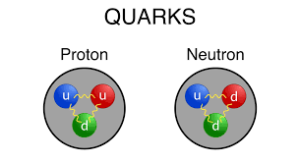
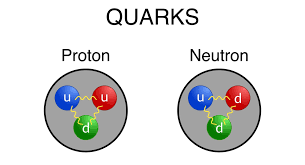
    Observations of hadrons such as protons and neutrons confirmed they are made up of distinct components called quarks of which there are six types, the UP/Down, Charm/Strange and Top/Bottom. The Up, Charm and Top have a fractional charge of 2/3. While the Down, Strange and Bottom have a fractional charge of -1/3. However, no one has been able to define their internal structure in terms of observations.

    However, another property of quarks defined by Quantum Chromodynamics (QCD), is their color charge which are red, green, and blue. It assumes each one is made up of three different colors of quarks red, blue and green and only the combinations of the colors that produce “white” can be found in a stable particle.

    It will be shown the color charge of each quark represents orientation of three two-dimensional plane (xy, yz, xz) of three-dimensional space responsible of its charge.

    For example, red would represent the xy plane green, the yz, and blue xz. The fact that three-dimensional space contains only one of each explains why particle must be composed of one each color to be stable.

    However, before we begin, we must first define how and why the color charge of a quark is related to the two-dimensional planes mentioned earlier

    As was shown in Article 12 (page 61) the alternating charge of an electromagnetic wave are the result of displacement in the two-dimensional planes of space that it is moving on. .

    Briefly it showed the electric and magnetic components of an electromagnetic wave are the result of a spatial displacement in the two-dimensional “surface” of three-dimension space.

    One can understand the mechanism responsible by using the analogy of how a wave on the two-dimensional surface of water causes a point on that surface to become displaced or rise above or below the equilibrium point that existed before the wave was present.

    The science of wave mechanics tells us a force would be developed by these displacements which would result in the elevated and depressed portions of the water moving towards or becoming “attracted” to each other and the surface of the water.

    Similarly, an energy wave on the “surface” of the two spatial dimensions that are perpendicular to the axis of gravitational forces would cause a point on that “surface” to become displaced or rise above and below the equilibrium point that existed before the wave was present.

    Therefore, classical wave mechanics, if extrapolated to the properties of two of the three spatial dimensions of our universe tell us a force will be developed by the differential displacements caused by an energy wave on it which will result in its elevated and depressed portions moving towards or become “attracted” to each other as the wave moves through space.

    This would define the causality of the attractive electrical fields associated with an electromagnetic wave in terms of a force caused by the alternating displacements of a wave moving with respect to time on a “surface” of the two spatial dimensions which are perpendicular to the axis of gravitational forces.

    However, it also provides a classical mechanism for understanding why similar electrical fields repel each other. This is because observations of waves show there is a direct relationship between the magnitude of a displacement in its “surface” to the magnitude of the force resisting that displacement.

    Similarly, the magnitude of a displacement in a “surface” of the two spatial dimensions will be greater than that caused by a single one. Therefore, they will repel each other because the magnitude of the force resisting the displacement will be greater than it would be for a single one.

    One can also derive the magnetic component of an electromagnetic wave in terms of the horizontal force developed along the axis that is perpendicular to the displacement caused by its peaks and troughs associated with the electric fields. This would be analogous to how the perpendicular displacement of a mountain generates a horizontal force on the surface of the earth, which pulls matter horizontally towards the apex of that displacement.

    Even though the above explanation of how a charge is related to an alternating displacement in the “surface” of three-dimensional space it also can explain a static one in terms of their relative positions in.

    For example, Einstein showed us if a two-dimensional plane is displaced with respect to another in three-dimensional space a force responsible for static charge would be developed similar as was shown earlier to how the peaks and valleys of an electromagnetic did.

    As was mentioned earlier Einstein define forces such as gravity in terms of the flexibility of the spatial dimensions.

    However, one can derive the internal structure of protons and neutrons if one assumes orientation of the color charges of quarks are the result of the flexibility of the two-dimensional planes which earlier were defined as being responsible for them.

    This is because for a proton or neutron to be stable in three-dimension space the orientation of the xy, yz, and xz dimensional planes must perpendicular to each other

    If they are not, they will be unstable.

    For examine the two up quarks of proton each with a color charge of two would contain 4 two-dimensional planes (one for each charge).  However, according to Einstein each dimensional plane has the flexibility to orient itself to oppose or cancel the charge of another one.  Therefore, when up quark combines with a down quark the two-dimensional plane that define its charge can orient itself to oppose or cancel one of the charges of the up quarks.  This means it will have forces only 3 of 4 dimensional planes associated with the 2 up quarks

    This will form a stable structure in three-dimensional space because it contains the (xy, yz, xz) planes which can be perpendicular to each other.

    Neutrons on the other hand contains one up quark and two down quarks.  It is neutral because the 1/3 charge on each of the two down quarks cancel the 2/3 charge of the up quark.

    But it also consists four two dimensional planes which means it cannot exist in three-dimensional space.

    However, when close enough to a proton it can borrow enough binding energy required to cause its two down quarks to line up along the same two-dimensional plane of three-dimension space. This will result in that plane having the opposite color charge of two down quarks which will result in a neutron having no charge when it interacts with the two charges of the up quark This also means the xy, yz, xz planes would define the three-dimensional volume of a neutron it because they do not have any of the forces that define it color charge. This is true even though one may have twice the color charge of the other two. This will result in it being stable when near enough to borrow some binding energy from proton

    However. when a neutron it is not the two two-dimensional planes that define the color charges of the down quarks will not line up resulting in it having 4 dimensional planes resulting in it being unstable and decaying in a proton electron and neutrino.

    As was mentioned earlier a stable electric charge is the result of a static spatial displacement in a two-dimensional plain of the three-dimensional space.

    This suggests one could describe their geometry in terms of how those planes are oriented.

    For example, if a proton is made up two up quarks each with a positive charge of 2/3 and its charge is the result of a displacement in dimensional plane of three-dimensional space each one would contain 2 and combined would contain 4.

    However, this means a proton would consist of four spatial dimensions which could not exist in our three-dimensional universe.  Therefore, to correct that it attracts a down quark which has a negative or opposite spatial displacement with respect to one of those dimensional planes.  This would reduce its spatial properties to three allowing it to exist in our universe.

    However, it also would change their orientation with respect each other. Instead of being perpendicular it would be 60-degree. This is because as was just mentioned the 2 up quarks of a proton would contain 4 dimensional planes creating four-dimensional spatial object which cannot exist in three-dimensional space.  However, when it combines with the negative dimensional energy Einstein would have associated a down quark it cancels out one of the four dimensional planes associated with the 2 up quarks of a proton leaving only three which can exist in three-dimensional space.

    But when one removes one side of a square it allows one of three sides to connect to one of the others to form an equilateral triangle This suggest the energy associated with the rearraigning the orientation of dimensional planes from 90 degrees to 60 creating the object which is responsible for both the positive charge and stability of a proton. I believe Einstein would have come to this conclusion if he as was mentioned earlier, he had known protons had an internal structure.

    Amazon

    Please follow and like us:

    Source link