Tag: Struggle

  • Oil, Crypto, and the Struggle for Latin America’s Universities

    Oil, Crypto, and the Struggle for Latin America’s Universities

    Latin America—a region of thirty-three countries stretching from Mexico through Central and South America and across the Caribbean—has spent more than a century fighting against foreign exploitation. Its universities, which should anchor local prosperity, cultural autonomy, and democratic life, have instead been repeatedly reshaped by foreign corporations, U.S. government interests, global lenders, and now crypto speculators. Yet the region’s history is also defined by persistent, courageous resistance, led overwhelmingly by students, faculty, and Indigenous communities.

    Understanding today’s educational crisis in Latin America requires tracing this long arc of exploitation—and the struggle to build systems rooted in equity rather than extraction.

    1900s–1930s: Bananas, Oil, and the Rise of the “Banana Republics”

    Early in the 20th century, American corporations established vast profit-making empires in Latin America. United Fruit Company—today’s Chiquita Banana—dominated land, labor, and politics across Guatemala, Honduras, and Costa Rica. Standard Oil and Texaco secured petroleum concessions in Venezuela and Ecuador, laying foundations for decades of foreign control that extracted immense wealth while leaving behind environmental devastation, as seen in Texaco’s toxic legacy in the Ecuadorian Amazon between 1964 and 1992.

    Universities were bent toward these foreign interests. Agricultural programs were geared toward serving plantation economies, not local farmers. Engineering and geological research aligned with extractive industries, not community development.

    Resistance did emerge. Student groups in Guatemala and Costa Rica formed part of early anti-oligarchic movements, linking national sovereignty to university reform. Their demands echoed global currents of democratization. Evidence of these early student-led struggles appears in archival materials and Latin American scholarship on university reform, and culminates in the influential 1918 Córdoba Manifesto in Argentina—a radical declaration that attacked oligarchic, colonial universities and demanded autonomy, co-governance, and public responsibility.

    1940s–1980s: Coups, Cold War Interventions, and the Deepening of U.S. Oil Interests

    During the Cold War, exploitation intensified. In Guatemala, the CIA-backed overthrow of democratically elected President Jacobo Árbenz in 1954 protected United Fruit’s land holdings. Universities were purged or militarized, and critical scholars were exiled or killed.

    In Chile, the 1973 overthrow of Salvador Allende—supported by American corporate giants such as ITT and Anaconda Copper—ushered in a brutal dictatorship. Under Augusto Pinochet, thousands were murdered, tortured, or disappeared, while the Chicago Boys imported radical neoliberal reforms that privatized everything, including the higher education system.

    Throughout the region, oil deals disproportionately favored American companies. Mexico and Venezuela saw petroleum wealth siphoned off through arrangements that benefited foreign investors while leaving universities underfunded and politically surveilled. Scholarship critical of foreign intervention was marginalized, while programs feeding engineers and economists to multinational firms were expanded.

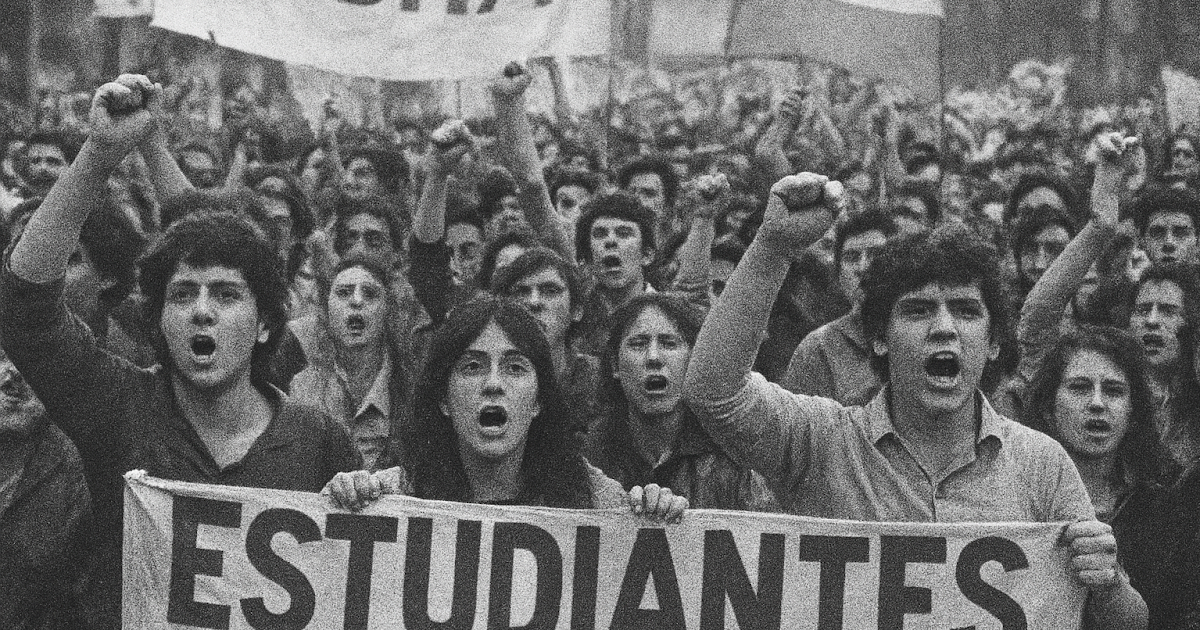
    Student resistance reached historic proportions. Chilean students and faculty formed the core of the anti-dictatorship movement. Mexico’s students rose in 1968, demanding democracy and university autonomy before being massacred in Tlatelolco. CIA declassified documents reveal that student uprisings across Latin America in the early 1970s were so widespread that U.S. intelligence considered them a regional threat.

    1990s–2000s: Neoliberalism, Privatization, and the Americanization of Higher Education

    In the 1990s, neoliberalism swept the region under pressure from Washington, the IMF, and the World Bank. After NAFTA, Mexico’s universities became increasingly aligned with corporate labor pipelines. In Brazil, Petrobras’ partnerships with American firms helped reshape engineering curricula. Private universities and for-profit models proliferated across the region, echoing U.S. higher ed corporatization.

    Hugo Chávez captured the broader sentiment of resistance when he declared that public services—including education—cannot be privatized without violating fundamental rights.

    Students fought back across Latin America. In Argentina and Brazil they contested tuition hikes and privatization. In Venezuela, the debate shifted toward whether oil revenue should fund tuition-free universities.

    Indigenous Exclusion, Racism, and the Colonial Foundations of Inequality

    One of the greatest challenges in understanding Latin American education is acknowledging the deep racial and ethnic stratification that predates U.S. exploitation but has been exacerbated by it. Countries like Ecuador, Bolivia, Peru, Mexico, Brazil, and Guatemala have large Indigenous populations that, to this day, receive the worst education—much like Native American communities relegated to underfunded reservation schools in the United States.

    Racism remains powerful. Whiter populations enjoy greater economic and educational access. University admission is shaped by class and color. These divisions are not accidental; they are a machinery of control.

    There have been important exceptions. Under President Rafael Correa, Ecuador built hundreds of new schools, including Siglo XXI and Millennium Schools, and expanded public education access. In Mexico, the 2019 constitutional reform strengthened Indigenous rights, including commitments to culturally relevant education. Bolivia—whose population is majority Indigenous—has promoted Indigenous languages, judicial systems, and education structures.

    But progress is fragile. Austerity, IMF conditionalities, and elite resistance have led to cutbacks, school closures, and renewed privatization across the region. The study you provided on Ecuador documents Indigenous ambivalence, even hostility, toward Correa’s universal education plan—revealing how colonial wounds, cultural erasure, and distrust of state power complicate reform and provide openings for divide-and-conquer strategies long exploited by ruling classes.

    These contradictions deepen when Indigenous movements—rightfully demanding no mining, no oil extraction, and protection of ancestral lands—collide with leftist governments reliant on resource extraction to fund public services. This tension is especially acute in Ecuador and Bolivia.

    2010s–Present: Crypto Colonialism and a New Frontier of Exploitation

    Cryptocurrency has opened a new chapter in Latin America’s long history of foreign-driven experimentation. El Salvador’s adoption of Bitcoin in 2021, promoted by President Nayib Bukele, transformed the country into a speculative test lab. Bukele has now spent more than $660 million in U.S. dollars on crypto, according to investigative reporting from InSight Crime. Universities rushed to create blockchain programs that primarily serve international investors rather than Salvadoran students.

    In Venezuela, crypto became a survival tool amid hyperinflation and economic collapse. Yet foreign speculators profited while universities starved. Student groups warned that crypto research was being weaponized to normalize economic chaos and distract from public-sector deterioration.

    Resistance has grown. Salvadoran students have protested the Bitcoin law, demanding that public resources focus on infrastructure, health, and education. Venezuelan students call for rebuilding social programs rather than chasing speculative financial technologies.

    Contemporary Student Resistance: 2010s–2020s

    Across the region, student movements remain powerful. The Chilean Winter of 2011–2013 demanded free, quality public education and challenged Pinochet’s neoliberal legacy. The movement culminated in the 2019 uprising, where education reform was central.

    Mexico’s UNAM students continue to resist corruption, tuition hikes, gender violence, and the encroachment of corporate and foreign interests. The 1999–2000 UNAM strike remains one of the longest in modern higher education.

    Colombian students have forced governments to negotiate and invest billions in public universities, framing their struggle as resistance to neoliberal austerity shaped by U.S. policy.

    Argentina continues to face massive austerity-driven cuts, sparking protests in 2024–2025 reminiscent of earlier waves of resistance. Uruguay’s Tupamaros movement—largely student-led—remains a historical touchstone.

    Every country in Latin America has experienced student uprisings. They reflect a truth that Paulo Freire, exiled from Brazil for teaching critical pedagogy, understood deeply: education can either liberate or oppress. Authoritarians, privatizers, and foreign capital prefer the latter, and they act accordingly.

    Today’s Regional Education Crisis

    The COVID-19 pandemic pushed the system into further crisis. Children in Latin America and the Caribbean lost one out of every two in-person school days between 2020 and 2022. Learning poverty now exceeds 50 percent. Entire generations risk permanent economic loss and civic disenfranchisement.

    Infrastructure is collapsing. Rural and Indigenous communities suffer the worst conditions. Public investment is chronically insufficient because governments are trapped in cycles of debt repayment to international lenders. Ecuador has not seen a major public-investment program in a decade, as austerity and IMF repayments dominate national budgets.

    The result is a system starved of resources and increasingly vulnerable to privatization schemes—including U.S.-style online coursework, ideological “instruction kits,” and for-profit degree mills.

    Latin American Universities as Battlegrounds for Sovereignty

    Latin America’s universities are shaped by the same forces that have dominated the region’s history: oil extraction, agribusiness, foreign capital, neoliberalism, structural racism, debt, and now crypto speculation. Yet universities have also been homes to transformation, rebellion, cultural resurgence, and hope.

    Across more than a century, students—Indigenous, Afro-descendant, mestizo, working-class—have been the region’s fiercest defenders of public education and national sovereignty. Their resistance continues today, from Quito to Buenos Aires, from Mexico City to Santiago.

    For readers of the Higher Education Inquirer, the lesson is clear: the struggle for higher education in Latin America is inseparable from the struggle for democracy, racial justice, Indigenous autonomy, and freedom from foreign domination. The region’s ruling elites and international lenders understand that an educated public is dangerous, which is why they starve, privatize, and discipline public schools. Students understand the opposite: that education is power, and that power must be reclaimed.

    The next chapter—especially in countries like Ecuador—will depend on whether students, teachers, and communities can defend public education against the dual forces that have undermined it for more than a century: privatizers and fascists.


    Sources (Selection)

    National Security Archive, CIA Declassified Documents (1971)
    InSight Crime reporting on El Salvador Bitcoin expenditures
    Luciani, Laura. “Latin American Student Movements in the 1960s.” Historia y Memoria (2019)
    The Córdoba Manifesto (1918)
    UNESCO, World Bank data on learning poverty (2024)
    Latin American studies on United Fruit, Standard Oil, Texaco/Chevron in Ecuador
    LASA Forum: Analysis of Indigenous responses to Correa’s education reforms
    Periodico UNAL: “The Student Rebellion: Córdoba and Latin America”
    Multiple regional news sources on Argentina’s 2024–2025 education protests

    Source link

  • Students Struggle With Surprise Costs, Don’t Know About Help

    Students Struggle With Surprise Costs, Don’t Know About Help

    Students link trust in higher education to affordability and financial stress to their academic performance. A new round of results from Inside Higher Ed’s Student Voice survey series, out today, delves deeper into the connection between students’ finances and their success. One key finding: Most students report some level of surprise with the full cost of attending college, including but not limited to tuition and other directly billable expenses. At least a quarter of students have trouble budgeting as a result.

    In another set of findings, 36 percent of students say that an unexpected expense of $1,000, or even less (see breakdown below), could threaten their ability to stay enrolled. Another 22 percent say the same of an expense between $1,001 and $2,500. This is the kind of need that many emergency aid programs are designed for, but 64 percent of respondents don’t even know if their institution offers such assistance.

    About the Survey

    Student Voice is an ongoing survey and reporting series that seeks to elevate the student perspective in institutional student success efforts and in broader conversations about college.

    Look out for future reporting on the main annual survey of our 2025–26 cycle, Student Voice: Amplified. Future reports will cover health and wellness, college involvement, career readiness, and more. Check out what students have already said about trust, artificial intelligence and academics.

    Some 5,065 students from 260 two- and four-year institutions, public and private nonprofit, responded to this main annual survey about student success, conducted in August. Explore the data captured by our survey partner Generation Lab here and here. The margin of error is plus or minus one percentage point.

    Mordecai Ian Brownlee, president of Community College of Aurora in Colorado, is walking 71 miles over three days next month to raise awareness of his own college’s emergency fund—specifically, to get community members to match a $71,000 donation. The fund started at just $8,000 during the pandemic, Brownlee said, but the college’s students frequently face unanticipated medical, utility, transportation and other costs. Without a way to bridge those gaps, their persistence is at risk. Even the standard grant of $250 can make a big difference, he said, though many of the college’s students are more chronically food- and housing-insecure.

    Because need is a spectrum and many needs overlap, the college offers multiple forms of assistance and tries to build awareness of each where possible: Staff at the college food bank advertise the emergency grant fund, academic advisers act as case managers and so on. There’s also a community component: The college partners with a local nonprofit to offer students in need free groceries, and it recently got a city bus stop reinstated outside its primary campus so students wouldn’t have to spend money on rideshares, especially in the winter months.

    “Previously, higher education was really seen as this transactional interaction of sorts, where you’re just focusing on delivering the learning outcomes—the wholeness and care of a person wasn’t necessarily a part of these institutional issues,” Brownlee said. “Yet if that person is in that classroom and hungry, there will be no retention, there will be no persistence, there will be no completion.”

    Helping students realize social and economic mobility means addressing financial crises, food and housing insecurity, mental health and mentorship needs, and more, he added: “These are people who have a dream but may not have a network.”

    Bahar Akman Imboden, managing director of the Hildreth Institute, which is focused on state-level practices and policies that enhance affordability, access and student success, said the new Student Voice findings reinforce how “lack of clarity around the true cost of attendance can derail students.” They also resonate with policy discussions in Massachusetts, where Hildreth is based, she said, as the state recently cut stipends for low-income students after the semester had started, reducing eligibility by up to $400 in some cases.

    “We’ve struggled to communicate that even what may seem like a small amount can completely upend a student’s education,” Imboden said, and the new data “will be incredibly helpful in making that case to decision-makers.”

    Students on Cost of Attendance, Emergency Aid and More

    Here are more details about this newest round of survey results from our main annual Student Voice survey of more than 5,000 two- and four-year students.

    1. Just 27 percent of students have a clear understanding of the full cost of attendance.

    Asked about their grasp of the full cost of attending college, including tuition and fees but also housing, course materials, transportation, food and more, just over a quarter of students say they have a solid understanding that allows them to budget appropriately. This increases to 29 percent among students who have never seriously considered stopping out of college and decreases to 21 percent among students who have seriously considered stopping out—aligning with prior research identifying college costs as a top reason students do not persist.

    The plurality of all Student Voice respondents, 47 percent, understand most costs, but not all. The remainder have less to no understanding and face various degrees of surprise about associated costs, challenging their ability to budget or pay for things they need.

    2. A majority of students report that surprise costs, in some cases as little as $100, could put their enrollment at risk.

    A slight plurality of students, 24 percent, say that an unforeseen cost exceeding $2,500 would challenge their ability to stay enrolled, while 19 percent say no surprise cost could threaten their persistence. But the remainder indicate that various expenses below $2,500 could push them out of college: Roughly one in five each say this of a $500 to $1,000 expense and of a $1,001 to $2,500 one. Particular differences emerge between continuing- and first-generation students, with 29 percent of the former and 46 percent of the latter indicating that amounts of $1,000 or less could challenge their ability to stay enrolled. The pattern is similar for four-year versus two-year students and for private nonprofit versus public institution students, with community college and public institution students significantly more likely than their respective counterparts to report that an unforeseen expense of $1,000 or less could threaten their persistence.

    According to Trellis Strategies’ most recent Student Financial Wellness Survey, 56 percent of students would have trouble obtaining even $500 in cash or credit to meet an unexpected expense, and 68 percent have run out of money at least once since the beginning of the year. Many emergency grant programs are capped at $500 or less, but all these numbers can help local aid efforts.

    3. Awareness of available aid is lacking.

    Nearly two in three Student Voice respondents don’t know if their institution offers emergency aid, and just 5 percent have accessed emergency aid at their college. Just about one in 10 students each say that they know the criteria for eligibility for such aid, or that they know how to apply for it. Black (9 percent) and Hispanic students (7 percent) are somewhat more likely to have accessed such aid than white (4 percent) and Asian American and Pacific Islander students (3 percent).

    A 2016 survey by NASPA: Student Affairs Administrators in Higher Education found that three in four institutions offered emergency aid of some kind, including one-time grants, loans and completion scholarships of less than $1,500 for students facing unexpected financial crises, as well as food pantries and housing and transportation assistance. The pandemic put a spotlight on student financial insecurity and brought new, if temporary, funding opportunities. Taken together, these data points suggest a large gap between available assistance and students’ awareness of it.

    4. Some students are more stressed about finances than they are about academics.

    Balancing academics with personal, family or financial responsibilities, including work, remains a top source of stress for students, at 50 percent, compared to 48 percent in last year’s main Student Voice survey. Some 38 percent of students also cite paying for college as a top stressor in 2025, up from last year’s 34 percent. Fewer, but still a significant share—22 percent—flag paying for personal expenses. Private nonprofit students are actually less likely than their public institution peers to say paying for college is a top stressor, at 22 percent versus 42 percent, respectively. The four-year–versus–two-year split here is narrower, at 37 percent versus 43 percent.

    Some 37 percent of all students say short-term academic pressure is a top issue, while 38 percent cite job and internship searches. These are both more traditional stressors associated with college, but the latter has a clear financial dimension.

    Addressing Higher Ed’s Cost Transparency Problem

    Anika Van Eaton, vice president of policy at uAspire, a nonprofit dedicated to advancing economic mobility for underrepresented students, said that even financial aid offers don’t always include the full cost of attendance, citing a 2022 federal Government Accountability Office report finding that 91 percent of colleges do not provide accurate information in these letters. According to the report, colleges should include a net price that includes all key costs, subtracting only grants and scholarships—though many don’t include information on books, off-campus housing and meals, and other living expenses. Some colleges also “make their net price seem cheaper by factoring in loans that students will eventually have to repay,” the office found, while about a quarter don’t even include information on tuition and fees. Forthcoming research from uAspire suggests that colleges are improving in this area, Van Eaton said, but, ultimately, “we need standardized financial aid offers using the same terminology that show a complete cost picture so students are guaranteed to receive this crucial information up front.”

    Students also need to understand college costs “beyond just seeing the numbers,” she added. One implication: High schools have an important role to play in educating and supporting soon-to-be graduates as they “navigate deciding their postsecondary plans and making what is likely one of the largest financial decisions of their lives.”

    Sarah Austin, a policy analyst at the National Association of Student Financial Aid Administrators, said students tend to focus more on direct costs, or what “they actually see on their bill,” versus all the indirect costs that go along with attending college. NASFAA, which has a voluntary College Cost Transparency Initiative, seeks to promote accuracy and clarity in financial aid offers by encouraging even small shifts, such as colleges using standard terminology, “or making it clear what is loan aid versus gift aid—things like that. Because students are, in fact, not clear on what their total cost is in many situations,” Austin added.

    Realistic indirect costs estimates are also crucial—and these are “are tricky for many schools to construct,” she said. Forthcoming research from NASFAA examines how institutions are calculating indirect costs and cost of attendance in general, in part to identity best practices. “Some schools have super robust cost of attendance construction processes where they’re surveying students, looking at, maybe, local data that they have access to, and putting that together every year,” Austin said. “Other schools maybe just have a set amount—they don’t review it annually, or they just blanket increase it because they know costs are going up.”

    A provision in the FAFSA Simplification Act passed in 2020 allowed the Education Department to begin regulating cost of attendance, but it hasn’t exercised that power, and experts are divided on whether that is the best approach.

    Congress continues to take interest in cost transparency. The Senate Health, Education, Labor and Pensions Committee last month published a request for information on ways to improve transparency to lower costs. “Americans want the most value for their hard-earned money,” wrote Senator Bill Cassidy, the committee’s Republican chair. “They are used to shopping for products where prices are clearly labeled and information on quality is readily available. But when they shop for a college—one of the biggest financial decisions of their lives—it’s much harder to compare price and value across the available options.”

    Student photo Alyssa Manthi

    Alyssa Manthi

    Student Voice respondent Alyssa Manthi, a first-generation, fourth-year undergraduate studying history and religious studies at the University of Chicago, said she used to think attending a private nonprofit institution like hers was financially out of reach. That’s until a high school counselor—and her mother—pushed her to apply to a scholarship program through which she received a full ride to Chicago, including a cost-of-living stipend that Manthi said generally reflects the indirect costs of attendance.

    Finances did become less predictable when Manthi was studying in Paris during her sophomore year, however. She’d had to front the payment for her plane ticket and spent much of her savings to replace a damaged computer during finals week before she left. Once abroad without a meal plan for the first time, and without a campus job, she ran out of cash with a few weeks left in the term.

    Luckily, she was able to access emergency aid through the university, she recalled.

    “They have it through the bursar’s office, where you can fill out an emergency aid application,” she said. “I was like, ‘Hey, I just need to be able to get food for the next two weeks before I go home,’ and I provided the proof that my laptop broke, since a lot of that was the money I was going to spend.”

    Manthi said she does sometimes worry about what might happen if she needs significant additional emergency aid before she graduates, since it’s such a limited resource. Complications around costs and housing also effectively stymied her tentative plan to study abroad for another term. Still, she said she credits the university’s Odyssey Scholars cohort model and Center for College Student Success with connecting her to resources and peers who have made navigating college’s hidden financial curriculum easier. This includes information about various emergency aid resources and job listings.

    “Just making sure that students have access to that information from the get-go was very helpful to me,” she said. Of her funding package generally, which includes a federal Pell Grant dollars and other institutional aid, Manthi added, “Knowing that I have that backing has relieved a lot of stress that I think I would have felt the past three years.”

    Knowing that I have that backing has relieved a lot of stress that I think I would have felt the past three years.”

    —Student Voice respondent Alyssa Manthi

    In terms of college cost transparency, Manthi said her biggest outstanding concern is that many prospective students may not understand that private nonprofit institutions, even highly selective ones, could be financially within reach. She said she’d be paying significantly more to attend the Illinois public institution to which she was also accepted, for example.

    High sticker prices that are often deeply discounted are another part of the cost transparency conversation, with some experts warning that this practice is sowing further distrust in higher education. Institutions are expensive to run, and college pricing is complex, but leaders may not recognize the extent of the public dissatisfaction of this practice, at least concerning their campus: According to Inside Higher Ed’s 2025 Survey of College and University Chief Business Officers with Hanover Research, 88 percent agreed that their own institution is transparent about the full, net cost of attendance, but just 42 percent said the same of colleges and universities as a whole.

    Most CBOs also agreed their institution is sufficiently affordable. Yet more than half were at least moderately concerned about the sustainability of their institution’s tuition discount rate, with private nonprofit college and university CBOs especially concerned. About the same share were concerned about sticker price increases. And some 65 percent of all CBOs said their institution had increased institutional financial aid/grants in the last year to address affordability concerns.

    One notable exception to the high-price, high-discount trend is Whitworth College, which is in the middle of a tuition reset.

    “What I do wish students knew is, don’t write off the private institutions just because of the high sticker cost, because that’s what I did to start,” Manthi said. “It was just so ingrained that those places weren’t for us, or it didn’t feel like it was accessible.”

    This independent editorial project is produced with the Generation Lab and supported by the Gates Foundation.

    Source link

  • Colleges struggle to make manufacturing training hot again

    Colleges struggle to make manufacturing training hot again

    ELYRIA, Ohio — Nolan Norman had no idea what microelectronic manufacturing entailed when his adviser at Midview High suggested he take the school’s new class on it last year. 

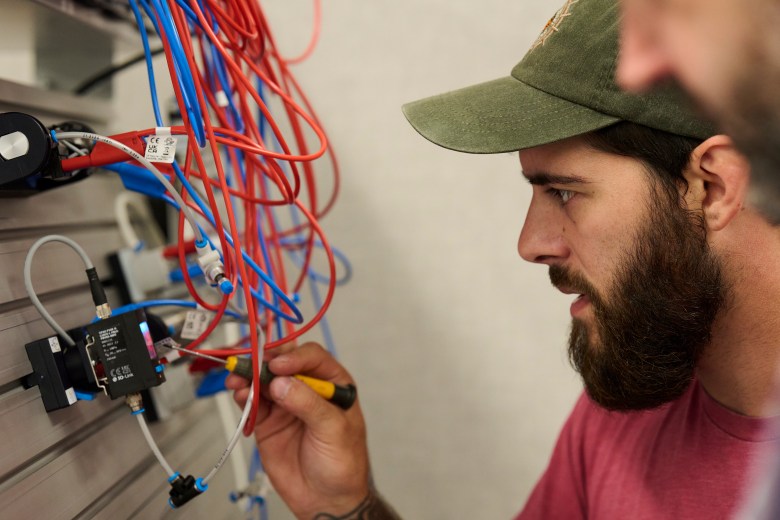
    Yet once he started fusing metal to circuit boards, he says he was hooked. “When I was little, I thought that wizards made these things,” the 18-year-old joked of the electronics he’s now able to assemble. Despite long “hating” the idea of college, he was motivated to enroll in the microelectronic manufacturing bachelor’s degree program at nearby Lorain County Community College this fall. He’s spent the summer working in a job in the field that gives him both college credit and pays $18 an hour. Said Norman: “Now I’m seeing the path to get to be one of these wizards.” 

    Norman’s path wasn’t accidental: Two years ago, Lorain County Community College partnered with Midview High to create the course, one of several ways the college is trying to recruit and train more young people for jobs in manufacturing. 

    Nationally, more than 400,000 manufacturing jobs are going unfilled, many of them in advanced manufacturing, which requires the sort of high-tech skills and postsecondary credentials that Norman is working toward. President Donald Trump is leveraging tariffs in part, he has said, to grow manufacturing jobs in the United States, including those that involve machinery or robotics and training after high school.

    Nolan Norman, 18, an incoming freshman at Lorain County Community College, observes a circuit board under a microscope on Aug. 6 in Elyria, Ohio. Credit: Dustin Franz for The Hechinger Report

    Yet as it is, colleges have struggled to add and revise their training based on employer input and prepare students for tomorrow’s jobs, not just today’s. In the area surrounding Lorain County Community College, officials estimate that they’d have to teach four times the number of students to meet today’s unfilled manufacturing jobs.

    Gogebic Community College, in rural Michigan, suspended its 22-year-old manufacturing technology program this spring because of low enrollment. “We could not get people into it,” registrar Karen Ball said, speaking in her personal capacity and not on behalf of the institution. “The needs in manufacturing are evolving so quickly, that to stay on top of it is too difficult.”

    And then there is the history of manufacturing in communities like Norman’s, where so many factories moved to other countries in recent decades. The manufacturing workforce in the Great Lakes region shrunk by 35 percent between 2000 and 2010, a loss of 1.6 million jobs. But nationwide manufacturing has seen some recovery since then, rising from 11.5 million manufacturing jobs in 2010 to 12.9 million today, according to an analysis by the Economic Innovation Group. 

    “If your family experienced tumultuous layoffs in steel or automotives, they may see manufacturing as a risky pathway rather than a solid pathway,” said Marisa White, vice president for enrollment management and student services at Lorain County Community College. “Individuals are like, ‘I don’t want my kids to go into something like that.’”

    Related: Interested in more news about colleges and universities? Subscribe to our free biweekly higher education newsletter.

    White and other Lorain officials, though, have been slowly making strides in adding more students in recent years — and in trying to keep up with the needs of companies. 

    Printed circuit boards before components are attached in a lab at Lorain County Community College in Elyria, Ohio. Credit: Dustin Franz for The Hechinger Report

    In addition to partnering with Midview High, staff from the college set up tables at food banks and Boys and Girls Clubs where they answer questions about its manufacturing degree and certificate programs, and even partner with a nearby manufacturing nonprofit that uses holograms and a robot dog to get the attention of high school students. That is paying off, officials say. The college now produces 120 graduates each year in advanced manufacturing — a category that includes industrial engineering tech, mechanical engineering tech, welding, automation and microelectronics — compared to 43, a decade ago.

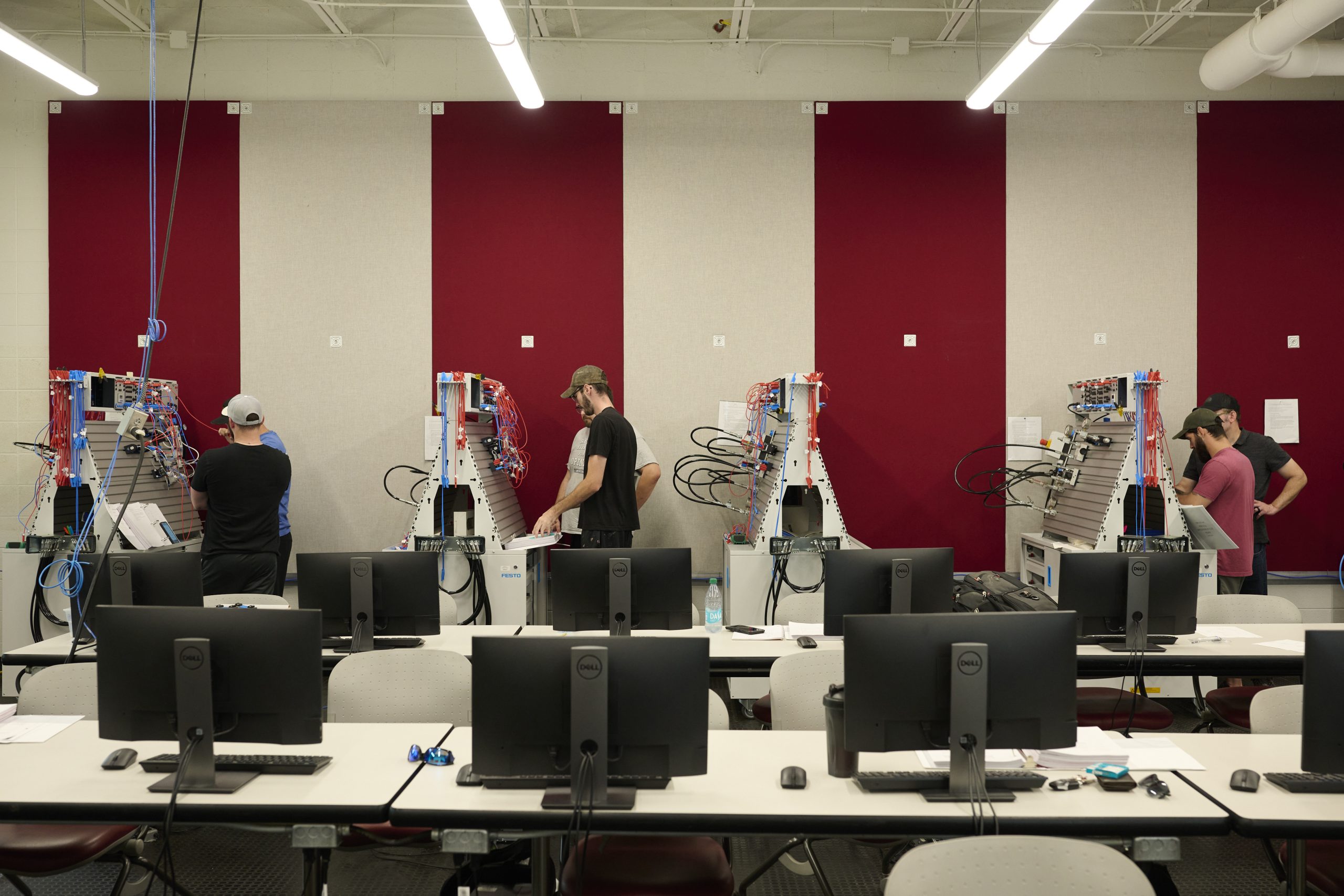
    It has also cultivated a large network of local employers and a system to do market research before launching certificate programs. In some cases, it partners with companies that pay for employees to get training at Lorain college. In a classroom on a recent Wednesday, one of those electrician apprentices, Tyler Tector, 25, had rigged a series of plastic tubes to a small air pump. He hoped it would generate enough suction to keep its grip on his lab partner’s smartphone, which dangled precariously in the air (and already had a cracked screen from some previous misadventure).

    The assignment was part of a class in practical applications of fluid power. Tector’s employer, Ford Motor Co., was sending him and a small group of other apprentice electricians to take this class once a week, so they could better work with the growing number of robots at the local engine plant.

    Nick Wade, an electrical apprentice for Ford Motor Co., works on a circuitry exercise during professor Brian Iselin’s practical applications of fluid power course at Lorain County Community College in Elyria, Ohio. Credit: Dustin Franz for The Hechinger Report

    “Robots are the best co-workers,” joked Tector, who added that he’s not worried about bots putting him out of a job because so many humans are needed to fix them. “They do exactly what you tell them to do. They don’t ask questions. They don’t yell and complain.” They are finicky though, he added. If anything in a robot’s area gets bumped out of place even a fraction of an inch, that could throw the machine off and require reprogramming.

    So many employers told college officials they need technicians with basic knowledge across a range of trades that the college is starting a new associate degree program in the fall called Multicraft Industrial Maintenance that will include lessons like the one Tector is doing but in a condensed format. 

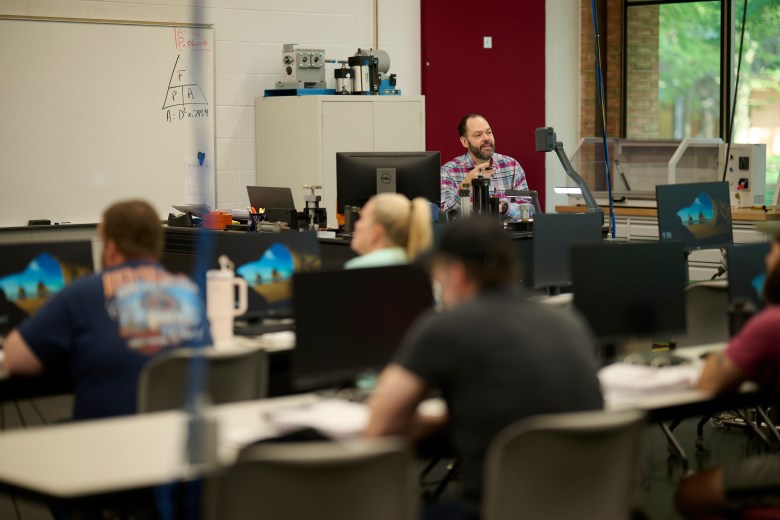
    “Because of the high-tech nature of things, employers don’t want students siloed into trades anymore,” said Brian Iselin, an assistant professor in manufacturing who is leading the effort. 

    Johnny Vanderford, who leads the college’s microelectronic manufacturing degree program, often spends part of his lunch break scouring LinkedIn for the latest job postings by local employers to see what skills they are looking for. His program’s model involves finding every student a paid internship, and students can take classes two days a week or in the evening to have the rest of the time free for paid work in the field. 

    Professor Brian Iselin teaches a course to employees of Ford’s Cleveland Engine Plant No. 1 at Lorain County Community College in Elyria, Ohio. Credit: Dustin Franz for The Hechinger Report

    Vanderford pointed to a PowerPoint slide showing more than 90 manufacturing companies in the area he said the college has worked with: “We basically tailor our curriculum to meet their workforce needs.” In some cases that means wedging into a class syllabus training on some specialized machine that might be used at only a handful of employers.

    Rather than simply having advisory committees with a few large companies that meet occasionally, today Lorain and many other colleges follow a model that involves frequent discussions with company leaders, instructors directly participating in those meetings and a greater focus on the skills employers need. 

    “Those relationships take time,” said Shalin Jyotishi, managing director of the Future of Work and Innovation Economy Initiative at the think tank New America. He says that it is hard for other community colleges to replicate best practices from Lorain because they are labor-intensive to enact.

    Employers also have a tendency to change their plans. For instance, when Tesla pledged to build an electrical vehicle plant in Flint, Michigan, the local Mott Community College started an EV program, said Jyotishi. But the plant never came. “The college still has a Tesla sign,” he said.

    Related: After its college closes, a rural community fights to keep a path to education open 

    The numbers no longer add up at Gogebic Community College, in Michigan’s Upper Peninsula. 

    When the college suspended its program in manufacturing technology in May, it had just three students.

    As with many programs at the college, a single employee was charged with administering and teaching. Doing all that plus staying on top of nearby companies’ workforce needs was “unsustainable,” said Ball, the registrar.

    The few small manufacturers in the area all say they have different needs, rather than one clear set of skills, she said, noting that “you can’t be a generalist in manufacturing.” Even when the college does identify a needed skill to teach, it takes at least six months to a year to get the program approved by college leaders and the accreditor. By then, companies might need something different. 

    And the pay offered by small manufacturers is often low, despite an expectation of training beyond a high school diploma, said Ball.

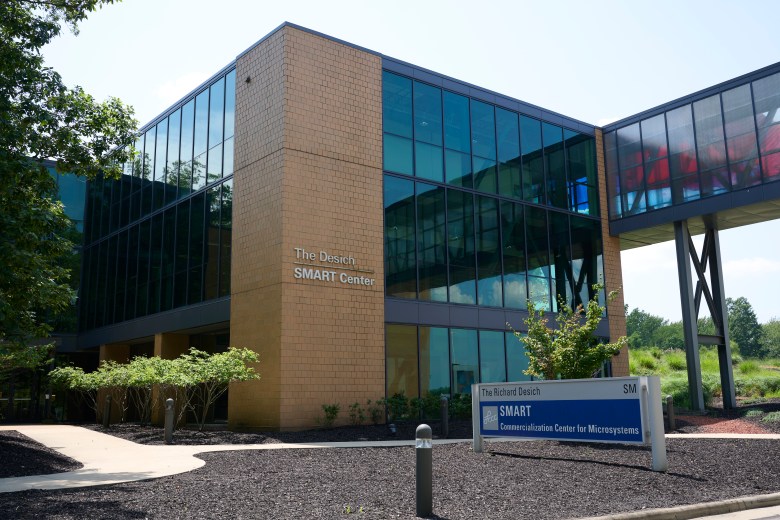
    The Richard Desich SMART Center at Lorain County Community College in Elyria, Ohio, houses the microelectronic manufacturing systems program, which teaches students about the manufacture of semiconductors. Credit: Dustin Franz for The Hechinger Report

    Nationwide, automation has reduced the earning power for many manufacturing jobs, said Jyotishi of New America. “For a long time manufacturing was the bedrock of the middle class,” said Jyotishi. “That wage premium for manufacturing has actually gone away.” 

    And there’s a danger that as colleges aim to please employers, they will create programs that are too narrow, argues Davis Jenkins, senior research scholar at Columbia University’s Community College Research Center. (Editor’s note: The Hechinger Report, which produced this story, is an independent unit of Columbia’s Teachers College.) “You don’t want specific skills training — you don’t want to just train students to work in a fab,” he said, referring to a facility where microchips and other electronics are produced. “Whenever schools buy a lot of specific equipment for training, I worry a lot. What students really need are broader skills.”

    Even Lorain doesn’t always find the right fit. During the pandemic, the college started what it calls fast-track programs, which typically run 16 weeks, across a range of professional fields (not just manufacturing). But because of mixed success attracting students, officials recently slimmed the list from 60 to 13, said Tracy Green, vice president of strategic and institutional development at Lorain County Community College. And the college recently started winding down a program in industrial safety because of a lack of student interest, even though there are still a large number of job postings by local companies for jobs with those skills, said Iselin. 

    One provision in Trump’s new “one big, beautiful bill” promises a boost to manufacturing education, however. For the first time, the law will allow low-income students to use federal Pell Grants for short-term certificate programs, in what is known as Workforce Pell. It’s a change many community college leaders have been calling for for years as they have created more short-term programs in response to demand by students and employers who want to quickly gain new skills in fast-changing areas, including manufacturing. But that program won’t be up and running until the 2026-27 academic year. 

    Related: Colleges partnered with an EV battery factory to train students and ignite the economy. Trump’s clean energy war complicates their plans

    The promise of a big new employer moving to town can galvanize student interest in manufacturing. 

    In Ohio, the talk for years has been a $28 billion Intel chip manufacturing plant under construction in Columbus. The facility is expected to bring some 3,000 jobs to the area, and the company has committed $50 million to workforce education in the state, including $2 million to Lorain County Community College, which it used to buy new classroom equipment, support student scholarships, and pay for program development and instructor training.

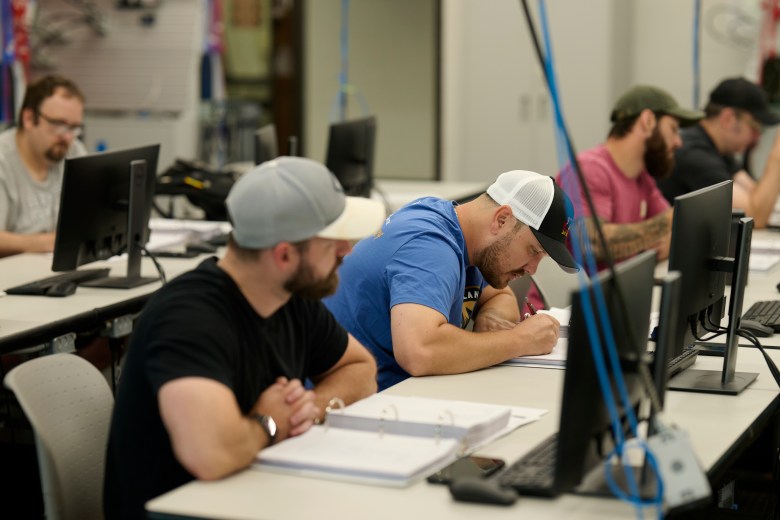
    Chris Dukles, 36, an electrician apprentice for Ford Motor Co., takes notes during a course taught by Brian Iselin at Lorain County Community College. Credit: Dustin Franz for The Hechinger Report

    The top graduates in Lorain County Community College’s microelectronic manufacturing program each year typically get internships at Intel’s closest existing plant, which is in Chandler, Arizona, a suburb of Phoenix. It’s a motivator to work hard in their classes, some students say.

    Lia Douglas, a student in the microelectronic manufacturing program at Lorain, scored one of those slots and headed to Arizona last summer. The experience, though, was sobering. 

    “My plan really was to make a good impression with my internship, get a job maybe in Arizona even if it was for a year or two, and then try to move back to Ohio when they have an Ohio plant,” she said. 

    But one day last July, all the employees were unexpectedly summoned to an all-hands call where the company announced a wave of layoffs and reductions in some benefits that had interested Douglas, including a sabbatical program. This year, Intel announced that the opening of the Ohio plant has been delayed until 2030. 

    “I learned I had a little too much faith in a company and the promises of a company,” she said. “And it reminded me that at the end of the day, the company has to make money.”

    She’s still glad she chose Lorain’s program, which has landed her several local internships and opened her eyes to the many small and mid-sized manufacturers in the area. 

    Lia Douglas is a student in the microelectronic manufacturing program at Lorain County Community College. Credit: Dustin Franz for The Hechinger Report

    And she has been hooked on a career in making things ever since she was in middle school and a family friend taught her a bit of welding. Her hero was Adam Savage, co-host of the TV show “MythBusters,” who she even got to meet at a comic book convention in Cleveland.

    Douglas complains that students are told in high school that they either have to choose a trade for hands-on work or an academic track to prepare for a career behind a desk that might involve design and project management. She says that as manufacturing changes, there’s plenty of room to do both. In fact, she says, when a group of doctoral students from Kent State University recently visited the college’s clean room, she was amused to see them struggle with some of the tools the students routinely use in the microelectronic manufacturing program.

    “It takes as much brainpower to figure out what is the right tool for the right process as getting a Ph.D.,” she said. 

    Contact editor Caroline Preston at 212-870-8965, via Signal at CarolineP.83 or on email at [email protected]

    This story about manufacturing jobs was produced by The Hechinger Report, a nonprofit, independent news organization focused on inequality and innovation in education. Sign up for the Hechinger newsletter.

    The Hechinger Report provides in-depth, fact-based, unbiased reporting on education that is free to all readers. But that doesn’t mean it’s free to produce. Our work keeps educators and the public informed about pressing issues at schools and on campuses throughout the country. We tell the whole story, even when the details are inconvenient. Help us keep doing that.

    Join us today.

    Source link

  • Universities struggle to recognise leadership beyond the academic template

    Universities struggle to recognise leadership beyond the academic template

    In the shifting terrain of higher education, the figure of the “pracademic” has become increasingly prominent.

    Straddling the worlds of theory and practice, pracademics bring external insight into the academy along with a restlessness about how knowledge is produced, shared, and valued.

    They offer universities the opportunity to widen their epistemic horizons, but in doing so, they expose the inherent tensions in how academic leadership is defined and performed.

    The rise of the pracademic

    Pracademics rarely fit the established leadership templates; instead, they model heterodox approaches, navigating ambiguity, drawing from diverse methodologies, and unsettling conventional hierarchies. Arguably, this is not an accidental disruption, but a generative one. Pracademics challenge the orthodoxy of university life, and in doing so, they invite us to rethink the paradoxes that shape leadership in higher education.

    As institutions seek to embrace diversity and interdisciplinarity, many still struggle to accommodate those whose career paths have not followed the traditional orthodox academic trajectory.

    For second-career academics and pracademics, leadership can feel like swimming against the tide. Their experience and outlook can enrich higher education, but too often their value is under-recognised and under-leveraged. To lead in a heterodox community of contradictions, we must not only tolerate difference but structure our systems to nurture and embed it.

    This leads to the question: are today’s universities ready for leaders who do not fit the mould? As Jill Dickinson and colleagues noted in a Wonkhe article, some academics are seen as more proper than others.

    Not fitting the mould

    University ecosystems are not tidy places. They are heterodox ecosystems populated by the idiosyncratic, the idealistic, the quietly radical, the wildly inconsistent. This is perhaps their greatest strength, but also perhaps their greatest challenge.

    For those of us asked to lead within these environments, the traditional managerial playbook may not suffice. Our colleagues are not staff in the conventional sense. They are academics and professionals, each with their own epistemologies, rhythms, and values.

    It may be tempting to assume there are defined academic personalities. A shorthand often emerges: the aloof theorist, the star researcher, the endlessly enthusiastic educator. But these caricatures are too narrow. In reality, we work alongside colleagues who are motivated by very different things. Autonomy, impact, status, security, social justice, or simply the deep and personal satisfaction of learning. Some are collaborative; others prefer to work in isolation. Some want to change the world; others just want to understand it. To lead effectively in this landscape is not to standardise, but to navigate. Thoughtfully, deliberately, and with care.

    Increasingly we share this space with those whose paths into academia were far from linear. As a self-identified pracademic, I followed that linear progression, culminating in a PhD in entrepreneurship in my mid twenties before taking a right turn and transitioning into a career in industry and consultancy. Re-entering the academy many years later, I found myself in an environment which confused, frustrated and excited in equal measure. A world that both welcomed and resisted difference. As a pracademic I sought to blend my experience of industry with my academic credentials and apply this to teaching and scholarship. I thought this would be a straightforward career move, but it has been less than easy. I am not alone in this. I have several colleagues who have travelled similar paths. This is not a new phenomenon, and is highlighted in a previous Wonkhe article by Jacqueline Baxter.

    Where do pracademics fit?

    The academy is not against us; it simply does not yet know how to include us. And at times, we are not sure how to include ourselves. Recruitment, induction and promotion systems often presume conventional trajectories and narrow definitions of success. CVs weighted towards delivery, leadership and impact can sit awkwardly alongside expectations for peer-reviewed outputs and theoretical depth.

    The result is unease.

    Heterodox colleagues from non-traditional backgrounds are welcomed for their distinctiveness but expected to assimilate. Over time, they become weary; their fresh perspective blunted by institutional habits. And so we risk losing them. Or worse, we fail to attract pracademics in the first place.

    This would represent not only a loss of individual talent, but arguably it is a structural failure to evolve. In an era that prizes engagement, interdisciplinarity and real-world relevance, universities cannot afford to cling to a single model of academic identity. Heterodox colleagues are not silver bullets, but they are essential to the richness and resilience of the sector.

    The compliance trap

    Despite the diversity of perspectives and epistemologies, our systems often reward sameness; uniformity in careers, outputs and leadership behaviours. Interdisciplinarity is celebrated rhetorically but stifled procedurally. Innovation is encouraged but only when it conforms to measurable outcomes. Leadership frameworks borrowed from corporate life bring useful tools, but they are not neutral.

    These models often fail to accommodate heterodox approaches, undervaluing forms of leadership that thrive on difference, improvisation, and autonomy. Performance metrics and standardised objectives often marginalise the creative, the hybrid and the experimental.

    If we value diversity and heterodoxy, we must accept that excellence takes many forms: some measurable, others intuitive; some harmonious, others deliberately disruptive. We need frameworks that flex, processes that adapt, and cultures that embrace the very contradictions they generate.

    Herein lies the paradox: universities demand diversity to survive, yet they reward conformity to preserve reputation. They seek innovation but measure it through established norms. This tension is not a flaw, rather it is the condition of the heterodox university. The question is whether our leadership structures are capable of holding that contradiction.

    This reflects the recent call for a new leadership framework in HE, to address the shifting landscape, the advancements in technology, social and regulatory change. Leadership “is now a crucial component in the higher education sector’s efforts to successfully navigate current challenges”.

    Leading with empathy

    So what might leadership look like in this context? It means creating the conditions in which individuals can flourish. It is stewardship not control. It involves being comfortable with ambiguity and openness to challenge. It involves intellectual empathy: understanding how colleagues think, not only what they do and recognising the inherent value in other academics. It is about creating the conditions in which others can flourish, even when their values or methods differ from our own.

    University leadership can carry a heavy emotional load. The balance of advocacy with accountability; innovation with institutional demands; scholarship with scheduling. We were not trained for this; we stepped in because we care. We want to fix what frustrates us; to create space for ideas; to support people we believe in. Through listening we discover a form of leadership that builds a shared capacity and nurtures potential even in those who are manifestly different from ourselves.

    Permission to lead differently

    In spite of all the challenges, there is real opportunity. The best leaders I have worked with were not necessarily the most strategic or the most visible. They were the ones who listened well; who noticed when someone was struggling; who quietly, or even loudly, championed a good idea even when it wasn’t their own. They had the confidence to admit when they did not know the answer to something, and the humility to let others shine.

    Leadership of this kind may be less celebrated in glossy strategy documents, but it is deeply generative.

    We need, perhaps, to give ourselves permission to lead differently. To resist the false dichotomies. To stop trying to fix people and instead start asking what might enable them. To see conflict and contrast not as a threat, but as evidence of a living, thinking, thriving, modern institution. Above all, we must remind ourselves that leadership is not something done to others, it is something enacted with them.

    This is not leadership as compliance. It is leadership as contribution. And it is time we gave ourselves permission to practise it.

    Source link

  • Songs for the Student Loan Struggle

    Songs for the Student Loan Struggle

    In the United States, where over 43 million people carry more than $1.7 trillion in student debt, it’s no wonder that the crisis has made its way into the bloodstream of American music. Across genres—hip-hop, punk, folk, pop, indie, and beyond—artists have given voice to the quiet desperation and loud frustration of a generation who bought the dream of higher education, only to find themselves overworked, underpaid, and perpetually in debt. 

    Student loans aren’t just a financial burden—they’re a cultural trauma. They delay marriages and children, block homeownership, exacerbate mental health struggles, and fuel cycles of economic precarity. For many, they are the symbol of a promise broken. Music has become one of the only honest mirrors left—naming what politicians won’t and exposing what marketing campaigns obscure.

    Few songs capture this generational malaise as directly as Twenty One Pilots’ “Stressed Out.” In one of its most pointed lines, Tyler Joseph sings:

    “Out of student loans and treehouse homes we all would take the latter.”


    The lyric, delivered like a casual aside, cuts to the heart of the matter. The dream of adulthood has been replaced by nostalgia for childhood. Treehouse homes—imaginary, fragile, idealized—are preferred to the very real pressure of loans that never seem to shrink. The song became an anthem not just because of its catchy hook, but because it gave voice to a shared longing to escape a system that feels rigged from the start.

    In folk and Americana, the tradition of protest lives on through artists like David Rovics, who sings candidly about capitalism, debt, and the false promise of meritocracy. Anaïs Mitchell’s “Why We Build the Wall,” from Hadestown, offers a parable of entrapment that mirrors the moral logic behind lifelong indebtedness—“we build the wall to keep us free,” the characters insist, as they cage themselves in the name of security.

    Hip-hop, born from systemic exclusion, has long offered some of the most unflinching commentary on education, class, and race. Dee-1’s “Sallie Mae Back” is a rare moment of triumph—his celebration of paying off his loans is joyful, but also revealing: the milestone is treated like beating a boss in a video game, an exceptional feat in a system designed to trap. Meanwhile, J. Cole, Kendrick Lamar, and Noname have all touched on the disillusionment that comes from pursuing education and still being locked out of wealth and opportunity.

    In the indie and emo scenes, debt doesn’t always appear as a headline—it’s in the background, a persistent hum of dread. Phoebe Bridgers’ ballads of suspended adulthood and unfulfilled expectations capture the emotional aftermath of investing in a future that hasn’t arrived. Bright Eyes’ early 2000s work resonated with disaffected students who already sensed that the system was cracking. Their songs are not about loans explicitly, but about what loans represent: being stuck, being lied to, being tired.

    Punk, true to form, skips subtlety. DIY bands across the country scream out titles like “Broke and Educated” and “Loan Shark Nation” to crowds of kids who know the words by heart. These songs aren’t just cathartic—they’re organizing tools, naming the shared betrayal of a generation taught that college was a way out. Instead, it became a life sentence.

    Country music has added its voice too, quietly but powerfully. Artists like Sturgill Simpson and Tyler Childers have used old-school storytelling to critique modern economic realities. Their characters are often trying to make ends meet in a world that seems designed to keep them down, and college debt is one of many invisible fences. Kacey Musgraves, in her ballads of broken dreams and gentle rebellion, speaks to the emotional toll of chasing a version of success that was never really for us.

    In pop and R&B, the mood shifts but the themes remain. Lizzo’s affirmations of self-worth have become survival anthems for those trying to thrive despite systemic sabotage. Billie Eilish, with her whispered melancholy, captures the numbness that often follows years of grinding toward a goal that keeps moving.

    Even instrumental genres reflect the weight of education debt. Jazz musicians and conservatory-trained artists emerge with six-figure loans and few stable jobs. Their music may not name the debt, but it carries its echoes—in the tension, the improvisation, the repetition of unresolved progressions.

    Taken together, these songs form a shadow archive of student debt in America. This is not a playlist of protest songs in the traditional sense, but a collective cultural record of what it feels like to be promised opportunity and handed obligation. To be sold a degree and saddled with interest. To be told to work hard, only to discover the rules were never fair.

    Twenty One Pilots’ “Stressed Out” may have sounded playful on first listen. But for many borrowers, that line about choosing treehouses over loans is all too real. It’s a cry for retreat—but also a quiet act of rebellion. It reminds us that the system has failed and that we are not alone in feeling crushed by its weight.

    Let the music play. Let it say what policymakers won’t. Let it remind us that while the loans may be individual, the struggle is collective—and the chorus of resistance is still growing louder.

    [Editor’s note: A 2019 version of this article is here.]


    Playlist: Songs for the Student Loan Struggle

    1. Stressed OutTwenty One Pilots

    2. Sallie Mae BackDee-1

    3. Why We Build the WallAnaïs Mitchell

    4. BracketsJ. Cole

    5. AlrightKendrick Lamar

    6. Broke and EducatedDIY punk band (Bandcamp)

    7. KyotoPhoebe Bridgers

    8. Landlocked BluesBright Eyes

    9. Call to ArmsSturgill Simpson

    10. High HorseKacey Musgraves

    11. Truth HurtsLizzo

    12. everything i wantedBillie Eilish

    13. GuillotineDeath Grips

    14. Everything Can ChangeDavid Rovics

    15. Good as HellLizzo

    16. We Are Nowhere and It’s NowBright Eyes

    Source link

  • Texas Students Make Gains in Reading but Struggle with Math, STAAR Scores Show – The 74

    Texas Students Make Gains in Reading but Struggle with Math, STAAR Scores Show – The 74


    Get stories like this delivered straight to your inbox. Sign up for The 74 Newsletter

    Texas’ students saw some wins in reading but continued to struggle to bounce back from pandemic-related learning losses in math, state testing results released Tuesday showed.

    Elementary students who took the State of Texas Assessments of Academic Readiness exam this year made the biggest gains in reading across grade levels. Third graders saw a three percentage point increase in reading, a milestone because early literacy is a strong indicator of future academic success. Progress among middle students in the subject, meanwhile, slowed.

    “These results are encouraging and reflect the impact of the strategic supports we’ve implemented in recent years,” said Texas Education Agency Commissioner Mike Morath. “We are seeing meaningful signs of academic recovery and progress.”

    This year’s third grade test takers have benefited from state investments in early literacy in recent years. Teachers in their classrooms have completed state-led training in early literacy instruction, known as reading academies. The state also expanded pre-K access and enrollment in 2019.

    Morath did acknowledge students needed more help to make similar gains in math. Five years after pandemic-related school closures, students are still struggling to catch up in that subject, the results showed. About 43% of students met grade-level standards for math, a 2 percentage point increase from the previous year, but still shy of the 50% reached in 2019.

    Low performance in math can effectively shut students out of high-paying, in-demand STEM careers. Economic leaders have been sounding the alarm about the implications that weak math skills can have on the state’s future workforce pipeline.

    The STAAR exam tests all Texas public school students in third through eighth grade in math and reading. A science test is also administered for fifth and eighth graders, as well as a social studies test for eighth graders. Science performance improved among fifth and eighth grades by 3 and 4 percentage points respectively, but students in those grades are still below where they were before the pandemic.

    Students in special education also made small gains. English learners, meanwhile, saw drops in all subjects but one — a 4% decrease in reading, a 2% decrease in math, and a 2% decrease in social studies.

    The test scores give families a snapshot of how Texas students are learning. School accountability ratings — which the Texas Education Agency gives out to each district and campus on an A through F scale as a score for their performance — are also largely based on how students do on the standardized tests.

    The test often casts a shadow over classrooms at the end of the year, with teachers across the state saying they lose weeks of valuable instructional time preparing children to take the test. Some parents also don’t like the test because of its high-stakes nature. They have said their kids don’t want to go school because of the enormous pressure the hours-long, end-of-year test puts on them.

    A bill that would have scrapped the STAAR test died in the last days of the 2025 legislative session. Both Republican and Democratic legislators expressed a desire to overhaul STAAR, but in the end, the House and Senate could not align on what they wanted out of an alternative test.

    Legislators this session did approve a sweeping school finance package that included academic intervention for students who are struggling before they first take their STAAR test in third grade. The package also requires teachers get training in math instruction, mirroring existing literacy training mandates.

    Parents can look up their students’ test results here.

    Graphics by Edison Wu

    This article originally appeared in The Texas Tribune, a member-supported, nonpartisan newsroom informing and engaging Texans on state politics and policy. Learn more at texastribune.org.


    Get stories like these delivered straight to your inbox. Sign up for The 74 Newsletter

    Source link