by Maddy Sims, The Hechinger Report January 29, 2026
Artificial intelligence is already reshaping how we work, communicate and create. In education, however, the conversation is stuck.
Sensational headlines make it seem like AI will either save public education (“AI will magically give teachers back hours in their day!”) or destroy it completely (“Students only use AI to cheat!” “AI will replace teachers!”).
These dueling narratives dominate public debate as state and district leaders scramble to write policies, field vendor pitches and decide whether to ban or embrace tools that often feel disconnected from what teachers and students actually experience in classrooms.
What gets lost is the fundamental question of what learning should look like in a world in which AI is everywhere. And that is why, last year, rather than debate whether AI belongs in schools, approximately 40 policymakers and sector leaders took stock of the roadblocks in an education system designed for a different era and wrestled with what it would take to move forward responsibly.
The group included educators, researchers, funders, parent advocates and technology experts and was convened by the Center on Reinventing Public Education. What emerged from the three-day forum was a clearer picture of where the field is stuck and a shared recognition of how common assumptions are holding leaders back and of what a more coherent, human-centered approach to AI could look like.
We agreed that there are several persistent myths derailing conversations about AI in education, and came up with shifts for combating them.
Myth #1: AI’s biggest value is saving time for teachers
Teachers are overburdened, and many AI tools promise relief through faster lesson planning, automated grading or instant feedback. These uses matter, but forum participants were clear that efficiency alone will not transform education.
Focusing too narrowly on time savings risks locking schools more tightly into systems that were never designed to prepare students for the world they are graduating into.
The deeper issue isn’t how to use AI to save time. It’s how to create a shared vision for what high-quality, future-ready learning should actually look like. Without that clarity, even the best tools quietly reinforce the same factory-model structures educators are already struggling against.
The shift: Stop asking what AI can automate. Start asking what kinds of learning experiences students deserve, and how AI might help make those possible.
Myth #2: The main challenge is getting the right AI tools into classrooms
The education technology market is already crowded, and AI has only added to the noise. Teachers are often left stitching together core curricula, supplemental programs, tutoring services and now AI tools with little guidance.
Forum participants pushed back on the idea that better tools alone will solve this problem. The real challenge, they argued, is to align how learning is designed and experienced in schools — and the policies meant to support that work — with the skills students need to thrive in an AI-shaped world. An app is not a learning model. A collection of tools does not add up to a strategy.
Yet this is not only a supply-side problem. Educators, policymakers and funders have struggled to clearly articulate what they need amid a rapidly advancing technology environment.
The shift: Define coherent learning models first. Evaluate AI tools based on whether they reinforce shared goals and integrate with one another to support consistent teaching and learning practices, not whether they are novel or efficient on their own.
Myth #3: Leaders must choose between fixing today’s schools and inventing new models
One of the tensions dominating the discussions was whether scarce state, local and philanthropic resources should be used to improve existing schools or to build entirely new models of learning.
Some participants worried that using AI to personalize lessons or improve tutoring simply props up systems that no longer work. Others emphasized the moral urgency of improving conditions for students in classrooms right now.
Rather than resolving this debate, participants rejected the false choice. They argued for an “ambidextrous” approach: improving teaching and learning in the present while intentionally laying the groundwork for fundamentally different models in the future.
The shift: Leaders must ensure they do not lose sight of today’s students or of tomorrow’s possibilities. Wherever possible, near-term pilot programs should help build knowledge about broader redesign.
Myth #4: AI strategy is mainly a technical or regulatory challenge
Many states and districts have focused AI efforts on acceptable-use policies. Creating guardrails certainly matters, but when compliance eclipses learning and redesign, it creates a chilling effect, and educators don’t feel safe to experiment.
The shift: Policy should build in flexibility for learning and iteration in service of new models, not just act as a brake pedal to combat bad behavior.
Myth #5: AI threatens the human core of education
Perhaps the most powerful reframing the group came up with: The real risk isn’t that AI will replace human relationships in schools. It’s that education will fail to define and protect what is most human.
Participants consistently emphasized belonging, purpose, creativity, critical thinking and connection as essential outcomes in an AI-shaped world.
But they will be fostered only if human-centered design is intentional, not assumed.
The shift: If AI use doesn’t support students’ connections between their learning, their lives and their futures, it won’t be transformative, no matter how advanced the technology.
The group’s participants did not produce a single blueprint for the future of education, but they came away with a shared recognition that efficiency won’t be enough, tools alone won’t save us and fear won’t guide the field.
The question is no longer whether AI will shape education. It is whether educators, communities and policymakers will look past the headlines and seize this moment to shape AI’s role in ways that truly serve students now and in the future.
Maddy Sims is a senior fellow at the Center on Reinventing Public Education (CRPE), where she leads projects focused on studying and strengthening innovation in education.
This <a target=”_blank” href=”https://hechingerreport.org/opinion-ai-education-responsible-ways-serve-students/”>article</a> first appeared on <a target=”_blank” href=”https://hechingerreport.org”>The Hechinger Report</a> and is republished here under a <a target=”_blank” href=”https://creativecommons.org/licenses/by-nc-nd/4.0/”>Creative Commons Attribution-NonCommercial-NoDerivatives 4.0 International License</a>.<img src=”https://i0.wp.com/hechingerreport.org/wp-content/uploads/2018/06/cropped-favicon.jpg?fit=150%2C150&ssl=1″ style=”width:1em;height:1em;margin-left:10px;”>
The current state of UK higher education in 2025 is marked by an existential crisis, rather than merely a series of difficult challenges.
This crisis comes from the inherent tension of attempting to operate a 20th century institutional model within the complex realities of the 21st century. This strain is exacerbated by complex socio-economic difficulties facing students, coupled with the immense pressures experienced by staff.
A city under siege
Conceptualising UK HE as a “city”, it becomes evident that while valuable as centres of learning, community and potential, this “city” is currently under siege and there is a “dragon at the gates”. The “dragon” represents a multifaceted array of contemporary pressures. These include, but are not limited to, funding reductions, evolving regulatory demands and the escalating cost-of-living crisis. Empirical research indicates that the cost-of-living crisis profoundly impacts students’ capacity for engagement.
Furthermore, this “dragon” is continuously evolving. With the rapid ascent of artificial intelligence (AI) and the distinct characteristics of Gen Z learners representing two of its newest and most salient “heads”. While AI offers opportunities for personalised learning, simultaneously, it presents substantial challenges to academic integrity and carries the risk of augmenting student isolation if not balanced with human connection. Concurrently, Gen Z learners have learned a state of “continuous partial attention” through constant exposure to multiple information streams. This poses a unique challenge to pedagogical design.
Defence, survival and the limits of future-proofing
In response to these multifaceted challenges, the prevalent institutional instinct is to defend the city. This typically involves retreating behind existing structures, consolidating operations, centralising processes, tightening policies and intensifying reliance on familiar metrics such as Key Performance Indicators (KPIs), National Student Survey (NSS) action plans, attendance rates and overall survey scores.
However, survival mode often means the sacrifice of genuine student engagement. This refers not to the easily quantifiable forms of engagement, but the relational, human dimension, wherein students develop a sense of belonging, perceive their contributions as meaningful and feel integrated into a valuable community. Research consistently demonstrates that this sense of belonging is paramount for psychological engagement and overall student success. Consequently, an exclusive focus on defending established practices, reliant on systemically imposed metrics, risks reinforcing barriers that actually impede connection, wellbeing and the institutional resilience that is critically needed.
While the concept of “future-proofing” is often invoked, it is imperative to question the feasibility of achieving perfect preparedness against unknowable future contingencies.
Attack strategies
Given the limitations of a purely defensive stance, a different strategic orientation is warranted: a proactive “attack” on the challenges confronting HE. Genuine engagement should be reconceptualised not merely as a student characteristic, but as an institutional design choice. Institutions cannot expect students to arrive with pre-existing engagement; rather, they must actively design for it.
This proactive engagement strategy aligns precisely with the University of Cumbria’s commitment to people, place, and partnerships. These themes are woven through the university’s new learning, teaching and assessment plan, providing a framework for institutional pedagogic transformation.
Relationships as the bedrock of community
The “citizens” of our HE “city” – students and staff – constitute its absolute bedrock. Strong relationships between these stakeholders are fundamental to fostering a resilient academic community. A critical institutional challenge lies in ensuring that existing systems, policies and workload models adequately support these vital connections. It is imperative to grant staff the requisite time, flexibility and recognition for their crucial relational work. This represents a shift in focus from a transactional interaction to a relationship-centric approach.
Understanding the distinct experiences of diverse groups of students (e.g. apprentices, online learners and commuter students) is of critical importance for building meaningful and authentic engagement. Fundamentally, ensuring that students feel “seen, heard and valued” is a key determinant of psychological engagement and a prerequisite for all other forms of learning to take root.
Designing for inclusive environments
The concept of “place” encompasses the entire physical and digital environment of the HE institution. Belonging, rather than being an abstract sentiment, possesses a strong spatial and environmental dimension. For institutions like the University of Cumbria, intentional design of consistent environments that cultivate a sense of “This is my place” is paramount. An important tactic in this regard is to build belonging by design, particularly at critical transition points such as induction.
This notion of “place” is particularly vital for commuter students, who often lack the built-in community afforded by residential halls. For this cohort, the physical campus serves as the primary site of their university experience. A critical assessment of their campus experience between scheduled classes is needed. Are institutional spaces designed to encourage students to remain, study and connect? When students choose to utilise them, these spaces facilitate spontaneous conversations, the formation of friendships, and the organic development of belonging.
This kind of intentionality is required for digital learning environments. Are virtual learning environments (VLEs) merely content repositories, or are they designed as welcoming community hubs? The creation of inclusive, supportive environments – both physical and virtual – where students feel genuinely connected, is absolutely fundamental to effective engagement. Moreover, clear opportunities exist to strengthen recognition of how an individual’s sense of place can positively impact learning experiences primarily delivered online.
Partnerships in fostering genuine student experiences
The final pillar, “partnerships,” refers to the cultivation of alliances within the HE “city”. While “student voice” is frequently championed, research strongly indicates a necessity to move beyond mere collection of voice towards fostering genuine student influence and co-creation. The distinction is crucial: “student voice” may involve an end-of-module survey, whereas “student influence” entails inviting students to co-design assessment questions for subsequent iterations of that module.
The University of Cumbria’s recent consistent module evaluation approach serves as an exemplary model. Achieving a 34.2% response rate in the first semester of 2024/25, which exceeds sector averages, and, critically, delivering 100% “closing the loop” reports to students, demonstrates a commitment to acknowledging and acting upon all feedback. This provides a concrete illustration of making student influence visible.
From strategy to action
This approach is a fundamental paradigm shift: from a reactive, defensive posture focused on metrics to a proactive engagement strategy. This “attack” on the challenges, framed by the University of Cumbria’s distinctive strategic approach, is predicated on three core actions: prioritising People by enabling relational work, designing a sense of Place to foster belonging, and building authentic Partnerships that transform student voice into visible influence. Translating this strategy into actionable practice does not necessitate additional burdens, but rather the integration of five practical tactics into existing workflows:
Rethink what you measure and why: Transition from a “data-led” to a “data-informed” approach. This involves utilising data for meaningful reflection and making deliberate choices to enhance the student experience, rather than reacting defensively to metrics such as KPIs, NSS scores and attendance data.
Build belonging at transitions: Recognising belonging as a critical component of psychological engagement and overall student success, this tactic underscores the importance of intentionally designing key junctures in the student journey, such as induction and progression points, to be inherently inclusive.
Enable relational work: Acknowledging that strong student-staff relationships form the “bedrock” of a resilient academic community, and that staff often face conflicts between fostering these connections and workload pressures, this tactic advocates for formally enabling “relational work”.
Turn voice into influence: Meaningful partnership necessitates moving beyond mere collection of student “voice” to cultivating their genuine “influence”. The critical determinant is not simply whether the institution is listening, but whether substantive changes are being implemented based on student feedback. This can be achieved through the establishment of “visible feedback loops” that demonstrate the impact of student input and leveraging technology to complement, rather than replace, human interaction.
Partnership by design: This final tactic advocates for embedding co-creation with students as an intrinsic element from the initial stages. Rather than being an occasional or supplementary activity, authentic partnership should be structurally integrated, with students actively involved in key decision-making processes.
The fundamental question facing HE in 2025 – “What is a university for?” – is increasingly met with the unsettling realisation that conventional answers no longer suffice. However, a cautiously optimistic outlook prevails. The answer to this pivotal question lies not in defending existing paradigms, but in actively and courageously constructing a new institutional reality.
This article has been adapted from a keynote address delivered by Dr Helena Lim at the University of Cumbria Learning and Teaching Conference on 18 June 2025, and has been jointly authored with Dr Jonathan Eaton, Pro Vice Chancellor (Learning & Teaching) at the University of Cumbria.
For further insights into the research underpinning these arguments, the “Future-proofing student engagement” report is available here.
This HEPI blog was kindly authored by Karen Lander, Senior Lecturer in Experimental Psychology at the University of Manchester
For many academics, reaching Senior Lecturer status is a milestone – but what happens when you stay there for years, unable to break through to the next level? Some see it as a respectable career achievement with an established role within higher education. Others feel stuck in an academic system that demands more but rewards less.
The reality? Academic promotions may be perceived as being increasingly difficult and the pressure to strive for professorship can feel both exhausting and unending. So, is Senior Lecturer a fulfilling end goal, a stage for resilience, or a sign of an academic system failing its scholars?
The UK vs. US Divide: Who Gets to Be ‘Professor’?
Unlike the UK, where professor is a distinguished rank, the US academic system grants the title more broadly. In the UK, academic titles typically follow a hierarchy: Lecturer (entry level) – Senior Lecturer (mid-career) – Reader – Professor (elite academic status). Reader is less common, as many academics make the leap directly from Senior Lecturer to Professor. In contrast, in the US, academics are referred to as Assistant Professor – Associate Professor – Full Professor. Confusingly, these terms are also sometimes used in the UK, mostly in some newer (post-1992) universities. Here, the distinction between ranks is still as important (certainly for those within this system) but the ‘Professor’ title is less exclusive. This more generic use of the term ‘Professor’ adds confusion for people looking in, less familiar with the way the Professor title is used and assigned.
In the UK, making Professor is usually only awarded to those deemed exceptional in their fields. Whereas in the US, being a Professor is standard, with tenure usually being a more pertinent marker of success. For UK academics, this transatlantic distinction may make career progression even more frustrating, given that their US counterparts are professors far earlier in their careers.
The Reality of being a Senior Lecturer
In UK academia, a Senior Lecturer will likely have demonstrated themselves in teaching, research, scholarship and university service (with the pattern of contribution depending on contract type) with many finding themselves stuck in this permanent middle tier. Indeed, according to HESA data, currently only about 10-12% of academics currently have the title of ‘Professor’ (see Figure 1). For the majority, then, career progression stalls at Senior Lecturer or Reader Level
Vertical axis: Number of academic staff
Figure 1: Stacked column bar chart showing the number of Higher Education academic staff by year (HESA data; see https://www.hesa.ac.uk/news/28-01-2025/sb270-higher-education-staff-statistics). The percentage of Professors are shown. Note: some ‘senior academic’ staff members may also have the title ‘Professor’ taking the estimated total up to a maximum of 12%.
Several factors contribute to this, including high competition, specific promotion criteria, and individual career choices. In addition, against the current economic background, a number of UK universities have paused all promotion applications and the focus on ‘surviving’ is increasingly important. Finally, gender disparities may prolong academic progression for women, who take, on average an additional 6 years to become Professor compared with their male counterparts (Harris et al., 2024).
So, while some Senior Lecturers remain content in their existing roles, others battle an uphill struggle for recognition.
Striving: The Fight for Professorship
For some, professorship remains the ultimate goal. This title typically functions as an external indicator of academic success, institutional prestige, and influence in one’s field. Yet, earning this title requires significant effort. Universities set demanding criteria for promotion, which – depending on your academic focus or contract type – is likely to include high-impact publications in leading academic journals; a track record of large-scale external research grant success; long term excellence in teaching, scholarship and mentorship; and educational leadership through committee work, departmental influence, and public engagement (Mantai & Marrone, 2023).
Yet, even meeting these criteria doesn’t guarantee promotion. In academia, the number of professors is generally not fixed and fluctuates over time due to institutional restructuring, shifts in student enrolment, budget allocations and evolving academic priorities (Gappa, Austin, & Trice, 2007). Some struggle with institutional biases, while others lack the confidence and mentorship necessary to push themselves forward.
Surviving: Satisfaction of Staying Put
Not everyone desires a professorial title, and for many, Senior Lecturer is a satisfying career stage. It allows for meaningful student interaction and continued research without the pressures that come with high-level institutional leadership.
Yet survival mode kicks in when people are being made redundant, expectations keep rising, workloads expand, and the pathway forward remains unclear. Senior Lecturers often absorb significant administrative burdens as universities assign management tasks onto mid-career academics (Bosanquet, Mailey, Matthews & Lodge, 2017). This administrative burden may also come with mentoring responsibilities without corresponding leadership recognition, and teaching-heavy roles, with less time for research advancement or scholarship. Without clear incentives for promotion, frustration builds.
In some extreme cases, long-serving Senior Lecturers may find themselves working harder yet missing out on funding, decision-making power, and institutional influence.
Stuck? The Changing Landscape of UK Academia
There are certainly more professors now than there used to be, but the road to becoming a professor is still long and confusing. Competition is fierce and promotion criteria are often somewhat vague. Coupled with shifts in universities’ funding models, many highly capable scholars never achieve Professor status.
Further with the shift toward managerial roles, professors are expected to handle greater administrative responsibilities, deterring some academics from pursuing promotion at all. For those in Senior Lecturer positions, this shift makes career progression feel more like an exception than an expectation. And as gender and age disparities persist, some find themselves wondering whether striving for Professor is even worth it anymore.
Is Striving worth It?
If you’re a Senior Lecturer, the key question is whether promotion matters to you. If professorship remains your goal, it requires strategic networking and institutional visibility, securing high-profile research funding, leadership or scholarship influence beyond your department and a clear narrative of impact.
Yet for those feeling satisfied where they are or exhausted by the pursuit, the alternative is to find meaning beyond titles. Some choose to focus on teaching innovation and mentorship or drive other aspects of their role without chasing formal recognition.
Ultimately, Professorship remains a highly selective process with evolving criteria. And for those who remain Senior Lecturers. It may be time to redefine success in academia. For me? I keep striving.
Most higher education institutions awarded gold for the student experience element of their 2023 Teaching Excellence Framework (TEF) submissions mentioned peer review of teaching (PRT).
But a closer look at what they said will leave the reader with the strong impression that peer review schemes consume lots of time and effort for no discernible impact on teaching quality and student experience.
What TEF showed us
Forty out of sixty providers awarded gold for student experience mention PRT, and almost all of these (37) called it “observation.” This alone should give pause for thought: the first calls to move beyond observation towards a comprehensive process of peer review appeared in 2005 and received fresh impetus during the pandemic (see Mark Campbell’s timely Wonkhe comment from March 2021). But the TEF evidence is clear: the term and the concept not only persist, but appear to flourish.
It gets worse: only six institutions (that’s barely one in ten of the sector’s strongest submissions) said they measure engagement with PRT or its impact, and four of those six are further education (FE) colleges providing degree-level qualifications. Three submissions (one is FE) showed evidence of using PRT to address ongoing challenges (take a bow, Hartpury and Plymouth Marjon universities), and only five institutions (two are FE) showed any kind of working relationship between PRT and their quality assurance processes.
Scholarship shows that thoughtfully implemented peer review of teaching can benefit both the reviewer and the reviewed but that it needs regular evaluation and must adapt to changing contexts to stay relevant. Sadly, only eleven TEF submissions reported that their respective PRT schemes have adapted to changing contexts via steps such as incorporating the student voice (London Met), developing new criteria based on emerging best practice in areas such as inclusion (Hartpury again), or a wholesale revision of their scheme (St Mary’s Twickenham).
The conclusion must be that providers spend a great deal of time and effort (and therefore money) on PRT without being able to explain why they do it, show what value they get from it, or even ponder its ongoing relevance. And when we consider that many universities have PRT schemes but didn’t mention them, the scale of expenditure on this activity will be larger than represented by the TEF, and the situation will be much worse than we think.
Why does this matter?
This isn’t just about getting a better return on time and effort; it’s about why providers do peer review of teaching at all, because no-one is actually required to do it. The OfS conditions of registration require higher education institutions to “provide evidence that all staff have opportunities to engage in reflection and evaluation of their learning, teaching, and assessment practice”.
Different activities can meet the OfS stipulation, such as team teaching, formal observations for AdvanceHE Fellowship, teaching network discussions, microteaching within professional development settings. Though not always formally categorised within institutional documentation, these nevertheless form part of the ecosystem under which people seek or engage with review from peers and represent forms of peer-review adjacent practice which many TEF submissions discussed at greater length and with more confidence than PRT itself.
So higher education institutions invest time and effort in PRT but fail to explain the benefits of their reasoning, and appear to derive greater value from alternative activities that satisfy the OfS. Yet PRT persists. Why?
What brought us to this point?
Many providers will find that their PRT schemes were started or incorporated into their institutional policies around the millennium. Research from Crutchley and colleagues identified Brenda Smith’s HEFCE-funded project at Nottingham Trent in the late 1990s as a pioneering moment in establishing PRT as part of the UK landscape, following earlier developments in Australia and the US. Research into PRT gathered pace in the early 2000s and reached a (modest) peak in around 2005, and then tailed off.
PRT is the Bovril of the education cupboard. We’re pretty sure it does some good, though no one is quite sure how, and we don’t have time to look it up. We use it maybe once a year and are comforted by its presence, even though its best before date predates the first smartphones, and its nutritional value is now less than the label that bears its name. The prospect of throwing it out induces an existential angst – “am I a proper cook without it?” – and yes of course we’d like to try new recipes but who has the time to do that?
Australia shows what is possible
There is much to be learnt from looking outside our own borders, on how peer review has evolved in other countries. In Australia, the 2024 Universities Accord offered 47 recommendations as part of a federally funded vision for tertiary education reform for 2050. The Accord was reviewed on Wonkhe in March 2024.
One of its recommendations advocates for the “increased, systematised use of peer review of teaching” to improve teaching quality, insisting this “should be underpinned by evidence of effective and efficient methodologies which focus on providing actionable feedback to teaching staff.” The Accord even suggested these processes could be used to validate existing national student satisfaction surveys.
Some higher education institutions, such as The University of Sydney, had already anticipated this direction, having revised their peer review processes with sector developments firmly in mind a few years ahead of the Accord’s formal recommendations. A Teaching@Sydney blog post from March 2023 describes how the process uses a pool of centrally trained and accredited expert reviewers, standardised documentation aligned with contemporary, evidence-based teaching principles, and cross-disciplinary matching processes that minimise conflicts of interest, while intentionally integrating directly with continuing professional development pathways and fellowship programs. This creates a sustainable ecosystem of teaching enhancement rather than isolated activities, meaning the Bovril is always in use rather than mouldering behind Christmas’s leftover jar of cranberry sauce.
Lessons for the UK
Comparing Australia and the UK draws out two important points. First, Australia has taken the simple but important step of saying PRT has a role in realising an ambitious vision for HE. This has not happened in the UK. In 2017 an AdvanceHE report said that “the introduction and focus of the Teaching Excellence Framework may see a renewed focus on PRT” but clearly this has not come to pass.
In fact, the opposite is true, because the majority of TEF Summary Statements were silent on the matter of PRT, and there seemed to be some inconsistency in judgments in those instances where the reviewers did say something. In the absence of any explanation it is hard to understand why they might commend the University of York’s use of peer observation on a PG Cert for new staff, but judge that the University of West London meeting their self-imposed target of 100 per cent completion of teaching observations every two years for all academic permanent staff members was “insufficient evidence of high-quality practice.”
Australia’s example sounds rather top-down, but it’s sobering to realise that they are probably achieving more impact for the cost of less time and effort than their UK colleagues, if the TEF submissions are anything to go by.
And Australia is clear-sighted about how PRT needs to be implemented for it to work effectively, and how it can be joined up with measures such as student satisfaction surveys that have emerged since PRT first appeared over thirty years ago. Higher education institutions such as Sydney have been making deliberate choices about how to do PRT and how to integrate it with other management, development and recognition processes – an approach that has informed and been validated by the Universities Accord’s subsequent recommendations.
Where now for PRT?
UK providers can follow Sydney’s example by integrating their PRT schemes with existing professional development pathways and criteria, and a few have already taken that step. The FE sector affords many examples of using different peer review methods, such as learning walks and coaching in combination. University College London’s recent light refresh of its PRT scheme shows that management and staff alike welcome choice.
A greater ambition than introducing variety would be to improve reporting of program design and develop validated tools to assess outcomes. This would require significant work and sponsorship from a body such as AdvanceHE, but would yield stronger evidence about PRT’s value for supporting teaching development, and underpin meaningful evaluation of practice.
This piece is based on collaborative work between University College London and the University of Sydney examining peer review of teaching processes across both institutions. It was contributed by Nick Grindle, Samantha Clarke, Jessica Frawley, and Eszter Kalman.
CINNAMINSON, N.J. — Terri Joyce believed that her son belonged in a kindergarten classroom that included students with and without disabilities.
The year before, as a 4-year-old, he happily spent afternoons in a child care program filled with typically developing children, without any extra support. Like other kids his age, her son, who has Down syndrome, was learning about shapes and loved sitting on the rug listening to the teacher read books aloud. His speech delay didn’t prevent him from making friends and playing with children of differing abilities and, during the summer, he attended the same program for full days and would greet her with big smiles at pick up time.
But when Joyce met with school district administrators ahead of her son’s kindergarten year, they told her that he would need to spend all day in a classroom that was only for students with significant disabilities.
“They absolutely refused to even consider it,” Joyce said. “They told us, ‘We move so fast in kindergarten, he needs specialized instruction, he’ll get frustrated.’”
It was the separate classroom that left him frustrated.
Terri Joyce said her son, who has Down syndrome, has thrived after she fought for him to be included in a general education classroom. Credit: Yunuen Bonaparte for The Hechinger Report
Under federal law, students with disabilities — who once faced widespread outright exclusion from public schools — have a right to learn alongside peers without disabilities “to the maximum extent” possible. That includes the right to get accommodations and help, like aides, to allow them to stay in the general education classroom. Schools must report crucial benchmarks, including how many students with disabilities are learning in the general education classroom over 80 percent of the time.
More than anywhere else in the country, New Jersey students with disabilities fail to reach this threshold, according to federal data. Instead, they spend significant portions of the school day in separate classrooms where parents say they have little to no access to the general curriculum — a practice that can violate their civil rights under federal law.
Just 49 percent of 6- and 7-year-olds with disabilities in the state spend the vast majority of their day in a general education classroom, compared with nearly three-quarters nationally. In some New Jersey districts, it was as low as 10 percent for young learners. Only 45 percent of students with disabilities of all ages are predominantly in a general education classroom, compared to 68 percent nationwide.
For over three decades, the state has faced lawsuits and federal monitoring for its continued pattern of unnecessarily segregating students with disabilities and regularly fails to meet the targets it sets for improving inclusion.
Surrounded mostly by children who had trouble communicating, Terri Joyce’s son’s speech development stalled. He wasn’t exposed to what his peers in the general education classroom were learning — like science and social studies.
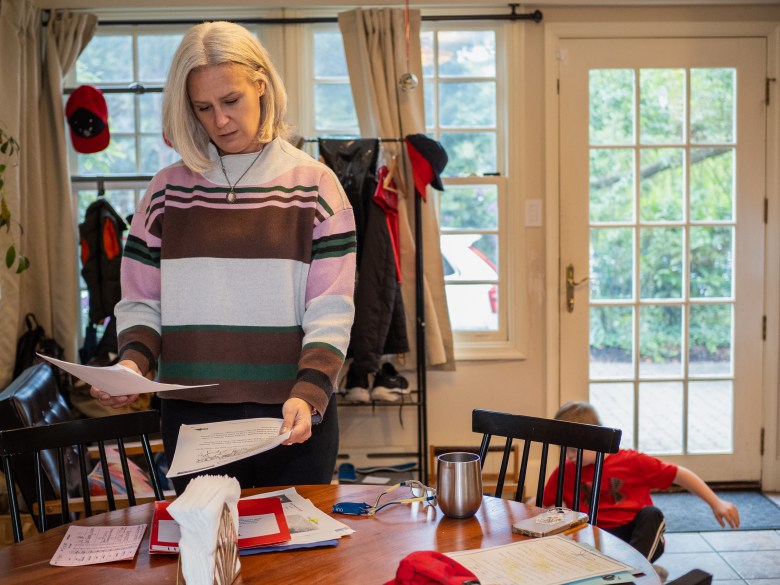
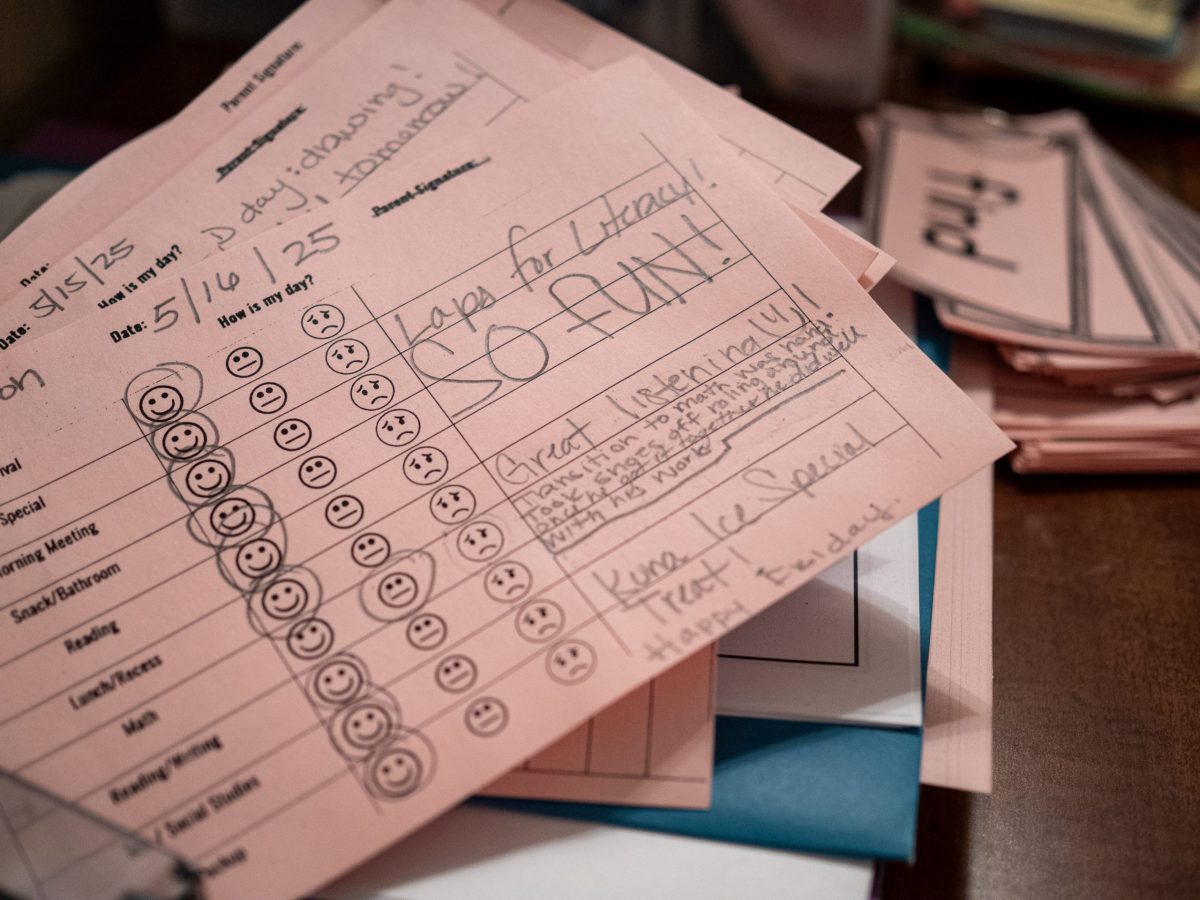
For Terri Joyce, getting her son included in a general education classroom “was a part-time job” and meant staying on top of, and documenting, his academic and social progress. Credit: Yunuen Bonaparte for The Hechinger Report
Joyce tried mediation with the Cinnaminson district but they refused to budge. In the end, she hired a lawyer, filed a due process claim with the state and succeeded in having her son placed in a classroom that included students with and without disabilities the next year, repeating kindergarten to see if he could regain the skills he had lost. The process cost her family thousands of dollars.
Related: Become a lifelong learner. Subscribe to our freeweekly newsletter featuring the most important stories in education.
The Hechinger Report spoke with more than 80 parents, researchers, lawyers, advocates and school officials across the state who described a widespread failure to devote resources to integrating students with disabilities — and a decentralized system that gives enormous power to district leaders, who have long been able to refuse to prioritize inclusion without facing consequences from the state or federal government.
New Jersey is known nationally as a leader in public education, but the state’s governance system has led to inclusion rates that vary dramatically between districts. As a result, a child who is placed in a separate classroom for the entire day in one district could be included all day in a general education classroom in a neighboring one.
“Mindset is the biggest barrier,” said Michele Gardner, executive director of All In for Inclusive Education and previously an administrator for 15 years in the Berkeley Heights district. “There are educators, parents, administrators and physicians who truly believe that separate is better for children with and without disabilities. With more than 600 districts, local control makes change harder.”
Experts say integrating students with disabilities in general education should be easiest, and can be the most beneficial, in the early years. Researchers have found students with and without disabilities — particularly the youngest learners — can benefit when inclusion is done with enough staffing and commitment. Young children also learn from watching each other, and parents worry denying students with disabilities this chance can have lasting damage on them academically and emotionally. Worldwide, inclusion is considered a human right helping all children develop empathy and prepare for society after graduation.
Too often, New Jersey parents say, young learners are placed right away in separate classrooms based on a diagnosis — as Joyce’s son was — rather than an assessment of what support they actually need.
Just over a decade ago, New Jersey settled a class-action lawsuit filed by parents and advocacy groups over student placement, which required years of state monitoring, a new stakeholder committee, and training and technical assistance for districts with the lowest rates of inclusion.
But since then, the proportion of young students in the general education classroom the vast majority of the day actually decreased by about 5 percentage points, from 54 percent in the 2013-14 school year. Nationwide, there was no such drop.
“We are certainly seeing a trend that, even at younger ages, students are being shuttled into segregated schooling and never really starting in inclusive experiences,” Syracuse University inclusive special education professor Christine Ashby said of New Jersey and other states.
Ashby, who also runs the university’s Center on Disability and Inclusion, said students then tend to stay in separate — commonly called self-contained — classrooms, where they may receive individualized instruction alongside peers with disabilities but may be less prepared for life after high school.
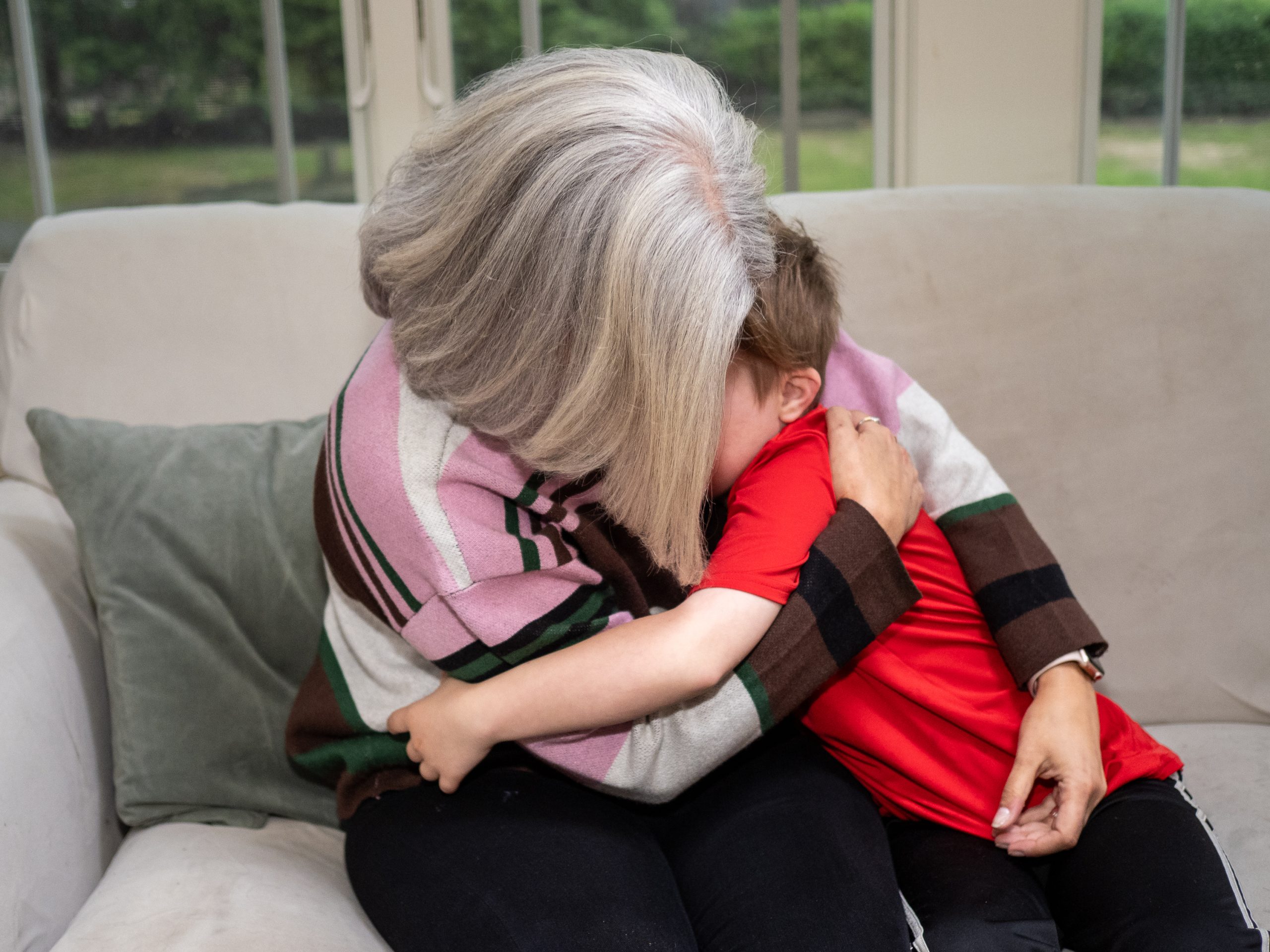
For Terri Joyce, the opportunity she fought for her son to have proved worth it. It took him time to adjust, but with the help of an aide, he settled in and, now in first grade, is thriving alongside his general education peers once again.
“It was like night and day,” said Joyce. “His speech improved. He loves school. He has friends. He gets invited to birthday parties.”
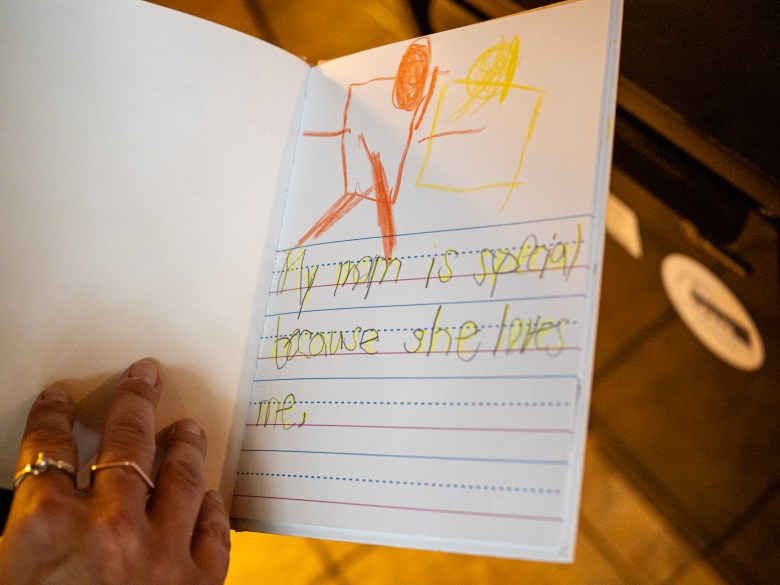
Terri Joyce is happy with how her son’s writing skills have developed in first grade while learning in a general education classroom. Credit: Yunuen Bonaparte for The Hechinger Report
New Jersey Department of Education officials declined a request for an interview, but said in a statement that the agency is working with schools statewide to improve how often students with disabilities are placed in general education classrooms through training, technical assistance and programs promoting inclusion. A new website provides a detailed look at each district’s data, broken down by grade and type of disability.
“All placement decisions must be made on an individual basis and there is no one-size-fits all standard or outcome that should be applied to every district, school or student,” Laura Fredrick, the department’s communication director, said in the emailed statement.
Fredrick said districts that fail to meet state goals for increasing inclusion may face more intensive monitoring, but there are no direct financial penalties or automatic consequences for failing to improve. She also noted that the state pays for voluntary trainingto increase inclusion in K-12 schools.
That program has helped in some districts, but a limited number of schools have participated so far and space is limited — some that have applied for the training have been turned away.
In Cinnaminson, district officials said they could not comment on specific students but that school officials and parents work together on placement decisions.
“To the fullest extent possible, we strive to place students in general education classrooms for the most inclusive educational experience,” Superintendent Stephen Cappello said in a statement.
Some experts said the data suggests that, unlike other states, New Jersey districts do a good job providing individualized services that students need. Autism New Jersey clinical director Joe Novak said in contrast, “There are certain districts, or states, where the default may simply be to place the child in general education and say, ‘Well, best of luck.’”
Indeed a frequent complaint from some parents is the lack of specialized services in general education classrooms, especially because of staffing shortages or lack of expertise. In those cases a student may be counted as included in a general education classroom but without the support they need, which advocates on both sides of the debate say can be harmful.
“New Jersey is probably doing a lot of things right, because it means we’re probably really customizing what makes sense for the individual,” Novak said
Yet others say the state can improve inclusion rates that are sharply lower than the nation’s.
The federal government doesn’t say how many students should be included or for how much of the school day. States set targets for inclusion rates but typically don’t fine or sanction districts for not meeting them. States can also take other steps like requiring training or administrative changes for districts. Advocates say New Jersey districts have little to lose for repeatedly falling below the state’s own targets for including children with disabilities.
Left out
New Jersey has the nation’s lowest inclusion rates for students with disabilities. The Hechinger Report investigated why — and visited places that show how it doesn’t need to be that way.
Do you have experiences with special education you’d like to share with our journalists?
Oversight from the federal government could also diminish going forward. Although the Trump administration pledges to continue funding special education, advocates warn the planned dismantling of the Department of Education, including its civil rights enforcement arm, will harm students with disabilities.
“It’s sort of petrifying, from my end, for these families,” said Jessica Weinberg, a former New Jersey school district attorney who now runs a special education law firm.
“It could be completely disbanded,” she said of the Education Department. “The uncertainty is really unsettling.”
Federal law says students should be placed in separate classrooms “only if” they can’t learn in the general education classroom with services detailed in IEPs, or individualized education programs — the document that outlines a student’s needs, the services they should receive and where they’ll receive them. Teachers, school officials and parents sit on their child’s IEP team, which is supposed to review placement decisions each year.
And parents across New Jersey say it takes time and money to fight for access to general education classrooms — which means whether a child is included can reflect existing racial disparities and whether families can afford lawyers and advocates. Parents say when a school argues their child must be taught separately, their best way of fighting that decision is lawyers and experts — if they can afford it.
Districts with less poverty and a larger share of white students tend to have higher inclusion rates and test scores, according to The Hechinger Report’s analysis of state data. Overall, just 37 percent of Black students in kindergarten, first or second grade in New Jersey are included in the general education classroom for the vast majority of the school day, compared to half of white students.
It’s challenging to get special education services in urban and lower-income districts in the first place, said Nicole Whitfield, a mother of a child with a disability who founded an advocacy group in Trenton for families fighting for special education services.
Urban “districts are so overloaded with so many kids, they don’t do a good job in managing it,” she said.
In all districts, arguments against including more students often hinge on money. Administrators may say they can’t afford all the services every child needs, like an aide assigned to work with one child, and some parents worry providing comprehensive services could strain budgets or cut services for students without disabilities. As special education costs rise, the federal government has long failed to provide as much special education funding as it pledged.
The way New Jersey funds schools doesn’t consider how many students have disabilities. The governor’s proposed budget for the upcoming school year would take that into account and increase overall special education spending by about $400 million — though some districts will lose money. Lawmakers are debating the governor’s proposal, which has some support from the chair of the state Senate Education Committee, Sen. Vin Gopal.
Yet districts spend hundreds of millions of dollars a year to pay tuition at private schools ($784 million last year statewide) and fight legal battles — money advocates say could boost public special education.
It cost Washington Township school district about $90,000 to send Nicole Lannutti’s daughter, who is non-verbal and has a developmental delay, to a private preschool for a year rather than educate her in one of its schools.
“If you can come up with the money for lawsuits, why can’t you put it into the district right now?” Lannutti said. “That makes no sense.”
Washington Township school district did not respond requests for comment.
Whittier Elementary School in Teaneck, New Jersey, rearranged its classrooms to improve how many students with disabilities are included in classes with their peers. Credit: Meredith Kolodner/The Hechinger Report
In some districts, officials say inclusion doesn’t cost more in the long run, even if there are upfront costs. Administrators in Sparta Township, for example, said improving inclusion rates didn’t require more spending. Its schools got help from the New Jersey Inclusion Project — the state-funded training program that helps districts provide students with the least restrictive learning environment appropriate for them.
“[It] has really changed the way we educate our students,” said Adrienne Castorina, Sparta’s director of special services. Teachers found that they were able to provide specialized instruction in reading inside a general education classroom, for example, instead of pulling children out and teaching them in separate rooms.
In 2024, a special education parent advisory committee in Bernards Township School District asked administrators to apply to the New Jersey Inclusion Project. Parents thought the program would be a no-cost, collaborative path forward.
District officials refused.
Many parents in the wealthy district say Bernards’ classroom staff are committed and skilled, but they also say there’s an unwritten policy of separating children based on their diagnosis — close to three-quarters of children with autism, for example, spend the vast majority of their day without contact with their general education peers.
For years, Trish Sumida pleaded with staff at her daughter’s elementary school in Bernards to allow her to have contact with her non-disabled peers. But every day, starting in kindergarten, she learned only alongside other children with autism. Most years, she was the only girl in the room, and she longed for someone to play with who shared her interests.
“Those early years are so important,” said Sumida, whose daughter is now in fifth grade and still spends most of her time in a separate classroom. “I feel like we’ve missed our window.”
Many Bernards parents are particularly frustrated by the refusal to set up co-taught classrooms, a nationally used approach where a general education and special education teacher work together to educate students with and without disabilities.
Jean O’Connell, Bernards’ director of special services, rejected the idea of co-taught classes in elementary school, saying they made it harder to support individual students, particularly in reading. “We had this model in place for many years and found it ineffective,” she said in an email.
Research suggests even students with significant disabilities can learn alongside general education peers with help from co-teachers or paraprofessionals. And a large body of evidence suggests inclusion doesn’t harm learners with or without disabilities.
Some scholars say inclusion research is flawed because students who appear to benefit may need less support and have fewer academic struggles. Such experts point out that a separate classroom may be the appropriate setting for some children, who could languish without intensive support in a general education classroom. And schools with high inclusion rates on paper may place students with disabilities in general education without needed aides and accommodations — which federal data does not capture.
Even a prominent researcher who has questioned the benefits of inclusion, however, said most children don’t need to be taught separately all day.
“Most students with disabilities do not need very intensive forms of instruction,” said Vanderbilt University special education professor Douglas Fuchs.
O’Connell did not respond to questions about why Bernards refused to participate in the New Jersey Inclusion Project and said only that the district has participated in inclusion workshops. She added that the district has no “blanket district-wide policy on inclusion” and involves parents in all placement decisions.
Yet several Bernards parents said they met intense resistance from administrators. One mom said her child who has autism that requires limited support was in an inclusion classroom for pre-K without any problems, but Bernards administrators insisted he be placed in a self-contained classroom for kindergarten.
“He would cry to me every morning and say he didn’t want to go to school,” said the mom, who asked not to be named, afraid her child could experience discrimination because of his disability if identified. “I just felt heartbroken every day.”
She tried repeatedly to have him moved, eventually turning to mediation and filing a complaint with the state. Ultimately, she felt her child couldn’t wait for a resolution. She moved to another district last fall, where he learns alongside his general education peers all day. She said her child is now happy and doing well academically and socially.
Other districts that have struggled with low levels of inclusion have embraced outside help — including from the Inclusion Project. The program helped Whittier Elementary School in Teaneck create its first co-taught classrooms two years ago. Teachers there said the shift requires a lot of planning and they wish they had more staff to provide support, but they’ve seen their students develop academically and socially.
“When you think about the conversations that kids have — turn to your partner, talk to your table, those opportunities aren’t there in self-contained,” said Janine Lawler, who has been a special education teacher for 18 years, mostly in self-contained classrooms, and is now co-teaching in a first-grade class.
Janine Lawler teaches math to a group of first graders in Teaneck, New Jersey. Her classroom includes students with and without disabilities. Credit: Meredith Kolodner/The Hechinger Report
Educators say they can provide intensive instruction without having to separate children for large portions of the day.
“Do we have to isolate young people to give them a service, or can we include them and provide the same service or greater service?” said André Spencer, superintendent of Teaneck Public Schools. “We believe we can include them.”
For decades, New Jersey education officials have failed to support or pressure districts to improve their inclusion rates. A 2004 report found a lack of consequences — such as financial penalties — for New Jersey districts who repeatedly failed to increase inclusion of students with disabilities despite years of promises to improve.
“There’s a culture in New Jersey, which is that you teach kids with impairments in segregated classes,” said Carol Fleres, a long-time special education administrator in New Jersey who is now a special education professor and department co-chair at New Jersey City University.
A 2018 report by the National Council on Disability, an independent federal agency, found “serious contradictions” in New Jersey’s regulations that lay out how schools have to provide special education services. For example: The state categorizes students as having mild, moderate or severe disabilities and says that students with similar behavioral or academic needs should be grouped together.
Those issues make it easy for New Jersey schools to lump students with disabilities together in violation of federal requirements, according to the report.
A spokesman for New Jersey’s education department defended the regulations as doing the opposite. “This arrangement helps ensure that students who require more individualized instruction, especially those whose needs cannot be met in a general education setting, even with supplementary aids and services, are educated in smaller, more supportive environments,” Michael Yaple said in an email.
Despite settlements and scrutiny, advocates want more accountability: New Jersey’s State Special Education Advisory Council, which advises the state Education Department on special education issues, recommended required training for districts with low inclusion rates.
Special education parent and advocate Amanda Villamar, who works with families throughout New Jersey, said education officials try to educate the state’s over 600 school districts — but those efforts only go so far.
“We have a lot of districts that just say: ‘Well, it’s guidance. We don’t have to do it,’” Villamar said. “They literally just don’t even give it the time of day. Then you have other districts that put a lot of work and thought and effort into it.”
Lawyers representing families said young children with behavioral challenges or intellectual disabilities often wind up in separate classrooms for years, even if behaviors improve. Promises of inclusion in gym class or at lunch don’t always happen, they said.
Many parents said they felt forced to agree to separate classrooms, with the promise of inclusion, eventually. That day never came.
“Once you start restricting them, how are you going to get them back and get them increasingly more time within the classroom?” said Elizabeth Alves, a member of the State Special Education Advisory Council.
For Terri Joyce’s son, learning in the co-taught classroom meant accessing the general education curriculum, including social studies. The lessons on civil rights inspired him.
“He became obsessed with Martin Luther King,” she said. “He still will sit for hours and watch YouTube videos of his speeches.”
Like other students with disabilities, her son’s IEP is subject to an annual review, which means that inclusion in the general education classroom isn’t guaranteed in the years to come. Joyce says that means constant vigilance in a process that feels like a part-time job.
But her efforts to have her son included are about more than academics. He’s on the flag football team. He rides the school bus. Other kids recognize him and say hello in the grocery store.
“It’s much bigger than just his education and being included in the classroom,” she said. “Being included in school means he’s more included in life, and he’s more included in our community, and he’s more valued.”
The Hechinger Report provides in-depth, fact-based, unbiased reporting on education that is free to all readers. But that doesn’t mean it’s free to produce. Our work keeps educators and the public informed about pressing issues at schools and on campuses throughout the country. We tell the whole story, even when the details are inconvenient. Help us keep doing that.