Tag: student safety

  • 3 threats putting student safety at risk

    3 threats putting student safety at risk

    Key points:

    In today’s schools, whether K-12 or higher education, AI is powering smarter classrooms. There’s more personalized learning and faster administrative tasks. And students themselves are engaging with AI more than ever before, as 70 percent say they’ve used an AI tool to alter or create completely new images. But while educators and students are embracing the promise of AI, cybercriminals are exploiting it.

    In 2025, the U.S. Department of Education reported that nearly 150,000 suspect identities were flagged in recent federal student-aid forms, contributing to $90 million in financial aid losses tied to ineligible applicants. From deepfakes in admissions to synthetic students infiltrating online portals and threatening high-value research information, AI-powered identity fraud is rising fast, and our educational institutions are alarmingly underprepared.

    As identity fraud tactics become more scalable and convincing, districts are now racing to deploy modern tools to catch fake students before they slip through the cracks. Three fraud trends keep IT and security leaders in education up at night–and AI is supercharging their impact.

    1. Fraud rings targeting education

    Here’s the hard truth: Fraudsters operate in networks, but most schools fight fraud alone.

    Coordinated rings can deploy hundreds of synthetic identities across schools or districts. These groups recycle biometric data, reuse fake documents, and share attack methods on dark web forums.

    To stand a fair chance in the fight, educational institutions must work with identity verification experts that enable a holistic view of the threat landscape through cross-transactional risk assessments. These assessments spot risk patterns across devices, IP addresses, and user behavior, helping institutions uncover fraud clusters that would be invisible in isolation.

    2. Deepfakes and injected selfies in remote enrollment

    Facial recognition was once a trusted line of defense for remote learning and test proctoring. But fraudsters can now use emulators and virtual cameras to bypass those checks, inserting AI-generated faces into the stream to impersonate students. In education, where student data is a goldmine and systems are increasingly remote, the risk is even more pronounced.

    In virtual work environments, for example, enterprises are already seeing an uptick in the use of deepfakes during job interviews. By 2028, Gartner predicts 1 in 4 job candidates worldwide will be fake. The same applies to the education sector. We’re now seeing fake students, complete with forged government IDs and a convincing selfie, slide past systems and into financial aid pipelines.

    So, what’s the fix? Biometric identity intelligence, trusted by a growing number of students, can verify micro-movements, lighting, and facial depth, and confirm whether a real human is behind the screen. Multimodal checks (combining visual, motion, and even audio data) are critical for stopping AI-powered identity fraud.

    3. Synthetic students in your systems

    Unlike stolen identities, synthetic identities are crafted from real–and fake–fragments, such as a legit SSN combined with a fake name. These “students” can pass enrollment checks, get campus credentials, and even apply for financial aid.

    Traditional document checks aren’t enough to catch them. Today’s identity verification tools must use AI to detect missing elements, like holograms or watermarks, and flag patterns including identical document backgrounds, which is a key sign of industrial-scale fraud.

     AI-powered identity intelligence for education

    As digital learning becomes the norm and AI accelerates, identity fraud will only get more sophisticated. However, AI also offers educators a solution.

    By layering biometrics, behavioral analytics, and cross-platform data, schools can verify student identities at scale and in real time, keeping pace with advancing threats, and even staying one step ahead.
    Latest posts by eSchool Media Contributors (see all)

    Source link

  • Amazon Doc Probes Student Surveillance Harms – The 74

    Amazon Doc Probes Student Surveillance Harms – The 74

    School (in)Security is our biweekly briefing on the latest school safety news, vetted by Mark KeierleberSubscribe here.

    It all began when school officials mistook a blurry image of a Mike and Ike candy for pills. 

    Pennsylvania teenager Blake Robbins found himself at the center of a digital surveillance controversy that gave rise to student privacy debates amid schools’ growing reliance on ed tech. 

    Spy High, a four-part documentary series streaming now on Amazon Prime, puts the focus on a lawsuit filed in 2010 after Robbins’ affluent Pennsylvania school district accused him of dealing drugs — a conclusion officials reached after they surreptitiously snapped a photo of him at home with the chewy candy in hand. 

    Blake Robbins, then a high school student in Pennsylvania’s affluent Lower Merion School District, speaks to the press about his 2010 lawsuit alleging covert digital surveillance by educators. (Unrealistic Ideas)

    The moment had been captured on the webcam of his school-issued laptop — one of some 66,000 covert student images collected by the district, including one of Robbins asleep in his bed. 

    I caught up with Spy High Director Jody McVeigh-Schultz to discuss why the 15-year-old case offers cautionary lessons about student surveillance gone awry and how it informs contemporary student privacy debates. 

    How student surveillance plays out today: Meet the gatekeepers of students’ private lives. | The 74


    In the news

    Courts block DEI directive: Three federal courts ordered temporary halts on Thursday to Trump’s efforts to cancel student diversity initiatives — and demands for states to pledge allegiance to the administration’s interpretation of civil rights laws. | The 74

    President Donald Trump signed an executive order Wednesday that called for school discipline models “rooted in American values and traditional virtues,” taking aim at Obama- and Biden-era efforts to reduce racial disparities in suspensions and expulsions. | Politico

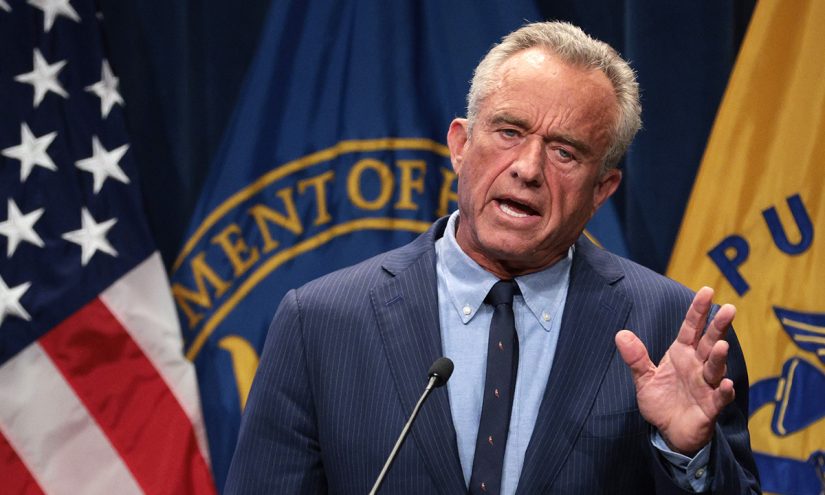
    U.S. Secretary of Health and Human Services Robert F. Kennedy Jr. speaks about a new autism study during a news conference on April 16, 2025. (Getty Images)

    ‘The history there is deeply, deeply disturbed’: Disability-rights advocates have decried plans at the National Institutes of Health to compile Amerians’ private medical records in a “disease registry” to track children and other people with autism. | The 74

    • Health and Human Services Secretary Robert F. Kennedy Jr., faced criticism for recent comments that many kids “were fully functional and regressed because of some environmental exposure into autism when they’re 2 years old.” | ABC News

    A new lawsuit filed by students at military-run schools accuses the Defense Department of harming their learning opportunities by banning books related to “gender ideology” or “divisive equity ideology,” including texts that refer to slavery and sexual harassment prevention. | Military Times

    Sign-up for the School (in)Security newsletter.

    Get the most critical news and information about students’ rights, safety and well-being delivered straight to your inbox.

    California lawmakers are demanding answers after Department of Homeland Security agents visited two Los Angeles elementary schools and asked to speak with five students who the federal agency said “arrived unaccompanied at the border.” | LAist

    ‘We all deserve reparations’: White House aide Stephen Miller said in an interview last week the country “used to have a functioning public school system” until it was destroyed by “open borders.” | The New Republic

    The Justice Department seized thousands of photos and videos in an investigation of a former University of Michigan assistant football coach who was indicted on allegations he hacked into student athletes’ private accounts to steal intimate images. | CBS Sports

    A 48-year-old mother was arrested and accused of bringing a gun to her daughter’s Indiana elementary school and threatening the girl’s teacher over a classroom assignment about flags. While discussing flags, the teacher reportedly referred to a rainbow flag in the classroom with the words “be kind.” | NBC News

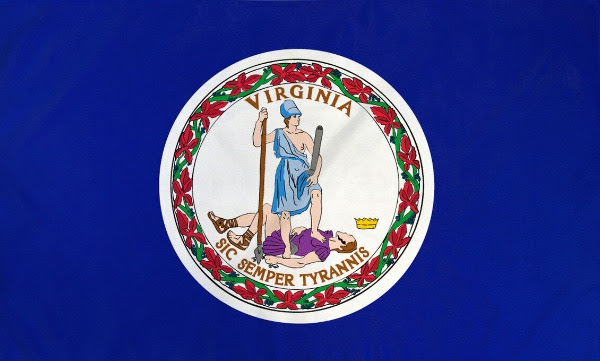
    Banning ‘frontal nudity’: A Texas school district has removed lessons on Virginia history from an online learning platform for elementary school students because the commonwealth’s flag depicts the Roman goddess Virtus with an exposed breast. | Axios

    The Supreme Court will hear oral arguments next month to weigh Trump’s executive order eliminating birthright citizenship, bringing into question a 127-year-old court precedent. | NPR

    A class-action lawsuit accuses tech giant Google of amassing “thousands of data points that span a child’s life” without the consent of students or their parents. | Bloomberg Law

    A Florida teacher is out of a job after she called a student by their preferred name, allegedly violating a 2023 Florida law that requires schools to receive parental permission to refer to students by anything other than their legal names. | Click Orlando

    The vice president of the Buffalo, New York, chapter of Bikers Against Child Abuse was arrested and accused of sex crimes against children. | WIVB


    ICYMI @The74

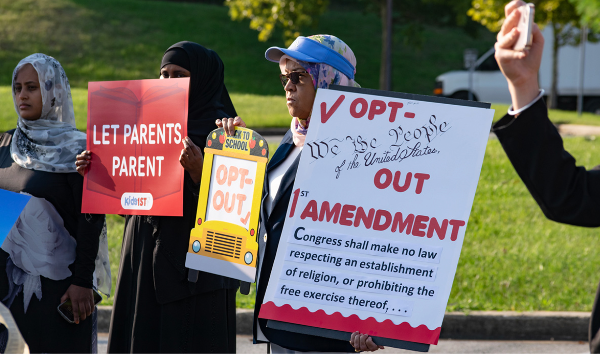
    Supreme Court Shows Support for Parents Who Want Opt-Outs from LGBTQ Storybooks

    ‘There Goes My Son’s Help:’ Wave of Washington Head Starts Shut Down as Chaos Engulfs Federal Program

    State Officials Sue Trump Administration for Halting COVID School Aid

    Protecting Children Online Takes Technology, Human Oversight and Accountability


    Emotional Support

    Don’t even think about touching Matilda’s cactus.


    Get stories like these delivered straight to your inbox. Sign up for The 74 Newsletter

    Source link