Tag: Student

  • Kirk shooter appeared to fire from roof of university student services building

    Kirk shooter appeared to fire from roof of university student services building

    The shooter who killed Turning Point USA founder Charlie Kirk Wednesday on the Utah Valley University campus appeared to fire from the roof of a university building that houses administrative offices and student advisement services.  

    The Losee Center for Student Success is a 90,000-square-foot building with a mix of campus offices and student services that underwent a $4.5 million renovation in 2009. The building is fewer than 200 yards from the outdoor amphitheater where Kirk was speaking. A video taken by an attendee captures images of what appears to be the shooter standing on the roof of the building after the shooting and running away. 

    “The rooftop to the Losee building is pretty easy to access,” a CNN reporter said in a video analysis of the shooting. “It’s connected to another building by an elevated walkway, which … is only separated from the roof by a railing.” 

    Because of the distance and accuracy of the shot, it was likely fired from a large-caliber rifle, Jim Cavanaugh, a former officer of the U.S. Bureau of Alcohol, Tobacco, Firearms and Explosives, said on MSNBC show The Beat with Ari Melber. “It does appear to be a large rifle round,” Cavanaugh said. “I would call it a .308 or a .30-06, like a deer rifle. One shot. That’s all.”

    Cavanaugh explained that “Snipers use that attack method for two reasons. One, they can’t get close … and secondly, because you want to get away. That gives you the distance to get away. You can fire the round and then egress from the scene.” 

    “Two hundred yards is not a difficult rifle shot,” Christopher O’Leary, former director of hostage recovery for the federal government, told Melber. “Most people have optics on their weapon. … With a true optic on it, 200 yards is very easy to do.”

    The university, in Orem, Utah, prohibits guns on campus to the extent allowed by state law. Utah’s Concealed Weapons Law allows people with a state concealed carry permit to be on campus with a concealed firearm, according to the campus police website.

    An estimated 3,000 people were attending the Kirk event, the first of a series of campus talks the conservative activist was scheduled to hold around the country. Kirk was shot while answering a question about mass shootings. “Do you know how many mass shootings in America there have been over the last 10 years?” an attendee asked, the CNN video analysis shows. “Counting or not counting gang violence?” Kirk responded before he was hit.   

    Local police and half a dozen campus police officers provided security at the event, but there was no screening, the CNN analysis said.  

    “Let’s be realistic,” O’Leary said on The Beat. “We’re not going to lock down a college campus for every speaker outdoors. Maybe you want to take it indoors. I think that’s all going to be assessed moving forward.”  

    Phil Lyman, a former Utah state legislator who was at the event, said on The Beat that he saw what he believed were “a lot of undercover police officers running around” after the shooting, which surprised him. “I would not have thought that [those were officers].”

    The campus is closed for the week while law enforcement officials conduct their forensic work. 

    Source link

  • New research highlights the importance and challenges of K-12 student engagement

    New research highlights the importance and challenges of K-12 student engagement

    This press release originally appeared online.

    Key points:

    While there is wide agreement that student engagement plays a vital role in learning, educators continue to face uncertainty about what engagement looks like, how best to measure it, and how to sustain it, according to a new study from Discovery Education

    Education Insights 2025–2026: Fueling Learning Through Engagement captures prevailing attitudes and beliefs on the topic of engagement from 1,398 superintendents, teachers, parents, and students from across the United States. Survey data was collected in May 2025 by Hanover Research on behalf of Discovery Education

    Discovery Education conducted the Education Insights report to gain a deeper understanding of how engagement is defined, observed, and nurtured in K-12 classrooms nationwide, and we are thankful to the participants who shared their perspectives and insights with us,” said Brian Shaw, Discovery Education’s Chief Executive Officer. “One of the most important findings of this report is that engagement is seen as essential to learning, but is inconsistently defined, observed, and supported in K-12 classrooms. I believe this highlights the need for a more standardized approach to measuring student engagement and connecting it to academic achievement. Discovery Education has embarked on an effort to address those challenges, and we look forward to sharing more as our work progresses.” 

    Key findings of the Education Insights 2025–2026: Fueling Learning Through Engagement report include: 

    Engagement is broadly recognized as a key driver of learning and success. Ninety-three percent of educators surveyed agreed that student engagement is a critical metric for understanding overall achievement, and 99 percent of superintendents polled believe student engagement is one of the top predictors of success at school. Finally, 92 percent of students said that engaging lessons make school more enjoyable. 

    But educators disagree on the top indicators of engagement. Seventy-two percent of teachers rated asking thoughtful questions as the strongest indicator of student engagement. However, 54 percent of superintendents identified performing well on assessments as a top engagement indicator. This is nearly twice as high as teachers, who rank assessments among the lowest indicators of engagement. 

    School leaders and teachers disagree on if their schools have systems for measuring engagement. While 99 percent of superintendents and 88 percent of principals said their district has an intentional approach for measuring engagement, only 60 percent of teachers agreed. Further, nearly one-third of teachers said that a lack of clear, shared definitions of student engagement is a top challenge to measuring engagement effectively. 

    Educators and students differ on their perceptions of engagement levels. While 63 percent of students agreed with the statement “Students are highly engaged in school,” only 45 percent of teachers and 51 percent of principals surveyed agreed with the same statement.  

    Students rate their own engagement much higher than their peers. Seventy percent of elementary students perceived themselves as engaged, but only 42 percent perceived their peers as engaged. Fifty-nine percent of middle school students perceived themselves engaged in learning, but only 36 percent perceived their peers as engaged. Finally, 61 percent of high school students perceived themselves as engaged, but only 39 percent described their peers as engaged. 

    Proximity to learning changes impressions of AI. Two-thirds of students believe AI could help them learn faster, yet fewer than half of teachers report using AI themselves to complete tasks. Only 57 percent of teachers agreed with the statement “I frequently learn about positive ways students are using AI,” while 87 percent of principals and 98 percent of superintendents agree. Likewise, only 53 percent of teachers agreed with the statement “I am excited about the potential for AI to support teaching and learning,” while 83 percent of principals and 94 percent of superintendents agreed. 

    Latest posts by eSchool Media Contributors (see all)

    Source link

  • Report Details Community College Student Parents’ Struggles

    Report Details Community College Student Parents’ Struggles

    A new report from the Center for Community College Student Engagement found that even though parenting students are especially dedicated to their studies, they face significant obstacles in college.

    The report, based on a 2024 survey of students from 164 community colleges, found that parenting students were more engaged than nonparenting students across multiple benchmarks, including coming to class prepared and never skipping classes, despite their additional responsibilities. These students were also more likely than nonparents to have earned an associate degree or certificate or to mention changing careers as a goal.

    But even with such strong drive, 71 percent of student parents reported caring for dependents could cause them to withdraw from college; 73 percent said financial circumstances might make them stop out. Student parents were also more likely than nonparents to face food and housing insecurity, but only small fractions of students reported receiving food or housing support from their college in the last month. In a similar vein, a third of students with children say that their colleges don’t adequately support them as parents. Meanwhile, these students say underutilized supports that could help them, including campus childcare services, financial advising and career counseling, the report found.

    The report also offers examples of higher ed institutions that have put in place effective supports for student parents. For example, Lee College in Texas offers weekly financial assistance for childcare and family-friendly study areas. Monroe Community College in New York created a designated student success coach role to serve single mothers.

    “Parenting students are among the most engaged learners on our campuses, but they face barriers that too often derail their progress,” Linda García, CCCSE’s executive director, said in a news release. “But when colleges take intentional steps to support them, the impact is not only on students, but on their children and communities.”

    Source link

  • Falling mature student numbers requires policy action

    Falling mature student numbers requires policy action

    With the clutch of traditional higher education flashpoints accounted for – A level and SQA results days, and a clearing season reported to be particularly fraught in some quarters – the summer is drawing to a close, and a new academic year is upon us.

    Eighteen year olds are set to attend universities in record numbers, up 5 per cent year on year and up 27 per cent since 2016. This is unquestionably a great thing. However, it masks a troublingly stubborn decline in mature students numbers.

    In recent years, the number of these students – those aged 21 and over (or 25 and over for postgraduate study) – entering UK universities has been falling at an alarming rate, down by 26 per cent since 2016 according to UCAS. This decline may sound like a niche concern, but it carries big implications for the wider economy, for skills shortages, and for the prospects of people who want to reskill later in life.

    As the government prepares to roll out the Lifelong Learning Entitlement (LLE), there’s an urgent opportunity to rethink how the sector and society support adult learners and to ensure that lifelong education becomes a central pillar of our skills system.

    The current picture

    While the signs from clearing so far offer some encouragement, due perhaps to a sluggish economy, the data remains stark. Over the past decade or more, the number of mature students entering higher education has steadily declined, down 43 per cent since 2012.

    The causes are multifaceted, but a shift began with the introduction of higher fees in 2012 and has persisted – it is well established that mature students tend to be more debt-averse, so this coupled with the rising cost of living and the upfront financial commitment of a degree will no doubt put off many.

    Others may well be put off by a lack of flexibility. While real strides have been made in this area, particularly at modern universities, the structures of funding and regulation mean a lot of courses are still designed for school-leavers with the time and freedom to study full-time. Family responsibilities, limited employer support for training and the still-dominant perception that universities are designed for 18-year-olds will also play a role.

    The pandemic briefly nudged some adults back into learning, but the overall trend remains downward. Without targeted action, these numbers are unlikely to recover on their own.

    A price to pay

    Why does this matter beyond the university sector? Because a thriving economy depends on people being able to learn, retrain, and adapt throughout their lives. Mature students often bring real-world experience into classrooms and tend to choose courses that fill urgent skills shortages – in health and social care, teaching, engineering, IT, and other high-demand sectors.

    When these pathways dry up, industries suffer. Skills gaps are prevalent across key sectors and have been estimated by the Recruitment and Employment Confederation to cost the economy almost £40bn per year. Without a pipeline of retrained workers, employers struggle to fill gaps, productivity growth stalls, and regional economies miss opportunities to regenerate.

    It’s also an issue of social mobility. For people whose school results closed off higher education the first time around, mature study offers a second chance to change careers, boost their earnings, and improve their families’ prospects. If that route disappears, inequality widens – and our economy pays the price.

    A new hope?

    The LLE, due to launch in 2026, aims to reshape post-18 education in England by enabling a move away from the traditional three- or four-year degree as the default model. Instead, individuals will be able to draw on a single pot of funding – equivalent to four years of study, or around £38,000 – and use it flexibly over their lifetimes, taking courses in smaller, more targeted chunks.

    In principle, this modular approach could open the door for adults with work and family commitments, allowing them to pursue short courses when needed and return later for further study without losing access to funding. By making learning more flexible, affordable, and tied to labour market needs, the LLE is pitched as a way to lower barriers that currently deter many mature learners, particularly in an economy being reshaped by AI, automation, and the green transition.

    Yet the promise of the scheme is far from guaranteed. The rollout is proving complex, with uncertainties over how funding will be administered, whether universities and colleges will be equipped to redesign courses in modular formats, and how easily learners will be able to navigate the system. Awareness is another challenge: adults with established careers and busy lives may not know the scheme exists, or may find the process of accessing funding too bureaucratic to be worth the effort. Employers, meanwhile, will need to support staff in using the entitlement – something that cannot be assumed.

    There are also cultural and practical reasons to doubt whether large numbers of mature learners will take up the LLE. Adults may be reluctant to re-enter formal education, particularly if they are anxious about returning to study, lack confidence with digital learning, or doubt the value of small qualifications in the job market. Others may weigh the potential benefits against the costs – not only financial, but also in time and disruption to family or work responsibilities – and decide against it.

    In short, while the LLE represents a bold attempt to modernise lifelong education, its success will depend on whether the system can overcome significant implementation hurdles and whether mature learners themselves see it as accessible, relevant, and worthwhile.

    The role of modern universities

    Universities are at the heart of this challenge. They too cannot rest on their laurels and must continue to consider how they design, market, and deliver their courses if they are to serve lifelong learners as effectively as they serve 18-year-olds fresh from colleges. Modern universities, which traditionally teach the majority of mature undergraduates, must continue to lead this agenda from the front.

    Partnerships with local employers, another area in which modern universities lead, are key. By aligning courses with regional economic needs – for example, creating pathways into green technologies, health and care, or digital sectors – universities can help ensure that adults return to education with a clear line of sight to better jobs.

    But a cultural shift is just as important. Universities need to be hubs for lifelong learning, not just finishing schools for young adults, and the government has significant work to do in getting the word out to the general public that the opportunity to study or re-train is there to be taken.

    The decline in mature students is more than a higher education story. It’s a warning sign for our economy and for our ability to adapt to change. The LLE offers a chance to reverse the trend – but only if universities, employers, and policymakers work together to make lifelong learning a reality.

    In a fast-changing world, education cannot stop at 21. The people of Britain need a system that allows people to keep learning, keep adapting, and keep contributing to the economy throughout their lives.


    Source link

  • Prioritizing behavior as essential learning

    Prioritizing behavior as essential learning

    Key points:

    In classrooms across the country, students are mastering their ABCs, solving equations, and diving into science. But one essential life skill–behavior–is not in the lesson plan. For too long, educators have assumed that children arrive at school knowing how to regulate emotions, resolve conflict, and interact respectfully. The reality: Behavior–like math or reading–must be taught, practiced, and supported.

    Today’s students face a mounting crisis. Many are still grappling with anxiety, disconnection, and emotional strain following the isolation and disruption of the COVID pandemic. And it’s growing more serious.

    Teachers aren’t immune. They, too, are managing stress and emotional overload–while shouldering scripted curricula, rising expectations, and fewer opportunities for meaningful engagement and critical thinking. As these forces collide, disruptive behavior is now the leading cause of job-related stress and a top reason why 78 percent of teachers have considered leaving the profession.

    Further complicating matters is social media and device usage. Students and adults alike have become deeply reliant on screens. Social media and online socialization–where interactions are often anonymous and less accountable–have contributed to a breakdown in conflict resolution, empathy, and recognition of nonverbal cues. Widespread attachment to cell phones has significantly disrupted students’ ability to regulate emotions and engage in healthy, face-to-face interactions. Teachers, too, are frequently on their phones, modeling device-dependent behaviors that can shape classroom dynamics.

    It’s clear: students can’t be expected to know what they haven’t been taught. And teachers can’t teach behavior without real tools and support. While districts have taken well-intentioned steps to help teachers address behavior, many initiatives rely on one-off training without cohesive, long-term strategies. Real progress demands more–a districtwide commitment to consistent, caring practices that unify educators, students, and families.

    A holistic framework: School, student, family

    Lasting change requires a whole-child, whole-school, whole-family approach. When everyone in the community is aligned, behavior shifts from a discipline issue to a core component of learning, transforming classrooms into safe, supportive environments where students thrive and teachers rediscover joy in their work. And when these practices are reinforced at home, the impact multiplies.

    To help students learn appropriate behavior, teachers need practical tools rather than abstract theories. Professional development, tiered supports, targeted interventions, and strategies to build student confidence are critical. So is measuring impact to ensure efforts evolve and endure.

    Some districts are leading the way, embracing data-driven practices, evidence-based strategies, and accessible digital resources. And the results speak for themselves. Here are two examples of successful implementations.

    Evidence-based behavior training and mentorship yields 24 percent drop in infractions within weeks

    With more than 19,000 racially diverse students across 24 schools east of Atlanta, Newton County Schools prioritized embedded practices and collaborative coaching over rigid compliance. Newly hired teachers received stipends to complete curated, interactive behavior training before the school year began. They then expanded on these lessons during orientation with district staff, deepening their understanding.

    Once the school year started, each new teacher was partnered with a mentor who provided behavior and academic guidance, along with regular classroom feedback. District climate specialists also offered further support to all teachers to build robust professional learning communities.

    The impact was almost immediate. Within the first two weeks of school, disciplinary infractions fell by 24 percent compared to the previous year–evidence that providing the right tools, complemented by layered support and practical coaching, can yield swift, sustainable results.

    Pairing shoulder coaching with real-time data to strengthen teacher readiness

    With more than 300,000 students in over 5,300 schools spanning urban to rural communities, Clark County School District in Las Vegas is one of the largest and most diverse in the nation.

    Recognizing that many day-to-day challenges faced by new teachers aren’t fully addressed in college training, the district introduced “shoulder coaching.” This mentorship model pairs incoming teachers with seasoned colleagues for real-time guidance on implementing successful strategies from day one.

    This hands-on approach incorporates videos, structured learning sessions, and continuous data collection, creating a dynamic feedback loop that helps teachers navigate classroom challenges proactively. Rather than relying solely on reactive discipline, educators are equipped with adaptable strategies that reflect lived classroom realities. The district also uses real-time data and teacher input to evolve its behavior support model, ensuring educators are not only trained, but truly prepared.

    By aligning lessons with the school performance plan, Clark County School District was able to decrease suspensions by 11 percent and discretionary exclusions by 17 percent.  

    Starting a new chapter in the classroom

    Behavior isn’t a side lesson–it’s foundational to learning. When we move beyond discipline and make behavior a part of daily instruction, the ripple effects are profound. Classrooms become more conducive to learning. Students and families develop life-long tools. And teachers are happier in their jobs, reducing the churn that has grown post-pandemic.

    The evidence is clear. School districts that invest in proactive, strategic behavior supports are building the kind of environments where students flourish and educators choose to stay. The next chapter in education depends on making behavior essential. Let’s teach it with the same care and intentionality we bring to every other subject–and give every learner the chance to succeed.

    Latest posts by eSchool Media Contributors (see all)

    Source link

  • There’s no magic wand for student wellbeing

    There’s no magic wand for student wellbeing

    At a conference in the mid-2010s an American colleague described UK student services and support as “an emerging profession.” He was wrong: universities have always supported students beyond the classroom. From Oxford dons to Bologna priests, pastoral care was never a bolt-on or mission drift. It was a crucial part of enabling students, especially those from challenging backgrounds, to succeed.

    Where he may have been right was in the contrast between his side of the Atlantic and mine. The United States has built structured, well-resourced systems of student support, while in the UK our approach remains patchy and ill defined. A decade later, demand has continued to grow exponentially. Expectations are higher, university services are stretched, and public health provision is thinner.

    The Hogwarts problem

    Have universities become places where students expect to be looked after as much as taught? At times, it feels that way. Today many students’, and their parents’, earliest frame of reference for support in a residential education setting comes from what they saw or read happen for Harry Potter.

    Students paying fees understandably expect a full package: excellent teaching, clear employment prospects, and a safety net that catches every wobble in closed, secure setting, with or without owls.

    On top of that, many of today’s students have grown up talking openly about mental health on Instagram, TikTok, and in group chats. That cultural shift is a win for stigma reduction, and means more students are willing to ask for help in a context where expectations were already increased.

    Add in a more diverse student body, and the equation is simple: higher expectations + greater volume and diversity of students + greater willingness to express need = demand growing exponentially.

    At the sharpest end, universities are managing cases of student suicide, with all of its devastating consequences for families, friends and staff. The stakes could not be higher.

    We are also picking up the pieces from past cuts elsewhere. In Wales and England cuts to Child and Adolescent Mental Health Services (CAMHS) since 2010 mean many students are arriving at university with needs that have not been addressed before.

    The opportunity to get it right

    Providers across all four UK nations and beyond are grappling with the same pressures. The answer lies not in expending capacity and energy on demonstrative quality marks and badges, but in creating real-world systemic change rooted in regulation, leadership, defined boundaries, curriculum design, and rapid adoption of AI.

    Make mental health a strategic priority: The first step is leadership. Mental health and wellbeing must be owned at the highest level of every university. The Universities UK Stepchange framework made this clear in 2016, and it still holds true today. Vice chancellors and governing bodies need to lead visible strategies, set measurable goals, and proactively monitor progress.

    This is not about box-ticking. It is about embedding wellbeing in strategy so decisions about teaching, estates, finance, and partnerships all factor it in, just like they do health and safety. This commitment sends a powerful signal: facilitating good mental health is not peripheral. It is part of the core mission and enables better outcomes.

    This needs to be set against formal regulation with common terminology, standards and risk measures; moving beyond the voluntary and variance we see now, setting common boundaries to what the sector provides and what can be expected for all.

    Set boundaries and build healthcare partnerships: Universities are not healthcare providers, and pretending otherwise is not sustainable. Equally, it is not realistic to say “this is not our role.” Students and their families, often in crisis, need a sympathetic explanation of what support universities can and cannot provide, and a clear route to accessible health services.

    That means developing formal partnerships with health providers. The South East Wales Mental Health Partnership shows what is possible. Since 2019 this partnership has been creating bespoke referral pathways, training university staff in triage, and coordinating with NHS colleagues. The partnership has managed demand while helping the NHS plan for the pressure created by a time-limited, transient student population.

    The structures of health services differ across the four UK nations, but the approach is transferable. Formal, regional partnerships are the only sustainable way to respond.

    Embed wellbeing in the curriculum: Wellbeing can be built into curriculum design in ways that both support students and improve academic outcomes. Group projects foster connection and reduce isolation. Linking assignments to real-world challenges boosts motivation. Even something as simple as coordinating deadlines across modules can contribute to a healthier, more balanced experience. Peer support can be impactful for everyone involved.

    This reflects what many modern workplaces already expect: collaboration, resilience, and balance. Embedding wellbeing into learning design is part of preparing students for life after graduation.

    Use AI wisely: Around 80 per cent of teenagers aged 13–17 have used generative AI tools like ChatGPT. In developed economies there is growing evidence that this demographic will look to AI for emotional support with good outcomes, so it seems clear future students will look to AI first for help. A response which ensures strained provision adapts to demand change is critical.

    Handled properly, AI could transform student services. Chatbots can answer routine questions, signpost students to resources, and triage requests before they reach staff. This is not an opportunity to cut spending; it is an opportunity to repurpose skilled staff enabling focus on the most complex cases and multi-agency referrals, or in other words, the work where human expertise is most impactful.

    The danger is that we repeat past sector mistakes: commissioning bespoke systems slowly and at high cost. Instead, universities should move quickly to adopt and embed proven tools ensuring people, not algorithms, make the biggest difference.

    What’s next?

    Universities aren’t Hogwarts – and they need to be explicit about what they can and cannot do. It is possible to do this in a positive way and work with partners to build systems that meet new demand appropriately.

    That means leadership taking a proactive strategic approach, clear and compassionate boundaries, embedding wellbeing in the curriculum, and smart use of AI to manage resource and demand. It also means governments in each part of the UK moving beyond voluntary, third-party charters – to frameworks with teeth.

    Without that shift, staff will continue to be asked for miracles without a wand, and universities will continue to be held responsible when those miracles don’t happen.

    Source link

  • Job Descriptions – Student Affairs

    Job Descriptions – Student Affairs

    Job Description Index

    Student Affairs

    Developed with the help of volunteer leaders and member institutions across the country, The Job Descriptions Index provides access to sample job descriptions for positions unique to higher education.

    Descriptions housed within the index are aligned with the annual survey data collected by the CUPA-HR research team. To aid in the completion of IPEDS and other reporting, all position descriptions are accompanied by a crosswalk section like the one below.

    Crosswalk Example

    Position Number: The CUPA-HR position number
    BLS SOC#: Bureau of Labor Statistics occupation classification code
    BLS Standard Occupational Code (SOC) Category Name: Bureau of Labor Statistics occupation category title
    US Census Code#: U.S. Census occupation classification code
    VETS-4212 Category: EEO-1 job category title used on VETS-4212 form

    ***SOC codes are provided as suggestions only. Variations in the specific functions of a position may cause the position to better align with an alternate SOC code.

    Sample Job Descriptions

    Associate Registrar

    Chief Student Affairs/Student Life Officer

    Coordinator, Student Conduct

    Deputy Head, Campus Recreation/Intramurals/Wellness

    Deputy Head, Campus Student Union

    Deputy Head, Student Activities

    Deputy Head, Student Financial Aid

    Deputy Head, Student Housing

    Graduate Program Admissions Coordinator

    Head, Campus Recreation/Intramurals/Wellness

    Head, First Year Experience

    Head, International Student Affairs

    Head, LGBTQ Student Affairs

    Head, Minority/Multicultural Student Affairs

    Head, Student Admissions for College/School

    Student Career Counselor

    Student Counseling Psychologist

    Student Counselor

    Student Financial Aid Counselor

    Student Health Coordinator

    Student Housing, Residence Life Officer

    Student Residence Hall Manager (R&B incl)

    Student Success Professional

    The post Job Descriptions – Student Affairs appeared first on CUPA-HR.

    Source link

  • Technology ushers in a new era of student transportation

    Technology ushers in a new era of student transportation

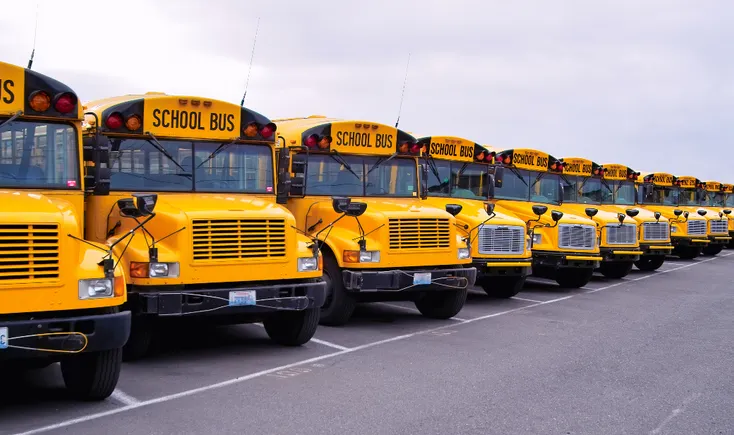
    School bus fleets have a deceptively simple mission: To safely transport students to and from their homes, games, field trips, and other events. Achieving that mission is anything but simple, regardless of the size of the school or its vehicle fleet.

    The sheer number of variables a school transportation director must manage is overwhelming. Buses have to be well-maintained and fueled up before hitting the road; drivers must be thoroughly trained and regularly monitored for performance; systems need to be in place to quickly locate buses and the kids on them; and drivers, students, parents, and school administrators need objective tools to help investigate alleged behavioral or safety incidents that take place on board a vehicle.

    Unfortunately, the tools most schools have in place today make achieving all those objectives more challenging, time-consuming, and expensive. For example, most schools lack real-time visibility about the location of buses, often relying on GPS or cell phone and radio calls to drivers. “Right now, most people don’t have any real-time visibility,” said Amber Stanton, senior account executive and team lead focused on the public sector for Samsara, the connected operations technology trusted by organizations across public and private fleets.

    Transportation directors and their staff must also manage a mixture of standalone systems to track buses and ensure student safety. Besides GPS, it is common for schools to have both routing software and cameras to monitor, document, and investigate possible safety incidents. “There’s a chance that some of those systems interact with each other, but it’s not typically a perfect fit,” Stanton said. “There is usually friction.”

    A lack of visibility and simplicity

    That lack of visibility and the need to juggle multiple systems often translates into confusion, frustration, and wasted time and resources. A big reason why: When parents and others can’t confidently pinpoint the location of a bus using an app, they will call the school. “There’s congestion on the phone line because nobody can see where the bus is and they will call to ask,” Stanton said. “It takes time for the transportation to locate the bus and pass that information along – time they could use to do something more valuable, since they have so many other responsibilities.”

    Thoroughly investigating behavioral or safety incidents that take place on a bus is also time-consuming and cumbersome, even if buses are outfitted with cameras. If a student is accused of vaping or bullying, for example, staff must physically pull a DVR (digital video recorder) from a bus, upload footage, and analyze hours of video.

    It doesn’t have to be this way. By adopting Samsara’s telematics and camera solutions, school districts gain a single, connected view of their buses, drivers, and students. The platform links core safety and efficiency systems that schools already use. The result is faster response when incidents occur, less time spent tracking down buses, and a better experience for students, parents, and transportation staff alike.

    Lessons from the road

    With 182,000 students, Gwinnett County Public Schools (GCPS) in Georgia is one of the 10 largest districts in the country. GCPS utilized siloed GPS and camera systems but found that parent complaints and incident investigations took days, sometimes weeks, to resolve.

    GCPS implemented Samsara GPS and AI dash cams across its 2,000 buses. The impact has been dramatic. Investigation times have been sliced in half, from as many as two weeks to just 24 to 48 hours.

    Implementing Samsara also helps address one of the biggest challenges facing transportation directors. “No one can keep drivers right now,” Stanton said. “It’s the number one problem for almost every transportation director I work with.”

    Canyons School District in Utah demonstrates how Samsara can help. With 190 buses serving 30 schools, Canyons had long relied on legacy GPS and camera systems that were unreliable in Utah’s extreme weather. Bus delays, slow video retrieval, and lagging GPS data created frustration for parents, administrators, and drivers.

    Switching to Samsara gave Canyons real-time visibility across its operations and enabled a new approach to safety culture. Dual-facing AI Dash Cams allowed administrators to proactively coach drivers and reduced driver mobile phone usage. Importantly, Samsara enabled Canyons to motivate drivers through recognition and friendly competition, not just discipline. By gamifying safe driving and celebrating strong performance, Canyons improved engagement and retention during a challenging labor market.

    The shift paid off. They improved safety outcomes and driver satisfaction and retention. Which in turn provides relief to the transportation director who oversees drivers and the entire fleet – and who often must drive a route themselves because of staffing shortages. “That person wears 20 different hats. They’re the main point of contact for parents, for students, for drivers, for leadership,” Stanton said. “In the end, transportation directors are looking for relief and more time.”

    Source link

  • More Than a Name: How Assignment Labels Influence Student Learning and Performance – Faculty Focus

    More Than a Name: How Assignment Labels Influence Student Learning and Performance – Faculty Focus

    Source link

  • ‘Blatantly unconstitutional’: Student groups sue over Texas law limiting campus protests

    ‘Blatantly unconstitutional’: Student groups sue over Texas law limiting campus protests

    This audio is auto-generated. Please let us know if you have feedback.

    Dive Brief: 

    • The Foundation for Individual Rights and Expression sued the University of Texas System on Wednesday on behalf of students over a new state law that directs public colleges to prohibit expressive activities on campus from 10 p.m. to 8 a.m.
    • The lawsuit also takes aim at the statute’s provisions that prohibit inviting speakers to campus, using devices to amplify speech, or playing drums or other percussive instruments during the last two weeks of any term. 
    • FIRE called the provisions “blatantly unconstitutional,” arguing they violate First Amendment and due process rights on public colleges. The group is urging the judge overseeing the case to declare the prohibitions unconstitutional and to permanently block the UT System from enforcing them.  

    Dive Insight: 

    Texas state Sen. Brandon Creighton — who authored the bill and has been named the sole finalist for chancellor of the Texas Tech University Systemhas framed the legislation as a response to pro-Palestinian demonstrations campuses both within Texas and across the nation last year. 

    “While the world watched Columbia, Harvard and other campuses across the country taken hostage by pro-terrorist mobs last year, Texas stood firm. UT allowed protest, not anarchy,” Creighton told Austin American-Statesman earlier this year after lawmakers passed his bill. 

    Police arrested dozens of demonstrators at the University of Texas at Austin in April last year after they erected a protest encampment. They likewise quickly dismantled a protest encampment at the University of Houston the following month. 

    In the new lawsuit, several student groups — including the independent student newspaper at the University of Texas at Dallas, an interdenominational student ministry, and libertarian organization Young Americans for Liberty — say the legislation blocks a broad array of protected speech. 

    That’s because the legislation defines expressive activities as “any speech or expressive conduct protected by the First Amendment to the United States Constitution.” 

    “Early morning prayer meetings on campus, for example, are now prohibited by law,” the lawsuit says. “Students best beware of donning a political t-shirt during the wrong hours. And they must think twice before inviting a pre-graduation speaker, holding a campus open-mic night to unwind before finals, or even discussing the wrong topic — or discussing almost anything — in their dorms after dark.” 

    Other activities covered by the 10-hour daily block on expressive activities include screening a film at midnight, “wearing a Halloween costume after 10 p.m.,” photographing the sunrise, setting up an information booth early on the morning of election day to boost voter awareness, or even saying, ‘Good morning,’ the lawsuit says.

    The Retrograde, a student-run newspaper at UT-Dallas, voiced concerns that the ban covers their reporting and publishing deep into the night. Working in those hours is necessary for the students to fulfill their journalist mission, according to the lawsuit. 

    Similarly, the student ministry group, the Fellowship of Christian University Students’ chapter on UT-Dallas, often meet to discuss issues of faith — even after their official events conclude at 10 p.m. 

    “The First Amendment doesn’t set when the sun goes down,” FIRE senior supervising attorney JT Morris said in a statement Wednesday. “University students have expressive freedom whether it’s midnight or midday, and Texas can’t just legislate those constitutional protections out of existence.”

    Along with the UT System’s board members and chancellor, the lawsuit also names the heads of UT-Austin and UT-Dallas as defendants. 

    The UT System said via email Thursday that it has not reviewed the lawsuit and declined to comment further. UT-Austin and UT-Dallas did not immediately respond to a request for comment. 

    The 10-hour daily block on expressive activities exempts commercial speech. According to the lawsuit, that means students would be banned from protesting world hunger at 7 a.m. but they would not be prevented from hosting a bake sale at that time. 

    That type of content-based restriction makes the law unconstitutional, the lawsuit argues. 

    The lawsuit also argues against the prohibitions on certain types of expressive activities — including inviting speakers or playing percussive instruments — during the last two weeks of any term. Those bans are overly broad, the lawsuit alleges.

    UT-Austin, for instance, has seven academic terms, meaning bans on those expressive activities would cover 98 days of the year. At UT-Dallas, these bans would be in place for over 90 days, according to the lawsuit.

    Source link