Tag: Student

  • Massive Wealth Built on Soul-Crushing Student Loan Debt

    Massive Wealth Built on Soul-Crushing Student Loan Debt

    Todd S. Nelson rose from academic beginnings—a B.S. from Brigham Young University and an MBA from the University of Nevada, Reno—to dominate the for-profit higher education space. Over nearly four decades, Nelson has amassed vast personal wealth leading University of Phoenix, Education Management Corporation (EDMC), and Perdoceo Education, even as each institution left embattled students and regulatory fallout in its wake.

    Under Nelson’s leadership, Apollo Group (parent of University of Phoenix) mountains of revenue—$2.2 billion and over 300,000 students by 2006—coincided with a $41 million payday in that year alone. He resigned amid pressure over deceptive admissions practices.

    Nelson’s move to EDMC in 2007 triggered another enrollment explosion—from 82,000 to over 160,000 students by 2011—propelled by federal student aid. Annual revenues reached nearly $2.8 billion, even as employees were alleged to be encouraged to enroll “anyone and everyone” to meet quotas. This aggressive focus on recruitment came with enormous personal compensation—approximately $13.1 million annually—while students endured mounting debt and dwindling outcomes.

    A 2015 landmark settlement exposed EDMC’s alleged violations under the False Claims Act. The Justice Department accused the company of operating as a “recruitment mill,” illegally funneling federal funds through false certifications. EDMC agreed to pay $95.5 million in damages and forgive more than $102 million in student loans, affecting about 80,000 former students—averaging around $1,370 per student.Internal documents and court filings paint a grim picture: incentive-based pay for recruiters, breach of fiduciary duties, and a business model the trustee called “fundamentally fraudulent.”

    Nelson’s chapter at Career Education Corporation (later Perdoceo) echoed the same script. Campuses shuttered, including Le Cordon Bleu and Sanford-Brown, left students stranded with untransferable credits—and yet Nelson’s compensation remained soaring. In 2019, he earned $7.4 million and held about $12 million in equity.

    Whistleblower accounts from inside Perdoceo’s operations are damning. One former recruiter described pressure to enroll students “by any means necessary,” including coercive calls and emotional manipulation—often targeting vulnerable applicants with low income or lacking basic readiness. Despite those practices, Perdoceo reaped profits, with Nelson publicly touting revenue growth even as the Department of Education issued a formal notice in May 2021: thousands of borrower defense claims were pending against the company, alleging misrepresentations on credits, employment prospects, and accreditation.

    Further regulatory investigations deepened through early 2022, focusing on recruiting, marketing, and financial aid practices—yet no executive accountability has followed.

    The narrative that emerges is stark: Todd S. Nelson repeatedly led institutions to profit-fueled expansion using students’ federal dollars, while suppressing outcomes and exposing students to debilitating debt. Lawsuits, settlements, and investigative reports expose deceptive enrollment practices, false claims, and regulatory violations—but the executives—including Nelson—walk away with wealth and are rarely held personally responsible.


    Sources

    • Wikipedia: Todd S. Nelson—compensation figures and resignation amid scrutiny.

    • TribLIVE: Allegations of “anyone and everyone” being enrolled to meet quotas under Nelson’s reign at EDMC.

    • Career Education Review: Insights on quality decline amid enrollment growth at EDMC and Perdoceo.

    • Department of Justice and NASFAA: 2015 EDMC settlement—$95.5 million damages, $102 million in loan forgiveness for hundreds of thousands.

    • Bankruptcy court filings: Allegations of fraudulent business model and incentive-driven recruitment.

    • Republic Report & USA Today: Whistleblower testimony on Perdoceo’s predatory recruiting tactics.
    Source link

  • New Research Highlights Both the Importance and Challenges of Student Engagement in K-12 Education

    New Research Highlights Both the Importance and Challenges of Student Engagement in K-12 Education

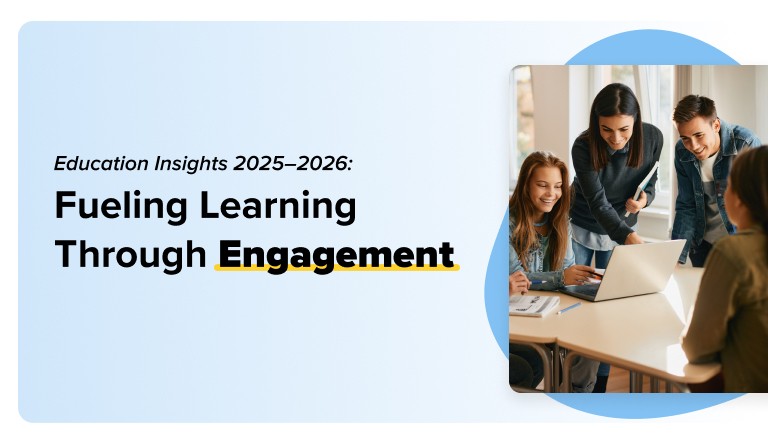
    A new study reveals that while there is wide agreement that student engagement plays a vital role in learning, educators continue to face uncertainty about what engagement looks like, how best to measure it, and how to sustain it. Education Insights 2025–2026: Fueling Learning Through Engagementcaptures prevailing attitudes and beliefs on the topic of engagement from 1,398 superintendents, teachers, parents, and students from across the United States. Survey data was collected in May 2025 by Hanover Research on behalf of Discovery Education, the creators of essential PreK-12 learning solutions used in classrooms around the world. 

    Discovery Education conducted the Education Insights report to gain a deeper understanding of how engagement is defined, observed, and nurtured in K-12 classrooms nationwide, and we are thankful to the participants who shared their perspectives and insights with us,” said Brian Shaw, Discovery Education’s Chief Executive Officer. “One of the most important findings of this report is that engagement is seen as essential to learning, but is inconsistently defined, observed, and supported in K-12 classrooms. I believe this highlights the need for a more standardized approach to measuring student engagement and connecting it to academic achievement. Discovery Education has embarked on an effort to address those challenges, and we look forward to sharing more as our work progresses.” 

    Key findings of the Education Insights 2025–2026: Fueling Learning Through Engagement report include: 

    • Engagement is broadly recognized as a key driver of learning and success. 93% of educators surveyed agreed that student engagement is a critical metric for understanding overall achievement, and 99% of superintendents polled believe student engagement is one of the top predictors of success at school. Finally, 92% of students said that engaging lessons make school more enjoyable.
    • But educators disagree on the top indicators of engagement. 72% of teachers rated asking thoughtful questions as the strongest indicator of student engagement. However, 54% of superintendents identified performing well on assessments as a top engagement indicator. This is nearly twice as high as teachers, who rank assessments among the lowest indicators of engagement.
    • School leaders and teachers disagree on if their schools have systems for measuring engagement. While 99% of superintendents and 88% of principals said their district has an intentional approach for measuring engagement, only 60% of teachers agreed. Further, nearly 1/3 of teachers said that a lack of clear, shared definitions of student engagement is a top challenge to measuring engagement effectively.
    • Educators and students differ on their perceptions of engagement levels. While 63% of students agreed with the statement “Students are highly engaged in school,” only 45% of teachers and 51% of principals surveyed agreed with the same statement.
    • Students rate their own engagement much higher than their peers. 70% of elementary students perceived themselves as engaged, but only 42% perceived their peers as engaged. 59% of middle school students perceived themselves engaged in learning, but only 36% perceived their peers as engaged. Finally, 61% of high school students perceived themselves as engaged, but only 39% described their peers as engaged.
    • Proximity to learning changes impressions of AI. Two-thirds of students believe AI could help them learn faster, yet fewer than half of teachers report using AI themselves to complete tasks. Only 57% of teachers agreed with the statement “I frequently learn about positive ways students are using AI,” while 87% of principals and 98% of superintendents agree. Likewise, only 53% of teachers agreed with the statement “I am excited about the potential for AI to support teaching and learning,” while 83% of principals and 94% of superintendents agreed. 

    A complete copy of Education Insights 2025–2026: Fueling Learning Through Engagementcan be downloaded here.  

    On Wednesday, October 8 at 2:00 PM ET, Discovery Education is hosting a special, town hall-style webinar during which education leaders from across the nation will share their thoughts and insights on this report and its findings. Find more details and register for this event here

    For more information about Discovery Education’s award-winning digital resources and professional learning solutions, visit www.discoveryeducation.com, and stay connected with Discovery Education on social media through LinkedIn, Instagram, TikTok, and Facebook.       

    About Discovery Education   
    Discovery Education is the worldwide edtech leader whose state-of-the-art, PreK-12, digital solutions help educators engage all students and support higher academic achievement. Through award-winning multimedia content, instructional supports, and innovative classroom tools that are effective, engaging, and easy to use, Discovery Education helps educators deliver powerful learning experiences. Discovery Education serves approximately 4.5 million educators and 45 million students worldwide, and its resources are accessed in over 100 countries and territories. Through partnerships with districts, states, and trusted organizations, Discovery Education empowers teachers with essential edtech solutions that inspire curiosity, build confidence, and accelerate learning. Learn more at www.discoveryeducation.com.   

    Latest posts by eSchool News Contributor (see all)

    Source link

  • One-third of U.S. public schools screen students for mental health

    One-third of U.S. public schools screen students for mental health

    This press release originally appeared on the RAND site.

    Key points:

    Nearly one-third of the nation’s K-12 U.S. public schools mandate mental health screening for students, with most offering in-person treatment or referral to a community mental health professional if a student is identified as having depression or anxiety, according to a new study.

    About 40 percent of principals surveyed said it was very hard or somewhat hard to ensure that students receive appropriate care, while 38 percent said it was easy or very easy to find adequate care for students. The findings are published in the journal JAMA Network Open.

    “Our results suggest that there are multiple barriers to mental health screening in schools, including a lack of resources and knowledge of screening mechanics, as well as concerns about increased workload of identifying students,” said Jonathan Cantor, the study’s lead author and a policy researcher at RAND, a nonprofit research organization.

    In 2021, the U.S. Surgeon General declared a youth mental health emergency. Researchers say that public schools are strategic resources for screening, treatment, and referral for mental health services for young people who face barriers in other settings.

    Researchers wanted to understand screening for mental health at U.S. public schools, given increased concerns about youth mental health following the challenges posed by the COVID-19 pandemic.

    In October 2024, the RAND study surveyed 1,019 principals who participate in the RAND American School Leader panel, a nationally representative sample of K–12 public school principals.

    They were asked whether their school mandated screening for mental health issues, what steps are taken if a student is identified as having depression or anxiety, and how easy or difficult it is to ensure that such students received adequate services.

    Researchers found that 30.5 percent of responding principals said their school required screening of students with mental health problems, with nearly 80 percent reporting that parents typically are notified if students screen positive for depression or anxiety.

    More than 70 percent of principals reported that their school offers in-person treatment for students who screen positive, while 53 percent of principals said they may refer a student to a community mental health care professional.

    The study found higher rates of mental health screenings in schools with 450 or more students and in districts with mostly racial and ethnic minority groups as the student populations.

    “Policies that promote federal and state funding for school mental health, reimbursement for school-based mental health screening, and adequate school mental health staff ratios may increase screening rates and increase the likelihood of successfully connecting the student to treatment,” Cantor said.

    Support for the study was provided by the National Institute of Mental Health.

    Other authors of the study are Ryan K. McBainAaron KofnerJoshua Breslau, and Bradley D. Stein, all of RAND; Jacquelin Rankine of the University of Pittsburgh School of Medicine; Fang Zhang, Hao Yu, and Alyssa Burnett, all of the Harvard Pilgrim Health Care Institute; and Ateev Mehrotra of the Brown University School of Public Health.

    RAND Health Care promotes healthier societies by improving health care systems in the United States and other countries.

    eSchool News Staff
    Latest posts by eSchool News Staff (see all)

    Source link

  • Course changes spark student complaints – Campus Review

    Course changes spark student complaints – Campus Review

    Almost a third of student complaints received by the National Student Ombudsman (NSO) in its first seven months were related to course changes and design, NSO First Assistant Ombudsman Sarah Bendall said.

    Please login below to view content or subscribe now.

    Membership Login

    Source link

  • Have we taken our eyes off the postgraduate student experience?

    Have we taken our eyes off the postgraduate student experience?

    We know a lot about undergraduate student experience and how these students experience life at university, especially when it comes to considering a sense of belonging.

    However, our understanding of the postgraduate student experience is arguably lacking compared to what we know about the experiences of their undergraduate counterparts.

    Despite growing numbers and increasing strategic importance, postgraduate students remain largely invisible in both published research and institutional strategy.

    As Katharine Hubbard recently pointed out on Wonkhe, despite the large and diverse postgraduate population within UK higher education institutions the equity of outcomes conversation rarely extends to consider postgraduates. Amid financial pressures, universities are increasingly market-driven, often prioritising initiatives that enhance the undergraduate experience. Yet, in 2023-24, UK institutions awarded more postgraduate qualifications than undergraduate ones, generating what was (in 2022-23) an estimated £1.7 billion in income. So why aren’t we paying more attention to how they experience university?

    Working out the scenario

    There is growing recognition that the postgraduate taught (PGT) student experience is qualitatively distinct from that of undergraduates. Postgraduate taught courses, often one-year-long Master’s degrees, attract students with varying motivations and expectations, who may also be facing challenges in pursuing their studies. For example, PGT students often face compressed timelines, intense academic demands and limited opportunities for social and academic integration due to the short duration of their courses. They often return to study after time in the workforce and may be juggling additional responsibilities such as paid work, caregiving or visa constraints alongside their studies.

    A one-size-fits-all student support model applied to all taught students assumes some equivalence across the needs of undergraduate and postgraduate student cohorts, but we know that students are not homogenous. We need to approach the design and delivery of postgraduate courses without the assumptions that postgraduate students are inherently more autonomous or resilient as this can lead to a lack of tailored academic support, limited personal tutoring and underdeveloped community-building initiatives.

    This neglect is particularly concerning given the strategic importance of PGT students to institutional and national agendas: the development of skilled employment sectors, and investment in the research pipeline (not to mention the role PGT fees play in supporting) institutional finances. Yet, as has been shown in recent Advance HE-led Postgraduate Taught Experience Surveys, without adequate support, many PGT students report feeling isolated, academically underprepared or unsupported in navigating career pathways post-graduation.

    Reacting to wider trends

    The past decade has seen a boom in research into the undergraduate student experience, but efforts to understand the experience of PGT students is evidently lagging behind. For every single peer-reviewed article published on how postgraduate students experience belonging, thirteen are published on undergraduates. As a sector, what should we do about this?

    To address this imbalance, institutions need to recognise that postgraduate students are not undergraduate students; they have different expectations and therefore need to be responded to differently. Institutions need to stop trying to apply an undergraduate student experience lens to postgraduate student cohorts – let’s all look outside the lens.

    And we need to stop making assumptions about our postgraduate students and ask better questions. Who are our postgraduate students? How many are alumni? How many commute? How is information like this being used to shape the welcome and induction offering that is given to these students? This is all central to fully understanding the challenge.

    The hidden curriculum

    There is also a need to think about how information about specific postgraduate cohorts is being disseminated to the staff involved in teaching and supporting these cohorts? Our own surveys of PGT students have identified multiple examples of international students who have spent weeks navigating unfamiliar academic cultures and trying to decipher the “hidden curriculum” of academia.

    An example from one institution highlighted multiple international students believing that the institutional virtual learning environment “Blackboard” that they often heard being referred to, was an actual chalk-based blackboard that everyone else knew where it was located, except for them. That is not a failure of the students but of communication with them.

    Higher education institutions need to ensure that students experiencing the compressed timescales that many PGT students face, being enrolled on a year-long course, are still able to access equitable opportunities for student support, personal and professional development and career services. Lengthy wait times, drawn-out applications or referral processes are unlikely to meet the needs of students enrolled on the intensive and relatively short courses which reflect many PGT programmes. Postgraduate students still need the wrap around support that undergraduate students need!

    Postgraduate students are so much more than an extension of the undergraduate community. They are purposeful, motivated and diverse and form a vital component of the academic community. We need to ensure that we, as an academic community, are not taking our eyes off this crucial population of students who are essential both for the success of individual institutions and the wider sector as a whole.

    Source link

  • Student AI Use on the Rise: Why Universities Must Lead with Ethical Support

    Student AI Use on the Rise: Why Universities Must Lead with Ethical Support

    Title: 2025 U.S. Student Wellbeing Survey

    Source: Studiosity in partnership with YouGov

    The higher education landscape is undergoing a profound transformation shaped by rapid technological advancements and shifting student expectations. The 2025 U.S. Student Wellbeing Survey, conducted by Studiosity in partnership with YouGov, offers in-depth insights into student behavior, particularly their growing reliance on AI tools for academic support.

    The report states that 82 percent of U.S. students have used AI for assignments or study tasks. This trend is even more pronounced among international students, with 40 percent reporting regular AI use compared with 24 percent of domestic students. The findings make clear: AI is no longer emerging—it’s central to the student academic experience.

    While student use of AI is high, only 58 percent of respondents feel their universities are adapting quickly enough to provide institution-approved AI tools, a figure that shows minimal improvement from 2024 (57 percent). Furthermore, 55 percent of students now expect their institution to provide AI support, reflecting shifting priorities among students. This year, “confidence” overtook “speed” as the main reason students prefer institution-provided AI tools, underscoring the demand for reliable and ethical solutions.

    The data also highlight heightened stress levels linked to AI use, with 66 percent of students reporting some level of anxiety about incorporating AI into their studies. Students voiced concerns about academic integrity, accidental plagiarism, and cognitive offloading. One student said, “AI tools usually need a well-detailed prompt. Most times AI gets outdated data. Most importantly, the more reliable AI tools require payment, which makes things unnecessarily hard.” This highlights an equity issue in AI use, as some students reported paying for a premium AI tool to get better results. Those experiencing constant academic stress were more likely to report regular AI use, suggesting a need for support systems that integrate human connection with technological assistance.

    The research emphasizes actionable strategies for universities:

    • Develop or purchase institution-backed AI tools with clear ethical guidelines.
    • Provide transparent and consistent policies to help students understand how to use AI responsibly.
    • Integrate AI support with existing academic services to preserve human interaction and peer engagement.
    • Ensure equitable, affordable access to AI technologies to avoid exacerbating existing inequalities.

    As students navigate an increasingly AI-driven academic environment, universities must step into a leadership role. Providing ethical, institution-approved AI tools isn’t just about keeping pace with technology; it’s about safeguarding learning, reducing stress, and fostering confidence in academic outcomes. The 2025 survey makes one thing clear: students are ready for universities to meet them where they are in their AI use, but they are asking for guidance and assurance in doing so.

    To download a copy of the USA report, click here. For global reports and surveys, including cross-institutional meta-analyses and educator surveys, click here.


    If you have any questions or comments about this blog post, please contact us.

    Source link

  • Therapy Dogs Boost Graduate Student Well-Being

    Therapy Dogs Boost Graduate Student Well-Being

    Laura Fay/iStock/Getty Images Plus

    Therapy dogs are often touted as a way to give students a reprieve from busy academic schedules or remind them of their own pets at home, but a recent study from Chatham University found that engagement with therapy dogs can instill a sense of social connection for students at all levels.

    An occupational therapy student at Chatham who researched how weekly therapy dog interactions could impact graduate students in health science programs found that the encounters produced benefits for students’ social and emotional health.

    The background: Past research shows animal interventions can mitigate homesickness for first-year students who miss their pets and academic stress for nursing students. Students who participate in “dog office hours” also experience increased social connection and comfort. Shelter dogs can also motivate students’ physical well-being, as demonstrated by the University of South Carolina’s canine fitness course.

    Graduate students in health science programs, in particular, report high rates of anxiety, depression and stress, according to the study.

    Regardless of their program of study, graduate students also tend to be removed from general campus services and activities due to physical campus layouts, residing and working off campus, or a misalignment of schedules between resources and their responsibilities. Therefore, identifying services specifically for graduate students can improve their access and uptake.

    How it works: Twenty-five students were recruited to participate in the study, meeting weekly to engage in activities with a group of therapy dogs, including petting, playing with, brushing, holding and walking the animals. Students could interact with the dogs for up to two hours over the course of the seven weeks. Before and after each puppy playdate, participants completed pre- and post-test surveys to gauge their feelings and the effects of the animal intervention.

    Survey results showed students were less likely to report feeling stressed and more likely to say they felt happy after engaging with the dogs.

    “I’ve really enjoyed this experience,” one participant wrote. “I feel like this has positively impacted my mood and well-being overall. I always leave feeling more relaxed and happier.”

    In open-ended questions, students said the dogs made them feel happy, loved, calm, relaxed, motivated and connected. Many said they also appreciated the opportunity to engage with their peers, noting that the regular cadence allowed them to socialize and meet new people, including the therapy dogs’ owners. Students indicated they wanted the visits to continue in some way if possible.

    The average student spent around 30 minutes with the therapy dogs during the trial, and, if they had the opportunity, a majority said they would participate in therapy animal groups on campus three to four times per month.

    Other Comforting Canines

    Chatham University students aren’t the only graduate students learning to destress from dogs. Here are some other examples of animal-assisted interventions across the country:

    • At Virginia Tech, graduate students at the Innovation Campus receive love and cuddles from Allen, a therapy dog who is co-handled by Barbara Hoopes, the graduate school’s associate dean for the region.
    • The City University of New York’s School of Public Health has hosted a therapy dog visit from the Good Dog Foundation to encourage graduate learners to relax and take a break during their week.
    • The University of Cincinnati featured therapy dogs at their Graduate Student Appreciation Week in April, honoring the hard work students do and helping them break their usual routines.

    Source link

  • Student voices should shape how universities tackle harassment

    Student voices should shape how universities tackle harassment

    In the midst of a global crisis in social relations, spiralling levels of harassment, scapegoating and online and interpersonal hostility have become routine, especially for members of minoritised and stigmatised communities.

    As microcosms of wider society, university spaces are not immune to these social, cultural and political tensions. Yet the ways prejudices play out in higher education often go under-explored. As a result, many students feel unsafe and unsupported at a time when multiple points of crisis have exposed student communities to a heightened risk of harassment.

    In response to these mounting pressures, the OfS has emphasised the urgent need for action. From August 2025, new requirements will compel institutions to actively address harassment and sexual misconduct. However, current discussions too often overlook the full spectrum of harassment. Non-sexual forms of hostility—such as racist, disablist, homophobic, and transphobic harassment—frequently remain at the periphery of institutional priorities.

    Our current research, due to be completed in July 2027, addresses this gap. It takes an inclusive, victim-centred approach to examining all forms of harassment. By investigating the barriers students face in accessing effective support and understanding their lived experiences of violence, microaggressions, and exclusion, the study will generate critical insights to help universities create truly safe and supportive environments.

    The importance of self-definition

    A crucial aspect of this research is that harassment cannot, and should not, be narrowly defined by institutional standards or legislation alone. This is why allowing students to define what constitutes as harassment to them is so important.

    Self-definition acknowledges that students are best placed to interpret the behaviours that harm them, informed by their unique identities, cultural contexts, and lived experiences.

    This approach moves beyond rigid, exclusionary notions of who experiences harassment and in what form. It acknowledges the subjective and often complex nature of harassment and fosters empathy and inclusivity. For instance, a seemingly minor microaggression may carry significant emotional weight for a student facing intersecting disadvantages. Equally, behaviours such as online victimisation, sustained name-calling, or subtle exclusion may not fit traditional definitions of harassment, yet they can deeply impact an individual.

    Our 2020 pilot study at the University of Leicester embraced this framework of self-definition. Students identified more than a dozen identity characteristics as a motivating factor in their victimisation. Amongst some of the more often discussed identity characteristics, students spoke about how their political views, subcultural status, accent, dress and appearance, and their status as a mature student were also reasons they felt they were targeted.

    The emotional, behavioural and educational impacts of targeted harassment were diverse, far-reaching and profoundly damaging to their student experience.

    Self-definition does not mean abandoning clear policies or legal obligations. Instead, it complements existing frameworks by placing student voices at the centre of institutional responses. By understanding often ‘hidden’ and under-acknowledged forms of harassment, universities can build more holistic, evidence-based systems to support victims. For instance, reporting systems should allow students to disclose harassment that targets multiple aspects of their identity – for example, a student who is both Black and gay, or a student who is Muslim and disabled. Staff training can then focus on recognising these nuanced impacts, ensuring that responses are handled with cultural sensitivity and empathy.

    Working across institutions

    Sector-wide progress has been hindered by fear of reputational damage, a culture of conservatism, and, in some cases, a continued denial of the problem entirely. Where reliable research on harassment within HE exists, it generally focuses on one particular institution or just a single form of harassment. Our approach is different.

    We are working across five participating higher education institutions (HEIs) in England, purposefully selected for their very different geographical locations, student demographics and institutional profile. By working cross-institutionally and through our continued collaborations with OfS and Universities UK, we can maximise the impact of our findings and shift the narrative surrounding harassment and sexual misconduct. Rather than being perceived as an issue confined to a handful of “bad apple” universities, this approach acknowledges that such problems exist across the sector and require a unified response.

    This technique should also help to reduce fears of reputational damage, as it frames the issue as a systemic challenge rather than a localised failure. It also fosters a culture of accountability and continuous improvement, showing that universities are committed to addressing misconduct comprehensively rather than reacting defensively after incidents occur.

    Working with a range of HEIs in this way allows us to produce a suite of student-informed resources that can be tailored to individual HEIs. The insights gained from our research will not merely reflect existing challenges; they offer a roadmap for compliance with OfS conditions and for creating transformative, lasting change. By prioritising inclusivity and evidence, institutions can fulfil their obligations while fostering safer, more equitable spaces for all students.

    To find out more, please reach out to the research team at [email protected]

    Source link

  • 5 ways to infuse AI into your classroom this school year

    5 ways to infuse AI into your classroom this school year

    Key points:

    As artificial intelligence (AI) continues to reshape the educational landscape, teachers have a unique opportunity to model how to use it responsibly, creatively, and strategically.

    Rather than viewing AI as a threat or distraction, we can reframe it as a tool for empowerment and efficiency–one that allows us to meet student needs in more personalized, inclusive, and imaginative ways. Whether you’re an AI beginner or already experimenting with generative tools, here are five ways to infuse AI into your classroom this school year:

    1. Co-plan lessons with an AI assistant

    AI platforms like ChatGPT, Eduaide.ai, and MagicSchool.ai can generate lesson frameworks aligned to standards, differentiate tasks for diverse learners, and offer fresh ideas for student engagement. Teachers can even co-create activities with students by prompting AI together in real time.

    Try this: Ask your AI assistant to create a standards-aligned lesson that includes a formative check and a scaffold for ELLs–then adjust to your style and class needs.

    2. Personalize feedback without the time drain

    AI can streamline your feedback process by suggesting draft comments on student work based on rubrics you provide. This is particularly helpful for writing-intensive courses or project-based learning.

    Ethical reminder: Always review and personalize AI-generated feedback to maintain professional judgment and student trust.

    3. Support multilingual learners in real time

    AI tools like Google Translate, Microsoft Immersive Reader, and Read&Write can help bridge language gaps by offering simplified texts, translated materials, and visual vocabulary support.

    Even better: Teach students to use these tools independently to foster agency and access.

    4. Teach AI literacy as a 21st-century skill

    Students are already using AI–let’s teach them to use it well. Dedicate time to discuss how AI works, how to prompt effectively, and how to critically evaluate its outputs for bias, credibility, and accuracy.

    Try this mini-lesson: “3 Prompts, 3 Results.” Have students input the same research question into three AI tools and compare the results for depth, accuracy, and tone.

    5. Automate the tedious–refocus on relationships

    From generating rubrics and newsletters to drafting permission slips and analyzing formative assessment data, AI can reduce the clerical load. This frees up your most valuable resource: time.

    Pro tip: Use AI to pre-write behavior plans, follow-up emails, or even lesson exit ticket summaries.

    The future of AI

    AI won’t replace teachers–but teachers who learn how to use AI thoughtfully may find themselves with more energy, better tools, and deeper student engagement than ever before. As the school year begins, let’s lead by example and embrace AI not as a shortcut, but as a catalyst for growth.

    Latest posts by eSchool Media Contributors (see all)


    Source link

  • College president fears that federal education cuts will derail the promise of student parents, student military veterans and first-gen students

    College president fears that federal education cuts will derail the promise of student parents, student military veterans and first-gen students

    As a college president, I see the promise of higher education fulfilled every day. Many students at my institution, Whittier College, are the first in their families to attend a university. Some are parents or military veterans who have already served in the workforce and are returning to school to gain new skills, widen their perspectives and improve their job prospects.  

    These students are the future of our communities. We will rely on them to fill critical roles in health care, education, science, entrepreneurship and public service. They are also the students who stand to lose the most under the proposed fiscal year 2026 federal budget, and those who were already bracing for impact from the “One Big Beautiful Bill” cuts, including to the health care coverage many of them count on. 

    The drive with which these extraordinary students — both traditionally college-aged and older — pursue their degrees, often while juggling caregiving commitments or other responsibilities, never fails to inspire me.  

    Related: Interested in innovations in higher education? Subscribe to our free biweekly higher education newsletter. 

    We do not yet know the precise contours of the spending provisions Congress will consider once funding from a continuing resolution expires at the end of September. Yet we expect they will take their cues from the president’s proposed budget, which slashes support for students and parents and especially hammers those already struggling to improve their lives by earning a college degree, with cuts to education, health and housing that could take effect as early as October 1.  

    That budget would mean lowering the maximum Pell Grant award from $7,395 to $5,710, reversing a decade of progress. For the nearly half of Whittier students who received Pell Grants last year, this rollback would profoundly jeopardize their chances of finishing school. 

    So would the proposal to severely restrict Federal Work-Study, which supports a third of Whittier students according to our most recent internal analysis, and to eliminate the Supplemental Educational Opportunity Grant, which more than 16 percent of our student body relies upon. In addition, this budget would impose a cap on Direct PLUS Loans for Parents, which would impact roughly 60 percent of our parent borrowers. It would also do away with the Direct PLUS Loans for Graduates program.  

    These programs are lifelines, not just for our students but for students all across the country. They fuel social mobility and prosperity by making education a force for advancement through personal work ethic rather than a way to rack up debt. 

    If enacted, these proposed cuts would gut the support system that has enabled millions of low-income students to earn a college degree.  

    Higher education is a bridge. To cross it and achieve their full potential, students from all walks of life must have access to the support and resources colleges provide, whether through partnerships with local high schools or with professional gateway programs in engineering, accounting, business, nursing, physical therapy and more. Yet, to access these invaluable programs, they must be enrolled. How will they reach such heights if they suddenly can’t afford to advance their studies? 

    The harm I’ve described doesn’t stop with cuts to financial aid, loans and services. Proposed reductions also target research funding for NASA, NIH and the National Science Foundation. One frozen NASA grant has already led to the loss of paid student research fellowships at Whittier, a setback not just in dollars but in momentum for students building real-world skills, networks and résumés.  

    These research opportunities often enable talented first-generation students to connect their classroom learning to career pathways, opening the door to graduate school, lab technician roles and futures in STEM fields. We’ve seen how federal funding has supported student projects in everything from climate data analysis to environmental health.  

    Stripping away support for hands-on research undermines the federal government’s own calls for colleges like ours to better prepare students for the workforce by dismantling the very mechanisms that make such preparation possible. 

    Related: These federal programs help low-income students get to and through college. Trump wants to pull the funding 

    It’s particularly disheartening that these changes will disproportionately hurt those students who are working the hardest to achieve their objectives, who have done everything right and have the most to lose from this lack of investment in the future.  

    The preservation and strengthening of Pell, Work-Study, Supplemental Educational Opportunity grants and federal loan programs is not a partisan issue. It is a moral and economic imperative for a nation that has long been proud to be a land of opportunity.  

    Let’s build a system for strivers that opens doors instead of slamming them shut.  

    Let’s recommit to higher education as a public good. Today’s students are willing to work hard to deserve our continuing belief in them.  

    Kristine E. Dillon is the president of Whittier College in California. 

    Contact the opinion editor at [email protected]. 

    This story about education cuts was produced by The Hechinger Report, a nonprofit, independent news organization focused on inequality and innovation in education. Sign up for Hechinger’s weekly newsletter. 

    The Hechinger Report provides in-depth, fact-based, unbiased reporting on education that is free to all readers. But that doesn’t mean it’s free to produce. Our work keeps educators and the public informed about pressing issues at schools and on campuses throughout the country. We tell the whole story, even when the details are inconvenient. Help us keep doing that.

    Join us today.

    Source link