Tag: Student

  • For student leaders, it’s been a Cruel Summer

    For student leaders, it’s been a Cruel Summer

    From where we sit – or, more accurately when on a Cross Country train over the summer, from where we stand – there are some things coming for students that it’s possible to metaphorically see from metaphorical space.

    Food price inflation will distort the “average” basket of goods for those on low incomes so significantly that a fresh cost of living crisis is obviously coming.

    The failure to consult meaningfully on the hundreds of micro-decisions to be made on toilets, changing rooms and anything else currently gendered in a university has the capacity to cause chaos the very second that the EHRC publishes what we can already guess it will say on the Supreme Court ruling.

    In England, the Renter’s Rights Bill will see absolute chaos once everyone realises that landlords will be evicting students on or near June 1st next year. Assessment reform in an age of AI is really moving in some parts of some universities – in others, it’s as if the OHP is still being PAT tested.

    And the signals from the labour market and the surveys published over the summer hold out a real prospect that student part-time work will all but dry up in several cities in the year ahead – once that way of plugging the growing hole in the student finance system is no longer available, what exactly is the plan?

    Make me feel fine

    Every summer, while you’re on a beach protecting yourself with factor 50, we’re out on the rail network for three months or so meeting, briefing and training the new batch of students’ union officers who won in last Spring’s SU elections.

    In part, that involves thinking through the policy headwinds and identifying the ways in which SUs and their universities have factored in their own protections for the dangers that are coming. This year the dangers feel particularly real; the scenarios particularly prescient; the forward plans systematically absent.

    As part of almost every visit, we’ll explore the journeys that have led student leaders from welcome week to the un-air-conditioned seminar room of flipchart paper and post-it notes that prefaces their year in office.

    And this year, not only do the dangers feel most alarming, and the mitigations most miniscule, but the experiences that have led students into leadership almost too awful to explain.

    Along with everything else, this has felt like a year of extremes. Outright lies from recruitment agents. Shocking stories of disabled students having their rights crudely brushed aside. Teaching that is poor and perfunctory, supervision that is awful or absent, part-time jobs that are as exploitative as they are normalised. Tales of safety and quality in the private rented sector that are just too awful to imagine.

    On one visit, we learned of rats living in a wall. On another we were told of a lecturer that “everyone knew” was a “lothario” but nobody knew how to report. International students whose visas were late, admitted weeks after the start of their course only to miss the induction, then be accused of assessment offences they didn’t know were offences, only to have their visa run out before their final work could be marked. No graduate route for them.

    We’ve heard of students working below the minimum wage for weeks on end, while being bullied and harassed in the process. We’ve heard of students taking to gambling and gig work to pay fees and rent.

    We’ve heard of students struggling with late and inflexible timetables, personal tutor systems that exist only on paper, late and inadequate feedback, and courses that were so stripped down and reorganised by the time they hit their third year that they were unrecognisable from that which was promised.

    Fever dream high in the quiet of the night

    Some of what we’ve heard will be of no surprise to regular readers. Students’ lives are now dominated by juggling – work, study, housing, travel, and survival in a way that makes “full-time” higher education feel like a misnomer. Their new leaders describe the contortions that students must go through to piece together rent payments, jobs, study hours and social life – and how universities often fail to see the whole picture.

    Complaints about patchy personal tutoring, email response times, and lack of flexible timetabling all stem from the same place – a sense that systems are designed for an imagined student who doesn’t exist anymore. The result is exhaustion, anxiety, and an education experience that feels compromised rather than enriched. But they also feel like systems that neither can change nor will change as a result of their advocacy.

    Cost dominates – not just for tuition, but every part of life that sits around it. Student leaders tell stories of universities insisting the cost of living crisis has passed because hardship fund applications have dipped, while on the ground students are launching swap schemes, food banks, budgeting workshops, and recipe exchanges just to survive.

    International postgraduates in particular speak of being “milked” – with extortionate accommodation, opaque fees, and casual gaslighting when asking for support or flexibility. These are not isolated grumbles but systemic failures, and officers are weary of institutions that seem keener to manage perception than engage with the reality of what it takes to participate in HE.

    Another set of concerns centres on space, belonging, and wellbeing. Campuses are crowded yet inaccessible – coffee queues too long, study spaces too few, and neurodivergent students locked out of the quiet they need. Student leaders are angry at the dissonance between glossy atriums and the absence of somewhere to heat up food. They’re also clear that wellbeing is not “extra” – but the way staff understand their role in relation to student mental health varies wildly, from proud detachment to amateur counselling.

    Add in the “engagement collapse” – anxiety, imposter syndrome, and an erosion of confidence – and it’s no wonder that participation in both classrooms and communities feels fragile.

    Student leaders want something deeper – a recognition that employability, citizenship, and belonging are not bolt-ons, but core to the experience. They want placements, volunteering and democratic activity to be credit-bearing, not just because they deserve recognition, but because participation costs time and money they don’t have. But they don’t really think they can have it.

    They want universities to stop pretending belonging can be conjured through branding, and to grapple instead with consistency, delivery and equity. And they want honesty – not just reassurances that budgets are fine, but genuine partnership in facing the future. Without that, the visions of sector leaders – blueprints, reviews, strategies – risk being hollow. University survival will be pointless if students don’t.

    Devils roll the dice, angels roll their eyes

    There’s always – especially for Jim – a touch of plus ça change, plus c’est la même chose. Perhaps some of what’s experienced as a problem or barrier is just a rite of HE passage, a part of growing up, a component of joining a large and diverse community that involves setbacks and coping and developing resilience in the face of adversity.

    But as the flipchart sheets describing the journeys are pinned to the wall mid-each morning, we have wondered whether there’s something else going on.

    The year before Jim began spending his summers like this, a couple of early career social psychologists from Yale had published a paper that ended up having quite the impact on some of his psychology student colleagues in the mid 1990s.

    Josta and Banajia’s “The role of stereotyping in system-justification and the production of false consciousness” doesn’t sound like the most fun a Media and Cultural Studies student can be having over a photocopier, but his accidentally interdisciplinary first-year had meant Jim was able to get into all sorts of things that were never originally on the curriculum.

    The paper illustrates the idea that people, including the disadvantaged, often internalise stereotypes or explanations that legitimise their own oppression. It shows experimentally how individuals and groups can end up rationalising harmful arrangements – believing the powerful are more competent, attributing failure to themselves, or normalising unequal roles.

    It has helped to shape exercise design and training approaches for new student leaders ever since. Change isn’t just about better evidence arguments or slicker campaigns – it’s about creating the conditions for awareness and solidarity, surfacing the arbitrariness of rules and hierarchies, and showing that misery is not inevitable but manufactured.

    When students see that struggles with housing, finance, or assessment aren’t personal failings but systemic outcomes, the pressure to internalise blame weakens – and the potential for collective action grows.

    That matters because normalisation is the enemy of change. If students “learn to love their limitations,” policymakers have little incentive to do better. The lesson has always been that sometimes the most powerful intervention isn’t a tidy solution or a polished set of recommendations, but the act of refusing to let the intolerable become invisible.

    Consciousness-raising, storytelling, and solidarity are not soft tactics – they’re the preconditions for breaking the cycle of silence that otherwise guarantees next summer’s flipchart sheets look the same as this year’s.

    No rules in breakable heaven

    Yet this year more than most, we have at times felt like we’re swimming against a tide that is too strong to mount a defence against. Because the truth is, even though the stories are well beyond the mild irritations and petty bureaucracy of the past, they almost all sound like secrets. They are, to put it another way, below the iceberg’s surface.

    Part of the problem is that the UK has an increasingly old electorate. Older voters are less likely to have direct contact with universities, less likely to hear unvarnished student stories, and more likely to see the sector through the prism of cost rather than value.

    If the most shocking aspects of student life remain whispered rather than shouted, they never cut through to those who wield electoral influence – meaning the ballot box skews policy towards pensioner bus passes rather than student housing reform. The silence isn’t just cultural, it is political.

    There’s the country’s economic climate – higher education is operating in a state that is literally running out of money. Public finances are squeezed, universities are struggling with deficits, and the instinct everywhere is to protect what you have rather than admit to new liabilities.

    When uncomfortable truths about student experience are not voiced, it becomes easier for managers, ministers and mandarins to avert their gaze, telling themselves that problems can be absorbed rather than addressed. Silence functions as an accidental subsidy – by not surfacing the costs borne by students, the state and the sector get away with shifting more burden onto them.

    Universities themselves are complicit, albeit we suspect unintentionally. A manager at any level who admits that their students are hungry, homeless, or harassed risks reputational damage, league-table drops, and hostile headlines. Better to stress resilience, opportunity, and the odd bursary scheme than to admit systemic failure.

    But the reputation-management reflex actively undermines the case for investment. If every institution projects that all is broadly fine, why should Treasury officials prioritise a bailout? Silence, again, becomes a strategy – but one that entrenches scarcity rather than securing resources.

    The cumulative effect is a system where student misery remains invisible to those with power, not because the evidence is lacking, but because the incentives to reveal it are weak. Students stay silent for fear of stigma, SUs temper their tone to keep the block grant flowing, universities bury problems beneath polished prospectuses, and policymakers hear only satisfaction scores.

    The loop feeds itself – and in a democracy where older voters decide priorities, absence of noise is all too easily interpreted as absence of need.

    Hang your head low in the glow of the vending machine

    For student leaders, the pressures are especially acute. Their role is ostensibly to represent the unvarnished experiences of their peers, but they operate in an environment shaped by the logic of LinkedIn – an arena where polished professionalism is prized, and the temptation to smooth away awkward truths is ever-present.

    To admit publicly that your students are hungry, unsafe, or disillusioned can feel incompatible with the personal brand of competence and leadership that young people are told they must cultivate if they want graduate opportunities. The very platforms officers use to communicate are biased towards optimism, progress, and positivity – which makes surfacing struggle feel like self-sabotage.

    Even when they’ve tried, they’ve been hit by the devious frames – denialism (it is not a problem), normalisation (it is normal and expected) and victim blaming (it is a problem because of the individual mistakes), all of which become “how we operate around here” and thus hard to even start to tackle.

    And that takes us right back to Jost and Banaji’s arguments about system justification and false consciousness. If social media teaches student leaders to internalise the idea that problems are personal weaknesses rather than systemic failures, their capacity to challenge those failures is blunted.

    When representation becomes curation, the cycle of silence is reinforced – not because officers lack courage, but because the psychological and cultural currents around them steer towards self-preservation over truth-telling. Breaking the cycle means supporting officers to resist the currents, to value solidarity over self-presentation, and to recognise that authentic voice is more powerful than polished image.

    It’s why the conspiracy of silence that surrounds the contemporary student experience is so dangerous. It erodes the sector’s long-term sustainability by masking the very crises that could galvanise public support. In an ageing nation with empty coffers, the only way to win investment is to make the case that students’ struggles are real, systemic, and intolerable – and to do so loudly.

    If higher education keeps choosing discretion over disclosure, it will discover that in the competition for scarce resources, quiet constituencies get ignored first. Maybe it’s discovered it already. But it’s never too late to tell the truth.


     

    Source link

  • FIRE statement on UT-Dallas student newspaper distribution

    FIRE statement on UT-Dallas student newspaper distribution

    On August 26, 2025, UT Dallas got the full “Newsies” treatment after administrators banned newspaper racks from campus — the latest escalation in the university’s campaign against an independent student press. The Retrograde, UT Dallas’s independent student newspaper, was born after the school dismantled the official student news outlet, The Mercury, following its coverage of pro-Palestinian protests last year. On Tuesday, Retrograde staffers and a campus theater troupe donned newsboy caps and handed out papers across campus, kicking things off with a town crier (and UT Dallas alumnus) delivering the day’s headlines outside the administration building at 7:30 in the morning.

    The following statement can be attributed to FIRE Strategic Campaigns Counsel Amanda Nordstrom.


    Student journalists at UT Dallas are taking a stand after the university tried to silence them yet again. Banning newspaper racks is just the latest tactic in a disturbing pattern: censor the coverage, kill the paper, and now, block its distribution. But these students fought back with creativity, resilience, and the truth. FIRE stands with them.

    Public universities are bound by the First Amendment. Freedom of the press isn’t a courtesy — it’s a constitutional right. UT Dallas can try to shut down a newspaper, but they can’t stop the news.

    Now, after public pressure, UT Dallas claims it has reversed course on its full-fledged ban on campus newsstands. But don’t be fooled. Allowing access to just four distribution points after banning all 43 that existed prior is not a real reversal. It’s viewpoint discrimination wrapped in red tape. That’s not just wrong, it’s unconstitutional. And FIRE isn’t backing down. FIRE will stand with The Retrograde every step of the way, until their right to a free and independent press is no longer up for debate.

    Stand with us and tell UT Dallas Vice President for Student Affairs Gene Fitch to end the school’s censorship crusade and fully restore student press freedom on campus.

    Source link

  • Reimagining global student enrolment for the AI era

    Reimagining global student enrolment for the AI era

    These new pressures present a chance to rethink how we support students – not just through better systems, but through smarter, more student-centred strategies that prioritise access, equity, and long-term success for both students and institutions.

    Consider this: most institutions still manage their international enrolment efforts through a patchwork of spreadsheets, legacy systems designed for domestic student needs, and manual workflows. This is not for lack of effort, but because the data is inaccessible or buried in unusable formats, making it difficult for institutions to plan strategically, build diverse student cohorts, and respond to shifting market conditions. Your team should be supporting students face-to-face rather than spending days manually reviewing documents.  

    Meanwhile, students and their families have come to expect responsive, seamless, personalized experiences—which our sector is eager to meet, but not yet equipped to deliver.

    These aren’t just technical challenges, they’re barriers to accessibility. When processes like application review or document verification become bottlenecks, it’s students who face delays, uncertainty, and missed opportunities. 

    The answer isn’t just to digitize what already exists. Many institutions have already adopted CRMs, SIS platforms, and digital document tools, but most of these systems were built decades ago and designed for domestic workflows, often operate in silos, and create new complexities instead of solving old ones. 

    Instead, we need to reimagine how enrolment is managed from the ground up. That means moving from reactive to predictive approaches, from fragmented tools to unified ecosystems, and from gut-feeling decisions to ones guided by real-time insights. Experienced educators will always be central to the admissions process; the goal isn’t to replace their expertise, but to empower it with better data and clearer visibility.

    Imagine being able to forecast application volumes, visa approval rates, and enrolment yields with AI-powered precision. Imagine applicants receiving an offer letter in less time than it takes to walk across campus.

    By analyzing millions of data points from government sources, institutional history, and global market trends, your institution can make smarter investments and streamline decision-making. Routine processes can be automated without compromising quality or control. 

    This isn’t a distant future. It’s possible today with the right technology partner.

    The pressures of shrinking budgets, unpredictable policies, and outdated systems aren’t going away. But with the right tools, institutions can turn these challenges into opportunities for growth. And those who embrace this transformation early will gain a significant advantage in attracting and enrolling high-quality, diverse students.

    That’s why we built Capio. As an enterprise platform company focused on international enrolment management we’re pioneering solutions that transform how institutions approach students around the world. Our platform unifies enrolment intelligence, application management, and agent management, training, and compliance within a single end-to-end, AI-powered platform that empowers institutions throughout the international enrolment management journey. 

    Capio brings together everything institutions need to build smarter, more efficient international enrolment strategies on a global scale. From real-time market insights to precise planning tools, our platform replaces guesswork with clarity. 

    Our Insights Dashboard draws from diverse data sources to surface trends and opportunities in over 150 countries. The Application Management System ensures consistent, transparent processing throughout the complete admissions process, reducing student drop-off, and through our training platform,TrainHub, institutions can better engage and empower educational agents while maintaining alignment and ensuring compliance.

    As leaders in international education, we’re faced with a decision. We can continue to patch together solutions and hope to keep pace with growing complexity. Or, we can embrace the opportunity to build an intelligent infrastructure that transforms international enrolment.

    That choice is ours to make.   

    Find out more at www.capio.app.

    About the author:
    Darin Lee is general manager of Capio, bringing over 20 years of experience in educational technology and digital transformation. Previously serving as CIO at the University of the Fraser Valley and VP Technology at Conestoga College, Darin has led major technological transformations across multiple Canadian institutions, giving him unique insight into the challenges and opportunities facing post-secondary institutions and international enrolment teams

    Source link

  • Trump administration proposes 4-year cap on international student visas

    Trump administration proposes 4-year cap on international student visas

    This audio is auto-generated. Please let us know if you have feedback.

    Dive Brief:

    • The Trump administration on Thursday proposed capping the length of time international students can stay in the U.S. at four years, regardless of the length of their studies, per a plan published in the Federal Register
    • International student visas, known as F visas, typically allows them to stay in the U.S. for as long as it takes to finish their programs. Bachelor’s and master’s degrees are typically designed to be completed in four years or less, but many Ph.D. programs tend to run longer.
    • The new rule would also affect J visas, which cover certain international students, as well as short-term college instructors and researchers. If finalized, holders of both types of visas would need to apply for extensions and undergo “regular assessments” by the U.S. Department of Homeland Security to stay in the country after four years.

    Dive Insight:

    Restricting the flow of noncitizens into the U.S. — international students included — is not a new focus for the Trump administration. During the last year of President Donald Trump’s first term, the agencies proposed the same cap on F and J visas. The Biden administration withdrew the proposal the following year.

    DHS and U.S. Immigration and Customs Enforcement argued Thursday that neither program gives federal authorities enough oversight over how long visa holders remain in the country.

    In the proposed rule, the agencies alleged that the lack of a fixed end date for F and J visas incentivizes fraud, and DHS said it has identified “many examples of students and exchange visitors staying for decades.” As of April, over 2,100 international students who first entered the country between 2000 and 2010 still hold an active F visa, DHS said.

    That’s a tiny share of the total number of international students the U.S. hosts. In 2023 alone, more than 1.6 million people entered the U.S. through F visas, according to DHS data. Over 500,000 people entered via J visas that year.

    A DHS spokesperson on Wednesday accused international students of “posing safety risks” and “disadvantaging U.S. citizens” — and accused past administrations of allowing them to stay in the country “virtually indefinitely.”

    “This new proposed rule would end that abuse once and for all by limiting the amount of time certain visa holders are allowed to remain in the U.S., easing the burden on the federal government to properly oversee foreign students and their history,” the spokesperson said in a statement.

    The proposal would also prohibit graduate students on F-1 visas from transferring to other institutions or “changing educational objectives,” along with adding similar restrictions for first-year students.

    Student advocates quickly panned the Trump administration’s plan, saying it would increase bureaucratic backlogs, deter international students from attending U.S. colleges and harm the country’s advancement. 

    Fanta Aw, CEO and executive director of NAFSA: Association of International Educators, said Wednesday that the change would also give federal agencies oversight over decisions that “have long been the domain of academia.”

    “This proposal will only increase the degree of government oversight without any evidence that the changes would solve any of the real problems that exist in our outdated immigration system,” Aw said in a statement.

    Aw also decried the proposal as a poorly considered draft that represents a “dangerous overreach by government into academia.”

    “These changes will only serve to force aspiring students and scholars into a sea of administrative delays at best, and at worst, into unlawful presence status — leaving them vulnerable to punitive actions through no fault of their own,” she said.

    Miriam Feldblum, president and CEO of the Presidents’ Alliance on Higher Education and Immigration, called the proposed rule an “unnecessary and counterproductive action.”

    She emphasized the increased paperwork and bureaucratic hurdles it would require of international students.

    “The rule would force them to regularly and unnecessarily submit additional applications to be able to stay in the country and fulfill requirements of their academic programs, imposing significant burdens on students, colleges and universities, and federal agencies alike,” Feldblum said in a Wednesday statement.

    Both Feldblum and Aw noted that international students are already one of the most closely monitored groups in the U.S.

    The DHS spokesperson on Wednesday also alleged that international students cost an “untold amount of taxpayer money.”

    Yet foreign students are often a financial boon for colleges — especially tuition-dependent ones — as they are more likely than U.S. residents to pay an institution’s full sticker price.

    In 2023, international college students contributed more than $50 billion to the U.S. economy, according to the U.S. Department of Commerce. 

    The proposal from DHS and ICE is open for public comment through Sept. 29.

    Source link

  • SUNY Expands Local News Collaborations for Student Learning

    SUNY Expands Local News Collaborations for Student Learning

    Over the past decade, local newsrooms have been disappearing from the U.S., leaving communities without a trusted information source for happenings in their region. But a recently established initiative from the State University of New York aims to deploy student reporters to bolster the state’s independent and public news organizations.

    Last year SUNY launched the Institute for Local News, engaging a dozen student reporting programs at colleges across the state—including Stony Brook University, the University at Buffalo and the University at Albany—to produce local news content. Faculty direct and edit content produced by student journalists for local media partners.

    This summer, the Institute sent its first cohort of journalism interns out into the field, offering 20 undergraduates paid roles in established newsrooms. After a successful first year, SUNY leaders plan to scale offerings to include even more student interns in 2026.

    The background: The Institute for Local News has a few goals, SUNY chancellor John B. King told Inside Higher Ed: to mobilize students to engage in local news reporting in places that otherwise may not be covered, to instill students with a sense of civic service and to provide meaningful experiential learning opportunities.

    News deserts, or areas that lack news sources, can impact community members’ ability to stay informed about their region. New York saw a 40 percent decrease in newspaper publications from 2004 to 2019, according to data from the University of North Carolina.

    Research from the University of Vermont’s Center for Community News found that over 1,300 colleges and universities are located in or near counties defined as news deserts, but last year nearly 3,000 student journalists in university-led programs helped those communities by publishing tens of thousands of stories in local news outlets.

    A 2024 study from the Business–Higher Education Forum found a lack of high-quality internships available for all college students, compared to the number of students who want to partake in these experiences. Research also shows students believe internships are a must-have to launch their careers, but not everyone can participate, often due to competing priorities or financial constraints.

    To combat these challenges, SUNY, aided by $14.5 million in support from the New York State budget, is working to expand internship offerings—including in journalism—by providing pay and funds for transportation and housing as needed.

    “We think having those hands-on learning opportunities enriches students’ academic experience and better prepares them for postgraduation success,” King said.

    The Institute for Local News is backed by funding from the Lumina Foundation and is part of the Press Forward movement.

    On the ground: Grace Tran, a rising senior at SUNY Oneonta majoring in media studies, was one of the first 20 students selected to participate in an internship with a local news organization this summer.

    Tran and her cohort spent three days at Governor’s Island learning about journalism, climate issues and water quality in New York City before starting their assignments for the summer. Tran worked at Capital Region Independent Media in Clifton Park as a video editor and producer, cutting interviews, filming on-site and interviewing news sources.

    “I wasn’t a journalism buff but more [focused on] video production,” Tran said. “But having this internship got me into that outlet, and it taught me so much and now I feel like a journalism buff.”

    In addition to exploring new parts of the region and digging deeper into news principles, Tran built a professional network and learned how to work alongside career professionals.

    “It’s my first-ever media job and there were no other interns there; it was just me with everyone else who’s been in this industry for such a long time,” Tran said. “It built a lot of [my] communication skills—how you should act, professionalism, you know, you can’t go to a site in jeans or with a bad attitude.”

    Meeting the other SUNY journalism interns before starting full-time was important, Tran said, because it gave her peers for feedback and support.

    What’s next: SUNY hopes to replicate this year’s numbers of 160 students publishing work and 20 summer interns through the Institute for Local News and expand internships in the near future, King said.

    The Institute for Local News is just one avenue for students to get hands-on work experience, King said. SUNY is building out partnerships with the Brooklyn and New York Public Library systems for internships, as well as opportunities to place interns with the Department of Environmental Conservation to focus on climate action.

    “We have a ways to go to get to our goal for every SUNY undergraduate to have that meaningful internship experience,” King said. “But we really want to make sure every student has that opportunity.”

    Do you have a career-focused intervention that might help others promote student success? Tell us about it.

    Source link

  • ‘We Didn’t Start the Fire’: Is student activism dead?

    ‘We Didn’t Start the Fire’: Is student activism dead?

    Welcome back to the HEPI blog. Our apologies if you have missed your daily dose of higher education policy debate being delivered to your inbox, but we have been busy working on something new. Following our recent HEPI survey, we were thrilled that in addition to readers using HEPI to stay up to date with the latest in higher education policy, over 70% of our readership use HEPI’s research as an evidence and information base. Many colleagues also draw on this to inform strategic planning, develop good practice, or influence governmental and regulatory policy. As such, we have revamped the HEPI website, making it easier for you to find the trusted, evidence-based research we provide. You can now explore our reports, blogs and events by policy area and use the improved search function to find everything you need. We encourage you to visit the new site, and in the spirit of enthusiastic debate, to let us know what you think.

    Today’s blog was authored by Darcie Jones, former Vice President of Education at the University of Plymouth Students’ Union and current HEPI Intern.

    We Didn’t Start the Fire by Billy Joel, a karaoke classic. But most importantly a 40-year list of crises and cultural touch points, many of which still present in 2025. The tale of generational fatigue led me to think about the role students play in inheriting challenges they didn’t ignite but are trying to fight. As a sabbatical officer, I often heard ‘our students aren’t activists or political’, suggesting a view of apathy towards student activism. So is student activism dead, or does it need a new lens?

    Public perception of student activism often falls within a stereotype: paint throwing, glued to the M5, and generally privileged. In some ways that isn’t false, those activists do exist. Iconic movements such as climate strikes and large-scale encampments often dominate the narrative. It takes activists like these to stand-up, utilise their privilege and be radical to create public discourse. However, such dramatic imagery can cultivate scepticism: are students genuinely passionate or merely troublemakers? Maybe it is possible they can be both.

    HEPIs report There was nothing to do but take action’: The encampments protesting for Palestine and the response to them, documented ‘one of the most intensive periods of student protest since the Vietnam War.’ These encampments, born of frustration, helplessness and digital outrage, illustrated a moment when activism was unmistakably alive and visible on campuses. However, what happens to student activism when ‘radical activists’ take a break?

    What if student activism isn’t always headline worthy? What if it thrives quietly in the pages of student newspapers, or in the safe spaces built by student communities? Reframing of student activism recognises that while it can be revolutionary, student activism can also be impactful and behind the scenes.

    From investigative features on sector issues such as tuition fee hikes, to institutional procedural failures, student journalism shines a light where mainstream media may not. Written by (sometimes faceless) students, hard-hitting features highlight the feelings amongst the student community and utilises media presence to create institutional discourse and influence policy – all without having to leave their bedrooms. The importance of student newspapers in amplifying the voice of students on local or global issues can be seen sector wide, with The Tab, originally established at the University of Cambridge, now spanning across 29 UK universities.

    Community-led student spaces are an overlooked driver of cultural change. Student societies and support groups for those from marginalised backgrounds, such as LGBTQ+ societies, offer more than community. They lobby for inclusive institutional policies, host educational events and shape campus cultures from within. These groups offer a safe space for students to form authentic communities without marginalisation, in itself being a form of activism for students from certain cultures. Student groups show that impactful campaigning can be done with accessibility in mind, empowering silenced voices to speak up in ways that suit their needs.

    This is just a small example of the methods in which students portray activism within student communities. Overall, arguing that students ‘are not political’ erases all that students do to challenge political climates. Choosing to attend work over lectures, creating a student-led community larder to counteract student poverty, attending a pride parade – these are all political choices. This perspective broadens the activism spectrum: it is not just about visible spectacle – it is about sustained effort, relationship-building, and structural change in all forms.

    Moreover, it challenges the notion that activism is solely reactive. Instead, activism can be proactive and constructive, laying the groundwork for safer, more inclusive and better-informed environments.

    Therefore, student activism is not dead. It remains alive and evolving. Yes, fiery protests make headlines and are important to enact urgent change. But equally important are the quieter forms of resistance: the written word, shared personal experience, safe and inclusive spaces built one meeting at a time.

    Just as the fire ‘was always burning’, student activism continues – whether lighting bonfires or quietly tending embers in the corners of campus. Let’s not dismiss it when it is not loudly visible; instead, let’s recognise and foster it wherever it thrives.

    Source link

  • Student Affairs Staff Face Widespread Racism, Survey Finds

    Student Affairs Staff Face Widespread Racism, Survey Finds

    Nearly 60% of student affairs professionals witnessed racism on their campuses in the past year, with one-third experiencing it directly, according to a new national study that exposes significant racial disparities in workplace conditions across higher education.

    Dr. Royel M. JohnsonThe report, released by the USC Race and Equity Center, analyzed responses from 1,992 student affairs professionals at 73 colleges and universities who participated in the National Assessment of Collegiate Campus Climates Staff Survey between 2021-2023.

    “When we look at over 2000 student affairs professionals across 73 institutions, we often see that student affairs professionals are really the backbone of our campuses, who are the first line of defense in supporting students and responsible for creating the conditions of belonging,” said Dr. Royal Johnson, a professor in the Rossier School of Education at the University of Southern California and director of the National Assessment of Collegiate Campus Climates in the USC Race and Equity Center. “But the same sort of realities that students are facing of race and discrimination, student affairs professionals are also being plagued with those same challenges.”

    Black student affairs professionals reported the highest rates of direct racist experiences at 61%, followed by Asian (46%) and multiracial staff (46%). In contrast, only 17% of white professionals reported experiencing racism personally.

    “Student affairs professionals are expected to champion equity and care for students, yet they often labor in environments that fall short of those same principles,” the researchers wrote.

    In an interview with Diverse, Johnson noted that upwards of 60% of those surveyed reported experiencing racism and the lingering consequences, “whether it be the emotional toll and frustration associated with it, the distrust that emanates from it, their sense of mattering,” he added. 

    The perpetrators of racism came primarily from within institutions themselves. White staff members were the most common source of racist behavior (27% of respondents reported experiencing racism from white colleagues), followed by white students (22%) and white faculty (21%). Additionally, 22% experienced racism from external contacts such as vendors and community partners.

    The emotional toll proved significant, with 72% of respondents reporting feelings of frustration and 50% experiencing anger as a result of racist incidents. More than a quarter (27%) said the experiences led to declines in mental health and emotional well-being.

    Confidence in institutional commitment to diversity, equity and inclusion varied sharply by race. While half of white staff expressed strong confidence in their institution’s DEI commitment, only 30% of Black staff and 35% of Asian staff shared that view.

    The workplace climate issues extended beyond racist incidents to broader patterns of exclusion and inequality. Less than half of all respondents felt they mattered at their institution, with Asian (33%) and Black (38%) professionals reporting the lowest rates of feeling valued.

    Staff of color also reported significant barriers to advancement. Among Black professionals, 34% disagreed that they received equal opportunities for advancement compared to colleagues, while 32% of Hispanic/Latinx staff reported similar concerns. One in ten Black professionals said their perspectives were not valued at all in workplace decision-making processes.

    “We know that staff of color have long struggled with equitable professional mobility kind of opportunities, or feel relegated to lower level, lower status kinds of roles,” Johnson explained, adding that the study represents “one of the more larger scale analysis that’s national in scope, that’s offering behind the scenes if you will, of the kind of racial realities that folks are experiencing.”

    The study revealed gaps in institutional support systems as well. While 70% of staff of color and 81% of white staff learned about race through self-directed efforts, only about half received formal professional development from their institutions on racial topics.

    During the survey period, which coincided with national discussions about anti-Asian hate crimes and police brutality against Black Americans, less than half of institutions addressed these issues. Only 42% of respondents said their leaders addressed anti-Asian hate crimes, while 50% said leaders addressed police brutality and racially motivated violence against Black people.

    The findings come as student affairs faces broader retention challenges, with 39% of staff indicating they are likely to seek other employment within the next year, according to separate research by the College and University Professional Association for Human Resources.

    The USC researchers offered seven recommendations for institutional action, including strengthening reporting mechanisms, embedding equity goals in staff evaluations, regularly assessing campus climate with disaggregated data, and ensuring transparent advancement pathways.

    “Addressing racism in the workplace is not about individual resilience—it is about institutional responsibility,” the researchers concluded. “Without bold, sustained, and collective action, campuses risk losing the very professionals who are central to advancing their diversity and student success missions.”

    The study’s sample included professionals from 28 two-year and 45 four-year institutions. The demographic breakdown was 54% white, 18% Hispanic/Latinx, 12% Black, 5% Asian, and 7% biracial or multiracial staff members.

    Source link

  • Refocusing apprenticeships towards younger learners will require a renewed focus on student support

    Refocusing apprenticeships towards younger learners will require a renewed focus on student support

    A recent announcement from the Department for Education promised “radical skills reforms” and focused the government’s sights on developing the “next generation” of home-grown talent.

    It included eye-catching offerings to sectors in need of rejuvenation such as construction and healthcare – and a refocusing of funding away from older learners on level 7 apprenticeships. This is significant as, although the number of young people not in education, employment or training (NEET) has fallen slightly of late, ONS statistics still record half a million economically inactive young people in the UK.

    The revised strategy points to purposeful investment in the country’s youth, which should encourage further green shoots of economic recovery. For a young generation constrained by coronavirus restrictions and economic stagnation, securing their future will be vital to economic prosperity.

    Given this shift in government narrative, we wanted to explore how age impacts apprentices’ learning experiences.

    Does age make a difference?

    Our research is based on experiences of the Chartered Management Degree Apprenticeship, a cornerstone of skills development in leadership and management, where employed apprentices learn both at work, and with a higher education institution for one day a week. Our data includes interviews with both apprentices and their line managers supporting their learning in the workplace.

    Our findings show very different approaches to ownership of learning depending on prior workplace experience. While apprenticeship alumni acknowledge the benefits of a degree apprenticeship programme and its worth to them and their careers, we found distinct differences in the way that learners connect with their studies and the amount of support they require.

    Weighing up apprenticeships as an alternative option to traditional university study is now well-trodden ground for young people, their families, and careers advisers in schools and colleges. We found, however, that starting an apprenticeship straight out of school presents unique challenges for younger learners.

    Prior research has shown that older workers have also benefited from apprenticeship initiatives and parity of opportunity. These learners – that we term “upskillers” – have typically been mature learners requiring a degree to progress with their existing employers. Our research shows that upskillers, in contrast to younger apprentices, lean into the challenges of degree apprenticeships, bolstered by the personal agency and independence that experience brings.

    Straight from school?

    We found much positivity amongst younger learners undertaking degree apprenticeships as an alternative to enrolling in a traditional degree. For them, having “a job secured” provided a strong rationale for the apprenticeship route, with individuals rating the opportunity to gain experience at such a young age. They noted that it was “very, very, beneficial”, and emphasised that “campus is not the only way to start your career”.

    However, one young alum noted the programme was “not an easy ask”, going on to comment:

    If you put in all the work, and you’re inclined to really work hard at age 18, 19, you’ll reap the rewards… [yet] once you package the entire full picture of a young person’s life and then you’re asking for this on top… it becomes a tough ask.

    Others highlighted downsides and stresses of starting an apprenticeship straight from school, rather than after at least a brief experience of working life:

    You’d need at least a year before doing it… you need that context… you don’t even know what a business is, what it entails, how it runs… you don’t know the real-life workings.

    Employer respondents could also see the benefit of apprentices having at least some work experience and organisational understanding before commencing an apprenticeship. They argued that apprentices needed a “baseline of knowledge” to be able to “give it your all”, in terms of “managing people [and] managing situations”.

    Older dogs, new tricks?

    Young people’s experiences contrasted with work-experienced apprentices who took opportunities with both hands, including evaluating the pros and cons of different universities and the qualification on offer. One older apprentice talked about the freedom to “go and have a look to see what else I could find” when the existing workplace scheme recommended by his employer didn’t meet his needs. The travelling nature of his job meant he was keen to do his degree apprenticeship remotely, rather than having to spend “time on campus every week”.

    Reliance on programme structure and planning was also less important for more mature learners. Two took time to reflect on their ability to be proactive in managing their learning: “I have to negotiate with the team… and plan my own time”. Another spoke of having both organisational understanding and skill available to choose their own final year project, ensuring it was relevant and useful to both him and his organisation. This made the qualification more valuable than having someone else direct their study.

    Wonkhe analysis has noted that older degree apprentices are more likely to complete their studies. This fits with the sentiment of seizing a chance later in life in line with one of our upskillers commenting that “the older you are… you’ll just get it done, whatever.”

    Horses for courses

    If funding switches to younger people, providers will need to call on their expertise to support changing learner demographics if they are to retain high completion rates.

    What works in one situation might not be right for another. If “national renewal” is to be achieved through developing young talent, implementation must account for the unique needs of young apprentices.

    We hope and believe however that – despite the myriad challenges of national economic renewal – continued collaboration between the government, higher education institutions, and business will enable us to find a productive way forward within the degree apprenticeship arena.

    Source link

  • Catapult Learning is Awarded Tutoring Program Design Badge from Stanford University’s National Student Support Accelerator

    Catapult Learning is Awarded Tutoring Program Design Badge from Stanford University’s National Student Support Accelerator

    Organization recognized for excellence in high-impact tutoring design and student achievement gains

    PHILADELPHIA, Aug. 25, 2025 – Catapult Learning, a division of FullBloom that provides academic intervention programs for students and professional development solutions for teachers in K-12 schools, today announced it earned the Tutoring Program Design Badge from the National Student Support Accelerator (NSSA) at Stanford University. The designation, valid for three years, recognizes tutoring providers that demonstrate high-quality, research-aligned program design.

    The recognition comes at a time when the need for high-impact tutoring (HIT) has never been greater. As schools nationwide work to close learning gaps that widened during the COVID-19 pandemic and accelerate recovery, Catapult Learning stands out for its nearly 50-year legacy of delivering effective academic support to students who need it most.

    “Catapult Learning is honored to receive this prestigious national recognition from the NSSA at Stanford University,” said Rob Klapper, president at Catapult Learning. “We are excited to be recognized for our high-impact tutoring program design and will continue to uphold the highest standards of excellence as we support learners across the country.” 

    Each year, Catapult Learning’s programs support more than 150,000+ students with nearly four million in-person tutoring sessions, in partnership with 2,100 schools and districts nationwide. Its tutors, many of whom hold four-year degrees, are highly trained professionals who are supported with ongoing coaching and professional development.

    Recent data from Catapult Learning’s HIT programs show strong academic gains across both math and reading subject areas:

    • 8 out of every 10 math students increased their pre/post score
    • 9 out of every 10 reading students increased their pre/post score

    These results come from programs that have also earned a Tier 2 evidence designation under the Every Student Succeeds Act, affirming their alignment with rigorous research standards. 

    The Badge was awarded following a rigorous, evidence-based review conducted by an independent panel of education experts. The NSSA evaluated multiple components of Catapult Learning’s program – including instructional design, tutor training and support, and the use of data to inform instruction – against its Tutoring Quality Standards.

    “This designation underscores the strength and intentionality behind our high-impact tutoring model,” said Devon Wible, vice president of teaching and learning at Catapult Learning. “This achievement reflects our deep commitment to providing high-quality, research-based tutoring that drives meaningful outcomes for learners.”

    Tutoring is available in person, virtually, or in hybrid formats, and can be scheduled before, during, or after school, including weekends. Sessions are held a minimum of three times per week, with flexible options tailored to the needs of each school or district. Catapult Learning provides all necessary materials for both students and tutors.

    To learn more about Catapult Learning’s high-impact tutoring offerings, visit: https://catapultlearning.com/high-impact-tutoring/.

    About Catapult Learning

    Catapult Learning, a division of FullBloom, provides academic intervention programs for students and professional development solutions for teachers in K-12 schools, executed by a team of experienced coaches. Our professional development services strengthen the capacity of teachers and leaders to raise and sustain student achievement. Our academic intervention programs support struggling learners with instruction tailored to the unique needs of each student. Across the country, Catapult Learning partners with 500+ school districts to produce positive outcomes that promote academic and professional growth. Catapult Learning is accredited by Cognia and has earned its 2022 System of Distinction honor.  

    Latest posts by eSchool News Contributor (see all)

    Source link

  • It’s More Difficult to File Student Aid Complaints, Dems Say

    It’s More Difficult to File Student Aid Complaints, Dems Say

    Alex Wong/Getty Images

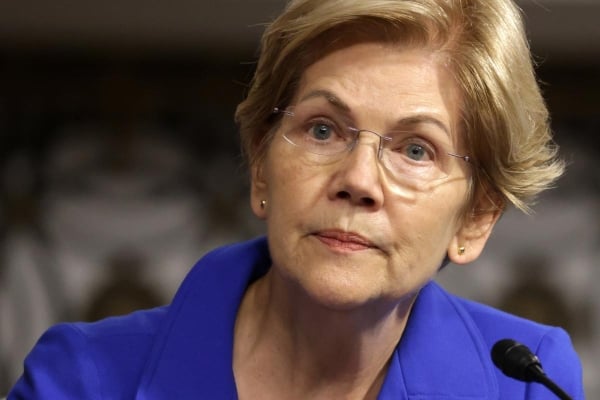
    Massachusetts senator Elizabeth Warren and four of her fellow Democrats asked Education Secretary Linda McMahon in a letter Monday why her department has made it more difficult to file complaints about federal student aid and demanded her staff remove any extra steps that have been added to the process.

    “ED is covering up its attempts to make [the Office of Federal Student Aid] less responsive to millions of students, families, and borrowers who rely on the agency to lower the cost of attending college and protect them from loan servicer misconduct,” the senators wrote. “We urge you to immediately act on our findings by streamlining the ‘Submit a Complaint’ process and restoring FSA’s workforce so borrowers can get the help they need.”

    Who Signed the Letter?

    Richard Blumenthal (Conn.), Mazie Hirono (Hawaii), Jeff Merkley (Ore.), Chris Van Hollen (Md.), Elizabeth Warren (Mass.)

    In the letter, Warren states that she told FSA in March that the button for submitting online complaints had been “hidden.” The department responded in April that the button had just been moved from the top of the webpage to the footer and relabeled as “submit feedback.”  The department added that no employees who handle technical functions of the aid applications of loan servicing had been laid off, and while some employees that handle complaints were, the remaining employees will “still be responding” to future complaints. 

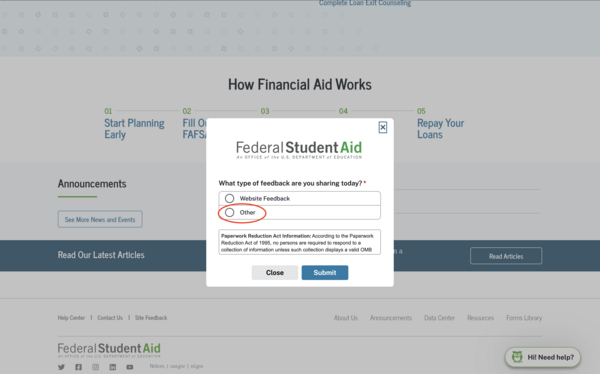
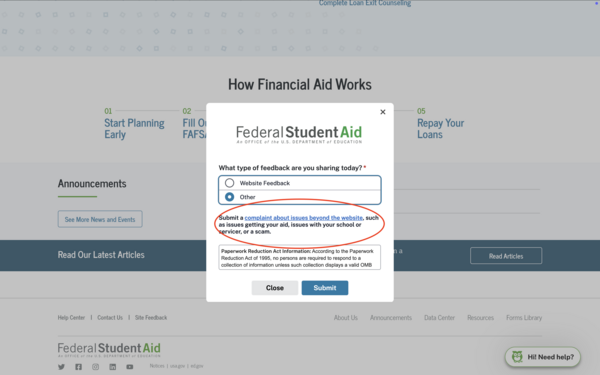
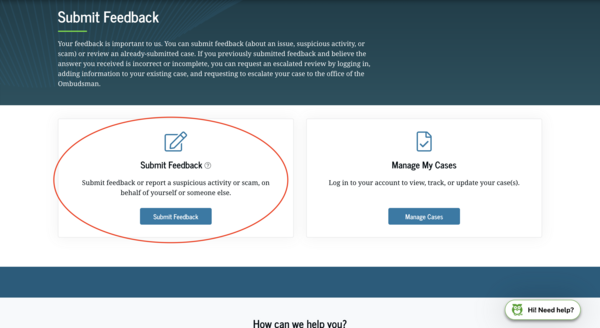
    But the Democrats say they tested those claims and found the department’s reassurances were misleading. Although the department did move and rename the complaint button, it also added a series of four extra navigation clicks that must be made before the user actually reaches the webpage where they can file a complaint. (Inside Higher Ed checked the website and verified these steps. You can see screenshots of the process below.)

    “Via an unintuitive, multi-step process,” the department is “making it more difficult for borrowers to let ED know when they are experiencing issues with their student loan servicer,” the letter reads.

    The senators argue that this change was geared toward increasing the difficulty of filing complaints, citing an email sent by a senior department staff member and obtained by Politico. According to a report published by the department at the end of the Biden presidency, more than 289,000 complaints were filed with FSA in 2024 alone.

    In the email obtained by Politico, the official wrote, “I believe this change would help decrease contact center volume and the number of complaints … so an overall win.”

    Step two FSA complaint process, click other
    Step three of FSA complaint process, click complaint about issues beyond website
    Step four of FSA complaint process, select submit feedback

    Source link