Tag: Student

  • International Student Demand Remains High for Now

    International Student Demand Remains High for Now

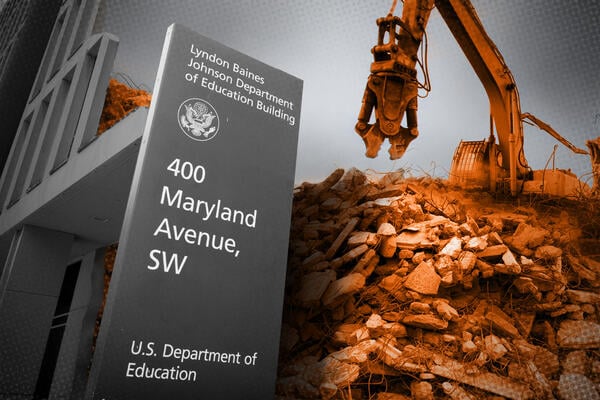
    Photo illustration by Justin Morrison/Inside Higher Ed | Getty Images

    Advocates for international students are raising alarms that federal actions are limiting foreign-born learners’ ability to study in the U.S. But researchers say the trend isn’t an indication of international student interest or demand to study in the U.S.

    A late July survey of 300 foreign-born students found 91 percent plan to study in the U.S., despite funding cuts and internal instability in the U.S. The reputation of U.S. institutions also has yet to take a hit, with 99 percent of respondents indicating they still trust the academic quality of U.S. institutions.

    That’s not to say students are unaware of or undeterred by changes at the federal level. Fifty-five percent of survey respondents indicated some level of concern about pursuing their degree in the U.S., and 50 percent said they’re less excited about the opportunity now than they were previously. The top reason their sentiment has changed is international tensions or politics (54 percent), followed by worries about political instability in the U.S. (45 percent).

    Brian Meagher, vice president at Shorelight, a higher education consulting group focused on international students, said at an Aug. 12 media roundtable that even students caught in the visa backlog haven’t shifted their gaze to other countries yet. Instead, they are deferring to the spring semester. May data from the U.S. Department of State shows 19,000 fewer students received a F-1 or J-1 visa that month compared to May 2024, which experts say is the first sign that a fraction of expected students will be coming to campus this fall.

    “Most of them want [to study in] the U.S.—they’re not changing their minds to the U.K. or Canada or Australia,” Meagher said. “We do think there will be a longer-term impact on switching to other country destinations as a result of this.”

    Others are taking classes online at their host institution or enrolling in a satellite campus elsewhere in the world for their first term, but those are less popular options, Meagher said.

    “In talking with prospective students, I’d say the belief is that this is a temporary changeover at an unfortunate time that may result in missing a fall semester,” Shorelight CEO Tom Dretler said during the roundtable.

    Long-Term Challenges Expected

    While international students see the changes as a short-term setback, some market predictions forecast significant changes to U.S. higher education enrollment and revenue. At least the lack of visas could impact future applications to U.S. colleges, Dretler said.

    Research by Holon IQ, a global intelligence agency, points to the U.S. as a top destination country for international students for decades, but since 2016—roughly the start of the first Trump administration—the country lost 10 percentage points of its share of international students.

    Starting in 2016, “the U.S. became perceived by some as less welcoming or safe, did not recruit international students as energetically, and denied a substantial fraction of student visa applications, while governments and university sectors in the other countries acted in concert to grow international student numbers,” according to an August report from Holon IQ.

    Modeling by Holon IQ finds that a variety of actions by the federal government, including visa policy changes, a crackdown on universities and new tariffs could create barriers to students in the U.S. as well as a climate of uncertainty for prospective students.

    The agency predicts the most likely trajectory is there will be a short-term decline in U.S. international enrollment, with 1.12 million students in 2030, unchanged from 2023 levels. But possible scenarios range from an increase in students of 8.3 percent to a drop of 7.9 percent by 2030.

    “I think what’s happening in the U.S. is a point in time as to whether the U.S. will continue to lead and for how long it will continue to remain the global leader for international student mobility and a desired study destination,” said Patrick Brothers, co-CEO of Holon IQ Global Impact Intelligence, during the media roundtable.

    Paying the Price

    Experts warn that a lack of students on campus could mean billions in lost tuition revenue for years to come.

    NAFSA, the association of international educators, reported if the number of new international student enrollment declined between 30 and 40 percent, it would result in a 15 percent drop in overall international enrollment and result in a loss of $7 billion in revenue.

    June data from Shorelight found even a 20 percent decline would result in a $1.7 billion annual loss in tuition revenue, or $5 billion over four years.

    “We think it’s going to be something that is negative for the U.S. economy, negative from a jobs perspective and also very hurtful to colleges and universities, but not always the one that people think,” Dretler said. Top universities will be able to weather the financial hit, pulling students off their waiting lists, but regional and community colleges will experience greater losses, which could increase tuition rates for middle-class families.

    States with high international student enrollment would be hit hardest by the changes. Among the top states for international students—California, New York and Texas—Shorelight anticipates a total loss of $566.6 million and NAFSA projects a loss of $2.39 billion, based on their respective data models.

    Source link

  • Student Success Coaching Success Stories

    Student Success Coaching Success Stories

    For Chianti Grantham, her vocation in life crystallized the moment she started teaching.

    “The first time I stepped foot in a classroom, I knew that that’s what I was supposed to do. I knew that was my happy place.”

    Grantham works as an academic success coach at Houston’s University of St. Thomas, in the Kolbe School of Innovation and Professional Studies, an associate degree–granting arm of the university that supports nontraditional learners. In her role, Grantham assists students who are facing challenges that are impeding their academic progress, including those who have fallen below a 2.0 GPA.

    In an interview with Inside Higher Ed, Grantham discusses how she does the work and effective strategies she’s used to support her students.

    Q: What experiences or training have helped you establish your student success philosophy?

    A: All of the experience that I’ve had over the years has taught me how to do what I do. I have a varied amount of experience from teaching, from being a tutor, and I think that it grew as I matured and grew as an educator. So did my skill level and paying attention to the needs of the students, and establishing those relationships with the students.

    One of my very first classes that I taught, I had a student disclose in a paper that he had HIV. I learned quickly, like, “OK, this is about more than just teaching these students how to write. I have to be a mother. I have to be a support system. I have to be that person that they can go to.” Because if he felt comfortable enough in disclosing something like that with me, then I have a lot of power, and I can use that power for good, or I can use that power for bad. I decided that I wanted to use that power for good, and I specifically wanted to serve the nontraditional, underserved population.

    I’ve been an academic success coach for going on four years at St. Thomas and then two years prior with Lone Star College. I have found that, once I reach out to a student and I’m like, “Hey, your instructor indicated that you have fallen behind. You haven’t turned in your assignments. Your assignments have been subpar. You’ve been unresponsive,” whatever the situation is—I always ask for very detailed information about what’s going on with the student—it’s like the floodgates open. Students are like, “Oh my gosh, somebody called me, somebody cares.” And that’s what I normally hear, like, “Yes, I’m sorry. I lost my job,” or “I’m overwhelmed with work,” or “I’m overwhelmed with life,” or “I’m depressed,” or “My husband and I have separated.” It’s generally an external factor that is impeding them from being successful in the classroom.

    What I tell our instructors is: We have to get to the root of the issue, but we have to get to the root of the issue early. Early intervention is the best and most viable way to help a student to be successful. If I don’t know until a week before classes end, I can’t help that student, right? But if I know week one, they haven’t submitted any assignments within that first week, I tell the instructors to contact me, give me their information, tell me what’s going on and I’m reaching out. In that instance, I can help a student to turn it around.

    Q: You recently started a program to support students on academic probation. Can you talk about where that idea came from and where you saw a need to improve processes for these students?

    A: What we’re trying to do is find as many ways to support the students in their success. So, specifically, when they’re on academic probation—meaning that they’ve fallen below a 2.0 grade point average—at that time, they go under my wing.

    They’re required to be in contact with me, either through phone call or meeting face-to-face or virtually, just to help them get back on track. We’re sitting down, we are creating a routine and a study schedule that also includes their personal lives.

    What I tell a student is “Let’s look at your personal as well as your professional life. Let’s put all of those responsibilities in a calendar.” So whether it be a paper calendar or on a cellphone—I’m an old-school person, so I actually do paper and I do my cellphone—I help them in that way.

    I also refer them to other resources. If they’re telling me they’re having some type of housing issue, I will contact our residence life department. I’ve also sought out shelters, other community resources. I have advocated for students to get scholarships so that they can pay their rent. It’s a gamut of things.

    I’m in the process now with one of my colleagues to write an academic probation course that the students must take for an entire semester, and it focuses on time management, organizational skills and some mental wellness tips. All of these things that I have either seen myself in interacting with students or in my conversations with faculty and adjuncts, things that they’ve seen. We’ll be launching that this semester.

    Q: How do you balance the complexity of student support work? Each student is going to need a different thing, so how do you keep yourself educated as to what those resources are and who’s going to help you and be a partner in this work?

    A: What I found early on in this role is that it’s super important, actually, that I build relationships with other departments around the campus.

    I have also learned that it’s super important that I build relationships within the community. So there have to be people within the community that I can have a conversation with about, like, “Hey, I have a student that is unhoused. Can you help me? They need food; they need somewhere to live. They need clothing.” Those relationships are key. If I didn’t have those relationships, I wouldn’t be able to support my students.

    Q: How have you built up relationships with instructors as well, letting them know that you’re here to help with students’ success?

    A: At the beginning of every semester and then midway through the semester, I always send an email to all of the instructors reminding them, “I’m here. These are the services that I offer. These are the hours that I’m available if the students are performing at a lower level, if they’ve inquired about additional resources, if they’re unresponsive, if they said, ‘Hey, I just need help.’” If faculty feel they can’t offer that, those are the kind of things that I tell the instructors that I am able to help the students with.

    Also, I advocate for the students. Because I know these students very well, I’m copied on all emails that are sent to students when there is an external factor that’s going on that’s impeding them from being successful. I’m able to just keep a pulse on what’s going on. But yeah, my relationships with the faculty are great. It has to be, because otherwise I wouldn’t be able to support my students.

    Q: Do you have any advice for other academic success coaches you’d like to share?

    A: The one thing that I would say is the relationships that you build are so key. If you have relationships, if you reach across the aisle, so to speak, and you keep an open mind, just because someone doesn’t look like you, just because someone doesn’t share the same interests and beliefs as you, doesn’t mean that you can’t have a relationship with them.

    Some of the most beneficial relationships that I’ve had with students have been with people that are not like me and don’t share similar interests as me, but we’ve been able to come together.

    A perfect example is I had a student come to campus. He is local, but he didn’t ever come on campus because our programs are fully online. He’s really shy, so when he came to campus, I made a point to introduce him to one of my colleagues over at the peer-mentor program so that he could become a peer mentor. I took him over to career services because he was interested in an internship program, so I put him in touch directly with the person that handles that. Then he was like, “Oh, well, I also want to get involved in this particular club.” Well, it just so happened that the person in career services is also over [at] that particular club.

    I didn’t just pass him off like he was a baton or a number. I took him to these specific people. We had a conversation. We determined what the need was. I already knew what the need was, but I also have to help students advocate for themselves, right? That is the biggest thing—those relationships have been key, because I’ve been able to go into spaces that I wouldn’t otherwise be able to, or maybe not effectively go into.

    If your student success program has a unique feature or twist, we’d like to know about it. Click here to submit.

    Source link

  • Education Department proposes removing trans, nonbinary student categories from mandated data collection

    Education Department proposes removing trans, nonbinary student categories from mandated data collection

    This audio is auto-generated. Please let us know if you have feedback.

    The U.S. Department of Education is proposing to abandon data collection on transgender and nonbinary students, including on whether they are victims of harassment and bullying and whether school districts have policies prohibiting those incidents, according to a Federal Register notice published this month. 

    The changes come as part of the Civil Rights Data Collection for the 2025-26 and 2027-28 school years, a mandated survey of all public school districts that has been administered for almost six decades. The department noted on its website that the CRDC has “captured data on students’ equal access to educational opportunities to understand and inform schools’ compliance with the civil rights laws enforced by the Department of Education’s Office for Civil Rights.” 

    The proposed changes to the upcoming collections also struck transgender students from the department’s definition of “rape” and “sexual assault.”

    Whereas previous collections defined rape as something that could be done to “all students, regardless of sex, or sexual orientation, or gender identity,” the proposed collection says, “All students, regardless of sex, or sexual orientation can be victims of rape” — explicitly striking “gender identity” from the older definition.

    The change “really sends a frankly terrible message to how schools should be responding to allegations of sexual assault and how they should be documenting that and bringing that data forward,” said Brian Dittmeier, director of LGBTQI+ equality at the National Women’s Law Center.

    The department, however, maintained in an email to K-12 Dive that “the definition of rape and sexual assault remains virtually unchanged.”

    “All students means all students, period,” said an Education Department spokesperson on Thursday.

    The department submitted the proposed changes to the Office of Management and Budget for review on Aug. 7 and is accepting comments on the notice until Sept. 8.

    The changes are being proposed to comply with the 2020 Title IX rule, which excludes LGBTQ+ students from sex-based discrimination protections. President Donald Trump’s Education Department told districts in January to follow that rule — published during his first term — as opposed to the 2024 rule finalized under the Biden administration, which protected LGBTQ+ students under the sex discrimination civil rights statute.

    The Education Department is also proposing a change in its Civil Rights Data Collection to exclude transgender and nonbinary students in light of Trump’s January 2025 executive order “Defending Women from Gender Ideology Extremism and Restoring Biological Truth to the Federal Government.” That executive order directed federal agencies to only recognize two sexes, male and female, and said, “These sexes are not changeable and are grounded in fundamental and incontrovertible reality.”

    The Education Department has since adopted that stance, and it has attempted to include the definitions “male” and “female” in state policies through its resolution agreements and to exclude transgender students from teams and facilities aligning with their gender identities.

    The decision to now strike those students from the CRDC means the Education Department’s Office for Civil Rights — under the current administration and future ones — would have less data on how transgender and nonbinary students fared in the 2025-26 and 2027-28 school years.

    “OCR uses CRDC data as OCR investigates complaints alleging discrimination to determine whether the federal civil rights laws it enforces have been violated, initiates proactive compliance reviews to identify particularly acute or nationwide civil rights compliance problems, and provides policy guidance and technical assistance to educational institutions, parents/guardians, students, and others,” a July 22 statement from the U.S. Department of Education to the Office of Budget and Management said. Other federal agencies, researchers and policymakers also use CRDC data, the department said.

    Transgender and students questioning their gender identity showed higher rates of bullying and poor mental health, as well as the lowest rates of school connectedness, when compared to their cisgender peers, according to the first nationally representative survey data on transgender students released by the Centers for Disease Control and Prevention last year.

    Source link

  • How America’s top tribal arts college silenced a student — and made him homeless

    How America’s top tribal arts college silenced a student — and made him homeless

    TAKE ACTION

    David John Baer McNicholas sleeps every night next to a bomb.

    The worst thing about being homeless is the weather, he says. Santa Fe gets so cold that sometimes diesel fuel turns to gel. At those temperatures, frostbite hits in minutes.

    In The Martian, Matt Damon’s character Mark Watney uses a radioactive isotope to keep his rover warm. In the Martian landscape of New Mexico’s Chihuahuan Desert, McNicholas keeps his van warm with a rusty five-gallon propane tank hissing beside his bed.

    It’s not just the cold of the desert at night, either. Santa Fe is also the highest state capital in America, at 7,000 feet above sea level. That’s higher than the base lodge at most ski resorts. To stay warm, he keeps a pile of old covers and shirts in his van. A top from TJ Maxx. A blanket from a friend. An oversized green-and-black fleece from his sister who died of cancer.

    But in the thick of winter, it’s nowhere near enough. So he fires up the heater hooked to the propane tank beside his bed. Burning an open flame inside a flammable structure filled with combustible fuel isn’t exactly safe, so he keeps a carbon-monoxide detector on his pillow. It’s a thin safeguard since these alarms can, and do, fail. But it’s better than nothing. To avoid freezing to death, he has to risk burning alive.

    Summer brings no relief either. “The average temperature in the van during summer is about 110 degrees,” he says. “There’s only so much shade in Santa Fe, especially considering most people don’t want you parking near them.”

    And if the weather doesn’t get you, there are a hundred other little things about being homeless that surely will. For one, his van is tiny, and he’s tall. Cooking involves a camp stove that makes his clothes stink of grease, increasing the risk of fire, and turning his van into a dripping sweatbox. Not to mention, the constant anxiety of knowing his belongings are not safe. Or that his home could be towed. Or having to move multiple times a day to avoid such an outcome. Or having to pee into a plastic bottle every night. Or having to find a place to dump the bottles every morning.

    “I go to bed every night thinking, this could be it,” he says, reflecting on how his propane tank might blow up and kill him in his sleep. “I might not wake up.”

    He adds, after a pause, “All my troubles would be over.”

    The moment of truth

    McNicholas is a student journalist who studies creative writing at the Institute of American Indian Arts (IAIA) in Santa Fe, and he is on track to graduate this spring with a 4.0 GPA. He often writes about life on the road. His poem “Flatbed,” which earned the 2022 Betty and Norman Lockwood Poetry Prize from the Academy of American Poets, captures a cross-country adventure he took with his father when he was 15.

    In New Mexico, over half of students face food insecurity. When a whistleblower at IAIA uncovered evidence that school officials might have misused a $50,000 grant meant to support campus food pantries, McNicholas thought it was clearly newsworthy. When students claimed school officials retaliated against the whistleblower who raised the alarm, he published their allegations.

    This was groundbreaking journalism. Food scarcity in Native American communities is a dire problem, so a food-pantry scandal at the nation’s top indigenous arts college is a five-alarm fire. Native Americans are twice as likely to face food insecurity compared to white Americans, and sometimes three times higher. In fact, the entire Navajo Nation, which overlaps New Mexico, is considered a food desert.

    But instead of being celebrated for such journalistic work, David McNicholas was fired. Put on probation. Evicted. Homeless. 

    One of the two anonymous student submissions published in The Young Warrior

     McNicholas’s clash with IAIA leadership began in 2024, after he published two anonymous submissions in his student-run zine The Young WarriorOne piece accused school officials of bullying a beloved student advisor, Karen Redeye, out of her job. Redeye herself later confirmed this, writing:

    I resigned from IAIA due to repeated lack of support from my superiors, maltreatment and bullying from my direct supervisors. It elevated to the point of affecting me physically and my workspace did not provide me emotional safety … I loved my job but it became a hostile workplace and I could not continue on with my position.

    The second piece accused Dean of Students Nena Martinez of misappropriating the $50,000 food-security grant. After publishing, McNicholas says he received a flood of thanks and support from his fellow students. Many of them, like McNicholas, depended on the food pantry for survival. 

    But the administration was not so grateful. They hit back hard, claiming McNicholas was “bullying” university staff. They opened a formal investigation with consequences sure to follow.

    “Oh shit,” McNicholas remembers thinking at the time. “They’re going to throw everything at me.”

    Learning to hide

    Painting of David McNicholas by his mother

    “Wonder” by McNicholas’ mother Mary Alice Baer, depicting her son

    I grew up in the 1980s near the poverty line, raised by a single mom. The McNicholas residence was a one-car garage with a few rooms tacked on the back in Newington, New Hampshire. Mom was an artist who scraped by doing cleaning jobs. She struggled with alcoholism. Dad was absent until I was 12, but sent $150 a month in child support. Mom didn’t really cook, but she could make a pot of beans. Most nights, we ate TV dinners. It was more than some folks had.

    I had undiagnosed autism as a kid, so as you can imagine, school was hell. I learned to keep my mouth shut or get beaten up. Most of the torment from my peers was psychological. I was terrified and lonely. But work was different. In high school, I worked part-time at Market Basket, on the front end. Got hired as a bagger, promoted to keyholder within a day. I found it easier to talk to the cashiers and baggers my age because there, our roles were clearly defined.

    Life at school was harder. Blending in became its own kind of hobby. I spent years studying people like an anthropologist, trying to fit in. And I spent years ostracized and harassed for being different. But every year, I got better at hiding myself.

    I had traditional hobbies too, you know. I liked computers. I even thought I might study computer science. But I changed my mind at the close of senior year because I knew I had to study people more if I was ever going to have a normal life.

    I could only take so much. I started drinking and ended up living in parking lots, storage closets, and couch-surfed for over a decade. But eventually I got sober, bought a house, even started a business. The startup life was too stressful, though. I lost everything — except my sobriety. I entered IAIA to study creative writing. I did my first two years at IAIA while living in my van. In my third year, I moved into the dorms. It was a chance at more stability. And life began to make sense.

    I entered at 42, while my peers were mostly 19, so there wasn’t the same pressure to make friends. I contextualize my social life at IAIA as work. Most of my peers are half my age and I am a trusted mentor. These clearly defined roles make me comfortable. Around this time, I was diagnosed with autism, and that helped make sense of things. I also started The Young Warrior, and people liked it. I was part of a community.

    When I got into trouble for publishing those pieces, I did what I always do. I tried to study my way out of the problem. I went to the archives and read about old IAIA publications. I read Dean Spade’s “Mutual Aid” and FIRE’s “Guide to Free Speech on Campus.” I studied other undergrad publications and wrote an official proposal and operations manual for what I hoped would be the new Young Warrior.

    But overall, life was going well. I haven’t had a drink or drug in 13 years. IAIA has been a huge part of my continued sobriety. And my creative studies have given me the space to unpack the person I hid away so long ago.

    Going public

    Anticipating housing sanctions barring him from his dorm room, McNicholas left campus before they were formally applied and started living out of his van. But the school’s vicious overreaction in moving to evict him only convinced him it was trying to cover something up. In addition, McNicholas says when Dean of Students Martinez heard the allegations about school officials robbing the food pantry, she simply dismissed the need for food pantries to begin with. According to him, she said, “Students have meal plans. They don’t need food pantries.”

    But that explanation didn’t sit right with McNicholas, who lives below the poverty line and depends on food pantries to survive. The situation escalated, he says, when the administration denied that the grant even existed. On March 21, 2024, after McNicholas, acting as press officer for the Associated Student Government (ASG), re-posted an image on Instagram summarizing the scandal, Provost Felipe Colón emailed ASG officers:

    It has come to my attention over the last 24 hours that in response to the resignation of Student Success Adviser, Karen Redeye, several students, including members of ASG, have been involved in bullying, defamation, and possibly legally actionable slander and liable [sic] against members of the IAIA staff.

    He then suggested that the ASG officers invite him to discuss “Karen’s departure, and particularly to receive information about the pantry grant fund and re-stocking process which has been repeatedly and grossly misrepresented.”

    When McNicholas and other ASG members met to discuss the matter with Colón, McNicholas didn’t come empty-handed. An anonymous source had already given him a photocopy of the grant-award letter for $50,000. But when Colón denied the existence of the grant, and McNicholas brandished the proof, Colón tried to explain it away.

    Not only that, but university President Robert Martin later threatened to sue them all.

    McNicholas was floored. But given the school’s history, he wasn’t surprised. IAIA has a pattern of silencing critics — especially those trying to improve the school’s performance where it falls glaringly short. During a faculty meeting with the Board of Trustees in February 2022, former sculpture professor Matthew Eaton cited an academic paper by a former IAIA department head that showed a staff turnover rate of 30%. According to McNicholas, “They came down on him hard.” 

    Colón told Eaton he had embarrassed Martinez and demanded that Eaton write a public apology. Eaton wrote the coerced apology and quit the next day. In it, he said citing the high turnover rate was “disparaging” to Martinez as well as “a direct assault” against her.

    But McNicholas’ main concern was for his fellow students. The lack of food, coupled with legal threats and the intense stress of having to deal with an administration that appeared to prey on its students rather than support them, had taken an emotional toll on him and his peers. And that toll was beginning to show.

    McNicholas on IAIA campus

    David McNicholas on IAIA campus

    One day, the ASG called yet another meeting to discuss the situation, but this time they only invited ASG members because the students feared they couldn’t trust their own advisors. When the meeting began, the ASG president showed up in tears. She had just come from a one-on-one meeting with President Martin, who had delivered shocking news — the school was seriously considering suing ASG and her over the bad publicity. 

    “She came to us and said, ‘They told me to fix it,’” McNicholas says. “She was in tears. And that made me mad.”

    At the next ASG meeting, now that the existence of the grant was proven, Colón changed his tune. McNicholas says, “He showed up and said, ‘Oh, you know what? I did some looking, I researched it, and I think I found the grant that you guys were talking about. And I’d like to come and explain how it was spent.’” 

    “I was like, yeah,” says McNicholas, “I bet you do.”

    McNicholas was unable to attend the meeting, but he got the sheet Colón handed out, which showed budget-to-actual figures. When pressed to release the ledger, however, Colón claimed bank statements might not go back that far. “We’re talking a year,” says McNicholas, “maybe two at most. I think he thought he could get away with that because he was in a room full of 19-year-olds. If I’d been there, I would’ve pushed back.”

    In all this, what got under his skin the most, he says, was how the school treated his fellow students, such as the girl who had posted the original Instagram summary of the scandal. “I can’t stand that they did the same thing [they did to me] to a 19-year-old freshman for making an Instagram post,” he says. “They kicked that person out, kept their money, and made a 19-year-old student homeless. As far as I’m concerned, that’s unconscionable.”

    IAIA anti-bullying policy

    IAIA’s anti-bullying policy

    Meanwhile, Colón concluded his investigation, finding McNicholas guilty of violating IAIA’s highly restrictive anti-bullying policy, which broadly bans “unwanted, aggressive behavior” and includes constitutionally-protected expression as examples of prohibited conduct. That is, he accused McNicholas of bullying administrators by publishing claims that those administrators had bullied others. McNicholas later successfully appealed his ban from campus housing and recovered about $2,000 in lost fees, but much of the damage was already done. Given this victory, he could move back into housing this upcoming semester, but continues to live in his van where IAIA can’t kick him out.

    The sanctions against him not only sent him back to homelessness, but cost him work too, including a federal work-study opportunity that should have been protected from administrative meddling. “I was hired to be an orientation mentor at the end of last summer,” says McNicholas. “And the day before I was going to start, I got a call from the director of that program who said, ‘Yeah, you can’t participate because you’re on institutional probation.’”

    Finding himself ruthlessly targeted by the administration, McNicholas turned to the press. Teaming up with a few peers, they went to the Santa Fe Reporter, and the article that followed made an immediate impact. “When that article came out,” he says, “both the interim director and dean of students were gone within days. Like, they were gone.” 

    Breaking through

    After the Santa Fe Reporter exposé and the ensuing leadership shakeup, the food pantry underwent a striking transformation. The 20-foot-long conference table in the Student Success Center, once a barren surface lined with unused cans of tomatoes, is suddenly overflowing with fresh groceries. McNicholas’s journalistic work, for which he was evicted from campus housing, has not only been vindicated, but has helped make his campus a better place.

    As for himself, McNicholas is about to enter his fifth and final year at IAIA. He is applying to MFAs this fall and says he hopes all this doesn’t affect his chances. “But,” he adds, “I chose to stick up for my community — and to incur the costs of doing so.”

    That said, he remains shaken by the experience. “The school administration violated my rights and treated me like a criminal, offering no meaningful due process, and protecting themselves over the community at every turn.”

    Indeed, IAIA has offered little in the way of accountability. The school has refused FIRE’s demands to clear McNicholas’s disciplinary records or those of any other student punished and threatened for speaking out, including the ASG president. It has also failed to revise its vague and censorial anti-bullying policy, still found in the publicly-available student handbook — leaving open the possibility of IAIA silencing other students the same way they did McNicholas. On top of all this, IAIA leadership has also failed to offer any legal or moral justification for its actions.

    Following President Martin’s retirement this July, one can only hope that the newly minted president, Shelly C. Lowe, breaks from his administration’s legacy of censorship and authoritarianism. IAIA’s crackdown on student dissent must be challenged. Oversight from the school’s Board of Trustees and the Bureau of Indian Education is essential to help push IAIA in the right direction. Because no student should ever be left homeless for telling the truth.

    Each night, McNicholas returns to his van. On cold nights, the propane tank hisses beside him, threatening him in whispers. On hot nights, he lies there sweating. But he remains unshaken. In one of his poems, McNicholas describes chopping through six feet of ice, the water “fixed like concrete,” his hands burning in the cold “with thin gloves or nothing.” It’s a searing image. McNicholas is nothing if not resilient.

    “I want my uncredited legacy to be a small part of the student handbook,” he says, “enshrining the right to free speech that we all fought for.”

    Source link

  • Why student engagement starts with teacher clarity

    Why student engagement starts with teacher clarity

    Key points:

    In Alpine School District, we serve a wide range of students, from Title I to highly affluent communities. While our population has traditionally been predominantly white and middle income, that’s changing. In response to this growing diversity and shifting needs, one of my missions as professional learning and curriculum director for secondary schools has been to provide needs-based professional learning, just in time for educators, and to give them a real voice in what that looks and feels like.

    I lead a team of full-time educator equivalents across every discipline: math, science, social studies, ELA, the arts, health, and PE. Together, we guide professional learning and instructional support. Over the past several years, we’ve had to take a hard look at how we teach, how we engage students, and how we prepare educators for long-term success.

    Where we started: Tier 1 challenges and high turnover

    When I first became curriculum director, I noticed in our data that our schools were not making much progress, and in some cases had stagnated in growth scores. We were leaning heavily on Tier 2 interventions, which told us that we needed to shore up our Tier 1 instruction.

    At the same time, we were hiring between 400 and 500 teachers each year. We’re located near several universities, so we see a continuous flow of new educators come and go. They get married, they relocate, or a spouse gets into medical school, which translates to a constant onboarding cycle for our district. To meet these challenges, we needed professional learning that was sound, sustainable, and meaningful, especially early in a teacher’s career, so they could lay a strong foundation for everything that would come after.

    Teacher clarity and engagement by design

    Several years ago, we joined the Utah State Cohort, doing a deep dive into the Teacher Clarity Playbook. That experience was a real turning point. We were the only team there from a district office, and we took a train-the-trainer approach, investing in our strongest educators so they could return and lead professional learning in their content areas. Since then, we’ve used Engagement by Design as the framework behind much of our PD, our classroom walkthroughs, and our peer observations. It helped us think differently: How do we support teachers in crafting learning intentions and success criteria that are actually meaningful? How do we align resources to support that clarity? We’ve embedded that mindset into everything.

    Coming out of the pandemic, Alpine, like many districts around the country, saw decreased student engagement. To focus deeply on that challenge, we launched the Student Engagement Academy, or SEA. I co-designed the Academy alongside two of our content specialists, Anna Davis and Korryn Coates. They’re both part-time teacher leaders at the district office and part-time visual arts teachers in schools, so they live in both worlds. That was important because we believe professional learning should always be contextualized. We don’t want teachers burning extra bandwidth trying to translate strategies across subject areas.

    SEA is a yearlong, job-embedded learning experience. Teachers participate in PLCs, conduct peer observations, and complete a personalized learning project that showcases their growth. Our PLC+ coaches work directly with our lead coach, Melissa Gibbons, to gather and analyze data that shapes each new round of learning. We also included classroom observations, not for evaluation, but to help teachers see each other’s practice in action. Before observations, Anna and Korryn meet with teachers in small groups to talk through what to look for. Afterward, they debrief with the teachers: What did we see? What evidence did we see of student engagement? What did we learn? What are we still wondering? As we answer these questions about teaching, we’re also asking students about their experience of learning.

    Learning from student surveys

    Hearing from our students has been one of the most powerful parts of this journey. With the support of our Director of Student and Educator Well-eing, we created a student survey. We asked a random group of students questions such as:

    • What are you learning?
    • How are you learning it?
    • How do you know how you’re doing?
    • Why does it matter?

    The responses were eye-opening. Many students didn’t know why they were learning something. That told us our teachers weren’t being as clear or as intentional as they thought they were. One specific question we asked was based on the fact that attendance in world language classes stayed high during the pandemic, while it dropped in other subjects. We asked students why. The answer? Relationships, expectations, and clarity. They said their world language teachers were clear, and they knew what was expected of them. That led other disciplines to reflect and recalibrate.

    Today, teachers across subjects like ELA, math, and social studies have participated in a SEA cohort or aligned learning. We’re seeing them plan more intentionally, better target skills, and align instruction with assessment in thoughtful ways. They’re starting to see how mirroring instruction with how learning is measured can shift outcomes. It’s been truly exciting to witness that change. Engaging students through improved teacher clarity, positive classroom relationships (with each other, the teacher, and the content), and providing the students with appropriate levels of rigor has been a game changer.

    Building teacher leadership teams

    Next year, we’re focusing on developing teacher leadership skills, knowledge, and dispositions across the full geographic area of our district. We’re building professional capacity through leadership teams using the PLC+ model, with an emphasis on facilitation skills, research-based practice, and advocacy for strong instruction in every discipline.

    If you’re a district leader looking to boost student engagement through professional development, my advice is simple: You can’t do it alone. You need a team that shares your values and your commitment to the work. You also have to be guided by research–there’s too much at stake to invest in strategies that don’t hold water. Finally, this is a marathon, not a sprint. Aim for small, incremental changes. There’s no silver bullet, but if you stay the course, you’ll see real transformation.

    Latest posts by eSchool Media Contributors (see all)

    Source link

  • Report highlights growing movement to elevate student voice in school communications

    Report highlights growing movement to elevate student voice in school communications

    Key points:

    As K-12 leaders look for ways to strengthen trust, engagement, and belonging, a growing number of districts are turning to a key partner in the work: their students.

    A new national report from the National School Public Relations Association (NSPRA) and SchoolStatus reveals that districts that incorporate student voice into their communication strategies–through videos, messaging, and peer-created content–are seeing real results: stronger family engagement, increased student confidence, and more authentic school-community connection.

    The report, Elevating Student Voice in School Communications: A Data-Informed Look at Emerging Practices in School PR, is based on a spring 2025 survey, which received 185 responses from K-12 communications professionals. It includes real-world examples from school districts to explore how student perspectives are being incorporated into communication strategies. It highlights the growing use of first-person student storytelling, direct-to-student messaging, and student internships as strategies to build trust, improve engagement, and strengthen school-community relationships.

    “School communicators do more than share information. They help build connection, trust, and belonging in our communities,” said Barbara M. Hunter, APR, Executive Director of NSPRA. “Elevating student voice is not just a feel-good initiative. It is a powerful strategy to engage families, strengthen relationships, and improve student outcomes.”

    Key findings include:

    • Video storytelling leads the way: 81 percent of districts using student voice strategies rely on video as their primary format.
    • Direct communication with students is growing, but there is room for improvement in this area: 65 percent of districts report at least some direct communication with students about matters that are also shared with families, such as academic updates, behavioral expectations or attendance
      • However, just 39 percent of districts copy students on email messages to families, and just 37 percent include students in family-teacher conferences, allowing them to be active participants
    • Internships on the rise: 30 percent of districts now involve students as interns or communication ambassadors, helping create content and amplify student perspectives
    • Equity efforts around student storytelling vary significantly. While some districts say they intentionally recruit students with diverse perspectives, fewer encourage multilingual storytelling or provide structured support to help students share their stories

    Early results are promising: Districts report improved engagement, stronger student confidence, and more authentic communication when students are involved.

    • 61 percent of districts that track comparisons report student-led content generates higher engagement than staff-created communications
    • 80 percent of respondents observe that student voice positively impacts family engagement
    • A majority (55 percent) said direct communication with students improves academic outcomes

    Building Inclusive Student Voice Strategies
    The report outlines a three-part approach for districts to strengthen student voice efforts:

    • Start with student presence by incorporating quotes, videos, and creative work into everyday communications to build trust and visibility
    • Develop shared ownership through internships, ambassador programs, and student participation in content creation and feedback
    • Build sustainable systems by aligning student voice efforts with district communications plans and regularly tracking engagement

    The report also highlights inclusive practices, such as prioritizing student consent, offering mentorship and support for underrepresented students, featuring diverse stories, involving student panels in review processes and expanding multilingual and accessible communications.

    “When districts invite students to take an active role in communication, it helps create stronger connections across the entire school community,” said Dr. Kara Stern, Director of Education for SchoolStatus. “This research shows the value of giving students meaningful opportunities to share their experiences in ways that build trust and engagement.”

    The report also explores common challenges, including limited staff time and capacity, privacy considerations and hesitancy around addressing sensitive topics. To address these barriers and others, it offers practical strategies and scalable examples to help districts start or expand student voice initiatives, regardless of size or resources.

    This press release originally appeared online.

    eSchool News Staff
    Latest posts by eSchool News Staff (see all)

    Source link

  • My experience as a Placement Year student

    My experience as a Placement Year student

    • This HEPI blog was kindly authored by Abi Pearson, Employability Project Assistant (Placement Year) at the University of Sheffield and a third-year BA Sociology with Social Policy student

    At the University of Sheffield, the Law Family Ambition Programme aims to support the success of young men from pre-16 through to graduation and beyond, made possible through a philanthropic donation from the Law Family Charitable Foundation. The programme focuses on young men’s educational attainment and delivering support through a whole-provider approach, with targeted support from areas such as the Careers Service and Student Equality, Diversity and Inclusion.

    HEPI’s recent report on the educational underachievement of boys and young men provides evidence of the importance of qualifications, demonstrating the significance of programmes like Ambition working to get young men into higher education:

    Men with no qualifications are nearly twice as likely to be unemployed as women with no qualifications but there is virtually no gender gap in unemployment rates for people who have two A-levels or equivalent.

    As a placement student for the Careers and Employability Service, I acted as one of the Careers contacts for recipients of the Law Family Ambition Scholarship (‘Ambition Scholars’). I managed the Equal Opportunities in Careers scheme, tasked with hosting events and improving Careers Service provisions for widening participation students, including Ambition Scholars, as well as supporting the operational delivery of the Ambition Programme itself.

    In the second half of my placement year, I was given the opportunity to lead an internship programme developed for Ambition Scholars and Equal Opportunities students at the University of Sheffield, in which I was able to contribute to change by connecting students to meaningful work experience. Ambition Scholars were given enhanced support at every stage of their application, with some Scholars who did not apply still reaching out to show appreciation at our readiness to support them.

    Being able to work as a placement student in this area has been endlessly fascinating. From witnessing the success of Adolescence in conversations with University peers to working with the demographics its discourses concern, I have been given the rare opportunity to witness a new dimension to a world that I believed myself to be so familiar with in higher education.

    In experiencing higher education practice as both a student and staff member, I also increasingly see the value of keeping students involved with work that affects them. I had the opportunity to work with many Scholars within the Ambition cohort, as well as support the recruitment of an Ambition Student Intern in the Careers Service and work with them for the duration of their internship. The Intern provided us with Scholar insights during various pursuits, ensuring that practice was consistently student-centred and appropriately pragmatic, ending his internship by co-leading a session for staff in the Operations Group based on the recommendations of himself and fellow Scholars. 

    Working on this programme has certainly come with challenges. As is the problem for others across the sector, finding a communication style that works for our key demographic remains difficult as well as attempts at community-building for Scholars who perhaps do not see a benefit in connecting with students from similar backgrounds to themselves once arriving at University. This has meant that engagement with support services and events remains low and relatively unchanging throughout Scholars’ journeys.

    However, in this regard, I was taught one of many defining lessons of my placement year: lack of engagement and success are not mutually exclusive. During some focus groups I was able to lead on, Scholars often remarked that, despite not engaging with much of the support offered within Ambition, the safety net of the programme itself was one of its most valuable assets. It is possible that, for students, success in a programme like this is not defined by its popularity, but rather its durability and consistency through unprecedented times for young people and higher education. This approach means that Scholars are able to thrive on their own terms at University, in the knowledge that there is always a team there to support them.

    And so, as my placement draws to a close, my key reflection is thus: taking a Placement Year at your own University is well worth it. The microcosm of the world that universities present allows me to return to my final year with a multiperspectivity which will benefit me in finishing my degree and beyond. Working on the Ambition Programme, especially, has given me the chance to contribute to challenging belief systems whilst simultaneously experiencing the development of my own, advancing my personal as well as my professional development beyond what I could have imagined at the start.

    Source link

  • What works for supporting student access and success when there’s no money?

    What works for supporting student access and success when there’s no money?

    In 2021 AdvanceHE published our literature review which set out to demonstrate significant impact in access, retention, attainment and progression from 2016–21.

    Our aim was to help institutional decision making and improve student success outcomes. This literature has helped to develop intervention strategies in Access and Participation Plans. But the HE world has changed since review and publication.

    Recent sector data for England showed that 43 per cent of higher education providers sampled by the Office for Students (OfS) were forecasting a deficit for 2024–25 and concluded that:

    Many institutions have ongoing cost reduction programmes to help underpin their financial sustainability. Some are reducing the number of courses they offer, while others are selling assets that are no longer needed.

    All the while, institutions are, quite rightly, under pressure to maintain and enhance student success.

    The findings of our 2021 review represent a time, not so long ago, when interventions could be designed and tested without the theorising and evaluation now prescribed by OfS. We presented a suite of options to encourage innovation and experimentation. Decision making now feels somewhat different. Many institutions will be asking “what works now, as we find ourselves in a period of financial challenge and uncertainty?”

    Mattering still matters

    The overarching theme of “mattering” (France and Finney 2009, among others) was apparent in the interventions we analysed in the 2021 review. At its simplest, this is interventions or approaches which demonstrate to students that their university cares about them; that they matter. This can be manifest in the interactions they have with staff, with systems and processes, with each other; with the approaches to teaching that are adopted; with the messages (implicit and explicit) that the institution communicates.

    Arguably, a core aspect of mattering is “free” in terms of hard cash – us showing students that we care about them, their experience, and their progress, for staff to have a friendly approach, a regular check in, and meaningful and genuine dialogue with students. Such interactions may well carry an emotional cost however, and how staff are feeling – whether they feel that they matter to the institution – could impact on morale and potentially make this more difficult. We should also be mindful of the gendered labour that can be evident when teaching academics are encouraged to pick up more “pastoral” care of students; in research-intensive institutions, this may be more apparent when a greater proportion of female staff are employed on teaching focused contracts.

    In our original review we found that there were clear relationships between each student outcome area – access, retention, attainment and progression – and some interventions had impact on more than one outcome. Here are five of our examples, within the overarching theme of mattering, which remind the sector of this impact evidence whilst illustrating developments in thinking and implementation.

    Five impactful practices

    Interventions which provide financial aid or assistance to students pre and post entry were evidenced as impactful in the 2016-2021 literature. We remember the necessity of providing financial aid for students during Covid, with the government even providing additional funding for students in need. In the current financial climate, the provision of extra funding may feel like a dream for many institutions. Cost reduction pressures may mean that reducing sizable student support budgets are an easy short-term win to balance the books.

    In fact late last year, Jim Dickinson predicted just this as the first wave APPs referenced a likely decline in financial support. As evaluative data has shown, hardship funding is used by students to fund the cost of living. When money is tight, an alternative approach is to apply targeted aid where there is evidence of known disadvantage. Historically the sector has not been great at targeting, but it has become a necessity. Preventing student withdrawal has never been more important.

    We also noted that early interventions delivered pre-entry and during transition and induction were particularly effective. The sector has positioned early and foundational experiences of students as crucial for many years. When discussions about cost effectiveness look to models of student support, targeting investment in the early years of study, rather than universally applied, could have the highest impact. Continuation metrics (year one to year two retention) again drive this thinking, with discrete interventions being the simplest to evaluate but perhaps the most costly to resource. Billy Wong’s new evidence exploring an online transition module and associated continuation impact is a pertinent example of upfront design costs (creation), low delivery costs (online), and good impact (continuation).

    Another potentially low cost intervention is the design of early “low stakes” assessment opportunities that give students the chance to have early successes and early helpful feedback which, if well designed, can support students feeling that they matter. These types of assessments can support student resilience and increase the likelihood of them continuing their studies, as well as providing the institution with timely learner analytics regarding who may be in need of extra support (a key flag for potential at-risk students being non-completion of assessments). This itself is a cost saving measure as it enables the prioritisation of intervention and resource where the need is likely to be greatest.

    Pedagogically driven interventions were shown in our review to have an impact across student outcome areas. This included the purposeful design of the student’s curriculum to impact on student learning, attainment, and future progression. Many institutions are embarking on large scale curriculum change with an efficiency (and student experience/outcomes) lens. Thinking long term enough to avoid future change, yet attending to short term needs is a constant battle, as is retaining conversations of values and pedagogy.

    How we teach is perhaps one of the most powerful and “cost-free” mechanisms available, given many students may prioritise what time they can spend on campus towards attending taught sessions. An extremely common concern expressed by new (and not so new) lecturers and GTAs when encouraged to interact with students in their teaching is “But what if I get asked a question that I don’t know the answer to?” Without development and support, this fear (along with an understandable assumption that their role is to “transmit” knowledge) often results in a retreat to didactic, content heavy approaches, a safe space for the expert in the room.

    But participative sessions that embed inclusive teaching, relational and compassionate pedagogies, that create a sense of community in the classroom where contributions are valued and encouraged, where students get to know each other and us – all such approaches can show students that they matter and support their experience and their success.

    We also found that interventions which provided personal support and guidance for students impacted positively on student outcomes. One to one support can be impactful but costly. Adaptations in delivery or approach, for example, small group rather than individual sessions and models of peer support are worth exploring in a resource sensitive environment. Embedding personal and academic support within course delivery and operating an effective referral system for students when needed, is another way to get the most out of existing resources.

    Finally, the effective use of learner analytics was a common theme in our review of impact. Certainly, the proactive use of data to support the identification of student need/risk makes good moral and financial sense. However, large scale investment might be necessary to realise longer term financial gains. This might be an extension of existing infrastructure or as Peck, McCarthy and Shaw recently suggested, HE institutions might turn to AI to play a major role in recognising students who are vulnerable or in distress.

    Confronting the hidden costs

    These financial dilemmas may feel uncomfortable; someone ultimately gains less (loses out?) in a targeted approach to enhancing student success. Equality of opportunity and outcome gaps alongside financial transparency should be at the forefront of difficult decisions (use equality legislation on positive action to underpin targeting decisions as needed). Evaluation, and learning from the findings, become even more important in the context of scarce resources. While quick decisions to realise financial savings may seem attractive, a critical eye on the what works evidence base is essential to have long term impact.

    Beyond our AHE review, TASO has a useful evidence toolkit which notes cost alongside assumed impact and the strength of the evidence. As an example, the provision of information, advice and guidance and work experience are cited as low cost (one star), with high-ish impact (two stars). This evidence base only references specific evidence types (namely causal/type three evidence). The series of evidence-based frameworks (such as Student Success, Employability, Inclusive Practice) from AdvanceHE are alternative reference points.

    The caveat to all of the above is that new approaches carry a staff development cost. In fact, all of the “low cost” interventions and approaches cited need investment in the development and support of academic staff. We are often supported by brilliant teams of learning designers and educational developers, but they cannot do all this heavy lifting on their own given the scale of the task ahead. As significant challenges like AI ask us to fundamentally rethink our purpose as educators in higher education, perhaps staff development is what we should be investing in now more than ever?

    Source link

  • Stanford says no to state student aid, yes to legacy and donor admissions

    Stanford says no to state student aid, yes to legacy and donor admissions

    This audio is auto-generated. Please let us know if you have feedback.

     Dive Brief:

    • Stanford University will continue to consider applicants’ connections to alumni and donors when accepting its incoming fall 2026 undergraduate class, despite a new California law meant to curb the practice.
    • Last year, Gov. Gavin Newsom signed a law banning private nonprofit colleges that receive state-funded student aid from practicing legacy and donor admissions. Those who violate the rule, effective Sept. 1, must provide extensive demographic data on their newly enrolled students and the admissions rates of those with legacy or donor ties compared to those without.
    • Stanford will no longer accept funding from state student aid programs “in order to comply with recent California legislation,” it said last month. Instead, the university will use its own scholarship funding to make up the difference.

    Dive Insight:

    Like many highly selective colleges that offer legacy and donor admissions, Stanford accepts a disproportionate share of its undergraduates from that population. In fall 2023, 13.6% of the university’s admitted undergraduate class had ties to alumni or donors, according to institutional data. Stanford’s overall acceptance rate that year was just under 4%.

    Former California Assemblymember Phil Ting introduced the legislation banning legacy and donor admissions in response to the U.S. Supreme Court’s 2023 ruling striking down race-conscious admissions.

    But several amendments to the bill significantly defanged it. Ting’s initial language would have cut colleges that violated the ban off from access to the Cal Grant, a program providing financial aid to students from low- and middle-income families. 

    Instead, the version that passed the state house lacked monetary penalties for such institutions, opting for a name-and-shame approach. To that end, the California Department of Justice would publicly list such colleges on its website.

    While lawmakers framed the legislation as a ban, Stanford’s decision to continue using legacy and donor admissions demonstrates the limits of the law’s influence. By turning down state funding, the university can avoid the data reporting penalty and being listed on the state justice department’s website.

    Stanford students who previously received state aid won’t see a difference in the amount of financial aid they receive, and no action by them is required, the university said in a July 29 press release

    Admitted students whose family income is below $100,000 don’t pay tuition, room or board at Stanford. For households making less than $150,000 annually, students do not pay tuition. 

    Source link

  • Top Characteristics of a Student Ambassador

    Top Characteristics of a Student Ambassador

    Reading Time: 14 minutes

    Student ambassadors are more than just friendly faces on a campus tour; they’re living, breathing stories of what it’s really like to study at your institution. Whether they’re current students or recent alumni, they give prospects something no brochure or ad campaign can match: authenticity.

    Today, that authenticity is going digital. Many institutions are now recruiting digital student ambassadors who meet prospects where they already spend most of their time, on social media, in live chats, and across online communities.

    So, why does this matter? Because ambassadors humanize your school’s brand. They answer questions honestly, share glimpses of daily life, and help prospects picture themselves as part of the community. For Gen Z, especially, that peer-to-peer connection is gold. A relatable student voice can often be far more persuasive than a polished marketing message.

    As we’ll see, many of the qualities and characteristics of a student ambassador remain constant, but success in the digital realm also requires some special skills. Let’s start with the basics – what exactly does a student ambassador do, and how would we describe this role?

    Struggling to stand out in a crowded market?

    Boost enrollment with digital student ambassador strategies!

    What Is a Digital Student Ambassador?

    How would you describe a student ambassador? A student ambassador is a representative of their institution who shares authentic experiences, supports prospective students, and fosters a welcoming community. They act as a bridge between the school and its audience, answering questions, giving insights, and promoting campus culture through personal interaction, events, and digital engagement.

    On digital channels, these ambassadors take on a new kind of role: becoming micro-influencers for your school. They showcase campus moments on Instagram Stories, upload vlogs to YouTube, or join discussion threads to help someone halfway around the world decide whether your school is the right fit.

    And here’s where “digital” makes the difference. Traditional ambassadors focus on in-person tours, open houses, and campus events. Digital ambassadors bring that same personal touch into the online world. They host live Q&As, post blogs or videos, and respond to inquiries on platforms like Unibuddy, connecting with prospects who may never set foot on campus before applying. For international or out-of-town students, these online connections can be the deciding factor. The best blend is the warmth of a welcoming peer with the creativity and consistency of a skilled content creator. 

    Digital Student Ambassador Responsibilities:

    • Welcoming and Touring Visitors: Ambassadors guide campus tours, share personal stories, and help visitors envision themselves as part of the community. They may host “shadow days,” lead Q&A panels at open houses, or ensure new students feel at ease during orientation.
    • Outreach and Communication: Many connect directly with prospects through calls, emails, and social media. They answer questions, follow up with applicants, or even make congratulatory calls to admitted students. Some take over institutional Instagram accounts or host live Q&A sessions, providing candid insights into academics, housing, and student life.
    • Event Support and Promotion: Ambassadors often help plan and run recruitment events, student panels, and webinars. They may work with faculty to coordinate workshops or invite speakers from student services, bringing a student-led energy to every event.
    • Content Creation and Storytelling: Today’s ambassador programs frequently include content production. Students might write blogs, create videos, or manage social media takeovers to highlight campus life.
    • Peer Advising and Support: Beyond recruitment, ambassadors mentor new and younger students, answer parent questions, and direct peers to campus resources. In certain settings, such as K-12 schools or community programs, they may lead workshops or classroom discussions.
    • Bridge Between Students and Administration:  Ambassadors also act as liaisons, communicating student feedback to staff and reinforcing institutional values within the student body. This two-way role supports a stronger campus culture and understanding.

    Ultimately, the role is about representing the school’s values and culture through genuine, student-to-student engagement. As one Higher Education Marketing advisor explains, “Students want to see themselves in your school’s marketing material”, and ambassadors make that possible.

    Whether volunteer or paid, ambassadors gain significant benefits: leadership and communication skills, valuable networking, and a stronger sense of belonging. Many describe the experience as a highlight of their education, one that builds confidence and allows them to give back to their community.

    The Rise of the Digital Student Ambassador

    The student ambassador role isn’t new, but the way it’s delivered has changed dramatically. Today, many of those warm, peer-to-peer conversations that once happened during campus tours now take place entirely online. That’s where the digital student ambassador comes in.

    What is a digital ambassador? A digital ambassador is a student representative who promotes their institution online through social media, live chats, and virtual events. They share authentic experiences, answer questions, and create engaging content, helping prospects connect with the school community, even if they can’t visit campus in person.

    The job is the same at its core: share genuine student experiences and help prospects imagine themselves at your school. But instead of shaking hands at an open house, digital ambassadors are hosting live virtual tours, answering questions in chat rooms and giving followers a real look at campus life through Instagram, TikTok, or YouTube. For many prospects, especially those researching from halfway around the world, this might be their very first interaction with your institution. That’s why the role is so powerful. Here are the top  characteristics of a student ambassador:

    Communication That Connects Through a Screen

    Speaking to a room is one thing. Making someone feel welcome through a camera or a line of text is another. Digital ambassadors need to master both. They know how to keep responses clear, friendly, and relatable, whether that’s through a quick message in a DM, a 30-second Instagram Story, or a thoughtful blog post. They understand tone, timing, and even how the right emoji can make an online exchange feel personal.

    Self-Motivation in a Flexible Role

    Unlike traditional ambassadors who work during scheduled tours or events, digital ambassadors often manage their own hours. They might respond to a question late in the evening, keep up with multiple conversations across platforms, or check in with an international prospect in a different time zone. That means self-motivation is of extreme importance. The best digital ambassadors don’t wait for prompts. They’re proactive about reaching out, following up, and making sure no question goes unanswered.

    Tech-Savvy and Adaptable

    A digital ambassador’s toolkit can change from one day to the next. One moment they’re editing a TikTok video, the next they’re co-hosting a Facebook Live Q&A or answering questions in a university’s custom chat app. They’re comfortable switching platforms, solving small tech issues, and adapting quickly when something unexpected happens. They also understand how to use each channel’s strengths to create the most impact, whether that’s a quick selfie video for a personal touch or a detailed written reply for complex questions.

    Bringing Energy Online

    Here’s the challenge: online, you don’t have the buzz of an in-person conversation to carry you. That means enthusiasm has to work harder. The best digital ambassadors make their passion for the school shine through in every message, video, or post. Research backs this up: positive, genuine interactions between current and prospects are one of the biggest drivers of enrollment conversions.

    To recap, what makes a good ambassador? A good ambassador is authentic, approachable, and knowledgeable, with strong communication skills. They represent their institution with enthusiasm, build trust through genuine connections, and adapt easily to different audiences and platforms, ensuring every interaction leaves a positive, lasting impression.

    In essence, a digital student ambassador is more than a student with social media skills. They’re a trusted peer, a skilled communicator, and a tech-savvy connector who can make a prospect feel seen, heard, and excited, no matter the distance. Schools that invest in them aren’t just extending their reach; they’re deepening their influence from the very first interaction.

    Key Qualities of a Great Student Ambassador

    What separates a good student ambassador from a truly exceptional one? Whether they’re greeting visitors in person or connecting with prospects online, the standouts share a set of defining qualities that make them unforgettable.

    Communication That Connects

    Great ambassadors are master communicators. They’re equally skilled at chatting one-on-one with a shy high school student or presenting to a room full of parents. They don’t just speak; they listen. They pick up on unspoken concerns, ask clarifying questions, and tailor their responses so every prospect feels understood. In a digital context, this means writing with warmth and clarity; friendly enough to spark conversation, yet concise enough to respect attention spans. They adapt effortlessly: a casual tone on Instagram, a polished one in email, and an authentic voice in video.

    Positivity That’s Contagious

    An ambassador’s outlook shapes a prospect’s first impression of the school. The best ones radiate genuine enthusiasm, never forced, never “salesy.” Their love for the institution is real, and it shows in every conversation, every smile, and every story they share. Admissions teams often spot potential ambassadors by noticing who already volunteers for events or naturally promotes their campus. Enthusiasm is magnetic: when an ambassador talks about their favorite class or a beloved campus tradition, that excitement becomes impossible to ignore.

    Initiative and Leadership in Action

    True leaders don’t wait for instructions; they step in. Exceptional ambassadors are proactive, spotting the student standing alone at an event and striking up a conversation, or jumping in to answer an unanswered question in a group chat. They embody self-discipline, integrity, and the ability to make others feel welcome. For digital ambassadors, initiative is non-negotiable. They must work independently, manage their time, and seize every opportunity to engage.

    Inclusivity and Empathy

    Great ambassadors make every prospect feel like they belong. They’re culturally aware, sensitive to differences, and skilled at connecting across backgrounds. They know what it’s like to be the newcomer, uncertain, maybe even overwhelmed, and they respond with patience and understanding. Whether reassuring an international student about campus diversity or helping a first-generation applicant navigate the admissions process, they create an atmosphere of welcome and respect.

    Professionalism You Can Count On

    While the role is peer-driven and personable, it’s also a serious responsibility. Ambassadors represent the school’s brand, and reliability is key. That means showing up on time, honoring commitments, and maintaining a respectful, professional demeanor, even in casual interactions. Digital ambassadors, in particular, must be disciplined enough to manage their role without constant oversight, delivering the same level of professionalism online as in person.

    Knowledge and Resourcefulness

    Prospects ask everything: from residence life to program details to financial aid. Ambassadors aren’t expected to have all the answers, but they must be well-informed about the institution’s key offerings and know exactly where to find information when needed. The strongest ambassadors are resourceful problem-solvers, following up quickly and connecting prospects to the right campus contacts. This builds trust and leaves prospects feeling supported.

    Digital Fluency (for Online Engagement)

    For digital student ambassadors, tech skills aren’t optional; they’re foundational. They navigate social media platforms, live chat tools, and video conferencing software with ease, staying on top of online trends and knowing how to leverage each platform’s strengths. They understand digital etiquette, moderate discussions effectively, and troubleshoot minor tech issues without losing composure. In short, they bring creativity, adaptability, and technical confidence to the role, turning digital spaces into welcoming, interactive environments.

    When you combine these student ambassador qualities: communication, positivity, initiative, inclusivity, professionalism, knowledge, and tech fluency. You get a student ambassador who doesn’t just represent the school… they embody it. They make every interaction feel personal, every prospect feel valued, and every conversation a step closer to enrollment.

    Examples of Great Student Ambassador Programs

    John Cabot University 

    John Cabot University, an American university in Rome, runs a robust student ambassador program that shows how ambassadors can touch many facets of campus life. John Cabot University’s ambassadors are actively involved in the orientation process, event planning, leadership, and student support. 

    Their profiles (complete with friendly photos and contact info) are featured on the school site to invite connections. This approachable public presence signals to new and prospective students that they have peer resources ready to help. John Cabot’s example underlines the importance of choosing outgoing, involved students – their ambassadors take on leadership in organizing events and mentoring newcomers, embodying the school’s warm, inclusive culture from the start.

    HEM Image 2HEM Image 2

    Source: John Cabot University

    Academy of Applied Pharmaceutical Sciences

    Smaller career-focused colleges also leverage ambassadors. The Academy of Applied Pharmaceutical Sciences (AAPS) in Toronto uses student ambassadors in marketing-savvy ways by showcasing student and alumni success stories. AAPS regularly celebrates Student Success Stories: for example, posting when an alumnus lands a dream job in the pharmaceutical industry. These stories (often shared on AAPS’s website and social channels) let prospects “see themselves achieving their goals” at the college.

    In essence, AAPS ambassadors become living proof points of outcomes, saying “look what our students achieve; you can join them.” Ambassadors share their journeys and tips (on Facebook, YouTube, LinkedIn, etc.), adding authenticity to recruitment. The key is that AAPS selects enthusiastic storytellers proud of their field, so their posts come off as peer-to-peer endorsements of the college’s programs. This example shows that digital ambassador content doesn’t always mean live chats; even a series of student highlight posts with quotes and photos can serve as powerful testimonials.

    HEM Image 3HEM Image 3

    Source: AAPS

    Terry College of Business, University of Georgia (USA)

    Business schools often rely on ambassadors to convey the program’s culture to applicants (for MBA or undergraduate business programs). The Terry College of Business at UGA has a team of Terry Ambassadors who exemplify leadership and community-building. Their mission statement: “Leading by example, ambassadors engage with students and alumni to build community within the college, increase understanding of opportunities available, and further the Terry legacy.” 

    This highlights how ambassadors at a business school not only assist with recruiting new students but also serve as connectors among current students and alumni – bridging different parts of the community. Terry Ambassadors are selected for attributes like strong academic records, interpersonal skills, and dependability. They uphold values such as integrity, respect, and servant leadership, acting as role models. 

    In practice, they host networking events, speak with prospective business majors about career opportunities, or welcome alumni back to campus. The benefit is two-fold: prospects get insiders’ perspectives on the program, and the ambassadors themselves gain networking and leadership experience (Terry explicitly notes ambassadors “develop a strong network of peers, alumni and professionals” as a benefit of the role. This example shows a slightly different angle – ambassadors not just for admissions, but for fostering pride and connections within a college community.

    HEM Image 4HEM Image 4

    Source: Terry College of Business

    Middlebury Language Schools 

    Specialized programs like language immersion schools use ambassadors. At Middlebury’s famed Language Schools, former students act as student ambassadors to share their experience with prospective enrollees. 

    For example, the Japanese Language School has student ambassadors listed with their emails so interested students can reach out to ask about the immersion program. These ambassadors answer questions like “What surprised you about your experience?” and “How much did your Japanese improve?”, giving honest testimonials about the intensive summer program. This helps prospects, who might be nervous about the immersion pledge, hear directly from peers who succeeded.

    HEM Image 5HEM Image 5

    Source: Middlebury Language Schools

    The ambassadors in this context need to be candid and reflective, able to articulate how they overcame challenges and why the program was worth it. Their enthusiasm for language learning and personal growth becomes a selling point for others. It’s a great example of how even non-traditional educational settings leverage peer ambassadors to build trust – after all, who better to convince someone to spend a summer speaking only Japanese than a student who did it and loved it?

    Bishop O’Dowd High School 

    High schools also use student ambassadors, often in admissions tours or as “student hosts.” Bishop O’Dowd, a Catholic college-preparatory high school, actually has an army of nearly 400 student volunteers in its ambassador program – affectionately nicknamed the “Dragons” (after the school mascot). According to their admissions director, this large-scale program has been “transformative for the campus culture itself”. With so many students involved, it created “a culture of positivity and a willingness in students to truly engage” on campus. 

    Ambassadors at O’Dowd not only assist with tours and open houses, but by telling their personal stories to visitors, they have also become more reflective and positive about their own school experience. This is a powerful insight: a well-run ambassador program doesn’t just benefit the admissions office; it can fundamentally boost student morale and leadership school-wide. The key qualities for these youth ambassadors include being outgoing, responsible, and service-oriented – essentially, being proud “Dragons” who want to share that pride. 

    For younger students (high schoolers), being an ambassador also instills college and career-ready skills early on, such as public speaking and collaboration. Bishop O’Dowd’s example demonstrates how scale and inclusivity (hundreds of ambassadors representing all types of students) can amplify impact: every prospective family can meet a student who resonates with their child’s interests or background.

    HEM Image 6HEM Image 6

    Source: Bishop O’Dowd High School

    Empowering Students as Digital Ambassadors

    A great digital student ambassador is more than a smiling face on a brochure. They’re a communicator, a leader, a tech-savvy problem-solver, and, most importantly, a genuine student voice. They bridge the gap between your institution and prospects, turning formal marketing into an authentic human connection. 

    And the proof is in the results. When the University of Guelph launched its student social media ambassador program, engagement skyrocketed: 45% more interactions on Twitter and a 560% surge in Instagram likes, all in the first semester. Why? Because prospects trust real students sharing real experiences.

    In conclusion, choose ambassadors who radiate positivity, connect easily with others, and navigate the online world with confidence. Give them the training they need, social media best practices, Q&A techniques, but don’t strip away their personality. Authenticity is their greatest asset, and when they’re free to speak in their own voice, it resonates far beyond what any scripted message can.

    For students considering the role, here’s your sign to go for it. If you naturally talk about your school with enthusiasm, becoming an ambassador is simply channeling that passion into impact. You’ll build leadership skills, expand your network, and help future students feel at home before they even arrive.

    In the end, the formula for a great digital ambassador is the same as for any ambassador: a sincere desire to help, connect, and inspire, supercharged by the reach of digital media. When schools and students partner in this way, everyone wins. Students grow as leaders, institutions gain their most credible advocates, and prospective learners get the authentic, peer-to-peer insight they crave. In an age where trust drives enrollment, investing in student ambassadors is investing in your most powerful recruitment asset: your own students.

    Struggling to stand out in a crowded market?

    Boost enrollment with digital student ambassador strategies!

    Question: How would you describe a student ambassador?
    Answer: A student ambassador is a representative of their institution who shares authentic experiences, supports prospective students, and fosters a welcoming community. They act as a bridge between the school and its audience, answering questions, giving insights, and promoting campus culture through personal interaction, events, and digital engagement.

    Question: What makes a good ambassador?

    Answer:  A good ambassador is authentic, approachable, and knowledgeable, with strong communication skills. They represent their institution with enthusiasm, build trust through genuine connections, and adapt easily to different audiences and platforms, ensuring every interaction leaves a positive, lasting impression.

    Question: What is a digital ambassador?

    Answer: A digital ambassador is a student representative who promotes their institution online through social media, live chats, and virtual events. They share authentic experiences, answer questions, and create engaging content, helping prospects connect with the school community, even if they can’t visit campus in person.

    Source link