This HEPI guest blog was kindly authored by Cheryl Watson, VP of Education, UK at TechnologyOne
While you are here, don’t forget to complete the survey on HEPI’s work. It will only take a few minutes and will help inform our future output. You can access the survey here.
Why we need to redesign student life around inclusion, access and equity
There’s no such thing as a typical student anymore. Today’s students are more diverse, stretched, and balancing financial pressures alongside study, care, and work responsibilities.
Yet many university systems still assume a narrow definition of who students are and how they live. As participation widens, institutions face a challenge: equity of access no longer guarantees equity of experience.
Universities have made real progress in widening access, but many aspects of student life are still designed around an outdated, one-size-fits-all model. For non-traditional students, the cost of that mismatch can be significant.
The Minimum Income Standard for Students 2024 (MISS24) report, developed by the Centre for Research in Social Policy (CRSP) at Loughborough University and published by HEPI and TechnologyOne, revealed that students under financial stress or managing additional responsibilities are more likely to struggle with engagement, persistence, and success.
The myth of the ‘traditional student experience’
The image of the ‘traditional’ student – financially supported, living on campus, and attending in person full-time – is increasingly out of step with reality. According to HEPI and Advance HE, 68% of students now work part-time to support themselves.
Others commute long distances, care for family members or study while managing health conditions. Yet academic and campus life often centres around those with time, money and flexibility, creating barriers for others.
Who are non-traditional students?
‘Non-traditional’ students are those whose lives don’t neatly align with the structures of traditional university study. This includes:
commuters who travel in from home each day, often at significant personal cost;
students from low-income households, for whom maintenance loans fall well short;
mature-age students, carers, or those with parenting responsibilities;
students living with disabilities or chronic health conditions; and
first-in-family students, navigating systems and expectations without precedent.
These students comprise a significant portion of the sector. Meeting their needs should not be seen as an add-on, but as essential to building a fairer system.
The hidden barriers reshaping student life
Rigid timetables, inflexible systems, and unclear support structures can turn everyday aspects of student life into barriers. For students juggling work, care or long commutes, these barriers can add stress and negatively impact attendance, engagement, and overall well-being.
The people I know that commute, it’s mostly because they couldn’t afford to live or it would be way more expensive for them to live in student accommodation because they live so close.
I worked with someone, and she’d be in Uni all day from 9 am to 5 pm because she might have something that started at 9am and then finished at 6pm, because the timetable is not synced up.
Accommodation contracts and payment schedules often clash with student loan timings, leaving some students short on essentials or reliant on overdrafts and food banks. These are not isolated challenges but systemic issues that call for sector-wide solutions.
Building a fairer future for higher education
To build a fairer, more inclusive higher education system, universities and policymakers need clear evidence on what effective support looks like.
The upcoming Minimum Income Standard for Students 2025 (MISS25) report – a follow-up to MISS24 with HEPI – will provide that evidence, offering the most detailed picture yet of the true cost of participating in university life for first-year students living in purpose-built accommodation.
It will help the sector understand what it takes for students to stay afloat, take part fully, and succeed, particularly for those managing disabilities, low incomes, or additional responsibilities.
What students say they need to succeed
Focus groups from the MISS25 research highlight that students need time, flexibility and support that reflects their real lives. Financial pressure and scheduling conflicts can limit their ability to join societies, attend events, or fully participate in academic life.
‘We just need time and space to breathe’
Many students described university life as overwhelming, mostly because of how tightly packed, inflexible, and unsupported it can feel. Rigid schedules and disconnected systems create extra strain, especially for students who need to manage work, transport, or health appointments.
As the report will show, even students receiving the maximum maintenance loan must work long hours every week just to meet a minimum standard of living.
‘It’s hard to join in when you’re just trying to survive’
Participating in societies, sports, and social life is a vital part of the university experience. But for many, the rising cost of living means opting out is the only option.
This impacts wellbeing, confidence, and the chance to build networks that support success.
These challenges are often most acute in the first year, when students are building social connections and learning to navigate university systems for the first time.
‘Uni should be built around real students, not ideal ones’
Students shared how university systems don’t match their realities. Timetables that assume all-day availability, unclear payment schedules, and expectations around placements can all create friction for students managing extra responsibilities or financial pressures.
To support success, universities need to understand and address these gaps.
Why inclusive design must be the next priority
The barriers many students face are design challenges, not a matter of individual resilience. Inclusive design means creating flexible timetables, accessible learning environments, and clear, consistent support structures that work for all learners.
When these systems are in place, students can focus on learning and contributing to their communities, rather than constantly navigating obstacles.
Rethinking support beyond financial aid
While financial support is still crucial, students need systems that align with their lives to reduce unnecessary stress and uncertainty. Predictable processes, transparent communication, and flexible learning options are all part of enabling participation and success.
Explore the full MISS25 report
The upcoming Minimum Income Standard for Students 2025 report (MISS25) offers a data-driven roadmap for a more inclusive student experience. Sign up to receive a copy of the report to explore the findings and discover how better insight can drive better outcomes across your institution.
TechnologyOne is a Partner of HEPI. TechnologyOne is a global Software as a Service (SaaS) company. Their enterprise SaaS solution transforms business and makes life simple for universities by providing powerful, deeply integrated enterprise software that is incredibly easy to use. The company takes complete responsibility to market, sell, implement, support and run solutions for customers, which reduce time, cost and risk.
Colleges and universities are increasingly devoting resources to improving graduate student well-being.
Ivant Weng Wai/E+/Getty Images
Graduate student success has been a growing priority for institutions of higher education; national data points to a lower return on investment for some programs, leaving students saddled with debt. Nationally, only 58 percent of students who enter graduate programs complete their degree within six years.
The elimination of Grad PLUS loans, included in the recently passed One Big Beautiful Bill Act, may further impede students’ ability to pay for graduate degrees, threatening enrollment and persistence in some programs.
Graduate students can also struggle with basic needs insecurity; 12.2 percent of students pursuing a graduate degree experience food insecurity and 4.6 experience homelessness, according to the U.S. Department of Education’s National Center for Education Statistics.
Inside Higher Ed compiled four examples of institutions that are devoting resources toward boosting graduate students’ financial and personal well-being.
Texas Christian University: Suits for M.B.A. Students
Through a partnership with suit maker Reveal Suits, eligible students receive a custom suit with a TCU-branded lining that includes their name. Thanks to donations, they can also receive shoes and a shirt and tie if needed.
To receive a suit, students submit an application detailing their career goals and a brief statement of financial need, which university leaders use to select recipients.
By the Numbers
Master’s of business administration degrees are among the most popular graduate programs in the U.S.; over 205,000 students earned an M.B.A. in 2021–22, according to data from the National Center for Education Statistics. However, affordability remains a top barrier to students looking to advance their careers.
Nearly half of students say the cost of an M.B.A. program is one of the top barriers to their pursuit of additional education, according to the 2025 GMAC Prospective Students survey.
The survey also found that the average candidate plans to fund their degree using more financial aid and less support from their parents, compared to pre-pandemic.
Wichita State University: Mental Health Course
To emphasize the importance of well-being to executive M.B.A. students, Wichita State University faculty designed a mandatory course that teaches wellness as a leadership skill.
The course, Mental Wellness as a Business Strategy, launched in fall 2024 and focuses on integrating mental health initiatives into company culture as a way to gain a competitive advantage. Students learn to build psychologically safe teams, incorporate mental health policies into leadership practices and drive business success using well-being.
California State University, Fullerton: Mentorship and Education
Project upGRADS, short for Utilizing and Promoting Graduate Resources and Access for Disadvantaged Students, provides advising, mentorship and scholarships to students enrolled at CSUF. The program has supported nearly 7,000 students from all levels of higher education since 2019; Excelencia in Education recently recognized it as a model of innovative support for Latino students, according to a university press release.
The program provides information about the benefits of graduate school, how to navigate the admissions and financial aid processes, and the advantages of participating in faculty mentorship and professional networking.
Through Project upGRADS, graduate students can ask to be matched with a faculty member who provides support for research, career development and overcoming impostor syndrome. Students can also opt into GRAD 700, a Canvas community that offers deadlines and guidelines for thesis writing in addition to a workshop calendar and upcoming events database.
Ohio State University: Mental Health Resources
In 2024, Ohio State University bolstered on-campus and online mental health resources for graduate students.
The university invested in training peer mental health ambassadors, providing teletherapy services and developing online mental health modules for self-paced learning and preventative care.
Ohio State also extended on-campus services to ensure students who need after-hours care on the weekends or evenings can continue to receive support.
If your student success program has a unique feature or twist, we’d like to know about it. Click here to submit.
A colleague of ours recently attended an AI training where the opening slide featured a list of all the ways AI can revolutionize our classrooms. Grading was listed at the top. Sure, AI can grade papers in mere seconds, but should it?
As one of our students, Jane, stated: “It has a rubric and can quantify it. It has benchmarks. But that is not what actually goes into writing.” Our students recognize that AI cannot replace the empathy and deep understanding that recognizes the growth, effort, and development of their voice. What concerns us most about grading our students’ written work with AI is the transformation of their audience from human to robot.
If we teach our students throughout their writing lives that what the grading robot says matters most, then we are teaching them that their audience doesn’t matter. As Wyatt, another student, put it: “If you can use AI to grade me, I can use AI to write.” NCTE, in its position statements for Generative AI, reminds us that writing is a human act, not a mechanical one. Reducing it to automated scores undermines its value and teaches students, like Wyatt and Jane, that the only time we write is for a grade. That is a future of teaching writing we hope to never see.
We need to pause when tech companies tout AI as the grader of student writing. This isn’t a question of capability. AI can score essays. It can be calibrated to rubrics. It can, as Jane
said, provide students with encouragement and feedback specific to their developing skills. And we have no doubt it has the potential to make a teacher’s grading life easier. But just because we can outsource some educational functions to technology doesn’t mean we should.
It is bad enough how many students already see their teacher as their only audience. Or worse, when students are writing for teachers who see their written work strictly through the lens of a rubric, their audience is limited to the rubric. Even those options are better than writing for a bot. Instead, let’s question how often our students write to a broader audience of their peers, parents, community, or a panel of judges for a writing contest. We need to reengage with writing as a process and implement AI as a guide or aide rather than a judge with the last word on an essay score.
Our best foot forward is to put AI in its place. The use of AI in the writing process is better served in the developing stages of writing. AI is excellent as a guide for brainstorming. It can help in a variety of ways when a student is struggling and looking for five alternatives to their current ending or an idea for a metaphor. And if you or your students like AI’s grading feature, they can paste their work into a bot for feedback prior to handing it in as a final draft.
We need to recognize that there are grave consequences if we let a bot do all the grading. As teachers, we should recognize bot grading for what it is: automated education. We can and should leave the promises of hundreds of essays graded in an hour for the standardized test providers. Our classrooms are alive with people who have stories to tell, arguments to make, and research to conduct. We see our students beyond the raw data of their work. We recognize that the poem our student has written for their sick grandparent might be a little flawed, but it matters a whole lot to the person writing it and to the person they are writing it for. We see the excitement or determination in our students’ eyes when they’ve chosen a research topic that is important to them. They want their cause to be known and understood by others, not processed and graded by a bot.
The adoption of AI into education should be conducted with caution. Many educators are experimenting with using AI tools in thoughtful and student-centered ways. In a recent article, David Cutler describes his experience using an AI-assisted platform to provide feedback on his students’ essays. While Cutler found the tool surprisingly accurate and helpful, the true value lies in the feedback being used as part of the revision process. As this article reinforces, the role of a teacher is not just to grade, but to support and guide learning. When used intentionally (and we emphasize, as in-process feedback) AI can enhance that learning, but the final word, and the relationship behind it, must still come from a human being.
When we hand over grading to AI, we risk handing over something much bigger–our students’ belief that their words matter and deserve an audience. Our students don’t write to impress a rubric, they write to be heard. And when we replace the reader with a robot, we risk teaching our students that their voices only matter to the machine. We need to let AI support the writing process, not define the product. Let it offer ideas, not deliver grades. When we use it at the right moments and for the right reasons, it can make us better teachers and help our students grow. But let’s never confuse efficiency with empathy. Or algorithms with understanding.
Dennis Magliozzi & Kristina Peterson, University of New Hampshire’s Writers Academy
Kristina Peterson and Dennis Magliozzi have been teaching English since 2008. Kristina has a master’s degree in teaching and over a decade of experience mentoring teachers. Dennis holds an MFA in poetry and a PhD from the University of New Hampshire. Together, they co-teach in the University of New Hampshire’s Writers Academy and Learning Through Teaching program. Their work on generative AI’s impact in the classroom is highlighted on Heinemann’s blog, and in their forthcoming book, AI in the Writing Workshop: Finding the Write Balance.
Latest posts by eSchool Media Contributors (see all)
Transnational education (TNE) is an increasingly prominent feature in the UK higher education landscape. The sector now has more than 600,000 TNE students, who study outside the UK for awards made by UK providers. Growth in the number and diversity of TNE students shows no sign of stopping. This has implications for institutional strategy and for the UK’s global reputation. At the same time, it asks us to consider the quality of the TNE student experience.
The 2024 HEPI report recommends practical ways to increase public understanding of the TNE student experience. These include: wider engagement with the Quality Assurance Agency’s Quality Enhancement of Transnational Education (QE-TNE) scheme; and greater use of external surveys of TNE students. Jisc’s new report focuses on the digital experience of TNE students and staff.
Things rarely stay still for very long in the TNE world. What has changed in the six months between the two reports, and what can we learn now?
In April, the Higher Education Statistics Agency (part of Jisc) published the latest aggregate offshore record. There were 621,065 UK TNE students in 2022-23, an increase of 8 per cent on the previous year. The total number of TNE students has grown every year since the current record was established in 2019-20. This trend looks set to continue, with India attracting particular recent attention. The government’s revised International Education Strategy is expected to have a renewed emphasis on TNE growth.
Meanwhile, at home, higher education providers face financial headwinds, combined with a potentially unfavourable policy environment for international students in the UK. Is TNE part of the answer? TNE projects are notoriously complex and have long lead-in times, making the direct impact on a provider’s bottom line hard to gauge. But many providers recognise the long-term strategic value of TNE projects, and are ready to invest even at a time of financial uncertainty for the sector.
April also saw a change of mind by two regulators: the Office for Students in England, and Medr in Wales. They jointly paused the development of TNE data sets based on individual student records, a requirement that would have been excessively burdensome on providers. Instead, there will be an expanded aggregate offshore record, such as was already planned in Scotland and Northern Ireland. In the absence of more granular data, it is all the more important that we find ways to understand the quality of the TNE student experience.
One aim of the HEPI report was to give a higher profile to TNE students in the policy agenda. This month’s Jisc report maintains the profile of TNE students by summarising the known digital challenges to global educational delivery from the perspective of 21 UK higher education providers. Digital is central to the success of all TNE students: whether learning in classrooms, dialling in or in asynchronous online modes of study. In every case, technology is woven throughout curriculum delivery and beyond. Jisc found that:
In aiming to deliver an equitable learning experience, we cannot assume that connectivity, digital resource access and prior digital experience in host countries is the same as in the UK
Intermittent access to the internet is common in many countries, often due to disrupted electricity supply. Technology infrastructure is especially vulnerable during times of extreme weather, natural disaster, civil unrest or war
Challenges associated with accessing digital resources and learning materials are common. They can be caused by software or publisher licensing restrictions, export control laws and/or host country restrictions
Significant fees can be charged for TNE student access to software or e-publications. This reflects how publishers define a student as ‘belonging’ to an institution
There are cultural differences in expectations related to how digital is used to support learning, teaching and assessment
Cultural differences also create challenges in understanding and adapting to UK academic norms associated with academic integrity, copyright, plagiarism, effective use of AI and assessment rubric
The digital skills and capabilities expected of HE students and staff can differ between countries and cultures
This month’s Jisc report is the first of two on the TNE student and staff digital experience. The second report will summarise the views of over 4,800 TNE students and 400 staff, across 50 instances of global delivery. It will be published in October 2025 and launched at the Universities UK International TNE conference.
Student retention remains one of the most pressing challenges in higher education. While institutions devote considerable resources to attracting new students, ensuring those students persist through to graduation is just as vital for institutional health and student success.
When students leave before completing their programs, colleges and universities lose tuition revenue and see diminished returns on their investments in recruitment and instruction. For students, the stakes are even higher: they often walk away without the credentials or skills they set out to earn, leaving personal and professional goals unfulfilled.
Retention, typically measured by the percentage of students who return to the same institution each year, is now a key performance indicator in higher education. It reflects how well a school supports and engages its students and can influence institutional rankings, funding, and public perception.
Recent data offers a mixed picture. In the United States, the national first-year retention rate for first-time students reached 69.5% in 2022, the highest level in nearly a decade and a slight increase over previous years. Still, that means nearly one in three students don’t return for a second year. In Canada, the pattern is comparable: 15–20% of university freshmen leave after their first year, with even higher attrition rates in colleges.
There is both urgency and opportunity here. This blog explores eight strategic, research-backed approaches that institutions can take to significantly improve student retention, strengthening institutional outcomes and ensuring more students reach the finish line.
Struggling with enrollment and retention?
Our Digital Marketing team can help you generate more leads!
What Causes Students to Leave?
Why is student retention important in higher education? Student retention reflects institutional effectiveness and student success. High retention means students are achieving their goals and institutions are providing strong support. Low retention signals issues like academic or financial struggle. It’s both an ethical responsibility and a financial imperative, reducing dropout rates and maximizing investment in recruitment and instruction.
Student retention is a complex challenge influenced by a range of academic, social, and personal factors. While no two students leave college for exactly the same reason, research has consistently identified several common barriers to persistence. Understanding these roadblocks is essential for developing interventions that work.
Financial Barriers
For many students, the cost of education is a deciding factor. Difficulty paying tuition, fees, and living expenses remains one of the most significant drivers of attrition—particularly for those from lower-income backgrounds. Even small outstanding balances can prevent students from registering for the next semester, pushing them to stop out or drop out entirely.
Lack of Engagement and Belonging
Students who feel disconnected from campus life are far less likely to persist. A strong sense of community, whether through clubs, student organizations, residence life, or peer support networks, has been shown to significantly improve retention. When students feel isolated or out of place, their motivation to stay enrolled often wanes.
Insufficient Academic Support
Academic struggles can quickly lead to frustration and withdrawal if students don’t receive timely help. Without access to tutoring, mentoring, academic advising, or remedial coursework, those who fall behind may begin to doubt their ability to succeed.
Campus Culture and Climate
The broader institutional culture also plays a pivotal role. A welcoming, inclusive environment supported by compassionate faculty and staff can boost student morale and engagement. In contrast, campuses that feel unwelcoming or where students sense a lack of support often see higher rates of attrition.
Life Outside the Classroom
External pressures, including mental health concerns, family responsibilities, work conflicts, or physical health issues, can interfere with students’ ability to continue their studies. When schools lack the flexibility or resources to help students manage these challenges, even the most motivated learners may be forced to leave.
The First-Year Experience
The transition into higher education is a make-or-break period. Students who struggle during their first year, due to academic shock, poor orientation programs, or difficulty making friends, are at greater risk of not returning for a second year. Supporting students during this critical period can make a long-term difference.
What Is the Difference Between Persistence and Retention?
Retention refers to students returning to the same institution, while persistence tracks students continuing in higher education, even if they transfer. A student may not be retained by one college but still persist by enrolling elsewhere. Persistence offers a broader view of student progress beyond a single campus.
What Are the Factors Affecting Student Retention?
Student retention is influenced by academics, finances, social belonging, mental health, and institutional climate. Academic unpreparedness, isolation, financial strain, and life challenges are leading causes of dropout. The first-year experience is especially critical. Successful retention strategies address multiple areas, supporting students academically, socially, and personally to help them stay enrolled.
With these contributing factors in mind, it’s clear that improving student retention requires a holistic, proactive approach. Fortunately, institutions have a range of strategies at their disposal. In the next section, we’ll explore eight of the most effective ways colleges and universities are addressing these issues, complete with real-world examples from Canada, the U.S., and beyond.
1. Personalize Communication and Support for Students
Today’s students are used to receiving customized experiences in almost every aspect of their lives, from social media feeds to online shopping recommendations. They now expect the same level of personalized communication from their college or university. When schools meet students with timely, tailored support, they show that they care, and that can make all the difference in whether a student stays or leaves.
This kind of proactive outreach can take several forms. Some institutions segment their automated email campaigns by group, such as first-years, international students, or those on academic probation, to deliver more relevant content and reminders. Others implement 24/7 text messaging systems or AI-powered chatbots that answer routine questions, offer words of encouragement, and send reminders about key deadlines. More advanced platforms go a step further, using predictive analytics to monitor signs of disengagement or academic trouble, alerting advisors to intervene before it’s too late.
These tools offer a concierge-style model of support: always on, always responsive. Students can get help after hours or over the weekend, when live staff may not be available, which helps reduce frustration and drop-off.
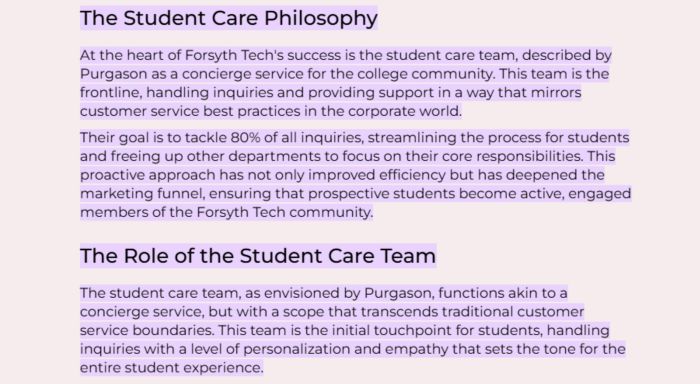
Example: Forsyth Technical Community College in the U.S. revamped its approach to student communication by adopting a “customer service” mindset, ensuring that both staff and automated systems responded quickly, kindly, and proactively to student needs. This overhaul included faster response times, friendly messaging, and a systematic effort to check in on students rather than waiting for problems to surface. The result? A 9% increase in student retention after implementing this new communication model.
To replicate this approach, consider implementing a CRM (Customer Relationship Management) or student engagement platform that allows advisors to monitor student status and send targeted messages. This could be as simple as congratulating a student on a strong midterm, or as critical as reaching out after several missed classes.
Even small gestures like a personalized check-in from a faculty member can make students feel they belong. When institutions shift from one-size-fits-all messaging to individualized outreach, they build a sense of care and connection that reinforces students’ decisions to stay enrolled.
2. Foster a Strong Sense of Community and Belonging
A strong sense of belonging is one of the most powerful predictors of student retention. When students feel connected, through friendships, mentors, and shared campus culture, they’re more likely to persist despite academic or personal challenges. Conversely, loneliness and disconnection are key drivers of attrition.
To support student connection, institutions should create structured opportunities for involvement: orientation, residence life, clubs, intramurals, volunteer work, and student leadership. Participation in these activities increases engagement and reinforces a sense of purpose. Social media can amplify this by highlighting student life and celebrating individual voices.
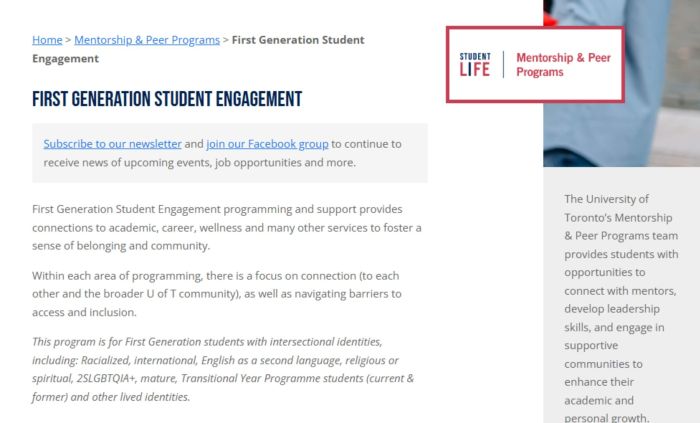
Example: The University of Toronto supports student retention by building community and belonging for underrepresented students through mentorship. In particular, U of T offers programming for first-generation students that connects them with mentors and resources across campus. This First Generation Student Engagement program focuses on helping students navigate barriers to access and inclusion by linking them to academic support, career guidance, wellness services, and peer networks. The goal is to ensure first-gen and other marginalized students feel a strong sense of belonging and are supported throughout their journey.
Ultimately, when students feel they matter to peers, faculty, and the institution, they’re more likely to stay. Belonging isn’t a bonus; it’s foundational to retention.
3. Offer Robust Academic Support and Advising
Academic challenges are a leading cause of student attrition. When students feel lost, overwhelmed, or unsupported, they’re more likely to withdraw. That’s why proactive academic support is one of the most effective student retention strategies.
Effective strategies include offering accessible tutoring (in-person and 24/7 online), writing assistance, and supplemental instruction for high-failure courses. Just as crucial is structured academic advising. When advisors monitor progress and flag early signs of struggle, like low grades or unbalanced course loads, they can intervene with timely solutions.
Institutions must also normalize help-seeking by actively promoting support services. Social media, email campaigns, and website content can encourage students to use academic resources without stigma.
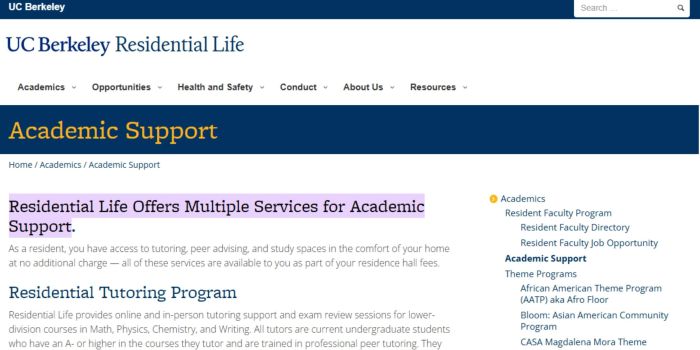
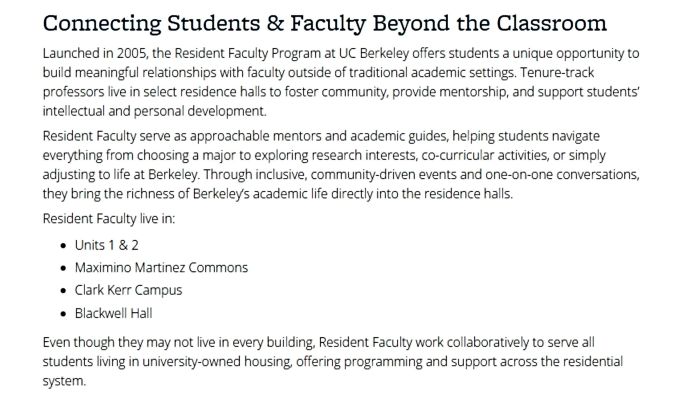
Example – UC Berkeley has built an ecosystem of academic support services combined with faculty mentorship to improve student success and retention. On the academic side, Berkeley provides extensive tutoring, peer advising, and dedicated study spaces in residence halls, free for students and readily accessible where they live.
Early alert systems are another retention tool. By analyzing attendance and coursework in the first weeks, schools can identify at-risk students and reach out before they disengage.
The message is simple: when students know help is available and feel encouraged to use it, they’re more likely to succeed.
4. Provide Career Development Opportunities From Day One
Career uncertainty is a major driver of student attrition. To counter this, institutions must integrate career development early, ideally from the first year.
Career workshops, alumni networking, LinkedIn training, and highlighting the career potential of different majors help students connect academics to future employment. Research confirms that uncertainty about career direction strongly correlates with dropout risk.
Example: DePaul University launched the Future Forward program, a year-long career incubator for first-year students, to bolster their sense of purpose and keep them enrolled. The idea is to help freshmen find their “why” for attending college by engaging them in self-discovery, skill-building, and career exploration starting in their first quarter. Future Forward combines online learning modules (on topics like growth mindset, design thinking, networking) with mentorship from older student peers and staff. By integrating career development into the first-year experience, DePaul addresses a major attrition risk: lack of direction. Many freshmen enter undecided about their field, which can sap motivation. Future Forward helps students clarify goals and see how their studies link to future careers, thereby increasing their commitment to persist.
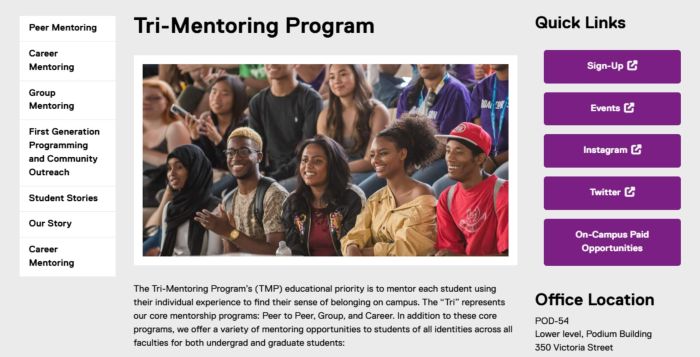
Mentorship is another effective strategy. Toronto Metropolitan University’s Tri-Mentoring Program connects upper-year students with professionals to support the transition to work.
Example: Toronto Metropolitan University (TMU) – formerly Ryerson University – pioneered the Tri-Mentoring Program (TMP) to support student retention through layered mentorship and inclusion. The educational priority of TMP is “to mentor each student using their individual experience to find their sense of belonging on campus.”
In practice, the “Tri” refers to three tiers of mentoring: Peer Mentoring (matching first-year students with trained upper-year mentors in the same program or with similar backgrounds), Group Mentoring (regular group sessions and community events for students from equity-deserving groups, facilitating peer networking and mutual support), and Career Mentoring (matching third-year or higher students with industry professionals, often alumni, for guidance as they prepare for careers).
Similarly, internships, job shadowing, and embedded career-planning courses give students confidence in their trajectory. Institutions can also integrate career goals into academic advising and marketing, using alumni stories to reinforce long-term value. When students see a clear path from degree to career, their motivation and likelihood of staying enrolled dramatically improve.
5. Leverage Data and Early Alerts to Identify At-Risk Students
Predictive analytics enables institutions to proactively support students showing signs of disengagement or academic risk. By monitoring GPA, class attendance, LMS activity, or even ID card swipes, colleges can detect early warning signs and act before a student drops out.
Many platforms offer dashboards and AI-driven messaging to flag risks and send targeted resources. When paired with advisor outreach, this approach becomes highly effective.
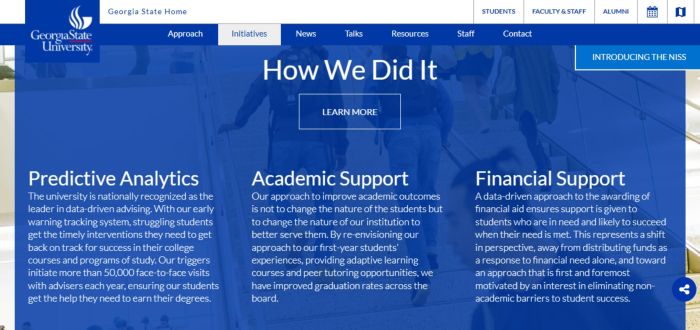
Example: Georgia State University’s Predictive Analytics: Georgia State tracks over 800 risk indicators, triggering alerts when students show signs of academic or financial distress. This system led to the Panther Retention Grant, which helps students with small outstanding balances, one of the biggest dropout triggers. Combined with advisor follow-ups, this strategy has significantly improved retention, especially for underrepresented students.
Even basic early alert systems can help. Faculty-initiated midterm warnings and proactive outreach have been shown to improve persistence by making students feel supported. Benchmarking tools like the IPEDS database can also guide institutions on where to improve.
In short, using data transforms retention from reactive to proactive. With the right tools and team, schools can identify challenges early, intervene meaningfully, and prevent students from slipping through the cracks.
6. Enhance Financial Aid Awareness and Support
Financial strain is a top reason students consider stopping out. To improve retention, institutions must ensure students are aware of, and able to access, funding options before small financial issues force them out.
Colleges should proactively promote scholarships, bursaries, emergency grants, and flexible payment plans. Hiring financial aid coaches or sending alerts to students with incomplete forms or unpaid balances can help prevent unnecessary dropouts. Georgia State University’s Panther Retention Grants exemplify this approach, offering micro-grants to students at risk of losing enrollment over modest fees. Over 10,000 students have benefited, with research showing faster graduations and lower debt loads as a result.
COVID-era aid also proved powerful: community colleges and HBCUs that used relief funds to clear student debts saw thousands stay enrolled. Additionally, financial literacy programs, like budgeting workshops or one-on-one counselling, equip students to manage limited resources wisely and reduce financial stress.
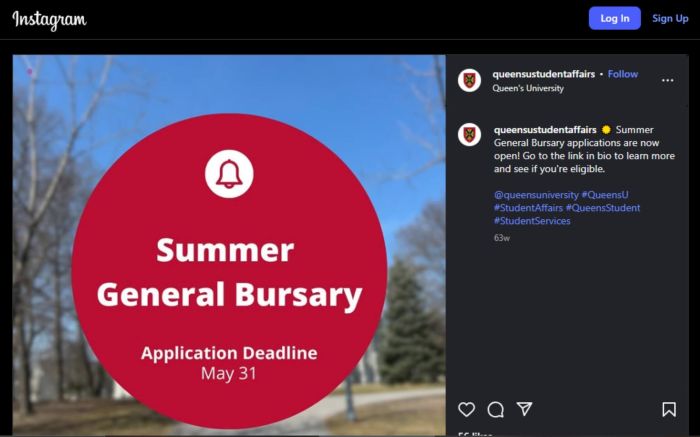
Example: Queen’s University has focused on reducing financial barriers and the misinformation around them by proactively promoting financial aid opportunities to students, using channels like social media, email, and digital signage. The goal is to ensure students know about and utilize available aid (scholarships, bursaries, grants), thereby decreasing the number who drop out due to financial strain. In practice, Queen’s Student Affairs runs ongoing Instagram awareness campaigns about bursary deadlines, loan applications, and financial wellness tips. Below we see Queen’s official Student Affairs Instagram has posts reminding students “it’s not too late to apply for the 2023–24 General Bursary for winter and summer terms” and to apply for government aid like OSAP (Ontario Student Assistance Program).
Bottom line: funding support and strong communication are critical tools in retaining financially vulnerable students.
7. Offer Flexible and Inclusive Learning Options
Modern college students are diverse; many are part-time, working, parenting, or have accessibility needs. Rigid policies and teaching methods can alienate these learners, making flexibility and inclusivity essential to retention.
Flexible scheduling options, like evening, weekend, online, or hybrid classes, help students balance education with life responsibilities. Allowing part-time enrollment, asynchronous learning, or summer online courses can reduce dropout risk, especially among non-traditional learners.
Credit for prior learning (e.g., PLAR in Canadian colleges) also supports older students by recognizing experience and accelerating time to completion. Inclusive learning environments ensure students of all abilities and styles thrive.
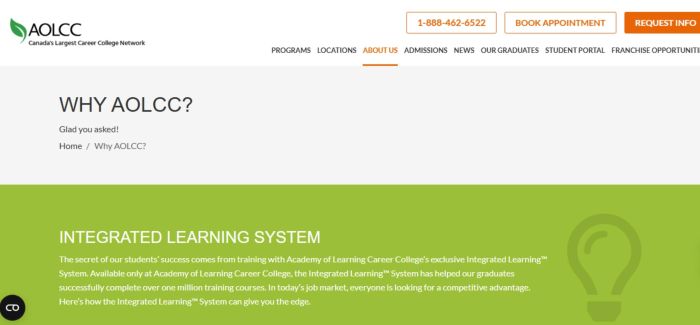
Example: Academy of Learning Career College (AOLCC) uses its proprietary Integrated Learning System (ILS) to maximize student retention by offering flexibility, personalization, and one-on-one support in the learning process. The ILS is a self-directed, multi-sensory training system that lets each student learn at their own pace on a schedule that suits them. A crucial feature since many AOLCC students are adult learners, working, or have family obligations.
Support for online students is also critical. Strong virtual infrastructure; 24/7 tech help, online tutoring, and proactive instructor check-ins help remote learners feel connected. Some schools have engagement teams dedicated to online students.
Additionally, flexible academic policies such as compassionate leaves or grading options (used during the pandemic) can prevent student loss under strain. By adapting to student realities rather than enforcing a traditional mold, colleges show they care and turn potential stop-outs into future graduates.
8. Strengthen Faculty-Student Engagement and Mentorship
Faculty play a pivotal role in student retention through their daily interactions with students. Strong faculty-student engagement, including mentorship, accessibility, and supportive instruction, helps students feel seen, guided, and motivated to persist, especially when challenges arise.
Research shows that meaningful faculty contact improves students’ sense of integration and commitment to college. Gen Z students, in particular, value professors who demonstrate authenticity and personal interest. Without that, disengagement and dropout risk increase.
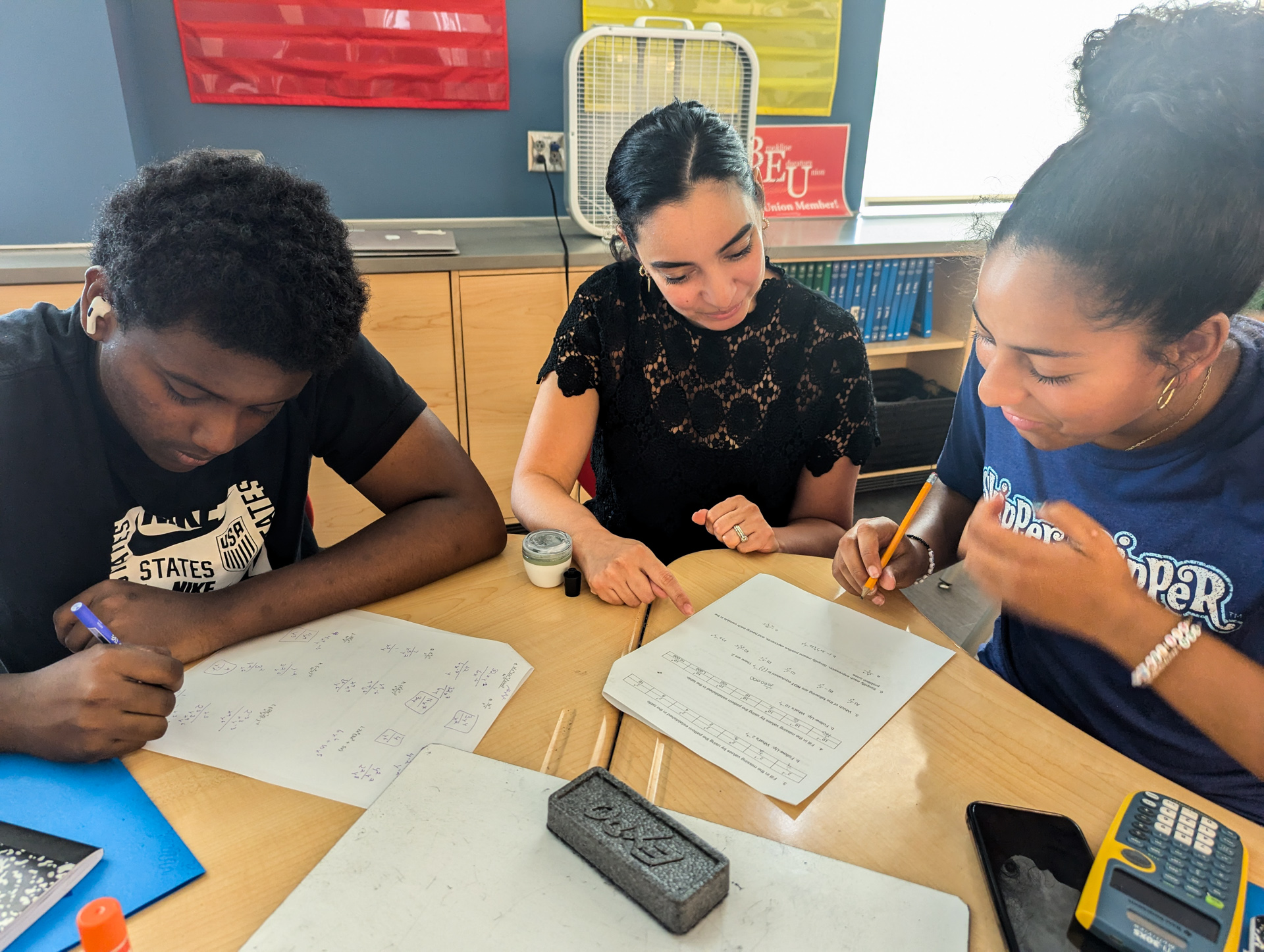
Colleges can enhance engagement through mentorship programs, pairing students with faculty advisors who offer academic, career, and personal guidance. Faculty training in inclusive teaching and student outreach empowers instructors to recognize and assist struggling students early. Simple actions, like checking in on absences, can make a big difference.
Example: Faculty as Mentors at Berkeley:As noted earlier, UC Berkeley emphasizes that its faculty are among the most accessible, citing programs like the Resident Faculty Program where professors live in residence halls to interact with students outside of class. They highlight that faculty often serve as mentors and even friends to students, and note statistics such as a 19:1 student-faculty ratio and many small classes. This environment of approachability contributes to student success and retention at Berkeley; students feel supported academically and personally by instructors of that caliber, which deepens their commitment to staying.
Interactive teaching methods, such as discussions or group work, foster stronger connections. Faculty who use student names, encourage participation, and integrate feedback build rapport and community. Schools like UC Berkeley go further, housing faculty in residence halls and maintaining small class sizes to promote mentorship.
Faculty should be viewed as frontline retention agents. By celebrating teaching and providing tools for meaningful student relationships, institutions can greatly boost persistence through a caring, connected academic culture. In retention, relationships matter, and faculty are key.
Retention Starts With Intention and the Right Support
Improving student retention isn’t about a single silver bullet. As we’ve explored, it takes a coordinated, research-driven strategy, one that centers students at every point of their journey. Whether it’s delivering personalized outreach, fostering belonging, offering early career guidance, or using data to proactively intervene, the most successful institutions treat student retention as both a mission and a metric.
But knowing what works is only half the equation. Implementing these strategies at scale, consistently and effectively, requires the right tools, technology, and expertise. That’s where Higher Education Marketing can help.
At HEM, we equip colleges and universities with the CRM systems, marketing automation, and digital engagement strategies needed to nurture students from application to graduation. From crafting segmentation-based communications to building data-informed retention workflows, our solutions are built for institutions ready to prioritize persistence.
If you’re looking to boost your retention rates, build stronger student connections, and create a more responsive campus experience, explore how HEM’s services can support your goals. Together, we can help more students reach the finish line and help your institution thrive in the process.
Do you want to explore strategic and effective university student retention strategies?
Contact HEM for more information.
Struggling with enrollment and retention?
Our Digital Marketing team can help you generate more leads!
Frequently Asked Questions
Question: Why is student retention important in higher education?
Answer: Student retention reflects institutional effectiveness and student success. High retention means students are achieving their goals and institutions are providing strong support. Low retention signals issues like academic or financial struggle.
Question: What is the difference between persistence and retention?
Answer: Retention refers to students returning to the same institution, while persistence tracks students continuing in higher education, even if they transfer.
Question: What are the factors affecting student retention?
Answer: Student retention is influenced by academics, finances, social belonging, mental health, and institutional climate. Academic unpreparedness, isolation, financial strain, and life challenges are leading causes of dropout.
Many of today’s college students have experienced disruptions to their education due to the COVID-19 pandemic, negatively affecting their personal well-being as well as their academic preparation. Encouraging students to embrace effective and meaningful study habits can be one way to improve their college readiness and confidence in learning.
One professor at Western Iowa Tech Community College designed a mandatory post-test reflection and correction for students and saw dramatic improvement in their performance on the second exam. The assignment encourages students to strengthen their study habits and hold themselves accountable for making meaningful changes.
What’s the research: Students say their biggest challenges when studying are time management (47 percent) and distractions from technology or other people (both 38 percent), as well as a lack of sufficient time (34 percent), according to a 2024 survey from Kahoot. Forty-one percent of respondents indicated they experience anxiety while studying, compared to 34 percent who said they feel confident.
Test corrections, also called exam wrappers by teaching and learning centers, are activities delivered before or after an assessment to help students consider how they study and ways they could improve their practices before the next exam.
Past research on exam wrappers has found that implementing the strategy can improve course and exam grades, as well as students’ level of metacognition and changes to study habits.
For years, Frank O’Neill, a sports medicine instructor at Western Iowa Tech, has offered students the opportunity to complete an optional correction worksheet after each exam. Typically, the students who take him up on the opportunity are the ones already excelling in the course, he said—not those who could benefit from additional support.
“My primary goal is to turn a D student into a C student,” O’Neill said.
This summer, O’Neill decided to run an experiment and see if making the test analysis and correction worksheet mandatory would have any impact on students’ grades.
The assignment: After students take an exam, O’Neill’s assignment asks them a series of reflection questions on their study habits as well as a post-test commitment to improving their test-taking abilities.
Some of the questions are designed to help O’Neill understand which study strategies students employ and how they correlate to their grades.
For example, he’s learned that a student who’s less confident entering into the assessment more often receives a higher score than their confident peers, which O’Neill believes is because students who have studied longer have spent more time wrestling with the material and consider it to be difficult, compared to their peers who skim notes and think they’ve learned content.
Other questions prompt students to consider their test-taking abilities and the errors they make frequently. Sometimes students indicate that they got a question wrong because they changed their answer from the correct response to an incorrect one, O’Neill said, which allows him to encourage more confident responses.
“Your brain is smart; your gut is smarter than your brain,” O’Neill said. “You gotta go with that gut.”
Students can also provide feedback to the professor on how to improve the course. Sometimes O’Neill gains insights from test performance and frequently missed questions to understand how to make content clearer in the future.
The assignment requires students to correct every incorrect response on the test, which O’Neill says serves as a study technique as well, because exams are cumulative, so students will need to know the right answer later. It also fosters a growth mindset among learners, helping them reframe their learning and consider how to fail forward and see assessment as progress toward their goals, O’Neill said.
The impact: O’Neill is teaching two sections of microbiology this summer with 20 students enrolled in each section.
After the first exam, O’Neill assigned all students in one section to complete the exam wrapper, which would add five points to their grade. The other section could complete the optional wrapper but without points attached.
By the second test, the difference between classes was clear; the optional correction section showed little to no difference in grades between exams one and two. In the mandatory correction section, the average exam grade rose nine percentage points.
Since he first offered the assignment, O’Neill hasn’t received any negative feedback from students about having to complete the exam wrapper, which he attributes in part to his commitment to avoid giving students “busywork,” instead explaining the purpose behind each assignment. He’s also seen self-reported levels of test anxiety decrease over the course of the semester among students who use the wrapper and fewer students failing or dropping the class, signaling the personal benefits of the worksheet.
O’Neill now plans to assign the post-test reflection to all the courses he’s teaching this fall, for about 200 students in total. He’s also exploring opportunities to digitize at least portions of the assignment in the college’s learning management system, Canvas.
Do you have an academic intervention that might help others improve student success? Tell us about it.
This HEPI guest blog was kindly authored by Cheryl Watson, VP of Education, UK at TechnologyOne.
Rising costs are now a defining feature of the student experience in the UK. What once felt like an educational ‘coming of age’ for young people is, for many, becoming a difficult balancing act between academic ambition and financial survival.
From housing and transport to food and essential tech, students today face relentless financial pressures just to participate in university life. For institutional leaders, the evidence is clear: the financial landscape is changing, and approaches to student engagement and support must change with it.
A growing financial gap in UK higher education
Financial pressures on students are not new but are growing in scale and complexity. The joint Minimum Income Standard for Students (MISS) 2024 research with HEPI and the Centre for Research in Social Policy (CRSP) at Loughborough University found that a typical full-time student living away from home needs around £244 per week to maintain a minimum standard of living. Yet, most face a significant shortfall even with part-time work and maintenance support.
One student from the recent MISS focus groups summed up the reality:
Even [like] knowing that I’m in my overdraft…I know it’s interest-free and stuff, but having to rely on it is not ideal, and I want to work to try and get out of it, but also like I can’t afford to.”
It’s a cycle, and you constantly max it out every year, and then you’re constantly working to pay it back.
This financial tightrope is increasingly common.
How student life is being redefined by cost pressures
Students are making tough choices daily between travel, food, work, and study. Financial stress is changing not just what students can afford, but also how they experience university life on a day-to-day basis.
While pressures vary, the underlying theme remains consistent: rising costs are reshaping the student experience in real-time.
The new commuter reality
Many universities still operate around the traditional student living on campus, but according to the Sutton Trust, over 50% of UK students go to university where they grew up and students from poorer backgrounds are three times more likely to commute from home.
For many, this is often because they cannot afford to live near campus. This has real academic consequences, with many students missing classes due to travel costs and disconnected timetables.
I live in Sheffield but a lot of the people in my class seem to commute and there’ll be times where like most of the class don’t turn up for a certain seminar and it’s because… it just wouldn’t make sense to pay all that money to come for an hour and a half and then just leave again.
Without more flexible, student-aware scheduling and targeted support, commuter students risk being structurally disadvantaged.
Technology isn’t optional
Access to digital tools is now essential for participation in academic life. From lecture recordings to online submissions, students are expected to stay constantly connected and equipped.
You definitely need a laptop as well because although the University library provides computers, especially during exam season, you have to book them in advance, and they’ve already been taken up.
For many, the cost of keeping up with technology adds to financial pressures, creating further barriers to participation.
Living with financial stress
Financial pressure is a constant presence for many students. Overdrafts are used regularly, part-time work is essential, and mismatches between payment schedules and bills force difficult choices.
In 2023, HEPI found that more than a quarter of universities operate food banks to support students, while rising rent costs leave little left for essentials.
The difference between first year and second year is that you have that comfort blanket of it, but by the time you get into second year, you’ve already used it, and you’ve got nothing to help you anymore.”
These aren’t one-off lapses in budgeting. They’re the result of an unsynchronised system that does not reflect the financial reality students are working within.
Missing out on student life
Financial pressures also limit participation in the social and community aspects of university life that are vital for wellbeing and development.
Especially in the SU, it’s not ideal because lots of societies will do socials there so if you can’t afford that… It might seem silly, but if you’re part of a sports society then there is some sort of expectation to go to Sports Night on a Wednesday most weeks so that obviously adds up if you’re going most weeks.
Opting out is often the only option, but it comes at a cost to confidence and connection
Why this matters for universities and policymakers
Financial stress is no longer a fringe issue in UK higher education. When 30% of students are taking on extra debt just to cover essentials, and many are skipping classes or missing out on key experiences, the impacts on retention, well-being, and academic outcomes cannot be ignored.
The disconnect between what students need and what current funding models assume continues to grow. Part-time work and family contributions are often treated as standard, despite being unrealistic for many students.
What’s next: Building an evidence base for change
If the Minimum Income Standard for Students 2024 brought much-needed clarity to the financial pressures facing undergraduates, this year’s follow-up takes that work a step further.
The upcoming report, Minimum Income Standard for Students 2025 (MISS25), focuses specifically on first-year students living in purpose-built accommodation, offering the most detailed insight yet into the cost of starting university life in the UK.
The findings are stark. Those on minimum support face a funding gap that must be filled by family or debt. The report also reveals a growing mismatch between student needs and how maintenance systems are designed, particularly for those without access to parental support.
For institutional leaders, policymakers and student advocates, we encourage you to read closely, and to consider how your planning, funding and engagement strategies can respond to what today’s students are telling us.
Click the link below to sign up for a copy of the MISS25 report when it’s ready.
TechnologyOne is a partner of HEPI. TechnologyOne is a global Software as a Service (SaaS) company. Their enterprise SaaS solution transforms business and makes life simple for universities by providing powerful, deeply integrated enterprise software that is incredibly easy to use. The company takes complete responsibility to market, sell, implement, support and run solutions for customers, which reduce time, cost and risk.
EducationDynamics Transforms Insights into Action for Higher Ed Leaders
The higher education landscape is in constant motion. To truly thrive, institutions committed to student success must not just keep pace but anticipate what’s next. The National Student Clearinghouse (NSC) recently released two crucial reports in June 2025—one on “some college, no credential” (SCNC) undergraduates and another on overall undergraduate student retention and persistence. These aren’t just statistics. They are the roadmap for strategic action.
At EducationDynamics, we don’t merely react to these insights. We proactively integrate them into data-driven solutions that empower our partners to excel. Our deep understanding of the higher education market, sharpened by years of proprietary research, allows us to translate these macro trends into micro-level strategies that deliver tangible results for your institution.
Strategic Implications from the NSC June Update
The latest NSC findings highlight several critical areas demanding immediate attention from higher education leaders:
Persistence and Retention Gaps
While overall persistence is at 78% and retention at 70%, a significant disparity exists. Bachelor’s and certificate-seeking students show much higher rates than those pursuing associate degrees. Generalized support isn’t enough. Tailored academic and financial aid advising, particularly for associate-degree pathways, is essential to prevent attrition at critical junctures.
The Part-Time Student Paradox
Persistence and retention rates for part-time students are a staggering 30% lower than their full-time peers. Part-time learners often juggle work and family. Institutions must design flexible and accessible support systems, including asynchronous learning, evening/weekend advising, and re-evaluating traditional program structures.
Sectoral Disparities
For-profit institutions demonstrate significantly lower retention and persistence rates compared to not-for-profit counterparts. Regardless of sector, consistent and proactive communication focused on evolving student needs is crucial. This means dedicated engagement strategies, not just reactive responses.
Equity in Outcomes
White and Asian students continue to exhibit the highest persistence and retention rates. Achieving equitable outcomes demands meticulously analyzing data by affinity group, identifying specific barriers faced by underserved populations, and then designing targeted, culturally competent support programs.
The Power of Re-Engagement
The share of re-enrollees earning a credential in their first year has increased by nearly five percent, with students who have at least two full years of credits being most likely to re-enroll and persist. Notably, 36% re-enroll at the same school. Your “stopped out” student population is a goldmine for re-enrollment. Proactive, personalized outreach, highlighting clear paths to completion, is a win-win for both institutions seeking to boost enrollment and students aiming to achieve their academic aspirations.
The Online Advantage
In almost all cases, a plurality of re-enrolling students chose primarily online schools. Even if your institution isn’t primarily online, a robust and well-promoted suite of online program options is vital. Flexibility in format and delivery is critical to meet the diverse needs of today’s learners.
Certificate Pathways as Catalysts
Nearly half of re-enrolled SCNC students who earned a credential in their first year attained an undergraduate certificate. Expanding and actively promoting undergraduate certificate programs, especially those aligning with in-demand skills or acting as stepping stones to degrees, can significantly boost completion rates among the SCNC population.
How EducationDynamics Turns Insights into Action for Our Partners
Tailored Support for the Modern Learner
We partner with institutions to develop AI-powered communication workflows and personalized engagement platforms that proactively address the specific needs of part-time, non-traditional, and diverse student populations. For instance, our work with one regional university saw a 15% increase in part-time student retention within two semesters by implementing automated check-ins and flexible advising scheduling based on our Engaging the Modern Learner report findings.
Optimizing Re-Engagement Pipelines
Our “Education Reengagement Report: Inspiring Reenrollment in Some College No Credential Students” anticipated the NSC’s findings on the SCNC population. We’ve since refined our “Lost Student Analysis” methodology, which identifies high-potential stopped-out students and crafts targeted re-enrollment campaigns. For a recent partner, this resulted in re-enrolling over 200 SCNC students in a single academic year, directly contributing to enrollment growth.
Strategic Program Portfolio Development
Understanding the demand for online and certificate options, we guide institutions in developing and promoting flexible program offerings. This includes comprehensive market research to identify in-demand certificate programs and optimizing their visibility through targeted marketing. Our expertise helps institutions strategically align their offerings with what NSC data shows students are seeking.
Equity-Driven Enrollment & Retention
We help institutions implement data segmentation and predictive analytics to identify students at risk of stopping out based on various demographic and academic factors. This enables early intervention and the allocation of resources to underserved groups, fostering a more equitable and supportive learning environment.
Proactive Market Intelligence
Our partners gain an unparalleled advantage with early access to our market research reports and bespoke analyses. These reports, often preceding or complementing national findings like the NSC’s, provide actionable recommendations that allow institutions to adapt their strategies ahead of the curve, rather than playing catch-up.
Your Partner in Data-Driven Student Success
EducationDynamics is more than a service provider. We are a strategic partner dedicated to empowering higher education leaders with the insights and tools needed to navigate an evolving landscape and maximize student success. We combine cutting-edge market intelligence with proven strategies, transforming data into actionable plans that boost retention, drive re-enrollment and foster a truly student-centric institution.
In the race to help students recover from pandemic-related learning loss, education leaders have overlooked one of the most powerful tools already at their disposal: experienced teachers.
For decades, a myth has persisted in education policy circles that after their first few years on the job, teachers stop improving. This belief has undercut efforts to retain seasoned educators, with many policymakers and administrators treating veteran teachers as replaceable cogs rather than irreplaceable assets.
But that myth doesn’t hold up. The evidence tells a different story: Teachers don’t hit a plateau after year five. While their growth may slow, it doesn’t stop. In the right environments — with collaborative colleagues, supportive administrators and stable classroom assignments — teachers can keep getting better well into their second decade in the classroom.
This insight couldn’t come at a more critical time. As schools work to accelerate post-pandemic learning recovery, especially for the most vulnerable students, they need all the instructional expertise they can muster.
That means not just recruiting new teachers but keeping their best educators in the classroom and giving them the support they need to thrive.
In a new review of 23 longitudinal studies conducted by the Learning Policy Institute and published by the Thomas B. Fordham Institute, all but one of the studies showed that teachers generally improve significantly during their first five years. The research review also found continued, albeit slower, improvement well into years 6 through 15; several of the studies found improvement into later years of teaching, though at a diminished pace.
These gains translate into measurable benefits for students: higher test scores, fewer disciplinary issues, reduced absenteeism and increased postsecondary attainment. In North Carolina, for example, students with highly experienced English teachers learned more and were substantially less likely to skip school and more likely to enjoy reading. These effects were strongest for students who were most at risk of falling behind.
While experience helps all teachers improve, we’re currently failing to build that experience where it’s needed most. Schools serving large populations of low-income Black and Hispanic students are far more likely to be staffed primarily by early career teachers.
And unfortunately, they’re also more likely to see those teachers leave after just a few years. This churn makes it nearly impossible to build a stable, experienced workforce in high-need schools.
It also robs novice teachers of the veteran mentors who could help them get better faster and robs students of the opportunity to learn from seasoned educators who have refined their craft over time.
To fix this, we need to address both sides of the equation: helping teachers improve and keeping them in the classrooms that need them most.
Research points to several conditions that support continued teacher growth. Beginning teachers are more likely to stay and improve if they have had high-quality preparation and mentoring. Teaching is not a solo sport. Educators who work alongside more experienced peers improve faster, especially in the early years.
Teachers also improve more when they’re able to teach the same grade level or subject year after year. Unfortunately, those in under-resourced schools are more likely to be shuffled around, undermining their ability to build expertise.
Perhaps most importantly, schools that have strong leadership and which foster time for collaboration and a culture of professional trust see greater gains in teacher retention over time.
Teachers who feel supported by their administrators, who collaborate with a team that shares their mission and who aren’t constantly switching subjects or grade levels are far more likely to stay in the profession.
Pay matters too, especially in high-need schools where working conditions are toughest. But incentives alone aren’t enough. Short-term bonuses can attract teachers, but they won’t keep them if the work environment drives them away.
If we’re serious about improving student outcomes, especially in the wake of the pandemic, we have to stop treating teacher retention as an afterthought. That means retooling our policies to reflect what the research now clearly shows: experience matters, and it can be cultivated.
Policymakers should invest in high-quality teacher preparation and mentoring programs, particularly in high-need schools. They should create conditions that promote teacher stability and collaboration, such as protected planning time and consistent teaching assignments.
Principals must be trained not just as managers, but as instructional leaders capable of building strong school cultures. And state and district leaders must consider meaningful financial incentives and other supports to retain experienced teachers in the classrooms that need them most.
With the right support, teachers can keep getting better. In this moment of learning recovery, a key to success is keeping teachers in schools and consciously supporting their growing effectiveness.
Linda Darling-Hammond is founding president and chief knowledge officer at the Learning Policy Institute. Michael J. Petrilli is president of the Thomas B. Fordham Institute, a visiting fellow at the Hoover Institution and an executive editor of Education Next.
The Hechinger Report provides in-depth, fact-based, unbiased reporting on education that is free to all readers. But that doesn’t mean it’s free to produce. Our work keeps educators and the public informed about pressing issues at schools and on campuses throughout the country. We tell the whole story, even when the details are inconvenient. Help us keep doing that.
That Southern rock refrain from Molly Hatchet captures the bitter reality faced by millions of Americans who invested in higher education only to be left with debt, shattered hopes, and uncertain futures.
Educator Gary Roth’s The Educated Underclass points to a growing class of credentialed individuals caught in precarious economic and social positions—overqualified yet underpaid, burdened by debt without the stability education promised. Yet it is the borrowers’ own stories that reveal the human toll behind the numbers.
Over the past month, The Higher Education Inquirer has chronicled the experiences of borrowers misled by predatory institutions—mainly for-profit colleges—through its Borrower Defense Story Series. These narratives shed light on the deeply personal consequences of institutional deception and a federal loan forgiveness process that is often slow, bureaucratic, and uneven.
In one story, a single mother describes her experience at Chamberlain University School of Nursing. She followed every instruction, met every deadline, and committed herself fully to a career in health care. Yet she never earned her degree. Despite this, she remains burdened with thousands of dollars in student loan debt. Her borrower defense application has yet to yield relief.
Another borrower shares her journey with Kaplan University Online, where promises of flexible learning and job placement proved empty. After transferring and completing her degree elsewhere, she still faces uncertainty as her borrower defense claim drags on, highlighting the emotional toll of navigating a broken loan forgiveness system.
A third story critiques the broader system of higher education finance, describing how students—especially those without family wealth or institutional support—become trapped in debt relationships that limit their autonomy and economic mobility. Rather than offering a pathway to security, college becomes a mechanism of financial entrapment.
These individual stories are not exceptions. As of April 30, 2024, over 974,000 borrowers had received more than $17 billion in loan discharges under borrower defense rules, mostly through group claims tied to scandals involving Corinthian Colleges, ITT Tech, and DeVry. Yet hundreds of thousands still await decisions, and many are excluded entirely due to private loans, school exclusions, or bureaucratic delays.
The borrower defense rule was meant to shield students from fraud, but political interference, legal challenges, and an overwhelmed bureaucracy have marred its implementation. Behind the statistics are people deceived, indebted, and left behind.
Meanwhile, elite institutions hoard resources, adjunct faculty struggle to survive, and the promise of higher education rings hollow for many.
“I’m hung up on dreams I’ll never see.” This lyric is not just poetry but the lived reality for millions. Unless there is radical change—debt cancellation, labor protections, honest admissions, and accountability—the cycle of exploitation will only grow louder.
Some were sold dreams they could never afford. Many of those dreams are now lost.
Sources
Roth, Gary. The Educated Underclass. Pluto Press, 2022
National Center for Education Statistics. “Debt After College”
The Institute for College Access and Success (TICAS). “Student Debt and the Class of 2023”
American Psychological Association. “Mental Health Impacts of Student Debt”
Bousquet, Marc. How the University Works. NYU Press, 2008
McMillan Cottom, Tressie. Lower Ed. The New Press, 2017