Tag: Student

  • Addressing Nursing Student Shortages with Precollege Support

    Addressing Nursing Student Shortages with Precollege Support

    The U.S. is expected to experience a shortage of nurses by 2030, which will only grow as older generations age and health-care needs increase, according to the American Association of Colleges of Nursing.

    One of the contributing factors to this shortfall is a disconnect between the number of students enrolling in nursing school and the projected demand for nursing services. Another is high levels of work-related stress, leading to burnout.

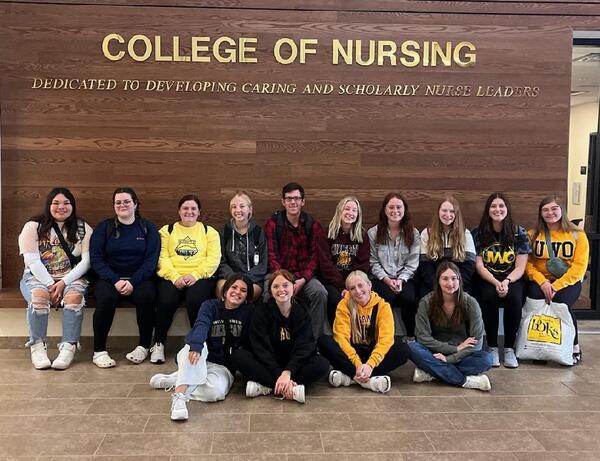
    In August 2023, the University of Wisconsin–Oshkosh launched the Pre-Nursing Pathway, a weeklong intensive precollege program that helps students prepare for the academic rigor of the nursing program and connects them with resources. In the pathway, students engage in peer interactions, mentorship and additional time with faculty and staff, allowing them to build emotional resiliency and a network of support.

    What’s the need: Staff at UW-Oshkosh noticed a decrease in qualified applicants to the nursing program and an overall decline in the matriculation of pre-nursing students, said Jessica Spanbauer, director of the center for academic resources.

    Students had large gaps in their foundational science and math concepts as well as a lack of time management and organizational skills, which could be tied in part to remote instruction due to the COVID-19 pandemic, Spanbauer said.

    The university decided to implement a pre-nursing program, in part to boost enrollment of students, but also to ensure students who do attend are successful on their career journey.

    How it works: The program is organized by the Center for Academic Resources and the College of Nursing, but is supported by admissions, the Undergraduate Advising Resource Center, the counseling center, the biology and chemistry departments, residence life, and recreation and wellness.

    Both admitted and deposited students are eligible to apply to the program, with special priority given to first-generation students.

    Selected program participants move onto campus a week before classes start for an intensive orientation experience. All students live in one wing of a residence hall together, mentored by two current nursing students, building a sense of community and peer support.

    During their week on campus, students participate in biology and chemistry labs led by professors; attend workshop presentations by advisers, counselors and academic support staff; and explore campus, familiarizing themselves with support resources. The goal is to proactively address knowledge gaps among students early on, enhancing their success and preparing them for the future demands of their profession.

    “By focusing on crucial and relevant concepts, we could ensure that students are well-equipped to excel in their nursing education,” Spanbauer said. “We could help build students’ confidence and encourage students to actively engage in shaping their academic trajectory.”

    Program participants are also offered tours of local hospitals, a Q&A session with nursing students and recent alumni, professional development workshops, and support from financial aid, dining, residence life and the Office of Accessibility.

    “We were fortunate that we had colleagues ready to enhance collaboration across units to further promote a student-focused supportive learning environment where students can thrive,” said Seon Yoon Chung, dean of the college of nursing.

    The impact: The program launched in August 2023 with 15 participants. Ninety percent of those students retained to fall 2024, and they earned an average GPA of 3.1. Eighty percent of the fall 2023 cohort are still in the pre-nursing major or accepted into the nursing program.

    An additional 12 students participated in August 2024 (100 percent of whom retained to spring 2025), and the staff hope to double participation rates this upcoming fall, Spanbauer said.

    Staff collect qualitative data about participants by using surveys and focus groups, as well as insights from faculty and other staff. In the future, longitudinal career-progression data and alumni surveys will help assess the program’s long-term impact, Spanbauer said.

    Campus leaders are also considering ways to enhance recruitment efforts and increase capacity for students through various resources, online modules and flexible scheduling to accommodate more interested students.

    Do you have an academic intervention that might help others improve student success? Tell us about it.

    This article has been updated to correct attribution of a quote to Seon Yoon Chung.

    Source link

  • Improve Student Feedback in 2025

    Improve Student Feedback in 2025

    Higher education is not only changing; it is racing ahead and as professors we must either catch up or fall behind! AI-powered grading is here, revolutionizing our assessment of students and offers insightful comments rather than some far-off fantasy. This is not only a need by 2025; it is also a must. Using AI-driven technologies, professors may at last escape tiresome grading and concentrate on what really counts—guiding students toward success. Let’s get into the details in this article!


    The Evolution of AI  

    Artificial intelligence (AI) is taking over rather than only invading education. You should be aware, AI is transforming classrooms all around from administrative automation to tailored learning paths. 

    The figures don’t lie: with a predicted 31.2% CAGR through 2030, the $5.88 billion worldwide AI in the education industry is rising. This fast expansion emphasizes one thing: higher education is heavily dependent on AI-powered solutions to improve feedback, simplify tests, and raise learning results.


    Key Benefits of AI-Powered Grading in 2025  

    Grading isn’t a never-ending cycle of late evenings and red pens! AI-powered grading is rewriting the rules and transforming a once time-consuming task into an instant, intelligent workflow. AI-driven systems automate grading across tests, essays, and even difficult responses in a quarter of the typical time, therefore eliminating the need for burying oneself in homework.


    And the resultant influence? Professors save up to 70% of grading time—time better used for real-world instruction, mentorship, and innovation rather than caught in an assessment cycle. AI is freeing professors to concentrate on what really counts—student success—not only saving time.


    How AI Enhances Student Learning & Engagement

    Grades are just numbers without context. Many times, traditional grading leaves students with unclear remarks or, worse, none at all. By giving rich, data-driven insights customized to every student, AI-powered grading transforms the game! 

    These clever technologies not only point out errors but also dissect replies, highlighting areas of strength and weakness with laser precision. The outcome of tailored, practical comments that enable students to advance more quickly than before. Customized feedback has been shown in studies to increase student performance by up to 40%; so, it is clear that intelligent grading results in intelligent learning.

    Trust us, this is about changing our assessment and enhancement of student learning, not only about efficiency. See the image below that sums up how AI elevates student learning and engagement! 


    Grading Powered by AI: Adoption Trends and Rates 

    Artificial intelligence is taking over at full speed; it is not invading higher education. According to a recent EDUCAUSE poll, 52% of institutions use AI to automate administrative tasks while 54% of them currently use it to influence curriculum design.

    Moreover, not only professors—43% of students actively use AI-powered products to improve their educational process.

    These figures clearly show that intelligent evaluation tools and AI-powered grading are not only becoming the new benchmark but also not new. AI is showing to be the future of tests as institutions hurry to improve efficiency, feedback, and learning results.


    AI Adoption in Higher Education


    Addressing Challenges and Ethical Considerations of AI Adoption

    Rising Artificial Intelligence-powered grading raises serious issues including algorithmic bias, data privacy, and a fear of losing human control. Is human touch ever replaceable by Artificial Intelligence grading? Should it? Institutions have to act early to guarantee ethical implementation: clear AI rules will help academics and students to know how AI evaluations operate.

    Frequent audits of Artificial Intelligence models help to reduce bias and guarantee equitable grading.

    • Combine artificial intelligence with human evaluation—automate the grunts but maintain human judgment in the loop.
    • Institutions can use AI’s efficiency without sacrificing academic integrity by aggressively addressing these concerns. 


    Creatrix Campus’s Role in AI-Powered Grading

    Grading should improve learning, not hinder it. Creatrix Campus transforms AI-powered grading into faster, smarter, and more informative evaluations. Our solution lets instructors focus on teaching and mentoring by automating tiresome chores and providing real-time, individualized feedback.

    Why Educators Trust Creatrix Campus: 

    • Accurate AI-driven grading
    • Real-time, tailored feedback
    • Smart analytics, identifying trends and learning gaps before they become issues
    • Integrates seamlessly with your LMS and other platforms.

    Smarter grading. Improved learning. Build the future of assessments together!


    Wrapping Up: AI-Powered Grading—The Future Right Now

    AI-powered grading is not only a development but also a revolution in how we evaluate, analyze, and improve student learning as we head farther toward 2025. AI is altering the professor’s job from cutting grading time to providing individualized feedback at scale, freeing more attention on teaching and mentoring than on administrative overburden.

    The next biggest question for higher ed leaders and assessment committees is not whether or not AI-powered grading should be embraced—rather, how quickly can we do it? Institutions may access smarter assessments, better learning outcomes, and a more agile academic ecosystem by adopting intelligent grading systems with a balanced approach—leveraging automation while keeping human oversight—by means of which they can maintain human control.

    Grade’s future is already here. All set to discover how artificial intelligence might change your university? Get in touch with Team Creatrix to see how we are enabling institutions to advance with AI-powered solutions! 

    .

    Source link

  • Dual Enrollment’s Long-Term Effects on Student Earnings

    Dual Enrollment’s Long-Term Effects on Student Earnings

    Title: Do Dual Enrollment Students Realize Better Long-Run Earnings? Variations in Financial Outcomes Among Key Student Groups

    Authors: Navi Dhaliwal, Sayeeda Jamilah, McKenna Griffin, Dillon Lu, David Mahan, Trey Miller, and Holly Kosiewicz

    Source: The Research Institute at Dallas College and University of Texas at Dallas

    Dual enrollment partnerships between school districts and colleges and universities provide an opportunity for high school students to enroll in college courses, often saving them time and money. However, the long-term impacts of dual enrollment have not been studied in depth, and the existing body of research offers mixed results. A recent working paper reveals many dual enrollment students experience long-term economic benefits, although outcomes vary based on race and socioeconomic status.

    In the study, students from the 2011 graduating class across 22 Texas school districts were tracked and examined, contrasting the outcomes of students that participated in dual enrollment against those that did not. Ultimately, by the sixth year after graduation, dual credit students were earning more than their peers. Students earned 4 to 9 percent more annually between year six and year 12.

    Additional highlights from the working paper include:

    • Many dual enrollment participants benefited from higher earnings than non-participants in years six through twelve after high school graduation, but not all student subgroups saw significant benefits.
    • African American, Hispanic, and limited English proficient students experienced smaller increases in long-term earnings outcomes.
    • Economically disadvantaged and African American students that enrolled in dual credit programs also reported higher levels of student loan debt compared to non-participants. For example, there was an $831 to $855 increase in student debt from year three to four for economically disadvantaged dual credit students, and a $1,231 to $1055 increase in student debt from years one to four for African American dual credit participants.

    To read the full report, click here.

    —Austin Freeman


    If you have any questions or comments about this blog post, please contact us.

    Source link

  • Redefining Student Success in Higher Education

    Redefining Student Success in Higher Education

    The old scorecard for student success in higher education was simple: graduate on time with good grades. But in 2025, that definition feels as outdated as a flip phone.

    Today’s colleges and universities are wrestling with a more complex question: What does student success mean in an era where traditional 18-year-old first-year students are no longer the norm and when career paths look more like jungle gyms than ladders?

    In the 2025 Effective Practices for Student Success, Retention, and Completion study, RNL asked student success and retention professionals to define student success in their own words.

    Their answers reflect how profoundly higher education has evolved and tell a fascinating story about how institutions adapt their missions, metrics, and support systems to serve an increasingly diverse student population.

    Gone are the one-size-fits-all definitions of decades past, replaced by nuanced frameworks that acknowledge the complexity of modern student journeys. All institutions, regardless of their type, flavor the conversation. Private institutions emphasize personal growth and character development. Public universities tend to speak the language of data and systems, focusing on measurable outcomes. Two-year institutions? They’re the ultimate pragmatists, defining success through real-world impact – whether landing a job or successfully transferring to a four-year program.

    But here’s what’s interesting: beneath these surface differences, five core themes kept showing up:

    The completion conversation has changed

    Gone are the days when graduation rates were the only metric that mattered. Yes, completion still counts—but institutions are getting more nuanced about what that means.

    A community college student who completes a certification and lands a better job might be just as successful as one who transfers to a four-year university. Private institutions look at how graduation connects to personal transformation, while the public tracks how different pathways to graduation affect long-term outcomes.

    Consider these representative definitions:

    • Private: “Student retention, graduation, and subsequent placement with a transformative experience.”
    • Public: “Students who successfully persist through their progression points in a timely manner”
    • Two-year: “Curriculum completion rates evaluated along three separate avenues: graduation rates, credit accumulation, and persistence”

    Holistic development takes center stage

    Universities finally acknowledge what employers have said for years: technical skills alone don’t cut it. Success increasingly means developing the whole person—emotional intelligence, adaptability, cultural competence, and even that buzzword-worthy quality: resilience.

    Consider these representative definitions:

    • Private: “Our university defines student success as thriving in various aspects of life, including engaged learning, academic determination, positive perspective, social connectedness, and diverse citizenship”
    • Public: “Students being successful in all aspects of their well-being – academically, socially, emotionally, financially”
    • Two-year: “Achievement of academic, personal, and professional goals by students”

    Career outcomes matter more than ever

    With student debt in the spotlight and ROI under scrutiny, institutions are paying closer attention to what happens after graduation. But it’s not just about salary data anymore. Schools look at career satisfaction, professional growth, and how well graduates adapt to changing industry demands.

    Their definitions reflect this priority:

    • Private: “Students complete their degree program and become gainfully employed in a field related to their degree”
    • Public: “End up with a career path that is rewarding and supports the desired lifestyle of the student”
    • Two-year: “Either secure employment and/or transfer to a four-year institution”

    Student goals drive the definition

    The most significant shift is recognizing that each student’s success looks different. A single parent completing their degree part-time while working full-time might have very different metrics for success than a traditional full-time student. Institutions are learning to flex their support systems accordingly.

    As these institutions expressed:

    • Private: “Student success is defined differently for each student and their identified goals”
    • Public: “Student success is different for each student – for some, it may be passing a test or a course, and for others, it is completing their degree”
    • Two-year: “That the student achieves their goals (i.e., transfer to 4-yr, enter the job market, expand skills)”

    Reimagining support systems

    The most thoughtful definitions of success in the world mean nothing without the infrastructure to support them. Schools are rethinking everything from academic advising to mental health services, creating more integrated and accessible support networks.

    The most thoughtful success definitions emphasize the institution’s role in providing support:

    • Private: “Giving students the support they need to achieve their goals while identifying and helping them overcome barriers to persistence”
    • Public: “Creating environments and opportunities that contribute to retention while providing academic and social services”
    • Two-year: “We define student success as helping students clarify, define, and reach their educational and career goals”

    The road ahead

    Measuring success becomes more complex when you are tracking personal growth alongside GPA. Resource allocation gets trickier when success means different things to different students.

    But here’s the exciting part: this new way of thinking about success might help more students succeed. When we expand our definition of success, we create more paths to achievement. We acknowledge that the 22-year-old who graduates in four years with a 4.0 GPA isn’t the only success story worth telling.

    The institutions that will thrive in this new landscape can balance accountability with flexibility and standardization with personalization. They are building systems that can adapt to changing student needs while delivering measurable results.

    What this means for higher education’s future

    The shift in defining student success reflects a broader evolution in higher education. We are moving away from a one-size-fits-all model toward something more dynamic and responsive. This isn’t just about keeping up with changing times – it’s about creating an educational system that serves today’s students.

    For institutional leaders, the message is clear: your definition of student success shapes everything from strategic planning to daily operations. It’s worth taking the time to get it right.

    For students and families, these changes mean more options, support, and responsibility to define what success means for them. And for society at large? We might finally be moving toward a higher education system that measures what truly matters—not just what’s easy to measure.

    Source link

  • Historic Black Church Eliminates Student Debt for SAU Seniors

    Historic Black Church Eliminates Student Debt for SAU Seniors

    Rev. Dr. Howard-John Wesley, Senior Pastor of Alfred Street Baptist Church.Alfred Street Baptist Church of Alexandria, Virginia, a prominent Black congregation located just outside Washington D.C., has donated $132,469 to Saint Augustine’s University (SAU) to eliminate the outstanding debt of 11 graduating seniors, enabling them to receive their diplomas debt-free at the May 3rd commencement ceremony.

    The timely donation comes as SAU faces a litany of challenges, including an appeal to hold on to its accreditation.

    The 222-year-old church, one of the nation’s oldest and largest predominantly African American congregations with approximately 13,000 members, has a long history of supporting historically Black colleges and universities (HBCUs). Church officials estimate about 60% of Alfred Street’s members are HBCU graduates themselves.

    “This act of grace by Alfred Street Baptist Church is nothing short of transformative for our students and our institution,” said SAU Interim President Dr. Marcus H. Burgess. “We are immensely grateful for this demonstration of faith and partnership.”

    The donation comes at a critical time when many small private colleges and HBCUs face financial challenges. The university had initially informed the entire graduating class that students with unpaid tuition balances could not participate in the commencement ceremony. While more than half of SAU’s graduating class managed to settle their balances independently, 11 students still needed assistance.

    “This is what ministry looks like,” said Rev. Dr. Howard-John Wesley, Senior Pastor of Alfred Street Baptist Church. “We believe in investing in students, in HBCUs, and in a future where financial hardship should never be a barrier to graduation.”

    This isn’t the first time Alfred Street Baptist Church has stepped up to support HBCU students. In 2019, the church raised $150,000 in a single weekend to pay off account balances for 34 graduating seniors at Howard University while also contributing $50,000 to assist Bennett College.

    The connection between SAU and Alfred Street was nurtured by SAU alumni Gilbert and Carolyn Knowles, who are members of the church.

    “When my wife and I discovered that our church, Alfred Street, approved the donation and the amount they would give to SAU, we cried tears of joy out of love for our church and our alma mater,” said Gilbert Knowles, a 1976 graduate.

    For students like SGA President Tillia Leary, a graduating senior from The Bahamas majoring in accounting, the donation has been life changing. “This incredible act of kindness lifted a major burden and affirmed my belief in the power of community and faith,” said Leary, who plans to attend Ball State University for her master’s degree.

    The timing of this gift coincides with SAU’s efforts to overcome recent challenges and chart a course forward. Representatives from Alfred Street Baptist Church will attend SAU’s commencement ceremony to celebrate with the students whose burdens they’ve helped lift.

    While this donation covers 11 seniors’ debt, many other SAU students still face financial hurdles totaling approximately $230,000. The university is calling on others moved by the church’s act of philanthropy, to contribute to their student relief funds or scholarship programs.

    Source link

  • Amazon Doc Probes Student Surveillance Harms – The 74

    Amazon Doc Probes Student Surveillance Harms – The 74

    School (in)Security is our biweekly briefing on the latest school safety news, vetted by Mark KeierleberSubscribe here.

    It all began when school officials mistook a blurry image of a Mike and Ike candy for pills. 

    Pennsylvania teenager Blake Robbins found himself at the center of a digital surveillance controversy that gave rise to student privacy debates amid schools’ growing reliance on ed tech. 

    Spy High, a four-part documentary series streaming now on Amazon Prime, puts the focus on a lawsuit filed in 2010 after Robbins’ affluent Pennsylvania school district accused him of dealing drugs — a conclusion officials reached after they surreptitiously snapped a photo of him at home with the chewy candy in hand. 

    Blake Robbins, then a high school student in Pennsylvania’s affluent Lower Merion School District, speaks to the press about his 2010 lawsuit alleging covert digital surveillance by educators. (Unrealistic Ideas)

    The moment had been captured on the webcam of his school-issued laptop — one of some 66,000 covert student images collected by the district, including one of Robbins asleep in his bed. 

    I caught up with Spy High Director Jody McVeigh-Schultz to discuss why the 15-year-old case offers cautionary lessons about student surveillance gone awry and how it informs contemporary student privacy debates. 

    How student surveillance plays out today: Meet the gatekeepers of students’ private lives. | The 74


    In the news

    Courts block DEI directive: Three federal courts ordered temporary halts on Thursday to Trump’s efforts to cancel student diversity initiatives — and demands for states to pledge allegiance to the administration’s interpretation of civil rights laws. | The 74

    President Donald Trump signed an executive order Wednesday that called for school discipline models “rooted in American values and traditional virtues,” taking aim at Obama- and Biden-era efforts to reduce racial disparities in suspensions and expulsions. | Politico

    U.S. Secretary of Health and Human Services Robert F. Kennedy Jr. speaks about a new autism study during a news conference on April 16, 2025. (Getty Images)

    ‘The history there is deeply, deeply disturbed’: Disability-rights advocates have decried plans at the National Institutes of Health to compile Amerians’ private medical records in a “disease registry” to track children and other people with autism. | The 74

    • Health and Human Services Secretary Robert F. Kennedy Jr., faced criticism for recent comments that many kids “were fully functional and regressed because of some environmental exposure into autism when they’re 2 years old.” | ABC News

    A new lawsuit filed by students at military-run schools accuses the Defense Department of harming their learning opportunities by banning books related to “gender ideology” or “divisive equity ideology,” including texts that refer to slavery and sexual harassment prevention. | Military Times

    Sign-up for the School (in)Security newsletter.

    Get the most critical news and information about students’ rights, safety and well-being delivered straight to your inbox.

    California lawmakers are demanding answers after Department of Homeland Security agents visited two Los Angeles elementary schools and asked to speak with five students who the federal agency said “arrived unaccompanied at the border.” | LAist

    ‘We all deserve reparations’: White House aide Stephen Miller said in an interview last week the country “used to have a functioning public school system” until it was destroyed by “open borders.” | The New Republic

    The Justice Department seized thousands of photos and videos in an investigation of a former University of Michigan assistant football coach who was indicted on allegations he hacked into student athletes’ private accounts to steal intimate images. | CBS Sports

    A 48-year-old mother was arrested and accused of bringing a gun to her daughter’s Indiana elementary school and threatening the girl’s teacher over a classroom assignment about flags. While discussing flags, the teacher reportedly referred to a rainbow flag in the classroom with the words “be kind.” | NBC News

    Banning ‘frontal nudity’: A Texas school district has removed lessons on Virginia history from an online learning platform for elementary school students because the commonwealth’s flag depicts the Roman goddess Virtus with an exposed breast. | Axios

    The Supreme Court will hear oral arguments next month to weigh Trump’s executive order eliminating birthright citizenship, bringing into question a 127-year-old court precedent. | NPR

    A class-action lawsuit accuses tech giant Google of amassing “thousands of data points that span a child’s life” without the consent of students or their parents. | Bloomberg Law

    A Florida teacher is out of a job after she called a student by their preferred name, allegedly violating a 2023 Florida law that requires schools to receive parental permission to refer to students by anything other than their legal names. | Click Orlando

    The vice president of the Buffalo, New York, chapter of Bikers Against Child Abuse was arrested and accused of sex crimes against children. | WIVB


    ICYMI @The74

    Supreme Court Shows Support for Parents Who Want Opt-Outs from LGBTQ Storybooks

    ‘There Goes My Son’s Help:’ Wave of Washington Head Starts Shut Down as Chaos Engulfs Federal Program

    State Officials Sue Trump Administration for Halting COVID School Aid

    Protecting Children Online Takes Technology, Human Oversight and Accountability


    Emotional Support

    Don’t even think about touching Matilda’s cactus.


    Get stories like these delivered straight to your inbox. Sign up for The 74 Newsletter

    Source link

  • UT Dallas bars FIRE from speaking at student event

    UT Dallas bars FIRE from speaking at student event

    UT Dallas is at war with its student journalists.

    After the longtime student newspaper The Mercury published unflattering coverage of the university’s response to pro-Palestinian protests on campus, administrators began a months-long campaign of retaliation. They fired the editor-in-chief, refused to pay journalists as agreed, and even took down articles on the Mercury website.

    And as everybody but a college administrator would expect, their efforts to keep the paper silent and the student body ignorant of the school’s misdeeds have only backfired.

    Undeterred, the student staff of The Mercury created The Retrograde, a wholly independent publication. But when the Retrograde tried to distribute its new issues around campus, administrators ripped out the newsstands that would be used to distribute it. That’s why FIRE went to campus, in person, to hand out copies of the paper and tell students about the school’s sordid efforts to quash student expression.

    FIRE and The Retrograde planned to hold an event the following day to celebrate the triumph of these student journalists over censorship. And Texas has a law requiring public universities to allow student groups to bring in guest speakers. So Gutierrez told the university he planned to bring FIRE Program Officer Dominic Coletti as a guest speaker. The administrators, resistant to allowing any critical speech on campus, told Gutierrez that only registered student organizations could invite guest speakers. And since UT Dallas has conveniently refused to recognize The Retrograde, Coletti could not speak on campus.

    FIRE then hand-delivered a second letter to administrators, explaining that UT Dallas’ policy ignores and violates state law. The university ignored that letter, too. So at the event, Gutierrez read the address Coletti had planned to give, detailing UT Dallas’s abuses and The Retrograde’s resilience.

    This absurd affair illustrates the malicious impact censorship can have on freedom of expression. UT Dallas administrators seem determined to continue on their lawless power trip, but they cannot silence the voices of the campus’ determined student journalists. And as everybody but a college administrator would expect, their efforts to keep the paper silent and the student body ignorant of the school’s misdeeds have only backfired.

    Now, more students know of the university’s dirty dealings than ever before. And they’re letting administrators know censorship should not be bigger in Texas. You can, too.

    Source link

  • Trump Administration Reverses Course on International Student Status Terminations

    Trump Administration Reverses Course on International Student Status Terminations

    In a significant policy reversal, the Trump administration has begun restoring the legal status of international students whose records were terminated in recent weeks, according to statements made by a Justice Department attorney during a federal court hearing in Oakland, California on Friday.

    Elizabeth D. Kurlan, representing the Justice Department, informed the court that Immigration and Customs Enforcement (ICE) is reactivating student records in the Student and Exchange Visitor Program (SEVIS) system while developing “a framework for status record termination” to guide future policies.

    The abrupt reversals began Thursday afternoon when international students and university administrators across the country discovered that many previously terminated records had been unexpectedly restored in the system.

    “It’s like somebody flipped a light switch on,” described Jath Shao, a Cleveland-based immigration attorney representing affected students.

    The policy change follows weeks of controversy after the administration began revoking visas and terminating the legal status of thousands of international students, particularly targeting those who had participated in political activism or had previous legal infractions such as DUIs.

    Higher education institutions have reported varying degrees of reinstatement. At the University of California, Berkeley, 12 of 23 affected international students have had their SEVIS records restored. Similar partial reinstatements have been reported at Rochester Institute of Technology and by attorneys representing students across multiple states.

    Despite this development, significant concerns remain for international student populations. Legal experts also caution that terminated status records, even if reinstated, could potentially jeopardize future applications for permanent residency or other immigration benefits.

    According to the Justice Department, ICE will continue to maintain authority to terminate records for legitimate violations of nonimmigrant status or other unlawful activity under the Immigration and Nationality Act. However, ICE will not terminate statuses solely based on findings in the National Crime Information Center, a computerized criminal history database that had been used to justify many of the recent terminations.

    For higher education institutions, which rely heavily on international student enrollment for both academic diversity and financial stability, the policy reversals offer temporary relief while raising questions about the stability of immigration policies affecting campus communities.

    Shao characterized the development as “a small but positive one” while emphasizing that more comprehensive protections are needed to ensure international students’ security within U.S. higher education institutions.

    Source link

  • Understanding the commuter student paradox

    Understanding the commuter student paradox

    When we think about commuter students, the first thing that often comes to mind is the difficulties in balancing their studies with the demands of travel.

    We frequently talk about how their lives are more challenging when compared to their peers who live nearer to campus, given the time constraints and added cost pressures they are exposed to.

    However, a closer look reveals a fascinating paradox. Despite the perceived hardships, commuter students who progress with their studies can achieve better outcomes.

    At the University of Lancashire, our ongoing student working lives (SWL) project, which was set up to understand the prevalence and impact of part-time work on the student experience, has started to shed light on the unique experiences of commuter students.

    Our survey considers self-reported responses to questions related to students’ part-time work and university experiences, alongside linked student data to reveal a clearer picture of their non-university lives and their connection with student outcomes.

    Initial data from our latest wave of the SWL project suggests that while commuter students frequently experience tighter schedules due to increased travel commitments and other out-of-class responsibilities, they can often experience better outcomes in their university and non-university lives than their non-commuter peers.

    This data comes from our 2025 student working lives survey which is based on an institutional sample of 484 students, with permission to link data from 136 students.

    Our research extends the recent debate around the choice versus necessity of commuting by repositioning commuters, not as left behind, but as a group of students prepared to meet the challenges laid in front of them, and in some ways, better navigating challenges and excelling in their studies.

    Choose Life

    The survey’s results reinforce the common belief that commuter students have busy lives.

    In combination, commuter students are twice as likely to have caring responsibilities, tend to live in more deprived neighbourhoods (based on IMD quintile) and have a higher work and travel load than their non-commuting counterparts, resulting in less time to spend on study.

    However, questions of necessity or choice can imply that university is the most central thing in their lives, challenging whether the assumptions we hold about commuting students have the correct premise.

    Image of three bar charts outlining workload and travel by commuter status.

    Looking at our latest research, it tells us that commuters are more likely to spend longer working than non-commuter students. While an increased workload highlights the disadvantage some commuters experience, our findings reveal a more complex picture that requires a deeper dive into the lives of this student demographic.

    As such, the commuter students we surveyed achieved higher attainment on average (+2pp) when linking this to university records, despite a lower self-reported rating of belonging compared to their peers.

    Put bluntly, while commuting students feel slightly less attachment to the university and commit less time to study, they go on to receive better marks.

    While this identifies a positive outcome for those students in our study, we should be mindful of wider research suggesting that commuter students are at greater risk of withdrawing, given the acute nature of the challenge experienced. As the study progresses we’ll continue to track further longitudinal outcomes such as continuation, completion and progression over the coming months and years.

    Choose work

    In our study, when understanding experiences of work, commuter students reported that they felt their work was more meaningful, more productive and more fairly paid than their non-commuter peers.

    They also felt better supported at work by their colleagues and managers and felt their current job requirements and responsibilities would enhance future employment prospects. What can we take from this?

    Student population Student Working Lives – % Agree
    Is your work meaningful? Is your work productive? Do you feel fairly paid or rewarded? Do you feel supported by colleagues? Do you feel supported by managers? Do you feel your job enhances your future employment prospects?
    Commuter 43.5% 53.2% 47.2% 42.7% 37.5% 41.1%
    Non-Commuter 40.3% 39.8% 44.5% 38.6% 31.4% 30.9%


    It’s important to state that the quality of work outcomes, despite being slightly improved for commuter students, reinforce the findings from our 2024 SWL report and last year’s HEPI Student Academic Experience Survey – students are having to work more to deal with the increased cost of living and on the whole are not experiencing what can be considered as “good” work.

    However, commuter students appear to be negotiating their challenges exceptionally well and are more likely to have a job that supports their future career aspirations.

    While commuter students face unique challenges, are they effectively leveraging their time and resources to excel in their studies, leading to positive outcomes in various aspects of their lives?

    If so, could this add further weight to reframing the argument away from a one-dimensional deficit approach when talking about commuting students?

    We already know that commuter students often have busy lives. This fuller life however, with its many facets, could give them the direction and motivation to succeed in their studies and at work.

    They are not just students, they are employees, caregivers, and active members of their communities. Rather than being a deficit, these experiences can add to their educational success if they can be supported to leverage their experiences.

    Choose commuting

    It’s important for universities to recognise this clear paradox around commuter students. Time restrictions and commitments make things harder for commuter students to designate more time to their studies, in particular independent study that infringes on the family home.

    The benefits of having more time in the workplace, having a family and traveling can enrich their student experience and outcomes.

    By understanding and appreciating these unique experiences, universities can better support commuter and non-commuter students alike.

    At the University of Lancashire, we are feeding these insights into our institutional University of the Future programme. This focuses on curriculum transformation to enhance the student learning experience, the transition to block delivery to consider the pace learning aligns with student lives, and the introduction of a short course lifelong learning model that looks to meet the changing needs of students.

    Commuter students teach us that life’s challenges can also be its greatest strengths. Their ability to balance multiple responsibilities and still be able to achieve positive outcomes is a testament to their ability and determination, attributes the sector is committed to harnessing and employers are keen on developing in the workplace.

    As we continue to explore and understand their experiences in developing our project over the coming months, we can start to challenge assertions and learn valuable lessons that can benefit all students and allow more to “choose life.”


    This blog is part of our series on commuter students. Click here to see the other articles in the series.

    Source link

  • George Mason University calls cops on student for article criticizing Trump

    George Mason University calls cops on student for article criticizing Trump

    In 1787, Thomas Jefferson declared that “The tree of liberty must be refreshed from time to time with the blood of patriots and tyrants.” George Mason — the founding father for whom GMU is named — championed the right to resist tyranny, penning the 1776 Virginia Declaration of Rights that helped inspire the First Amendment.

    Fast forward 250 years, and GMU is calling the police on a student for daring to echo those revolutionary sentiments in modern terms.

    It seems GMU has forgotten its namesake’s legacy. So here’s a reminder: calling the cops over political commentary has no place at an American university bound by the First Amendment. 

    On April 16, GMU student Nicholas Decker published a Substack essay titled “When Must We Kill Them?,” a provocative piece exploring whether violence is ever justified as a last resort against what he perceives as tyranny under the Trump administration. The essay explicitly warns that force is only defensible when all peaceful and legal avenues have been exhausted. Decker invokes the founding fathers to argue that violence “is to be employed only in defense of our Constitution, and of democracy.”

    The next day, GMU referred Decker to “state and federal law enforcement for evaluation of criminal behavior” and denounced his essay as “not the Mason way.” Then came a knock at Decker’s door from the Secret Service. After reviewing his words, they agreed he broke no laws.

    GMU’s overreaction has sent a dangerous message: write something controversial, and the feds might show up at your door. That’s chilling and, frankly, un-American.

    A university dedicated to free thought should know better. The First Amendment draws a clear line between unprotected “true threats” and core political speech. Speech is only a true threat when it demonstrates a serious, specific, and imminent intent to commit unlawful violence against a particular individual or group. That’s a high bar — and for good reason. It’s meant to protect public debate, especially about uncomfortable topics. Advocacy for violence, no matter how disturbing, remains protected unless it crosses that line.

    Decker’s essay never comes close. It’s abstract, hypothetical, and lacks any indication of intent to commit violence. Asking about the moral propriety of force is philosophy, not a true threat. And while deeply offensive speech may upset many, that doesn’t make it unlawful, as intense political debate will inevitably offend someone

    But it should never have come to this. GMU’s overreaction has sent a dangerous message: write something controversial, and the feds might show up at your door. That’s chilling and, frankly, un-American. When administrators start acting like King George III, they’ve lost their way. Ironically, GMU’s behavior resembles that of UK speech police, where citizens are arrested for criticizing public officials online.

    Thankfully, in America, the First Amendment answers the question of whether robust political debate is “criminal behavior.” Students expressing themselves on public issues is very much “the Mason way.” FIRE calls on GMU to ensure this mistake does not become an accepted practice.


    FIRE defends the rights of students and faculty members — no matter their views — at public and private universities and colleges in the United States. If you are a student or a faculty member facing investigation or punishment for your speech, submit your case to FIRE today. If you’re a faculty member at a public college or university, call the Faculty Legal Defense Fund 24-hour hotline at 254-500-FLDF (3533). If you’re a college journalist facing censorship or a media law question, call the Student Press Freedom Initiative 24-hour hotline at 717-734-SPFI (7734).


    Source link