Does your campus fully utilize its student satisfaction scores at accreditation time? As a reminder, regular assessments of student satisfaction provide data for four key institutional activities:
• Retention/student success • Strategic planning • Recruiting new students • Accreditation documentation
The accreditation process can be time-demanding and stressful for your campus staff and leadership, yet it is essential to complete on the designated cycle. And while the official process is something you address once every decade, regularly gathering data from your students and maintaining proactive processes can make the official requirements go much more smoothly.
My colleague Charles Schroeder likes to say that during self-studies, people on campus begin running around gathering data and shouting, “The accreditors are coming! The accreditors are coming!” To avoid this reaction, our recommendation is don’t just assess student satisfaction as part of your self-study, but assess student satisfaction on a regular cycle, once every two or three years (if not annually).
4 ways to use student satisfaction scores to prepare for accreditors
How can you use data from student satisfaction surveys in your accreditation process? I have four suggestions for you.
1. Match the survey items to your accreditation requirements. As a resource for you, we have mapped the individual items on the Ruffalo Noel Levitz (RNL) Satisfaction-Priorities Surveys (including the Student Satisfaction Inventory, the Adult Student Priorities Survey, and the Priorities Survey for Online Learners) to the individual criteria for all of the regional accreditors across the United States. You can download the relevant mapping document for your survey version and region here. By seeing how the items on each survey are mapped to the regional accrediting agency requirements, you can take the guesswork out of determining how the student feedback lines up with the documentation you need to provide.
2. Respond to student-identified challenge items. The RNL Satisfaction-Priorities Surveys identify areas of high importance and low satisfaction as challenge items. These are priority areas for improvement based on the perceptions of your students. By actively working to improve the student experience in these areas, you can potentially improve overall student satisfaction, which studies have correlated with better individual student retention, higher institutional graduation rates, higher institutional alumni giving, and lower loan default rates. Improvements in these areas are going to look good for your accreditation.
3. Document your student-identified strengths. The RNL Satisfaction-Priorities Surveys also reflect student-identified strengths, which are items of high importance and high satisfaction. These are the areas that your students care about, and where they think you are doing a good job. Mentioning your strengths to your accreditors helps to position you in a positive light and to focus the conversation on where you are meeting or exceeding student expectations.
4. Show improvements over time. As indicated earlier, student satisfaction surveys should not be a “once and done” activity, or even an activity done just once every five to ten years. The institutions we work with which assess student satisfaction systematically every two or three years, and actively work to improve the student experience in the intervening years, are seeing student satisfaction levels increase year over year. This process shows your commitment to your students and to your accreditors, and reflects that continuous quality improvement is valued by your institution.
Ready to learn more?
Are you ready to regularly assess student satisfaction? Are you interested in connecting the results to your accreditation criteria? Do you want to learn more about moving forward with a satisfaction assessment? Contact RNL with any questions you have and we will look forward to assisting you.
Note: This blog was originally published in November 2016 and was updated with new content in May 2025.
This audio is auto-generated. Please let us know if you have feedback.
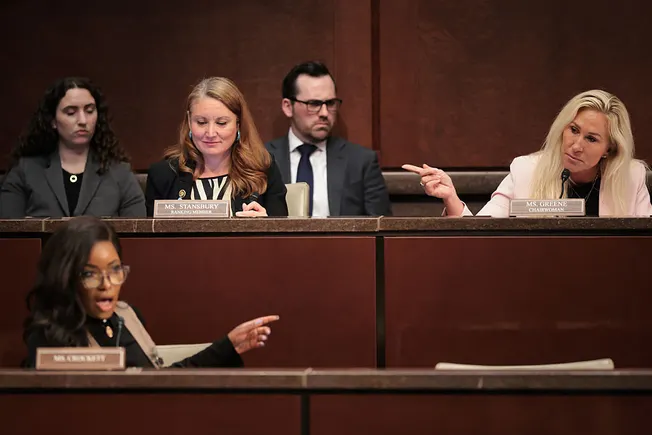
Do transgender student athletes’ involvement in girls’ and women’s sports — an issue that has recently jeopardized schools’ federal funding — fall under government efficiency and oversight? That question starkly divided lawmakers among party lines in a nearly 4-hour hearing on Wednesday held by the Delivering on Government Efficiency Subcommittee, a newly-formed subcommittee of the House Committee on Oversight and Accountability.
The DOGE Subcommittee hearing — meant to discuss the politically charged issue of Title IX and transgender student rights that has taken center stage under the Trump administration — quickly deteriorated to repeated gavel-banging, a motion to adjourn the meeting, disagreement over the committee’s purpose, arguments over lawmakers’ allotted speaking times, and discussions of differences in male and female elbow-joint anatomy and muscle mass.
The subcommittee was created to oversee “federal civil service, including compensation, classification, and benefits; federal property disposal; government reorganizations and operations, including transparency, performance, grants management, and accounting measures generally,” according to the Committee on Oversight and Government Reform’s rule book.
Witnesses included two cisgender female athletes advocating for athletic teams without transgender students, the chair for the USA Fencing Board of Directors, and the CEO of National Women’s Law Center, a nonprofit organization that advocates for LGBTQ+ rights.
Republican lawmakers, who have called for less federal oversight of education and a return of that power to the states, said the hearing was necessary because it related to Title IX, a federal law meant to prohibit sex discrimination in federally funded education programs.
“It’s an important issue that biological men stay out of women’s sports,” said Rep. Marjorie Taylor Greene, chair of the committee and Republican from Georgia.
Rep. William Timmons, R-S.C., said the hearing was meant to “shine a light not only on the integrity of women’s sports,” but also on how institutions like USA Fencing and others may be misusing their authority to “push controversial policies that violate basic human rights and disregard their Congressionally-authorized mission.”
“This is what happens when you allow God to be pushed out of everything,” added Rep. Eli Crane, R-Ariz.
Democratic lawmakers at the hearing, however, said it was a waste of the subcommittee’s time and did not fall under the body’s jurisdiction, which instead includes issues like proposed cuts across the government.
“This subcommittee could be focusing on the layoffs that President Trump has executed: over 200,000 firings of federal employees,” said Rep. Stephen Lynch, D-Mass. “That does affect the efficiency of our government programs.”
Rep. Robert Garcia, D-Calif., concurred, saying the subcommittee has “never really talked about government efficiency or any serious legislative work,” and that he was “surprised that this subcommittee is not apparently in charge of policing women’s sports.”
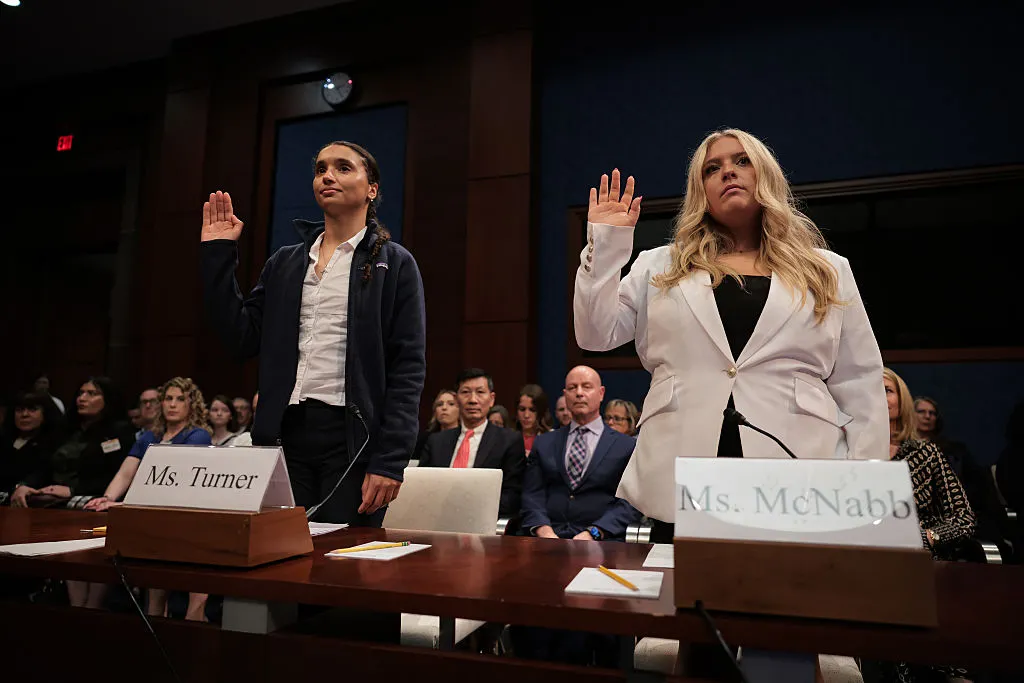
Stephanie Turner, left, a fencer who refused to compete against a transgender athlete, and Payton McNabb, right, a former North Carolina high school volleyball player injured by a transgender opponent, are sworn in during the hearing held by the Delivering on Government Efficiency Subcommittee at the U.S. Capitol on May 7, 2025, in Washington, D.C.
Kayla Bartkowski/Getty Images via Getty Images
DOGE impacts on K-12
The DOGE Subcommittee is among the latest in a series of efforts by the Trump administration and Republicans to cut back on what they say are instances of abuse, fraud and waste in the government. Its formation is an extension of similar efforts conducted by the Department of Government Efficiency, also referred to as DOGE.
Those efforts have had major implications for the K-12 sector in recent months, including gutting the Education Department by laying off more than 1,300 employees, closing or significantly reducing its offices, canceling grants entirely or retracting grant competitions, and proposing a 15% cut to the department’s funding.
The reduction in expenses from DOGE’s efforts is also expected to put a strain on K-12 finances, according to a Moody’s report released in April.
Among DOGE cuts were seven of the Education Department’s 12 local offices for the Office for Civil Rights, leaving schools with reduced oversight of civil rights compliance. Those offices were in charge of investigating allegations of Title IX violations — the subject of the hearing Wednesday — for half of states.
The Education Department has since announced a Title IX Special Investigations Team, which taps the Department of Justice for investigations and ultimate enforcement of the separation of transgender students from girls’ and women’s athletics teams and spaces in schools and colleges.
One such investigation recently conducted by the Education Department and referred to the Justice Department for enforcement has put on the line almost $864 million of Maine’s federal education funding, which it said could be cut for past and present Title IX violations. Those violations were found over the state’s policy allowing transgender athletes to play on girls’ and women’s sports teams.
The Department of Justice, in suing the state last month, said “many, many states” were next, including California and Minnesota, which are currently under investigation for alleged Title IX and FERPA violations related to transgender issues like school sports participation and gender support plans.
Title IX civil rights complaints have historically come second to disability-related complaints when excluding thousands of sex discrimination complaints that were filed by a single person in recent fiscal years, skewing OCR data.
Disability-related complaints were briefly paused by the administration after Trump took office and then resumed after reports emerged of thousands of OCR investigations coming to an abrupt halt.
The U.S. Department of Education, under the renewed influence of the Trump Administration and its deep-pocketed friends in the for-profit and debt collection industries, has issued a chilling reminder of just how little it cares for the tens of millions of Americans drowning in student debt. Cloaked in bureaucratic language and peppered with sanctimonious calls for “shared responsibility,” the Department’s latest notice is, in truth, a battle cry in its war to privatize higher education, scapegoat the vulnerable, and enrich corporate cronies at the expense of working families.
Let’s call this what it is: a renewed assault on the student debtor class—the adjunct professors, the first-generation college students, the single mothers, the underemployed graduates who were sold a dream of economic mobility and handed a lifetime of debt servitude.
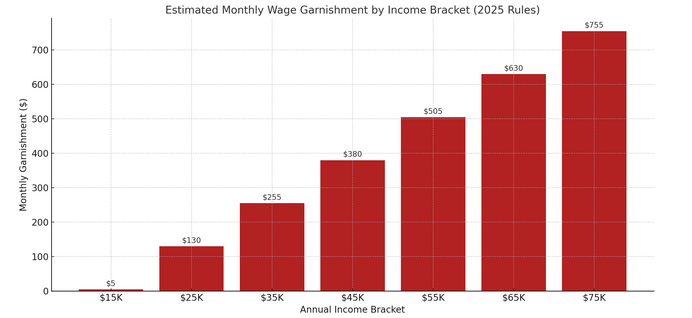
According to the Department, only 38% of borrowers are current on their loans, and nearly a quarter of all loans are in default or severe delinquency. Rather than treating this figure as evidence of systemic failure—ballooning tuition, predatory lending, lack of loan forgiveness—the Department responds by resuming draconian collection measures like the Treasury Offset Program and Administrative Wage Garnishment. This means that the government will begin seizing tax refunds and garnishing wages of those already pushed to the economic brink.
Worse, the Department has the audacity to wrap this cruelty in the rhetoric of “support” and “outreach.” Borrowers are told that they’ll be reminded of their “repayment obligations” as if they have simply forgotten—not that they’ve been buried under compound interest, stagnating wages, and fraudulent institutions that peddled worthless degrees. The supposed “enhancements” to income-driven repayment plans are little more than PR spin, insufficient to address the tidal wave of suffering inflicted by a broken system.
Then comes the most insulting part: the Department deflects blame onto institutions while simultaneously pressuring them to track down and guilt-trip former students. Colleges are urged to contact former enrollees and remind them they’re obligated to pay. Why? Not out of concern for their welfare—but because high cohort default rates (CDRs) might threaten those institutions’ eligibility for federal aid money.
So we see the real game here: this isn’t about protecting students. It’s about protecting the federal loan program as a revenue engine and shielding the reputations of colleges—especially the for-profit diploma mills that flourished under prior Republican administrations. These institutions can continue hiking tuition and churning out underprepared graduates because the government, under Trump and his Department of Education appointees, would rather collect on unpayable loans than hold schools accountable.
Even more dystopian is the Department’s plan to publicly release “loan non-payment rates by institution.” While transparency sounds virtuous, this move will undoubtedly be weaponized—not to shut down abusive schools but to further stigmatize borrowers, especially those from marginalized backgrounds who attended underfunded schools with few resources.
Nowhere in this document is there any meaningful discussion of debt relief, student protections, or reining in college costs. Nowhere is there a reckoning with the fact that federal student aid has been transformed from a tool of opportunity into a tool of coercion. Instead, the Trump Administration signals it is open for business—the business of extracting wealth from the poor and funneling it into the private sector.
This notice is more than a policy update. It is a declaration of values. And those values are clear: Profit over people. Compliance over compassion. Privatization over public good.
The Higher Education Inquirer stands with the debtors. We see through the lies of “fiscal responsibility” and “integrity.” And we will continue to expose every cynical maneuver designed to crush the educated underclass in the name of neoliberal orthodoxy.
To student borrowers: You are not alone. You are not a failure. You are a victim of a system that was never built to serve you.
The
United States faces critical challenges related to the federal student
loan programs. According to estimates from the U.S. Department of
Education (Department), only 38% of Direct Loan and Department-held
Federal Family Education Loan Program borrowers are in repayment and
current on their student loans. We also estimate that almost 25% of the
entire portfolio is either in default or a late stage of delinquency.
Given these challenges, the Department is taking immediate steps to
engage student borrowers and support the repayment of their federal
student loans. As announced in an April 21, 2025, press release,
today, the Department will resume collections on its defaulted federal
student loan portfolio with the restart the Treasury Offset Program and,
later this summer, Administrative Wage Garnishment. The Department has
also initiated an outreach campaign to remind all borrowers of their
repayment obligations and provide resources and support to assist them
in selecting the best repayment plan for their circumstances. The
Department has also launched an enhanced income-driven repayment (IDR) plan process,
simplifying how borrowers enroll in IDR plans and eliminating the need
for many borrowers to manually recertify their income each year.
Maintaining the integrity of the Title IV, Higher Education Act of 1965 (HEA)
loan programs has always been a shared responsibility among student
borrowers, the Department, and participating institutions. Although
borrowers have the primary responsibility for repaying their student
loans, institutions play a key role in the Department’s ongoing efforts
to improve loan repayment outcomes, especially as the cost of college
set solely by institutions has continued to skyrocket. Institutions are
responsible for providing clear and accurate information about repayment
to borrowers through entrance and exit counseling, and colleges and
universities are responsible for disclosing annual tuition and fees and
the net price to students and their families on the costs of a
postsecondary education. The financial aid community has demonstrated
its commitment to providing direct advice and counsel to students
regarding their borrowing, but institutions must refocus and expand
these efforts as pandemic flexibilities come to an end.
Under section 435 of the HEA, institutions are required to
keep their cohort default rates (CDR) low and will lose eligibility for
federal student assistance, including Pell Grants and federal student
loans, if their CDR exceeds 40% for a single year or 30% for three
consecutive years. The Department reminds institutions that the
repayment pause on student loans ended in October 2023, and CDRs
published in 2026 will include borrowers who entered repayment in 2023
and defaulted in 2023, 2024, or 2025. The Department further reminds
institutions that those borrowers whose delinquency or default status
was reset in September 2024 could enter technical default status / be
delinquent on their loans for more than 270 days beginning in June and
default this summer. As such, we strongly urge all institutions to begin
proactive and sustained outreach to former students who are delinquent
or in default on their loans to ensure that such institutions will not
face high CDRs next year and lose access to federal student aid.
Given
the urgent need to ensure that more student borrowers enter repayment
and stay current on their loans, the Secretary urges each participating
institution to provide the following information to all borrowers who
ceased to be enrolled at the institution since January 1, 2020, and for
whom they have contact information:
Remind
the borrower that he or she is obligated to repay any federal student
loans that have not been repaid and are not in deferment or forbearance;
Suggest that the borrower review information on StudentAid.gov about repayment options; and
Request that the borrower log into StudentAid.gov
using their StudentAid.gov username and password to update their
profile with current contact information and ensure that their loans are
in good standing.
The
Department urges that this outreach be performed no later than June 30,
2025. We do not stipulate how institutions reach out to borrowers, nor
the specific information provided, as long as it covers the three
categories described above.
We also encourage institutions to focus their initial outreach on
students who are delinquent on one or more of their loans in order to
prevent defaults. We will provide additional information in the future
to assist schools with identifying and communicating with these
borrowers.
The
Department is committed to overseeing the federal student loan programs
with fairness and integrity for students, institutions, and taxpayers.
To that end, the Department believes that greater transparency is needed
regarding institutional success in counseling borrowers and helping
them get into good standing on their loans.
The Department maintains data on the repayment status of federal
student loan borrowers and in the past has provided information in the
College Scorecard about the status of each institution’s borrowers at
several intervals after they enter repayment. The Department plans to
use this data to calculate rates of nonpayment by institution and will
publish this information on the Federal Student Aid Data Center later
this month. The Department will provide more information about this
publication process soon.
Thank you for your continued efforts to maintain the integrity of the Title IV, HEA
loan programs. The Department values its institutional partners and
looks forward to continued collaboration to place borrowers on the path
to sustainable repayment of their loans.
U.S. universities have long relied on international students, and the big tuition checks they bring, to hit enrollment goals and keep the lights on. But now, just as the number of American college-aged students begins to fall — the trend that higher education experts call the “demographic cliff”— global tensions are making international students think twice about coming to the United States for college.
In this episode, hosts Kirk Carapezza and Jon Marcus take you inside the world of international admissions. With student visa revocations on the rise and a growing number of detentions tied to student activism, some international families say they are rethinking their U.S. college plans. And that has college leaders sounding the alarm.
In fact, international student interest was already falling. Now, as the Trump administration ramps up immigration crackdowns on campuses across the country, many worry the U.S. could lose its status as the top destination for global talent. So what happens if international enrollment drops just as domestic numbers dry up?
The stakes are high, not just for international students and colleges but for what everybody else pays — and for the whole U.S. economy.
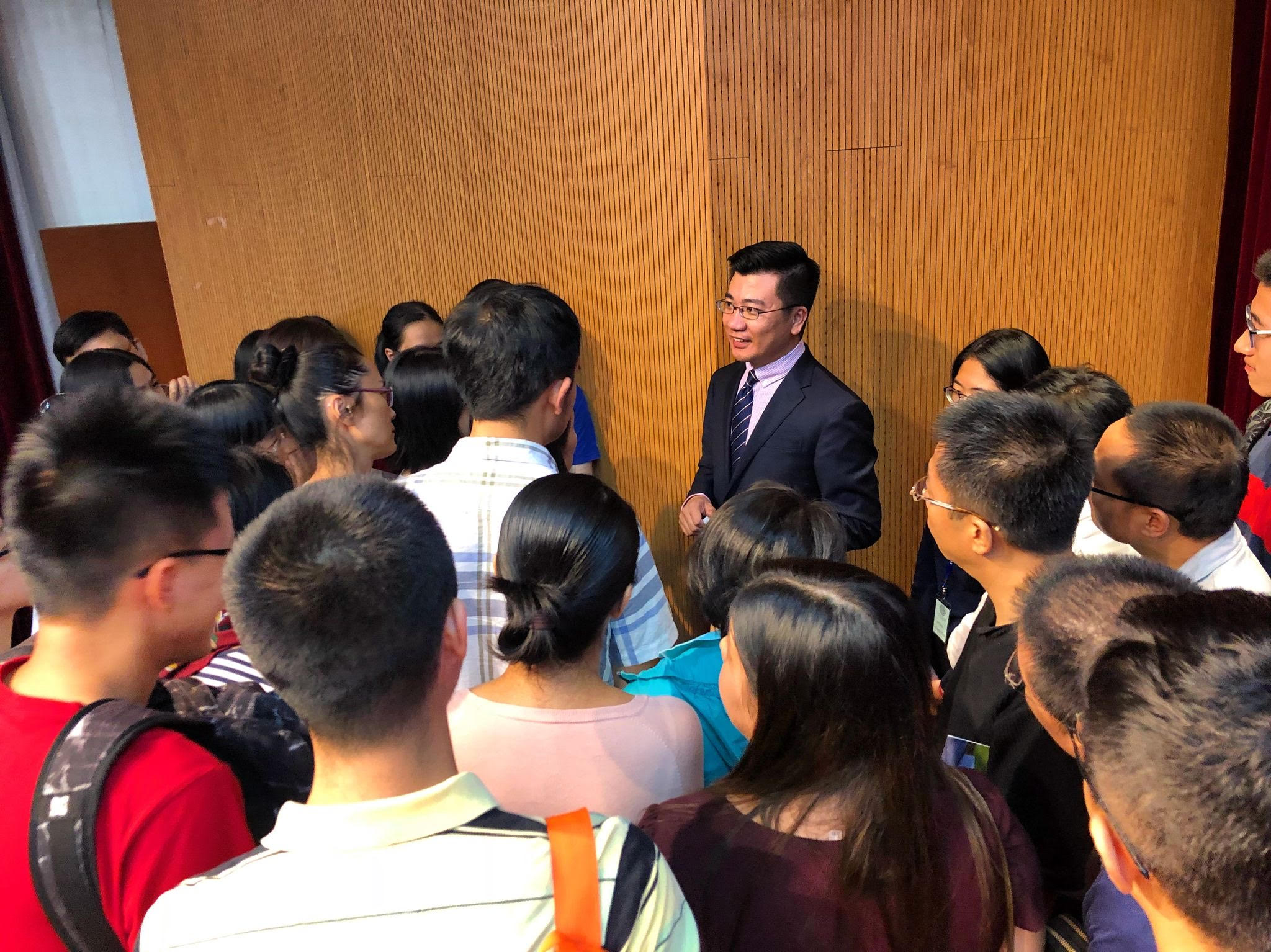
[Kirk] That’s Xiaofeng Wan, making his pitch in Mandarin to Chinese students and parents at a high school in Shanghai. Wan used to be an admissions officer at Amherst College in western Massachusetts. Now he’s a private college consultant, guiding Chinese students through the maze that is college admissions in the U.S.
[Xiaofeng Wan] So I’ll walk them through the initial high school years before they apply. And then by the time of their college applications, I’ll help them go through the process as well.
[Kirk] This is big business for colleges. Like most international students, Chinese families do not qualify for financial aid, and often they pay the full cost. Wan also trains guidance counselors across China, showing them how to support students heading abroad. So he’s got a front-row seat to what Chinese families are thinking right now.
[Xiaofeng Wan] They see the United States as a primary study-abroad destination.
[Kirk] But Wan says that might be starting to shift.
[Xiaofeng Wan] America has an image problem right now, so we will definitely start to see reluctance from families.
[Kirk] I caught up with him while he was in Ningbo, a port city known for manufacturing, on the same morning President Trump’s tariffs on Chinese goods took effect.
[sound of news anchor] Across the globe this weekend, world leaders are trying to figure out how to respond to President Trump’s attempt to reshape the global economy by imposing steep tariffs. …
[Kirk] Just hours later, the Chinese government warned the more than 270,000 Chinese students already studying in the U.S. to think twice about staying. Wan says that kind of message stokes fear that’s been building. House Republicans sent letters to six universities saying America’s student visa system has become a Trojan horse for Beijing, and a lot of Chinese parents worry the U S government doesn’t want their kids.
[Xiaofeng Wan] That’s what they’ve been hearing from President Trump, his rhetoric toward Chinese students. And now they’re seeing news about how international student visas are being revoked.
[Kirk] This is College Uncovered, a podcast pulling back the ivy to reveal how colleges really I’m Kirk Carapezza with GBH News …
[Jon] … and I’m Jon Marcus with The Hechinger Report. Colleges don’t want you to know how they operate, so GBH …
[Kirk] … in collaboration with The Hechinger Report, is here to show you.
This season, we’re staring down the demographic cliff.
[Jon] If you’re just joining us, a quick refresher here: The demographic cliff is a steep drop in the number of 18-year-olds. That’s because many Americans stopped having children after the Great Recession of 2008. And now, 18 years later, colleges are feeling the pinch.
[Kirk] Yeah, and just when many of them thought the situation couldn’t get any worse, international students are under threat. During President Donald Trump’s first term, we saw visa restrictions and travel bans contribute to a 12 percent drop in new international enrollment. So we’ll ask, could that happen again, just as schools are scrambling to fill empty seats?
[Jon] And we’ll explain what all of this means for you, whether you’re an international student or a domestic one, and why you should care.
Today on the show: The Student Trade Wars.
[Kirk] Since Trump’s return to power, his administration has yanked more than 1,000 student visas, often without explanation. Some students have been detained and faced deportation, fulfilling a pledge he often made on the campaign trail.
[Donald Trump] If you come here from another country and try to bring jihadism or anti-Americanism or antisemitism to our campuses, we will immediately deport you. You’ll be out of that school.
[Kirk] In just a few months, that hardline rhetoric has become policy, putting campuses on edge. ICE agents have detained pro-Palestinian student activists, including Mahmoud Khalil at Columbia and Rumeysa Ozturk at Tufts.
[sound from arrest of Rumeysa Ozturk]
[Kirk] This video of her arrest has shaken the international campus community and sparked protests across the country.
[sound of protesters] Free Rumeysa, free her now! We want justice, you say how? Free Rumeysa, free her now!
[Kirk] And now many international students won’t even go on the record, too scared the federal government will target them, or that they’ll be doxxed and ostracized online.
[Frank Zhao] The biggest difficulty for us is building trust.
[Kirk] At Harvard, student journalist Frank Zhao has seen that fear firsthand. He hosts the weekly news podcast for the student newspaper.
[sound of podcast] From The Harvard Crimson, I’m Frank Zhao. This is ‘News Talk.’
[Kirk] Zhao isn’t an international student himself, but the Chinese-American junior from Dallas is plugged into the campus, where a quarter of students are international.
How would you describe the current climate for international students?
[Frank Zhao] The overwhelming sentiment is anxiety. There are so many international student group chats where students were saying, ‘Oh my gosh, there are ICE agents on campus.’ And so it’s quite the Armageddon scenario.
[Kirk] The Trump administration has demanded Harvard turn over detailed records of all foreign students’ — quote — illegal and violent activities, or lose the right to enroll any international students. Harvard says it has complied but won’t publicly disclose details.
The university is suing the administration over this and other demands, but some faculty and students question how hard Harvard is really pushing back. Conservatives, though, defend increased immigration enforcement.
[Simon Hankinson] If a student is studying and minding their own business and obeying the rules of the college and of the United States and the state that they live in, they have nothing to worry about. This is a very small number of people that is being looked at for fraud.
[Kirk] Simon Hankinson is a senior fellow at the Heritage Foundation. He says visa vetting on and off campus is essential for national security after a year of disruptive campus protests.
[Simon Hankinson] Maybe your parents are shelling out a lot of money for you to go, or you’re getting a scholarship. Get your education. Make that the priority. Sure, go out and hold a placard if you want to, and do your thing, light a candle, but if your primary focus is protest and vandalism, I think you’re on the wrong type of visa, and we don’t have a visa for that.
[Jon] Higher education is now a global marketplace, and international students have emerged as a key part of the university funding equation. They’re fully baked into the business model as full-pay customers for colleges who subsidize the cost for domestic students.
[Kirk] And even before the demographic cliff, the competition for international students was fierce.
[Gerardo Blanco] It always has been and sometimes it is intended to be that way, but this is just making it like the Hunger Games
[Kirk] That’s Gerardo Blanco, director of the Center for International Higher Education at Boston College. He warns tht Trump’s America First approach, combined with federal funding cuts, is putting U.S. colleges at risk of losing a generation of global talent.
Is that hyperbole?
[Gerardo Blanco] I don’t think it’s hyperbole in any way.
[Kirk] Why not?
[Gerardo Blanco] The system has been built on the assumption that there wouldn’t be decreases in a dramatic scale to the funding dedicated to research. And therefore they have made some decisions that are somewhat risky.
[Kirk] What’s your biggest concern when it comes to international students?
[Gerardo Blanco] It’s just the generalized sense of uncertainty. I think there are so many balls up in the air and I think it’s really difficult to even focus our attention.
[Kirk] Take the reduction of research funding, for example. It’s affecting many graduate students, especially those who are international and can’t find work in labs. Some schools like Iowa State University, Penn, and West Virginia University are rescinding graduate admissions offers.
[Gerardo Blanco] So that’s one squeeze. We also are looking at just the general rhetoric that tends to be negative.
[Kirk] And Blanco says that rhetoric matters. One survey at the start of Trump’s second term found that nearly 60 percent of European students were less interested in coming to the U.S. Blanco said, considering the demographic cliff, the timing for all of this uncertainty couldn’t be worse for colleges.
[Gerardo Blanco] The clock is ticking and nobody really knows what’s happening.
[Kirk] Okay, so, Jon, why should American students and citizens care about all of this?
[Jon] Well, international students bring different perspectives and experiences to the classroom. And as we said earlier, they also tend to pay full tuition. So they subsidize tuition that American students pay.
But a drop in international student numbers isn’t just a college cash-flow problem. It’s a broader economic one. International students infuse $44 billion into the U.S. economy each year.
Here’s Barnet Sherman, a business professor at Boston University. It’s New England’s largest private university, and one in five students there are international.
[Barnet Sherman] Look, I just teach business and finance. So if one of my top 10 customers comes to me with $44 billion to spend and creates a lot of American jobs, over 375,000 American jobs, I don’t know about you, but I’m opening up the door and giving them the best treatment I possibly can.
[Jon] Here in Massachusetts alone, there are about 80,000 international students contributing $4 billion to the state’s economy each year. That puts the state fourth in the U.S., after California, Texas and New York. So, yeah, this matters.
But Sherman says the impact goes far beyond big cities like Boston, New York, and L.A. Take the tiny town of Mankato, Minnesota, for example — population, 45,000.
[Barnet Sherman] And they’ve got about 1,700 international students there contributing to the local economy. They’re bringing in literally over $25 million to, you know, a perfectly nice burg.
[Jon] In addition to tuition dollars, these students contribute to businesses and local communities that are losing population.
[Kirk] And, Jon, if fewer international and domestic students are coming through the pipeline to fill jobs that require college educations, it puts the U.S. at a serious disadvantage, just as other countries are actively recruiting talent and increasing the number of their citizens with degrees. More and more countries are recruiting international students, including Canada, France, Japan, South Korea and Spain, but also countries that hadn’t recruited before, like Poland and Kazakhstan.
Right before Trump’s first term, I went to Germany, where the government was offering free language classes to attract international students and scholars, including Americans. Because just like the U.S., Germany is losing population. A demographic cliff has already hit Europe, so it needs immigrants and international students, too. Think of it like this: It’s a global talent draft. All of these students, they’re the trading cards. The collectors are the countries. And the more talent you attract, the more ideas, innovation and business growth you get.
[Dorothea Ruland] If you look at Germany, the only resource we do have are human resources, actually.
[Kirk] Dorothea Ruland is the former secretary general of the German Academic Exchange Service, which is in charge of Germany’s international push. When I visited Bonn, we had coffee at her headquarters.
[Dorothea Ruland] We depend on innovation, on inventions, of course, and where do they come from? From institutions of higher education or from research institutions.
[Kirk] Ruland told me nearly half of foreign students earning degrees in Germany stick around. And not just for the short-term. About half of them stay for at least a decade. In the U.S., most international graduates leave and take their talent back home, often because of scarce visas available for skilled workers.
Do you see Germany competing with American universities?
[Dorothea Ruland] Yes, I would say so. You know, we are doing marketing worldwide because we are part of this world and we cannot neglect these trends going on. So of course we are competitors.
[Kirk] But she also made it clear the student trade war isn’t just about competition. It’s about collaboration.
[Dorothea Ruland] If you look at the global challenges everybody’s talking about, questions of climate change, energy, water, high tech, whatever, this cannot be solved by one institution or one country. So you have to have big international networks.
[Kirk] Since my visit, though, isolationism has been creeping in, not only in Germany, but Hungary and Russia, and obviously here in the U.S., too. Some professors and students have pointed to recent issues with visas and detainments without due process and accused the Trump administration of taking an authoritarian approach.
[sound of protest]
[Kirk] Outside Harvard’s Memorial Church in Cambridge, more than 100 students and faculty recently held signs and waved American flags, cheering the university for standing up to the White House and calling on Harvard to do more to protect their civil rights. Among other things, they spoke out about visa revocations. It is incredibly scary here.
Leo Gerdén is a senior from Sweden. He says the administration is trying to divide the campus community.
[Leo Gerdén] At first I was very anxious about speaking up. They want us to point fingers to each other and say, you know, deport them, don’t deport us. And you know, it’s classic authoritarian playbook.
[Jon] Trump supporters? Well, they see it very differently.
[Simon Hankinson] I would call that ridiculous. I mean, that’s an insane argument to make.
[Jon] Simon Hankinson is a senior fellow at the Heritage Foundation’s Center for Border Security and Immigration. We heard from him at the top of this episode, and we should also add he’s a career foreign service officer.
[Simon Hankinson] So I’ve certainly interviewed tens of thousands of these applicants, including thousands of students.
[Jon] Hankinson acknowledges the uptick in visa revocations lately, but says it’s still a tiny number compared to the one million international students in the U.S.
[Simon Hankinson] But just looking at the scale of it all, it is more than we’ve seen in the past, because, generally speaking, this wasn’t something that the government devoted a lot of resources to. But it was always a power that they had.
[Jon] And he’s not buying the narrative that these changes and the crackdowns on visas will scare off students from coming to the U.S.
[Simon Hankinson] Are people not going to go to Harvard because, you know, they’re afraid that they’re going to get hassled. No. Try going to Russia or China and speaking your mind. Good luck with that.
[Jon] Hankinson also argues some universities — especially ones with a high percentage of international students, like Columbia, NYU, Northeastern, and Boston University — they have a financial incentive for complaining.
[Simon Hankinson] It’s a strong constituency that they want to keep happy and they want to keep the money flowing. So they want to make this as big an issue as possible. They want to cry panic.
[Jon] So, Kirk, colleges signal all the time that they’re open to international students. Just listen to some of these welcome videos.
[sound of international recruiting videos]
[Jon] But parents like Claire from Beijing don’t feel like their kids are welcome.
[Claire] I think the government is really hostile right now.
[Jon] Claire asked us to withhold her full name, worried it could affect her son, who’s already studying here. She also has a daughter in high school who was thinking about college in the U.S., but now they’re rethinking her plans and looking at schools in the UK, Canada, Singapore and Hong Kong.
[Claire] You know, we have to consider all the possibilities, obviously in a trade war, you know, like, because next year, when my child has to go to college, you know, Trump is still the president.
[Kirk] Claire says she still believes in the power of an American education, so it’s really hard for her to just write it off completely.
[Jon] Okay. So, Kirk, we’ve tackled a lot in this episode. Bottom line, do you think American colleges will still be able to recruit and enroll enough international students to help offset this looming shortage we’ve been talking about in the number of 18-year-olds?
[Kirk] Well, it’s not looking great for colleges. International enrollment, as we said, dropped 12 percent during Trump’s first term, and now we’re heading toward a 15 percent drop in the number of 18-year-olds by 2039. That’s a big gap to fill, and the reality is the current climate would have to shift dramatically and quickly for the U.S. to stay competitive.
International students are essential for filling seats and making budgets, especially in regions like New England and the Midwest, where the demographic cliff isn’t coming — it’s already here. A college consultant once told me, if your campus isn’t near an international airport, the clock is ticking on your institution. And that was before America developed this reputation as an unwelcoming place.
[Jon] So what do you think you’ll be watching as we continue to cover this issue?
[Kirk] Yeah, for me, one of the biggest questions is how colleges handle what I see as a major communication and messaging problem. Administrators and faculty haven’t done a great job telling the full story of what U.S. universities actually do, or why international mobility benefits the country as a whole.
[Jon] This is College Uncovered. I’m Jon Marcus from The Hechinger Report …
[Kirk] … and I’m Kirk Carapezza from GBH News.
[Jon] This episode was produced and written by Kirk Carapezza …
[Kirk] … and Jon Marcus, and it was edited by Jonathan A. Davis.
Our executive editor is Jenifer McKim.
Our fact checker is Ryan Alderman.
GBH’s Robert Goulston contributed reporting to this episode.
[Jon] Mixing and sound design by David Goodman and Gary Mott.
All of our music is by college bands. Our theme song and original music is by Left Roman out of MIT.
Mei He is our project manager, and head of GBH podcasts is Devin Maverick Robins.
[Kirk] College Uncovered is made possible by Lumina Foundation. It’s a production of GBH News and The Hechinger Report and distributed by PRX.
Thanks so much for listening.
The Hechinger Report provides in-depth, fact-based, unbiased reporting on education that is free to all readers. But that doesn’t mean it’s free to produce. Our work keeps educators and the public informed about pressing issues at schools and on campuses throughout the country. We tell the whole story, even when the details are inconvenient. Help us keep doing that.
The way higher institutions define and acknowledge student success in higher education today is changing rapidly. Today, diplomas and transcripts are no longer the benchmarks for measuring the success rate of students in their academics. To define success, you have to consider a complete and holistic journey and vision. Factors like the student’s academic excellence, mental and physical growth, and preparation for what comes next are increasingly becoming key to defining academic success. This is why universities are looking beyond enrolment figures, they are now more focused on helping their students thrive academically, socially, and professionally.
This brings us to the role of modern digital marketing tactics and advanced CRM tools. Colleges can create an environment that supports every student with the right resources they need to succeed, using the data-driven outreach and personalized support that these tools offer. In this blog post, we’ll explore the true meaning of student success and what key metrics are best placed to measure student success in higher education. We’ll also show you how marketing automation and CRM platforms (including HEM’s own Mautic for Education and Student Portal) can help drive real student achievement. Read on to find out what strategies and tools are best suited to define modern student success.
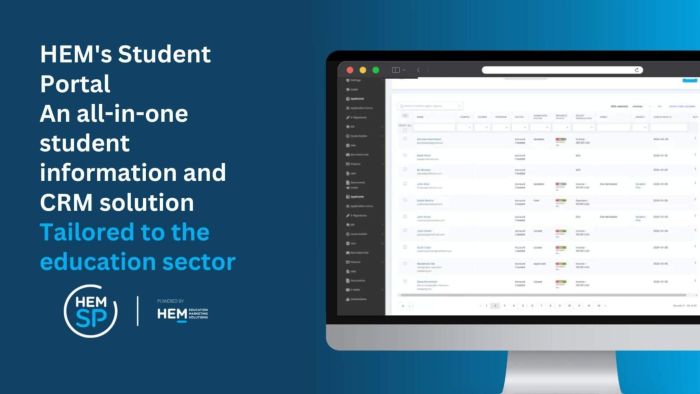
Looking for an all-in-one student information and CRM solution tailored to the education sector?
Try the HEM Student Portal!
Redefining Student Success Metrics in Higher Education: Beyond GPAs and Graduation Rates
Who you ask about the definition of academic success will also determine the type of answer you get. Administrators might lean towards metrics and retention rates. Students tend to have a more personal definition of success, like having supportive mentors, developing confidence, and building lasting connections.
This brings us to the question: What is the definition of student success? The definition of student success encompasses building communication skills and critical thinking activities, career or grad school readiness. In essence, a successful student grows through campus life, engages with the community, and adequately prepares themself for future opportunities.
Below are components of a comprehensive student success definition:
Academic Achievement: Mastering course material and maintaining strong GPAs
Persistence and Retention: Continuing enrolment term after term until graduation
Personal Development: Cultivating critical thinking, communication skills, and emotional intelligence
Engagement and Belonging: Finding community through meaningful campus involvement
Career Readiness: Building the confidence and skills needed for post-graduation success
As EDUCAUSE, a prominent education technology organization, points out, student success programs “promote student engagement, learning, and progress toward the student’s own goals through cross-functional leadership and the strategic application of technology.” This reaffirms the fact that true success calls for a harmonious relationship between human connection and technology.
Measuring What Matters: The Metrics of Achievement
How do we truly and correctly measure student success if we say that there are many sides to it? What is the definition of a successful student, and how to measure student success in higher education? While this question has intrigued higher educational professionals for decades, today’s schools are finding the right answers by combining traditional metrics and emerging indicators.
Traditional measurements include retention rates (are students returning each semester?), graduation rates (are they completing their degrees?), and academic performance (are they mastering the material?).
Now, these numbers matter. They help us tell to a reasonable degree if students are progressing toward their educational goals, or not. However, there’s a richer story to be told beyond these statistics, and you’ll learn about it shortly.
Student success metrics commonly include:
Retention Rates: The percentage of students who return for subsequent terms
Graduation Rates: How many students complete their degrees within expected timeframes
Academic Performance: Beyond grades—how students grow intellectually over time
Student Engagement: Participation in everything from research opportunities to campus events
Student Satisfaction: Feedback that reveals how students experience their education
Post-Graduation Outcomes: Career placement, graduate school acceptance, and alumni achievements
Away from these quantifiable measures, today’s schools value the essence of student-defined success. For them, it could be a first-generation student finding their voice, an international student building cross-cultural friendships, or a working parent balancing studies with family life. The schools that manage to combine statistical trends with individual stories will ultimately get the most complete picture of things.
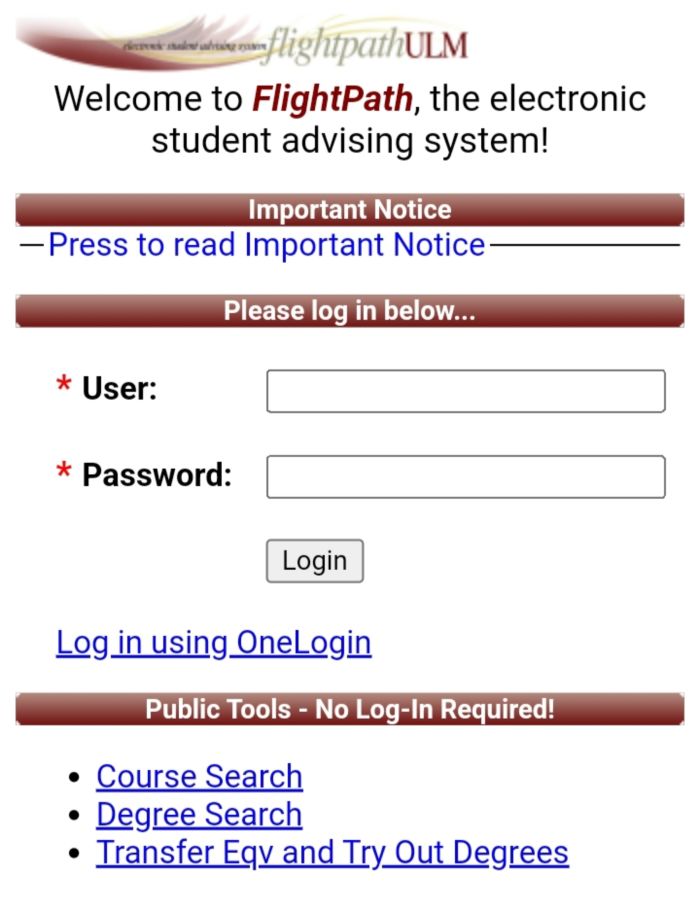
Examples: ULM developed FlightPath, an open-source advising system for degree audits, early alerts, and “What If?” planning. It is designed to help you determine your progress toward a degree.
What do marketing strategies have to do with student success? What does digital marketing contribute to student success? Higher education marketing and student success are interconnected through a series of key touchpoints.
The path to college student success often begins with that first Instagram post that catches a high school junior’s eye or that personalized email that addresses their specific interests. It is all part of the coordinated digital marketing campaigns that today’s schools employ, to great success.
Attracting the right-fit students: When marketing materials paint an authentic picture of campus culture, incoming students arrive with realistic expectations and are more ready to engage.
Personalized communication: Tailored messages that speak to individual aspirations create early connections. When a prospective engineering student receives content about robotics competitions or research labs, they begin envisioning their place in your community.
Seamless onboarding: The summer before freshman year can be overwhelming. Automated campaigns that introduce new students to campus resources, share advice from current students, and foster peer connections help transform nervousness into excitement.
Feedback loops: Savvy marketing teams don’t just broadcast – they listen. Social media monitoring and regular surveys help identify pain points before they become barriers to success.
Examples: Gonzaga’s English Language Center moved from siloed data to a Student Success CRM on Salesforce, improving collaboration and early-alert capabilities for ESL learners.
Customer Relationship Management (CRM) systems are now important tools for tracking and supporting the student journey, especially in today’s data-driven world. These platforms present themselves as centralized hubs that help schools track student progress, identify potential challenges, and carry out timely interventions.
Colleges can transform how they engage with students at every stage using the right CRM. Take this scenario for example: A first-year student misses out on many classes and fails to log into the learning management system for two weeks. While this might have gone on without being detected in the past, probably until midterm grades showed a significant gap, not anymore. With a CRM, a trigger will set off based on this pattern and send automatic alerts to the students’ advisor, who can now contact support resources to arrest the decline before it further spirals.
Example: King’s College uses CRM Advise to flag risk factors, like missed classes, and automatically route alerts to advisors and support centers.
Here are six ways CRM tools elevate student success in higher education:
Centralizing the 360° Student View: Modern CRMs integrate data from admissions, advising, financial aid, and student life to create comprehensive student profiles. When an advisor can see that a struggling student is also working 30 hours weekly, they can provide more targeted support.
Enabling Early Alerts: By analyzing patterns like missed assignments or decreased LMS activity, CRMs can identify at-risk students before a crisis develops.
Automating Support Workflows: Smart CRMs ensure consistent communication throughout the student journey. From congratulatory messages when students ace exams to gentle nudges when they miss classes, automated workflows maintain continuous engagement without overwhelming staff.
Providing Data-driven Insights: Institutions can analyze which interventions are best-suited to promote student success, using comprehensive data collection.
Streamlining Administrative Processes: By simplifying registration, financial aid processes, and advising appointments, CRMs eliminate frustrating barriers that might otherwise derail student progress.
Promoting Community: Many platforms include features that connect students with mentors, study groups, and support communities. These all help to nurture the sense of belonging that anchors students during challenging times.
With solutions like Mautic by HEM, schools can enjoy robust CRM and marketing automation tailored specifically for them. The platform provides a central hub where you can manage all of your leads, applicants, agents, and parent contacts, enabling personalized support throughout the student lifecycle.
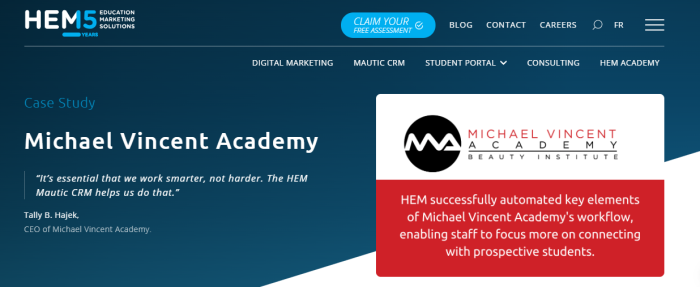
Example: Michael Vincent Academy, a Los Angeles-based beauty school, sought to enhance its student recruitment efficiency by streamlining lead management and follow-up processes. With HEM’s Mautic CRM, the academy automated key marketing tasks and introduced lead scoring, enabling staff to focus on high-value prospects. This allowed the team to dedicate more time to building meaningful connections with prospective students, ultimately improving recruitment outcomes.
Source: HEM
HEM’s Student Portal combines online application creation and management, SIS functionality, and lead-nurturing tools in one centralized system. As a student, this is designed to help you manage your journey – from initial application to enrolment to graduation and beyond.
As a school, using these specialized tools can help you address your institution’s unique needs and leverage the capacity of generic CRMs.
Source: HEM
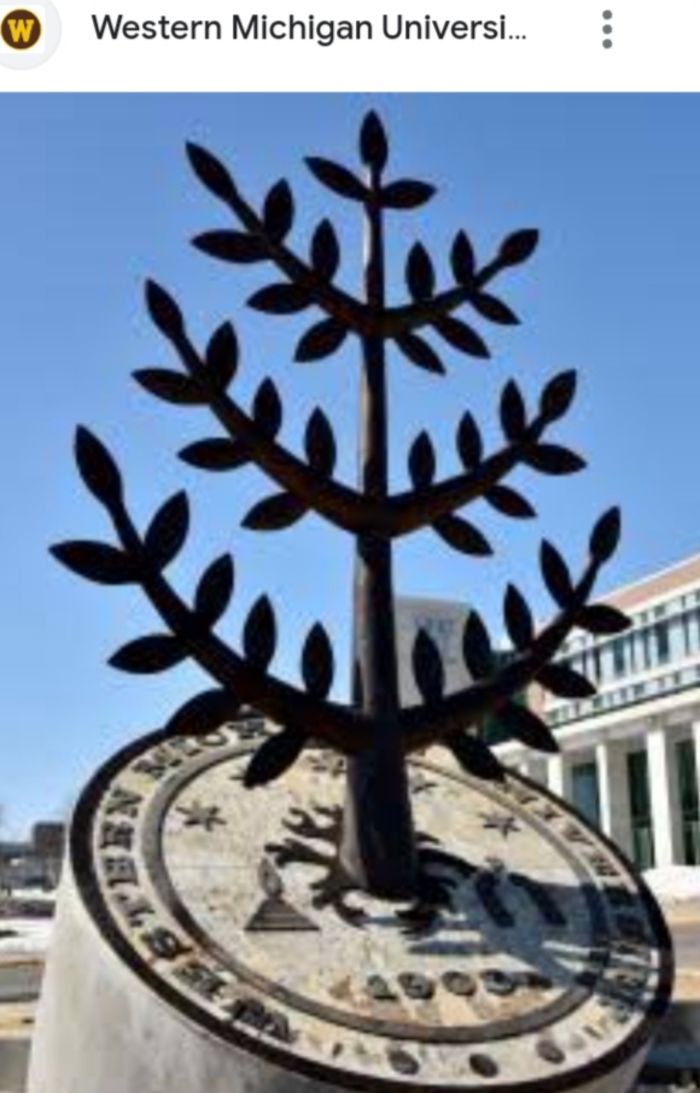
Example: Students at Western Michigan University (WMU) use the Student Success Hub’s CRM to schedule and manage appointments, review advising notes, work on success plans, and tasks.
One of the key ingredients of college student success is the use of structured programming that helps students navigate important stages of their academic journey. Many schools have found value in offering a student success class or course, such as a freshman seminar or “College 101” course that equips students with essential skills and connections.
What is a student success class in college? It’s a course designed to help students be successful in college. It aims to help students properly navigate both academic requirements and college culture. Here is a list of subjects that these classes typically cover:
Effective study strategies tailored to college-level expectations
Time management techniques for balancing academic and personal demands
Campus resource navigation, introducing students to everything from tutoring to counselling
Financial literacy skills to manage college costs
Stress management and wellness practices
Career exploration and professional development
Research continues to show that the students who complete these courses earn more credits and have a higher graduation rate than those who don’t participate.
The Power of Storytelling in Student Success Marketing
By channelling authentic storytelling into their marketing narratives, schools can connect with prospective and current students. Stories have a way of transforming abstract content as “retention initiatives” into relatable human experiences that inspire action.
What if you created a series featuring diverse student voices? Think of the impact it can have. Think of first-generation students who initially had doubts about themselves but connected with mentors who had faith in them, the transfer student who found unexpected opportunities, or the international student who calls the school home.
Not only do these narratives attract prospective students, but they remind the current ones that challenges are not special and that success is very much achievable.
Tips to Boost Student Success with Marketing and CRM
Institutions looking to take advantage of digital marketing and CRM tools more effectively should consider these practical strategies.
Use Data to Personalize Outreach: Segment your communications based on student interests, challenges, and milestones to provide relevant support throughout their journey.
Implement Early Alert Systems: Configure your CRM to identify warning signs like decreased engagement or academic struggles, enabling timely, personalized interventions.
Integrate Your Systems: Ensure your marketing automation, CRM, and student information systems communicate seamlessly for a complete view of each student’s experience.
Maintain Consistent Communication: Develop messaging flows that accompany students from prospective inquiry through graduation while remaining authentic and supportive.
Leverage Student Feedback for Content: Gather testimonials and success stories that inspire current students and set realistic expectations for prospects.
Train Your Team on Tools: Invest in comprehensive training so everyone, from admissions counselors to faculty advisors, can effectively use your CRM to support student success.
Example:GSU’s Student Success 2.0 initiative includes implementing an enterprise CRM for a unified student record and early-alert triggers to boost retention by up to 1.2 % annually, with the National Institute for Student Success (NISS) also set up to that effect.
Creating a Culture of Success: A Holistic Approach
The most effective approach to student success blends marketing insights, CRM capabilities, and human connections in one big package. With these elements working in harmony, institutions can create environments where students from all backgrounds can thrive.
Remember that behind every data point is a student with dreams, challenges, and unlimited potential. When you align marketing, technology, and support programs around a student-centred vision of success, you can get positive outcomes in return. We don’t just improve statistics, we transform lives and fulfill higher education’s fundamental promise.
Looking for an all-in-one student information and CRM solution tailored to the education sector?
Try the HEM Student Portal!
Frequently Asked Questions
Question: What is the definition of student success?
Answer: The definition of student success encompasses building communication skills and critical thinking activities, career or grad school readiness.
Question: How to measure student success in higher education?
Answer: While this question has intrigued higher educational professionals for decades, today’s schools are finding the right answers by combining traditional metrics and emerging indicators.
Question: What is a student success class in college?
Answer: It’s a course designed to help students be successful in college. It aims to help students properly navigate both academic requirements and college culture.
Columbia University student Mohsen Mahdawi spoke with CBS News in his first TV interview since his release from ICE custody. He spent 16 days in detention and now awaits deportation hearings for protesting the war in Gaza.
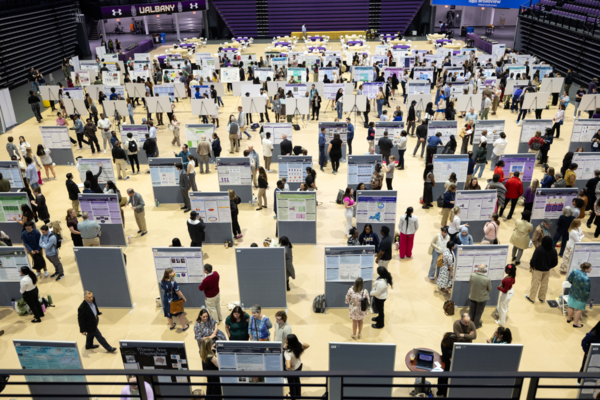
On Wednesday, April 30, the University at Albany’s campus buzzed with energy as students, faculty and staff bounced between poster fairs, musical performances, student presentations and other exhibitions. Showcase Day, a newer campus tradition, reserves one day in the spring term to celebrate various student achievements from the year, including dance performances, internship experiences and scientific research.
In addition to boosting campus engagement, the initiative highlights the important work of the University at Albany and invites outside groups to partner with the institution, Provost Carol Kim said.
The background: Kim was inspired to create Showcase Day after kick-starting a similar initiative at her previous institution, the University of Maine. After a few delays due to COVID-19, the University at Albany launched Showcase Day in 2023.
“Post-COVID, our campus felt an ennui,” Kim said. National research shows decreased levels of student participation in campus activities, including faculty-led research, since 2020. “How do we energize or develop more engagement on campus, get people excited again? This event has made a huge difference.”
Many colleges and universities host research symposia in the spring to honor and demonstrate student achievement throughout the academic year, typically in STEM courses or faculty-led research.
UAlbany’s event, however, engages undergraduate and graduate students across colleges, exposing students to opportunities within their discipline and beyond, as well as in graduate studies. Around 37 percent of UAlbany students are first generation, and they may be unaware of the various avenues of experiential learning or research at the institution, Kim said.
The initiative also breaks disciplinary silos, exposing individuals to different kinds of academic work in ways that build campus culture, Kim said. “It’s natural for many faculty, staff and students to stay in their college, in their departments, and many times they don’t know what their colleagues and peers are doing.”
How it works: Showcase Day is a one-day event that unites various student presentations, including posters, artistic performances and demonstrations, under one umbrella.
The day is integrated into the calendar as a no class academic day, which means that while classes are not canceled, professors typically assign students work related to Showcase Day. That could include a review of a theatrical demonstration or a summary of a poster presentation.
One of the most important elements of establishing a campuswide symposium was getting buy-in from campus leadership and the University Senate, Kim said. The event requires the support of hundreds of volunteers, making outside support through sponsorships and community partners another essential element.
Photos by Brian Busher/University at Albany
This year, 2,200 students participated in the event, with over 1,300 unique presentations delivered to an audience of faculty, staff, prospective students, donors, legislators and industry leaders, as well as middle and high school students.
Student projects ranged from research presentations on air quality and native plants to an orchestra performance and robotics demonstration. Many colleges assign an end-of-term project within courses or majors that lend themselves to a Showcase presentation, Kim said; others are student-prompted creations such as internship work experience reflections.
Showcasing Student Success
Other innovative approaches colleges and universities have taken to highlight student achievement include:
At the University of Dayton, an interdisciplinary partnership between graphic design and biology students produces high-quality research posters.
A centralized hub breaks barriers for students interested in experiential learning and research opportunities to identify open positions and engage at San Francisco State University.
A statewide research journal for undergraduate students in Florida provides greater opportunities for learners to share their research beyond institutional journals.
A research festival at Tennessee Tech University celebrates student work in English composition courses.
What’s next: Since Showcase Day launched in 2023, hundreds of students have participated in the event. Student and staff feedback shows that the event has been a positive influence on campus culture, inspiring pride in the participants and the work being done at the institution, Kim said.
“From facilities to student affairs and academic affairs, they’re very proud of their part in contributing to this showcase,” Kim said.
In the future, university leaders would like to see more engagement with potential employers, embedding career development or engagement as a piece of the event. Kim also sees potential in extending the event to multiple days, allowing campus members to participate in a greater number of activities.
Do you have an academic intervention that might help others improve student success? Tell us about it.
By Dr Steve Briggs, Director of Learning and Teaching Excellence, University of Bedfordshire.
There have been growing discussions, and the emergence of corroborating evidence, related to how a sense of belonging affects not only the student experience but also attainment, retention and well-being. As per the Office for Students’ (OfS) 2025-30 vision, university environments play a critical role in the student experience and have real potential to impact on belonging. Accordingly, how environments can promote a positive student experience and foster belonging should be of utmost strategic importance to university leaders.
Given their central position, university library environments have a significant potential to positively (or negatively) affect students’ sense of belonging. Library spaces, learning materials (both physical and digital) and operational processes all have the potential to individually or cumulatively foster a culture of belonging.
I propose that there are traditional assumptions and modus operandi inherent with university libraries that may inadvertently be to the detriment of student belonging. While such practices are not necessarily straightforward to change (owing to issues around security and/or cost), here I consider more radical approaches that a library might employ to foster student belonging. Across all the following options, it is imperative that students are involved in re-imagination projects through facilitating co-creation and user experience design. This will serve to ensure that changes actually reflect student needs rather than becoming well-intentioned but misguided attempts to enhance belonging.
Minimising physical barriers. Libraries have traditionally used security gates to control access. This means that most students’ first experience of a library will be a barrier. For many, this can feel intimidating, send messages of limited trust and so potentially feel very unwelcoming. Navigating barriers may also be particularly challenging for some students with a disability. Historically, gates were seen to be an effective means of protecting valuable library collections. However, the use of radio frequency identity tags, CCTV and enhanced staff monitoring will potentially serve the same purpose. Further, gates may provide a false sense of security, given that any library that has opening windows could easily provide an alternative means for library resources to be illicitly removed. As a result of many university libraries increasingly moving to a digital-first purchasing, the size and status of physical collections is likely to progressively diminish. Where there are very high-value items, it might be more appropriate to restrict access to a dedicated section rather than the entire building. Removing gates could save money in terms of security gate management and maintenance costs; it is also in keeping with the approach being increasingly adopted by public libraries, such as Luton Central Library.
Relational customer service. Central to belonging are positive relationships between students and university staff. This may be at odds with transactional library models that focus on efficiency and rapid issue resolution, which can lead to students feeling like a number rather than individuals. Relational customer service is based on seeking to understand individual student needs (for example, is a student an employee, parent or carer?) to tailor service delivery accordingly. In doing so, they might provide a positive (and hopefully memorable) experience. As a result, students feel more valued, fostering ongoing engagement with library services. As per the Mental Health Charter, such approaches can help to combat feelings of loneliness and isolation. How library leaders can positively disrupt any prevailing transitional approaches and move to more relational working practices should be carefully considered when planning staff development.
Simplified navigation. Complicated library resource classification schemes may be intimidating for students and a barrier to feelings of belonging. Facilitating social annotation may serve to help students better understand and navigate a library collection. By way of an example, students might work together to annotate a journal article virtually and be encouraged to include signposts to relevant library resources. There are dedicated platforms available that facilitate social annotation, as outlined by Cornell University. Likewise, the location of physical library stock could create unanticipated issues around belonging. For example, housing certain subject collections next to social learning spaces might be more conducive to promoting belonging when associated courses have the greatest emphasis on group work. Including students in the cataloguing and organisation of library stock would serve to increase awareness of how design could better promote belonging.
Trust-based borrowing. Members have routinely needed to check learning materials out of a library. Whilst this is necessary in order to manage a library collection, there may be situations when students are very concerned about being seen to borrow certain resources or knowing their borrowing activities are being recorded. For example, a student might want to borrow materials that allow them to explore their sexuality but conflict with their religious status. In such instances, libraries may consider removing the need to check certain stock out of the library and instead operate on a ‘trust’ basis that materials will be returned.
Blended learning enabled. Historically, individual study carrels were synonymous with libraries. Over time, there have been reductions in carrels to accommodate social learning spaces. Given the emergence of blended learning and remote working, students are increasingly meeting remotely with lecturers and peers online outside of scheduled sessions. Practically, library users are increasingly going to need access to soundproof spaces (such as individual meeting pods) to be able to meet virtually with classmates or tutors without disturbing other library users. Such implications for redesigning library spaces have previously been explored by Research Libraries UK and will need to remain an ongoing consideration for library leaders. Without such facilities, students may feel unable to fully engage in blended learning while working in a library, in turn undermining their sense of belonging.
Child-friendly. Public libraries will typically arrange regular programmes of activities for children and their families, especially during school holiday periods. In contrast, universities have historically been reluctant to allow students to bring their children onto campus, including into library spaces. This presents a major barrier for those with parenting or caring responsibilities. Universities currently take quite different positions in terms of allowing children into buildings. Increasingly, institutions are starting to allow students to bring children into libraries for a short-term visit and with potentially some restricted access. In contrast, select universities, including Surrey and York, have introduced family study rooms to allow students to bring children onto campus for longer periods, but these are currently exceptions rather than the norm. Were such facilities to be staffed, this could provide work experience opportunities for students studying health and social care or primary education courses.
Commuter-ready. Traditionally, libraries have been concerned about students eating and drinking due to the risk of damage to stock and learning spaces. More recently, this position has started to soften. In light of the growing number of commuter students, access to kitchenette facilities on campus is increasingly in high demand. While examples of such provision exist within libraries, this is yet to become a standard feature of university libraries. Similarly, commuter students will need ready access to device charging stations and safe places to store items. Given the extended opening hours offered by libraries, these would be a logical place to host such facilities.
Wellbeing-centred. Examples of traditional university library learning spaces include quiet or silent areas, social learning zones, reading rooms, group rooms, presentation rooms and computer suites. There are examples of selected university libraries expanding the range of learning spaces to meet the wellbeing needs of users. One such example is the creation of sensory spaces, which may be restricted to students with disabilities or open to all users. A second example could be the provision of exercise equipment within libraries. Such provisions would promote positive well-being, a key condition for the belonging dimension of the ‘Live’ module of the Mental Health Charter.
Civic centrepiece. The Secretary of State has previously highlighted that enhancing the civic role of universities was a priority. This could involve opening up library spaces to members of the local community. In addition to civic duty, opening up libraries may also support belonging. The progressive increase in the number of students who have caring responsibilities may mean that students would feel more supported by their institution, and in turn gain a great sense of belonging, should they be able to being dependents with them to university libraries.
Considering the current financial challenges facing the UK higher education library sector, it is reasonable to expect that any of the aforementioned actions would need to be staggered, potentially over several years, within many institutions. Accordingly, library leaders should be developing long-term student belonging strategies with clearly identified and connected work plans to ensure that there is a belonging ‘golden thread’ that links phased library developments and, in turn, ensures a coherent future library experience.
I would like to acknowledge discussions with Janine Bhandol, Sofia Mavrogeni (Academic Liaison Librarians at the University of Bedfordshire) and Carly Ramirez-Herelle (Head of Library Services at the University of Bedfordshire) related to library futures which helped to inform this article.
After news surfaced that the Trump administration plans to pull $510 million in federal funding from Brown University over its DEI programs, student journalist Alex Shieh had the chutzpah to identify administrators who appear to work in DEI through student newspaper The Brown Spectator. The university — which had already been investigating Shieh for the crime of publishing an interactive organizational chart — took aim at him again.
Brown threatened Shieh with sanctions over his journalism, claiming the report on federal funding was “false” because the government had not yet told Brown of its plans.
This, just weeks after Brown President Christina Paxson promised “Brown will always defend academic freedom and freedom of expression.”
Making matters worse, this wasn’t the first time Brown came after Shieh for his journalism. On March 15, Shieh sent each of Brown’s 3,805 administrators a personalized DOGE-style email asking them what they’d done in the past week. He also asked them to explain how Brown students, who pay nearly $100,000 to attend, would be impacted if their role was cut. Ever since, Brown has had Shieh in its crosshairs.
Tell Brown to Stop Railroading Alex Shieh
Page (Two-Column)
Every student deserves due process, and no student should face discipline for investigating institutional structures.
First, Brown launched a preliminary review into Shieh’s reporting, threatening him with a litany of charges, including one for “emotional harm” to the administrators on his email — an exceedingly broad and vague charge that runs roughshod over First Amendment principles. Brown also demanded he return “confidential information” he allegedly accessed without permission, while refusing to tell him what in his reporting was confidential.
On April 7, just one day after he published the list of possible DEI administrators, Brown officially charged him with “misrepresentation” and “violation of operational rules.” How did he misrepresent himself? By identifying himself as a reporter in the email. Brown’s logic was that because it did not recognize The Spectator as an official student organization, anyone holding themselves out to be a journalist at The Spectator is a liar.
The second charge was no better. The university argued Shieh had violated rules by accessing a university system and obtaining a report showing reporting relationships, both of which he was allowed to do. That report, Brown claims, included “non-public” information that no student is permitted to publish. How this should be a mystery is itself a mystery, as Google reveals org charts that are publicly available.
FIRE wrote Brown a letter demanding it drop the misrepresentation charge and produce real evidence that Shieh accessed “non-public” information. We argued that the university’s refusal to abide by its own due process guarantees makes clear that what it really wants is to silence journalism it doesn’t like.
In a testament to how little Brown values its own promises, the university replied that this targeted investigation into a student journalist was not a free speech issue. But despite this less-than-credible response, Brown actually did drop the misrepresentation charge. Good news, right? Not so fast.
Rather than produce the requested evidence that Shieh had accessed private information, the university added a new charge, alleging Shieh violated its trademark policy by including the word “Brown” in the name The Brown Spectator, which he and others were helping to restart in April 2025 after it ceased publishing in 2014.
Brown needs to cut its losses, drop the charges, and stop this chilling investigation into protected student expression.
On May 2, FIRE wrote Brown a secondletter, telling the school to knock it off.
We explained that this new charge misrepresents trademark law and violates Brown’s free speech promises by attempting to use fair trade practices as a tool to censor non-commercial journalism about news and events taking place at Brown University. It is settled law that trademarks don’t trump the First Amendment or provide infinite control over a word (in this case, literally the word for acolor), indeed, mark owners cannot stop the non-commercial use of their mark in a noncompeting industry. And nobody would mistake Shieh or The Brown Spectator for the official voice of Brown University.
Brown’s vendetta against Shieh has officially passed the point of Ivy League parody. Brown needs to cut its losses, drop the charges, and stop this chilling investigation into protected student expression. The university’s own promises demand it.
Join us in calling for Brown to uphold the free press on campus.
Transfer students often face challenges integrating into their new college or university. Despite having previous experience in higher education, transfer students—particularly those from nontraditional backgrounds—can find it difficult to navigate student supports, build community and get engaged. These challenges can result in lower rates of completion among upward transfers.
A fall 2020 survey by Inside Higher Ed and Hanover Research found that fewer than 20 percent of four-year institutions reported providing sufficient social integration services for transfer students. About half indicated they supply enough academic support to transfer students who enroll.
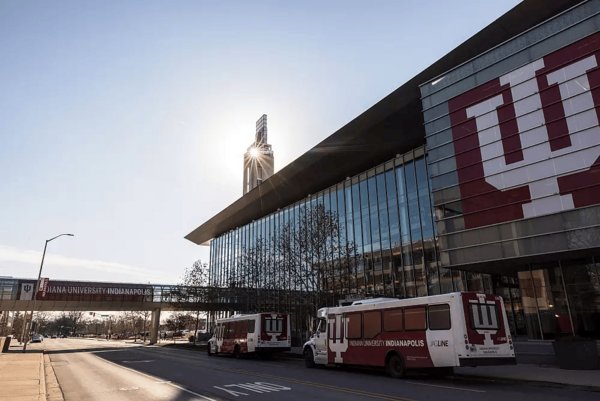
Last fall, Indiana University Indianapolis launched an orientation program exclusively for incoming transfer and adult learners, designed to help familiarize them with the institution, build connections to peers and boost their confidence in attending the university.
What’s the need: About 30 percent of undergraduates at IU Indianapolis are transfer students, said Janice Bankert-Countryman, assistant director of student services at the Center for Transfer and Adult Students. A significant number of transfers come in as juniors, having already obtained an associate degree.
First-Year Bridge, IU Indianapolis’s orientation for new students, has historically supported all incoming students in the fall term. Staff created Bridge to Your Future: Transfer Bridge exclusively to serve the diverse needs of undergraduate transfer students, including military-affiliated students, working students and parenting students.
“The core of Transfer Bridge is creating and maintaining relationships,” Bankert-Countryman said. “We all need relationships to survive as humans, and we certainly need relationships to thrive as students. So how do we connect students to the right people at the right time to receive the right resources that will empower them to thrive at our campuses?”
How it works: Transfer Bridge is a coordinated effort among the Center for Transfer Students, First-Year Programs, Orientation Services, Student Transitions and Mentor Initiatives, Housing and Residence Life, and the Division of Enrollment Management.
First-Year Bridge is required of all first-year students, but transfers can opt in to Transfer Bridge. Students learn about the opportunity through emails and meetings with their admissions counselors and academic advisers, as well as through other orientation presentations, Bankert-Countryman said.
The pilot took place from 9 a.m. to 3 p.m. over three days during orientation week—designed to accommodate the needs of working and caregiving students, Bankert-Countryman said.
First-year orientation is a full five days, and transfer students participate in some of the larger programming, like workshops on how to join student organizations, engage in career development or understand finances. Many also join the field trip to the Indianapolis Zoo.
In addition to receiving support from Bankert-Countryman and other staff members, transfer students engage with two peer mentors, who provide insight and advice as students navigate their transition into the university.
Beyond orientation week, transfer students receive support through regular peer mentoring sessions, transfer student events and a Transfer Bridge fall celebration. Bankert-Countryman and the peer mentors use Canvas, email and social messaging to keep in touch with students, she said.
The impact: Of the 25 transfer and adult students who attended the inaugural orientation, 10 were 23 years old or older, two were military-connected and 12 had transferred from the local community college, Ivy Tech.
Sixty percent of the students who participated in Transfer Bridge have a 3.0 or higher, and many have joined student organizations or hold on-campus jobs.
Feedback from 14 participants showed that they found the program useful as they integrated into campus, saying it helped them to feel at home.
“This was a worth-it experience especially as someone who tends to get anxiety to new environments and overwhelmed easily,” one participant wrote in a postorientation survey. “In a nutshell, this was a good slow introduction before the first day of school.”
What’s next: This fall, staff will scale the program to offer three sections. The university will pay for three instructors and three peer mentors to lead the additional sections.
One section will be offered to students in the pre–Health and Life Sciences program to highlight academic planning and career development. Another section, Cyber Sandbox, will focus on tech tools on campus, introducing learners to available systems and technologies from 3-D printing to virtual reality and artificial intelligence. The third section, Connections, will center on a book, The Crossroads of Should and Must by Elle Luna, to help students connect their current learning to future goals.