Less than a week after Yeshiva University agreed to recognize an LGBTQ+ student club as part of a legal settlement, university president Ari Berman apologized for the way the university conveyed the announcement and stressed that “pride” clubs still run counter to the values of the Modern Orthodox Jewish university, Jewish Telegraphic Agency reported. He emphasized that the newly approved club would function “in accordance with halacha,” or Jewish law.
“I deeply apologize to the members of our community—our students and parents, alumni and friends, faculty and Rabbis—for the way the news was rolled out,” Berman, a rabbi, wrote in an email to students Tuesday. “Instead of clarity, it sowed confusion. Even more egregiously, misleading ‘news’ articles said that Yeshiva had reversed its position, which is absolutely untrue.”
The university has been mired in a legal battle with its LGBTQ+ student group, the YU Pride Alliance, since 2021, when the group sued for official university recognition. Yeshiva said it wasn’t legally required to recognize the club because of Orthodoxy’s stance against same-sex relations. The two parties announced a settlement last week in which students will run an LGBTQ+ club called Hareni that will “operate in accordance with the approved guidelines of Yeshiva University’s senior rabbis,” according to a joint statement issued last Thursday.
LGBTQ+ students celebrated the settlement as a new milestone. But Berman framed the settlement as doubling down on an old proposal from 2022, when the university sought to create its own LGBTQ+ student club called Kol Yisrael Areivim. Plaintiffs rejected the plan at the time, on the grounds that the club wouldn’t be student-run. But Berman said Hareni was similarly created “to support students who are striving to live authentic, uncompromising” lives within the bounds of Jewish law, “as previously described.”
“The Yeshiva has always conveyed that what a Pride club represents is antithetical to the undergraduate program in which the traditional view of marriage and genders being determined at birth are transmitted,” Berman wrote in his message to students. “The Yeshiva never could and never would sanction such an undergraduate club and it is due to this that we entered litigation.”
As he sees it, “last week, the plaintiffs in the lawsuit against YU accepted to run Hareni, instead of what they were originally suing us for, moved to end the case, and the case has been dismissed.”
Entering the workforce can be a daunting experience for recent college graduates. A May 2024 Student Voice survey by Inside Higher Ed and Generation Lab found 68.9 percent of current students are at least somewhat stressed when they think about and prepare for their life after graduation.
Working in a career that resonates with their interests is also a goal for students: Two-thirds of young people globally say they want their job to be meaningful and make them happier than they were last year. Of respondents’ top three work ambitions, young people in the U.S. identified financial stability (65 percent) and achieving work-life balance (52 percent) as priorities.
To help students engage in career wellness, a group of students from the University of Wisconsin at Madison and California State Polytechnic University, Pomona—supported by advisers from Cal Poly Pomona—created Tune In to Strive Out, which encourages students to channel their inner potential for future success and collective well-being.
The program, housed at the Center for Research on College-Workforce Transitions (CCWT) at Madison, includes student resources and facilitator training. The initiative launched in spring 2022 and has supported over 150 students to date.
Survey Says
A survey of young people in the workforce (ages 27 to 35) found about one in four respondents strongly agree their employer has policies or structures in place to support work-life balance.
How it works: The Tune in to Strive Out Career Wellness Program guides students through practices that build their self-efficacy and understanding of their wellness. The goal is to bridge theory and practice in ways that are applicable and flexible to various circumstances students may be in.
The intervention can be offered as a stand-alone program or integrated into existing courses.
Tune in to Strive Out includes five modules, rooted in the radical healing framework, which focus on students’ development of values, career goals, resiliency and senses of hope and community. The program includes a supplemental tool kit of resources for students to explore as well.
“The program addresses unique challenges individuals face by emphasizing the importance of community and cultural strengths in healing and strategies to foster radical hope to persist in the face of barriers,” said Mindi Thompson, executive director of CCWT.
To guide practitioners on delivering the intervention, the center provides a three-hour facilitator training, which costs $30 per person and fulfills continuing education hours for National Career Development Association credentials.
Once training is completed, a facilitator receives access to a portal containing the detailed facilitation manual, a student workbook and presentation slides.
The impact: Seventeen students from three different postsecondary institutions participated in a pilot study, which has since been scaled to involve more than 150 student participants and 90 professionals who completed the facilitator training to deliver the program.
In the future, CCWT hopes to further scale and reach practitioners with the resources so they can better support student success.
Do you have a career-focused intervention that might help others promote student success? Tell us about it.
An international student from Tufts University has been detained. Rumeysa Ozturk, 30, was meeting friends for iftar, a meal that breaks a fast at sunset during Ramadan when she was arrested.
Video obtained by The Associated Press appears to show six people, their faces covered, taking away Ozturk’s phone as she yells and is handcuffed.
Ozturk co-wrote an op-ed in The Tufts Daily criticizing the university’s response to its community union Senate passing resolutions that demanded Tufts “acknowledge the Palestinian genocide,” disclose its investments and divest from companies with direct or indirect ties to Israel.
After the arrest, hundreds of Tufts students protested.
This arrest is consistent with Trump Administration efforts to intimidate and deport Muslim foreign students. Students from Cornell, Georgetown, Columbia University have also been detained.
Student retention is one of the most critical challenges faced by colleges and universities. While recruitment is essential to maintaining a thriving institution, keeping students engaged and enrolled until they complete their programs is just as vital. Why is that?
High dropout rates can impact institutional reputation, funding, and overall student satisfaction. As an education marketer, ask yourself: how can you create an experience that ensures students feel supported and motivated to stay the course? You’re in luck because today, we’re discussing the answer to this question at length.
Understanding the factors contributing to student retention in higher education is the first step toward building effective marketing strategies that help students persist through their academic journey. From engagement initiatives to personalized support systems, there are various approaches you can take to increase student retention and position your institution as one that truly cares about student success. Let’s explore ten of them together!
Struggling with enrollment?
Our expert digital marketing services can help you attract and enroll more students!
Understanding Retention Marketing
What is retention marketing? Retention marketing is the strategic use of targeted campaigns, communication, and engagement initiatives that keep current students enrolled and actively involved in their educational journey. Unlike traditional marketing, which focuses on acquiring new students, retention marketing is about maintaining student satisfaction and addressing concerns before they result in attrition.
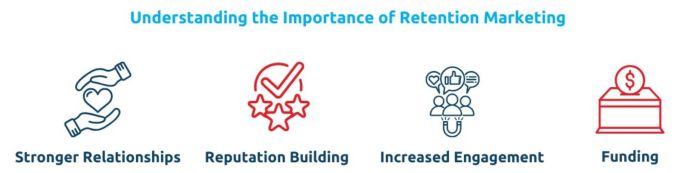
Investing in retention marketing helps schools build stronger student relationships, providing the necessary support to ensure academic persistence. Now let us explore key college student retention strategies to incorporate into your marketing plan.
Source: HEM
1. Personalizing Communication to Address Individual Student Needs
One of the most effective ways to retain students is through personalized communication. Today’s students expect tailored messaging that speaks directly to their needs, challenges, and aspirations.
Automated email campaigns, segmented messaging, and personalized advising can go a long way in making students feel seen and heard. Implementing AI-driven chatbots and predictive analytics can help anticipate student concerns before they escalate, allowing your institution to intervene at critical moments.
2. Creating a Strong Sense of Community and Belonging
Feeling connected to a campus community is a key driver of student success. Institutions that foster a sense of belonging through student organizations, mentorship programs, and social events tend to see higher levels of college student retention.
Marketing teams can contribute by showcasing stories of engaged students and alumni, creating social media groups, and facilitating virtual and in-person networking opportunities that keep students feeling involved.
Example:Here, Nichol’s College demonstrates its commitment to student belonging with a dedicated Instagram for making its current students feel at home. In addition to fostering belonging in your classrooms, clubs, and offices, to improve retention through your digital marketing efforts, it’s essential to champion each student’s role as a valued member of your community in posts and site content.
Source: Nichols College | Instagram
3. Offering Robust Academic Support Services
Academic challenges are one of the leading reasons students drop out. By promoting tutoring centers, academic coaching, and faculty office hours, your institution can reinforce its commitment to student success. Marketing these services effectively ensures students know where to get help when needed. Outreach campaigns can highlight real student success stories, demonstrating the impact of these resources.
Beyond traditional support, schools can integrate technology-driven solutions such as virtual tutoring and on-demand academic workshops. Proactively reaching out to students who show signs of struggling, such as declining grades or low attendance, can also prevent academic disengagement.
Additionally, faculty can offer structured study groups or mentoring programs to ensure students receive guidance outside of class hours. By fostering a strong academic support network, institutions can significantly improve student persistence and overall satisfaction.
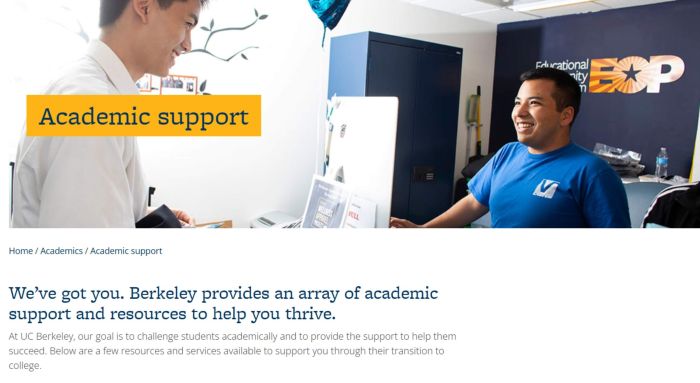
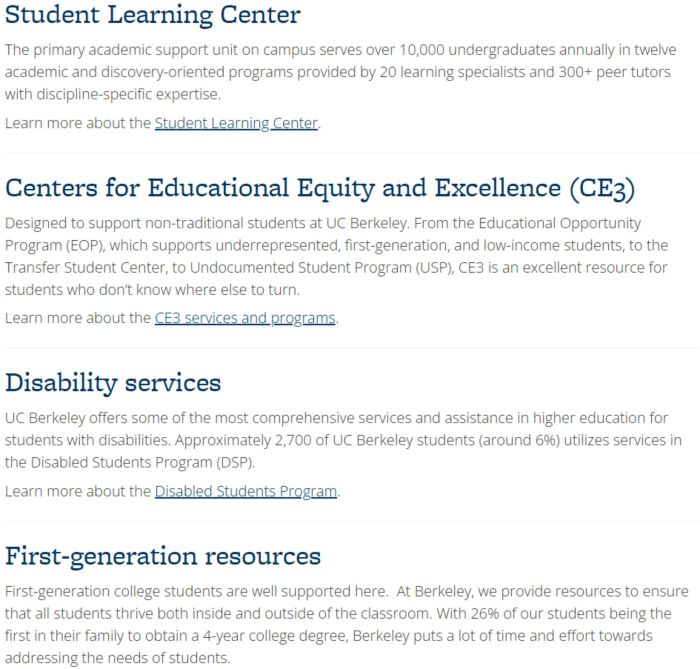
Example: Discover the robust academic support system available to students at UC Berkeley. On their website, they make it clear that they are committed to meeting the learning needs of every student. Below, you’ll see an array of academic resources tailored to different subgroups of the Berkeley student body. Low-income, underrepresented, first-generation, and students with disabilities are acknowledged and supported to reach their full potential.
Source: UC Berkeley
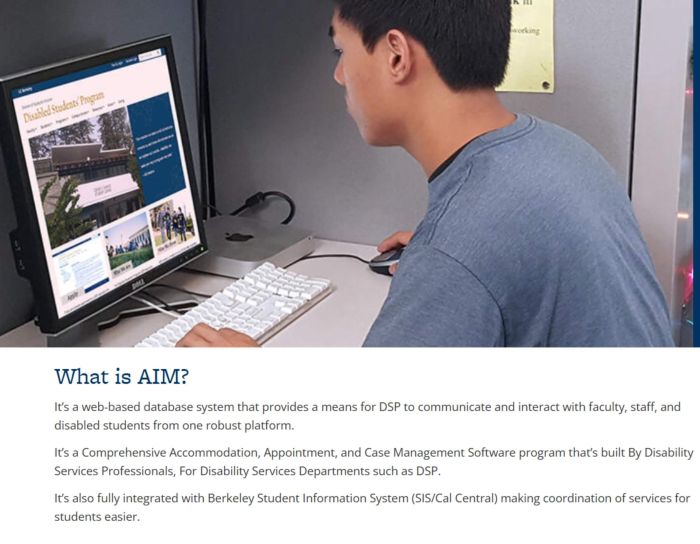
In addition, UC Berkeley leverages technology to serve its students through the AIM platform, specifically tailored to learners with disabilities. AIM, pictured at the bottom, is an accessible Student Information System designed to facilitate communication between students and faculty, streamline the process of requesting accommodations, and centralize the management of their information.
To boost retention, make sure students know how you support their learning. Make it as convenient and inclusive as possible for students to access your resources.
4. Providing Career Development Opportunities Early On
Students often enroll in college with long-term career aspirations in mind, yet many feel uncertain about how to achieve their goals. By integrating career services from day one, schools can help students see a clear pathway from education to employment. Internship programs, networking events, and job placement support should be at the forefront of marketing efforts. When students perceive that their investment in education will lead to tangible career outcomes, they are more likely to persist.
To enhance engagement, institutions should provide hands-on career workshops, alumni networking events, and mentorship opportunities that connect students with professionals in their fields of interest. Career counselors can conduct personalized career assessments to help students identify potential career paths that align with their strengths and interests.
Additionally, integrating career-focused coursework, such as resume-building sessions and mock interviews, can help students feel more confident about their job prospects post-graduation. Schools that establish strong employer partnerships can also facilitate job placement programs, internships, and co-op opportunities that give students real-world experience while still in school, reinforcing their motivation to stay enrolled and complete their studies.
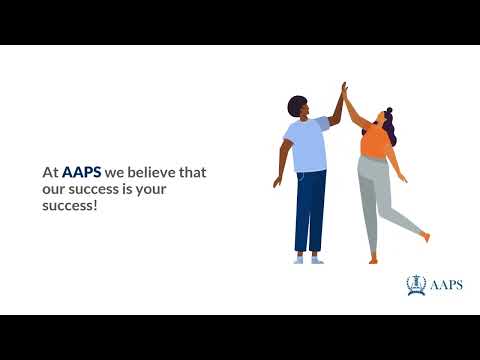
Example:In this video, AAPS, an institution that mainly appeals to graduate students who are focused on starting or developing their careers, markets its career services which include: access to career and employment experts, resume writing support, and interview workshops.
Source: Academy of Applied Pharmaceutical Sciences | YouTube
Their marketing shows how effective the career services at AAPS are, citing their 100% employer satisfaction rate and a solid 88% graduation rate. As you promote your career services, be sure to provide tangible results because that’s what your prospects and current students are looking for.
5. Focus on Student Engagement Initiatives
Student engagement plays a crucial role in student retention, as engaged students are more likely to complete their programs and feel a strong connection to their institution. Schools must take proactive steps to foster engagement through meaningful initiatives that encourage academic, social, and extracurricular involvement.
One way to drive engagement is by creating dynamic student events, such as leadership workshops, cultural festivals, and career networking opportunities. These events provide students with valuable connections, skills, and a greater sense of belonging, reducing feelings of isolation and disengagement.
Another highly effective strategy is gamification, where game design elements, such as rewards, leaderboards, and challenges, are integrated into academic and extracurricular activities. For instance, you could introduce a points-based system that rewards students for attending classes, participating in discussions, or completing extra-curricular workshops.
Social media engagement is another powerful tool. Schools can create dedicated student communities on platforms like Discord, LinkedIn, or Instagram where students can connect, share experiences, and support one another. Institutions that regularly post interactive content, student highlights, and live Q&A sessions see stronger student participation.
Additionally, peer mentorship programs help students build support networks that enhance their academic and personal experiences. New students, especially freshmen, often struggle with the transition to college life. Pairing them with experienced peers who can guide them through academic and social challenges creates a sense of stability and reassurance, leading to increased persistence.
Finally, experiential learning opportunities, such as service-learning projects, research collaborations, and internships, allow students to see the real-world value of their education. When students feel that their coursework directly impacts their future career prospects, they are more likely to remain engaged and committed to completing their studies.
Example: As part of their Student Life Program, the University of Toronto offers Mentorship and Peer Programs to increase student engagement, keeping them invested in both their studies and social lives at U of T, in turn, supporting student retention. In this video, they make the voices of their student body heard, allowing them to express just how the Mentorship and Peer Support programs at U of T have impacted their education. When promoting your student engagement initiatives, try to leverage student testimonials for better relatability and credibility.
Source: U of T Student Life | YouTube
6. Utilizing Data-Driven Insights to Address Student Challenges
Predictive analytics and student data tracking allow institutions to identify at-risk students and intervene early. By analyzing factors such as attendance, engagement levels, and academic performance, schools can proactively reach out to students who may be struggling. Automated alerts and personalized advising sessions ensure students receive timely support tailored to their individual needs.
In addition to tracking academic performance, you can use data insights to improve curriculum design and support services. For example, if a large number of students are struggling with a specific course, faculty can adjust the syllabus, provide supplemental learning materials, or offer additional tutoring sessions.
Schools can also analyze patterns of student engagement in extracurricular activities and campus events to determine what initiatives are most effective in fostering a sense of community. By using data to refine support systems continuously, institutions can create a proactive, student-centric approach that minimizes dropouts and maximizes success.
7. Enhancing Financial Aid Awareness and Support
Financial difficulties are one of the biggest reasons students leave college before completing their programs. Many students are unaware of the full range of financial aid options available. Your school’s marketing team can provide students access to vital scholarships, grants, and payment plans. Institutions should regularly communicate financial aid opportunities through social media, email campaigns, and student portals to alleviate financial stress and keep students enrolled.
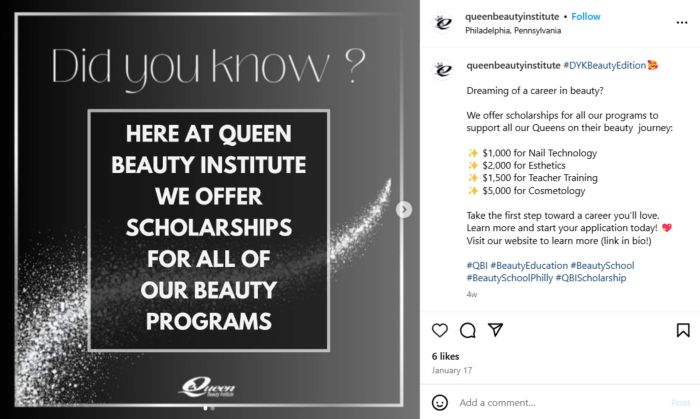
Example: Unfortunately, many students leave their education behind due to their financial situations. Surely, some of these students are unaware of the financial assistance options available to them. To boost student retention, let your community know you can help them invest in their futures. Here, Queen Beauty Institute promotes its financial aid programs on social media, letting students know that support is available should they need it.
Source: Queen Beauty Institute Instagram
8. Promoting a Flexible and Inclusive Learning Environment
Flexibility is key to student retention in higher education, particularly for non-traditional students balancing work, family, and school. Online learning options, hybrid models, and asynchronous coursework can make higher education more accessible. Schools should highlight these flexible learning opportunities in their marketing materials, emphasizing how they accommodate diverse student needs and lifestyles.
In addition to offering different learning formats, you can provide adaptive scheduling options that allow students to select courses that fit their personal and professional commitments. Some colleges have introduced weekend or evening classes to serve students with full-time jobs or family obligations. Additionally, having a robust support system for online students, such as virtual study groups, 24/7 tech support, and faculty office hours, ensures they receive the same level of engagement as in-person learners.
Another important aspect of fostering inclusivity is providing accessible resources for students with disabilities. Ensuring that digital learning platforms are compatible with screen readers, offering captioned lecture videos, and creating inclusive classroom environments can greatly enhance the learning experience. You can also implement specialized advising services to assist students in navigating academic and personal challenges, further reinforcing your commitment to diversity and inclusion.
Example:Here, the Academy of Learning Career College introduces students to its Integrated Learning System, an educational resource designed to put students “in the driver’s seat of their learning experience”. It fosters flexibility and was created with many learning styles and neurodiversity in mind. Make it known how your school aims to meet students where they are.
Source: The Academy of Learning Career College | YouTube
9. Encouraging Faculty-Student Engagement
Professors play a crucial role in retaining students. Meaningful connections between students and faculty members can significantly impact a student’s decision to persist in their studies. Your marketing team can facilitate this by spotlighting faculty members in newsletters, creating video content featuring faculty mentorship stories, and promoting faculty office hours as a key resource.
Institutions can also encourage faculty to take an active role in student success by implementing early intervention programs. If a professor notices a student struggling, they can reach out with personalized support or recommend tutoring services. Additionally, fostering a culture of open communication through regular check-ins, discussion forums, and one-on-one mentorship opportunities helps build trust and rapport between faculty and students.
Another approach is incorporating faculty-led engagement opportunities such as research projects, community outreach programs, and interdisciplinary collaborations. When students work closely with faculty on meaningful academic projects, they feel more invested in their studies and are less likely to disengage. Schools that promote faculty involvement as a cornerstone of student support will see stronger connections, higher levels of academic motivation, and improved retention rates.
10. Establishing Clear Pathways for Student Success
Students are more likely to stay enrolled when they clearly understand their academic roadmap. Schools should provide structured academic pathways, regular progress check-ins, and advising support to help students navigate their journey efficiently. Marketing teams can assist by crafting student success stories highlighting how structured pathways have helped past students graduate on time and achieve their goals.
In addition to offering clear course sequences, institutions can provide academic planning workshops that help students map out their degree completion plan. Schools should also ensure that students have easy access to academic advisors who can guide them in selecting courses aligned with their career goals. By integrating digital tools such as degree audit software, students can track their progress and receive real-time updates on their academic standing.
Offering flexible course options, such as summer sessions or online alternatives, can further help students stay on track and avoid delays in graduation. When students feel they are making steady progress, they are more likely to stay motivated and complete their degrees successfully.
How to Improve Student Retention With a Comprehensive Marketing Strategy
How to improve student retention? A comprehensive marketing strategy should involve consistent engagement with students through multiple touchpoints, addressing common concerns before they lead to dropout. By implementing strategic communication, financial aid awareness, community-building initiatives, and academic support, you can foster an environment where students feel valued and encouraged to complete their education.
At Higher Education Marketing, we specialize in crafting tailored marketing strategies that attract students and keep them engaged throughout their academic journey. HEM specializes in student retention strategies that drive measurable success. Let’s craft a marketing plan that keeps students engaged from enrolment to graduation. that fosters long-term student success.
Struggling with enrollment?
Our expert digital marketing services can help you attract and enroll more students!
Frequently Asked Questions
Question: What is retention marketing?
Answer: Retention marketing is the strategic use of targeted campaigns, communication, and engagement initiatives that keep current students enrolled and actively involved in their educational journey.
Question: How to improve student retention?
Answer: A comprehensive marketing strategy should involve consistent engagement with students through multiple touchpoints, addressing common concerns before they lead to dropout. By implementing strategic communication, financial aid awareness, community-building initiatives, and academic support, you can foster an environment where students feel valued and encouraged to complete their education.
Why would you settle for a generic LMS when your university deserves one based on its own learning path? Custom LMS development creates a customized experience that drives student achievement from day one, not only provides tools.
Why Universities Need a Custom LMS
Custom LMS systems are much needed in modern institutions since off-the-shevel LMS solutions usually fail to satisfy their various needs. Custom LMS development is hence quite relevant. Customized solutions can fit the processes, academic framework, and student needs of your university, therefore promoting improved institutional effectiveness and learning results.
Did you realize?
A 2023 EDUCAUSE study shows that 78% of leaders in higher education feel that tailored learning environments directly help to ensure student success.
Using custom LMS solutions, universities noted a 25% increase in student involvement and a 19% increase in course completion rates.
Key Benefits of a Custom LMS Development for Student Success
Students advance at their own speed under customized content delivery depending on performance.
Interactive materials, multimedia integration, and group projects all help to keep students engaged.
Modern analytics—real-time student performance—allows teachers to modify their plans to raise results.
Linkages with current SIS, CRM, and outside tools help to simplify procedures.
Flexibility and scalability help you to ensure long-term viability as your university develops.
How to Develop a Custom LMS for Universities
Customizing the best LMS for student success is about matching the platform with the mission of your university, not only about technology. Here’s a breakdown:
Name the main goals: Describe for your university what student success means.
Plot the course of the student. Recognize several student kinds, from those needing more help to fast learners.
Design for User Experience: Make sure teachers and students alike have a simple, mobile-friendly interface.
Leverage data: To create reporting and analytics tools to monitor performance and interaction.
Test, refine, and scale: Beginning with a pilot program, get comments, and always improve.
The Future of Learning with Creatrix Campus
Creatrix Campus provides a best-in-class LMS for student success, therefore enabling universities to design individualized, data-driven learning environments. Features like automatic reporting, assignment administration, and engagement tracking enable our platform to help colleges uncover new academic successes without sacrificing cost-effectiveness.
Ready to change the educational process at your university? Your way, let us create an best LMS for student success that propels student success.
Today on the HEPI blog, Professor David Phoenix OBE and Dr. Katerina Kolyva explore how England’s post-16 education system can move beyond competition to create a more integrated, collaborative approach that benefits learners, local economies, and national prosperity. You can read the blog here.
Below, colleagues at the University of Surrey explore the evolving landscape of global student mobility, highlighting innovative programmes and making the case for a new approach to student placements.
Professor Amelia Hadfield is Associate Vice-President for External Engagement and Founding Director of the Centre for Britain in Europe, and Liz Lynch is International Mobility Manager, both at the University of Surrey.
In recent years, the UK’s governments have developed new initiatives such as the Turing Scheme, the Taith Scheme in Wales, and the Scottish Government’s Scottish Education Exchange Programme (SEEP). These mobility programmes aim to support students’ global experiences. While they have undoubtedly provided valuable opportunities for students – particularly for those from disadvantaged backgrounds – what is truly needed is a longer-term commitment from government to sustain and expand these life-changing opportunities.
At the end of February, the annual Global Mobility conference hosted by Universities UK International (UUKi) brought together higher education professionals and thought leaders to explore the latest developments in global student mobility and what the future looks like. The conference showcased how universities are leveraging these funding opportunities to create meaningful and impactful programmes. However, it also highlighted the significant challenges faced by UK institutions, particularly in the aftermath of Brexit, the Covid-19 pandemic, the UK’s withdrawal from Erasmus+ and the ongoing financial pressures on both universities and students. These factors have created a complex landscape, making investment in international mobility more crucial than ever.
The Impact of Mobility on Student Outcomes: Insights from UUKi Research
During the conference, UUKi presented early-stage findings from their latest research, Gone International: A New Generation, conducted in collaboration with Jisc and the Northern Consortium. While the data revealed a significant decline in the number of students going abroad, perhaps reflecting the impact of recent global challenges, there remains strong evidence of the benefits to students. Reaffirming 2019 findings, the data continues to show students participating in mobility programmes not only attain higher degrees but are also more likely to earn higher salaries, secure professional-level jobs and experience lower unemployment rates. The research underscores the important role of global mobility in fostering social mobility.
Nevertheless, while those of us working in the sector already understand the intrinsic value of international experiences, having concrete data to back up these claims strengthens the case for continued support and expansion of such opportunities. The University of Manchester, for example, has been evaluating the impact of its international mobility programmes on student outcomes, and the findings have helped raise the profile and importance of these opportunities across their institution. This kind of evidence-based approach is essential for ensuring that the sector – and governments – remain committed to facilitating global mobility for students.
The Broader Benefits of International Mobility
The British Council highlights the broader societal benefits of international student mobility, particularly in fostering cross-cultural understanding and long-term relationships between nations. By participating in mobility programmes, students develop cross-cultural competence, language proficiency, and global perspectives – all vital skills for success in today’s interconnected world. Inbound mobility, in particular, contributes significantly to the UK economy, with international students bringing cultural diversity, innovation, and fresh perspectives to campuses. These exchanges also build cross-cultural networks, which can endure long after students return to their home countries, fostering greater trust and understanding between nations and supporting the UK’s soft power overseas.
All of this is in addition to the economic benefit that stems from the UK’s ability to attract international students, as discussed recently on the HEPI blog.
Blended Mobility: Enabling flexibility and accessibility
Blended mobility programmes represent a forward-thinking solution for making global education more accessible and flexible. Cardiff Metropolitan University, for example, has embraced a hybrid model supported by the Taith funding, combining one week of virtual learning with one week of physical mobility. This approach not only maintains the essence of cultural exchange but also offers students the flexibility to engage in international experiences that might otherwise be logistically or financially out of reach. The combination of virtual, blended, and physical mobility opens doors for students who might not be able to commit to a full-term study abroad programme, making global learning more inclusive and scalable.
Whilst the Turing Scheme in its current form does not include blended mobility, the recent reduction in minimum duration to 14 days is a positive step towards providing greater accessibility for students. Hopefully, in future years, blended mobilities and shorter 7-day mobilities could be incorporated into future Turing projects, taking the impactful examples from both Taith and Erasmus+ as evidence of the value and enabling engagement from the most disadvantaged and underrepresented groups. This, along with funding for staff mobility (offered by both Taith and Erasmus+), will only serve to enhance Turing overall.
Surrey’s Approach: Empowering Students through International Mobility
At the University of Surrey, we are committed to increasing the participation of our students in a range of international opportunities, whilst simultaneously expanding the international dimension of the student experience at our Guildford campus. In this respect, placement training options, study abroad opportunities, enhanced ‘global and cultural intelligence’ and ‘collaborative online international learning’ (COIL) content in degree pathways, as well as our Global Graduate Awards, ‘international’ is necessarily widely defined, and ‘mobility’ can take place intellectually, culturally, and socially, as well as just physically,
Mobility also brings together traditional approaches to cross-border opportunities with enhanced approaches to supporting new demographics. A key strategic objective at Surrey, therefore, is focusing on access for underrepresented groups. We target Turing funding and additional grant funds to students who meet Surrey’s widening participation criteria to address inequality amongst underrepresented groups who may wish to experience international mobility but are unable to do so without grants. The portfolio of both longer-term and shorter mobility options we have developed facilitates equal access for all. As previous placements have illustrated, longer-term mobility provides deeper cultural experiences and learning opportunities for those able to commit to a full semester/year abroad. Shorter options can widen access for students from disadvantaged backgrounds and underrepresented groups.
Through their international experiences, our students build global academic and professional networks and improve their job prospects. They return to Surrey as confident, resilient, and globally minded individuals, prepared to tackle the challenges of tomorrow’s world. Feedback from students who participated in Surrey’s Turing 2023 project shows the impact mobility has on their personal and professional development. 94% reported an increase in intercultural awareness, and 93% felt the experience enhanced their employability and professional skills.
Looking Ahead: The Future of Global Mobility
The global mobility landscape is changing, with rapid technological advancements and a growing emphasis on inclusivity and sustainability. At Surrey, we are embracing technological innovations that will enhance both the student experience and the efficiency of mobility programme management. Process automation, for example, is helping streamline administrative tasks, freeing up resources to better support students. We are also starting to use virtual reality (VR) to promote international opportunities, allowing students to virtually explore campus life abroad. Future opportunities for blended learning, as well as the incorporation of COIL projects within the curriculum, will nurture the skills necessary for students to engage with the world and develop the confidence and curiosity needed to thrive in an interconnected society.
By incorporating data-driven approaches, we will continue to assess the impact of our mobility programmes, identifying areas for improvement and ensuring that our offerings align with both institutional and student goals. As the sector evolves, collaboration and innovation will be key in ensuring that all students can access transformative international experiences.
It seems that few can agree about what the future student experience will look like but there is a growing consensus that for the majority of higher education institutions (bar a few outliers) it will – and probably should – look different from today.
For your institution, that might look like a question of curriculum – addressing student demand for practical skills, career competencies and civic values to be more robustly embedded in academic courses. It might be about the structure of delivery – with the Lifelong Learning Entitlement funding per credit model due to roll out in the next few years and the associated opportunity to flex how students access programmes of study and accrue credit. It might be a question of modality and responding to demands for flexibility in accessing learning materials remotely using technology.
When you combine all these changes and trends you potentially arrive at a more fragmented and transient model of higher education, with students passing through campus or logging in remotely to pick up their higher education work alongside their other commitments. Academic community – at least in the traditional sense of the campus being the locus of daily activity for students and academics – already appears at risk, and some worry that there is a version of the future in which it is much-reduced or disappears altogether.
Flexibility, not fragmentation
With most higher education institutions facing difficult financial circumstances without any immediate prospect of external relief, the likelihood is that cost-saving measures reduce both the institutional capacity to provide wraparound services and the opportunities for the kind of human-to-human contact that shows up organically when everyone is co-located. Sam Sanders
One of the challenges for higher education in the decade ahead will be how to sustain motivation and engagement, build connection and belonging, and support students’ wellbeing, while responding to that shifting pattern of how students practically encounter learning.
The current model still relies on high-quality person to person interaction in classrooms, labs, on placement, in accessing services, and in extra-curricular activities. When you have enough of that kind of rich human interaction it’s possible to some extent to tolerate a degree of (for want of a better word) shonky-ness in students’ functional and administrative interactions with their institution.
That’s not a reflection of the skills and professionalism of the staff who manage those interactions; it’s testament to the messiness of decades of technology systems procurement that has not kept up with the changing demands of higher education operational management. The amount of institutional resource devoted to maintaining and updating these systems, setting up workarounds when they don’t serve desired institutional processes, and extracting and translating data from them is no longer justifiable in the current environment.
Lots of institutional leaders accept that change is coming. Many are leading significant transformation and reform programmes that respond to one or more of the changes noted above. But they are often trying – at some expense – to build a change agenda on top of a fragile foundational infrastructure. And this is where a change in mindset and culture will be needed to allow institutions to build the kind of student experiences that we think are likely to become dominant within the next decade.
Don’t fear the transactional
Maintaining quality when resources are constrained requires a deep appreciation of the “moments that matter” in student experience – those that will have lasting impact on students’ sense of academic identity and connection, and by association their success – and those that can be, essentially, transactional. Pete Moss
If, as seems to be the case, the sector is moving towards a world in which students need a greater bulk of their interaction with their institution to be in that “transactional” bucket two things follow:
One is that the meaningful bits of learning, teaching, academic support and student development have to be REALLY meaningful, enriching encounters for both students and the staff who are educating them – because it’s these moments that will bring the education experience to life and have a transformative effect on students. To some degree how each institution creates that sense of meaningfulness and where it chooses to focus its pedagogical efforts may act as a differentiator to guide student choice.
The second is that the transactional bits have to REALLY work – at a baseline be low-friction, designed with the user in mind, and make the best possible use of technologies to support a more grab-and-go, self-service, accessible-anywhere model that can be scaled for a diverse student body with complicated lives.
Transactional should not mean ‘one-size-fits-all’ – in fact careful investment in technology should mean that it is possible to build a more inclusive experience through adapting to students’ needs, whether that’s about deploying translation software, integrating assistive technologies, or natural language search functionality. Lizzie Falkowska
Optimally, institutions will be seeking to get to the point where it is possible to track a student right from their first interaction with the institution all the way through becoming an alumnus – and be able to accommodate a student being several things at once, or moving “backwards” along that critical path as well as “forwards.” Having the data foundations in place to understand where a student is now, as well as where they have come from, and even where they want to get to, makes it possible to build a genuinely personalised experience.
In this “transactional” domain, there is much less opportunity for strategic differentiation with competitor institutions – though there is a lot of opportunity for hygiene failure, if students who find their institution difficult to deal with decide to take their credits and port them elsewhere. Institutional staff, too, need to be able to quickly and easily conduct transactional business with the institution, so that their time is devoted as much as possible to the knowledge and student engagement work that is simply more important.
Critically, the more that institutions adopt common core frameworks and processes in that transactional bucket of activity, the more efficient the whole sector can be, and the more value can be realised in the “meaningful” bucket. That means resisting the urge to tinker and adapt, letting go of the myth of exceptionalism, and embracing an “adopt not adapt” mindset.
Fixing the foundations
To get there, institutions need to go back to basics in the engine-room of the student experience – the student record system. The student system of 15-20 years ago was a completely internally focused statutory engine, existing for award board grids and HESA returns. Student records is now seen as a student-centric platform that happens to support other outputs and outcomes, both student-facing interactions, and management information that can drive decision-making about where resource input is generating the best returns.
The breadth of things in the student experience that need to be supported has expanded rapidly, and will continue to need to be adapted. Right now, institutions need their student record system to be able to cope with feeding data into other platforms to allow (within institutional data ethics frameworks) useful reporting on things like usage and engagement patterns. Increasingly ubiquitous AI functionality in information search, student support, and analytics needs to be underpinned by high quality data or it will not realise any value when rolled out.
Going further, as institutions start to explore opportunities for strategic collaboration, co-design of qualifications and pathways in response to regional skills demands, or start to diversify their portfolio to capture the benefits of the LLE funding model, moving toward a common data framework and standards will be a key enabler for new opportunities to emerge.
The extent to which the sector is able to adopt a common set of standards and interoperability expectations for student records is the extent to which it can move forward collectively with establishing a high quality baseline for managing the bit of student experience that might be “transactional” in their function, but that will matter greatly as creating the foundations for the bits that really do create lasting value.
This article is published in association with KPMG.
Anecdotally, higher education practitioners frequently share challenges and changes with today’s college students, but how unique are the incoming learners of the Class of 2029?
A February report published by the American Council on Education and the Higher Education Research Institute at the University of California, Los Angeles, found the incoming class of college students is more diverse than past classes in terms of race, sexuality and socioeconomic standing.
According to the CIRP Freshman Survey 2024, some demographic groups are less likely to say they’re confident in their academic abilities and that they encounter mental health struggles, highlighting ongoing need to support students with their personal and academic development in higher education.
“This report gives institutional leaders a clear view of today’s first-year students—their backgrounds, aspirations, and challenges—so they can better support learner success,” said Hironao Okahana, vice president and executive director of ACE’s Education Futures Lab, in a February press release. “Centering student experiences in higher education policy and practice is essential, and these findings help colleges and universities create environments where all students can thrive.”
Methodology
The survey, conducted between April 14 and Oct. 10, 2024, includes data from 24,367 incoming students across 55 colleges and universities.
Demographics: Over half of respondents (50.8 percent) identify as white, but significant portions are students of color, including more than one race (14.8 percent), Asian and Pacific Islander (14.6 percent), Hispanic or Latino (11.0 percent), or Black and African American (7.7 percent). Around 1 percent of respondents are American Indian or Alaska Native.
Nearly 10 percent of surveyed students reported English was not their primary language, and almost half of those learners are U.S. citizens.
A majority of respondents indicated they are heterosexual (82.3 percent), but the next-greatest share identify as bisexual (8.5 percent).
Nineteen percent of respondents were classified as low-income, defined in this study as having a family income of less than $60,000. First-generation students (those whose parents or guardians had no college experience) made up 12.4 percent of all students and one-third of the low-income group.
Eight percent of respondents were military-affiliated, and these learners made up 3 percent of the low-income group.
College prep: Nearly all students took three years of math in high school, but those from higher-income backgrounds were more likely to have completed advanced mathematics courses and Advanced Placement courses.
Women (66.8 percent) were less likely than men to see themselves as having strong academic ability, compared to their male peers (75.8 percent) and those who indicated another gender identity (72.3 percent). Similarly, female students were less likely to say they have above-average intellect, compared to men and others.
Despite that lack of self-confidence, women were more likely to report earning A’s in high school (78 percent) compared to men (72 percent) and other gender minorities (72 percent). Women and nonbinary students were also more likely to say they felt challenged by their coursework frequently (34.9 percent and 36.2 percent, respectively).
Over half of students studied at least six hours per week, but first-generation students were less likely to study for six hours per week, compared to their continuing-generation peers. First-generation college students were also slightly more likely to work for pay at least six hours per week at 41.3 percent versus 38.6 percent.
Around one-third of students socialized with their friends for at least six hours per week, on trend with national data that suggests Gen Z spends less time with friends compared to previous generations.
Personal struggles: Mental health concerns have risen among young people nationally, and many incoming college students indicate feelings of being overwhelmed or depressed. Nonbinary students were most likely to report feeling anxious, stressed or depressed, and women were slightly more likely than men to share mental health concerns.
“When asked how they compare with their peers on emotional health, men showed the most confidence; 48.5 percent rated themselves as above average or in the top 10 percent,” according to the report. “By contrast, only 35.2 percent of women and just 16.6 percent of students who identified outside of the gender binary rated themselves as above average or in the top 10 percent.”
Financial stress continues to weigh on students, with over half (56.4 percent) expressing some or major concern about paying for college. Latino (81.4 percent) and Black students (69.6 percent) were more likely to say this was true. Sixty percent of Latino students, over half of American Indian or Alaska Native, and half of Black students utilize Pell Grants to fund their education, and each of these groups also relied on work-study funding for their education costs at higher rates than their peers.
However, many students believe in the economic value of a college education, despite the financial barriers to access.
Politics: For the first time, the survey asked students if they considered state policies and legislation to be important to their college decision. One-third of men and almost 40 percent of women considered politics and legislation to be at least somewhat important of where to go to college, compared to 56 percent of their nonbinary peers. LGBTQ students (48 percent) also weighed this factor as important more than their peers.
The Class of 2029 is also civically engaged, with one-quarter of respondents indicating that they frequently or occasionally have demonstrated for a cause and one-third of respondents having publicly communicate their opinion about a cause. LGBTQ students were more likely to agree with these statements.
Military-affiliated students also reported high levels of community engagement, such as volunteering and voting.
Across the U.S., diversity, equity and inclusion work has become more controversial, but respondents still indicate a care for social equity. A majority of college students believe racial discrimination is still a major problem in the U.S., with students of color more likely than their white peers to share this opinion. Many students expressed an interest in correcting social inequalities and gender equity.
On Sept. 23, 1952, Mugo Gatheru had just finished English class when an American official approached him and flashed a United States Immigration Services badge. Gatheru, a young Kenyan student at Lincoln University, quickly realized that his education was not the officer’s concern. His politics were. The officer interrogated him about his role as an editor of the Kenya African Union’s newspaper, The African Voice, and about whether he had ever engaged in political agitation against government officials in Kenya, India, England or the United States.
In the 1950s, the Cold War logic of American immigration enforcement sought to place Gatheru into a rigid political binary: communist or anticommunist, agitator or ally. But Gatheru challenged these political borders. When accused of being an agitator, the young Kenyan student reframed the terms of the interrogation. Agitation, he argued, was a matter of perspective. British colonial authorities may have seen him as disruptive, but what he was doing was simply a continuation of the democratic ideals he had learned in America. “After all,” he told the immigration officer, “even George Washington was an agitator here in your country.”
Seventy-three years later, it’s old wine in a new bottle.
The same Immigration and Nationality Act that was used to justify deportation proceedings against Mugo Gatheru in the 1950s is now being wielded against Mahmoud Khalil. In Gatheru’s time, the target was anticolonial activists suspected of communist ties; today, it’s Palestinian advocates accused of supporting terrorism. The global politics are different, but the playbook remains the same: Silence dissent, rebrand it as a security threat and use immigration law to make it disappear.
These cases are not just about two individuals. They are part of a much longer history of using immigration enforcement as a tool of political suppression on college campuses. Gatheru was one of many African, Latin America, Asian and Caribbean students in the mid-20th century whose presence in U.S. universities became politically suspect. Fueled by Cold War anxieties, U.S. authorities from across the political spectrum saw anticolonial activism as inherently subversive to American geopolitical interests. In the late 1970s, the Carter administration, which professed a strong commitment to human rights, employed the same tools of immigration enforcement to investigate and silence Iranian students who denounced U.S. complicity in the shah’s regime. And in the mid-1980s, the Reagan administration also utilized those same tools to prosecute young Palestinian activists in Los Angeles.
The history of immigration and student activism is thus also a history of global racial politics. White European students were welcomed into American universities while Black and brown international students from the Global South were scrutinized for their political beliefs. In effect, academic freedom was never truly universal for international students. It was selectively granted and shaped by a racialized global hierarchy that mirrored U.S. Cold War priorities. Ultimately, an uncomfortable truth might be this: American universities are deeply entangled in America’s geopolitical agenda, and their commitment to academic freedom rarely extended to those who challenged U.S. hegemony.
Today, the U.S. government is deploying a similar logic. In addition to Khalil’s arrest, the government has trumpeted the arrest of another international student tied to the Columbia protests, Leqaa Kordia, and the visa revocation and “self-deportation” of Ranjani Srinivasan, who says she got mistakenly swept up in arrests of protesters during the occupation of Columbia’s Hamilton Hall last spring. A Georgetown University postdoctoral scholar from India, Badar Khan Suri, was also arrested last week, targeted, according to his lawyer, for his wife’s “identity as a Palestinian and her constitutionally protected speech.”
In other words, these are not isolated incidents but part of a deliberate policy effort to criminalize Palestinian advocacy and antiwar protest.
In the past two years alone, we have seen student groups labeled as extremist, faculty members investigated for their political speech and foreign nationals facing heightened scrutiny for their views on the ongoing war in Israel-Palestine. The arrest of Khalil, even if dropped, has had its intended effect: It sends a chilling message that political dissent, particularly when voiced by students from politically fraught regions, comes at a cost.
The echoes between these cases should prompt us to reflect on the historical legacies at play. Both Gatheru’s and Khalil’s experiences show how governments, fearing the power of certain ideas, attempt to control the discourse by criminalizing student activists. Both demonstrate how racialized and colonialist logics shape the policing of dissent, whether in the 1950s, under the specter of communism, or in 2025, under the guise of counterterrorism. And, most significantly for those in higher education, both reveal the ways in which universities serve as battlegrounds for global political struggles.
Yet both cases also highlight the potential role of academic communities and activist networks in resisting such overt suppression of political activism. When Gatheru faced deportation, university allies and civil rights leaders and groups, including Thurgood Marshall and the NAACP, mobilized on his behalf. Faculty and students at Lincoln University established the Friends of Mugo Gatheru Fund. They reframed his case as a fight for both racial justice and academic freedom. Their efforts eventually led to the U.S. government dropping its case.
Khalil’s arrest has likewise sparked widespread resistance. Student organizations and faculty at Columbia have mobilized swiftly, with Jewish faculty members holding a campus rally under the banner “Jews say no to deportations.” Meanwhile, an online petition demanding Khalil’s release has amassed more than three million signatures. These responses underscore the broader stakes of Khalil’s case: It is not just about one student but about the right to dissent in an era in which protest is again being reframed as a national security threat.
Gatheru’s case, once seen as a national security risk, is now remembered as an example of state overreach. Will we look back on Khalil’s case the same way? If so, it will be because students, faculty and advocates refused to allow immigration enforcement to dictate the terms of political activism. As Gatheru reminded his interrogator, George Washington was an agitator, too. The question is whether we will continue to punish today’s agitators for following in that tradition.
David S. Busch is the author of Disciplining Democracy: How the Modern American University Transformed Student Activism (Cornell University Press).
A defining quality of student-centred teaching is effective assessments. In recent years, the discourse around effective assessment has steered towards incorporating the “assessment for learning” strategy into curriculum development. In basic form, assessment for learning entails assessment where pre-emptive, future-oriented comments (called feedforward) are given to learners to guide improvement in future performances. This contrasts with the typical assessment arrangement where feedback is considered a product offered to the student in exchange for what they submit. However, two broad factors have historically impeded the adoption of assessment for learning with feedforward corrective actions in educational settings:
Increased workload and scalability: This approach demands creating varied, low-stakes formative assessment tasks with actionable feedforward recommendations that guide future learning. Besides, providing personalized corrective actions for each student in each low-stake test is both time and resource-intensive. Particularly, in large courses with many students, the additional burden on educators’ heavy workloads cannot be underestimated.
Student engagement and motivation: Students are reluctant to engage with formative assessment tasks if they perceive them as low-stakes with no incentive that aids their grades.
Overcoming these impediments is crucial to accelerating progress with assessment for learning. In this vein, the central idea of the assessment flywheel is to harness the power of GenAI to overcome the above challenges. In effect, this approach adds to the growing realisation of the power of GenAI for the transformation of assessments.
The Assessment Flywheel Model
Why assessment flywheel? In the field of engineering, which is my academic background, traditional methods such as lectures, tutorials, and laboratory sessions are the dominant content delivery vehicles. However, oftentimes, these activities are lecturer-led and time-bound. This thus limits students’ active knowledge consumption and self-regulated learning. Compounding the problem further when it comes time to assess our students’ learning, lecturers tend to focus predominantly on summative assessments, which are often followed by feedback of one kind or another. Notably, this prevalent approach of provisioning meaningful feedback solely on summative assessments often creates a dilemma between the traditional assessment of learning (which is backwards-looking) and the assessment for learning (which is forward-looking).
The discourse around how to incorporate assessment for learning strategy into curriculum development has permeated the literature on teaching and learning for the past several years. However, progress has been slow in adoption. Among the reasons for this is that assessment for learning demands constructing and assessing a diversity of low-stake formative assessment tasks suitable for providing “feedforward” comments that trigger corrective actions in students. In other words, the new paradigm imposes a significant burden on resource-constraint educators, especially for a large cohort of students. And this is where the idea of “assessment flywheel” comes in.
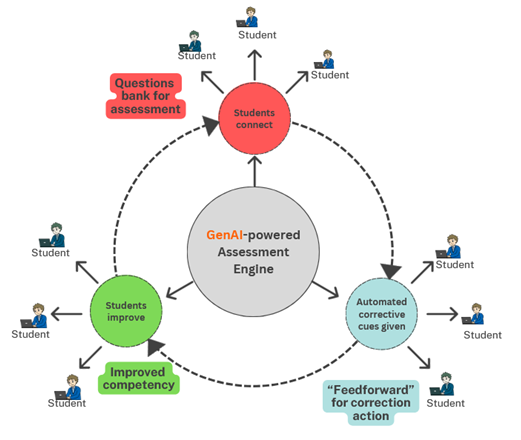
Essentially, the assessment flywheel is a GenAI-mediated assessment framework. It is a dynamic, self-reinforcing system that continuously gathers, analyzes, and applies student performance data to enhance learning outcomes. As depicted in the figure below, the flywheel model operates in a continuous cycle, and each iteration of tasks, learning and proactive feedforward comment builds momentum for deeper skill development. This contrasts with the traditional assessments that are static and episodic. More specifically, within the flywheel model, the GenAI plays a central role in generating personalized tasks, personalized feedback, and adapting learning materials. The goal is to create an automated loop where student learning accelerates over time through persistent, data-driven refinement. The model allows instructors to incorporate personalized exercises that revolve around a subject’s learning outcomes in low-stake tests. And with proper tailoring of the assessment flywheel model for low-stake tests, students will be able to instantly identify their current state of progress and get instant comments for corrective action from the GenAI-powered system.
An illustration of the assessment flywheel towards achieving the idea of “assessment for learning” using LLM/GenAI (adapted from the author’s recent publication).
Rolling Out GenAI-Driven Assessment Flywheel to Improve Learning
To be effective, one will need to take a few steps before a GenAI-driven assessment flywheel can be introduced within the academic learning spaces. First, the “assessment flywheel” system will need to be fed with learning contents of specific subjects from which question-answer pairs can be automatically generated. With proper tailoring of such a tool for low-stake tests, students will be able to instantly identify their current state of progress and get instant comments for corrective “feedforward” action from the GenAI-powered system. Second, a mechanism to minimize hallucinations (a common problem with GenAI) must be in place. Third, a structured approach that guides users of the system will need to be instituted with the rollout. For this latter point, a framework similar to Professor Gilly Salmon’s five-stage model for online learning is recommended.
Conclusion
Overall, GenAI holds concrete pedagogical prospects as a way of augmenting traditional teaching and assessment approaches to enhance gains in students’ learning. The discussed GenAI-powered assessment flywheel embodies the spirit of the military strategy of “Observe, Orient, Decide and Act” or OODA as is well-known. In the context of a personalized learning strategy, this GenAI-powered assessment flywheel approach holds the potential to contribute to deepening students’ accomplishment in competencies associated with learning objectives. It will also allow educators to provide assessments that facilitate authentic learning with minimal addition to their workload.
Dr. Khameel Mustapha holds a PhD in mechanical engineering from Nanyang Technological University (Singapore). He also holds two teaching qualifications – Postgraduate Certificate in Higher Education (PGCHE, Nottingham UK) and Graduate Certificate in Teaching and Learning (GCLT, Swinburne Australia). He is currently an Associate Professor with the Department of Mechanical Engineering, University of Nottingham (Malaysia campus). He is a Fellow of the Higher Education Academy (UK).