Tag: Student

  • Former Kansas City School Police Officer Fights for Student Safety Via Nonprofit – The 74

    Former Kansas City School Police Officer Fights for Student Safety Via Nonprofit – The 74

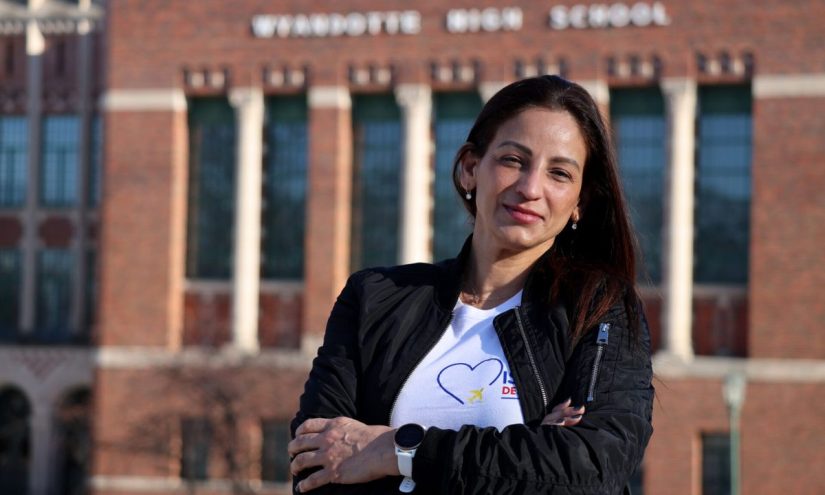
    KANSAS CITY, Kan. — Marialexa Sanoja publicly quit her job as a Kansas City, Kansas, Public Schools police officer over concerns with the district’s handling of student safety needs and founded a nonprofit to help kids escape the challenges in Wyandotte County.

    In the three-and-a-half months Sanoja was stationed at Wyandotte High School, the district’s largest school with 1900 students, Sanoja said she filed 140 incident reports and that in most instances the district failed to take action. The district, through its YouTube channel, disputed her figures and asserted it handled concerns responsibly.

    “It didn’t take long for me to find out that the students were not in the best interest of anybody,” Sanoja said. “When the police officer becomes a safe space for students, there is something wrong with that.”

    After her resignation in December 2023, Sanoja founded Missión Despegue, translated to “mission takeoff,” a nonprofit that helps parents and students document their grievances with the school district to hold the district accountable for its handling of safety issues.

    Sanoja saw the district’s response to a sexual assault case and its communication as inadequate, and experts echo her concerns. Now, Sanoja works with current and former students to get their GED certificates, drivers licenses, mental health care and prevent substance abuse.

    Sanoja’s concerns

    Sanoja said much of the Latino community, which makes up 72% of Wyandotte High School, is afraid to complain or make a scene because many of them are new to the country. She aims to empower them, and help them achieve the “American dream.”

    One reason Sanoja resigned — and a former student dropped out — was because of the district’s response to the former student’s experience of being sexually assaulted at school. Kansas Reflector doesn’t identify minors who have been sexually assaulted.

    According to an incident report filed by Sanoja, the former student was a freshman and alone in the Wyandotte High School stairwell when a group of older boys groped her and made sexual remarks. She began recording the boys with her phone, which prompted them to leave, the report said.

    Sanoja was off duty that day. The former student asked the on-duty officer to file a report, which Sanoja says she never saw. The day after, Sanoja and the former student said they filed an incident, criminal, and Title IX report. The former student wanted to press charges.

    “After that, I just stopped going to school, because I didn’t feel safe,” the former student said in an interview with Kansas Reflector.

    Sanoja said security camera footage and the former student’s video showed the boys’ faces. The former student said the district told her that because the boys never returned to school, it could not suspend them. However, the former student said she continued to see the boys on campus.

    “Ultimately, the district didn’t do anything about it. We were asking, at least, for suspension. That didn’t happen,” Sanoja said.

    A spokesperson from the district told Kansas Reflector it was unable to provide comment on the former student’s case, or the district’s responsibility to handle reports of sexual assault.

    Sanoja publicly resigned with a letter that accused the district of failing to communicate with parents. She wrote that she was worried about instances where students brought guns to school property and all parents weren’t notified.

    In a response video to Sanoja’s resignation, district superintendent Anna Stubblefield said “those incidents are not always relayed to all families. Not because we’re hiding anything, but because the impact is low and to protect the privacy of our students.”

    A district spokesperson told Kansas Reflector the “administration is required to contact parents regarding student issues — such as absences, drug-related concerns, or fights — in accordance with the Student Code of Conduct.”

    Expert opinions

    Ken Trump, an expert in school safety communications who is not related to the president, said parental anxiety over school safety is rising nationwide.

    “It’s very easy to get caught up if you’ve got a couple thousand kids in a school, dealing with incidents and other things. But you need to take a tactical pause in this, and go back to looking at the communications,” Trump said. “You can’t go back to the old-school mindset of if someone finds out about it we’ll talk. That doesn’t work anymore.”

    Sanoja said that after a student overdosed at school and she contacted the parents directly, the high school principal told Sanoja to route all communication with parents through administration.

    Sanoja said that she continues to receive videos of physical fights in the schools, totaling in the hundreds, since her resignation.

    Michael Dorn, a school safety expert who assists schools after major acts of violence, said  Sanoja’s allegations were concerning. He said he would have responded to her concerns differently than the school district did.

    “I was a school district police chief for 10 years,” Dorn said. “If an officer in my department wrote that kind of resignation letter, I would request a state police investigation. I would ask for a polygraph test, and I would ask that she be polygraphed. I wouldn’t do anything like that, but if someone alleged that I did and I didn’t do it, I would request that to clear my name.”

    Sanoja worked as a police officer in Lenexa before transitioning to the school district and said Wyandotte High School presented the most significant challenges she’s seen. She believes the problems are “within the culture” of the school.

    “Everybody’s tired of the way the district is handling things,” Sanoja said. “They’ve been failing these kids for years.”

    Fixing root causes

    Through her nonprofit, Sanoja helps students who leave the district, like the former student who was sexually assaulted, earn their GED certificate.

    When they’re out of the school environment, Sanoja said, they thrive.

    Sanoja said most of the families she works with are immigrants, and the parents do not speak English.

    “We face the daunting task of ending the stigma, shame and judgement that come with our culture,” Sanoja said.

    Missión Despegue seeks to fix the root causes of the problems seen in school — like substance abuse, violence, bullying, and mental health issues. Sanoja said she sees these problems reflected in things like the graduation rate of the district. For the 2023-2024 school year it was 78.1%, which is 11.4 percentage points lower than the state average.

    Through donations, Sanoja covers the cost of mental health appointments, DMV license and GED class registrations, and laptop purchases for students pursuing their GED certificate without one. In February, she began converting first-time offenders’ court fees, in hopes of reducing recidivism.

    With the help of more than 100 volunteers, Sanoja has hosted events where she provides Narcan and educates parents about the dangers of substance abuse. She also guides volunteers to further training, like drug prevention and compassion fatigue workshops.

    Sanoja said she doesn’t get paid for her work with Missión Despegue. She said she needs an assistant, because she has “a long list of people that need help.”

    “I see something in them. I know they’re going to be successful,” Sanoja said. “I want that opportunity for every kid I have.”

    Kansas Reflector is part of States Newsroom, a nonprofit news network supported by grants and a coalition of donors as a 501c(3) public charity. Kansas Reflector maintains editorial independence. Contact Editor Sherman Smith for questions: [email protected].


    Get stories like these delivered straight to your inbox. Sign up for The 74 Newsletter

    Source link

  • AFT sues Dept. of Education for denying borrowers’ rights (Student Borrower Protection Center)

    AFT sues Dept. of Education for denying borrowers’ rights (Student Borrower Protection Center)

    Yesterday, President Trump signed an executive order ordering the shutdown of the U.S. Department of Education (ED). The order claims to ensure the “uninterrupted delivery of services, programs, and benefits on which Americans rely,” yet Trump and Secretary Linda McMahon have gutted the arms of ED that make those functions possible. Read our statement on yesterday’s executive order here. Last week, Trump announced a 50 percent reduction in the workforce at the Department. Now he plans to move student loans to the Small Business Administration?!?!

    The Trump Administration is intentionally breaking the student loan system and attacking borrowers and working families with student debt. But we’ve been fighting back.

    On Tuesday night, the 1.8 million-member AFT sued ED for denying borrowers’ access to affordable loan payments and blocking progress towards Public Service Loan Forgiveness (PSLF)—in violation of federal law.

    Three weeks ago, federal education officials eliminated access to Income-Driven Repayment (IDR) plans by removing the application from ED’s website and secretly ordering student loan servicers to halt processing all applications. These IDR plans provide millions of borrowers the right to tie their monthly payment to their income and family size, giving them the option to make loan payments they can afford.

    IDR plans are also the only way for public service workers to benefit from PSLF—a critical lifeline for teachers, nurses, first responders, and millions of other public service workers across the country.

    SBPC Executive Director Mike Pierce’s statement:

    Source link

  • In Bid to Close Education Department, President Trump Looks to Rehouse Student Loans, Special Education Programs – The 74

    In Bid to Close Education Department, President Trump Looks to Rehouse Student Loans, Special Education Programs – The 74

    President Donald Trump said Friday that the U.S. Small Business Administration would handle the student loan portfolio for the slated-for-elimination Education Department, and that the Department of Health and Human Services would handle special education services and nutrition programs.

    The announcement — which raises myriad questions over the logistics to carry out these transfers of authority — came a day after Trump signed a sweeping executive order that directs Education Secretary Linda McMahon to “take all necessary steps to facilitate the closure” of the department to the extent she is permitted to by law.

    “I do want to say that I’ve decided that the SBA, the Small Business Administration, headed by Kelly Loeffler — terrific person — will handle all of the student loan portfolio,” Trump said Friday morning.

    The White House did not provide advance notice of the announcement, which Trump made at the opening of an Oval Office appearance with Defense Secretary Pete Hegseth.

    The Education Department manages student loans for millions of Americans, with a portfolio of more than $1.6 trillion, according to the White House.

    In his executive order, Trump said the federal student aid program is “roughly the size of one of the Nation’s largest banks, Wells Fargo,” adding that “although Wells Fargo has more than 200,000 employees, the Department of Education has fewer than 1,500 in its Office of Federal Student Aid.”

    ‘Everything else’ to HHS

    Meanwhile, Trump also said that the Department of Health and Human Services “will be handling special needs and all of the nutrition programs and everything else.”

    It is unclear what nutrition programs Trump was referencing, as the U.S. Department of Agriculture manages school meal and other major nutrition programs.

    One of the Education Department’s core functions includes supporting students with special needs. The department is also tasked with carrying out the federal guarantee of a free public education for children with disabilities Congress approved in the Individuals with Disabilities Education Act, or IDEA.

    Trump added that the transfers will “work out very well.”

    “Those two elements will be taken out of the Department of Education,” he said Friday. “And then all we have to do is get the students to get guidance from the people that love them and cherish them, including their parents, by the way, who will be totally involved in their education, along with the boards and the governors and the states.”

    Trump’s Thursday order also directs McMahon to “return authority over education to the States and local communities while ensuring the effective and uninterrupted delivery of services, programs, and benefits on which Americans rely.”

    SBA, HHS heads welcome extra programs

    Asked for clarification on the announcement, a White House spokesperson on Friday referred States Newsroom to comments from White House press secretary Karoline Leavitt and heads of the Small Business Administration and Health and Human Services Department.

    Leavitt noted the move was consistent with Trump’s promise to return education policy decisions to states.

    “President Trump is doing everything within his executive authority to dismantle the Department of Education and return education back to the states while safeguarding critical functions for students and families such as student loans, special needs programs, and nutrition programs,” Leavitt said. “The President has always said Congress has a role to play in this effort, and we expect them to help the President deliver.”

    Loeffler and HHS Secretary Robert F. Kennedy Jr. said their agencies were prepared to take on the Education Department programs.

    “As the government’s largest guarantor of business loans, the SBA stands ready to deploy its resources and expertise on behalf of America’s taxpayers and students,” Loeffler said.

    Kennedy, on the social media platform X, said his department was “fully prepared to take on the responsibility of supporting individuals with special needs and overseeing nutrition programs that were run by @usedgov.”

    The Education Department directed States Newsroom to McMahon’s remarks on Fox News on Friday, where she said the department was discussing with other federal agencies where its programs may end up, noting she had a “good conversation” with Loeffler and that the two are “going to work on the strategic plan together.” 

    Maine Morning Star is part of States Newsroom, a nonprofit news network supported by grants and a coalition of donors as a 501c(3) public charity. Maine Morning Star maintains editorial independence. Contact Editor Lauren McCauley for questions: [email protected].


    Get stories like these delivered straight to your inbox. Sign up for The 74 Newsletter
    Source link

  • Small Business Administration to Take Over Student Loans

    Small Business Administration to Take Over Student Loans

    A day after White House officials said the Education Department would administer the student loan program, President Donald Trump announced that the Small Business Administration would be taking over the $1.7 trillion portfolio.

    He told White House reporters that the move would happen “immediately,” though he didn’t say how that process would work. Currently, federal law requires the Education Department to manage student loans, so the president doesn’t have the authority for the move, several experts and advocates said Friday.

    Neither the White House nor the Small Business Administration responded to requests for more information or details about the plan.

    In response to questions about how moving loans to SBA would work, the Education Department referred Inside Higher Ed to an interview that Education Secretary Linda McMahon did Friday with Fox News. McMahon said she’s working with the SBA on a strategic plan.

    The announcement follows Trump’s executive order, signed Thursday, directing McMahon to close her department “to the maximum extent of the law.” McMahon and others have said a smaller version of the department would focus on core functions, which many experts presumed to include the student loan program. (Trump also said Friday that the Department of Health and Human Services would take over programs that support students with disabilities.)

    Kelly Loeffler, who leads the SBA, wrote on social media that her agency “stands ready to take the lead on restoring accountability and integrity to America’s student loan portfolio.” Whether the department has the capacity to take on the program is an open question; Loeffler is planning to cut 43 percent of the staff, Politico and other news outlets have reported. The SBA runs several programs to support small businesses, including providing loans and helping with disaster recovery.

    The Education Department issues about $100 billion in student loans each year and disburses $30 billion in Pell Grants. That funding is crucial to students who rely on the government to help pay for college.

    But borrowers have struggled over the years to navigate the cumbersome student loan system and often have faced difficulty in repaying their loans. Meanwhile, the federal government’s growing loan portfolio has become a key issue for lawmakers on both sides of the political aisle. Former president Joe Biden’s fix was in part to make student loan forgiveness more accessible and make loan payments more affordable.

    Trump said Friday that the loan system “will be serviced much better than it has in the past,” adding, “it’s been a mess.”

    Agency Blindsided

    It wasn’t clear Friday afternoon whether SBA would also take over the Pell Grant program and the Free Application for Federal Student Aid—a form that millions of students rely on to access federal, student and institutional aid. Currently, the Office of Federal Student Aid, which is part of the Education Department, administers those programs. That office was hit hard by recent mass layoffs at the department, and experts have questioned whether it will be able to fulfill its many responsibilities, which also include overseeing colleges and rooting out fraud in the federal student aid system.

    Trump’s executive order pointed out that the Education Department manages a portfolio the size of Wells Fargo but with significantly fewer employees. “The Department of Education is not a bank, and it must return bank functions to an entity equipped to serve America’s students,” the order said.

    An official high up at Federal Student Aid said Friday that the office was blindsided by the announcement. Just a day before, the official said, the plan was to move the loans to the Treasury Department. Agency officials have yet to receive any plans or communication about handing over the reins to SBA or what that would entail, the official said.

    ‘Clear Violation’

    The federal statute that created FSA specifically gives that office authority to administer student financial assistance programs. Additionally, laws dictating how federal funding is allocated explicitly send money to the Education Department for the student aid programs. A former department staffer told Inside Higher Ed that the administration is “clearly circumventing the spirit and intent of the law if you were to move to functions.”

    Sen. Patty Murray, a Democrat from Washington State, agreed, writing on social media that the announcement “is a clear violation of education [and] appropriations law.”

    Beth Maglione, interim president of the National Association of Student Financial Aid Administrators, added in a statement that only Congress can move the student loan portfolio to a different agency; if the legislative branch agreed, doing so would take time.

    “The administration would first need to articulate a definitive strategy outlining how the work of administering student aid programs would be allocated within the SBA, determine the necessary staffing and resources, and build the requisite infrastructure to facilitate the transition of these programs to another federal agency,” she said. “In the absence of any comprehensive plan, a serious concern remains: how will this restructuring be executed without disruption to students and institutions?”

    Not a ‘Crazy Idea’

    Some conservative policy experts who support shutting down the department cheered the move. Lindsey Burke, director for the Center for Education Policy at the Heritage Foundation, wrote on social media that “without student loans at ED, there will be little left at the agency. Just a few programs—certainly not enough to justify a cabinet-level agency.”

    Beth Akers, a senior fellow at the American Enterprise Institute, like the Heritage Foundation a conservative think tank, acknowledged in an email to Inside Higher Ed that there are a lot of open questions about how the SBA move would work. But she said the announcement shows that the Trump administration understands that the recent staffing cuts “will likely make it too difficult to keep these programs properly administered otherwise,” she wrote.

    Akers noted that since SBA currently manages its own loans, “it isn’t a crazy idea that they could pull this off.”

    “Frankly, the department has handled student loan administration poorly, so the bar is pretty low on what would constitute an improvement,” she added. “I expect that the existing student loan infrastructure (and remaining staff) will likely move over to SBA, and there won’t be immediate changes in how these programs are run. That’s my hope. Because if things change too quickly, I expect that students will see disruptions that could affect their enrollments and personal finances.”

    Liam Knox contributed to this report.

    Source link

  • The Right Way to Use Student Loans to Pay for College

    The Right Way to Use Student Loans to Pay for College

    Chris Jennings’ daughter Alessandra is a freshman at a private college in the Northeast. He was surprised by how quickly tuition payments were due. “My daughter said the payment was due in July,” he says. “It was already June.”

    Jennings started researching loans on the internet and found CommonBond, a financial services company that prides itself on offering competitive interest rates, advanced technology and award-winning customer service. He applied online and is a co-signer on his daughter’s loan.

    “I’m setting up my child to succeed,” says Jennings, who’s happy to help pay for his daughter’s education and build her credit at the same time.

    “Don’t panic,” Jennings advises other parents. “College isn’t as expensive as you think it is.”

    Getting started

    The College Board says this year students at a four-year public college are paying an average price of $20,770 for tuition and fees, plus room and board.

    “It doesn’t have to be an overwhelming process,” says Pete Wylie, CommonBond’s vice president of in-school lending.

    Some students apply for and receive grants or merit-based scholarships, both of which don’t have to be paid back. The rest of the expenses are typically covered by loans, which do need to be repaid. Loans can cover the full cost of college including classes, books, room and board. Or students can get a loan to cover just the basics: tuition only.

    Loans are financed year by year. The bills are paid after the student graduates.

    Better standing

    CommonBond was started by students based on their experiences getting student loans. They wanted better customer service and guidance during the process so they created an alternative to traditional lenders.

    “We offer a lot of flexibility,” says Wylie. “We offer 5, 10, 15-year rates and multiple payment options.”

    CommonBond offers loans for undergraduate students enrolled at least half-time for any bachelor’s degree, at more than 2,000 not-for-profit schools. They require students to apply with a cosigner, such as a parent. The cosigner promises to pay the loan balance if the student doesn’t pay.

    After two years of payments after graduation, a student can apply to release the cosigner from the loan. The lender’s loans have up to a 2 percent origination fee, depending on state of residency. There are no prepayment penalties and they offer forbearance to students who encounter economic hardship after graduation.

    Financing a child’s education can benefit others too. CommonBond makes a “Social Promise” that for every loan they fund, they’ll also pay for the education of a child in need in the developing world. Already, almost 10,000 students — many of whom are in Ghana — have had their educations funded through that promise. The company also invites borrowers on an annual trip to Ghana to see its Social Promise in action.

    Planning ahead

    Bruce Dooley has been saving for his son Jordan’s college education since the incoming University of California San Diego freshman was a baby.

    “We wanted to make sure our son is coming out of school debt-free,” says Dooley.

    However, as the cost of college increased, Dooley realized he would need to take out loans to cover the tuition. He plans to pay off the loans in four years.

    Not all parents are as prepared as Dooley but there’s still time to figure out financing.

    “People don’t look at this as a multi-year process,” says Kalman Chany, author of “Paying for College Without Going Broke” and president of Campus Consultants, a financial aid advisory firm.

    He cautions parents that the first year of a student loan — based on family income and qualifying rates — becomes the template for the next few years’ loans.

    “Plan ahead so there’ll be no surprises,” says Chany.

    Research and planning can help families gain a clearer picture of their student loan needs. Then finding the right student loan and loan provider may be easier than initially thought.

    Kristen Castillo, [email protected]

    Source link

  • Maximizing Student Engagement During Live Online Seminars – Faculty Focus

    Maximizing Student Engagement During Live Online Seminars – Faculty Focus

    Source link

  • How 24/7 Technical Support Drives Student Success and Retention

    How 24/7 Technical Support Drives Student Success and Retention

    From speed-to-lead to 24/7 support: Meeting student needs in the digital age

    In our recent webinar, “The Importance of Speed to Lead in Meeting Your Enrollment Goals,” we highlighted how rapid, personalized responses to prospective students can significantly impact their perception of an institution’s quality and commitment. This principle of timely, relevant communication extends beyond the admissions process and into the heart of the student experience, particularly in online education. In this post, we’ll delve into how this same philosophy applies to technical support, forming a crucial component of student success and retention.

    The critical role of 24/7 technical support in online education

    Building on the speed-to-lead concept, the need for swift and effective technical support in online learning environments has become paramount. As we transition from initial student engagement to ongoing support, responsive assistance becomes even more critical. Let’s explore why timely technical support is essential and how it ties to student retention, institutional credibility, and mission fulfillment.

    The importance of quick response to technical needs

    Just as rapid responses to inquiries can influence a student’s decision to enroll, quick resolution of technical issues can determine a student’s ability to succeed in their coursework. Student satisfaction is closely tied to the quality of the overall experience institutions provide to students, including addressing technical issues and how the institution responds to the students as individuals when they have a concern. When students encounter technical barriers without immediate resolution, their frustration can lead to disengagement and even withdrawal from courses.

    The importance of swift technical support in higher education cannot be overstated, as exemplified by several leading institutions.

    • Penn State University’s IT Service Desk stands out with its comprehensive 24/7 technology support model. Utilizing a blend of 20 students and full-time staff members, they efficiently manage up to 600 daily requests during peak periods. This continuous operation throughout the year, pausing only for university holidays, ensures that the Penn State community receives timely assistance for diverse IT-related issues, from learning management systems to account access and new IT service implementations.
    • Arizona State University (ASU): ASU’s help center provides round-the-clock service for their large student body. They have 81 employees and 22 student representatives who offer 24/7 support for approximately 100,000 students, including both on-campus and online learners. The center serves as a comprehensive “front door” to the university, assisting with various inquiries beyond just technical issues.
    • The University of Central Florida (UCF) has adopted a strategic approach to technical support. By deploying technicians during high-demand hours, UCF effectively minimizes downtime for both students and faculty. This proactive strategy maintains the continuity of the learning process and demonstrates the institution’s commitment to student success.

    In instances where staffing may be limited, universities are increasingly turning to AI-powered solutions to meet the demand for immediate, round-the-clock support. For example, Thompson Rivers University has implemented a 24/7 chatbot support system. This AI-driven tool automates 83% of incoming chats to their Future Student department, providing instant responses outside of regular business hours. Moreover, a number of innovative platforms such as RNL’s Compass digital assistant provide AI-powered chatbots designed for higher education. These AI-powered assistants can seamlessly integrate with various campus systems, including SIS/ERP, ITSM, and LMS, to address a wide range of inquiries related to IT, admissions, financial aid, and more. By leveraging such technologies, institutions can significantly reduce support costs while ensuring students and faculty receive timely, personalized assistance at any hour.

    The case for a 24×7 support model

    A 24/7 support model aligns with the flexibility that online education promises. Students often engage with coursework outside traditional hours, making access to technical assistance at any time a necessity rather than a luxury. Institutions like Faith Christian School emphasize the importance of uninterrupted access to educational resources, which fosters independence and self-directed learning. Similarly, Google Cloud’s Student Success Services leverage virtual assistants to provide instant answers around the clock, freeing up staff for more personalized guidance.

    Moreover, research shows that institutions offering comprehensive support services see higher retention rates. RNL data show how targeted outreach and timely interventions can significantly improve student outcomes and graduation rates. By addressing technical issues promptly, universities not only retain students but also fulfill their mission of guiding them toward successful program completion.

    Perception of a well-equipped university

    The availability of 24/7 technical support is increasingly viewed as a marker of institutional quality. Students now expect seamless access to both academic content and support services when selecting a university. Institutions that fail to meet these expectations risk damaging their reputation and losing prospective students. RNL student satisfaction and priorities data shows that approximately two-thirds of students value institutions addressing their personal needs throughout the recruitment process, which can factor in their decision to enroll at the institution. Offering robust technical support signals that a university is technologically advanced and committed to providing an optimal learning environment.

    Enabling student success and institutional mission

    Timely technical support directly contributes to student success by removing barriers to learning. When students can focus on their studies without being derailed by technical difficulties, they are more likely to persist in their programs. This aligns with the broader mission of most universities: helping students succeed academically and graduate. Demonstrating the lived expression of institutional mission through 24/7 support for student services can enhance retention and overall well-being. By addressing both academic and non-academic challenges in real-time, universities create an ecosystem where students thrive.

    Conclusion: Timely support is critical to the online student experience

    From the initial point of contact through to graduation, the principle of timely, personalized support remains crucial. The importance of responding quickly to students’ technical needs is a natural extension of the speed-to-lead philosophy in enrollment management. A 24/7 support model not only ensures uninterrupted learning but also strengthens institutional credibility and fosters student retention. By prioritizing timely assistance across all aspects of the student journey, universities can live up to their mission of empowering students to succeed academically and graduate with confidence. As these examples illustrate, investing in comprehensive support systems is an investment in both student success and institutional sustainability.

    We’re here to help you navigate the technology you need to engage students and provide them with that 24/7 support. Reach out and we’ll set up a time to talk with an RNL enrollment technology expert.

    How can you leverage technology across the student lifecycle?

    With students expecting personalized attention 24/7, you need to be able to engage them at any point in the student lifecycle. Talk with our experts about how you can use the latest technology to create those connections to strengthen recruitment and retention.

    Ask for a complimentary consultation

    Source link

  • More than 290,000 Liberty University student loan debtors owe more than $8 Billion

    More than 290,000 Liberty University student loan debtors owe more than $8 Billion

    The Higher Education Inquirer has recently received a Freedom of Information (FOIA) response regarding student loan debt held by former Liberty University students.  The FOIA was 25-01939-F.  

    Source link

  • Body cams, staff to carry ID, change of culture: TEQSA draft rules for protests, student complaints

    Body cams, staff to carry ID, change of culture: TEQSA draft rules for protests, student complaints

    Security stand in front of a pro-Israel protest at the University of Sydney on May 3, 2024. Picture: David Swift

    Universities will be expected to publish de-identified complaints data publicly, make student complaints processes clearer, and analyse the data twice a year if the university regulator’s interim guidelines for student complaints mechanisms are adopted.

    Please login below to view content or subscribe now.

    Membership Login

    Source link

  • Accelerated Business Degree Reduces Student Debt

    Accelerated Business Degree Reduces Student Debt

    As more students and parents consider the value of higher education and the cost of a four-year degree, interest has grown in three-year degree opportunities that allow students to complete their education in less time for a lower tuition rate.

    Westminster College in Pennsylvania launched a new Degree in Three program in the School of Business this year, allowing learners to graduate with 125 credits and shave a year off their time in undergraduate education. Additionally, the program pairs with the college’s master of business administration, so learners can complete two degrees in four years if they so choose.

    The background: There were a few catalysts for creating a formal three-year degree program, explains Robert Badowski, Westminster’s school of business chair. First, more students were coming in with credits from high school from AP or dual-enrollment programs, making their degree progress quicker. Second, more students and parents had noted the high cost of education and concerns about student debt.

    A May 2024 Student Voice survey by Inside Higher Ed and Generation Lab found seven in 10 respondents say higher education institutions in general charge too much for an undergraduate education.

    Westminster isn’t the only college facing pressure to get students to graduation sooner: Interest in formalized three-year degree programs has grown in recent years, and more institutions are looking to get in the game, even medical schools.

    At Westminster, the college had helped students shape their own schedules to graduate in three years rather than four, but a curriculum review and restructuring of elective courses has helped make this accessible to all students.

    What’s different: Westminster students can take up to 19 credit hours per semester and be considered full-time, but the business program offered primarily four-credit courses, making it difficult for students to max out their credit load.

    “You could take four classes, but if you took the fifth class, you were paying extra money, and most students don’t want to take on that burden, even if it was cutting off a year,” Badowski explains.

    Many three-year degree programs reduce the total number of credits students have to complete, but Westminster accelerated business students still complete at least 125 credits. To do so, faculty members reimagined their four-credit elective courses to be worth either one or two credits instead.

    Now, instead of engaging in a deep dive into an elective topic, students receive greater breadth in a variety of areas and are able to hit that 19-credit threshold exactly.

    “We had a meeting [with faculty members] as far as which courses made sense to do this with, and we found out in the process that a lot of [content] was stretched out purposefully just to be stretched out,” Badowski says. The process of removing content or packing it into seven or eight weeks, therefore, made more sense in many cases.

    The restructuring of elective courses is something that will benefit all business students, not just those participating in the accelerated degree program, giving them greater flexibility in scheduling.

    BOGO deal: In addition to removing costs associated with attending college, the Degree in Three program allows students to pair their undergraduate and graduate degrees in a four-year timeline.

    “We have a pretty neat deal that if students want to take one of their M.B.A. classes the last semester of their senior year, they can,” Badowski says. “We don’t charge for the M.B.A. course, so that gets them kind of jettisoned into the program.”

    The offering is particularly attractive to student athletes at the college, many of whom want to use all four years of eligibility.

    The price of an M.B.A. at Westminster is also around $10,000, so students spend less for a three-plus-one M.B.A. degree than four years in their undergraduate program, Badowski says.

    What’s next: Administrators are working on creating awareness of the offering among prospective students and particularly parents, who “are going to look at this and hopefully go, ‘I can help my kids save a year of tuition, maybe get them out of college a year faster,’” Badowski says.

    The college doesn’t have specific goals for enrollment, but Badowski would like to see 20 in the first year and consistent growth after that. “I’m hoping that people find it useful for them, [because] they’re still getting the same amount of credits. They’re taking the same classes as everybody else, it’s just faster.”

    Get more content like this directly to your inbox. Subscribe here.

    Source link