Tag: Student

  • Graduate Student Insights and Perspectives

    Graduate Student Insights and Perspectives

    Facing challenges in enrollment, retention, or tech integration? Seeking growth in new markets? Our strategic insights pave a clear path for overcoming obstacles and driving success in higher education.

    Unlock the transformative potential within your institution – partner with us to turn today’s roadblocks into tomorrow’s achievements. Let’s chat.

    Source link

  • Impact of Technology on Student Retention Report

    Impact of Technology on Student Retention Report

    Facing challenges in enrollment, retention, or tech integration? Seeking growth in new markets? Our strategic insights pave a clear path for overcoming obstacles and driving success in higher education.

    Unlock the transformative potential within your institution – partner with us to turn today’s roadblocks into tomorrow’s achievements. Let’s chat.

    Source link

  • Rethinking Your Student Population

    Rethinking Your Student Population

    Rethink your student population whitepaper

    Adult learners are higher ed’s future

    Reskilling, upskilling and lifelong learning are creating a big opportunity for higher education to become the go-to resource for career-minded adults. But not all adult learners are alike. In this report, we break them down into four types of adult learners (Career Advancer, Career Builder, Discerning Academic and Hesitant Learner).

    Download the white paper with the following insights for each persona:

    • Top motivations
    • Recruitment strategies
    • Program optimization recommendations

    Collegis Education surveyed 1,000 adult learners interested in pursuing degrees for this white paper, Rethink Your Student Population. Discover who makes up the majority of the adult learner market and how to target your outreach to grow your enrollment in this untapped population.

    Also, get key takeaways in our infographic The Adult Learners You’re Ignoring.

    Download Now

    MktoForms2.loadForm(“//087-TII-060.mktoweb.com”, “087-TII-060”, 1789);

    Additional Resources

    The post Rethinking Your Student Population appeared first on Collegis Education.

    Source link

  • Factors and Strategies for Higher Ed Student Retention

    Factors and Strategies for Higher Ed Student Retention

    Facing challenges in enrollment, retention, or tech integration? Seeking growth in new markets? Our strategic insights pave a clear path for overcoming obstacles and driving success in higher education.

    Unlock the transformative potential within your institution – partner with us to turn today’s roadblocks into tomorrow’s achievements. Let’s chat.

    Source link

  • 265,000 DeVry student loan debtors owe $5.2 Billion

    265,000 DeVry student loan debtors owe $5.2 Billion

    The Higher Education Inquirer has recently received a Freedom of Information (FOIA) response regarding student loan debt held by former DeVry University students.  The FOIA was 25-01942-F.  

    Source link

  • HVAC improvements shown to improve student outcomes

    HVAC improvements shown to improve student outcomes

    This audio is auto-generated. Please let us know if you have feedback.

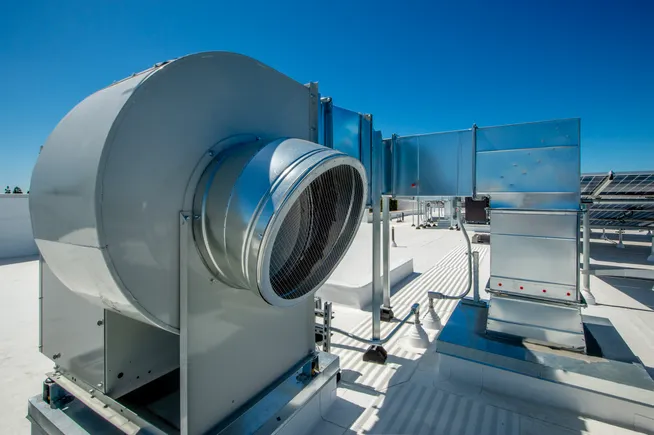
    Facility managers that lead an effort to upgrade their school’s HVAC system can help students miss less school, get into less trouble and perform better on standardized math tests, researchers at the State University of New York at Albany suggest. 

    Attendance improved by 2% and suspension rates dropped by 7% in K-12 schools after they improved their heating and ventilation systems, researchers say in a paper, “The Effects of School Building HVAC System Conditions on Student Academic and Behavioral Outcomes.” 

    Math outcomes improved, too — by 4% after the heating system was replaced and by 3% after the cooling system was replaced. There was a similar improvement in math scores when the heating system was improved.    

    “We conclude that investments made now to improve school HVAC systems can benefit not only student comfort and well-being, but also enhance educational opportunity,” say the researchers, Lucy Sorensen, Moontae Hwang and Marzuka Ahmad Radia of the State University of New York at Albany. 

    The researchers say the improvement in absentee levels likely stems from cleaner air flowing through the system. “Improvements in school ventilation system conditions could reduce the spread of infectious diseases … thereby decreasing missed days of school due to sickness,” they said.  

    The improvement in math performance likely stems from more comfortable room temperatures, which helps aid focus, but it also likely plays a role in fewer suspensions. The authors cite other research beyond K-12 that finds criminal behavior goes down as temperatures improve. 

    “More comfortable temperatures could help to prevent student misbehavior, given the well-known link between, for instance, heat and criminal behavior,” they said. 

    For their findings, the researchers looked at data over multiple years from a building condition survey conducted by the New York State Education Department. The percentage changes in performance are to a standard deviation. The findings were published in November and are available from Brown University’s Annenberg Institute. 

    Source link

  • Promoting Student Engagement, Health Innovation With Grants

    Promoting Student Engagement, Health Innovation With Grants

    This past fall, Elon University in North Carolina offered students an opportunity to positively impact the campus community’s well-being through grant-funded projects.

    The Andrew G. Bennett ’08 Student Wellness Innovation Grants recognized four student-led projects this winter, which will be implemented over the next year and beyond. The initiative supports student leadership in well-being work and also helps university leadership glean insight into what could impact student health and wellness.

    How it works: Funds for the grant were previously endowed to support a safe ride program at the university, but the rise of ride-hailing apps has reduced the need for funding in that area, explains Anu Räisänen, director of HealthEU initiatives. University leaders worked with the donor to realign funds to spur innovation among students.

    To be considered, the project had to align with HealthEU goals and address at least one of six dimensions of wellness—community, emotional, financial, physical, purpose and social.

    The grant committee—chaired by Räisänen and supported by two graduate apprentices, a counselor and a professor of education—reviewed seven proposals this cycle. Each proposal was submitted by a student as an individual or as part of a group. Students were encouraged to find a department or student organization to co-sign the proposal to promote sustainability and continuation of efforts beyond the individual’s time at the university, Räisänen says.

    Prior to submitting an application, students could opt to meet with Räisänen for a consultation to flesh out their idea, including brainstorming campus partners to support the effort after the individual graduates.

    Applicants also provided a summary of how funding will be used and the intended impact on the community’s well-being.

    The committee accepted and reviewed applications within Qualtrics, grading each proposal with a rubric that weighed feasibility, innovation and impact.

    What’s next: Four proposals received $500 each in funding, the maximum amount available, including a puppy yoga event, an arts and crafts service initiative, a peer support program for nursing students, and renovation of the philosophy suite in the Spence Pavilion, an academic building on campus.

    There was no one ideal project, and each grantee differed in terms of length of project and target population, Räisänen says.

    This spring, students will submit an impact report describing the project status and the effects so far. Grant recipients will also present at HealthEU Day, which celebrates ongoing efforts to promote integrated wellness through fun events and education.

    Students still enrolled will be asked to attend, and those who have graduated may provide a video discussing their project and the innovation fund.

    “The goal is that students come and share their experience, like they would do with undergraduate research as well, and then we build that momentum” for student interest and engagement, Räisänen says. “The best way to get a message to students is word of mouth; you just need to find the right students to spread the word.”

    In the future, Räisänen and her team are considering ways to provide larger grant awards to encourage students to think bigger about ways they could impact well-being on campus.

    Seeking stories from campus leaders, faculty members and staff for our Student Success focus. Share here.

    Source link

  • Free speech, graduates, student finance

    Free speech, graduates, student finance


    By submitting you agree to our terms and conditions

    Source link

  • Mental Health and Financial Barriers Threaten College Student Success (TimelyCare)

    Mental Health and Financial Barriers Threaten College Student Success (TimelyCare)

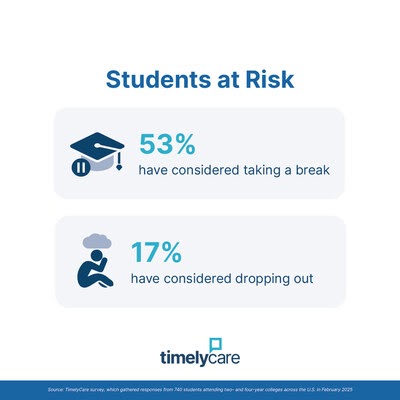
    Seven in 10 students have considered taking a break or dropping out.

    FORT WORTH, Texas, March 12, 2025
    /PRNewswire/ — Mental health struggles and financial pressures are
    jeopardizing college students’ ability to complete their education,
    according to a new study by TimelyCare, higher education’s most trusted virtual health and well-being provider,

    “Many students are slipping through the cracks due to unmet financial, academic, and emotional needs.”

    The
    survey, which gathered responses from 740 students attending two- and
    four-year colleges across the U.S., exposes significant barriers to
    student success and calls for specific action by educational
    institutions to address pressing concerns.

    Key Findings:

    Students at Risk of Stopping – More than half (53%) of current
    college and university students said they had considered taking a break
    from school, and 17% considered dropping out and not returning.

    Financial Strain – Nearly one-third (31%) of respondents cited
    financial strain as a primary reason for considering withdrawal.
    Additionally, a significant portion of students reported relying on a
    combination of financial aid, scholarships, and part-time or full-time
    work to cover costs.

    Success Barriers – An overwhelming 95% identified at least one
    obstacle impacting their success. Mental health (53%) and finances
    (49%) were the top challenges, followed by physical health (33%),
    academics (28%) and social belonging (26%).

    Gaps in Support Access – While 90% of students had used at
    least one school-provided resource such as academic advising, tutoring,
    or mental health counseling, issues like lack of awareness, inconvenient
    office hours, and inaccessible locations kept many from getting the
    needed help.

    Success Defined
    Students identified GPA, gaining knowledge,
    and graduating or completing their coursework as their top measures of
    success in line with a 2024 survey. Interestingly, non-traditional students placed graduating and gaining knowledge above GPA.

    “This study makes it crystal clear that many students are slipping
    through the cracks due to unmet financial, academic, and emotional
    needs,” said Nicole Guerrero Trevino,
    PhD, Vice President for Student Success, TimelyCare. “Our institutions
    must rise to the occasion to ensure no student is left behind.”

    What Can Be Done?
    In an open-ended question, students identified several ways institutions can better support their success, including:

    Promoting Awareness of Resources: Students called for more
    accessible and transparent communication about resources like tutoring,
    counseling, and career services.
    “Make a comprehensive list of all resources in one place.”
    “Talk about these services more openly. I didn’t know they existed when I needed them.”

    Tailoring Support for Non-Traditional and First-Generation Students: Develop
    targeted programs and policies, such as childcare options and
    evening/online classes, to support students balancing multiple roles.
    “Offer different hours for people who work full time during regular work hours.”

    Engaging Faculty and Staff: Train educators and advisors to proactively identify struggling students and provide personalized support.
    “Make
    it feel more normal that all students are impacted in some way and
    encourage all students to look into getting the help they need. It still
    feels almost taboo to seek out help in most situations.”

    Expanding Mental Health and Financial Well-Being Resources: Increase
    counseling availability, destigmatize mental health challenges, and
    offer virtual and flexible options for access. Streamline communication
    about scholarships, grants, and emergency funding while providing robust
    financial literacy resources.
    “Give access to virtual services or anonymous services”

    TimelyCare virtual success coaching
    supplements on-campus academic preparedness, career readiness, and
    financial wellness support with an integrated 1:1 care and coaching
    model.

    A complete list of questions and responses from the February 2025 survey may be found here. Click here to download a related infographic.

    About TimelyCare
    TimelyCare
    is the most trusted virtual health and well-being solution for learning
    communities, offering personalized, clinically proven care that fosters
    student success and delivers life-changing outcomes. With an unmatched
    range of service options on one seamless, easy-to-access platform,
    including mental health counseling, on-demand emotional support, medical
    care, psychiatric care, health coaching, success coaching, basic needs
    assistance, faculty and staff guidance, peer support and self-guided
    wellness tools, we extend the efforts of 400+ campus wellness teams,
    ensuring millions of students have direct, anytime access to our
    culturally competent and diverse care providers. Recognized as a
    Princeton Review Top 5 Need to Know Organization for Mental Health
    Awareness, TimelyCare drives measurable and meaningful improvements in
    depression and anxiety, empowering every student on their wellness
    journey while strengthening learning environments.

    Source link

  • Columbia On Edge Following ICE’s Arrest of Former Student

    Columbia On Edge Following ICE’s Arrest of Former Student

    Columbia University remained on edge Wednesday following the Immigration and Customs Enforcement arrest of Mahmoud Khalil, a green card–holding recent graduate who helped lead the pro-Palestinian protests that roiled the campus last spring. A federal judge in New York ruled Tuesday that Khalil could not be deported, but following a procedural hearing on Wednesday, the judge said he will remain in ICE custody in Louisiana for now, CNN reported.

    Hundreds of people took to the streets of Manhattan to protest Khalil’s detention; police arrested 12 protesters outside City Hall Park Tuesday night, charging 11 with disorderly conduct, The New York Daily News reported.

    Meanwhile, faculty at Columbia warned other student protesters to be careful. Stuart Karle, a First Amendment lawyer and adjunct professor at Columbia Journalism School, advised students who are not U.S. citizens to avoid publishing opinions that could attract the attention of the Trump administration, The New York Times reported.

    “If you have a social media page, make sure it is not filled with commentary on the Middle East,” he told students and faculty gathered in Pulitzer Hall.

    “Nobody can protect you,” journalism school dean Jelani Cobb added, according to the Times. “These are dangerous times.”

    During a news briefing Tuesday, White House press secretary Karoline Leavitt said the Trump administration was using intelligence gathered by the Department of Homeland Security to identify people who participated in campus protests, CNN reported. She accused Columbia of holding back information.

    “Columbia University has been given the names of other individuals who have engaged in pro-Hamas activity, and they are refusing to help DHS identify those individuals on campus,” Leavitt said. “As the president said very strongly in his statement yesterday, he is not going to tolerate that and we expect all of America’s colleges and universities to comply with this administration’s policy.”

    Last week, the Trump administration canceled $400 million in grants and contracts over what it claimed was Columbia’s “continued inaction” and failure to protect Jewish students.

    Columbia’s interim president, Katrina Armstrong, released a statement Wednesday reiterating her guiding principles. She wrote, “A great institution, and particularly a great university, depends upon an unwavering commitment to following fair and just processes, no matter the internal and external pressures.”

    Source link