The new vice-chancellor of the University of Canberra (UC) Bill Shorten said universities will never make everybody happy, but they should do their best to try.
Please login below to view content or subscribe now.


The new vice-chancellor of the University of Canberra (UC) Bill Shorten said universities will never make everybody happy, but they should do their best to try.
Please login below to view content or subscribe now.
Attacks at the federal level on working families make state and local work like this all the more necessary. States can and must step up to create more protections for borrowers!
Keep calm and TAKE ACTION,
Amy Czulada
Outreach & Advocacy Manager
Student Borrower Protection Center


A federal judge temporarily barred Elon Musk’s Department of Government Efficiency from accessing sensitive student data on Monday, after the American Federation of Teachers sued over privacy concerns.
The judge, Deborah Boardman of the District Court of Maryland, said the federal government had not provided convincing evidence that DOGE needed the information to achieve its goals. Last week, in a separate case brought by the University of California Student Association against the Education Department, a different judge declined to bar DOGE from accessing student data, saying the plaintiffs hadn’t shown any harm done. But Boardman, a Biden appointee, argued that DOGE staff being given access was enough to merit the injunction.
Education Department staff and student advocates raised concerns about DOGE employees’ access to student loan and financial aid data, which includes troves of uniquely sensitive, personally identifiable information. The injunction prevents the office from executing what Musk has referred to as an “audit” of the student loan system for at least two weeks while the lawsuit is ongoing, as well as from accessing financial aid data.
“We brought this case to uphold people’s privacy, because when people give their financial and other personal information to the federal government—namely to secure financial aid for their kids to go to college, or to get a student loan—they expect that data to be protected,” AFT president Randi Weingarten wrote in a statement.
The court-ordered stoppage is the latest in a string of injunctions issued against Musk and the Trump administration in recent weeks, as lawsuits pile up against the administration’s attempts to swiftly upend the federal bureaucracy. On Friday, a federal judge blocked Trump from enforcing large parts of his executive order against diversity, equity and inclusion initiatives.
Several colleges and universities are pausing admissions to some graduate programs, reducing class sizes or rescinding offers to students in an effort to cut costs amid uncertainty in federal funding.
The disruption to graduate school admissions is the latest cost-cutting move for colleges. After the National Institutes of Health proposed cutting reimbursements for costs related to research, several colleges and universities said they would pause hiring and cut spending, Inside Higher Ed previously reported. (A federal judge has blocked the NIH plan from taking effect for now.)
In recent days, the University of Pittsburgh, the University of Pennsylvania and several other institutions have stopped doctoral admissions, at least temporarily. Some colleges are pausing admissions to some programs such as in the biomedical sciences, Stat News reported. At others, the pause is universitywide. The University of Southern California and Vanderbilt University temporarily paused graduate student admissions, though both universities later said that they’d ended the pause.
A University of Pittsburgh spokesperson told WESA, a local NPR station, that the university “temporarily paused additional Ph.D. offers of admission until the impacts of that [NIH] cap were better understood … the University is in the process of completing that analysis and expects to be in a position to resume offers soon.”
Meanwhile, the University of Pennsylvania is planning to cut graduate admissions rates, The Daily Pennsylvanian reported, citing an email from the interim dean of the School of Arts and Sciences, Jeffrey Kallberg, who wrote that the cuts were a “necessary cost-saving measure” to adjust to the NIH proposal.
“This is not a step any of us wanted to take,” Kallberg wrote, according to the Daily Penn. “We recognize that graduate students are central to the intellectual life of our school—as researchers, teachers, collaborators, and future scholars. However, we must ensure that we can continue to provide strong support for those students currently in our programs and sustain the school’s core teaching and research activities.”
Tom Kimbis, executive director of the National Postdoctoral Association, wrote in an email to Inside Higher Ed that academic institutions reliant on federal funding “are being forced to make tough decisions to support these researchers in a difficult environment.”
“The decisions in Washington to pause or cease funding for science and research is impacting early-career researchers across a wide range of disciplines,” Kimbis added. “Slowing or stopping their work, on topics from cancer and Alzheimer’s research to social science issues, hurts Americans in all 50 states.”
In the last week, some faculty began tracking the reductions in the biomedical sciences via a shared spreadsheet that includes verified cuts and unverified decisions based on word of mouth and internal emails. Faculty on social media said the cuts will have long-term ramifications for sciences as fewer students enter the field. On TikTok, several students who had applied to grad school shared their dismay at how the funding cuts meant they might have to say goodbye to their career plans and research.
Accepting graduate students, particularly for Ph.D. programs and in the biomedical sciences, requires universities to make a long-term financial commitment, which is more difficult now that the NIH has stopped making new grant awards and is aiming to cut funds. Colleges receive billions from the NIH to support research. If the proposed rate cuts move forward, institutions say they would have to shut down some labs and lay off employees.
“University research and scholarship operate on a time scale of years and decades,” the Rutgers AAUP-AFT chapter wrote in a letter to New Jersey senators Cory Booker and Andy Kim. “Higher education would become impossible in the face of capricious and arbitrary withholding of funding, elimination of entire areas of grant support for critical scientific research, and cancellation of long-held contracts.”
They went on to warn that the threat to funding would diminish the country’s strength as a research superpower. “The best scientists, the best scholars, and the best students will make the rational decision to take their talents elsewhere. Once lost, the historic excellence of United States universities, including world-leading institutions in New Jersey, both public and private, will not be easily regained.”

Imagine a classroom in which young students are excitedly discussing their future aspirations and a career in medicine feels like a tangible goal rather than a distant dream. Now, imagine that most of the students come from historically marginalized communities — Black, Hispanic and Indigenous populations — that disproportionately face higher rates of chronic illness, shorter life expectancies and poorer health outcomes.
We know that these disparities can shrink when patients are cared for by doctors who share their cultural backgrounds and lived experiences. The problem? Our health care workforce remains overwhelmingly unrepresentative of the communities it serves.
For many students from underrepresented backgrounds, a medical career feels out of reach. The path to becoming a doctor is daunting, full of obstacles like financial hardship, lack of mentorship and systemic inequities in education. Many students are sidelined long before they consider medical school, while those who persist face an uphill battle competing against peers with far more resources and support.
To mitigate these disparities, we must look beyond our hospitals and medical schools and into the places where young minds are shaped: our K-12 classrooms. Early exposure to health care careers can ignite curiosity and show students that they belong in places where they have historically been excluded.
Related: Become a lifelong learner. Subscribe to our free weekly newsletter to receive our comprehensive reporting directly in your inbox.
Organizations like the Florida State University College of Medicine, with its “Science Students Together Reaching Instructional Diversity and Excellence” (SSTRIDE) program, are leading the way in breaking down barriers to medical careers for underrepresented students. SSTRIDE introduces middle and high school students to real-world medical environments, giving them firsthand exposure to health care settings that might otherwise feel distant or inaccessible. Then, the program threads together long-term mentorship, academic enrichment and extracurricular opportunities to build the confidence and skills students need to reach medical school.
The 15 White Coats program in Louisiana takes a complementary but equally meaningful approach: transforming classroom environments by introducing culturally relevant imagery and literature that reflect the diversity of the medical profession. For many students, seeing doctors who look like them — featured in posters or books — can challenge internalized doubts and dismantle societal messages that suggest they don’t belong in medicine. Through fundraising efforts and scholarships, other initiatives from 15 White Coats tackle the financial barriers that disproportionately hinder “minority physician aspirants” from pursuing medical careers.
The impact of these programs can be profound. Research shows that students exposed to careers in science or medicine at an early age are far more likely to pursue these fields later in life. And medical students who belong to underrepresented groups are the most likely to return to underserved communities to practice. Their presence can improve communication, foster patient trust and drive innovation in addressing health challenges unique to those communities.
These programs can even have a ripple effect on families and entire communities. When young people pursue careers in medicine, they become role models for siblings, friends and neighbors. This creates a culture of aspiration in which success feels both possible and accessible, shifting societal perceptions and inspiring future generations to aim higher.
But programs like 15 White Coats and SSTRIDE cannot thrive without sustained investment. We need personal and financial commitments to dismantle the systemic barriers that prevent students from underrepresented groups from entering medicine.
Policymakers and educators must step up. Federal and state educational funding should prioritize grants for schools that partner with hospitals, medical schools and health care organizations. These partnerships should offer hands-on experiences like shadowing programs, medical summer camps and health care-focused career fairs. Medical professionals also have a role to play — they can volunteer as mentors or guest speakers, offering valuable guidance and demystifying the path to a medical career.
As a medical student, I know how transformative these experiences can be. They can inspire students to envision themselves in roles they might never have imagined and gain the confidence to pursue dreams that once seemed out of reach.
Let’s be clear, representation in medicine is not about optics. It’s about improving health outcomes and driving meaningful change. Building a stronger, more diverse pipeline to the medical profession is not just an educational priority. It’s a public health imperative.
An investment in young minds today is an investment in a health care system that represents, understands and serves everyone. Equity in health care starts long before a patient walks into a doctor’s office. It begins in the classroom.
Surya Pulukuri is a member of the class of 2027 at Harvard Medical School.
Contact the opinion editor at [email protected].
This story about health equity was produced by The Hechinger Report, a nonprofit, independent news organization focused on inequality and innovation in education. Sign up for Hechinger’s weekly newsletter.

Get stories like this delivered straight to your inbox. Sign up for The 74 Newsletter
Chicago Public Schools unveiled a five-year plan Thursday to improve the outcomes of the district’s Black students — at a time of unprecedented backlash against efforts to promote diversity, equity, and inclusion in education.
The release of the Black Student Success Plan, during Black History Month, is part of CPS’s broader five-year strategic plan and aims to address long-standing disparities in graduation, discipline, and other metrics faced by its Black students, who make up roughly a third of the student body.
The district set out to create the Black Student Success Plan in the fall of 2023, but its quiet posting on Thursday comes as both conservative advocacy groups and the Trump administration are taking aim at race-based initiatives in school districts and on college campuses.
Late last week, the U.S. Department of Education’s top acting civil rights official warned districts and universities that they could lose federal funding if they don’t scrap all diversity initiatives, even those that use criteria other than race to meet their goals. He cited the 2023 Supreme Court Students for Fair Admissions v. Harvard decision that banned the use of race as a college admissions factor.
CPS — in a progressive city in a Democratic state — has largely been insulated from standoffs over diversity and inclusion in recent years, when districts in other parts of the country have come under intense scrutiny over how they teach race and how they take it into account in hiring, selective program admissions, and other decisions. Increasingly, though, deep blue cities like Chicago are finding themselves in the crosshairs.
Last year, a Virginia-based advocacy group challenged a Los Angeles Unified School District initiative aimed at boosting outcomes for its Black students, which CPS said inspired its own plan. At the urging of the Biden administration, Los Angeles made changes to downplay the role of race, causing an outcry from some of its initiative’s supporters.
Chicago’s plan vows to increase the number of Black teachers, slash suspensions and other discipline for Black students, and embrace more culturally responsive curriculums and professional development to “combat anti-Blackness” — goals some of which could run afoul of the Department of Education’s interpretation of the Students for Fair Admissions decision.
Still, some district and community leaders in Chicago say CPS’s plan might be better-positioned to withstand challenges than Los Angeles’ initiative — and they said the district must forge ahead with the effort even as it braces for pushback.
“Now is not the time for anticipatory obedience and preemptive acquiescence,” said Elizabeth Todd-Breland, a University of Illinois Chicago professor of African American history and a former Chicago school board member who served on a working group that helped craft the plan. “This is not the time to shrink but to live out our values.”
The new plan says Illinois law mandates this work and cites a state statute that requires the Chicago Board of Education to have a Black Student Achievement Committee. That committee has not yet been formed.
CPS declined Chalkbeat’s interview request and did not answer questions before publication. The district is hosting a celebration at Chicago State University at 3 p.m. Friday to mark the plan’s release.
CPS convened a working group made up of 60 district employees, parents, students, and community members that started meeting in December of 2023 to begin creating its Black Student Success Plan.
The following spring, it hosted nine forums to discuss the plan with residents across the city — what the plan’s supporters describe as one of the district’s most extensive and genuine efforts to get community input.
The working group in May released a list of recommendations that included stepping up efforts to recruit and retain Black educators, promote restorative justice practices, ensure culturally responsive curriculums that teach Black history, and offer more mental health and other support for Black students through partnerships with community-based organizations.
The district adopted many of these recommendations in its plan. It sets some concrete five-year goals, including doubling the number of male Black teachers, increasing the number of classrooms where Black history is taught, and decreasing how many Black students get out-of-school suspensions by 40%.
“The Black Student Success Plan is much more than simply a document,” the plan said. “It represents a firm commitment by the district, a roadmap, and a call to action for Chicago’s educational ecosystem to ensure equitable educational experiences and outcomes for Black students across our district.”
The effort built on equity work to help “students furthest from opportunity” that started five years ago under former CEO Janice Jackson, said Dominique McKoy, the executive director of the University of Chicago’s To & Through Project. In CPS, by a range of metrics, those students have historically been Black children.
McKoy, whose work focuses on college access, points out that the district has made major strides in increasing the number of students who go to college. But more students than ever drop out before earning a college degree — an issue that has disproportionately affected Black CPS graduates.
“There’s evidence and data that we haven’t been meeting the needs of Black students,” he said. “This plan is about responding to the data. Being clear about that is one of the best ways to insulate and defend that process.”
But McKoy acknowledges that now is a challenging time to kick off the district’s plan.
“Undoubtedly there will be critics who will think it’s racial preference to help students who need help and will attack the district for doing so,” said Pedro Noguera, the dean of the University of Southern California’s Rossier School of Education.
Last year’s challenge against a $120 million Los Angeles program aimed at addressing disparities for Black students offers a case study, Noguera notes. Parents Defending Education, which opposes school district diversity and inclusion programs, filed a complaint with the Department of Education’s Office for Civil Rights. The group has also challenged programs to recruit more Black male teachers and form affinity student groups based on race in other districts.
Ultimately, Los Angeles overhauled the program to steer additional staffing and other resources to entire schools serving high-needs students, rather than more narrowly to Black students. The Los Angeles Times reported that to some critics, those changes watered down the program, which was beginning to show some early results. But Noguera says he feels the program is still helping Black students.
However, it is clear that the Trump administration plans to go much further in interpreting the Students for Fair Admissions decision and seeking to root out DEI initiatives. In a “Dear Colleague” letter to school leaders Friday, Craig Trainor, acting assistant secretary for civil rights in the Education Department, said efforts to diversify the teaching force or the student bodies of selective enrollment programs could trigger investigations and the loss of federal funding. About 20% of CPS’s operating revenue comes from the federal government.
“The Department will no longer tolerate the overt and covert racial discrimination that has become widespread in this Nation’s educational institutions,” Trainor wrote. “The law is clear: treating students differently on the basis of race to achieve nebulous goals such as diversity, racial balancing, social justice, or equity is illegal under controlling Supreme Court precedent.”
Chicago, like Los Angeles, might consider a focus on schools — chosen based on metrics such as graduation rates, test scores and others — where the plan would help Black students and their peers, Noguera said. Maybe it doesn’t even have to refer to Black students in its name, he said.
“The main thing is to get the help to the kids who need it,” he said. But, he added, “In this environment, who knows what’s challenge-proof.”
He said what helped in Los Angeles was deep community engagement that lent that district’s initiative credibility and good will; the changes that the district made in response to the legal challenge did not erode those.
Darlene O’Banner, a CPS great-grandmother who served on the working group, said CPS got the community engagement piece right. She thinks the plan will offer a detailed roadmap for improving Black students’ achievement and experience.
“I am not going to think of the unknowns and what’s going on in the world,” O’Banner said. “We’re just going to hope for the best. We can’t put the plan on hold for four years.”
The working group issued its recommendation in early fall and stopped meeting following the September resignation of all school board members, who stepped down amid pressure from the mayor’s office to fire CPS CEO Pedro Martinez over budget disagreements.
Valerie Leonard, a longtime community advocate who also served on the working group, said during the community meetings for the Black Student Success Plan last year, there was no discussion of possible legal pushback to the plan.
“Illinois is a liberal state,” she said. “It never really occurred to us a year ago that this plan would be in danger.”
But more recently, as she heard Trump assail DEI initiatives, Leonard said she wondered if the plan would survive.
Leonard pushed Illinois lawmakers last year to mandate the Board of Education appoint a Black Student Achievement Committee as part of the state law that cleared the way for an elected school board in Chicago. The district’s plan invokes that committee though it hasn’t been formed yet. The board formed a more generic student success committee earlier this month.
“We believe that the problem with Black children in public schools is so dire that it needs to be elevated to its own committee,” she said. “When our children get lumped into something that’s for all, they inevitably fall between the cracks.”
McKoy at the University of Chicago said he feels “cautious optimism” and hopes the city and state rally around CPS as it pushes to improve outcomes for Black students.
“The plan itself isn’t going to do the work,” he said.
This story was originally published by Chalkbeat. Chalkbeat is a nonprofit news site covering educational change in public schools. Sign up for their newsletters at ckbe.at/newsletters.
Get stories like these delivered straight to your inbox. Sign up for The 74 Newsletter
Highlighting excellence in community college education, Achieving the Dream (ATD) has named 23 institutions as either Leader Colleges or Leader Colleges of
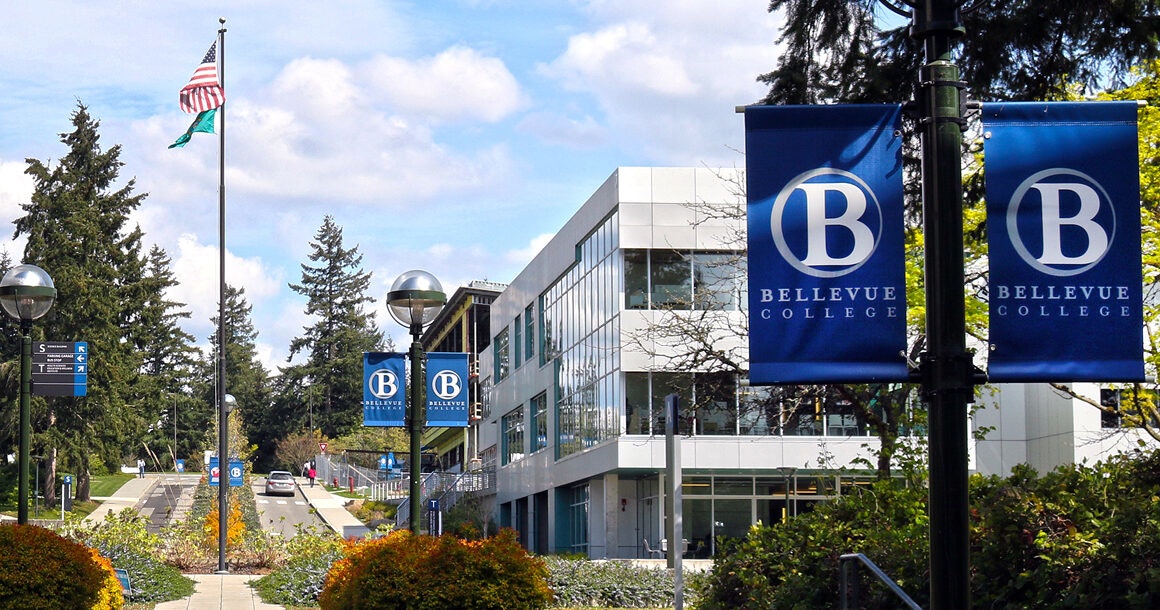
Among the honorees is Bellevue College, which earned its first Leader College designation since joining the ATD Network in 2017.
The honor recognizes institutions that have demonstrated measurable gains in student outcomes and fostered meaningful institutional change. Eight colleges achieved the prestigious Leader College of Distinction status, including three first-time recipients: College of Lake County (Illinois), Little Priest Tribal College (Nebraska), and Southwestern Oregon Community College.
Bellevue College’s recognition as one of ten new Leader Colleges reflects its successful efforts to transform the student experience.
“We are honored Achieving the Dream selected our institution as a Leader College,” said Bellevue College Provost Dr. Jess Clark. “Since joining ATD, Bellevue College has seen increased markers of student success and retention. We look forward to continuing our commitment to transforming the student experience so that all students will find success at Bellevue College.”
The designation as a Leader College is particularly significant as these institutions play a crucial role in accelerating the adoption of effective practices across higher education. Leader Colleges are recognized for their work in whole-college reform and their innovative approaches to sharing knowledge about evidence-based reform strategies with other institutions.
Dr. Karen A. Stout, president and CEO of Achieving the Dream, noted the importance of these recognitions.
“These colleges exemplify excellence within the ATD Network, achieving measurable gains in student outcomes and fostering impactful change within their institutions and communities,” she said. “Their dedication to using data-informed approaches to create meaningful opportunities for students and their communities serves as a powerful example for all institutions of higher education.”
The 2025 cohort also includes five colleges that have recertified their Leader College status: Community College of Beaver County (Pennsylvania), Highline College (Washington), Lone Star College System (Texas), Passaic County Community College (New Jersey), and Wallace State Community College (Alabama).
ATD’s Leader College of Distinction award, created in 2018, sets an even higher bar for institutional achievement. Recipients must demonstrate improvement in three or more student outcome metrics, including completion or transfer rates, and show reduced equity gaps for at least two student groups. This year’s five returning Leader Colleges of Distinction include Chattanooga State Community College (Tennessee), Lemoore College (California), North Central State College (Ohio), Odessa College (Texas), and Pierce College (Washington).
As a partner to more than 300 community colleges nationwide, Achieving the Dream focuses on what it calls “Whole College Transformation,” providing integrated support for everything from leadership and data analysis to equity initiatives and student support strategies. The organization’s vision centers on helping colleges become catalysts for equitable and economically vibrant communities, driving improvements in access, completion rates, and employment outcomes for all students.
For institutions like Bellevue College, this recognition validates their ongoing commitment to student success and institutional improvement. As part of the ATD Network, these colleges continue to work toward creating meaningful opportunities that transform not just individual students’ lives, but entire communities through the power of education.
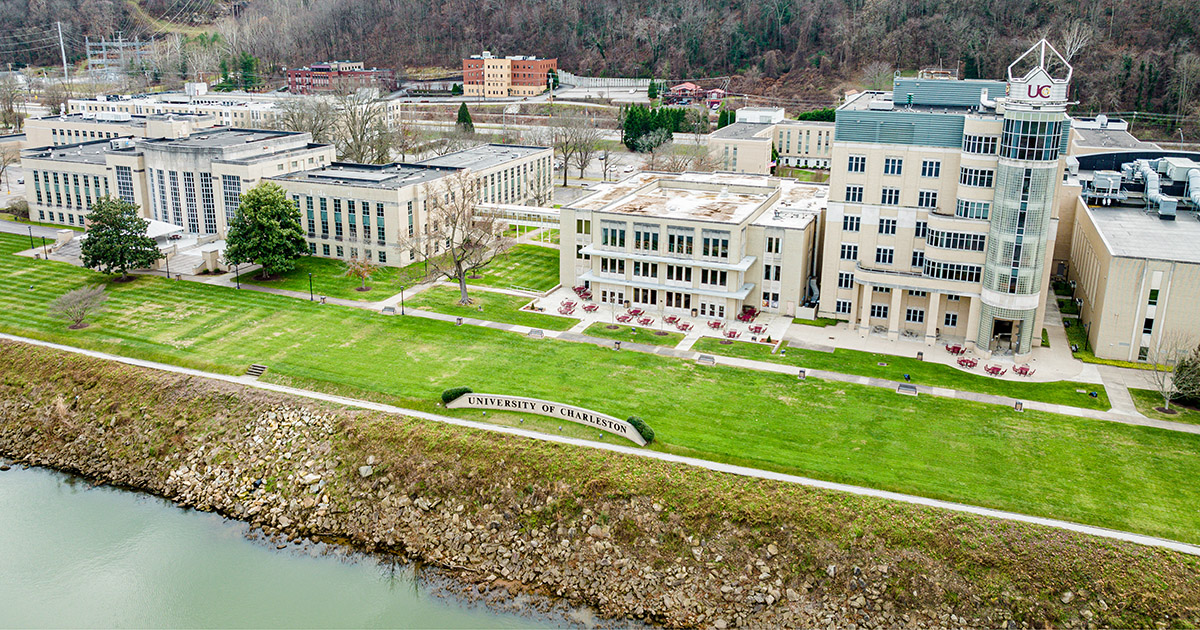
Seated in beautiful Charleston, West Virginia, the University of Charleston (UC) boasts “a unique opportunity for those who want an exceptional education in a smaller, private setting.” UC provides a unique student experience focused on retention and student success even before students arrive on campus.
Students are offered an opportunity to complete the College Student Inventory (CSI) online through a pre-orientation module. This initiative is reinforced through the student’s Success and Motivation first-year course. University instructors serve as mentors, utilizing the CSI results to capitalize on insights related to each individual student’s strengths and opportunities for success through individual review meetings and strategic support and skill building structured within this course.
After achieving a 7% increase in retention, Director of Student Success and First-Year Programs Debbie Bannister says administering the CSI each year is non-negotiable. Additionally, the campus has refocused on retention, emphasizing, “Everyone has to realize that they are part of retention, and they’re part of keeping every single student on our campus.”
UC has reinstated a Retention Committee that utilizes summary information from the CSI to understand the needs of its students. Of particular concern, UC notes that the transfer portal has created additional challenges with upperclassmen, so including a representative from the athletic department on the retention committee has been crucial.
Through this focus on retention and strong implementation strategy, UC achieves a 100% completion rate for the CSI for their first-year student cohort. Building off the scaffolding support from early support meetings related to the CSI insights, first-year instructors are able to refer back to reinforce articulated support strategies and goals throughout the first-year experience. The structure and progression through this course reiterates college preparation skills and resources building motivation and a growth mindset to persist through college.
Join institutions such as the University of Charleston by using the College Student Inventory with your incoming students. More than 1,400 institutions have used the CSI, and it’s been taken by more than 2.6 million students nationwide. Learn more about how you can use it to intervene earlier with students and increase student yield.