As current discussions around higher education understandably focus on the challenges (especially around funding) that the sector faces, the experience of the nearly three million students attending our universities and colleges can often be overlooked.
Current students generally benefit from and enjoy their time in higher education, but the national conversation too often ignores the challenges students face and the inequalities that many students experience.
One area that deserves greater attention is student mental health.
Correlation
In a report published today, we find that the proportion of students reporting mental health difficulties has reached 18 per cent, tripling in just seven years. This implies that around 300,000 of the UK’s undergraduate student population is affected by mental health difficulties, a number that has been rising over recent years.
And the rise in reported mental health difficulties is greater for some student groups than others. Notably, twice as many women as men report mental health difficulties, while rates for LGBTQ+ students are particularly high, rising to nearly one in three for lesbian (30 per cent) and bisexual (29 per cent) students. Higher still are the rates for trans students (around 40 per cent report mental health difficulties) and nonbinary students (over half report mental health difficulties). While sample sizes make it harder to compare trends over time for these groups, the rates of mental health difficulties are shocking, and require action from higher education providers.
There is an association between socio-economic status and mental health difficulties. Mental health difficulties are directly correlated with higher participation rates: for every POLAR region of higher education participation, the lower the rate of higher education participation, the higher the proportion of people reporting mental health difficulties. Similarly, state educated pupils are more likely to report difficulties than privately educated pupils, indicating a need for greater support for children’s mental health services too.
Better reporting
There are some possible explanations for the sharp rise in student mental health difficulties. First, it is important to note that these figures reflect respondents’ self-reported mental health. Compared to a decade ago, there is less social stigma around disclosing and discussing mental health difficulties, and this may mean that previous reporting underestimated the numbers facing difficulties. There has also been a wider rise in mental health difficulties among all younger people, sometimes linked to the cost of living, concerns about the climate crisis or negative experiences on social media and smartphones. Our findings do not allow us to conclude which (if any) of these explanations is driving the rise in mental health difficulties, but given the rate of increase over the last seven years, it is unlikely to be caused by one explanation alone.
There is one positive finding in the study, namely that over the course of their studies, LGBTQ+ students experience a relative increase in wellbeing. It is important to note that these students still have higher rates of mental health difficulties compared to their peers, but it’s also worth reflecting on the beneficial role that attending higher education can bring. Particularly for younger LGBTQ+ students, higher education may allow them to navigate and affirm their identity in a new way, and find like-minded friends and peers for the first time. Indeed, there may be learning for other organisations and institutions, particularly employers, in thinking about how they enable wellbeing among their recent and future graduate employees.
Public health
What, then, can be done to better address student mental health? One important change would be to adopt a “public health” approach to student mental health, and mental health generally. Higher education providers could also ensure that they effectively signpost students to both wellbeing support services and to clinical health services where required. Significantly, given that some students are more likely to experience mental health difficulties than others, providers also need to ensure these services reach everyone, and may need to tailor their services to do so.
A key recommendation regards students leaving their courses. In the survey, mental health difficulties was by far the most common reason cited for why students were considering dropping out of their course, mentioned almost five times more than the second most common reason (financial difficulties). Providers therefore need to ensure that their retention efforts address mental health while also measuring how wellbeing and mental health support impacts on the likelihood that students complete their courses.
Providers need to ensure that they are effectively evaluating their wellbeing and mental health services. It is positive that mental health is now seen as an important area for university services, and that social stigma has declined. Tight financial circumstances are increasing pressure on universities, and we all recognise the challenges of meeting every student need. At the same time, foregrounding the interests of students and ensuring their success in higher education requires a more extensive, effect focus on student mental health, not least given the extent of mental health difficulties, and how inequalities both produce and amplify these difficulties, before, during and after students leave higher education.
In this changing landscape, with constant shifts in student demographics, and enrollment behaviors due to globalization, can a rigid administrative process or a legacy student information system foster student success? As higher education decision-makers, provosts, and chief information officers, you know much better. With this as a starting point, the blog intends to discuss the several advantages of student information systems and how an expert solution provider adds to the effectiveness of an overall institution.
The Advantages of Student Information System
A Student Information System (SIS) offers numerous advantages for higher education institutions. An SIS manage and store student-related data throughout their academic journey.
Here are some key advantages of implementing a Student Information System in higher education:
1. A focused student performance
The Student Information System offers a comprehensive and integrated platform with features that today’s students must look for.
With smooth, efficient, and friendly student self-service options, the system rules out the challenges encountered by students while navigating complex administrative processes. Rather, the students have the advantage of focusing on their academics without running around for frustrating services related to their records, accounts, personal information, access to academic policies, registration and degree planning, dates and deadlines, financial aid and scholarships, grades, transcripts, etc.
This online service mode lets students efficiently manage their tasks proactively, positively impacts their institution, and allows them to claim it publicly.
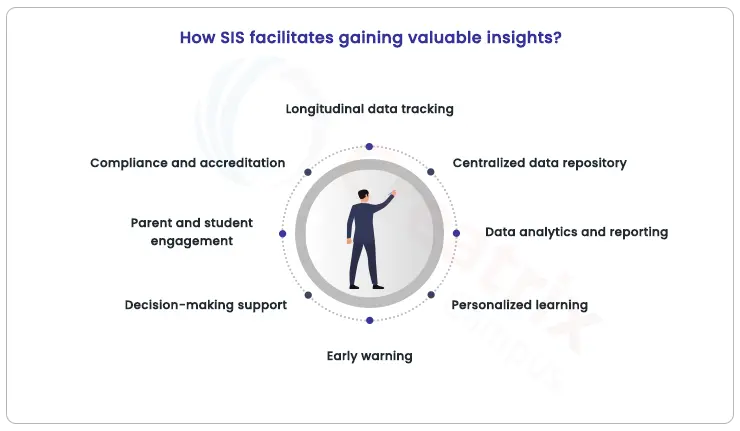
2. Newer insights into student data
To institutions that struggle to collate meaningful and actionable data to make smart decisions, the SIS can be a boon.
Student Information System gives the decision-makers the advantage of key reporting features so institutions gain deeper insights into students’ data related to academics, attendance, assessments, credits, finances, library, grade book, etc. With instant data in hand, the institutional heads can compare, identify trends, report, and work towards continuous improvement towards improvement.
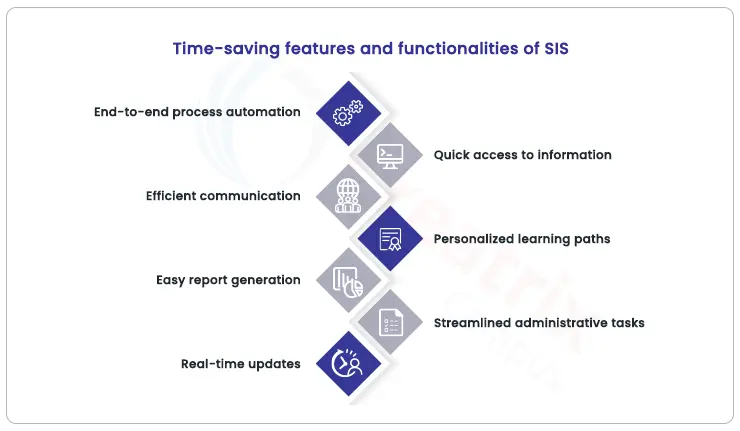
3. A time saver with simplified and streamlined tasks
With role-based dashboard configuration, the entire team of faculty, student, and staff know their priorities that need to be performed, along with the tasks already done and accomplished.
The dashboard helps in reminding which activities an individual needs to perform and which of them are already done. For any action undone, the system keeps sending automated reminders and alerts so the stakeholders stay on track.
With every bit of data highlighted in a single view, users can channel their time and effort for better productivity and growth with minimum effort.
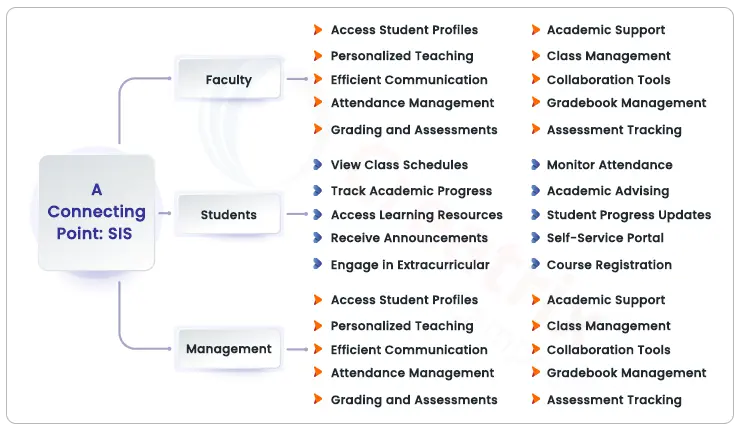
4. A connecting point between faculty, students, and management
Another advantage of the Student Information System lies in its capacity to easily connect Administrators, Teachers, and Parents under a single platform. Often integrated with the parent’s portal, the system sends push notifications and updates regularly about students’ marks, grades, attendance, and overall performance.
On the other hand, the staff, faculty, and parents can interact at different levels using the user-friendly web interface that discusses and improves student performance. Every role in the campus can have roles defined to them, which allows them to access the information they need, securely.
5. Offers unlimited flexibility
Most of the student information systems come with a flexible architecture with room for the greatest level of personalization. This gives institutions a boost to use tools that facilitate system alignment with the way they do things at their institution.
This way whenever the institution faces change, the SISs can change with it through configuration capabilities and a continuous delivery model. Curriculum planning, scheduling, academic policies, grading schemes, finance, billing, and more come with configuration options.
6. Helps institutions envision student success
Student Information System has tools to envision student success throughout the student journey. With successful LMS integration, it can have native engagement tools, enabling students to actively engage in the events that matter the most. Even for students who refrain from openly communicating inside a classroom, these tools instill the confidence to coordinate, raise a query, and get clarified.
Conclusion
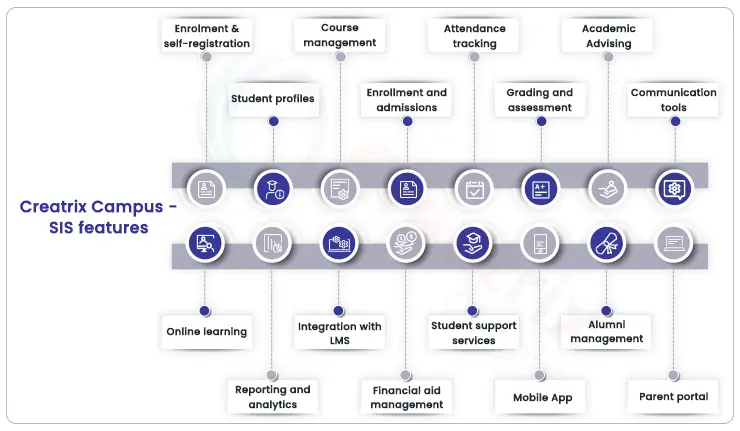
Designed solely for higher education campuses, Creatrix Campus Student Information System offers comprehensive tools to make it easier for users to access the records they need to achieve their goals—from admission to alumni and beyond.
We have powerful tools to connect multiple departments on multiple campuses and automate academic processes so your institution can help students succeed. With a lower cost of ownership, easy customization and implementation, straightforward pricing, and customer support options for your institution’s evolving needs, Creatrix SIS helps you manage your campus community easily. Some of our unique features are:
Intuitive user experience throughout the student lifecycle
Student data management with reports and dashboards
Self-service and mobile application capabilities
Seamless academic planning with student advising
Agility to change requirements as per institutional needs
To unite your whole campus under an efficient, configurable, easy-to-use application that is delivered in the cloud, contact our team or request a demo.
A few years back now, someone who worked for one of Scotland’s sector agencies liked to draw a comparison when talking about student-centredness.
They said that conservation charities passionately place wildlife at the heart of everything they do, but crucially would never put representatives of flora and fauna on committees (imagine the mess).
Therefore, my erstwhile and esteemed colleague would argue, when institutional leaders proudly claim to be “student-centred” it reveals nothing about how they involve students in shaping their experiences.
Of course, you can diligently monitor wildlife and use your data to make good decisions, in a manner not dissimilar to learning analytics in education, but the difference is that students can then go on to be a part of conversations in a way that wildlife never can.
Waterproof papers
My mind was cast back to this parallel when I saw the recent news that the Scottish Association for Marine Science (SAMS), one of our partners here at the University of the Highlands and Islands (UHI), has put The Ocean on its governing body.
It’s a move that SAMS’ Director Nick Owens admits “could be seen as trivial or ‘greenwashing’”, and we might imagine other specialist institutions making similar gestures in the disciplines they so richly embody and advance.
For instance a conservatoire could put “Music” on their board, or an agricultural college “The Land”.
Nick explains further, however:
The Ocean is clearly a metaphor in this context and cannot represent itself in human terms.”
That point is vital because, if we go back to our parallel, SAMS has already gone much further with its other main cause – students.
Like all constituent parts of UHI and indeed our university overall, SAMS has student membership on its governing body, not to just sit there and wave like the ocean might, or to flap about disruptively like a bird among a wildlife charity’s trustees.
Instead, we expect of student governors an informed, constructive and active contribution.
As my colleague Aimee Cuthbert wrote on Wonkhe a year ago, we have a major project that is making that student membership truly effective and impactful across UHI’s complex governance arrangements.
In our own unique context we want to make sure UHI’s governing bodies do not merely talk about students as an abstract concept or worthy concern, and instead have them in the room to provide meaningful input about students’ diverse and complex experiences and the implications for students of the difficult decisions that must be made.
That means a lot of work with those involved in our governing bodies, exploration of the key issues on our boards’ desks at a time of change, and helping our local officers impact on their individual partner governing bodies while also working together as a team to impact on decisions that are UHI-wide.
A core part of our project is therefore that very human process of communication – supporting the networking, sharing practice and informal relationship building that makes student governors truly a part of the process in a way that an ocean can’t be.
So, when someone tells you their institution is student-centred, that’s arguably the very least we might expect, and in isolation such a declaration risks viewing students in the same way that others might view wildlife.
The Ocean as governor, therefore, is not only a striking metaphor for SAMS’ important mission, but has added power in benchmarking our perceptions of those we claim to be here for – reminding us that there’s a big difference between caring about students and actively involving them as partners.
In the words of Carol Dweck, “Becoming is better than being.” As novice sixth grade math and English teachers, we’ve learned to approach our mid-year benchmark assessments not as final judgments but as tools for reflection and growth. Many of our students entered the school year below grade level, and while achieving grade-level mastery is challenging, a growth mindset allows us to see their potential, celebrate progress, and plan for further successes amongst our students. This perspective transforms data analysis into an empowering process; data is a tool for improvement amongst our students rather than a measure of failure.
A growth mindset is the belief that abilities grow through effort and persistence. This mindset shapes how we view data. Instead of focusing on what students can’t do, we emphasize what they can achieve. For us, this means turning gaps into opportunities for growth and modeling optimism and resilience for our students. When reviewing data, we don’t dwell on weaknesses. We set small and achievable goals to help students move forward to build confidence and momentum.
Celebrating progress is vital. Even small wins (i.e., moving from a kindergarten grade-level to a 1st– or 2nd-grade level, significant growth in one domain, etc.) are causes for recognition. Highlighting these successes motivates students and shows them that effort leads to results.
Involving students in the process is also advantageous. At student-led conferences, our students presented their data via slideshows that they created after they reviewed their growth, identified their strengths, and generated next steps with their teachers. This allowed them to feel and have tremendous ownership over their learning. In addition, interdisciplinary collaboration at our weekly professional learning communities (PLCs) has strengthened this process. To support our students who struggle in English and math, we work together to address overlapping challenges (i.e., teaching math vocabulary, chunking word-problems, etc.) to ensure students build skills in connected and meaningful ways.
We also address the social-emotional side of learning. Many students come to us with fixed mindsets by believing they’re just “bad at math” or “not good readers.” We counter this by celebrating effort, by normalizing struggle, and by creating a safe and supportive environment where mistakes are part of learning. Progress is often slow, but it’s real. Students may not reach grade-level standards in one year, but gains in confidence, skills, and mindset set the stage for future success, as evidenced by our students’ mid-year benchmark results. We emphasize the concept of having a “growth mindset,” because in the words of Denzel Washington, “The road to success is always under construction.” By embracing growth and seeing potential in every student, improvement, resilience, and hope will allow for a brighter future.
Latest posts by eSchool Media Contributors (see all)
Eighteen students crammed themselves into a stuffy classroom assigned for my first-year seminar course on a sunny day in September. With desk tops touching and knapsacks piled high, we maneuvered through introductions and the kind of icebreakers that research indicates can strengthen learning outcomes. At one point, I asked these college newcomers to share academic and career aspirations. Their responses were a tribute to the dreams of young minds: future pediatric nurses, speech pathologists, and more than one veterinarian were gathered in our small, unassuming space.
These students appeared motivated to learn—a direct contrast to the disengagement narrative that permeates today’s education circles. But despite the enthusiasm, research points to a far more sobering reality: approximately half of all college students fail to graduate within six years of enrollment. Those rates can be even more perilous for certain cohorts, including recipients of Pell Grants, the federal financial aid awarded to undergraduate students demonstrating need.
Many of the students gathered in my classroom fit within this most vulnerable category and would likely face the types of hurdles that can diminish learning resolve. Academics demands coupled with the pull of daily life can negatively tip the balance of student outcomes, siphoning away student motivation, according to educational scholar Howard McClusky. His Theory of Margin framework likens student motivation to the calibration of “loads,” versus the counter force of resources, or what he refers to as “power.” Students with sufficient margin between these competing forces have the capacity to take on new challenges, including the hard work of learning; students with insufficient margin fall into overwhelm and have a higher rate of failure.
Determined to hold onto and even strengthen the learner motivation that was apparent on day one of my class, I was committed to the following motivational practices that could lessen the load and promote the type of power needed to make it to the finish line. Here’s what that looked like:
Community lies at the heart of successful student outcomes, so emphasizing the relational aspect of learning became a guiding principle for the class. Leveraging the energy of the first few weeks when enthusiasm is especially strong is an opportunity to forge group connections and cultivate peer-to-peer support. Research points to these informal bonds as a vital form of power, so beginning on the first day of class, my students were placed in groups determined by common areas of academic focus and career aspiration. To override reticence to working collaboratively, we spent class-time setting up What’s App groups and practicing the type of outreach and response that familiarized group members with the act of reaching out to one another.
Career Readiness has become a valued currency in today’s higher education sector, not only because it helps ease entry into the workforce but also serves to more deeply bind education with employment. Our class therefore included assignments requiring students to research their future fields. Using the U.S. Bureau of Labor Statistics website, students were able to deepen understanding of specific fields in terms of industry growth, income, and even entry requirements. Anchoring aspirations with real-world realities was an opportunity to guide students towards their stated goals in real and relevant ways which further enhanced their learning motivation.
Continual Reflection invites students into their learning journeys while also kick-starting metacognition, thereby contributing to learning motivation and success. The simple act of inviting students to think about their learning process can deepen engagement while helping to nudge knowledge acquisition into retention, the goal of good teaching. Reflection can be as simple as dedicating the last few minutes of class to having students write about what they learned and what they would like to revisit for better understanding. We undertook this exercise in almost every one of our 15 weeks. In addition, students captured their reflections via electronic portfolios that served as a permanent record of their progress.
Harnessing the drive and energy needed to maintain motivation over the course of a semester can present challenges, particularly in our post-pandemic years when factors of isolation, stamina, and access to optimal learning environments have taken their toll. We encountered many stumbling blocks over the course of the semester, but in the end each of my 18 students reached the finish line of the course. Countering learning head winds requires an understanding of the complex phenomenon of learner motivation and then committing to evidence informed practices that can maintain—even strengthen—the energy and drive to succeed. That can mean more work and effort in the classroom, but for instructors committed to student success, this is its own deeply satisfying motivational force.
Juli S. Charkes, EdD, has been a classroom instructor for the past 14 years, teaching organizational leadership, communications, and media studies at both the undergraduate and graduate levels. From 2021 to 2025, she directed the Center for Teaching and Learning at Mercy University, where she oversaw faculty development and strategy across 100 academic programs.
References
Ash, S. L., & Clayton, P. H. (2009). Generating, deepening, and documenting learning: The power of critical reflection in applied learning. Journal of Applied Learning in Higher Education, 1(1), 25-48.
Biney, I. K. (2022). McClusky’s Theory of Margin and its implications on adult learners in higher education institutions. Journal of Adult and Continuing Education, 28(1), 98-118. https://doi.org/10.1177/1477971421989337
National Center for Education Statistics. (2022). Undergraduate Retention and Graduation Rates. Condition of Education. U.S. Department of Education, Institute of Education Sciences. Retrieved May 31, 2022, from https://nces.ed.gov/programs/coe/indicator/ctr.
Sasan, J. M. V., Tugbong, G. M., & Alistre, K. L. C. (2023). An exploration of icebreakers and their impact on student engagement in the classroom. International Journal of Social Service and Research, 3(11). https://ijssr.ridwaninstitute.co.id/index.php/ijssr/article/view/566
Schön, D. A. (1983). The reflective practitioner: How professionals think in action. New York: Basic Books.
Thanks to Alan Collinge and Student Loan Justice for this information on government contractors for the US Department of Education’s Student Loan Portfolio.
Part of the point of having a regulator focused on students, rather than – say – a funding council or a department, was always about acting in “the student interest” rather than, say, the “provider” interest.
But ever since HEFCE started talking about “the student interest” back when it made the Quality Assurance Agency bid to become its quality assurance agency, there’s always been a vague sense that “the student interest” is only ever really definable by reference to what it isn’t, rather than what it is.
Can you define “a seminar”? Maybe not. Is 150 people in a room “a seminar?” Nope. And so on.
In theory, once you know what “the student interest” actually is, you can then embed it into regulatory priority setting, regulatory design and regulatory activity.
It’s a laudable principle, but as the idea hit reality it turned out that the sheer diversity and complementarity of student interests are not easily understood or quickly realised.
As the Office for Students (OfS) has dealt with “monster of the week” framings of freedom of speech and grammar in assessment, a common criticism has been that student interest has been “ventriloquised” to back (sometimes questionable) ministerial priorities.
And in areas where the body it has been using to define the student interest has gone against the views of ministers – for example on decolonisation and inclusive curricula – there appears to have been a concerning tendency to silence competing voices.
Have students historically been able to trust OfS to advocate for their interests? It’s not entirely clear. The publication of new research into student priorities is therefore supposed to centre aspects of the authentic student voice within regulation and policy.
Polling conducted by Savanta (1,761 students and graduates)
Two online focus groups conducted by YouGov
A YouGov online survey (750 responses) with prospective students, current students and graduates
An online focus group with students from small and specialist providers, arranged with the support of GuildHE
The Office for Students Student Panel
Though this is a fair amount of evidence, OfS is clear that what is presented is a snapshot – the interests and priorities of students will evolve in future. The outputs from this exercise have helped to shape the recent OfS strategy – future strategic thinking would need to be shaped by more recent examples of this kind of engagement.
The research is presented in four themes, covering student experiences and expectations, the idea of students as consumers, student interests in the long and short term, and the relationship between the student interest and the public interest.
As presented, each section offers headline findings and key results from polling followed by a range of illustrative quotes from individual students.
Students expect a high quality education that “reflects their financial investment and the promise that was made to them” – this includes opportunities to engage in social and extra-curricular activities. Academic and personal needs should be supported, and students also expect opportunities that will help their future careers.
Yougov polling found that 79 per cent of undergraduates believed that university had either met or exceeded their expectations – 91 per cent felt they would end up with a credible qualification, 90 per cent felt they would leave with credible knowledge of their subject area.
In contrast students do not feel they have received sufficient one-on-one support from staff, and have experienced disruption from the Covid-19 restrictions on activity and industrial action. More widely, the cost of living has had an impact on studies (60 per cent of students polled by Savanta agreed) – students were clear there is insufficient financial support available. And there is a persistent feeling that tuition fees are too high – 60 per cent felt their degree represented value for money.
Specific issues have included difficulties in finding suitable and affordable accommodation, and a lack of mental health support for those who need it. Savanta polling suggested that 28 per cent of undergraduates felt contact hours had been insufficient to support their learning, 32 per cent of undergraduates had issues with the way their course has been taught, and 40 per cent said that one of the three biggest influences on their success was financial support.
I was promised x amount of hours in person and I wasn’t able to due to strikes/Covid. Online lectures/seminars were not fruitful at all. (Male, 23, graduate, YouGov focus group)
You can’t do anything without your health and with the stress that can come with the intense study and financial restraints of university life it is particularly important that the university supports students so they can maintain good wellbeing. (Male, 20, higher education student, YouGov focus group)
Lots of different things can influence student interests. Cultural differences can mean some students might need varying levels of support to properly enjoy university life. Socioeconomic backgrounds for example can require that students will have an interest in needing either more financial support or the ability to balance part time work with studies.’ (Female, 23, higher education student, YouGov focus group)
As signalled over the summer, students as a whole do not like the term “consumer”, feeling that the term implied education could be bought rather than acquired through personal effort. That said, there was an identification with the idea of “student rights” – both in terms of promises being met and access to refunds.
And the idea of students as “investors” in their education was not viewed favourably either – students don’t consider their financial contribution as a choice, preferring to think about how they invest their time and effort.
Students are not really given consumers rights, as seen by Covid year students who want money back. If you are given a false promise … there should be a way to complain … but [there] is not really. (Female, 18, further education student, YouGov focus group)
It is much more difficult to complain, and essentially impossible to claim a refund. (Female, 20, higher education student, YouGov focus group)
I have a right to get what I was expecting when I signed up for the degree… This means having teaching provision in line with what was advertised. (Female, 20, higher education student, YouGov focus group)
There is a slight preference (60 to 40 per cent) for a provider focus on long-term rather than short-term student interests.
By “short term”, students mean their day-to-day experiences – so stuff like academic support, progression and success, costs of living, and mental well being. “Long term” interests extend beyond graduation, revolving around career preparation and progression, skills for employment, and networking.
I think in the short-term, academic and pastoral support with exams and coursework deadlines is most important, as well as general support with aspects of student life such as managing finances, finding accommodation etc. (Female, 20, higher education student, YouGov focus group)
For me long-term encompasses the whole of the time I spend at university and then the years after where my degree affects my career progression etc. (Female, 23, higher education student, YouGov focus group)
You’ll have spotted that there’s less information in these sections as we go on – the last one gives another inconclusive split – according to students, providers should focus on delivering student benefits (66 per cent) rather than public benefits (36 per cent).
There were “a number of perceived conflicts” between student and public interest – these were “related” to tuition fees and accommodation, but we are not told what they are precisely.
From the focus group quotes we can deduce that there is a public interest in developing graduates. The public interest may be to minimise student debt, while individual students might benefit by not paying off loans – the public might not like student accommodation blocks in city centres, while students do.
That these hang off a mere handful of focus group quotes is frustrating and limits the usefulness of the insights. That “provider interest” is missing is also frustrating – plenty of students will argue with themselves and each other about the extent to which their personal interests can conflict with those of “the university”.
I think a long-term interest of developing inquisitive, interested graduates who want to continue to learn about and critically analyse the world around them is an incredibly important part of a robust society. (Female, 33, higher education student, YouGov focus group)
Student debt is a clear conflict of interest between students and the public interest. It is in the public interest to minimise student debt as a lot of it is not paid off by the students, however an individual student is benefiting by not paying off their student loans. (Female, 20, higher education student, YouGov focus group)
Student accommodation is another example. Generally, members of the public don’t like having large student accommodation blocks built in city centres, however many students would like to live close to university and of course, in a cheaper accommodation. (Female, 20, higher education student, YouGov focus group)
Also frustrating is the extent to which the findings seem to assume that students can’t or won’t consider their community or collective interests – understanding the extent to which, for example, student A is prepared to cross-subsidise student B’s mental health support or more expensive teaching probably matters much more than knowing who’s thinking short-term or longer-term, when surely pretty much everyone has both rattling around in their head.
So what?
For anyone who works with students, or has met students, none of these findings will come as a huge surprise. There are many formal and informal surveys of students and graduates, and this new research largely acts as a way of reinforcing what is already known.
For critics, not being able to see the underpinning polling data raises all sorts of questions – like what was asked, who was asked, when were they asked it, what the differences were by characteristic or provider type, and how the results were weighted – partly because one way for a regulator to prioritise is by focussing in on those most at risk, or most unhappy, and so on.
It’s also possible to raise an eyebrow at some of the conclusions that OfS Director for Fair Access and Participation John Blake draws from the research. When he says, for example, that he has “discovered” that students have two categories of expectation – one relating to their experiences of higher education (what studying feels like) and the other relating to what it gets them in the future – you are left thinking “well what else would they have expectations about” if not “good job the whole of your quality improvement medals scheme, a review of which involved a shed ton of research with students, also framed things in terms of experience and outcomes”.
It’s possible to have expectations that are too high given OfS’ form, legal remit and the realities of day to day expectations. Jim often notes that while students’ unions will carry out plenty of research into “the student interest”, they’re still going to run a freshers fair, a course rep system and elect some full-time sabbatical officers in March – just as for all the research that providers do on their strategies, they pretty much all still vow to deliver excellent teaching, groundbreaking research, something something knowledge exchange and civic, and something something buildings HR and finance. For all the high blown rhetoric about change on inception, OfS is still a cruise ship not a speedboat.
One thing that does still feel missing is not so much the recognition that diverse students have different priorities and interests – that does come out vividly in Blake’s blog – but that when you have a fixed remit and limited resources, you do have to prioritise. Add in that sometimes diverse interests are opposed, and you then have to set out how and who makes the calls, and then demonstrate that that has impacted what you do and how you do it. You do get the sense that there are passionate people in there who recognise that – but that there’s still a way to go in delivering the old “whole provider strategy” thing inside OfS.
There’s also the partner question. Perhaps the newly souped-up interest board will get to do some of this, but if you take that two-thirds/one-thirds split on student v public interest, the point about student as partner is that they are seen both as capable of holding both thoughts in their head at once, and capable of contributing to a discussion about how you find a way through what can feel like a contradiction. It’s true on freedom of speech v freedom from harm , it’s true on “high academic standards” v “supporting students to succeed”, and true on the often contested balance between student feedback and academic authority. Education is always co-produced, even if one side is young and paying for it and the other “provides” it.
Nevertheless, while eight years in is a bit late to be properly considering how the “student interest” is defined strategically, this is a good start. Over the coming year it says it will share further student insight based on polls and engagement that it has done – that might be on a topic with direct links back into its regulation, or something of regulatory interest to OfS but where it’s not yet planning direct regulation, or unable to act directly. The theory of change is that that sort of information can suggest areas of focus for providers (and while it doesn’t say so, for ministers) and support informed choice by students.
If nothing else, it should allow students and their representatives to test whether the issues they’ve spoken on – on accommodation, on support, on their rights, and on value for money – will be acted on meaningfully by a regulator that is starting to realise just how important keeping promises to students is.
It’s spring semester and a junior-level student just knocked on a professor’s office door. The student has dropped by to talk about summer internships; they’re considering a career in the faculty member’s discipline, but they feel nervous and a little unsure about navigating the internship hunt. They’ve come to the faculty member for insight, advice and a dash of encouragement that they’re on the right track.
A fall 2023 survey by the National Association for Colleges and Employers found 92 percent of faculty members have experienced this in the past year—a student in their disciplinary area asking for career advice. But only about half of instructors say they’re very comfortable advising students on careers in their discipline, showing a gap between lived experiences and preparation for navigating these interactions.
With a fraction of students engaging with the career center on campus, delivering career development and professional skills to all students can seem like an impossible task.
Enter the career champion.
The career champion is a trained, often full-time, faculty member who has completed professional development that equipped them to guide students through higher education to their first (or even second) role.
The career champion identifies the enduring skills students will develop in their syllabus and provides opportunities for learners to articulate career readiness in the context of class projects, presentations or experiential learning.
The career champion also shepherds their peers along the career integration path, creating a discipleship of industry-cognizant professors who freely give internship advice, make networking connections and argue for the role of higher education in student development.
Over the past decade, college and university leaders have anointed and empowered champions among their faculty, and some institutions have even built layered models of train-the-trainer roles and responsibilities. The work creates a culture of academics who are engaged and responding to workforce demands, no longer shuffling students to career services for support but creating a through line of careers in the classroom.
The Recipe for Success
Career champion initiatives serve a three-pronged approach for institutional goals for career readiness.
First, such efforts provide much-needed professional development for the faculty member. NACE’s survey of faculty members found 38 percent of respondents said they need professional development in careers and career preparation to improve how they counsel students.
“Historically, faculty are not incentivized to do this work, nor are they trained to do anything really career readiness–related,” says Punita Bhansali, associate professor at Queensborough Community College and a CUNY Career Success Leadership Fellow. “This program was born out of the idea, let’s create a structured model where faculty get rewarded … they get recognized and they receive support for doing this work.”
Growing attention has been placed on the underpreparation of faculty to talk socio-emotional health with learners. In the same way, faculty are lacking the tools to talk about jobs and life after college. “As they’re thinking about careers in their own work, [faculty] are used to being experts in the field, and being an expert in careers feels daunting,” explains Brenna Gomez, director of career integration at Oregon State University.
Second, these programs get ahead of student questions about the value of liberal arts or their general education courses by identifying career skills in class early and often. This works in tandem with shifting general education requirements at some institutions, such as the University of Montana, which require faculty members to establish career as a learning outcome for courses.
“We knew we weren’t going to move [the] career-readiness needle by being the boutique program that you sometimes go to,” says Brian Reed, associate vice provost for student success at Montana. “If we really want to have an inescapable impact, we’ve gotta get into the classroom.”
A May 2024 Student Voice survey by Inside Higher Ed and Generation Lab found 92 percent of college students believe professors are at least partly responsible for some form of career development—such as sharing how careers in their field are evolving or helping students find internships—in the classroom. Just 8 percent of respondents selected “none of the above” in the list of career development–related tasks that faculty may be responsible for.
“It’s getting faculty on board with [and] being very clear about the skills that a student is developing that do have applicability beyond that one class and for their career and their life,” says Richard Hardy, associate dean for undergraduate education of the college of arts and sciences at Indiana University Bloomington. IU Bloomington’s College of Arts and Sciences also requires competencies in the curriculum.
Third, career champions are exceptionally valuable at changing the culture among their peers. “Champion” becomes a literal title when faculty interact with and influence colleagues.
“That’s a general best practice if you’re looking to develop faculty in any way: to figure out who your champions are to start, and then let faculty talk to faculty,” says Niesha Taylor, director of career readiness at the National Association of Colleges and Employers. “They have the same interests in hand, they speak the same language and they can really help each other get on board in a more authentic way than sometimes an administrator could,” adds Taylor, a former career champion for the City University of New York system.
Becoming an Expert
Each institution takes a slightly different approach to how they mint their faculty champions.
The six-week program is led by the Career Development Center and runs every academic term, engaging a cohort of five to 15 faculty members and instructors who belong to various colleges and campuses at OSU. During one session and a few hours of work independently, program participants complete collaborative course redesign projects and education around inequities in career development.
By the end of the quarter, faculty have built three deliverables for their course: a NACE competency career map, a syllabus statement that includes at least one competency and a new or revamped lecture activity or assignment that highlights career skills.
After completing the program, professors can join a community of practice and receive a monthly newsletter from the career center to continuously engage in career education through research, events or resources for students.
Creating change on the academic side of a college is a historically difficult task for an administrator, because it can be like leading a horse to water. Getting faculty engaged across campus is the goal, but starting with the existing cheerleaders is the first step, campus leaders say.
3 Tips for Launching Faculty Development
For institutions looking to create a champion program, or something similar, NACE’s Taylor encourages administrators to:
Get leadership on board
Make the professional development process meaningful through incentives or compensation
Provide ways for professors to share their stories after completing the work.
To launch career champions at the University of Montana, Reed relied on the expertise and support of instructors who had previously demonstrated enthusiasm.
“We found our biggest champions who always come to the programs that we do, who traditionally invited us into the classroom. When we said, ‘Hey, you’ve been a fantastic partner. Would you want to be part of this inaugural cohort?’ they said, ‘Absolutely.’ And so that’s who we went with,” Reed says.
Montana’s faculty development in careers has expanded to have three tiers of involvement: a community of practice, career champions and Faculty Career Fellows, who Reed jokes are the Green Beret unit of careers. Fellows collaborate with a curriculum coach to research and implement additional events, training and other projects for instructors.
After completing the championship program, some returned to continue education and involvement, Reed says. “We had [faculty] that wanted to come back and do it again. They wanted to stay part of the community.”
The City University of New York selects a handful of Career Success Leadership Fellows annually who drive integration, innovation and research around careers across the system. In addition to training other faculty members, each fellow is charged taking the model to present and share with other campuses, as with their own projects for advancing career development growth.
With added time and energy comes an added institutional financial investment in career fellows. Montana’s fellows receive a $1,000 stipend for their work, drawn from funds donated by the Dennis and Phyllis Washington Foundation, and CUNY’s fellows receive $2,000 for the academic year.
The Heart Behind It All
For some of these engaged professors, their involvement is tied to their experiences as learners. That junior knocking on their office door asking about internships? That was them once upon a time, and they wished their professor had the answers.
“All of us have gone through undergrad. We know that we’ve taken some courses where it’s like, ‘Why did I take that?’ and the professor is just in their heads,” says Jason Hendrickson, professor of English at LaGuardia Community College, part of the CUNY system, and a Career Success Leadership Fellow.
“[Career champions] are the people who, when you talk to them, they all say, ‘I wish I had had this in my undergrad experience … I didn’t know this stuff existed, the depth of the programs and services that we offer,’” Reed says.
Faculty are also starting to feel the heat, particularly those belonging to disciplines under attack in mainstream media or that have historically less strong occupational outcomes for learners.
“I think over time, what’s happened is faculty have seen how this is actually beneficial … from the point of view of our disciplines and allowing students to see why engaging with the liberal arts is actually hugely beneficial for career and life,” IU Bloomington’s Hardy says.
“The question that keeps me up at night is how to retain college students,” says Bhansali of CUNY’s Queensborough Community College. “The data is bleak in terms of college retention, and each faculty needs to show how the content and skills covered in their classroom are going to help students in the future, regardless of the job they choose.”
Sometimes instructors can feel overwhelmed by the programs, trying to incorporate eight competencies into their courses, for example, or feeling as if they have to be an expert in all things career related.
“They can feel like, ‘How can I do all of this?’ And it’s really not any one faculty [member]’s job or any one class’s job. It has to be systemic in the college,” NACE’s Taylor says.
The best part of the job is seeing students successfully land that job in their field. Sebastian Alvarado, a biology faculty member at Queens College and CUNY Career Success Leadership Fellow, ran into former students from his genetics class at a specialist’s appointment he had.
“It feels really rewarding—they were really there as a result of their bio major training,” Alvarado says. “When we see students getting placements in their jobs, it feels like we’re doing what we’re supposed to do.”
Looking Ahead
There remain some faculty members who push back against careerism in higher education—and some who remain undersupported or -resourced to take on this work, Alvarado points out—but programs have been growing slowly but surely, driven in part by champions.
Since launching, IU Bloomington has had over 300 faculty complete the program in the College of Arts and Sciences, Hardy says.
Montana interacted with 235 faculty members in workshops and events in the past year, which Reed expects to only increase as more faculty members rework curriculum for general education requirements.
OSU has had 105 participants since 2020, and the College of Liberal Arts established a commitment to train at least two faculty members in each school to be Career Champions in their strategic plan for 2023–2028, Gomez says. Campus leaders are also creating professional development for academic advisers and student-employee supervisors to train other student-facing practitioners in career integration.
Furthering this work requires additional partnerships and collaboration between faculty members and career services staff, Taylor says, where traditionally there are not relationships due to institutional silos.
“I’m always—and my career success team, they’re always—scanning for these partnerships, and we use our network of existing people to sort of make referrals,” Reed says. “It’s a benevolent Ponzi scheme.”
Think about the last time you ordered something online or streamed your favourite show. Remember how pretty seamless it was? That’s exactly what today’s students expect from their college application experience. Gen Z and Gen Alpha students have grown up in a digital world, with all its associated benefits. You have to acknowledge that they’re looking for the same smooth, user-friendly experience when they apply to schools, and this is no easy task.
For colleges and universities, meeting these expectations isn’t just about staying current–it’s about staying relevant. This is why having a well-designed student portal is more important than ever. It is the key to a seamless admissions process–the map that charts a direct, straightforward course from the students’ first click to their first day on campus.
Looking for an all-in-one student information and CRM solution tailored to the education sector?
Try the HEM Student Portal!
Why a Student Portal is Essential
Remember the days of printing out application forms, filling them in by hand, and mailing them back? Those days are long gone, replaced by a more efficient and convenient solution. Today’s students want everything at their fingertips, and they want it to work as smoothly as their favourite apps. A recent study found that 70% of students expect their university’s online experience to match platforms like Amazon, Netflix, and Facebook.
That’s a high bar to meet, but it is the type of bar that a well-designed portal can scale. So what is the purpose of a student portal? A student portal is an online resource that guides students and helps them access helpful resources throughout the journey from exploring to application, enrollment, and beyond.
As education becomes increasingly global, schools are seeing applications from all corners of the world. International students need a system that works across time zones and cultures, making the application process clear and accessible no matter where they’re from. A good student portal can meet these students at the point of their needs and help them achieve all their short and long-term goals.
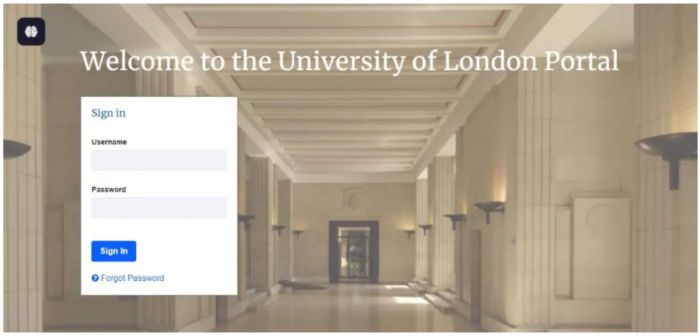
Example: The University of London’s student portal offers a comprehensive and user-friendly interface, providing students with easy access to academic resources, course materials, and administrative services.
Let’s talk about some challenges schools face without a proper portal:
Picture an admissions office drowning in paperwork, trying to match documents to applications, and manually entering data into multiple systems. Now imagine students waiting anxiously for updates, wondering if their materials were received, or trying to figure out what steps come next. The challenges are well outlined below to put things in perspective:
Complex Workflows: Traditional admissions often involve multiple steps that frustrate students and staff.
Manual Processes: Outdated methods are time-consuming and error-prone.
Global Competition: Institutions must attract students from diverse locations and meet high digital expectations.
These are the kinds of headaches a good student portal eliminates. A well-designed portal tackles these issues head-on by:
Streamlining Workflows: Students can complete applications online, upload documents, and track their progress in real-time.
Enabling Mobile Optimization: A mobile-friendly design ensures accessibility anytime, anywhere.
Offering Personalization: Tailored communications and automated updates keep students informed and engaged.
Improving Efficiency: Administrators can centralize data, track applications, and reduce manual tasks.
These solutions will help make student applications as easy as online shopping. Students can track their progress in real time and receive automatic updates and reminders. You’re giving admissions staff the tools they need to work efficiently and students, more control over how things pan out. All you need is an efficient student login system and you’ll have everything within a click.
This brings us to the question–what is the student login system? A student login system allows students to access everything from application progress to status, academic records, courses, schedules, and campus services through their institution’s online portal, using a username and password.
Example: The Higher Education Marketing (HEM) Student Portal is a comprehensive digital platform designed to streamline student engagement, lead nurturing, and admissions processes for educational institutions. It offers a user-friendly interface where prospective and enrolled students can access personalized information, track application statuses, and access financial aid.
Gone are the days of juggling multiple systems and endless email chains. Modern student portals make applying to academic institutions as straightforward as creating a social media profile. Students can choose their program, pick their campus, and select their start date all in one place. Need to upload transcripts or recommendation letters? Just drag and drop them into the system.
For admissions staff, this means no more shuffling between databases or wondering where a particular document ended up. Everything lives in one place, making it easy to review applications and make decisions quickly. The system even connects with other school software, thanks to the portal integrating with a CRM or SIS, so information flows smoothly and in real-time from one department to another.
2. Automation for Efficiency
Here’s where things get interesting. Imagine having a virtual assistant that never sleeps, sending out reminders, updating application statuses, and answering common questions automatically. That’s what automation brings to the table.
For example, when a student submits their application, the system can automatically:
Send a confirmation email
Check for missing documents
Schedule follow-up reminders
Update the student’s status in real-time
Notify relevant staff members
This is not just about saving time—though it certainly does. It is about ensuring a consistent and reliable experience for every applicant while allowing staff the resources to focus on more meaningful interactions with students.
3. Personalized Student Journeys
Modern portals offer innovative tools that make the application process feel more like a personal journey than a bureaucratic maze.
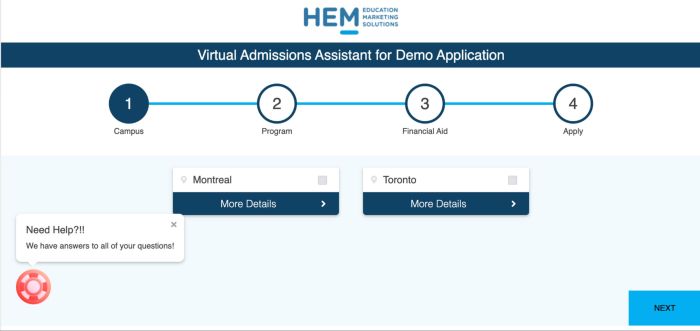
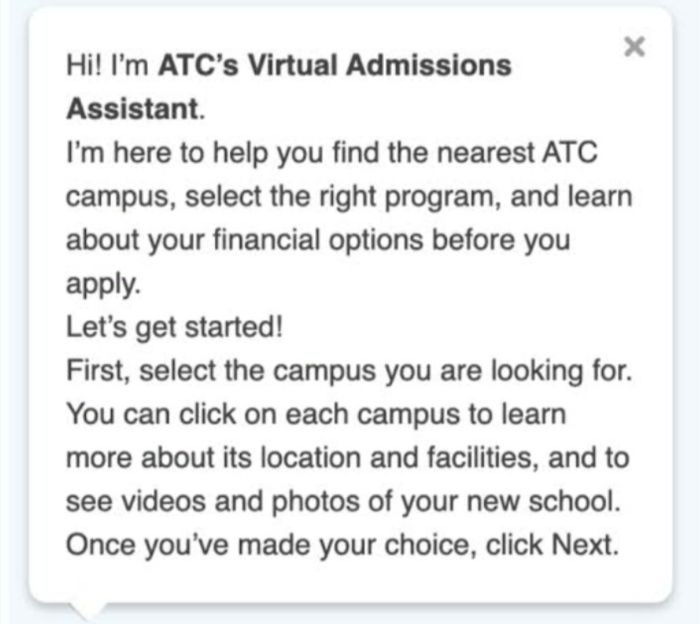
The Virtual Admissions Assistant (VAA), for example, can serve as a knowledgeable and accessible resource for prospective students. It enables them to independently explore campus options, browse programs, and receive immediate responses to their inquiries at any time. The VAA functions as a personal guide throughout the admissions process.
Then there’s the Quote Builder – a game-changer for students trying to plan their education budget. Instead of struggling with complicated fee structures, students can simply input their choices (program, campus, housing preferences) and get a clear picture of their costs. For international students especially, this transparency is invaluable. No more surprises or hidden fees – just clear, upfront information they can use to plan their future.
Example: The Automotive Training Center, Surrey, offers prospects the opportunity to request information about their admission from a virtual admission assistant, or an admission representative.
One thing that students and staff love is finding everything in one place. Remember that feeling of searching through endless email threads looking for that one important document? A good portal eliminates that headache.
For students, it means:
One login to access everything
A clear overview of their application status
Easy access to all their submitted documents
A record of all communications with the school
For staff, it’s like having a super-organized digital filing cabinet where everything is just a click away. Whatever you need to do, from sending students a reminder to checking their application status or when they lastlogged in, you only need to Click.
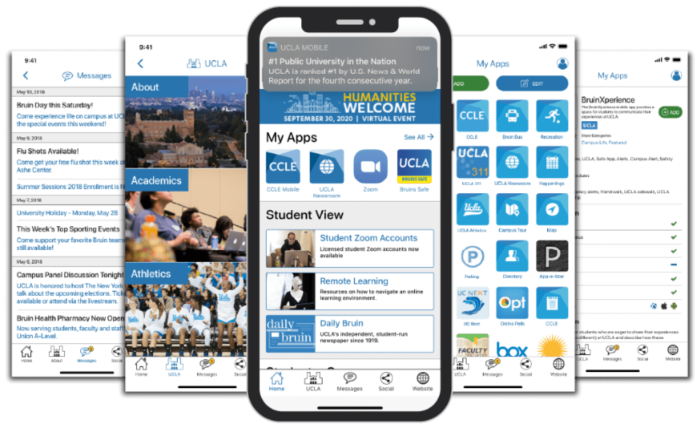
Example: The MyUCLA App by the University of California, Los Angeles, is a one-stop-shop student-run portal that offers everything from academic to administrative, student engagement, and financial support.
Online application management is an area where modern portals shine. A well-designed portal system will keep students engaged throughout the process instead of waiting for them to reach out with questions or concerns.
For example, The system can pick up that a student began an application but hasn’t completed it. Rather than letting that potential student slip away, it automatically sends a friendly reminder, offering help with any questions they might have. This kind of thoughtful follow-up can make the difference between a completed application and one that gets abandoned.
Enhancing the Student Journey: A Real-World Example
Now, let’s talk about something you’ve probably heard before. What is the student journey? The student journey begins with exploration and moves to application, admission, and enrollment. Beyond that, it involves academic learning, campus involvement, career preparation, and other experiences that shape their overall education and personal growth.
Now that we’ve gotten that out of the way, let’s follow Sarah, a prospective student, through her application journey:
Day 1: Sarah discovers your school’s portal and completes a quick inquiry form. Within minutes, she receives a personalized email with virtual tour links and program information tailored to her interests.
Week 1: Using the Virtual Admission Assistant (AAA), she explores different programs and campuses. The system notices she’s particularly interested in paralegal training and automatically sends her information.
Week 2: Sarah uses the Quote Builder to calculate her costs, including housing and tuition plans. The transparency helps her and her parents make informed decisions about financing her education.
Week 3: Ready to apply, Sarah finds much of her application pre-filled with the information she’s already provided. She uploads her documents and can track every step of the process until acceptance and admission.
Throughout: The system sends friendly reminders about deadlines and missing documents, keeping her on track without feeling pressured. By the time she arrives on campus, she will have experienced a streamlined, personalized admissions process that sets a positive tone for her educational journey.
This is what a good student portal aims to achieve. With tools like a Student Information System (SIS), a Virtual Admission Assistant (VAA), and a Quote Builder integrated into your school’s student portal, you can expect excellent results that’ll leave everyone satisfied. It will make a difference in the student’s journey, helping them make a seamless transition from inquiry to enrollment.
For the school involved, it’ll help reduce your workload and create enhanced tracking reporting results for better decision-making. This will ultimately increase student enrollment.
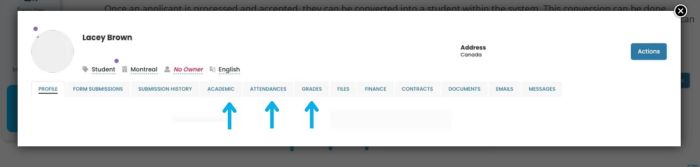
Example: A goodSIS incorporates elements and records all aspects of a student’s journey, from recruitment to graduation. It is usually integrated into your student portal, as this example shows.
A good portal doesn’t just make life easier for the schools that use it–it facilitates streamlined workflows for these schools, which is useful for helping them finetune and improve their admissions process. As a school looking to increase its prospects, it’ll help you know what’s working and what’s not so you can adjust as appropriate. With the right analytics tool, schools can easily track:
Which programs are getting the most interest
Where students might be getting stuck in the application process
How quickly staff are responding to applications
Which recruitment efforts are most effective
How international student applications compare to domestic ones
This data provides valuable insights that schools can process to produce better outcomes. It’s a wealth of actionable information that helps schools make better decisions about where to allocate resources and refine their processes. The ultimate goal is to serve prospective students better and help them achieve their enrollment goals first.
The Long-Term Impact of a Student Application Portal
The benefits of a well-designed student portal extend far beyond the admissions process. Some of these benefits include:
Increased student satisfaction and connection with the institution upon arrival on campus
Increased staff efficiency, allowing them to spend less time on paperwork and more time assisting students
Improved institutional reputation
Significant cost savings due to reduced paperwork and manual processing
Higher enrollment rates
Key Takeaways
A modern student portal can make a big difference in the student journey from inquiry to enrollment. It helps schools to:
Streamline Workflows: Simplify the application process for students and administrators.
Automate for Efficiency: Save time and reduce errors with automated tasks that produce consistent and more efficient results.
Personalize the Journey: Engage students with tailored tools like VAA and Quote Builder to consistently engage and help them make well-informed decisions.
Centralize Data Management: Keep all application-related information in one system to aid easy access and retrieval.
Proactively Engage Prospects: Use timely communication to meet students at their points of need and to increase application completion rates.
Optimize for Success: Leverage data insights to improve processes and track ROI for better planning now and in the future.
Conclusion
As technology continues to evolve, student portals will only become more important. A robust student portal is no longer a luxury—it’s a necessity for institutions aiming to meet the demands of today’s tech-savvy learners. The schools that succeed will be those that embrace these changes while keeping the student experience at the heart of everything they do.
By adopting a student portal, these schools can enhance the student experience, improve administrative efficiency, and ultimately boost enrollment rates. From the first click to the first day on campus, the journey becomes seamless, personalized, and rewarding for both students and staff.
Looking for an all-in-one student information and CRM solution tailored to the education sector?
Try the HEM Student Portal!
Frequently Asked Questions
Question: What is the purpose of a student portal?
Answer: A student portal is an online resource that guides students and helps them access helpful resources throughout the journey from exploring to application, enrollment and beyond.
Question: What is the student login system?
Answer: A student login system allows students to access everything from application progress to status, academic records, courses, schedules, and campus services through their institution’s online portal, using a username and password.
Question: What is the student journey?
Answer: The student journey begins with exploration and moves to application, admission, and enrollment. Beyond that, it involves academic learning, campus involvement, career preparation, and other experiences that shape their overall education and personal growth.
This audio is auto-generated. Please let us know if you have feedback.
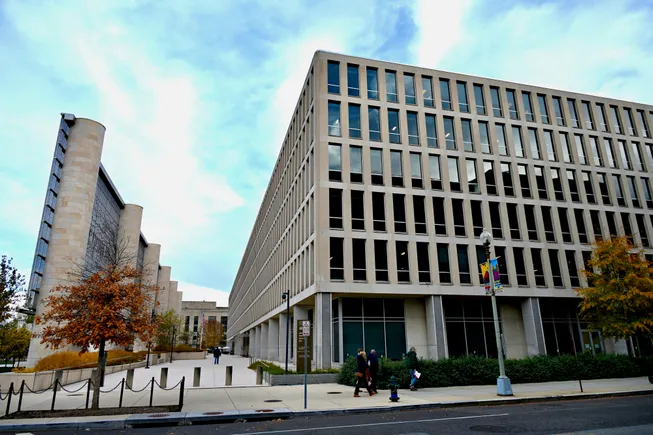
UPDATE: Feb. 12, 2025: The U.S. Department of Education on Tuesday agreed to temporarily block staffers of the Department of Government Efficiency, or DOGE, from accessing student aid information and other data systems until at least Feb. 17.
On that date, a federal judge overseeing the case is expected to rule on a student group’s request for a temporary restraining order to block the agency from sharing sensitive data with DOGE.
Dive Brief:
A group representing University of California students filed a lawsuit Friday to block the Elon Musk-led Department of Government Efficiency from accessing federal financial aid data.
The University of California Student Association cited reports that DOGE members gained access to federal student loan data, which includes information such as Social Security numbers, birth dates, account information and driver’s license numbers.
The complaint accuses the U.S. Department of Education of violating federal privacy laws and regulations by granting DOGE staffers access to the data. “The scale of intrusion into individuals’ privacy is enormous and unprecedented,” the lawsuit says.
Dive Insight:
President Donald Trump created DOGE through executive order on the first day of his second term, tasking the team, led by Tesla co-founder and Trump adviser Musk, with rooting out what the new administration deems as government waste.
DOGE has since accessed the data of several government agencies, sparking concerns that its staffers are violating privacy laws and overstepping the executive branch’s power. With the new lawsuit, the University of California Student Association joins the growing chorus of groups that say DOGE is flouting federal statutes.
One of those groups — 19 state attorneys general — scored a victory over the weekend. On Saturday, a federal judge temporarily blocked DOGE from accessing the Treasury Department’s payments and data system, which disburses Social Security benefits, tax returns and federal employee salaries.
The University of California Student Association has likewise asked the judge to temporarily block the Education Department from sharing sensitive data with DOGE staffers and to retrieve any information that has already been transferred to them.
The group argues that the Education Department is violating the Privacy Act of 1974, which says that government agencies may not disclose an individual’s data “to any person, or to another agency,” without their consent, except in limited circumstances. The Internal Revenue Code has similar protections for personal information.
“None of the targeted exceptions in these laws allows individuals associated with DOGE, or anyone else, to obtain or access students’ personal information, except for specific purposes — purposes not implicated here,” the lawsuit says.
The Washington Post reported on Feb. 3 that some DOGE team members had in fact gained access to “multiple sensitive internal systems,” including federal financial aid data, as part of larger plans to carry out Trump’s goal to eventually eliminate the Education Department.
“ED did not publicly announce this new policy — what is known is based on media reporting — or attempt to justify it,” Friday’s lawsuit says. “Rather, ED secretly decided to allow individuals with no role in the federal student aid program to root around millions of students’ sensitive records.”
In response to the Post’s Feb. 3 reporting, Musk on the same day posted on X that Trump “will succeed” in dismantling the agency.
Later that week, the Post reported that DOGE staffers were feeding sensitive Education Departmentdata into artificial intelligence software to analyze the agency’s spending.
The moves have also attracted lawmakers’ attention. Virginia Rep. Bobby Scott, the top-ranking Democrat on the House’s education committee, asked the Government Accountability Office on Friday to probe the security of information technology systems at the Education Department’s and several other agencies.
An Education Department spokesperson said Monday that the agency does not comment on pending litigation.