Tag: students

  • NAEP scores for class of 2024 show major declines, with fewer students college ready

    NAEP scores for class of 2024 show major declines, with fewer students college ready

    This story was originally published by Chalkbeat. Sign up for their newsletters at ckbe.at/newsletters.

    Students from the class of 2024 had historically low scores on a major national test administered just months before they graduated.

    Results from the National Assessment of Educational Progress, or NAEP, released September 9, show scores for 12th graders declined in math and reading for all but the highest performing students, as well as widening gaps between high and low performers in math. More than half of these students reported being accepted into a four-year college, but the test results indicate that many of them are not academically prepared for college, officials said.

    “This means these students are taking their next steps in life with fewer skills and less knowledge in core academics than their predecessors a decade ago, and this is happening at a time when rapid advancements in technology and society demand more of future workers and citizens, not less,” said Lesley Muldoon, executive director of the National Assessment Governing Board. “We have seen progress before on NAEP, including greater percentages of students meeting the NAEP proficient level. We cannot lose sight of what is possible when we use valuable data like NAEP to drive change and improve learning in U.S. schools.”

    These results reflect similar trends seen in fourth and eighth grade NAEP results released in January, as well as eighth grade science results also released Tuesday.

    In a statement, Education Secretary Linda McMahon said the results show that federal involvement has not improved education, and that states should take more control.

    “If America is going to remain globally competitive, students must be able to read proficiently, think critically, and graduate equipped to solve complex problems,” she said. “We owe it to them to do better.”

    The students who took this test were in eighth grade in March of 2020 and experienced a highly disrupted freshman year of high school because of the pandemic. Those who went to college would now be entering their sophomore year.

    Roughly 19,300 students took the math test and 24,300 students took the reading test between January and March of 2024.

    The math test measures students’ knowledge in four areas: number properties and operations; measurement and geometry; data analysis, statistics, and probability; and algebra. The average score was the lowest it has been since 2005, and 45% of students scored below the NAEP Basic level, even as fewer students scored at NAEP Proficient or above.

    NAEP Proficient typically represents a higher bar than grade-level proficiency as measured on state- and district-level standardized tests. A student scoring in the proficient range might be able to pick the correct algebraic formula for a particular scenario or solve a two-dimensional geometric problem. A student scoring at the basic level likely would be able to determine probability from a simple table or find the population of an area when given the population density.

    Only students in the 90th percentile — the highest achieving students — didn’t see a decline, and the gap between high- and low-performing students in math was higher than on all previous assessments.

    This gap between high and low performers appeared before the pandemic, but has widened in most grade levels and subject areas since. The causes are not entirely clear but might reflect changes in how schools approach teaching as well as challenges outside the classroom.

    Testing officials estimate that 33% of students from the class of 2024 were ready for college-level math, down from 37% in 2019, even as more students said they intended to go to college.

    In reading, students similarly posted lower average scores than on any previous assessment, with only the highest performing students not seeing a decline.

    The reading test measures students’ comprehension of both literary and informational texts and requires students to interpret texts and demonstrate critical thinking skills, as well as understand the plain meaning of the words.

    A student scoring at the basic level likely would understand the purpose of a persuasive essay, for example, or the reaction of a potential audience, while a students scoring at the proficient level would be able to describe why the author made certain rhetorical choices.

    Roughly 32% of students scored below NAEP Basic, 12 percentage points higher than students in 1992, while fewer students scored above NAEP Proficient. An estimated 35% of students were ready for college-level work, down from 37% in 2019.

    In a survey attached to the test, students in 2024 were more likely to report having missed three or more days of school in the previous month than their counterparts in 2019. Students who miss more school typically score lower on NAEP and other tests. Higher performing students were more likely to say they missed no days of school in the previous month.

    Students in 2024 were less likely to report taking pre-calculus, though the rates of students taking both calculus and algebra II were similar in 2019 and 2024. Students reported less confidence in their math abilities than their 2019 counterparts, though students in 2024 were actually less likely to say they didn’t enjoy math.

    Students also reported lower confidence in their reading abilities. At the same time, higher percentages of students than in 2024 reported that their teachers asked them to do more sophisticated tasks, such as identifying evidence in a piece of persuasive writing, and fewer students reported a low interest in reading.

    Chalkbeat is a nonprofit news site covering educational change in public schools.

    For more news on national assessments, visit eSN’s Innovative Teaching hub.

    Latest posts by eSchool Media Contributors (see all)

    Source link

  • Students are being affected by strangulation

    Students are being affected by strangulation

    When translating international research on strangulation during sex specifically, an estimated 1.2-1.6 million students across UK higher education institutions will have had this experience.

    Content warning: strangulation, choking, sexual violence, suicide, homicide

    Strangulation is not widely discussed in UK university settings, but it should be, and universities can be very well-placed to respond to this topic across many different contexts.

    With a new academic year beginning, particularly in the context of the Office for Students’ harassment and sexual misconduct new regulation and prevalence data, now is the time to consider the best approach to strangulation for new and existing cohorts of students.

    What is strangulation?

    Strangulation – or “choking” as it is sometimes called in the context of sex – is the application of external pressure to the neck, which results in the restriction of air and/or blood flow, through obstruction of the windpipe and/or major blood vessels.

    Whilst ‘choking’ is sometimes a term that is sometimes used interchangeably, this term is more technically applied to an internal obstruction in the throat which restricts breathing (e.g. choking on a piece of food).

    The Institute for Addressing Strangulation (IFAS) was established in October 2022, following the introduction of new legislation, presenting strangulation as a stand-alone offence in England and Wales.

    There is not yet research specifically on the prevalence of strangulation during violence and abuse in universities in the UK. This in itself is a risk to an effective response. However, from research we do have available, we can see how students could be affected by strangulation.

    In the context of sexual violence, research from a Sexual Assault Referral Centre in England showed that around a fifth of victim/survivors of sexual assault and rape by a current or ex-partner had been strangled at the time of the assault. A higher proportion of victim/survivors who were strangled were “In education”, compared to those who weren’t strangled (12 per cent compared with 9 per cent).

    For those in domestic abuse relationships, there is an increased risk to the victim/survivor once they have been strangled. Research has shown that there is a seven-fold increased risk of the victim being killed by the perpetrator when non-fatal strangulation is in the abuse history.

    From April 2022 – March 2023, the Vulnerability Knowledge and Practice Programme (VKPP) showed that 10 per cent of suspected victim suicides following domestic abuse (SVSDA) related to victims aged 16-24. Of all the SVSDA cases in the same year, the VKPP reported that non-fatal strangulation was noted in the abuse histories of 20 per cent of cases.

    The risks of an act of strangulation on its own can include loss of consciousness (possibly indicating acquired brain injury), stroke, seizures, motor and speech disorders, and death.

    If universities have an awareness of the abuse and violence their students are subjected to, is the knowledge around strangulation a missing piece of a bigger puzzle?

    Strangulation during sex

    Strangulation or “choking” during sex is disproportionately prevalent amongst younger age groups.

    A survey conducted by us at IFAS late last year showed that 35 per cent of respondents aged 16-34 had been strangled during sex by a partner at least once. This was sex they had entered into willingly, but the strangulation was not always with prior agreement from all parties.

    Of the respondents who had previously been strangled during sex, only 50 per cent reported to us that this strangulation was always agreed in advance.

    When looking at university populations internationally, the prevalence of engaging in strangulation during sex appears to be higher than in the general population sample referenced above. In the United States, it has been reported that 42 per cent of undergraduates have been strangled during sex and 37 per cent have reported strangling someone else – in Australia, 56 per cent of students had an experience of having been strangled and 51% had done this to a partner.

    Researchers in the United States have also looked specifically at the risks of strangulation during sex. They found that individuals who had frequent experience of partnered strangulation had heightened levels of a blood biomarker that indicates inflammation within the brain and cell death.

    Even when used during sex, research consistently shows that there is no safe way to strangle. This is beginning to be better recognised, including with action by the government to criminalise the depiction of strangulation in pornography.

    What should higher education institutions be doing

    Strangulation may be missing in universities’ broader responses to sexual misconduct, domestic abuse, and sex and relationships education. Whilst not applicable to all institutions, the principles outlined in the swiftly upcoming Office for Students Condition of Registration (E6) may serve as a useful framework in which to integrate this topic.

    Non-judgemental engagement around strangulation is vital. Students who are thinking about or who are engaging in strangulation during sex should feel able to discuss this with trusted staff who can provide helpful and objective information.

    Students who have been strangled in other settings – for instance, in domestic abuse or sexual violence – also require opportunities to disclose and seek specialist support. Integrating responses to strangulation under the appropriate support requirements of E6 could be suitable, particularly when disclosed as part of abuse or misconduct.

    It is necessary that questions are asked of students in relevant contexts such as sexual misconduct support services, given that spontaneous disclosure may be rare. It is important to remember the range of terminology that could be used to describe the same act, particularly across different contexts.

    Staff should be confident they are talking with students in a way all parties can understand and from which appropriate action can be taken.

    As would be the common practice for other disclosures such as domestic abuse, limits to confidentiality and escalation procedures should also be appropriately discussed and understood by all.

    In E6, the Office for Students notes the importance of capturing data on behaviours in order to inform both prevention and response initiatives. Including strangulation as a specific variable to consider within this data capture process would be valuable for universities. The more staff know about strangulation in different contexts, the better and more specialist the response can be. If questions are not asked about strangulation, and opportunities for disclosure are limited, prevalence data are unknown.

    The higher education sector has long been an advocate for evidence-based practice, and sexual misconduct has been a recent example of where understanding the issue has led to more concerted efforts to address these unacceptable behaviours (see e.g. the Office for Students’ pilot sexual misconduct survey).

    Staff should collate data on strangulation disclosures and reports (for example, through disciplinary proceedings), and be able to monitor and report on these data independently and in the context of other behaviours such as sexual misconduct. Where possible, it would be beneficial to consider how strangulation is captured on disclosure tools, reporting forms, risk assessment templates, and case management systems. Staff should consider how their university’s strangulation data form part of reporting through existing governance structures.

    Strangulation is still an emerging – and can be taboo – topic of conversation which means relatively little is known and shared. Myths and misconceptions thrive in these environments which can lead to victim blaming and poor outcomes for those involved. Education for whole institutions on what is known objectively about this behaviour in different contexts is needed.

    This education can come in the form of, for example, training for staff and students around sexual misconduct and other forms of abuse and harassment – particularly when discussing consent and the requirement for prior and informed consent for all sexual behaviours. As universities have been reviewing their training provision to align with, and hopefully go beyond, the requirements of E6, this seems like a suitable framework for the appropriate inclusion of this topic.

    Individual conversations with students and staff seeking support are also good opportunities to share information and resources for further support. Staff in specialist roles such as student support workers, and disciplinary investigators and panel members may benefit from more specialist training interventions in order to feel confident and competent to support the education of others.

    The topic of strangulation is a nuanced one, not least because of the varied contexts in which it may be occurring. It therefore requires a careful approach by universities, but this is not an insurmountable task. We would encourage institutions to follow the trajectories they should already be taking to address harassment and sexual misconduct and apply appropriate learning to this important topic.

    Please visit the IFAS website for more information.

    Source link

  • The Motivations and Concerns of Prospective Graduate Students

    The Motivations and Concerns of Prospective Graduate Students

    Graduate student enrollment is increasingly critical to the overall enrollment health for universities. As demographic changes make it harder to grow traditional undergraduate enrollment, institutions will need graduate student population growth to fill in those gaps.

    The good news is that the graduate student market is growing. According to National Student Clearinghouse data, graduate enrollment reached an all-time high of 3.2 million in fall 2024, with a 3.3% increase over the year before.

    However, in order to compete for these students, you need to understand their motivations, influences, and concerns when it comes to their selection of a higher educational institution. To dig into these issues, RNL surveyed 1,400 prospective and enrolled graduate students on a wide range of issues that relate to their decision to pursue graduate study. Here are some of the key findings that enrollment managers need to know.

    What is their primary motivation to study?

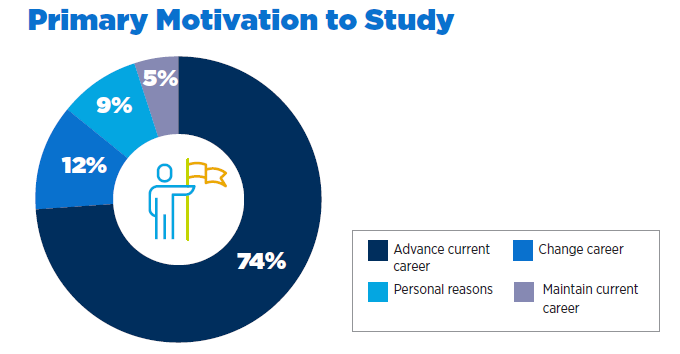
    Circle graph showing 74% of graduate students are primarily motivated to study to advance their current careerCircle graph showing 74% of graduate students are primarily motivated to study to advance their current career

    It’s no surprise that today’s students are career-oriented, but it’s clear that advancing their current career is the top driver, with 74% of our participants listing that as their primary motivation to study.

    What does this mean for us as practitioners in higher education? It’s critical to not only highlight career-related information, but also to make sure that information and outcomes are very easy to find. In another finding from our report, 90% of respondents indicated that it’s important for program pages to provide specific and easy-to-access information on careers related to their field.

    What influences graduate students to consider graduate study?

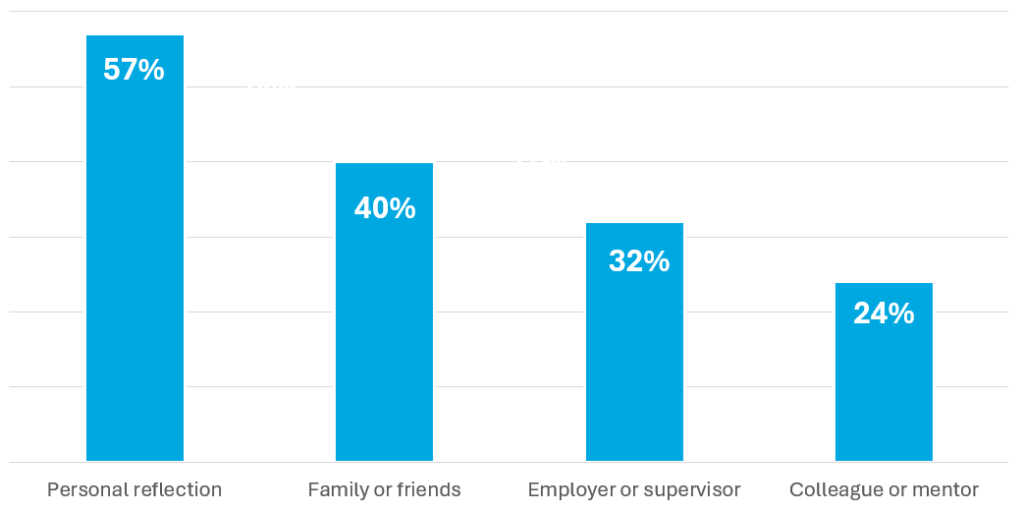
    Bar chart showing the greatest influences on whether to study at the graduate level: 57% personal reflection, 40% family or friends, 32% employer, 24% colleague or mentorBar chart showing the greatest influences on whether to study at the graduate level: 57% personal reflection, 40% family or friends, 32% employer, 24% colleague or mentor

    As you can see here, these decisions are largely self-motivated even if the reasons to pursue grad study are career-oriented. I find it interesting that these are not more employer-driven, especially when it comes to continuing degrees. However, it still shows that the majority of graduate students are self-motivated, intrinsic learners who see graduate study as a way to improve their lives.

    What are the most important program features to prospective graduate students?

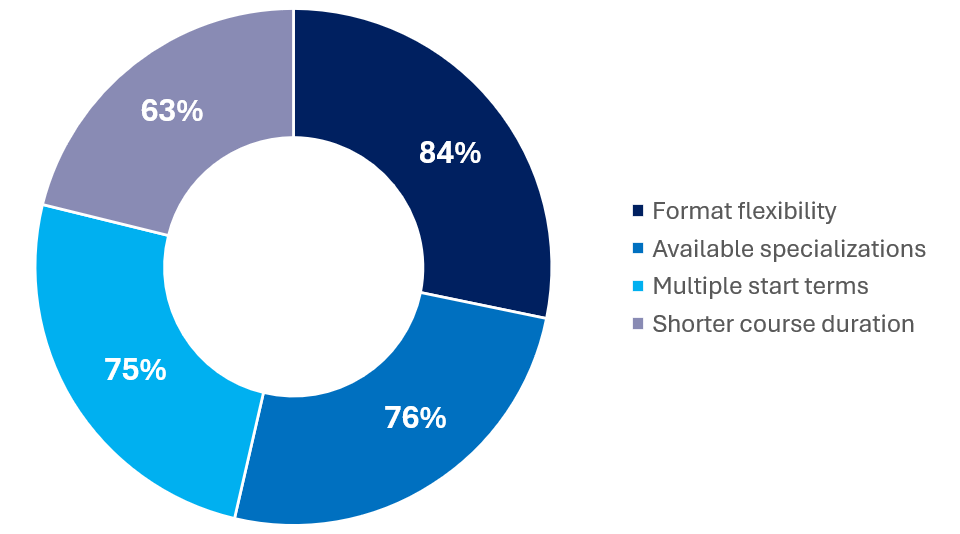
    Circle graph showing most important program features for prospective graduate students: 84% format flexibility, 76% available specializations, 75% multiple start terms, 63% shorter course duration.Circle graph showing most important program features for prospective graduate students: 84% format flexibility, 76% available specializations, 75% multiple start terms, 63% shorter course duration.

    For our survey respondents, format flexibility was the feature that was cited as most important, followed closely by available specializations. This is interesting, as the respondents cited modality, course format, and specializations, and then flexible scheduling. This could be a reflection of the growing number of Gen Z students (those under 29) who make up 56% of the graduate student population according to the fall 2023 IPEDS snapshot. This change in student age demographic emphasizes the importance of offering and designing those programs for multiple delivery types and really meeting those students where they are.

    What are the main concerns of graduate students?

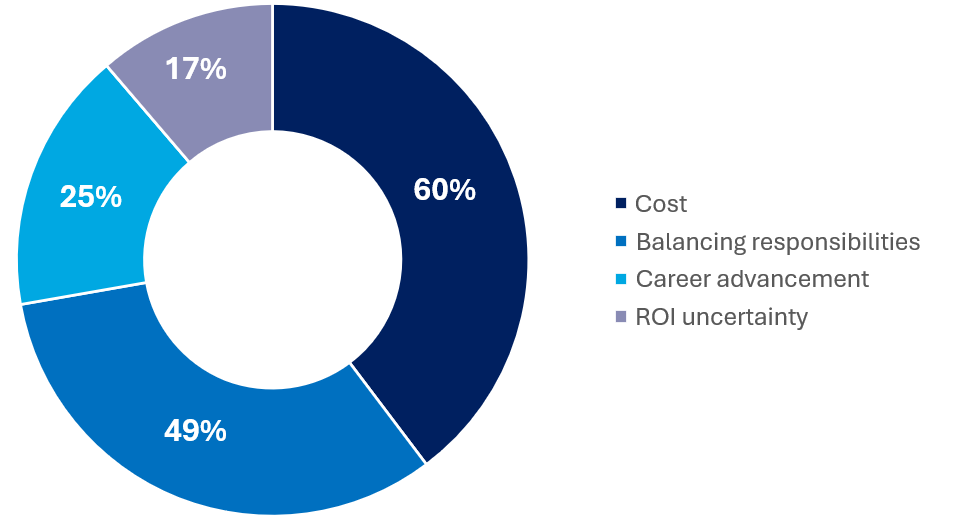
    Circle graph showing the main concerns of graduate students: 60% cost, 49% balancing responsibilities, 25% career advancement, 17% ROI uncertainty.Circle graph showing the main concerns of graduate students: 60% cost, 49% balancing responsibilities, 25% career advancement, 17% ROI uncertainty.

    I don’t think anyone will be shocked that cost is a concern for 60% of graduate students. But half of our respondents also cited balancing responsibilities as a primary concern. This is again, not shocking considering the vast majority of our participants said they worked full-time. While fewer than 20% cited ROI uncertainty, that still represents 1 in 5 of our survey takers. The bottom line is that institutions need to directly address these pain points when they conduct outreach with students. Mitigating some of those concerns right away can help students feel more comfortable in the process and be more likely to enroll in, and ultimately complete their programs.

    What will inhibit a graduate student from applying to a program?

    Finally, we asked our survey respondents which common requirements would potentially dissuade them from applying to a program.

    Table showing inhibitors to applying to graduate school: Letters of recommendation 35%, Essays 33%, Fees 31%, Standardized tests 30%, Writing sample 28%, Resume 28%, Transcripts 27%, Portfolio of work 26%, None 11%Table showing inhibitors to applying to graduate school: Letters of recommendation 35%, Essays 33%, Fees 31%, Standardized tests 30%, Writing sample 28%, Resume 28%, Transcripts 27%, Portfolio of work 26%, None 11%

    As you can see, 1 in 3 students cited letters of recommendation and essays/personal statements. This is not to say that institutions should remove these requirements, but be mindful if your program really needs them in the evaluation process. Similarly, for items such as transcripts, look for ways to make it easier for transcripts to be submitted or gathered to remove the burden from students—and a potential barrier from applying to your program.

    Read the full report for even more insights

    2025 Graduate Student Recruitment Report2025 Graduate Student Recruitment Report

    These findings represent a fraction of what you will find in the 2025 Graduate Student Recruitment Report. It’s packed with findings on the channels graduate students use to search for schools, how they use search engines for research, which digital ads they click on, and much more.

    You can also watch our webinar Keys to Engaging and Enrolling Graduate Students to hear my colleague Lori Cannistra and I discuss the findings and how you can use them to guide your strategies. And if you want to discuss graduate marketing and recruitment strategies, reach out to set up a consultation.

    Talk with our graduate and online enrollment experts

    Ask for a free consultation with us. We’ll help you assess your market and develop the optimal strategies for your prospective graduate students and online learners.

    Schedule consultation

    Source link

  • The “regulatory burden” on sexual misconduct needs to lift the weight from students

    The “regulatory burden” on sexual misconduct needs to lift the weight from students

    The problem with findings like “1.5 per cent of students said they were in intimate relationships with staff” is the danger of extrapolation.

    It’s in the results of the Office for Students (OfS) first sector-wide sexual misconduct survey – covering final year undergraduates in England who chose to take part in a clearly labelled bolt-on to the National Student Survey (NSS) earlier this year, with a response rate of just 12.1 per cent.

    But 1.5 per cent of final-year undergraduates at English providers reporting “intimate” staff-student relationships in the past 12 months still feels like a lot – especially when half involved staff members who were engaged in the student’s education and/or assessment.

    One in four respondents (24.5 per cent) said they’ve experienced sexual harassment since starting university, and 14.1 per cent declare experiencing sexual assault or violence.

    Most incidents involved fellow students – with 58.4 per cent of harassment cases and 44.1 per cent of assault cases (taking place off-campus) involving someone connected to the victim’s institution.

    OfS has published a dashboard of the results, an analysis report, a guide for students and a press release where the bullets slightly are less careful about extrapolation than I’ve been above. Another report to come later will provide more detailed analysis, including results for different combinations of characteristics and findings by academic subject.

    The exercise represents OfS’ first real attempt to gather national prevalence data on sexual misconduct affecting students, having initially promised to do so back in 2022 in the context of its new Condition E6. That requires providers to take “multiple steps which could make a significant and credible difference in protecting students”.

    The survey covered three main areas – sexual harassment experiences, sexual assault and violence, and intimate staff-student relationships. Questions also included detailed behavioural descriptions to ensure accurate prevalence measurement.

    As such, the approach built on a 2023 pilot study involving volunteer providers. Since then, OfS has shortened the questionnaire whilst maintaining its core elements, leveraging NSS infrastructure to achieve national scale coverage – although for now, none of the devolved nations have taken part.

    It’s worth noting that response patterns showed quite a bit of variation between demographic groups. Students with disabilities, female students, and LGB+ students were both more likely to respond and more likely to report misconduct – creating some quite complex interpretation challenges for understanding true prevalence rates.

    Prevalence patterns and vulnerable groups

    That set aside, the results show consistent vulnerability patterns across both harassment and assault. Female student respondents reported harassment rates of 33 per cent compared to significantly lower rates among males. Student respondents with disabilities experienced harassment at 34.7 per cent and assault at 22.1 per cent – higher than those without disabilities.

    Sexual orientation showed significant differences. Lesbian, gay and bisexual respondents reported harassment rates of 46.6 per cent and assault rates of 29.8 per cent, nearly double the overall population rates. Those identifying as having “other sexual orientation” also showed elevated rates – at 40.1 per cent for harassment and 23.3 per cent for assault.

    Age was also a key factor, with those under 21 at course start showing higher vulnerability rates – 31.2 per cent experienced harassment and 18.2 per cent experienced assault.

    In terms of behaviours, the survey found “making sexually suggestive looks or staring at your body” affected 16.7 per cent of all respondents – the most common individual harassment behaviour. This was followed by “making unwelcome sexual comments or asking sexualised questions about your private life, body, or physical appearance.”

    The patterns have direct relevance for E6’s training requirements, which mandate that induction sessions ensure students “understand behaviour that may constitute harassment and/or sexual misconduct.” The prevalence of apparently “lower-level” behaviours like staring suggests providers need to address misconceptions about what constitutes harassment – particularly given the survey’s use of legal definitions from the Equality Act 2010 and Protection from Harassment Act 1997.

    There were also interesting patterns across socioeconomic and ethnic lines that deserve interrogation. Those from the least deprived areas (IMD quintile 5) reported higher harassment rates at 32.6 per cent, but so did those not eligible for free school meals, who showed elevated rates at 32.9 per cent. And mixed ethnicity respondents reported harassment at 31.5 per cent compared to 27.9 per cent among white students.

    Where groups showed higher misconduct rates, part of the problem is that we can’t be sure whether that reflects reporting confidence, different social environments, or varying exposure patterns – all things providers will need to understand to make progress on the “credible difference” thing.

    The ethnic dimension also intersects with religious identity, with Jewish respendents (29.8 per cent), those with no religion (30.5 per cent), and those from “any other religion” (35.5 per cent) showing elevated harassment rates. Again, differential intersectional patterns should align with E6’s requirements for providers to understand their specific student populations and tailor interventions accordingly.

    The reporting crisis

    One of the survey’s most concerning findings relates to formal reporting rates. Only 13.2 per cent of respondents experiencing harassment in the past year made formal reports to their institutions. For sexual assault (in a university setting or involving someone connected to the university) reporting varied dramatically by age – just 12.7 per cent of under-21s reported incidents compared to 86.4 per cent of those aged 31 and above.

    This reporting gap in turn creates a fundamental information deficit for universities attempting to understand campus culture and develop appropriate interventions. The data suggests institutions may be operating with incomplete intel – hampering attempts to comply with E6 requirements to understand student populations and implement effective protective measures.

    E6 explicitly requires providers to offer “a range of different mechanisms” for making reports, including online and in-person options, and to “remove any unnecessary actual or perceived barriers” that might make students less likely to report. The survey’s findings suggest the mechanisms may not be reaching their intended audiences, particularly younger students.

    Among those who did report, experiences were mixed. For harassment cases, 46.7 per cent rated their reporting experience as good whilst 39.3 per cent rated it as poor. Sexual assault reporting showed slightly better outcomes, with 57.3 per cent rating experiences as good and 32.4 per cent as poor. These are findings that directly relate to E6’s requirements – and suggest the sector has some way to go to build confidence in the processes it does have.

    The condition mandates that providers ensure “investigatory and disciplinary processes are free from any reasonable perception of bias” and that affected parties receive “sufficient information to understand the provider’s decisions and the reasons for them.” The proportion rating experiences as poor does suggest that some providers are struggling to meet E6’s procedural fairness requirements.

    University connections and scope of misconduct

    Jurisdiction has always been a contested issue in some policies – here, misconduct frequently involved university-connected individuals even when incidents occurred off-campus. Among harassment cases not occurring in university settings, 58.4 per cent involved someone connected to the victim’s university. For assault cases, that figure was 44.1 per cent.

    Student perpetrators dominated both categories. Staff perpetrators appeared less frequently overall, though older students were more likely than younger groups to report staff involvement in assault cases.

    In E6 terms, the condition explicitly covers “the conduct of staff towards students, and/or the conduct of students towards students” and applies to misconduct “provided in any manner or form by, or on behalf of, a provider.” The data suggests universities’ efforts will need to explicitly extend beyond physical premises to encompass behaviour involving community members regardless of location.

    In fact, most recent harassment incidents occurred either entirely outside university settings (39.7 per cent) or across mixed locations (45.1 per cent), with only 15.2 per cent occurring exclusively in university settings. For sexual assault, 61.9 per cent occurred outside university settings entirely.

    The patterns all point to providers needing sophisticated approaches to addressing misconduct that span campus boundaries. Traditional safety measures, or at least student perceptions of jurisdiction, might well miss the majority of incidents affecting students – broader community engagement and partnership approaches will need to be deployed.

    Support confidence

    The survey also examined’ confidence in seeking institutional support – finding 67.5 per cent felt confident about where to seek help, whilst 29.3 per cent lacked confidence. But confidence levels varied significantly across demographic groups, with particular variations by sexual orientation, sex, disability status, and age.

    The differential confidence patterns also justify the E6 requirement for providers to ensure “appropriate support” is available and targeted at different student needs. It specifically requires support for students “with different needs, including those with needs affected by a student’s protected characteristics.”

    The age-related reporting gap suggests younger students may face particular barriers to accessing institutional processes. This could relate to unfamiliarity with university systems, power dynamics, or different attitudes toward formal complaint mechanisms. For sexual assault cases, the contrast between 12.7 per cent reporting among under-21s versus 86.4 per cent among over-31s represents one of the survey’s most striking findings.

    The age-related patterns have specific relevance given E6’s training and awareness requirements. The condition requires providers to ensure students are “appropriately informed to ensure understanding” of policies and behaviour constituting misconduct. The survey suggests the requirement may need particular attention for younger students – they’re showing both higher vulnerability and lower reporting rates.

    Staff-student relationships

    The survey’s staff-student relationship findings are a small proportion of the student population – but they do raise real questions about power dynamics and institutional governance.

    Among the 1.5 per cent reporting those relationships, the high proportion involving educational or professional responsibilities suggest significant potential conflicts of interest.

    Respondent students without disabilities were more likely to report relationships involving educational responsibility (72.6 per cent versus 45.5 per cent for disabled students), and similar patterns emerged for professional responsibilities. The differences deserve investigation, particularly given disabled students’ higher overall misconduct rates.

    E6’s requirements on intimate personal relationships require that providers implement measures making “a significant and credible difference in protecting students from any actual or potential conflict of interest and/or abuse of power.”

    The survey’s power dynamic findings suggest the requirement is needed – although whether the most common approach that has emerged (a ban where there’s a supervisory relationship, and a register where there isn’t) creates the right “culture” is a remaining question, given students’ views in general on professional boundaries.

    Regulatory implications

    The survey’s findings raise real questions about how OfS will use prevalence data in its regulatory approach. Back in 2022, Susan Lapworth told the House of Commons Women and Equalities Committee hearing that the data would enable the targeting of interventions:

    “So a university with high prevalence and low reporting would perhaps raise concerns for us – and we would want to then understand in detail what was going on there and that would allow us to focus our effort.

    Of course, as with Access and Participation, having national data on “which kinds of students in which contexts are affected by this” could well mean that what shows up in provider data as a very small problem could add up to a lot across the country. OfS’ levers in these contexts are always limited.

    The lack of survey coverage of postgraduate students in general turns up here as a major problem. We might theorise that most exhibit multiple theoretical vulnerabilities given the dominance of international students and students who have supervisors – patience with OfS’ focus on undergraduates really is wearing thin each time it manifests.

    The report also doesn’t look at home vs international student status, and nor does it disaggregate results by provider mission group, size, type, or characteristics. It only states that all eligible English providers in NSS 2025 were included, and that data are weighted to be representative of final-year undergraduates across the sector. Providers are also (confidentially) receiving their data – although response rates down at provider level may make drawing conclusions in the way originally envisaged difficult.

    The dramatic under-reporting rates create monitoring challenges for both institutions and OfS. If only 13.2 per cent of harassment victims make formal reports, institutional complaint statistics provide limited insight into actual campus culture. The information gap complicates E6 compliance assessment – and suggests OfS may need alternative monitoring approaches beyond traditional complaint metrics.

    E6 does explicitly contemplate requiring providers to “conduct a prevalence survey of its whole student population to the OfS’s specification” where there are compliance concerns. The 2025 survey’s methodology and findings provide a template, but it also seems to me that more contextual research – like that found in Anna Bull’s research from a couple of years back – is desperately needed to understand what’s going on beneath many of the numbers.

    Overall though, I’m often struck by the extent to which providers argue that things like E6 are an over-reach or an example of “burden”. On this evidence, even with all the caveats, it’s nothing like the burden being carried by victims of sexual misconduct.


    Source link

  • Colleges Teach Students Healthy Eating, Cooking Habits

    Colleges Teach Students Healthy Eating, Cooking Habits

    A 2025 survey of 5,000 undergraduates by Inside Higher Ed, supported by Generation Lab, found that the greatest share of students rated their nutrition at college as average (44 percent), with an additional 30 percent describing their nutrition as below average or poor.

    A number of colleges and universities are working to teach students proper nutrition habits and equip them to lead healthy lives in and beyond college.

    The research: A 2023 literature review found that college students experience a variety of risk factors that make them uniquely positioned to experience food insecurity, including busy schedules and a lack of access to nutritious food.

    Several studies found that students who had cooking experience were less likely to face food insecurity, implying that those without cooking or food-preparation skills may be at higher risk for food insecurity, according to the report.

    The report suggests colleges can provide cooking and meal-preparation demonstrations to help students gain skills, as well as learn how to prepare low-budget, nutritious meals. One study cited in the literature review suggested adding nutrition education—including food budgeting and recipes—as a feature of first-year seminars.

    Inside Higher Ed compiled five examples of nutrition education designed to address student health, food insecurity and malnutrition.

    1. University of Memphis: Grilling Classes

    To help teach students how to cook using relevant tools and resources, the University of Memphis staff hosts a lunchtime nutrition class, teaching students how to prepare and grill a personal pizza.

    The university charges students $15 to participate in the class, which covers ingredients and lunch foods, providing a low-cost and casual introduction to basic cooking principles.

    1. University of North Dakota: Culinary Corner

    At UND, students get the chance to lead their peers in cooking classes. Events are open to all campus members, including faculty and staff, and the hourlong sessions in the wellness center teach students how to prepare simple meals.

    In addition, UND has a virtual demonstration library so students can teach themselves how to cook a range of healthful recipes from wherever they are, including honey-glazed salmon, chana masala or acai bowls. Each demonstration video features a student instructor and a recipe card for viewers to follow along.

    1. Lewis College, University of Georgia Cooperative Extension: Fulton Fresh University

    This fall Georgia State University students benefited from a free cooking demonstration and nutrition course pilot hosted by two local institutions.

    Fulton Fresh University, a partnership between Lewis College and the University of Georgia Cooperative Extension, typically educates seniors or those in low-income communities. But in 2024, the partners tested a new offering for college students who don’t necessarily know how to cook and are more inclined to eat quick meals or takeout, according to a university press release.

    The four-week, no-cost course provided students with 10 pounds of produce at each session, in addition to spices and a variety of kitchen tools to keep.

    1. Iowa State University: Culinary Boot Camp

    Iowa State University students can participate in a two-credit course, Culinary Boot Camp, which provides nutrition education and culinary skills to promote healthy living.

    The course, which has been offered since 2016, covers topics including storing food safely, reducing food waste, converting recipes and shopping efficiently for groceries, among others.

    1. Cornell University: Get Cooking With Cornell Dining

    Cornell offers students a chance to learn from the professionals: the campus dining team. Members host events in the Discovery Kitchen in a residence hall on campus, where students can practice preparing plant-based dishes, which they then enjoy.

    The goal is to help students learn to make healthy dishes that are both tasty and environmentally friendly.

    Do you have a wellness intervention that might help others promote student success? Tell us about it.

    Source link

  • Kentucky to End In-State Tuition for Undocumented Students

    Kentucky to End In-State Tuition for Undocumented Students

    Photo illustration by Justin Morrison/Inside Higher Ed | amriphoto/E+/Getty Images | klyaksun and SAHACHAT/iStock/Getty Images

    The Kentucky Council on Postsecondary Education agreed to terminate its offering of in-state tuition to undocumented students, according to a settlement filed in court Monday, WKU Public Radio reported.   

    The termination of reduced tuition remains tentative, as the settlement has yet to be signed by a district court judge, but if it does come to fruition, Kentucky would be the third state to capitulate to demands of the Trump administration on the issue.

    President Trump’s Department of Justice has sued multiple states over their policies that provide in-state tuition to undocumented students, arguing that doing so discriminates against out-of-state Americans. Republican-led states that were sued quickly agreed to scrap the policies. But Kentucky, governed by a Democrat, took longer. (Similar lawsuits against Minnesota and Illinois are still pending.)

    The state attorney general, a Republican, told the council that the lawsuit would be a “losing fight,” WKU reported.

    The Trump administration and state Republicans leaders have used these lawsuits to go around state legislatures and Congress to change policies and programs.

    Some higher education and legal experts have called the practice unlawful collusion and tried to intercede on behalf of the immigrant students in court, but they’ve had little luck so far.

    MALDEF, the same Latino civil rights group that tried and failed to intervene in the Texas lawsuit, has filed a motion to intervene in Kentucky, but the court has yet to rule on that request.

    Source link

  • How Social Media Shapes College Planning for Students

    How Social Media Shapes College Planning for Students

    Social media is a front door for student outreach.

    Let us be honest: College planning is not just about campus tours and glossy brochures anymore. These days, it is about late-night scrolling. It is about finding your future in a 15-second TikTok or watching a day-in-the-life dorm vlog on YouTube, possibly squeezed between a skateboarding dog and a viral dance challenge. And let us admit it, none of this is mindless. Students make real decisions right there in the middle of the scroll, about where they belong, who they want to be, and what opportunities are out there (Astleitner & Schlick, 2025).

    That is the story the 2025 E-Expectations Trend Report tells us. Social media is not a bonus channel for student outreach; it is the front door. In fact, 63% of students are on Instagram, but only 53% see college content there. That is a missed opportunity (RNL, Halda, & Modern Campus, 2025). Here is the twist: Colleges know social is powerful, too. The 2025 Marketing and Recruitment Practices Report for Undergraduate Students shows that enrollment teams rank social media, retargeted, and video ads among their most effective digital tactics. Still, when it comes time to pull out their wallets, colleges spend most of their spending on Instagram and Facebook, while TikTok and YouTube, where teenagers spend much of their time, are left underused (RNL, 2025).

    Social media is where the search begins

    The E-Expectations data shows that for 56% students, social media matters most when they start thinking about college. Before they ever request information or take a tour, they are watching you. They are searching for clues, hints, and maybe a sign that this could be their future home.

    We know they are asking themselves:

    • “Could I see myself there?”
    • “Do these students look like me?”
    • “Would I fit in?”

    This lines up with findings from the Pew Research Center (2024), which reports that over 90% of teenagers use social media every day, and platforms like Instagram and TikTok are where they are most active. More importantly, teenagers rely on these platforms for support in decision-making, including school decisions (American Student Assistance, 2021).

    For first-generation and underrepresented students, that early scroll matters even more. Social media often serves as their first “window in,” a way to explore campus life and build confidence before they ever reach out (Wohn, Ellison, Khan, Fewins-Bliss, & Gray, 2013; Brown, Pyle, & Ellison, 2022). Maybe they are wondering if the dining hall food is as good as those Instagram stories claim, or if the students in the videos hang out together.

    Your social media should say:

    “We see you. We want you to feel welcome before you even set foot on campus.”

    Yet, the 2025 Marketing Practices Report suggests that many institutions lead with brand identity campaigns, polished facilities videos, or rankings rather than authentic student stories that help them feel like they belong (RNL, 2025). Students are looking for belonging; colleges are still showing off prestige. That gap is where connections can get lost.

    What makes students follow?

    2025 E-Expectations Trend Report. Explore the online expectations, experiences, and behaviors of college-bound high school students2025 E-Expectations Trend Report. Explore the online expectations, experiences, and behaviors of college-bound high school students

    The E-Expectations data makes one thing clear: Students want more than glossy photos. They want real, raw, relevant content that speaks to their life and dreams.

    • 37% follow colleges for student life content.
    • 31% want “the lowdown” on how to apply.
    • 30% are all about content in their major

    That desire for honesty is backed up by research: High school students value user-generated content for authenticity but still expect official accounts to provide reliable information. The sweet spot is when both work together (Karadağ, Tosun, & Ayan, 2024). Emotional validation from peers does not just spark a like; it deepens their sense of connection (Brandão & Ramos, 2024). In other words, students are not just following but searching for a place where they feel understood.

    Not just where, but when

    The E-Expectations data details a crucial truth: Social media matters most when students start college planning. More than half (56%) are scrolling and watching before picking up a brochure or visiting a website. After that, social media’s influence drops steadily as they move through applications, visits, and acceptance. By the time they are accepted, only 21% say social media still plays a significant role (RNL, 2025).

    The Marketing Practices Report, however, shows that many colleges still dial up their social spend around yield campaigns (RNL, 2025). That timing mismatch means institutions may miss the critical “imagination phase” when students decide if a school even makes their list. We want to meet them at the beginning, not just at the finish line.

    Other research backs this up: Universities with consistent, active presences across platforms are far more likely to stay on students’ minds (Capriotti, Oliveira, & Carretón, 2024), and aligning posts with algorithmic sequencing ensures they see the content when it matters (Cingillioglu, Gal, & Prokhorov, 2024). We want to make sure we are in their feed when they need us the most, not just when institutions need them.

    Human connections start with digital ones

    Behind every follow, like, and story tap is a student looking for an exciting and safe future. Research on elite universities shows the highest engagement comes from Instagram content that blends professionalism with authenticity (Bonilla Quijada, Perea Muñoz, Corrons, & Olmo-Arriaga, 2022). Prospective students use social media to assess fit, culture, and belonging in admissions (Jones, 2023).

    When we lean into authentic stories on students’ platforms, we can transform social media from a megaphone into a welcome mat. The 2025 Marketing and Recruitment Practices Report shows that social ads are effective, but they work best when they align with the raw, real, and relevant content students say draws them in (RNL, 2025).

    This is what we should be doing

    Institutions should aim to do more than hope students do not scroll past. Encourage exploration, curiosity, and the search for stories that sound like their own. Teenagers are not interested in polished perfection alone; they are looking for something real that feels possible for them.

    You, as institutions, need to show up where students are. Meet them in their late-night scroll, not just in a campus brochure. Answer their questions about laundry machines and dining hall mysteries, as well as the questions about belonging and opportunity. When you share genuine stories and welcome every curiosity, no matter how unusual, you help students see themselves on your campuses.

    Our collective mission goes beyond applications and acceptance rates. We want students to find their people, place, and purpose. We care about more than numbers; we care about each student’s journey. Let us help them write the next chapter, not just enroll for the next semester.

    Be the reason a student stops scrolling and starts imagining a future with you!

    Students are already scrolling. The question is: Will they stop on your story? Get the data, benchmarks, and practical recommendations in the 2025 E-Expectations Report. The late-night scroll is real. Let’s make sure students find you there! Explore the 2025 E-Expectations Report for practical strategies to build authentic, high-impact connections with prospective students.

    Talk with our marketing and recruitment experts

    RNL works with colleges and universities across the country to ensure their marketing and recruitment efforts are optimized and aligned with how student search for colleges.  Reach out today for a complimentary consultation to discuss:

    • Student search strategies
    • Omnichannel communication campaigns
    • Personalization and engagement at scale

    Request now

    References

    Source link

  • When Students Interview Their Prospective Faculty (opinion)

    When Students Interview Their Prospective Faculty (opinion)

    This September when classes started, it wasn’t the first time I had met with the students who walked through the door. That’s because during the week before they arrived on campus, I had conducted online group interviews with students who expressed an interest in taking my courses. All the students had to do was show up at one of the times I had set aside to meet with them.

    The interviews are a tradition at Sarah Lawrence College, where I teach, and they are designed to let students get to know more about us as individual faculty in order for them to see if they want to take one of our courses. It’s a practice other colleges should try.

    The interviews, which typically last about 30 minutes, are not a substitute for the descriptions of my courses or the syllabi I post. They are best described as the academic equivalent of a movie trailer.

    The difference in this case is that the students, unlike moviegoers, are not asked to sit quietly in their seats. They are invited to ask questions after I have conducted a short presentation of what I hope will happen in my class. In these precourse interviews the students are the ones with the decision-making power. When an interview ends, they can simply decide my class is not for them and go off to another interview.

    Some of the questions I get are of the nuts-and-bolts variety. How much reading do I assign a week? How many papers do I require over a term? But many of the questions are substantive. Why Book X rather than Book Y? What was the most interesting essay I got back last year?

    If there is enough time, I will ask the students interviewing me to say why my course might interest them and how it fits in with the other courses they are contemplating. Students are welcome to stay after the group interview is formally over and have a one-on-one conversation.

    During the interviews, I also try to explain my thinking about teaching. I don’t, for example, subscribe to the tonnage theory of assigned reading. A course in which a student races through 500 pages a week is not, I believe, better than a course in which a student closely reads 200 pages a week.

    Equally important, I don’t think students should be strictly on their own when it comes to writing their papers. In the so-called real world, my editors don’t wait until I have published a book or an essay to offer up their advice. They do it before I publish, and I try to apply that practice in my classes. I see myself as my students’ editor before I ever become their judge and jury.

    When it comes to AI and ChatGPT, I don’t have a lot to say these days. I think the subject has been talked to death. I tell my students to stay away from AI and ChatGPT as much as possible. Why, I ask, pay good money for an education, then turn to software that limits your critical thinking and research? The writing assignments I give are, I hope, sufficiently thoughtful that AI and ChatGPT can only be of minimal value. When it comes to long-form essays, I want my students to think about the material they are analyzing with a depth that is impossible on a timed test.

    Looking back on a week of interviews, I often worry that I have imposed too much of myself on students. But in the end that is, I think, a risk worth taking. What precourse interviews offer is a chance for students to see that a course is more than a rote plan. It’s an undertaking that depends on mutual engagement that resists easy prediction.

    Nicolaus Mills is chair of the literature department at Sarah Lawrence College and author of Winning the Peace: The Marshall Plan and America’s Coming of Age as a Superpower (John Wiley & Sons, 2008).

    Source link

  • Loneliness Is Causing Physical Harm in Students – Why Universities Need to Treat Loneliness Differently 

    Loneliness Is Causing Physical Harm in Students – Why Universities Need to Treat Loneliness Differently 

    This HEPI blog was kindly authored by Rupert Houghton, a Student at Magdalen College School. 

    Loneliness is a fundamental part of being human, and it occurs as a part of everyone’s life at some point. But today’s world, and the changes in the way we all interact mean that loneliness has found new, easier ways to enter the lives of many people, and particularly, younger people. The statistics on this are clear: 

    • 10.3% of British secondary school students feel ‘often or always’ lonely (ONS
    • 43% of 16 to 24-year-olds in the UK would feel uncomfortable about admissions that they feel lonely (YouGov)  

    Loneliness is clearly a big issue for those in higher education and for those about to enter it. There are some schemes and policies to attempt to counteract this, but what is often not considered when it comes to policymaking is that loneliness is a physical condition, not just one based on feelings. How, then, should loneliness be thought of differently? 

    An important fact to remember when dealing with loneliness is that humans are not merely social out of choice, but out of evolutionary necessity. Pre-agrarian humans (before the Agricultural Revolution 7000 years ago) operated in groups, and they depended on each other to fulfil different roles for the group’s overall survival. As a result, humans evolved to seek out positive social relationships as working with others was crucial to our survival.  

    Loneliness is used to signal to the brain that a person’s social inclusion, and therefore survival, is at risk, and the brain therefore starts fighting for survival. Social rejection uses the same neural networks as physical pain, and causes a minor stress response in the brain. Loneliness is merely the prolonged and sustained activation of this stress response and so puts physical stress on the mechanisms within the brain that cause it.  

    When this response is elicited, the brain starts to transition itself into a socially hyper-alert state, as it attempts to preserve existing positive relationships, and minimise the number of negative interactions experienced. Studies have shown that the brain changes its own structure to accommodate this and changes the way facial expressions are read. Lonely individuals show a heightened sensitivity to negative social stimuli, including negative facial expressions, words, phrases, or pictures. They were shown to more quickly and accurately spot negative social cues but were also seen to mislabel neutral and even positive social cues as negative more often than their non-lonely counterparts.  

    In a pre-agrarian human social structure, this problem would have been resolved relatively quickly. It was necessary to work together in groups to survive, which would force a degree of socialisation. To avoid social rejection, an individual would perhaps change some aspects of their own behaviour and be able to pick up on the reaction of their peers, and so change to be better accepted into the group, which would enforce more positive social relationships.  

    Nowadays, however, it is harder for this process to take place. Instead, it is far easier for people to spend more time alone or reduce the time they spend socialising. The changes in neural pathways therefore start to have a different effect on a lonely person’s behaviour. As they become more sensitive to negative social stimuli, their brain can view them as ‘threatening’, and attempts to prevent exposure to them, causing them to self-isolate. This, rather than fixing the problem only exacerbates the perception of low social standing, increasing the feeling of loneliness.  

    The main physical impacts of loneliness come from its effects on the hormones secreted by glands within the brain. One of these hormones is cortisol, often called the ‘stress hormone’. Loneliness has been shown to make the brain overwork and produce more cortisol than it would ordinarily. This leads to a number of detrimental health effects: high levels of cortisol have been linked to chronic inflammation, disrupted sleep cycles in young adults, and raised blood pressure.  

    Loneliness is clearly becoming an endemic problem, particularly in secondary and higher education and is having a very real effect on students’ health. Loneliness is a self-perpetuating condition and something that easily becomes chronic, so it is therefore best to prevent it before it begins. The policy focus must be placed on making students aware of loneliness before it can start to impact on people’s education and wellbeing. Whether that be through making universities give more open information on loneliness, how to keep social, or ensuring that students are informed about how the choices made could affect their risk of loneliness, starting a conversation about it before it becomes a problem should be a priority. 

    Source link

  • Bachelor’s Degrees Unaffordable for Most Low-Income Students

    Bachelor’s Degrees Unaffordable for Most Low-Income Students

    The high cost associated with college is one of the greatest deterrents for students interested in higher education. A 2024 survey by Inside Higher Ed and Generation Lab found that 68 percent of students believe higher ed institutions charge too much for an undergraduate degree, and an additional 41 percent believe their institution has a sticker price that’s too high.

    A recent study by the National College Attainment Network found that a majority of two- and four-year colleges cost more than the average student can pay, sometimes by as much as $8,000 a year. The report advocates for additional state and federal financial aid to close affordability gaps and ensure opportunities for low- and middle-income students to engage in higher education.

    Methodology: NCAN’s formula for affordability compares total cost of attendance (tuition, fees, housing, etc.) plus an emergency reserve of $300 against any aid a student receives. This includes grants, federal loans and work-study dollars, as well as expected family contribution and the summer wages a student could earn in a full-time, minimum-wage job in their state. Housing costs vary depending on the student’s enrollment: Bachelor’s-granting institutions include on-campus housing costs, and community colleges include off-campus housing rates.

    A graphic by the National College Attainment Network demonstrating how the organization calculated affordable rates for the average college student.

    National College Attainment Network

    Costs that outweigh expected aid and income are classified as an “affordability gap” for students.

    A recent Inside Higher Ed and Generation Lab survey of 5,065 undergraduates found that 9 percent of respondents said an unexpected expense of $300 or less would threaten their ability to remain enrolled in college.

    The total sample size covered 1,137 public institutions, 600 of which were community colleges.

    Majority of colleges unaffordable: Using these metrics, 48 percent of community colleges and 35 percent of bachelor’s-granting institutions were affordable during the 2022–23 academic year. In total, NCAN rated 473 institutions as affordable.

    Comparative data from 2015–16 finds slightly more community colleges were affordable then (50 percent) than in 2022–23 (48 percent), but that the average affordability gap, or total unmet need, has grown from $246 to $486.

    Among four-year colleges, more public institutions were affordable in 2022–23 than in 2015–16 (29 percent) and the average affordability gap shrank slightly, from $1,656 to $1,554. The data indicates slight improvement in affordability metrics but highlights challenges for low-income students interested in a bachelor’s degree, according to the report.

    NCAN researchers believe the $400 increase in the maximum Pell Grant in 2023 helped lower costs per student at bachelor’s-granting institutions, but community colleges appear less affordable due to the loss of HEERF funding and the increase in cost of attendance due to rising housing costs.

    Affordability ranges by states: Access to affordable institutions is also more of a challenge for students in some regions than in others. NCAN’s analysis found that 14 states lacked a single institution with an affordable bachelor’s degree program for low-income students. In 27 states, 65 percent of public four-year colleges were unaffordable.

    For two-year programs, five states lacked an affordable community college. Some states had a small sample (fewer than five) of community colleges analyzed; Delaware and Florida had no community colleges in NCAN’s sample.

    In Kentucky, Maine and New Mexico, 100 percent of the two-year colleges analyzed were found to be affordable for students, along with at least 80 percent of the bachelor’s degree–granting institutions in those states.

    Students pursuing a bachelor’s degree in New Hampshire ($8,239), Pennsylvania ($8,076) and Ohio ($5,138) had the largest affordability gaps. For community colleges, students in New Hampshire ($11,499), Utah ($7,689) and Pennsylvania ($4,508) had the greatest unmet need.

    Conversely, some states had aid surpluses, which can help address other expenses associated with college, including textbooks and transportation.

    Cost isn’t the only barrier to access, however. “For many students who live in rural or remote areas, far from the postsecondary institutions in their state, college may remain inaccessible,” the report noted.

    Based on the data, NCAN supports additional funding for higher education at all levels, federal, state and local, to provide students with financial aid.

    Get more content like this directly to your inbox. Subscribe here.

    Source link