Tag: students

  • The K12-to-college pipeline is rockier for high-poverty students

    The K12-to-college pipeline is rockier for high-poverty students

    This audio is auto-generated. Please let us know if you have feedback.

    Dive Brief:

    • Students who graduated high school in 2017 and 2018 saw notable socioeconomic gaps in their college completion rates, according to data released Wednesday by the National Student Clearinghouse Research Center.  
    • Just a quarter of students who graduated from high-poverty high schools in 2017 and 2018 earned at least an associate’s degree within six years, the center found. Meanwhile, students who graduated from more affluent high schools in 2017 and 2018 more than doubled that six-year completion rate at 59%.
    • According to the center, those who graduated from high-poverty schools in 2022 also had the lowest persistence rate (74%) for continuing college between the first and second year when compared across other characteristics such as their high school’s location and minority levels.   

    Dive Insight:

    The data from the 13th annual High School Benchmarks report revealed that these socioeconomic disparities can even emerge shortly after high school graduation. 

    For instance, the nonprofit research group found that 51% of students from high-poverty schools enrolled in college in the fall after their high school graduation versus 74% of students from low-poverty schools. 

    “Large differences in college access and degree attainment mean many students don’t see the benefits of higher education opportunities, particularly those from low-income backgrounds,” said Doug Shapiro, executive director of the National Student Clearinghouse Research Center, in a Wednesday statement. “Even with stable enrollment outcomes, the socioeconomic gaps continue to persist.”

    The findings come as other research this year has indicated that most high schoolers don’t feel prepared to choose a postsecondary pathway after graduation. That includes pursuing a traditional four-year college degree, work or other options, according to a June report from Jobs for the Future, Gallup and the Walton Family Foundation. That same report also found that more than a third of high school students said they’ve never visited a college. 

    Middle and high schoolers also appear to be increasingly considering alternative postsecondary options besides earning a college degree. A 2024 survey from national nonprofit American Student Assistance found just 45% of students in grades 7-12 said they foresee a two- or four-year college as their most likely next step. That’s a significant drop from 73% in 2018.

    At the same time, ASA found that student interest in nondegree education pathways more than tripled from 12% in 2018 to 38% in 2024. Such alternative programs include vocational schools, apprenticeships and technical boot camps.

    The cost of college is often perceived as unaffordable, as a majority of U.S. adults believe the cost of getting a college degree is more expensive than it actually is, according to a May report from Strada. That misperception could also be driving some to forego higher education, the report said.

    But the reality is that even as the sticker prices of tuition rise at private nonprofit colleges, for instance, more students are still receiving large financial aid packages from these institutions.

    Source link

  • Does China Need US Universities for Its Elite Students?

    Does China Need US Universities for Its Elite Students?

    For decades, U.S. universities have served as the finishing school for China’s elite. Children of Communist Party officials, wealthy businesspeople, and top scientists have often ended up at Harvard, Yale, Stanford, or the Ivy League, polishing their English and acquiring the cultural capital necessary for global finance, diplomacy, and technology. At the same time, thousands of middle-class Chinese families have made enormous financial sacrifices to send their children abroad, betting on an American degree as a ticket to upward mobility.

    But the question today is whether China still needs U.S. universities to educate its elite.

    Shifting Global Power Dynamics

    The rise of China’s own research universities has complicated the old narrative. Institutions such as Tsinghua University and Peking University now rank among the top in the world in science, engineering, and AI research. China produces more STEM graduates annually than any other country, and its funding for science and technology rivals that of the U.S. While U.S. universities still command prestige, their monopoly on global academic excellence has weakened.

    Politics and National Security

    Relations between Washington and Beijing have soured, and U.S. policymakers increasingly view Chinese students as potential security risks. Visa restrictions on STEM fields, FBI investigations into Chinese scholars, and rhetoric about intellectual property theft have chilled the academic exchange. For Chinese elites, the risks of having children in the U.S. — politically and reputationally — are higher than in the 1990s or 2000s.

    Yet at the same time, political figures like Donald Trump have openly courted the financial benefits of Chinese enrollment. Trump has said that China can send 600,000 students to the United States — a number that would far exceed current levels — underscoring the contradiction between security anxieties and the revenue-driven priorities of American higher education.

    Meanwhile, China has invested heavily in partnerships with Europe, Singapore, and even African nations to build alternative networks of elite education. For some families, sending a child to Oxford or ETH Zurich carries less geopolitical baggage than Harvard or MIT.

    The Prestige Factor

    Yet prestige is not easily replicated. An Ivy League degree still carries enormous weight, especially in global finance, law, and diplomacy. American universities remain unmatched in their ability to offer “soft power” — connections, cultural fluency, and credibility in international markets. For Chinese elites with ambitions beyond national borders, U.S. universities still provide networking opportunities that cannot be fully duplicated in Beijing, Shanghai, or Shenzhen.

    China’s Billionaires Build Private Universities to Challenge Stanford

    In recent years, a number of China’s wealthiest business leaders have begun pouring billions into the creation of new private universities. Their ambitions are not modest: to build research institutions that can compete directly with the world’s most elite schools—Stanford, MIT, Oxford, and Harvard.

    At first glance, such aspirations sound quixotic. Building a university brand that rivals Stanford typically takes a century of reputation, research, and networking. Yet, in China, examples already exist to show that rapid ascent is possible.

    Westlake and Geely as Proof-of-Concept

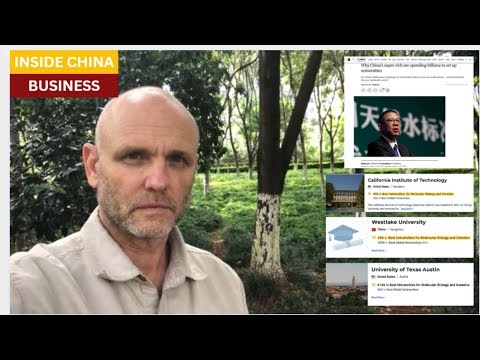
    Westlake University, founded in Hangzhou just seven years ago by leading biologists, is already outperforming global top 100 schools in specific fields, including the University of Sydney and the University of North Carolina. Its model—deep pockets, aggressive recruitment of top scientists, and a narrow focus on high-impact fields—demonstrates that prestige can be manufactured in years rather than generations.

    Geely Automotive Group, meanwhile, established its own university to train engineers, feeding talent directly into one of the world’s largest car manufacturers. Today, Geely ranks among the ten biggest automakers worldwide, with its university playing a central role in workforce development.

    A Stanford Model with Chinese Characteristics

    The parallel to Stanford is intentional. Stanford thrived not only because of academic excellence but because it was embedded in Silicon Valley, benefiting from venture capital, defense contracts, and a culture of entrepreneurship. China’s industrialists are attempting something similar: building universities adjacent to industrial clusters and pairing them with massive R&D investments.

    For billionaires, these institutions serve dual purposes: they act as innovation engines and as political insurance policies. In an era when Beijing has cracked down on tech moguls and capital excesses, aligning one’s fortune with education and national advancement offers a form of protection.

    Political Constraints and Academic Freedom

    The long-term question is whether these billionaire-founded institutions can sustain the openness and intellectual risk-taking that has characterized Stanford and MIT. While China’s system excels in applied sciences and technology, political controls may limit innovation in social sciences and fields that thrive on dissent, debate, and unconventional thinking.

    Still, if the aim is dominance in biotech, engineering, AI, and materials science, the model may succeed. In fact, Westlake’s rapid climb already suggests mid-tier Western universities could soon find themselves leapfrogged by Chinese institutions less than a decade old.

    A Changing Balance

    So, does China need U.S. universities for its elite? The answer is complicated.

    • Yes, for families who want global reach, especially in finance, technology entrepreneurship, and diplomacy. The cultural capital of an American education still matters.

    • No, for families satisfied with domestic prestige and security. China’s own universities — both traditional public institutions and billionaire-backed ventures — increasingly provide sufficient training for leadership roles.

    What is clear is that U.S. universities can no longer assume a steady flow of Chinese elite students. The market has shifted, the politics have hardened, and the prestige gap has narrowed. For American higher education, already struggling with enrollment cliffs and financial strain, this shift could have serious consequences.


    Sources:

    • Institute of International Education, Open Doors Report

    • Center for Security and Emerging Technology (CSET), “Chinese STEM Students in the U.S.”

    • Times Higher Education World University Rankings

    • South China Morning Post, Why China’s super-rich are spending billions to set up universities

    • Guangming Daily, Hello, Westlake University

    • CGTN, Westlake University established in Hangzhou

    • Geely Automotive Group, Overview

    • KE Press Global, China’s Billionaires Are Building Universities to Drive Innovation and Stay Politically Favorable

    Source link

  • Supporting neurodiverse learners requires more than accommodation: It demands systemic change

    Supporting neurodiverse learners requires more than accommodation: It demands systemic change

    Key points:

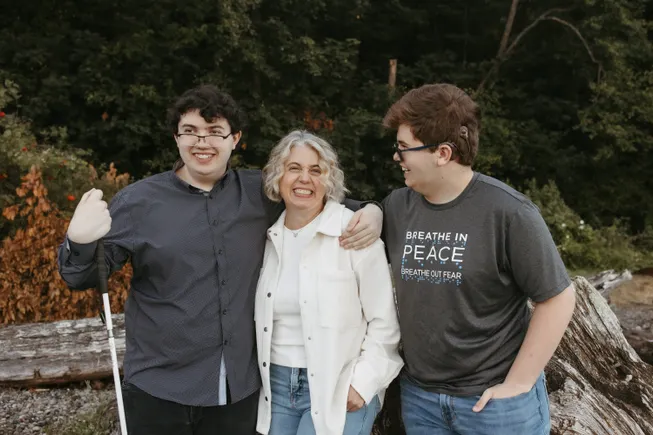
    Approximately 1 in 5 children in the United States are estimated to be neurodivergent, representing a spectrum of learning and thinking differences such as autism, ADHD, dyslexia, and more. These children experience the world in unique and valuable ways, but too often, our education systems fail to recognize or nurture their potential. In an already challenging educational landscape, where studies show a growing lack of school readiness nationwide, it is more important than ever to ensure that neurodivergent young learners receive the resources and support they need to succeed.

    Early support and intervention

    As President and CEO of Collaborative for Children, I have personally seen the impact that high-quality early childhood education can have on a child’s trajectory. Birth to age five is the most critical window for brain development, laying the foundation for lifelong learning, behavior, and health. However, many children are entering their academic years without the basic skills needed to flourish. For neurodivergent children, who often need tailored approaches to learning, the gap is even wider.

    Research indicates that early intervention, initiated within the first three years of life, can significantly enhance outcomes for neurodivergent children. Children who receive individualized support are more likely to develop stronger language, problem-solving, and social skills. These gains not only help in the classroom but can also lead to higher self-confidence, better relationships and improved well-being into adulthood.

    The Collaborative for Children difference

    Collaborative for Children in Houston focuses on early childhood education and is committed to creating inclusive environments where all children can thrive. In Houston, we have established 125 Centers of Excellence within our early childhood learning network. The Centers of Excellence program helps child care providers deliver high-quality early education that prepares children for kindergarten and beyond. Unlike drop-in daycare, our certified early childhood education model focuses on long-term development, combining research-backed curriculum, business support and family engagement.

    This year, we are expanding our efforts by providing enhanced training to center staff and classroom teachers, equipping them with effective strategies to support neurodivergent learners. These efforts will focus on implementing practical, evidence-based approaches that make a real difference.

    Actionable strategies

    As educators and leaders, we need to reimagine how learning environments are designed and delivered. Among the most effective actionable strategies are:

    • Creating sensory-friendly classrooms that reduce environmental stressors like noise, lighting, and clutter to help children stay calm and focused.
    • Offering flexible learning formats to meet a range of communication, motor, and cognitive styles, including visual aids, movement-based activities, and assistive technology.
    • Training teachers to recognize and respond to diverse behaviors with empathy and without stigma, so that what is often misinterpreted as “disruption” is instead seen as a signal of unmet needs.
    • Partnering with families to create support plans tailored to each child’s strengths and challenges to ensure continuity between home and classroom.
    • Incorporating play-based learning that promotes executive functioning, creativity, and social-emotional development, especially for children who struggle in more traditional formats.

    Benefits of inclusive early education

    Investing in inclusive, high-quality early education has meaningful benefits not only for neurodivergent children, but for other students, educators, families and the broader community. Research indicates that neurotypical students who learn alongside neurodivergent peers develop critical social-emotional skills such as patience, compassion and acceptance. Training in inclusive practices can help educators gain the confidence and tools needed to effectively support a wide range of learning styles and behaviors as well as foster a more responsive learning environment.

    Prioritizing inclusive early education can also create strong bonds between families and schools. These partnerships empower caregivers to play an active role in their child’s development, helping them navigate challenges and access critical resources early on. Having this type of support can be transformative for families by reducing feelings of isolation and reinforcing that their child is seen, valued, and supported.

    The benefits of inclusive early education extend far beyond the classroom. When neurodivergent children receive the support they need early in life, it lays the groundwork for increased workforce readiness. Long-term economic gains can include higher employment rates and greater earning potential for individuals. 

    Early childhood education must evolve to meet the needs of neurodivergent learners. We cannot afford to overlook the importance of early intervention and tailored learning environments. If we are serious about improving outcomes for all children, we must act now and commit to inclusivity as a core pillar of our approach. When we support all children early, everyone benefits.

    Latest posts by eSchool Media Contributors (see all)

    Source link

  • Education Department terminates some grants for deafblind students

    Education Department terminates some grants for deafblind students

    Families, educators and advocates of children and youth who are both blind and deaf are scrambling to reclaim abruptly canceled federal funding that they say is a “lifeline” for students’ educational and developmental progress. 

    A notice of noncontinuation from the U.S. Department of Education recently went to four deafblind projects in Washington, Oregon, Wisconsin and a consortium of New England states including Connecticut, Maine, Massachusetts, New Hampshire and Vermont. Advocates say the notice was sent Sept. 5, although a letter reviewed by K-12 Dive is dated Aug. 27. 

    The noncontinuation notice to Oregon’s deafblind project fiscal agent, for example, said continuing the project “would be in conflict with agency policy and priorities, and so is not in the best interest of the Federal Government.”

    The notice quoted from the project’s 2023 grant application, which said the grant’s partners “are committed to working to improve strategies, interventions, processes to address inequities, racism, bias, and system marginalization of culturally, linguistically, or dis/ability groups.”

    Combined, the four projects’ grants were to total about $1 million for the coming fiscal year, according to figures provided by deafblind advocates. The grants in those states serve about 1,365 children and their families, advocates said.

    The projects are going into the third year of a five-year grant. The federal funding supports deafblind youth who attend public, private, and charter schools or are homeschooled. It is used for teacher training and professional development, family resources and training, educational materials and technology, and other activities.

    The Education Department’s notice to the fiscal agent of Oregon’s deafblind project gave the grant manager seven days to request reconsideration. 

    The Trump administration has been eliminating programs promoting diversity, equity and inclusion at the K-12 and higher education levels — and across the government. As such, the disability rights community has been concerned that those moves would also target efforts that support students and people with disabilities. 

    Moreover, education programs have been singled out as the Education Department under President Donald Trump has pushed to reduce federal red tape and bureaucracy by giving states more control over how they spend federal funds.

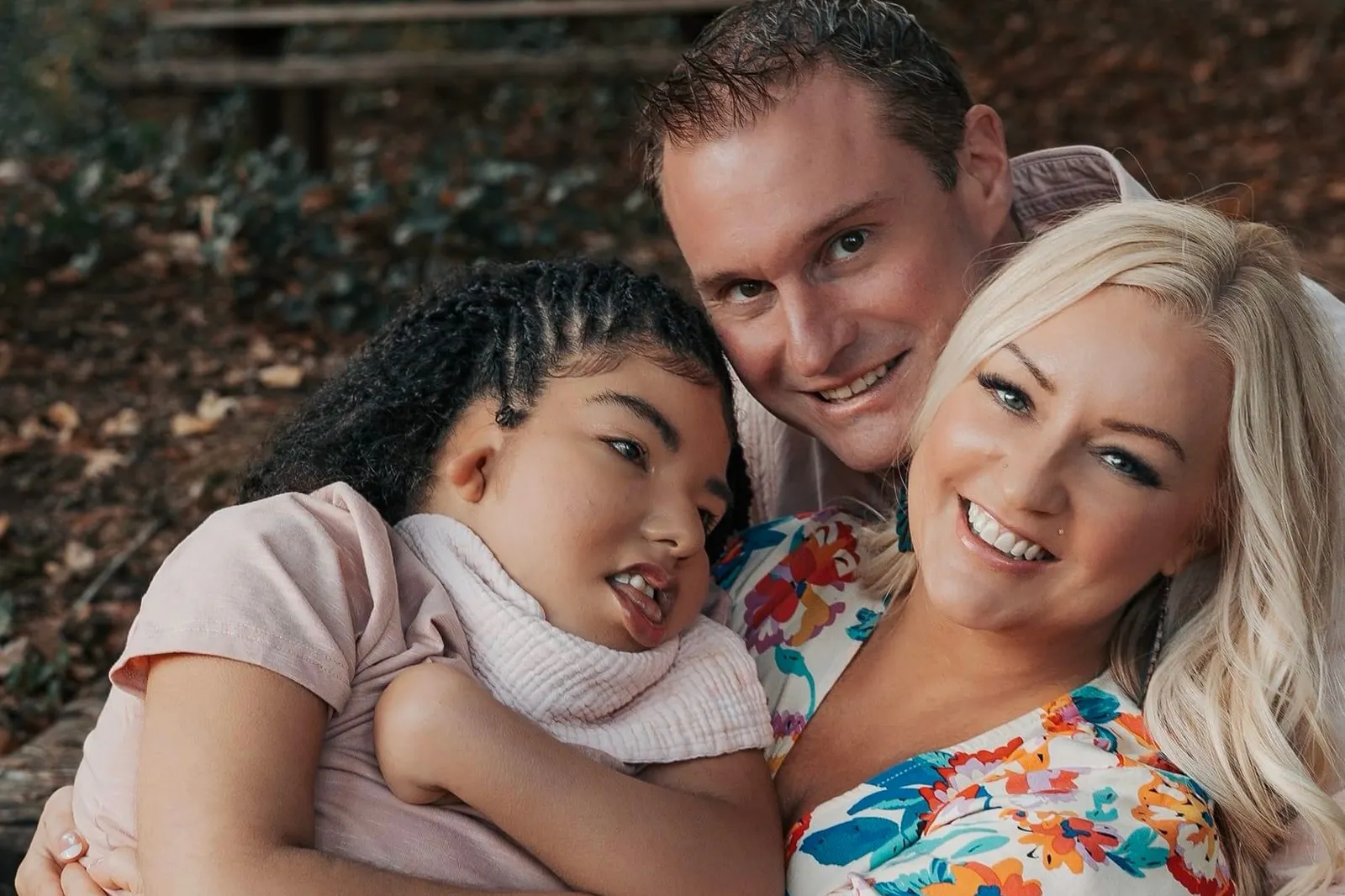
    Serenity Elliott receives services at Oregon Health and Science University in Portland, Ore., in March 2025.

    Permission granted by Candice Elliott


    Deafblindness and the DEI debate

    According to the National Center on DeafBlindness, a national child count conducted Dec. 1, 2023, showed 10,692 children and young adults from birth to age 26 were eligible for state deafblind project services.

    Deafblindness is a low-incidence disability, meaning it’s not considered common. The combination of hearing and vision impairments “causes such severe communication and other developmental and educational needs that students cannot be accommodated in special education programs solely for children with deafness or children with blindness,” according to the Individuals with Disabilities Education Act

    Deafblindness is one of the disability categories that qualify for IDEA services. The recent notices of noncontinuation of the IDEA Part D grants to state deafblind projects do not impact IDEA Part B and Part C services for developmental and educational supports to infants, toddlers, children and young adults with disabilities.

    Most states have their own deafblind projects that receive federal funding through IDEA, although some states partner in a multistate consortium, according to the National Center on DeafBlindness, a federally funded technical assistance center.


    “Make no mistake, losing these funds will directly impact our ability to serve some of our most vulnerable kids.”

    Jill Underly

    Wisconsin state superintendent


    The Oregon DeafBlind Project had expected to receive $133,543 for the new fiscal year starting Oct. 1. The state serves about 114 children and youth with deafblindness.

    Source link

  • The Urgency for Outreach to Shy College Students – Faculty Focus

    The Urgency for Outreach to Shy College Students – Faculty Focus

    Source link

  • Comparing students with the general population is misleading when it comes to suicide

    Comparing students with the general population is misleading when it comes to suicide

    The Office for National Statistics (ONS) has published new estimates of suicides among higher education students, linking mortality records with student data between 2016 and 2023.

    The findings are stark – 1,108 student deaths by suicide over seven years – an average of 160 each year, or more than three every week.

    The headline takeaway, however, is that the suicide rate among students is lower than that of the general population of similar age. While technically correct, this framing is misleading and risks creating a false sense of reassurance.

    The ONS emphasises that these are “statistics in development.” They are the product of recent advances in linking mortality and student record data, improving on older estimates. In that sense, this is important progress.

    But the way the figures have been presented follows a familiar pattern: the headline is built around a simple comparison with the general population. It is neat, digestible, and apparently positive – yet it obscures more than it reveals.

    This matters because the way numbers are framed shapes public understanding, institutional behaviour, and government response. If the story is “lower than average,” the implicit message is that the sector is performing relatively well. That is not the story these figures should be telling.

    University students are not the “general population.” They are a distinct, filtered group. To reach higher education, young people must cross academic, financial, and often social thresholds. Many with the most acute or destabilising mental health challenges never make it to university, or leave when unwell.

    The student body is also not demographically representative. Despite widening participation efforts, it remains disproportionately white and relatively affluent. Comparing suicide rates across groups with such different profiles is not comparing “like with like.”

    In this context, a lower suicide rate is exactly what one would expect. The fact that the rate is not dramatically lower should be a cause for concern, not comfort.

    The dangers of statistical manipulation

    It is easy to play with denominators. For example, students are in teaching and assessment for around 30 weeks of the year, not 52. If suicide risk were confined to term time, the weekly rate among students would exceed that of their peers.

    But this recalculation is no better than the ONS comparison. Not all student deaths occur in term, and not all risks align neatly with the academic calendar.

    You could take the logic further still. We already know there are peak moments in the academic cycle when deaths are disproportionately high – the start of the year, exam and assessment periods, and end-of-year transitions or progressions. If you recalculated suicide rates just for those concentrated stress points, the apparent risk would rise dramatically.

    And that is the problem – once you start adjusting denominators in this way, you can make the statistics say almost anything. Both framings – “lower overall” and “higher in term” – shift attention away from the fundamental issue. Are students adequately protected in higher education?

    Universities are not average society. They are meant to be semi-protected environments, with pastoral care, residential support, student services, and staff trained to spot risks. Institutions advertise themselves as supportive communities. Parents and students reasonably expect that studying at university will be safer than life outside it.

    On that measure, the reality of more than three suicides a week is sobering. Whatever the relative rate, this is not “safe enough.”

    Averages conceal inequalities

    Aggregate rates also obscure critical differences within the student body. The ONS data show that:

    • Male students die by suicide at more than twice the rate of female students.
    • First-year undergraduates face significantly higher risk than later-year students.
    • Part-time students have higher rates than full-time peers.
    • Among 17–20 year-olds, nearly one in five suicides were students.

    Headline averages conceal these inequalities. A “lower than average” message smooths over the very groups that most need targeted intervention.

    Another striking feature is the absence of sector data. Universities do not systematically track student suicides. Instead, families must rely on official statisticians retrospectively linking death certificates with student records, often years later.

    If the sector truly regarded these figures as reassuring, one might expect institutions to record and publish them. The reluctance to do so instead signals avoidance. Without routine monitoring, lessons cannot be learned in real time and accountability is diluted.

    7. The missing legal duty

    These challenges sit within a wider context – universities have no statutory duty of care towards their students. Families bereaved by suicide encounter unclear lines of accountability. Institutions operate on voluntary frameworks, policies, and codes of practice which are not always followed.

    In that vacuum, numbers take on disproportionate weight. If statistics suggest the sector is “doing better than average,” the pressure for reform weakens. Yet the reality is that more than 1,100 students have died in seven years in what is supposed to be a protective environment.

    Other countries offer a different perspective. In Australia, student wellbeing is embedded in national higher education policy frameworks. In the United States, campus suicide rates are monitored more systematically, and institutions are under clearer obligations to respond. The UK’s fragmented, voluntary approach looks increasingly out of step.

    The new ONS dataset is valuable, but its framing risks repeating old mistakes. If we want real progress, three changes are needed:

    1. Better data – universities must keep their own records, enabling faster learning and transparency.
    2. Sharper framing – comparisons should focus on whether students are safe enough in higher education, not whether they are marginally “better than average.”
    3. Clearer accountability – a statutory duty of care would ensure that institutions cannot hide behind averages and voluntary codes.

    The ONS release should not be read as reassurance. Both the official comparison with the general population and alternative recalculations that exaggerate term-time risk are statistical manipulations. They distract from the central point – 160 students a year, more than three every week, are dying by suicide in higher education.

    Universities are meant to be safer than average society. The reality shows otherwise. Until higher education is bound by a legal duty of care and institutions commit to transparency and accountability, statistical debates will continue to obscure systemic failures – while friends and families will continue to bear the consequences.

    Source link

  • Loan Caps Could Force Students Into Private Market

    Loan Caps Could Force Students Into Private Market

    At least a quarter of students across a broad range of graduate and professional programs could need private loans, which tend to come with higher interest rates, in order to pay for their education once new caps on federal loans take effect next summer, multiple studies show. For some, the loans could become so costly as to make earning a master’s or doctoral degree unattainable.

    Currently, this group can borrow federal loans up to the total cost of attendance thanks to a program known as Grad PLUS. But starting July 1, students will max out at either $20,500 or $50,000 per year depending on whether they enroll in a graduate or professional program, respectively. And those in graduate programs will only be able to take out $100,000 over all, while students in professional programs will be limited to $200,000. Congress made the changes as part of the One Big Beautiful Bill Act, which passed earlier this summer.

    The caps mean that the median borrower in four of the nine largest professional programs likely will need to find other financing to pay tuition bills, according to a recent analysis from the Postsecondary Education and Economics Research Center at American University. Borrowers in the 75th percentile exceed the cap in six of the nine fields.

    And it’s not just the most costly doctoral programs such as medicine and dentistry in which students will face such a challenge, PEER notes. Out of the 30 master’s degree programs with the highest loan volume, 50 percent of students exceed the cap in nearly half of them.

    Many of these students could struggle to find a private lender to make up the difference, potentially forcing them to drop out or not enroll in the first place, policy experts at PEER and other research groups say. And even if a student finds a lender, taking out a private loan could lead to steep, sometimes predatory, interest rates that take decades to pay off. (Research shows that low-income individuals particularly struggle to secure private financing because of a range of factors such as low credit scores, a lack of assets or an inconsistent flow of income.)

    Before this new law, “students could have just filled out their FAFSA, applied for loans through the Department of Education and been able to borrow up to the full cost of attendance of their program,” said Jordan Matsudaira, director of the PEER Center and a former deputy under secretary at the Department of Education.

    But now, for upward of a quarter of graduate students, it likely won’t be that simple.

    “I think that will come as a surprise to a lot of people,” he said.

    Can Private Lenders Fill the Gap?

    Other researchers at Urban Institute and Jobs for the Future have also crunched the numbers on the loan caps and reached similar findings.

    Jobs for the Future estimated in a report released last month that if this loan cap had been in place for the 2019–20 graduating class, roughly 38 percent of graduate borrowers would have needed to take out more loans beyond the cap. And thanks to the limit, the federal government would have issued $9.7 billion less in loans—a decrease of about 28 percent, according to the report.

    Urban also used data from 2019–20 but broke it down by program, finding that dentistry would have the largest share of students exceeding the cap. About 56 percent would have exceeded the annual limit, and 58 percent blew through the aggregate cap. Other programs with a high share of students that could be pushed into the private market include medicine, at 41 percent, a master’s in public health, at 29 percent, and a master’s in fine arts, at 26 percent.

    Policy experts on both sides of the political aisle tend to agree that the student debt crisis needs to be addressed. But unlike conservative lawmakers and analysts who believe these caps are necessary in order to lessen student debt and encourage colleges to lower costs, some researchers worry the limits are too aggressive and don’t account for nuances like a program’s return on investment.

    “The kind of pain involved here is a little bit bigger than it needed to be to rein in the most egregious abuses in the system,” Matsudaira said. “The better approach over all would have been to adopt an approach where different fields of study had different limits that were scaled with borrowers’ ability to repay.”

    Some questions about how the loan limits will work and which programs they’ll apply to will be answered later this month when the Education Department starts to work through the rule-making process to carry out the law’s provisions. Representatives from nursing, aviation and social work have already started to speak out about why their programs should be considered professional degrees and therefore be eligible for the higher cap.

    “In today’s economy, the majority of graduate education is practical and workforce-aligned, preparing students for jobs in health care, education, counseling, technology and much more,” Stephanie Giesecke, a representative of the National Association of Independent Colleges and Universities, said at a public hearing in August. “The definition that is too narrow risks excluding programs that are vitally important to communities and employers nationwide.”

    Like Matsudaira, Ethan Pollack, a senior director of policy at JFF, said that while he sympathizes with the Republican diagnosis that debt is too high, he probably would have gone about addressing it a different way. But rather than suggesting changes to the cap itself, JFF’s report looked at the financial impact on borrowers and suggested ways that institutions, the government and private lenders can adjust in response.

    One key recommendation was the use of outcomes-based financing for private loans, which would base payments in part on borrowers’ earnings after graduating. Pollack said that this approach could help students who lack strong credit histories or cosigners still pursue well-paying degrees like a juris doctorate.

    But current regulations, like requiring a bank to disclose a flat annual percentage rate, or APR, when offering a loan, make it difficult for some private vendors to explore new models like outcomes-based financing, he explained. If the government were to build on the recent legislation by amending current regulations and introducing new guardrails for private lenders, Pollack added, the OBF model could make nonfederal loans more affordable for borrowers of all backgrounds.

    “The federal government, in some sense, is stepping on the gas and the brake at the same time,” he said. “They’re saying that they want the private market to be stepping up, but at the same time, the federal government is one of the obstacles to the private market being able to step up in the way that we would all like them to, which is to be offering financing with much more student-friendly terms.”

    Matsudaira, on the other hand, was more skeptical.

    “The big question is whether the private sector is really going to be able to come in and fill a hole that big,” he said. “And even if they do, how long does it take for them to spin up to be able to do those kinds of things?”

    Source link

  • Students, schools race to save clean energy projects in face of Trump deadline

    Students, schools race to save clean energy projects in face of Trump deadline

    Tanish Doshi was in high school when he pushed the Tucson Unified School District to take on an ambitious plan to reduce its climate footprint. In Oct. 2024, the availability of federal tax credits encouraged the district to adopt the $900 million plan, which involves goals of achieving net-zero emissions and zero waste by 2040, along with adding a climate curriculum to schools.

    Now, access to those funds is disappearing, leaving Tucson and other school systems across the country scrambling to find ways to cover the costs of clean energy projects.

    The Arizona school district, which did not want to impose an economic burden on its low-income population by increasing bonds or taxes, had expected to rely in part on federal dollars provided by the Biden-era Inflation Reduction Act, Doshi said. 

    But under HR1, or the “one big, beautiful bill,” passed on July 4, Tucson schools will not be able to receive all of the expected federal funding in time for their upcoming clean energy projects. The law discontinues many clean energy tax credits, including those used by schools for solar power and electric vehicles, created under the IRA. When schools and other tax-exempt organizations receive these credits, they come in the form of a direct cash reimbursement.

    At the same time, Tucson and thousands of districts across the country that were planning to develop solar and wind power projects are now forced to decide between accelerating them to try to meet HR1’s fast-approaching “commence construction” deadline of June 2026, finding other sources of funding or hitting pause on their plans. Tina Cook, energy project manager for Tucson schools, said the district might have to scale back some of its projects unless it could find local sources of funding. 

    “Phasing out the tax credits for wind and solar energy is going to make a huge, huge difference,” said Doshi, 18, now a first-year college student. “It ends a lot of investments in poor and minority communities. You really get rid of any notion of environmental justice that the IRA had advanced.”

    Emma Weber leads a chant at a Colorado state capitol rally in support of “The Green New Deal for Colorado Schools.” Credit: Courtesy of Emma Weber

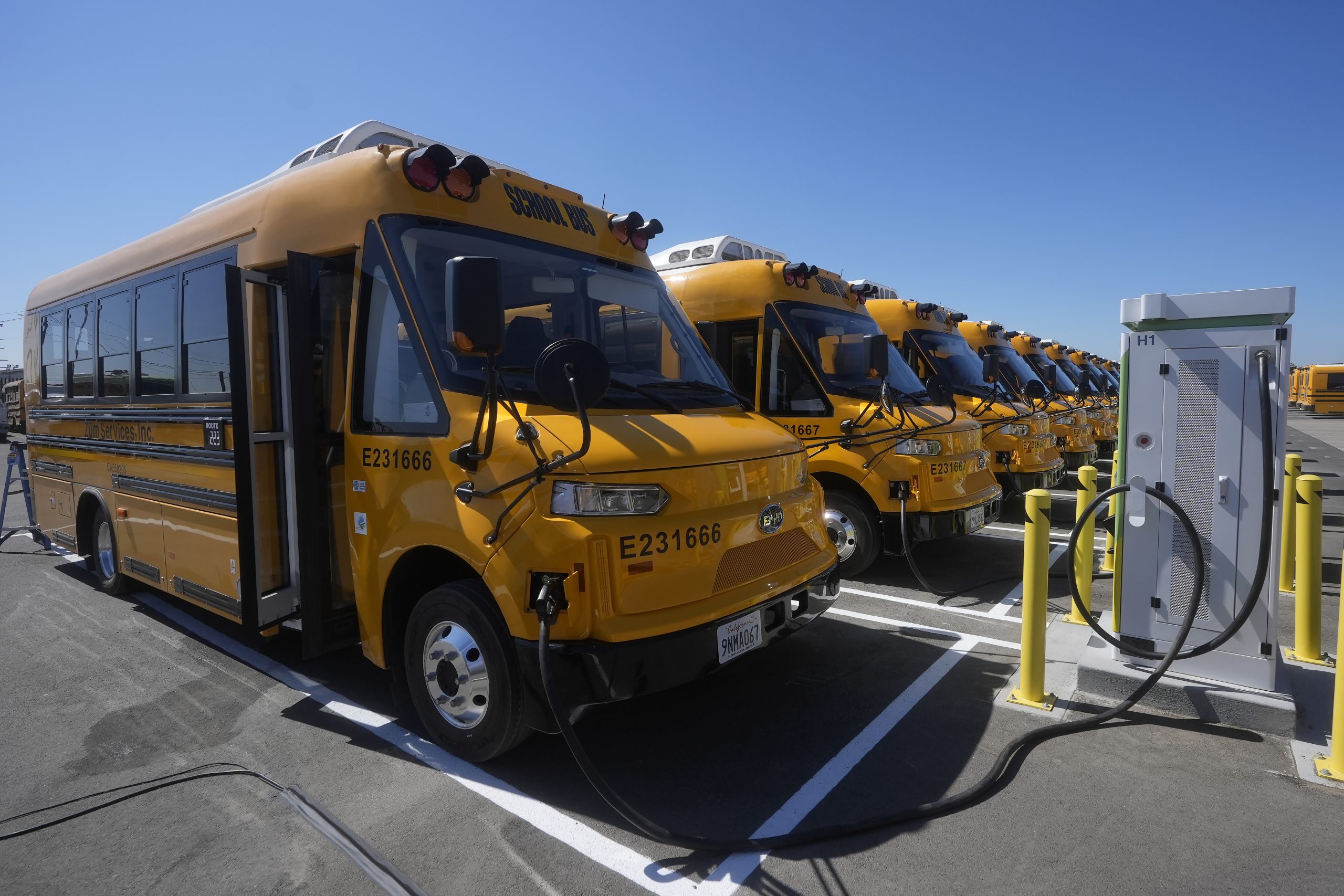
    The tax credits in the IRA, the largest legislative investment in climate projects in U.S. history, had marked a major opportunity for schools and colleges to reduce their impact on the environment. Educational institutions are significant contributors to climate change: K-12 school infrastructure, for example, releases at least 41 million metric tons of emissions per year, according to a paper from the Annenberg Institute at Brown University. The K-12 school system’s buses — some 480,000 — and meals also produce significant emissions and waste. Clean energy projects supported by the IRA were helping schools not only to limit their climate toll but also to save money on energy costs over the long term and improve student health, advocates said.

    As a result, many students, consultants and sustainability leaders said, they have no plans to abandon clean energy projects. They said they want to keep working to cut emissions, even though that may be more difficult now.

    Related: Become a lifelong learner. Subscribe to our free weekly newsletter featuring the most important stories in education. 

    Sara Ross, cofounder of UndauntedK12, which helps school districts green their operations, divided HR1’s fallout on schools into three categories: the good, the bad and the ugly. 

    On the bright side, she said, schools can still get up to 50 percent off for installing ground source heat pumps — those credits will continue — to more efficiently heat and cool schools. The network of pipes in a ground source pump cycles heat from the shallow earth into buildings.

    In the “bad” category, any electric vehicle acquired after Sept. 30 of this year will not be eligible for tax credits — drastically accelerating the IRA’s phase-out timeline by seven years. That applies to electric school buses as well as other district-owned vehicles. Electric vehicle charging stations must be installed by June 30, 2026 at an eligible location to claim a tax credit.*

    EPA’s Clean School Bus Program still exists for two more years and covers two-thirds of the funding for all electric school buses districts acquire in that time. The remaining one-third, however, was to be covered by federal and state tax credits. 

    The expiration of the federal tax credits could cost a district up to $40,000 more per vehicle, estimated Sue Gander, director of the Electric School Bus Initiative run by the nonprofit World Resources Institute. 

    Related: So much for saving the planet. Climate jobs, and many others, evaporate for 2025 grads

    Solar projects will see the most “ugly” effects of HR1, Ross said. 

    Los Angeles Unified School District is planning to build 21 solar projects on roofs, carports and other structures, plus 13 electric vehicle charging sites, as part of an effort to reduce energy costs and achieve 100 percent renewable energy by 2040. The district anticipated receiving around $25 million in federal tax credits to help pay for the $90 million contract, said Christos Chrysiliou, chief eco-sustainability officer for the district. With the tight deadlines imposed by HR1, the district can no longer count on receiving that money. 

    “It’s disappointing,” Chrysiliou said. “It’s nice to be able to have that funding in place to meet the goals and objectives that we have.”

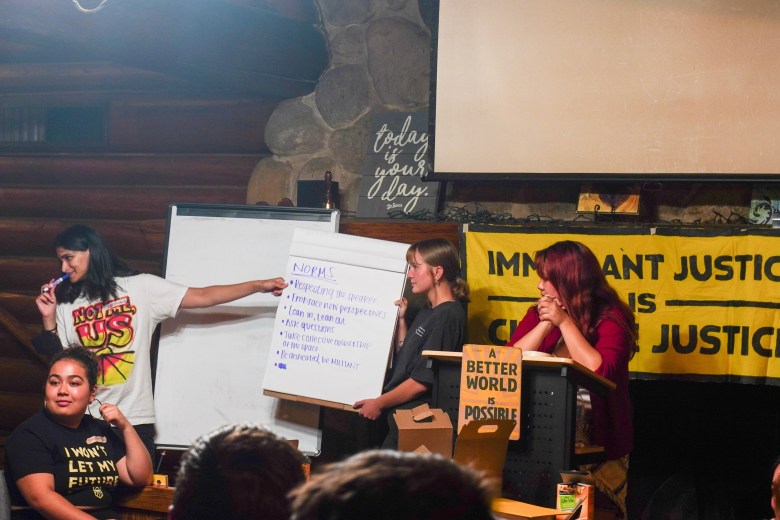
    Emma Weber, at left, trains student leaders at Sunrise Movement’s “summer intensive” in Illinois this year. Credit: Courtesy of Emma Weber

    LAUSD is looking at a small portion of a $9 billion bond measure passed last year, as well as utility rebates, third-party financing and grants from the California Energy Commission, to help make up for some of the gaps in funding.

    Many California State University campuses are in a similar position as they work to install solar to meet the system’s goal of carbon neutrality by 2045, said Lindsey Rowell, CSU’s chief energy, sustainability and transportation officer. 

    Tariffs on solar panel materials from overseas and the early sunsetting of tax credits mean that “the cost of these projects are becoming prohibitive for campuses,” Rowell said. 

    Sweeps of undocumented immigrants in California may also lead to labor shortages that could slow the pace of construction, Rowell added. “Limiting the labor force in any way is only going to result in an increased cost, so those changes are frightening as well,” she said. 

    New Treasury Department guidance, issued Aug. 15, made it much harder for projects to meet  the threshold needed to qualify for the tax credits. Renewable energy projects previously qualified for credits once a developer spent 5 percent of a project’s cost. But the guidelines have been tightened — now, larger projects must pass a “physical work test,” meaning “significant physical labor has begun on a site,” before they can qualify for credits. With the construction commencement deadline looming next June, these will likely leave many projects ineligible for credits.

    “The rules are new, complex [and] not widely understood,” Ross said. “We’re really concerned about schools’ ability to continue to do solar projects and be able to effectively navigate these new rules.” 

    Schools without “fancy legal teams” may struggle to understand how the new tax credit changes in HR1 will affect their finances and future projects, she added.

    Some universities were just starting to understand how the IRA tax credits could help them fund projects. Lily Strehlow, campus sustainability coordinator at the University of Wisconsin, Eau-Claire, said the planning cycle for clean energy projects at the school can take ten years. The university is in the process of adding solar to the roof of a large science building, and depending on the date of completion, the project “might or might not” qualify for the credits, she said. 

    “At this point, everybody’s holding their breath,” said Rick Brown, founder of California-based TerraVerde Energy, a clean energy consultant to schools and agencies. 

    Brown said that none of his company’s projects are in a position where they’re not going to get done, but the company may end up seeing fewer new projects due to a higher cost of equipment. 

    Tim Carter, president of Second Nature, which supports climate work in education, added that colleges and universities are in a broader period of uncertainty, due to larger attacks from the Trump administration, and are not likely to make additional investments at this time: “We’re definitely in a wait and see.”

    Related: A government website teachers rely on is in peril 

    For youth activists, the fallout from HR1 is “disheartening,” Doshi said. 

    Emma and Molly Weber, climate activists since eighth grade, said they are frustrated. The Colorado-based twins, who will start college this fall, helped secure the first “Green New Deal for Schools” resolution in the nation in the Boulder Valley School District. Its goals include working toward a goal of Zero Net Energy by 2050, making school buildings greener, creating pathways to green jobs and expanding climate change education. 

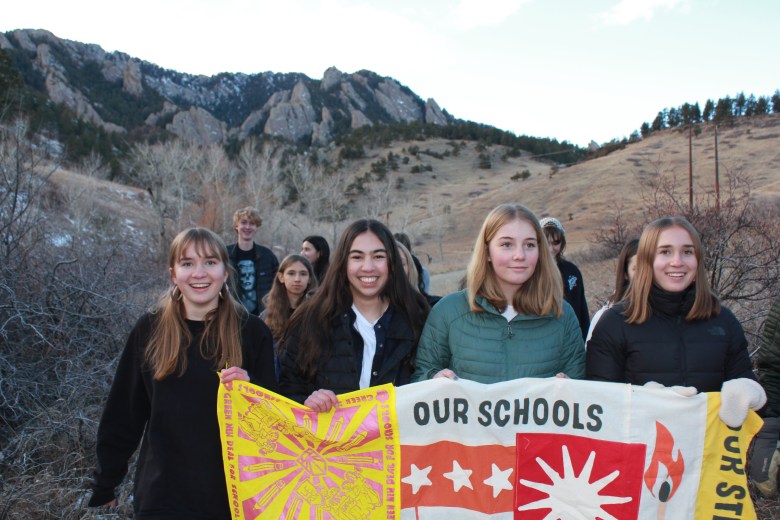
    Emma, far left, and Molly Weber, far right, work with climate leaders from the Boulder Valley School District’s Sunrise Movement to prepare for Colorado’s legislative session. Credit: Courtesy of Emma Weber

    “It feels very demoralizing to see something you’ve been working so hard at get slashed back, especially since I’ve spoken to so many students from all over the country about these clean energy tax credits, being like, ‘These are the things that are available to you, and this is how you can help convince your school board to work on this,’” Emma Weber said.

    The Webers started thinking about other creative ways to pay for the clean energy transition and have settled on advocating for state-level legislation in the form of a climate superfund, where major polluters in a community would be responsible for contributing dollars to sustainability initiatives. 

    Consultants and sustainability coordinators said that they don’t see the demand for renewable energy going away. “Solar is the cheapest form of energy. It makes sense to put it on every rooftop that we can. And that’s true with or without tax credits,” Strehlow said. 

    *Correction: This version of the story includes updated information on the timeline for the expiration of tax credits for electric vehicle charging stations.

    Contact editor Caroline Preston at 212-870-8965, via Signal at CarolineP.83 or on email at [email protected]

    This story about tax credits was produced by The Hechinger Report, a nonprofit, independent news organization focused on inequality and innovation in education. Sign up for the Hechinger newsletter.

    The Hechinger Report provides in-depth, fact-based, unbiased reporting on education that is free to all readers. But that doesn’t mean it’s free to produce. Our work keeps educators and the public informed about pressing issues at schools and on campuses throughout the country. We tell the whole story, even when the details are inconvenient. Help us keep doing that.

    Join us today.

    Source link

  • Academic coaching is data-driven support for students in the dark

    Academic coaching is data-driven support for students in the dark

    Universities offer a wide range of support to students – lecturers’ office hours, personal tutors, study skills advisors, peer-mentoring officers, mental health and wellbeing specialists, and more.

    But even with these services in place, some students still feel they are falling through the cracks.

    Why? One of the most common pieces of student feedback might offer a clue – “I wish I had known you and come to you earlier”.

    Within the existing system, most forms of support rely on students to take the first step – to reach out, refer themselves, or report a problem.

    But not all students can or will: some are unsure who to turn to, others worry about being judged, and many feel too overwhelmed to even begin. These are the students who often disappear from view – not because support does not exist, but because they cannot access it in time.

    Meanwhile, academics are stretched thin by competing research and teaching demands, and support teams – brilliant though they are – can only respond once a student enters this enquiry-response support system.

    Systematic support that requires courage

    As a result, students struggling silently often go unnoticed: for those “students in the dark”, there is often no obvious red flag for support services to act on until it is too late.

    NSS data in recent years reveal a clear pattern of student dissatisfaction with support around feedback and independent study, indicating a growing concern and demand for help outside the classroom.

    While the existing framework works well for those confident and proactive students, without more inclusive and personalised mechanisms in place, we risk missing the very group who would benefit most from early, student-centred support.

    This is where academic coaching comes in. One of its most distinctive features is that it uses data not as an outcome, but as a starting point. At Buckinghamshire New University, Academic Coaches work with an ecosystem of live data – attendance patterns, assessment outcomes, and engagement time with the VLE – collaborating closely with data intelligence and student experience teams to turn these signals into timely action.

    While our academic coaching model is still in its early phase, we have developed simulated student personae based on common disengagement patterns and feedback from colleagues. These hypothetical profiles help us shape our early intervention strategies and continuously polish our academic coaching model.

    For example, “Joseph”, a first-year undergraduate (level 4) commuter student, stops logging into the VLE midway through the term. Their engagement drops from above cohort average to zero and stays that way for a week. In the current system, this might pass unnoticed.

    But through live data monitoring, we can spot this shift and reach out – not to reprimand but to check in with empathy. Having been through the student years, many of us know, and even still remember, what it is like to feel overwhelmed, isolated, or simply lost in a new environment. The academic coaching model allows us to offer a gentle point of re-entry with either academic or pastoral support.

    One thing to clarify – data alone does not diagnose the problem – but it does help identify when something has changed. It flags patterns that suggest a student might be struggling silently, giving us the opportunity to intervene before there is a formal cause for concern. From there, we Academic Coaches reach out with an attentive touch: not with a warning, but with an invitation.

    This is what makes the model both scalable and targeted. Instead of waiting for students to self-refer or relying on word of mouth, we can direct time and support where it is likely to matter most – early, quietly, and personally.

    Most importantly, academic coaching does not reduce students to data points. It uses data to ask the right questions and to guide an appropriate response. Why has this student disengaged? Perhaps something in their life has changed.

    Our role is to notice this change and offer timely and empathetic support, or simply a listening ear, before the struggle becomes overwhelming. It is a model that recognises the earlier we notice and act, the greater the impact will be. Sometimes, the most effective student support begins not with a request, but with a well-timed email in the student’s inbox.

    Firefighting? Future-proofing

    The academic coaching model is not just about individual students – it is about rethinking how this sector approaches student support at a time of mounting pressure. As UK higher education institutions face financial constraints, rising demand, and increasing complexity in students’ needs, academic coaching offers a student-centred and cost-effective intervention.

    It does not replace personal tutors or other academic or wellbeing services – instead, it complements them by stepping in earlier and guiding students toward appropriate support before a crisis hits.

    This model also helps relieve pressure on overstretched academic staff by providing a clearly defined, short-term role focused on proactive engagement – shifting the approach from reactive firefighting to preventative care.

    Fundamentally, academic coaching addresses a structural gap: some students start their university life already at a disadvantage – unsure how to fit into this new learning environment or make use of available support services to become independent learners – and the current system often makes it harder for them to catch up.

    While the existing framework tends to favour confident and well-connected students, academic coaching helps rebalance the system by creating a more equitable pathway into support – one that is data-driven yet recognises and respects each student’s uniqueness. In a sector that urgently needs to do more with less, academic coaching is not just a compassionate gesture, but a future-facing venture.

    That said, academic coaching is not a silver bullet and it will not solve every problem or reach every student. From our discussions with colleagues and institutional counterparts, one of the biggest challenges identified – after using data to flag students – is actually getting them on board with the conversation.

    Like all interventions, academic coaching needs proper investment, training, interdepartmental cooperation, clear role boundaries, and a scalable framework for evaluating impact.

    But it is a timely, student-centred response to a gap that traditional structures often miss – a role designed to notice what is not being said, to act on early warning signs, and to offer students a safe place to re-engage.

    As resources tighten and expectations grow, university leadership must invest in smarter, more sensible forms of support. Academic coaching offers not just an added layer – it is a reimagining of how we gently guide students back on track before they drift too far from it.

    Source link

  • Revisiting the Legal Framework for Students’ Unions

    Revisiting the Legal Framework for Students’ Unions

    Author:
    Gary Attle

    Published:

    • This blog was kindly written by Gary Attle, Consultant for Birketts LLP.
    • On Tuesday, HEPI and Cambridge University Press & Assessment will be hosting the UK launch of the OECD’s Education at a Glance. On Wednesday, we will be hosting a webinar on students’ cost of living with TechnologyOne – for more information on booking a free place, see here.
    • Read HEPI’s weekend blogs on governance and the Research Excellence Framework on the HEPI website here.

    The Higher Education (Freedom of Speech) Act 2023 came into force, in part, on 1 August 2025. New and strengthened statutory duties were placed on higher education providers which are registered with the Office for Students (OfS), the higher education regulator in England. These duties require the governing bodies of registered higher education providers to take steps to secure freedom of speech (including academic freedom) for staff, students, members and visiting speakers and to promote the importance of freedom of speech/academic freedom. The Office for Students has a direct regulatory jurisdiction towards registered higher education providers under the provisions of the Higher Education and Research Act 2017 and as ‘principal regulator’ for those registered providers which are charities.

    The current Government has indicated its intention to repeal the provisions in the 2023 Act which would have placed an express statutory duty on students’ unions for the first time to secure freedom of speech and a new regulatory power for the Office for Students to take enforcement action against students’ unions for breach of that duty. In a detailed statement to the House of Commons on 15 January this year, the Secretary of State noted the following:

    “Student unions are neither equipped nor funded to navigate such a complex regulatory environment, and they are already regulated by the Charity Commission. However, I fully expect student unions to protect lawful free speech, whether they agree with the views expressed or not. I also expect HE providers to work closely with them to ensure that that happens and to act decisively to ensure their student unions comply with their free speech code of conduct.”

    It is likely to be the case that a students’ union of a higher education provider which is a charity will be a separate charitable organisation itself, whether an unincorporated association of its members or an incorporated body. However, it would be prudent to check both the charitable status of the students’ union and its corporate status.

    The Education Act 1994 (sections 20-22) places a statutory duty on the governing body of specified higher education ‘establishments’ in England and Wales to secure certain requirements in respect of students’ unions of those establishments. The duty extends to a range of governance and constitutional requirements, including ensuring that the students’ union operates in a fair and democratic manner, that it has a written constitution and has a complaints procedure. The governing body is required to approve the provisions of the constitution and review the constitution at intervals of not more than five years. In addition, highlighted for the purposes of this note, at least once a year the governing body of the establishment must bring to the attention of its students “any restrictions imposed on the union by the law relating to charities.”

    Here, we turn to case-law of some vintage to illustrate what this might include. In 1971, the High Court in the case of Baldry -v- Feintuck [1972] WLR552 had to decide whether to grant injunctions against a number of individuals connected with the University of Sussex Students’ Union. The students’ union had passed resolutions for payments to be made in support of certain causes, including a campaign to oppose the then Government’s policy for the ending of free milk to school pupils. A student at the university and a member of the union brought legal proceedings against the students’ union officers and a member of staff at the university on the basis that such payments would be ultra vires the students’ union constitution. In granting the injunction against the President and Treasurer of the students’ union (only), the Judge noted as follows:

    “although research, discussion and debate and the reaching of a corporate conclusion on social and economic problems formed part of the educational process, the proposed payments outside of the university, formed no part of that process…and no payment for political purposes could possibly be charitable.”

    The Charity Commission updated its guidance on ‘Campaigning and political activity’ in November 2022 which it defines as follows:

    Campaigning: “awareness raising and efforts to educate or mobilise the public’s support for an issue or to influence / change public attitudes” (including activities which seek to ensure existing laws are observed).

    Political activity: “securing support for, or opposing, a change in the law or policy or decisions of central government, local government, or other public bodies, in this country or abroad”.

    The basic legal position set out in the Charity Commission’s guidance is that campaigning and political activities by charities can be legitimate and valuable provided they are undertaken only in supporting delivery of the charity’s charitable purposes. The guidance helpfully explains this more fully and the factors which the charity trustees should take into account before deciding to undertake campaigning and/or political activities. The Charity Commission noted that its experience had been that charities had been over-cautious in their approach to such matters and that they were inclined to self-censor, although it noted that it would take regulatory action if there had been misuse of charitable resources.

    Source link