Tag: students

  • Mini Project Ideas for MBA Students (HR, Marketing, Finance, IT) – 2025 Guide

    Mini Project Ideas for MBA Students (HR, Marketing, Finance, IT) – 2025 Guide

    What is a mini project in MBA?

    It’s a short research or practical study done by students to apply concepts from their coursework.

    How do I choose a mini project topic?

    Focus on relevance, data availability, and your area of interest.

    How many pages should a mini project report be?

    Usually 20–30 pages, depending on university guidelines.

    Source link

  • College president fears that federal education cuts will derail the promise of student parents, student military veterans and first-gen students

    College president fears that federal education cuts will derail the promise of student parents, student military veterans and first-gen students

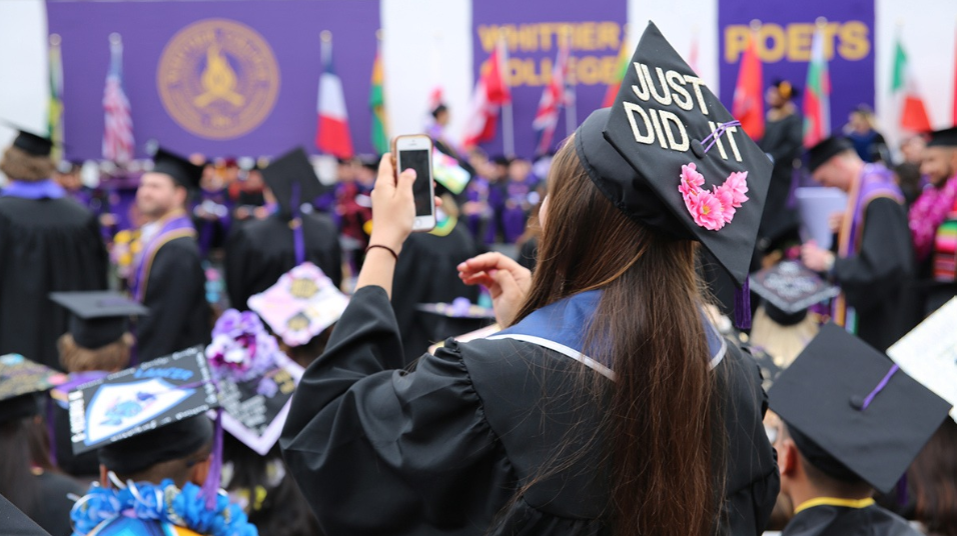
    As a college president, I see the promise of higher education fulfilled every day. Many students at my institution, Whittier College, are the first in their families to attend a university. Some are parents or military veterans who have already served in the workforce and are returning to school to gain new skills, widen their perspectives and improve their job prospects.  

    These students are the future of our communities. We will rely on them to fill critical roles in health care, education, science, entrepreneurship and public service. They are also the students who stand to lose the most under the proposed fiscal year 2026 federal budget, and those who were already bracing for impact from the “One Big Beautiful Bill” cuts, including to the health care coverage many of them count on. 

    The drive with which these extraordinary students — both traditionally college-aged and older — pursue their degrees, often while juggling caregiving commitments or other responsibilities, never fails to inspire me.  

    Related: Interested in innovations in higher education? Subscribe to our free biweekly higher education newsletter. 

    We do not yet know the precise contours of the spending provisions Congress will consider once funding from a continuing resolution expires at the end of September. Yet we expect they will take their cues from the president’s proposed budget, which slashes support for students and parents and especially hammers those already struggling to improve their lives by earning a college degree, with cuts to education, health and housing that could take effect as early as October 1.  

    That budget would mean lowering the maximum Pell Grant award from $7,395 to $5,710, reversing a decade of progress. For the nearly half of Whittier students who received Pell Grants last year, this rollback would profoundly jeopardize their chances of finishing school. 

    So would the proposal to severely restrict Federal Work-Study, which supports a third of Whittier students according to our most recent internal analysis, and to eliminate the Supplemental Educational Opportunity Grant, which more than 16 percent of our student body relies upon. In addition, this budget would impose a cap on Direct PLUS Loans for Parents, which would impact roughly 60 percent of our parent borrowers. It would also do away with the Direct PLUS Loans for Graduates program.  

    These programs are lifelines, not just for our students but for students all across the country. They fuel social mobility and prosperity by making education a force for advancement through personal work ethic rather than a way to rack up debt. 

    If enacted, these proposed cuts would gut the support system that has enabled millions of low-income students to earn a college degree.  

    Higher education is a bridge. To cross it and achieve their full potential, students from all walks of life must have access to the support and resources colleges provide, whether through partnerships with local high schools or with professional gateway programs in engineering, accounting, business, nursing, physical therapy and more. Yet, to access these invaluable programs, they must be enrolled. How will they reach such heights if they suddenly can’t afford to advance their studies? 

    The harm I’ve described doesn’t stop with cuts to financial aid, loans and services. Proposed reductions also target research funding for NASA, NIH and the National Science Foundation. One frozen NASA grant has already led to the loss of paid student research fellowships at Whittier, a setback not just in dollars but in momentum for students building real-world skills, networks and résumés.  

    These research opportunities often enable talented first-generation students to connect their classroom learning to career pathways, opening the door to graduate school, lab technician roles and futures in STEM fields. We’ve seen how federal funding has supported student projects in everything from climate data analysis to environmental health.  

    Stripping away support for hands-on research undermines the federal government’s own calls for colleges like ours to better prepare students for the workforce by dismantling the very mechanisms that make such preparation possible. 

    Related: These federal programs help low-income students get to and through college. Trump wants to pull the funding 

    It’s particularly disheartening that these changes will disproportionately hurt those students who are working the hardest to achieve their objectives, who have done everything right and have the most to lose from this lack of investment in the future.  

    The preservation and strengthening of Pell, Work-Study, Supplemental Educational Opportunity grants and federal loan programs is not a partisan issue. It is a moral and economic imperative for a nation that has long been proud to be a land of opportunity.  

    Let’s build a system for strivers that opens doors instead of slamming them shut.  

    Let’s recommit to higher education as a public good. Today’s students are willing to work hard to deserve our continuing belief in them.  

    Kristine E. Dillon is the president of Whittier College in California. 

    Contact the opinion editor at [email protected]. 

    This story about education cuts was produced by The Hechinger Report, a nonprofit, independent news organization focused on inequality and innovation in education. Sign up for Hechinger’s weekly newsletter. 

    The Hechinger Report provides in-depth, fact-based, unbiased reporting on education that is free to all readers. But that doesn’t mean it’s free to produce. Our work keeps educators and the public informed about pressing issues at schools and on campuses throughout the country. We tell the whole story, even when the details are inconvenient. Help us keep doing that.

    Join us today.

    Source link

  • A largely invisible role of international students: Fueling the innovation economy

    A largely invisible role of international students: Fueling the innovation economy

    PITTSBURGH — Saisri Akondi had already started a company in her native India when she came to Carnegie Mellon University to get a master’s degree in biomedical engineering, business and design.

    Before she graduated, she had co-founded another: D.Sole, for which Akondi, who is 28, used the skills she’d learned to create a high-tech insole that can help detect foot complications from diabetes, which results in 6.8 million amputations a year.

    D.Sole is among technology companies in Pittsburgh that collectively employ a quarter of the local workforce at wages much higher than those in the city’s traditional steel and other metals industries. That’s according to the business development nonprofit the Pittsburgh Technology Council, which says these companies pay out an annual $27.5 billion in salaries alone.

    A “significant portion” of Pittsburgh’s transformation into a tech hub has been driven by international students like Akondi, said Sean Luther, head of InnovatePGH, a coalition of civic groups and government agencies promoting innovation businesses.

    The Pittsburgh Innovation District along Forbes Avenue in Pittsburgh’s Oakland section, near the campuses of the University of Pittsburgh and Carnegie Mellon University. Credit: Nancy Andrews for The Hechinger Report

    “Next Happens Here,” reads the sign above the entrance to the co-working space where Luther works and technology companies are incubated, in an area near Carnegie Mellon and the University of Pittsburgh dubbed the Pittsburgh Innovation District. The neighborhood is filled with people of various ethnicities speaking a variety of languages over lunch and coffee.

    What might happen next to the international students and graduates who have helped fuel this tech economy has become an anxiety-inducing subject of those conversations, as the second presidential administration of Donald Trump brings visa crackdowns, funding cuts and other attacks on higher education — including here, in a state that voted for Trump.

    Related: Interested in innovations in higher education? Subscribe to our free biweekly higher education newsletter.

    Inside the bubble of the universities and the tech sector, “there’s so much support you get,” Akondi observed, in a gleaming conference room at Carnegie Mellon. “But there still is a part of the population that asks, ‘What are you doing here?’ ”

    Much of the ongoing conversation about international students has focused on undergraduates and their importance to university revenues and enrollment. Many of these students — especially in graduate schools — fill a less visible role in the economy, however. They conduct research that can lead to commercial applications, have skills employers need and start a surprising number of their own companies in the United States.

    Sean Luther, head of InnovatePGH, at one of the organization’s co-working spaces. One reason tech companies have come to Pittsburgh “is because of those non-native-born workers,” Luther says. Credit: Nancy Andrews for The Hechinger Report

    “The high-tech engineering and computer science activities that are central to regional economic development today are hugely dependent on these students,” said Mark Muro, a senior fellow at the Brookings Institution who studies technology and innovation. “If you go into a lab, it will be full of non-American people doing the crucial research work that leads to intellectual property, technology partnerships and startups.”

    Some 143 U.S. companies valued at $1 billion or more were started by people who came to the country as international students, according to the National Foundation for American Policy, a nonprofit that conducts research on immigration and trade. These companies have an average of 860 employees each and include SpaceX, founded by Elon Musk, who was born in South Africa and graduated from the University of Pennsylvania.

    Whether or not they invent new products or found businesses of their own, international graduates are “a vital source” of workers for U.S.-based tech companies, the National Science Foundation reported last year in an annual survey on the state of American science and engineering. 

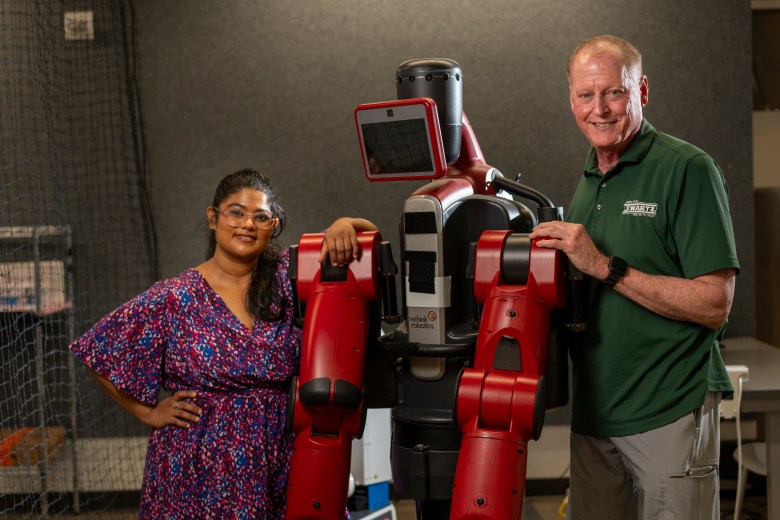
    Dave Mawhinney, founding executive director of the Swartz Center for Entrepreneurship at Carnegie Mellon University, with Saisri Akondi, an international graduate and co-founder of the startup D.Sole. “There still is a part of the population that asks, ‘What are you doing here?’ ” says Akondi. Credit: Nancy Andrews for The Hechinger Report

    It’s supply and demand, said Dave Mawhinney, a professor of entrepreneurship at Carnegie Mellon and founding executive director of its Swartz Center for Entrepreneurship, which helps many of that school’s students do research that can lead to products and startups. “And the demand for people with those skills exceeds the supply.”

    States with the most international students

    California: 140,858

    New York: 135,813

    Texas: 89,546

    Massachusetts: 82,306

    Illinois: 62,299

    Pennsylvania: 50,514

    Florida: 44,767

    Source: NAFSA: Association of International Educators. Figures are from the 2023-24 academic year, the most recent available.

    Related: So much for saving the planet. Climate careers, and many others, evaporate for class of 2025

    That’s in part because comparatively few Americans are going into fields including science, technology, engineering and math. Even before the pandemic disrupted their educations, only 20 percent of college-bound American high school students were prepared for college-level courses in these subjects. U.S. students scored lower in math than their counterparts in 21 of the 37 participating nations of the Organization for Economic Cooperation and Development on an international assessment test in 2022, the most recent year for which the outcomes are available.

    One result is that international students make up more than a third of master’s and doctoral degree recipients in science and engineering at American universities. Two-thirds of U.S. university graduate students and more than half of workers in AI and AI-related fields are foreign born, according to Georgetown University’s Center for Security and Emerging Technology. 

    “A real point of strength, and a reason our robotics companies especially have been able to grow their head counts, is because of those non-native-born workers,” said Luther, in Pittsburgh. “Those companies are here specifically because of that talent.”

    International students are more than just contributors to this city’s success in tech. “They have been drivers” of it, Mawhinney said, in his workspace overlooking the studio where the iconic children’s television program “Mister Rogers’ Neighborhood” was taped. 

    Jake Mohin, director of solution engineering at a company that uses AI to predict how chemicals will synthesize, uses a co-working space at InnovatePGH in Pittsburgh’s Innovation District. Credit: Nancy Andrews for The Hechinger Report

    “Every year, 3,000 of the smartest people in the world come here, and a large proportion of those are international,” he said of Carnegie Mellon’s graduate students. “Some of them go into the research laboratories and work on new ideas, and some come having ideas already. You have fantastic students who are here to help you build your company or to be entrepreneurs themselves.”

    Boosters of the city’s tech-driven turnaround say what’s been happening in Pittsburgh is largely unappreciated elsewhere. It followed the effective collapse of the steel industry in the 1980s, when unemployment hit 18 percent.

    In 2006, Google opened a small office at Carnegie Mellon to take advantage of the faculty and student expertise in computer science and other fields there and at neighboring higher education institutions; the company later moved to a nearby former Nabisco factory and expanded its Pittsburgh workforce to 800 employees. Apple, software and AI giant SAP and other tech firms followed.

    “It was the talent that brought them here, and so much of that talent is international,” said Audrey Russo, CEO of the Pittsburgh Technology Council. 

    Sixty-one percent of the master’s and doctoral students at Carnegie Mellon come from abroad, according to the university. So do 23 percent of those at Pitt, an analysis of federal data shows.

    Related: International students are rethinking coming to the US. Thats a problem for colleges

    The city has become a world center for self-driving car technology. Uber opened an advanced research center here. The autonomous vehicle company Motional — a joint venture between Hyundai and the auto parts supplier Aptiv — moved in. So did the Ford- and Volkswagen-backed Argo AI, which eventually dissolved, but whose founders went on to create the Pittsburgh-based self-driving truck developer Stack AV. The Ford subsidiary Latitude AI and the autonomous flight company Near Earth Autonomy also are headquartered in Pittsburgh.

    Among other tech firms with homes here: Duolingo, which has 830 employees and is worth an estimated $22 billion. It was co-founded by a professor at Carnegie Mellon and a graduate of the university who both came to the United States as international students, from Guatemala and Switzerland, respectively.

    InnovatePGH tracks 654 startups that are smaller than those big conglomerates but together employ an estimated 25,000 workers. Unemployment in Pittsburgh (3.5 percent in April) is below the national average (3.9 percent). Now Pitt and others are developing Hazelwood Green, which includes a former steel mill that closed in 1999, into a new district housing life sciences, robotics and other technology companies. 

    In a series of webinars about starting businesses, offered jointly to students at Pitt and Carnegie Mellon, the most popular installment is about how to found a startup on a student visa, said Rhonda Schuldt, director of Pitt’s Big Idea Center, in a storefront on Forbes Avenue in the Innovation District.

    One of the co-working spaces operated by InnovatePHG in the Pittsburgh Innovation District. Credit: Nancy Andrews for The Hechinger Report

    Some international undergraduates continue into graduate school or take jobs with companies that sponsor them so they can keep working on their ideas, Schuldt said.

    “They want to stay in Pittsburgh and build businesses here,” she said.

    There are clear worries that this momentum could come to a halt if the supply of international students continues a slowdown that began even before the new Trump term, thanks to visa processing delays and competition from other countries

    The number of international graduate students dropped in the fall by 2 percent, before the presidential election, according to the Institute of International Education. Further declines are expected following the government’s pause on student visa interviews, publicity surrounding visa revocations and arrests and cuts to federal research funding.

    Rhonda Schuldt, director of the Big Idea Center at the University of Pittsburgh. International students “want to stay in Pittsburgh and build businesses here,” Schuldt says. Credit: Nancy Andrews for The Hechinger Report

    It’s too early to know what will happen this fall. But D. Sole co-founder Saisri Akondi has heard from friends who planned to come to the United States that they can’t get visas. “Most of these students wanted to start companies,” she said. 

    “I would be lying if I said nothing has changed,” said Akondi, who has been accepted into a master’s degree program in business administration at the Stanford University Graduate School of Business under her existing student visa, though she said her company will stay in Pittsburgh. “The fear has increased.”

    Related: Colleges partnered with an EV battery factory to train students and ignite the economy. Trump’s clean energy war complicates their plans

    This could affect whether tech companies continue to come to Pittsburgh, said Russo, at least unless and until more Americans are better prepared for and recruited into tech-related graduate programs. That’s something universities have not yet begun to do, since the unanticipated threat to their international students erupted only in March, and that would likely take years.

    Audrey Russo, CEO of the Pittsburgh Technology Council. If the number of international students declines, “Who’s going to do the research? Who’s going to be in these teams?” she asks. Credit: Nancy Andrews for The Hechinger Report

    “Who’s going to do the research? Who’s going to be in these teams?” asked Russo. “We’re hurting ourselves deeply.”

    The impact could transcend the research and development ecosystem. “I think we’ll see almost immediate ramifications in Pittsburgh in terms of higher-skilled, higher-wage companies hiring here,” said Sean Luther, at InnovatePGH. “And that affects the grocery shops, the barbershops, the real estate.”

    There are other, more nuanced impacts. 

    Mike Madden, left, vice president of InnovatePGH and director of the Pittsburgh Innovation District, talks with University of Pittsburgh graduate student Jayden Serenari in one of InnovatePGH’s co-working spaces. Credit: Nancy Andrews for The Hechinger Report

    “Whether we like it or not, it’s a global world. It’s a global economy. The problems that these students want to solve are global problems,” Schuldt said. “And one of the things that is really important in solving the world’s problems is to have a robust mix of countries, of cultures — that opportunity to learn how others see the world. That is one of the most valuable things students tell us they get here.”

    Pittsburgh is a prime example of a place whose economy is vulnerable to a decline in the number of international students, said Brookings’ Muro. But it’s not unique.

    “These scholars become entrepreneurs. They’re adding to the U.S. economy new ideas and new companies,” he said. Without them, “the economy would be smaller. Research wouldn’t get done. Journal articles wouldn’t be written. Patents wouldn’t be filed. Fewer startups would occur.”

    The United States, said Muro, “has cleaned up by being the absolute central place for this. The system has been incredibly beneficial to the United States. The hottest technologies are inordinately reliant on these excellent minds from around the world. And their being here is critical to American leadership.”

    Contact writer Jon Marcus at 212-678-7556, [email protected] or jpm.82 on Signal.

    This story about international students was produced by The Hechinger Report, a nonprofit, independent news organization focused on inequality and innovation in education. Sign up for our higher education newsletter. Listen to our higher education podcast.

    The Hechinger Report provides in-depth, fact-based, unbiased reporting on education that is free to all readers. But that doesn’t mean it’s free to produce. Our work keeps educators and the public informed about pressing issues at schools and on campuses throughout the country. We tell the whole story, even when the details are inconvenient. Help us keep doing that.

    Join us today.

    Source link

  • International students encouraged to sharpen their skills to stand out in UK job market

    International students encouraged to sharpen their skills to stand out in UK job market

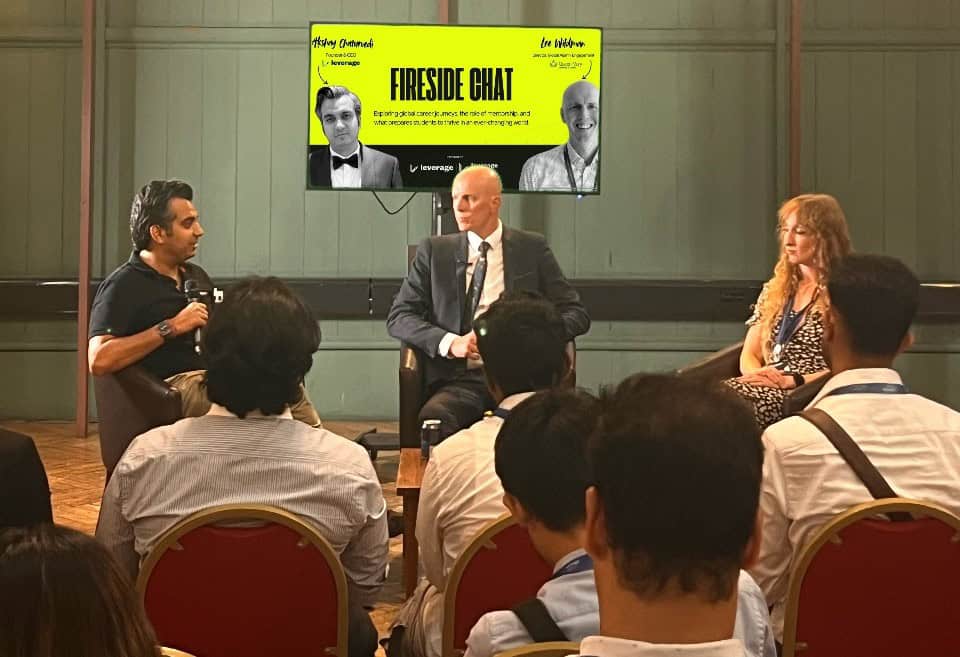
    More than 600 international students studying across the UK came together at Queen Mary University of London last month for the second edition of Leverage Careers Day.

    While a record 758,855 international students were enrolled in UK higher education in 2022/23, a 12% rise on the previous year, rising employer uncertainty, growing graduate anxiety, and an increase in job scams have made students more cautious in their professional choices.

    The event saw students, who are now exploring opportunities in AI, data science, marketing, finance, and more, connect with top employers and industry leaders, to network, explore career pathways, and gain valuable career advice.

    “We saw a remarkable breadth of interest from students across a range of disciplines, with data science and AI standing out as clear frontrunners. Many were especially drawn to AI-layered roles in marketing, creative industries, finance, and healthcare,” Akshay Chaturvedi, founder and CEO, Leverage, told The PIE News.

    “At the same time, digital marketing and content strategy sparked strong interest of their own, driven by rising opportunities in the digital economy. Beyond these, students also gravitated towards specialized tracks for example in biotechnology, luxury management, automobile design, and culinary arts.”

    For many international students, a successful career has long been the ultimate benchmark of achievement, and in the UK, standing out is crucial, with a sponsored job often seen as the true return on their significant investment in tuition and living costs.

    Moreover, with over a quarter of UK employers unaware of the Graduate Route – which allows international students to work sponsor-free for up to two years but is set to be reduced to 18 months under the May 2025 immigration white paper and tied more closely to skill-based jobs – understanding the realities of today’s hiring market has become increasingly important. 

    “Employers aren’t just looking for textbook skills anymore — they’re looking for forward-thinking talent who can bring innovation to the table,” explained Lee Wildman, director, global engagement, Queen Mary University of London, who joined a fireside chat on mentorship, global exposure, and the skills needed in an ever-evolving world, alongside Chaturvedi and Rhianna Skeetes, international careers consultant at QMUL.

    “What ideas do you have to take an organisation to the next level? Be prepared to sell yourself – not just in terms of what you’ve learned, but in terms of how you think.”

    What excites me most is seeing students ask better, sharper questions about their careers – not just what job they’ll get, but how they’ll grow, how they’ll lead, and how they’ll stand out

    Akshay Chaturvedi, Leverage

    Adaptability was also highlighted as the “strongest tool in a student’s back pocket” by Jennifer Ogunleye, B2B communications lead at Google, who delivered a keynote urging students to look beyond job titles, and academic credentials, and focus on building a personal brand. 

    “There isn’t always a straightforward route into tech or any industry today – even those who were most in demand just a year ago are having to pivot,” noted Ogunleye. 

    “What matters more than ever is your personal brand: What are you passionate about beyond your job title? That’s what sets you apart from AI, from competition, from volatility.”

    The event also brought together organisations such as Publicis Groupe, Reed Recruitment, Hyatt Place, Ribbon Global, and GoBritanya, which offered insights into student accommodation services across the UK and Ireland, giving students exposure to careers across creative, corporate, hospitality, and FinTech sectors. 

    The Westminster and Holborn Law Society also provided guidance to aspiring legal professionals on navigating local and international career pathways.

    “Students today aren’t satisfied with just ‘getting a job’ anymore. They’re actively chasing careers that offer international mobility, cross-border exposure, and long-term growth,” stated Chaturvedi.

    “That’s a significant shift, and quite refreshing so, given how only a few years back stability was often the top priority. Now, they want to thrive in industries that are constantly evolving every single day, with technology, globalization, and new market needs at play.”

    Source link

  • DHS Moves to Restrict How Long Foreign Students Can Stay

    DHS Moves to Restrict How Long Foreign Students Can Stay

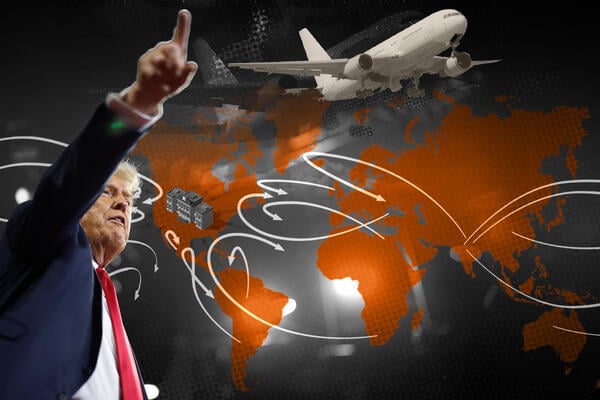
    Photo illustration by Justin Morrison/Inside Higher Ed | aapsky/iStock/Getty Images | Chip Somodevilla/Getty Images

    After months of speculation, the Department of Homeland Security publicly released its plans to limit how long international students can stay in the United States—a proposal that advocates say will only add to uncertainty and chaos that this group is already facing.

    Currently, students can stay in the country as long as they are enrolled at a college or university. But the proposed rule released Wednesday would allow students to stay for the duration of their program, but no longer than four years. That isn’t enough time for students to complete a doctoral program, and it’s less time than the average student takes to complete a bachelor’s degree. Students who want to stay longer would have to seek authorization to extend their visa.

    The first Trump administration tried to make this change, which would roll back at 1991 rule known as duration of status. However, the Biden administration withdrew the proposal. Officials said in a news release that setting a fixed time for students on visas to stay would curb what they call abuses and allow the government to better oversee these individuals. Additionally, officials alleged that the current policy incentivizes international students to “become ‘forever’ students,” who are “perpetually enrolled in higher education courses to remain in the U.S.”

    DHS will take public comments on the proposal until Sept. 29. Before the agency can finalize the rule, it will have to review and respond to those comments.

    Advocates for international students have been sounding the alarm about this plan since DHS first sought approval in June to make the proposal, and those warnings continued this week now that the plan is public. Changing the rule, they say, would be another hurdle for international students who want to come to the United States. These others include vetting students’ social media profiles and more scrutiny on current visa holders. Since President Trump took office, the State Department has revoked 6,000 student visas.

    More than one million students from other countries enrolled in at a U.S. college or university in 2024, making up about 6 percent of the total student population. Experts predict the number of international students to drop off significantly this academic year.

    Fanta Aw, executive director of NAFSA, the association of international educators, said in a statement that the DHS proposal is a “bad idea” and “a dangerous overreach by government into academia.”

    “These changes will only serve to force aspiring students and scholars into a sea of administrative delays at best, and at worst, into unlawful presence status—leaving them vulnerable to punitive actions through no fault of their own,” Aw added.

    Miriam Feldblum, president and CEO of the Presidents’ Alliance on Higher Education and Immigration, described the proposal in a statement as “another unnecessary and counterproductive action aimed against international students and scholars.”

    “This proposed rule sends a message to talented individuals from around the world that their contributions are not valued in the United States,” she said. “This is not only detrimental to international students—it also weakens the ability of U.S. colleges and universities to attract top talent, diminishing our global competitiveness. International students, scholars, and exchange visitors contribute economically, intellectually, and culturally to American society. They drive innovation, create jobs, and advance groundbreaking research.”

    Source link

  • College Students’ Views on AI

    College Students’ Views on AI

    Faculty and administrators’ opinions about generative artificial intelligence abound. But students—path breakers in their own right in this new era of learning and teaching—have opinions, too. That’s why Inside Higher Ed is dedicating the second installment of its 2025–26 Student Voice survey series to generative AI.

    About the Survey

    Student Voice is an ongoing survey and reporting series that seeks to elevate the student perspective in institutional student success efforts and in broader conversations about college.

    Some 1,047 students from 166 two- and four-year institutions, public and private nonprofit, responded to this flash survey about generative artificial intelligence and higher education, conducted in July. Explore the data, captured by our survey partner Generation Lab, at this link. The margin of error is plus or minus three percentage points.

    See what students have to say about trust in colleges and universities here, and look out for future student polls and reporting from our 2025–26 survey cycle, Student Voice: Amplified.

    Some of the results are perhaps surprising: Relatively few students say that generative AI has diminished the value of college, in their view, and nearly all of them want their institutions to address academic integrity concerns—albeit via a proactive approach rather than a punitive one. Another standout: Half of students who use AI for coursework say it’s having mixed effects on their critical thinking abilities, while a quarter report it’s helping them learn better.

    Here are seven things to know from the survey, plus some expert takes on what it all means, as higher education enters its fourth year of this new era and continues to struggle to lead on AI.

    1. Most students are using generative AI for coursework, but many are doing so in ways that can support, not outsource, their learning.

    The majority of students, some 85 percent, indicate they’ve used generative AI for coursework in the last year. The top three uses from a long list of options are: brainstorming ideas (55 percent), asking it questions like a tutor (50 percent) and studying for exams or quizzes (46 percent). Treating it like an advanced search engine also ranks high. Some other options present more of a gray area for supporting authentic learning, such as editing work and generating summaries. (Questions for educators include: Did the student first read what was summarized? How substantial were the edits?)

    Fewer students report using generative AI to complete assignments for them (25 percent) or write full essays (19 percent). But elsewhere in the survey, students who report using AI to write essays are somewhat more likely than those using it to study to say AI has negatively impacted their critical thinking (12 percent versus 6 percent, respectively). Still, the responses taken as a whole add nuance to ongoing discussions about the potential rewards, not just risks, of AI. One difference: Community college students are less likely to report using AI for coursework, for specific use cases and over all. Twenty-one percent of two-year students say they haven’t used it in the last year, compared to 14 percent of four-year students.

    1. Performance pressures, among other factors, are driving cheating.

    The top reason students say some of their peers use generative AI in ways that violate academic integrity policies is pressure to get good grades (37 percent over all). Being pressed for time (27 percent) and not really caring about academic integrity policies (26 percent) are other reasons students chose. There are some differences across student subgroups, including by age: Adult learners over 25 are more likely than younger peers to cite lack of time due to work, family or other obligations, as well as lack of confidence in their abilities, for example. Younger students, meanwhile, are more likely to say that peers don’t really care about such policies, or don’t connect with course content. Despite the patchwork of academic integrity policies within and across institutions, few students—just 6 percent over all—blame unclear policies or expectations from professors about what constitutes cheating with AI.

    1. Nearly all students want action on academic integrity, but most reject policing.

    Some 97 percent believe that institutions should respond to academic integrity threats in the age of generative AI. Yet approaches such as AI-detection software and limiting technology use in classrooms are relatively unpopular options, selected by 21 percent and 18 percent of students, respectively. Instead, more students want education on ethical AI use (53 percent) and—somewhat contradicting the prior set of responses about what’s driving cheating—clearer, standardized policies on when and how AI tools can be used. Transparency seems to be a value: Nearly half of students want their institutions to allow more flexibility in using AI tools, as long as students are transparent about it.

    Fewer support a return to handwritten tests or bluebooks for some courses, though this option is more popular among students at private nonprofit institutions than among their public institution peers, at 33 percent versus 22 percent. Those at private nonprofit institutions are also much more in favor of assessments that are generally harder to complete with AI, such as oral exams and in-class essays.

    1. Students have mixed views on faculty use of generative AI for teaching.

    The slight plurality of students (29 percent) is somewhat positive about faculty use of AI for creating assignments and other tasks, as long as it’s used thoughtfully and transparently. This of course parallels the stance that many students want from their institutions on student AI use, flexibility underpinned by transparency.

    Another 14 percent are very positive about faculty use of AI, saying it could make instruction more relevant or efficient. But 39 percent of students feel somewhat or very negatively about it, raising concerns about quality and overreliance—the same concerns faculty members and administrators tend to have about student use. The remainder, 15 percent, are neutral on this point.

    1. Generative AI is influencing students’ learning and critical thinking abilities.

    More than half of students (55 percent) who have used AI for coursework in the last year say it’s had mixed effects on their learning and critical thinking skills: It helps sometimes but can also make them think less deeply. Another 27 percent say that the effects have actually been positive. Fewer, 7 percent, estimate that the net effect has been negative, and they’re concerned about overreliance. Men—who also report using generative AI for things like brainstorming ideas and completing assignments at higher rates than their women and nonbinary peers—are also more likely to indicate that the net effect has been positive: More than a third of men say generative AI is improving their thinking, compared to closer to one in five women.

    1. Students want information and support in preparing for a world shaped by AI.

    When thinking about their futures, not just academic integrity in the present, students again say they want their institutions to offer—but not necessarily require—training on how to use AI tools professionally and ethically, and to provide clearer guidance on ethical versus misuse of AI tools. Many students also say they want space to openly discuss AI’s risks and benefits. Just 16 percent say preparing them for a future shaped by generative AI should be left up to individual professors or departments, underscoring the importance of an institutional response. And just 5 percent say colleges don’t need to take any specific action at all here. Adult students—many of whom are already working—are most likely to say that institutions should offer training on how to use AI tools professionally and ethically, at 57 percent.

    Less popular options from the full list:

    • Integrate AI-related content into courses across majors: 18 percent
    • Leave it up to individual professors or departments: 16 percent
    • Create new majors or academic programs focused on AI: 11 percent
    • Connect students with employers or internships that involve AI: 9 percent
    • Colleges don’t need to take any specific actions around AI: 5 percent
    1. On the whole, generative AI isn’t devaluing college for students—and it’s increasing its value for some.

    Students have mixed views on whether generative AI has influenced how they think of the value of college. But 35 percent say there’s been no change, and 23 percent say it’s more valuable now. Fewer, 18 percent, say they now question the value of college more than they used to. Roughly another quarter of students say it has changed how they think about college value, they’re just not sure in what way. So college value hasn’t plummeted in students’ eyes due to generative AI—but the technology is influencing how they think about it.

    ‘There Is No Instruction Manual’

    Student Voice poll respondent Daisy Partey, 22, agreed with her peers that institutions should take action on student use of generative AI—and said that faculty members and other leaders need to understand how accessible and potent it is.

    Daisy Partey, a young Black woman with long, thin braids and sunglasses propped on her head.

    Daisy Partey

    “I’d stress that it’s super easy to use,” she said in an interview. “It’s just so simple to get what you need from it.”

    Partey, who graduated from the University of Nevada at Reno in May with a major in communications and minor in public health, said using generative AI became the default for some peers—even for something as simple as a personal introduction statement. That dynamic, coupled with fear of false positives from AI-detection tools, generally chilled her own use of AI throughout college.

    She did sometimes use ChatGPT as a study partner or search tool, but tried to limit her use: “Sometimes I’d find myself thinking, ‘Well, I could just ChatGPT it.’ But in reality, figuring it out on my own or talking to another physical human being—that’s good for you,’” she said.

    As for how institutions should address generative AI, Partey—like many Student Voice respondents—advocated a consistent, education-based approach, versus contradictory policies from class to class and policing student use. Similarly, Partey said, students need to know how and when to use AI responsibly for work, even as it’s still unknown how the technology will impact fields she’s interested in, such as social media marketing. (As for AI’s impact on the job market for new graduates, the picture is starting to form.)

    “Provide training so that students know what they’re going into and the expectations for AI use in the workplace,” she emphasized.

    Another Student Voice respondent at a community college in Texas, who asked to remain anonymous to speak about AI, said she uses generative AI to stay organized with tasks, create flash cards for tests and exams, and come up with new ideas.

    “AI isn’t just about cheating,” she said. “For some students, it’s like having a 24-7 tutor.”

    Jason Gulya, a professor of English and media communications at Berkeley College who reviewed the survey results, said they challenge what he called the “AI is going to kill college and democratize all knowledge” messaging pervading social media.

    That the majority of students say AI has made their degree equally or more valuable means that this topic is “extremely nuanced” and “AI might not change the perceived value of a college degrees in the ways we expect,” he added.

    Relatedly, Gulya called the link between pressure to get good grades and overreliance on AI “essential.” AI tools that have been “marketed to students as quick and efficient ways to get the highest grades” play into a “model of education that places point-getting and grade-earning over learning,” he said. One possible implication for faculty? Using alternative assessment practices “that take pressure away from earning a grade and that instead recenter learning.”

    Jill Abney, associate director of the Center for the Enhancement of Learning and Teaching at the University of Kentucky, said it makes “total sense” that students also report that time constraints are fueling academic dishonesty, since many are “stretched to the limits with jobs and other responsibilities on top of schoolwork.” To this point, one of the main interventions she and colleagues recommend to concerned instructors is “scaffolding assignments so students are making gradual progress and not waiting until the last minute.”

    On clarity of guidelines around AI use, Abney said that most instructors she works with have, in fact, “put a lot of time into crafting clear AI policies.” Some have even moved beyond course-level policies toward an assignment-by-assignment labeling approach, “to ensure clear communication with students.” Tools to this end include the university’s own Student AI Use Scale.

    Mark Watkins, assistant director of academic innovation and lecturer of writing and rhetoric at the University of Mississippi, underscored that both faculty-set policies for student use of AI and expectations for faculty use of AI have implications for faculty academic freedom, which “should be respected.”

    At the same time, he said, “there needs to be leadership and a sense of direction from institutions about AI integration that is guided. To me, that means institutions should invest in consensus-building around what use cases are appropriate and publish frameworks for all stakeholders,” including faculty, staff and administrators.” Watkins has proposed his own “VALUES” framework for faculty use of AI in education, which addresses such topics as validating and assessing student learning.

    Ultimately, Abney said, it’s a good thing students are thinking about how AI is impacting their cognition—a developing area of research—adding that students tend to “crave shared spaces of conversation where they can have open dialogues about AI with their instructors and peers.”

    That’s what learning about generative AI and establishing effective approaches requires, she said, “since there is no instruction manual.”

    This independent editorial project is produced with the Generation Lab and supported by the Gates Foundation.

    Source link

  • Partnership? Students in Scotland need protection

    Partnership? Students in Scotland need protection

    It’s easy to trace differences in culture back much further – arguably right back to Bologna in 1088, and the Rectors of the Ancients in the 15th Century.

    But at the very least since 2003, students’ unions in England have looked North of the border jealously at a country so committed to student partnership that it created a statutory agency to drive it.

    Partnership at all levels thrives when there’s will, time, and frankly, money. It’s tougher to reflect the principles of students having power when times are tight – when the excel sheets no longer add up, when restructures have to be planned, and when cuts have to be crafted to the facilities and services that students have been inputting on for years.

    Beyond the potentially apocryphal stories of truly student-led institutions in ancient times, students in any system are bound to be treated as, and regard themselves as, at best junior partners – with, both at individual and collective levels, a significant power asymmetry.

    In such scenarios, when leaders spend their days choosing between any number of awful options, it’s often going to be the least institutionally risky path that’s taken. And the danger is that students – who previously might have relied on partnership to secure their interests – now really need protection instead.

    I spend quite a bit of time here lamenting the implementation of protection measures for students in England. But in conversations with students and their leaders in Scotland, I’m now finding myself repeatedly reflecting on the fact that at least, in England, there are some.

    3 months to open your email

    Take complaints. The Office of the Independent Adjudicator (OIA) doesn’t always generate the answer that student complainants would like – it often feels too distant, and at least temporally, hard to access.

    It also has a tendency to seek resolution when it’s sometimes justice that should prevail – and increasingly feels like providers are paying students off (often with NDAs for non-harassment complaints) before they get there.

    But in Scotland, students have to use the Scottish Public Services Ombudsman (SPSO). As I type, “due to an increase in the volume of cases” it is currently receiving, there is a delay of 12 weeks in allocating complaints to a reviewer.

    Some comfort that will be to the international PGT who has cause to complain in month 10 of their studies, only to have to encounter a complaint, an appeal, and then a further 12 weeks just to get the SPSO to open their letter. UKVI will have ensured they’re long gone.

    It’s clear that few get as far as the SPSO. When it investigates a complaint, it usually reports its findings and conclusions in what it calls a decision letter – and these findings are published as decision reports. Since May 2021, just ten have been published.

    Either students in Scotland have much less to complain about than their counterparts in England and Wales, or universities in Scotland are much better at resolving complaints, or this is a system that obviously isn’t working.

    Never OK

    Then there’s harassment and sexual misconduct. Just under a year ago Universities Scotland’s update on anti-harassment work suggested a system of protection that’s patchy at best.

    37 per cent of institutions weren’t working with survivors to inform their approach, 21 per cent didn’t have policies allowing for preventative suspension where necessary, and only 71 per cent of institutions had “updated their policies” following guidance from UUK on staff-student relationships – which could still mean all 19 universities are permitting staff to pursue students.

    Universities Scotland acknowledges that most identify funding as a barrier, but England’s regulator makes clear that providers “must” deploy necessary resources, with higher-risk institutions expected to invest more. If you can’t fund student safety properly, perhaps you shouldn’t be operating is the message in England.

    And there’s no sign that Scotland will be taking part in the prevalence research that’s been piloted in England.

    Cabinet Secretary Jenny Gilruth’s praise for Scotland’s “partnership approach” suggested either complacency or a failure to grasp that Scotland is sliding toward being significantly less robust than England in protecting students. When partnership fails to deliver safety, protection becomes essential – and on harassment, it feels like Scotland is failing to provide either adequately.

    Best practice should not be voluntary

    Or take mental health. While Wales has responded to parliamentary concerns about consistency by accepting recommendations for a “common framework for mental health support” backed by registration and funding conditions, Scotland continues to rely on voluntary approaches that deliver patchy outcomes.

    The Welsh government’s response to its Children, Young People and Education Committee shows what serious commitment looks like. New MEDR registration conditions will require clear expectations for student wellbeing, supported by data collection requirements, evaluation frameworks, and crucially, funding considerations built into budget allocations.

    There’s partnership rhetoric – but it’s partnership backed by regulatory teeth. Wales has grasped what Scotland appears to miss – that “best practice should not be voluntary” when student lives are at stake, as one bereaved parent told Westminster’s Petitions Committee.

    The Welsh approach is set to recognise that students need “parity of approach” and “consistency between departments, institutions, and academic teams” – something that purely voluntary frameworks cannot deliver.

    Scotland’s reliance on institutional goodwill for mental health provision increasingly looks naive. Maintaining flexibility for institutions to design services suited to their contexts, is one thing – but Wales will ensure baseline standards that students can depend on regardless of which university they attend.

    The contrast is stark – Wales will treat student mental health as a regulatory priority requiring systematic oversight, while Scotland appears content to hope that partnership alone in a context of dwindling funding will somehow deliver consistency. When partnership fails to protect the most vulnerable students, Wales will have built backup systems – Scotland has built excuses about funding pressures that Welsh universities face too.

    Promises promises

    Then there’s consumer protection – or, as I like to rebrand it, delivering on the promises made to students. It’s easy to assume that students in Scotland aren’t covered – but plenty do pay fees, and those that don’t are supposed to be protected too.

    But over two and a half years since the Competition and Markets Authority revised its guidance to universities on compliance, there seems to be a nationwide problem. Of the 16 universities I’ve looked at in Scotland, 15 still include contractual terms limiting liability in the event of a strike involving their own staff – something CMA has advised is unlawful, and which OfS is effectively enforcing in cases like Newcastle.

    In a year when strikes are more likely, why should students in Scotland not be afforded the same rights to the education they’ve signed up for than their English counterparts?

    The CMA also bans clauses that limit compensation for breach of contract to the total paid in fees – something that would be very attractive in Scotland for obvious reasons. Yet 14 of the country’s universities continue to publish contractual terms that apparently allow them to with impunity. Several have highly problematic clauses on in-contract fee increases too.

    And CMA’s guidance on “variation clauses” – that should not result in too wide an ability to vary the course or services that were offered when students signed up – looks like it’s been flouted too.

    I’m no lawyer, but most universities in Scotland seem to be affording themselves the right to pretty much change anything and everything – and when finances are as tight as they are, that means students and their complaints about cuts can be bottom of the risk register, if they feature at all.

    You’re the voice

    Or take student voice itself. The mandatory Learner Engagement Code required by the Tertiary Education and Research (Wales) Act 2022 could be transformative – moving from “should” to “must” with genuine comply-or-explain mechanisms, protected status for student representatives, and mandatory training on rights and responsibilities for all students. Or it could emerge as something weak and vague, disappointing everyone who fought to get student engagement into primary legislation.

    But at least there is one. At minimum, Wales recognises that student partnership requires legal backing, not just goodwill that evaporates when finances get tight. Scotland’s partnership model, for all its historical reputation, increasingly looks like an expensive way of avoiding the hard work of building systems that actually protect students when partnership fails.

    However flawed, students in England now have new rights over freedom of speech – including a right to not be stopped from speaking on the basis of “reputational impact” on the provider. Several Scottish universities seem to have extraordinarily wide exemptions for “disrepute” and “reputation” that are almost certainly in breach of the Human Rights Act.

    You could even, at a stretch, look at cuts and closures. For all the poor implementation and enforcement of a system designed to protect students when their campus, course, university or pathway is closed in England, at least the principle is in place. Student Protection Plans are required in Scotland by SAAS for private providers – but not of universities. Why?

    We voted against Brexit

    I could go on. Scotland regularly positions itself as more European than England, particularly in higher education where the “partnership approach” is often presented as evidence of continental-style governance. Scottish politicians invoke European models when defending their policies, suggesting Scotland’s collaborative approach mirrors sophisticated systems across the continent.

    Yet European student rights frameworks put Scotland to shame. In Serbia, students have the legal right to nutrition, rest and cultural activities. In Sweden, students enjoy the same workplace protections as employees under the Work Environment Act. In Lithuania, there’s a minimum amount of campus space allocated per student by law, and student representatives hold veto power over university senate decisions – if they use it, a special committee reviews the issue and a two-thirds majority is required to override.

    In Latvia, students’ unions receive at least 0.05% of the annual university budget by law, with legal rights to request information from any department on matters affecting students. In Poland, students have guaranteed rights to study programmes where at least 30 per cent of credits are elective, and universities must consult student governments when appointing managers with student affairs responsibilities. Student protests and strikes are specifically protected, with mediation rights.

    In the Netherlands, universities must inform the national confidential inspector whenever staff may have engaged in harassment involving students – and any staff hearing about allegations must report them to management. Spain mandates every university has an independent ombudsperson with statutory reporting duties. In Croatia, universities are legally obliged to provide students’ unions workspace, co-finance their activities, and offer administrative support. And Austrian students make up significant proportions of curriculum committees by statute, ensuring programmes remain flexible and career-relevant.

    Can I get the Bill

    It’s not as if there isn’t a legal vehicle that could improve things. The Tertiary Education and Training (Funding and Governance) (Scotland) Bill is weaving its way through the Scottish Parliament as we speak – but it couldn’t be weaker in protections for students if it tried.

    • Section 8 allows the new Council, when conducting efficiency studies, to consider “the extent to which the needs and interests of students are being met” and then issue recommendations to universities and colleges. But recommendations are not binding.
    • Section 11 amends the 2005 Act to require the Council, in exercising its functions, to “have regard to the desirability of protecting and promoting the interests of current and prospective learners.” Again, this is a duty on the Council, not directly on universities, and is about regard rather than enforceable standards.
    • Section 18 allows Scottish Ministers to designate private providers so that their students can access public student support. That’s a consumer-style protection, but it’s about access to funding rather than quality or rights.
    • Section 19–20 updates the rules around how student support is administered and delegated — but again, that’s more about machinery than protections.

    There’s no new regulatory framework for how universities behave towards students (on contracts, teaching quality, complaints handling, etc.). There are no rights conferred directly on students — no duty of fair treatment, no consumer protection-style obligations, no statutory complaints rights.

    Universities themselves are not made subject to enforceable duties in the Bill, beyond existing general oversight via the Funding Council. And while the Council can give guidance (section 10) and issue recommendations (section 8), institutions are only required to “have regard” rather than comply.

    Cakeism in Scotland

    Models of student partnership have served Scotland well over the decades – and should continue to. After all, learning outcomes take two to tango – and that’s true from the classroom right up the boardroom.

    But right now here in 2025, partnership often feels like a luxury for when rivers of money start flowing back in – and even the most well meaning and moral SMT or Court has a duty to protect the institution before it protects its students.

    Ultimately, partnership and protection should not feel like mutual exclusives, or something a country should choose. It’s perfectly possible, and in the current funding climate, deeply desirable, for students to have both.

    Scottish ministers – through a new section of the Funding and Governance Bill – should legislate to make it so.

    Source link

  • 3 steps to build belonging in the classroom

    3 steps to build belonging in the classroom

    Key points:

    The first few weeks of school are more than a fresh start–they’re a powerful opportunity to lay the foundation for the relationships, habits, and learning that will define the rest of the year. During this time, students begin to decide whether they feel safe, valued, and connected in your classroom.

    The stakes are high. According to the 2023 Youth Risk Behavior Survey, only 55 percent of students reported feeling connected to their school. That gap matters: Research consistently shows that a lack of belonging can harm grades, attendance, and classroom behavior. Conversely, a strong sense of belonging not only boosts academic self-efficacy but also supports physical and mental well-being.

    In my work helping hundreds of districts and schools implement character development and future-ready skills programs, I’ve seen how intentionally fostering belonging from day one sets students–and educators–up for success. Patterns from schools that do this well have emerged, and these practices are worth replicating.

    Here are three proven steps to build belonging right from the start.

    1. Break the ice with purpose

    Icebreakers might sound like old news, but the reality is that they work. Research shows these activities can significantly increase engagement and participation while fostering a greater sense of community. Students often describe improved classroom atmosphere, more willingness to speak up, and deeper peer connections after just a few sessions.

    Some educators may worry that playful activities detract from a serious academic tone. In practice, they do the opposite. By helping students break down communication barriers, icebreakers pave the way for risk-taking, collaboration, and honest reflection–skills essential for deep learning.

    Consider starting with activities that combine movement, play, and social awareness:

    • Quick-think challenges: Build energy and self-awareness by rewarding quick and accurate responses.
    • Collaborative missions: Engage students working toward a shared goal that demands communication and teamwork.
    • Listen + act games: Help students develop adaptability through lighthearted games that involve following changing instructions in real time.

    These activities are more than “fun warm-ups.” They set a tone that learning here will be active, cooperative, and inclusive.

    2. Strengthen executive functioning for individual and collective success

    When we talk about belonging, executive functioning skills–like planning, prioritizing, and self-monitoring–may not be the first thing we think of. Yet they’re deeply connected. Students who can organize their work, set goals, and regulate their emotions are better prepared to contribute positively to the class community.

    Research backs this up. In a study of sixth graders, explicit instruction in executive functioning improved academics, social competence, and self-regulation. For educators, building these skills benefits both the individual and the group.

    Here are a few ways to embed executive functioning into the early weeks:

    • Task prioritization exercise: Help students identify and rank their tasks, building awareness of time and focus.
    • Strengths + goals mapping: Guide students to recognize their strengths and set values-aligned goals, fostering agency.
    • Mindful check-ins: Support holistic well-being by teaching students to name their emotions and practice stress-relief strategies.

    One especially powerful approach is co-creating class norms. When students help define what a supportive, productive classroom looks like, they feel ownership over the space. They’re more invested in maintaining it, more likely to hold each other accountable, and better able to self-regulate toward the group’s shared vision.

    3. Go beyond the first week to build deeper connections

    Icebreakers are a great start, but true belonging comes from sustained, meaningful connection. It’s tempting to think that once names are learned and routines are set, the work is done–but the deeper benefits come from keeping this focus alive alongside academics.

    The payoff is significant. School connectedness has been shown to reduce violence, protect against risky behaviors, and support long-term health and success. In other words, connection is not a “nice to have”–it’s a protective factor with lasting impact.

    Here are some deeper connection strategies:

    • Shared values agreement: Similar to creating class norms, identify the behaviors that promote safety, kindness, and understanding.
    • Story swap: Have students share an experience or interest with a partner, then introduce each other to the class.
    • Promote empathy in action: Teach students to articulate needs, seek clarification, and advocate for themselves and others.

    These activities help students see one another as whole people, capable of compassion and understanding across differences. That human connection creates an environment where everyone can learn more effectively.

    Take it campus-wide

    These strategies aren’t limited to students. Adults on campus benefit from them, too. Professional development can start with icebreakers adapted for adults. Department or PLC meetings can incorporate goal-setting and reflective check-ins. Activities that build empathy and connection among staff help create a healthy, supportive adult culture that models the belonging we want students to experience.

    When teachers feel connected and supported, they are more able to foster the same in their classrooms. That ripple effect–staff to students, students to peers–creates a stronger, more resilient school community.

    Belonging isn’t a single event; it’s a practice. Start the year with purpose, keep connection alive alongside academic goals, and watch how it transforms your classroom and your campus culture. In doing so, you’ll give students more than a positive school year. You’ll give them tools and relationships they can carry for life.

    Latest posts by eSchool Media Contributors (see all)

    Source link

  • Columbia Ends Some Teaching Roles for Grad Students

    Columbia Ends Some Teaching Roles for Grad Students

    DNY59/iStock/Getty Images

    Less than a month before the start of the semester, Ph.D. students at Columbia University in New York were told with little explanation that they would no longer be teaching this fall.

    The catalyst for this change is unclear. The university said it’s an effort to reduce the teaching load on Columbia graduate students and allow them to finish their degrees in six years rather than seven. The students said it’s a move to weaken the labor power of their union, which is in the middle of tense negotiations with the university to renew its contract, which expired June 30.

    The students, who are members of the graduate student union Student Workers of Columbia, will still be paid. However, instead of receiving a biweekly teaching stipend, they’ll get a lump sum at the start of the semester. To pay both the Ph.D.s and their replacements, “the cost to the university likely runs to millions of dollars,” estimated Michael Thaddeus, a mathematics professor at Columbia and vice president and acting president of the Columbia chapter of the American Association of University Professors. In July, Columbia agreed to a $221 million settlement with the federal government in order to restore hundreds of millions in federal research funding.

    Columbia has traditionally tapped sixth- and seventh-year graduate students to teach foundational courses and some of the undergraduate college’s Core Curriculum classes, which includes courses, like University Writing and Frontiers of Science, that all first-year students are required to take. The work is more time-consuming than a regular TA job; as the so-called instructors of record, the Ph.D. students must teach two two-hour lectures and attend a pedagogy seminar each week, on top of all of the reading and prep time that goes on behind the scenes. The workload sidelines their research and writing, a representative from SWC explained. But it offers valuable teaching experience, and Ph.D. candidates are usually guaranteed a seventh year of funding when they sign on to teach a core class.

    But this teaching expectation is unusually large for graduate students, according to Columbia officials.

    “Columbia doctoral students have typically been required to teach more than Ph.D. students at peer institutions, which often means delays in their time to degree,” a university spokesperson wrote in a statement to Inside Higher Ed. “After discussions with some departments about teaching requirements and instructional staffing, we have released some graduate students from teaching obligations for the fall—while continuing to offer them the same funding and benefits. These students will have more time to complete academic requirements or advance their dissertation research and writing.”

    Neither the students nor some faculty buy this explanation. Students say they didn’t receive any formal communication about changes to the graduate student teaching structure and that the move to dismiss or deny Ph.D.s from the teaching positions is an effort to undermine the labor power of the union, which had been planning a strike for the fall. As TAs and members of SWC, the students would still be able to participate in a work action, but it wouldn’t have as big an impact as lecturers walking out of class.

    More than 100 students are affected by this change, according to the union. Columbia officials said the figure was much lower but declined to share an exact figure and noted that the number of Ph.D. core instructors varies year to year.

    Columbia’s AAUP chapter denounced the university’s action in an Aug. 19 statement.

    “We do not agree with the claim that this step has been taken to help graduate students. Rather, it clearly has to do with the looming contract negotiations. The timing makes this clear,” said Thaddeus. “Students applied for preceptor positions back in November, and then they heard nothing at all for many months. If this were being done to help graduate students, then it would have made sense to notify them promptly.”

    The move will also damage the quality of Columbia’s doctoral and M.F.A. programs, Thaddeus argued.

    “Practical experience with setting assignments and exams, giving final grades, and so on is invaluable to those graduate students who pursue a career in teaching,” he added.

    One sixth-year Ph.D., who wished to remain anonymous to prevent retaliation from the university for speaking out, applied for a core teaching position in December. Over the next eight months, she received no communication about the position and finally received an offer for a TA position July 30. It wasn’t until Aug. 6, the day she was originally supposed to sign and return the teaching assistant appointment letter, that she heard back about the core position. She’d been rejected, the email said, and it included no explanation or information about the widespread changes to graduate teaching duties at Columbia.

    The abrupt change is “really disrupting people in the later stage of the program, like myself, who thought that this was not going to be my last year,” says the Ph.D. student. “Now I’m having to go on the academic job market basically at the last minute.”

    To fill the now-vacant teaching jobs, Columbia is recruiting for one-year lectureships and advertising the roles to adjuncts, postdocs and New York–based graduate students at other universities.

    “I wanted to share with you a posting we’ve just made for full-time lecturer positions teaching all across our Core curriculum—in Art, Music, Literature, and Contemporary Civilization—where we are expecting a larger entering class that we’d originally thought,” Columbia officials wrote in a message that was passed along to faculty at the University of Chicago and obtained by Inside Higher Ed. Columbia has also sent the position to Yale University.

    Source link

  • International Students Face Visa Issues Into Fall Semester

    International Students Face Visa Issues Into Fall Semester

    This week marked the start of the semester for hundreds of colleges across the U.S. But many international students, plagued by difficulty getting visa appointments and unusually high rates of visa denials, are still unsure if they’ll be able to attend college in the U.S. this year.

    At the University of Maryland Baltimore County, a midsize public university that has a student body composed of about 15 percent international students, international Ph.D. and undergraduate students appear to be largely unaffected by visa issues. But the rate of visa issuance for master’s students is only about half what it has been in previous years, according to David Di Maria, UMBC’s vice provost for global engagement.

    Most of UMBC’s master’s students are from India, the country that now sends the most international students to the U.S.—but which experts say has had virtually no visa appointments available for the past several months.

    “I think what has impacted that population the most is that you’ve got a country where … you could probably guess, it’s the highest volume in terms of students visa applications at a time when there are fewer slots available,” Di Maria said. “Hopefully it’s a blip. Hopefully, in future terms, there won’t be an extended period where students are unable to secure visa appointments.”

    The backlog in visa appointments dates to the Trump administration’s pause on all student visa interviews in late May, after which the government began mandating social media reviews for all F-1 visa applicants. Some experts argue that the mandatory social media reviews have also extended the visa process by adding more responsibilities to the workload of consulate staff.

    Since then, experts have speculated about how significant the drop in international student enrollment will be this fall. NAFSA, the association that represents international education professionals, predicted earlier this summer that international enrollment would drop between 30 and 40 percent, resulting in $7 billion in lost revenue and 60,000 lost jobs. Experts warn that a dip that significant could have major repercussions for the economies of college towns and cities. Colleges may also have to scramble to find professors to lead low-level classes that international graduate students were slated to teach.

    Stuck In a Holding Pattern

    It’s difficult to tell if those projections are accurate. The Department of State hasn’t updated visa issuance numbers since May, at which point figures were already lower than they had been the previous year.

    But now, the picture of what this academic year might look like is beginning to take shape as institutions and experts report that significant numbers of international students are stuck in a holding pattern, unable to find visa appointments even after the semester has begun.

    “I actually joined a WhatsApp group in April … of all these Indian students who are aspiring to study in the U.S. this fall, and I [see] a lot of students saying, ‘No slots, no slots,’” said Girish Ballolla, chief executive officer of Gen Next Education, an international recruitment firm. “Basically, what they’re saying is they’re going online trying to schedule an appointment and they’re not finding any slots. Those students are, like, now talking about, ‘Oh, should I defer to spring? Should I take up my university’s offer of an online program?’”

    Other countries with severely limited appointments include China, Japan and Nigeria, according to NAFSA.

    Inside Higher Ed reached out to over 30 universities with significant international student enrollment to ask how many of their committed incoming students were unable to attend due to visa issues. Most did not respond; others declined to answer the question or said that data was not yet available.

    A handful of institutions noted that they’ve had only a small number of students impacted by delays and denials; Grinnell College, located in Iowa, has only one international student out of 72 who was unable to come to campus due to visa delays. At Mount Holyoke College, “fewer than seven” students are still waiting on their visas, a spokesman said in an email, though he said other students had deferred until the spring. It’s not unusual for a small number of students to miss the start of the semester due to visa issues, even in a regular semester.

    On the other hand, Cornell University, like UMBC, said some of its graduate students had trouble getting their visas—or were simply concerned about coming to the U.S.

    “Cornell accepted roughly the same number of international students this year as in past years and roughly the same number accepted our offer as in the past, but we have experienced some melt at the graduate level as students were worried about the visa application process or chose not to come to the U.S. because of the political climate,” Wendy Wolford, vice provost for international affairs, told Inside Higher Ed in an email.

    Grinnell, Cornell and Mount Holyoke, as well as UMBC, are among the 20 institutions with the highest proportion of international students in the U.S., according to The New York Times.

    Visa Denials Are Up, Too

    On top of having difficulty securing appointments, more students are having their visas denied, experts report.

    Sudhanshu Kaushik, the director of the North American Association of Indian Students, said that students from the subcontinent are being denied at a higher rate than he’s seen in his five years leading the organization.

    Many have been told the reason for their denial is because there’s not enough proof that they’re not attempting to immigrate to the U.S. That’s usual in some cases, Kaushik said, but it’s become common this year even among wealthier students from major cities with deep roots and connections in India.

    “A demographic that’s never had an issue is facing lots of issues,” he said. He also noted that some students are receiving denials many weeks after their visa interview, in some cases getting the news just a few days before they were hoping to start classes.

    Colleges are attempting to accommodate students facing visa delays and denials by offering them the chance to defer their admission until spring or take online classes, according to Joann Ng Hartmann, NAFSA’s senior impact officer.

    “Schools are really thinking and working very hard to be flexible, because they want these international students on campus,” she said.

    Cornell also devised what Wolford called a “global semester program” that will offer international students who couldn’t get their visas in time the option to spend their first semester at one of three international partner institutions before hopefully coming to Cornell in the fall.

    Some students are still hoping they’ll make it to campus this semester, despite not receiving visas by orientation.

    “At this point for us, the census date is Sept. 10, and that’s when we really know who’s here and who’s not,” said Di Maria of UMBC. “I do have a number of students who are still optimistic that say they would arrive later in the week, or even next week.”

    Source link