Tag: students

  • A Harvard College Has a Plan B for International Students

    A Harvard College Has a Plan B for International Students

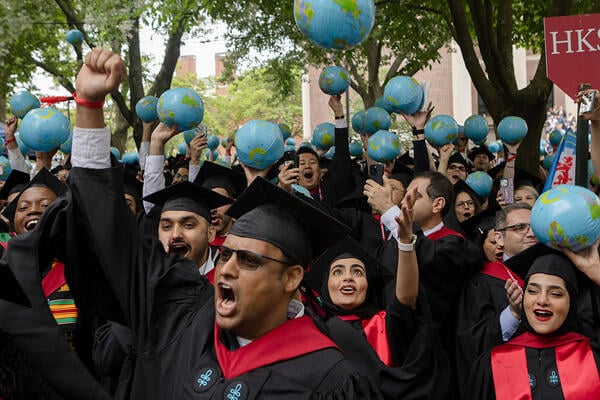
    The Harvard Kennedy School announced a contingency plan for its international students Tuesday in the event that the Trump administration successfully bars the university from enrolling foreign students, according to The Boston Globe.

    The Kennedy School, Harvard’s postgraduate college of government, public policy and international affairs, said that both incoming and returning students could study remotely, and returning students would be given the option to finish their degree at the University of Toronto’s Munk School of Global Affairs and Public Policy. 

    “We are announcing these contingency plans now to alleviate the uncertainty many students feel, but we will not officially launch these programs unless there is sufficient demand from students who are unable to come to the United States,” Kennedy School dean Jeremy Weinstein wrote in an email Tuesday.

    Harvard needs the approval of its accreditor, the New England Commission of Higher Education, to allow students to complete their degrees online, and current students who want to study in Toronto would have to apply for a Canadian visa next month.  

    The Kennedy School is the first college at the university to release its formal contingency plan; others are working on developing their own. HKS is particularly vulnerable to a foreign student ban: 59 percent of its students are international, compared to 24 percent of Harvard’s total student population.

    Harvard is currently suing the Trump administration over multiple attempts to ban its foreign student population, including by revoking the university’s Student Exchange and Visitor Program certification and issuing an executive proclamation. Last Friday, a federal judge granted Harvard a preliminary injunction in one of its court challenges. 

    Even if the Trump administration’s efforts targeting Harvard specifically are struck down by the courts, other moves—such as revoking Chinese students’ visas en masse or banning nonimmigrant visa holders from a dozen countries—could prevent some of the Kennedy School’s current and incoming students from attending.

    Source link

  • Does higher ed still make sense for students, financially? (Bryan Alexander)

    Does higher ed still make sense for students, financially? (Bryan Alexander)

    [Editor’s note: This article first appeared at BryanAlexander.org.]

    Is a college degree still worth it?

    The radio program/podcast Marketplace hosted me as a guest last week to speak to the question.  You can listen to it* or read my notes below, or both.  I have one reflection at the end of this post building on one interview question.

    One caveat or clarification before I get hate mail: the focus of the show was entirely on higher education’s economics.  We didn’t discuss the non-financial functions of post-secondary schooling because that’s not what the show (called “Marketplace”) is about, nor did we talk about justifying academic study for reasons of personal development, family formation, the public good, etc.  The conversation was devoted strictly to the economic proposition.

    The hosts, Kimberly Adams and Reema Khrais, began by asking if higher ed still made financial sense.  Yes, I answered, for a good number of people – but not everyone.  Much depends on your degree and your institution’s reputation.  And I hammered home the problem of some college but no degree.  The hosts asked if that value proposition was declining.  My response: the perception of that value is dropping.  Here I emphasized the reality, and the specter, of student debt, along with anxieties about AI and politics.  Then I added my hypothesis that the “college for all” consensus is breaking up.

    Next the hosts asked me what changing (declining) attitudes about higher education mean for campuses.  I responded by outlining the many problems, centered around the financial pressures many schools are under.  I noted Trump’s damages then cited my peak higher education model.  Marketplace asked me to explain the appeal of alternatives to college (the skilled trades, certificates, boot camps, etc), which I did, and then we turned to automation, which I broke up into AI vs robotics, before noting gender differences.

    Back to college for all: which narrative succeeds it?  I didn’t have a good, single answer right away.  We touched on a resurgence of vocational technology, then I sang the praises of liberal education.  We also talked about the changing value of different degrees – is the BA the new high school diploma? Is a master’s degree still a good idea?  I cited the move to reduce degree demands from certain fields, as well as the decline of the humanities, the crisis of computer science, and the growing importance of allied health.

    After my part ended, Adams and Khrais pondered the role of higher education as a culture war battlefield.  Different populations might respond in varied ways – perhaps adults are more into the culture war issues, and maybe women (already the majority of students) are at greater risk of automation.

    So what follows the end of college for all?

    If the American consensus that K-12 should prepare every student for college breaks down, if we no longer have a rough agreement that the more post-secondary experience people get, the better, the next phase seems to be… mixed.  Perhaps we’re entering an intermediary phase before a new settlement becomes clear.

    One component seems to be a resurgence in the skilled trades, requiring either apprenticeship, a short community college course of study, or on the job training.  Demand is still solid, at least until robotics become reliable and cost-effective in these fields, which doesn’t seem to be happening in at least the short term.  This needs preparation in K-12, and we’re already seeing the most prominent voices calling for a return to secondary school trades training.  There’s a retro dimension to this which might appeal to older folks. (I’ve experienced this in conversations with Boomers and my fellow Gen Xers, as people reminisce about shop class and home ec.)

    A second piece of the puzzle would be businesses and the public sector expanding their education functions.  There is already an ecosystem of corporate campuses, online training, chief learning officers, and more; that could simply grow as employers seek to wean employees away from college.

    A third might be a greater focus on skills across the board. Employers demand certain skills to a higher degree of clarity, perhaps including measurements for soft skills.  K-12 schools better articulate student skill achievement, possibly through microcredentials and/or expanded (portfolio) certification. Higher education expands its use of prior learning assessment for adult learners and transfer students, while also following or paralleling K-12 in more clearly identifying skills within the curriculum and through outcomes.

    A fourth would be greater politicization of higher education.  If America pulls back from college for all, college for some arrives and the question of who gets to go to campus becomes a culture war battlefield.  Already a solid majority of students are women, so we might expect gender politics to intensify, with Republicans and men’s rights activists increasingly calling on male teenagers to skip college while young women view university as an even more appropriate stage of their lives.  Academics might buck 2025’s trends and more clearly proclaim the progressive aims they see postsecondary education fulfilling, joined by progressive politicians and cultural figures.  Popular culture might echo this, with movies/TV shows/songs/bestsellers depicting the academy as either a grim ideological factory turning students into fiery liberals or as a safe place for the flowering of justice and identity.

    Connecting these elements makes me recall and imagine stories.  I can envision two teenagers, male and female, talking through their expectations of college. One sees it as mandatory “pink collar” preparation while the other dreads it for that reason.  The former was tracked into academic classes while the latter appreciated maker space time and field trips to work sites. Or we might follow a young man as he enters woodworking and succeeds in that field for years, feeling himself supported in his masculinity and also avoiding student debt, until he decides to return to school after health problems limit his professional abilities.  Perhaps one business sets up a campus and an apprenticeship system which it codes politically, such as claiming a focus on merit and not DEI, on manly virtues and traditional culture. In contrast another firm does the same but without any political coding, instead carefully anchoring everything in measured and certified skill development.

    Over all of these options looms the specter of AI, and here the picture is more muddy.  Do “pink collar” jobs persist as alternatives to the experience of chatbots, or do we automate those functions?  Does post-secondary education become mandatory for jobs handling AIs, which I’ve been calling “AI wranglers”?  If automation depresses the labor force, do we come to see college as a gamble on scoring a rare, well paying job?

    I’ll stop here.  My thanks to Marketplace for the kind interview on a vital topic.

    *My audio quality isn’t the best because I fumbled the recording. Sigh.

    Source link

  • International students benefit local economies, and this extends to those living and working there

    International students benefit local economies, and this extends to those living and working there

    Universities once again find themselves in the crosshairs of a political argument around migration.

    I suspect no one on these pages needs convincing of the benefits international students bring to the UK: the diversity and vibrancy they add to our campuses, the fees that help our finances add up so we can carry out research and teach home students, the wider economic impact they bring through their fees and their spending in the UK economy, and the long term soft power of goodwill and friendship that our international alumni generate.

    And there is plenty of public opinion research – for example from Public First and UUK in 2023, from King’s College London in 2024, and from British Future in 2025 – that shows that the British public supports international student migration, thinks it brings economic benefits, and doesn’t see cutting numbers as a priority.

    But we have to be clear that we are losing the political argument on the value of international students – as have our HE colleagues in Canada, Australia and the US in recent months.

    A local industry

    This is the case despite the hard facts we have about the positive impacts of international students, including the £42 billion aggregate (2021–22 numbers) annual economic benefit estimated by London Economics. But those facts may not be enough as the political climate changes; we need to be agile in responding to where the political debate is moving.

    For example, we understand that the aggregate economic impact of international students is not disputed within the government. But they are not convinced that positive impacts are felt at the local level. So what do these big, aggregate numbers mean for citizens at the local level? To address that question, the University of York commissioned some rapid work from Public First – building on the London Economics modelling – to show the benefits of international students at constituency level, both as an export industry, and in their impact on domestic living standards.

    The first part of this work was published a few weeks ago at the heart of the debate around the final stages of the immigration white paper. This showed that international higher education is one of our most important export industries. This was counterintuitive for many politicians – who generally think of exports as goods or services which we trade overseas. But in fact, every international student coming and living in the UK is an “export” – bringing in foreign currency and supporting our economy.

    Politicians rightly champion our other UK exports – our cars, our pharmaceuticals, our creative industries. But across the country, higher education is just as, if not more important. We showed that in 26 parliamentary constituencies around the country, higher education is the single largest export industry – and it is in the top three in a total of 102 constituencies, spread around the country. To put it another way, in many towns and cities, higher education is the car plant, or the steel mill, or the pharmaceuticals factory that drives local economies.

    We hear that this evidence of real local impact was significant within Whitehall, and contributed to seeing off some of the wider proposals for restricting student flows that could have been in the immigration white paper.

    Pounds in pockets

    The second half of this research, published today, takes on some of the critique we know has been advanced in government in recent months: that while students may bring economic value in some abstract, aggregate way at national level, there are costs that are felt locally in our towns and cities that reduce living standards.

    Our analysis comprehensively debunks that. Instead, we show that international students are net contributors to the taxpayer, and that at the local level they raise wages and living standards for domestic residents. We calculate that every worker in the UK has higher wages to the value of almost £500 a year purely as a result of international students’ economic contribution. And in more than 100 constituencies, the benefit is much larger, equating to more than two and a half weeks’ wages for the average worker.

    These local-level impacts are often well-recognised by MPs and councillors. They are not yet in national-level debate. So we will continue to make the case for the wider benefits of international students for our towns and cities as well as abstract national GDP figures.

    In addition, we need to push back against the misguided assumptions in the white paper that the proposed new international students levy would have only a minor impact on recruitment, and show in detail why the reduction in numbers would be large, and carry with it an economic loss that would go way beyond universities’ gates and into their local communities. We are pleased to be working alongside colleagues in the sector to do just that.

    In all this we need to recognise the politics of the moment. All governments are political. That is how they got there, and to be so isn’t wrong! We have a government focused at the moment on its electoral prospects, and many of its actions can be explained by a drive to keep its voting coalition together, especially with the insurgent threat of Reform, and especially on the highly politicised issue of migration.

    Universities are well advised to steer clear of party politics. As a vice chancellor, I work without fear or favour to support the needs of staff and students, but also the city and communities around York. But my academic background is as a political scientist so I’m a keen observer of how universities, migration, and their intersection have electoral significance. So, looking at the 100 constituencies we identify in our research which benefit the most from international students either as an export, or in rising domestic wages, it is noteworthy that over 80 per cent of those constituencies are currently held by Labour MPs, often by very narrow margins.

    In those and the many other constituencies where international students bring real, tangible economic benefits, it is important that local citizens and political representatives understand what is at stake when widely held public concerns about migration lead to the targeting a group – international students – who the public both think highly of, and who make a big contribution to local economies.

    Source link

  • Phone bans proliferate as digital media’s harm to students grows clearer

    Phone bans proliferate as digital media’s harm to students grows clearer

    This audio is auto-generated. Please let us know if you have feedback.

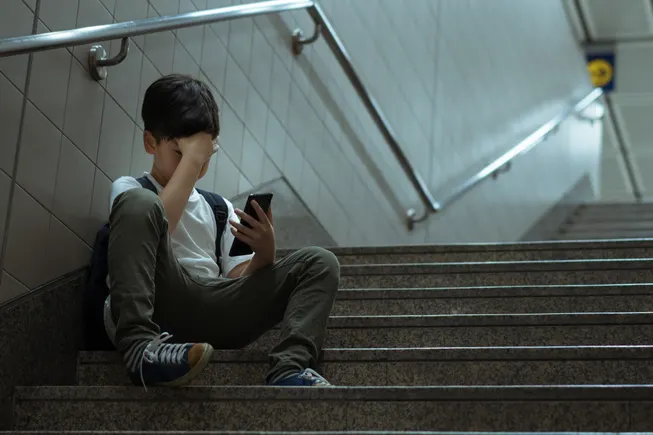
    Even as school cellphone bans proliferate, a growing body of evidence suggests digital media — and cellphone use specifically — is harming child and teen development.

    A meta-analysis of 117 studies published in June found that the relationship between screen time and socioemotional well-being is somewhat of a Catch-22: Increased screen time can lead to emotional and behavioral problems, and children with those problems rely on screens to cope with them. 

    Another study of 4,285 U.S. teens published last week found nearly a third showed increasing addictive behaviors related to social media and almost a quarter for cellphones. These addictive behaviors — rather than screen time alone — were linked to increased risks of suicidal behaviors or thoughts. 

    School phone bans have gained traction across political divides nationwide in recent years, with educators and lawmakers citing both student mental health and academic performance as reasons to restrict cellphones during the school day. 

    As of May, 21 states ranging from California to Utah had instituted a ban or limit on cellphones in the classroom, according to Ballotpedia. 

    Most recently, Nevada Gov. Joe Lombardo signed a law requiring school districts to adopt policies regulating cellphone use during the school day and limiting classroom cellphone use in most cases.

    A separate study released in March — this time examining about 1,500 11- to 13-year-olds in Florida, where cellphones have been banned during class time since 2023 — suggested that restricting cell phones would boost grades and mental health for children who use screens more heavily. 

    The 22% of Florida students surveyed who reported using their favorite app for six or more hours per day were also three times more likely to report getting mostly D’s and F’s than their peers.

    Those students were also 6 times more likely than less-frequent users to report severe depression symptoms — even when ruling out factors like age, household income, gender, parent education, race and ethnicity. 

    Students who always had their cellphone push notifications turned on, which made up about 20% of the sample, were also more likely to report worse grades and to experience anxiety. 

    “Banning students’ access to phones at school means these kids would not receive notifications for at least that seven-hour period and have fewer hours in the day to use apps,” the study’s authors wrote in an overview of the study published by The Conversation, a nonprofit publication written by academic experts. 

    However, that same study found 17% of Florida students who attend schools that ban or confiscate phones report severe depressive symptoms, quadruple the 4% who attended schools that allowed limited phone use and reported those symptoms. 

    Correlation in this case did not necessarily mean causation, however. “We are not suggesting that our survey shows phone bans cause mental health problems,” the authors wrote. “It is possible, for instance, that the schools where kids already were struggling with their mental health simply happened to be the ones that have banned phones. ” 

    Source link

  • The students most likely to drop out – Campus Review

    The students most likely to drop out – Campus Review

    A randomised control trial has found that early intervention support for highly disengaged first-year equity students does not necessarily lead to higher participation.

    Please login below to view content or subscribe now.

    Membership Login

    Source link

  • Texas Students Make Gains in Reading but Struggle with Math, STAAR Scores Show – The 74

    Texas Students Make Gains in Reading but Struggle with Math, STAAR Scores Show – The 74


    Get stories like this delivered straight to your inbox. Sign up for The 74 Newsletter

    Texas’ students saw some wins in reading but continued to struggle to bounce back from pandemic-related learning losses in math, state testing results released Tuesday showed.

    Elementary students who took the State of Texas Assessments of Academic Readiness exam this year made the biggest gains in reading across grade levels. Third graders saw a three percentage point increase in reading, a milestone because early literacy is a strong indicator of future academic success. Progress among middle students in the subject, meanwhile, slowed.

    “These results are encouraging and reflect the impact of the strategic supports we’ve implemented in recent years,” said Texas Education Agency Commissioner Mike Morath. “We are seeing meaningful signs of academic recovery and progress.”

    This year’s third grade test takers have benefited from state investments in early literacy in recent years. Teachers in their classrooms have completed state-led training in early literacy instruction, known as reading academies. The state also expanded pre-K access and enrollment in 2019.

    Morath did acknowledge students needed more help to make similar gains in math. Five years after pandemic-related school closures, students are still struggling to catch up in that subject, the results showed. About 43% of students met grade-level standards for math, a 2 percentage point increase from the previous year, but still shy of the 50% reached in 2019.

    Low performance in math can effectively shut students out of high-paying, in-demand STEM careers. Economic leaders have been sounding the alarm about the implications that weak math skills can have on the state’s future workforce pipeline.

    The STAAR exam tests all Texas public school students in third through eighth grade in math and reading. A science test is also administered for fifth and eighth graders, as well as a social studies test for eighth graders. Science performance improved among fifth and eighth grades by 3 and 4 percentage points respectively, but students in those grades are still below where they were before the pandemic.

    Students in special education also made small gains. English learners, meanwhile, saw drops in all subjects but one — a 4% decrease in reading, a 2% decrease in math, and a 2% decrease in social studies.

    The test scores give families a snapshot of how Texas students are learning. School accountability ratings — which the Texas Education Agency gives out to each district and campus on an A through F scale as a score for their performance — are also largely based on how students do on the standardized tests.

    The test often casts a shadow over classrooms at the end of the year, with teachers across the state saying they lose weeks of valuable instructional time preparing children to take the test. Some parents also don’t like the test because of its high-stakes nature. They have said their kids don’t want to go school because of the enormous pressure the hours-long, end-of-year test puts on them.

    A bill that would have scrapped the STAAR test died in the last days of the 2025 legislative session. Both Republican and Democratic legislators expressed a desire to overhaul STAAR, but in the end, the House and Senate could not align on what they wanted out of an alternative test.

    Legislators this session did approve a sweeping school finance package that included academic intervention for students who are struggling before they first take their STAAR test in third grade. The package also requires teachers get training in math instruction, mirroring existing literacy training mandates.

    Parents can look up their students’ test results here.

    Graphics by Edison Wu

    This article originally appeared in The Texas Tribune, a member-supported, nonpartisan newsroom informing and engaging Texans on state politics and policy. Learn more at texastribune.org.


    Get stories like these delivered straight to your inbox. Sign up for The 74 Newsletter

    Source link

  • Assignments for Politically Disaffected Students (opinion)

    Assignments for Politically Disaffected Students (opinion)

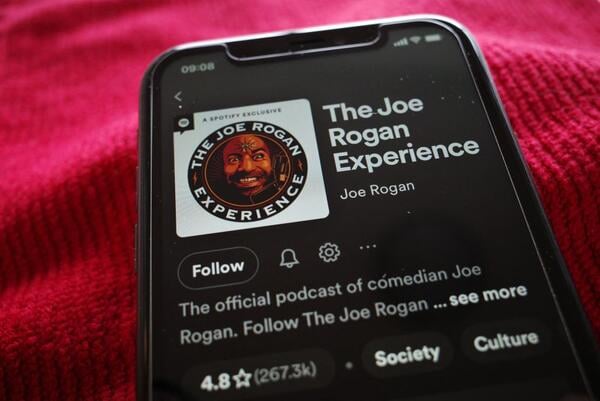
    Joe Rogan is no fan of my work, obviously. The chart-topping conservative influencer famously insists that universities are “cult camps” where professors like me indoctrinate students with leftist ideas. Typically, I do not worry about my haters, but increasingly it seems that if I want to create a meaningful learning experience, I need to.

    I teach first-year undergraduate humanities electives. Like most universities, ours offers large-format 200-student lectures for training in academic writing and critical theory. This would be the “indoctrination” in question, as I introduce students to canonical thinkers from Karl Marx to Sylvia Wynter. These electives are degree requirements, snaring students who might intentionally avoid liberal arts in an otherwise professional degree.

    In the current political climate, many of my students come to the classroom with their minds made up based on authorities who directly undermine my scholarship and profession. Rogan is just one of many conservative anti-intellectuals who regularly attack liberal, feminist, social justice–oriented biases in university education. The result is a polarized atmosphere antithetical to learning: a tangibly mistrustful, sometimes even resentful classroom.

    Although only a small handful of students typically adhere to anti-intellectual doctrine, their small group undermines my authority with risky jokes in the classroom and intense criticism in student back channels (as reported by concerned classmates). This causes undecided students to falter in their trust of my authority, while students who do not share their views nervously censor their contributions.

    Ironically, my dissenting students often do not recognize that I am interested in their views. I am convinced that the way out of this explosive historic moment is through rigorous discussion in educational forums. Like any academic, this is why I teach: I love sincere inquiry, debate and critical engagement, and I was a rabble-rouser myself as a student. But the current classroom mood is less debate and more deadlock.

    So, I spent this year brainstorming with my students to build creative assignments to spin resentment into passion, no matter how opposite my own, welcoming self-directed research and encouraging deeply engaged reading. I offer any one of these assignments, with the goal to bring disaffected, anxious students back to a love of learning and democratized engagement. This is a work in progress, and I welcome suggestions.

    Turn Tensions Into Data: This introductory exercise eases students into an atmosphere of open collegial discussion. Surveys or anonymous polls quantify disagreements, and then we analyze the results as a class.

    Example: Class Belief Inventory—anonymously poll students on hot-button questions (e.g., “Is systemic racism a major problem?”). The objective here would be to compare the class’s responses to national survey data. Potential discussion topics: Why might differences exist? What shapes our perceptions?

    Hostile Influencers as Primary Sources: This in-class activity treats figures like Rogan or Jordan Peterson not as adversaries but as authors of texts to analyze, to disarm defensiveness and position students as critical investigators.

    Example: “Compare/contrast an episode of [X podcast] with a peer-reviewed article on the same topic. How do their arguments differ in structure, evidence and rhetoric? Whom do you find more persuasive, and why?”

    Gamifying Ideological Tensions: This class activity turns assigned readings into structured, rule-bound games where students must defend positions they don’t personally hold.

    Example: Role-Play a Summit—Students are assigned roles (e.g., Jordan Peterson, bell hooks, climate scientist, TikTok influencer) and must collaborate to solve a fictional problem (e.g., redesigning a curriculum). They must cite course readings to justify their choices.

    Therapy for Arguments: This fun early activity teaches students to diagnose weak arguments—whether from Rogan, a feminist theorist or you—using principles of logic.

    Example: Argument Autopsy—Students dissect a viral social media post, podcast clip or course reading. Identify logical fallacies, cherry-picked evidence or unstated assumptions. Reward students for critiquing all sides.

    Intellectual Sleuthing: This is a scaffolded midterm writing assignment building up to a final essay. Ask students to trace the origins of their favorite influencers’ ideas. Many anti-establishment figures borrow from (or distort) academic theories—show students how to connect the dots.

    Example: Genealogy of an Idea—Pick a claim from a podcast (e.g., “universities indoctrinate students”). Research its history: When was this idea popular in mainstream news or on social media? Are there any institutes, think tanks, influencers or politicians associated with this idea? What are the stated missions and goals of those sources? Where do they get their funding? Which academics agree or disagree, and why?

    Leverage “Forbidden Topics” as Case Studies: If students resent “liberal bias,” lean into it: make bias itself the subject of analysis. This might work as a discussion prompt for tutorials or think-pair-share group work.

    Example: “Is This Reading Biased?”—Assign a short text students might call “woke” (e.g., feminist theory) and a countertext (e.g., Peterson’s critique of postmodernism). Have students evaluate both using a rubric: What counts as bias? Is objectivity possible? How do they define “truth”?

    Choose-Your-Own-Adventure Assignments: The final essay assignment gives students agency to explore topics they care about, even if they critique my field. Clear guardrails are important here to ensure rigor.

    Example: Passion Project: Students design a research question related to the course—even if it challenges the course’s assumptions. They must engage with three or more course texts and two or more outside sources, as in favorite influencers or authorities, even those who oppose course themes.

    Red Team vs. Blue Team: For essays, students submit two versions: one arguing their personal view and one arguing the counterpoint. Grading is based on how well they engage evidence, not their stance.

    Elisha Lim is an assistant professor of the technological humanities at York University in Toronto. They used generative AI tools to assist with the editing of this piece.

    Source link

  • Judge Says Harvard Can Enroll International Students for Now

    Judge Says Harvard Can Enroll International Students for Now

    Photo illustration by Justin Morrison/Inside Higher Ed | greenleaf123/iStock/Getty Images | APCortizasJr/iStock/Getty Images

    District Judge Allison Burroughs granted a preliminary injunction to Harvard University on Friday in its case challenging the Trump administration’s efforts to prevent the university from enrolling international students. It’s the latest development in a tit-for-tat legal battle over the ability of more than a quarter of Harvard’s students to remain enrolled. 

    The injunction prevents the Department of Homeland Security from stripping Harvard of its Student Exchange and Visitor Program certification until Burroughs issues a final ruling in the lawsuit. It does not address President Donald Trump’s executive proclamation from earlier this month banning the State Department from issuing visas to international students and researchers attending Harvard; a temporary restriction on that ban expired June 20. 

    Burroughs has not issued an injunction on the Trump administration’s second attempt to revoke Harvard’s SEVP certification, which could take effect Wednesday if she declines to take further action, as Harvard has requested. 

    Source link

  • Many students decide they’re not a ‘math person’ by the end of elementary school, new study shows

    Many students decide they’re not a ‘math person’ by the end of elementary school, new study shows

    This story was originally published by Chalkbeat. Sign up for their newsletters at ckbe.at/newsletters.

    Roughly half of middle and high schoolers report losing interest in math class at least half the time, and 1 in 10 lack interest nearly all the time during class, a new study shows.

    In addition, the students who felt the most disengaged in math class said they wanted fewer online activities and more real-world applications in their math classes.

    Those and other findings published Tuesday from the research corporation RAND highlight several ongoing challenges for instruction in math, where nationwide student achievement has yet to return to pre-pandemic levels and the gap between the highest and lowest-performing students in math has continued to grow.

    Feeling bored in math class from time to time is not an unusual experience, and feeling “math anxiety” is common. However, the RAND study notes that routine boredom is associated with lower school performance, reduced motivation, reduced effort, and increased rates of dropping out of school.

    Perhaps unsurprisingly, the study found that the students who are the most likely to maintain their interest in math comprehend math, feel supported in math, are confident in their ability to do well in math, enjoy math, believe in the need to learn math, and see themselves as a “math person.”

    Dr. Heather Schwartz, a RAND researcher and the primary investigator of the study, noted that the middle and high school years are when students end up on advanced or regular math tracks. Schwartz said that for young students determining their own sense of math ability, “Tracking programs can be a form of external messaging.”

    Nearly all the students who said they identified as a “math person” came to that conclusion before they reached high school, the RAND survey results show. A majority of those students identified that way as early as elementary school. In contrast, nearly a third of students surveyed said they never identified that way.

    “Math ability is malleable way past middle school,” Schwartz said. Yet, she noted that the survey indicates students’ perception of their own capabilities often remains static.

    The RAND study drew on data from their newly established American Youth Panel, a nationally representative survey of students ages 12-21. It used survey responses of 434 students in grades 5-12. Because this was the first survey sent to members of the panel, there is no comparable data on student math interest prior to the pandemic, so it doesn’t measure any change in student interest.

    The RAND study found that 26% percent of students in middle and high school reported losing interest during a majority of their math lessons. On the other end of the spectrum, a quarter of students said they never or almost never lost interest in math class.

    There weren’t major differences in the findings across key demographic groups: Students in middle and high school, boys and girls, and students of different races and ethnicities reported feeling bored during a majority of math class at similar rates.

    Dr. Janine Remillard, a professor at the University of Pennsylvania Graduate School of Education and expert in mathematics curriculum, said that in many math classes, “It’s usually four or five students answering all the questions, and then the kids who either don’t understand or are less interested or just take a little bit more time — they just zone out.”

    Over 50% of students who lost interest in almost all of their math classes asked for fewer online activities and more real-world problems, the RAND study shows. Schwartz hypothesizes that some online math programs represent a “modern worksheet” and emphasize solo work and repetition. Students who are bored in class instead crave face-to-face activities that focus on application, she said.

    During Remillard’s math teacher training classes, she puts students in her math teacher training class into groups to solve math problems. But she doesn’t tell them what strategy to use.

    The students are forced to work together in order to understand the process of finding an answer rather than simply repeating a given formula. All of her students typically say that if they had learned math this way, they would think of themselves as a math person, according to Remillard, who was not involved in the RAND study.

    Chalkbeat is a nonprofit news site covering educational change in public schools.

    For more news on STEM learning, visit eSN’s STEM & STEAM hub.

    Latest posts by eSchool Media Contributors (see all)

    Source link

  • 5 online resources to beat the summer slide

    5 online resources to beat the summer slide

    Key points:

    As the final school bells ring and students head into summer vacation, educators and parents alike are turning their attention to the phenomenon known as the summer slide–the learning loss that can occur when children take a long break from structured academic activity.

    NWEA research notes that students can lose up to two months of math skills over the summer, and reading abilities can also decline, particularly for students from underserved communities.

    But the summer slide isn’t inevitable. With the growing availability of engaging, high-quality online learning tools, students have more opportunities than ever to keep their skills sharp. These tools offer interactive lessons, personalized learning paths, and fun activities that reinforce what students learned during the school year–without making summer feel like school.

    Here are five standout online resources designed to help K-12 students stay on track over the summer months:

    1. Khan Academy: Khan Academy’s free online platform offers comprehensive lessons in math, science, history, and more. Its summer learning programs provide structured plans for students in grades K-12, including daily activities tailored by grade level. Each lesson includes short instructional videos, interactive quizzes, and mastery challenges. For students who want to get ahead or reinforce tricky concepts from the previous school year, Khan Academy is an ideal, self-paced resource.

    Khan Kids, a separate app for younger learners (ages 2-8), combines educational videos, stories, and games that focus on early literacy, math, and social-emotional development.

    2. PBS LearningMedia: PBS LearningMedia curates thousands of free videos, lesson plans, and interactive activities aligned to state and national standards. The content is engaging and age-appropriate, drawing from trusted PBS programs like Wild Kratts, NOVA, and Peg + Cat. During the summer, PBS typically offers special themed weeks–like “Summer of Reading” or “Science Week”–featuring playlists and activity bundles to help children stay curious and engaged.

    For younger children, PBS Kids also provides games and shows that reinforce foundational skills in reading, math, and critical thinking.

    3. ReadWorks: Reading skills are among the most vulnerable to decline during the summer, especially for students who do not have regular access to books or structured reading activities. ReadWorks is a nonprofit platform offering free, research-based reading comprehension materials for grades K-12. Teachers and parents can assign grade-level texts, paired with vocabulary lessons and comprehension questions. The platform also features an Article-A-Day challenge that encourages students to build background knowledge and reading stamina with just 10 minutes a day. ReadWorks is especially helpful for English Language Learners, offering audio versions and question supports to aid comprehension.

    4. Prodigy: For students who struggle to stay motivated during math practice, Prodigy turns learning into a role-playing adventure game. Students solve math problems to earn rewards and level up characters, making the experience both educational and fun. Aligned with state standards and suitable for grades 1-8, Prodigy adapts to each learner’s skill level, offering targeted practice without the pressure of grades or tests. Parents can access dashboards to track progress and set goals over the summer. Prodigy also offers a version for English Language Arts, expanding the platform’s reach beyond numbers.

    5. Smithsonian Learning Lab: For families looking to incorporate cross-curricular learning, the Smithsonian Learning Lab provides a treasure trove of multimedia collections that blend history, science, art, and culture. Students can explore virtual exhibits, complete inquiry-based lessons, and create their own digital portfolios. The platform is well-suited for middle and high school students, especially those interested in project-based learning and critical thinking. Whether studying the Civil Rights Movement or learning about ecosystems, students can explore real artifacts, images, and primary sources from the Smithsonian’s vast collection.

    Keeping minds active and curious

    Experts emphasize that summer learning doesn’t need to mirror the structure of the traditional classroom–keeping students intellectually engaged as they explore their personal interests reinforces academic skills in an low-stress environment.

    Families can also incorporate daily routines that promote learning–reading together before bed, practicing math while cooking, or exploring nature to spark scientific curiosity.

    As the digital learning landscape expands, there are more tools than ever to support students year-round. With just 20-30 minutes of meaningful academic engagement each day, students can maintain their momentum and return to the classroom in the fall ready to learn.

    Laura Ascione
    Latest posts by Laura Ascione (see all)

    Source link