Many school districts have adopted an evidence-based literacy curriculum called the “science of reading” that features phonics as a critical component.
Phonics strategies begin by teaching children to recognize letters and make their corresponding sounds. Then they advance to manipulating and blending first-letter sounds to read and write simple, consonant-vowel-consonant words – such as combining “b” or “c” with “-at” to make “bat” and “cat.” Eventually, students learn to merge more complex word families and to read them in short stories to improve fluency and comprehension.
In practice, Louisiana used a variety of science of reading approaches beyond phonics. That’s because different students have different learning needs, for a variety of reasons.
Yet as a scholar of reading and language who has studied literacy in diverse student populations, I see many schools across the U.S. placing a heavy emphasis on the phonics components of the science of reading.
If schools want across-the-board gains in reading achievement, using one reading curriculum to teach every child isn’t the best way. Teachers need the flexibility and autonomy to use various, developmentally appropriate literacy strategies as needed.
This was the case with my own child. He had been a proficient reader from an early age, but struggles emerged when his school adopted a phonics program to balance out its regular curriculum, a flexible literature-based curriculum called Daily 5 that prioritizes reading fluency and comprehension.
I worked with his first grade teacher to mitigate these challenges. But I realized that his real reading proficiency would likely not have been detected if the school had taught almost exclusively phonics-based reading lessons.
Another weakness of phonics, in my experience, is that it teaches reading in a way that is disconnected from authentic reading experiences. Phonics often directs children to identify short vowel sounds in word lists, rather than encounter them in colorful stories. Evidence shows that exposing children to fun, interesting literature promotes deep comprehension.
Balanced literacy prompts children to learn words encountered in authentic literature during guided, teacher-led read-alouds – versus learning how to decode words in word lists. Teachers use multiple strategies to promote reading acquisition, such as blending the letter sounds in words to support “decoding” while reading.
Another balanced literacy strategy that teachers can apply in phonics-based strategies while reading aloud is called “rhyming word recognition.” The rhyming word strategy is especially effective with stories whose rhymes contribute to the deeper meaning of the story, such as Marc Brown’s “Arthur in a Pickle.”
The rhyming structure of ‘Arthur in a Pickle’ helps children learn to read entire words, versus word parts.
After reading, teachers may have learners arrange letter cards to form words, then tap the letter cards while saying and blending each sound to form the word. Similar phonics strategies include tracing and writing letters to form words that were encountered during reading.
There is no one right way to teach literacy in a developmentally appropriate, balanced literacy framework. There are as many ways as there are students.
What a truly balanced curriculum looks like
The push for the phonics-based component of the science of reading is a response to the discrediting of the Lucy Calkins Reading Project, a balanced literacy approach that uses what’s called “cueing” to teach young readers. Teachers “cue” students to recognize words with corresponding pictures and promote guessing unfamiliar words while reading based on context clues.
A 2024 class action lawsuit filed by Massachusetts families claimed that this faulty curriculum and another cueing-based approach called Fountas & Pinnell had failed readers for four decades, in part because they neglect scientifically backed phonics instruction.
The intention here is for learners to acquire words in the context of engaging literature. But critics of Calkins contend that “cueing” during reading is a guessing game. They say readers are not learning the fundamentals necessary to identify sounds and word families on their way to decoding entire words and sentences.
Here are five evidence-based tips to promote reading for all readers that combine phonics, balanced literacy and other methods.
1. Maintain the home-school connection. When schools send kids home with developmentally appropriate books and strategies, it encourages parents to practice reading at home with their kids and develop their oral reading fluency. Ideally, reading materials include features that support a diversity of learning strategies, including text, pictures with corresponding words and predictable language.
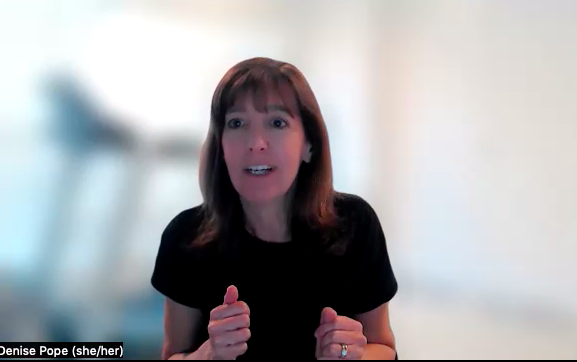
Tired of talking about AI? That’s too bad. The technology remains the most impactful force in education. The challenge becomes avoiding all the Claptrap. Thankfully, that’s where Denise Pope, Co-Founder of Challenge Success at the Stanford Graduate School of Education, comes in.
I had the chance to explore the current AI state-of-play from her perspective. One striking disparity I haven’t heard talked about: While AI usage among students has skyrocketed—from 25% to 60% at the middle school level and 45% to 75% at the high school level over just two school years—only 32% of teachers report using AI for academic purposes.
This gap has created what Denise describes as an educational “La La Land,” where students are experimenting with AI tools while many schools lack clear policies or guidance. The absence of structured approaches is breeding anxiety among both educators and students, who are left wondering when and how AI should appropriately be used in academic settings.
Click through to hear how Denise believes this issue can be addressed:
Kevin is a forward-thinking media executive with more than 25 years of experience building brands and audiences online, in print, and face to face. He is an acclaimed writer, editor, and commentator covering the intersection of society and technology, especially education technology. You can reach Kevin at [email protected]
Our charter school, Westbrook Academy, has been serving middle and high school students in the South Los Angeles area for the past six years and stands as a beacon of opportunity for our community. With a student body comprising nearly 99 percent Black and Latinx individuals hailing from historically under-resourced communities, we confront the realities of poverty and the accompanying insecurities head-on.
Despite the odds, our 400 students consistently demonstrate remarkable resilience and a profound capacity for excellence. Our institution is supported by generous donors and funding sources. Operated and managed by the education nonprofit LA Promise Fund, which provides students with academic and enrichment opportunities that support our mission to spark passion, empower leadership, and prepare them for their chosen college and career paths.
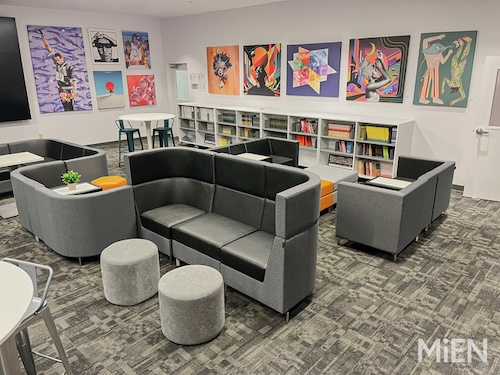
At one point, our high school students were learning in a church because we didn’t have a traditional classroom set-up. We also lacked the equipment that a traditional high school might have. This changed when we moved into our forever home in South Gate, where an on-campus Empowerment Center serves as a modern, welcoming “student hub.”
Designed and outfitted by MiEN and Meteor Education, the Empowerment Center is where kids go to hang out, collaborate, and/or participate in school club activities. The hub is also set up with two wellness rooms where students can go to debrief and disconnect from a long day or just the stresses of being a student. It’s there for the students’ use.
Here are the steps we took to create a space that consistently makes jaws drop and impresses parents who never thought their children would have access to such a warm, welcoming communal space on campus:
Add some flexibility into the process. Our original goal was to open the Empowerment Center’s doors in time for the 2023-24 school year, but getting it done the right way would require a bit more time. Our partners were willing to listen to us in terms of what we wanted to create, but within the realistic timelines. That was really cool.
Acknowledge the financial limitations. We largely relied on fundraising for this project and knew that some things just weren’t going to be realistic. To other schools in similar situations, I’d recommend staying flexible enough to hit the timelines and get all of the bases covered while keeping student needs in mind. We can have all the bells and whistles, but at the end of the day, if the car runs, the car runs. We know we can always add a new paint job later.
Get the right partners onboard early. As we went through the steps of designing the Empowerment Center, we learned a lot about architecture, planning, and construction. Through it all, having the right partners in its corner helped the school achieve its goals within budget and on time. It was really great to have our design and furniture partners sharing their best practices and other insights with us. We knew what we wanted to do, and a lot of the ideas came from our families and students. We just needed them to show us how we could get those ideas as close to reality as possible.
Make it personal. Special features we wanted in our Empowerment Center included a huge, interactive flatscreen TV that students, teachers, and guest speakers use to interact and work together. There’s also a large selection of donated books, the latest technology tools, and artwork that was personally selected by an art curation team. They were able to secure artists from the LA community to create and share visuals that our students are really familiar with. For example, some of the artwork spotlights female empowerment (i.e., with photos of authors like Octavia Butler) and the importance of acknowledging indigenous people. Everything in the hub is meant to spark curiosity.
Brace yourself for some jaw-dropping moments. At our ribbon-cutting ceremony last year, our parents’ jaws were on the floor. They just never thought these resources would be available to their kids. A lot of them grew with us being in the church and a co-located space, and then we asked them to trust us to deliver on our promise, and now we’re able to show that as the reward for supporting us. We feel really proud that our parents were just over the moon about it.
Hitting it out of the park
Reflecting on the process we put in place to get our modern student hub designed, built, and open for business, I can say that the end result is an engaging, collaborative space that can be used for hanging out, structured learning, or a little of both. I think we really hit the ball out of the park with this innovative space.
Student, teacher, and family feedback on the Empowerment Center has been extremely positive. Everyone loves it, and students are always excited to come and spend time in the modern, comfortable space that’s equipped with the technology and tools they need to be able to learn and engage.
Jade Stevens, LA Promise Fund and Westbrook Academy
Jade Stevens is the senior director of communications for the LA Promise Fund and Westbrook Academy in Los Angeles, CA.
Latest posts by eSchool Media Contributors (see all)
New Jersey students with disabilities are the least likely in the nation to spend their days surrounded by peers without disabilities.
One underlying reason: a sprawling network of separate schools that allows districts to outsource educating them.
New Jersey has more than a hundred private schools, plus eight county-run districts specifically for students with disabilities.
Districts spend hundreds of millions of dollars placing students in private schools rather than investing in their own staffing and programs — placements that cost New Jersey taxpayers $784 million in 2024, not including transportation. That’s up from about $725 million the year before. This can create a self-perpetuating cycle that increases reliance on separate schools and, experts say, may violate students’ federal right to spend as much time as possible learning alongside students without disabilities.
In many cases, parents say school administrators are too quick to send children out of district and pressure families to agree to those settings. Other times, parents choose to send their child to a separate school, sometimes feeling that they have no choice after repeatedly failing to get their kids the help they need in their local school.
“Whatever it is that their kids need within the district, they’re not getting,” said special education parent and advocate Amanda Villamar, who works with families throughout New Jersey. “The question becomes: Why are these services in private schools and not necessarily integrated into our public school system?”
In all, about 30,000 students with disabilities in New Jersey — or 13 percent— attend separate private or public schools, according to The Hechinger Report’s analysis of federal data. That’s the highest percentage in the country. Nationwide, 4 percent attend separate schools.
New Jersey’s history of failing to include children with disabilities in public school classrooms dates back to the 1910s. That’s when the state began promoting separate schools for students with disabilities as a more humane alternative to barring them from schools altogether.
Nationwide, only 1 in 5 students with disabilities were enrolled in the public school system in the 1970s, when Congress passed the Individuals with Disabilities in Education Act or IDEA. The law enshrines integration by saying students with disabilities have a right to learn alongside students without disabilities to the “maximum extent” possible and that they should be placed in the “least restrictive environment.”
Across the nation, parents and children fought state laws excluding students with disabilities from public schools — with fights in Washington D.C. and Pennsylvania fueling the passage of IDEA. It wasn’t until 1992 that New Jersey repealed its statutes allowing public schools to exclude “untrainable” children with disabilities. By then, separate schools were an integral part of the state’s highly decentralized education system, which today comprises roughly 600 districts.
New Jersey Department of Education officials said the state is committed to ensuring students with disabilities are in the most appropriate school setting based on individual needs, and that includes out-of-district programs.
“New Jersey is uniquely positioned in this regard, with a longstanding infrastructure of out-of-district options and many small local public school districts,” department spokesman Michael Yaple said in an email. “These and other factors have contributed to the state’s historical reliance on a wide array of specialized programs designed to offer diverse, individualized educational options for students with disabilities.”
The rate at which New Jersey school districts place students in separate schools has declined over the past two decades. In the same period, however, more parents chose to send their children to private schools, sometimes because they felt they had no other viable options.
Some parents say there are significant trade-offs when their child leaves their district school.
Ellen Woodcock’s son, a fifth grader, attends a county-run school for students with disabilities where she says teachers understand his autism much better than they did in her home district.* Despite her son’s fascination with geography, however, teachers spend little time on science or social studies. The school has no library, and the day ends an hour earlier than his district elementary school. School staff focus on teaching social skills, but he’s lost the chance to model the behavior of peers without disabilities.
Left out
New Jersey has the nation’s lowest inclusion rates for students with disabilities. The Hechinger Report investigated why — and visited places that show how it doesn’t need to be that way.
Do you have experiences with special education you’d like to share with our journalists?
“I feel like he’s not being challenged, like he’s kind of pigeonholed,” Woodcock said. “We just felt like we didn’t have a choice.”
Her son spent kindergarten through second grade learning in general education classrooms at his local neighborhood school in Haddonfield, New Jersey, and she was happy with the social and academic progress he was making. In third grade, however, things changed. The school shifted him into a separate classroom for significant parts of the day. Woodcock said school staff seemed unable, or unwilling, to address how his autism affected his learning and provide the right support to account for it. She felt he was unwanted.
In the middle of fourth grade, she said she reluctantly transferred him to a specialized school where he spent his day with other students with autism.
“It was almost out of desperation,” Woodcock said. “It was like, let’s get him out of the school district, because we feel like they can’t support him. It was a fight all the time to get him what he needed.”
Haddonfield district officials said privacy laws prevent them from commenting on individual students but noted that the percentage of students with disabilities who spend almost all of their time in general education classrooms is significantly higher than the state’s average. About 69 percent of Haddonfield students with disabilities spend at least 80 percent of the school day in general education classrooms, compared with 45 percent statewide, according to state Education Department data.
“We are proud of our inclusive practices and the strong sense of belonging we strive to create for all students,” district officials said in a statement. “The least restrictive environment can look different for each student.”
In Haddonfield, 19 percent of parents with students with disabilities choose to enroll their children in private schools, compared with 7 percent statewide.
Woodcock decided to move her son back to the district next year, where he’ll start sixth grade at the local middle school. She understands that her son may need to be pulled out of class to learn a subject like math in a special education resource room — but she believes he can, and should, learn in general education classrooms as well.
Under IDEA, students with disabilities should be placed in separate schools or classes only if their disability makes it too difficult for them to learn in a regular classroom, even with extra help and support. A team made up of a child’s parents, teachers, school district officials and, when appropriate, the child, decide on a placement together and must review it each year.
The federal Department of Education says those teams have to make this decision based on an individual child’s needs — not solely because of the kind of disability, how significant the child’s needs are or whether the school has the money or the staff. In New Jersey, however, some parents say schools too often determine placement on a child’s diagnosis alone.
Observers, including special education advocates and attorneys, say school districts and leaders of separate schools tend to argue it would be too difficult for all of New Jersey’s hundreds of public school districts to provide services for all types of disabilities. That’s fueled a reliance on private and county-run separate schools, many of which have classrooms or programs focused on a specific disability, such as autism or dyslexia, with specially trained teachers.
Districts sometimes launch specific special education programs — applied behavioral analysis classrooms for students with autism, for example — only to abandon them after challenges paying for them or finding qualified staff, said Paul Barger, a special education lawyer in Irvington, New Jersey.
“Instead of continuing to develop their own programs in the districts, they went ahead and just said they’re placing out into state-approved private school programs,” Barger said.
Returning some students with disabilities to in-district schools would require more money. Lawmakers in New Jersey are debating the governor’s proposal to boost funding for special education services in public schools by $400 million for the next school year. Advocates say that’s an opportunity to build stronger special education systems in public schools. The governor also proposed flat funding of $420 million for private school tuition payments for students with disabilities.
Some parents, unhappy with the services they see in public districts, prefer private schools: A growing number pay for their children to attend. That’s despite the fact that those parents who choose private schools lose federal protections, including the rights to raise formal complaints.
ASAH, the group representing New Jersey private schools for students with disabilities, which enroll more than 10,000 students, points out the lack of special education services in public districts. It tells parents that poorly trained paraprofessionals in public schools can be stigmatizing, and placing students in self-contained classrooms doesn’t make students feel valued or included. The group, formerly known as the Association of Schools and Agencies for the Handicapped, argues private schools may not be more costly to the state than public schools once pensions are factored in.
Students with disabilities have the right to options like private schools, the association’s executive director John Mulholland said in an interview.
“It really is an individualized determination, and merely just being a part of your home district isn’t always a least restrictive environment,” he said.
Unlike for public schools, the federal government doesn’t collect data from private schools about how often their students interact with peers without disabilities. According to the association’s recent study of 5,300 students served by ASAH schools, 262 students planned to leave their private schools in the 2022-23 school year to return to their home district. That report suggests such a move was less likely for children with autism and multiple disabilities.
Mulholland said private schools may offer some interaction with students without disabilities through community service or sporting events. His association’s analyses have found that students who start at a private school earlier are more likely to return to their public school district.
“If students come to us younger, they can get the intensive support they need or return to their school districts — many of our members pride themselves on that turnaround,” Mulholland said.
Nicole Lannutti, of Washington Township in Gloucester County, said her daughter Sophia, who is non-verbal and has multiple disabilities, attended a private preschool for one year at a cost to the district of roughly $90,000. (New Jersey requires school districts to provide preschool for students with disabilities.)
Lannutti pushed to get Sophia into the public school system for a second year of preschool and then elementary school, where she said her daughter thrived in a school that prioritized inclusion. But that changed in middle school, where her mom says she’s had to push to have her daughter included even in lunch, recess and extracurricular activities. Washington Township school district did not respond to requests for comment.
Lannutti said her local public school is still the most appropriate setting for her child, who will enter seventh grade in the fall and has made friends by participating in the school play. The school agrees, and said as much in her education plan. Lannutti said private schools play an important role, but public schools should work harder to serve more students and fulfill their civil right to an education. “When it comes to my kid, it’s not that she should go because this district can’t handle it,” Lannutti said. “They should learn how to do it.”
*Correction:This story has been updated to correct Ellen Woodcock’s son’s current grade level.
The Hechinger Report provides in-depth, fact-based, unbiased reporting on education that is free to all readers. But that doesn’t mean it’s free to produce. Our work keeps educators and the public informed about pressing issues at schools and on campuses throughout the country. We tell the whole story, even when the details are inconvenient. Help us keep doing that.
This audio is auto-generated. Please let us know if you have feedback.
Dive Brief:
A federal judge on Wednesday signed off on a joint motion from the U.S. Department of Justice and Texas to strike down the state’s 24-year-old law offering in-state tuition rates to undocumented students.
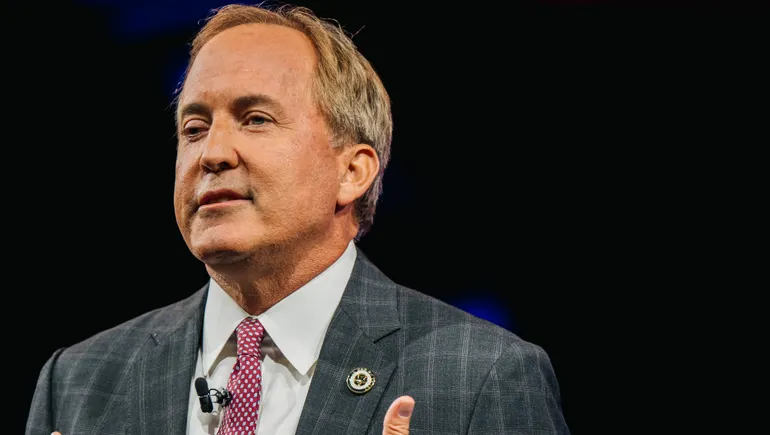
Texas Attorney General Ken Paxtoncalled the law a “discriminatory and un-American provision” in a statement and claimed victory for the court order holding it to be unconstitutional.
The change, effective immediately, will likely affect tens of thousands of Texas students. One report estimated that 59,000 undocumented students in the U.S. attended Texas colleges in 2021.
Dive Insight:
More than two decades ago, the Texas Legislature passed a bipartisan bill removing immigration status as an eligibility factor for in-state tuition. If an undocumented student attended a Texas high school, graduated or received a GED and met “the minimum residency, academic, and registration criteria,” they could enroll at a public state college at the in-state rate.
Then-Gov. Rick Perry signed the bill into law, making Texas the first state with such a policy.
Since then, 24 states and Washington, D.C., have enacted policies that allow undocumented students to attend at least some public colleges at in-state rates. Florida’s law is set to be revoked effective July 1.
DOJ sued Texas over its policy on Wednesday, with U.S. Attorney General Pam Bondi arguing that it illegally offered undocumented students benefits not provided to all U.S. citizens.
“The Justice Department will relentlessly fight to vindicate federal law and ensure that U.S. citizens are not treated like second-class citizens anywhere in the country,” she said in a statement.
Texas voiced support for DOJ’s lawsuit soon after it was filed. But in the short time prior to U.S. District Judge Reed O’Connor’s sign-off, student advocates questioned the legal standing of DOJ’s allegations.
“To suggest that undocumented students are receiving benefits denied to citizens is false and misleading,” Monica Andrade, director of state policy and legal strategy at The Presidents’ Alliance on Higher Education and Immigration, said in a Wednesday statement.
“In fact, any U.S. citizen who meets the same criteria — such as attending and graduating from a Texas high school — qualifies for in-state tuition. These requirements apply regardless of immigration status,” she said.
Gaby Pacheco, president and CEO of the undocumented youth advocacy group TheDream.US, called the lawsuit “harmful and self-defeating for the future of Texas.”
Average in-state costs for Texas public colleges are below the national average, $8,195 versus $9,750 in 2022-23, respectively,according to the Education Data Initiative.
But for out-of-state students, tuition is significantly higher. At the University of Texas-Austin, for example, out-of-state students paid $48,712 in 2024-2025, compared to $13,576 for state residents.
Prior to Bondi’s lawsuit, the Texas Legislature this session had considered a bill to repeal in-state tuition eligibility for undocumented students. The proposal, which did not advance, would have also required such students who had already received in-state tuition to pay the difference within 30 days of being notified or risk having their diplomas withheld.
Professor Jack Lipton scored a victory for free speech last week after a federal court allowed his lawsuit to move forward against two Michigan State University trustees who he claims not only urged students to call him racist, but told them how to phrase it.
In his lawsuit, Lipton alleged that two trustees, Rema Vassar and Dennis Denno, met with MSU students, encouraged them to file complaints against Lipton with MSU’s internal civil rights office, and asked students to condemn Lipton as racist in public statements, op-eds, and on social media. MSU hired the law firm Miller & Chevalier to conduct an independent investigation, producing a report you can read online. According to Lipton, it found that Vassar and Denno planned the attacks and even provided others with specific language to paint Lipton as racist, anti-Palestinian, and anti-Muslim.
For example, in one recorded conversation, Denno told students, “The other thing you can do to help us is attack Jack Lipton, the Chair of the Faculty Senate . . . call him out, call him a racist.”
What was Lipton’s “racist” crime?
In October 2023, at a public Board of Trustees meeting that followed an open letter accusing then-BOT Chair Vassar of ethics violations, Lipton read a resolution on behalf of faculty calling for Vassar’s resignation. The meeting erupted in chaos, marked by jeers from Vassar’s supporters.
The Constitution doesn’t cease to exist just because someone’s feelings got hurt at a trustee meeting.
The next day, while making clear he was speaking in his personal capacity and not as a faculty representative, Lipton told a reporter that Vassar could have stopped the chaos of the meeting with “a single statement … yet she elected to let the mob rule the room.”
That single word — mob — triggered what Lipton describes as a coordinated retaliation campaign by Vassar and Denno.
Lipton apologized for using the word “mob,” as well as for any unintended racial undertones, but did not stop calling for accountability over Vassar’s alleged ethics violations — and he says Vassar and Denno’s harassment of him continued.
In November 2023, the NAACP Michigan State Conference Youth & College Division released a statement accusing Lipton of “racial terrorism.” Also that month, the organization Diverse: Issues In Higher Education published an op-ed arguing that Lipton had used the word “mob” because he wanted to traumatize black and Palestinian students. At a BOT meeting that December, Denno read a statement accusing Lipton of “criminalizing students” and described his use of the word “mob” as “racism and violent language.”
What’s more, even though the board eventually voted to censure both Vassar and Denno, as advised by investigators for a range of misconduct including their attacks on Lipton, Vassar didn’t stop there. At a meeting in September 2024, she mocked Lipton and questioned his right to speak on matters of civil discourse, which he cites as yet another effort to chill his speech.
In language as dry as it was devastating, the court summarized the allegations that these trustees abused their power to carry out what amounts to a smear campaign. Lipton claims that Vassar and Denno “used their positions as BOT members to attack Lipton for the comment he made as a private citizen” and “used their BOT pulpit to funnel adverse action towards Lipton via proxies, leveraging their BOT membership to speak through students, supporters, and members of the public.”
The court also noted that Lipton’s original “mob” comment was “speech regarding matters of public concern,” as it critiqued the behavior of a public official at a public meeting, and Lipton made the remark as a private citizen. The First Amendmentprotectsfaculty when they speak as private citizens on matters of public concern, such as raising state university ethics violations to the media, as Lipton did.
UPDATE: Another federal appeals court backs academic free speech for public employees
After FIRE secured a lawyer for a law professor at the University of Illinois Chicago, the school reached a resolution but later reneged on the deal. That’s when the professor sued.
While the court dismissed MSU and its Board of Trustees as defendants, Lipton is now free to pursue his claims against Vassar and Denno themselves — and they have not exactly covered themselves in glory. The university investigation that recommended their censure found that Vassar had taken courtside tickets and free flights while Denno had pressured consultants reviewing MSU’s response to the 2023 mass shooting on campus to tone down any criticism of the trustees. In fact, just this week, Gov. Gretchen Whitmer declined the MSU board’s official request to remove Vassar and Denno, though the governor’s counsel said this “by no means indicates a condoning of the conduct alleged in the referral.” Vassar and Denno may have retained their seats on the board, but they are hardly out of the woods.
Now, Lipton’s case moves to discovery, where we’ll get a closer look at how MSU’s top brass reacted when a faculty member stepped out of line by doing his civic duty, and potentially to trial. While this week’s court decision is far from a final ruling, it shows the court believes Lipton’s allegations deserve to be heard, and it’s a reminder that the Constitution doesn’t cease to exist just because someone’s feelings got hurt at a trustee meeting.
CINNAMINSON, N.J. — Terri Joyce believed that her son belonged in a kindergarten classroom that included students with and without disabilities.
The year before, as a 4-year-old, he happily spent afternoons in a child care program filled with typically developing children, without any extra support. Like other kids his age, her son, who has Down syndrome, was learning about shapes and loved sitting on the rug listening to the teacher read books aloud. His speech delay didn’t prevent him from making friends and playing with children of differing abilities and, during the summer, he attended the same program for full days and would greet her with big smiles at pick up time.
But when Joyce met with school district administrators ahead of her son’s kindergarten year, they told her that he would need to spend all day in a classroom that was only for students with significant disabilities.
“They absolutely refused to even consider it,” Joyce said. “They told us, ‘We move so fast in kindergarten, he needs specialized instruction, he’ll get frustrated.’”
It was the separate classroom that left him frustrated.
Terri Joyce said her son, who has Down syndrome, has thrived after she fought for him to be included in a general education classroom. Credit: Yunuen Bonaparte for The Hechinger Report
Under federal law, students with disabilities — who once faced widespread outright exclusion from public schools — have a right to learn alongside peers without disabilities “to the maximum extent” possible. That includes the right to get accommodations and help, like aides, to allow them to stay in the general education classroom. Schools must report crucial benchmarks, including how many students with disabilities are learning in the general education classroom over 80 percent of the time.
More than anywhere else in the country, New Jersey students with disabilities fail to reach this threshold, according to federal data. Instead, they spend significant portions of the school day in separate classrooms where parents say they have little to no access to the general curriculum — a practice that can violate their civil rights under federal law.
Just 49 percent of 6- and 7-year-olds with disabilities in the state spend the vast majority of their day in a general education classroom, compared with nearly three-quarters nationally. In some New Jersey districts, it was as low as 10 percent for young learners. Only 45 percent of students with disabilities of all ages are predominantly in a general education classroom, compared to 68 percent nationwide.
For over three decades, the state has faced lawsuits and federal monitoring for its continued pattern of unnecessarily segregating students with disabilities and regularly fails to meet the targets it sets for improving inclusion.
Surrounded mostly by children who had trouble communicating, Terri Joyce’s son’s speech development stalled. He wasn’t exposed to what his peers in the general education classroom were learning — like science and social studies.
For Terri Joyce, getting her son included in a general education classroom “was a part-time job” and meant staying on top of, and documenting, his academic and social progress. Credit: Yunuen Bonaparte for The Hechinger Report
Joyce tried mediation with the Cinnaminson district but they refused to budge. In the end, she hired a lawyer, filed a due process claim with the state and succeeded in having her son placed in a classroom that included students with and without disabilities the next year, repeating kindergarten to see if he could regain the skills he had lost. The process cost her family thousands of dollars.
Related: Become a lifelong learner. Subscribe to our freeweekly newsletter featuring the most important stories in education.
The Hechinger Report spoke with more than 80 parents, researchers, lawyers, advocates and school officials across the state who described a widespread failure to devote resources to integrating students with disabilities — and a decentralized system that gives enormous power to district leaders, who have long been able to refuse to prioritize inclusion without facing consequences from the state or federal government.
New Jersey is known nationally as a leader in public education, but the state’s governance system has led to inclusion rates that vary dramatically between districts. As a result, a child who is placed in a separate classroom for the entire day in one district could be included all day in a general education classroom in a neighboring one.
“Mindset is the biggest barrier,” said Michele Gardner, executive director of All In for Inclusive Education and previously an administrator for 15 years in the Berkeley Heights district. “There are educators, parents, administrators and physicians who truly believe that separate is better for children with and without disabilities. With more than 600 districts, local control makes change harder.”
Experts say integrating students with disabilities in general education should be easiest, and can be the most beneficial, in the early years. Researchers have found students with and without disabilities — particularly the youngest learners — can benefit when inclusion is done with enough staffing and commitment. Young children also learn from watching each other, and parents worry denying students with disabilities this chance can have lasting damage on them academically and emotionally. Worldwide, inclusion is considered a human right helping all children develop empathy and prepare for society after graduation.
Too often, New Jersey parents say, young learners are placed right away in separate classrooms based on a diagnosis — as Joyce’s son was — rather than an assessment of what support they actually need.
Just over a decade ago, New Jersey settled a class-action lawsuit filed by parents and advocacy groups over student placement, which required years of state monitoring, a new stakeholder committee, and training and technical assistance for districts with the lowest rates of inclusion.
But since then, the proportion of young students in the general education classroom the vast majority of the day actually decreased by about 5 percentage points, from 54 percent in the 2013-14 school year. Nationwide, there was no such drop.
“We are certainly seeing a trend that, even at younger ages, students are being shuttled into segregated schooling and never really starting in inclusive experiences,” Syracuse University inclusive special education professor Christine Ashby said of New Jersey and other states.
Ashby, who also runs the university’s Center on Disability and Inclusion, said students then tend to stay in separate — commonly called self-contained — classrooms, where they may receive individualized instruction alongside peers with disabilities but may be less prepared for life after high school.
For Terri Joyce, the opportunity she fought for her son to have proved worth it. It took him time to adjust, but with the help of an aide, he settled in and, now in first grade, is thriving alongside his general education peers once again.
“It was like night and day,” said Joyce. “His speech improved. He loves school. He has friends. He gets invited to birthday parties.”
Terri Joyce is happy with how her son’s writing skills have developed in first grade while learning in a general education classroom. Credit: Yunuen Bonaparte for The Hechinger Report
New Jersey Department of Education officials declined a request for an interview, but said in a statement that the agency is working with schools statewide to improve how often students with disabilities are placed in general education classrooms through training, technical assistance and programs promoting inclusion. A new website provides a detailed look at each district’s data, broken down by grade and type of disability.
“All placement decisions must be made on an individual basis and there is no one-size-fits all standard or outcome that should be applied to every district, school or student,” Laura Fredrick, the department’s communication director, said in the emailed statement.
Fredrick said districts that fail to meet state goals for increasing inclusion may face more intensive monitoring, but there are no direct financial penalties or automatic consequences for failing to improve. She also noted that the state pays for voluntary trainingto increase inclusion in K-12 schools.
That program has helped in some districts, but a limited number of schools have participated so far and space is limited — some that have applied for the training have been turned away.
In Cinnaminson, district officials said they could not comment on specific students but that school officials and parents work together on placement decisions.
“To the fullest extent possible, we strive to place students in general education classrooms for the most inclusive educational experience,” Superintendent Stephen Cappello said in a statement.
Some experts said the data suggests that, unlike other states, New Jersey districts do a good job providing individualized services that students need. Autism New Jersey clinical director Joe Novak said in contrast, “There are certain districts, or states, where the default may simply be to place the child in general education and say, ‘Well, best of luck.’”
Indeed a frequent complaint from some parents is the lack of specialized services in general education classrooms, especially because of staffing shortages or lack of expertise. In those cases a student may be counted as included in a general education classroom but without the support they need, which advocates on both sides of the debate say can be harmful.
“New Jersey is probably doing a lot of things right, because it means we’re probably really customizing what makes sense for the individual,” Novak said
Yet others say the state can improve inclusion rates that are sharply lower than the nation’s.
The federal government doesn’t say how many students should be included or for how much of the school day. States set targets for inclusion rates but typically don’t fine or sanction districts for not meeting them. States can also take other steps like requiring training or administrative changes for districts. Advocates say New Jersey districts have little to lose for repeatedly falling below the state’s own targets for including children with disabilities.
Left out
New Jersey has the nation’s lowest inclusion rates for students with disabilities. The Hechinger Report investigated why — and visited places that show how it doesn’t need to be that way.
Do you have experiences with special education you’d like to share with our journalists?
Oversight from the federal government could also diminish going forward. Although the Trump administration pledges to continue funding special education, advocates warn the planned dismantling of the Department of Education, including its civil rights enforcement arm, will harm students with disabilities.
“It’s sort of petrifying, from my end, for these families,” said Jessica Weinberg, a former New Jersey school district attorney who now runs a special education law firm.
“It could be completely disbanded,” she said of the Education Department. “The uncertainty is really unsettling.”
Federal law says students should be placed in separate classrooms “only if” they can’t learn in the general education classroom with services detailed in IEPs, or individualized education programs — the document that outlines a student’s needs, the services they should receive and where they’ll receive them. Teachers, school officials and parents sit on their child’s IEP team, which is supposed to review placement decisions each year.
And parents across New Jersey say it takes time and money to fight for access to general education classrooms — which means whether a child is included can reflect existing racial disparities and whether families can afford lawyers and advocates. Parents say when a school argues their child must be taught separately, their best way of fighting that decision is lawyers and experts — if they can afford it.
Districts with less poverty and a larger share of white students tend to have higher inclusion rates and test scores, according to The Hechinger Report’s analysis of state data. Overall, just 37 percent of Black students in kindergarten, first or second grade in New Jersey are included in the general education classroom for the vast majority of the school day, compared to half of white students.
It’s challenging to get special education services in urban and lower-income districts in the first place, said Nicole Whitfield, a mother of a child with a disability who founded an advocacy group in Trenton for families fighting for special education services.
Urban “districts are so overloaded with so many kids, they don’t do a good job in managing it,” she said.
In all districts, arguments against including more students often hinge on money. Administrators may say they can’t afford all the services every child needs, like an aide assigned to work with one child, and some parents worry providing comprehensive services could strain budgets or cut services for students without disabilities. As special education costs rise, the federal government has long failed to provide as much special education funding as it pledged.
The way New Jersey funds schools doesn’t consider how many students have disabilities. The governor’s proposed budget for the upcoming school year would take that into account and increase overall special education spending by about $400 million — though some districts will lose money. Lawmakers are debating the governor’s proposal, which has some support from the chair of the state Senate Education Committee, Sen. Vin Gopal.
Yet districts spend hundreds of millions of dollars a year to pay tuition at private schools ($784 million last year statewide) and fight legal battles — money advocates say could boost public special education.
It cost Washington Township school district about $90,000 to send Nicole Lannutti’s daughter, who is non-verbal and has a developmental delay, to a private preschool for a year rather than educate her in one of its schools.
“If you can come up with the money for lawsuits, why can’t you put it into the district right now?” Lannutti said. “That makes no sense.”
Washington Township school district did not respond requests for comment.
Whittier Elementary School in Teaneck, New Jersey, rearranged its classrooms to improve how many students with disabilities are included in classes with their peers. Credit: Meredith Kolodner/The Hechinger Report
In some districts, officials say inclusion doesn’t cost more in the long run, even if there are upfront costs. Administrators in Sparta Township, for example, said improving inclusion rates didn’t require more spending. Its schools got help from the New Jersey Inclusion Project — the state-funded training program that helps districts provide students with the least restrictive learning environment appropriate for them.
“[It] has really changed the way we educate our students,” said Adrienne Castorina, Sparta’s director of special services. Teachers found that they were able to provide specialized instruction in reading inside a general education classroom, for example, instead of pulling children out and teaching them in separate rooms.
In 2024, a special education parent advisory committee in Bernards Township School District asked administrators to apply to the New Jersey Inclusion Project. Parents thought the program would be a no-cost, collaborative path forward.
District officials refused.
Many parents in the wealthy district say Bernards’ classroom staff are committed and skilled, but they also say there’s an unwritten policy of separating children based on their diagnosis — close to three-quarters of children with autism, for example, spend the vast majority of their day without contact with their general education peers.
For years, Trish Sumida pleaded with staff at her daughter’s elementary school in Bernards to allow her to have contact with her non-disabled peers. But every day, starting in kindergarten, she learned only alongside other children with autism. Most years, she was the only girl in the room, and she longed for someone to play with who shared her interests.
“Those early years are so important,” said Sumida, whose daughter is now in fifth grade and still spends most of her time in a separate classroom. “I feel like we’ve missed our window.”
Many Bernards parents are particularly frustrated by the refusal to set up co-taught classrooms, a nationally used approach where a general education and special education teacher work together to educate students with and without disabilities.
Jean O’Connell, Bernards’ director of special services, rejected the idea of co-taught classes in elementary school, saying they made it harder to support individual students, particularly in reading. “We had this model in place for many years and found it ineffective,” she said in an email.
Research suggests even students with significant disabilities can learn alongside general education peers with help from co-teachers or paraprofessionals. And a large body of evidence suggests inclusion doesn’t harm learners with or without disabilities.
Some scholars say inclusion research is flawed because students who appear to benefit may need less support and have fewer academic struggles. Such experts point out that a separate classroom may be the appropriate setting for some children, who could languish without intensive support in a general education classroom. And schools with high inclusion rates on paper may place students with disabilities in general education without needed aides and accommodations — which federal data does not capture.
Even a prominent researcher who has questioned the benefits of inclusion, however, said most children don’t need to be taught separately all day.
“Most students with disabilities do not need very intensive forms of instruction,” said Vanderbilt University special education professor Douglas Fuchs.
O’Connell did not respond to questions about why Bernards refused to participate in the New Jersey Inclusion Project and said only that the district has participated in inclusion workshops. She added that the district has no “blanket district-wide policy on inclusion” and involves parents in all placement decisions.
Yet several Bernards parents said they met intense resistance from administrators. One mom said her child who has autism that requires limited support was in an inclusion classroom for pre-K without any problems, but Bernards administrators insisted he be placed in a self-contained classroom for kindergarten.
“He would cry to me every morning and say he didn’t want to go to school,” said the mom, who asked not to be named, afraid her child could experience discrimination because of his disability if identified. “I just felt heartbroken every day.”
She tried repeatedly to have him moved, eventually turning to mediation and filing a complaint with the state. Ultimately, she felt her child couldn’t wait for a resolution. She moved to another district last fall, where he learns alongside his general education peers all day. She said her child is now happy and doing well academically and socially.
Other districts that have struggled with low levels of inclusion have embraced outside help — including from the Inclusion Project. The program helped Whittier Elementary School in Teaneck create its first co-taught classrooms two years ago. Teachers there said the shift requires a lot of planning and they wish they had more staff to provide support, but they’ve seen their students develop academically and socially.
“When you think about the conversations that kids have — turn to your partner, talk to your table, those opportunities aren’t there in self-contained,” said Janine Lawler, who has been a special education teacher for 18 years, mostly in self-contained classrooms, and is now co-teaching in a first-grade class.
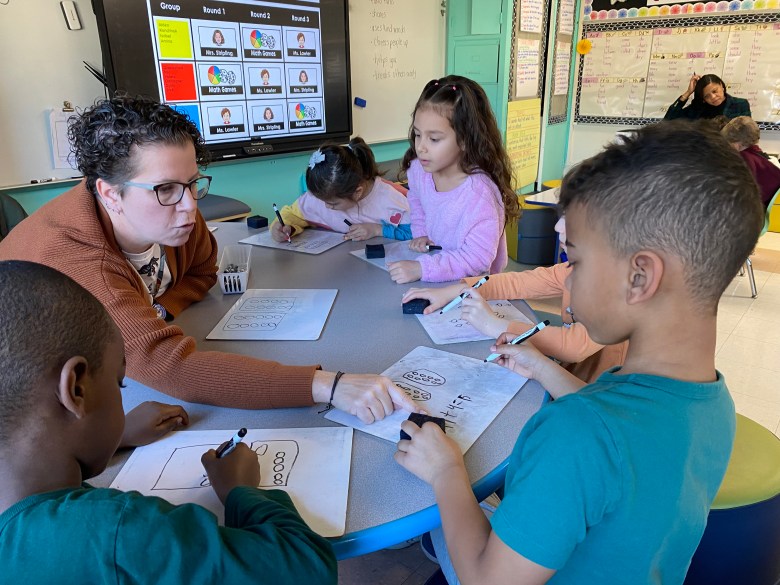
Janine Lawler teaches math to a group of first graders in Teaneck, New Jersey. Her classroom includes students with and without disabilities. Credit: Meredith Kolodner/The Hechinger Report
Educators say they can provide intensive instruction without having to separate children for large portions of the day.
“Do we have to isolate young people to give them a service, or can we include them and provide the same service or greater service?” said André Spencer, superintendent of Teaneck Public Schools. “We believe we can include them.”
For decades, New Jersey education officials have failed to support or pressure districts to improve their inclusion rates. A 2004 report found a lack of consequences — such as financial penalties — for New Jersey districts who repeatedly failed to increase inclusion of students with disabilities despite years of promises to improve.
“There’s a culture in New Jersey, which is that you teach kids with impairments in segregated classes,” said Carol Fleres, a long-time special education administrator in New Jersey who is now a special education professor and department co-chair at New Jersey City University.
A 2018 report by the National Council on Disability, an independent federal agency, found “serious contradictions” in New Jersey’s regulations that lay out how schools have to provide special education services. For example: The state categorizes students as having mild, moderate or severe disabilities and says that students with similar behavioral or academic needs should be grouped together.
Those issues make it easy for New Jersey schools to lump students with disabilities together in violation of federal requirements, according to the report.
A spokesman for New Jersey’s education department defended the regulations as doing the opposite. “This arrangement helps ensure that students who require more individualized instruction, especially those whose needs cannot be met in a general education setting, even with supplementary aids and services, are educated in smaller, more supportive environments,” Michael Yaple said in an email.
Despite settlements and scrutiny, advocates want more accountability: New Jersey’s State Special Education Advisory Council, which advises the state Education Department on special education issues, recommended required training for districts with low inclusion rates.
Special education parent and advocate Amanda Villamar, who works with families throughout New Jersey, said education officials try to educate the state’s over 600 school districts — but those efforts only go so far.
“We have a lot of districts that just say: ‘Well, it’s guidance. We don’t have to do it,’” Villamar said. “They literally just don’t even give it the time of day. Then you have other districts that put a lot of work and thought and effort into it.”
Lawyers representing families said young children with behavioral challenges or intellectual disabilities often wind up in separate classrooms for years, even if behaviors improve. Promises of inclusion in gym class or at lunch don’t always happen, they said.
Many parents said they felt forced to agree to separate classrooms, with the promise of inclusion, eventually. That day never came.
“Once you start restricting them, how are you going to get them back and get them increasingly more time within the classroom?” said Elizabeth Alves, a member of the State Special Education Advisory Council.
For Terri Joyce’s son, learning in the co-taught classroom meant accessing the general education curriculum, including social studies. The lessons on civil rights inspired him.
“He became obsessed with Martin Luther King,” she said. “He still will sit for hours and watch YouTube videos of his speeches.”
Like other students with disabilities, her son’s IEP is subject to an annual review, which means that inclusion in the general education classroom isn’t guaranteed in the years to come. Joyce says that means constant vigilance in a process that feels like a part-time job.
But her efforts to have her son included are about more than academics. He’s on the flag football team. He rides the school bus. Other kids recognize him and say hello in the grocery store.
“It’s much bigger than just his education and being included in the classroom,” she said. “Being included in school means he’s more included in life, and he’s more included in our community, and he’s more valued.”
The Hechinger Report provides in-depth, fact-based, unbiased reporting on education that is free to all readers. But that doesn’t mean it’s free to produce. Our work keeps educators and the public informed about pressing issues at schools and on campuses throughout the country. We tell the whole story, even when the details are inconvenient. Help us keep doing that.
Over the last two years, I’ve witnessed the rise in students’ use of generative AI as whole. Not surprisingly, more students are using generative AI to assist them in writing.
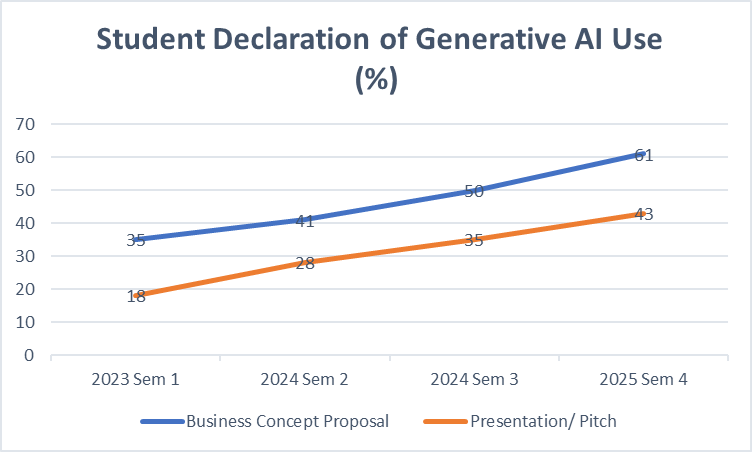
In an undergraduate business communication course that I oversee, the percentage of students who declared their use of generative AI for a writing assessment (i.e. business proposal) increased steadily over four semesters from 35% in 2023 to 61% in 2025. What’s more fascinating is the corresponding increase in the reported use of generative AI for their spoken assessment – their presentation (i.e. pitch) – from only 18% in 2023 to 43% in 2025.
*Note that there were about 350 students per semester and a total of about 1,400 students over four semesters/two years.
You may be wondering, how exactly are these students using generative AI for presentations?
They reported using generative AI to:
Create and edit visuals (e.g. images, prototypes/ mockups, logos)
Get inspiration for rhetorical devices (e.g. taglines, stories, alliterations)
Prepare for the Q&A (e.g. generate questions, review/structure answers)
Beyond verbal language,visuals are an important facet of communication and students need to be prepared for more multimodal communication tasks at the workplace (Brumberger, 2005). With digital media, there has been a shift in balance between words and images (Bolter, 2003) which can be seen in websites, reports and even manuals. A students’ ability to communicate in writing and speaking must now be complemented with a proficiency in visual language. Now, generative AI can reduce those barriers to creative visual expression (Ali et al., 2004).
For example, students on my business communication course use AI tools to create prototypes and mockups of their project ideas to complement their explanations. When they are unable to generate exactly what they need, they edit those images with traditional editing software or more recently, software with generative AI editing abilities such as Adobe firefly which allows users to select specific areas of an image and use “generative fill” to brainstorm and edit it without advanced technical skills. This and other AI text generators including Dall-e (Openart) and Midjourney have opened up possibilities for communicators to enhance their message using visuals.
Here are the AI Visual Tools students have reported using in their written and spoken assessment over two years:
What’s interesting from the list is not only an increase in the number of AI tools used but the type of tools used (1) for specific purposes like Logopony, for the creation of logos, Usegalileo, for app Interface designs, and Slidesgo, for the creation of slides, as well as AI tools (2) for editing such as Photoshop AI, Adobe Firefly, and Canva. Beyond that, we can see how students are using different tools from companies that are constantly evolving such as Canva with Magic Studio and Dream Lab, OpenAI who has integrated Dall-e into ChatGPT, as well as their latest offering, Sora, and even Google who now has Gemini Flash 2.0. Generative AI is also becoming more accessible on different platforms with the integration of Meta AI to WhatsApp, a cross-platform messaging app.
Ultimately, this list provides a glimpse of what some undergraduate business students are dabbling with and educators should consider trying them out. More importantly, we could guide students in thinking about the visuals and graphics that they ultimately use because not all graphics are equally effective (Mayer and Moreno 2003).
Some graphics are:
Decorative They are neutral and may enhance the aesthetics but is not interesting or directly relevant.
Seductive They may be highly interesting but may not be directly relevant and can distract the audience and cause their cognitive processing to focus on irrelevant material.
Instructive They are directly relevant to the topic (Sung and Maye, 2012).
However, it doesn’t mean that all visuals should be instructive because it depends on the goal of the communicator. For example, if the main goal is for enjoyment, then decorative visuals can enhance the aesthetics and seductive visuals can be so interesting that it leads to higher satisfaction, so we should remind students to be intentional in their use of visuals and AI tools. For example, AI tools tend to create visuals with a lot of extraneous details that may be distracting and lead to cognitive overload (Deleeuw and Mayer 2008) so students should refine their prompts by being more specific and precise (Hwang and Wu 2024) and they should be prepared to use editing software which can include other AI enhanced software like Adobe firefly and Imagen to achieve their final goal.
There are limitations to what AI can do at the moment.
It cannot be truly innovative because it learns from existing data.
It cannot fully understand subtle aspects like culture, values or emotional nuances (Hwang and Wu 2024).
But it can provide the stepping stone for students to visualize their ideas.
Let’s encourage our students to be aware of what they want to achieve when using AI tools and be proactive in selecting, rearranging, editing and refining the visuals to suit their purposes.
Aileen Wanli Lam is a Senior Lecturer and technology enthusiast at the National University of Singapore. She is fascinated by education technology and enjoys conversations about the latest industry developments. She is also passionate about professional communications, student engagement and educational leadership.
References
Ali, Safinah, Prerna Ravi, Randi Williams, Daniella DiPaola, and Cynthia Breazeal. “Constructing dreams using generative AI.” In Proceedings of the AAAI Conference on Artificial Intelligence, vol. 38, no. 21, pp. 23268-23275. 2024.
Bolter, Jay David. “Critical theory and the challenge of new media.” (2003).
Brumberger, Eva R. “Visual rhetoric in the curriculum: Pedagogy for a multimodal workplace.” Business Communication Quarterly 68, no. 3 (2005): 318-333.
DeLeeuw, Krista E., and Richard E. Mayer. “A comparison of three measures of cognitive load: Evidence for separable measures of intrinsic, extraneous, and germane load.” Journal of educational psychology 100, no. 1 (2008): 223.
Hwang, Younjung, and Yi Wu. “Methodology for Visual Communication Design Based on Generative AI.” International journal of advanced smart convergence 13, no. 3 (2024): 170-175.
Mayer, Richard E., and Roxana Moreno. “Nine ways to reduce cognitive load in multimedia learning.” Educational psychologist 38, no. 1 (2003): 43-52.
Sung, Eunmo, and Richard E. Mayer. “When graphics improve liking but not learning from online lessons.” Computers in human behavior 28, no. 5 (2012): 1618-1625.
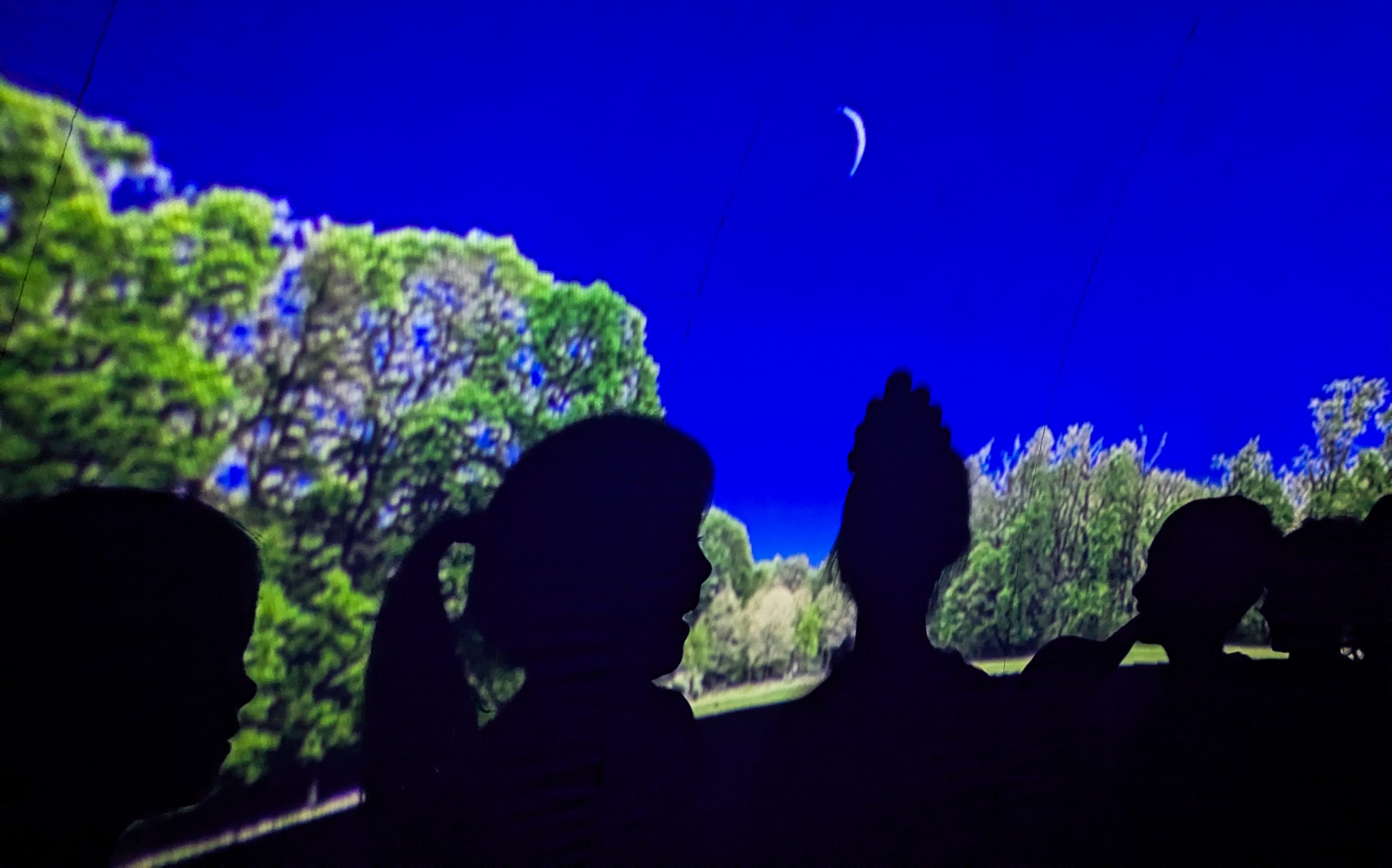
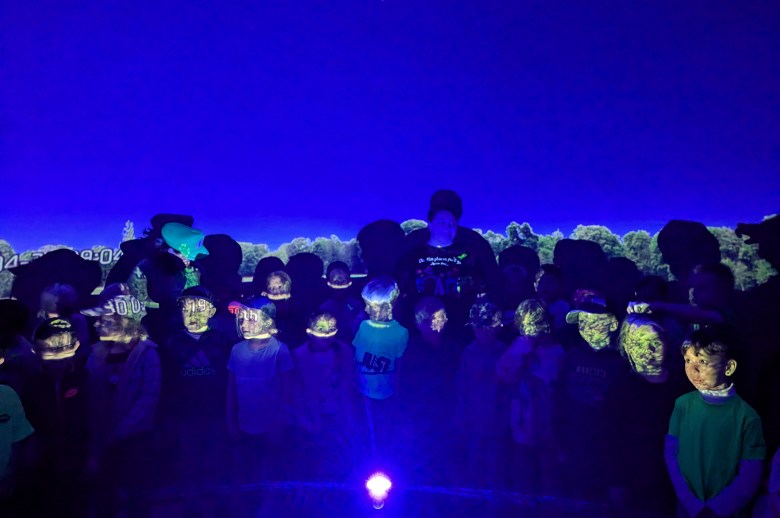
The kindergartners of South Dakota’s Hamlin County are, in fact, in space. To be specific, they are on planet Earth, near the geographic center of North America, sitting crisscross applesauce inside an 11-foot-high inflatable planetarium set up in their school gym.
The darkness is velvety. Childish whispers skitter around the dome like mice. The kids are returning from a short mission to Jupiter, piloted by Kristine Heinen, a young museum educator with a ponytail who knows how to make her voice BIG AND EXCITED and then inviting and quiet to hold little ones’ attention.
“Now we’re over China!” Heinen says.
“My friend went to China!” a girl calls out.
“The other side is nighttime and this side’s bright,” expounds a boy with a crew cut. “The sun shines here so it can’t shine over there.“
The school is in eastern South Dakota, 34 miles northeast of the settlement where Laura Ingalls Wilder grew up and attended a one-room schoolhouse. The sprawling Hamlin Education Center is a modern-day analogue, serving an entire district in one building, with just under 900 students, pre-K through 12. Notable graduates include U.S. Homeland Security Secretary Kristi Noem, the former governor of South Dakota.
The center is roughly equidistant from four tiny towns, surrounded by open fields where cornstalks shine in the sun; 95 percent of students arrive by bus, from up to 20 miles away. Over a third of them qualify for free or reduced-price lunch, said Dustin Blaha, the elementary school’s principal.
Hamlin Elementary students line up for their turn visiting a traveling planetarium sponsored by the South Dakota Discovery Center. Credit: Anya Kamenetz for The Hechinger Report
During the planetarium’s daylong visit to the small community of Hayti, S.D., an educator from the South Dakota Discovery Center wowed 500 elementary school students with a presentation about the planets and stars. Credit: Anya Kamenetz for The Hechinger Report
Many Hamlin Elementary haven’t had a chance to visit the South Dakota Discovery Center in Pierre three hours away, so the museum brings traveling exhibits like a portable planetarium to them. Credit: Anya Kamenetz for The Hechinger Report
Blaha said that most of these children have never been to the South Dakota Discovery Center, a hands-on science museum three hours west in the state capital. But thanks to a federal agency called the Institute of Museum and Library Services, a part of the museum can come to them.
The IMLS was established in 1996, combining previously separate programs. The small agency became the largest source of federal funding for museums and libraries, last year awarding $266.7 million in program grants, research and policy development across all 50 states. IMLS awarded the South Dakota Discovery Center about $45,000 in 2023 to upgrade this traveling planetarium.
But students around the state may be waiting a long time for the next upgrade.
Related: Young children have unique needs and providing the right care can be a challenge. Our free early childhood education newsletter tracks the issues.
President Donald Trump signed an executive order in mid-March calling for the agency to be “eliminated to the maximum extent consistent with applicable law.” Mass firings followed.
On May 1, the U.S. District Court in Washington, D.C., issued a temporary restraining order to block the agency’s dismantling, followed on May 6 by a second federal judge finding the dismantling of this and two other agencies unconstitutional. On May 20, the American Library Association reported that employees are returning to work and some grants have been restored.
But the administration is continuing its legal battle to all but shutter the IMLS. The latest post on the agency’s Instagram account is captioned, “The era of using your taxpayer dollars to fund DEI grants is OVER,” holding up for criticism grants that were aimed at addressing systemic racism in museums, equitable library practices, and diverse staff development. The IMLS and the Department of Government Efficiency did not respond to requests for comment.
A veteran of the agency who asked to remain anonymous because of fear of reprisal said they first saw DOGE staffers meeting with leadership on March 28. “On the 31st, we were put on administrative leave. We had about two hours to turn in your key cards, your ID, get everything off your laptop you’re ever going to need. We were locked out of our computer systems by 3:30 and told to get out of the building.” A skeleton crew was hastily rehired the next day.
The ex-staffer points out that the Institute of Museum and Library Services spends, or spent, just 7 percent of its budget on its 70 staff, passing the rest along as grants. “We are not a bloated agency.” They have two kids at home, one with special needs and are married to another federal employee whose job is also at risk; but they are almost as worried about their grantees as themselves.
“After 20 years, I didn’t even get to put an out-of-office response up. Is someone emailing me right now and getting nothing, because all of a sudden their grant just ended? I hate that,” the former IMLS employee said.
Almost all grants awarded required a one-to-one cost share out of the local institution’s budget, the staffer said. Plus, typically the grantees pay for activities first and then apply to get reimbursed. “We’re leaving these often small rural museums and libraries on the hook.”
Anne Lewis, executive director of the South Dakota Discovery Center, said that organizations like hers would be “wobbly” without federal funding and would have to scale back on ambitious programs like the planetarium upgrade.
“The new system has much better interaction and control,” said Heinen, the museum educator. An earlier version had a static point of view, but upgraded visual effects means that “now we have spaceship mode,” she said. “We can travel to destinations including planets, and go in a full 360-degree mode around galaxies.”
With a flick of the touchscreen menu, she can also display the constellations of a dozen different cultures including Lakota, a significant benefit especially when she visits tribal schools.
The South Dakota Discovery Center, based in Pierre, has used federal support from the Institute for Museum and Library Services to pay for a traveling planetarium exhibit. Credit: Anya Kamenetz for The Hechinger Report
It’s a lean operation: Heinen drove solo nearly 200 miles from Pierre to Watertown the evening before and spent the night at an Econo Lodge. From there, it was another 20-some miles to Hayti, where she arrived at 7:30 in the morning, set up the dome herself, and ran 30-minute programs all day.
The whole elementary school, about 500 kids in total, saw the planetarium, with each show customized to the children’s interest and grade level; and she also conducted a parent engagement program in the afternoon. Heinen said she never tires of being a “Santa Claus” for science. ”As soon as they see me, they know something fun is going to happen.”
During this visit, the fan favorites were Jupiter, Mars and the sun. “It was cool when we went to Mars,” said Nash Christensen, 6. “And the volcano on that one moon, and the big hurricane on Jupiter. I think Jupiter is a dangerous place to live.”
Grant recipients of the Institute of Museum and Library Services say the support from the federal government has been critical to running their programs. For example, the Boston Children’s Museum, the second-oldest children’s museum in the country, has used federal grant money to improve school readiness. One of the outcomes was a new exhibit in the museum, “Countdown to Kindergarten,” that mimics a kindergarten classroom, complete with a school bus you can sit in out front.
“It’s helpful not only for the kids, but some of our caregivers who came from other countries and may not have gone to a school like this,” said Melissa Higgins, the museum’s vice president of programs and exhibits.
At the Madison Children’s Museum in Wisconsin, federal funds paid for a multistate partnership that provides climate education for young children and their families. In Fort Lauderdale, Florida, a grant covered five “STEMobiles,” which offer hands-on science activities for children ages 3-5 in low-income parts of Broward County. The Philadelphia School District won a two-year planning grant to try to improve its pipeline of school librarians; they were down to only a handful for a district of 200,000 students.
But the greatest impact may come in rural, often deep-red areas.
“Rural communities have particularly unique challenges,” said Lewis at the South Dakota Discovery Center. “There’s 800,000 people in the state, and they’re dispersed. We don’t have a concentration of funders and donors who can help support these enrichment activities.”
She said the teachers she serves are “passionate, committed and, like every other place in the world, underfunded.” If not for institutions like hers, students would probably go without this kind of hands-on science experience, she said.
Blaha, the elementary school principal, concurred. “The planetarium brings excitement and expertise that we don’t typically have in a community like this,” he said.
For now, the excitement is coming to an end. The class has “landed” on a green lawn, under a deep blue sky. Heinen announces “It’s time to leave.” She’s met with a chorus of, “Noo!”
“You guys, we were in here for a full 30 minutes.”
“It felt like 10!”
“It felt like a second!”
Tonight, many of them will be able to look up at the dark sky over the prairie and show their parents Jupiter, Ursa Major and Mars.
Contact the editor of this story, Christina Samuels, at 212-678-3635 via Signal at cas.37 or [email protected].
The Hechinger Report provides in-depth, fact-based, unbiased reporting on education that is free to all readers. But that doesn’t mean it’s free to produce. Our work keeps educators and the public informed about pressing issues at schools and on campuses throughout the country. We tell the whole story, even when the details are inconvenient. Help us keep doing that.
US Secretary of State Marco Rubio. Picture: Alex Wroblewski
The future of Australians studying at American universities is in limbo after the Trump administration ordered a pause on new student visa approvals and is actively cancelling Chinese student visas.
Please login below to view content or subscribe now.