Tag: students

  • Another Casualty of Trump Research Cuts? California Students Who Want To Be Scientists – The 74

    Another Casualty of Trump Research Cuts? California Students Who Want To Be Scientists – The 74


    Get stories like this delivered straight to your inbox. Sign up for The 74 Newsletter

    This spring, the National Institutes of Health quietly began terminating programs at scores of colleges that prepared promising undergraduate and graduate students for doctoral degrees in the sciences.

    At least 24 University of California and California State University campuses lost training grants that provided their students with annual stipends of approximately $12,000 or more, as well as partial tuition waivers and travel funds to present research at science conferences. The number of affected programs is likely higher, as the NIH would not provide CalMatters a list of all the cancelled grants.

    Cal State San Marcos, a campus in north San Diego County with a high number of low-income learners, is losing four training grants worth about $1.8 million per year. One of the grants, now called U-RISE, had been awarded to San Marcos annually since 2001. San Marcos students with U-RISE stipends were often able to forgo part-time jobs, which allowed them to concentrate on research and building the skills needed for a doctoral degree.

    The cuts add to the hundreds of millions of dollars of grants the agency has cancelled since President Donald Trump took office for a second term.

    To find California campuses that lost training grants, CalMatters looked up known training grants in the NIH search tool to see if those grants were still active. If the grant’s award number leads to a broken link, that grant is dead, a notice on another NIH webpage says.

    The NIH web pages for the grants CalMatters looked up, including U-RISE, are no longer accessible. Some campuses, including San Marcos, Cal State Long Beach, Cal State Los Angeles and UC Davis, have updated their own websites to state that the NIH has ended doctoral pathway grants.

    “We’re losing an entire generation of scholars who wouldn’t have otherwise gone down these pathways without these types of programs,” said Richard Armenta, a professor of kinesiology at San Marcos and the associate director of the campus’s Center for Training, Research, and Educational Excellence that operates the training grants.

    At San Marcos, 60 students who were admitted into the center lost grants with stipends, partial tuition waivers and money to travel to scientific conferences to present their findings.

    From loving biology to wanting a doctoral degree

    Before the NIH terminations, Marisa Mendoza, a San Marcos undergraduate, received two training grants. As far back as middle school, Mendoza’s favorite subjects were biology and chemistry.

    To save money, she attended Palomar College, a nearby community college where she began to train as a nurse. She chose that major because it would allow her to focus on the science subjects she loved. But soon Mendoza realized she wanted to do research rather than treat patients.

    At Palomar, an anatomy professor introduced her to the NIH-funded Bridges to the Baccalaureate, a training grant for community college students to earn a bachelor’s and pursue advanced degrees in science and medicine.

    “I didn’t even know what grad school was at the time,” she said. Neither of her parents finished college.

    The Bridges program connected her to Cal State San Marcos, where she toured different labs to find the right fit. At the time she was in a microbiology course and found a lab focused on bacteria populations in the nearby coastal enclaves. The lab was putting into practice what she was learning in the abstract. She was hooked.

    “It just clicked, like me being able to do this, it came very easily to me, and it was just something that I came to be very passionate about as I was getting more responsibility in the lab,” Mendoza said.

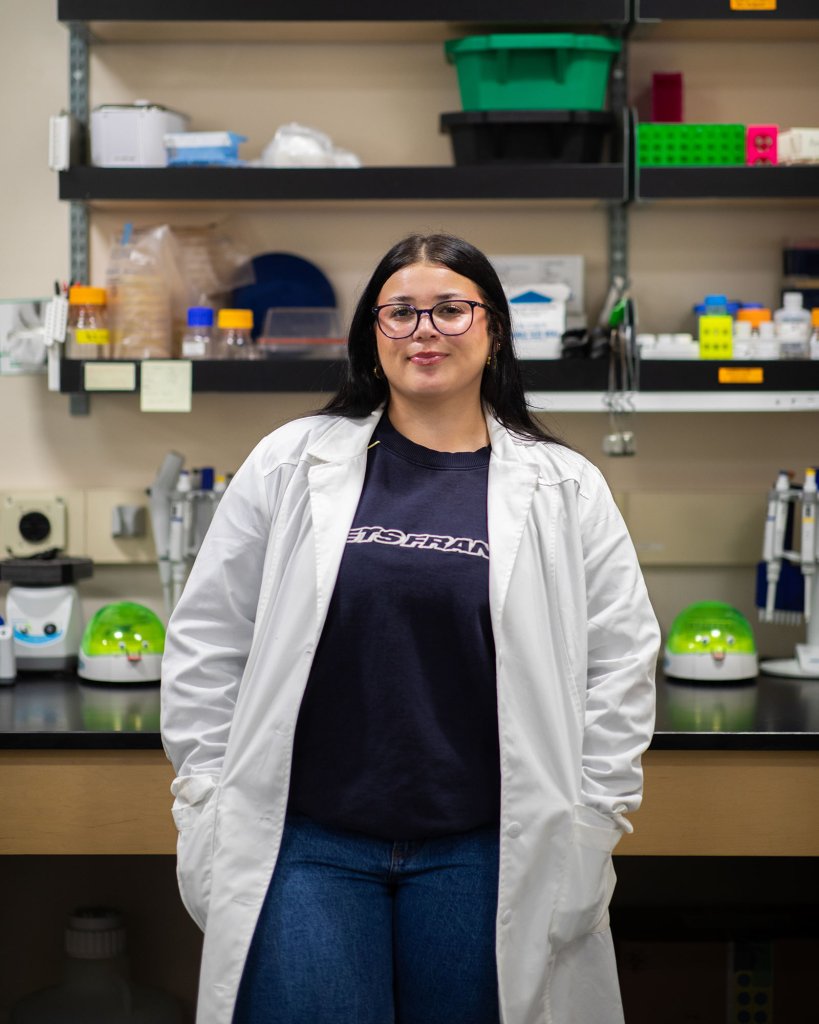
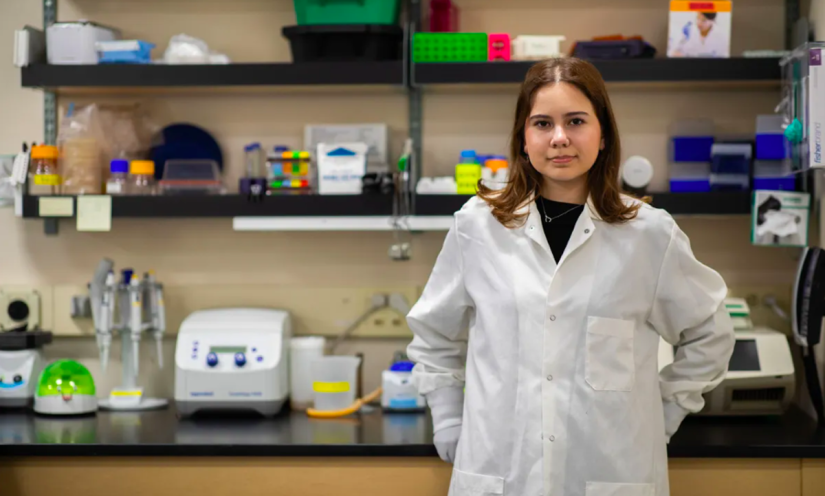
    Marisa Mendoza, right, and Camila Valderrama-Martínez, left, get ready to demonstrate how they use lab equipment for their research work at Cal State San Marcos on May 6, 2025. Photo by Adriana Heldiz, CalMatters

    From Palomar she was admitted as a transfer student to San Marcos and more selective campuses, including UCLA and UC San Diego. She chose San Marcos, partly to live at home but also because she loved her lab and wanted to continue her research.

    She enrolled at San Marcos last fall and furthered her doctoral journey by receiving the U-RISE grant. It was supposed to fund her for two years. The NIH terminated the grant March 31, stripping funds from 20 students.

    For a school like San Marcos, where more than 40% of students are low-income enough to receive federal financial aid called Pell grants, the loss of the NIH training awards is a particular blow to the aspiring scientists.

    The current climate of doctoral admissions is “definitely at a point where one needs prior research experience to be able to be competitive for Ph.D. programs,” said Elinne Becket, a professor of biological sciences at Cal State San Marcos who runs the microbial ecology lab where Mendoza and other students hone their research for about 15 hours a week.

    San Marcos doesn’t have much money to replace its lost grants, which means current and future San Marcos students will “100%” have a harder time entering a doctoral program, Becket added. “It keeps me up at night.”

    Research is ‘a missing piece’

    In a typical week in Becket’s lab, Mendoza will drive to a nearby wetland or cove to retrieve water samples — part of an ongoing experiment to investigate how microbial changes in the ecosystem are indications of increased pollution in sea life and plants. Sometimes she’ll wear a wetsuit and wade into waters a meter deep.

    The next day she’ll extract the DNA from bacteria in her samples and load those into a sequencing machine. The sequencer, which resembles a small dishwasher, packs millions or billions of pieces of DNA onto a single chip that’s then run through a supercomputer a former graduate student built.

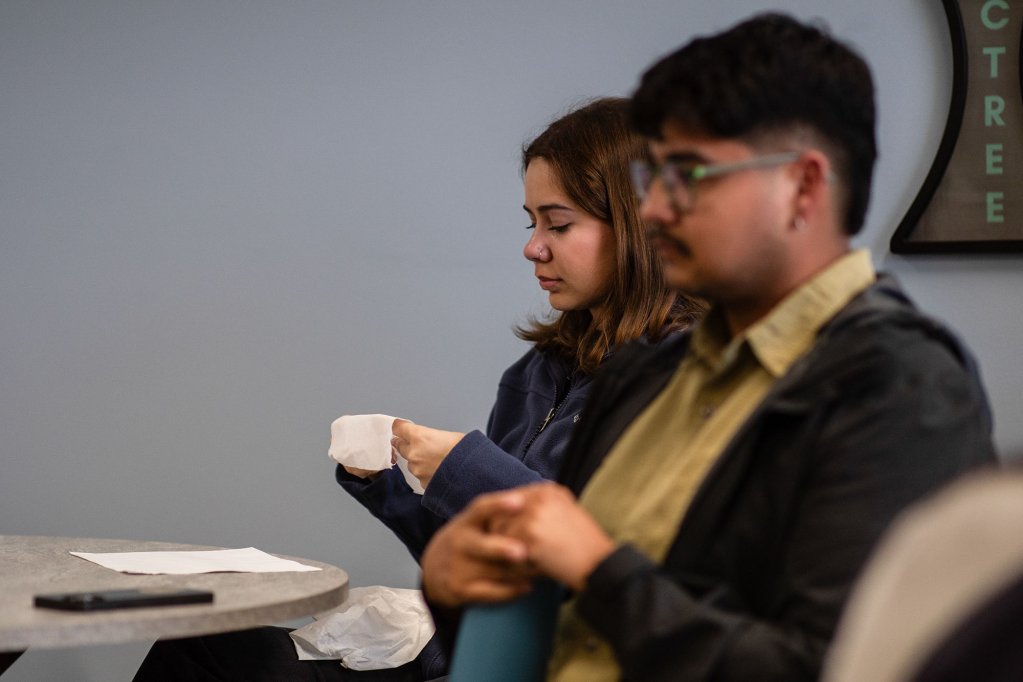
    “Once I found research, it was like a missing piece,” Mendoza, a Pell grant recipient, said through tears during an interview at Cal State Marcos. Research brought her joy and consumed her life “in the best way,” she added. “It’s really unfortunate that people who are so deserving of these opportunities don’t get to have these opportunities.”

    A side-view of a person looking down at a piece of tissue as tears stream down their face.
    Student Marisa Mendoza gets emotional while she speaks about her research at Cal State San Marcos on May 6, 2025. Photo by Adriana Heldiz, CalMatters

    The origins of the San Marcos training center date back to 2002. Through it, more than 160 students have either earned or are currently pursuing doctoral degrees at a U.S. university.

    The grant terminations have been emotionally wrenching. “There had been so many tears in my household that my husband got me a puppy,” said Denise Garcia, the director of the center and a professor of biological sciences.

    Garcia recalls that in March she was checking a digital chat group on Slack with many other directors of U-RISE grants when suddenly the message board lit up with updates that their grants were gone. At least 63 schools across the country lost their grants, NIH data show.

    In the past four years of its U-RISE grant the center has reported to the NIH that 83% of its students entered a doctoral program. That exceeds the campus’s grant goal, which was 65% entering doctoral programs.

    Mendoza is grateful: She was one of two students to win a campus scholarship that’ll defray much, but not all, of the costs of attending school after losing her NIH award. That, plus a job at a pharmacy on weekends, may provide enough money to complete her bachelor’s next year.

    Others are unsure how they’ll afford college while maintaining a focus on research in the next school year.

    Student Camila Valderrama-Martínez in a lab at Cal State San Marcos on May 6, 2025. Photo by Adriana Heldiz, CalMatters

    “You work so hard to put yourself in a position where you don’t have to worry, and then that’s taken away from you,” said Camila Valderrama-Martínez, a first-year graduate student at San Marcos who also earned her bachelor’s there and works in the same lab as Mendoza. She was in her first year of receiving the Bridges to the Doctorate grant meant for students in master’s programs who want to pursue a biomedical-focused doctoral degree. The grant came with a stipend of $26,000 annually for two years plus a tuition waiver of 60% and money to attend conferences.

    She can get a job, but that “takes away time from my research and my time in lab and focusing on my studies and my thesis.” She relies solely on federal financial aid to pay for school and a place to live. Getting loans, often anathema for students, seems like her only recourse. “It’s either that or not finish my degree,” she said.

    Terminated NIH grants in detail

    These grant cancellations are separate from other cuts at the NIH since Trump took office in January, including multi-million-dollar grants for vaccine and disease research. They’re also on top of an NIH plan to dramatically reduce how much universities receive from the agency to pay for maintaining labs, other infrastructure and labor costs that are essential for campus research. California’s attorney general has joined other states led by Democrats in suing the Trump administration to halt and reverse those cuts.

    In San Marcos’ case, the latest U-RISE grant lasted all five years, but it wasn’t renewed for funding, even though the application received a high score from an NIH grant committee.

    Armenta, the associate director at the Cal State San Marcos training center, recalled that his NIH program officer said that though nothing is certain, he and his team should be “cautiously optimistic that you would be funded again given your score.” That was in January. Weeks later, NIH discontinued the program.

    He and Garcia shared the cancellation letters they received from NIH. Most made vague references to changes in NIH’s priorities. However, one letter for a specific grant program cited a common reason why the agency has been cancelling funding: “It is the policy of NIH not to prioritize research programs related to Diversity (sic), equity, and inclusion.”

    That’s a departure from the agency’s emphasis on developing a diverse national cadre of scientists. As recently as February, the application page for that grant said “there are many benefits that flow from a diverse scientific workforce.”

    Future of doctoral programs unclear

    Josue Navarrete graduated this spring from Cal State San Marcos with a degree in computer science. Unlike the other students interviewed for this story, Navarrete, who uses they/them pronouns, was able to complete both years of their NIH training grant and worked in Becket’s lab.

    But because of the uncertain climate as the Trump administration attempts to slash funding, Vanderbilt University, which placed Navarrete on a waitlist for a doctoral program, ultimately denied them admission because the university program had to shrink its incoming class, they said. Later, Navarrete met a professor from Vanderbilt at a conference who agreed to review their application. The professor said in any other year, Navarrete would have been admitted.

    The setback was heartbreaking.

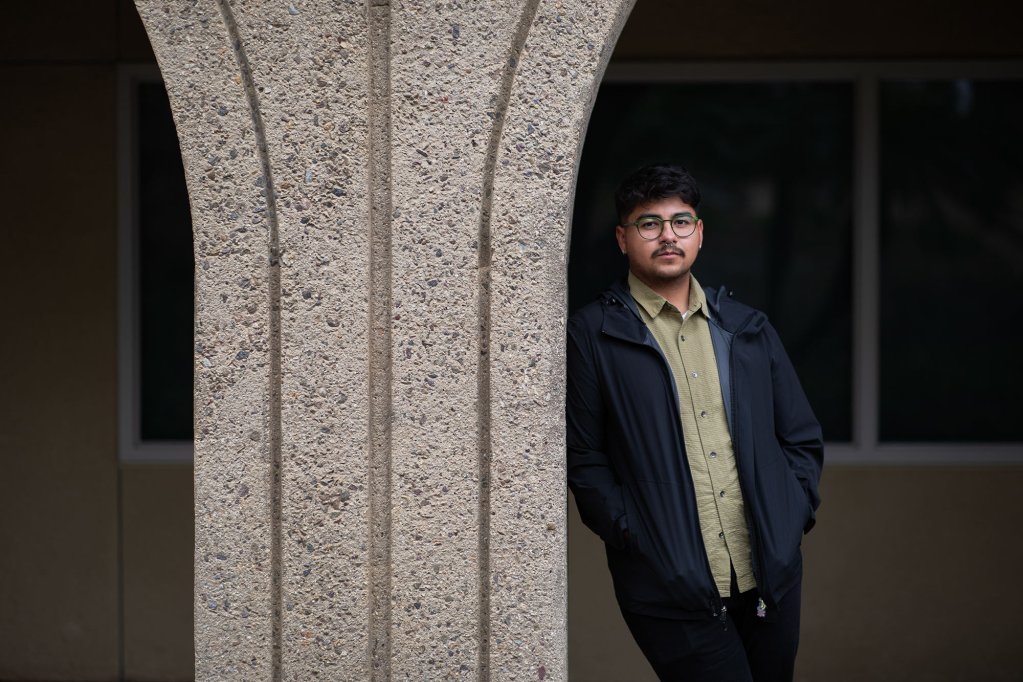
    A person -- with short black hair and wearing a black jacket and green shirt, leans against a light brown concrete column while looking straight into the camera.
    Josue Navarrete at the Cal State San Marcos campus on May 6, 2025. Photo by Adriana Heldiz, CalMatters

    “I’m gripping so hard to stay in research,” Navarrete said. With doctoral plans delayed, they received a job offer from Epic, a large medical software company, but turned it down. “They wanted me to be handling website design and mobile applications, and that’s cool. It’s not for me.”

    Valderrama-Martinez cited Navarrete’s story as she wondered whether doctoral programs at universities will have space for her next year. “I doubt in a year things are going to be better,” she said.

    She still looks forward to submitting her applications.

    So does Mendoza. She wants to study microbiology — the research bug that bit her initially and brought her to San Marcos. Eventually she hopes to land at a private biotech firm and work in drug development.

    “Of course I’m gonna get a Ph.D., because that just means I get to do research,” she said.

    This article was originally published on CalMatters and was republished under the Creative Commons Attribution-NonCommercial-NoDerivatives license.


    Get stories like these delivered straight to your inbox. Sign up for The 74 Newsletter

    Source link

  • Many States Picked Diploma Pathways Over HS Exit Exams. Did Students Benefit? – The 74

    Many States Picked Diploma Pathways Over HS Exit Exams. Did Students Benefit? – The 74


    Get stories like this delivered straight to your inbox. Sign up for The 74 Newsletter

    This story was originally published by Chalkbeat. Sign up for their newsletters at ckbe.at/newsletters

    When 18-year-old Edgar Brito thinks about what he’ll do in the future, mechanical engineering is high on the list.

    The senior at Washington state’s Toppenish High School first considered the career after he joined a STEM group in middle school. In a ninth grade class, he researched the earning potential for a STEM degree (“so much more money”) and the demand for mechanical engineers (“exploding”).

    So Brito took some engineering classes at his high school, became president of his state’s Technology Student Association, and is starting at the University of Washington this fall on a pre-science track.

    Brito’s experience is what state education leaders hoped for when they replaced the high school exit exam with multiple pathways to graduation. When he graduates in June, Brito will have completed several diploma pathways, including ones aimed at preparing for college and building career skills.

    But his experience isn’t necessarily typical. He has friends who have no idea what pathway they’re on — or if they’re on one at all. The requirements could be clearer and advisers could spend more time talking about them with students, he said.

    “Making sure that we know exactly what our pathway is and what it means to be on a pathway would have definitely helped out a lot more students,” Brito said.

    Five years after Washington rolled out its pathways, they appear to have helped more students who aren’t college-bound to graduate, which was part of the goal. But the system has also created new issues and replicated some old ones.

    For the Class of 2023 — the most recent year with available data — around 1 in 5 seniors didn’t have a pathway. That meant they weren’t on track to graduate within four years and at risk of dropping out. Some students relied on pandemic-era waivers that don’t exist anymore. That’s similar to the share of students who didn’t graduate on time in 2019, the final year of the exit exam.

    Asian and white students are much more likely to complete one of the math and English pathways, considered the college-prep route, while Native students, English learners, and students with disabilities are more likely to have no graduation pathway.

    “The implementation of graduation pathways has reinforced that the student groups who are the furthest from educational justice are completing the requirement at lower rates,” state education officials wrote in a 2023 report.

    Across the state, students don’t have equal access to the pathways. Many schools, especially smaller and rural ones, struggle to offer more than a handful of career and technical education classes. Some career pathways train students for low-paying jobs with little opportunity for advancement. Some students get funneled to the military pathway, despite having no aspirations to serve, because the aptitude test is easier to pass. Many teens, like Brito’s friends, find the pathways confusing.

    Washington is not alone. Nearly half of states offer multiple diploma options or graduation pathways. And some, like Indiana, have already taken a second pass at their pathways. Many have struggled to address the same big questions, including what exactly high school is for, and what students should need to do to earn a diploma.

    Now the state board of education is poised to overhaul its graduation requirements again.

    Piling on more ways for students to graduate is not the answer, said Brian Jeffries, the policy director at the Partnership for Learning, an education foundation affiliated with the Washington Roundtable, which is made up of executives from across the state.

    “Let’s better prepare our students to meet the pathways, [rather] than keep creating a smorgasbord or a cafeteria of options, which too often turn into trapdoors,” said Jeffries, who sits on the state task force that’s looking at graduation requirements. Until disadvantaged kids have access to better instruction and more support, he said, “we’re going to keep spinning this wheel.”

    The path to 100 high school graduation pathways

    Back in the early 2000s, many states raised the bar to graduate from high school with the hope it would get more kids to college. As a result, by 2012, half of all states required an exit exam, including Washington state.

    But as student debt soared and some questioned the value of higher education, schools abandoned that college-for-all mentality. Critics of exit exams argued that they blocked too many disadvantaged students from graduating.

    In Washington state’s final year of the exit exam, around 1 in 10 high school seniors didn’t pass the English language arts portion, and 1 in 5 didn’t pass the math test, the Seattle Times reported. The law that nixed the exit exam had broad support from the Washington teachers union, state education officials, and parents. Lawmakers passed it unanimously.

    Just six states require an exit exam now, with New York and Massachusetts dropping their tests this school year.

    But absent an exit exam, states haven’t really reached a consensus on what students should have to do to prove they’re ready to graduate.

    Nationwide, there are now more than 100 ways to graduate from high school, according to a recent report from the Education Strategy Group, a K-12 consulting firm. The myriad options provide flexibility, but “also contribute to the lack of clarity about what it means to earn a diploma,” the report found.

    When the nation’s main K-12 education law, the Every Student Succeeds Act, passed 10 years ago, it tasked schools with getting students ready for college and career. But many states and schools are still trying to figure out how to do the career part well.

    “Part of the challenge, frankly, is that schools are going through a bit of a post-high-stakes-test-based accountability identity crisis,” said Shaun Dougherty, a professor of education and policy at Boston College.

    Michael Petrilli, the president of the Thomas B. Fordham Institute, a conservative think tank, says that’s partly because for all the talk about changing high schools, graduation policies are still fairly restrictive. One reason Washington is revisiting its policies now is because some educators worry the state’s 24-credit requirement fills up students’ schedules, leaving little time for apprenticeships and other hands-on learning.

    Many kids are still “sleepwalking through six or seven class periods a day, mostly through college-prep courses,” Petrilli said, with “maybe a few career-tech electives on the side.”

    “We haven’t really unleashed high schools to do things very differently,” Petrilli said. “If we actually think that career tech is valuable, if we think that college-for-all was a mistake, then we need to be willing to act on it.”

    Diploma pathways can bolster teens’ interest in school

    What’s happening in the Toppenish School District illustrates the potential of the pathways model.

    The district, which serves around 3,700 students in south-central Washington, is able to offer a wide range of career and technical courses, including in growing industries, like health care and agriculture. The career-oriented pathway has helped increase some students’ interest in school.

    “It is very hands-on, and so it’s definitely more engaging,” said Monica Saldivar, Toppenish’s director of career and technical education. The old one-size-fits-all approach had “a negative impact for our students with diverse learning needs, academic challenges, and also language barriers.”

    Just before the state overhauled its graduation requirements, over 81% of Toppenish students graduated within four years. Now over 89% do.

    The improvements have been especially pronounced for English learners and Native students, many of whom live on the Yakama Nation. Since the state introduced pathways, Native student graduation rates have risen from 67% to 88%.

    Since pathways launched, the district has added several career-technical education courses, including advanced welding and classes that prepare students to work as medical transcriptionists or home health care aides. That can require some careful career counseling with students, as those jobs are in high demand but don’t pay well unless students get additional training or schooling and move up the career ladder.

    Still, the expanded offerings have helped some students tailor their post-high school plans.

    Frances Tilley, a Toppenish senior who’s headed to Gonzaga University in the fall, will graduate in June after completing both college-prep and career-oriented pathways.

    The 18-year-old took two of the new sports medicine classes and liked learning about what to do if you have a concussion. (Don’t try to stay awake. “We learned that’s not true,” Tilley said.)

    She followed that up with another health care class that touched on different disciplines. She gravitated toward psychology and now plans to get a master’s in counseling and become a mental health worker.

    Pathways can also help schools expose students to career options earlier.

    Three years ago, Toppenish started offering middle schoolers two-week labs to test drive careers such as marketing, nursing, or culinary arts. By the end of eighth grade, they’ve learned about 10 different careers. Now school counselors use students’ interests to help plot their high school schedules.

    Kaylee Celestino, 16, had long considered becoming a teacher. The Toppenish sophomore often gets “education” as an answer when she takes career quizzes. But the career-exploration labs also piqued her interest in science, and now she could also envision becoming a pediatric nurse. So her course schedule reflects that with advanced biology and college-level chemistry.

    “I just want to help people out,” she said, “like my teachers have helped out me.”

    Staffing, standards, data gaps make pathways challenging

    Staffing career and technical classes is one of the biggest hurdles to doing pathways well.

    Washington makes it easier than other states for professionals to put their work experience toward a teaching license. But many schools still struggle to attract and retain teachers for attractive fields like health services and welding when the private sector beckons.

    “These are lucrative fields,” said Dougherty, who has researched career education programs in several states, including Washington. “It’s hard to convince people to give up that salary to become full-time educators.”

    That creates extra work for schools. Saldivar, for example, meets regularly with regional employers to learn about their workforce needs. That helps inform whether Toppenish should drop or add certain classes, and which teachers to recruit. Saldivar is constantly networking and following up on “so and so may know someone” tips.

    Figuring out how to hold all students to a high standard when they are meeting different criteria to graduate is a challenge, too. Some worry Washington’s pathways are too flexible.

    The state rolled out a new pathway this year that allows students to graduate by completing a project, work-related experience, or community service. Lawmakers wanted to give students a way to show what they know besides taking a class or a test. But students don’t have to work with a teacher at their school, and if they choose to work with an outside mentor, there’s no clear rules for how they should be vetted.

    “Where are they finding these people?” said Jeffries of the Partnership for Learning. “Is their opinion an expert opinion that we could trust, or is this based on vibes?”

    Experts say it’s also important for students to understand what their likely earnings and other outcomes will be depending on which career pathway they follow.

    “We should not be talking about CTE in a very generic way,” said Dan Goldhaber, a professor at the University of Washington who has researched career and technical education teacher preparation in the state. “What the concentration is matters.”

    But Washington state doesn’t yet know how students’ outcomes may vary depending on which career and technical education concentration they chose, Katie Hannig, a spokesperson for Washington’s state education agency, wrote in an email. This is a common problem nationwide.

    The state also doesn’t yet know whether the pathway, or pathways, students completed were connected to their post-high school plan, which they must create to graduate. That hasn’t assuaged concerns that students are completing pathways disconnected from their college and career goals.

    The state expects to get that data in the future, Hannig wrote. Analyzing how diploma pathways affect graduation trends and postsecondary outcomes could help schools target resources and support.

    “Any new policy is a work in progress, but the fundamental core value of this policy is preparing students for their next step after high school graduation,” Hannig wrote. “Washington is proud to be one of those states that have established and continue to refine those pathways.”

    For now, districts like Toppenish are scrambling to coordinate weekly college presentations, field trips to work sites, and military recruiter visits — “a little of everything,” Saldivar said — to hedge their bets.

    Kalyn Belsha is a senior national education reporter based in Chicago. Contact her at [email protected].

    Chalkbeat is a nonprofit news site covering educational change in public schools.


    Get stories like these delivered straight to your inbox. Sign up for The 74 Newsletter

    Source link

  • Microsoft and FFA help students use smart sensors and AI to learn about the future of farming and technology

    Microsoft and FFA help students use smart sensors and AI to learn about the future of farming and technology

    Microsoft Corp. and the National FFA Organization on Tuesday announced the national expansion of FarmBeats for Students, a cutting-edge educational program integrating smart sensors, data science and artificial intelligence (AI) to teach precision agriculture in classrooms. Starting today, FFA teachers and students throughout the United States, including FFA chapters in 185 middle and high schools, will receive a classroom set of FarmBeats for Students kits free of charge. The kits include ready-to-use sensor systems along with curriculum for teachers and are designed for classrooms of all kinds; no prior technical experience is required.

    More and more farmers are adopting advanced technology, including automating systems such as tractors and harvesters and using drones and data analysis to intervene early against pests and disease, to maximize crop yield, optimize resource usage, and adjust to changing weather patterns. Gaining hands-on experience with machine automation, data science and AI will help American agricultural students remain competitive in the global market.

    Using the FarmBeats for Students kits and free curriculum, students build environmental sensor systems and use AI to monitor soil moisture and detect nutrient deficiencies — allowing them to understand what is happening with their plants and make data-driven decisions in real time. Students can adapt the kit to challenges unique to their region — such as drought, frost and pests — providing them with practical experience in tackling real-world issues in their hometowns.

    “Microsoft is committed to ensuring students and teachers have the tools they need to succeed in today’s tech-driven world, and that includes giving students hands-on experience with precision farming, data science and AI,” said Mary Snapp, Microsoft vice president, Strategic Initiatives. “By teaming up with FFA to bring FarmBeats for Students to students across the country, we hope to inspire the next generation of agriculture leaders and equip them with the skills to tackle any and all challenges as they guide us into the future.”

    “Our partnership with Microsoft exemplifies the power of collaboration in addressing industry needs while fostering personal and professional growth among students,” said Christine White, chief program officer, National FFA Organization. “Supporting agricultural education and leadership development is crucial for shaping the next generation of innovators and problem solvers. Programs like this equip students with technical knowledge, confidence and adaptability to thrive in diverse and evolving industries. Investing in these young minds today sets the stage for a more sustainable, innovative and resilient agricultural future.”

    In addition, teachers, students or parents interested in FarmBeats for Students can purchase a kit for $35 at this link and receive free training at Microsoft Learn.

    Any educator interested in implementing the FarmBeats for Students program can now access a new, free comprehensive course on the Microsoft Educator Learn Center, providing training on precision agriculture, data science and AI, allowing teachers to earn professional development hours and badges. 

    FarmBeats for Students was co-developed by Microsoft, FFA and agriculture educators. The program aligns with the AI for K-12 initiative guidelines; Agriculture, Food and Natural Resources career standards; Computer Science Teachers Association standards; and Common Core math standards.

    For more information about FarmBeats for Students, visit aka.ms/FBFS.

    Kevin Hogan
    Latest posts by Kevin Hogan (see all)

    Source link

  • Trump Targets Chinese Students, a Harsh Blow to Higher Ed

    Trump Targets Chinese Students, a Harsh Blow to Higher Ed

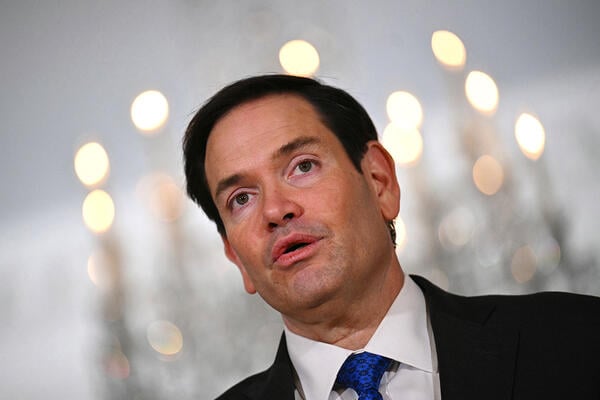
    Secretary of State Marco Rubio announced on Wednesday night that the Trump administration will “aggressively revoke” Chinese college students’ visas and heighten scrutiny of visa applicants from China. The new policy specifically targets “those with connections to the Chinese Communist Party or studying in critical fields.”

    It’s the administration’s latest move in what has been a sudden resurgence in its attacks on international students, which it seemed to suspend in April after legal efforts led to the restoration of the legal status of thousands of students.

    The news sent shock waves through higher education and could lead to a major reduction in foreign students at American universities, especially public research institutions. China contributes the largest number of international students to the U.S., with nearly 280,000 enrolled in 2023–24, according to data from the Institute of International Education—about a quarter of the total international student population in the country. 

    That share, however, has been shrinking since the COVID-19 pandemic; last year, India overtook China as the No. 1 source country of international students. But Chinese students are far more likely to enroll in undergraduate programs and pay more in tuition. They also make up a significant slice of STEM researchers: 16 percent of all U.S. graduate students in STEM fields and 2 percent of undergraduates are Chinese nationals, according to a 2020 report from the Center for Security and Emerging Technology at Georgetown University.

    It’s not clear whether the visa revocations would be accompanied by legal status terminations in the Student Exchange and Visitor Information System or prompt deportation proceedings, as they did for thousands of international students in March and April. Those steps would be the purview of the Department of Homeland Security.

    The targeting of students in “critical fields” in particular could devastate STEM programs and research labs at smaller universities across the country, where Chinese international students are heavily represented. Rubio did not clarify what fields could be considered critical, potentially setting the stage for a sweeping focus on areas where GOP lawmakers have raised concerns about sensitive national security research being shared with the Chinese government.

    A spokesperson for the State Department did not respond to a list of questions, including requests to clarify the scope of the new policy’s target and the timeline for visa revocations, in time for publication. At a press conference yesterday, department spokesperson Tammy Bruce declined to “get into the details” of how the new visa scrutiny would be applied or what “critical fields” the department was referring to, because it “might give up our hand and make certain things less effective.”

    “When we think of critical fields, we think of national security, the nature of how we keep America safe and secure and more prosperous,” she said. “It is important to keep a broad base, because that could mean many things.”

    The new policy’s focus on students with ties to the Chinese Communist Party has also raised concerns about academic freedom and free speech violations. Jonathan Friedman, managing director of U.S. free expression at PEN America, said the new policy targeting Chinese students would “hold student visas hostage to an ideological litmus test and disrupt the open exchange of ideas across cultures and borders.”

    “‘Aggressively revoking’ visas based on political ideology is a gross violation of basic free expression principles that anchor the academy,” he wrote to Inside Higher Ed.

    William Brustein, a retired longtime international student administrator, said the vague nature of Rubio’s directive could enable a sweeping dragnet that catches the majority of Chinese students—especially since association with the ruling Communist Party is difficult to avoid in China.

    “How will they know who’s a member? Maybe they’ll say if you were in a Chinese-sponsored youth group as a child, that could prevent you,” Brustein said. “Right now that policy is so vague that it could cover all Chinese students who want to study in the U.S.”

    Revocation Resurgence

    The administration briefly retreated from its persecution of international students late last month, after targeting pro-Palestine student protesters and expanding its scope to terminate the legal residency of thousands of students at institutions across the country. But a spate of successful court challenges halted the campaign in April, spurring the Trump administration restore more than 5,000 students’ SEVIS statuses.

    A lull followed the restoration as students, advisers and lawyers waited for the administration’s next move. It came two weeks ago, when the Department of Homeland Security released a new Immigration and Customs Enforcement policy granting the agency more leeway to revoke students’ SEVIS status with little justification.

    The Trump administration’s new strategy seems to target specific international student populations. So far, those have been recent graduates on Optional Practical Training visa extensions, students at Harvard University and potentially other institutions in their crosshairs, and now students from China, who Rubio claims are more likely to be national security threats.

    The State Department has also begun to tighten visa restrictions for applicants and incoming students. On Tuesday, Rubio announced a pause on all new student and exchange visa interviews while the administration implements an intensive new social media screening policy. The latest announcement on China also said the State Department would review application criteria to “enhance scrutiny of all future visa applications” from China and Hong Kong.

    Marjorie Hass, president of the Council of Independent Colleges, said there’s already a process for vetting international students, and that the administration’s new policy seems more aimed at scoring political points and justifying deportations than enhancing national security.

    “Institutions have their own admissions standards and the embassies do vet students who come into the country,” she said. “It’s not currently the Wild West.”

    Brustein said that if international students from China weren’t already moving away from American colleges en masse due to this spring’s targeting of foreign students, the latest move is sure to discourage future applicants.

    “We’re shooting ourselves in the foot,” he said. “Even if some of these decisions are reversed, we’re undoing the progress we’ve made over so many years in being this welcoming environment for the best and brightest in the world.”

    “That harm I don’t think can be undone.”

    A Blow for Research Universities

    Brustein has led international student offices at West Virginia University, the University of Illinois at Urbana-Champaign and Ohio State University, where he said there were “thousands” of Chinese students who often paid three times as much as their domestic peers.

    He said the colleges likely to be hit hardest by a major reduction in current and future Chinese students are public ones, especially regional institutions in areas with shifting demographics and declining college-going rates.

    “There are regional public universities and flagships across the Midwest, in the South, that have a large contingent of Chinese students who are coming particularly for STEM education,” Brustein said. “It’s those ones that survive on a thin revenue stream who are going to suffer the most.”

    He added that a sizable reduction in Chinese international students would likely hit scientific research hardest.

    “Many Chinese students get degrees in computer science, engineering, and go on to go to grad school or do an OPT,” he said. “They stay in the country, work in our labs, contribute significantly to innovation in this country, not China. To lose that is going to be a very big blow to our capacity for innovation.”

    Hass said that Chinese students have been both a financial lifeline and a source of cross-cultural exchange between the two countries for more than a decade. She said the benefits for higher education and for American diplomacy have been overwhelmingly positive, and a large-scale rollback of that relationship would be destructive for both.

    “This is a place where the balance of trade is very much in favor of the U.S.,” she said. “It’s mystifying why we would be undermining that.”

    She added that for many colleges, international students—and the volume of full-paying Chinese students in particular—help institutions improve access for local students.

    “Colleges will miss out on a lot of revenue,” she said. “That means the burden has to be borne by domestic students.”

    Source link

  • Our drop-out and pace miracle is harming students’ health and learning

    Our drop-out and pace miracle is harming students’ health and learning

    One of the most alarming things about the Department for Education (DfE) commissioned National review of higher education student suicide deaths is the apparant role of academic pressure.

    Well over a third of the serious incidents reviewed made explicit reference to academic problems or pressures – often tied to exams or exam results.

    Other pressures included anxiety about falling behind, upcoming deadlines, perceived pressure to perform, and involvement in “support to study” procedures.

    And just under a third of those reviewed had submitted requests for mitigating circumstances – often citing personal reasons, mental health issues, or anxiety about academic performance.

    The review concluded that students struggling academically should be recognised as at-risk and provided with enhanced, compassionate support – and noted the need for greater awareness at critical points in the academic calendar, particularly around exam times, given that March and May saw peaks in suicide and self-harm incidents.

    Basically, academic pressure was not a sole cause but a consistent co-factor – frequently present and potentially exacerbating existing vulnerabilities. The report calls for better early detection, more proactive outreach, and a systemic rethink of how institutions respond to academic distress before it becomes a crisis.

    But what if the system, and its associated rhythms and traditions, is itself causing the problems?

    See the mess and trouble in your brain

    In our recent polling on health, academic culture emerged as a significant but often overlooked determinant, with students describing patterns of overwork, presenteeism, and what we’ve heard called a “meritocracy of difficulty” in some countries – one that rewards suffering over learning outcomes.

    My department seems to pride itself on how much we struggle,” wrote one student, while another observed that “lecturers brag about how little sleep they get, as if that’s something to aspire to.” In some departments in some providers, unhealthy work patterns are normalised and even celebrated.

    Assessment strategies featured prominently in student concerns about academic pressure. “Having five deadlines in the same week isn’t challenging me intellectually – it’s just testing my ability to function without sleep” and “I’ve had to skip meals to finish assignments that seem designed to break us rather than teach us” are two of the comments that got the highlighter treatment.

    Some spoke of the way in which assessment approaches particularly disadvantage students with health conditions:

    When everything depends on one exam, my anxiety disorder means I can’t demonstrate what I actually know.

    The glorification of struggle appears deeply embedded in some disciplines. “There’s this unspoken belief that if you’re not miserable, you’re not doing it right,” noted one respondent. Another observed:

    …completing work while physically ill is treated as a badge of honor rather than a sign that something’s wrong with the system.

    Students also highlighted the disconnect between health messaging and academic expectations – “The university sends emails about wellbeing while setting impossible workloads” and “We’re told to practice self-care but penalised if we prioritise health over deadlines.”

    Many articulated a vision for healthier academic cultures – with comments like “Learning should be challenging but not damaging,” and “I want to be pushed intellectually without being pushed to burnout.” As one student noted:

    The university keeps trying to teach us resilience when what we really need is a system that doesn’t require being superhuman just to graduate.

    Students called for workload mapping across programmes to identify assessment bottlenecks and unreasonable clustering, alongside assessment strategies that offer more flexibility and multiple ways to demonstrate learning.

    They advocated for mandatory staff training on setting healthy work boundaries and avoiding “struggle” glorification, as well as health and wellbeing impact assessments for all new curriculum and assessment designs.

    Their asks included “reasonable adjustments by design” policies ensuring assessments are accessible by default, clear policies distinguishing between challenging academic content and unnecessary stress, and the revision of attendance policies to discourage presenteeism during illness.

    One comment pushed for student workload panels with the authority to flag unsustainable academic demands. As the respondent put it: “If workload is such an issue for UCU, why isn’t an issue for the SU”?

    You feel lazy but stop the fantasies and bubble butts

    Even when we were in the EU, the UK for some reason always declined to take part in Eurostudent – a long-running cross-national research project that collects and compares data on the social and economic conditions of higher education students in Europe.

    But we can do some contemporary comparisons.

    First we can look at the World Health Organisation’s Well-Being index (WHO-5), which invites respondents to consider whether, over the past two weeks:

    • They have felt cheerful and in good spirit
    • They have felt calm and relaxed
    • They have felt active and vigorous
    • They woke up feeling fresh and rested
    • Their daily life has been filled with things that interest me

    Cibyl’s Mental Health Research is the largest UK study of university students and recent graduates’ mental health – and if we consider its results via the Eurostudent comparison, we are at the upper end of low well-being.

    We can also look at students’ general perceptions of their own health – a big part of which will be their mental health:

    The question asked in Eurostudent is the one we asked in our recent health polling. If we sort by the percentage of students responding positively, we don’t fare well – and the temptation would be to assume that if we can act to improve students’ health, we might ease academic pressures.

    Students are diverse, of course. Here’s what our scores look like by disability:

    The mind drifts to improvements to the NHS, increased awareness, cheaper and more nutritious food or easier access to sports facilities. But as we know, causation is not correlation. What if, rather than good health being a solution to academic pressure, that pressure is a cause of the bad health?

    In this detailed Eurostudent 2024 analysis, higher study demands – specifically long hours spent on coursework, preparation, and class attendance – were directly associated with lower wellbeing scores.

    The findings are grounded in a Study Demands-Resources (SD-R) framework, which distinguishes between stress-inducing demands (like excessive workload or time pressure) and supportive resources (such as peer contact or teacher guidance).

    In multivariate regression analyses, students who reported the highest time spent studying were consistently more likely to report poor well-being, defined by WHO-5 scores of ≤50. The trend held even after controlling for social and financial variables.

    Students studying more than 40 hours per week consistently reported lower wellbeing scores, while those studying 30-40 hours show optimal outcomes. Interestingly, students studying under 20 hours also experienced reduced wellbeing, likely reflecting disengagement or underlying difficulties rather than lighter workloads being beneficial.

    Commuting time created additional strain, with wellbeing decreasing progressively as travel time increases – students commuting over 60 minutes each way showed notably lower scores than those with shorter journeys.

    The relationship between paid work and wellbeing followed a pattern where moderate employment (1-20 hours weekly) actually enhanced student well-being, possibly through increased financial security or beneficial structure. But working more than 20 hours weekly eroded those benefits and became detrimental to mental health.

    Childcare responsibilities initially appeared to correlate with slightly higher wellbeing, but the effect disappeared when support systems were factored in – suggesting external support rather than the caring role itself influenced outcomes.

    Excessive academic pressure drained cognitive and emotional reserves. Without adequate recovery, connection, or flexibility, students began to internalise stress, which eroded their self-efficacy and increased the risk of burnout, depression, and anxiety. As students fall behind, the pressure compounds – creating a feedback loop of academic struggle and psychological deterioration.

    Running from the debt in the battle of cyber heads

    Intertestingly, age played a crucial role – older students tended to report higher levels of well-being compared to younger students. This was attributed to more effective coping strategies such as increased support-seeking and greater use of engagement strategies, while younger students are more likely to use avoidance strategies.

    EUROSTUDENT’s model explicitly included age as a socio-demographic factor that shaped a student’s “contextual conditions” – such as their academic and personal study environments – which in turn influenced study demands, access to resources, and ultimately mental health outcomes.

    Its multivariate analysis supported the idea that age has a statistically significant impact on wellbeing, even when controlling for other factors such as financial stress and social isolation. All of which puts two key stats into sharp focus.

    Our undergraduates are pretty young – In Europe only Belgium, Greece and the Netherlands beat us on percentage of 18/19 year olds enrolled, and here’s the mean age of undergraduates on entry across the whole OECD. We’re in the middle of the pack on 22:

    But here’s the distribution for the average age on graduation from a Bachelor’s, which suggests we have the youngest undergraduate graduates in Europe:

    If you then bear in mind that our non-completition rates are lower, it’s hard to avoid coming to the conclusion that at least part of the problem we see with wellbeing and mental health is structural – and that taking steps to cause students to both enrol later, and complete slower, would help.

    Keep you feeling impressed

    In recent years, plenty of other countries have been attempting to speed up their students’ completion – partly because those countries are keen to get often older students out into the labour market.

    But it does mean that the research that has gone into why students take so long in some countries to accrue the 180 credits for a Bachelor’s can be interrogated for signs of those systems’ ability to accommodate and relieve pressure.

    A decade ago, the HEDOCE (Higher Education Dropout and Completion in Europe) project was a large-scale comparative study examining dropout and completion rates across 35 European countries – providing insight into the policies that European countries and higher education institutions employed to explicitly address study success, how these policies were being monitored and whether they were effective.

    It combined a literature review of academic and policy documents with three rounds of surveys among selected national experts from each country, eight in-depth country case studies (Czech Republic, England, France, Germany, Italy, the Netherlands, Norway and Poland), institutional case studies within those countries including interviews with policy-makers, institutional leaders, academic staff and students, and statistical analysis of available completion, retention and time-to-degree data.

    It found Denmark providing student funding in a way that explicitly acknowledged that the theoretical three-year timeline may not reflect educational reality. The Netherlands went further, offering students a full decade after first enrolment to complete their degree for loan-to-grant conversion, a policy that helped reduce average time-to-degree from 6.5 to 5.8 years while improving completion rates.

    It’s notable that the populists’ proposal of a study-time penalty to reduce the time further late last year in NL brought swift condemnation from the two national students’ unions – with concerns that forcing the same pace would result in unequal outcomes, worries that students’ high employment-during-studies rates were incompatible with a faster pace for some, and a major concern that the tens of thousands of students attempting less than 30 credits in a semester to fit in a “Board semester” – running the country’s impressive array of student associations – would be under major threat.

    In the HEDOCE report, researchers talk about “pressure reduction” – when students know they have more than three years available, “each individual semester failure is less catastrophic” and systems can “focus on mastery rather than speed.” Students facing temporary setbacks – health issues, family circumstances, financial pressures – were able to reduce their course load temporarily and extend overall duration rather than dropping out entirely.

    Students became “less likely to drop out entirely when facing academic difficulties” and “more likely to persist through temporary setbacks.”

    The Norwegian experience illustrates. Despite – or perhaps because of – allowing extended completion periods, at the time Norway was maintaining completion rates of 71.5 per cent at bachelor level and 67 per cent at master’s level. Students could “explore additional courses and find their optimal path without penalty,” with the well-functioning labour market reducing urgency to complete quickly as “employment opportunities exist even without completion.”

    Extended duration systems acknowledged the reality of student employment. The study found that students working more than 20-25 hours per week in Estonia and Norway showed higher dropout risk – but the systems accommodated it rather than penalising it.

    These systems also enabled what the report termed “assessment flexibility and academic readiness.” Students were able to gauge their preparation for examinations, retake failed modules without catastrophic consequences, and accumulate credits over multiple attempts rather than facing binary pass-fail decisions with immediate ejection consequences.

    Germany’s continuous assessment systems exemplified the approach – allowing students to “gauge their readiness” for progression rather than facing predetermined examination schedules regardless of preparation level. Ditto the Netherlands’ Binding Study Advice system – where students received intensive counselling and multiple opportunities for course correction, with the safety net of extended completion timeframes preventing premature dropout due to temporary academic difficulties.

    It’s also worth noting that countries prioritising completion over speed consistently showed better outcomes. Many European systems were:

    …explicitly designed to prioritise completion over speed, viewing extended duration as preferable to dropout.

    That challenges fundamental assumptions about educational efficiency. If the goal is maximising human capital development and minimising wasted educational investment, then systems that achieve 80 per cent completion over four to five years may be superior to those achieving 60 per cent completion over three years.

    As such, the evidence suggested that policymakers face a genuine trade-off between completion speed and completion rates. Systems optimised for rapid completion – three years maximum, immediate financial penalties for delays – may have achieved faster average graduation times but at the cost of overall completion rates.

    So what are we to make of the UK’s stats – where we seem to manage to combine a lower study hours-per-ECTS credit with lower drop-out rates than average and faster enrolment-to-graduation times?

    Every day we live a miracle

    Rather than extending duration to reduce pressure, the report argued that the UK system maintained “a fairly tight admissions system” combined with:

    …a widespread and embedded expectation that completion is possible in three years except for exceptional circumstances.

    Students and families “do not expect to study for longer than the normal time period,” creating social and cultural momentum toward timely completion, and England’s 2012 funding reforms – shifting to £9,000 annual tuition fees with income-contingent loans – created what the researchers describe as putting “students in the driver’s seat.”

    It seems to suggest that the market-driven approach and a desire to avoid extra debt was generating different behavioural incentives than the extended-support models elsewhere.

    Higher education institutions became “dependent on students and study success for their funding,” creating institutional incentives for retention without requiring extended timeframes. It also noted that in England, the HEFCE Student Premium provided targeted funding for institutions enrolling students “with a higher risk of dropout,” but that that operated within the three-year framework rather than extending it.

    Most significantly, it identified the English approach as creating what might be termed “compressed intensity” rather than “extended accommodation” – noting that “institutions and students are not funded for more than three plus one years (except for longer courses),” creating hard financial boundaries that concentrate educational effort.

    Everyone else in Europe might be scratching their head – England in particular seems to challenge the general finding that extended duration typically improves completion rates.

    It suggests an alternative model – intensive, time-bounded education with high support levels and clear completion expectations may achieve similar or superior outcomes to extended-duration systems. But at what cost?

    You don’t need an upgrade anymore

    The pressures identified in the HEDOCE report have intensified since its publication a decade ago. England’s “tight admissions system” referenced in the research is considerably less tight now as we continue to widen access, yet the temporal constraints remain unchanged. That creates a fundamental mismatch between institutional capacity to support diverse student needs and the rigid three-year framework within which everyone expects them to operate.

    The student premium funding available today is nothing like as helpful as it was a decade ago, EUROSTUDENT’s model is as vivid as any on the interactions between student financial support, and any regular reader of Wonkhe will know how far that has fallen in comparison to costs on all sorts of measures. Here’s how we look on average student incomes:

    And here’s how we look when we adjust for comparative spending power:

    Maybe our comparative wellbeing data looks worse precisely because we’ve created a system that prioritises throughput over student experience. Our high percentage of students living away from home, combined with annual rental contracts and significant financial commitments, makes dropping out extraordinarily difficult even when it might be the healthiest option. Students facing mental health crises may persist not because they’re thriving, but because the economic and social costs of withdrawal are so prohibitive.

    Our student maintenance systems don’t really allow enrolling into less than 60 credits a year even if a student wanted or needed to – and the regulatory pressures in the UK, especially England, to reduce dropout rates has created incentives to push students through.

    Rather than addressing the underlying causes of student distress, institutions focus on retention metrics that may keep struggling students enrolled but not necessarily supported. A “retention at all costs” mentality may well contribute to the compressed intensity that characterises the system.

    No more nap, your turn is coming up

    The temporal aspects are especially telling. Even if you set aside the manifest unfairness of a system whose most popular assessment accommodation for disabled students is “extra time”, it causes chaos – and deep opposition when things like self-certification is clawed back at the altar of “academic standards” that seem to be about pace rather than attainment.

    Then the high costs of student support services coping with the race mean that early intervention – the kind identified as crucial in the suicide review – often come too late or prove inadequate. When institutions are financially incentivised to maintain high completion rates within tight timeframes, the investment required for genuine wellbeing support becomes a secondary consideration.

    When Denmark had a run at speeding students up, this study found that the majority of students were led by an explorative educational interest that contradicted the reform’s demand that all students complete their education at the same pace. It also found a need to consider wider social interest and engagement among students:

    Rather than focusing exclusively on their own success, the students in the survey were often motivated by the social aspects of the study environment, and in many cases, the study environment appeared crucial for the students’ motivation and their completion times.

    In one telling quote, a first-year student in Computer Science saw the reforms as a risk to students’ voluntary engagement:

    One of the places where I think the Study Progress Reform will shoot itself in the foot is that there will no longer be someone who has the time to be a student instructor, because you have to complete your study in half the time. There is nobody who dares to sacrifice their own studies in order to teach others about what they learned last year.

    Another explained how she might take advantage of the new rules on transferring ECTS credits to gain more time for her bachelor project:

    I have perhaps become a bit rebellious in relation to the new regulations because I would like to enjoy this study… I would like to have more time to go into greater depth. I cannot plan what will happen in ten years, and I cannot see how the job market will look, but at the same time, I just simply need to look forward. … I have decided what I will write about in my bachelor [project], and I could actually use some of those credits from Tibetology, which I studied before.

    A third thought the reform had made her reconsider her own propensity to risk:

    It has always been important for me to have a period of study abroad, and it was an essential objective to learn and speak a decent level of Spanish. But then I found out the other day that the study abroad agreement that the Ethnology Department has in Spain requires that you take an exam in Spanish. And you have to take a language test before you go down there. … I think that now, all of a sudden, there is a lot at stake.

    The paper concludes that an acceleration of time has taken place in late capitalist societies, with movement becoming an objective in itself – institutions and practices are marked by the “shrinking of the present”, a decreasing time period during which expectations based on past experience reliably match the future.

    Can’t you see the link?

    But there’s another dimension to the story that complicates any simple narrative about slowing down or extending duration. The evidence from international skills assessments suggests that our efficient degree production system isn’t actually producing the learning outcomes we might expect.

    The Mincer equation – the fundamental formula in labour economics that models the relationship between earnings, years of schooling, and work experience – has traditionally suggested that each additional year of education participation yields measurable increases in both skills and earning potential. So what does the UK’s speed mean for learning and earning?

    The 2023 PIAAC (Programme for the International Assessment of Adult Competencies) results reveal that UK graduates, particularly those from England, perform relatively poorly compared to graduates in many other OECD countries across literacy, numeracy, and adaptive problem-solving assessments.

    The scale of the underperformance is stark. Adults in Finland with only upper secondary education scored higher in literacy than tertiary-educated adults in 19 out of 31 participating countries and economies, including England. While England has seen a 13 percentage point increase in the proportion of tertiary-educated adults between 2012 and 2023, average skills proficiency has not increased correspondingly. The PIAAC data show no significant gains in literacy or numeracy among our growing graduate population.

    In other words, we’re “producing” graduates faster and more efficiently than most other systems, but they’re demonstrating lower levels of the foundational competencies that their qualifications should represent. UK tertiary-educated adults scored around 280 points in numeracy compared to over 300 in Japan and Finland. In problem-solving in technology-rich environments, only about 37 per cent of UK tertiary-educated adults reached the top performance tiers, compared to over 50 per cent in countries like the Netherlands and Norway.

    That suggests that our model of “compressed intensity” may be producing credentials rather than capabilities. The three-year norm, rigid subject specialisation, grade inflation and high completion expectations all appear to prioritise the award of qualifications over the mastery of skills.

    The implications are profound. If degrees are not effectively developing human capital – the literacy, numeracy, and problem-solving capabilities that employers, society and students themselves expect – then the entire economic justification for higher education expansion with its considerable personal investment comes into question.

    Countries with extended-duration systems may achieve better learning outcomes precisely because they allow time for deeper engagement with material, multiple attempts at mastery, and the kind of reflective learning that develops transferable skills.

    The pressure-reduction mechanisms identified in HEDOCE – the ability to retake modules, explore additional courses, and gauge readiness for progression – may be essential not just for wellbeing, but for genuine learning and subsequent economic activity too.

    Pressure rocks you like a hurricane

    The irony is that students are desperate to slow down. A growing “slow living” movement represents a cultural shift from “hustle culture” to prioritising rest and mental health, driven by widespread burnout and exhaustion.

    Books like Emma Gannon’s “A Year of Nothing” and Jenny Odell’s “How to Do Nothing” advocate for intentional rest and resistance to productivity-obsessed capitalism, particularly resonating with those who’ve experienced chronic burnout from economic instability and social pressure to constantly achieve.

    Easing off won’t be straightforward. Financial pressures in providers seem to be reducing the optionality of slow(er) credit accrual, as more modules become “core modules” and our rigid system of year-groups gets more, rather than less, entrenched.

    Big decisions need to be taken soon re the Lifelong Learning Entitlement. I’ve written before about the way in which universally setting the full-time student maintenance threshold at 60 credits a year is both unreasonable and discriminatory – but even if that was eased off at, say, 45 credits, students will be acutely aware that every extra semester means more cost.

    In an ideal world, we’d kill off fees altogether – but even without free education, the case for linking fees to module credit is seriously undermined by the evidence. Why on earth should a disabled student whose DSA has taken all year to come through be expected to pay for another year’s participation while they attempt to catch up?

    There’s very little that’s fair about a system where some providers’ students need more support to succeed, but don’t get it because they’re sharing support subsidy with more that need it. Especially when much of that support is needlessly aimed at an artificial time pressure coupled with a low drop-out pressure.

    Take the pill to feel the thrill and touch it all

    With central government support in DfE budgets under pressure, there’s no chance of student premium funding stepping in to deliver the top-ups required any more.

    So link maintenance debt to time in study if we have to – but retain (and rebuild) a progressive repayment system that extracts a fair(er) contribution from those that didn’t need the support (interest on loans), all while severing the link between modular student debt and modular institutional income.

    Put another way, if student A needs to take 2 years to get to 180, student B takes 3 years, and student C takes 5 years, if we must have notional (tuition) student debt, they of course should all graduate with the same amount.

    Other options are available, and all have trade-offs. But whatever we do, we mustn’t go into the next decade assuming that the system we have created is some sort of miracle, or somehow advantageous in comparison to our international peers.

    Our traditions, pace, structures and incentives have all created a dangerous combination of pace and pressure that is damaging students’ real educational attainment and their health. It’s causing harm, and it needs to change.

    Source link

  • What First-Generation Students Need for Career Development

    What First-Generation Students Need for Career Development

    Title: First-generation College Students’ Career Entry: College Perspectives

    Authors: Melinda Mechur Karp, Suzanne Lyons, Nancy Stalowski, and Mary Fugate

    Source: FirstGen Forward and Phase Two Advisory

    First-generation college students experience the transition from high school to college and enrollment in higher education in a unique way. While there is significant research on first-generation students’ postsecondary pursuits and how they cross the boundary from the K-12 system into colleges and universities, less attention has been dedicated to exploring first-generation students’ career development and movement into the workplace.

    A new brief by FirstGen Forward helps to close this knowledge gap, drawing on a national survey from 411 colleges and universities across 47 states and Washington, DC, and six focus groups with higher education professionals. Eighty-nine percent of those interviewed work directly with first-generation initiatives and programs, and 72 percent of respondents identify as first-generation graduates themselves.

    Additional highlights and insights include:

    First-generation college student career development is highly unique. First-generation students rely heavily on institutional resources and mentors to help them progress through unfamiliar environments, which include institutions. Focus group participants indicated that students often need additional mentorship and support in understanding how their experiences as first-generation students can be career assets and how they can be reframed in job applications.

    First-generation respondents frequently indicated they need exposure to individuals who share their identities who can help them explore their future career pathways. When asked what students need for future career support, 20 percent of survey respondents said opportunities to build social capital, including networking, mentoring, and internship opportunities.

    Institutional approaches to promoting first-generation career development differ. First-generation students indicated they rely on both general university career services and programs tailored to them. Thirty-six percent of respondents reported their postsecondary institution offers career services tailored to first-generation students, 43 percent stated their institution does not, and the rest were unsure. Of 201 written survey responses about specific knowledge first-generation students need, the most commonly mentioned skill was interview preparation. However, the survey responses indicate that only 66 percent of respondents’ institutions offer this.

    First-generation College Students’ Career Entry: College Perspectives is the first of six research and policy briefs that will make up a national landscape analysis. Additional briefs will be released over the coming months.

    To read the full report from FirstGen Forward, click here.

    —Austin Freeman


    If you have any questions or comments about this blog post, please contact us.

    Source link

  • How State Policies Can Support Dual Enrollment Students

    How State Policies Can Support Dual Enrollment Students

    Headline: How State Policies Can Support Dual Enrollment Students

    Title: Sharing the Cost: Insights From States Funding Dual Enrollment to Expand Access

    Authors: Krista Kaput, Sharmila Mann, and Carrie Hahnel

    Source: Bellwether

    Research demonstrates that participation in dual enrollment programs improves student outcomes, with the potential to increase graduation rates and college enrollment and further students’ postsecondary attainment. While these benefits reach all participating students, students face unequal access to dual enrollment programs, which serve white and high-income students at a higher rate than Black, Hispanic, Indigenous, and low-income students.

    To better understand the policies in place to support dual enrollment programs, a new report published by Bellwether examines dual enrollment programs and policies among four states, finding common themes related to both cost-sharing and access that states can replicate to further promote equity in dual enrollment participation.

    In analyzing the states and programs, the report notes seven themes related to increasing access to dual enrollment programs to serve as models for other states.

    Three of these themes involve funding policies:

    1. States allocate the full, per-pupil cost for dual enrollment students directly to participating school districts, ensuring that districts are not put at a financial disadvantage if students attend dual enrollment courses.
    2. Dual enrollment students are accounted for in community college full-time equivalent calculations, ensuring that community colleges are sufficiently funded for all students during the budget allocation process.
    3. States either fully or partially reimburse community colleges for the tuition costs associated with dual enrollment students, ensuring that costs are kept low for students while supporting the additional costs for community colleges.

    Four more themes concern policies unrelated to funding:

    1. There are specific, state-set goals for dual enrollment programs, which can involve a method for data collection, setting program performance expectations, and alignment with other state attainment initiatives, to ensure that students are receiving high-level programming.
    2. Community colleges and K-12 school districts are responsible for reporting dual enrollment program data to the state, allowing for policy adjustments supporting both strengths and opportunities for growth.
    3. States require the establishment of formal agreements between school districts and community colleges, ensuring that responsibilities for dual enrollment students are acknowledged and upheld among both parties.
    4. Dual enrollment coursework provides experience toward a credential of value or a need among the workforce, increasing the likelihood that credits earned through dual enrollment will support future postgraduation plans.

    Beyond the seven themes that support dual enrollment students found among the four states, the authors of the report go on to note further potential policy changes that states may make to better serve underrepresented populations in dual enrollment programs. To increase access and participation, states ought to establish sustainable funding that provides frequent investment in support of dual enrollment students. Students’ participation can also be supported by increasing the number of instructors among educational areas of high demand, establishing strong advising systems among school districts and community colleges, and allocating funding toward non-tuition costs that may hinder enrollment.

    To read more about specific dual enrollment programs, state policies, and how states can further increase access and participation among dual enrollment students, click here.

    —Julia Napier


    If you have any questions or comments about this blog post, please contact us.

    Source link

  • Once, international students feared Beijing’s wrath. Now Trump is the threat.

    Once, international students feared Beijing’s wrath. Now Trump is the threat.

    This essay was originally published in The Los Angeles Times on May 28, 2025.


    American universities have long feared that the Chinese government will restrict its country’s students from attending institutions that cross Beijing’s sensitive political lines.

    Universities still fear that consequence today, but the most immediate threat is no longer posed by the Chinese government. Now, as the latest punishment meted out to the Trump administration’s preeminent academic scapegoat shows, it’s our own government posing the threat.

    Harvard stands firm, rejects Trump administration’s unconstitutional demands

    News

    After Trump demanded that Harvard make multiple changes to its leadership, admission, hiring and more, Harvard refused to bend the knee.


    Read More

    In a May 22 letter, Homeland Security Secretary Kristi Noem announced she revoked Harvard University’s Student and Exchange Visitor Program certification, meaning the university’s thousands of international students must transfer immediately or lose their legal status. Harvard can no longer enroll future international students either.

    Noem cited Harvard’s failure to hand over international student disciplinary records in response to a prior letter and, disturbingly, the Trump administration’s desire to “root out the evils of anti-Americanism” on campus. Among the most alarming demands in this latest missive was that Harvard supply all video of “any protest activity” by any international student within the last five years.

    Harvard immediately sued Noem and her department and other agencies, rightfully calling the revocation “a blatant violation of the First Amendment,” and within hours a judge issued a temporary restraining order against the revocation.

    “Let this serve as a warning to all universities and academic institutions across the country,” Noem wrote on X about the punishment. And on Tuesday, the administration halted interviews for all new student visas.

    This is not how a free country treats its schools — or the international visitors who attend them.

    Noem’s warning will, no doubt, be heard loud and clear. That’s because universities — which depend on international students’ tuition dollars — have already had reason to worry that they will lose access to international students for displeasing censorial government officials.

    In 2010, Beijing revoked recognition of the University of Calgary’s accreditation in China, meaning Chinese students at the Canadian school suddenly risked paying for a degree worth little at home. The reason? The university’s granting of an honorary degree to the Dalai Lama the year before. “We have offended our Chinese partners by the very fact of bringing in the Dalai Lama, and we have work to resolve that issue,” a spokesperson said.

    Beijing restored recognition over a year later, but many Chinese students had already left. Damage done.

    Similarly, when UC San Diego hosted the Dalai Lama as commencement speaker in 2017, punishment followed. The China Scholarship Council suspended funding for academics intending to study at UCSD, and an article in the state media outlet Global Times recommended that Chinese authorities “not recognize diplomas or degree certificates issued by the university.”

    This kind of direct punishment doesn’t happen very frequently. But the threat always exists, and it creates fear that administrators take into account when deciding how their universities operate.

    American universities now must fear that they will suffer this penalty too, but at an even greater scale: revocation of access not just to students from China, but all international students. That’s a huge potential loss. At Harvard, for example, international students make up a whopping 27% of total enrollment.

    FAQ: Responding to common questions about the fight between Harvard and the Trump administration

    News

    Harvard vs. Trump isn’t just a headline, but a battle to decide whether the government can use funding to force ideological conformity. In this explainer, FIRE makes clear why not.


    Read More

    Whether they publicly acknowledge it or not, university leaders probably are considering whether they need to adjust their behavior to avoid seeing international student tuition funds dry up.

    Will our colleges and universities increase censorship and surveillance of international students? Avoid inviting commencement speakers disfavored by the Trump administration? Pressure academic departments against hiring any professors whose social media comments or areas of research will catch the eye of mercurial government officials?

    And, equally disturbing, will they be willing to admit that they are now making these calculations at all? Unlike direct punishments by the Trump administration or Beijing, this chilling effect is likely to be largely invisible.

    Harvard might be able to survive without international students’ tuition. But a vast number of other universities could not. The nation as a whole would feel their loss too: In the 2023-24 academic year, international students contributed a record-breaking $43.8 billion to the American economy.

    And these students — who have uprooted their lives for the promise of what American education offers — are the ones who will suffer the most, as they experience weeks or months of panic and upheaval while being used as pawns in this campaign to punish higher ed.

    If the Trump administration is seeking to root out “anti-Americanism,” it can begin by surveying its own behavior in recent months. Freedom of expression is one of our country’s most cherished values. Censorship, surveillance, and punishment of government critics do not belong here.

    Source link

  • Art Activities Help Med Students Unwind

    Art Activities Help Med Students Unwind

    Administrators at Duke University have devised a creative program to encourage medical students to practice mindfulness and take time for themselves during a rigorous and demanding course of study.

    A partnership between the Office of Learning Environment and Well-Being and Duke Arts Create established a free workshop that takes place twice a month to provide students the chance to unwind using various artistic media. The events help students engage in new art forms, connect with their peers and learn skills they can apply to their careers and beyond.

    In the Literature

    A 2018 research study found that medical students who had greater exposure to arts and humanities had better empathy, emotional intelligence and wisdom than those who didn’t. They were also less likely to develop burnout. Another study showed that art courses reduced stress for students enrolled in medical school.

    Crafting opportunities: Duke’s School of Medicine enrolls over 1,400 students in a variety of health-profession programs, including doctor of medicine, physician assistant, master of biomedical sciences and doctor of physical therapy programs, each with its own goals and accrediting body. Students represent a variety of backgrounds and experiences, so “there is no one-size-fits-all strategy for well-being,” said Jane Gagliardi, associate dean for learning environment and well-being for the medical school.

    Medical school students are able to participate in wider campus events, but the programs often feel siloed or off-limits to them, Gagliardi explained.

    Gagliardi first met Anna Wallace, who is the student engagement coordinator for Duke Arts, the university’s school of arts, at a student resource fair where they both had tables. Wallace had decorated hers with brown paper and crayons, allowing visitors to stop by and color.

    Gagliardi realized how much something as simple as coloring could be a pick-me-up for students, and she created a partnership with Wallace to provide art workshops for those in the medical school.

    Getting artsy: The free workshops, part of Duke Arts Create Workshops, take place twice monthly throughout the academic year on Duke Medicine’s Wellness Wednesdays.

    Activities include watercolor painting, needle felting, poetry through text deconstruction, zine making and singing workshops. One notable art project focused on the Duke chapel; students used watercolors to decorate a freely drawn image of the chapel.

    Students bring a variety of skills and talent levels to the workshops, sometimes surprising the staff.

    “It’s the students you think are the most clearly science-focused who are also just brilliant at expressing themselves creatively and supporting their classmates and colleagues at doing those things,” Gagliardi said.

    Some of the events are cohosted by affinity organizations on campus; for instance, the Lunar New Year celebration was conducted in partnership with the Duke Med Chinese Association, which taught students paper cutting and shared treats like boba tea.

    Events have been well received by everyone who’s participated, Gagliardi said, but having high attendance isn’t a goal. Rather, Gagliardi hopes such efforts show students that the school cares about their mental health and well-being.

    “I wanted an outlet to be free and let my creativity flow,” said Carly Williams, a Ph.D. student in the department of biochemistry, according to a Duke Arts press release. “I remembered doing watercolors as a kid and loving it, so this seemed like the perfect art session for me. And it turned out to be a relaxing two hours of painting and good company.”

    One of the benefits of the program is that it’s fairly low budget and easy to implement, Gagliardi said, allowing the school to pivot and be responsive to student interests as they arise.

    Holistic support: In addition to art workshops, Gagliardi heads various well-being initiatives across the medical school to support students and staff.

    “Finding ways to maintain your humanity while pursuing your rigorous study is important,” she said, particularly in a field like medicine, in which students learn about illness, recovery and death. “Equipping people with skills and strategies to deal with distress is important to maintain a functional ability to learn.”

    Each week, she hosts Granola With Gagliardi, open hours for anyone to stop by, pick up a KIND bar and talk with her.

    Duke Medicine also regularly collaborates with Medicine in Motion, hosting events like power yoga, running or pickleball tournaments to promote physical activity and well-being.

    In the future, Gagliardi hopes to connect additional student groups with Wellness Wednesday events.

    Do you have a wellness intervention that might help others promote student success? Tell us about it.

    Source link