Tag: students

  • College Offers Free Housing, Meals for Dependents of Students

    College Offers Free Housing, Meals for Dependents of Students

    College students who live on campus are more likely to feel a sense of belonging to their institution and have better educational outcomes, but on-campus housing facilities frequently neglect parenting students, thus limiting their opportunity to be more engaged at their institution.

    Additionally, students with dependents are more likely than their nonparenting peers to experience financial hardships and lack access to basic needs, according to a 2021 survey by Trellis Strategies. Three in five student parents had experienced housing insecurity in the previous 12 months, and one in five had very low food security.

    A January brief by Generation Hope identified housing as a key area for colleges to expand support for parenting students, since a lack of secure housing can impede students’ degree progress as well as negatively impact the socioemotional development of their dependents.

    For decades, Wilson College in Pennsylvania has offered special housing to single parents enrolled at the institution, alleviating financial barriers to on-campus living and providing greater access to educational resources. The Single Parent Scholar Program has helped dozens of single parents persist and opened doors for their children to be exposed to postsecondary education in a unique way.

    “It breaks my heart to think people would ever have to choose between your child and your education, so we’re trying to take that awful choice away,” said Katie Kough, dean of students at Wilson College. “You don’t have to make that choice.”

    Paving new ground: Wilson College was founded as a women’s college in 1869 and in 1996 first started the Single Parent Scholar Program—then called the Women With Children program—as a way to serve single mothers in the area.

    Historical data shows single parents are less likely to enroll and complete a degree, which negatively affects their earning potential over time and can create generational impact on their socioeconomic situation.

    A brief by the Institute for Women’s Policy Research found that only 28 percent of single mothers who entered college between 2003 and 2009 earned a degree or certificate within six years, compared to 40 percent of married mothers and 57 percent of women without children. Single mothers are also more likely to have higher levels of debt and financial insecurity while enrolled, according to the brief.

    “I’ve always said [supporting single mothers] was the right thing to do, but it was a brave thing to do,” Kough said, noting that Wilson was one of the first colleges to do so. “There’s obviously been growing pains throughout the years, but since that time, the college has made a commitment to this population in helping them earn their degree.”

    How it works: As the name suggest, the Single Parent Scholar Program is open to unmarried students who have a dependent between the ages of 20 months and 10 years old. Wilson College has been coed since 2014, so single fathers are also eligible to participate.

    Program participants and their dependents reside in a modified student housing complex; each unit includes two bedrooms and a bathroom, and residents share a common lounge and kitchen space with their peers. The Single Parent Scholars Program can accommodate up to 12 students per year.

    The college subsidizes childcare in the local community, though the parent is responsible for providing transportation and shuttling their dependents on and off campus.

    Single parent scholars must purchase a meal plan, but their dependents eat for free at on-campus dining facilities. Many opt for the lowest-priced plan to maintain their SNAP eligibility, Kough said.

    Parents are also allowed to stay on campus during academic breaks and summer term, which helps provide some stability.

    The impact: Program eligibility is dependent on the age of the child, not the parent, so the students range in age from teens straight out of high school to those in their 20s or 30s. To date, all participants have been single mothers, which could be due in part to the type of student who seeks out Wilson, Kough said, or the small number of single fathers who enroll in higher education.

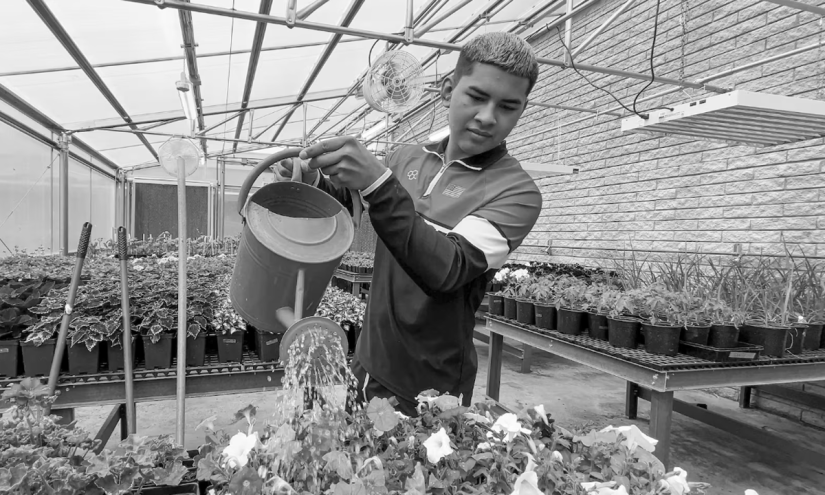
    The campus is welcoming to the parents and their dependents, offering various events and activities geared toward families, such as kid-friendly movie screenings and visits to the college farm. Many parents engage in athletics, clubs and other on-campus activities, allowing them to have the full college experience.

    “The kids are a blast—they’re a lot of fun and they bring a lot of joy to this campus,” Kough said. Dependents of program participants are given their own cap and gown to walk at graduation, and some children have returned to Wilson as legacies.

    Wilson College Single Parent Scholars alumnae say the program helped them achieve their dreams through providing housing and community.

    Program alumnae also note the value of living in community with other single parents who are working toward the same goal of earning a bachelor’s degree.

    “I’m proud of the women who have come in, perhaps giving up a lot. In some cases, they gave up houses and apartments and jobs with some immediate gratification of a paycheck, just putting all that aside for a dream that was down the road,” Kough said. “It’s hard to put into words but it certainly makes a lot of the struggle and the work absolutely worth it.”

    If your student success program has a unique feature or twist, we’d like to know about it. Click here to submit.

    Source link

  • Stop Marketing to Yesterday’s Students: A New Era for Higher Ed 

    Stop Marketing to Yesterday’s Students: A New Era for Higher Ed 

    Is your institution’s marketing truly reaching today’s students, or are you shouting into the void? Higher education marketing is undergoing a seismic shift. With rapid changes in student behavior, the rise of AI and mounting constraints on institutional funding, marketing leaders can no longer rely on yesterday’s strategies to meet today’s challenges. Student expectations have evolved. Budgets are tightening. And yet, many institutions are still using outdated strategies that fail to resonate with the Modern Learner.  

    To stay competitive, institutions must embrace the new era of higher education marketing—an era defined by personalized engagement, brand-building and data-driven decision-making. In a world where marketing dollars work must work harder than ever, rethinking your strategy is no longer optional. It is essential to long-term success.  

    Students no longer passively wait for information. They actively seek it across multiple channels, from social platforms to AI-powered search tools. Their behaviors are more self-directed than they were even a decade ago, and the expectations they bring to the table are shaped by instant access, transparency and digital convenience. Modern Learners want institutions that reflect their values and aspirations. As a result, branding plays an even more critical role in decision-making than ever before. Trust, authenticity, and alignment with personal identity all contribute to conversion. Meanwhile AI is accelerating these shifts by analyzing behavior in real time and delivering tailored experiences at scale.  

    These changes are not on the horizon—they are already here. Institutions that fail to adapt risk being left behind.  

    This evolution is shaping the standard of higher education marketing, and redefining what it takes to attract and engage Modern Learners. Today’s students are not yesterday’s prospects. They are savvy, value-driven and self-directed. Marketing strategies must evolve to meet them where they are—not where they used to be.  

    At EducationDynamics, we are not here to maintain the status quo; we are here to challenge it. We rethink, rebuild and drive your institution into a future where growth isn’t just a goal—it’s a guarantee. With solutions designed to empower, we are continually adapting to the evolving needs of our partners to equip them for long-term success.  

    Evolving Student Behavior: Implications for Higher Education Marketing 

    The Changing Search Journey 

    Today’s students are no longer waiting to be guided; they are leading the charge. With a strong sense of autonomy and purpose, Modern Learners navigate the enrollment journey on their own terms. Their decisions are shaped by what EducationDynamics identifies as the Three C’s: cost, convenience, and career outcomes. These components are central to a student’s decision to apply or enroll. The challenge for institutions is not just to deliver value, but to demonstrate that value clearly and quickly in the digital environments that students operate in.  

    The student search journey has undergone a fundamental shift. No longer do students begin with degree or program keywords. Instead, 58 percent of Modern Learners now initiate their search with specific school names, according to EducationDynamics’ 2025 Engaging the Modern Learner Report. If an institution is not top-of-mind, it is already at a disadvantage. 

    Compounding this shift, nearly 60 percent of education-related searches result in no clicks. Students are making faster decisions, often based on AI-generated overviews that appear directly within search results. Currently, 65 percent of education searches trigger these overviews. This marks the rise of zero-click search and the emergence of Generative Engine Optimization (GEO) as a critical strategy.  

    The message is clear: if your institution is not immediately visible and delivering value within the search experience, it risks being excluded from the student’s consideration entirely. 

    Search engines like Google are prioritizing quick, curated answers, reflecting broader shifts in how users engage with content. Education-related searches have become more intricate, with students asking detailed and personalized questions. They are no longer browsing—they are making decisions. A static, cumbersome website is not just outdated; it is actively repelling Modern Learners. Institutions must create digital experiences that are responsive, student-focused and seamlessly accessible across all digital touchpoints. A lack of dynamic, intuitive design is no longer an option; it’s a failure to meet Modern Learners’ expectations. 

    In today’s search environment, visibility alone is not enough. Institutions must deliver relevance, clarity and authenticity across channels that Modern Learners use.  Institutions that want to remain competitive must not only be present at the beginning of the search journey, but also deliver information with the speed, clarity and authenticity that Modern Learners expect. Those that rise to this challenge will earn attention and trust, while those that don’t will fall behind amid competition.  

    The Demand for Authentic and Engaging Content 

    If your institution’s content strategy still leads with rankings, tradition or campus accolades, it is missing the mark. Modern Learners are not making enrollment decisions based on institutional prestige alone. They are looking for evidence of belonging, support and authenticity. Colleges and universities must shift from promotional messaging to content that mirrors the lived experiences of their students. Modern Learners want to see real people, real stories and a real sense of community. 

    Video content, especially in short-form, is now one of the most powerful mediums for delivering the connection that Modern Learners seek. Today’s students are not flipping through text-heavy brochures or watching ten-minute promotional videos. They are forming impressions in literal seconds, with the rise of TikTok, Instagram Reels and YouTube Shorts. These channels are avenues where your institution’s brand can come to life, showcasing content that is concise, compelling and aligned with the pace of student attention. Highlighting faculty, student testimonials, campus culture and day-in-the-life content in thirty seconds or less can drive significantly more engagement than polished but impersonal campaigns.  

    Authenticity is not a trend—it is a requirement for building trust. User-generated content (UGC) plays a critical role in building credibility. When students and alumni share their own stories, they give prospective students a transparent view of your institution’s impact. An honest glimpse into campus life helps cultivate connections and bolster credibility in ways that other marketing mediums cannot achieve. 

    At the same time, social media is no longer just a place for amplification. Increasingly, it is becoming an integral steppingstone in the student research journey. Modern Learners actively use platforms like TikTok, Instagram and Facebook to evaluate how your institution aligns with their lives and goals. Marketing strategies must evolve to include social-first storytelling and platform-specific content that makes the institution feel approachable and relevant. 

    At EducationDynamics, we don’t just help institutions meet the demand; we empower them to exceed it. We deliver Creative Solutions that are not only strategic but deeply human. Our approach centers on compelling storytelling, a student-first mindset and content designed for the channels where prospective students are making key decisions. Whether through video, social campaigns or user-driven narratives, we equip colleges and universities to show up in ways that make real impact and drive measurable results. We help our partners shape the future, rather than follow it.  

    Key Shifts in Higher Education Digital Marketing

    Website Marketing Evolution 

    In today’s higher education environment, your website is not just an accessory to your digital strategy; it is the central nervous system of your brand, the engine behind your reputation and a key driver of student engagement and revenue. With deep expertise in enrollment marketing, our team of experts transforms websites into high-performing conversion machines. Through data-driven UX, advanced SEO, GEO and conversion strategies, we ensure your website continuously evolves to meet the changing demands of the industry. If your institution’s website isn’t delivering results, it’s not just underperforming—it’s limiting your growth potential. 

    To remain competitive, website marketing must shift from static, siloed approaches to dynamic, user-centric experiences. As student behavior changes and new digital platforms emerge, institutions must design websites that can withstand these digital disruptions and provide seamless navigation, personalized content and clear pathways to action.  

    Search engine algorithms are now more sophisticated and volatile, requiring deeper alignment with how students search and engage. Website optimization now requires more than traditional SEO tactics. It demands an integrated approach that combines content marketing, user journey optimization and brand amplification. A seamless student experience is essential, but so is a strategy that ensures your content reaches prospective students across multiple platforms.  

    The role of an institution’s website as the front door of your brand remains as vital as ever. However, the digital space has evolved beyond simply driving traffic through SEO. Today, success hinges on ensuring your content is discoverable across a wide range of digital channels, and understanding how that content is delivered to students within the search engine results pages (SERPs).   

    AI has become a pivotal force in content discovery and visibility within SERPS. Visual shifts in the SERPs now prioritize rich media and first-person expertise, meaning your content must not only reflect relevance but also showcase real-world experiences to stay competitive. First-person expertise, such as student stories, faculty insights and user-generated content, is increasingly favored by search engines, underscoring the growing demand for authenticity. Rich media—images, videos and interactive elements—boost engagement and click-through rates. As visual content continues to dominate SERPs, your strategy must adapt to harness these trends effectively. 

    Looking to 2025 and beyond, SEO will demand a comprehensive, integrated approach that encompasses both on-site and off-site elements. Institutions that focus exclusively on on-page SEO or create content in isolation risk falling short of maximizing their potential. The most successful strategies will seamlessly connect content across multiple digital channels, driving not just visibility but also meaningful engagement. 

    Modern website optimization will be multi-faceted and multi-channel, anchored by four key components: 

    1. SEO: Search Engine Optimization will remain foundational, still being a critical part of driving organic traffic to your website but now must be paired with user-focused content creation. A strategic blend of blog posts, video content, graphics and articles will ensure that your website remains relevant and discoverable in a competitive search environment.  
    2. User Journey Optimization: Understanding the student journey is essential for converting traffic into applications. A data-driven approach that identifies usability roadblocks and tests the optimal path to conversion is key. A/B testing and ongoing adjustments will ensure that every touchpoint on your website drives students to take meaningful actions.  
    3. Brand Amplification: Strong content deserves to be seen. To achieve this, institutions must invest in amplifying their brand through content promotion, social media engagement, local profile optimization and PR. Engaging in user-driven discussions on forums and social media platforms will strengthen your brand’s visibility and credibility, allowing your message to reach broader audiences. 
    4. Content Marketing: The creation of high-quality content is a cornerstone of digital marketing. By producing content that directly speaks to student needs, you reinforce your institution’s position as a trusted authority. Strategic content creation is not just about filling your website but aligning content with student expectations and ongoing digital trends. 

    With these changes, institutions must take the driver’s seat in shaping their digital presence and optimizing web strategies. Meeting the moment requires a proactive approach to evolving digital trends, ensuring that your institution remains competitive, relevant and positioned for long-term success in an increasingly dynamic online environment. 

    The Transformation of Paid Media 

    The transformation of paid media has been just as significant as the evolution in organic search. With AI now playing a central role in optimization, marketers have had to rethink not only where they invest but how they manage campaigns. Gone are the days of manual bids and rigid keyword targeting. In what was once a highly controlled environment, advertisers would apply uniform bids across all matching search queries, rely on static text ads, and build campaigns around exact or phrase match keywords. These strategies offered precision but lacked adaptability and scalability.  

    Today, optimization is driven by automation, data and real-time decision-making. Smart bidding adjusts bids dynamically based on user behavior, intent and context. Responsive search ads tailor messaging to the user’s query, while improved broad match capabilities allow for more relevant and flexible reach. This shift demands a new approach, one away from managing structure and more on shaping signals for AI-based optimization. 

    Performance Max (PMax) campaigns exemplify this change. By consolidating efforts into a single campaign that spans Google’s full inventory, advertisers can let AI optimize toward specific outcomes. Institutions are increasingly shifting towards investments in branded PMax campaigns, using them to drive awareness and conversions across the funnel. Unlocking their full potential, however, requires consideration on inputs such as audience insights, quality creative and defined performance goals.  

    In this environment, marketers must shift their focus. Rather than managing granular campaign structures or keyword-level bids, success depends on a streamlined structure. Over-segmentation is now the enemy of AI—limiting data flow and stalling machine learning algorithms. Instead, consolidation, automation and audience-centric strategies are key to maximizing performance and achieving scale. The more robust your audience signals and creative assets, the more effectively AI can optimize for effective campaigns.  

    The Central Role of Brand in Modern Higher Education Marketing

    Brand as a Differentiator 

    In a competitive and crowded marketplace, brand is your most powerful differentiator. As enrollment pressures intensify and prospective students become more discerning, a clear and compelling brand narrative is not an accessory to success; it is essential for it. Yet many institutions struggle with perceived value leaving prospective students unsure of what truly sets them apart.  

    According to Hanover Research’s 2024 Trends in Higher Education report, 66% of Americans believe colleges are “stuck in the past” and no longer meet the needs of today’s students. This perception gap presents a unique opportunity for institutions to not just rebrand but redefine the role and relevance for higher education in the modern world. 

    Brand marketing plays a transformative role in addressing these challenges. Brand is not merely visual identity or taglines, it is about storytelling that resonates across platforms and inspires connection. With students engaging across an increasingly fragmented digital landscape, institutions must show up consistently across every touchpoint.  

    The emotional connection is especially important today, as higher education faces intense scrutiny from multiple forces. Amid ongoing conversations about cost, access and accountability, there is a pressing need for institutions to reshape the narrative. By investing in brand marketing, institutions can demonstrate their alignment with the needs of Modern Learners, reinforce their commitment to student outcomes and build trust in a time categorized by uncertainty.  

    Brand and reputation go hand in hand. One reflects your promise. The other reflects your proof. When balanced well, they shape a perception that drives enrollment, builds revenue and sustains long term success. 

    Today’s higher education marketers must engage students before they start their search. This requires delivering authentic content across channels that builds trust and awareness over time. The Modern Learner’s journey begins with emotion, not just information. Your brand must be visible, relatable, and memorable. 

    In an era marked by uncertainty and choice overload, institutions must lead with empathy, clarity, and purpose. Showcase a brand that resonates, builds confidence and drives action. 

    Balancing Brand and Performance Marketing 

    In higher education marketing, finding the right balance between brand and performance marketing channels is crucial for long-term success. Historically, higher education institutions have leaned heavily into performance marketing, driven by the immediate need for results like inquiries and applications. However, this strategy is becoming less sustainable in today’s dynamic and competitive landscape. While performance marketing continues to be essential for driving immediate conversions, it cannot be the sole focus. 

    Brand marketing plays an increasingly important role, especially in the upper funnel, where students are still in the process of exploring and considering their options. This phase of the student journey is more about building awareness, shaping perceptions and creating emotional connections, rather than expecting immediate results. Students are making life-changing decisions that require time, research and deep consideration, so brand-building efforts often take longer to produce tangible outcomes. 

    To navigate this, higher education marketers must strategically allocate resources across both brand and performance media. A suggested allocation might be 20-35% for brand marketing, including channels like Connected TV (CTV), OTT streaming video and audio, out-of-home (OOH) ads, display ads, and paid social. The remaining 65-80% can be allocated to performance marketing, focusing on paid search, paid social and website marketing. This balance allows for consistent brand presence while still driving immediate performance goals. 

    However, finding the right mix will depend on your institution’s unique needs and goals. There is no one-size-fits-all approach. It’s important to embrace a testing mentality when allocating your budget, understanding that this is a multi-year investment. Brand marketing’s impact often requires indirect measurement and time to mature, with a holistic cost per enrollment being a long-term goal. 

    By adopting a balanced approach and a willingness to test and iterate, institutions can achieve the right blend of short-term performance and long-term brand growth. 

    Adapting to Thrive in the New Era

    The higher ed landscape is evolving and so are your students. Marketing strategies that once worked are no longer enough. To succeed, leaders must challenge the status quo, evolve their higher education marketing strategies, and fully embrace the behaviors, tools and technologies that are shaping this new era. 

    Now is the time to invest in transformation. Whether that means rethinking your website, shifting your media mix or consolidating campaigns to improve performance, the path forward begins with taking action. 

    The transformation does not have to be navigated alone. A higher education marketing agency can be a vital partner in this evolution. At EducationDynamics, we bring together proprietary research, full-funnel strategy and decades of expertise to help institutions like yours grow with confidence.  

    Let’s shape the future together. Connect with an EDDY expert to assess your current strategies and identify new opportunities for growth.  

    The institutions that succeed will be the ones that are bold enough to evolve—strategically, creatively and with purpose. Now is your opportunity to lead that change.  

    Source link

  • Working-class students feel alienated from their creative arts degrees – here’s how to help

    Working-class students feel alienated from their creative arts degrees – here’s how to help

    Social class inclusivity is a problem in UK higher education.

    Research demonstrates that working-class students report being less likely to apply to university than their middle-class peers – and when working class people do enter higher education they may face discrimination and social exclusion. This is exacerbated in creative arts subjects.

    We interviewed students currently studying creative arts subjects at a Russell Group university to hear more about their experiences of social class inclusivity. Speaking to ten undergraduate and eight postgraduate students studying a range of creative fields including music, drama and film, we found that working-class students find it difficult to attend class, are disadvantaged in terms of accessing the cultural resources needed to succeed on their course, and feel excluded from social life on campus.

    Economic disadvantage presents a considerable barrier to students completing arts subjects at university. To be inclusive, university staff may have to adjust teaching and learning. We would like to make the case for those working in higher education to consider what classed assumptions are made about students in our institutions and accordingly reassess our expectations of those studying the creative arts.

    Many of the disadvantages or challenges that working-class students face are connected to wider structural inequalities that are deeply entrenched in our society. At the same time, there are still meaningful interventions that staff can make to support working-class students. We suggest four ways in which university staff can make their practice more inclusive to working-class students.

    Discuss working-class stories as present and live

    Universities are middle-class spaces. In creative arts subjects, students often make work referring to their class identity. This can be at odds in institutions where middle-class experience is the “norm”.

    Class diversity must be present within teaching. More working-class mentorship and role models would help students to feel like they belonged at university – including visiting working-class creatives. Our participants also advocated for contemporary working-class experience in the curriculum, in academic texts, and in the artworks discussed.

    Staff must maintain a supportive and safe space when discussing issues pertaining to social class. Staff should also recognise that not everyone wants to talk about their background or experience. Additionally, staff must be aware of social class-based stereotyping that might exist in other students’ creative work, and be prepared to intervene when necessary if (often unintended) prejudices around work, class, accent, or lifestyle emerge.

    Adapt teaching to the multiple demands on working-class students’ time

    More and more students are undertaking part-time work alongside their studies. It is difficult to devise our curricula for only those students who can commit all their time to studying, when significant numbers are balancing their studies with multiple part-time, temporary and precarious jobs, or with care responsibilities.

    Working-class and carer students may be commuting considerable distances to engage with their studies. This is creating a two-tier system of engagement, and many of the students we interviewed felt that teaching and learning on their courses was not flexible enough to support their participation. The same issues are present when students try to engage in extracurricular and cultural activities.

    Working-class students asked for more online resources and access to course materials immediately at the start of modules, alongside concerns over early starts and late finishes and travel costs. They wanted permission to speak to staff about part-time work without feeling like they were “doing something wrong” or not taking their studies seriously. The normalisation of working alongside studying is something that staff may have to accept and work with, rather than try to push against.

    Early intervention is important

    The early stages of the student’s degree are a key time when social class difference and disadvantage is felt, with high levels of anxiety around finance and budgeting in comparison to more affluent peers.

    Working-class students asked for the university to provide information to support their transition into economic independence. Examples include advice on budgeting, lists of free resources, inexpensive alternatives and free access to cultural resources.

    Peer support plays a huge role in the transition to higher education. Working-class peer support groups and mentorship are as significant interventions to help.

    Adjust assumptions and reassess expectations

    University staff can make a difference to the experience of working-class students through simple adjustments of the assumptions we make.

    Interviewees believed staff made assumptions about what creative arts students should know, or the kind of experiences they should have had prior to university. These assumptions corresponded with a more middle-class experience, for example knowledge of university life, or access to (and the ability to afford) cultural resources or engagement with extra-curricular activities. Participants were particularly frustrated by assumptions from staff that students could afford to pay for learning resources not available in the library.

    Extra work is also needed to ensure that working-class or other marginalised students feel comfortable and entitled to ask for help from staff.

    Because many students now must work alongside studying, students may have less time to complete their work outside of class. Stronger steers on the amount of time to complete activities and prioritisation of reading, and the removal of blame for those struggling to balance time constraints of working whilst studying can all be effective.

    Working-class creatives

    Class inclusivity means students feel like they belong on their course, alongside having the financial security to take the time and space to study.

    This is particularly important in the creative arts because the more time and space students have to engage with their course or with extracurricular activities like arts societies, the more working-class stories will be represented in the creative work they make. Creative arts subjects must better support working-class students to engage fully with their studies – and not to be disadvantaged by financial pressure, lack of resource, or through feeling like they don’t belong on their course.

    Source link

  • U Rochester Ph.D. Students Strike for a Non-NLRB Election

    U Rochester Ph.D. Students Strike for a Non-NLRB Election

    University of Rochester Ph.D. student workers began striking this week to pressure the institution to agree to what they call a “fair union election.” And for the process to be fair, they say, it can’t be handled by the Trump-era National Labor Relations Board.

    “We don’t see any kind of path through the NLRB at present,” said George Elkind, a Ph.D. student on the proposed UR Graduate Labor Union’s organizing committee.

    The strike began Monday and continued Tuesday. Elkind said it’s unclear how many of the more than 1,400 students who would likely be represented by the union are withholding their labor. The walkout is another example of labor agitation continuing into the Trump era.

    Roughly a year ago, university officials and the union organizers began discussing plans for a private election, which both parties were amenable to. If they had reached an agreement, the NLRB—which usually handles unionization votes at private nonprofit institutions such as UR—wouldn’t have been involved.

    However, in February, after Donald Trump retook the presidency and fired a Democratic NLRB member and the agency’s general counsel, a university lawyer told student organizers that UR no longer wanted a private election, according to a document union members provided Inside Higher Ed. Instead, the lawyer wrote that they could pursue an election with the Trump-era NLRB.

    Scott Phillipson, president of SEIU 200United, a multi-university union that’s helping to organize the students, said UR officials “simply do not want these employees to have a union. That is what is going on here.”

    Phillipson said university officials were being disingenuous in suggesting the students use the NLRB.

    “They know it’s not an option,” he said. “But it’s a better public messaging, frankly, than ‘Just go away.’”

    An NLRB spokesperson told Inside Higher Ed Tuesday that the agency’s “regional offices are functioning as normal” and can run elections. But any appeals of election results would go to the actual board for which the agency is named. And since Trump ousted the Democratic board member, Gwynne Wilcox, and has left previous vacancies unfilled, the panel now doesn’t have the minimum required number of members to make decisions.

    If Trump eventually does appoint his own members to the board, allowing it to operate again, some union supporters worry the NLRB might use a grad student unionization case such as Rochester’s to overturn the 2016 Columbia University case precedent establishing that private nonprofit university grad workers can unionize through the NLRB.

    Student workers could continue to unionize at public universities in the states that allow such action, but those at private institutions would be left with no other path than to seek voluntary recognition from their universities.

    Elkind said UR officials know that the NLRB “is defunct—and would be hostile if it weren’t.” He said they want grad workers to go to the NLRB and risk a ruling decertifying grad unions at private universities nationwide. He called this “an extreme anti-labor position.”

    ‘Unprecedented Times’

    In an email, William A. Herbert, executive director of the National Center for the Study of Collective Bargaining in Higher Education and the Professions, said the strike “to compel the university to agree to a non-NLRB election is a sign of these unprecedented times.

    “There is a growing distrust and frustration among unions and their members with NLRB procedures and remedies, both of which are also under constitutional attacks by employers like SpaceX, Amazon, and the University of Southern California,” said Herbert, whose center is at Hunter College. “The firing of NLRB Board member Gwynne Wilcox and the reported removal of sensitive labor data from the NLRB by Department of Government Efficiency [DOGE] staff has further undermined confidence in the agency.”

    The university, which didn’t provide an interview Tuesday, hasn’t said it abandoned the move toward a private election because it thinks grad workers would lose in front of the Trump-era NLRB. UR has cited other reasons, including a December court decision involving Vanderbilt University grad workers’ attempt to unionize.

    NLRB policy required Vanderbilt to reveal names, job classifications and other information about student workers whom the union might represent. But more than 100 students objected to sharing that, and Vanderbilt sued the NLRB and one of its regional directors, arguing that requiring students to turn over the information would violate their privacy under the Family Educational Rights and Privacy Act (FERPA).

    A judge in the U.S. District Court for the Middle District of Tennessee ruled that Vanderbilt was likely right and granted a preliminary injunction blocking the NLRB requirements. A UR lawyer wrote that this made the university concerned about being “seen as facilitating the dissemination of potentially protected student data to a third party” if it went forward with the private election.

    But the lawyer went beyond the Vanderbilt case, saying that not requiring a prospective union to go through the NLRB would be a “significant deviation from the university’s typical practice.” He also noted the recent “sweeping and still unclear changes in the federal government’s support for the university’s missions,” adding that the Trump administration’s upheaval “includes a likely reduction in federal funding.”

    In an emailed statement Tuesday, a university spokesperson said “contingency plans are in place to ensure minimal disruption to our academic mission— including teaching and research activities—during a strike. In the event of prolonged strike activity, University officials are confident that the academic enterprise will continue as normal without interruption.”

    The spokesperson said “we are steadfast in the belief that entering into a private election agreement at this time is not in the best interests of the University community.”

    Source link

  • Texas State Helps Students Bounce Back From 2.0 GPA

    Texas State Helps Students Bounce Back From 2.0 GPA

    As more colleges and universities consider initiatives, processes and policies to create a more student-focused campus, they are zeroing in on two areas of concern: academic probation and academic recovery.

    A growing body of research highlights the way negative life experiences and competing priorities impact students’ academic achievement, sometimes exerting a stronger influence than prior academic preparation.

    Texas State University has established a new initiative, Bobcats Bounce Back, to help students whose grades have fallen below a 2.0 learn self-efficacy, resiliency and strong study skills.

    The background: The university has a goal of increasing its first-year retention rate from 77 percent in 2012 to 85 percent by 2025, said Cynthia Hernandez, vice president for student success. Early on, officials recognized that the institution lacked a strong academic recovery program, so Hernandez and her team prioritized devising a proactive solution to reduce the number of students who fell into poor academic standing.

    Since 2009, the university’s policy has been that students who fall below a 2.0 cumulative GPA must meet with an academic adviser at least once a semester. The intervention has proven mostly successful, in that some students have moved back into good academic standing—though not everyone has, said Jason O’Brien, assistant director for academic engagement at Texas State.

    An analysis of institutional data revealed that students who improved their academic trajectory used support services at least once a month, or four times per term.

    “If students are [showing up], I know they’ve got the time and they’ve got a goal, they know what they’re working on,” O’Brien said. The challenge is getting each student to be proactive and engage early, not wait until the end of the semester, before finals.

    Using institutional data, Texas State leaders revamped academic probation requirements to encourage students to make at least four connections with support services each semester; those who don’t, receive personalized outreach.

    How it works: In the Bobcats Bounce Back program, students with a 2.0 GPA or lower are asked to participate in at least four support services, which could include success coaching, tutoring or a student success webinar. Students must meet with an academic adviser for at least one of their mandatory check-ins and they receive weekly communication from the office of academic engagement to encourage them to meet their goals.

    A few weeks into the term, O’Brien’s team runs a report that identifies students on academic probation who have yet to engage with a support office. Students who live off-campus receive communication from the academic engagement team and those in the residence halls receive outreach from their residence life director.

    “We’re not asking, ‘How are your classes going?’” O’Brien said. “We’re saying, ‘How are you doing? What’s going on in [your] life right now? Do you feel safe? Are you able to eat? Do you have any needs that aren’t met? Is your family OK?’ We’re trying to make sure that all of those basic needs, all that it takes to be a successful human is on track, and then from there we move on to, ‘OK, talk to me about classes.’”

    The aim is to be human-centered and conversational in order to learn from the student and bridge any gaps in services and resources the university can provide to promote student success.

    Sometimes this means helping students understand ways to correct their academic transcript, such as repeating a course or asking for an administrative withdrawal when relevant.

    “We make a lot of asset-based assumptions,” O’Brien said. “My assumption is that no student is choosing to fail a course; they are choosing to be successful in something else out of necessity,’” which could include prioritizing their health, caring for a family member or working extra hours to make ends meet. “What we want to do is find out about those early enough to prevent it from impacting a transcript.”

    The impact: During the inaugural program term in fall 2024, Bobcats Bounce Back supported 1,706 undergraduates; this term it is assisting 2,579 students. (Most academic recovery programs see higher rates of participation in the spring term because first-year students are most likely to face academic challenges in their first term, which can dramatically impact their GPA, O’Brien said).

    During fall 2024, Bobcats Bounce Back participants engaged, on average, with support resources 3.11 times, up 270 percent compared to students on academic probation in 2023 (who averaged .84 engagements). The university also saw a 3 percent increase in the number of students who regained good academic standing from fall 2023 to fall 2024, and a 7 percent decrease in academic suspensions.

    At the 12-week mark in spring 2025, average engagements among students on academic probation were up 74.8 percent, from 1.31 to 2.29.

    The data illustrates the program’s success so far, and O’Brien believes it’s due in part to their responsiveness to student needs. As the program has grown, more students are willing to seek out the office and engage. “They’re starting to have faith in us and ask for the support they need,” O’Brien said.

    Program participants also have an opportunity to submit a guided reflection, called a B3 Field Note, every four weeks to build their socioemotional skills. Each prompt is rooted in research-backed strategies to improve academic self-efficacy and engagement. O’Brien has been amazed at the thoughtful responses he’s seen thus far and plans to conduct a critical discourse analysis project to identify students who may need additional support based on their field note submissions.

    In the future, college leaders hope to target additional students who may be at-risk, but haven’t quite fallen below the 2.0 cumulative GPA threshold, a group Hernandez called the “murky middle.”

    If your student success program has a unique feature or twist, we’d like to know about it. Click here to submit.

    This article has been updated to clarify average engagement rates for program participants in fall 2024 and how that growth compared to the previous fall.

    Source link

  • OPINION: Policy changes sweeping the nation are harming our students. Educators must fight back

    OPINION: Policy changes sweeping the nation are harming our students. Educators must fight back

    Here’s a true story from North Carolina. Two elementary school children under the age of 10 waited for their parents to come home. We know they cleaned the dishes; the house was immaculate when someone finally came.

    The children did not attend school for a number of days. After three days, someone from their school reached out to a community member with concern for their well-being.

    While they were home alone instead of in school, the children made their own food and drank water. Their parents, who had been detained by ICE, had nurtured these skills of independence, so the children were not yet hungry or thirsty when someone finally came.

    Similar scenes are likely happening across the U.S. as President Trump aggressively steps up efforts to deport undocumented immigrants. The new policies sweeping the nation deeply affect and harm our children.

    Related: A lot goes on in classrooms from kindergarten to high school. Keep up with our free weekly newsletter on K-12 education.

    Teachers: This is the moment when we need to rise to the occasion, because children are being wronged in uncountable ways. Protections that allow them to express their gender identities are under threat. Their rights to learn their diverse histories and understand the value of their communities are being chipped away bit by bit.

    These threats, one at a time, layer after layer, amount to profound harm. So let us be especially vigilant.

    The responsibility to challenge these threats cannot fall solely on the shoulders of individual teachers. We must have systems in place that allow us to swiftly raise concerns about student well-being.

    Schools, districts, and states must provide resources and structures — like wellness checks, counseling and communication with community services — that allow us to act swiftly when the safety of our students is at risk.

    As public servants, we must live out our charge to protect and advocate for the children we serve by taking immediate action to ensure their safety in whatever ways we are able. That means actively noticing when students are missing and when they are struggling.

    Public education has long wrestled with the role of politics in schools. No matter how we answer questions about political content, educators have been unified in the goal of nurturing children’s thinking and flourishing.

    Our state constitution and many others’ declare that all children are entitled to a “sound basic education,” and our professional responsibilities extend to their safety. In North Carolina, the first category of the code of ethics for educators pertains to professional ethical commitments to students.

    To uphold these professional commitments, the educator “protects students from conditions within the educator’s control that circumvent learning or are detrimental to the health and safety of students.”

    This protection must be more than theoretical. When our students are at risk, we have our constitutional guarantees and ethical commitments.

    The brutal example of the children whose parents were taken away is one of many. We cannot fathom all that the children needed to know in order to survive those harrowing few days alone in their home. We do know they were ready.

    We can assume that perhaps they read their favorite books or calculated measurements while cooking themselves dinner, utilizing skills they learned in our classrooms. What we do know is that the knowledge taught to them by their families and community ensured their safety.

    The community member who ultimately went to check in on the missing students used a “safe word” — one that the children had been taught to listen for before ever opening their door to a stranger.

    The children did not open the door until that word was spoken. Hearing that word, they reportedly asked: “Are Mommy and Daddy OK? ICE?”

    These are the lessons young children are living by today. Safe words to protect themselves from adults who prey on their families. Skills of survival to hide at home, cooking and caring for themselves without seeking help from others if they find themselves alone.

    Related: Child care centers were off limits to immigration authorities. How that’s changed

    A protective silence now envelops all the children in the community where those parents were seized. An example has been made and now those in their community are hiding in fear or fleeing. The idea that this example is a model to be followed is a transgression of our ethical compact to care for these children, who are no longer in school, due to their fear, hiding with family members.

    Recognizing, acting on and speaking back to this injustice is precisely the sort of resistance and professionalism that binds our practice as educators. It is what we write of today.

    The children were ready. Educators need to be as well.

    We must use our voices to illuminate the harm being done to the children we know, honor and teach. Let us replace silences with spoken truths about their power and ours to survive and to resist; let us live out the expectation that public service must be enacted with humanity.

    We have a professional responsibility to not look away. This is not just a moral argument. We are their teachers, and we must ask: How will the students in my classroom survive? And how can we help them?

    Simona Goldin is a research professor in the Department of Public Policy at the University of North Carolina. Debi Khasnabis is a clinical professor at the University of Michigan’s Marsal School of Education.

    Contact the opinion editor at [email protected].

    This story about Trump administration policy changes and students was produced by The Hechinger Report, a nonprofit, independent news organization focused on inequality and innovation in education. Sign up for Hechinger’s weekly newsletter.

    The Hechinger Report provides in-depth, fact-based, unbiased reporting on education that is free to all readers. But that doesn’t mean it’s free to produce. Our work keeps educators and the public informed about pressing issues at schools and on campuses throughout the country. We tell the whole story, even when the details are inconvenient. Help us keep doing that.

    Join us today.

    Source link

  • Coalition’s pitch to get more students into VET after high school  – Campus Review

    Coalition’s pitch to get more students into VET after high school  – Campus Review

    A Coalition government would invest $260m to get more high school students to take up trades instead of pursuing university, it has been announced, after it indicated it would cut the Labor’s fee-free TAFE program..

    Please login below to view content or subscribe now.

    Membership Login

    Source link

  • Students Lose Food Benefits Between High School and College

    Students Lose Food Benefits Between High School and College

    Fewer than half of low-income students retain their state food benefits in the transition from high school to college or the workforce, even though they might still be eligible, according to a new report from the California Policy Lab, a nonpartisan research group affiliated with the University of California, Berkeley, and UCLA.

    The report, released today, drew on data from 2010 to 2022 from five state agency partners: the California Departments of Education and Social Services, the California Student Aid Commission, the University of California Office of the President and the California Community Colleges Chancellor’s Office. It found that only 47 percent of high school seniors who participated in CalFresh were still enrolled in the state food assistance program two years after graduation.

    “That’s a significant drop-off, and our goal is to shed some light on the causes of that drop-off and if there are ways to address it,” co-author Jesse Rothstein, professor of public policy and economics at UC Berkeley and the faculty director of the California Policy Lab’s UC Berkeley site, said in a news release.

    Researchers estimated that 40 percent of those students were no longer eligible for CalFresh because of specific eligibility requirements for college students. But the remaining 60 percent were likely eligible.

    Researchers also found disparities in which students maintained their CalFresh benefits. Students who participated in CalFresh for longer in high school were more likely to continue to participate afterward. Students who attended University of California campuses were also more likely to continue participating in CalFresh than those attending community colleges. The report suggests this is because community college students are more likely to live at home with their parents, whose incomes are factored into the eligibility for CalFresh, which can prevent them from meeting the program’s income requirements.

    Some community college students, including Hispanic and Filipino students, were less likely than their peers to continue receiving food benefits. The report recommended targeted outreach to these students to help them stay enrolled in the program.

    Source link

  • Launch of the Commission on Students in Higher Education: Unpicking the connections between teaching, funding and student outcomes

    Launch of the Commission on Students in Higher Education: Unpicking the connections between teaching, funding and student outcomes

    • The APPG for Students has launched the Commission on Students in Higher Education as a means of feeding into the Department for Education’s HE Review through a student-centred lens. A call for evidence has now opened, until May 1st, where colleagues from across the sector are encouraged to input.
    • Alex Stanley is Vice President Higher Education of the National Union of Students (NUS).
    • Saranya Thambirajah is Vice President Liberation and Equality of the NUS.

    The debates over the financial sustainability of the higher education sector, effective interventions in access and participation, and the quality of teaching will not be new to HEPI readers. Amongst the column inches and radio waves, however, students and the academic community are living these tensions every single day.

    It’s no secret that students are working long hours during term time, living pay cheque to pay cheque to cover their rent and bills – plugging the gap created by real-terms cuts to maintenance support. The NUS’s own research shows that of those who work during their studies, over 60% are working over 20 hours per week. While we feel from the stories that students tell us that there must be a link between inadequate maintenance funding, working long hours and students’ eventual attainment and outcomes, we lack an evidence base on the impact of working hours or lack of financial support on students’ attainment.

    Similarly, we are all aware that teaching standards and the concept of good degrees have spent the past fourteen years under the microscope, with innovative practice sometimes denounced as dumbing down in the press – and students told their course choice is leaving them with ‘low value degrees’, or that their hard work leading to higher grades is down to grade inflation.

    At NUS, we firmly believe the way to cut through the noise is by focusing on the real-life, current experience of students – and that the best way to do that is to bring them into the rooms where decisions are made. We are proud to hold the APPG on Students, for which NUS UK serves as Secretariat, as a space which connects student leaders to Westminster decision makers. We’ve been using this to bring student voice to the Houses of Parliament for over a decade, from launching the landmark research on the Black Attainment Gap, providing space for students to grill Sir Philip Augar immediately after his report launched, to most recently shaping the Renters’ Reform and then Renters’ Rights Bills, with interventions from current students the genesis of now-passed amendments on limiting rent up front and controlling the student lettings cycle. There is no question that bringing students and young people into the room on issues that impact them makes policy decisions better and enriches the debate.

    In this vein, we are proud to launch the Commission on Students in Higher Education, designed to place students at the heart of the current debates on funding, teaching and attainment.

    The Commission will tackle the big issues of the current funding debate: teaching standards, maintenance funding and student outcomes, drawing on the expertise of a cross-party group of Commissioners and higher education specialists, all working to provide meaningful recommendations which should influence and complement the Department for Education’s HE Review and the Comprehensive Spending Review.

    We will begin with an in-person event on Maintenance Funding tomorrow, Wednesday 23 April, when we will hear from proposers of four different ways of funding a more generous student maintenance offer, who will then be questioned by students and Parliamentarians.

    We will take in written evidence on the core areas of the Commission: maintenance funding, students and work, widening participation & student outcomes and teaching quality.

    We welcome submissions from colleagues across students’ unions, the academic community and sector practitioners who, like us, are keen to see the HE Review and Spending Review succeed in solving some of the existential problems we are facing across the sector.

    If you have any questions, please email [email protected]

    Source link

  • What if students were the architects of their own success?

    What if students were the architects of their own success?

    What if the best student support service universities could offer haven’t been designed yet – all because the right students weren’t in the room?

    It’s an unsettling thought, especially for those of us who have worked within the sector with hopes of improving student wellbeing, success, and engagement.

    But it’s a question I kept circling back to during my own Master’s dissertation – on how higher education leaders can empower student success through student support services.

    Despite evidence of dedicated and passionate staff, adequate funding, and strategic frameworks, students still reported gaps – not just in service delivery, but in how those services are conceived.

    The issue isn’t just operational, it’s philosophical.

    Going from “we provide” to “we build together”

    Higher education has made important strides in expanding student services – from wellbeing hubs and learning support, to financial aid and disability access. But often, these services are still created for students, rather than with them.

    Student feedback is collected after implementation, student leaders are invited to steering groups halfway through, and students are asked for “input” on final drafts rather than on the first blank page.

    But that’s not co-creation – it’s consultation with extra steps.

    When we move beyond ticking the “student voice” box and start sharing power, from the ideation stage to ongoing evaluation, something transformative happens – services become relevant, not just available.

    Across the Irish and UK sectors, we talk a good game about partnership. But authentic representation often struggles against institutional muscle memory – senior committees with unclear roles for student reps, siloed support departments, and legacy systems where “that’s just how it’s always been done.”

    And yet, higher education institutions that embed structured co-creation into their DNA show what’s possible.

    At the University of Helsinki, students sit on nearly every working group — not just tokenistically, but as equal contributors in shaping the academic experience. In the Netherlands, the concept of the “student assessor” has placed students at the heart of university governance.

    In Australia, institutions have embedded co-design into their equity and access strategies, involving students from underrepresented backgrounds in shaping services intended for them. Closer to home, UCL’s Student ChangeMakers programme enables students to co-lead improvements in pedagogy, assessment, and support services.

    Even in smaller institutions, we see creative approaches – from peer-led mental health initiatives in Scotland to course review panels in Irish colleges where students shape curriculum content and feedback systems in real-time.

    These aren’t add-ons – they’re rewiring the system to trust students as partners, not recipients. And it works.

    Co-design works

    When students co-design support services, they’re more likely to use them, to trust them, and to champion them among peers.

    One of the strongest themes that emerged from my own research was just how often students didn’t engage with services because they weren’t designed with their realities in mind.

    I’ve found mature students balancing work and care responsibilities, students with disabilities navigating inaccessible booking systems, international students who couldn’t find help that reflected their unique needs, and online learners who found support hyper-focused towards traditional campus-based students.

    We don’t need another awareness campaign – we need services designed with lived experience at the core. Co-creation isn’t just about collaboration, it’s about expertise – the kind students bring simply by surviving and succeeding in today’s higher education and societal landscape.

    It’s not a radical thought to think a first-year commuter student might have better insights into timetabling conflicts than a senior manager does.

    If we want student support services to meet the moment, leaders have to ask the hardest question of all – what decisions am I willing to share?

    Because real co-creation means giving away control. Not all of it, not recklessly – but deliberately and structurally. It means students co-chairing steering groups. It means budgets ringfenced for student-led initiatives. It means evaluation that includes student-led metrics of success, not just institutional KPIs.

    And it means recognising that students are not a problem to be solved, but a resource to be repurposed.

    As we continue to navigate one of the worst cost-of-living crises we’ve ever seen, post-pandemic recovery, and mounting mental health concerns, the temptation is to invest in more services, faster solutions, and slicker technology. But what if the most impactful thing we can do is pause – and ask students to build it with us?

    Co-creation isn’t a buzzword. It’s a strategy for relevance, equity, and resilience.

    And if we’re serious about empowering student success, it’s time we stopped building services around students – and started building them with students.

    How might it work – and what could it change?

    Reimagining support means starting with different questions: What if students didn’t have to search for help — what if help found them? What if every staff member saw themselves as part of the support system, not just those with “student services” in their title? What if wellbeing wasn’t its own office, but a value that lived in curriculum design, assessment timelines, and space planning?

    There’s no one model, and that’s the point. At some universities, it might mean tearing down departmental silos and creating shared case management teams. In others, it could mean radically overhauling communication with students — ditching ten disconnected emails for one meaningful touchpoint, co-designed with students for students.

    It could mean integrating student advisory roles across academic faculties/schools, or giving SUs shared governance over support strategy, not just representation on working groups.

    It could even be as bold as adopting a ‘universal design’ approach to all student services — where we build systems for the most marginalised, and in doing so, make them better for everyone.

    The change isn’t just structural — it’s cultural, philosophical. When students see that their experience and input drives institutional decisions, not just fills out end-of-semester surveys, something shifts. Trust deepens. Engagement rises. The story students tell about their university begins to change — from “I had to figure it all out” to “they built this with us in mind.”

    Source link