Tag: students

  • How a Drop in Ph.D. Students Could Affect Colleges

    How a Drop in Ph.D. Students Could Affect Colleges

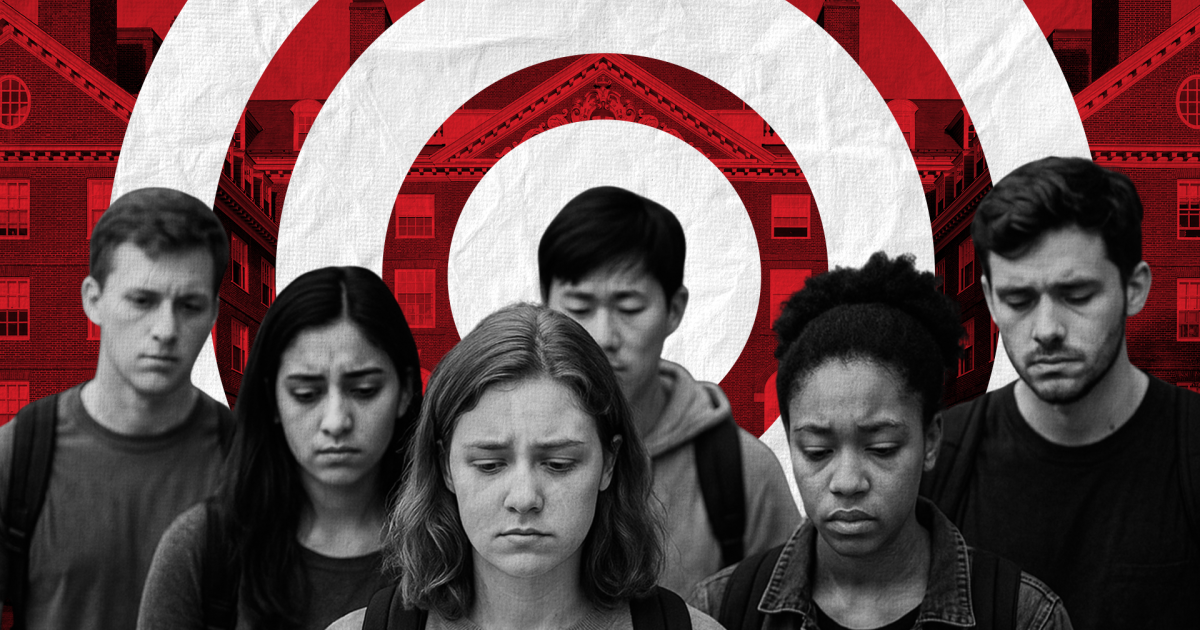
    Under mounting financial and political pressures, universities have paused or rescinded graduate student admissions on an unprecedented scale, which could create cross-campus ripple effects next fall and beyond.

    The extent of the cuts to the graduate student workforce remains unclear and will vary from institution to institution. But if and when those losses come to pass, experts say that employing fewer graduate students—particularly Ph.D. students, who typically hold years-long research and teaching assistantships—will undermine universities’ broader operations, including undergraduate education, faculty support and the future of academic research, which is reliant on training the next generation of scholars.

    “First and foremost, a reduction in the number of graduate students may threaten that individualized, close attention for undergraduates,” said Julia Kent, vice president of best practices and strategic initiatives at the Council of Graduate Schools.

    That’s because many doctoral students work as teaching assistants, particularly for large introductory undergraduate courses, where they assist with grading, lead discussion sections, help students with assignments and supervise labs.

    “While a professor may be doing the lectures for those courses, they may not seem as approachable or accessible to undergraduates. In those cases, the graduate teaching assistant is the first point of contact for that student. They may go to them for questions or feel more comfortable asking for help with assignment,” said Kent, who added that graduate students also support universities’ learning missions in other ways, too. “They may also help staff in the writing center and support undergraduates writing essays for their classes and provide informal mentoring.”

    ‘Not Sustainable’

    Although colleges and universities haven’t felt the effects of losing a number of those roles yet, Kent said the uncertainty surrounding graduate admissions poses a “real risk” to undergraduate learning.

    If universities do want to maintain smaller class sizes with fewer graduate students, they may rely even more heavily on low-paid contingent faculty, said Rosemary Perez, an associate professor at the Center for the Study of Higher and Postsecondary Education at the University of Michigan.

    “That’s not sustainable for those instructors, who may be teaching five or six classes at multiple campuses and still not making enough to live,” she said. And with fewer graduate students in the pipeline, “we’ll also have fewer people who are trained to be faculty. People are going to retire. Who’s going to teach these college classes that have experience working with college students?”

    Nothing concrete has to happen for people weighing their futures to decide to take a different path where it seems like there may be more stability. Rational humans may decide that’s not the direction they want to go in anymore, and that’s going to be an immediate loss to the field.”

    —Marcel Agüeros, astronomy professor at Columbia University

    And with fewer spots available to prospective graduate students, Perez fears students who don’t attend top-ranked institutions will be the first to disappear from the academic pipeline. That’s because when resources are scarce, “the tendency is to rely on markers of prestige or GRE scores as predictors of success,” she said. “But those aren’t great predictors of what people are capable of doing in their careers.”

    Fewer graduate students will also likely mean a heavier workload for faculty, who in addition to teaching, also rely on them to help with research by assisting in running labs and research groups and co-authoring papers.

    “They help universities’ reputation, but they also help faculty funding prospects by making the faculty more productive, because funding agencies like to see productive faculty. A lot of that labor is happening through graduate students,” said Julie Posselt, a higher education professor at the University of Southern California, which last month revoked outstanding offers for numerous Ph.D. programs, including sociology, chemistry, sociology, molecular biology and religion. “Meanwhile, there’s also plenty of evidence that Ph.D. students are contributing to universities’ research output and are independently advancing knowledge in their respective fields.”

    Impact Will Reach All Fields

    Already, numerous universities across the country have said they’re reducing the number of Ph.D. students in the biomedical sciences as a result of drastic cuts to the National Institutes of Health, which each year sends universities billions of dollars in grants that indirectly and directly support graduate education.

    But it won’t just be those in the biomedical sciences that feel those cuts, especially as colleges downsize their budgets in light of the NIH’s plan to cap the amount of money it gives institutions for indirect research costs, which covers facilities maintenance, compliance with patient safety protocols and hazardous biowaste removal. Although a federal judge has blocked those cuts for now, the Department of Health and Human Services filed an appeal Monday; if the plan takes effect, it will force universities to find other areas they can cut from their budgets to make up the difference.

    “Even if you’re in the humanities, what’s happening right now in federal granting agencies that are far from the humanities has an impact on the humanities, because the overall budget for a university to do things like keep up their infrastructure and keep the lights on will go down,” said Jody Greene, associate campus provost and literature professor at the University of California, Santa Cruz. “And if we also don’t have international students, that’s also going to be a significant budget hit at institutions like ours.”

    International Students at Play

    In addition to drastic cuts in grant funding from the NIH, the National Endowment for the Humanities and the Department of Education, the government has also revoked scores of international graduate students’ visas and detained several others.

    U.S. Secretary of State Marco Rubio has characterized, with little concrete evidence, those students as “lunatics” who came to the United States “not just to study but to participate in movements that vandalize universities, harass students, take over buildings and cause chaos.” The administration is also considering a travel ban affecting 43 countries. (After Trump issued a travel ban for seven countries during his first term, the number of international applicants to U.S. colleges fell 5.5 percent for graduate students, though applications have been on the rebound post-pandemic.)

    But universities worry that targeting international students—who made up nearly one in four incoming graduate students in 2022—will create a chilling effect, cause international student enrollment to plunge and strip institutions of yet another vital revenue source. According to data from the Institute of International Education, 81 percent of international undergraduate students and 61 percent of graduate students completely fund their own tuition.

    Would-Be Ph.D.s Wary

    All this politically driven chaos and financial uncertainty is making graduate school—and a career as a faculty member—a harder sell for students interested in research careers.

    “Up until this year, we’ve been able to tell prospective graduate students that the university will cover the costs of their Ph.D.,” said Marcel Agüeros, an astronomy professor at Columbia University, where the Trump administration has frozen some $650 million in NIH funding. “We want to stay true to that commitment, but we’d be lying if we said that’s going to be 100 percent possible.”

    And even though his department is currently only expecting to offer one fewer Ph.D. slot, Agüeros said the uncertainty over the future of federal funding—and even what areas of research academics are allowed to pursue—is enough to push people out of academia.

    “Nothing concrete has to happen for people weighing their futures to decide to take a different path where it seems like there may be more stability,” he said. “Rational humans may decide that’s not the direction they want to go in anymore, and that’s going to be an immediate loss to the field.”

    And those are the questions would-be graduate students all over the country are asking themselves right now.

    “We don’t have any data yet, but anecdotally, I’m hearing that there are a ton of students who are choosing not to even try to go to graduate school this year and next year because they’re perceiving less funding and support,” said Bethany Usher, immediate past president of the Council on Undergraduate Research and provost at Radford University in Virginia.

    “Those Ph.D. students are the ones who push the boundaries of research,” she added. “They have the newest ideas, and if we reduce those, it will have a generational impact on higher education, industries and communities.”

    Source link

  • The value of the classroom in building belonging for commuter students

    The value of the classroom in building belonging for commuter students

    As highlighted throughout the commuter student series, the significant increase in commuters across the sector is beginning to influence many institutional approaches.

    These approaches have been varied but have included projects like making space for commuter students on campuses so that they can maximise their time and comfortably immerse themselves in the university experience.

    However, against a backdrop of a cost-of-living crisis, a cost of learning crisis has taken hold. Given the complexities of commuter students’ lives and responsibilities and the increasing costs of commuting, the “sticky campus” model is not always a viable option as the shift to a more transactional approach is becoming more prevalent.

    What educators, student-facing colleagues and decision makers need to identify is how they ensure time on campus adds value to the commuter student experience.

    The classroom as central

    My PhD research focuses on the experiences of ethnic minority commuter students, and how they develop their identity and sense of belonging whilst at university.

    Much of the research has found that commuter students are more likely to be from ethnic minority backgrounds, have employed work and caring responsibilities and come from lower socio-economic backgrounds.

    Exploring the experiences of participants in my research has revealed how the experiences within the timetabled teaching classroom carries particular significance for commuter students.

    This intersectionality of characteristics further emphasises the heterogenous nature of commuter students, and that speaking to, and understanding the experiences of students will help to understand how we can ensure their university experience is the best it can be.

    Whilst ensuring all students develop the subject specific knowledge is considered to be top of the list of how we add value, ensuring the classroom provides a space for students to develop networks and their community is one of the ways the classroom environment can better support commuters.

    Commuter students are struggling to adapt to pedagogies and policies that are typically designed for students who have relocated. This has started to come to the fore in the responses from students who are perceiving significant value of their experience in the approaches adopted within the classroom.

    Findings from my research signify that a sense of belonging is felt by commuter students, both at a course and institutional level, and that sense of belonging is very much driven by the experiences they have in the classroom.

    Finding space to belong

    To develop this sense of belonging, students often mentioned the importance of space and time.

    They spoke about the need to have space and time within their timetabled session to catch up with peers, have the time to speak to academic and professional services teams face to face and to ensure that classroom activities link to the outcomes they are hoping to achieve. To assist in facilitating this, consideration around how taught sessions are delivered, building space into weekly module delivery to maximise the potential for students to get the most out of their time on campus can develop and help foster this sense of belonging and community.

    Commuters are constantly making cost-benefit calculations, tying with the transactional approach to education. And the richness of these connections, however short and sporadic, can provide valuable outcomes and develop this sense of community.

    Not participating in activities outside of the classroom is not perceived as negatively impacting on their experience, and nor does the act of commuting always limit their ability to engage in activities, but there is an opportunity cost that is often considered.

    Differing approaches amongst tutors can impact on the experience students encounter, and the findings from my research signify a correlation between those classroom encounters and the sense of belonging for commuter students.

    Identity searching

    The institutional identity is also particularly relevant given that the students who are commuting are likely to live within the region, and this further develops the potential affinity they have with their institution.

    My research speaks to the importance of commuter students’ feelings of “we are all getting the same experience and opportunity” in ensuring they are not left feeling disadvantaged.

    This is not to suggest that engaging in activities outside of the classroom are not of value to commuter students, the benefits of engaging in extra-curricular activities is often considerable to the majority of students. The holistic experience of being in university should, however, support in developing the capital of commuter students.

    The classroom should be a space where all students enjoy the learning opportunities that higher education offers, providing the platform on which the student experience is built.

    For commuter students in particular, this space and environment is becoming increasingly important in their overall journey.

    And if we are to ensure an equitable experience for all students, providing a classroom experience which not only focusses on subject content, but provides time and space for interaction and the building of individual identity and community can help support this journey.


    This blog is part of our series on commuter students. Click here to see the other articles in the series.

    Source link

  • ShareWell Offers Free Mental Health Support to University Students Nationwide

    ShareWell Offers Free Mental Health Support to University Students Nationwide

    ShareWell—the first peer-to-peer mental health support platform—is now offering free, unlimited memberships to all university students across the U.S.

    With 70% of college students reporting mental health challenges, ShareWell aims to fill critical gaps in care by providing live, virtual peer-led support groups on topics like anxiety, depression, academic pressure, and life transitions. Students can join as many sessions as they want—completely free—by signing up with their university email at www.sharewellnow.com.

    It’s a simple way to access community support during what can be some of the most overwhelming years of life.

    Source link

  • After the Los Angeles fires, Beverly Hills shut out students whose school burned

    After the Los Angeles fires, Beverly Hills shut out students whose school burned

    LOS ANGELES — After the Palisades Fire destroyed her son’s high school, Shoshanha Essakhar found herself among the thousands of Los Angeles County parents wondering what to do.

    “I was thinking, ‘Oh my God, we’re going to be doing Zoom for the next God knows how long,’” said Essakhar. “It was a lot of fear, a lot of uncertainty.”

    The fire devastated Palisades Charter High School, where Essakhar’s son was a ninth grader, as well as two elementary schools in the Los Angeles Unified School District. The Eaton Fire, which broke out around the same time in early January, severely damaged or destroyed six school facilities in Pasadena Unified School District. Together, the fires disrupted learning for more than 725,000 kids and displaced thousands of students from their schools, their homes or both.

    For Essakhar, a potential solution came by way of an executive order California Gov. Gavin Newsom signed Jan. 14. For students in Los Angeles County schools affected by the fires, the order paused, through the remainder of the school year, the requirement that a student live within their school district’s boundaries. That meant she could enroll her son at nearby Beverly Hills High School, where another parent she shared carpool duties with was also enrolling her child. She quickly completed the necessary paperwork.

    But roughly a week later, Beverly Hills Unified School District abruptly stopped accepting students displaced by the fires, closing the door on Essakhar’s son and dozens of other students who expected to spend the semester at Beverly Hills High.

    “As a mom, you try to do your best for your child, but it got so unpleasant,” Essakhar said. Beverly Hills school leadership said it could not afford to accept additional students, nor did it need to: Students who lost their school but whose homes were still intact did not need their help.

    Related: Become a lifelong learner. Subscribe to our free weekly newsletter featuring the most important stories in education.

    The dispute between Beverly Hills Unified School District and some Palisades parents raises questions that school districts across the U.S. increasingly must grapple with as wildfires and other extreme weather events become more common because of climate change: What does a school district owe its neighbors after a major disaster?

    For Beverly Hills Unified, the answer was admitting 47 students before pausing enrollment over concerns that a surge of newcomers midyear would siphon resources from the district’s 3,000-plus existing students.

    “You’ve got a community where a lot of those folks lost their homes, and half lost their school but their homes weren’t impacted,” said Los Angeles Unified School District board member Nick Melvoin, whose district includes Palisades Charter High School. Like Beverly Hills, its students are predominantly from affluent backgrounds.

    Newsom’s order was an attempt at a fix: It urged districts to “extend every effort to support and facilitate the enrollment of students displaced by the fires.” Lori Peek, director of the Natural Hazards Center at the University of Colorado, Boulder, which focuses on the societal effects of disasters, said it “provided the necessary flexibility that disaster survivors really need, because their circumstances are so diverse.”

    In Beverly Hills, school board members resisted the order. Beverly Hills is one of the few “basic aid” districts in the state, meaning it collects more in local property tax revenue than an annual funding target set by the state, which is based on average daily attendance and other factors. Most districts fall short of the target, and the state makes up the difference.

     The January fires in Southern California disrupted learning for more than 725,000 students. Credit: Jason Armond / Los Angeles Times via Getty Images

    At a series of meetings in January and February, Beverly Hills school board members argued that the district couldn’t absorb additional students without harming those already enrolled. While other school districts see increased funding from increased attendance, that’s not true for basic aid districts like Beverly Hills.

    Board members also questioned whether students who lost their schools, but not their homes, such as Essakhar’s son, should be considered affected by the fire and able to enroll. Board members told district administration that they believed only students whose homes were destroyed should qualify.

    Not so, said Melissa Schoonmaker with the Los Angeles County Office of Education, which provided guidance to the county’s school districts on implementing the order. “It’s not that they had to lose their home or be evacuated, it could be a broad range of impacts,” she said.

    Eighty-seven families were left in limbo: They had completed all of their pre-enrollment steps and were just awaiting class assignments, Assistant Superintendent Laura Collins-Williams told the board on Feb. 3. Dozens more were interested in enrolling.

    Related: 109 degrees on the first day of school? In some districts, extreme heat is delaying when students go back

    Board members supported making this pause permanent.

    “Going forward we are closed to any enrollment that comes right now as a result of a student going to Pali who has not been displaced from their home but would like to come to Beverly Hills because they don’t want to go on Zoom,” board President Rachelle Marcus said at the meeting, referring to Palisades Charter.

    Essakhar, who lives in Brentwood, a Los Angeles neighborhood roughly halfway between Beverly Hills and the Pacific Palisades, called the entire process traumatic.

    She gave up on finding an in-person school option for her son, settling instead for Zoom through Palisades Charter. “Honestly, I didn’t want to go through the experience again,” she said. Plus, most of his friends who left Palisades Charter had enrolled at Beverly High. “Being with your group of friends is different than sending my kid alone to some other school to transition in the middle of the year after the fires on his own,” said Essakhar. 

    Another Palisades Charter parent, Negeen Ben-Cohen, was initially optimistic that the school would quickly secure a temporary campus. But as the weeks went by, she started considering other options for her ninth grader.

    “It was mostly about keeping my son in a healthy social environment, and not isolated at home,” said Ben-Cohen. “Covid already showed that with the amount of learning loss and how much kids fell behind during Zoom.”

    Like Essakhar, Ben-Cohen filled out all the necessary paperwork to enroll her son and was told she would hear soon about his class placements. Then enrollment was paused.

    “They shut the door in our faces. And that was after the kids got their hopes up, they think that they’re going to be able to go in-person, they think they’re going to be able to start with their friends,” said Ben-Cohen. 

    Related: Want to learn more about how climate change is affecting education? Sign up for our newsletter.

    At board meetings, parents and students expressed similar outrage.

    “Beverly had the opportunity to extend a hand when we needed it the most but instead they turned around and slammed the door in our faces,” said Kylie Abdi, a senior at Palisades Charter, at a Feb. 11 meeting.

    “We do not even want to get an education in a school that kicks others while they are down, you have lost the opportunity to teach your students how to be there for each other,” said another Palisades student, junior Rosha Sinai, calling the board “selfish.”

    Jason Hasty, the interim superintendent of Beverly Hills Unified School District, said in an interview that enrolling any more than 47 students would have strained the district’s resources and required hiring more teachers — although he acknowledged that his district is better funded than most.

    “We get more money than the state formula because of the way we’re funded. That is a fact. Also what is a fact is on July 1 of every year, we set a budget … based on the students we are projecting to have,” Hasty said.

    State Sen. Ben Allen, who represents both the Pacific Palisades and Beverly Hills areas, said that Beverly Hills would be compensated for taking in displaced students, although the details are still being worked out. 

    “We’re going to have their backs and that they’re going to be fully compensated for any students that they take in,” he said.

    Hasty said the district has been “in direct discussion” with Allen’s office, but “until we are sure that those funds are materializing and will be provided,” the pause on enrollment under the executive order (which expires at the end of the school year) remains in place. The district continues to enroll students who move to Beverly Hills or who are eligible under the McKinney-Vento Act, said Hasty. That legislation provides protections for students who are homeless, which is defined as “individuals who lack a fixed, regular, and adequate, nighttime residence.”

    Related: Universal prekindergarten is coming to California — bumpy rollout and all

    Nearby Santa Monica-Malibu Unified School District is also a basic aid district, but it interpreted the order “to mean that any student who wants to come here can come here right now,” said Gail Pinsker, the district’s chief communications officer. So far, the district has enrolled more than 140 students, with about 200 enrollment requests still being processed. The influx of students prompted the district to combine some elementary classes and hire a new high school teacher, Pinsker said.

    Three months after Palisades Charter High School burned, students remain on Zoom. The school just finalized plans to use an old department store building in downtown Santa Monica about 20 minutes southeast of the high school as its temporary campus. In-person instruction should resume sometime after the school’s spring break in mid-April, according to Palisades Charter High School.

     Palisades Elementary Charter School, which was devastated by the wildfires in January. Credit: Jason Armond / Los Angeles Times via Getty Images

    Allen, the state senator, said the episode shows the need for a policy for compensating basic aid districts that take in displaced students to make the process smoother after future disasters.

    Also helpful would be a website listing districts accepting affected students, said Peek, the University of Colorado researcher.

    Lessons from the Los Angeles fires could inform policymaking elsewhere, she added. “They’re going to need it sooner rather than later, as other disasters continue to unfold across the country.”

    Contact editor Caroline Preston at 212-870-8965, on Signal at CarolineP.83 or via email at [email protected].

    This story about the Los Angeles fires was produced by The Hechinger Report, a nonprofit, independent news organization focused on inequality and innovation in education. Sign up for the Hechinger newsletter.

    The Hechinger Report provides in-depth, fact-based, unbiased reporting on education that is free to all readers. But that doesn’t mean it’s free to produce. Our work keeps educators and the public informed about pressing issues at schools and on campuses throughout the country. We tell the whole story, even when the details are inconvenient. Help us keep doing that.

    Join us today.


    Source link

  • Enrollment Strategies for Moving Students through the Funnel

    Enrollment Strategies for Moving Students through the Funnel

    Strategies for Each Stage of the Enrollment Journey

    Higher education institutions face many challenges in their efforts to engage with potential students and keep them motivated while they navigate the enrollment process. In a 2024 Lumina Foundation/Gallup survey on the state of higher education, prospective adult students cited cost, work conflicts, emotional stress, and lack of remote learning opportunities as their top barriers to enrolling in a college program. 

    Institutions and enrollment teams have the unique opportunity to support students on their journey through each stage of the enrollment funnel — awareness, interest, consideration, intent, application, and enrollment — to help them achieve their goals. 

    To learn more, check out the infographic below, created by the Higher Education Marketing Journal.

    Stage 1: Awareness

    In the first stage of the enrollment funnel, prospective students search for colleges and universities and find out about the different programs they offer. The challenge that universities face during this stage is: How do we reach as many potential students as possible?

    Prospective students learn about institutions in the following ways:

    According to a recent survey of prospective students, 83% find videos from colleges and universities helpful, 79% find virtual tours helpful, and 63% have clicked on a college’s digital ad.

    Universities can use the following strategies to reach potential students:

    Stage 2: Interest

    In the next stage, also known as the familiarity stage, students narrow their focus and move closer to deciding which program is right for them. Universities face this challenge during the interest stage: How do we stand out among the competition and promote our institution’s brand?

    Strategies to stand out include the following:

    Stage 3: Consideration

    At this stage, students have several options and may now take the time to reach out to the institutions they’re interested in to get more information before they make their decision. By engaging directly with students, colleges and enrollment teams can build relationships with them and establish trust. 

    Universities at this stage wonder: How do we build trust and encourage prospective students to enroll?

    To build trust with prospective students, universities should employ tactics such as the following:

    Stage 4: Intent

    In this stage, sometimes known as the choice stage, prospective students are very close to making a decision. Enrollment teams need to be ready and available to help them take the necessary steps to enroll. 

    These teams have the following challenge questions to solve: How do we continue to keep students engaged? What other information and encouragement can we provide?

    Over 14,000 prospective adult students who responded to the 2024 Lumina/Gallup survey ranked their reasons for not enrolling in a college program. The following challenges were flagged as very important or moderately important:

    Universities can employ strategies such as the following:

    Stage 5: Application

    At this stage, students have made their decision and are ready to apply to the institution. This is a big step for students who may need help submitting documents and fulfilling admission requirements.

    The challenge universities face involves this question: What can we do to ease the application process?

    Schools can employ strategies such as the following:

    Stage 6: Enrollment

    In the last stage, students complete their registration and begin the orientation process. Admissions advisors at this stage must keep students engaged and set them up for success. Students will choose classes, buy books, and meet teachers and other students, while also making decisions about how to manage their other life obligations while they are in school.

    The challenge question for universities: How can we provide support and promote retention?

    These schools can benefit from strategies such as the following:

    Create Enrollment Strategies to Support the Student Journey

    Enrollment teams not only help students choose the best program to reach their goals, they also support them throughout the enrollment and admissions process to ensure their success through graduation.

    Sources 

    The Council of Independent Colleges, 2023 E-Expectations Trend Report

    Lumina Foundation, The State of Higher Education 2024

    Lumina Foundation, From Outreach to Enrollment: Strategies to Engage Adults in Education Beyond High School 

    Modern Campus, “How To Optimize The Enrollment Funnel & Increase Matriculation”

    Higher Education Marketing, Essential Admissions Funnel Best Practices For Schools

    Higher Education Marketing Journal, “Enrollment Funnel: Tips for the Student Journey”

    Subscribe to the Higher Ed Marketing Journal:

    Source link

  • Explaining Sussex v the Office for Students

    Explaining Sussex v the Office for Students

    The University of Sussex has published a pre-action protocol letter to the Office for Students (OfS).

    The letter notifies the regulator of the university’s intention to seek judicial review and appeal the decision – which imposed a £600k fine over breaches related to academic freedom and freedom of speech.

    Thus far we’ve had a war of words – now we see the legal basis for the argument. Sussex argues that OfS acted ultra vires (ie beyond its powers), misinterpreted legal principles, misapplied statutory definitions, and demonstrated irrationality in its findings, particularly over the Trans and Non-Binary Equality Policy Statement (TNBEPS).

    It also asserts that OfS overstepped its authority, failed to engage in procedural fairness, and ignored safeguards already in place – putting meat on the bones of its eye-catching “free-speech absolutism” claim.

    Some of it concerns a regulatory regime that’s set to be replaced – but some of it concerns an allegation of “absolutism” about how the regulator is interpreting the law. The second of those could go on to matter quite a bit once the Higher Education (Freedom of Speech) Act 2023 actually gets implemented.

    Chilling effects and balancing acts

    Sussex’s disciplinary statement classified “transphobic abuse, harassment or bullying” – including name-calling and derogatory jokes – as serious disciplinary offences, and it argues that OfS made a legal error in finding that the statement breached regulatory requirements around freedom of speech.

    It arguies that the language targets conduct already covered by existing laws – like section 5 of the Public Order Act 1986, which prohibits abusive speech likely to cause harassment or distress.

    In 2023, the university introduced clarifications – a “harm threshold” requiring speech to be reasonably expected to cause fear or distress, and an explicit statement safeguarding lawful academic freedom and speech, stating that the policy should not justify disciplinary action for expressing controversial or unpopular views.

    It claims OfS ignored those contextual safeguards and wrongly interpreted the policy as restricting lawful speech, even though its objective meaning, when read in full and in context, demonstrates otherwise.

    Broadly, this is about the “chilling effect” – Sussex is saying that universities can lawfully discipline harmful or abusive speech, as long as there’s an alignment with existing legal prohibitions, and as long as there are clear safeguards for lawful expression – limiting OfS’s power to challenge policies based on hypothetical misreadings. Doing so gives universities freedom to uphold respectful environments without breaching free speech duties.

    Expression that you can restrict

    Next, Sussex argues that OfS misunderstood what “freedom of speech within the law” actually means – taking the position that universities can’t prohibit any speech unless it’s already explicitly banned by civil or criminal law.

    Sussex’s argument is that universities, like other institutions, are allowed to set standards of conduct and discipline behaviour – like plagiarism, abuse, or poor academic quality – even if those behaviours aren’t technically illegal:

    The University would have to tolerate academics designing curriculums which lack academic rigour, for example a curriculum which seeks to reinforce stereotypes (as distinct from a curriculum that discusses stereotypes).

    The University would have to tolerate an academic starting every lecture by swearing at and demeaning students, so long as such action did not relate to protected characteristics.

    The University would have to tolerate an academic conducting every lecture through the medium of song or mime (noting that freedom of speech protects the manner of speech as well as the content).

    The argument is that lawful speech can still be restricted if the restriction is lawful and proportionate, as allowed under Article 10 of the European Convention on Human Rights, and that the mere possibility of disciplinary action doesn’t amount to an unlawful restriction on speech, citing European case law to back this up.

    This one’s interesting because it’s a key part of the “absolutism” argument – in its draft guidance on the new legislation last year, for example, OfS said:

    It is likely to be extremely difficult, if not impossible, for higher education providers and other relevant organisations to comply with their free speech duties if they seek directly or indirectly to restrict the particular content of speech. For instance, a provider, constituent institution or relevant students’ union may wish to restrict or prohibit speech because it has made a negative value judgement about the content of the speech. There is likely to be very little scope to restrict or prohibit lawful speech in this way.

    Sussex is basically saying that the case law suggests that it’s not nearly as difficult or impossible as OfS claims – and that universities retain the lawful authority to set and enforce standards of behaviour, academic integrity, and professionalism – even where those rules affect speech that isn’t illegal. It’s also saying that having disciplinary procedures in place isn’t, by itself, a breach of free speech obligations, so long as they aren’t used to punish lawful expression improperly.

    Stereotyping standoffs

    One of the things we’ve reflected on before is the apparent refusal of the regulator to accept that the case law puts a higher value on free speech in academic contexts than in others – and of course a university encompasses all sorts of contexts.

    Put another way, what a student writes in an essay or what an academic teaches (with all the usual qualifications about proper rigour) that might, say, stereotype a trans person is a world away from stereotyping banter on a society social.

    In the letter, Sussex challenges the logic and legality of OfS’s conclusion about the 2023 “Stereotyping Statement” in the TNBEPS. OfS accepted the statement didn’t infringe academic freedom, noting the policy included a safeguard against constraining academic freedom or imposing disproportionate limits on free speech. Yet it still found the same policy breached freedom of speech duties, because it could chill other lawful speech, particularly by students or non-academic staff.

    Sussex argues this is irrational because the Stereotyping Statement only relates to how the curriculum is designed – something that exclusively involves academics. If OfS was satisfied that the policy didn’t infringe the academic freedom of those academics in setting the curriculum, it argues there is no rational basis to then conclude that their freedom of speech was infringed by the same policy.

    This standoff matters. OfS is saying that even if a policy respects academic freedom, it can still breach free speech duties if it chills broader expression – while Sussex argues that in curriculum design, those duties converge, and protecting academic freedom inherently protects speech.

    Is a policy statement a governing document?

    Sussex argues that the Trans and Non-Binary Equality Policy Statement (TNBEPS) is not a “governing document” as defined by section 14(1) of the Higher Education and Research Act 2017 (HERA), which it says only refers to foundational legal documents like a university’s Charter and Statutes.

    In comments to the Guardian at the end of last month, Sussex vice chancellor Sasha Roseneil argued as follows:

    This is a really small statement, of which we have many dozens, if not hundreds, of similar policies and statements. Whereas the governing documents of the university are its charter and statutes and regulations. So that’s the core of the problem

    In the pre-action letter, Sussex claims OfS has wrongly expanded the definition through its regulatory framework, which includes broader policy documents, without the legal authority to do so – insisting that only Parliament can define those terms – and that interpreting TNBEPS as a governing document is beyond the OfS’s powers (ultra vires).

    You might argue that it’s sensible for both the law and the regulator to only look at proper, formal governing documents when assessing breaches of things, you might not – but if Sussex is right on that, it does underline a key difference between the law operating in 2021 and what would be the position if the Higher Education (Freedom of Speech) Act 2023 was fully in force.

    It goes on to argue that the regulator “misunderstood and misapplied” its regulatory role, because OfS was supposed to determine whether the university’s governing documents were consistent with principles of academic freedom and freedom of speech – not to speculate on how someone might misread a policy.

    It criticizes OfS for relying on “hypothetical misinterpretations” rather than objectively interpreting the actual text, ignoring contextual safeguards like the university’s disciplinary rules and Free Speech Code – which the university says led to a flawed and unlawful decision.

    If Sussex is right, it’s saying that OfS may have failed a basic legal duty – to interpret documents in context and according to their actual effect, not based on imagined misunderstandings.

    Delegation and proportionality

    You’ll recall that the other big fine for Sussex was about delegation. Sussex argues that OfS acted beyond its legal authority by making findings about whether the university properly followed its internal rules on who has the power to approve policies (its delegation arrangements).

    Sussex contends that these are matters for our old friend the Visitor, a traditional legal role in UK university governance, who in Sussex’s case is the actual King.

    It cites longstanding legal authority confirming that the Visitor has exclusive jurisdiction over internal governance questions, including interpretation and application of the university’s own rules, and says that unless Parliament clearly removes or overrides that jurisdiction, external bodies like OfS can’t interfere.

    Sussex says HERA 2017 doesn’t meet the test, because it neither expressly nor necessarily implies that OfS can judge whether a university has followed its internal delegation rules.

    OfS argues that cases like Thomas v University of Bradford [1987] AC 795 make clear that HERA 2017 grants it the power to impose conditions as long as those conditions fall within its statutory mandate.

    This one’s interesting because it has echoes of arguments about the powers OfS has over consumer protection. In that area, C1 allows it to assess whether a provider has paid “due regard” to guidance, but OfS doesn’t have actual powers to judge whether a provider is in breach – which is partly why it’s busy proposing to remix consumer law as a “fairness condition” of its own, and partly why interim Chair David Behan has been arguing to DfE that it needs to be given proper powers to become an enforcement body.

    Poking around in the annex

    As such, Sussex also argues that OfS exceeded its legal authority by including Annex H in its Final Decision.

    That contains OfS’ views on whether the university may have breached other legal obligations – like Article 10 of the European Convention on Human Rights (ECHR) and the Equality Act 2010. Sussex asserts that HERA 2017 doesn’t authorise OfS to investigate or make findings about compliance with these separate legal duties, which fall outside its jurisdiction.

    OfS tries to justify its actions by saying that potential non-compliance with these laws might indicate whether Sussex breached Condition E1 (the requirement for governing documents to support freedom of speech and academic freedom).

    But Sussex argues this logic is flawed – it says E1 is about the content of governing documents and whether they align with public interest governance principles – not about whether the university might have violated unrelated legal duties that OfS doesn’t oversee.

    The university also points out what it says are legal errors in OfS’ analysis. OfS claimed the university might have breached Article 10 ECHR simply because it didn’t conduct a formal “proportionality assessment” – but case law says that’s not a requirement to prove a breach.

    The case referenced is a fascinating one – in Belfast City Council v Miss Behavin’ Ltd [2007] the council had denied a licence to an adult entertainment business, who argued their freedom of expression was infringed because the council hadn’t assessed whether the denial was proportionate.

    The House of Lords rejected the argument, deciding that what matters is whether the interference was in fact justified – not whether the council had formally weighed it up using proportionality language.

    And Sussex argues that OfS wrongly suggested the university’s curriculum content could amount to indirect discrimination under the Equality Act, even though curriculum content is explicitly excluded from that law under section 94(2).

    Process issues

    Some of the process issues are eye-opening. We learn, for example, that OfS suggested various potential penalties and breaches throughout the 1246 days of the investigation, “most of which were later dropped”.

    We already knew that OfS “never met with university representatives”, declined all requests for meetings or discussions about its findings or decisions, and would not confirm whether changes the university made to its policy addressed the concerns raised.

    Here Sussex says that when the provisional decision was reached and sent in March 2024, it was “259 pages long, repetitive and poorly written”. A year or so later, out of the blue, it says it got a call from OfS requesting a meeting within 3.5 hours – a courtesy call that the final decision was coming that day.

    It says that the majority of the findings and proposed penalties in the provisional decision had been abandoned, but the proposed penalties had actually increased – with no explanation.

    Sussex claims OfS acted unfairly during its investigation by meeting with Kathleen Stock multiple times while refusing nine requests to meet with university representatives – and argue OfS relied on a second statement from Stock, obtained after the university’s submissions, without disclosing it or allowing any response, using it to reject the university’s position on harm caused under condition E1.

    What happens next will hinge on whether OfS engages with the university’s legal challenge or digs in for a court fight – there’s a question over whether there’s any pre-action protocol for this kind of tribunal, and Sussex reserves the right to rely on other grounds.

    But more broadly, the case lays bare fundamental disagreements about how speech should be regulated in higher education, who gets to interpret the law, and where the boundaries lie between institutional autonomy and regulatory oversight.

    Whether you think Sussex is bravely standing up for a more balanced view of the campus culture see-saw, or is simply resisting accountability, the outcome may well reshape how free speech duties are understood and enforced across the sector.

    Source link

  • Most Students Say Colleges Promote Free Speech

    Most Students Say Colleges Promote Free Speech

    While freedom of speech remains a hot-button issue in higher ed, most undergraduates feel like they’re free to speak their minds on campus, according to a new report by the Lumina Foundation and Gallup.

    The report, released Tuesday, found that roughly three-quarters of students earning bachelor’s degrees believe their college does an “excellent” or “good” job of fostering free speech, including 73 percent of Republicans and 75 percent of Democrats. More than two-thirds of students of all races, genders and major political parties report feeling like they belong on campus, and at least three-quarters say they feel respected by faculty members.

    But some topics are more easily discussed than others. Most students feel like they can freely discuss race (66 percent), gender and sexual orientation (67 percent), and religion (62 percent). Discussing the Israel-Hamas war appears to be more fraught. Half of students report that pro-Israel views are welcome on campus, while 57 percent say the same of pro-Palestinian views. Students are also divided on how campuses have handled protests—a little over half, 54 percent, described their campus as doing an “excellent” or “good” job responding to protests and other disruptions.

    The report also showed that students are more likely to believe liberal views are welcome on campus than conservative views, 67 percent and 53 percent respectively. But most Democratic (78 percent), Republican (69 percent) and Independent students (73 percent) individually report that they can discuss their views openly on campus.

    “At a time when public discourse often questions whether free speech is still alive on college campuses, students are telling us a more hopeful story,” Courtney Brown, Lumina’s vice president of impact and planning, said in a news release. “It’s a powerful reminder that, despite the national narrative of polarization, many campuses are doing what higher education is meant to do: foster open dialogue, encourage learning and create a sense of belonging.”

    Source link

  • Alabama high school requirements now allow students to trade chemistry for carpentry

    Alabama high school requirements now allow students to trade chemistry for carpentry

    BIRMINGHAM, Ala. — In a corner of Huffman High School, the sounds of popping nail guns and whirring table saws fill the architecture and construction classroom.

    Down the hall, culinary students chop and saute in the school’s commercial kitchen, and in another room, cosmetology students snip mannequin hair to prepare for the state’s natural hair stylist license.

    Starting this fall, Alabama high school students can choose to take these classes — or any other state-approved career and technical education courses — in place of upper level math and science, such as Algebra 2 or chemistry.

    Alabama state law previously required students to take at least four years each of English, math, science and social studies to graduate from high school. The state is now calling that track the “Option A” diploma. The new “Option B” workforce diploma allows students to replace two math and two science classes with a sequence of three CTE courses of their choosing. The CTE courses do not have to be related to math or science, but they do have to be in the same career cluster. Already, more than 70 percent of Alabama high school students take at least one CTE class, according to the state’s Office of Career and Technical Education/Workforce Development.

    The workforce diploma will give students more opportunities to get the kind of skills that can lead to jobs right after high school, legislators said. But there’s a cost: Many universities, including the state’s flagship University of Alabama, require at least three math credits for admission. The workforce diploma would make it more difficult for students on that track to get into those colleges.

    The law passed in 2024 alongside a spate of bills aimed at boosting the state’s labor participation rate, which at 58 percent as of January remained below the national rate of 63 percent. Simply put, Alabama wants to get more of its residents working.

    Alabama is giving high school students a new pathway to a high school diploma: fewer math and science classes in exchange for more career and technical education courses. Credit: Tamika Moore for The Hechinger Report

    The new diploma option also comes at a time when public perception of college is souring: Only 36 percent of U.S. adults have a lot of confidence in higher education, according to a 2024 Gallup poll. Just 43 percent of Alabama high schoolers who graduated in 2023 enrolled in one of the state’s public colleges the following fall.

    “The world of higher education is at a crossroads,” said Amy Lloyd, executive director of the education advocacy nonprofit All4Ed and former assistant secretary for the Office of Career, Technical, and Adult Education at the U.S. Department of Education. “Americans are questioning the value of the return on their investment: Is it worth my money? Is it worth my time?”

    Related: A lot goes on in classrooms from kindergarten to high school. Keep up with our free newsletter on K-12 education.

    One recent afternoon in Huffman High School’s architecture class, a few students in bright yellow safety vests were measuring a wall they had built. At the end of the semester, the project will culminate in a tiny home.

    Lucas Giles, a senior, started taking architecture his sophomore year as a way to “be able to fix things around the home without having to call other people,” he said. The new workforce diploma option won’t apply to him since he’s graduating this year, but he said he likely would have opted for it to fit more architecture classes into his schedule — that is, until he learned it would make it harder for him to attend college and study engineering.

    “I wouldn’t have the credits,” Giles realized.

    Students who earn a workforce diploma and end up wanting to go to college after all can enroll in community colleges, or aim for state colleges that have less stringent admissions requirements, said Alabama education chief Eric Mackey. The key to the new diploma will be ensuring school counselors are properly advising students, he added.

    “That’s where the counselor comes in and says, ‘If you want to be a nurse, then yes, you need the practical stuff at the career tech center — taking blood pressure and trauma support — but you also need to be taking biology, physiology, chemistry and all those things, too,’” Mackey said.

    Because the diploma only makes sense for a specific subset of students — those who do not plan to go to a four-year college that requires more math or science and who cannot otherwise fit CTE classes in their schedule — counselors have a huge role to play in guiding students. As of 2023, there were 405 students for every counselor in Alabama’s public schools, well over the recommended ratio of 250 to 1.

    Mackey said the state added career coaches in recent years to ease the counseling workload, but in many districts there is just a single coach, who rotates among schools.

    Samantha Williams, executive director of the nonprofit Birmingham Promise, fears the workforce diploma may shut off students’ options too early. Birmingham Promise helps students in Birmingham City Schools pay college tuition and connects them to internship opportunities while in high school.

    “Do you really think that all of our school districts are preparing students to know what they want to do” by the time they’re in high school, Williams asked.

    Williams also worries that lower-performing students might be steered to this diploma option in order to boost their schools’ rankings.

    Students who opt for the workforce diploma will not have their ACT test scores included in their schools’ public reports. Legislators decided that schools should not have to report standardized test scores for students who did not have to take the requisite math and science classes.

    “The concern a lot of people voiced was ‘Hey, isn’t everyone just going to place the kids who are underperforming in the workforce diploma so their ACT scores don’t bring down the whole?’” Williams said. “There’s a strong perverse incentive for people to do that.”

    Speaking to the state’s Board of Education last fall, Mackey warned the “furor of the state superintendent will come down on” anyone who tries to redirect students toward the workforce diploma because of low ACT scores.

    Related: What happened when a South Carolina city embraced career education for all its students

    At Headland High School in rural Henry County, Alabama, every student takes at least one CTE course, according to Principal Brent Maloy. The most popular classes, he said, are financial management and family consumer science.

    “We don’t force them in — everybody registers themselves, they pick their own classes,” Maloy said. “But there’s just about a zero percent chance that a kid’s not going to have a career tech class when they graduate.”

    The school has hosted information sessions for parents and students about the new diploma option ahead of next school year. In a poll of rising juniors and seniors, 20 percent said they would like to pursue a workforce diploma, and another 30 percent said they might be interested. Maloy is anticipating about 25 percent of students will actually opt in to the pathway.

    Most graduates of Headland enroll in a two-year school after graduation anyway, Maloy said, and the workforce diploma won’t hinder that. But the high school has only one counselor for its 450 students, and making sure students fully understand this diploma pathway — and its limitations — is likely to add pressure and extra responsibilities on counselors with heavy workloads.

    Students hold up the wall of a tiny home they’re building in a career and tech architecture class at Huffman High School in Birmingham, Alabama. Credit: Ariel Gilreath/The Hechinger Report

    “There’s so much pressure on our secondary counselors already just to make sure that all of the boxes are checked before graduation. It’s going to put an extra box for them to check,” Maloy said.

    Ultimately, state businesses and industries want this change, said Mackey, who started his career as a middle and high school science teacher.

    “They were saying, ‘We really need students with skills over, say, calculus,’” Mackey said. “That doesn’t mean some students don’t need calculus — we want to still offer those higher math courses and higher science courses.”

    But, reflecting on his own experience as a high school science teacher, “I can tell you that every student doesn’t need high school chemistry,” Mackey said.

    The chamber of commerce in Mobile, Alabama, is one group that advocated for the workforce diploma. Career tech classes are a good way for students to better learn what they want to do before graduating high school, and they are also an avenue for students to get skills in high wage industries prevalent in Alabama, said Kellie Snodgrass, vice president of workforce development at the Mobile Chamber.

    Less than half of high school graduates in the region end up enrolling in college after graduation, Snodgrass said, and only 20 percent of high-wage jobs in Mobile require a college degree. A large chunk of jobs in the state, and in Mobile in particular, are in manufacturing.

    “It’s terrible when a student goes away to college and comes back and can’t find a job, when we have thousands of open jobs here,” Snodgrass said.

    In an emailed statement, Trevor Sutton, the vice president of economic development at the Birmingham Business Alliance, said the diploma option was a “win for the state of Alabama” that would allow students a chance to learn both “hard and soft skills like communication and time management.”

    Related: States bet big on career education, but struggle to show it works

    At least 11 states have embraced policies that give students flexibility to use career tech courses for core academic credits, according to a review from the Education Commission of the States.

    Like Alabama, Indiana also made changes to its diploma requirements in 2024. After more than a year of public debate, the state created three graduation pathways that are meant to lead to college admissions, the workforce, or enlistment in the military. Those changes will be effective for students in the class of 2029, or current eighth graders.

    Having industry buy-in on career tech programs is important, said Lloyd with All4Ed, because most students will need either an industry or post-secondary credential to land a job with a comfortable wage.

    “The reality is a high school diploma is not enough in today’s labor market to have a guaranteed ticket to the middle class,” Lloyd said.

    The problem, Lloyd said, is most K-12 industry credentials have little use to employers. Only 18 percent of CTE credentials earned by K-12 students in the U.S. were in demand by employers, according to a 2020 report from the Burning Glass Institute.

    The key in Alabama will be ensuring students are going into career pathways that line up with job demand, Snodgrass said. Out of the more than 33,000 CTE credentials Alabama high school students earned in 2023, only 2 percent were in manufacturing, which is one of the state’s highest need areas.

    Still, attitudes toward high school CTE courses — once largely thought of as classes for students who struggled academically — have improved significantly over the years. And many schools offer CTE programs like aerospace, robotics or conservation that could help students get into high-demand undergraduate programs at universities.

    “We’re increasingly blurring the lines between what has been historically siloed in people’s minds in terms of career education versus academic education,” Lloyd said. “Those are very often one and the same.”

    Contact staff writer Ariel Gilreath at [email protected]

    This story about Alabama high school requirements was produced by The Hechinger Report, a nonprofit, independent news organization focused on inequality and innovation in education. Sign up for the Hechinger newsletter

    The Hechinger Report provides in-depth, fact-based, unbiased reporting on education that is free to all readers. But that doesn’t mean it’s free to produce. Our work keeps educators and the public informed about pressing issues at schools and on campuses throughout the country. We tell the whole story, even when the details are inconvenient. Help us keep doing that.

    Join us today.

    Source link

  • CUPA-HR Joins Higher Education Letter Seeking Additional Information on International Students

    CUPA-HR Joins Higher Education Letter Seeking Additional Information on International Students

    by CUPA-HR | April 8, 2025

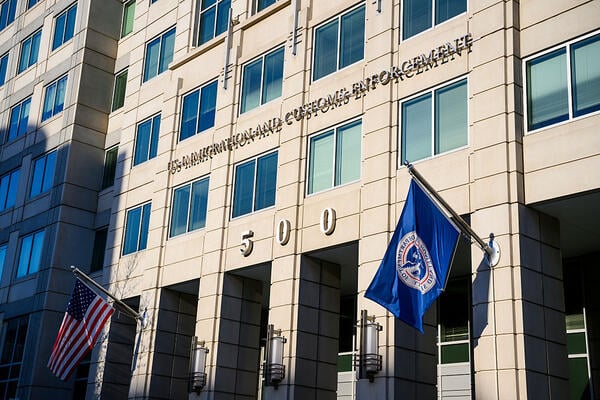
    On April 4, CUPA-HR joined the American Council on Education and 14 other higher education associations on a letter to Department of State (DoS) Secretary Marco Rubio and Department of Homeland Security (DHS) Secretary Kristi Noem seeking additional information on the agencies’ policy and planned actions for international students and scholars.

    The letter states that additional clarity is sought after reports that student visas are being revoked without additional information being shared with institutions where those students attend. According to the letter, such reports include messages to international students about their visas being revoked and requesting that they self-deport without providing additional information about the process to appeal such decisions. The letter argues that these actions hinder institutions’ ability to best advise their international students and scholars on what is happening.

    In order to provide more clarity to institutions, the higher education associations request that DoS and DHS schedule a briefing with the impacted community to better understand the actions being taken by the agencies. The briefings could provide the opportunity to understand the administration’s actions in this space and to allow the higher education community to better understand how they can best help address issues of national security.

    CUPA-HR will share any updates from these agencies related to the international student and scholar news and requests set forth in this letter.


    Source link

  • How to Support College Students With Body Image Concerns

    How to Support College Students With Body Image Concerns

    stockvisual/E+/Getty Images

    Food and campus dining are important elements of the college experience for many students, whether that’s grabbing a quick coffee on the way to an 8 a.m. class or sharing a meal with friends at the end of a long day. Some learners, however, experience challenges with their eating habits due to negative body image or disordered thinking about food, which can be detrimental to their physical and mental health.

    Colleges and universities can create greater awareness for students and staff by supplying resources for physical health and wellness to support student well-being and thriving.

    What’s the need: Students with poor body image may feel ashamed, anxious or awkward, which could result in a lack of engagement in social events or classes, or unhealthy dieting and exercise behaviors, according to a study from the University of Alabama.

    Social media can increase students’ exposure to negative body images, which can damage mental and physical health. And students who experience food insecurity are more likely to report disordered eating habits.

    Campus Dining and Disordered Eating

    Addressing harmful eating habits can take place in the classroom or in the dining hall. Some colleges and universities, such as Northwestern University, have made strides to improve the student experience when utilizing campus food services by removing calorie counts next to food items. Read more here.

    Healthy body image can also be tied to student retention and graduation. A 2023 survey by United Healthcare Services found that college students who have experienced an eating disorder are more likely to have doubts about graduating on time (81 percent), compared to their peers who didn’t report an eating disorder (19 percent).

    While women are more likely to experience negative body perceptions, men also experience disordered eating. Male student athletes, in particular, experience higher rates of eating disorders than their nonathlete peers but are less likely than their female peers to receive support for disordered eating.

    Campuswide interventions: Disseminating information across campus can be one way to reach students who may be unaware of offerings or unable to identify their own harmful habits.

    • Illinois State University hosts the Body Project, the Body Project: More Than Muscles and the Female Athlete Body Project in collaboration with Student Counseling Services, Health Promotion and Wellness, and the Department of Psychology. The Body Project, a peer-led intervention, addresses female students’ sense of body image, and More Than Muscles supports male-identified learners with a chance to consider how culture and media define the ideal male body. Similarly, the Female Athlete Body Project supports women participating in collegiate athletics and their unique challenges with body image.
    • Louisiana State University hosted an event, “Trash Your Insecurities,” which invited students to write down their biggest insecurity and literally throw it in a trash can. Students could then write down what they’re most proud of themselves for, helping promote a better sense of self and positive self-talk. The event helped increase awareness of eating disorders and body image concerns as well as campus resources for these challenges.
    • The University of Nevada, Reno, hosts a support group, Nourish and Flourish, that encourages students to bring food to an informal setting to discuss concerns. Group counseling sessions can provide a place of community and support for students struggling with disordered eating or negative body image.

    Working with students: As an individual faculty or staff member, practitioners can encourage positive body image with a student by:

    • Encouraging them to unfollow social media accounts or influencers who trigger negative body image thoughts or feelings. Research from the University of New South Wales, Sydney, shows that engaging with positive content can improve body image over several weeks. At the same time, exposure to fitness-oriented social media posts can harm women’s self-perceptions, according to researchers from Davidson College.
    • When giving compliments, focusing on a student’s performance or personality, as opposed to appearances, can be helpful, according to recommendations from the University of Colorado, Boulder.
    • Avoiding use of negative body talk or dieting in the classroom or office, which can encourage students to do the same. Sometimes people engage in negative self-talk without even realizing it, so being self-accepting and self-compassionate can promote positive change.
    • Encouraging students to take care of themselves through adequate sleep or regular eating. For colleges that have nutrition services, staff can refer students to experts who can provide healthy eating advice.

    Do you have a wellness intervention that might help others promote student success? Tell us about it.

    Source link