Whilst there may be good reasons for suspending tuition fee payments to “safeguard public funding and ensure students’ interests are protected”, decisions taken to safeguard the public purse often risk overlooking the individual students who are left behind.
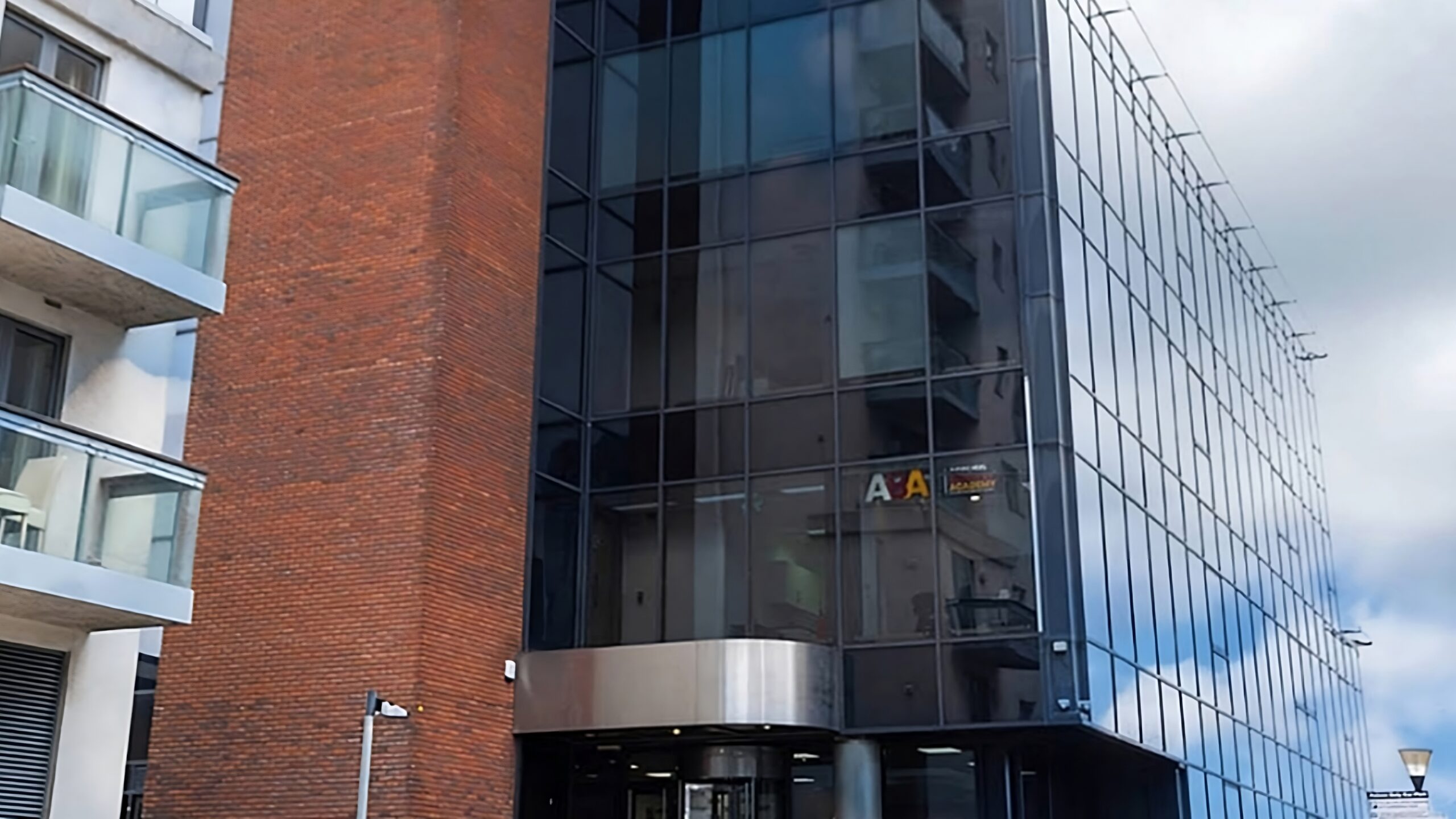
In April 2024 the Office for Students (OfS) opened an investigation in relation to Applied Business Academy (ABA) to consider whether it had complied with requirements to provide accurate information about its students, and whether it had effective management and governance arrangements in place.
In September 2024, the Department for Education (DfE) instructed the Student Loans Company to suspend all tuition fee payments to ABA, until OfS had completed its investigation. On 27 September, ABA asked the OfS to remove it from the Register because it was no longer able to provide higher education. A decision to permanently close ABA was made on 22 October 2024 and liquidators were appointed.
However, there were also students who were studying for a Level 5 Diploma in Education and Training (DET) awarded by City and Guilds and some awarded by Organisation for Hospitality and Tourism Management (OTHM) – both at the time eligible for student loan finance. According to the OfS investigation this number looks to be just over 2,000.
The route to raise complaints and seek redress for these students is different to the route for students on courses partnered with universities. As set out in the section of our Good Practice Framework that covers partnership arrangements, awarding universities and delivery partners will both be members of the OIA, so that students can benefit from a route to independent review of both party’s responsibilities. Where only one partner is a member of the OIA, our remit to review issues of concern to students is more limited.
As the shape of the HE sector has changed, our legislation has been amended several times to bring as many delivery bodies and awarding institutions accessing public money as possible within our membership, to ensure that all students have access to an independent review of their complaints. But not all Awarding Organisations are currently OIA members, even where these courses are eligible for student finance.
Access and risk
There are clearly benefits to students of having access to student finance to access non- universities-awarded courses such as HND, HNC and level 4 or 5 courses with a Higher Technical Qualification approval. But we are concerned that the current arrangements may be inequitable, given that some students cannot seek an independent review of some awarding organisations’ acts or omissions.
The impact on students of the different arrangements materialises further in cases of provider closure. In previous provider closure cases either the university has proactively put in place appropriate options or if they wanted to raise a complaint, the OIA could look at what the university’s role is in resolving this.
As things stand, students at a delivery partner that ceases to operate at short notice, on courses awarded by an organisation that is not an OIA member, may find themselves with no clear independent route for complaints and redress. In our experience, students studying at HE level via a non-university awarded route and accessing higher education student finance, have no real understanding of this difference from those on a university awarded course.
In the case of ABA, we have received a small number of complaints from students on the DET course, who are not able to access any financial remedy since ABA has gone into liquidation and the only option is for the students to become an unsecured creditor against ABA.
We understand that where City and Guilds has received the work of students, there was not sufficient evidence for them to confirm the qualification requirements had been met for any student. This has been particularly difficult news for some students, many of whom believed that they had passed the course and were simply awaiting receipt of their certificate. They are unable to access further funding to re-take the year, compensation or travel costs to complete their studies.
In the current financial climate and where franchise provision is coming under more scrutiny, it’s hard to imagine there will not be more students in this situation at a provider impacted by a closure. Alongside this the Lifelong Learning Entitlement (LLE) will potentially open more level 4 and 5 “non university” awarded courses where students may be unable to seek independent redress.
Whilst we completely agree that protecting public funds is important, we mustn’t forget that there is a real and significant human cost for the genuine students, sometimes with few sources of personal support to help them navigate their limited options, left behind.
Members of the Jewish community gather to protest. University of Sydney pro-Palestine encampment counter-protest. Pro-Israel counter-protesters gathered at the University of Sydney’s campus during a pro-Palestine encampment rally in May, 2024. Picture: Britta Campion
A survey of 550 university staff and students found six in 10 experienced antisemitic comments, and about the same felt unsafe on campus due to Israel-Gaza driven conflict in Australia.
Please login below to view content or subscribe now.
BOSTON (March 31, 2025) – In recent months, almost 2,000 schools and districts have purchased or renewed licenses for Lexia English Language Development (Lexia English) fromLexia, aCambium Learning Group brand. Using powerful speech recognition technology, the program supports students in grades K-6 to build their linguistic confidence in academic English.
“More than 162,000 students and 77,000 educators at 7,400 schools used the program during the 2024 school year. In addition, those students practiced academic conversations 4.3 million times in the program,” said Lexia President, Nick Gaehde. “The numbers show just how much students and educators have needed access to a culturally responsive language learning solution.”
One of those educators who used the program is Lynmara Colón, the director of Student Opportunity and Multilingual Services at Prince William County Schools in Virginia. After a pilot, the district has allowed individual middle and elementary schools to purchase Lexia English during the 2024-2025 school year. Prince William County Schools serves more than 20,000 English learners who speak 140 languages. “We are the 10th most diverse district in the nation,” Colón said. “But when I try to find tools for diverse students, there’s not a lot that meets the specific needs of the student population we serve.”
Colón noted that the program had boosted student growth to the point of reducing her worries about providing staff with a high-quality tool focused on helping Emergent Bilingual students. She expressed appreciation for the way the program helps her forecast and make sense of language acquisition data. “With Lexia, I can have visibility into how they’re doing with language comprehension,” she said. “I always know to expect the best from our Lexia partners. I have high expectations, and they never disappoint.”
Lexia English’s approach to English language learning is to empower emergent bilinguals by honoring their heritage languages and offering culturally responsive, adaptive learning pathways to foster academic and linguistic growth. Seventeen characters with diverse backgrounds help students practice speaking skills by engaging with content in academic subjects such as math, science, social studies, and general knowledge.
Gaehde concluded, “With Lexia English, educators can celebrate multilingualism in the classroom, providing students with the tools to succeed in both English language development and overall academic achievement.”
About Lexia
Lexia®, a Cambium Learning® Group brand, is transforming literacy education, driving change in 1 of every 3 school districts across the United States. For more than 40 years, Lexia has been a thought leader in literacy education, delivering award-winning, research-based solutions grounded in the science of reading. With a full spectrum of offerings, including professional learning, curriculum, and embedded assessment tools, Lexia provides educators with Structured Literacy solutions that are proven effective and designed to drive meaningful literacy outcomes. By empowering educators with unparalleled ease of use and the knowledge and tools they need, Lexia helps more students unlock their potential to read, write, and speak with confidence. For more information, visit lexialearning.com.
About Cambium Learning Group
Cambium Learning Group is the education essentials company, providing award-winning education technology and services for K-12 educators and students. With an intentional collection of respected global brands, Cambium serves as a leader, helping millions of educators and students feel more seen, valued, and supported every day. In everything it does, the company focuses on the elements that are most essential to the success of education, delivering simpler, more certain solutions that make a meaningful difference right now.
To learn more, visit www.cambiumlearning.com or follow Cambium onFacebook,LinkedIn, andX. The Cambium family of brands includes: Cambium Assessment®, Lexia®, Learning A-Z®, ExploreLearning®, and Time4Learning®.
eSchool Media staff cover education technology in all its aspects–from legislation and litigation, to best practices, to lessons learned and new products. First published in March of 1998 as a monthly print and digital newspaper, eSchool Media provides the news and information necessary to help K-20 decision-makers successfully use technology and innovation to transform schools and colleges and achieve their educational goals.
For at least a couple of years there’s been an issue percolating away without much clarity about its extent, causes and consequences – that of international students in the UK applying for asylum either during or following their studies. Staff in universities have at times told us of a noticeable rise in cases, and we also get rumours every now and then of it being on the Home Office radar.
Over the weekend the government released for the first time some data on asylum claims by student visa holders – previously there have only been figures for successful applications, according to first visa held, which have been buried in the annual “migrant journey” report. These have not painted a particularly clear picture of the real situation.
So we now learn that, of the 108,000 who claimed asylum in the UK in 2024, 40,000 were from people who had held a visa. Within this group, student visas were the highest share of the total, with 16,000 claims – those on work visas accounted for 11,500, and 9,500 were on visitor visas (all these figures have been rounded to the nearest 500, for some reason). There’s nothing here about the proportion of claims that were successful, or even resolved.
The stats release with coordinated with an interview with home secretary Yvette Cooper on the front page of The Sunday Times, focusing on the effects of asylum claims on the government’s floundering accommodation system:
One of the things that became clear as we examined this really rather chaotic system that we inherited is that we have people who are in the asylum accommodation system who arrived in the UK on a student visa, or a work visa, and who then only claimed asylum at the end of their visa. They have then gone into the asylum accommodation system even though when they arrived in the country they said they had the funding to support themselves.
The Home Office data release highlights that “almost 10,000 people who claimed asylum after having entered on a visa were provided with asylum support in the form of accommodation at some point during 2024” – this figure isn’t broken down by visa type – and that the most common nationalities here were Pakistan, Nigeria and Sri Lanka.
So what’s going on?
In the run-up to last year’s MAC review of the Graduate route, there was a rather convenient Home Office leak to the Daily Mail of the numbers of international students who had gone on to claim asylum, covering the 12 months to March 2023 – and broken down by nationality and even institution. These figures, if accurate, showed 6,136 asylum claims made in that year, so the numbers have only increased since.
The timing and the pick-up in anti-immigration media was sufficient for the Migration Advisory Committee, in its Graduate route review, to feel the need to comment, if only to damp down hopes that they would consider this as a form of “abuse of the visa system”:
We note recent reports of an increase in asylum applications from those originally coming to the UK through work and study routes. The government may deem this behaviour undesirable and unintended usage of these routes. However, coming to the UK legally on a work or study visa and proceeding to make a legitimate, admissible asylum application does not constitute abuse. If the government is concerned by the rising number of such applications they should address this issue directly – it does not relate substantively to the Graduate route.
But the issue hasn’t entirely gone away with the change of government and Labour’s relative de-politicisation of international students. In February, the BBC quoted border security and asylum minister Angela Eagle as having her eye on “those coming on work and student visas and then claiming asylum” – she pins the issue on the disorder the Conservatives left in the asylum system.
This was then followed by Yvette Cooper’s comments at the weekend, along with the new Home Office data. The home secretary was announcing an expansion of right-to-work checks to gig economy and zero-hours roles in sectors like construction, food delivery, beauty salons and courier services.
Meanwhile in Canada
There’s an instructive international comparison here – Canada. Last autumn there was controversy in certain corners of the Canadian media when it emerged that almost 12,000 asylum claims had been made by international students in 2023, rising to more than 13,600 in the first nine months of 2024.
I am concerned by reports that some of these students are being counselled by third parties to do so and to provide false information… I request that the College look into the possibility that licensed immigration consultants are illegitimately advising international students to claim asylum.
This took place against a backdrop of the Canadian government instituting a series of caps on international student numbers, and restrictions on post-study work, ahead of a general election this year.
Policy levers
The UK government has pledged to substantially cut the number of people in temporary accommodation with claims or appeals pending – it’s a policy objective driven both by Treasury imperatives to cut the ballooning costs and political considerations around being “tough on migration.”
If international students claiming asylum gains traction as an area for attention – and it’s worth reiterating that the figures show that just shy of 15 per cent of all claims in 2024 were from student visa holders – then probably the easiest policy lever for the government to pull is simply to throttle student and graduate route numbers: avoid overturning any of the restrictive policies introduced by the Conservatives, and harry away at the edges of the system to discourage any kind of return to the totals seen in 2022–23 and 2023–24.
There’s a question here, though, about whether this is really an HE-related matter. As the statement from one of the universities in the above-mentioned Daily Mail splash said at the time:
This particular issue is a result of the government’s own asylum policy, which allows visa switching in a way that is outside the direct control of the universities concerned and is not a failing of the higher education sector.
And the National Audit Office’s recent report on the skilled worker visa found that the number of asylum claims from holders of that visa had risen from 53 in 2022 to 5,300 in the first ten months of 2024. So if it’s not a phenomenon that is restricted to student visa routes, and one that in many cases is about what happens after the period of study, it would appear an over-correction for the government to take any action specifically focused on the higher education system.
But there are some issues that the government seems to have in its sights. In the Sunday Times interview, there’s a specific mention of the proof of funds that student visa applicants must demonstrate, and how this seemingly conflicts with asylum claims on economic grounds.
Last September Labour announced an increase in the amount that students must evidence – though it’s still far from being sufficient to live on in most places. But there are plenty of rumours about this system being gamed by agents who assist applicants by parking temporary funds in their accounts, telling them that they will in fact be able to support themselves (and pay off all the debts they’ve accrued) by working while and after studying.
It’s another example of failure to provide students with clear-cut, realistic information about visa costs leaving them open to exploitation – and an area where the sector should be arguing for more rigour and scrutiny in the proof of funds process, along with a higher sum required, rather than seeing it as a deterrent to prospective students. We’ve also previously covered – anecdotal – reports that students have been advised to apply for asylum when unable to complete degrees within the specified time limits, or potentially for other reasons such as non-payment of fees, though there’s no evidence that this is a widespread phenomenon.
So there are specific issues here for institutions to get ahead of. Whether that’s enough to move the dial remains to be seen, especially if these latest figures gain prominence and newspapers investigate promises made by agents overseas.
Protecting students
Ensuring that vulnerable people are not exploited through misinformation about how they can, supposedly, game the UK’s dysfunctional immigration system should be a priority. If nothing else, there is the pragmatic benefit of heading off further international restrictions and another round of negative HE headlines.
But more importantly, upholding the right for international students to claim asylum – as well as scientists, researchers and other staff – is of critical importance for preserving academic freedom (among many other things), not just in the UK but around the world. If the growth in claims, and the government’s flailing attempts to address it, ends up tarnishing the need for a humane, well-managed asylum process, everyone suffers. And the higher education sector being on the back foot over asylum, rather than standing up and advocating for its importance, would be a terrible turn of events.
While the Daily Mail and others might report on growing application numbers from current and former international students as evidence that the UK is not tough enough, too permissive, too generous in the legal protections and recourse it offers to those seeking asylum, the fact remains that it’s an awful system for anyone to get caught up in.
Just over a year ago in the House of Commons, the now former SNP MP Alison Thewliss reported on a a parliamentary visit to the Bibby Stockholm barge, used by the previous government for asylum accommodation:
I will take this opportunity to put on record the sadness, confusion and frustration of those on board. Those men felt that they were being punished for some unknown misdemeanour – unable to get any peace and quiet, living in impossibly close proximity to people for months at a time, with no certainty as to when that will end, and their health needs not being properly assessed. The vessel was not intended to be lived on 24/7, and despite the tabloid rhetoric, none of those I met on that boat had come on small boats. Some had been international students, forced to claim asylum when the political situation in their home countries deteriorated. One told me: ‘the longer you are in here, you turn into a person you don’t know.’ How incredibly sad it is that the UK Government see fit to treat people in that way.
More than 17,400 high school seniors last fall got the sweetest news any anxious student can get: Congratulations, because of your high school GPA, you’re automatically admitted to one of 10 California State University campuses of your choice — and they’re all relatively affordable.
Even with less than a week to go before the campuses wrap their final decisions about whom to admit, a pilot program focusing on Riverside County is already showing that more students have been admitted from the county than last year, about 10,600 so far in 2025 compared to last year’s roughly 9,800.
The pilot builds on Cal State’s efforts to enroll more students and works like this: High school seniors receive a notice in the mail that they’re automatically admitted as long as they maintain their grades, finish the 15 mandatory courses necessary for admission to a Cal State, and complete an admissions form to claim their spot at a campus. Cal State was able to mail the notices because it signed an agreement with the Riverside County Office of Education that gave the university eligible students’ addresses.
Now in the program’s first year, Cal State joins other public universities across the country in a growing national movement to automatically admit eligible students. From November through January, Cal State informed students they were accepted to the 10 campuses. To claim a spot, students needed to go online and pick at least one campus.
If past admissions and enrollment trends hold, Cal State as a system will educate hundreds of more students, all from Riverside, than they would have without the pilot. That’d be a boon for a system that prides itself on its affordability and motto that it’s the people’s university; Cal State admits a far higher percentage of students than the University of California. It also could serve as a much-needed budget boost from the extra tuition revenue those students bring, especially at campuses with sinking enrollment.
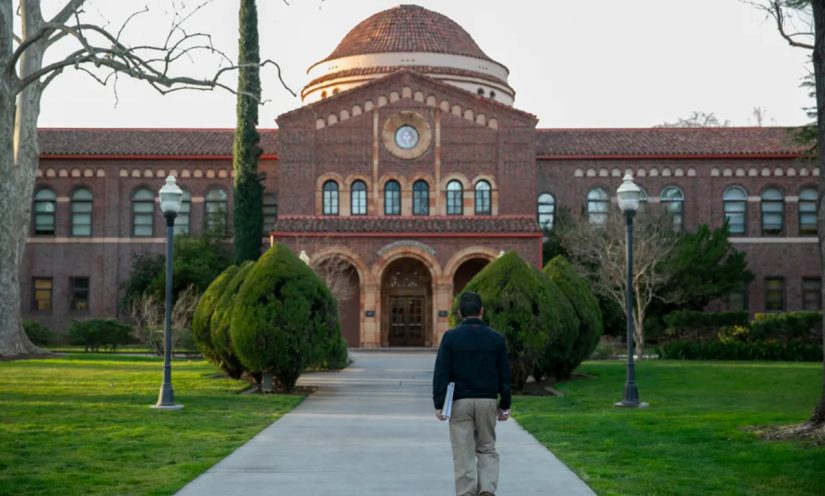
Eight campuses — Channel Islands, Chico, East Bay, Humboldt, Maritime Academy, Monterey Bay, San Francisco, and Sonoma — are so under-enrolled that Cal State is pulling some of their state revenues to send to campuses that are still growing. Cal Maritime is soon merging with another campus because of its perilous finances. The pilot also includes the two closest campuses to the county, San Bernardino and San Marcos.
The system chose Riverside County because all of its public high school students were already loaded onto a state data platform that can directly transmit student grades to Cal State — a key step in creating automatic admissions. Riverside is also “ethnically and economically representative of the diversity of California — many of the students the CSU is so proud to serve,” a spokesperson for the system, Amy Bentley Smith, wrote in an email.
At Heritage High School, a public school in Riverside County, the pilot encouraged students who previously didn’t even consider attending a public four-year university to submit the automatic admission forms to a Cal State.
Silvia Morales, a 17-year-old senior at Heritage, got an automatic admissions letter. “I was pretty set on going to community college and then transferring, because I felt like I wasn’t ready for the four-year commitment to a college,” she said.
Even with a 3.0 GPA, higher than the 2.5 GPA Cal State requires for admission, she nearly didn’t submit the forms to secure her admission until early January. That’s well past the standard Nov. 30 admissions deadline.
It wasn’t until her counselor, Chris Tinajero, pulled her into a meeting that she decided to opt into the pilot. “I went through the sales pitch like, ‘Hey, you get this guaranteed admission, you’re an amazing student,’” he recounted.
The pitch worked. Though Cal State sent a physical pamphlet and her high school also emailed her about the pilot, “I wasn’t really paying attention,” Morales said. She needed an adult she trusted at the school to persuade her that the applications were worth the effort, she said.
Morales applied to three Cal State campuses in the pilot plus two outside the program that were still accepting late applications — Chico, Humboldt, Los Angeles, Northridge and San Bernardino. She got into each one, she said.
Her parents are “proud of me because I want to go to college,” Morales said. Neither went to college, she added.
Final enrollment figures won’t be tallied until August, including how many of the students admitted through the pilot attended one of the 10 campuses. But the system’s chancellor’s office is already planning to replicate the pilot program in a Northern California county, which will be named sometime in April, Cal State officials said.
A bill by Christopher Cabaldon, a state senator and Democrat from Napa, would make automatic enrollment to Cal State for eligible students a state law. The bill hasn’t been heard in a committee yet.
A boost in application numbers
Of the 17,000 students who received an invitation to secure their automatic admissions, about 13,200 submitted the necessary forms. That’s about 3,000 more students who applied from the county than last year.
Those who otherwise wouldn’t have applied to a Cal State include students who were eyeing private colleges, said Melina Gonzalez, a counselor at Heritage who typically advises students who are already college-bound.
Nearby private colleges offer all students application fee waivers; at Cal State, typically only low-income students receive fee waivers. But the pilot provided each Cal State student one fee waiver worth $70, which was a draw to students and their parents who don’t qualify for the fee waiver but might struggle to pay.
Last year, 10 of the 100 senior students Gonzalez counseled didn’t apply to a Cal State. This application season, all her students submitted at least one Cal State application, she said.
“It was big, it was really cool, their eyes, they were so excited,” she said of the automatically admitted students. “They would come in and show me their letters.”
Parents called her asking if the pamphlet from Cal State was authentic. With guaranteed admission, some parents ultimately decided to pay for additional applications to campuses in the pilot, knowing it wasn’t in vain.
At Heritage, high school counselors reviewed Cal State’s provisional list of students eligible for the pilot to add more seniors, such as those who hadn’t yet completed the mandatory courses but were on track to do so.
Tinajero was also able to persuade some students who hadn’t completed all the required courses for Cal State entry to take those, including online classes. Still, others with qualifying grades didn’t apply because they weren’t persuaded that a four-year university was for them. Tinajero sees program growth in the coming years, assuming Cal State continues with the pilot. Younger high school students who witnessed the fanfare of automatic admissions may take more seriously the need to pass the 15 required courses to be eligible for a Cal State or University of California campus, he said.
That’s part of Cal State’s vision for this pilot, said April Grommo, the system’s assistant vice chancellor of strategic enrollment management: Begin encouraging students to take the required courses in ninth grade so that by 11th and 12th grade they’re more receptive to applying to Cal State.
Pilot leads to more applications
The automatic admissions pilot is likely what explains the jump in overall applicants, said Grommo. “If you look at the historical numbers of Riverside County students that have applied to the CSU, it’s very consistent at 10,000, so there’s no other accelerator or explanation for the significant increase in the applications,” she said.
Some campuses in the pilot are probably going to see more students from Riverside County than others. The eight under-enrolled Cal State campuses each enrolled fewer than than 100 Riverside students as freshmen, a CalMatters review of 2024 admissions data show. Two enrolled fewer than 10 Riverside students as freshmen.
Cal State isn’t solely relying on past trends to enroll more students. Grommo cited research that suggests direct admissions programs are associated with increases in student enrollment, but not among low-income students, who are less familiar with the college-going process or have additional economic and family demands, like work and child care.
The quad at San Francisco State University in San Francisco on July 7, 2023. Photo by Semantha Norris, CalMatters
Even after students are admitted, some don’t complete key steps in the enrollment process, such as maintaining their grades in the second semester, completing registration forms to enroll, and paying deposits. Others, especially low-income students, have a change of heart over summer about attending college, which scholars call “summer melt.” Then there are the students who got into typically more selective campuses, such as at elite private schools and the University of California, and choose instead to go to those.
To prompt more students to actually enroll, Cal State officials in early March hosted two college fairs in Riverside County for students admitted through the pilot. About 2,600 students signed up to be bussed from their high schools to large venues, including the Riverside Convention Center, where they met with staff, alumni and current students from all 10 Cal State campuses participating in the program. Those were followed by receptions with students and parents.
Grommo said they maxed out capacity at both venues for the student events. While it’s common for individual campuses to host events for admitted students, it was a first for Cal State’s central office.
The event costs, physical mailers to students about their admissions guarantee, invitation to the college fairs and another flyer about the relative affordability of a Cal State cost the system’s central office around $300,000, Grommo estimates. But if the event moves the needle on students agreeing to attend a Cal State, the tuition revenue at the largely under-enrolled campuses alone would be a huge return on investment.
The effort is a far more targeted approach than another admissions outreach effort Cal State rolled out last fall to inform students who started but didn’t finish their college applications that they’re provisionally accepted, as long as they complete and send their forms. The notification went to 106,000 students and was the result of a $750,000 grant Cal State won from the Lumina Foundation, a major higher education philanthropy. The system will know by fall if this notification resulted in more students attending a Cal State.
But that was aimed at students who already applied. The Riverside pilot brings in students, like Morales, who wouldn’t have applied without the mailers and entreaties from counselors. She’s leaning toward picking Cal State San Bernardino for next fall. It’s close to home and an older cousin recently graduated who had a good experience there, she said.
Her next task? Working with her parents to complete the federal application for financial aid by April 2, the deadline for guaranteed tuition waivers for low- and middle-income students.
It’s possible that Cal State may take the direct admissions pilot statewide. All counties are required by state law to join the state-funded data system that Riverside is already a part of to electronically transmit students’ high school grades to Cal States and UCs. Doing so removes the need for schools to send campuses paper transcripts. The deadline for all counties to join the state data system is summer of 2026.
ORLANDO, Fla. — Florida Virtual School (FLVS) is partnering with the University of Florida (UF) and the Concord Consortium to introduce a groundbreaking year-long “Artificial Intelligence (AI) in Math” supplemental certification for FLVS middle and high school students enrolled in the school’s Flex option. FLVS instructors who teach Algebra 1 will lead this innovative program, teaching the online courses while also supplementing students’ learning with activities that build students’ understanding of math and AI concepts. FLVS students enrolled in Algebra 1 who elect to earn the certification will begin April 7.
The certification will introduce students to the foundational principles of AI that intersect with core math topics while offering insights into real-world applications, ethical considerations, and career opportunities in AI-related fields. By merging 21st-century technology with education, the program aims to boost students’ math skills, cultivate positive attitudes toward mathematics, and expose them to the rapidly evolving AI landscape.
“As a leader in online education for more than 27 years, Florida Virtual School is committed to being at the forefront of educational innovation,” said Dr. Louis Algaze, president and CEO of Florida Virtual School. “By partnering with the University of Florida and the Concord Consortium, we are equipping our students with essential math skills and the knowledge to navigate and succeed in an AI-enhanced world.”
The certification also includes a collaborative feedback loop between FLVS teachers and UF and Concord Consortium researchers. Teachers will provide critical insights into the online course structure and student outcomes, helping to refine and improve the certification’s effectiveness for future online learners.
“AI is revolutionizing industries worldwide, creating new opportunities,” said Jie Chao, project director at the Concord Consortium. “Our partnership with FLVS allows us to offer robust AI learning opportunities to students with limited access to such resources, bridging the educational gaps and preparing young people for an AI-powered future.”
FLVS teachers will also complete 40 hours of online professional development as part of the program. The training will include learning about specialized learning technologies designed to help visualize abstract math concepts and create interactive AI model explorations to ensure students engage with the AI development process in meaningful and dynamic ways.
FLVS Flex students who are either currently enrolled or are interested in taking Algebra 1 can now sign up for the “AI in Math” certification by filling out this survey. Students who complete the program as part of their FLVS math class will receive enrichment credit and the AI Literacy certificate issued by UF and the Concord Consortium.
About Florida Virtual School (FLVS)
At Florida Virtual School (FLVS), the student is at the center of every decision we make. For 27 years, our certified online teachers have worked one-on-one with students to understand their needs and ensure their success – with FLVS students completing 8.1 million semester courses since the school’s inception. As a fully accredited statewide public school district, Florida students in grades Kindergarten through 12 can enroll tuition-free in full-time and part-time online education options. With more than 200 effective and comprehensive courses, and over 80 fun and exciting clubs, FLVS provides families with a safe, reliable, and flexible education in a supportive environment. As a leading online education provider, FLVS also offers comprehensive digital learning solutions to school districts, from online courses that result in high student performance outcomes, to easy-to-use online platforms, staff training, and support. To learn more, visit our website.
eSchool Media staff cover education technology in all its aspects–from legislation and litigation, to best practices, to lessons learned and new products. First published in March of 1998 as a monthly print and digital newspaper, eSchool Media provides the news and information necessary to help K-20 decision-makers successfully use technology and innovation to transform schools and colleges and achieve their educational goals.
Title: Bridging Education and Opportunity: Exploring the ROI of Higher Education and Workforce Development
Author: Paula Nazario
Source: HCM Strategists
New insights from HCM Strategists highlight how continued state investments in higher education are creating pathways to economic mobility, with the majority of degree programs delivering increased earnings and a solid return on investment (ROI). However, despite the continued success and quality of many degree programs, both students and the public have increased concerns about whether postsecondary credentials are worth the time and money.
If consumers do not understand the ROI of their credentials, this can contribute to decreased enrollment, funding, and research, which would in turn produce broader economic and social consequences. While the data are clear that a majority of postsecondary programs do pay off, there are many degrees that fail to provide a measurable ROI. HCM Strategists’ recent analysis of College Scorecard data shows that the average student at over 1,000 institutions earns less 10 years after they first enrolled than the typical high school graduate. While nearly two-thirds of these institutions are certificate-focused, for-profit institutions, there are still many private nonprofit and public colleges that do not provide strong economic outcomes.
To help students and the public understand the differences between institutions and degree programs that provide positive and negative value, the author of the brief urges states and policymakers to provide clear data on post-graduation outcomes. Some states have already advanced initiatives to help consumers see in real time the differences in earnings for those that enroll in higher education.
The author highlights several states initiatives that help students see the value of their credentials including California Community Colleges’ Salary Surfer tool, the Texas Higher Education Coordinating Board’s student outcomes dashboards and reports, and the Virginia Office of Education Economics’ College and Career Outcomes Explorer. Ohio and Colorado are also highlighted for their investments in employer partnerships to expand graduates’ opportunities for well-paying and workforce relevant jobs.
To read more on these new insights from HCM Strategists, click here.
—Austin Freeman
If you have any questions or comments about this blog post, please contact us.
Yesterday, Utah Gov. Spencer Cox signed into law HB 390, a bill that will strengthen students’ freedom of association at the state’s public colleges and universities. Sponsored by Rep. Karianne Lisonbee and Sen. Keven Stratton, the bill ensures that religious, political, and ideological student organizations can set their own membership and leadership requirements without interference from campus administrators.
The First Amendment guarantees citizens the right to freely associate with others who share their beliefs — and to not associate with those who don’t. FIRE has consistentlyopposedpolicies that force student groups to eliminate belief-based membership criteria to gain official recognition by their college.
After all, the members of a group naturally shape its direction, and allowing individuals who fundamentally oppose its mission to vote or hold leadership positions can undermine the group’s very purpose. It makes little sense, for example, to force a Muslim student group to let atheists become voting members or for an environmentalist student group that raises awareness about the threats of climate change to allow climate change skeptics to hold office.
As we noted in our letter to Utah’s Senate Education Committee, the right to associate freely extends to students at public universities and to the student organizations they form. The Supreme Court has repeatedly upheld this principle, affirming in Healy v. James that public colleges cannot deny official recognition to student organizations solely based on their beliefs or associations. Similarly, in Widmar v. Vincent, the Court ruled that a public university violated the First Amendment by denying a religious student group access to campus facilities because of its religious beliefs.
Despite these clear precedents, the Supreme Court ruled in Christian Legal Society v. Martinez that universities can implement “all-comers” policies, meaning student organizations must accept any student who wants to join as a member or leader, even if that student openly opposes the group’s core principles. Following the ruling, FIRE President and CEO Greg Lukianoff reaffirmed our commitment to freedom of association, saying, “FIRE will continue to defend the rights of expressive campus organizations to unite around shared beliefs and uphold the principle that College Democrats can be Democrats, College Atheists can be atheists, and College Christians can be Christians.”
Although Martinez found that all-comers policies are constitutionally permissible when applied uniformly, institutions with such policies have frequently enforced them selectively. For example, some religious organizations have been forced to accept members and leaders who do not share their faith, while secular groups have been allowed to set their own membership and leadership requirements without administrative intervention. This selective enforcement constitutes viewpoint discrimination, undermining the very protections that the First Amendment guarantees.
HB 390 ensures that Utah’s public universities cannot single out student groups for holding firm to their beliefs. The bill states:
An institution may not deny any benefit or privilege that is available to any student organization, or discriminate against, a religious, political, or ideological student organization:
because such student organization is religious, political, or ideological;
on the basis of protected expressive activity engaged in by the student organization or the student organization’s members; or
based on a requirement that a leader of the student organization:
affirm or adhere to the sincerely held beliefs of the student organization;
comply with a standard of conduct the student organization establishes; or
further the mission, purpose, or standards of conduct of the student organization, as these are defined by the student organization.
With the enactment of this bill into law, Utah joinsa growingnumberof states strengthening First Amendment protections for belief-based organizations on campus.
FIRE applauds Rep. Lisonbee and Sen. Stratton, the Utah Legislature, and Gov. Cox for standing up for students’ rights and ensuring true freedom of association in higher education.
College students are known to be strapped for time. A May 2024 Student Voice survey by Inside Higher Ed found the No. 1 stressor in students’ lives is balancing academics with personal, family or financial responsibilities such as work.
Research shows campus involvement is tied to students’ retention, career development and sense of belonging while in college, but helping time-strapped students access these experiences can be a challenge for institutions.
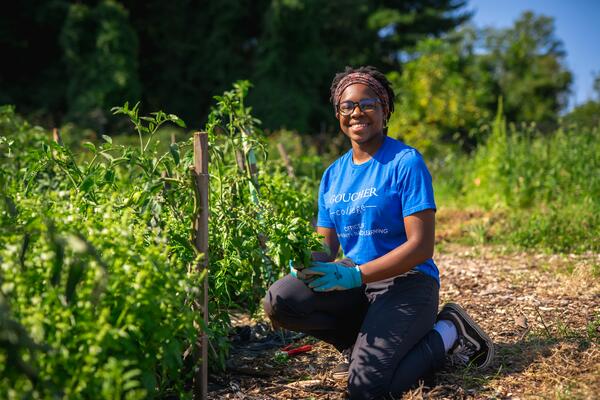
This year, Goucher College in Maryland created a new forum through the office of Community-Based Learning. The short-term micro-experiences allow students to dip their toes into service without committing to a semester or longer. The college first piloted the unpaid opportunities in spring 2024, and student participation in service learning has increased as a result.
The background: The Office of Community-Based Learning offers seven focus areas for community engagement: animal welfare, empowering ability, environmental sustainability, food and housing security, K-12 education and youth development, immigrant and refugee programs, and health and wellness.
Participation could include off-campus Federal Work-Study roles, volunteering with a social justice student club or through a campus organization, taking a Community-Based Learning course, engaging in an internship, or serving as a student director. The office also partners with faculty members to provide experiences in the classroom, such as a semester-long project for a nonprofit partner or a field trip to a partner site.
One of the reasons CBL has previously not offered short-term or one-day service opportunities is because of ethical concerns of how impactful these experiences are for the organizations or individuals being served.
The change is reflective of the needs of today’s students, who are more likely to be working for pay or on a compressed timeline to complete their undergraduate program as quickly as possible, CBL director Lindsay Johnson Walton said.
To ask students to invest in a long-term program that requires three, four or five semesters’ worth of time, “it’s not practical,” she said.
On the other side, nonprofit and community partners can be so desperately in need of support that they hold fewer concerns about the model of service. “It doesn’t matter if it’s the same students as long as it’s engaged students,” Johnson Walton explained.
Offering short-term participation opportunities requires more work from the college to generate the experience and fill out paperwork because it only happens once, but Johnson Walton hopes with future iterations the process will become more streamlined.
How it works: CBL offers around one micro-experience per week, many taking place on a Saturday morning or afternoon. Each experience has a cap of 10 to 12 students.
Students sign up in advance and commit to volunteering for a few hours. College staff handle logistics, including transportation, covering background checks and coordinating with the site, so students just have to show up and serve. Student coordinators, who are part-time staff working for CBL, also contribute to the organization and execution of events.
Some experiences that work well as short-term offerings include volunteering at the food bank or assisting at an animal shelter, while other partners, such as public schools, still operate best with more sustained interactions.
On the trip back, staff lead a short debrief and guided reflection to help students connect their experiences to larger learning objectives and provide additional opportunities to learn or serve, if needed. Students are also sent a short questionnaire that asks them to reflect on their work.
Short-Term Experiential Learning Grows
Community-based learning isn’t the only area where Goucher College has shortened the duration of experiential learning opportunities.
In 2020, Goucher launched micro-internships for students, primarily to address a lack of offerings available to students due to the COVID-19 pandemic. The remote offerings help connect students with alumni and other college partners and give students a project to assist in their career development and growth.
Similarly, the global education office has seen a growth in student interest for three- to five-week study abroad offerings rather than semester-long programs.
Who’s doing it: The micro-experiences have attracted a wide variety of students, some who are curious about service learning and just want to dip their toes in. International students often fall into this category because volunteering can be a uniquely American experience, and the projects give them insight into different organizations and spaces they may not otherwise engage in, such as schools, Johnson Walton said.
Others have a passion for service but are unable to devote much time to it, so micro-experiences provide a flexible opportunity.
Many students had a service requirement while in high school or were told that volunteering is a good feature for their college application, which makes service more of a reflex, Johnson Walton said. “They think they should be doing it, because culturally it’s been built into the list of things you’re supposed to do.”
Each of these students reflects an opportunity to further engage them in longer-term community-based learning in a curricular or co-curricular setting.
Feedback from participants shows that even small or short projects can have an impact on the student. At a volunteer appreciation event, one student wrote they learned how to plant a tree, which is a simple action, but one that can help a lot of people and a skill they can take and use again and again, Johnson Walton said.
Similarly, sorting food at the food bank can seem insignificant, but recognizing how many people that food will feed can help students gain perspective on their service impact.
For organizers of community-based learning experiences, it can be hard to grapple with the potential harm done by short-term community service because of the power dynamics involved, but Johnson Walton has learned that allowing students to get out and do can be a great first start to thoughtful and intentional service.
Seeking stories from campus leaders, faculty members and staff for our Student Success focus. Share here.
In my classroom, I frequently encounter students expressing their opinions: “How is this relevant to the real world?” or “Why should I care? I will never use this.” This highlights the need for educators to emphasize real-world applications across all subjects.
As an educator, I consistently strive to illustrate the practical applications of geography beyond the classroom walls. By incorporating real-world experiences and addressing problems, I aim to engage students and encourage them to devise solutions to these challenges. For instance, when discussing natural resources in geography, I pose a thought-provoking question: “What is something you cannot live without?” As students investigate everyday items, I emphasize that most of these products originate from nature at some point, prompting a discussion on the “true cost” of these goods.
Throughout the unit, I invite a guest speaker who shares insights about their job duties and provides information related to environmental issues. This interaction helps students connect the dots, understanding that the products they use have origins in distant places, such as the Amazon rainforest. Despite it being thousands of miles away, I challenge students to consider why they should care.
As students engage in a simulation of the rainforest, they begin to comprehend the alarming reality of its destruction, driven by the increasing demand for precious resources such as medicines, fruits, and beef. By the conclusion of the unit, students will participate in a debate, utilizing their research skills to argue for or against deforestation, exploring its implications for resources and products in relation to their daily lives. This approach not only enhances their understanding of geography but also creates a real-world connection that fosters a sense of responsibility toward the environment.
Creating a foundation to build upon
Engaging in academic discussions and navigating through academic content is essential for fostering a critical thinking mentality among students. However, it is often observed that this learning does not progress to deeper levels of thought. Establishing a solid foundation is crucial before advancing toward more meaningful and complex ideas.
For instance, in our geography unit on urban sprawl, we start by understanding the various components related to urban sprawl. As we delve into the topic, I emphasize the importance of connecting our lessons to the local community. I pose the question: How can we identify an issue within the town of Lexington and address it while ensuring we do not contribute to urban sprawl? Without a comprehensive foundation, students struggle to elevate their thinking to more sophisticated levels. Therefore, it is imperative to build this groundwork to enable students to engage in higher-order thinking effectively.
Interdisciplinary approaches
Incorporating an interdisciplinary approach can significantly enrich the learning process for students. When students recognize the connections between different subjects, they gain a deeper appreciation for the relevance of their education. According to Moser et. al (2019), “Integrative teaching benefits middle-level learners as it potentially increases student engagement, motivation, and achievement. It provides learners with the opportunity to synthesize knowledge by exploring topics and ideas through multiple lenses.” This method emphasizes the importance of making meaningful connections that deepen students’ comprehension. As they engage with the content from different perspectives, students will apply their learning in real-world contexts.
For instance, principles from science can be linked to literature they are studying in English class. Similarly, concepts from physics can be applied to understand advancements in medical studies. By fostering these connections, students are encouraged to think critically and appreciate the interrelated nature of knowledge.
Incorporating technology within classrooms
In today’s digital world, where technology is readily accessible, it is crucial for classroom learning to align with current technological trends and innovations. Educators who do not incorporate technology into their teaching practices are missing an opportunity to enhance student learning experiences. In my class, I have students explore their designated area using Google Earth, which we previously outlined. Each student selected a specific region to concentrate on during their analysis. This process involves identifying areas that require improvement and discussing how it can benefit the community. Additionally, we examine how these changes can help limit urban sprawl and reduce traffic congestion.
We have moved beyond the era of relying solely on paper copies and worksheets; the focus now is on adapting to change and providing the best opportunities for students to express themselves and expand their knowledge. As Levin & Wadmany (2014) observe, “some teachers find that technology encourages greater student-centeredness, greater openness toward multiple perspectives on problems, and greater willingness to experiment in their teaching.” This highlights the necessity for teachers to evolve into facilitators of learning, acting as guides who support students taking ownership of their learning.
Strategies for implementation
1. Start with the “why”: Teachers should critically consider the significance of their instructional approaches: Why is this method or content essential for students’ learning? Having a clear vision of the desired learning outcomes enables educators plan effectively and what instructional strategies to use. This intentionality is crucial.
2. Use authentic materials: Incorporating meaningful text that involves real-world concepts can significantly enhance students’ engagement. For instance, in social studies class discussing renewable energy can lead to academic discussion or projects where students research about local initiatives in their community.
3. Promote critical thinking: Encourage students to engage in critical thinking by asking open-ended questions, creating opportunities for debates to challenge their ideas, and urging them to articulate and defend their viewpoints.
4. Encourage collaboration: Students excel in collaborative learning environment, such as group projects and peer reviews where they can engage with their classmates. These activities allow them to learn from each other and view different perspectives.
5. Provide ongoing feedback: Providing constructive feedback is essential for helping students identify their strengths and areas for improvements. By having planned check-ins, teachers can tailor their instruction to ensure that they are meeting the academic needs of individual students.
References
Levin, T., & Wadmany, R. (2006). Teachers’ Beliefs and Practices in Technology-based Classrooms: A Developmental View. Journal of Research on Technology in Education, 39(2), 157–181. https://doi.org/10.1080/15391523.2006.10782478
Moser, K. M., Ivy, J., & Hopper, P. F. (2019). Rethinking content teaching at the middle level: An interdisciplinary approach. Middle School Journal, 50(2), 17–27. https://doi.org/10.1080/00940771.2019.1576579
Skyler Stoll, Middle School Teacher, South Carolina
Skyler Stoll is a graduate student at the University of South Carolina and is a 7th grade social studies teacher in South Carolina.
Latest posts by eSchool Media Contributors (see all)