On February 10, 2025, students and activists gathered at the CUNY College Board of Trustees Public Hearing to demand divestment. Rabbi Dovid Feldman stood in solidarity with the students, supporting their call for justice and urging them not to be intimidated by false Zionist accusations.
This powerful moment highlights the growing movement for divestment and the unwavering courage of those standing up for what is right. The rallying cry was clear: “Divest! We will not stop; we will not rest!”
Engaging students in learning outside the classroom can often be a challenge, but podcasts might be a simple yet versatile tool we’re overlooking.
As the number of commuting students rises across institutions, we recognise that students are time poor. There is, however, the potential of using travel time as an opportunity for students to work but also relax and many students use their commute time as an opportunity to prepare for teaching. Podcasting is one of the ways we can design our pedagogy to fit the busy lives of commuter students.
Think about how you listen to podcasts, most likely while you’re doing other things like driving, cooking or walking. There’s a versatility to it.
How many of the learning resources we offer allow students to learn on-the-go?
Education on-the-go
Most podcast listeners will tell you the convenience of audio-centric and on-the-go content is key to their success. BBC data suggests that about three in four podcast listeners do so while doing something else, so even podcasts that have a video option available need to be planned and created with an audio-only format in mind.
Offering that versatility also comes at a cost. It’s important to recognise the fact that students might be on a busy bus, or looking for the timetable for their next train connection. We probably won’t have a student’s full attention, and that means that we need to carefully consider the kind of educational content that’s going to work in this format.
Successful podcasts tend to be focused on experiential storytelling. They are usually fluid and conversational, so don’t be afraid to lean into that. Storytelling gives us emotional responses, helping students connect abstract ideas to real-world implications. A podcast will be much more successful if you give depth and meaning to something a student has already learned, rather than delivering the learning itself.
Let’s take data analysis as an example. Instead of focusing on the technical process of analysing data, you could discuss stories of the impact of data bias or ethical dilemmas in data usage. Give your students food for thought rather than core learning, use it to turn the numbers into narrative and give a deeper meaning to your classroom content.
It can also be a good idea to supplement your podcast with a short interactive activity, either online or at the start of your next learning session. Ask students to reflect on the podcast and their key takeaways from it. It can be a great starting point to encourage deeper learning.
A how to guide
Another core aspect of successful podcasts is authenticity. You don’t want your podcast to sound like a job interview. Natural conversations foster a sense of authenticity, which is key to keeping listeners engaged. A key part of this comes from the way you prepare for a podcast. Discussion points as opposed to questions allows both you and your guest to think more holistically about the topic and can make a huge difference when it comes to making the conversation flow authentically.
We’ve found it’s best to give more flexibility and aim for shorter episodes. Splitting a conversation up into bitesize chunks gives students the option to listen to all episodes in one go, or a bit at a time. Starting with a few episodes, around 12-20 minutes each, will offer your students a lot more flexibility than a single 1-hour long podcast.
Thankfully the technical and logistical aspects of recording podcasts have developed rapidly over the last few years and it’s very easy to get started. Advancements like text-to-speech editing and speech enhancement let you record fully online and get incredible results without any technical knowledge or high-end equipment. A lot of podcasting software now produces automatic text transcription supporting accessibility and allowing students to engage with the content in multiple formats.
And by framing these resources as useful for students to “listen to on-the-go,” gives students permission to use and access resources in ways which work for them during their busy lives. It recognises commuter students and acknowledges busy student lives and gives them a new innovative way to engage with their studies.
Getting started
If you’re interested in giving it a go, here are some ideas to get you started.
A conversation about a specific assessment: contact a student who did well on an assessment last year and ask if they would be happy to share their experiences. Students can get ideas and inspiration from how they have approached it, what worked well and what they would do differently.
Interviews with industry experts is another way to frame a podcast. Working professionals don’t always have the time to travel to campus and prepare a lecture for your students. That might be different if they just had to join an online call for a natural conversation. Recording it as a podcast also gives you a reusable resource for future cohorts.
Student Q&As where students can submit their own questions about a topic or assessment and discuss them in a podcast. This could be an idea to explore on your own, with another lecturer, or with professionals in the industry.
It’s clear that using podcasts as a form of education comes with a lot of challenges, but it also offers a vast world of opportunities and flexibility for students. Where students face further challenges to engage and attend classes, it is worth considering how educational podcasts may be a mechanism so that resources work around busy and complex student lives. For commuting students, a great deal of time is spent on public transport and in maximising their time, providing resources that are engaging, useful and timely is a step in the right direction. And in designing resources specifically with commuter students in mind it recognises their experiences and allows them to engage authentically.
And to make podcasts work for commuter students in an educational context we need to be realistic about the challenges students face and create content that works in a podcast format rather than shoehorning existing content into a new format. If we nail that, then podcasts could become a very useful tool for delivering educational content that fits around students and heightens engagement.
Reports say that Indian Students in the US are becoming collateral damage amidst President Donald Trump’s Mass Deportation Drive. The Indian students entered the US legally, on valid visas. But they say they are now being subjected to more frequent questioning from US immigration officials. They say uniformed officers have been questioning them more frequently, and demanding to see their student IDs and documents. Is Trump’s deportation drive becoming an all out purge of migrants, irrespective of whether they’re in the US legally or not?
Colleges and universities can support students with previous history of suicidal ideation or self-harm with long-term counseling or mental health support.
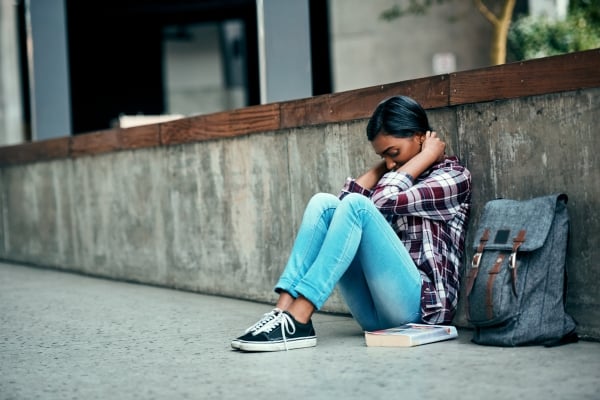
PeopleImages/iStock/Getty Images Plus
Over the past two decades, suicide rates in the U.S. have increased 37 percent, according to data from the Centers for Disease Control. Fifteen percent of all deaths by suicide are among individuals ages 10 to 24 years old, making it the second leading cause of death for this age group.
A January report from Pennsylvania State University’s Center for Collegiate Mental Health (CCMH) finds that students with a history of suicidal or self-injurious behaviors report lower levels of distress after engaging with counseling center services, but they remain at higher levels of distress over all compared to their peers.
Methodology
The report includes data from the 2023–24 academic year, beginning July 2023 and closing June 2024. Data was collected from 213 college and university counseling centers, including 173,536 unique students seeking care, 4,954 clinicians and over 1.2 million appointments. The data is not representative of the general student population, only those accessing mental health services.
By the numbers: The number of students reporting previous suicidal or self-injurious behavior (S/SIB) histories jumped four percentage points from 2010–11 to 2023–24, according to CCMH data.
“While counseling centers have historically treated a considerable segment of students with heightened suicide risk, ongoing questions remain about the complexity of co-occurring problems experienced, the scope of services they utilize, and whether gaps in care exist,” according to the report.
Compared to their peers without a history of S/SIB, these learners had higher levels of self-reported distress, particularly in symptoms of generalized anxiety, general distress and depression. They were also more likely to report a history of trauma or past hospitalization.
Students had a higher likelihood of continuing to demonstrate self-injurious thoughts or behaviors, compared to other students, but the overall rates remained low, with only 3.3 percent of students with past S/SIB reporting it during college counseling.
They were 14.3 times more likely to engage in self-injury and 11.6 times more likely to attempt suicide during treatment, and more than five times more likely to be admitted or referred to a hospital for a mental health concern. This, again, constituted a small number of students (around one in 180) but researchers noted the disproportionate likelihood of these critical case events.
Ultimately, students with suicidal or self-injurious behavior history saw similar benefits from accessing services compared to their peers, with data showing less generalized distress or suicidal ideation among all learners between their first and final assessments. However, they still had greater levels of distress, even if slightly lower than initial intake, showing a need for additional resources, according to researchers.
“The data show that students with a history of suicidal or self-injurious behaviors could benefit from access to longer-term and comprehensive care, including psychological treatment, psychiatric services and case management at counseling centers, as well as adjunctive support that contributes to an overall sense of well-being, such as access to disability services and financial aid programs,” said Brett Scofield, executive director for the CCMH, in a Jan. 28 press release.
Future considerations: Researchers made note that while prior history of suicidal behaviors or self-harm are some of the risk factors for suicide, they are not the only ones, and counseling centers should note other behaviors that could point to suicidal ideation, such as substance use or social isolation.
Additionally, some centers had higher rates of students at risk for suicide, ranging from 20 to 50 percent of clients, so examining local data to understand the need and application of data is critical, researchers wrote.
The data also showed a gap in capacity to facilitate longer-term care, such as case management or psychiatric services available, which can place an additional burden on clinicians or require outsourcing for support, diluting overall quality of care at the center. “Therefore, it is imperative that colleges and universities invest in under-resourced counseling centers to ease the burden on counseling center staff and optimize treatment for students with heightened suicide risk,” according to the report.
Other trends: In addition to exploring how college counseling centers can address suicidality in young people, CCMH researchers built on past data to illustrate some of the growing concerns for on-campus mental health service providers.
Rates of prior counseling and psychotropic medication usage grew year over year and are at the highest level since data was first collected in 2012. A 2023 TimelyCare survey found six in 10 college students had accessed mental health services prior to entering college, and CCMH data echoed this trend, with 63 percent of students entering with prior counseling history.
The number of clients reporting a history of trauma remains elevated, up eight percentage points compared to 2012, though down slightly year over year, at 45.5 percent, compared to last year’s 46.8 percent.
Anxiety is the most common presenting concern, with 64.4 percent of clients having anxiety, as assessed by clinicians.
In-person counseling services have rebounded since the start of the COVID-19 pandemic in 2020, with 63.7 percent of clients receiving exclusively in-person counseling and 13.5 percent receiving only video care.
If you or someone you know are in crisis or considering suicide and need help, call the 988 Suicide & Crisis Lifeline by dialing 9-8-8, or contact the Crisis Text Line by texting HOME to 741741.
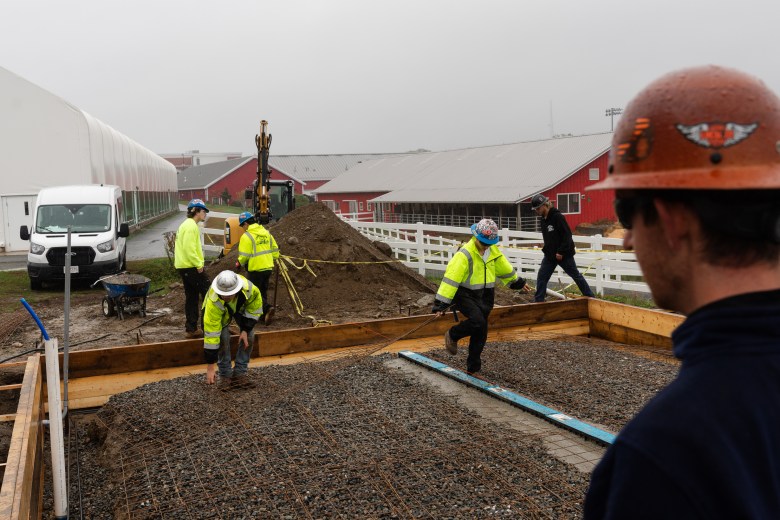
DANVERS, Mass. — It’s a rainy fall day in New England, but that doesn’t stop a group of students at Essex Tech North Shore Agricultural & Technical High School from donning work boots and hard hats and getting to work building a vegetable wash station on campus. This afternoon, they are installing wire mesh and prepping for a concrete pour under the watchful eye of Laborers’ Local 22 member Chris Moore, their teacher. “Hard hat hair don’t care,” reads the sticker on the hat worn by a young woman in the program.
The construction craft laborers track at Essex Tech, which Moore helps lead, is one of only a few high school-based programs in Massachusetts co-sponsored by a trade union. Students are initiated in union norms and expectations early on. Two Essex Tech teachers in the program are Local 22 members, with the New England Laborers’ Training Academy, which runs the laborers’ apprenticeship, paying Moore’s salary. As seniors, students can attend union meetings. And after graduation, many of them go straight into a union apprenticeship, fast tracked to a journeyman’s license. For all these reasons, Owen Paniagua, a 16-year-old junior, described the program as “a golden ticket to job security,” noting that he has learned everything from carpentry and concrete work to excavation and masonry.
“We feel as laborers that we should be in the schools,” said Lou Mandarini Jr., the retired business manager of Local 22 who now helps run the union’s school partnerships. “This is where your workforce is … If you treat young kids with respect, once they buy into your program, they are dead loyal.”
Students in the construction craft laborer program gather around Dave Collins, masonry head, before leaving to work on a project at Essex North Shore Agricultural & Technical High School in Danvers, Mass. Credit: Sophie Park for The Hechinger Report
In several states, including Massachusetts, Maryland and Louisiana, trade union leaders have forged similar, groundbreaking partnerships with high school CTE programs in recent years, ponying up their own resources for the efforts. There’s also been an uptick in training alliances between trade unions and community colleges. In a 2023 brief, AFL-CIO leadership encouraged these partnerships. “No one knows better how to do a job than someone who does the job,” the brief stated.
Whether more unions decide to embrace this advice likely will play a large role in determining the long-term health and vibrancy of both career and technical high schools, and the trades themselves.
Yet progress has been piecemeal and halting. And it’s too early to tell whether isolated partnerships across the country will translate into widespread change, said Taylor White, the director of postsecondary pathways for youth at the Center on Education and Labor at the think tank New America. “Schools and unions speak very different languages,” she noted. The same, she added, is true of employers and schools.
The longstanding dearth of partnerships says a lot about the history of America’s trade unions, which traditionally have operated as insular, sometimes parochial institutions, preferring to maintain tight control over their membership pipeline, and their training. In some communities, such as Milwaukee, that insularity kept unions predominantly white and male for generations. “Historically a lot of the high-paying skilled trades were handed down from father to son,” said Lauren Baker, a former education director in the printers’ union who also led Milwaukee Public Schools’ career and technical education program between 2002 and 2012. “That kept the trades looking a certain way.”
Mandarini, the retired union leader, said that in the past, “old timers didn’t help the young people.” But increasingly, he said, he hopes that mentality will become an anomaly.
Owen Paniagua, 16, and Isabella Gonzalez, 17, both juniors in the Construction Craft Laborer program at Essex North Shore Agricultural & Technical High School, pose for a portrait at Essex Tech in Danvers, Mass. The Essex Tech program’s partnership with the laborers’ union helps to foster job prospects for graduating students. Credit: Sophie Park for The Hechinger Report
For decades, many vocational school students have been held back by a lack of meaningful partnerships with both unions and employers at their schools, often leaving them without relevant training or clear pathways into jobs. “There’s skepticism from unions and employers that high school kids are ready for real training and real work,” said White, of New America.
There’s also been a longstanding desire on the part of many unions to maintain tight control over who can access often coveted apprentice slots.
Until recent years, most trade union apprenticeships in the Milwaukee area had admissions criteria that shut out many women, low-income, and Black and Hispanic city residents. “They were such closed communities, and it was a long process of breaking down some of those walls,” Baker said.
Back in the mid-1990s, Baker was the first woman to run a printing apprenticeship program for the union. In part to open up the field to as diverse a pool as possible, Baker abolished a requirement that apprentices had to be high school graduates. “Pretty much all a high school diploma told me was that they sat in a chair for four years,” she said, pointing out that many of the apprentices came from the academic bottom of their graduation classes. “I caught holy hell from the apprenticeship community for doing that,” she said.
While the SATs and other college entrance exams have at times been accused of being biased toward privileged white students, Baker said some of the apprenticeship admissions exams were challenging for anyone who hadn’t grown up in the home of someone already working in a specific trade. A question might presume that an applicant had experience helping fix their family’s car, for instance, something that young men were far more likely to have done — and those growing up in urban areas, where fewer households own cars, were far less likely to have done.
For decades, those tests contributed to keeping the construction trade unions, in particular, predominantly white and male. Only two of 16 Milwaukee area construction unions enrolled at least 20 percent Black apprentices in 2007, according to a report from researchers at the University of Wisconsin-Milwaukee. Two of the unions, glazing and tile setters, had no Black apprentices in a city where, at that time, nearly 40 percent of the residents were Black.
Much of that bias and insularity continues in some Boston-area construction trade unions, said Travis Watson, who serves as a commissioner of the Boston Employment Commission and has critiqued some of the unions for their lack of racial diversity, citing specific practices that make it harder for prospective Black members to get a foothold. “If you look at every big downtown project in Boston, there are very few Black people who are working on union construction projects,” he said.
Some of the local unions have made changes to their admissions process to become more accessible to applicants from diverse backgrounds, said Danyson Tavares, who worked for several years in leadership positions at YouthBuild Boston, a pre-apprenticeship program that helps prepare young people of color in the city for jobs in the construction and design industries. But other unions might take applications only once a year or remain secretive about their standards and curriculum. “The electrical union is the one we really want to have more relationships with, there’s such a demand for that workforce,” Tavares said. “We’ve slowly started to penetrate but it’s a lot more work than I expected.”
One 25-year-old who recently finished his pre-apprenticeship in carpentry at YouthBuild said he got an interview with the union but was turned down for an apprenticeship for reasons that he said weren’t entirely clear. “I kind of felt like I wouldn’t get in,” said Keyshawn Kavanaugh. He found a non-union job easily at a company that he likes a lot, but he acknowledges that “the union is the best place to work,” at least from the standpoint of benefits and pension.
In Milwaukee, Baker said she’s seen some positive changes since she ran the printers apprenticeship, with more local unions developing inclusive and transparent admissions. “The trades themselves began to realize that they needed to look beyond their natural base in order to fill jobs,” she said. “It became more apparent that there is a vast opportunity out there with women and people of color.”
The idea that Massachusetts laborers should invest time and money in local schools originated over 20 years ago, when Mandarini and other Local 22 leaders decided they were neglecting a potential asset: kids. Mandarini proposed a pilot partnership to the vocational school in Medford, Massachusetts, just outside of Boston, which started in 2002. It wasn’t easy at first. “How do you adapt to a public school?” he said. “There was a lot of learning that we had to do on both ends.”
The union had to fight against a perception that a four-year college degree was the only path to a stable, rewarding career, Mandarini said. It helped with recruiting to explain to prospective students that, at that time, union laborers could expect to retire with an annuity of about $1.2 million, he added. (In Massachusetts, laborers typically earn between $90,000 and $100,000 annually, and that annuity is now more than $2 million, Mandarini said.)
A school bus sits in a parking lot at Essex North Shore Agricultural & Technical High School in Danvers, Mass. Credit: Sophie Park for The Hechinger Report
Over the years, the partnership model has spread to eight career and technical schools in Massachusetts. At some, the union pays a teacher’s salary, and at others it does not, Mandarini said. “We want to be in every vocational school in Massachusetts,” he said, “and hopefully every vocational school in New England. That’s where our workforce is coming from.”
In rural western Louisiana, it was a private company that encouraged a local trade union to partner with public high schools. The company, CapturePoint, which sells carbon storage services, reached out in March 2023 to the local branch of the United Association of Journeymen and Apprentices of the Plumbing and Pipefitting Industry, asking if the union would help build out a new career and technical track at the Vernon Parish School District.
To make it happen, the company paid for the electricity, classroom equipment and furniture to help turn an old woodworking shop at one of the district’s high schools into an updated welding shop. CapturePoint also took on several ongoing costs, paying for student transportation — the students can come from nine different high schools — and some administrative expenses. The union paid for some reconstruction and all the tools, and provided an instructor. The school offers the space and enrolls 30 students, who can skip their first year of apprenticeship if they join the union after graduating, thereby starting at a higher pay rate. “All of us have skin in the game,” said Lance Albin, who led the partnership for the union.
At high schools with trade union partnerships, there’s no shortage of interested students. Isabella Gonzalez, 17, creator of the “hard hat hair don’t care” sticker, said she hopes to move straight into an apprenticeship with Local 22 when she graduates in a year and a half. Aspiring laborers learn more diverse skills than students in related tracks like plumbing and electrical, she said, opening up the possibility of a greater variety of work.
That day last fall, juniors in the program practiced using a compactor to prep the ground for installation of a patio floor, part of the final stages in rebuilding a large cottage on campus. The construction students have been involved in the project since they poured the cement for the foundation in the summer of 2020, wearing masks during the pandemic’s early days, even outdoors.
By afternoon, the students had transitioned to another work in progress: the vegetable wash station by the greenhouse, where they needed to install enough wire mesh and rebar to do the concrete pour early the next week. “Put your hard hat on and help out,” their teacher Moore reminded a group of students holding back as the rain hardened. “No … statues here.”
Students in the Construction Craft Laborers program at Essex North Shore Agricultural & Technical High School lay mesh while working on a greenhouse washing station at Essex Tech in Danvers, Mass. Credit: Sophie Park for The Hechinger Report
Students say the partnership with Local 22 provides them increased career security and the confidence that they are learning relevant, up-to-date skills: Moore until recently worked part time in the field, including on Boston’s project to restore the tunnel to the city’s Logan Airport.
Paniagua, the 16-year-old student in the program, said he can command a higher pay rate than most of his peers at a part-time carpentry and landscaping job because of the expertise he has gained in the Essex Tech program. He’s used the extra money to buy two new trucks. The union partnership has also allowed him to make more thoughtful, informed choices about career steps, he added. Leaning on his teachers as mentors, Paniagua said he decided to continue studying at a specialized welding school in Wyoming after graduation to maximize his future earning potential. “We know what we want to do here and get on it,” Paniagua said, noting that it’s a stark contrast to some of his friends who are conflicted about the value of a four-year college degree. “We’re not lost,” he said, “or wasting money.”
Former President Joe Biden was exceptionally supportive of the labor movement, and specifically of partnerships between unions and schools. Some labor experts expect some of that support might continue in the new Trump administration. “We’re seeing indications of a Trump administration that might not be as hostile to unions as you might think,” said Shalin Jyotishi, founder and managing director of the Future of Work and Innovation Economy Initiative at New America. He cited Trump nominee Lori Chavez-DeRemer, opposed by many in the business community, for Labor secretary, and the president’s support of the longshoremen’s union over their anti-automation stance.
In any event, “these bottoms-up innovations are already happening locally,” Jyotishi said. “Federal decisions can help or hurt … odds of success, but the proof-of-concept is already out of the bag.”
A bigger question mark may be whether there is the will to expand capacity significantly on the ground. Some of the existing programs have not yet reached students in the most underserved communities who could potentially benefit most from a fast track into a union apprenticeship.
In Massachusetts, for instance, many of the high schools the laborers work with have become increasingly selective in admissions. Students from low-income homes were 30 percent less likely to be accepted at the state’s vocational schools in 2023 and 2024 than those from wealthier households, according to an analysis by the Boston Globe. Similar disparities existed for students receiving special education services and English learners.
The laborers have yet to expand their partnership model to Boston’s Madison Park Technical Vocational High School, where nearly all of the students are Black or Hispanic, about 85 percent come from low-income households, and 92 percent are identified as “high needs” — an umbrella term in Massachusetts that includes students with disabilities, English learners and low-income students, among other groups.
Madison Park, part of the city’s public school district, has some partnerships and many strong programs and instructors, said Bobby Jenkins, an alum and long-time advocate of the school. But the chronic turnover of both superintendents and school leaders in recent years has hindered progress in undertaking some more ambitious partnerships.
Isabella Gonzalez, 17, a junior in the Construction Craft Laborers program at Essex North Shore Agricultural & Technical High School, compacts gravel at the Larkin Cottage, a project site at Essex Tech in Danvers, Mass. Credit: Sophie Park for The Hechinger Report
Mandarini agreed that political and bureaucratic obstacles have made it more challenging to partner with Madison Park. But the union has made it a priority and is in promising talks with city officials about partnering with the school when a proposed new facility might be completed.
“When I was part of the building trades, I used to say, ‘I don’t understand why you aren’t taking more kids, especially in the city of Boston,’” Mandarini said. “Every single trade should be in (Madison Park).’”
For now, that attitude has not spread to all union leaders. It will take a cultural shift from trade union groups to expand their school partnerships beyond scattered, boutique programs. Among other things, they will need to prioritize flexibility and the learning and growth of young people more than they are accustomed to, said White, of New America.
She noted that many union leaders seem aware that they have a pipeline and recruitment issue but remain unsure what to do about it. More school-based partnerships could help not only with that challenge but also with reenergizing and selling unions to future generations of workers — and voters, White added. “All of the polling suggests that young people are pretty pro-union,” she said. “There’s a missed opportunity on the part of unions if they don’t capitalize on that.”
Reporting on this story was supported by the Higher Ed Media Fellowship, where Carr was a fellow in 2024. This year, Carr has a fellowship from New America to report on early childhood issues.
The Hechinger Report provides in-depth, fact-based, unbiased reporting on education that is free to all readers. But that doesn’t mean it’s free to produce. Our work keeps educators and the public informed about pressing issues at schools and on campuses throughout the country. We tell the whole story, even when the details are inconvenient. Help us keep doing that.
Title: The Role of State Policy in Supporting Students Experiencing Homelessness and Former Foster Youth in Higher Education
Authors: Carrie E. Henderson and Katie Grissom
Source: The Urban Institute
Paying for a college degree is already a difficult, complex process for many students involving a variety of sources of financial aid and payment. For students with a history of foster care or housing instability, this task becomes even more challenging given the lack of financial and social support they experience growing up.
To properly support these students, policymakers and higher education administrators need to create educational environments that go beyond teaching and learning to prioritize access to essential resources and socioeconomic conditions that can provide stability in students’ lives. State policy can provide critical opportunities to open pathways for students and address the personal, emotional, and logistical challenges that students face. A new report from the Urban Institute explores how the Florida state legislature took steps to enhance access to postsecondary education for homeless students and former foster youth and how it affected higher education attainment.
Key findings include:
New state policies expanded tuition and fee exemptions: In 2022, the Florida legislature created policies that expanded the eligibility for tuition and fee exemptions to match the federal definition of homeless children and youth and include students who had been involved in shelter, dependency, or termination of parental rights proceedings.
Increase in tuition and fee exemptions rose since implementation: The data Florida collected showed an upward trend in the use of the homelessness fee exemption in both the Florida College System (FCS) and the State University System (SUS) between 2021-22 and 2023-24. In the FCS in 2023-24, the number of exemptions increased by 103 percent since 2021-22, from 689 to 1,396. SUS institutions experienced more incremental growth, as homelessness exemptions increased from 344 in 2021-22 to 432 in 2023–24, a 26 percent increase.
Tuition and fee exemptions can reduce the financial burden of postsecondary education, making it more affordable and attainable for students from disadvantaged backgrounds. However, policymakers considering exemptions and subsidies should include dedicated funding to help institutions of higher education implement these services effectively. Without additional funding, colleges and universities lack the supplemental resources to implement policies feasibly. Furthermore, policymakers should listen to and work with administrators to fund holistic wraparound services that impact students’ ability to enroll, persist, and succeed in higher education.
To read the full report from the Urban Institute, click here.
—Austin Freeman
If you have any questions or comments about this blog post, please contact us.
Discussions at the New Delhi event centered on India’s growing appeal as a destination for international students and a key partner for global institutions seeking to enhance their internationalisation strategies.
“In our recent visit to Sri Lanka, we saw over 3,000 students express interest to study in Indian universities due to them being affordable and providing high-quality education,” shared Pankaj Mittal, secretary general, Association of Indian Universities.
“Earlier, students from Sri Lanka were only looking at the US, UK, and Europe but that’s not affordable for them anymore, which is why they are focusing on India.”
Mittal stated that this phenomenon indicates a future where “India will prosper and become the destination where international students and educators will see potential.”
According to the Study in India portal, over 72,000 international students studied in India for the academic year 2024/25.
The rise in international students, especially from South Asia and Africa, has prompted the Ministry of Home Affairs to announce specialised visas dubbed the ‘e-student visa’ and ‘e-student-x visa.’
Additionally, a ‘G-20 talent visa’ has been announced for scientists, researchers, faculty members, and scholar academicians from G20 countries.
Elsewhere, reports suggest that IIT Madras is considering establishing a branch campus in Sri Lanka, joining other IITs in their plans for international expansion.
While international universities are making headlines concerning their expansion plans in India, Mittal highlighted that Indian universities are equally excited to collaborate with institutions abroad but need to find the right partners.
We are now handholding Indian universities to help them find the right partners and guide them on which areas they can collaborate in. Pankaj Mittal, AIU
“After the National Education Policy came into the picture, Indian universities are looking forward to more collaborations with international universities,” said Mittal.
“The only issue right now is that we need to help Indian universities, especially public ones, with capacity building. We are now handholding Indian universities to help them find the right partners and guide them on which areas they can collaborate in.”
Through its initiative ‘The Indian Network for Internationalisation of Higher Education’, which has 1,064 member Indian and international universities, AIU is helping Indian and international institutions advance their internationalisation strategies in India.
With a 17,000-strong student population, including over 210 international students, private institutions like UPES are partnering with top institutions across the world but want the benefits to be more ‘reciprocal’.
“Since the NEP, there have been a slew of regulations that are coming at a fast pace which are also overwhelming for us as Indian institutions,” said Ram Sharma, vice-chancellor, UPES.
“As an Indian institution we are pretty clear that we want the best for our students, which is why we have made it a policy to partner with the world’s top 100 universities, such as King’s College London, Edinburgh University, the University of Queensland, and more.”
Though joint and dual degrees are becoming major attractions in partnerships between Indian and international institutions, Sharma believes it’s not creating the same excitement among Indian students as expected.
“Except for our partnership with the University of Queensland, many of our partnerships have participation of less than ten students,” said Sharma.
“So now we are talking about a campus on campus model, wherein we can partner with a well-established existing institution and experiment with other models in light of increasing TNE interest.”
According to Rohit Kumar, director, international recruitment, partnerships, and mobility, University of York, a ‘culture of innovation’ that can benefit both Indian and international students can only be brought about by cross-disciplinary collaboration between the Indian education sector, international universities, and the Indian government.
“Dedicated funding streams are needed to strengthen research capabilities between institutions, while international universities entering India must actively engage with industry,” said Kumar.
For middle school students in Broken Arrow Public Schools (BAPS) in Oklahoma, career readiness has become more than an abstract idea. A district-wide effort to integrate career exploration into education has yielded promising results, as evidenced by student surveys conducted at the end of the 2022–23 school year. The findings highlight how structured career readiness programs can shape confidence, broaden horizons, and equip students with practical skills for the future.
Cultivating Career Curiosity and Decision-Making Confidence
A survey of 1,250 middle school students—spanning grades six through eight—revealed an inspiring trend: career exploration initiatives sparked curiosity about various professions and bolstered confidence in decision-making about future pathways. When asked if the programs inspired them to explore career paths, 73% of sixth graders and 69% of seventh and eighth graders responded affirmatively. This curiosity extended to understanding the skills and abilities needed for different careers, with 84% of sixth graders and over 70% of seventh and eighth students acknowledging a greater awareness.
Confidence-building was another hallmark of the program. More than two-thirds of sixth graders and over 60% of seventh and eighth graders reported feeling more assured about making career decisions. The data underscores that structured exposure to diverse career options fosters a stronger sense of direction and self-assurance among students navigating their aspirations.
A Journey of Self-Discovery and Skill Development
Beyond inspiring career exploration, the program helped students uncover their strengths and interests. Nearly three-quarters of students across all grades credited the initiative with enhancing their understanding of personal aptitudes and interests. This self-discovery process empowered students to align their career goals with their unique talents.
Students also highlighted the practical skills gained through the program, particularly in areas like financial management and productivity. Activities such as budgeting exercises not only provided hands-on learning but also reinforced essential life skills. For instance, students gained insights into financial planning, patience, and task management—competencies that extend far beyond academic settings.
Broadening Career Horizons
One of the program’s most significant impacts was increasing awareness of diverse career options. Approximately 80% of students across all grades reported learning about new professions, sparking interest in fields they had not previously considered. From nursing and coaching to creative industries and technical roles, students expressed excitement about the vast possibilities their futures could hold.
At Oliver Middle School, localized feedback from students offered further insights. Many praised the program for its user-friendly design and step-by-step guidance, which made career exploration accessible and engaging. Students also appreciated the real-world relevance of projects that connected classroom learning with professional scenarios.
Looking Ahead
These findings affirm the critical role of career readiness initiatives in middle school education. By fostering curiosity, confidence, and self-awareness, these programs lay the foundation for informed decision-making and lifelong learning. As the district continues to refine its approach, incorporating student feedback will be key to ensuring all learners feel represented, supported, and engaged.
For Broken Arrow Public Schools, the success of this initiative underscores the importance of proactive career exploration. Empowering students with the tools and knowledge to navigate their futures not only enriches their educational experience but also prepares them to contribute meaningfully to the world beyond the classroom. By continuing to invest in career readiness, BAPS is setting a standard for how schools can cultivate future-ready graduates.
This is a summary of a Case Study by Defined, “The Impact of Defined Careers on Engaging Middle School Students in Career Readiness”. To read the full Case Study, please click here.
Before starting at his Harlem high school, Jeurry always assumed he was progressing appropriately in school, despite having significant learning challenges.
However, in his freshman year, he began to notice himself struggling to read longer words and more complex sentences.
As he grew increasingly overwhelmed, it became clear that the small classes exclusively for students with disabilities that he had been in since kindergarten had not adequately prepared him for high school.
Still, Jeurry managed to pass nearly all his classes. His final meeting with his Committee on Special Education — which consisted of Jeurry’s mom and several faculty members — took place in December 2016. By then, the senior had earned 45 credits — 44 were required to graduate — and a C+ average, records show.
But Jeurry was devastated to learn that he would not earn a diploma.
The reason was based on a decision the committee made when Jeurry was in sixth grade and, according to records, never revisited while he was in high school. At that time, the educators concluded that Jeurry could not learn grade-level curriculum. They decided he would be “alternately assessed,” or evaluated based on lower achievement standards. New York State students who take alternate assessments through high school cannot earn a diploma, a prerequisite for military service, many jobs, and most degree- or certificate-granting college and trade school programs.
Heartbroken, he begged the faculty to find a solution during the 2016 meeting. “They didn’t even care,” Jeurry said. “They just wanted me to ‘graduate’ and get out.”
Jeurry, who is now 26 and was diagnosed with a mild intellectual disability after graduating high school, requested that his last name be withheld over concerns about the stigma surrounding intellectual disabilities.
Special education advocates say the systemic failures that led to Jeurry’s situation eight years ago continue to jeopardize the futures of similar students. Last school year, 6,116 New York City students took the New York State Alternate Assessment, according to state data. Federal law requires that states offer such assessments for students with disabilities who are incapable of taking state tests. Importantly, it also states that only “students with the most significant cognitive disabilities” can take the alternate assessment, and that schools must fully inform parents of the potential ramifications. (State education departments are responsible for ensuring compliance with these mandates.)
Too often, however, those standards are neither maintained nor enforced, special education advocates, teachers, and families told Chalkbeat. Instead, factors like under-resourcing, nebulous procedures, and a failure to equip parents to make fully informed decisions have led schools to place some students without significant cognitive disabilities on a non-grade-level, non-diploma track. Students who take alternate assessments are typically placed in non-inclusive, low-rigor settings, which can deprive them of academic and socialization opportunities.
At the December 2016 meeting, the members of Jeurry’s special education committee said their hands were tied. According to documentation from the meeting, Jeurry’s mother said “she was not made aware of the long-term effects of alternate assessment when it was first initiated or during any supplemental [meetings].”
“They would always tell my mom, ‘His diploma is going to be real,’” Jeurry said. “She kept believing them.”
Throughout his time as a K-12 student in Harlem, Jeurry received inadequate academic support and struggled to advance past a first- or second-grade reading level.
In response to requests to interview state special education leadership, a New York State Education Department spokesperson said in an email: “NYSED is committed to working with schools and parents to determine the appropriate participation of students with disabilities in [the alternate assessment] and to fully understand the impact it has on these students.”
Since New York’s alternate assessment is used to meet federal special education law requirements, the spokesperson said, “there are very strict criteria for its development, administration, and applicability to students.”
Christina Foti, the city Education Department’s deputy chancellor for inclusive and accessible learning, acknowledged that there is room for more robust safeguards, and she said the Education Department recently recommended that the state consider several alternate assessment-related policy changes. They include clarifying definitions and participation criteria, requiring the use of a decision-making flowchart and checklist, and mandating that special education committees “conduct a complete and up-to-date battery of psychoeducational assessments” before making assessment decisions.
The Education Department is also pursuing local-level reforms, but officials are still in the early stages of developing a “definitive language and shift in practice [and] policy,” Foti said.
Inequitable outcomes for students on non-diploma track
In New York, special education committees determine annually how students will be assessed, usually starting around third grade. Although the state has established participation criteria for the alternate assessment, deciding whether students meet those criteria can be a relatively subjective process.
Data obtained through a public records request show that students placed on the non-diploma track are disproportionately Black or English language learners. Last school year, 29% of New York City students who took the alternate assessment were Black, while Black children represented only 20% of all students and 26% of those with disabilities. More than 29% of students who were alternatively assessed were English learners, while such students accounted for just 19% of the school system’s overall population and 14% of students with disabilities.
There have been some signs of progress toward ensuring that only students with the most significant cognitive disabilities are placed on the non-diploma track. Participation is declining in New York City and statewide, and racial disproportionalities among alternatively assessed students decreased between the 2022-23 and 2023-24 school years, according to the data.
The New York City Education Department has worked to minimize subjectivity in assessment decisions “over the past five or six years,” said Arwina Vallejo, the department’s executive director of school-based evaluations and family engagement.
To more holistically determine students’ aptitude for grade-level learning and test participation, schools now administer “specialized assessments in reading, in writing, in math, in executive functions, in neurological abilities,” Vallejo said.
The Education Department also trains school psychologists in “culturally responsive, non-discriminatory assessment practices” to mitigate the impact of bias, she said.
But special education advocates and families say more must be done. School officials sometimes change the graduation track of children with mild intellectual disabilities or disruptive behaviors when they don’t have the will or means to try other options, said Juliet Eisenstein, a special education attorney and former assistant director of the Postsecondary Readiness Project at Advocates for Children of New York.
“It’s just a box that’s checked and not really talked about, because it’s an easier solution than figuring out a program that fits this more complex student profile,” she said.
Resources that could help such students — like one-on-one tutors or specialized placements — are often limited or nonexistent. This is especially true in New York City, where around 300,000 students qualify for special education services, and government audits have found that the Education Department regularly fails to meet its obligations to them. An estimated 2,300 special-education staff vacancies exist citywide.
Trevlon, 18, has been both alternatively and regularly assessed. He has a history of behavioral problems, an attention deficit hyperactivity disorder diagnosis, and an intellectual disability classification from the Education Department. Trevlon struggled to keep up academically in elementary school and attended a middle school in District 75, a citywide district that caters to students with significant disabilities. There, he received intensive academic and behavioral support and made major strides, but he was not on a diploma track.
Trevlon, who requested that his last name be withheld because a complaint he filed against the Education Department has yet to be resolved, said he was unhappy in the highly restrictive environment. He committed himself to proving that he could be successful at a community high school. By the time Trevlon graduated middle school as valedictorian of his eighth grade class, his special education committee had agreed that he could transition back to the diploma track and into a community school.
However, Trevlon was placed in a school that did not offer the learning environment the Education Department had determined most appropriate for him: a self-contained special education classroom for 15 students. Instead, he attended large classes that integrated students with disabilities and their general education peers. He said he struggled to focus and keep up. As he fell behind academically, he became increasingly frustrated and started acting out.
After his tumultuous freshman year, Trevlon was moved back onto a non-diploma track in a District 75 school, where he felt out of place and insufficiently challenged. He begged for a different placement that might offer a path back to community school — or a diploma, at least — but nothing changed, he said.
Knowing he would never have a “real” high school experience, Trevlon grew disillusioned, started attending school infrequently, and finally dropped out last year.
“It’s not just, ‘Oh, I stopped going to school because I don’t like school,’” Trevlon said. “I feel like the system gave up on me to a certain extent, as a Black male. … All I ever really wanted to do was to work and sit down and be like everybody else.”
Parents often unaware of children’s placement on non-diploma track
Schools are legally mandated to inform a student’s parents abou
When Jeurry was in middle school, the faculty members of his Committee on Special Education pointed to his lack of academic progress and recommended that he be “alternately assessed.” Although his mother agreed to the change, she did not realize that the decision would take away her son’s opportunity to earn a high school diploma. (Sarah Komar for Chalkbeat)
t the long-term ramifications of the alternate track. However, special education advocates said they regularly work with parents who had no idea their children were on a non-diploma path — often until it was too late.
“Many parents do not even know to ask questions about alternate assessment, because they’re never informed,” said Young Seh Bae, executive director of the Queens-based Community Inclusion and Development Alliance and a parent of a student with disabilities. It’s only when graduation approaches that many parents say, “‘Oh, I didn’t realize my child wouldn’t receive a high school diploma … The school didn’t explain my child never will be able to go to college or get a license for certain things.’”
In New York, diploma-track students must pass a certain number of Regents exams, making it one of eight states that require high school seniors to pass standardized tests to earn a diploma. (New York State is planning to phase out Regents as a graduation requirement in fall 2027.)
Because Jeurry was on a non-diploma track and never took his Regents, he could only earn a Skills and Achievement Commencement Credential, which cannot be used to apply for college, trade school, the military, or many jobs.
Jeurry was reading and doing math on a first-grade level by the start of middle school and on second- to third-grade levels by the end of high school, records show. Over the years, the Education Department classified him with several different kinds of disabilities, including a learning disability at one point and an intellectual disability at another. While he was a student, he was not evaluated by an outside provider, which some families pay for if they think their children have been improperly classified by district professionals. Faculty members repeatedly told Jeurry’s mother he was incapable of progressing academically, his academic records show, and they eventually used his lack of progress to justify placing him on the non-diploma track.
From kindergarten through eighth grade, he remained in self-contained classes, receiving only speech language therapy as a supplementary service. In high school, Jeurry moved from a self-contained setting into integrated classrooms, which benefited him socially but only further highlighted how far his academics lagged behind his peers.
At no point did Jeurry’s special education committee suggest additional services or more intensive support, records show. Federal law mandates more intensive intervention if a special education student is not making progress toward his goals.
Kim Swanson, the principal of Jeurry’s high school who overlapped with him during his last year there, declined to comment on Jeurry’s situation. She said her school “always follows state guidance.”
The school’s special education committees have always informed parents of the ramifications of alternate assessment, but the school has implemented additional safeguards during Swanson’s 11-year tenure as principal, she said. These include sending home a form letter that was developed by the state with input from the city Education Department (a requirement of all New York schools since 2019), and ensuring that faculty members discuss students’ progress toward their goals before special education committee meetings.
Vallejo, who oversees school-based evaluations, said the Education Department worked with the state to develop the form letter because “there was a point where little information was available to students and families regarding alternate assessment and the impact of that designation.” Education Department faculty are committed to fully involving students’ parents in assessment decisions and revisiting them annually, Vallejo said.
Special education advocates have lobbied the state for specific alternate assessment reforms for years, with little success — including a 2022 push for policy changes that could have helped demystify the assessment decision-making process.
In August 2024, for the first time in at least five years, the state proposed policy tweaks of its own, including seeking feedback from special education advocates and families on how to clarify the existing eligibility criteria for alternate assessment and update existing decision-making tools and training materials.
In the future, Jeurry hopes to earn a four-year degree and go into marketing before someday opening his own restaurant.
After legal battle, NYC pays for more than 1,300 hours of services
Knowing that he wouldn’t receive a diploma, Jeurry skipped his June 2017 graduation.
He then languished in a city-funded GED program for more than a year. In fall 2018, on the recommendation of a teacher, Jeurry contacted Advocates for Children. Within months, a pro-bono legal team arranged by the organization filed an action against the city school system, accusing it of denying Jeurry a free, appropriate public education as required by law.
While the legal process unfolded, Jeurry’s advocates helped him apply for his diploma through a “superintendent determination,” a safety net for students with disabilities who are unable to earn the Regents scores needed for graduation but meet all other requirements. In June 2019, he received his high school diploma.
As part of the 10-month legal process, a neuropsychologist evaluated Jeurry and diagnosed him with a mild intellectual disability, concluding that he could have benefited from more rigorous support, such as one-on-one literacy tutoring.
The city ultimately agreed to compensate Jeurry for what he missed during his 14 years of school by paying for 1,308 hours of academic tutoring, life skills training, and transition services. For more than a year, he attended all-day tutoring sessions that started with phonics and built upward.
“At first, I was like, ‘It’s not helping,’” Jeurry said. But then, little by little, I started noticing my reading level going up … and I was like, ‘Oh, it is working!’”
Although it has required him to work through significant education-related trauma, Jeurry now attends community college online while working full time. He’s considering transferring to a four-year institution after he earns his associate degree in business administration.
“I didn’t want to go back, but I had to do it, you know?” Jeurry said. “I needed to get a better education.”
Sarah Komar is a New York City-based journalist. She reported this story while at the Toni Stabile Center for Investigative Journalism at Columbia University’s Graduate School of Journalism.
Chalkbeat is a nonprofit news site covering educational change in public schools.
From an executive order that requires colleges to ban transgender women from gender-aligning sports teams to a multi-billion shortfall in the Pell Grant program, here are the top-line figures from some of our biggest stories of the week.
By the numbers
100%
The portion of federal funding to colleges, K-12 schools and other education programs could lose if they allow transgender girls and women to participate on sports teams aligning with their gender identity. The new policy stems from an executive order President Donald Trump signed Wednesday.
42
The number of pages in a lawsuit seeking to block Trump’s executive orders targeting diversity, equity and inclusion activities, including those in higher education. The complaint — filed by the American Association of University Professors and the National Association of Diversity Officers in Higher Education — described Trump’s orders as overly vague, an overstep of presidential authority, and a threat to free speech.
$2.7 billion
The projected deficit of the federal Pell Grant program at the end of fiscal year 2025, according to a January report from the Congressional Budget Office. One nonprofit warned the shortfall could lead to program cuts in fiscal 2026 on par with those seen during the Great Recession.
4.3%
The rise in state funding for higher ed in fiscal 2025 before inflation, according to early data from the State Higher Education Executive Officers Association’s annual Grapevine report. In all, 41 states increased their higher funding or held it flat, while nine cut it back.
3
The number of military colleges under control of the U.S. Department of Defense. Defense Secretary Pete Hegseth ordered the trio to nix all race-, ethnicity- or sex-based admissions goals and DEI efforts, and required them to teach that “America and its founding documents remain the most powerful force for good in human history.”