For the first time, there are now more commuter students in the UK – students who continue to live at home whilst studying, rather than relocating to attend university – than traditional residential students.
Surprised? You’re not alone. My research on commuter students suggests that even commuter students themselves don’t realise that there are others like them. In common with most of those who shape higher education pedagogy, policy, practices and plans for the future, they believe that they are a minority, an anomaly, inconsistent with the (presumed) majority of “normal,” residential students.
The sector is increasingly waking up to the needs and experiences of commuter students, supported by the inclusion of commuters in the Office for Students Equality of Opportunity Risk Register in England – Emma Maslin has explored this further on the site.
It is essential, for students, higher education institutions and the future viability of our sector, that we increase awareness of commuter students – who they are and what they need – and that we reshape higher education provision for this growing cohort.
Students will benefit from a better experience and outcomes. Institutions will benefit from higher retention, league table position and therefore recruitment. The sector as a whole will benefit from greater financial stability and clear evidence to the government that we are meeting their priorities and truly expanding access and improving outcomes for non-traditional students.
Who commutes – and why?
Commuter students are diverse. However, there is a strong correlation between being a non-traditional student – those targeted by widening participation initiatives – and being a commuter student.
This is because many of the reasons that students have historically been unable or unwilling to enrol in higher education are the same as those that make them unable or unwilling to relocate. These include affordability, being first in family to higher education, from a low-participation neighbourhood, having caring or family commitments, over 25. Commuters are also likely to be in employment, be home owners, to be studying part time, at lower-tariff universities. Finally, my research suggests that commuter students are more likely to be local students, not long-distance learners.
This said, commuting isn’t always about widening participation. It is likely that the undersupply of student accommodation and resultant increasing prices, alongside the cost-of-living crisis, are encouraging traditional students to remain at home. There is also evidence to suggest that international and postgraduate students are more likely to be commuters, both key target markets for UK higher education institutions.
Relocation as a predictor of success
But why does this matter? Data tell us that commuter students have a poorer experience throughout the student lifecycle. Choice of institution, access to learning, resources, support and extra-curricular activities, are all restricted. Commuters are less able to engage with in-person learning activities and are isolated from their learning community.
They feel less a sense of belonging, more a sense of burden. In consequence, commuter students have lower attainment, continuation and graduate outcomes than their residential counterparts.
In part, this is because higher education has been designed without consideration of the need to travel. Pedagogy, policy and processes have historically been and continue to be shaped around residential students. Assessments, extracurricular activities, facilities, learning and wellbeing support, teaching activities, timetabling—all continue to be premised on the residential model, structured for the residential student, provided at a time and in a place that assumes that students live on or near to campus.
What next?
The first step is to see our commuters. Count them, to make them count. Make them visible, not only to decision makers and practitioners, but also to each other. Provide information for commuters, before, during and after application. Create a sense of belonging, building community through awareness, acceptance and actions such as repurposing unused parts of the estate, for commuter students – a common room, sleeping areas.
Next, review all policies for accessibility, with particular focus on timetabling, attendance, learning and teaching, support services and skills development.
Make changes where necessary, enabling students to maximise access, whilst minimising travel. Rethink in-person learning and make attendance worth it. Consider online learning, but avoid hybrid learning and include on-commute learning options.
Myth busting
For commuter students, access to learning isn’t just about distance. It’s not even just about transport. We need to look at the acceptability, accessibility, affordability and availability of transport. However, we also need to recognise that access and participation are also about students’ activities, responsibilities and relationships, outside of the classroom.
The data tell us that our commuter students are struggling to adapt to pedagogy, policies and practices that are based on the assumption that they will relocate to attend university. Our ability to adapt our provision to their needs is likely to be key to the future sustainability of many of our institutions, if not the sector as a whole.
This article is the first in our series on commuter students where we’ll explore their student journey and what support institutions and the sector can provide to enhance their experience. If you’d like to get involved in the series, we’d welcome further contributions, email [email protected] to pitch us an article.
Chicago Public Schools launched new school profiles on its website — a milestone in the district’s five-year push to change how it portrays the quality of its campuses.
The new school accountability dashboards replace the district’s controversial number ratings for schools, which CPS put on hold and then scrapped during the pandemic. Those ratings had drawn the ire of educators and some community members, who said they unfairly stigmatized campuses that serve students with high needs. The old level ratings had also factored into high-stakes decisions about school closures and staff overhauls.
Some parents who’ve provided feedback on the shift said families welcome having a one-stop repository of information on school performance again. But they said they’d like to see simpler, more accessible language in information about the metrics the district included to put the numbers into context. And they noted that a busy parent must click repeatedly to get to each metric — only to find out in many cases that these numbers aren’t available yet.
Bogdana Chkoumbova, the district’s chief education officer, said the new system aimed to strike a balance.
“We didn’t want this to be just another state report card; we are embracing the complexity of the data,” she said. “If it looked like a one-pager in red and green, that just brings in the trauma.”
The new profiles went up in mid-December, the day after the window to apply to the district’s selective and magnet programs closed. Chkoumbova said the timing was not intentional. After all, families could find most of the information available on the dashboards so far on schools’ Illinois Report Card profiles.
For now, the profiles include only a portion of the data they’ll eventually feature — mostly traditional metrics such as test scores, chronic absenteeism, and graduation rates. Later this year, the district is gearing up to add long-anticipated information that gets at students’ experience and well-being — metrics that in some cases officials are still weighing how to best capture.
Still, CPS leaders say the launch of the new dashboards is an important start. They can be a handy tool as the members of a new, partly elected school board learn about the district and its schools. District officials plan to show off the profiles at the board’s monthly meeting on Thursday.
“We are transitioning to a completely new way of how we view student success and the district’s role in supporting schools,” said Chkoumbova.
The dashboards are available here by scrolling to the bottom and looking up a school.
The new profiles are five years in the making
Chicago first set out to overhaul how it measures and publicly communicates about school quality in 2019. At that time, school board members called on district officials to do away with the School Quality Rating System, or SQRP, policy, which many considered too focused on metrics that are affected by poverty levels and other demographics of the student body. The district formally adopted a new Continuous Improvement and Data Transparency policy in 2023.
With input from academics, parents, and others, the district tried to design a more holistic approach, bringing in a wider array of metrics, including some that got at the experience students have on campus — and at whether the district is providing schools the resources they need to improve that experience.
After years of largely behind-the-scenes work, the new dashboards went live quietly in December, giving principals and other educators a chance to weigh in.
Claiborne Wade, the father of four CPS students, served on a district committee that provided input on the new accountability system. He said he is a big believer in the district’s efforts to take a more holistic look at school performance.
“It’s more than test scores and attendance rates and graduation rates,” he said. “Those are important, but so is making sure we have funds for extracurricular activities and parents have a seat at the table.”
Last week, Wade presented the new dashboards to a group of 10 parents actively involved at DePriest Elementary on the West Side, where he works as a family coordinator as part of the Sustainable Community Schools program. Some liked that the new dashboards offer information about each metric and how to interpret it. But many felt these explanations were too heavy on education jargon and terms such as “alternate assessments.”
Jaqueline Vargas, the mother of two CPS students and two district graduates, said the site asks parents to do too much navigating — especially given that many metrics are not landing on the dashboard until later this year.
“You have to click a lot, but when you finally get there, the information isn’t there,” said Vargas, who also served on the district’s Transparency Committee.
She said she would love to see more information on parent leadership groups and parent engagement more generally, photos of principals, and readily accessible listings of the specialized programs and support services a campus offers. One of her CPS graduates was really interested in cooking while in high school, but the family had no idea that even though their neighborhood high school did not offer a culinary program, two nearby campuses did.
Hal Woods, chief of policy with the parent advocacy group Kids First Chicago, said the dashboards are clearly a work in progress. The layout can be more user-friendly. The metrics available so far are largely what SQRP offered, though the recently released dashboards do include some new information, such as whether a school has quality curriculums.
Parents are eager to see the full set of metrics later this year, Woods said — including those that show how schools are providing social and emotional support to students, a task that recent research has shown greatly affects outcomes such as high school graduation.
The district aims to better measure the student experience
Like districts across the country, CPS is still grappling with how to measure the student experience on campus more fully, said Elaine Allensworth of the University of Chicago’s Consortium on School Research. For the past two years, the district has given students a survey called Cultivate, which was developed by Allenworth’s team at the university. But she says the survey was designed to give teachers information about students’ experiences in their classrooms — not as an accountability tool for families and others.
“There’s a concern that if the survey becomes public, teachers would feel under pressure to make their schools look good and won’t feel as comfortable using it for their own development,” she said.
The district also explored how to best present another key piece of the student experience: extracurricular activities. The district could likely do more than simply listing the activities a school offers, Allensworth said. The new dashboards show the portion of students who participate in any activities. But are these activities high-quality? Are outside partners chipping in?
Chkoumbova said the district will continue to work on improving the platform. In late February, it will include new data on the growth toward math and reading proficiency on state tests that students make — a metric that Ellensworth said is much more telling about how well a school is doing than the portion of students who meet state standards on these tests.
Chkoumbova feels CPS is on the right track.
“We are trailblazers,” she said. “There are very few systems that have taken such an innovative and different approach.”
Chalkbeat is a nonprofit news site covering educational change in public schools.
This audio is auto-generated. Please let us know if you have feedback.
Dive Brief:
Florida lawmakers passed an expansive immigration package this week that would remove undocumented students’ eligibility for in-state tuition rates at public colleges.
If signed into law, the reversal would take effect July 1. However, the legislation has intensified a growing rift between the state’s Republican lawmakers and Gov. Ron DeSantis as they compete to show their loyalty to President Donald Trump and his goal of cracking down on immigration.
DeSantis heavily criticized the package, saying Wednesday that it “fails to honor our promises to voters, fails to meet the moment, and would actually weaken state immigration enforcement.”The governor said he would veto it unless legislators approved more restrictive immigration measures.
Dive Insight:
For a decade, Florida has permitted undocumented students to pay in-state tuition rates at public colleges if they attended their last three years of high school in the state and enrolled in higher education within two years of graduation.
Republican State Sen. Randy Finefirst proposed rolling back the allowance in December as a standalone bill. In January, DeSantis cited the bill as a priority when he abruptly called a special legislative session aimed at helping Trump implement tougher immigration policies.
Florida has two public higher education systems — the Florida College System and the State University System of Florida, which oversee 28 colleges and a dozen universities, respectively.
In the 2023-24 fiscal year, just over 2,000 nonresident students attending one of the university system’s institutions received a waiver to pay in-state tuition, according to an analysis of the bill prepared by the Senate appropriations committee’s staff. In the Florida College System, the number was almost 4,600 that year.The combined discounts were valued at almost $40.7 million, it said.
The analysis did not disaggregate the student data by immigration status, and it’s unclear how many undocumented students would be affected by the revocation of the tuition waiver. One report from 2023 estimated about 40,000 undocumented students attended Florida colleges in 2021.
It’s also unclear if colleges would benefit financially from the end of the waiver, the analysis said.
“Some students who are undocumented for federal immigration purposes may choose to pay the out-of-state fee while others may choose to withdraw from school,” it said. “Institutions may experience an increase in fee revenue as students pay the out-of-state fees, or experience declines in fee revenue as those students decide to withdraw from school and are not replaced by other students.”
Republican lawmakers praised the final legislative package — given the backronym title Tackling and Reforming Unlawful Migration Policy, or TRUMP, Act — and said it would help the state act in partnership with the federal government.
The bill’s sponsors in the Florida House and Senate, as well as the top Republicans in both chambers, also repeatedly invoked Trump’s name in prepared statements.
“Supporting President Trump’s mission to secure our borders, Florida stands ready to act with the most aggressive immigration policy ever introduced,” said House Speaker Daniel Perez.
Senate President Ben Albritton touted the state’s previous work on immigration.
“When it comes to cracking down on illegal immigration, Florida is already so far ahead of most states,” he said.
But in a press release two days later, DeSantis’ office dismissed the legislators’ work as a half-measure.
Republicans hold a veto-proof supermajority in both chambers of the Legislature. Typically, this supercharged influence would be unlikely to matter, as the governor’s mansion is also held by a Republican.
But DeSantis’ lack of approval adds uncertainty and diminishes the odds of the package becoming law. Without his approval, it is unclear if legislators would return to the drawing board or if enough Republicans would band together to overrule his veto.
DeSantis’ popularity within his own state party has weakened recently.
Shortly after the session began, Florida lawmakers ended it and called their own as a means of prioritizing their goals over DeSantis’. And both Reps. Perez and Fine have publicly criticized DeSantis.
Perez suggested to the Tampa Bay Times on Thursday that DeSantis hadn’t sufficiently communicated with legislators ahead of the session. He added that “all options are on the table” to get anti-immigration legislation passed — including overriding a DeSantis veto.
The $500 million package seeks to enact measures outside of the higher education sector. It would create the position of chief immigration officer to coordinate enforcement actions with the federal government. It would also mandate the death penalty for undocumented immigrants found guilty of capital crimes — a rule that would run contrary to longstanding U.S. Supreme Court precedent and could spur legal challenges.
Nikki Fried, chair of the Florida Democratic Party, did not mince words in response to the bill’s passage Tuesday.
“Florida Republicans have lost their damn minds this week,” Fried said in a statement. “Despite attempts from Democrats to protect students, this legislation promises to kick Dreamers out of college before they can finish their degree and gives huge bonuses to local law enforcement for working with ICE to ramp up deportations. It’s an unconscionable abuse of power for a state legislature.”
The U.S. Department of Education’s Office for Civil Rights announced today it agrees with a federal court ruling that appropriately found the Biden-era Title IX rules to unconstitutionally restrict student First Amendment rights.
Those rules, effective in August 2024, infringed on constitutionally protected speech related to sex and gender. They also rolled back crucial due process rights for those accused of sexual misconduct on campus, increasing the likelihood that colleges would arrive at unreliable conclusions during those proceedings. OCR announced it will instead enforce the 2020 rules adopted during the first Trump administration which carefully considered the rights of complainants and respondents alike, while providing robust free speech and due process protections.
The following can be attributed to Tyler Coward, FIRE lead counsel for government affairs:
The return to the 2020 rules ensures that all students — whether they are the accused or the accuser — will receive fair treatment and important procedural safeguards. That includes the right of both parties to have lawyers present during hearings, the right for both attorneys to cross-examine the other party and witnesses, and the right to receive all of the evidence in the institution’s possession. Colleges are also required to adopt a speech-protective definition of sexual harassment that enables schools to punish genuine harassment instead of merely unpopular speech.
Restoring the Trump administration’s rules means that students can once again feel secure that their rights to due process and free speech will be respected while ensuring administrators have the tools they need to punish those who engage in sexual misconduct and harassment.
The Government have opened a consultation on the regulation of franchise provision, proposing that all franchisees (delivery partners) with more than 300 students should be regulated by the Office for Students (OfS). Smaller providers will not need to be regulated; larger providers that the OfS does not register in time will not be able to access student finance.
Regulating delivery partners is a positive step forward and the sector should welcome the Government’s proposals. Indeed, my colleagues and I called for just such a move in a recent HEPI report. But whether these proposals will work in practice depends on at least three different aspects of implementation: registration; quality; and duplication of regulation.
Registration
The Government propose delivery partners will need to have successfully registered with the OfS by September 2027 for their 2028/29 courses to be designated for student finance. In theory, given the Government’s final approach will be confirmed in the summer of 2025, delivery partners ought to have two years in which to meet the OfS’s conditions of registration.
However, the practice is likely to be very different. The OfS advise its timescale for registering a new provider is in the range of 41-to-50 weeks, implying delivery partners would need to apply no later than September 2026. But controversially the OfS have temporarily closed applications for registration and changes to the category of registration, including acquiring Degree-Awarding Powers and University Title. Applications are expected to reopen in August 2025, but the OfS is keeping this under review. When applications do reopen, the OfS will stagger recommencing existing cases. It is likely to face an influx of new applications too. Moreover, the sector’s financial pressures, which forced the temporary closure in the first place, will not have gone away. So, there is a very real concern that the OfS will be unable to admit franchisees to the Register quickly enough.
The consequences of not registering a larger delivery partner in time are potentially catastrophic. Even though existing students would retain access to student finance, some delivery providers would simply be unable to continue operating. This kind of failure would be catastrophic for students and for some franchisors (lead partners). If implemented in the wrong way, the Government’s proposals would simply introduce new and equally serious concerns for the financial sustainability of institutions.
There is an alternative, and one which would give stability to students and institutions. The OfS could open a new section of the Register for delivery partners – a probationary register – with more limited initial conditions of registration. This would enable the OfS to meet the Government’s intended timeframe and, critically, start engaging with delivery partners early, setting and agreeing action plans, for example. Delivery partners would then need to move from the probationary register to the full Register within a defined period – two years, for instance.
Quality
Many delivery partners operate in geographic and demographic cold spots. As the Minister for Skills, Baroness (Jacqui) Smith, puts it in the consultation:
good quality franchising has the potential to help more students access higher education, reaching areas under-served by other providers and tailoring delivery models to meet diverse needs.
At my University, delivery partners typically recruit an under-served population segment: 95% are mature entrants; two-thirds are from IMD quintiles 1 or 2. These partners therefore serve a striking demographic intersection. We know that continuation rates across the whole sector are affected by these factors: the OfS data dashboard indicates they suppress continuation rates by 8 percentage points and 5 percentage points respectively. Assuming these factors are independent, the probability of a mature entrant from quintiles 1 or 2 continuing is around 71%, much lower than the OfS threshold.
Registering with the OfS rightly involves an assessment of quality and standards, but the OfS’s current model of quality is too rigid for those operating within such niche demographics. To assess delivery partners, the OfS will need to reconsider carefully how it approaches quality.
Duplication of Registration
The Government’s proposals also include another element which is welcome, that which seeks to remove duplicate regulation. Where a delivery partner is already regulated, state-funded schools or further education colleges, for example, the Government proposes they would not also need to register with the OfS.
There are questions here too about the detail of implementation. Is it right, for example, that those Police and Crime Commissioners who are also delivery partners, need no further regulation in respect of quality and standards? But mostly what is worrying about this aspect of the proposals is the suggestion that delivery and lead partners should both be accountable for delivery. This seems straightforwardly an area of duplicated regulation and it is not clear how it would work in practice. Instead, the OfS should consult with delivery and lead partners to identify those aspects of delivery appropriate for dual accountability and those to which either the lead or the delivery partner will be held accountable.
Summary
In sum, the sector should welcome these proposals. The Government has clearly listened to the argument that franchise provision, when done well, brings many benefits, and has endorsed that position. There is still a need for a robust, sector code of practice; and the implementation of the Government’s ideas will be critical. But if it continues to listen during the consultation phase we should have every expectation that good quality franchise provision will continue to be supported and the concerns of stakeholders properly addressed.
Los Angeles, CA — As students navigate an increasingly complex world defined by artificial intelligence, social media, and rapid technological change, the need for essential life skills has never been greater. The Edge, an innovative, research-based social-emotional and life skills curriculum, creates a dynamic and effective learning environment where middle and high school students can build the social-emotional and life-readiness skills needed to succeed in school, relationships, and life.
Designed in collaboration with educators and aligned with the CASEL framework, The Edge is the first curriculum to meet educators’ demands for high-quality instructional materials for SEL and life-skills readiness. The curriculum helps students cultivate communication, problem-solving, and self-awareness, as well as essential life skills like entrepreneurship, negotiation, financial literacy, and networking, to boost their academic abilities.
“The Edge represents a paradigm shift in education,” says Devi Sahny, Founder and CEO of The Edge and Ascend Now. “It’s not just about helping students excel academically—it’s about helping them understand themselves, connect with others, and develop the resilience to face life’s challenges head-on.”
By combining bite-sized lessons with project-based learning, The Edge creates a dynamic and effective learning environment with ready-to-use, adaptable resources educators use to help students develop both hard and soft skills. Its advanced analytics track student progress whilesaving valuable preparation time. Designed to enable educators to adapt as needed, the curriculum is flexible and requires minimal preparation to support all learning environments—asynchronous and synchronous learning, even flipped learning.
Key highlights include:
Integrated Skill Framework: A robust curriculum featuring 5 pillars, 24 essential skills, and 115 modules, blending SEL with employability and life skills such as negotiation, financial literacy, and digital literacy, all aligned with CASEL, ASCA, and global educational standards.
Educator-Friendly Design: With over 1,000 customizable, MTSS-aligned resources, The Edge saves teachers time and effort while allowing them to adapt materials to meet their unique classroom needs.
Hard Skill Development Meets SEL: By engaging in activities like entrepreneurship, critical thinking, and leadership training, students develop technical proficiencies while enhancing communication, empathy, and resilience.
Real-Time Analytics: Advanced data tools provide administrators with actionable insights into student progress, enabling schools and districts to measure outcomes and improve program alignment with educational goals.
Compelling Content.The curriculum features engaging content that integrates the latest insights from learning sciences with professional writing from skilled authors affiliated with SNL, Netflix, and HBO Max. This combination guarantees that the material is educationally solid, relevant, and thought-provoking.
The Edge immerses students in real-life, complex scenarios that challenge them to think critically, collaborate effectively, and apply social-emotional learning (SEL) to everyday situations. For example, one lesson about conflict resolution uses an actual problem that Pixar faced when allocating resources for new movies.
Early adopters of The Edge have reported remarkable results. The Edge was used by rising high school seniors during a three-week summer college immersion program (SCIP) at Georgetown University, which prepares high school students from underserved backgrounds to apply for college. At the end of the program, 94% reported learning important skills, and 84% said they discovered something new about themselves.
ABOUT THE EDGE
The Edge is the latest innovation from Ascend Now US, dba The Edge, a US-based education startup committed to increasing both college and career readiness for all students. Sahny founded The Edge in the US after building and scaling Ascend Now Singapore, which has provided personalized academic and entrepreneurship tutoring to over 10,000 students and 20+ international schools over the last decade.
eSchool Media staff cover education technology in all its aspects–from legislation and litigation, to best practices, to lessons learned and new products. First published in March of 1998 as a monthly print and digital newspaper, eSchool Media provides the news and information necessary to help K-20 decision-makers successfully use technology and innovation to transform schools and colleges and achieve their educational goals.
You’ve got this idea in your head that learning is just for the young. That somehow, because you’ve crossed an invisible threshold of time, your ability to grow has diminished.
But that’s not true. The truth?
Learning has no expiration date. Growth is unlimited—if you choose it.
If you’re over 30 and thinking about going back to school, learning a new skill, or changing careers, you might have some limiting beliefs that are holding you back.
These beliefs aren’t facts.
They’re stories you’ve been telling yourself for years—stories that keep you stuck, small, and afraid to take action. But here’s the good news: you can rewire your mind, break free from these false narratives, and set powerful goals that put you on the path to success.
Let’s shatter these mental barriers and replace them with unstoppable momentum.
Limiting Beliefs and SMART Goals for Students Over 30
30. “I’m too old to learn.”
The problem isn’t your age—it’s your mindset.
If you believe learning is only for the young, it’s because society has conditioned you to think that way. Maybe you were told that school was for kids, or that adults can’t absorb information as quickly. The effect? You hesitate to sign up for that course, procrastinate on picking up that book, and let your comfort zone shrink.
But here’s the truth: your brain is capable of growth at any age. Neuroplasticity—the brain’s ability to adapt and form new connections—doesn’t shut off at 30, 40, or even 70. The solution? Shift your identity from someone who “missed their chance” to someone who is a lifelong learner.
SMART Goals to Overcome This Belief
Specific: Enroll in one online or in-person course within the next month.
Measurable: Complete at least one lesson or chapter per week.
Achievable: Choose a subject you’re genuinely interested in to stay motivated.
Relevant: Align your learning with a skill that benefits your career or personal growth.
Time-bound: Finish the course within three months and apply what you learn immediately.
29. “I’ll never be as good as younger students.”
This belief stems from comparison, and comparison is the thief of progress.
If you’re constantly measuring yourself against younger students who might grasp concepts faster or have more energy, you’re setting yourself up for frustration.
The effect? You feel discouraged before you even begin, convinced that you’ll always be behind. But here’s what you need to understand: success isn’t a race, and mastery isn’t about age—it’s about consistency.
The solution? Stop competing with others and start competing with yourself. Focus on progress, not perfection.
SMART Goals to Overcome This Belief
Specific: Track your personal improvement by journaling your learning progress weekly.
Measurable: Set a goal to improve by at least 10% in a specific area (e.g., test scores, typing speed, fluency in a language) within three months.
Achievable: Break down skills into manageable chunks and celebrate small wins.
Relevant: Focus on skills that directly enhance your personal or professional life.
Time-bound: Commit to reviewing your progress every month and adjusting your approach as needed.
28. “It’s too late to start over.”
This belief is rooted in fear—fear that you’ve invested too much time in one path to pivot, fear that others will judge you, fear that you won’t succeed.
The effect? You stay stuck in a situation that no longer fulfills you, convincing yourself that it’s “too late” while years keep passing by. But here’s the truth: every successful person you admire took a leap at some point.
The solution? Reframe starting over as an opportunity, not a setback. Instead of focusing on what you’re leaving behind, focus on what you’re gaining—new skills, new possibilities, and a future you’re excited about.
SMART Goals to Overcome This Belief
Specific: Research at least three career paths, degrees, or certifications that align with your interests within the next two weeks.
Measurable: Have informational interviews with at least two professionals in your desired field within the next month.
Achievable: Choose one small step, like enrolling in a beginner-level course or attending an industry event, within six weeks.
Relevant: Ensure the new path aligns with your long-term personal and financial goals.
Time-bound: Set a deadline to make a concrete decision and take action within three months.
27. “I don’t have the time to go back to school.”
The real issue isn’t time—it’s priorities.
You tell yourself you’re too busy, but if you audit your schedule, you’ll see hours lost to social media, TV, or tasks that don’t move you forward. The effect? You put off your education for “someday,” which never comes. But here’s the truth: you don’t need endless free time to succeed—you need better time management.
The solution? Shift from “I don’t have time” to “I will make time.” Learning can fit into your life if you create a plan and stick to it.
SMART Goals to Overcome This Belief
Specific: Identify and eliminate at least one time-wasting habit within the next week.
Measurable: Dedicate a minimum of 30 minutes per day to studying or skill development.
Achievable: Use micro-learning techniques, such as listening to audiobooks during commutes or studying in short, focused bursts.
Relevant: Align study time with your peak productivity hours and daily schedule.
Time-bound: Stick to this routine for the next 90 days, then reassess and adjust.
26. “I won’t be able to keep up with the workload.”
This belief comes from a fear of failure—of being overwhelmed, falling behind, and proving yourself right that you “can’t do it.”
The effect? You hesitate to even start, or if you do, you self-sabotage by procrastinating or avoiding challenges. But here’s the truth: success isn’t about doing everything at once—it’s about mastering the art of prioritization and consistency. The solution? Stop focusing on the entire mountain and start focusing on the next step.
You don’t need to finish everything in one day; you just need to build momentum.
SMART Goals to Overcome This Belief
Specific: Break down your coursework or learning material into weekly, manageable goals.
Measurable: Complete at least one key assignment, chapter, or study session per week.
Achievable: Use productivity techniques like the Pomodoro method (25-minute focus sessions) to avoid burnout.
Relevant: Ensure your study plan aligns with your learning pace and lifestyle.
Time-bound: Maintain a consistent study routine for the next 60 days, then reassess and refine.
25. “I don’t have enough money to go back to school.”
Money is a real challenge, but the bigger problem is the belief that a lack of funds equals a lack of options.
The effect? You rule out education before even exploring financial aid, scholarships, or alternative learning paths. But here’s the truth: there are countless ways to learn and advance your career without massive debt. The solution?
Get strategic. Research funding options, seek out free or low-cost courses, and remember—education is an investment, not an expense.
SMART Goals to Overcome This Belief
Specific: Identify at least five scholarship, grant, or financial aid options within the next month.
Measurable: Apply for at least three funding opportunities within the next 60 days.
Achievable: Explore alternative learning options like MOOCs (Massive Open Online Courses) or employer-sponsored training programs.
Relevant: Focus on education that aligns with your career goals and has a strong return on investment.
Time-bound: Secure a financial plan for your education within the next three months.
24. “I was never good at writing essays, so I’ll struggle now.”
This belief is rooted in past academic experiences—you might have received poor grades, struggled with structuring your thoughts, or been told you weren’t a “good writer.”
The effect? You convince yourself that essay writing is an insurmountable skill, leading to avoidance, procrastination, or self-doubt. But here’s the truth: writing is not an innate talent—it’s a skill that improves with practice and structure.
The solution? Instead of seeing essay writing as a test of intelligence, approach it as a formula you can master step by step.
SMART Goals to Overcome This Belief
Specific: Learn a simple essay structure (introduction, body, conclusion) within the next two weeks.
Measurable: Write one short (300-500 word) practice essay every week for the next two months.
Achievable: Use writing aids like outlines, templates, and AI writing tools for guidance.
Relevant: Focus on topics that align with your coursework or personal interests to stay engaged.
Time-bound: Review and refine your essays over 60 days, tracking improvements in clarity and structure.
23. “I don’t know where to start when writing an essay.”
The blank page can feel paralyzing, making essay writing seem like an impossible task. The effect? You either spend hours staring at an empty document, or worse, rush through your essay at the last minute with little confidence in the final result. But here’s the truth: the hardest part of writing is getting started, and the key to overcoming this is to break the process into small, manageable steps. The solution? Instead of trying to write a perfect essay in one sitting, start with brainstorming, then an outline, then a rough draft.
SMART Goals to Overcome This Belief
Specific: Spend 15 minutes brainstorming ideas before writing any essay.
Measurable: Create an outline before writing at least three essays over the next month.
Achievable: Follow a step-by-step essay writing process (brainstorm, outline, draft, edit).
Relevant: Apply this method to actual assignments or practice essays to build confidence.
Time-bound: Implement this structured writing approach for the next 90 days and track improvements in speed and clarity.
22. “I don’t have a big enough vocabulary to write well.”
Many people believe that great writing requires fancy words and complex sentences, but this is a myth. The effect? You second-guess your word choices, feel insecure about your writing, and sometimes overcompensate by using words you don’t fully understand, making your essays sound unnatural. But here’s the truth: clear, concise writing is more powerful than complex vocabulary. The solution? Focus on learning and using new words naturally rather than forcing them into your writing. Strong essays are built on clarity, not complexity.
SMART Goals to Overcome This Belief
Specific: Learn five new academic words each week and use them in sentences.
Measurable: Incorporate at least three newly learned words into every essay.
Achievable: Use a vocabulary journal or flashcards to reinforce new words.
Relevant: Focus on words commonly used in academic writing rather than obscure terms.
Time-bound: Track vocabulary improvement over three months and assess its impact on your writing.
21. “I don’t know how to structure my essays properly.”
If your essays feel unorganized or lack flow, it’s likely because you were never taught a clear structure. The effect? Your arguments feel scattered, making your writing harder to follow, which can lead to lower grades or frustration with the writing process. But here’s the truth: essay structure follows predictable patterns, and once you master them, writing becomes much easier. The solution? Learn a reliable essay structure, like the five-paragraph model, and practice organizing your thoughts before writing.
SMART Goals to Overcome This Belief
Specific: Learn and apply the basic essay structure (introduction, body paragraphs, conclusion) to every essay.
Measurable: Write at least three structured practice essays within the next month.
Achievable: Use templates or outlines to ensure logical organization.
Relevant: Apply structured writing techniques to assignments that impact your academic progress.
Time-bound: Assess improvements in essay clarity and coherence after 60 days of structured writing.
20. “I’ve never been good at studying, so I won’t do well now.”
This belief comes from past experiences—maybe you struggled in school, crammed at the last minute, or never developed effective study habits. The effect? You assume that no matter how hard you try, you won’t retain information or perform well on exams, leading to self-sabotage or procrastination. But here’s the truth: studying is a skill, and like any skill, it can be learned and improved. The solution? Shift your focus from effort to strategy—by using proven study techniques, you can dramatically improve your retention and performance.
SMART Goals to Overcome This Belief
Specific: Experiment with at least three different study techniques (active recall, the Feynman technique, or spaced repetition) over the next month.
Measurable: Track which method helps you retain information best by testing yourself after each session.
Achievable: Start with short, focused study sessions (30-45 minutes) to avoid burnout.
Relevant: Apply these techniques to real coursework or exam preparation.
Time-bound: Evaluate study effectiveness after 30 days and refine your approach.
19. “I get distracted too easily to focus on studying.”
With phones, social media, and life responsibilities, it’s easy to feel like focus is impossible. The effect? You sit down to study but end up scrolling your phone or doing something else entirely, leading to frustration and wasted time. But here’s the truth: focus isn’t about willpower—it’s about creating the right environment and using strategies that help you stay on track. The solution? Set up distraction-free study sessions, use time-blocking techniques, and train your brain to concentrate in short bursts.
SMART Goals to Overcome This Belief
Specific: Create a dedicated study space free of distractions within the next week.
Measurable: Use the Pomodoro technique (25 minutes of focused work, 5-minute breaks) for at least three study sessions per week.
Achievable: Install website blockers or put your phone in another room while studying.
Relevant: Focus on eliminating distractions that directly interfere with study efficiency.
Time-bound: Maintain distraction-free study sessions for the next 60 days and assess improvements in focus.
18. “I can’t remember what I study, so there’s no point in trying.”
This belief stems from ineffective study techniques—you might be reading passively, cramming, or relying on rote memorization without truly understanding the material. The effect? You feel frustrated when information doesn’t stick, leading to discouragement and avoidance of studying altogether. But here’s the truth: memory is trainable, and using the right techniques can drastically improve retention. The solution? Move from passive reading to active learning—use recall, summarization, and teaching methods to reinforce what you study.
SMART Goals to Overcome This Belief
Specific: Use active recall by summarizing key concepts from memory after each study session.
Measurable: Test yourself on the material at least twice before each exam or assignment deadline.
Achievable: Implement spaced repetition by reviewing notes on a structured schedule (e.g., after 1 day, 1 week, 1 month).
Relevant: Apply memory techniques to subjects that require strong recall, like exams or presentations.
Time-bound: Track improvements in retention over the next 90 days by comparing test performance.
17. “I don’t know how to take effective notes.”
Many people think note-taking is just about copying information, but without structure or strategy, notes become overwhelming and ineffective. The effect? You spend time writing but struggle to understand or recall the material later, making studying feel pointless. But here’s the truth: good notes should simplify, organize, and highlight key concepts. The solution? Use structured note-taking methods like the Cornell Method, mind mapping, or summarization to make notes clear and useful.
SMART Goals to Overcome This Belief
Specific: Learn and test at least one structured note-taking method over the next two weeks.
Measurable: Review and refine notes after every class or study session.
Achievable: Keep notes concise by summarizing key points instead of writing everything verbatim.
Relevant: Apply structured note-taking to subjects where organization helps most (e.g., complex topics, essay writing).
Time-bound: Track improvements in comprehension and recall over the next 60 days.
16. “I don’t know how to manage my time effectively for studying.”
This belief comes from feeling overwhelmed—you juggle work, family, and responsibilities, so studying often gets pushed aside. The effect? You either cram at the last minute or avoid studying altogether, leading to stress and poor retention. But here’s the truth: time isn’t the problem—how you structure it is. The solution? Create a study schedule that works with your lifestyle, using time-blocking and prioritization to ensure steady progress.
SMART Goals to Overcome This Belief
Specific: Develop a weekly study schedule that includes dedicated time slots for learning.
Measurable: Study for at least five hours per week, broken into manageable sessions.
Achievable: Use a planner or digital calendar to track and adjust study sessions as needed.
Relevant: Align study time with peak focus hours (e.g., early morning or late evening).
Time-bound: Maintain this routine for 30 days, then evaluate and refine based on effectiveness.
15. “I always procrastinate when it comes to studying.”
Procrastination isn’t laziness—it’s often a response to overwhelm, perfectionism, or fear of failure. The effect? You delay studying until the last minute, leading to rushed work, high stress, and lower performance. But here’s the truth: breaking procrastination requires momentum, not motivation. The solution? Start with small, easy tasks to build consistency and use accountability techniques to stay on track.
SMART Goals to Overcome This Belief
Specific: Use the “two-minute rule” to start study sessions with a small, manageable task.
Measurable: Begin at least three study sessions per week with a five-minute warm-up (e.g., reviewing notes).
Achievable: Set mini-deadlines for assignments to avoid last-minute cramming.
Relevant: Apply anti-procrastination techniques to high-priority subjects first.
Time-bound: Stick to this approach for the next 60 days and track procrastination patterns.
14. “I don’t have the discipline to study consistently.”
This belief comes from the idea that discipline is something you either have or you don’t—but that’s not true. The effect? You rely on motivation, which fades, and when you inevitably skip a study session, you feel like a failure and give up altogether. But here’s the truth: discipline is a muscle that grows with consistent effort. The solution? Start small, build habits, and make studying part of your routine rather than something you force yourself to do.
SMART Goals to Overcome This Belief
Specific: Set a fixed time for studying each day, treating it like an appointment.
Measurable: Stick to a minimum of 20 minutes of study per day for the next 30 days.
Achievable: Start with short sessions and gradually increase study time as the habit builds.
Time-bound: Review and refine study discipline after 60 days to improve long-term commitment.
13. “I always forget what I study after a few days, so why bother?”
Forgetting isn’t a sign of failure—it’s a natural part of how memory works. The effect? You feel discouraged, assume you’re “bad at learning,” and stop putting in the effort. But here’s the truth: forgetting is part of the learning process, and the key to retention is using spaced repetition and active recall. The solution? Instead of cramming, review information in spaced intervals to reinforce memory.
SMART Goals to Overcome This Belief
Specific: Use spaced repetition by reviewing material 1 day, 1 week, and 1 month after learning it.
Measurable: Create and review summary notes for each subject at least once per week.
Achievable: Use flashcards or self-quizzing methods to reinforce key concepts.
Relevant: Apply memory techniques to high-priority subjects where retention matters most.
Time-bound: Implement these strategies for 90 days and track improvement in recall.
12. “I’m just not a naturally smart person.”
This belief stems from a fixed mindset—the idea that intelligence is something you’re born with, rather than something you develop. The effect? You hesitate to challenge yourself, avoid difficult subjects, and reinforce the belief that effort won’t change anything. But here’s the truth: intelligence grows with learning and practice. The solution? Shift to a growth mindset by embracing challenges and seeing effort as a pathway to improvement.
SMART Goals to Overcome This Belief
Specific: Read one book or article about growth mindset within the next month.
Measurable: Write down one learning success per week to track progress.
Achievable: Reframe failures as learning experiences and reflect on them.
Relevant: Focus on progress rather than perfection in your studies.
Time-bound: Commit to tracking mindset shifts for the next 60 days.
11. “I need to be perfect at studying, or I’ve failed.”
Perfectionism kills progress. The effect? You set unrealistic expectations, fear mistakes, and end up either overworking yourself or avoiding studying altogether. But here’s the truth: progress beats perfection every time. The solution? Aim for consistency, not flawlessness, and learn to embrace mistakes as part of growth.
SMART Goals to Overcome This Belief
Specific: Complete each study session with the goal of learning, not perfection.
Measurable: Set a “good enough” study standard (e.g., 80% comprehension) rather than 100%.
Achievable: Allow yourself to submit assignments even if they aren’t “perfect.”
Relevant: Focus on steady improvement rather than flawless performance.
Time-bound: Track and celebrate small wins for the next 90 days to build confidence.
10. “Going back to school won’t be worth it financially.”
This belief comes from the fear that the time and money spent on education won’t lead to better job opportunities. The effect? You hesitate to invest in yourself, worrying that you’ll end up in the same financial position or worse. But here’s the truth: education, when strategically chosen, increases earning potential and career mobility. The solution? Focus on skills and credentials with strong job market demand, and treat learning as an investment, not an expense.
SMART Goals to Overcome This Belief
Specific: Research at least five career paths that align with your studies and have strong earning potential.
Measurable: Identify at least three industry certifications or skills that increase job prospects.
Achievable: Enroll in a program with a high graduate employment rate.
Relevant: Focus on education that directly leads to a career or financial growth opportunity.
Time-bound: Develop a career advancement plan within the next six months.
9. “I’ll never make as much money as people who started their careers earlier.”
This belief stems from comparison—you see younger professionals moving up in their careers and assume you’re permanently behind. The effect? You feel discouraged before even trying, limiting your ambition and financial potential. But here’s the truth: success isn’t linear, and many late starters build highly successful careers by leveraging their life experience. The solution? Focus on building skills that set you apart, rather than competing with someone else’s timeline.
SMART Goals to Overcome This Belief
Specific: Identify and develop one high-value skill that increases earning potential.
Measurable: Apply for at least three new job opportunities or promotions in the next six months.
Achievable: Leverage work experience and transferable skills when job hunting.
Relevant: Choose career paths where experience and expertise matter more than age.
Time-bound: Increase income through upskilling or new opportunities within one year.
8. “I’ll be stuck paying off student loans forever.”
Student debt is a real concern, but the belief that it will ruin your financial future keeps you from making smart, strategic investments in your education. The effect? You avoid opportunities that could increase your earning potential, staying stuck in a lower-income position. But here’s the truth: debt should be approached strategically, not fearfully. The solution? Seek out scholarships, grants, employer tuition assistance, and repayment strategies that minimize long-term financial burden.
SMART Goals to Overcome This Belief
Specific: Research and apply for at least five scholarships or tuition assistance programs.
Measurable: Create a repayment strategy based on projected earnings within the next three months.
Achievable: Limit loans to only what is necessary and prioritize low-interest options.
Relevant: Ensure educational costs align with realistic earning potential.
Time-bound: Have a concrete financial plan in place before enrolling in a program.
7. “I’m too old to build wealth from a new career.”
This belief is based on the idea that wealth-building requires starting young, but financial success is about strategy, not just time. The effect? You avoid investing in yourself because you assume you won’t see results quickly enough. But here’s the truth: many successful professionals and entrepreneurs built wealth later in life by making smart career shifts and financial decisions. The solution? Focus on high-return skills, career growth, and smart financial planning.
SMART Goals to Overcome This Belief
Specific: Develop a long-term financial plan that includes savings, investments, and career growth.
Measurable: Increase income by at least 10% in the next year through career advancements or side income.
Achievable: Build financial literacy by reading one book or taking a course on wealth-building.
Relevant: Focus on careers or businesses with strong earning potential.
Time-bound: Have a five-year financial growth strategy in place within the next six months.
6. “I won’t be able to balance school, work, and family.”
This belief stems from the fear that adding education to an already full schedule will lead to burnout or failure. The effect? You avoid enrolling in courses or feel overwhelmed before even starting. But here’s the truth: millions of working adults successfully juggle school, work, and personal responsibilities by using time management strategies. The solution? Prioritize, delegate, and set clear boundaries to ensure all areas of life stay manageable.
SMART Goals to Overcome This Belief
Specific: Create a weekly schedule that includes study time, work, and personal commitments.
Measurable: Dedicate at least 5–10 hours per week to coursework without sacrificing essential responsibilities.
Achievable: Use planning tools like digital calendars or task management apps.
Relevant: Ensure study plans align with long-term career and life goals.
Time-bound: Maintain a balanced schedule for 90 days and reassess workload.
5. “I’m afraid I won’t finish what I start.”
This fear often comes from past experiences of quitting or struggling with commitment. The effect? You hesitate to enroll in school or start a new course, assuming you’ll fail before you even begin. But here’s the truth: finishing isn’t about willpower—it’s about setting clear, actionable goals and following through. The solution? Break large goals into small, achievable steps and celebrate progress along the way.
SMART Goals to Overcome This Belief
Specific: Set milestone goals for each phase of your coursework.
Measurable: Complete at least 80% of assignments on time each semester.
Achievable: Use accountability partners or study groups for motivation.
Relevant: Focus on programs that genuinely interest and benefit you.
Time-bound: Review and adjust study habits every 60 days to stay on track.
4. “I’ll feel out of place as an older student.”
This belief comes from the assumption that classrooms and learning spaces are dominated by younger students. The effect? You avoid engaging fully, miss networking opportunities, and feel isolated. But here’s the truth: adult learners are a growing part of education, and your experience is an asset. The solution? Embrace your role as a lifelong learner and seek out communities of like-minded adult students.
SMART Goals to Overcome This Belief
Specific: Connect with at least one other adult learner in your course.
Measurable: Participate in discussions or study groups at least once per week.
Achievable: Reach out to professors or mentors for support.
Relevant: Engage with networking opportunities that align with your career goals.
Time-bound: Build meaningful academic connections within the first 90 days of enrollment.
3. “I don’t have the confidence to succeed in an academic setting.”
Lack of confidence comes from years of self-doubt or past struggles with school. The effect? You hesitate to ask questions, seek help, or challenge yourself academically, reinforcing the cycle of self-doubt. But here’s the truth: confidence isn’t something you have—it’s something you build through action. The solution? Start small, acknowledge progress, and seek support when needed.
SMART Goals to Overcome This Belief
Specific: Set a goal to speak up in class discussions or ask one question per week.
Measurable: Complete at least one challenging assignment outside of your comfort zone.
Achievable: Use positive reinforcement techniques, such as tracking small wins.
Relevant: Focus on growth rather than comparison with others.
Time-bound: Build confidence through academic engagement over the next 60 days.
2. “I don’t know if this will actually change my life.”
This belief comes from doubt—doubt in yourself, in the process, and in the impact education can have. The effect? You hesitate to commit fully, treating learning as an experiment rather than a transformation. But here’s the truth: education opens doors, but only if you walk through them with purpose. The solution? Define clear personal and career outcomes, and actively seek ways to apply what you learn.
SMART Goals to Overcome This Belief
Specific: Identify and write down three ways this education will improve your life.
Measurable: Take one tangible action each month to apply new knowledge (networking, skill-building, job applications).
Achievable: Set a realistic vision for how this education will support your goals.
Relevant: Align studies with a career or personal growth path that excites you.
Time-bound: Track and reflect on changes in opportunities and mindset over one year.
1. “What if I fail?”
Fear of failure is the biggest barrier to success. The effect? You hesitate to try, afraid of embarrassment, wasted time, or proving negative beliefs about yourself true. But here’s the truth: failure isn’t the opposite of success—it’s part of the process. The solution? Redefine failure as learning, take calculated risks, and commit to growth no matter the outcome.
SMART Goals to Overcome This Belief
Specific: Set a goal to take one academic or professional risk in the next three months.
Measurable: Reflect on each challenge and write down what you learned.
Achievable: Normalize mistakes by reframing setbacks as learning experiences.
Relevant: Focus on long-term success rather than short-term struggles.
Time-bound: Commit to continuous learning and self-improvement for one year.
Conclusion
Limiting beliefs are just that—beliefs, not facts. They hold you back from opportunities, growth, and the future you deserve. But the moment you decide to challenge them, everything changes. The question isn’t whether you’re too old, too late, or too behind—it’s whether you’re willing to take action despite those fears. Because success isn’t about age, background, or talent—it’s about the commitment to keep moving forward.
Now, the only thing left to ask yourself is: What’s my first step?
Dr. Chris Drew is the founder of the Helpful Professor. He holds a PhD in education and has published over 20 articles in scholarly journals. He is the former editor of the Journal of Learning Development in Higher Education. [Image Descriptor: Photo of Chris]
Undergraduates’ level of trust in their institution has been positively linked to individual student outcomes, as well as the broader institutional culture and reputation. So trust matters. And a new analysis of data from Inside Higher Ed’s annual Student Voice survey with Generation Lab shows which groups of campus employees students trust the most—and least—to promote an enriching experience.
Asked to rate their level of trust in the people in various roles across campus to ensure that they and other students have a positive college experience, nearly all students have some (43 percent) or a lot (44 percent) of trust in professors. This is consistent across institution size, classification (both two-year and four-year) and sector, though students at private nonprofit institutions are somewhat more likely than their peers at public institutions to say they have the highest level of trust in their professors (51 percent versus 42 percent, respectively).
Methodology
Nearly three in 10 respondents (28 percent) to Inside Higher Ed’s annual Student Voice survey, fielded in May 2024 in partnership with Generation Lab, attend two-year institutions, and closer to four in 10 (37 percent) are post-traditional students, meaning they attend two-year institutions and/or are 25 or older. The 5,025-student sample is nationally representative. The survey’s margin of error is 1.4 percent.
Other highlights from the full survey and from follow-up student polls on key issues can be found here, while the full main survey data set, with interactive visualizations, is available here. In addition to questions about academic life, the main annual survey asked questions on health and wellness, the college experience, and preparation for life after college.
Trust in professors is also relatively consistent across a swath of student characteristics, including gender, household income level and even political affiliation, with 47 percent and 44 percent of Democratic- and Republican-identifying students, respectively, having a lot of trust in them. By race, however, Black students (32 percent) are less likely to say they have a lot of trust in professors than are white (47 percent), Asian American and Pacific Islander (42 percent), and Hispanic students (41 percent).
Academic advisers come next in the list of which groups students trust a lot (36 percent), followed by campus safety and security officers (32 percent). The trust in security is perhaps surprising, giving heightened concerns about overpolicing in the U.S., but some general public opinion polling—including this 2024 study by Gallup—indicates that confidence in policing is up year over year. That’s as confidence in other institutions (including higher education) remains at a low. In a 2022 Student Voice survey, undergraduates were about equally likely to have a lot of trust in campus safety officers.
Toward the bottom of the list of campus groups students trust a lot is financial aid staff (23 percent). This finding may be influenced by the tenor of national conversations about college costs and value, as well as last year’s chaotic Free Application for Federal Student Aid overhaul. Revised national data suggests that the FAFSA mess did not have the negative impact on enrollment that was feared. But another Inside Higher Ed/Generation Lab flash survey in 2024 found that a third of students disapproved of the way their institution communicated with them about the changes, with lower-income students especially likely to say this communication had been poor.
Victoria Nguyen, a teaching fellow at Harvard’s Graduate School of Education and a program coordinator in the Office for Community Conduct at the university, recalls worrying about the financial aid process during her undergraduate years. “The issue is transparency and understanding … Did my scholarship go through? Are they going to reimburse me [for tuition paid]? … It’s not a lack of trust, but since there’s no transparency it feels as though financial aid staff does not have that care,” says Nguyen, who earned her bachelor of science degree in 2023.
At the very bottom of the trust hierarchy are presidents and other executive-level college and university leaders, with just 18 percent of students expressing a lot of trust in this group. It’s been a tough few semesters for college leaders, with presidents, in particular, in the hot seat—including before Congress—over their responses to campus dynamics surrounding the war in Gaza. And those current tensions aside, the presidency appears to be getting harder and harder to hold on to, with average tenures shrinking.
In any case, the newly released Student Voice data shows that students, too, may be losing faith in presidents and other senior leaders. These findings are relatively consistent across institution and student type.
Closing the Presidential Trust Gap
One recent study that sought to identify essential competencies for any modern college president ranked trust-building No. 1 in a list of seven that emerged from focus groups and surveys of presidents themselves: Some 96 percent emphasized that presidents need to behave “in a way that is trustworthy, consistent and accountable.”
Jorge Burmicky, assistant professor of higher education leaders and policy studies at Howard University and co-author of that study, says that while this particular survey item on trust-building was drafted without a specific population in mind, presidents in focus groups emphasized the importance of building trust with students, as well as with faculty members. Participants’ ideas for building trust included bringing campus stakeholders into decision-making processes, minimizing surprises, supporting shared governance and showing consistency by aligning actions with personal and institutional values. Respondents also identified listening to and understanding the needs of various campus groups as a related, critical skill.
Presidents “shared that it was important for them to maintain visibility on campus and that they often took time to visit with students as a way of staying connected to their campus,” Burmicky notes. He also encourages further study on what students—not just presidents—think about core competencies for presidents and means of building trust, including and perhaps especially around communication. Some presidents in his study shared feelings of frustration that students were not reading weekly or monthly presidential newsletters, and he advises that presidents develop trust in a way that works for their campus. Town hall–style gatherings might work in smaller settings, but not others, for instance.
“There is clearly a perception gap between students and presidents on important issues such as trust-building and feeling heard,” he says. “Presidents ought to reach students where they’re at by using outlets that are relevant to their day-to-day lives,” such as social media or athletic events.
Nguyen of Harvard would like to see college presidents showing care by attending more events where they can listen to students’ concerns, such as student organization meetings and workshops, or meetings of task forces that include students. Leaders’ “presence in the room matters so much more than they think,” she says.
Tone and authenticity are additional considerations: Generic messages “do not resonate with most people as they lack empathy, as expressed by our participants,” says Burmicky.
Nguyen adds that campus leaders should assess their communication to ensure they’re not “using tactics from 20 years ago that don’t match our student population anymore.”
Faculty ‘Trust Moves’
Another study published last month shed new light on the concept of student-faculty trust, seeking to better understand how students perceive its value. The study, involving hundreds of engineering students in Sweden, identified showing care and concern as the most important trust-building approach for professors. Teaching skills also mattered.
Co-author Rachel Forsyth, of Lund University, explains that students “seem to want to have confidence that the teacher knows what they are talking about, is able to communicate their ideas and will attempt to build an effective relationship with them.” Student participants indicated that they could learn without trust, “but that the process felt more effective if it were present and that they had more options in terms of supporting that learning and extending their engagement with the materials.”
The question of faculty trust is only gaining urgency with the rise of artificial intelligence–powered teaching tools, she adds.
Peter Felten, executive director of the Center for Engaged Learning, professor of history and assistant provost for teaching and learning at Elon University, notes that prior research in this area has defined trust as both “students’ willingness to take risks based on their judgment that the teacher is committed to student success” (original study here) and as “the perception that the instructor understands the challenges facing students as they progress through the course, accepts students for who they are and cares about the educational welfare of students.”
Felten says that his own research—completed with Forsyth and involving experienced faculty members teaching large science, engineering, technology and math courses—found there are four categories of “trust moves” faculty can make in their teaching:
Cognition, or showing knowledge, skill and competence
Affect, or showing care and concern for students
Identity, or showing sensitivity to how identities influence learning and teaching
Values, showing that they are acting on professional or cultural principles
These trust moves, Felton says, include “not only what instructors do and say, but how they design their courses, how they assess students and more.”
What do you do to build trust in your classroom or on your campus? Let us know by sharing your ideas here.
Fund for Education Abroad (FEA). (2024, December). Comparative Data on Race & Ethnicity of FEA Awards 2022–2023 by Percentage of Students. Data obtained fromJoelle Leinbach, Program Manager at the Fund for Education Abroad.https://fundforeducationabroad.org/
Institute for International Education. (2022, May) A Legacy of Supporting Excellence and Opportunity in Study Abroad: 20-Year Impact Study, Comprehensive Report. Benjamin A. Gilman International Scholarship.https://www.gilmanscholarship.org/program/program-statistics/
Bibliography of Literature, Presentations & Curriculum Integration Projects Incorporating the Comparative Data Table on Race & Ethnicity in Education Abroad
Comp, D. & Bakkum, N. (2025, January). Study Away/Abroad for All Students! – Who Studies Away/Abroad at Columbia College? Invited presentation for faculty at the Winter 2025 Faculty and Staff Development Days at Columbia College Chicago.
Lorge, K. & Comp, D. (2024, April). A Case for Simple and Comparable Data to Assess Race and Ethnicity in Education Abroad. The Global Impact Exchange: Publication of Diversity Abroad. Spring 2024.https://www.diversityabroad.org/GlobalImpactExchange
Comp, D. (2019). Effective Utilization of Data for Strategic Planning and Reporting with Case Study: My Failed Advocacy Strategy. In. A.C. Ogden, L.M. Alexander, & Mackintosh, E. (Eds.). Education Abroad Operational Management: Strategies, Opportunities, and Innovations, A Report on ISA ThinkDen, 72-75. Austin, TX: International Studies Abroad. https://educationaltravel.worldstrides.com/rs/313-GJL-850/images/ISA%20ThinkDen%20Report%202018.pdf
Comp, D. (2018, July). Effective Utilization of Data for Strategic Planning and Reporting in Education Abroad. Invited presentation at the ISA ThinkDen at the 2018 ThinkDen meeting, Boulder CO.
Comp, D. (2010). Comparative Data on Race and Ethnicity in Education Abroad. In Diversity in International Education Hands-On Workshop: Summary Report and Data from the Workshop held on September 21, 2010, National Press Club, Washington, D.C. (pp. 19-21). American Institute For Foreign Study.https://www.aifsabroad.com/publications/
Stallman, E., Woodruff, G., Kasravi, J., & Comp, D. (2010, March). The Diversification of the Student Profile. In W.W. Hoffa & S. DePaul (Eds.). A History of US Study Abroad: 1965 to Present, 115-160. Carlisle, PA: The Forum on Education Abroad/Frontiers: The Interdisciplinary Journal of Study Abroad.
Comp, D., & Woodruff, G.A. (2008, May). Data and Research on U.S. Multicultural Students in Study Abroad. Co-Chair and presentation at the 2008 NAFSA Annual Conference, Washington, D.C.
Comp, D. (2008, Spring). U.S. Heritage-Seeking Students Discover Minority Communities in Western Europe. Journal of Studies in International Education, 12 (1), 29-37.
Comp, D. (2007). Tool for Institutions & Organizations to Assess Diversity of Participants in Education Abroad. Used by the University of Minnesota Curriculum Integration Project.
Comp, D. (2006). Underrepresentation in Education Abroad – Comparative Data on Race and Ethnicity. Hosted on the NAFSA: Association of International Educators, “Year of Study Abroad” website.
Comp, D. (2005, November). NAFSA: Association of International Educators Subcommittee on Underrepresentation in Education Abroad Newsletter, 1 (2), 6.
Past IHEC Blog posts about the Comparative Data Table on Race & Ethnicity in Education Abroad
Developmental education has come under scrutiny for delaying students’ academic attainment and overall degree progression. While the purpose of remedial courses is to prepare learners to succeed in more difficult courses, it can produce the opposite effect, discouraging learners from pursuing more advanced courses or pushing them to drop out.
A December report from the Center for the Analysis of Postsecondary Readiness (CAPR)—a partnership of MDRC and the Community College Research Center at Columbia University’s Teachers College—identified the benefits of placing students into college-level math and English classes and how it can impact their credit attainment and completion.
“This research finds evidence that colleges should consider increasing the total number of students referred directly to college-level courses, whether by lowering their requirements for direct placement into college-level courses or by implementing other policies with the same effect,” according to the report.
Methodology: Around three-quarters of colleges use multiple measures assessment (MMA) systems to place learners in remedial education, relying on standardized tests and high school GPA, among other factors, according to the CAPR report.
This study evaluates data from 12 community colleges across Minnesota, New York and Wisconsin and 29,999 students to see how effective MMA systems are compared to traditional test-only placement methods on dictating students’ long-term success.
Incoming students who took a placement test were randomly assigned to one of two groups: test-only referral or MMA placement. Researchers collected data on how students would have been placed under both systems to analyze different outcomes and gauge long-term outcomes.
The findings: For most students, there was no material difference in their placement; 81 percent of the math sample and 68 percent of the English sample referred students to the same level of coursework, which researchers classified as “always college level” or “always developmental.”
Around 44 percent of students from the New York sample were “bumped up” into a college-level English course, and 16 percent were bumped up into a college-level math class due to being assigned to the MMA group, whereas the test-only system would have sorted them into developmental education. Seven percent of learners were “bumped down” into developmental ed for English.
In Wisconsin, 15 percent of students in the MMA group were bumped up in English, and 14 percent were bumped up in math placement.
Students who were assigned to the MMA group and were placed into a higher-level course were more likely to have completed a college-level math or English course, compared to their peers in the test-only placement group with similar GPAs and scores.
This bump-up group, across samples, was eight percentage points more likely to pass a college-level course and earned 2.0 credits more on average. These learners were also more likely to earn a degree or transfer to a four-year institution within nine semesters by 1.5 percentage points.
Inversely, students who were recommended by MMA placement to take developmental ed, but not according to the test-only system, were less likely to succeed.
So what? The evidence shows that referring more students into college-level courses is a better predictor of success than the placement system.
Implementing an MMA is a small cost to the institution, around $60 per student, but it can result in students saving money because they take fewer developmental courses over all, and maybe earn more credits entirely.
“Overall, this report concludes that MMA, when it allows more students to be directly placed in college-level coursework, is a cost-effective way to increase student educational achievement,” researchers wrote.
If your student success program has a unique feature or twist, we’d like to know about it. Click here to submit.


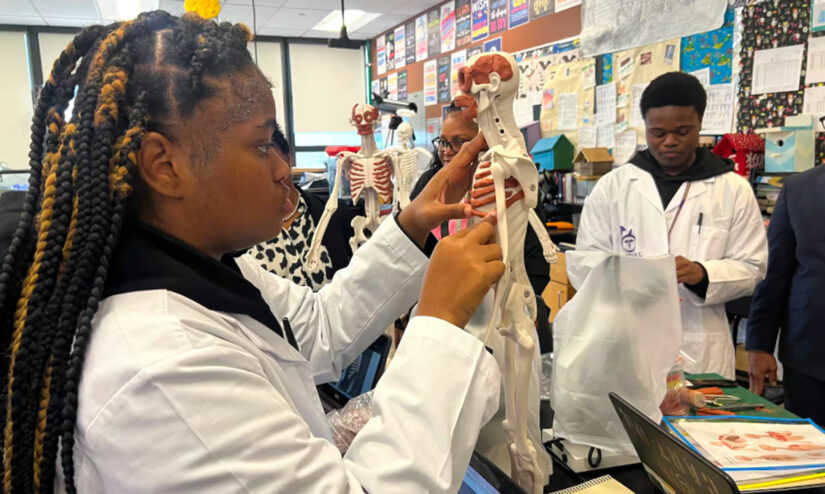


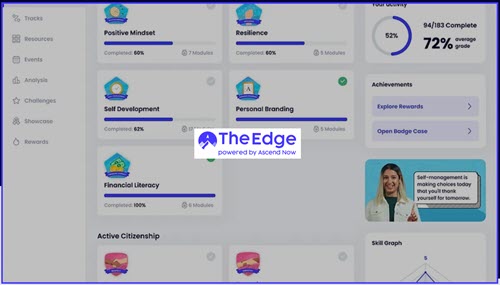









![Comparative Data on Race & Ethnicity in Education Abroad by Percentage of Students [2025]](https://blog.college-counseling.com/wp-content/uploads/2025/01/Comparative-Data-on-Race-Ethnicity-in-Education-Abroad-by.jpeg)