Augmented reality (AR) is part of our daily lives, making everyday tasks easier, safer, and more interactive. However, its greatest potential may lie in education, opening new doors for engaging students through hands-on learning.
Most people use augmented reality every day without realizing it. Features like “See this in your room” at major online retailers let users visualize furniture in their space before buying, while backup cameras in cars overlay guidelines to help drivers reverse and park safely. These applications seamlessly blend the digital with the real, providing extra context to inform decisions and deepen understanding.
Now, imagine a student struggling with ratios — a common challenge because ratios require proportional reasoning and dimensional analysis, abstract skills that can be difficult to visualize.
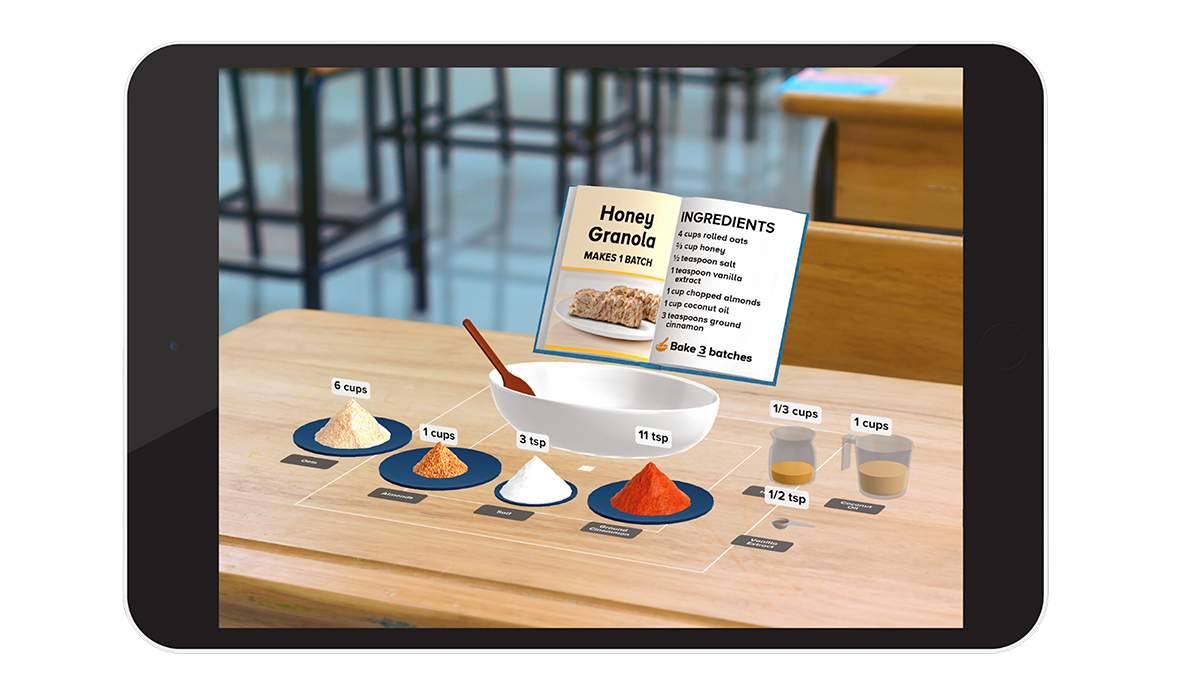
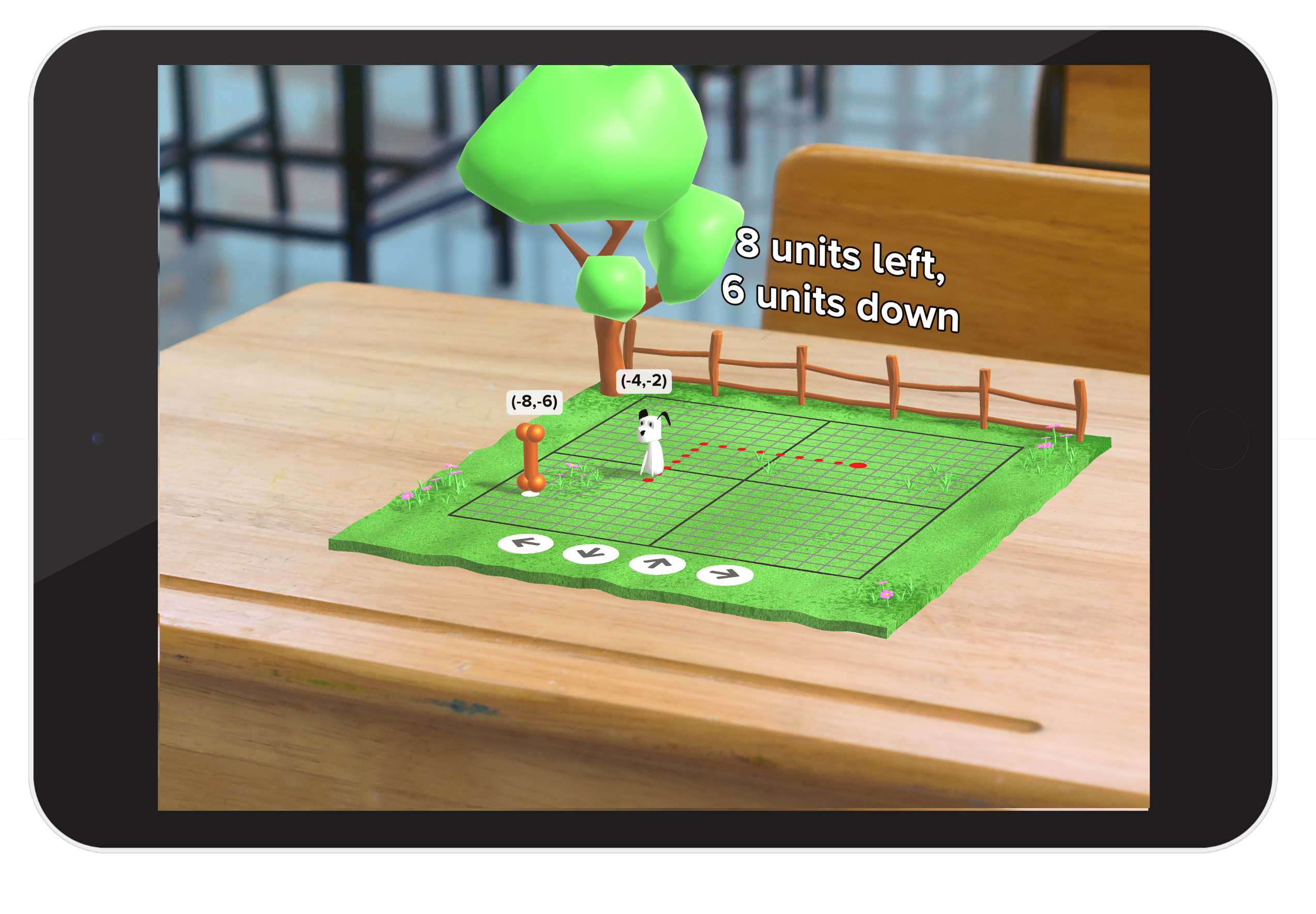
Like “See this in your room”, what if an augmented reality app presented the student with a virtual kitchen counter on their desk, stocked with ingredients for trail mix? The student must mix the correct proportions of raw nuts, raw seeds, and dried fruit, adjusting quantities as they go. Bonus: No mess and no actual cooking. It only requires a smartphone, tablet, or laptop.
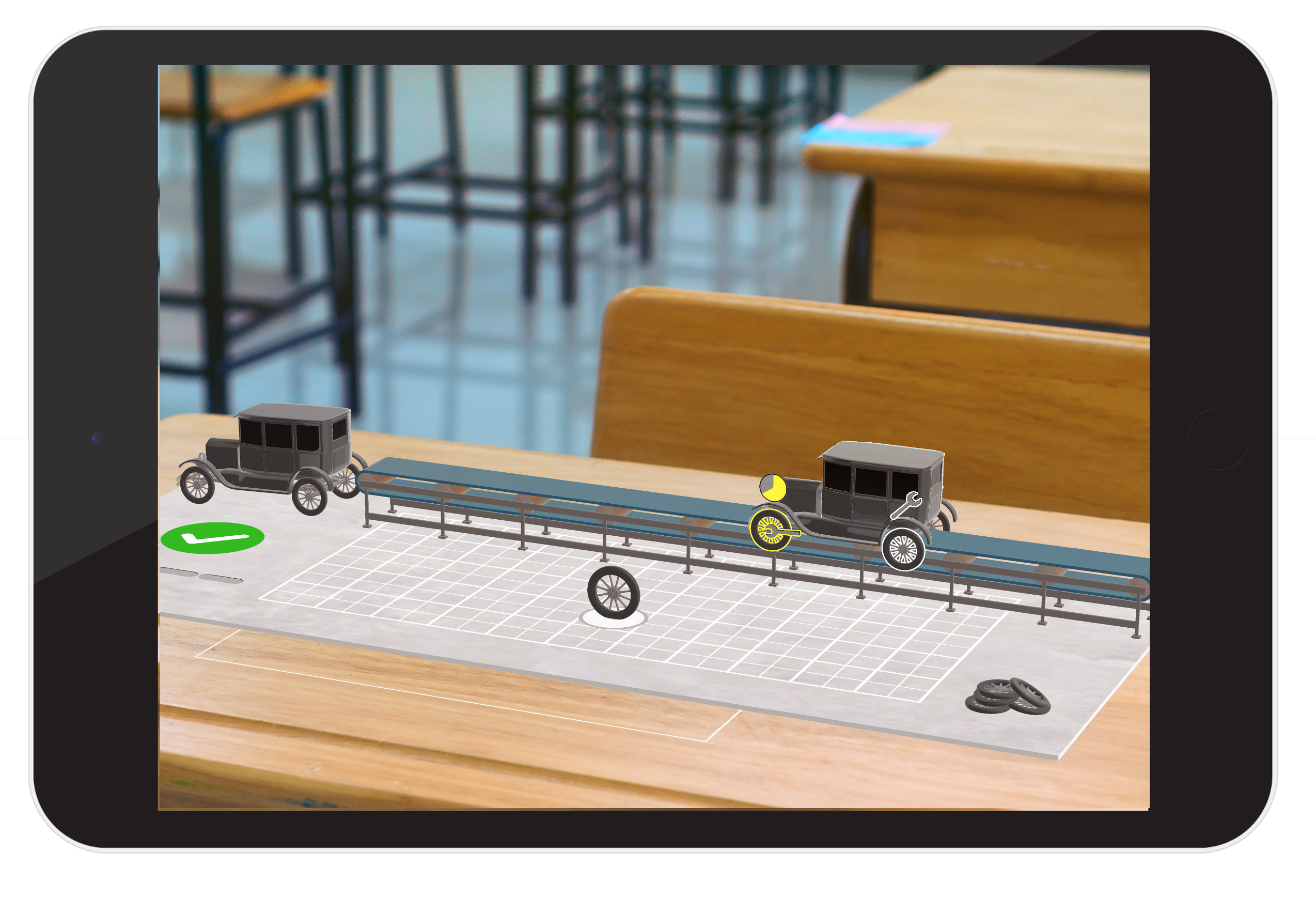
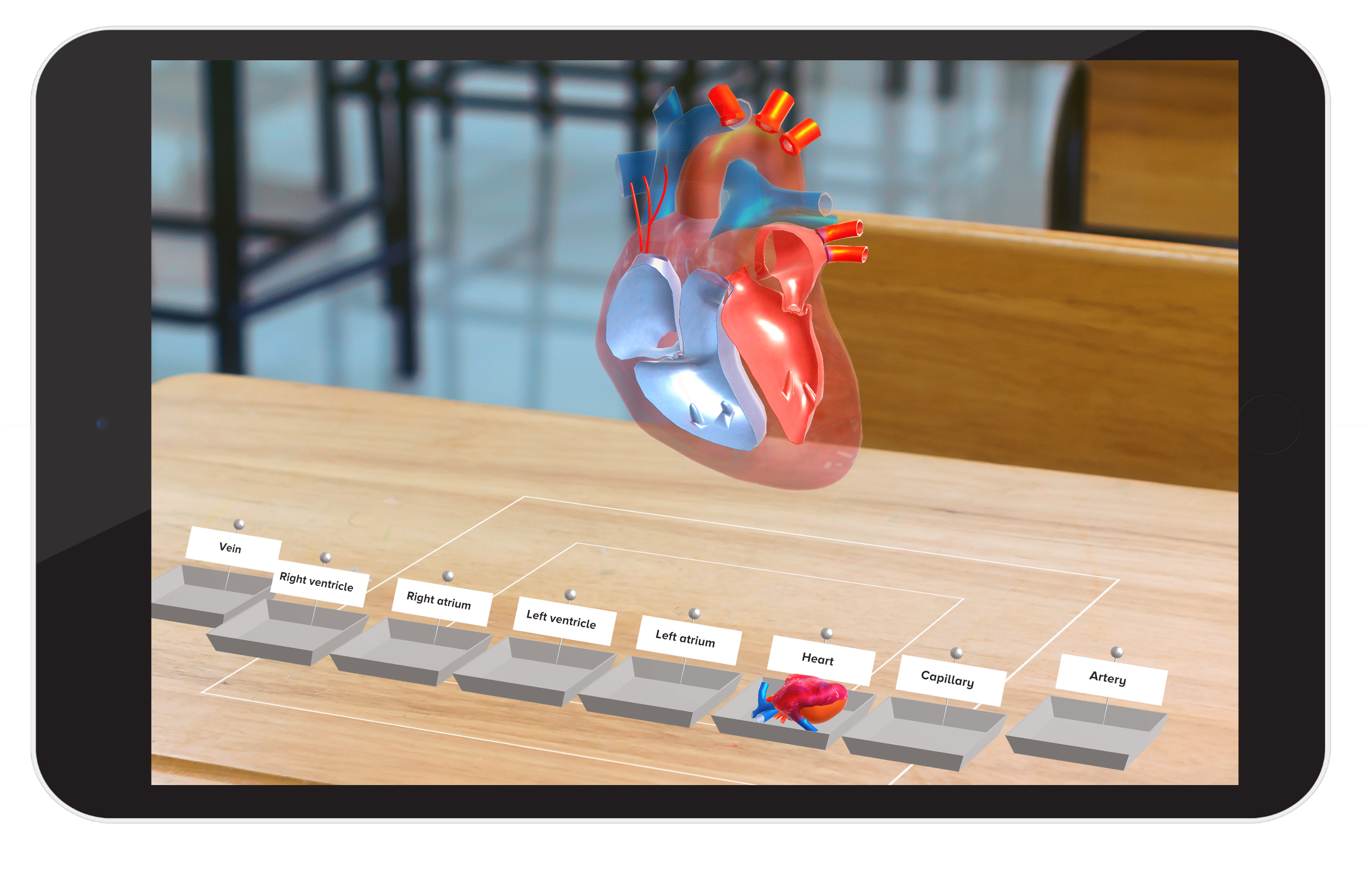
This fun, real-world approach helps students learn challenging concepts through play and interaction. It’s one of many activities in McGraw Hill AR, a free app from McGraw Hill, a leading global education company.
Sean Ryan
President, McGraw Hill School
“Immersive technology has the potential to make previously out-of-reach knowledge accessible for any learner,” said Sean Ryan, president of McGraw Hill’s School Group. “McGraw Hill AR will be a game-changer for teachers, particularly in math and science, where the detailed, interactive learning experiences will spark students’ curiosity and drive them to dive into the ‘how’ and ‘why’ of complex, abstract concepts.”
Coordinate PlaneIndustrial RevolutionCirculatory System
Reaching students across subjects, languages, and platforms
Yes, the app is really free. McGraw Hill builds the app in partnership with Verizon Innovative Learning. This educational initiative seeks to help bridge the digital divide with a goal of providing digital skills training to 10 million students by 2030.
To help reach those students, the app has a growing library across math, science, and social studies, with plans to add English Language Arts in 2025. It’s available in the App Store and Google Play Store. For students learning on Chromebooks or laptops, there are 3D web-based versions at mharonline.com. All activities are available in Spanish. For educators and homeschoolers, content is standards-aligned with accompanying lesson plans and worksheets at verizon.com/learning.
By combining play with practical learning, McGraw Hill AR offers a new way to connect, engage, and learn.
Content warning – this article discusses suicidal ideation. If you or someone you know is in crisis, call, text or chat 988 to reach the 988 Suicide and Crisis Lifeline, or visit 988lifeline.org for more resources.
AI was one of the major themes of 2024.The discussion frequently revolved around its impact on work, but there are innovative ways it can be used to complement human insight to address significant societal challenges.
For example, suicide was the second leading cause of death for people ages 10-14 (2022) according to the Centers for Disease Control and Prevention. This impacts everyone from families to educators. In one small Missouri town, a K-12 Safety Support Specialist was alerted when a student searched, “How much Tylenol does it take to die?” and “What is the best way to kill yourself?” These online searches triggered the school’s student safety tool which uses machine learning to identify harmful content. A specialist was immediately notified and was able to quickly intervene, providing the student with the necessary support to prevent self-harm.
There is an urgent need for effective solutions to protect students from threats like suicide, self-harm, cyberbullying, and exposure to harmful content. A combination of machine learning detection to allow for speed and scale, and human review to allow for context and nuance, is required for a comprehensive K-12 student safety tool. This allows schools to act when needed, as guided by their own Safety Plan. According to Talmage Clubbs, Director of Counseling for Neosho District in Missouri, “Our students know about it [student safety K-12 tool]. We have students purposely typing in keywords so they can be pulled in and talked to about their suicidality, their mental health issues, anything like that because they are struggling, and they just don’t know how else to reach anybody.”
Another example where human intervention is essential is when a machine learning-powered solution flags anatomical text as explicit content, but this might be for legitimate science coursework. Human reviewers can verify educational intent by examining context like student age and subject.
In the 2022-2023 school year, 94% of public schools report providing digital devices, such as laptops or tablets, to students according to the National Center for Education Statistics. This is a 28% growth from the number of devices provided pre-pandemic in middle schools and a 52% growth for elementary school students. As students spend more time online for school, they also use these devices for extracurricular learning and making social connections. However, they also have easier access to inappropriate content online. The challenges of ensuring online safety have become increasingly complex, as more students may seek harmful information or engage in distressing or inappropriate behaviors.
To truly support all students — regardless of their socioeconomic background or technological literacy — in the digital age, solutions must be user-friendly and adaptable to the diverse needs of schools and districts. By collaborating — educators, technology providers like GoGuardian, and policymakers can create a future where AI enhances educational experiences for students, fosters healthy human connection and empathy, and ensures privacy.
This also supports educators in today’s digital world who require innovative safety and security solutions to enable students to thrive physically, mentally, and academically while ensuring their well-being and academic progress. “You can rest well at night, knowing you are changing districts and saving lives,” says Dr. Jim Cummins, Superintendent of Neosho District.
The last episode from HEDx’s Future Solutions conference features interim pro-vice-chancellor of teaching and learning at the University of Queensland Professor Kelly Mathews.
She joins Martin Betts to discuss a survey of over 8000 university students about how they use artificial intelligence.
She is followed by a panel that included deputy vice-chancellor (education and students) at the University of Technology Sydney Kylie Readman, deputy vice-chancellor (academic) at Deakin University Professor Lix Johnson, vice-chancellor of Western Sydney University George Williams, president of Torrens University Linda Brown of Torrens, and industry executive of higher education at Microsoft Katie Ford.
They call on universities to partner with students and the tech company eco-system. Is HE brave enough to get out of its lane?
High education institutions and colleges are trying hard to suppress student skipping rates to boost performance and improve education standards. Management is trying hard to tackle truancy by imposing strict penalties on students skipping classes. Suspensions can only count as time missed from classroom instructions. Parents also face a blitz on attendance, and they are trying to keep students in higher education.
No more students skipping classes – try these out!
With nearly 25% of students admitting to skipping classes, we have churned out 10 sure-fire ways to tackle the issue behind students skipping classes. Easy to adopt, try these out for a result in a split-second.
Techniques to tackle students skipping classes
Monitor Attendance
This is practically the first and foremost way when trying to clock in to stop students from skipping classes. Monitoring attendance at high education is not new. Forget the days when faculty used to pass a piece of paper around the classroom to check attendance. It was ideally to support students who silently disengage. But trust us, of the hundreds of students attending lectures, 10-20% can even be missing without the lecturer realizing. Do not think of suspensions – for even they count as time missed from classroom instructions. Having an attendance policy in place works better! With electronic registrations, there can be a more structured attendance pattern. RFID-based attendance management system tracks unauthorized absence or lateness of higher education students in real-time. This will reduce the scenario of students skipping classes keep up-to-date records for all courses and improve student outcomes.
Track Discipline
When it comes to tackling the problem of chronic absenteeism, students who already have a track record of skipping class can be a particularly tough crowd to sway. So infectious they could be! The overall strategy for tackling such high education absenteeism should be to prioritize discipline. Getting into a friendly discussion helps. Figure out ways to help such students. Pool in mentors! Take complete ownership. Alternatively, manage and track behavior incidents of students using discipline software and generate automated reports for quicker decision-making.
Parent Communication
Get parents involved! This can be a way to reduce tardiness amidst such irregular students. Increased communication with parents will curb the notion of students skipping classes. Today, there are many parents connect software that provides real-time access to student’s academic information.
Manage Assessments
Another reason for students to skip classes could be their exam anxiety. If these classic signs of test uneasiness fill your classroom, attendance muddles will be there. Make assessments tension-free by creating online tests and assignments and sharing results with students and parents often. This will reduce the rising numbers of withdrawals from assessments and remove fears and inhibitions from students and parents.
Review of Curriculum
Hard to believe, but yes attendance truancy could be a result of the ill-fitting curriculum too. Teachers can review the curriculum and align the portfolio of courses to deliver quality learning for the institution. The curriculum management system provides student access to all the relevant course and curriculum data.
Smart Classrooms
Students feel aloof when teachers do not spend little or quality time with them. With smart classrooms paperwork gets eliminated, enabling teachers to spend quality time to improve teaching and learning.
Teacher Evaluations
Never neglect students who are chronically absent themselves – be all ears and resolve it at the earliest. This strategy works better! Analyze the teacher’s effectiveness in classrooms with a strong evaluation system and set performance goals to improve their skills. An ineffective faculty is but a drabby asset to the class. After all, it is they who matter the most in the classroom.
Role-based Security
The high education management system provides role-based authorization which facilitates discipline and eliminates privacy concerns of students. This information is protected and will be visible only to the targeted students or groups. Parents will be able to access and see the information about his or her children.
Event Management
Turn mundane days into gripping ones by scheduling events and announcements! With many departments and units, scheduling an event might seem like a task. Using an online calendar can be a lifesaver here. With such a calendar in place, make instant academic information available to students, teachers, parents, and alumni for specific purposes.
Automated Notifications
Don’t wait for the students to turn up the next day to notify them. Sending mass notifications with pre-built templates helps! Dish it out to students, teachers, staff, and parents via email, SMS alerts, and push notifications.
How Creatrix Campus Cloud Can Transform Your Institution and Simplify Student Life
Here’s a tip: Cloud and mobile technology can tackle regular and chronic absenteeism and benefit in many ways. They drastically result in increased attendance rate, improved student performance, reduced staff workload, and improved efficiencies of the institution.
Creatrix Campus offers the most advanced cloud and mobile-based cloud suite of solutions designed for higher education institutes. Adaptable, it easily integrates with other modules and provides secure access to track all your information in a single unified system.
Title: Addressing Challenges and Support for Youth Formerly in Foster Care
Author: Ellie Taylor
Source: Trellis Strategies
Youth formerly in foster care (YFFC) face complex and heightened demands with regard to postsecondary education. In a new brief from Trellis Strategies, the author discusses the distinct needs of YFFC who pursue higher education.
Trellis Strategies’ 2023 Student Financial Wellness Survey found that YFFC have considerably lower levels of food security compared to their peers, while the share of housing insecure YFFC students is 28 percentage points higher than that of non-YFFC students. Additionally, more than seven in 10 YFFC students did not know if their institutions had aid programs for them.
Most institutions do not have a means of identifying YFFC if they do not first identify themselves, complicating their ability to help students. However, less than 40 percent of students who indicated their YFFC status on their FAFSA reported receiving more funding. While 18 percent of students knew about institutional aid opportunities and 25 percent knew about state aid opportunities, 63 and 54 percent of students who were aware of these programs, respectively, participated in them.
The report highlights four key policy recommendations:
Fund and appoint liaisons for YFFC. Institutions should have a full-time staff member dedicated to supporting YFFC students.
Cultivate more awareness of support for students. Develop and sustain communication between higher education institutions and foster programs in order to build a robust awareness of resources for YFFC students and identify YFFC students.
Develop accessible programs for YFFC. Make programs, including trauma-informed counseling and academic support, convenient and free for YFFC.
Offer food and housing assistance. Designate specific housing for YFFC and provide aid to ease the financial burden of housing and food.
Holidays and traditions vary across the globe, from hemisphere differences to religious, cultural and historical observances.
In this article, we look at American holidays and traditions that may impact international students studying in the U.S.
The American holidays cycle
The American holiday system is slightly different from the rest of the world. Most people in the U.S. reserve the term “holidays” for the Christmas period, using terms such as “break” or “vacation” to describe the other days and observances when schools and businesses are closed.
Many states observe their own special dates, traditions and observances. California, for example, marks César Chávez Day on March 31; Floridians celebrate the state’s 1512 discovery every April 2; and Texas observes its very own April 21 independence day. However, all recognize the U.S. federal holidays. So holidays and observances may vary depending on which state you’re studying in.
Not all holidays fall on the same date every year. For example, Independence Day is celebrated annually on July Fourth, the day the U.S. signed the Declaration of Independence in 1776. But Thanksgiving – another important U.S. federal holiday – is observed on the fourth Thursday of November.
Federal holidays
There are 11 recognized federal holidays in the U.S. and a 12th every four years following a presidential election. These cover traditional holidays celebrated across much of the globe, including New Year’s Day and Christmas, as well as unique American observances, such as Memorial Day and Labor Day.
Here’s a list of federal holidays, along with their dates and a brief description of each.
New Year’s Day – January 1: The first day of the year, celebrated around the world.
Martin Luther King, Jr. Day – The third Monday of January: Celebrates the birthday of the iconic civil rights leader.
Inauguration Day – Once every four years on January 20: Follows the November presidential election to swear in the president of the United States.
Washington’s Birthday– Each third Monday of February: Marks the birthday of the first U.S. president, George Washington.
Memorial Day– The last Monday every May: Commemorates the members of America’s armed forces who have lost their lives in service to their country.
Juneteenth National Independence Day– June 19:A relatively new federal holiday (since 2021) to commemorate the end of slavery in the United States.
Independence Day – July 4: Observes the ratification of the Declaration of Independence in 1776, officially establishing the United States of America. An important date in American culture.
Labor Day – The first Monday in September: Recognizes the U.S. labor movement and celebrates the achievements and contributions of workers in the United States.
Columbus Day– The second Monday in October: Marks the anniversary of Christopher Columbus’s arrival in the Americas. Some groups do not recognize this holiday or instead observe the day as Indigenous People’s Day.
Veterans Day– November 11: Honors the military veterans of the United States Armed Forces (also observed in most Western countries as Armistice or Remembrance Day).
Thanksgiving Day – The fourth Thursday in November: A U.S. holiday where families and friends come together – usually over a large, home-cooked meal – to give thanks for the good things in life.
Christmas Day – December 25: Celebrates the birth of Jesus Christ and is widely celebrated.
Many people don’t have to work on national holidays, and schools are often closed if the holiday falls during the academic term.
Unofficial American holidays and observances
In some states and cities, Americans observe non federal holidays or traditional, religious and even political dates. These can vary significantly from state to state. The government doesn’t officially recognize these as days where businesses and schools are closed.
Religious observances
The U.S. values the right to celebrate religious observances without fear or prejudice. It’s not uncommon to see many different religious and cultural activities across the nation.
Eid al-Fitr – Marks the end of the holy Muslim month of Ramadan. Eid, as this day is often called, generally falls on a different date each year.
Diwali – Usually falls between October and November and lasts for five days. This Hindu festival of lights is a popular observance among Indian Americans.
Yom Kippur – The Jewish holiday often occurs during September and October and is seen as Judaism’s most important holiday.
Easter – The Christian holy days of Good Friday and Easter Sunday mark the crucifixion and resurrection of Jesus Christ.
American cultural observances
While not official holidays, these American cultural observances are widely celebrated across the U.S. and enjoyed by almost everyone.
Halloween – This popular celebration has spread worldwide, but Americans love to take it to another level. Creepy Halloween decorations and spooky events can be seen and enjoyed for days before the October 31 night of trick or treating.
St. Patrick’s Day – Celebrated every March 17, no matter the day of the week. This popular date sees many people heading out to enjoy socializing in pubs and bars.
Flag Day – The June 14 holiday commemorates the 1777 adoption of the American flag, popularly referred to as “Old Glory.” Though not a federal holiday, many American citizens use this day to express their patriotism to the U.S.
Academic year breaks
The American academic year for colleges varies widely. Most schools follow the two semester system, though there are many following quarter or trimester systems. Typically, there are school breaks between academic periods. Here’s a general overview of academic breaks:
Winter break – Mid-December to early/mid-January | Around two to three weeks
The winter break usually commences after final exams in December and includes Christmas and New Year’s. Centered around celebrating the Christmas season, this break is often a great opportunity to travel home to spend time with family and loved ones.
Spring break – During March or April | one to two weeks
The spring break holiday is known for being a time when young people can relax and unwind. Coming just as the weather in most U.S. states is warming up, the spring break often sees crowds heading to sunny spots around the country to enjoy a few days of fun in the sun.
Summer break – Mid-May through late August | 12 to 16 weeks
Summer break is the longest break of the academic year and runs 12 to 16 weeks. Americans usually head outdoors to enjoy the warm weather, so this is a great opportunity to explore the country. Several national holidays fall during the summer break.
Fall break– Usually at the end of November | About five days
Also called Thanksgiving break. May include a day or more before Thanksgiving Day and ends the day after the holiday. If time allows, many travel to spend time with their families.
American traditions on holidays and during observances
There are many traditions and practices associated with American holidays. These unofficial activities and exercises celebrate the diversity of American culture and, in some cases, hold special meaning to the people participating in them.
Here are a few iconic examples:
Independence Day often involves outdoor barbeques or cookouts with friends and family followed by fireworks displays at dark. Some campuses host Independence Day events in the lead-up to the holiday.
Thanksgiving traditions revolve around traveling to visit family to enjoy quality time with loved ones over a large meal. These meals often include staples like mashed potatoes, corn and turkey. Americans have a tradition of inviting people unable to travel over the break to Thanksgiving dinners, so don’t be surprised if you receive an invite or two.
Saint Patrick’s Day is a well-known religious and cultural holiday in the U.S. Celebrated worldwide but especially prominent in the U.S., many love to dress up in green and head out for a drink. Saint Patrick’s Day often coincides with the beginning of spring break and includes large-scale events like parades in cities with a strong Irish heritage such as Boston and Chicago – which even dyes its river green.
Halloween is an unofficial holiday revered in the U.S. Kids look forward to Halloween, excited to go “trick-or-treating” for candy after sunset on the last day of October. Many young people and adults attend costume parties to mark the observance.
Christmas is an important day on the traditional calendar. While many families around the world open gifts on Christmas Eve, Americans prefer doing so on Christmas morning. Christmas traditions in the U.S. also include making eggnog, singing Christmas songs and wearing Christmas-themed sweaters.
How holidays impact international students in the U.S.
American holidays, breaks and observances provide a great chance for international students to take some time off from their studies. They’re also perfect opportunities to engage with American culture or travel home to visit friends and family.
Whatever you choose to do during these periods, remember to plan well and be safe.
Here are some tips and pointers for planning before an American holiday or observance:
Travel smart – Americans love to travel over the holidays. Whether hopping onto a flight, hitting the road or taking the bus, the holidays can be a very busy time. Try to avoid traffic and make your plans and reservations well in advance.
Spending – Some popular holiday destinations and cities tend to raise prices during the busy season. From skyrocketing accommodation and travel costs to premium charges for entertainment, holiday activities and even food, draw up a realistic holiday budget and stick to it.
Local customs and laws – Rules and regulations vary from state to state, so be careful not to break local laws or violate customs unintentionally. A quick check online or chatting to a local on arrival at your holiday destination should prepare you adequately to avoid this.
Remember to recharge – While the holidays can be a lot of fun and a great time to socialize and meet new people, remember to rest and recuperate. Returning to class with renewed vigor and energy is always a good idea.
Stay focused – Don’t forget to check in with your teachers and course administrators to ensure you’re not missing out on any important holiday assignments. Also, avoid skipping opportunities to earn extra credit at summer schools or other on-campus holiday events. Review your financial aid or scholarship contracts for any holiday conditions.
Enjoying the holidays responsibly
One of the best things about studying in the U.S. is the opportunity to engage with the rich and vibrant American culture. Holidays are a great way to experience what the U.S. has to offer, and Americans take their national holidays, traditions and observances seriously.
Getting familiar with American holidays and traditions before starting your academic journey will help you to optimize your planning and get the most out of your time. Remember to be safe during the holidays and engage with locals for a truly American experience. For more on getting your international student journey started, visit International Student or check out our blog.
Neurodiverse students are encountered more frequently in today’s classrooms. Those with autism represent a particular challenge for schools and families– and edtech may be able to help. Resources for autism education have evolved significantly since FT4T’s 2009 post on this topic. EdTech products now offer even more effective ways to support students. While trusted resources like Teaching LD, Autism Outreach, and LD Online continue to provide valuable support, new EdTech tools have emerged to offer more personalized, interactive, and efficient methods for helping students with autism thrive. From communication apps to social skills programs, these innovations are changing the way we teach and learn.
Otsimooffers access to various educational games designed to make learning engaging and accessible for children with autism. Created with input from educators and families, Otsimo provides language, cognitive, and social-emotional learning games to support children with different needs. Its free open-source augmentative/alternative communication (AAC) tool also helps nonverbal children express themselves.
Speech Blubs is a speech therapy app designed to help children with autism improve their communication skills. It uses fun, interactive videos and activities that engage children in learning sounds, words, and phrases. The app offers a free version with limited access, making it accessible to families and educators.
Starfall is a free educational resource that helps children with autism develop literacy and math skills through interactive games and activities. Although it’s not designed exclusively for autism, its simple and engaging format is effective for students with special learning needs.
Proloquo2Go is a leading augmentative/alternative communication (AAC) app for iPad and iPhone, designed to help non-speaking children and adults express themselves confidently. It uses a large library of over 27,000 symbols to support communication, and its customization options allow users to personalize the app to fit their unique needs. Proloquo2Go also supports language development, offering research-based vocabulary that helps users progress from single words to full sentences.
The Social Expresss teaches social skills through interactive stories, helping users navigate social situations and learn key skills such as identifying emotions, maintaining eye contact, and reading non-verbal cues. With its engaging animated format, The Social Express makes learning social skills feel like an adventure.
Classwork.com helps educators transform traditional teaching materials into interactive digital formats. This tool is invaluable for adapting lesson plans to meet the diverse learning styles of students with autism, incorporating features like instant feedback and visual aids to enhance understanding and engagement. Additionally, Classwork.com allows teachers to include audio elements, such as recording their own voices, which can provide personalized instructions and support, making learning more accessible and engaging for auditory learners.
Financial Support and Resources
While educational tools are important for academic and personal growth, it’s also necessary to acknowledge the financial challenges families may face. DisabilityAdvice.org https://disabilityadvice.org/ provides resources for navigating Social Security Disability Insurance (SSDI) and other financial support systems, helping families secure a stable future. Teachers can play a key role in supporting families by sharing helpful information about these resources, ensuring that both students and their families have access to the support they need.
Conclusion
Educational technology is an important resource in helping students with autism succeed both academically and socially. EdTech tools make learning more accessible and help students develop essential communication and life skills. By incorporating these resources, educators and families can better support the unique needs of each student, giving them the tools and opportunities to thrive in school and beyond.
Call to Action
Educators and families are encouraged to explore these technologies and integrate them into their educational strategies. For those needing additional support with financial planning, DisabilityAdvice.org is a valuable resource.
Election Day in the U.S. is just around the corner. On top of carrying multiple academic and employment responsibilities, some students will also be voting for the first time. Others, such as those from marginalized or historically underrepresented populations, may be overwhelmed with what the election results could mean for them. In the lead up to Election Day, a healthy dose of empathy will be essential in ensuring students have a chance to fulfill their civic duty—and the opportunity to consider its consequences.
Being flexible with due dates, considering students’ wellbeing and ensuring learners are armed with the resources needed to vote are the most important things you can do as Election Day nears. Read on to learn how professors advocated for their students during the 2020 election—and how you can do the same.
Consider making November 4 and 5 free of assignments (or even classes)
Exams can cause some students a great deal of stress and anxiety. Lillian Horin, Biological and Biomedical Sciences PhD student at Harvard University, urges educators to keep BIPOC students in mind when scheduling high-stakes tests.
Professors: PLEASE don’t schedule examinations for directly after election night. In 2016, I had a biochem exam the day after the election. BIPOC students spent our election night begging our professor to postpone it. It intensified one of the most traumatic nights of our lives.
Consider swapping your exams or problem sets (Psets) with a trip to the ballot box. Jacob Light, Economics PhD student at Stanford University, writes that this simple gesture may allow students to exercise their civic duty.
In 2012 my linear algebra professor canceled our election week problem set because voting was more important. The gesture meant the world to me. Today I made the same argument on behalf of my students. #AcademicTwitter cancel psets during election week; your students want to vote
Other students like Anna-Sophia Boguraev, Bioengineering PhD student at Harvard Medical School and MIT, say that TAs have the power to amplify student concerns and requests—none of which should be ignored.
legit if you have any leverage w prof, use it to help students – when ppl started basically being like “we’re traumatized plz let us reschedule the midterm” on piazza, the TAs just deleted the posts w no response or acknowledgement bc the prof told them to. so like … not that
If your assignments can’t wait, build in flexibility and timeliness
Self-paced learning can allow students to visit the polls and complete coursework at a time that works for them—so says Jesse Fox, Associate Professor of Communication at Ohio State University.
US instructors: working on your syllabus?
🇺🇸Election Day is Tuesday, November 3🇺🇸
Please plan an asynchronous option that day. There are already enough efforts to impede & suppress voting!
Election Day can also be a good opportunity to let students catch their breath in your course. Give students a chance to study and review material that they haven’t had a chance to look over, suggests Scott Grunow, Instructor in English and Religious Studies at the University of Illinois at Chicago.
Same here. Kind of. They are working asychronously on an essay. Feedback week. No synchronous class. I will be available all week for drop in hours.
— Dame Scott G. Against Petty Persecutions/Vainglory (@scottgr60613) October 6, 2020
Should your institutions provide little leeway in your assessment choices, at least incorporate real-time events into your discussions. Derek Bruff, Associate Director, Center for Teaching Excellence at the University of Virginia, notes that relating course content to the election can help students see the value of what they’re learning.
What are you planning to do in class the day after the election? 1. Find a connection to your course topic (e.g. polling error in a stats course). 2. Acknowledge that it was a late, emotional night. 3. Don’t give a pop quiz.
Real-time political events and policy proposals can make for discipline-specific conversations. This also allows students to apply what they’ve learned in your class to the real world, as Andrea Gomez Cervantes, Assistant Professor in the Department of Sociology at Wake Forest University, proposes.
— Dra. Andrea Gomez Cervantes (she/ella) (@AndreaGC_soc) September 23, 2020
Mobilize your students to show up at the polls
Gen Z students are motivated to vote. In the 2018 midterm elections, the student turnout rate increased by 20 percent compared to the 2014 midterms.1 Ensure students are equipped with the resources to vote as soon as possible, writes Wendy Christensen, Sociology Professor at William Paterson University.
Don’t forget to include voting info in your Fall 2020 syllabus and online course module! Include any voter registration deadlines, registration info, drop off ballot info, AND the general election date Nov. 3rd. #GOTV#AcademicTwitter@AcademicChatter#AcademicTwitter
— Wendy Christensen 🏳️🌈🦉📚🍺 🏃♀️ (@wendyphd) August 19, 2020
Similarly, ask students about their voting plans. Consider working with your class to ensure they know where to go on November 5, suggests Margaret Boyle, Associate Professor of Romance Languages and Literatures at Bowdoin College.
Ensure your voter registration information and resources appeal to all students, regardless of what political party they support. Meghan Novisky, Assistant Professor of Criminology at Cleveland State University, emphasizes the importance of using non-partisan guidelines.
Suggestion for this fall: include (non-partisan) voter registration info for students in week 1’s course materials AND inform students election week will be assignment free in support of voter turnout. #phdchat#AcademicChatter
Some scholars like Sara Wheeler-Smith, Associate Professor of Management at Manhattan College, even plan to offer a grading incentive for visiting the polls.
With my chair’s approval, I’m offering extra credit to anyone who can demonstrate they voted. (Anyone ineligible can do an alternative assignment). If I were teaching on #ElectionDay I would have cancelled too.
Incorporate guest lectures and learn from your colleagues
Navigating election week with students in mind might be an unfamiliar undertaking. Consider leaning on faculty at your institution for support, writes Heather Mayer, Director of Educational Technology at Everett Community College.
Interested in hearing what people have planned. We’re developing a faculty workshop for the the week before to give people a chance to talk with each other about ideas and resources.
Some students may be undecided voters, while others may have missed the presidential debates. Incorporate forms of debate in your classroom—with the support of scholars from other institutions, as Yujin Jung, Political Sciences PhD student at the University of Missouri, plans to do.
Keep in mind the importance of mental and physical health
Check-ins with students have gained new meaning in the midst of an election. Andrea Kelley, Sociology Professor at the University of Michigan, tends to her students’ socioemotional needs before assigning readings and lectures.
I have built “self-care” weeks into all 3 of my courses during election week. No new readings, no graded assignments, just a check-in. We can’t self-care our way out of structural oppression and related stresses, but I can make sure my classes don’t pile on. #AcademicChatter
— Andrea D. Kelley, Ph.D., MSW (they/she) (@adkelleysoc) October 9, 2020
Election Day can come with a range of emotions for many students. Cate Denial, Distinguished Professor of American History, Chair of the History department, and Director of the Bright Institute at Knox College, removes the expectation for students to pay attention and participate in class.
I will not be assigning reading for the week, and instead we’ll review whatever happens in light of what we’ve been learning. It will be completely on the fly, but I will not be expecting my students to be able to focus.
It’s that time: the days are becoming shorter, temperatures are beginning to dip and more importantly, educators and students have returned to the classroom. At Top Hat, we recognize the value of ensuring every student comes to class prepared and excited to learn. We recently surveyed more than 21,000 students who used Top Hat in the Spring 2024 term about the impact our engagement platform and content solutions had on their academic journey. From interactive readings to in-the-moment study support, here’s how Top Hat made a tangible difference in their studies.
Greater preparedness = better retention
When students arrive to class feeling prepared, they’re more likely to persist. Data from the American Council on Education and the School of Education and Information Studies at the University of California at Los Angeles backs this up. The report finds that three out of five students surveyed state academic underperformance drove their decision to leave college for more than one term.
Faculty have made tremendous strides in providing opportunities for frequent, low-stakes knowledge checks during the term. The emphasis on bite-sized assessments hasn’t gone unnoticed among students. “Real-time quizzes and polls not only helped reinforce key concepts but also encouraged active participation among students. Top Hat has truly enhanced our classroom interaction and made learning more enjoyable,” says Muhammad Ali Gajani at Indiana University Bloomington.
Students bring an array of opinions and interests to your course. It’s why they value the opportunity to be active participants in the classroom. Research also shows that students who learn using active learning methods perform better on tests than those who sit in long-form lectures. Students echoed the impact Top Hat’s interactive polls, quizzes and discussions had when applying their knowledge. “Top Hat helped me perform better in my class as well as apply my understanding to my homework and exams,” shares Jacob Purcell at West Texas A&M University. An anonymous student from Texas State University at San Marcos chimes in. “It helped me to pay attention and stay engaged, getting me a better grade.”
Turning static readings into an interactive experience
We hear from educators that students don’t always complete their reading assignments before class. Over the years, students have tried to take shortcuts to their readings by searching for online summaries. How have educators responded? For starters, they’ve chosen to create ‘snackable’ content with media and real-world case studies that reflect an ever-changing world. Faculty have also relied on Top Hat’s personalized and interactive content solutions to ensure students have opportunities to read and then apply their understanding of concepts in the form of embedded polls and discussions.
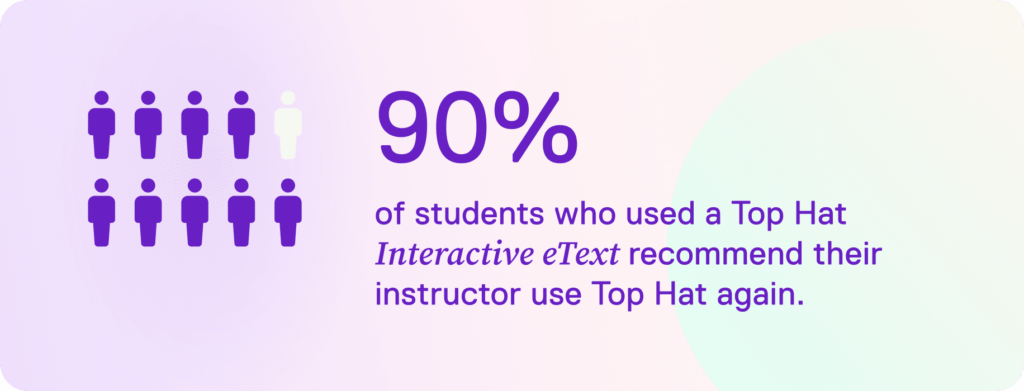
No matter discipline, students have responded favorably to using Top Hat titles in their course. “I loved the interactive aspect of my Top Hat textbook. Engaging with models, watching videos, and answering questions in chapters was really interesting and valuable to my learning experience,” shares an anonymous student at the University of South Dakota. Learners also appreciate the digestible nature of Top Hat Interactive eTexts. “With Top Hat, I felt that I could easily understand the information and stayed focused throughout my reading for the first time,” shares an anonymous student at Northern Virginia Community College.
Making participation less intimidating
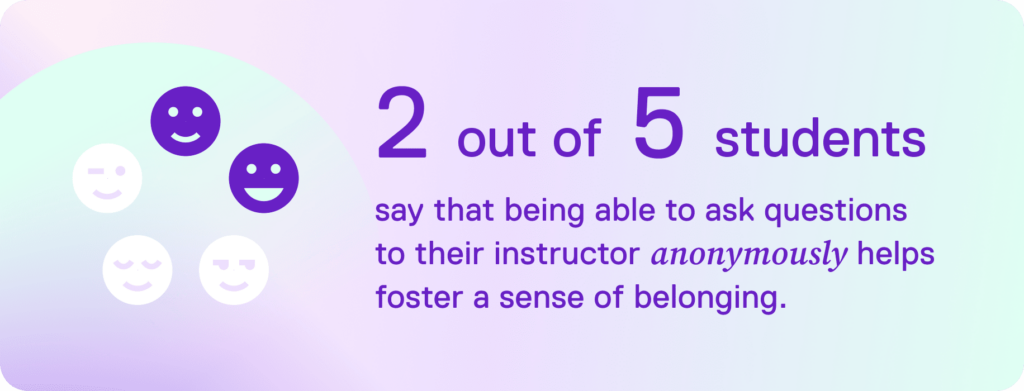
Raising your hand in a large class can come with a good deal of intimidation. Students place increased importance on asking questions anonymously and without fear of judgment. It’s why millions of students have flocked to Generative AI platforms such as ChatGPT for instant study guidance. Educators have tapped into the heightened interest in AI and have shared ethical use principles with students. Some faculty have even allowed students to build off content generated by a Large Language Model. For instance, English professors may let students use ChatGPT to form a thesis statement for an essay and ask them to critique the strengths and weaknesses of the generated response.
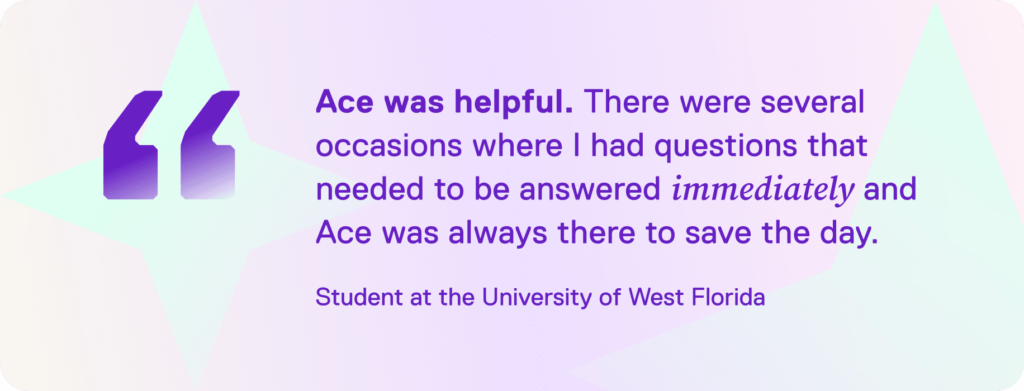
More than 630 of our survey respondents used Top Hat Ace, our AI-powered teaching and learning assistant, in the Spring term. Their comments revealed three primary ways that they relied on Ace through the course of their study.
Provide clarity: Students valued receiving clarification on challenging concepts covered in lecture or while reading their assigned text. “I liked that [Ace] asked a thought-provoking question after answering to promote continuous understanding of the topic, not just giving me the answer,” shares an anonymous student at Oakton Community College.
Personalize study support: Students often relied on Ace for course-specific guidance when completing homework. The best part: since responses are built from the context of the course, students feel like they’re learning along the way versus being handed answers. “I love Ace! I would ask questions and Ace always believed in me that I could answer the question on my own so it would just recommend a section of the module to re-read,” says Nazli Kircicek at McGill University.
Assess knowledge on the fly: Several students highlighted how Ace allows them to reduce their knowledge gaps in advance of tests. Many also used Ace as a tool to apply their understanding of concepts in a low-stakes, low-stress environment. “Ace was able to create sample exam questions relating to the content we were learning in class to prepare for exams during lectures,” shares an anonymous student at Grand Valley State University.
We provide Turnitin report as a provide for plagiarism free assignment writing service for students who hire for premium service. Peace of Mind reduce the anxiety associated with
Students often struggle with academic pressures from university due to Plagiarism issue while submission of the report and often the report gets rejected and students loose their academic years. At mba project guide we offer complete Peace of Mind to tackle this issue.







 Speech Blubs
 Starfall
 Proloquo2Go
 The Social Express
 Classwork