Tag: students

  • Attracting International Graduate Students – Edu Alliance Journal

    Attracting International Graduate Students – Edu Alliance Journal

    May 31, 2022, by Don Hossler – Setting a Context for Recruiting International Graduate Students

    There is a dearth of research on the factors that influence international graduate students to select the graduate program in which s/he will enroll. For decades, my advice to enrollment managers has been to look at the research on what influences the enrollment decisions of high ability domestic undergraduates and assume that many of the same factors will be at play. Keep in mind that for these prospective students the decision to enroll out of home country is a risky decision. It is risky because many of these students will have never lived out of their home countries. Students from more affluent families may have traveled abroad, but many  prospective students will not have done so. They are unaccustomed to the cultural norms in other countries.

    Recruiting international graduate students involve different considerations. For example, international students seeking master’s degrees in applied areas such as MBAs, and students looking at Ph.D. programs in STEM fields will have different concerns. Prospective students may have never studied in a setting where the language of the host country was the only language spoken. If a student is from some regions of Africa, Asia, or South America it is possible that the teaching style to which they have been exposed is didactic. But if the student is looking at studying in Western Europe, Canada, the United States the instructional style will be more dialectic, with give and take between students and faculty. All of these factors should be considered when universities/specific graduate programs craft recruitment strategies.

    Female students from Europe or North America, may be reluctant to consider graduate programs in the Middle East or parts of Asia because the roles of women, both inside and outside of the classroom is more constrained. Women from more religiously conservative Islamic countries may not be allowed to travel outside of home country without a male chaperone (Muharem). When graduate programs are considering the applications from students who have not grown-up in western industrialized countries consideration should be given to the fact that GRE score may not accurately reflect the abilities of prospective students. It should be clear by this point those institutions who seek to recruit graduate students from across the globe need to do their homework to be culturally sensitive.

    The Importance of Program Quality

    For graduate programs that seek to attract the best students from around the globe there are some universal truths.

    1. One of the differences between graduate and undergraduate programs is that students are likely to have courses taught by some of the leading scholars in the field. Graduate programs need to capitalize on this when attempting to recruit international students.
    2. The ranking of a graduate program is of great import. The further a graduate program is removed from being ranked among the best programs in the world, the more difficult it becomes to attract top graduate students.
    3. The reputation of individual faculty members also matters. In top ranked MBA programs, or in a STEM field for example, there may be a single professor that is regarded to be amongst the best researchers in the world in his or her field.
    4. For prospective graduate students looking only at elite programs, it is important that they have a chance to interact with faculty members by phone, video conferencing, email, and visits to campus prior to enrollment. There is always the risk that a  world-renowned professors will treat students like they are lucky to be talking to him/her – which is a mistake. Returning to a theme from my last essay on recruiting international undergraduates, graduate programs should court these top students, they will have other choices. Do not treat them like you are their only choice.
    5. Another important consideration for prospective students is the opportunity to participate in internships or to serve as research assistants (and later in post-doc fellowships). For more applied master’s degree programs, the opportunity to be part of consulting efforts can be a consideration. Finally, the longer the time period allowed for time spent in internships or in post-graduate fellowships – the better.
    6. In addition, cost matters. Prospective doctoral students in STEM fields will assume that they will get a research assistantship that will cover all, or most, costs. Most master’s degree programs do not include assistantships, thus tuition and fees, along with the availability of financial aid will influence their decisions.

    In addition to the factors above, there are other considerations for prospective students. In fields and programs, where students hope to become pre-eminent researchers there is often a preference that instruction be in English. There are practical reasons for this preference. For prospective doctoral students, the majority of the top journals in STEM fields are published in English. Often conference papers are presented in English. In the case of business, both spoken and written English is the lingua franca of international business.

    While less important, there are other considerations for prospective students. The permeability of the country culture in which the institution has been admitted can also be a consideration. Can students easily connect with other students and the wider community? Personal safety is also a factor. For example, this is often a concern about studying in the United States. In addition, any recent perceived mistreatment of international students quickly spreads across the globe. The visa process put into place by the Trump administration or China’s decision to expel all international students during the pandemic are examples of government policies that can influence the decisions of future graduate students.

    Many  international students are admitted and enroll in less prestigious graduate programs so high rankings are not always a key factor. Some students coming from Third World Countries may hope to immigrate to the country in which they choose to study. Thus, the probabilities of legal immigration can matter. Proximity to extended family and of course the probability of being admitted can be a factor.

    What Should Graduate Programs Do?

                Graduate programs that seek to enroll international students need to organize themselves to do this effectively. Unlike efforts to enroll undergraduates, where the image of an entire university plays a major role in matriculation decisions, the prestige and structure of an individual graduate program is what matters. The faculty of the program, with the support of the academic unit in which the program is housed, need to be clear eyed about the program’s strength and weaknesses. In addition, graduate programs need  to collect information on all of the students who applied, which ones were admitted, and where they enrolled. The use of data is critical especially for programs that are seeking to move higher in rankings schemes.

                Successful efforts require more organizational structure and focus than is often found at the program level. Any fellowships and scholarships need to be used in a strategic and coordinated manner. Programs need to develop communication strategies and targeted web pages –  this is necessary regardless of how highly ranked a graduate program may be. Both the communication streams and the website need to be customized to reflect the unique interests of international students. The concerns of prospective international doctoral students in Education are different from those of potential master’s students in Bioinformatics, or potential Ph.D., students in Materials Science.

                For universities and for graduate programs that seek to enroll more international graduate students there are a host of factors that influence students’ enrollment decisions. Program leaders need to be thoughtful and strategic in order to achieve their goals. Less prestigious programs may need to consider using recruiting agents, similar to undergraduate recruitment. It is likely to be necessary to assign many of these tasks to a professional staff position who has the time and expertise to create a highly integrated recruitment, admissions, and scholarship function.


    Donald Hossler a member of the Edu Alliance Group Advisory Council is an emeritus professor of educational leadership and policy studies at Indiana University Bloomington (IUB). He currently serves as a Senior Scholar at the Center for Enrollment Research, Policy and Practice in the Rossier School of Education, at the University of Southern California. Hossler has also served as vice chancellor for student enrollment services, executive associate dean of the School of Education, and the executive director of the National Student Clearinghouse Research Center.

    Hossler’s areas of specialization include college choice, student persistence, student financial aid policy, and enrollment management. Hossler has received career achievement awards for his research, scholarship, and service from the American College Personnel Association, the Association for Institutional Research, the College Board, and the National Association of Student Personnel Administrators. He recently received the Sonneborn Award for Outstanding Research and Teaching from IUB and was named a Provost Professor.

    Edu Alliance Group, Inc. (EAG) is an education consulting firm located in Abu Dhabi, the United Arab Emirates, and Bloomington, Indiana, USA. We assist higher education institutions worldwide on a variety of mission-critical projects. Our consultants have accomplished university/college leaders who share the benefit of their experience to diagnose and solve challenges.

    EAG has provided consulting and successful solutions for higher education institutions in Australia, Egypt, Georgia, India, Kazakhstan, Morocco, Nigeria, Uganda,  United Arab Emirates, and the United States.

    Edu Alliance offers higher education institutions consulting services worldwide. If you like to know more about how Edu Alliance can best serve you, please contact Dean Hoke at [email protected] 
    Source link

  • What are the Top 3 Weekend Getaways for Students Living in Vancouver

    What are the Top 3 Weekend Getaways for Students Living in Vancouver


    Student Life: What are the Top 3 Weekend Getaways for Students Living in Vancouver


    What are the Top 3 Weekend Getaways for Students Living in Vancouver

    Known as one of the most
    ethnically diverse seaport city of Canada, Vancouver is also home to a large
    number of university students who throng the five university campuses of the
    city, t
    he largest being the University of
    British Columbia (UBC) and Simon Fraser University (SFU). Both the university
    are witness to combined admissions of a roundabout of 90,000 undergraduates,
    graduates, and professional students. Apart from doing well academically,
    students have unique getaways options to plan amazing weekend with
    friends. 

    Here
    are 3 of the most popular weekend getaway options available for students in
    Vancouver. 
    Students
    can plan weekend getaways for much needed break apart from making the ideal
    choice of living in purpose-built
    student accommodation vancouver. They
    can head to the nearby mountains that Vancouver has to offer. There are three
    main mountains close to the city namely, Cypress Mountain, Mount Seymour, and
    Grouse Mountain. When at Cypress, students can take part in snowboarding and
    skiing, a favorite sport for many. For additional entertainment, students can
    watch lumberjack show that takes place daily atop Grouse Mountain and is a
    popular place for summertime mountain strolls. 


    With
    the many available some of the most promising spots to savor some street are
    the farmer’s market and the local flea markets in Vancouver. The Richmond Night
    Market is the biggest in North America known for its unique night hours of
    shopping with over 500 food options and over 100 retail stalls to check out.
    What more? This market also hosts carnival games and has a dinosaur park much
    to the amusement of the kids, including teenagers and students as well. North
    Vancouver also has the Eastside Flea Market which opens every weekend and the
    Shipyard Night Market which opens every Friday night. 


    Metropolis at Metrotown Mall

    A tour of the city of Vancouver is never complete
    without visiting stores in British Columbia’s largest mall known as Metropolis
    at Metrotown. Situated in Burnaby, it is the third largest mall in Canada, with
    four floors housing a total of 400 stores with everything available on every
    possible budget. From Old Navy to Michael Kors, students can shop for fashion
    that is IN for the ‘Fall’ collection.


    Vancouver,
    therefore, is the city of dreams for university aspirants not because of the
    top universities and large number of private student accommodation
    Vancouver, but also because it offers numerous choices to have great
    weekends with friends. They can plan outings in the prominent places to enjoy
    panoramic views of the mountains, satisfy hunger crunches with amazing street
    food and shop at best places situated in the city of Vancouver. 

    Source link

  • What are the Best Markets for Students to Visit in Toronto

    What are the Best Markets for Students to Visit in Toronto


    Student Life: What are the Best Markets for Students to Visit in Toronto


    What are the Best Markets for Students to Visit in Toronto

    Toronto
    has the best markets till date and the credit goes to the people who run them.
    There are farmers taking their day off to reap up a sustainable farm at
    Ontario. There are markets set up for some real bargains happening on the go.
    Here are the best markets for students to visit and pick up things quite
    inexpensive comparable to other places. 

    St.
    Lawrence Market

    The
    Evergreen Brick Works

    Students
    wanting to explore this weekend market have to trek through mountainous
    terrains of the Don Valley which was a former brick manufacturing unit. It has
    now known as the Saturday farmer’s market open from 8am to 1pm. The market
    sells sustainably grown organic fruit and veggies. Though there are shuttle
    services to reach there but cycle trek is the best way to enjoy the picturesque
    view to get there for some great bargains. 

    Kensington Market

    A trading place since the early 1900s,
    Kensington Market has been a great place where local merchants meet. The market
    is home to bakers, vendors, butchers, and cheese makers. The area is also the
    best place to satisfy hunger cravings with a variety of restaurants, cafes,
    bars and shops. It is most spirited market in Toronto known for its culture,
    heritage, and rich history and is the one designated as a world heritage
    site. 
    There
    are many things to consider when looking for student accommodation Toronto,
    one is the close proximity to popular markets. Easy Acco is one such
    platform to help students book quality student accommodation and other related
    services under one roof.  

    Source link

  • Online dating 101: a guide for students looking for love on the net

    Online dating 101: a guide for students looking for love on the net

    The rise of the internet has changed almost every aspect of our lives. From work to play and everything in between, if you need to do anything, there’s probably an online tool to help you save time and effort.

    Using online platforms can be a great time-saver, particularly for busy students. That’s why so many of us turn to online dating apps to help us find love and make connections with others. While online dating is convenient and, in most cases, fun, it also has a dark side. Anyone who’s seen the Netflix documentary The Tindler Swindler knows that it’s surprisingly easy to be hoodwinked online and end up out of pocket or, worse, in physical danger.

    Even if you meet someone trustworthy, it can be difficult to make a connection through the internet and then bring that into real life, particularly when you’re busy with your studies. That’s why we’ve created this handy list of tried and tested tips for students looking to find love online…

    Choose the right platforms

    The first step is to find the perfect online dating platform for you. There are online dating apps and sites out there for almost everyone, ranging from options for members of the LGBTQIA+ community to those that are exclusively for students and everything in between. Check out a selection of options, and ask your fellow students and uni friends for any recommendations, so you can find a selection of platforms to suit you. By asking your classmates what sites they like, you might be able to get some good recommendations or useful advice about dating in the area where you’re studying.

    Managing multiple online dating profiles can be a tough task when you’re a student, so try to choose only a small selection of the best options for you. If you don’t like a particular platform, then switch – it’s quick and easy, and you’ll give yourself the best chance of finding someone you like. There are loads of platforms out there, so if you struggle with one, you can always find another.

    Always be cautious

    Online dating sites can be a great way to meet people, but they can also be a haven for unscrupulous characters who are looking for an easy target. As such, you need to make sure that you take every precaution necessary when you’re meeting someone from the internet. This includes never giving out personal information (such as your bank details or address) to online acquaintances before you get to know them properly, and making sure that you meet for the first time in a neutral location where you can easily leave if you need to, and always telling at least one friend where you’re going and who you’re meeting there.

    You also need to be vigilant and know the warning signs when talking to individuals online by doing some background checks. Find out more about how to spot a predator online so you can avoid falling prey to a con artist or predator when you’re looking for romance on the web.

    Be honest about what you’re looking for

    When it comes to online dating, honesty is always the best policy. It’s important that you let your potential partners know what you’re looking for, how much time you can commit to a new relationship and more. If you’re dishonest or leave out any important information, then you might find that your new relationship quickly sours.

    Honesty in online dating extends beyond just what you write; you also need to make sure that any images you post are recent. While you’ll want to use the most flattering pics of yourself you can find, make sure that you don’t put misleading images on your profile so that everyone who meets you in real life knows what you really look like and doesn’t feel cheated. Where possible, try to put a small selection of photos on your profile so that they can see you in a selection of lights and angles. This approach also helps you to showcase your hobbies and give a broader overview of your life to potential suitors.

    Keep looking for love

    If your first dates aren’t successful, don’t give up. It might be disheartening, but by being persistent you’ll eventually find someone to share your life with. As well as using online dating platforms, you should obviously still keep an eye out in real life for anyone who might be a suitable partner. If you meet someone at a class, in a bookstore or at a university party, don’t overlook them just because you’re using online dating platforms – the old ways of finding love can still be the best!

    And if you find you’re getting stressed by online dating and feel frustrated at your lack of success, then consider stepping back from the apps and spending some time as a singleton, focusing on your studies and yourself and generally making the most of your freedom and your friendships. In many cases, love comes into your life when you least expect it, so don’t let your lack of success on online dating apps get you down.

    Image credit: 123RF/viewapart

    Source link

  • Asking Students to *Really* Read Each Other’s Writing | A Conversation with Timothy Oleksiak

    Asking Students to *Really* Read Each Other’s Writing | A Conversation with Timothy Oleksiak

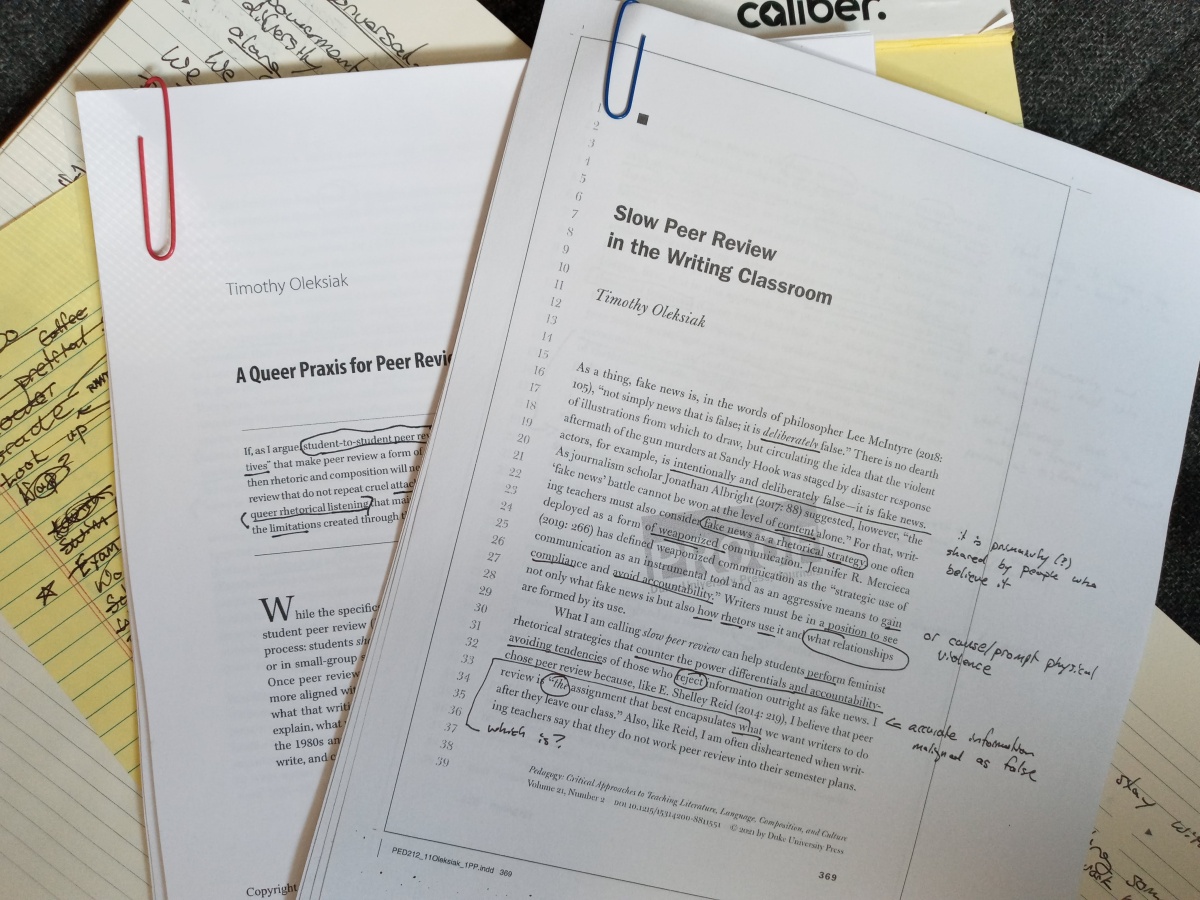
    I spoke with Dr. Timothy Oleksiak, Assistant Professor of English at the University of Massachusetts—Boston, about two of his essays, “A Queer Praxis for Peer Review” and “Slow Peer Review in the Writing Classroom,” recently out in College Composition and Communication and Pedagogy. In these essays, they present theory and practice for a pedagogical practice they call slow peer review, a different way to approach that classical strategy of writing classes, student-to-student peer review, where students swap drafts and give each other feedback on how to improve them. Slow peer review does have students swap drafts but asks them to spend a lot more time with the drafts than usual, reading them very carefully and thinking about them deeply. Slow peer review then asks students to respond in different and more in depth ways than just giving the writer suggestions. I found the essays really compelling, opening up so many questions with relevance far beyond this specific practice and far beyond even just the teaching of writing.

    In our conversation, which you can watch below, we discuss opera, “the improvement imperative” (i.e., there are more things to do in a writing classroom than help students write better, even as that remains a key goal), and the concept of “cruel optimism” (which refers, in this case, to an unhealthy attachment to certain teaching strategies that aren’t working and won’t suddenly start working through being tweaked). We also discuss the ways in which writers and readers of drafts both participate in “worldmaking.” The idea here is that each draft someone writes envisions a world in which some are included while others are not, and peer reviewers can help writers imagine more clearly what sort of world they’ve built. We also discuss what all of this has to do with queer theory. Lastly, I asked Timothy whether this peer review pedagogy isn’t actually a reading pedagogy. While he’s not so sure, he does have students “read the drafts five different times” and directs students to consider such questions as “What does it mean to be fully human in this world?” (i.e., in the world of the draft being read). Those seem like scaffolds for deep reading to me. At any rate, whatever else this pedagogy does, it does ask students to really read each other’s writing. And that feels extraordinarily valuable to me.

    Source link

  • Gift Guide for Professors, Researchers, and Grad Students 2023

    Gift Guide for Professors, Researchers, and Grad Students 2023

    What are the best gifts for academics in 2023?

    Here are my top picks for professors, researchers, and grad students like you. I hope these gift ideas inspire you.

    Map of readers of The Social Academic blog in 2022

    Get my top recommendations for professional development and wellbeing.

    Thanks so much for visiting The Social Academic blog. People from 175 countries around the world took time to read this year. I am so grateful for you.

    -Jennifer van Alstyne

    The form above subscribes you to new posts published on The Social Academic blog.
    Want emails from Jennifer about building your online presence? Subscribe to her email list.
    Looking for the podcast? Subscribe on Spotify.
    Prefer to watch videos? Subscribe on YouTube.

    Here are 26 gift ideas to inspire you

    Gift guide for academics 2022: a wrapped present with a teal bow sits on a table.

    Presentations, Public Speaking, and Posters

    Fail Proof Slide Design masterclass

    Echo Rivera, PhD brings you a 2 hour masterclass that helps you take your presentation slides from mediocre to memorable. I’ve benefited from Echo’s training myself. I highly recommend it.

    How to Design an Award-Winning Scientific Poster course

    I got to chat with Tullio Rossi, PhD of Animate Your Science last month about his scientific poster course. I knew I just had to share it with you. Have an engaging poster for your next conference.

    Teach the Geek to Speak Society

    Neil Thompson knows public speaking is hard. If you’re in STEM, you need to know how to communicate effectively about your research. Get the Teach the Geek to Speak course program with live monthly coaching calls.

    Academic and Scientific Writing

    Scholarship Success Collective

    Lisa Munro, PhD says, “How would you like to have the community support, structure, accountability, and actual writing instruction you need to get your article written and published so you can start helping us think about the world in new ways even if you’re full of crippling self-doubt about your writing and ideas?” Join the Scholarship Success Collective. This workshop runs January 16/17-April 16/17.

    The Researchers’ Writing Academy course

    Anna Clemens, PhD has a course to help you write clear scientific papers for high-ranking STEM journals. If you’re in the physical, health, life, and earth sciences, this step-by-step system is the only course in scientific writing you’ll ever need.

    Write your book with Dr. Jane Jones

    A program for women in academia to write your book. Stop staring at a blank page wondering what you’re supposed to write. Build your writing skills and practice with support. Dr. Jane Jones of Up In Consulting is here to help you push through the doubt and uncertainty so you get your book written. Join Elevate because you don’t have to write your book alone.

    Teaching

    Teaching College Ultimate Bundle Access

    Get Norman Eng, EdD’s top resources for engaging students online and offline. This bundle pack of shows you the step-by-step methods you need.

    Connecting with the Public and Media

    Power Your Research program

    Do you want major media coverage? Sheena Howard, PhD shares proven strategies to land features in the L.A. Times, New York Times, Washington Post, and more. Get more visibility for your research.

    LinkedIn profile challenge

    I’m Jennifer van Alstyne. Join professors around the world in my training to Update Your LinkedIn Profile for Professors and Researchers.

    This training helps you have an amazing LinkedIn profile!

    Prefer a done-for-you LinkedIn profile with me? Let’s chat about working together 1-on-1.

    The Connected Exec course

    Josie Ahlquist, PhD brings you a self-paced course on digital leadership for Higher Education executives. Learn social media strategy to connect with your campus community online.

    Academic Careers and Leaving Academia

    The Art of the Academic Cover Letter course

    Are you applying for academic jobs? Learn how to write a cover letter for your academic job application. Showcase your record and stand out in the academic job market with this course from Karen Kelsky, PhD. If you don’t already have it, The Professor Is In book is a must read. You’ll need it for the course.

    PhD Career Clarity Program

    Confidently market yourself for the jobs you actually want with Jennifer Polk, PhD’s PhD Career Clarity Program. Dr. Polk has been a career coach for PhDs since 2013.

    If you need help getting clarity on your post academic career, this is the program for you. My fiancé loved this program. It may be great for you too!

    There are live Q&A Zoom meetings. You can add on 1:1 coaching calls when you need personalized support. I hope you’ll check it out. Here’s Jen’s free training for people thinking about leaving academia.

    Build a Business with 1:1 and Group Coaching

    I’ve met so many professors and graduate students running a business. If you want to build a business on part-time hours Cheryl Lau has 1:1 and Group Coaching programs for you. Psst! Cheryl has been my business coach since December 2022.

    Retreats and Conferences

    The Grad School Success Summit replays (virtual) FREE

    Are you in graduate school? Do you know someone heading to grad school in the new year? This virtual summit has great sessions on school-life balance, wellness, and more. Get ready with a boost of motivation brought to you by Allanté Whitmore of the Blk + In Grad School podcast. You’ll get free access to the replays (including my session on How to Manage Your Online Presence in Grad School).

    Books

    25 Ways to Say ‘No’ in A Professional Way

    25 Ways to Say No in a Professional Way

    Having a difficult time saying ‘no’ in the workplace? Here’s how to communicate in a professional and confident way.

    This digital download is from Dr. Monica Cox.

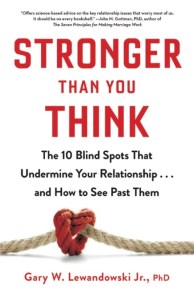
    Stronger Than You Think: The 10 Blind Spots That Undermine Your Relationship and How to See Past Them

    Stronger Than You Think book cover

    Whether you’re in grad school, teaching, or in the lab, relationships can be hard. Appreciate the love you have, or find the one you want and deserve. Dr. Gary Lewandowski Jr. is an expert on relationships. This is a book I read last year I think is great for academics. I learned a lot, and hope you enjoy it as much as I did.

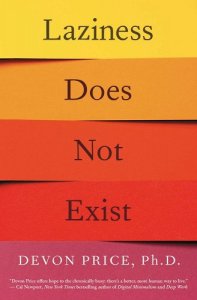
    Laziness Does Not Exist

    Dr. Devon Price used to believe that productivity was the best way to measure self-worth. Now they dive into the history and origins of the ‘laziness lie.’ It goes back to the Puritans! Most of us feel like we’re not doing enough even though people today do more work than other humans in history. My friends recommended this to me and now I’m sharing it with you!

    Attribution: A Novel

    WATCH: YOUTUBE LIVE WITH THE AUTHOR

    Cate Adamson is working on her doctorate in New York under an impossible, sexist advisor. She struggles until she discovers a hidden painting. Is it a masterpiece? Join Cate’s journey to Spain as she uncovers an art mystery.

    A novel from Linda Moore.

    Watch our book talk, live on YouTube on The Social Academic.

    Communities

    The PhD Balance Community

    PhD Balance is a community creating space for graduate students to openly discuss mental health. Join the community for access to webinars, challenges, and conversation.

    The Personal Finance for PhDs Community

    Emily Roberts, PhD sets you up for success with your personal finances. From paying down debt to taxes, this community helps PhDs make the most of your money.

    Game

    Dead Theorists: A Card Game

    A satirical card game for philosophers and aspiring academics for 2-4 players.

    Other Gift Ideas for Academics

    Professional memberships to associations and organizations

    Support the academic in your life with an annual membership to a professional organization or association in their field. For graduate students especially, this is a valuable line on their CV that opens their world to new conferences and networking opportunities.

    Money towards professional development activities

    Help a professor, researcher, or graduate student gain professional development with money for

    • Conferences
    • Award submission
    • Research travel
    • Working with a coach
    • Joining a training or course

    A spa day

    Give the gift of relaxation with a day at the spa. A hot stone massage can help relieve those post-semester grading muscle aches.

    A weekend away

    Sometimes the best gift is a night away. Take a trip and leave the work behind for the ultimate weekend getaway.

    The form above subscribes you to new posts published on The Social Academic blog.
    Want emails from Jennifer about building your online presence? Subscribe to her email list.
    Looking for the podcast? Subscribe on Spotify.
    Prefer to watch videos? Subscribe on YouTube.

    Thanks for checking out this gift guide

    Bookmark this page. Please share this list with a friend or colleague!

    Gifts and Holiday

    Source link

  • Engaging Online Students Though a Zoom-Based Journal Club Experience

    Engaging Online Students Though a Zoom-Based Journal Club Experience

    This year has been an exceptional year for teaching. We are just transitioning out of a COVID19 time period and our students are ready and eager to engage with faculty!

    Before the semester began, I made the decision to travel to a Texas State Park. I realized that I write best papers when I am sitting outside in camping chair, cooking lunch with a foldable cookstove, and surrounding myself with the most amazing bug spray ever.

    So, while I was “in nature”, I thought about some out of the box strategies that I could use for the upcoming semester. One of these strategies was centered around one of my husband’s experiences during his graduate program at Texas A&M University – The Journal Club. Now, keep in mind – I teaching in the Communication Department and journal clubs are primarily held in the science, technology, engineering, and mathematics fields (STEM).

    So, I jumped into the Journal Club game HEAD FIRST and I decided to integrate the experience on my syllabus. My graduate students did not have any experience with a journal club and I had to demonstrate and explain the purpose of the activity. ALL of my students are online and this meant that the best way to explain the journal club was to demonstrate how it works. So, here’s my demonstration video…

    After the students viewed the video, they were able to select the days and the associated articles that they wanted to highlight in the journal club. The students had to present two times and they had to attend at least one session. Each session has two facilitators and they basically divide the article in half. Many of the students have attended more than three sessions. Here are the articles we reviewed this semester…

    Tuesday, August 24, 2021 5pm – 6pm Using a Media Campaign to Increase Engagement With a Mobile-Based Youth Smoking Cessation Program
    Tuesday, August 31, 2021 5pm – 6pm CONTEMPORARY HOUSING DISCRIMINATION: FACEBOOK, TARGETED ADVERTISING, AND THE FAIR HOUSING ACT.
    Tuesday, September 7, 2021 5pm – 6pm Don’t put all social network sites in one basket: Facebook, Instagram, Twitter, TikTok, and their relations with well-being during the COVID-19 pandemic.
    Tuesday, September 14, 2021 5pm – 6pm Fan Engagement in 15 Seconds: Athletes’ Relationship Marketing During a Pandemic via TikTok
    Tuesday, September 21, 2021 5pm – 6pm Online to Offline: The Impact of Social Media on Offline Sales in the Automobile Industry.
    Tuesday, September 28, 2021 5pm – 6pm Innovation in Later Life: A Study of Grandmothers and Facebook.
    Monday, October 4, 2021 11am – Noon Article – TBA
    Tuesday, October 5, 2021 5pm – 6pm Social media information sharing for natural disaster response
    Tuesday, October 12, 2021 5pm – 6pm News on Facebook: How Facebook and Newspapers Build Mutual Brand Loyalty Through Audience Engagement
    Thursday, October 14, 2021 8pm – 9pm Navigating the New Era of Influencer Marketing: How to be Successful on Instagram, TikTok, & Co.
    Tuesday, October 19, 2021 5pm – 6pm TWEET TO THE TOP? SOCIAL MEDIA PERSONAL BRANDING AND CAREER OUTCOMES.
    Monday, October 25, 2021 11am – Noon FASTER, HOTTER, AND MORE LINKED IN: MANAGING SOCIAL DISAPPROVAL IN THE SOCIAL MEDIA ERA
    Tuesday, October 26, 2021 5pm – 6pm Who Posted That Story? Processing Layered Sources in Facebook News Posts.
    Tuesday, November 2, 2021 5pm – 6pm Reality check: How adolescents use TikTok as a digital backchanneling medium to speak back against institutional discourses of school(ing).
    Tuesday, November 9, 2021 5pm – 6pm We (Want To) Believe in the Best of Men: A Qualitative Analysis of Reactions to #Gillette on Twitter
    Thursday, November 11, 2021 8pm – 9pm Small Business Still Missing the Boat on Social Media and Internet Advertising.
    Tuesday, November 16, 2021 5pm – 6pm Chapter 1: Introduction to Social Media for Professional Development and Learning in Physical Education and Sport Pedagogy.

    Overall, it is a great learning experience for them and I will definitely integrate it next year. The students are reflecting about the articles and are highlighting how the articles have implications for many fields. 

    In fact, the Rural Communication and the Texas Social Media Research Institutes are hosting Texas Social Media Conference MONTH in November. You are welcome to attend our Journal Club sessions via Zoom, chat and network with others through our Thursday night Twitter chats, and hear some AMAZING presentations! I will post registration soon. In the meantime, check out the month-long schedule.

    Texas Social Media Month – November 2021 (Draft) by jennifertedwards

    Have any questions? Contact me.

    ***

    Enjoy!

    Check out my book – Retaining College Students Using Technology: A Guidebook for Student Affairs and Academic Affairs Professionals.

    Remember to order copies for your team as well!


    Thanks for visiting! 

    Sincerely,

    Dr. Jennifer T. Edwards
    Professor of Communication

    Executive Director of the Texas Social Media Research Institute 

    & Rural Communication Institute

    Source link

  • Contacting Currently Enrolled Students Who Have Not Registered for the Upcoming Semester

    Contacting Currently Enrolled Students Who Have Not Registered for the Upcoming Semester

    At this time of the semester, many people are wondering if students who attended last semester will attend this semester. Yes, I have been there before! 

    So, I decided to create email and text campaigns to help remind/nudge students to register for the upcoming semester. This EVEN works during the first week of class as well. Think about the students who left the semester with an “A” or “B” grade point average and never enrolled in the subsequent semester – you need to reach them!

    Purpose of the Campaign: Contacting Currently Enrolled Students Who Have Not Registered for the Upcoming Semester

    Problem: Many college students need several reminders to register for the next semester.

    Time of Year: October/November & March/April

    Timeframe of the Campaign: Four Weeks

    Target Group: Students

    Step 1 – During the first week of the campaign, send a text message to the students who are enrolled this semester, but who are not enrolled for the subsequent semester. 

    Sample Text Message – Are you planning to come back for the spring? Reply Y (Yes), M (Maybe), H (Holds), or S (Need to Schedule. Appt).

    Step 2 – During the second week of the campaign, remove the students who have already registered. Then, send another text message to the students who are enrolled this semester, but who are not enrolled for the subsequent semester. 

    Sample Text Message – Classes are filling up fast! Are you returning to [Name of University] for the Fall? Text – Y (Yes), M (Maybe), N (No), ? (Questions), H (Holds). – [Name of Administrator that Many Students Know.

    Step 3 – During the third week of the campaign, have the faculty and academic advisors call the students in their department or college who have not registered.

    Step 4 – During the fourth week of the campaign, have the faculty contact the students who have not re-enrolled in the subsequent semester. 

    Step 5 – Assessment – Examine the number of students who were not registered before the campaign, then measure the students who registered each week until the end of the fourth week. pre-campaign 

    Additional Comments: When the students reply, you can begin tagging the students on Microsoft Excel or through the Student Success Technology with the following tags.

    Y – Tag – Will Register in [Next Semester – Semester and Year]

    M – Tag – May Enroll in  [Next Semester – Semester and Year]

    N – Tag – Not Returning in [Next Semester – Semester and Year]

    If you have any questions about this campaign, please contact me – [Your Name]or [email address].

    Remember to order copies for your team as well!

    Thanks for visiting! 


    Sincerely,


    Dr. Jennifer T. Edwards
    Higher Education Speaker and Researcher


    My Social Media Channels!
    Remember to Follow Me on Twitter! @drjtedwards
    I Always Post Higher Education Videos on YouTube
    Find Me on Instagram
    Engage with Me on Facebook!
    Watch My Videos on Twitter Live – http://www.periscope.com/drjtedwards/
    Email Me! I am PR Friendly! – [email protected]
    My Research Interests: Customer Service and Social Media, Higher Education Retention, and Millennials at Work


    Source link

  • How to Use Canvas to NUDGE Students to Complete Assignments

    How to Use Canvas to NUDGE Students to Complete Assignments

    I am a TOTAL fan of the “message students who” feature on Canvas. Our university utilizes Canvas as our learning management platform. With this feature, I can message students who…

    have not completed assignments

    have not communicated with me

    have an average below a certain threshold

    have an average ABOVE a certain threshold

    have done a STELLAR job on assignments

    and MORE

    I use this feature for EVERYTHING! You should definitely try it out! It is free and I’ve convinced other faculty to use it as well!

    Check out my book – Retaining College Students Using Technology: A Guidebook for Student Affairs and Academic Affairs Professionals.

    Remember to order copies for your team as well!

    Thanks for visiting! 


    Sincerely,


    Dr. Jennifer T. Edwards
    Professor of Communication

    Executive Director of the Texas Social Media Research Institute & Rural Communication Institute

    Source link

  • Teaching Our Students Have to Use the Library’s Ebscohost Databases

    Teaching Our Students Have to Use the Library’s Ebscohost Databases

    Research is VERY important for our students! Each of my classes has a research assignment focused on the library. They are paying for it, they should use it. At least this is what I believe. 🙂 

    I always make a training video for our students about the library’s databases. Here’s this year’s video!

    ***

    Check out my book – Retaining College Students Using Technology: A Guidebook for Student Affairs and Academic Affairs Professionals.

    Remember to order copies for your team as well!

    Thanks for visiting! 


    Sincerely,


    Dr. Jennifer T. Edwards
    Professor of Communication

    Executive Director of the Texas Social Media Research Institute & Rural Communication Institute

    Source link